A bill to designate the Federal building located at 324 Twenty-Fifth Street in Ogden, Utah, as the James V. Hansen Federal Building.

Legislative Activity
Stay on top of the latest movement without scrolling through every action
Held at the desk.
July 20, 2004 • 6:28 PM
View full timeline
Introduced in Senate
May 10, 2004
Sponsor introductory remarks on measure. (CR S5091)
May 10, 2004
Read twice and referred to the Committee on Environment and Public Works.
May 10, 2004
Committee on Environment and Public Works. Ordered to be reported without amendment favorably.
June 23, 2004
Committee on Environment and Public Works. Reported by Senator Inhofe without amendment. Without written report.
June 24, 2004
Placed on Senate Legislative Calendar under General Orders. Calendar No. 597.
June 24, 2004
Passed Senate without amendment by Unanimous Consent. (consideration: CR S8427; text: CR S8427)
July 19, 2004
Received in the House.
July 20, 2004 • 10:03 AM
Message on Senate action sent to the House.
July 20, 2004
Held at the desk.
July 20, 2004 • 6:28 PM
Floor Debate
18 membersWhat members said about S. 2398 on the floor
 DF
DF CTOGH
CTOGH BN
BN PF+13
PF+13
Floor Debate
18 membersWhat members said about S. 2398 on the floor
Mr. President, I rise today to offer my strong support for a Senate resolution condemning the abuses in United States detention facilities in Iraq. This resolution makes clear that the abusive…
Mr. President, I rise today to offer my strong support for a Senate resolution condemning the abuses in United States detention facilities in Iraq.
This resolution makes clear that the abusive behavior we have seen graphically portrayed in photographs, detailed in the report of MG Antonio Taguba, and described by Secretary Rumsfeld in testimony last week, are unacceptable.
Such conduct is wrong, un-American, and inconsistent with the history and tradition of our military services. It is critical that the Senate voices its absolute rejection of the conduct, and this resolution does just that.
It must be understood that this resolution, however, is narrow and focused. It is confined to expressing our views on the specific conduct at issue. It does not purport to be a comprehensive view
on the implications of this growing scandal, nor a conclusive statement of a congressional investigation into this incident, and its ramifications.
I believe that such an investigation is necessary and should be undertaken as soon as possible. We need to know why the Geneva Convention appears to have been ignored. We need to understand how such a debacle could have happened, and what orders were given by who, and when, which governed the prison at Abu Ghraib. We need to know why the reports of the Red Cross and others were not responded to in a comprehensive and timely manner. And why was this problem concealed for months from the Congress and the American people.
If the conflict in Iraq is seen as a battle for the hearts and minds of the Iraqi people, then it is unfathomable how such a devastating failure in that battle could be allowed to happen. This is not just about personal accountability, or abuse--it is about the conduct of a conflict upon which the future of our security may depend.
It is also important to recognize that planning and implementing a military detention and interrogation operation is a necessary and important part of a competent and professional war plan. There are three reasons why this is so:
First, the information gained from proper interrogation is critical to protect our warfighters--it allows us to deal with the tactical risk on the ground in Iraq. Simply put, military interrogation is part of the overall intelligence-gathering mechanism which is designed to provide timely, accurate information to front line troops and strategic planners. Done correctly, a well-run, properly administered military detention system will yield information that will keep our men and women in uniform alive in the face of an increasingly violent insurgency.
Second, detention and interrogation is inherently risky, and that risk is a moral risk. It is not easy to run prisons, interrogate detainees, and maintain order in a manner consistent with our Nation's moral values. There are certainly some guides to help manage this risk: the Geneva Convention, for instance, provides a well-established set of guidelines that can not only allow American soldiers to adhere to international law, but help them ensure that their conduct is acceptable to Americans and to our moral code.
Third, it should be apparent that the administration of a military prison system inside Iraq is a clear danger point in the context of our strategic goals--prisons pose a necessary, but important, strategic risk. Failure to adhere to the highest standards of conduct will fuel the increasingly hostile view of Americans and American policy in Iraq and the Middle East.
I have reviewed Secretary Rumsfeld's testimony, as well as other information provided in public statements of the administration and private briefings.
I am becoming increasingly concerned that the Secretary, and the Administration, are missing the point of this growing scandal.
Of course there is a need to investigate individual wrongdoing and hold people accountable for their acts according to the Code of Military Justice. But much more needs to be done. I see little evidence that there has been adequate planning for the management and function of military detention facilities in Iraq, and this failure needs to be addressed now.
This is critical for the three reasons I outlined above. In essence, military detention facilities should be looked upon exactly like other elements of war-planning--necessary to fight successfully, but carrying risks to our soldiers and to our mission.
I am concerned that this function has not been adequately planned. It does not surprise me that we see the lack of planning becoming apparent in the revelation of individual misconduct, but I think it is critical that the Department of Defense take on the larger issue, and take it on immediately.
The situation is grim. Each of the three risks I mentioned have come to be.
Some of our soldiers, inadequately supervised and poorly commanded, have succumbed to the moral hazards of running a prison. I do not excuse their actions, and they will be held accountable for their actions. But it is predictable that without adequate command and control such conduct will happen in a prison, and for that Secretary Rumsfeld and senior Army commanders are responsible.
It is clear that the potentially valuable source of tactical intelligence that could have been gained through the competent and professional administration of military detention facilities was wantonly thrown away by allowing those facilities to degenerate into a chaotic and ungoverned free-for-all.
It is my view that there is a place for properly conducted interrogation in the context of a military detention facility.
But it seems to me that what we have seen is not overly aggressive interrogation, but wanton cruelty and abuse, unconnected with any doctrinally acceptable method of prisoner interrogation.
We will never know what potentially valuable tactical intelligence was lost in the chaos of Abu Ghraib prison, but I am confident that whatever intelligence was there was unlikely to have been elicited in that environment.
Again, Secretary Rumsfeld and senior commanders are responsible for this failure, and I call upon them to immediately remedy this situation.
We have troops on the ground, under fire, and we cannot afford to abandon a mechanism for gathering intelligence which could help make our troops safer.
Finally, the failure to run this element of our war effort competently has resulted in a catastrophic setback to our strategic interests.
It should have been self-evident that failure to run U.S. detention facilities in a professional, competent and lawful manner would, when made public, adversely affect our prospects in Iraq and in the region.
Simply put, American soldiers will come under increasing fire because of the failure to run the prisons correctly, and whatever prospects remain for peacefully transferring power to an Iraqi government have been diminished.
In sum, it is important to recognize that planning for detention and interrogation of prisoners is as much a part of war planning as making sure that there is enough gas for tanks, enough ammunition for guns and armor for our soldiers.
I am concerned that the failure to plan for this aspect of the war is consistent with a general pattern at the Pentagon--an unwillingness to plan for the realities of Iraq and the Middle East. We will all pay for that failure.
One key part of the resolution speaks to the roll of the Congress, noting that ``the best interests of the United States and the American people will be served by a full investigation by the appropriate Committees of the United States Senate exercising their oversight responsibilities.'' This is a critical point. This body must immediately begin its task of addressing this issue.
There are a few particular questions upon which I hope we will focus:
Whether, and to what extent, the conditions and procedures in Abu Ghraib and other prisons came about because of particular policy decisions by senior officials. For instance, who made the decision, reported in the media, to use prison guards to ``set the conditions'' for interrogations?
Why was the critical task of administering Abu Gharaib entrusted to soldiers without adequate training or guidance?
Who in the command structure is responsible for maintaining and administering our military program to detain and interrogate prisoners in Iraq and elsewhere?
I hope we can answer these, and other questions, and make the changes necessary to make our nation safer.
Madam President, I am pleased we have this resolution before us. I think all of us share the same thoughts about this whole Iraqi prisoner abuse issue. We are all very disappointed and very troubled…
Madam President, I am pleased we have this resolution before us. I think all of us share the same thoughts about this whole Iraqi prisoner abuse issue. We are all very disappointed and very troubled about the events in the prison. We need to move forward to resolve this issue. We need to do what needs to be done as a followup. We do not need to make it into a political operation for the next week because we have other things to do in Iraq. But we must take care of this issue because we, as Americans, hold ourselves to a higher standard.
These are appalling actions of those responsible for the treatment of the detainees in Iraq. It falls far short of any of those standards. Our credibility has been called into question in the eyes of those we are trying to help, as well as the rest of the world. These incidents of cruelty and mistreatment at the hands of American service men and women are inexcusable, and certainly it is a very small group of our service people. Unfortunately, the foolish actions of a few have cast a pall on thousands of our military. All of us know that is not the case, and all of us who have served in the military know these are not the kinds of activities we are ordered to do.
There have been mistakes, and we need to determine how those happened and see they do not happen again so our folks can continue at the very hard job they have.
These terrible events have dealt a blow to what we are seeking to do. I want to say again our task is to win in Iraq, and this is a deterrent from that, but we can overcome it and move on with the task.
This also makes it more important that we win at home. With the media and the emphasis that has been put on this issue, it detracts from our job. We cannot let that happen. If we are really as strong in our feeling about our service people overseas, we ought to make sure we support what they are doing and continue to give them that support.
We as a nation must deliberately correct the situation and ensure it does not happen again. All of us want to do that.
Democracies hold themselves accountable. That is our task. We can do
it, and we will do it. We acknowledge we have done wrong, and we will move to correct it. That is what this resolution is about. That is what the hearings are about. That is what holding people in authority responsible is about. We need to move on that initiative. We need to get the facts. We need to make the whole effort more transparent in the future, of course, as all Government activities should be transparent.
The process needs to move swiftly and decisively. We need to do this job and get on with the rest of the job.
For those who committed the acts and those who enabled them, we need to do all we can in determining if there is involvement in the chain of command.
I do not think anyone denies that is what we need to do. These things that have happened are certainly fundamentally contradictory to American values. The eyes of the world are focused now on how we will react, and we have reacted. The President has reacted. The Secretary has reacted. The Congress will react. We need to ensure that it continues, but I do warn that we ought not divert all of our attention to this issue, taking it away from the overall issue that still exists. We need to be there. The stakes are simply too high to play politics with this issue, and unfortunately that might well happen.
So we need to proceed. We need to make everyone understand that these are not the kinds of things that the United States will live with and let happen. We will do something about it. We need to bring those to justice who were involved. We will go forward and we will win in Iraq. First, we must win in the United States.
Energy Policy
Earlier, I listened to the assistant minority leader talk about energy and say that the things we are doing now have nothing to do with an energy bill. I think that is absolutely wrong. What we are talking about is an energy policy that will last somewhat over time but is designed to change some of the things that we are doing in energy and energy use that are causing us part of the problems today. Will they reflect some change in the next day or two? Of course not. But we need to be working forward at doing something about the long-term impact of energy.
I will briefly talk about a few of the things that need to be done because it is just impossible to say they do not have an impact. Keep in mind that we have had an energy bill now last year and this year, and we tried to bring it up on the Senate floor. It passed here, went to conference, came back, and would not be accepted again. We have been obstructed and cannot move forward in doing something with the broad energy bill that has to do with energy efficiency. Again, it is going to take some time to do that, but it is very clear that consumption has gone up faster than has production. If we continue to do so, this will be the case. Even more importantly, our consumption will grow and our production--if we keep it as it is--will soon be overcome and will not grow. So we have to talk about issues like renewable energy. We have to talk about alternative energy. Those things are in the bill. That is what we are talking about doing, seeing if we can do some things differently than we have in the past.
We also have some incentives to continue like in marginal wells. Marginal wells, even with the price as high as it is, if there is not some incentive for a well that only delivers two, three, or four barrels a day, we do not produce them, but in total they still have a large impact on what we are doing.
We need to make some changes in the way we use energy. We are using oil, for example, to heat homes. We are using oil to do a lot of things other than make gasoline. We have other energy sources that could be used for that purpose. The same is true with natural gas. We are using natural gas for many things. For instance, the electric-generating plants that have been built in the last 10 or 15 years have all been natural gas plants. Natural gas is so much more flexible for other uses: we ought to be using coal; we ought to be using nuclear for the generation of electricity so we can use natural gas for other purposes.
So to say this bill has nothing to do with our problems with energy is absolutely without merit. It does have a great deal to do with it.
We talked about some things that would have a pretty immediate impact, such as doing something on the Indian reservations to promote production. They would like to do that, but we have not really been able to make it happen. We are talking about doing something with hydrogen, fairly short term, to make hydrogen part of automobile fuel, and use coal and make hydrogen for automobiles.
We can talk about the price of gas next week. I would love to be able to do something about that, and hopefully maybe we can, but the real thoughtful question is, where are we going to be in 5, 10, or 15 years from now to meet the needs which will constantly be growing? We need to have a plan. We need to have a policy. This Congress has absolutely refused to move forward with the policy, along with many other things, and has strictly been obstructed from moving forward. So every week we are going through the same things because we cannot get them passed. Something needs to be done.
I think we have some very important issues before us. First of all, we have this resolution. I favor the resolution, which says very clearly how we feel about what happened in the prisons in Iraq. It says very clearly what we ought to be doing about those responsible for those acts. It says very clearly that we ought to make sure that does not happen in the future and that we can go back to doing what we are supposed to be doing. I hope we do not make such an issue in terms of accomplishing things that we detract from the real purpose of our being in Iraq, and that is to win freedom for the Iraqi people, do something about terrorism, and be able to bring our men and women back to the United States after the victory.
I yield the floor and I suggest the absence of a quorum.
Mr. President, I ask unanimous consent that the order for the quorum call be rescinded.
I ask unanimous consent that the time in the quorum call be equally divided between the two sides.
Mr. President, from time to time the Judicial Conference and the Administrative Office of the U.S. Courts recommend legislative proposals to improve the efficiency and enhance the operations of the…
Mr. President, from time to time the Judicial Conference and the Administrative Office of the U.S. Courts recommend legislative proposals to improve the efficiency and enhance the operations of the Federal courts. I believe that, out of comity to the judicial branch, the Senate should have the judiciary's specific proposals on record so that we can give those suggestions proper consideration.
Today, joined by Senators Leahy, Chambliss, Clinton, Durbin, and Schumer, I am introducing the Federal Courts Improvement Act of 2004. This bill contains both technical and substantive changes in the law. These recommendations made by the judicial branch will improve the judicial process and enhance judiciary personnel administration, benefits, and protections. Some proposals have been carried over from previous Congresses, but the legislation also contains some new proposals which the Federal judiciary believes will improve its operation. I appreciate the support of my cosponsors, and encourage the entire Senate to support this legislation.
Many provisions contained in this bill streamline the operation of the Federal court system or otherwise facilitate judicial operations. The bill authorizes some realignments in the composition or the place of holding court of specified district courts. For example, section 120 would grant emergency authority for circuit, district and bankruptcy courts, as well as magistrate judges, to conduct court proceedings outside the territorial jurisdiction of the court. The need for this legislation has become apparent following the terrorist attacks of September 11, 2001, and the impact of that disaster on court operations, in particular in New York City. In emergency conditions, a Federal court facility in an adjoining district (or circuit) might be more readily and safely available to court personnel, litigants, jurors and the public than a facility at a place of holding court within the district. This is particularly true in major metropolitan areas such as New York, Washington, DC, Dallas and Kansas City, where the metropolitan area includes parts of more than one judicial district.
Other sections of the bill contain provisions that would improve resource management within the judiciary. The bill would improve the procedures for recouping technology costs and also would broaden the courts' investment options and offer an improved procedure for investing court registry funds in Treasury securities. Other provisions increase the approval thresholds for payment vouchers or expand the delegation authority of respect to approving vouchers. These improvements will reduce the amount of time judges must devote to non- judicial matters.
Provisions in this bill also clarify existing law to better fulfill Congress's original intent or to make technical corrections. For example, sections 113 and 114 clarify diversity jurisdiction rules as applied to resident aliens and foreign corporations. Section 117 repeals references to obsolete sections of the U.S. Code.
In addition, the Federal Courts Improvement Act of 2004 also contains provisions designed to improve personnel administration, benefits and protections for employees working for the Federal judiciary. These provisions, in some cases, bring the Federal judicial system in line with the executive branch and other governmental bodies. Other provisions are designed to improve the ability of the judiciary to recruit and retain personnel.
Several sections improve the judicial system in other ways. The bill offers protection of certain information contained in bankruptcy case files, such as Social Security account numbers, from public disclosure. The proposed legislation provides protection against malicious recording of fictitious liens against Federal judges. The bill provides for improving the process for determining Federal court security requirements.
I ask unanimous consent that the text of the legislation, along with a section-by-section analysis of the bill, be printed in the Record.
Mr. President, I am introducing legislation along with Senator Bennett to designate the Federal building located at 324 Twenty-fifth Street in Ogden, Utah, as the James V. Hansen Federal Building.
I am pleased to introduce this measure today to honor my friend from Utah, former Congressman Jim Hansen. I am joined by my colleague Senator Bennett, who has also worked extensively with Congressman Hansen on issues important to the people of Utah.
Congressman Hansen retired last year after serving in the United States House of Representatives, representing Utah's First Congressional District, for 22 years. Before his 11 terms in Congress, he served in the Utah State Legislature for 8 years, where he ascended to the role of speaker of the Utah House of Representatives. For 12 years, he served on the Farmington City Council. He is a veteran of the Korean War and served in the United States Navy.
Congressman Hansen has served the people of Utah with great distinction in the House of Representatives. He served as the Chairman of the House Resources Committee, as a senior member on the Armed Services Committee, and as a member of the House Ethics Committee,. He is one of the three founders of the Western Caucus and served as its chairman from 1988 to 1999.
While serving as the Chairman of the Resources Committee, Congressman Hansen guided hundreds of difficult and complex bills through the legislative process. He sponsored numerous pieces of legislation to protect land in Utah and the Arizona Strip, and designate wilderness lands in Wyoming and Montana.
Congressman Hansen proved to be an effective broker in the Congress, as he crafted numerous agreements that provided sensible policies to encourage multiple use of public lands, preservation of the environment, and sound economic principles. As the Resources Committee Chairman, Congressman Hansen facilitated compromises and negotiated many agreements among diverse parties.
Congressman Hansen also rose to the role of the ranking member of the House Armed Services Committee. He was instrumental in helping preserve Hill Air Force Base through three rounds of base closures. While on the Committee, he led the effort to stop President Clinton's attempt to transfer work being conducted at Hill Air Force Base to California. He came to be known as an expert leader on defense issues, and he has a distinguished reputation for speaking with authority on intricate military topics.
Congressman Hansen served longer than any member to date on the House Committee on Standards of Official Conduct. His colleagues in the House reappointed him three times, and in the third term he served as Chairman. When Hansen was a freshman in Congress, he worked with President Ronald Regan to establish the Presidential Commission on Drunk Driving. In the first year of the program, the number of deaths resulting from drunk driving declined by 4,700.
Over the course of his life, Congressman Hansen has built a reputation as a decent, commonsense, hard-working public servant. He is respected by members on both sides of the aisle as a straightforward, rational lawmaker who works hard to reach sensible solutions.
Mr. President, it is only fitting that the Federal building in Ogden bear Congressman Hansen's name. He devoted time, energy, and talent to improving the State of Utah. The name of Jim Hansen will bring a level of trust, a level of fairness, and a level of understanding to all who enter this building. His name will continue to be synonymous with excellence in public service in Utah.
Congressman Hansen advocated what was best for his constituents and what was best for the Nation. I thank Congressman Hansen, and I wish him the best in the activities he chooses to pursue.
Senator Bennett and I are pleased to introduce this companion legislation in the Senate. I note that Representative Cannon has introduced a companion bill which has been passed by the House of Representatives. I hope this measure will be approved by the Senate in short order.
Mr. President, I ask unanimous consent that the order for the quorum call be rescinded. Mr. President, I just returned from my home State of Florida, and I cannot state the number of people who came…
Mr. President, I ask unanimous consent that the order for the quorum call be rescinded.
Mr. President, I just returned from my home State of Florida, and I cannot state the number of people who came up to me over the course of the weekend to ask me about the situation in the prison in Baghdad and the question of what should be done with Secretary Rumsfeld.
My reaction is, we have an ongoing investigation. I would like to see some more results of that investigation, in addition to what we have already been shocked with in the graphic photographs--although I understand we have ``not seen nothing yet,'' that we are going to get more graphic photographs, including some videos that are fairly descriptive of behavior that is clearly not behavior approved in the normal course of the standards of Americans.
Of course, offensive conduct by Americans is made all the more difficult as we are in unsettled parts of the world in a place of Arab culture and the Muslim religion.
Often, my response has been specifically about Secretary Rumsfeld; that this issue is much greater than any one Secretary of Defense. The issue comes down to how America has planned for the postwar occupation. We did not do a very good job of planning for the postwar occupation.
This Senator happens to be a Democrat from Florida, but that does not have anything to do with this. What I am about to say is very bipartisan, or nonpartisan. One of the committees on
which I have the privilege of serving is the Senate Foreign Relations Committee. The chairman is a Republican and his name is Dick Lugar of Indiana. He has been saying very similar things to what I am about to say, as has his ranking Republican member, Senator Chuck Hagel of Nebraska, and certainly the ranking Democrat and former chairman, Senator Joe Biden of Delaware. It is this: We had a brilliant military campaign in Afghanistan and again in Iraq, led, by the way, by a Floridian, GEN Tommy Franks.
To give credit where credit is due, I include Secretary of Defense Rumsfeld. He ought to be given credit. It was a brilliant military campaign, blending the use of military forces--specifically, special operations forces in Afghanistan--with other agencies, such as the CIA. The CIA was first in Afghanistan. The first American killed in Afghanistan was Mike Spann, a CIA agent detailed out of Uzbekistan.
So, too, in the runup to the military campaign in Iraq, a brilliant military planning in the war effort. We took Iraq in much fewer days than General Franks had ever planned. Of course, that is what he is supposed to do as a combatant commander, plan for the worst and be very conservative in the planning. The military campaign was spectacular.
The problem was, before the war in Iraq, in the Senate Foreign Relations Committee, over and over we asked the administration--who is ``we''? It is all of those Senators I just talked about, the bipartisan leadership of the Senate Foreign Relations Committee--asking over and over, peppering the administration with questions: What are your plans? Well, we do not have them. Well, bring them to us. And they would come back with some cursory plan.
Of course, we are now seeing the results.
The prison problems are a manifestation of just one element of the lack of a plan, of what it is to be an occupier in a Muslim country and then not planning for the sensitivities of being an occupier in a Muslim country.
What do we do now? The criminal investigation will go forward. The rest of the reporting is going to go forward, and we will find out what to do with regard to the prisons. But what we ought to be doing, and I think we are hearing this chorus from a number of Members in a bipartisan way, coming out of the several committees--not the least of which is the Foreign Relations Committee--the President ought to convene the major countries of the world, along with the Arab neighbors of Iraq in the region, and they should forge consensus. When somebody says that consensus cannot be reached, all you have to do is explain to those countries it is in their naked self-interest to try to get a stabilized Iraq.
France, for example, has a Muslim population somewhere between 8 and 12 percent. Convene those nations and then invite in a NATO force led by the United States. Go to the United Nations, get a senior international diplomat to come in and start working after June 30 to build Iraq with the institutions so it can go to elections.
We will be there a long time. Anyone who doubts that, we are in the ninth year in Bosnia. It will take a lot of troops. Eventually, we will see our troops will have to be more than what we are planning for now with the 130,000 that we have there.
With those few short comments prior to the voting on this resolution, I thank the Senate for the privilege of addressing the Senate.
I yield the floor.
Mr. President, I rise today to introduce the Healthy Lifestyles Act of 2004 with Senator Kennedy. This bill places the crafting of the Dietary Guidelines for Americans squarely on the shoulders of…
Mr. President, I rise today to introduce the Healthy Lifestyles Act of 2004 with Senator Kennedy. This bill places the crafting of the Dietary Guidelines for Americans squarely on the shoulders of the independent Institute of Medicine of the National Academies of Sciences. This bill also establishes several grant programs to help curb the obesity epidemic that plagues more than one- third of Americans.
In the United States, approximately 300,000 of our citizens die each year as a result of being overweight or obese. This information becomes even more dire when you consider that 64 percent of adults and 13 percent of children and adolescents are overweight, according to the Centers for Disease Control and Prevention. More staggering, twice as many children and three times as many adolescents are characterized as overweight today as in 1980--when the Federal Government, through the U.S. Department of Agriculture, first published the Dietary Guidelines. In 1990, Congress took a larger role in the establishment of these Guidelines and passed legislation requiring the USDA and HHS to review, and, if necessary, revise the Guidelines every 5 years.
According to the CDC, in 1985, in no State in the union were more than 14 percent of the resident's obese, but in 2001, in every State but Colorado more than 15 percent of residents were obese. My own State of Illinois dramatically demonstrates this disturbing trend. According to CDC, in 1985, less than 10 percent of Illinois residents were obese. By 2001, between 20 and 24 percent of Illinois residents were obese.
Furthermore, according to the CDC, the medical expenses of the overweight and obese accounted for 9.1 percent of total U.S. medical expenditures in 1998 and may have reached as high as $78.5 billion. Approximately half of these costs were paid by Medicaid and Medicare.
It is time to fix this dysfunctional system. By placing the IOM in charge of drafting the Dietary Guidelines, we can help to ensure that the Guidelines
are based upon unbiased, sound, scientific evidence rather than which organization has the greatest influence. When dealing with the health and welfare of Americans, we can expect no less.
Additionally, this measure directs the IOM to examine nutrition programs run by the Federal Government, an important step to discern whether USDA, HHS, and other Federal agencies are properly conducting nutrition research.
While many factors contribute to this growing health crisis, the problem, in part, may be attributed to a lack of nutrition and fitness information available to the public, especially among low-income groups. This bill will help our communities to a better job of educating Americans about proper nutrition and the serious risks associated with obesity. The Federal Government can fund all the research that it wants, but that research will do no good unless it is properly communicated to the public.
This legislation empowers schools, local and State governments, and employers, through grant programs, to establish obesity-prevention initiatives. We can only limit the prevalence of obesity in America by empowering the individual through grassroots and community programs to change their eating and exercise behaviors. Obesity is not only a preventable disease, it is a curable disease. By encouraging more physical activity and better eating habits, we can help reduce the size of waistbands in America and help curb heart disease, type II diabetes rates, and other obesity-related diseases.
In communities at risk for poor nutrition, this legislation provides grant funding to help promote the consumption of foods that are consistent with the Dietary Guidelines and to promote water as the main daily drink choice for people. The measure provides grants to train health professionals and health science students in identifying, preventing, and treating obesity-related conditions.
With 64 percent of the people in our country classified as overweight or obese, it is obvious that the Dietary Guidelines and Federal nutrition monitoring programs have failed. I thank Senator Kennedy for joining me today to introduce the Healthy Lifestyles Act of 2004. We owe it to the American people to disseminate unbiased, sound, scientific nutrition information. I urge my colleagues to support this important piece of legislation.
I ask unanimous consent that the text of the bill be printed in the Record.
Show 8 more
Mr. President, I rise in strong support of this Senate resolution expressing our clear condemnation of the despicable abuses of Iraqi prisoners at Abu Ghraib prison. Nearly a week ago, I called on…
Mr. President, I rise in strong support of this Senate resolution expressing our clear condemnation of the despicable abuses of Iraqi prisoners at Abu Ghraib prison.
Nearly a week ago, I called on the Senate to clearly and forthrightly condemn the despicable acts perpetrated at Abu Ghraib prison.
The pictures and description of the treatment inflicted on Iraqi detainees was too brutal, too inconsistent with what this country stands for, and far too consequential for our troops for this body to stay silent.
Given the severe consequences on our troops and our efforts in Iraq, it is important that the Senate say to the world that:
No. 1, the Senate commends the American forces serving honorably in Iraq;
No. 2, the Senate condemns the mistreatment of Iraqi detainees and apologizes to the victims of this abuse;
No. 3, the Senate is prepared to exercise its oversight responsibility and fully investigate these incidents; and
No. 4, the United States government--both the executive branch and the legislative branch--will hold accountable all of those responsible for these despicable acts.
This resolution does each of these and makes clear that the Senate will fulfill its responsibility in the face of these troubling revelations.
That's what the resolution does. Let me say a few words, Mr. President, about what it does not do.
The resolution does not spell the end of our work, In fact, the Senate is just getting down to the business of investigating what happened and how widespread these practices are.
The Armed Services Committee has another hearing tomorrow. We look forward to hearing the testimony of General Taguba, someone who had the courage to fully document these abuses not just in Iraq but Afghanistan as well and bring them to the attention of his civilian and military superiors.
The hearing also comes as news agencies publish reports of even wider spread abuse practices in Iraq, all of which apparently began in Guantanamo when senior administration officials adopted a policy to permit interrogation tactics that this country has never before allowed. So we are at the beginning of this effort, not the end.
Nor does this resolution limit in any way whom or what Congress should and must investigate. As horrendous as they are, we are now told that these pictures may only be the tip of the iceberg. And we learned today that the International Committee of the Red Cross was expressing concerns directly to the administration as early as March 2003--over a year ago.
Lastly, this resolution does not absolve anyone. We will have done a great disservice in this investigation if only a handful of enlisted men and women are held accountable and the actions and decisions of those higher up in the military and civilian chain of command are ignored. Anyone who ordered these actions, tolerated these abuses, or contributed to an atmosphere that led to this mistreatment must be held accountable.
I join with several of my colleagues--Republican and Democrat--who have made clear that we need to ensure that the entire chain of command is held accountable for these despicable acts, and we will have failed the American people if we do otherwise.
Like most Americans, we learned about these horrific acts on national television. And like the overwhelming majority of Americans, we were shocked at the brutality the pictures depicted.
The simple truth is that America stands for democracy and the unalienable rights of individuals, and the vast majority of Americans serving in Iraq embody those principles--and do so under unimaginably difficult and dangerous circumstances.
In order to uphold the service and sacrifices of these fine men and women and to demonstrate to the world--yet again--what America truly stands for, we must send this clear message.
The stakes here could not be higher. We are at a dangerous and difficult crossroads in Iraq. If these pictures go unanswered, the consequences could not be more grave for our troops and their security, for our goal of a free and unified Iraq, and for our hope for a stable Middle East.
Mr. President, I am introducing legislation along with Senator Bennett to designate the Federal building located at 324 Twenty-fifth Street in Ogden, Utah, as the James V. Hansen Federal Building. I…
Mr. President, I am introducing legislation along with Senator Bennett to designate the Federal building located at 324 Twenty-fifth Street in Ogden, Utah, as the James V. Hansen Federal Building.
I am pleased to introduce this measure today to honor my friend from Utah, former Congressman Jim Hansen. I am joined by my colleague Senator Bennett, who has also worked extensively with Congressman Hansen on issues important to the people of Utah.
Congressman Hansen retired last year after serving in the United States House of Representatives, representing Utah's First Congressional District, for 22 years. Before his 11 terms in Congress, he served in the Utah State Legislature for 8 years, where he ascended to the role of speaker of the Utah House of Representatives. For 12 years, he served on the Farmington City Council. He is a veteran of the Korean War and served in the United States Navy.
Congressman Hansen has served the people of Utah with great distinction in the House of Representatives. He served as the Chairman of the House Resources Committee, as a senior member on the Armed Services Committee, and as a member of the House Ethics Committee,. He is one of the three founders of the Western Caucus and served as its chairman from 1988 to 1999.
While serving as the Chairman of the Resources Committee, Congressman Hansen guided hundreds of difficult and complex bills through the legislative process. He sponsored numerous pieces of legislation to protect land in Utah and the Arizona Strip, and designate wilderness lands in Wyoming and Montana.
Congressman Hansen proved to be an effective broker in the Congress, as he crafted numerous agreements that provided sensible policies to encourage multiple use of public lands, preservation of the environment, and sound economic principles. As the Resources Committee Chairman, Congressman Hansen facilitated compromises and negotiated many agreements among diverse parties.
Congressman Hansen also rose to the role of the ranking member of the House Armed Services Committee. He was instrumental in helping preserve Hill Air Force Base through three rounds of base closures. While on the Committee, he led the effort to stop President Clinton's attempt to transfer work being conducted at Hill Air Force Base to California. He came to be known as an expert leader on defense issues, and he has a distinguished reputation for speaking with authority on intricate military topics.
Congressman Hansen served longer than any member to date on the House Committee on Standards of Official Conduct. His colleagues in the House reappointed him three times, and in the third term he served as Chairman. When Hansen was a freshman in Congress, he worked with President Ronald Regan to establish the Presidential Commission on Drunk Driving. In the first year of the program, the number of deaths resulting from drunk driving declined by 4,700.
Over the course of his life, Congressman Hansen has built a reputation as a decent, commonsense, hard-working public servant. He is respected by members on both sides of the aisle as a straightforward, rational lawmaker who works hard to reach sensible solutions.
Mr. President, it is only fitting that the Federal building in Ogden bear Congressman Hansen's name. He devoted time, energy, and talent to improving the State of Utah. The name of Jim Hansen will bring a level of trust, a level of fairness, and a level of understanding to all who enter this building. His name will continue to be synonymous with excellence in public service in Utah.
Congressman Hansen advocated what was best for his constituents and what was best for the Nation. I thank Congressman Hansen, and I wish him the best in the activities he chooses to pursue.
Senator Bennett and I are pleased to introduce this companion legislation in the Senate. I note that Representative Cannon has introduced a companion bill which has been passed by the House of Representatives. I hope this measure will be approved by the Senate in short order.
I thank the Chair. (The remarks of Mr. Hatch pertaining to the introduction of S. 2398 are located in today's Record under ``Statements on Introduced Bills and Joint Resolutions.'') Mr. President, I…
I thank the Chair.
(The remarks of Mr. Hatch pertaining to the introduction of S. 2398 are located in today's Record under ``Statements on Introduced Bills and Joint Resolutions.'')
Mr. President, I rise today to echo the horror that all of our citizens felt when we first viewed the photographs taken at Abu Ghraib prison. It is a stain upon the honor of our nation and the actions of these few individuals have undermined many of the substantial gains and sacrifices that our service men and women have achieved since the events of September 11th.
At the same time, it is important to remember that these are the disgraceful actions of a few and by no means do they represent the hard work and honorable service of the 138,000 soldiers, sailors, airman, marines, and coast guardsman that are serving our country in Iraq and surrounding countries.
During this trying time, I am also reminded that one of our troops' primary responsibilities is to do what is necessary to minimize civilian casualties. As some of my colleagues have mentioned on numerous occasions, one of their most vivid memories of the war was when a young American service member ran out onto an exposed bridge in order to save a young Iraqi woman. This is just one of many examples of the high personal, professional and moral conduct that is displayed every day by our Nation's service members.
The question then arises, how do we remove this stain on our honor? Our commander-in-chief, the President, as always, is leading the way by expressing his outrage over these actions and has apologized to the world.
The Department of Defense has followed the President's example.
In his very forthcoming and candid comments before the Senate Armed Services Committee, the Secretary of Defense apologized and took full responsibility for these mistakes.
The statements by President Bush and Secretary Rumsfeld were the hallmarks of leadership and show the world what is best about the United States. It is the sign of a great nation to acknowledge openly when laws have been broken, bring those violators to justice, and apply the law equally to all. We are working with the Iraqi people to use these same legal principles as the cornerstone of their developing legal system. Therefore, it is my hope that the results of the trials to come will form the real enduring image in minds of the Iraqi people.
I strongly support the resolution that is before the Senate. It adds our apology to those offered by the President and the Secretary of Defense; it rightly commends the vast majority of service members who are serving nobly abroad to support liberty; and it reiterates our commitment to bring to justice those who broke the law.
It is a beginning to set things right.
However, I am dismayed to learn that some have taken this opportunity to make a political point. They have called on the Secretary to resign. It is troubling that some would take advantage of these horrific acts in order to achieve a political gain during an election year.
This is a Secretary of Defense who has continued to show that he is a man of honor by taking direct responsibility for the actions of a few rogue individuals.
Secretary Rumsfeld has proven conclusively time and again that he is a positive agent for change at the Department of Defense. I know of no other individual who will engage in a more aggressive investigation of the events that have occurred and will institute whatever changes are necessary to prevent these violations from ever happening again.
We have much to do to repair our credibility.
The President's apology, followed by the acceptance of responsibility by Secretary Rumsfeld and the actions of the Senate today, begin this process.
However, this process will also require a rigorous investigation. There is one man who I know who is up for that challenge and it is Secretary Rumsfeld. This great Nation must stand behind him.
(At the request of Mr. Daschle, the following statement was ordered to be printed in the Record.)
Mr. President, I want to join my colleagues and so many others around the country and around the world to condemn the treatment of prisoners at Abu Ghraib prison in Iraq. What happened there is…
Mr. President, I want to join my colleagues and so many others around the country and around the world to condemn the treatment of prisoners at Abu Ghraib prison in Iraq. What happened there is deplorable. It is despicable, and it is dishonorable. It does not reflect the values of the United States of America or the code of conduct for the United States military that so many of our brave men and women live by every day.
This has been a terrible blow for the vast majority of our troops who go by the book, serve America with honor, and put their lives on the line every day to promote and protect the democratic principles that we hold dear. It is also a terrible blow for America's standing around the world. Today, our troops are less secure. Instead of winning hearts and minds on the road to a free and democratic Iraq, our troops must now overcome tremendous anger and mistrust.
That is why we must take immediate steps to: investigate these abuses, hold accountable those responsible, commend those who did the right thing, and correct the problems quickly and thoroughly.
First, there must be thorough and rigorous investigations. Congress and independent investigators in the military and the intelligence community must get the facts: what are the abuses, how widespread are they, how did they come to happen, and what did the military and civilian leadership do, or not do, to correct them. On charges of such a grave nature--that are so detrimental to America's standing in the world--there cannot be enough transparency and public scrutiny.
The result of these investigations must be accountability at all levels of the military and civilian chain of command--up to the highest levels. Why do the Privates and Specialists face prosecution, but the Generals get letters of reprimand? Those who participated or were complicit in abuses--or created a climate that allowed them to occur-- must be held accountable, no matter their rank or title.
The world has witnessed shameful acts committed by people who represent the United States in Iraq. Now America must show the world how United States of America exercises the true principles of democracy--upholding the rule of law by administering justice in a swift, transparent and fair manner.
We should also commend those who did the right thing, like Specialist Darby, who reported the abuses, General Sanchez, who launched an investigation, and General Taguba, who issued a no-holds-barred report.
The problems that led to this must be corrected quickly and thoroughly. Our soldiers in Iraq must get the training and supervision they need to do their jobs with honor and in accordance with international law. And if heads need to roll to correct the problem, so be it. The world must know that America holds to the highest standards of military conduct and human rights protections. Anything less is unacceptable.
The resolution we will vote on this evening commends our soldiers, condemns the abuses and calls for swift justice and accountability. Yet it should go further and demand accountability at all levels.
Mr. President, I hope the Senate will speak with one voice by unanimously supporting this resolution.
Mr. President, I am pleased to introduce today the Theodore Roosevelt Commemorative Coin Act, which would commemorate the centenary of the bestowal of the Nobel Peace Prize on President Theodore…
Mr. President, I am pleased to introduce today the Theodore Roosevelt Commemorative Coin Act, which would commemorate the centenary of the bestowal of the Nobel Peace Prize on President Theodore Roosevelt. This bill authorizes the Secretary of the Treasury to mint and issue coins bearing the likeness of Theodore Roosevelt. The sales of these coins would support programs to educate the public about the impressive achievements of our 26th President.
As those of my colleagues who have studied Roosevelt's life are aware, my state has a special connection with Theodore Roosevelt. Roosevelt liked to say that the years he spent in the Badlands of North Dakota were the best of his life. He even attributed his success as President to his experiences as a hunter and rancher in western North Dakota. It is with great pride, then, that I introduce the Theodore Roosevelt Commemorative Coin Act, which honors President Roosevelt's foreign policy achievements and commitment to conservation in this country. In particular, the bill highlights his success in drawing up the 1905 peace treaty ending the Russo-Japanese War. This accomplishment earned him the 1906 Nobel Peace Prize--making him the first citizen of the United States to receive the Peace Prize. Moreover, the bill pays tribute to his enduring respect for our Nation's wildlife and natural resources. Over his tenure as
President, Roosevelt established 51 bird reserves, 4 game preserves, 150 national forests, 5 national parks, and 18 national monuments, totaling nearly 230 million acres of land placed under public protection.
It is fitting, therefore, that the proceeds from the surcharge associated with the coin be used for educational programs at two very important sites in the life of Theodore Roosevelt--his home in New York, Sagamore Hill National Historic Site, and the national park that bears his name and honors his conservation efforts, Theodore Roosevelt National Park, located in Medora, ND. These two sites played a significant role in the development of Teddy Roosevelt's policies and offered him refuge away from the stress associated with public life.
In addition, the bill would provide funds for the maintenance and acquisition of the largest collection of Roosevelt's unofficial papers, which is housed in the Harvard Library. The Theodore Roosevelt Collection is second only to the Library of Congress's collection of Roosevelt's presidential papers, and the funds raised by this bill would aid in the Collection's goal of purchasing additional Roosevelt materials, which will be preserved and exhibited throughout history.
As a North Dakotan and an American, it is my hope that this bill will renew interest in the life of Theodore Roosevelt. Roosevelt's courage, patriotism, optimism, and spirit reflect what is best about our country, and he is remembered not only as a great statesman, but also a friend to the environment. I encourage my colleagues to support this important legislation to honor Theodore Roosevelt's contributions to U.S. foreign and domestic policy and build upon his efforts to promote respect for our nation's lands.
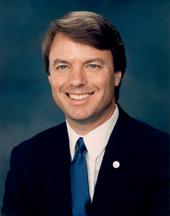
Mr. President, although I must be necessarily absent for the vote this afternoon, I want to express my support for this important resolution and briefly speak on the issue that has shocked all of us…
Mr. President, although I must be necessarily absent for the vote this afternoon, I want to express my support for this important resolution and briefly speak on the issue that has shocked all of us during the past two weeks--the horrific abuse sustained by the prisoners and detainees in Iraq.
All of us condemn what has happened in Iraq's prisons. The acts the world has now seen are deplorable; they are inhumane; they are appalling. Every day brings new evidence of horrors. These actions are completely inconsistent with our values, and completely counterproductive to our efforts to help the Iraqi people achieve security, stability, and freedom.
These images cast a dark shadow on all our efforts in Iraq, and they make the work of our brave military men and women in Iraq only harder. These shameful acts of a few have put many in harm's way. As we condemn these acts and punish those responsible all the way up the chain of command, we must continue to support our soldiers in Iraq and around the world. We cannot let the images and stories from the last week--and the images and stories that will certainly emerge in the coming weeks-- distort the fact that the vast majority of men and women serving their country today in Iraq and elsewhere are doing so with great dignity, skill and patriotism.
This is not just a major setback for our efforts in Iraq. Just think about the damage that these acts have done to America and our authority to promote peaceful, democratic change around the world. At the same time when we are trying to reach out to Arab countries--and to help their societies develop more opportunities so their people can live in greater freedom--these photographs and the behavior they depict do tremendous harm to America's ability to lead.
That is why we must stand together today to condemn these actions in the strongest terms. But our words will not be enough. We must follow up our words with deeds. There must be a full investigation into how these acts were allowed to happen, and an exhaustive effort to see that measures are put in place so that they never happen again. Many questions must be answered, and we must have the administration's full cooperation. The American people--and the Iraqi people--deserve answers. We must hold accountable those responsible all the way up the military chain of command, and they must be punished to the fullest extent of the law.
I also believe that these acts reveal such a fundamental failure of leadership that we need to have accountability here in Washington. We cannot just blame this on the individual soldiers involved. We must show the world that no one can shirk responsibility no matter how high that responsibility goes, or what office one might hold.
So if we want to signal to the rest of the world that we in fact emphatically reject what happened; if we want to send the message that what happened in that prison was inconsistent with American values; if we want to say to the rest of the world that we as a nation want to change course here, then we need to hold our leadership at the highest levels accountable.

Mr. President, it is a privilege to join Senator Fitzgerald in introducing the Healthy Lifestyles Act. This important bill will give families greater access to practical information on nutrition and…
Mr. President, it is a privilege to join Senator Fitzgerald in introducing the Healthy Lifestyles Act. This important bill will give families greater access to practical information on nutrition and physical activity and enable Americans of all ages, especially the young, to live healthier, fitter, and longer lives.
Two-thirds of our citizens are overweight. The cost of diseases associated with obesity has been estimated at $117 billion each year. Physical inactivity and unhealthy eating, the two primary causes, are responsible for at least 300,000 preventable deaths each year in the United States, and they increase the risk of many chronic diseases, including cancer, diabetes and cardiovascular diseases.
Environments that promote poor nutrition and sedentary lifestyles are major causes of this public health epidemic. The numerous messages and advertisements from various sources about what and how much to eat have produced serious public confusion about good nutrition. Many citizens would like to be more active but live in ways that discourage exercise and vigorous lifestyles that involve walking, bicycling, or other similar activities.
The Healthy Lifestyles Act is a major step in addressing these challenges. It establishes a partnership between the Department of Health and Human Services and the Institute of Medicine to conduct a comprehensive assessment of what is being done by whom on nutrition guidelines and education. The Institute of Medicine is eminently respected for its scientifically sound opinions on health issues. Its study will provide indispensable oversight for the development and dissemination of national nutrition guidelines, and an independent impartial source of nutrition information for the public.
The legislation also supports community outreach programs to support healthy nutrition and physical activity. Communities will be able to conduct campaigns encouraging consumption of healthy foods, and after- school programs will be available to encourage exercise and good nutrition for children. Support will be available for each state for obesity prevention and control programs, to encourage coordinated ongoing efforts to enhance awareness of guidelines for healthy eating and activity.
Finally, the legislation assures that the information will be widely available to the public and to health professionals. State-of-the-art curricula will be developed to educate and train professionals about nutrition education and counseling.
The Healthy Lifestyles Act is only a first step in preventing unhealthy nutrition environments by ensuring consistency and high quality in dietary information, and improving physical activity in our communities. Working together we can halt this worsening public health epidemic. I commend Senator Fitzgerald for his leadership, and I urge our colleagues in Congress to support the Healthy Lifestyles Act.

Mr. President, I am unavoidably absent from the Senate this afternoon, but would like to express my strong support for S. Res. 356. The photos and reports of abuse at Abu Ghraib prison that have…
Mr. President, I am unavoidably absent from the Senate this afternoon, but would like to express my strong support for S. Res. 356.
The photos and reports of abuse at Abu Ghraib prison that have emerged over the past week defy description. I condemn, as must all Americans, these horrific acts. It saddens and shames our country to see Americans perpetrate these abuses on other human beings. Their actions do not reflect the principles for which this country stands.
We have fought to liberate Iraq, and to free the Iraqi people from the murderous rule of Saddam Hussein. We have achieved great things in Iraq, but
we have much work to do. The sickening images of abuse that have emerged in the media threaten to undermine much of the good we have done. These incidents have marred the reputation of our country abroad, and have made the tasks of the brave Americans fighting and working in Iraq harder. But I am confident that the vast majority of men and women working to bring freedom to Iraq will conduct their noble mission with integrity and distinction.
Toward that end, we need to have all the facts about the abuses at Abu Ghraib and elsewhere, and we need them immediately. We cannot wait months for a new commission to issue a report, nor for new photos and details to dribble out over weeks. The American people need to know, at once, the abuses committed, punish those guilty of these crimes, and ensure that they never again occur. We must also ensure that similar abuses are not occurring elsewhere in detention centers outside Iraq. Our venture in Iraq is moral, and must be conducted with moral means. We must ensure that we are treating all prisoners and detainees humanely and in accordance with U.S. and international laws and regulations.
Mr. President, as Americans we are defined not just by the way in which we deal with our friends but by how we treat our enemies. I know that in many countries around the world, abuse of prisoners is commonplace and brutal interrogation is the norm, rather than the exception. But American, a Nation that was founded on the idea of liberty and justice for all, must hold itself to a higher standard. We liberate, not torture, and we free, not oppress.
Burned into our minds are terrible images: a hooded man standing on a box, a prisoner on a leash. These photos represent humanity at its worst, and represent everything that America is not. We must show the country and the world another image--that of Americans working with Iraqis to topple the statute of Saddam Hussein, to free the Iraqi people--truly represents who we are.
Show 7 more

Mr. President, today I am introducing a bill with my colleague, Senator Feinstein, to adjust the boundary of the John Muir National Historic Site. This bill, which is identical to legislation…
Mr. President, today I am introducing a bill with my colleague, Senator Feinstein, to adjust the boundary of the John Muir National Historic Site. This bill, which is identical to legislation introduced in the House by Representative George Miller, would allow the Park Service to obtain a small parcel of property to create a parking area for the John Muir National Historic Site. This would make access to the site much easier.
Naturalist John Muir lived in Martinez, CA, from 1890 until his death in 1914. While living in Martinez, Muir served as the first president and one of the founders of the Sierra Club, played a prominent role in the creation of several national parks, and wrote numerous articles and books on the importance of conservation. In 1964, John Muir's former residence became part of the National Park Service. Designated as a National Historic Site, John Muir's estate provides valuable open space in the San Francisco Bay area.
In 1988, Congress enacted legislation to expand the John Muir Historic Site. Included in this site expansion was a 3.3 acre parcel of land owned by the city of Martinez, which was donated by the city to the National Park Service. Following a survey conducted as part of the development of the General Management Plan, the Park Service discovered that a two-tenths acre triangle adjacent to the acquired parcel did not appear to have an owner.
Enactment of this legislation would allow the Park Service to either acquire the land, if an heir or owner is identified, or condemn the property if an heir or owner is not found. When the title to the land is clear, the Park Service wants to construct a parking area in order to meet the growing needs of the site users. This 9,500 square foot addition to the John Muir National Historic Site would allow the proposed parking area to accommodate school busses and provide 12 additional parking spaces.
This bill authorizes a noncontroversial boundary adjustment and is supported by Contra Costa County and the city of Martinez. I urge my colleagues to support this legislation.
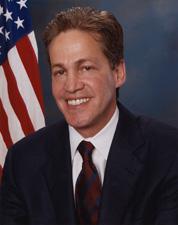
Mr. President, I strongly support the resolution which the Senate is considering today. The world has witnessed images that do not represent America's cause for freedom, democracy and human rights.…
Mr. President, I strongly support the resolution which the Senate is considering today.
The world has witnessed images that do not represent America's cause for freedom, democracy and human rights. While our American soldiers toil and sacrifice to bring justice and opportunity to Iraq, there is a small group of soldiers who have undermined the work of this noble mission through their despicable behavior.
The acts that took place at Abu Ghraib prison were simply inexcusable. The violation of any Iraqi prisoner's human rights, dignity or life by any member of the American military--for whatever reason--defies not only international law, but basic human decency. These acts risk undermining the mission, and put at risk other American men and women working for freedom in Iraq.
I am concerned that Congress was not adequately informed of the abuses and the investigations. Secretary Rumsfeld's appearance on Capitol Hill last week was welcome, and I expect that he will continue to make himself available to the Senate.
I deeply appreciate the President's willingness to speak candidly and apologetically to the Arab world. I support the decision to offer compensation to the victims, and to put together commissions to ascertain how widespread the abuse and humiliation were, and what can be done to prevent future violations. I am hopeful that these steps will be part of a much needed
process to make amends for the great damage that has been done by a few men and women.
Abu Ghraib was home to torture under Saddam Hussein's regime, and has not yet overcome its notorious reputation. Consequently, I believe that, should the Iraqi people wish it, this prison should be wiped off the map. Tearing down Abu Ghraib prison would symbolize the definitive end to the era of torture--an era which preceded Operation Iraqi Freedom, and must be put to rest once and for all.
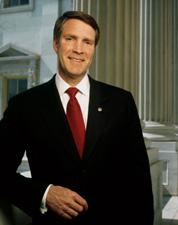
Mr. President, in 2 minutes we will be voting on S. Res. 356, a resolution condemning the abuse of Iraqi prisoners at Abu Ghraib prison. I would like to close the debate and comments today by reading…
Mr. President, in 2 minutes we will be voting on S. Res. 356, a resolution condemning the abuse of Iraqi prisoners at Abu Ghraib prison. I would like to close the debate and comments today by reading the resolve clauses that follow a number of whereas statements. This is what we will be voting on in a couple minutes:
Resolved, That the Senate--
(1) commends all Americans serving nobly abroad who are
advancing the ideals of freedom and democracy, and working,
through the individual and collective actions of such
individuals, to improve the lives of all the people of Iraq;
(2) condemns in the strongest possible terms the despicable
acts at Abu Ghraib prison and joins with the President in
expressing apology for the humiliation suffered by the
prisoners in Iraq and their families;
(3) urges the Government of the United States to take
appropriate measures to ensure that such acts do not occur in
the future;
(4) believes that it is in the interests of the United
States and of the people of the United States that the
appropriate committees of the Senate, exercising the
oversight responsibilities of such committees, and the
President, through the appropriate departments or agencies of
the executive branch, conduct a full investigation of the
abuses alleged to have occurred at Abu Ghraib; and
(5) urges that all individuals responsible for such
despicable acts be held accountable.
Mr. President, I yield the floor.
Mr. President, I ask for the yeas and nays.
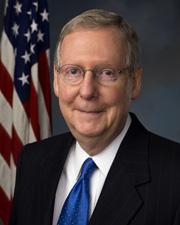
I announce that the Senator from Minnesota (Mr. Coleman), the Senator from Arizona (Mr. McCain), the Senator from Alaska (Ms. Murkowski), and the Senator from Pennsylvania (Mr. Specter) are…
I announce that the Senator from Minnesota (Mr. Coleman), the Senator from Arizona (Mr. McCain), the Senator from Alaska (Ms. Murkowski), and the Senator from Pennsylvania (Mr. Specter) are necessarily absent.
I further announce that if present and voting the Senator from Minnesota (Mr. Coleman) would vote ``yes.''
I move to reconsider the vote, and I move to lay that motion on the table.
The motion to lay on the table was agreed to.

I announce that the Senator from North Carolina (Mr. Edwards), the Senator from South Carolina (Mr. Hollings), the Senator from Massachusetts (Mr. Kerry), and the Senator from New Jersey (Mr.…
I announce that the Senator from North Carolina (Mr. Edwards), the Senator from South Carolina (Mr. Hollings), the Senator from Massachusetts (Mr. Kerry), and the Senator from New Jersey (Mr. Lautenberg) are necessarily absent.
I further announce that if present and voting, the Senator from New Jersey (Mr. Lautenberg) would vote ``yea.''
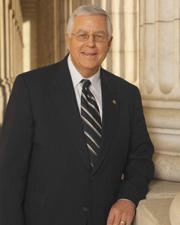
Mr. President, I ask unanimous consent that the Senate proceed to the consideration of Calendar Nos. 596, 597, and 598, en bloc. Mr. President, I ask unanimous consent that the bills be read the…
Mr. President, I ask unanimous consent that the Senate proceed to the consideration of Calendar Nos. 596, 597, and 598, en bloc.
Mr. President, I ask unanimous consent that the bills be read the third time and passed, the motions to reconsider be laid upon the table, and that any statements relating to the bills be printed in the Record.
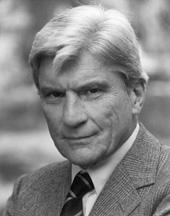
Mr. President, I ask unanimous consent that I be added as a cosponsor of the resolution.
Mr. President, I ask unanimous consent that I be added as a cosponsor of the resolution.
Bill Text
3 versions available
        [Congressional Bills 108th Congress]
[From the U.S. Government Publishing Office]
[S. 2398 Engrossed in Senate (ES)]

108th CONGRESS
2d Session
S. 2398

_______________________________________________________________________

AN ACT

To designate the Federal building located at 324 Twenty-Fifth Street in
Ogden, Utah, as the James V. Hansen Federal Building.

Be it enacted by the Senate and House of Representatives of the
United States of America in Congress assembled,

SECTION 1. DESIGNATION.

The Federal building located at 324 Twenty-Fifth Street in Ogden,
Utah, shall be known and designated as the ``James V. Hansen Federal
Building''.

SEC. 2. REFERENCES.

Any reference in a law, map, regulation, document, paper, or other
record of the United States to the Federal building referred to in
section 1 shall be deemed to be a reference to the ``James V. Hansen
Federal Building''.

Passed the Senate July 19, 2004.

Attest:

Secretary.
108th CONGRESS

2d Session

S. 2398

_______________________________________________________________________

AN ACT

To designate the Federal building located at 324 Twenty-Fifth Street in
Ogden, Utah, as the James V. Hansen Federal Building.