Diabetes Self-Management Training Act of 2004
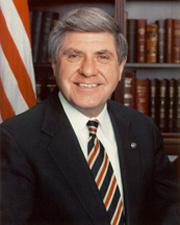 Sen. Ben Nelson (D-NE)
Legislative Activity
Stay on top of the latest movement without scrolling through every action
Read twice and referred to the Committee on Finance.
May 18, 2004
View full timeline
Introduced in Senate
May 18, 2004
Sponsor introductory remarks on measure. (CR S5609)
May 18, 2004
Read twice and referred to the Committee on Finance.
May 18, 2004
Floor Debate
7 membersWhat members said about S. 2431 on the floor


 +2
+2
Floor Debate
7 membersWhat members said about S. 2431 on the floor
Mr. President, I rise today to speak about an issue that is fundamental to our democracy. That issue is the right for each American to know that their vote has been cast and accurately counted.…
Mr. President, I rise today to introduce ``The Missing Child Cold Case Review Act of 2004,'' which will allow an Inspector General to authorize his or her staff to provide assistance on and conduct…
Mr. President, today I introduce an important piece of legislation that will correct an oversight from the Balanced Budget Act of 1997. In 1997, Congress created a new diabetes benefit under…
Mr. President, today I introduce an important piece of legislation that will correct an oversight from the Balanced Budget Act of 1997. In 1997, Congress created a new diabetes benefit under…
Mr. President, today I am introducing legislation to create a national commission to study the potential establishment of a National Museum of the American Latino Community in Washington, D.C. I am…
Show 4 more
Mr. President, I rise today with Senator Nelson to introduce an important piece of legislation that will dramatically improve the quality of diabetes care under the Medicare program. Diabetes is a…
Mr. President, I rise today with Senator Nelson to introduce an important piece of legislation that will dramatically improve the quality of diabetes care under the Medicare program. Diabetes is a…

Mr. President, today my colleague, Senator Thomas, and I are introducing the ``Equity for Our Nation's Self-Employed Act of 2004.'' This legislation would reduce the cost of health insurance for the…

Mr. President, I rise to introduce a bill to reauthorize the Native American Programs Act. This act is administered by the Administration for Native Americans within the Department of Health and…
Bill Text
Latest available legislative text
        [Congressional Bills 108th Congress]
[From the U.S. Government Publishing Office]
[S. 2431 Introduced in Senate (IS)]

108th CONGRESS
2d Session
S. 2431

To amend title XVIII of the Social Security Act to improve access to
diabetes self-management training by designating certified diabetes
educators recognized by the National Certification Board of Diabetes
Educators as certified providers for purposes of outpatient diabetes
education services under part B of the medicare program.

_______________________________________________________________________

IN THE SENATE OF THE UNITED STATES

May 18, 2004

Mr. Nelson of Nebraska (for himself and Mrs. Hutchison) introduced the
following bill; which was read twice and referred to the Committee on
Finance

_______________________________________________________________________

A BILL

To amend title XVIII of the Social Security Act to improve access to
diabetes self-management training by designating certified diabetes
educators recognized by the National Certification Board of Diabetes
Educators as certified providers for purposes of outpatient diabetes
education services under part B of the medicare program.

Be it enacted by the Senate and House of Representatives of the
United States of America in Congress assembled,

SECTION 1. SHORT TITLE.

This Act may be cited as the ``Diabetes Self-Management Training
Act of 2004''.

SEC. 2. FINDINGS.

Congress makes the following findings:
(1) Diabetes is the fifth leading cause of death in the
United States. Over 18,000,000 Americans (6.2 percent of the
population) currently are living with diabetes, a number that
is estimated to increase to 29,000,000 by the year 2050. In
2002, diabetes accounted for $132,000,000,000 in direct and
indirect health care costs. Diabetes is widely recognized as
one of the top public health threats facing our Nation today.
(2) Diabetes can occur in 2 forms--type 1 diabetes is
caused by the body's inability to produce insulin, a hormone
that allows glucose or sugar to enter and fuel cells and type 2
diabetes, which occurs when the body fails to make enough
insulin or fails to properly use it. People with type 1
diabetes are required to take daily insulin injections to stay
alive. While some people with type 2 diabetes need insulin
shots, others with type 2 diabetes can control their diabetes
through healthy diet, nutrition, and lifestyle changes. Type 2
diabetes accounts for up to 95 percent of all diabetes cases
affecting 8 percent of the population age 20 and older. The
prevalence of type 2 diabetes has tripled in the last 30 years,
with much of that increase due to an upsurge in obesity.
(3) In 2002, the Diabetes Prevention Program study found
that participants (all of whom were at increased risk of
developing type 2 diabetes) who made lifestyle changes reduced
their risk of getting type 2 diabetes by 58 percent.
(4) Diabetes self-management training (DSMT), also called
diabetes education, provides knowledge and skill training to
patients with diabetes, helping them identify barriers,
facilitate problem solving, and develop coping skills to
effectively manage their diabetes. Unlike many other diseases,
diabetes requires constant vigilance on the part of the patient
and demands far more than just taking pills or insulin shots. A
certified diabetes educator is a health care professional--
often a nurse, dietitian, or pharmacist, who specializes in
helping people with diabetes develop the self-management skills
needed to stay healthy and avoid costly acute complications and
emergency care, as well as debilitating secondary conditions
caused by diabetes.
(5) There are currently over 20,000 diabetes educators in
the United States, most of whom are certified diabetes
educators (CDEs) credentialed by the National Certification
Board for Diabetes Educators (NCBDE). To earn a CDE
designation, a health care professional must be licensed or
registered, or have received an advanced degree in a relevant
public health concentration, have professional practice
experience and have met minimum hours requirements in diabetes
self-management training, and have met certification and
recertification requirements. Many other health care
professionals that are able to bill for diabetes education
through the medicare program have far less experience or
ability to provide the skilled expertise to help people with
diabetes self-manage the disease.
(6) CDEs represent the only group of health care
professionals who provide diabetes self-management training
that have not been recognized as health care providers and are
therefore precluded from directly billing the medicare program
for DSMT. Adding CDEs as providers to that program would give
diabetes patients access to the care they need.

SEC. 3. RECOGNITION OF CERTIFIED DIABETES EDUCATORS AS MEDICARE
PROVIDERS FOR PURPOSES OF DIABETES OUTPATIENT SELF-
MANAGEMENT TRAINING SERVICES.

(a) In General.--Section 1861(qq) of the Social Security Act (42
U.S.C. 1395x(qq)) is amended--
(1) in paragraph (2)--
(A) in subparagraph (A), by inserting ``and
includes a certified diabetes educator (as defined in
paragraph (3)) who is credentialed by a nationally
recognized certifying body for diabetes educators and
who provides services within a diabetes self-management
training program that is lawfully operated under all
applicable Federal, State, and local laws and
regulations'' before the semicolon at the end; and
(B) in subparagraph (B), by inserting before the
period at the end the following: ``or is a certified
diabetes educator (as so defined) who is credentialed
by a nationally recognized certifying body for diabetes
educators and who provides services within a diabetes
self-management training program that is lawfully
operated under all applicable Federal, State, and local
laws and regulations''; and
(2) by adding at the end the following:
``(3) For purposes of paragraph (2), the term `certified diabetes
educator' means an individual who--
``(A) is a health care professional who specializes in
helping individuals with diabetes develop the self-management
skills needed to overcome the daily challenges and problems
caused by the disease;
``(B) has an advanced degree in a relevant public health
concentration or is a licensed or registered health care
professional, has met eligibility requirements for initial
certification, including meeting the minimum requirements for
professional practice experience and hours for diabetes self-
management, and has passed a certification exam approved by a
nationally recognized certifying body for diabetes educators;
and
``(C) has periodically renewed certification status
following initial certification.''.
(b) GAO Study and Report.--
(1) Study.--The Comptroller General of the United States
shall conduct a study to identify the barriers that exist for
individuals with diabetes in accessing diabetes self-management
training, including economic and geographic barriers and
availability of appropriate referrals and access to adequate,
qualified providers.
(2) Report.--Not later than 1 year after the date of
enactment of this Act, the Comptroller General of the United
States shall submit a report to Congress regarding the study
conducted under paragraph (2).
(c) Effective Date.--The amendments made by subsection (a) shall
apply to diabetes outpatient self-management training services
furnished on or after the date that is 6 months after the date of
enactment of this Act.
<all>