Uniformed Services Differential Pay Protection Act

Legislative Activity
Stay on top of the latest movement without scrolling through every action
Sponsor introductory remarks on measure. (CR S6720)
June 14, 2004
View full timeline
Introduced in Senate
May 19, 2004
Sponsor introductory remarks on measure. (CR S5806-5807)
May 19, 2004
Introduced in the Senate. Read the first time. Placed on Senate Legislative Calendar under Read the First Time.
May 19, 2004
Read the second time. Placed on Senate Legislative Calendar under General Orders. Calendar No. 534.
May 20, 2004
Sponsor introductory remarks on measure. (CR S6720)
June 14, 2004
Floor Debate
22 membersWhat members said about S. 2448 on the floor
 CJD
CJD JW
JW CL
CL WA
WA JIL+17
Floor Debate
22 membersWhat members said about S. 2448 on the floor
Mr. President, I would be glad to. I am impressed by the distinguished chairman's indulgence and patience as we wander through this maze of amendments. I believe I have to ask unanimous consent to…
Mr. President, I would be glad to. I am impressed by the distinguished chairman's indulgence and patience as we wander through this maze of amendments. I believe I have to ask unanimous consent to set aside the pending amendment, and I make such a request.
Mr. President, I call up amendment No. 3312 and send a modification of that amendment to the desk.
I ask unanimous consent that reading of the amendment be dispensed with.
Mr. President, I will go through and explain what this amendment does. At the outset of my remarks, let me begin by commending the distinguished Senator from Virginia, the chairman of the Armed Services Committee, and Senator Levin of Michigan. The amendment I am raising here has been in many ways addressed by actions taken by the Armed Services Committee. I begin my comments by commending the chairman and the ranking member for the tremendous job they have done of improving what was a request by the administration in the area I am going to cover. I commend them as well for other matters but particularly on this point.
Like all of my colleagues, without regard to party or ideology, we have been concerned over the last number of months with the increasing number of reports that our men and women in uniform have had to dig deep into their own pockets to pay for their own safety equipment. Most disheartening have been the news accounts of men and women in uniform having to buy their own body armor here at home or having it bought for them by their loved ones before they deploy to Iraq and Afghanistan or while they have been on duty.
There are stories like that of SPC Bill Palifka, a member of the Connecticut National Guard's 248th Engineering Company which was stationed in the west of Baghdad last year. He learned shortly before deploying that his unit wouldn't have the interceptor vests that it needed in order to be safe in Iraq. So his mother Pene, from East Hartford, CN, went out and bought a vest for $1,100 from a private company.
These stories, unfortunately, have been all too common, as this chart shows. I brought up the news article from the New York Times, reported just 3 weeks ago, an article entitled ``Bulletproof Vests Collected To Help A Son's Unit in Iraq.'' A New Jersey couple solicited donations of body armor
from the New Jersey City police so their son could lay down protecting vests on the floor of his Humvee, currently in Iraq. I quote:
Before his unit shipped from Kuwait to Iraq in March, First
Lt. Christian Boggiano, 23, made a special appeal to his
mother, Mary, by e-mail message. Please, he asked, scrounge
around for a few old police bulletproof vests and mail them
to [me]. ``Once I get up north, we'll use them on the doors
and floors of the Humvees so that when roadside bombs go off,
they'll catch a lot of shrapnel.''
This is what the young lieutenant wrote to his parents, a 2002 graduate of West Point.
The Jersey Police Department and about 50 other police departments across New Jersey came through for Lt. Boggiano.
His unit came through in ways our Government did not.
In my mind, no U.S. soldier should have to get his mother or father to help send body armor for his missions in Iraq. But people like Mr. and Mrs. Baggiano and the good citizens associated with New Jersey police departments were driven to act. Why? Because there was a critical need to fully equip our troops. Unfortunately, Lt. Baggiano is not alone. A USA Today article recently reported on the village of Foley, AL, which held fundraisers, and eventually raised enough money to build and assemble their own protective steel armor for the Humvees of the AL National Guard's 711th Signal Battalion Charlie Company. That community should be commended. But this situation seems ludicrous to me. Our troops and their loving neighbors should not be spending their own money to make sure our soldiers can have the protection they need.
For this reason, I am introducing an amendment today that will give our troops the support they deserve. My amendment will require the Secretary of Defense to reimburse soldiers, loved ones, and nonprofit organizations who have dug deep into their own pockets to provide our troops with the equipment their Government should have provided them all along. This amendment will serve the health, safety, and protection of our soldiers, covering expenditures on items such as body armor, vehicle protection, hydration equipment, advanced combat helmets, and other gear needed to serve our troops in Iraq and Afghanistan.
Not a day goes by when we don't hear of an incident in Iraq where a so-called ``improvised explosive device'' or IED, has detonated, killing or maiming some of our brave men and women. At the outset of our post-war operations, it was reported that nearly one-quarter of American troops serving in Iraq did not have ceramic plated body armor, which can stop bullets fired from assault rifles and shrapnel. It took months and hundreds of U.S. casualties before the administration finally changed its priorities and decided to outfit all our deployed troops with the most modern interceptor body armor, and to outfit their vehicles with protective armor.
In addition, according to the Army, soldiers have been spending upward of $300 per person on equipment to outfit themselves for war. In response, the Army established the ``Rapid Fielding Initiative'' designed to outfit our soldiers with the most modern equipment available so that they do not have to spend their own money on the latest combat helmets or hydration systems. With this program, our soldiers--many of whom are less than the age of 21, making under $20,000 a year--will have the right gear for their mission, and they won't have to dig deep into their own pockets to buy their own equipment. But unfortunately, not all of our soldiers in Iraq have access to this program, because in the past, it hasn't been fully funded. That needs to be remedied, and my amendment will make sure that our troops don't have to shell out their own money to get the Camelbak hydration systems, advanced combat helmets, and proper clothing they need to do their jobs.
This chart shows what an average foot soldier is wearing in Iraq--60 pounds of body armor plus tactical equipment in the hot desert heat, heavy Kevlar vests, high-tech GPS compass gear, special frame backpacks, and other survival gear. In 120 degrees, carrying all of this equipment becomes quite burdensome, and has made special hydration systems necessary for our troops to safely survive the desert heat. Water-pack systems called Camelbaks are now being attached to soldiers' backpacks, to allow them easy access to water even while they are in patrolling the streets of Iraq. And let's be honest about this. Camelbaks are no longer a matter of convenience. If a soldier has to stop moving to take out his canteen for a sip of water, he may be a sitting duck for a sniper or insurgent fire.
Unfortunately, with a shortage of funds, the Army cannot afford to equip all its soldiers with this kind of equipment, so many soldiers are still using bulky canteens that quickly heat up in the desert sun. Most of the canteens do not have adequate capacity to carry all the water they need in Iraq's extreme heat. In other cases, soldiers are paying hundreds of dollars out of their own pocket to buy the equipment themselves, everything ranging from these Camelbaks to radios, because, in spite of the Army's stated priorities, the administration did not procure enough personal equipment for our fighting men and women. We need to do better than this.
I want to commend the Armed Services Committee for recognizing the importance of this program as well as that of critical body armor systems. I was pleased to see the Senate Armed Services Committee override the President's considerably low budget request for force protection. Under the leadership of Senators Warner and Levin, the Armed Services Committee increased the Rapid Fielding Initiative from the Bush administration's requested $57.2 million to $262 million. They also demonstrated their usual good sense and further added to the President's considerably low-budget request for personal body armor and armored vehicles. The Army told Congress the President's budget was shortchanging them by $295 million in interceptor body armor. And the Marines said they would be short $16.6 million if the Bush budget were to prevail. In spite of the President's proposals, the committee fully funded those programs.
In addition, $905 million was put toward the Stryker armored vehicles that are already proving valuable in military operations in Iraq. Almost $1.1 billion, an increase of $927 million over the President's proposed budget, was used to accelerate procurement of up-armored humvees, as well as add-on ballistic armor for medium and heavy trucks, to protect our troops on patrol in hostile environments. As a result of these provisions, critical resources will be sent to our troops to enhance their safety while in harm's way.
I applaud these efforts. I know some of my colleagues will suggest that because the committee has now funded these programs, my amendment is unnecessary. Or, as I have already been hearing, perhaps they will say that we are encouraging our troops to go out and buy new equipment since we'll just reimburse them in the end. I have the official DOD position paper with talking points opposing my amendment. I would like to address each of the issues raised, point by point.
First, DOD says, ``the amendment may not support the purchase of the proper equipment. The DOD spends millions to test and procure the needed protective, safety, and health equipment for our service members. The DOD will have no way of knowing what testing personally procured items went through or whether the equipment is effective.'' This seems to be an unreasonable argument. In spite of the millions DOD spent on testing equipment, the fact remains that they failed to outfit our soldiers with the gear they needed. The Department acknowledged as much, saying that our soldiers did not receive enough personal body armor until January of this year and will still not have adequately armored vehicles until July. In my modified amendment, we say that a soldier's company commander has the discretion to decide which protective gear would be appropriate for reimbursement. These commanders on the ground know our soldiers' needs the most. And it makes sense for them to be the ones determining what equipment the soldiers lacked when they headed over to Iraq and Afghanistan. This addresses another concern DOD seems to have that my amendment is somehow too broad--this amendment says that if and only if a soldier purchased an item that he absolutely
needed, according to the most knowledgeable soldiers in the field, he will be reimbursed for that item.
DOD's talking points also suggest that my amendment will encourage service members and their loved ones to purchase equipment on their own outside this accountability with the exception of receiving future reimbursement.'' That is absolutely misleading.
This amendment only applies to purchases made during finite periods, and by the Army's own admission they had not provided adequate supplies to our troops. This amendment only applies to purchases for personal body armor and other safety equipment that can be made only for the period between September 11, 2001, and December 31, 2003. For purchases to provide Humvee protection, claims can be made only for the period of September 11, 2001, and July 31, 2004.
We allow an exception to that if the Army decides they will have all the necessary equipment by these dates. If for some reason they are unable to do it, we do not need to come back with another amendment. It seems to me we ought to leave it up to the military people to decide. If they are not able to meet the dates, then they have authority to reimburse later. I leave that up to them to avoid any future need of talking about this issue on the floor of the Senate. We are dealing with finite periods. It is the field commanders who make the decisions.
Finally, to address the charge my amendment sets an unmanageable precedent that the DOD claims will saddle the Department of Defense with an open-ended financial burden, we also modified the amendment to set a $1,100 cap on money that can be reimbursed for purchases made on behalf of any one individual. I was going to make it $1,000. I changed it to $1,100. Candidly, a family in Connecticut paid $1,100 for the vest their child needed while in combat. So we made the cap at that level. I believe, therefore, my colleagues will find this proposal more reasonable and, most importantly, necessary. It is a finite period of time, there are individual caps on the amount that can be reimbursed, field commanders would make the decision, and any extension of time would have to come from a unilateral decision by the Department of Defense.
I think it is reasonable. If people went out, such as my constituents or in communities in New Jersey or towns in Alabama and provided additional protection for our service men and women, the very least, it seems to me, we can do is reimburse their individual soldiers, their families, or the organizations that provided that protection.
I, again, think we all understand how these things can happen. Certainly, there should have been better preparation to see to it these young men and women would have all the protection necessary, but for a variety of reasons, which we do not need to pore over, they were not. And by the Department of the Army's own admission, we were not able to provide that body armor until December 31 of last year. So there is a gap of almost 2 years where people were acquiring that equipment, and up until July of this year, the Humvee protections will not be in place.
I do not think it is asking too much during a finite period of time for a limited amount of money, where field commanders make the decisions, that we cannot say to these families: Show us the proof of what you paid for this equipment, let the field commanders decide, and if you meet those tests, then your Government is going to say you should not have to dish out money from your own pockets, particularly when we are talking about 21-year-old kids making $20,000 a year, where they may have invested $1,000 in decent vests to protect from IEDs and other attacks occurring on the dangerous streets of Iraq and Afghanistan.
I believe this is a reasonable proposal we have offered. If we fail to adopt this amendment, I believe my colleagues and I will once again be forced to answer tough questions, as we all do, when we go back and meet our returning soldiers from the Guard and Reserve and their families in our respective States.
At every meeting I have had in the State of Connecticut with families of men and women serving in Iraq, this issue has come up: Why are we not providing the protection these men deserve?
I, along with General Cugno, my National Guard commander in Connecticut, tried to address these questions of how these things happen. I told him we would make an effort to see that any costs they incurred of these items would be reimbursed. They believe that is the right thing to do. I hope my colleagues do as well.
I know money is tight this year. We are facing enormous budget deficits. Again, I commend my friends and colleagues on the Armed Services Committee. Mr. President, they have done a very good job in beefing up the numbers that otherwise come from the Department of Defense and the White House, and by adding additional resources, they have made it possible to do this.
The amendment provides Secretary of Defense discretion to determine from which accounts moneys will be sought to reimburse our soldiers. One obvious place from which these moneys could be drawn is the $2.5 billion contingency fund that was added by the Warner amendment a few days ago as part of the $25 billion supplemental for operations in Iraq and Afghanistan.
That is my argument. That is the amendment. My hope is we will be able to adopt it without much fanfare. It seems to be a reasonable request to make on behalf of our men and women in uniform.
I yield the floor.
Mr. President, if my colleague will yield, I certainly do not disagree. I do not know the numbers myself. Others may have more detailed information. We know there were some large stories--I do not have all of them here. There have been widespread reports of it.
I accept in part what my colleague has said, that it would be unnecessary for massive amounts of this kind of armor. There was an anticipation about a different reception after the military victory in Iraq. We discovered otherwise. Of course, somebody argued we should have anticipated that. Nonetheless, there was concern.
I am not prepared to make a case here that this is terribly widespread. I do not know that. I do know there were enough examples of it that I thought it warranted an issue.
I point out, again--I say this to my friend and Senator Levin as well--my colleagues have done a terrific job. There is a difference in this budget between what was sent and what the
committee is asking us to support when it comes to these issues, and the significant increase, from $57 million to $262 million for buying additional equipment, is a significant amount of money. I commend both Senators for doing that.
There were other areas where additional resources were provided by the committee that were not otherwise requested by the DOD. I applaud my colleagues for that. I do not know what the numbers reflect in terms of widespread use. The committee did a very good job, and, as I said at the outset, I commend you immensely for having recognized this issue and jumped into the void so that today it looks as though, based on assessments, by July 31 of this year the issue involving the Humvees will be addressed, and back in December of last year the issue looks as if it was addressed in terms of body armor. So we cover those periods where there apparently was a lack of resources.
I do not think the issue would have come to closure if it had not been for the Senator from Virginia, and I also say this to my colleague from Michigan. It made a significant difference, and I thank my colleagues immensely on behalf of my constituents and literally thousands of soldiers serving in dangerous places.
Mr. President, I thank my colleague, but I had hoped, if he would not object, we could ask for a rollcall vote because we will be looking to vote anyway, and this would help the conference as a whole. I know we want to move things along.
I would like to respect my friend from Virginia.
That is a reasonable request. I will ask for one and we can vitiate it later.
I ask for the yeas and nays on the Dodd amendment.
I ask unanimous consent to lay aside the pending amendment.
I call up amendment 3313 and I send a modification to the desk.
I am happy to do that.
Mr. President, I have sent the modification to the desk. I inquire, has the Chair ruled on it?
Fine.
Madam President, I ask unanimous consent that we now be allowed to debate amendment No. 3313, as modified.
Thank you, Madam President. And, again, I commend my two friends and colleagues, the chairman and ranking member of the Armed Services Committee.
Let me briefly describe what this amendment is and what we try to do.
This amendment attempts to address what I believe is a very legitimate and serious concern that has come to light in recent days with respect to the use or misuse of contractors in the treatment of detainees in Iraq.
Quite simply, this amendment would prohibit the use of contractors in the interrogation of prisoners and offensive military operations and establish certain restrictions with respect to the transfer of prisoners to contractors and foreign nations.
Let me try to explain why this is so and what the background of all this is. According to some estimates, there are as many as 20,000 contractors operating in Iraq today, many carrying out mission-critical military roles, such as security, protection, interrogation, logistics support, and paramilitary and military training.
Increasingly, U.S. contractor activities have become deeply intertwined with those of U.S. troops and Coalition Provisional Authority personnel. These activities have put them in harm's way. As we have all painfully learned, contractors are among those who have been taken hostage by insurgents in Iraq. They have also suffered terrible injuries and loss of life, the most horrific of which occurred on April 13 of this year when the bodies of four contractors were burned, mutilated, and hung from a bridge in Iraq.
Equally troubling, it looks more and more likely that contractors may have taken part in the interrogation of Iraqi prisoners and may be linked directly or indirectly to the reported abuses of those prisoners. Even today there may be still some taking part in the interrogation of prisoners.
Let me say as an aside, by the way, that I commend, again, the Armed Services Committee under the leadership of Senator Warner and Senator Levin for the very thoughtful hearings the Armed Services Committee had about this matter and the professional manner in which they went about examining these issues and doing the kind of thorough look that a standing committee of the Senate ought to make, regardless of the party in power in the White House. They have done a very good job and have been tremendously helpful to the American public.
We have all read reports and seen graphic pictures of the heinous abuses associated with the incarceration of Iraqi prisoners. Unfortunately, so has almost the entire world been witness to these photographs and the stories about what has occurred.
It does not take much of an imagination to figure out that the consequence of those abuses has been a disaster not only with respect to the U.S. policy in Iraq but also with respect to our policies throughout the greater Middle East. That is why I have included a provision in the pending amendment to prohibit the use of contractors in the interrogation of prisoners, detainees, and combatants. However, mindful that in the short term we may not have sufficient military personnel with requisite language and interrogation skills at certain critical moments, I have also included in this pending amendment Presidential authority to waive these restrictions under certain narrow constrictions: During fiscal year 2005 with respect to their use as translators, and for the first 90 days of the next fiscal year with respect to interrogations.
It should go without saying that any contractor who is employed by the United States as a translator or interrogator must be certified as highly proficient in the areas for which he or she is being employed, and such contractors must be properly supervised at all times by official U.S. military personnel. To help ensure that is the case, the amendment I am offering this afternoon would also require the President to submit a quarterly report to Congress on the use of contractors as translators and in interrogations.
I remind my colleagues that at this very moment contractors in Iraq go about their business virtually unregulated. They have been exempted from local law by CPA regulation. They are also outside the Uniform Military Code of Justice and could, therefore, avoid prosecution in a military court of law. Contractors' accountability under U.S. international law remains untested. And now the Bush administration is putting pressure on the transitional Iraqi government to grant immunity to contractors after the June 30 transfer of power. If the transitional Iraqi government succumbs to this pressure, contractors won't only have immunity from prosecution, they will likely be able to act with impunity while they participate in some of our most sensitive military intelligence operations. I think this is unacceptable and puts our troops and our mission at great risk.
The more we learn, the more it seems this whole business of hiring contractors has gotten out of control. We need to be more scrupulous-- not less--about the tasks we assign to contractors. Quite frankly, I don't think it makes much sense to have contractors performing interrogations. Apparently neither does the Army, whose policy reportedly bars contractors from military intelligence jobs such as interrogating prisoners unless there are not enough qualified people in the Army to perform those duties.
According to recent reports, the source of this policy is an Army policy memo, written in December 2000, by Patrick T. Henry, then the Army's top personnel official. In this memo he asserted that allowing private workers to gather military intelligence presented ``a risk to national security.'' That statement is anything but ambiguous. Let me quote it again. From the Army's top personnel official, it is ``a risk to national security,'' in a 2000 memo prepared by the U.S. Army.
Thomas White, the former Secretary of the Army, has also expressed his opposition to hiring contractors to question prisoners, stating in an interview ``the basic process of interrogation should be kept in- house on the Army side.''
Moreover, last week it was reported that CACI International, a contractor caught up in this controversy, was not
even under contract with the Department of Defense. Rather its activities were being managed by the U.S. Department of Interior which approved the company's hiring of interrogators utilizing a preexisting contract for computer services with that company. The particular circumstances of the CACI contract blur even further the accountability of its employees because Department of Interior contractors may not be covered by certain U.S. laws specifically enacted to cover Department of Defense contractors, such as the Military Extraterritorial Jurisdiction Act, which attempts to make U.S. Department of Defense contractors working overseas legally accountable.
How many other contractors have been employed by non-Department of Defense agencies to carry out activities in Iraq? To say we have seen some extraordinary contracting practices in the case of Iraq is an understatement. I would hope these practices are not being employed to circumvent the requirements of the Geneva Conventions or other international U.S. laws, because if you are doing this as a matter of policy, I am deeply concerned that we will be inviting other nations to do the same to the detriment of the safety of American military and civilian personnel around the globe.
Indeed, according to the comprehensive report of MG Antonio Taguba, contractors employed in Iraq participated in prisoner interrogations with minimal supervision. And I quote him:
They allegedly on occasion even provided direction to U.S.
military police.
The words ``minimal supervision'' are not mine. They were part of a job posting for the interrogator international analyst team lead assistant which is listed on the contract at CACI International's Web site.
I have reproduced an excerpt from the job posting as it was reprinted in the Washington Post on May 10 on the poster behind me. It reads:
Description: Assists the interrogation support program team
. . . to increase the effectiveness of dealing with
detainees, persons of interest and prisoners of war (POWs)
that are in the custody of the U.S./Coalition forces . . . in
terms of screening, interrogation, and debriefing of persons
of intelligence value. Under minimal supervision, will assist
. . .
The key words are ``under minimal supervision.'' The new posting now reads ``under minimal CACI supervision,'' the name of the international company.
This isn't all. A former CACI interrogator was quoted on May 13 in the Washington Post as saying:
Civilian interrogators were often free to conduct
interrogations as they best saw fit.
And General Taguba reportedly recommended to one employee of CACI that he be ``fired, reprimanded, and denied his security clearances for giving instructions to Army policemen that he clearly knew equated to physical abuse.''
Indeed, this lack of supervision may have been the rule rather than the exception in the Abu Ghraib prison. More importantly, with the fate of our mission in Iraq and our international reputation at stake, the American people deserve to know why civilian contractors were participating in these interrogations in the first place.
This Senator--and I am sure many of my colleagues would agree--does not think private contractors have any place in such highly sensitive military operations. That is not only because of these human rights abuses or potential violations of U.S. international law, it is because they have exponentially increased the danger level for more than 135,000 honorable and dedicated U.S. troops currently risking their lives in Iraq. We owe it to all those brave men and women who now face a far more difficult task in winning the hearts and minds of Iraqis or setting the stage for the successful handover of sovereignty to Iraqi officials less than 15 days from now.
My amendment also addresses the related issue of the transfer of prisoners in U.S. custody. It would not only prohibit the U.S. Department of Defense from transferring prisoners into a contractor's custody, but it would also require the Secretary of Defense to keep a written record of prisoner transfers from DOD custody to foreign nations.
Why is this provision necessary? Because according to published reports, interrogation strategies reportedly included sending detainees to third countries where in some cases, according to the New York Times, they are convinced they might be executed.
A set of post-9/11 legal memoranda prepared by the U.S. Government even suggested ``if U.S. Government officials are contemplating procedures that may put them in violation of American statutes that prohibit torture, degrading treatment, or the Geneva Conventions, they will not be held responsible if it can be argued that the detainees are formally in the custody of another nation.''
There may be instances when the transfer of prisoners to third countries would serve our interests. My amendment does not prohibit that from happening. But at the very least, records of transfers should be kept to ensure that the transfer of prisoners to countries with poor human rights records is not used to circumvent U.S. and international law. My amendment would mandate that such records be kept.
Finally, this amendment would also prohibit contractors from participating in most combat operations except in cases of self- defense, and it would prevent U.S. moneys from being used to pay contractors for those purposes. I understand our stated U.S. policy does not permit U.S. contractors in combat. The chaos on the ground has created a climate where, for the most part, these individuals operate with little or no oversight. Without specific language in statute which clearly spells out what are and are not permissible contractor activities, there will always exist the danger that circumstances will draw private citizens into armed conflict.
I would hope my colleagues would support codifying into law what the administration has said is its policy with respect to the use of private contractors in combat situations.
Madam President, I will briefly sum up what I am trying to accomplish with the pending amendment. First, I propose to restrict the use of contractors in prisoner interrogations. I point out that we provide for a little leeway here that would allow, during fiscal 2005, for a little time to be used, because we may not have the people at hand who can do translations, or perform interrogations, so we provide leeway to build this up. We would prohibit such individuals from being employed in prisoner interrogations.
Second, we would prohibit such individuals from being employed in offensive combat missions.
Finally, I would keep private contractors out of the prisoner contracting business.
I commend Senators Warner and Levin for their willingness to address some of the issues I have touched on in this amendment in the last few weeks. This is so we in the Congress ``get it,'' so to speak, and we are ready to begin repairing the damage caused by these problems which, in some cases, continue to endanger our efforts in Iraq and throughout the globe.
I believe the amendment is a reasonable and measured response to the challenges we face. I urge my colleagues to support the efforts embodied in this proposal.
I yield the floor.
Let me respond, if I may. It is an anticipated argument. We have similar provisions applying in certain categories under the United States Code here, 10 U.S.C. Section 113, Notice to Congress of Proposed Changes in Combat Assignments to Which Female Members May be Assigned; and also in Public Law 103-160.
I ask unanimous consent to have both of these provisions of the United States Code printed in the Record.
In Public Law 103-160, it says:
(4) For purpose of this subsection, the term ``ground
combat exclusion policy'' means the military personnel
policies of the Department of Defense and the military
departments, is in effect on January 1, 1993, by which female
members of the Armed Forces are restricted from assignment to
units and positions whose mission requires routine engagement
and direct combat on the ground.
So there is a precedent here, and I am using this as an example of that same language. First, it would come under defending themselves to a certain point. The idea we are trying to get at is to have these personnel not become directly involved in combat.
I am happy to do that. My intention is, obviously, not to try to chart new areas of law.
We will talk with staff to see if we might make the language tighter.
If I may respond, it is not an illegitimate concern in talking about personnel. We have all seen what could happen when you have people operating who are unregulated. In some cases, contractors have worked out of the Department of the Interior, so there is no supervision by the DOD. We are asking these people, unregulated, with no clear lines of authority, to do these things, and we have seen what happens when that occurs. It appears this is getting out of hand by private contractors.
In the area of intelligence gathering, dealing with sensitive matters--sensitive to the issue of having enough personnel on the ground to do these things--I am far more worried about the fact of rogue elements being able to cause us tremendous harm.
I think all would admit certainly that the result of what happened in Abu Ghraib prison and what the world knows today has been tremendously harmful to the United States and potentially to our men and women in uniform who may be subjected to interrogations. We know we are going to see the answers raised by others.
I provided in the amendment some leeway to allow for a period of time so it would not be required to have an immediate requirement that all of these individuals be replaced on the adoption of this particular law but allow for some leeway.
Madam President, if the Senator will go to page 2 of the amendment, the very bottom line, 25, section (b), the President may also waive the prohibition in paragraph 1 with respect to the use of contractors. Otherwise provided by that paragraph during the 90-day period--going on page 3--beginning on the date of enactment of this act, but any such waiver shall cease to be effective on the last day of such period.
There is also an earlier provision in regard to translator services regarding additional time.
I am quoting from the bill. With regard to 1(a) on page 2-- and you go to page 2 of the amendment--
Then go to line 10. It talks about interrogation of prisoners, detainees, and the like. Paragraph (b), and then it goes, on line 17, during fiscal year 2005 the President may waive prohibition in paragraph 1 with respect to contractors and provide translator services under paragraph (a), if the President determines no United States military personnel or appropriate language skills are available.
Go on down to line 25, page 2, section (b): The President may also waive the prohibition in paragraph 1(a) with respect to the use of any contractors. I am reading on page 3.
I have modified it, yes.
On page 2 of the amendment, go down and begin on line 10, and I believe that is section (a). It talks about the interrogation of prisoners, what would not be allowed. Then paragraph (a) and paragraph (b). Then on line 17, 2(a), it says: During fiscal year 2005, the President may waive the prohibition in paragraph 1 with respect to the use of contractors to provide translator services under paragraph (a) of that paragraph.
Without reading the rest of that language, going to line 25, subparagraph (b) on page 2: The President may also waive the prohibition in paragraph 1(a) with respect to use of contractors--page 3 now--otherwise prohibited by that paragraph during the 90-day period beginning on the date of the enactment of this act.
Senator Levin raised this question, and we discussed it. It is a legitimate point. We do not expect for this to happen overnight. It would be unreasonable.
The point I want to make generically, because I think my colleague raises a very legitimate issue, is that the war on terror is not going to be over tomorrow, and it seems to me we better get the expertise in these areas. They are going to be an integral part of our Government service to have this talent, this ability. It is a new age we have entered, and we have to be prepared to address it.
I am deeply worried about having these unregulated, uncontrolled contractors, many of which are operating with agencies that are not even under the Department of Defense in a theater of conflict where the ability to control, regulate, and supervise may be going out the window.
As I say, I was stunned to read about the Department of the Interior. What is the Department of the Interior doing and what authority does the Department of Defense have over contractors hired by the Department of the Interior operating in a prison environment in Baghdad? That worries me. If they are not trained, who are these people gathering intelligence? How much reliance can we have?
I realize we are in tough shape with personnel, but my point is the sooner we start developing the in-house capabilities--I recall reading after 9/11 that we actually ran advertisements in local papers for people who could speak Arabic for jobs in the State Department. This is a terrible revelation that we do not have people capable of doing this skill.
I am worried that if we continue to rely on a very loose operation-- we found out what happens, and we have suffered terribly as a result of these abuses that occurred.
I do not know to the extent and, obviously, others are looking into the details of it now, but certainly we know now there were a number of private contractors basically unsupervised operating in their own world and may have been directed by our military personnel under certain circumstances.
I am sensitive to the concerns raised by the chairman who, by the way--and I will state it again. The hearings that the chairman and the ranking member have held on this issue have been tremendously worthwhile, and I commend them immensely for what they are doing. If there are ways in which this amendment can be modified to address the not illegitimate concerns about how do you transition from a present situation into one we can build, then I am interested in how we do that.
I am not interested in having an amendment and having a vote, allowing it to come out one way or the other. I think it is a critically important issue. We have at least 20,000 people operating as independent contractors in a very important theater, and we are going to face more situations not unlike this in the coming years.
It seems to me we better start addressing this pretty quickly, and this amendment is an effort to do that.
As I said, the idea is it is one thing for them to be in a capacity to provide protection and certainly take steps for self- defense. I am trying to draw a distinction of engaging in offensive combat missions because there is some concern they have been involved in that level of activity.
Again, I hope the language used in existing law that draws a distinction between ground activity, combat activity, and noncombat activity, defensive activity, would be clear enough. Again, I am happy to spell out that language more clearly. I am just trying to avoid a situation where, again, people who are untrained, unregulated, and unsupervised can get us into a lot of difficulty in a very sensitive area.
Madam President, let me put this in the Record, if I may, for my colleagues. Under Public Law 107-306, November 27, 2002, subsection (e), ``Limitation on Participation of United States Personnel'':
No United States Armed Forces personnel or United States
civilian contractor employed by the United States will
participate in any combat operation in connection with
assistance made available under this section, except for the
purpose of acting in self defense or rescuing any United
States citizen to include United States Armed Forces
personnel, United States civilian employees, and civilian
contractors employed by the United States.
I am not creating new law. That is a public law that is on the books. So I say to my colleagues, I do not believe we are going off in an area that would be unwarranted.
I ask unanimous consent that a copy of this Public Law 107-306 dated November 27, 2002 be printed in the Record.
It is Title V, the Department of Defense Intelligence Activities. That is the section, subsection e, of that title V.
I have no difficulty with----
I always appreciate the advice and counsel of the chairman of the committee so I will take a look and see if there is some common language that might meet those concerns.
I presume others would want to lay it aside when other amendments are being considered. I do not object to that.
Let's take 1 minute prior to the vote.
It was modified to 2 minutes, equally divided.
OK. Two minutes to each side.
If my colleague will yield, just going over this--and I certainly have no difficulty at all trying to clear up, if we can, the section 1(b) issue that my colleague from Virginia has raised. To the best of my knowledge at this point, we will explore it further, but my examination shows dealing with interrogation is a directive. It's not a law. It has been a policy, and the policy allowed for exceptions to be made when there were not enough personnel or whatever else to deal with it.
That is what has happened here. This is a policy that has been around for about 4 years--maybe a little earlier, maybe 1998, certainly no later than 2000. As such, it lacks codification in any sense at all, and it has been adhered to in the breach more than in the letter of it. That is how I understand this. I know of no Army regulations dealing with this issue, other than a general policy direction.
It seemed to me on this particular point, the codification of our feelings about this, if a majority of my colleagues in the other body agree, should be put in place. We are going to be faced with more of this in the years ahead. I think some very clear direction for the U.S. Congress on how interrogations ought to be conducted and who conducts them, under what authority, what supervision, what regulation, is absolutely essential.
That is the heart of the amendment. The combat function was really just a throwaway because it was existing law, as I understood it. But I am prepared to be corrected if that is not the case. I was reading from existing statutes regarding contractors and use in combat situations, under what parameters they are allowed to operate, sort of tracking that as to be included here. But I am prepared to stand corrected if that is not the case.
Certainly.
I thank my colleague from Michigan for his comments. I totally agree with him. I thank my colleague from Virginia as well for his counsel.
I ask unanimous consent this amendment be laid aside unless my colleague wants to address it any further, and then we will do some work to see if we can't resolve some of these issues before we move on.
Mr. President, first of all, I thank my colleagues on the Armed Services Committee, the chairman, Senator Warner, and Senator Levin. I do not want to speak for the majority, but based on what Senator Warner said earlier, I believe he may be supportive of the amendment. If that is the case, I welcome that.
Very briefly, the amendment is designed to provide reimbursement dollars for expenditures incurred by people in the military, their family members, or nonprofit organizations that have purchased body armor, additional protection for our men and women serving in Afghanistan and Iraq.
There are limitations. There is a time-definite period during which those acquisitions had to occur. The acquisitions must be approved by field commanders rather than just the individuals. There is a dollar- amount limitation of $1,100 on any purchase.
I do not know how widespread this is. I have commended the Armed Services Committee for substantially increasing the President's request of some $57 million to $262 million in this area, which I believe is going to tremendously assist in seeing to it that our men and women in uniform have whatever they need to allow them to perform their very difficult functions in two very different and difficult theaters.
Certainly, having loved ones acquire this equipment is unacceptable to all of us. This amendment is designed to make whole those who have incurred the costs. Again, I am grateful to the Armed Services Committee for what I assume is an indication of some support of the amendment.
We are hopeful to get off to a vigorous start this afternoon. In consultation with the leadership on both sides at a later time, we will confirm the likelihood of at least one, and possibly two,…
We are hopeful to get off to a vigorous start this afternoon. In consultation with the leadership on both sides at a later time, we will confirm the likelihood of at least one, and possibly two, votes occurring sometime after 5 o'clock. We will address that later.
At this time, the distinguished Senator from Colorado is going to lay down an amendment which could result in a second degree; then colleagues on the other side, and the distinguished Senator from Nevada, will lay down an amendment. We will have a flurry of activity for a little while.
I congratulate the distinguished majority leader for a very fine set of remarks regarding his trip. For those Senators who were not able to hear the remarks, I hope they will take the time to examine them in the Record. It is a very helpful perspective about the current situation in Iraq. I found it encouraging and upbeat.
I yield the floor.
Mr. President, before we started addressing the bill, the Senator from Nevada and I discussed this matter. I think we can work on this one. But the other amendment--I do not recall your mentioning that you were going to bring up a Leahy amendment.
So there will be no further addressing of that amendment until Wednesday.
But you felt the necessity to it put it down now.
I understand. I discussed it with the Senator from Connecticut.
Mr. President, the distinguished leader made that very clear to me. It is just the Leahy amendment which caught me somewhat unprepared. I would hope I would have a chance to look at it.
I would hope so.
I am not suggesting that anyone else has been impatient. It is just the first we have heard of it. I would hope to have, as a matter of comity, an amendment from this side and an amendment from that side, and we would go back and forth and not have too many up here, gatekeepers to hold, have to lay them all aside seriatim.
The distinguished leader and I have never had a problem we could not work out. If this is a problem, we will work it out
I understand. We are prepared to address that amendment. For the moment, I will take a look at the Leahy amendment and figure out if there is a problem, and then I will bring it to the Senator's attention.
I turn now to the Senator from Colorado, his second-degree amendment. Is he prepared to address that?
I fully understand that. So that we can then have the efficiency of time, perhaps the Senator from Connecticut could then move to introduce his.
Amendment No. 3312, As Modified
Mr. President, I thank our colleague. Let me say at the offset, he has been most cooperative in working on this amendment, and he recognizes the concerns the Department of Defense had and the staff for the majority had. We have determined that the Senator has met each and every one of those concerns with a modification to his original amendment. So I am prepared to indicate acceptance of that amendment, but I wish to engage the Senator from Connecticut in a short colloquy.
This is a most unusual type of situation, Mr. President. We had the call-up of a number of reservists, units put together rather hurriedly in some instances. As the Department of Defense--most specifically the Army--stated, some errors were made, but I do not believe, as I listened very carefully to the Senator's presentation, that the total number of errors is very large.
I do not find that it was a widespread situation. I say that only to indicate to the American public that following that unusual type of amendment, which is necessary and we are prepared to accept it, but I do not want to leave the impression with the American public that our commander, starting with the Commander in Chief, the President, sent men and women into harm's way where there was a widespread lacking of the necessary equipment to give them the protections needed.
The concept of the use of body armor has been evolving over the years. It is now proven to have been very successful in the operations in Afghanistan and Iraq. The orders the Army had placed somewhat fell short, as the Senator said, over a period of time last fall. Our committee, indeed the other means of financing--I think some of the money in the supplemental that the Congress has adopted went to provide the necessary funds, but it was not a widespread situation. I think the Senator would concur with me on that point; would he not?
I thank my colleague for his statement. I would like to address the Humvees because our committee had a special session on that issue. We should understand the Humvee was designed at the time to meet the array of weaponry and other types of threats to it.
The proliferation, primarily in the campaign in Iraq, of the use of buried munitions in the roadway activated by a series of electronic ways, or hand operated, this proposed a challenge because the explosion came up beneath the vehicle. I think in a timely way we started to address that by putting armor on certainly the Humvees and leaving others without armor. One might ask: Well, why is that? It is because once the armor is added, the maneuverability of the particular vehicle that is armored becomes quite limited and that limits its tactical role.
Consequently, the Army thought, and I agree with the Army on this, they needed inventories of both armored and unarmored Humvees. It got to be a misperception across the land that we were not providing adequate armor for our men and women when, in fact, we were, but we had to have the two different inventories and, depending on which vehicle was being used in an operation, problems could arise.
So I am prepared on this side to accept the amendment.
Certainly the Senator has a right to request it.
I was wondering if, as we go further into the afternoon, depending on the number of votes, we could vitiate the vote, although I recognize the Senator has a perfect right to ask for the vote.
That is a prudent way to proceed.
Now we will turn to this side of the aisle for an amendment and then come back to the other side.
Mr. President, I have looked this over and I am of the opinion that it can be eventually accepted. I am wondering if the colleagues would just allow the Chair to put in a quorum call for no more than 5 minutes, and then I will be right back to the floor to address this amendment.
I am very anxious to hear that. My requirement is to depart the floor to check on something and I will be right back.
Absolutely. I have no objection to that.
Mr. President, I suggest the absence of a quorum.
Mr. President, I ask unanimous consent that the order for the quorum call be dispensed with.
Mr. President, I now understand that the amendment will be accepted in due course, but I am anxious to hear the perspectives of the other cosponsor. I thank my colleagues for their courtesy.
If the Senator will yield, yes, the Senator has very carefully recrafted the amendment. That is the reason we will be able to accept it on this side.
Mr. President, this side is prepared to accept this amendment.
I move to lay that motion on the table.
The motion to lay on the table was agreed to.
I see my distinguished colleague from Connecticut and I yield the floor.
Mr. President, I wonder if we could ask the Senator from Connecticut if we could temporarily lay this matter to one side while we finish processing the amendment by the Senator from Colorado? It would take but a few minutes.
Mr. President, at this point in time--
I thank the Senator from Connecticut.
Mr. President, I ask that the pending amendment be laid aside.
I see the Senator from Colorado. I yield the floor.
Madam President, I have looked over this amendment very carefully. We will have to oppose it for a number of reasons. There may be some parts of it on which we could have a meeting of the minds. I would like to walk through the amendment with my good friend and ask him a few questions about this amendment.
Let's go to the title:
Prohibitions on the Use of Contractors for Certain
Department of Defense Activities.
(A) Prohibition on Use of Contractors in Interrogation of
Prisoners and Combat Operations.
That and combat operations poses a dilemma. For example, as the distinguished Senator knows, in his State are a number of our submarines. At any one time, those submarines have a board of contractors who are working on the equipment, training of sailors, taking an aircraft carrier. At any one time, you have maybe several hundred contractors aboard an aircraft carrier. On a moment's notice, either of those vessels could be given a tactical order to go into harm's way.
The way this amendment is drawn--so broadly--I think the Senator had better look at it again. I could not in
any way support an amendment that says contractors are prohibited from going into harm's way, because they are forward-deployed with our units; they are aboard our vessels. At any time, on a moment's notice, they could be put into a position of being in harm's way.
That is not the way it is crafted, as I read it. If the Senator wishes to proceed on this part of the amendment, the Senator would be well advised to try to make reference to the existing law in such a way as to make it clear.
The way it is drawn, it could be interpreted that way.
My second concern goes to the question of the interrogation of prisoners. Clearly, the Armed Services Committee has had hearings on the very difficult problems that we encountered in the prisons in Iraq, and perhaps in certain areas in Afghanistan; and we, by no means, have concluded--either the Congress or the Department of Defense--our examination of these problems. As the Senator well knows, the Army, in particular, and the Department of Defense have a number of ongoing investigations with regard to these prisoner problems. It relates, as my good friend from Connecticut stated, to the use of, in some instances, interrogators who were contractors.
This is the problem, as I see it. As we do our defense planning, we do our very best to have trained and ready cadres of individuals in combat areas and cadres of individuals for medical purposes and other purposes. If we were to put this type of prohibition into law, the Department of Defense--primarily the Department of the Army--would have to put into place a very significant number of individuals who would at all times be trained and ready to go in following combat operations to do the interrogations of prisoners.
That, it seems to me, puts a burden on the Department which is not a wise expenditure of funds and use of military personnel. I don't know what the estimate would be. Let's assume that in due course our situations in Afghanistan and Iraq are secured in such a way that our forces withdraw and we hopefully return to a period where there would be more equilibrium in the use of our Armed Forces in conducting missions around the world. As this is drawn, the Department of the Army would have to have a very significant cadre of individuals who are just waiting assignment at a future time, as a
consequence of some future military operation, to perform the interrogations. That has been an area that I think in the past has successfully been performed by contractors, providing there are rules and regulations laying down the specific requirements of the training of those contractors, the expertise. They just cannot pick up individuals off the street and put them into positions of responsibility. It is that general reason--and I will go on in a moment, but I will allow my colleague to reply--that I have great concern about the intention of this amendment. Those are two points I wish to make in terms of opposition to the amendment.
Madam President, will the Senator direct the Senate to that portion where he thinks there is flexibility.
Madam President, I could not find that language. I listened carefully to the Senator's presentation. I can understand the translator.
I am on page 2.
Madam President, if the Senator will withhold, I have two amendments here, and I suspect what I was working off of was the--I thought it was the one that had been modified. I am now told this is the original amendment and that you have modified it.
Once again, if the Senator will direct me.
On the question of the interrogation, I would like to have an opportunity to revisit that. My immediate concern is maybe 90 days is short and perhaps there is some flexibility there.
If I can return to the part B, that gives me very serious concern, and that is the combat missions that require routine engagement. For example, so much of the security for Ambassador Bremer today is all contracted. Much of the security, as I understand, which is given to other members of the Iraqi government, to the extent they avail themselves of what the coalition forces--that is nonmilitary, Ambassador Bremer's operation--make available to them, I do not know how we are going to meet those needs. If you follow this to the letter, you would have to have all soldiers doing that.
Madam President, the Senator's point is well taken. He has served in this body many years and during that period of time, we have engaged in a number of military operations. This one is unique.
I made a quick reference to the existing statutes, 113 U.S.C. and others. I am fearful the Senator has thrown out a fishnet here that catches too many when he says prohibit the use of contractors as relates to combat missions. I just do not know how we would operate aboard our ships. I do not know how we would operate in a number of theaters without the benefit of contractors, and, at certain times, they are in harm's way.
So at the moment we will have to have very vigorous opposition to this amendment as it is presently drawn. If the Senator from Connecticut wants to lay it aside and take a look at it, I will be happy to do so.
Madam President, I again draw my colleague to paragraph B, United States-led combat missions that require routine engagement in direct combat, that implies that the uniformed people are in direct combat and the presence in a supporting role of contractors can often be the case unexpectedly in connection with naval vessels which are a matter of a moment's notice.
I am not sure this is drawn in such a way as to continue what I deem essential practice with regard to naval ships. I would have to study it considerably to determine how it might impede ground operations.
Is it the intention of my colleague in due course to lay this aside?
Excuse me, Madam President, but on which subject?
Let us make it clear because the Senator is mixing (a) and (b).
Will the Senator yield?
So we can accommodate Senators, I would like to propose a unanimous consent request that the vote in relation to Dodd amendment No. 3312, which is the one covering equipment for the military forces, occur today at 5:30 p.m., provided that no amendments be in order to the amendment prior to the vote.
I suggest we go to the vote. I have indicated a willingness to support it, so I don't think----
Fine, 1 minute each side? Let's make it 2. I can't clear my throat in 1.
I repropound the unanimous consent request to the Presiding Officer.
Two minutes to each side, not equally divided.
I failed to hear what you said. Would you repeat that?
Regulations.
Mr. President, the amendment from our distinguished colleague from Oregon will require the attention of a number of colleagues. While there was no specific agenda for the amendments today, as a matter of comity we need some time.
For the moment, I am wondering if we could put in a quorum so we can assert the availability of one or more Members who might wish to address this. If not, there are other amendments which the Senator from Michigan and I are prepared to clear. Without any procedure by which it impedes the Senate addressing the Senator's amendment, I am sure the Senator would be willing to lay the amendment aside for the purpose of clearing amendments.
In no way do I indicate it would gum up the bill. I am just trying to address the procedure so colleagues on the other side are given the opportunity to come to the Senate. I am exploring that now. It is a very serious amendment, and it deserves careful consideration by the proponents as well as the opponents.
Mr. President, I have indicated my support. I ask unanimous consent that I may proceed for 2 minutes.
I had asked my colleague, in the course of our colloquy, and I think he agreed with me, that so much of this purchase of odd pieces of equipment is anecdotal. You actually had a case in which you had documentation. But a lot of the other instances are anecdotal. Given the callup of so many people in the Reserves and Guard and so forth, coming loyally to do their duty, I think there had been some misunderstanding. We agreed in the area of Humvees, the Army got a bit behind on some of the modifications necessary. The Army got somewhat behind on the body armor. But generally speaking, the U.S. military has been well supplied and well equipped, and no large numbers of them were sent into harm's way--in this particular situation, two of them in Afghanistan and Iraq--without the benefit of that equipment. We concur on that.
But I am glad to assist the Senator and indicate a willingness to support the amendment in those isolated areas where in good faith citizens of our community and the soldiers themselves bought bits and pieces of equipment.
Mr. President, I commend our colleagues from Oregon and North Dakota for this amendment. They have put their finger on a very significant problem in Iraq which is symptomatic. They would be the first…
Mr. President, I commend our colleagues from Oregon and North Dakota for this amendment. They have put their finger on a very significant problem in Iraq which is symptomatic. They would be the first to acknowledge this is a deeper problem. That is, we have reduced the number of our acquisition workforce.
The chairman of the committee and other members of the Armed Services Committee, including myself, every year for the past I don't know how many years have been to conference with the House of Representatives. They have tried and successfully achieved reduction to the acquisition workforce despite our opposition to those efforts. They have made major cuts in the acquisition workforce. They call it bureaucracy. We have fought against some of the cuts. We have been able to reduce the size of the cuts. Nonetheless, over time, there have been significant reductions in the acquisition workforce, including people to oversee contracts, which is what we are talking about here.
Our good friends from Oregon and North Dakota have identified a real problem. I congratulate the Senators for doing it. It is a problem reflective of a deeper problem we have now in the Defense Department.
There has been an amendment offered by Senator Byrd which we have accepted which gradually increases the size of the acquisition workforce. That would help get to the underlying systemic cause of this problem. We are going to go to conference, hoping we will be able to add some people to our acquisition workforce who can do the very oversight which is so essential to avoid the very conflicts of interest which the two Senators have identified.
The fact that the Byrd amendment has been adopted and we have added people on this side will put us in a better position, as well as this amendment, of course, of the Senators from Oregon and North Dakota.
I commend them. It will help us not simply to hopefully avoid this kind of absurd situation where nongovernmental employees are overseeing the operations of Government contracts, frequently with inherent conflicts of interest involved, but where we are going to be able to cure the cause of this situation as well on a long-term basis.
I commend them and thank them for the modifications they have made which I think will put us in a stronger position to defend this action in conference.
I move to reconsider the vote.
Madam President, has our modification to the second-degree amendment been sent to the desk yet? We will send up a modification to the second-degree amendment, and then I understand, as modified, Senator Allard will be accepting the second-degree.
Madam President, very briefly--and I thank Senator Allard and our staffs for working this out--we have expressed some real concerns in terms of the proliferation challenges in terms of the ballistic missile technology which is at issue.
Technology can be called defensive technology, but it also can be used offensively. The line between offensive and defensive missile technology is not a perfect line and, indeed, some of the technologies are both offensive and defensive. So it is important that the concerns we had expressed, and do express, in our second-degree amendment relative to the technology and the proliferation of these technologies be expressed in the underlying amendment, and that would remain.
What we have removed from our second-degree amendment is the elimination of what amounts to, I guess, that 30-day either goal or deadline,
which is waiveable by the Secretary of State. So what we have in our second-degree amendment now, as modified, is that we have left that 30- day goal in place--and Senator Allard had it in his amendment--but the efforts to try to address some of the proliferation concerns will remain in the second-degree amendment.
I understand, as modified, that Senator Allard is willing to accept the second-degree amendment.
I move to lay that motion on the table.
The motion to lay on the table was agreed to.
Madam President, first let me comment on what I think is the heart of the amendment the Senator from Connecticut has offered, and that has to do with the interrogation function and whether that ought to be performed by private contractors.
It seems to me abundantly clear that we cannot hire private contractors to perform a function that is inherently governmental, inherently sensitive, indeed inherently explosive, and on which there must be accountability, such as the interrogation of prisoners. We have treaty obligations. We have to live up to those treaty obligations, not because they are treaty obligations, although that should be enough, but also because the safety of our own troops is directly involved if we fail to abide by treaty obligations.
The stakes are absolutely huge and we must have people performing these functions who are accountable to us, where there is accountability.
Now the chairman has pointed out a problem with so-called subparagraph 1(b). I do think that is going to require additional exploration, and the Senator from Connecticut is perfectly happy to take a look at that additional exploration.
As the Senator from Connecticut points out, there may indeed already be law on the books that this simply would reinforce. If that is true, it is possible we may not even need this provision, but that is something which the exploration of law can tell us. We may not need, or the Senator from Connecticut more properly may not need, the provision 1(b) if the current law already addresses that issue. But that is something we ought to explore when we lay this amendment aside.
I will tell my friend from Virginia, the chairman of the committee, that the heart of this amendment, as I read it, is not section 1(b) but section 1(a). I think the Senator from Connecticut can speak most directly to that issue, but it is a question of whether we are going to contract out the interrogation function, where there is no accountability in something as grave as this procedure. Interrogating people who are captured in war has ramifications that are so significant to the security of our own troops, I think we must have the full accountability, which is only achievable when we have this performed by our own governmental operations, our own forces, our own governmental employees. So I think 1(a) is right on target.
It is possible, and I think there is another reason to lay this aside, that according to at least an article which I read over the weekend there already is an Army policy directive on this subject, when I read this article----
On the subject of (a).
I thank my chairman. This is what the article reads, and because I have a reprint of it I am not sure what paper I read it in, but this is the computer reprint of an article by Joe Brinkley, which says the following: That the use of private contractors as interrogators at Abu Ghraib and other prisons violates an Army policy that requires such jobs to be filled by Government employees because of the risk to ``national security,'' among other concerns, the Army acknowledged on Friday. An Army policy directive published in 2000 and still in effect today, the military said, classifies any job that involves the gathering and analysis of tactical intelligence as inherently governmental functions borrowed from private sector performance.
Now if we are going to set this amendment aside, there is an additional reason to do so. In addition to taking a look at whether 1(b) is necessary, the issue raised by the chairman, we should also take a look at what current Army policy is relative to the hiring of contractors to perform the interrogation function. I have tried in the last few minutes to get a copy of that Army policy, and I have been unable to do so in the last few minutes, so I could actually check it out myself. So
if this amendment is laid aside, I would seek to do exactly that.
One other comment, and that is this so-called Department of Interior. What is the Department of Interior doing here? Talk about lack of accountability. This is a contract which the Department of Interior entered into with private contractors to do interrogation. We talk about lack of responsibility, lack of accountability. The Army has lost control of its own contractors. These are not Army contractors, they are Department of Interior contractors. And why? Because they have engaged in a so-called offloading mechanism, where they use a contract of another agency to pay for the performance of functions which they, the Army, want.
That is an area which I would hope our committee would look into because, to me, we have laws against this kind of offloading. The subcommittee of which I am ranking member, the Permanent Subcommittee of Investigations, has had hearings on these offloading abuses. We have passed law to try to prohibit these offloading abuses. We have language, as a matter of fact, in this bill that would prevent some of the abuses the GSA was involved in in terms of offloading. If we had known about this particular problem, we would have included that in our committee consideration of this issue.
The Senator from Connecticut is pointing out something which is vitally important to us, and that is people who do interrogations on behalf of our Nation, relative to prisoners of war, must be accountable. We must be able to deter abuses of the rights of prisoners under treaties, or else when our people are captured, we are going to find we are in the same position as these prisoners. We need accountable people. That requires the people who are doing the interrogation be Government employees, at a minimum, hopefully uniformed employees, secondly.
We have two problems that are sort of parallel. We have this offloading problem where the Department of Interior contract is used to hire contractors. By the way, this also goes back in part to the reduction of the acquisition workforce. It goes back to the same issue we addressed on the prior subject. The chairman of our committee, of which the Presiding Officer is an extremely valued member, will remember the last conference, and the conference before that, and the conference before that with the House of Representatives. Every year we face this effort to reduce the amount of people who are working in our acquisition workforce. We are paying the price for those cuts.
We tried to stop those cuts, and we succeeded in at least reducing the scope of the cuts year after year, but as conferences work out, there are compromises on this. So there have been cuts, against our wishes, in the acquisition workforce. This again is a price we are paying for the reductions in the acquisition workforce which have occurred in prior years.
I commend the Senator from Connecticut for identifying an issue. We must make sure the interrogation of prisoners, detainees, or combatants, as he puts it in his amendment, at any U.S. military installation or any installation under the authority of the U.S. military or civilian personnel must be carried out by people who are responsible to us, who are part of the U.S. Government. If they are not in the military, or at least governmental employees, and not simply contractors, where the accountability is much less, where is the accountability for contractors? Where is the accountability? We passed a law recently which provides the criminal accountability if you can make out a crime, but it is very difficult at times to prove crimes.
I am happy to yield, but I encourage us to lay aside this amendment.
Would the Chairman add 10 minutes of discussion on the amendment prior to the vote?
Madam President, if that is out of the way, I will yield the floor----
I support the suggestion that the pending amendment of the Senator from Connecticut be laid aside to hear two issues.
I am sorry. I want to support the suggestion that the pending amendment of the Senator from Connecticut be laid aside so that two things can be carried out: One is that we look at section 1(b) relative to the combat language, both in terms of the points that the chairman has made and also in terms of the current law relative to combat. Also, that would give us an opportunity to check out this reported Army policy directive which has been referred to in this newspaper article to see what the current law is, at least what the current policy----
----regulations of the Army are relative to this particular issue. I think it is important we at least know that before we act on the amendment. I leave this up to our friend from Connecticut, but I think the heart of this amendment relates to the interrogation of the prisoners, rather than 1(b).
Will the Senator yield on this issue?
I very much support his effort to codify what should be the rule relative to the use of outside people when it comes to carrying out such a critical function as interrogating prisoners of war.
The same article says--this is the exceptions reference the Senator made--according to the public affairs officer, military commanders in Iraq, and I presume otherwise, ``retain the right to
make exceptions.'' That is the reference the Senator from Connecticut made.
The paragraph after that said the rule does not authorize exceptions involving collection or analysis of tactical intelligence. That is not in quotes. I think it really is important that we see exactly what that policy currently provides, not because it will take the place of a law--it will not, for the reasons given by the Senator from Connecticut. I think we must codify what is right in this area. Whether the policy that exists now is correct or not, we should put this into law because we have to make this point about how significant this is. That means the highest possible level of requirement, which is law--not policy, which can easily be changed or ignored, but law which cannot be ignored--is appropriate here.
I think for a lot of reasons we should try to take a look at what the exact wording of the policy is, not because it will substitute for what the Senator is doing, which is essential, but because we ought to know precisely what the current provisions are.
Madam President, I suggest the absence of a quorum.
Madam President, I ask unanimous consent that the order for the quorum call be dispensed with.
Mr. President, I know Senator Kennedy cosponsored this bill and has a major interest in this bill. We are trying to determine whether he wishes to speak at this point.
For the reasons given by our chairman, I gather this amendment will be laid aside until other colleagues who wish to have something to say on it have that opportunity. We are checking also with Senator Kennedy.
I don't know whether it is possible to enter into a time agreement. The chairman would have a better feel for that.
I am a strong supporter of this amendment and this effort of Senator Smith and Senator Kennedy. From my perspective, the sooner we vote on this, the better. It is long overdue that it become law. I commend the Senator on this amendment and Senator Kennedy for his tenacity as well. I hope the chairman can work out with other colleagues who want to speak on it in relation to some time agreement.
Mr. President, I ask unanimous consent that the order for the quorum call be rescinded.
Mr. President, I think now the order of business is that we have 2 minutes, as I remember, equally divided on the Dodd amendment. Then we will proceed to a vote at 5:30.
What is our order of business? I ask unanimous consent that we lay aside the Kennedy amendment so I can send an amendment to the desk. Mr. President, I call up amendment No. 3322. Mr. President, I…
What is our order of business?
I ask unanimous consent that we lay aside the Kennedy amendment so I can send an amendment to the desk.
Mr. President, I call up amendment No. 3322.
Mr. President, I ask unanimous consent that the reading of the amendment be dispensed with.
I rise today to offer this amendment in order to draw attention to the importance of encouraging missile defense international cooperation.
My amendment accomplishes the following: First, it requires the Secretary of State, in consultation with the Secretary of Defense, to establish an expedited process for considering the transfer of missile defense-related agreements and licenses within 30 days. The Secretary of State may use more time if he determines the proposed transfer necessitates a careful review to prevent the proliferation of U.S. ballistic missile technology.
Second, the amendment requires the Secretary of State, in consultation with the Secretary of Defense, to conduct a study on major project authorizations for missile defense. The purpose of this study would be to examine the feasibility of providing major project authorizations for projects related to missile defense.
Third, the amendment requires the Secretary of Defense to prescribe procedures to increase the efficiency and transparency of the practices used by the Department of Defense to review applications for technical assistance agreements and licenses related to missile defense.
These provisions are limited in scope and have been refined considerably over the last month. They are specifically designed to provide a mechanism for increasing our cooperation on missile defense with our closest allies.
Why is this amendment important? Why should we work with our closest allies on missile defense? Let me take a moment to explain why.
Widespread proliferation of ballistic missiles and illegal weapons technology is a major threat to the United States as we enter the 21st century. Today, unfortunately, the United States remains defenseless against a ballistic missile attack.
President Bush, who is committed to eliminating this vulnerability, has taken extraordinary measures to remove obstacles to developing a missile defense capability. The technology has been proven. The timing is right. As a result, the President's vision for a national missile defense system will likely become a reality this fall.
Yet we must acknowledge this complex system could become even more complicated without the assistance of other nations. We need early warning and tracking sensors in other countries in order to predict and intercept an incoming ballistic missile. We also need intelligence other countries may have on the activities of those who may threaten our Nation.
Without this information, it could become extremely difficult for us to defeat a ballistic missile attack. A prudent step on our part would then be to recognize the value of this assistance and exhibit a willingness to help those who have been so willing to help us.
We cannot forget that while the United States may have a legitimate missile defense capability, most of our allies do not. For example, Japan, Australia, and South Korea are perhaps more vulnerable than the United States due to their close proximity to the North Korean ballistic missile threat. Yet these three close allies are defenseless against most ballistic missile attacks. Our NATO allies in Europe are also vulnerable to a similar threat from the Middle East.
We also cannot forget hundreds of thousands of U.S. soldiers, sailors, airmen, and marines are deployed in many tough regions around the world, and many of these regions have rogue states that have substantial offensive ballistic missile capability. We cannot ignore this looming threat to our troops overseas. Having allies with missile defenses would greatly reduce the threat offensive ballistic missiles could pose against our troops overseas.
Some might suggest cooperation on missile defense could lead to the proliferation of ballistic missile technologies. This is a legitimate concern, and I certainly agree we must do everything we can to protect our most sensitive technologies. That is why I included in my amendment an exception that authorizes the Secretary of State to conduct an extended review of a proposed transfer if there is a concern about the transfer of ballistic missile technologies. None of us want to see ballistic missile technologies fall into the wrong hands.
We must recognize, though, that international cooperation on missile defense can greatly reduce the proliferation of ballistic missiles. It does so by directly devaluing the ballistic missile as an offensive weapon of terror. With missile defenses deployed, as in Operation Iraqi Freedom, an enemy can no longer be assured of success when considering a missile attack. It thus acts as a counterproliferation tool that forces our adversaries to think twice about investing billions of their scarce resources into ballistic missiles.
I commend President Bush for already taking the lead on international cooperation on missile defense. At his direction, the Pentagon is planning wide-ranging cooperative missile defense activities with the United Kingdom, Australia, Japan, Germany, Italy, other NATO allies, and friends. The Pentagon is also looking into other opportunities with Russia in the wake of the decision to cancel the Russian-American Observation Satellite, or what we refer to as the RAMOS Program.
Yet our Government has only limited experience with large-scale missile defense cooperation abroad. This limited experience has drawn out inefficiencies and problems that could limit cooperative missile defense programs. Here are two recent examples that have troubled me.
First, it took almost 6 months to execute the United States-Japanese cooperative program on the Aegis-based Standard Missile-3. This holdup was despite Japan's sterling nonproliferation reputation, a detailed United States and Japan memorandum of understanding, and a United States-Japanese exchange of diplomatic notes underpinning the MOU.
Similarly, for our joint operations centers in NORAD, where we conduct missile defense operator training and exercises, we require numerous special authorizations, taking months to review, to permit our industry experts to work with Canadian military operators already in place behind the computer
terminals providing missile defense early warning in Colorado Springs.
I believe we should be thinking beyond our own borders and begin looking at ways to assist our friends and allies. My amendment takes a small step forward in this direction. It still provides for a case-by- case review and permits a careful and close review of a transfer that might be of vital importance to our Nation. Perhaps most importantly, it upholds the virtue of our nonproliferation regimes and helps develop another counterproliferation tool for the President's use in the future.
I urge my colleagues to support this amendment.
I yield the floor.
I will yield to the Senator from Oklahoma.
I yield to the Senator from Oklahoma for a question.
Well, the 30-day mandate is to emphasize the importance of considering these agreements and licenses for international cooperation on missile defense in a timely manner, not being dragged out forever and ever. Too often, applications for technical assistance programs and licenses for missile defense are held up for months at a time, causing our allies needless frustrations, in my view.
The process is so cumbersome for missile defense agreements and licenses that it takes weeks to get an application approval for something as simple as permitting the British Ministry of Defense officials to attend the Missile Defense Agency's annual conference we have here in DC.
We are trying to bring a stroke of common sense in our cooperation with our allies. There are cases, obviously, when more time is needed. So the judgment can be applied by the Secretary of Defense, as well as the Secretary of State, to use more time to determine the feasibility of extending licensing agreements to our allies.
What we are trying to reach is a proper balance. There are times when it is not necessary to delay this for extended times. Sometimes we may take longer because of the type of technology we are dealing with. We are trying to have a proper balance so we can adequately protect our technical systems, defense systems, as well as to have a format out here so we can work in an effective manner with our friends and allies.
Mr. President, I haven't had an opportunity to review this particular amendment that I understand has just been laid down to my amendment, and I need a little time to review that. I did have another amendment that we are sharing with the other side, expecting them to introduce another amendment. I am going to have to take some time here and look at this particular amendment because I have not seen this amendment.
Mr. President, I have an amendment that we have laid aside. I guess the proper thing is we need to call it up for consideration. The reason I am calling it up is because our staffs have worked this out. There is a second-degree amendment that was offered by Senator Reid on behalf of Senator Levin. We have worked out an agreement, I understand, between the staffs, and I know the chairman would like to expedite and move forward and not leave these amendments hanging out there.
So I call up that amendment.
Yes, I request the regular order on that amendment, please.
Now, I think Senator Levin has to be recognized to move the modification forward.
That is correct.
Yes.
Madam President, if I could be recognized briefly, we did have some exceptions in that to be sensitive to your concerns about the 30-day portion. In the judgment of the Secretary of State, they could extend that if they believe that is necessary. There is also a paragraph in here that was adopted on policy to address some of your concerns about proliferation and whatnot. Hopefully, we met those concerns.
I think this is a good compromise. I thank the Senator from Michigan for working with me and our staff over here and for your staff working together with us. I think now that we have resolved this matter we can move forward on the amendment.
Now, Madam President, have we adopted the modification?
I move to reconsider the vote.
Mr. President, I rise to introduce, along with Senators Brownback, Clinton, Santorum and Landrieu, the Children and Media Research Advancement Act, or CAMRA Act. Mr. President, we believe there is an…
Mr. President, I rise to introduce, along with Senators Brownback, Clinton, Santorum and Landrieu, the Children and Media Research Advancement Act, or CAMRA Act. Mr. President, we believe there is an urgent need to establish a Federal role for targeting research on the impact of media on children. Almost 5 years ago, the American Academy of Pediatrics recommended no television viewing for children under the age of 2. They subsequently recommended limiting all screen time exposure, including television, videos, computer and video games, to 1-2 hours per day for
older children. The Academy based these decisions on their best sense of how to facilitate the healthy development of children. However, not enough research had been conducted in this area to know if these particular recommendations were good advice or not. Five years later, we still have very limited information about the role of media, particularly the role of digital media, in very early development. Why not? None of our Federal agencies are charged with ensuring an ongoing funding base for a coherent research agenda about the role of media in children's lives.
From the cradle to the grave, we now live and develop in a world of media--a world that is increasingly digital, and a world where access is at our fingertips. This emerging digital world is well known to our children, but its effects on their development are not well understood. From ages 2-18, children are spending an average of 5 and a half hours with media each day. For those who are under age 6, 2 hours of exposure to screen media each day is common, even for those who are under age 2. That is about as much time as children under age 6 spend playing outdoors, and it is much more time than they spend reading or being read to by their parents. How does this investment of time affect their development? We have all wondered about the answer to this question.
Take the Columbine incident. After two adolescent boys shot and killed some of their teachers, classmates, and then turned their guns on themselves at Columbine High School, we asked ourselves if media played some role in this tragedy. Did these boys learn to kill in part from playing first-person shooter video games like Doom where they acted as a killer? Were they rehearsing criminal activities when playing this game? We looked to the research community for an answer. In the violence and media area, we had invested in research more so than in any other area, and as a result, we knew more. Therefore, some answers were forthcoming about how this tragedy could have taken place as well as steps that could be taken, such as media education programs, which could prevent similar events from happening in the future. Even so, there is still a considerable amount of speculation about the more complex questions. Why did these particular boys, for example, pull the trigger in real life while others who played Doom confine their aggressive acts to the gaming context?
Consider the national health problem of childhood obesity. Does time spent viewing screens and its accompanying sedentary life styles contribute to childhood obesity? Or is the constant bombardment of advertisements for sugar-coated cereals, snack foods, and candy that pervade children's television advertisements the culprit? What will happen when pop-up advertisements begin to appear on children's cell phones that specifically target them for the junk food that they like best? The answer to the obesity and media question is also complex. We need more answers.
A recent report linked very early television viewing with later symptoms that are common in children who have attention deficit disorders. Does television viewing cause attention deficits, or do children who have attention deficits find television viewing experiences more engaging than kids who don't have attention problems? Or do parents whose children have difficulty sustaining attention let them watch more television to encourage more sitting and less hyperactive behavior? How will Internet experiences, particularly those where children move rapidly across different windows, influence attention patterns and attention problems? Once again, we don't know the answer.
Many of us find that our children are becoming increasingly materialistic. Does exposure to commercial advertising and even the ``good life'' experienced by media characters partly explain materialistic attitudes? We're not sure. What will happen when our children will be able to click on their television screen and go directly to sites that advertise the products that they see in those favorite programs?
Many of us believe that time spent with computers is good for our children, teaching them the skills that they will need for success in the 21st century. Are we right?
How is time spent with computers different from time spent with television? Is the time spent with media the key to success, or is the content?
The questions about how media affect the development of our children are clearly important, abundant, and complex. Unfortunately, the answers to these questions are in short supply. Such gaps in our knowledge base limit our ability to make informed decisions about media policy.
We know that media are important. Over the years, we have held numerous hearings in these chambers about how exposure to media violence affects childhood aggression. We have passed legislation to maximize the documented benefits of exposure to educational media, such as the Children's Television Act which requires broadcasters to provide educational and informational television programs for children. We acted to protect our children from harm by passing the Children's Online Privacy Protection Act which provides safeguards from commercial exploitation for our youth as they explore the Internet, a popular pastime for them. But there are many areas where our understanding is preliminary at best, particularly those that involve the effect of our newer digital media. For example, we have passed numerous laws about sexually explicit content, such as the Communications Decency Act, the Child Online Protection Act, and the Children's Internet Protection Act to shield children from exposure to online content that is deemed harmful to minors. However, we know very little about how this kind of exposure affects children's development or about how to prevent children from falling prey to adult strangers who approach them online.
In order to ensure that we are doing our very best for our children, the behavioral and health recommendations and public policy decisions we make should be based on objective behavioral, social, and scientific research. Yet no Federal research agency has responsibility for overseeing and setting a coherent media research agenda that can guide these policy decisions. Instead, Federal agencies fund media research in a piece meal fashion, resulting in a patch work quilt of findings. We can do better than that.
The bill we are introducing today would remedy this problem. The CAMRA Act will provide an overarching view of media effects by establishing a program on Children and Media within the National Institute of Child Health and Human Development. This program of research, to be vetted by the National Academy of Sciences, will fund and energize a coherent program of research that illuminates the role of media in children's cognitive, social, emotional, physical, and behavioral development. The research will cover all forms of electronic media, including television, movies, DVDs, interactive video games, and the Internet and will encourage research with children of all ages-- even babies and toddlers. The bill also calls for a report to Congress about the effectiveness of this research program in filling this void in our knowledge base. In order to accomplish these goals, we are authorizing $90 million dollars to be phased in gradually across the next five years. The cost to our budget is minimal. The benefits to our youth and our nation's families are immeasurable.
Our children live in the information age. Our nation has one of the most powerful and sophisticated information technology systems in the world. While this system entertains us, it is not harmless entertainment. Media have the potential to facilitate the healthy growth of our children. They also have the potential to harm. We have a stake in finding out exactly what that role is. Access to that knowledge requires us to make an investment: an investment in research, an investment in and for our children, an investment in our collective future.
By passing the Children and Media Research Advancement Act, we can advance knowledge and enhance the constructive effects of media while minimizing the negative ones. We can make future media policies that are grounded in a solid knowledge base. We can be proactive, rather than reactive. In so doing, we build a better nation for our youth, and we create a better foundation to guide future media policies about the digital experiences that pervade our children's daily lives.
I ask unanimous consent that the text of the bill be printed in the Record.
Show 8 more
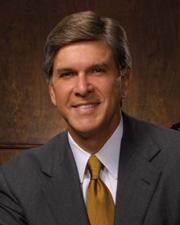
Madam President, I ask unanimous consent to set aside the pending amendment so that I might bring up amendment 3183. Mr. President, if there were a Senator here objecting to laying aside an…
Madam President, I ask unanimous consent to set aside the pending amendment so that I might bring up amendment 3183.
Mr. President, if there were a Senator here objecting to laying aside an amendment, I apologize to him or her, but I make no apology for the amendment I am submitting.
The Senate knows well the substance of this amendment because we have debated it in every Congress because it
needs to be debated. But, more importantly, it needs to be passed; that is, the whole issue of hate crimes. People will wonder why it is on a defense authorization. The answer is simply: Because the military, as I will demonstrate, is not immune to the scourge of hate crimes in our country. Second, this is a piece of legislation that needs to pass, and this issue needs to get as far in the process as possible, and I hope to the desk of the President so it can be signed into law.
It needs to be taken up as well because it has overwhelming support in the Senate. On this Defense authorization and in a previous Congress, 57 Senators voted in favor of this amendment. I believe it will have well over 60 this time.
Unfortunately, despite the fact that a majority of Senators support the legislation, Senator Kennedy and I have felt we need to look for opportunities where there is an obvious nexus between this needed law and a piece of legislation that is likely to move.
The last time, 13 Republicans voted in favor of this legislation. I urge more to do so at this time.
It is no secret that with all the turmoil on the issue of gays and lesbians and their rights in this country, there are very strong feelings on both sides of this issue. I, for one, seek happiness for gays and lesbians in America. I believe in gay rights. But I also believe it is not right in the case of marriage for a few liberals to dictate to the rest of the country a new standard.
Notwithstanding that, I have always felt before you get to marriage, you ought to get rid of hate. I say that as a man who has been married nearly 30 years now. And I think before we take up the issue of marriage we ought to deal with the issue of hate crimes.
Back to the nexus between hate crimes and the defense of our Nation. Two obvious examples come to mind.
In 1992, Navy Seaman Allen R. Schindler was brutally murdered by his shipmate Terry Helvey in Okinawa, Japan. Helvey beat and stomped Schindler to death simply because he was gay. He was attacked so viciously that he destroyed every organ in Schindler's body. He was so badly beaten that Schindler's own mother could not identify him except by the remains of the tattoo on his arm. The medical examiner compared Schindler's injuries to those sustained by victims of fatal airplane crashes.
In another tragic case, PFC Barry Winchell was forced outside his barracks at Fort Campbell Army Base where he was stationed. In the early morning hours of July 5, 1999, Winchell was repeatedly beaten with a baseball bat by another Army private. He was beaten with such force and his injuries so severe that he died shortly thereafter. Barry was only 21, and he was murdered simply because he was gay.
As a nation--a nation that serves as the beacon of freedom and liberty everywhere--we simply cannot tolerate violence against people based on their race, color, religion, or national origin.
No matter how far our Nation has come and the progress we have made in protecting civil rights for all Americans, there is much work that remains. You cannot fight terror abroad and accept terror at home. We have had in this country hate crimes laws on our books for well over 30 years. They were contested as to their legitimacy all the way to the U.S. Supreme Court. For conservatives who would argue we should not have this as a category of crime, I simply respond it is a category of crime. Motive has always been a category of crime and establishing whether a crime has occurred. William Rehnquist, Justice of the U.S. Supreme Court, now its Chief Justice, wrote the opinion. It is hard to think of a more conservative Justice than Justice Rehnquist. But he is the one who said hate crimes are not just legitimate, they are constitutional.
So the question then becomes, if we have constitutional hate crimes laws on the Federal books that cover race and religion, why not sexual orientation? Is it because some hate them? Do some think it is not legitimate to include them? I simply say that America, if it is to live up to its motto, e pluribus unum, must include them.
I think we all know too well the tragic story of James Byrd who was dragged to death in Texas because of his race. We all know the tragically heartrending story of Matthew Shepard who was beaten to death along a lonely stretch of Wyoming fence because he was hated--not because they wanted his watch or his wallet; they didn't like him because he was gay. So they beat him to death.
Why Federal hate crimes laws? Wyoming does not have them, but many States do have hate crimes laws. Why isn't that enough?
Look at what happened in Wyoming. When this little town of Laramie began to pursue the issue, it took on national ramifications. They could have used the help of the Federal Government and its resources. But because of the nature of this hate crime--because it would involve sexual orientation and not race--the Federal authorities were not able to be of any assistance to this case in Wyoming. A Republican sheriff from Wyoming told me they could have used the help, and that he supported this legislation based on his experience.
These last two Congresses, I have entered into the Record everyday statements on hate crimes, actual hate crimes committed in our country. I have entered countless hate crime statements into the Record--over 300 in the last 300 days we have been in session. I do it to raise awareness, not only about the severity of these crimes but to show the frequency of these crimes.
As the Nobel laureate Eli Wiesel once said: ``To hate is to deny another person's humanity.'' So I do it to remember the victims of these hate crimes and to give a human face to this violence--to the murderers of these men, the Navy man, the Army private, to Matthew Shepard, to James Byrd.
These murders have shocked the Nation. To think that such virulent hatred of another person's skin or sexual orientation drove another to commit such a heinous act is truly unthinkable, yet it has happened.
Hate crimes tear at the very fabric of our Nation. They seek to intimidate entire groups of Americans and as such divide our Nation. These kinds of crimes do more than harm the victims. They terrorize our entire society and send a message of hate and intolerance to millions of Americans.
What can we do? We can pass this legislation. This legislation, known as the Local Law Enforcement Enhancement Act, is a symbol that can become substance.
The law is a teacher, and we should teach our fellow Americans that bigotry will not be tolerated. The Federal Government must have the power to persuade, to pursue, and to prosecute when hate is the motive of violence against an American, no matter their race, sexual orientation, religion, disability, or gender. By changing the law, we can change hearts and minds as well.
I urge my colleagues to do so, to change hearts and minds, and in some cases to change their vote, and to vote in favor of this amendment. Don't go to marriage until we have gotten rid of hate.
I ask for the yeas and nays.
I yield the floor.
I would accommodate any colleagues in any sense of comity that is appropriate to the Senate. I do want to vote. I do want to debate. We do not need to take a lot of time. This has overwhelming bipartisan support. We do not mean to gum up this bill. As I believe the chairman knows, this is offered in good faith. I know there are some objections to it. It is fine to air those. But let's discuss it quickly and
vote on it so we can get on with the other defense issues.
I note that Senator Kennedy did not know I was coming here today, but I was told by good authority that if we wanted this included at all, we should include it today. I would very much like to make available a time--a time agreement can be short--that includes remarks by Senator Kennedy.

Mr. President, I rise today to introduce the Fairness in Immigration Litigation Act. The purpose of the Fairness in Immigration Litigation Act is to reform the statutory scheme governing judicial…
Mr. President, I rise today to introduce the Fairness in Immigration Litigation Act. The purpose of the Fairness in Immigration Litigation Act is to reform the statutory scheme governing judicial review of immigration removal orders. Currently, we have an absurd situation in which criminal aliens are entitled to
more review and have more opportunities to file frivolous dilatory appeals than non-criminal aliens. The legislation which I am introducing will streamline the process of reviewing final administrative immigration orders, thereby eliminating such unfair results under the current statutory scheme.
In 1961, Congress amended Section 106 of the Immigration and Nationality Act, or INA, to specify the circumstances under which final orders of deportation and exclusion could be reviewed in the federal courts. The statute provided that petitions for review in the circuit courts of appeal were the ``sole and exclusive'' procedure for reviewing deportation orders, and that habeas corpus was available only to challenge exclusion orders of the custodial aspects of immigration detention. The jurisprudence was settled that there were no alternative or additional avenues of judicial review of immigration orders beyond those provided in Section 106.
In 1996, seeking to provide for the more efficient and expeditious removal of aliens who commit serious crimes in the United States, Congress attempted to streamline the judicial review of immigration orders against such aliens. Passed by wide, bipartisan margins, the Illegal Immigration Reform and Immigrant Responsibility Act (IIRIRA) eliminated judicial review of immigration orders for most criminals. IIRIRA recognized that criminal aliens had already received a full measure of due process in their criminal cases, as well as in their immigration proceedings, and that additional review typically only served to delay their inevitable removal.
However, because the 1996 reforms lacked express language precluding habeas corpus review, the Supreme Court decided in INS v. St. Cyr that habeas review remained available to criminal aliens other than or in addition to the review specified in the INA. Consequently, under current law, criminal aliens may seek habeas review of their deportation orders in district courts and then appeal adverse decisions to the courts of appeals. By contrast, non-criminal aliens are governed by INA Sec. 242, and must appeal directly to the court of appeals without the additional layer of review in the district courts. The result is that criminal aliens who have no claim to relief from deportation file frivolous petitions, causing serious delay in securing final judgment against them. This is a complete perversion of the reforms intended by Congress in 1996, and it must be corrected.
Let me illustrate the extent of the problem. In 1995, just before IIRIRA's enactment, there were 403 immigration habeas petitions filed. In 2003, that number rose to 2,374. Over the same period, the total number of immigration-related cases in federal courts rose from 1,939 to 11,906. This is after Congress passed a law to limit the review for criminal aliens. Clearly, the intent of Congress has been frustrated.
Consistent with the settled principled that petitions for review should be the ``sole and exclusive'' means of judicial review for aliens challenging their removal (as reaffirmed in 8 U.S.C. Sec. 1252(b)(9) requiring that all issues pertaining to removal orders be brought to the circuit courts of appeal), the Fairness in Immigration Litigation Act streamlines immigration review and protects an alien's right to review by an independent judiciary. It also ensures that even criminal aliens may receive review of pure questions of law and Constitutional claims, as dictated by the Supreme Court in S. Cyr.
With the expanded subject matter jurisdiction in the courts of appeals, the proposed legislation will eliminate the confusing, and indeed inequitable practice of allowing criminal aliens to obtain an additional layer of review through habeas corpus petitions. This legislation is fully consistent with both the Supreme Court's decision in S. Cyr and settled jurisprudence regarding the availability of habeas corpus. These reforms will ensure that aliens will have their day in court, and ensures that the law does not place criminals in a position that is superior to non-criminals. In sum, the Act restores order to the judicial review process in the courts as well as fairness for alien petitioners.
Moreover, the deportation proceedings too often are frustrated by activist judges who place unreasonable burdens on the government to show why a lawfully issued deportation order should be enforced, and who stop the lawful execution of deportation orders even though the aliens have advanced no legal basis to challenge the deportation order. Such activism combined with murkiness in the law have slowed and in some cases halted the government's ability to deport criminal aliens and others who have no right to stay. It is time we clarify the law so that the government can effectively deport those who should be deported.
Often, we hear complaints that the government is not doing enough to protect our borders against illegal entry, and that we need to do more to catch and deport the illegal aliens who have made their way into our country. Without question, sealing our borders and arresting every illegal alien is a monumental undertaking. But with this legislation, we can easily address the immediate problem of removing the illegal aliens that we already have in the system, and sometimes even in our custody.
I want to emphasize that the Fairness in Immigration Litigation Act does not abridge an immigration detainee's right to challenge actual, physical custody through a habeas corpus petition. It is not my intention at all to take away the habeas petition as a legitimate way to challenge physical custody. Instead, this legislation narrowly applies to judicial review of final agency orders of removal, which involve legal issues that should be reviewed through a petition for review by the court of appeals.
I further want to emphasize that nothing in this legislation deprives deportable aliens of all the procedural and substantive due process that the Supreme Court said was required. It simply bars unnecessary delays through collateral attacks. In fact, the only ones who are affected by this bill are criminals who have had their review, but who want to avoid enforcement of their deportation orders by initiating dilatory, collateral attacks, and perhaps their lawyers who charge thousands of dollars to file petitions that they know to be without merit.
In sum, the legislation which I am introducing today will expand the subject matter jurisdiction of the court of appeals so that criminal aliens will receive the judicial review to which they are entitled according to St. Cyr. At the same time, the legislation will streamline the process so that we no longer have the absurd result of criminals getting more protection than non-criminals. The legislation also will reduce the possibility that criminals who are without any statutory relief from deportation can abuse the system by filing frivolous petitions solely to delay their eventual removal from the United States. Furthermore, the legislation will properly place the burden of showing eligibility for relief from deportation upon the applicants for relief, and will clarify our statute so that the government can more effectively execute deportation orders without encountering the obstacles that ambiguous statutes have created.
I ask for the support of my colleagues in passing the Fairness in Immigration Litigation Act, which will restore procedural fairness for all immigrants, but will significantly reduce the backlog in our judicial system created by frivolous and dilatory appeals.

Mr. President, I rise today with the intention of calling up amendment No. 3223 to S. 2400, but rather than calling up that amendment, since my intention was to withdraw it, I will make a few…
Mr. President, I rise today with the intention of calling up amendment No. 3223 to S. 2400, but rather than calling up that amendment, since my intention was to withdraw it, I will make a few comments on it.
I preface my comments by stating something to which no Member of the Senate will disagree, and that is that the way our Nation uses the Reserve components of the U.S. military has fundamentally changed over the last 15 years. Reserve components have changed from a ``force in reserve'' to an absolutely essential component of the warfight. Almost every operation the military engages in today, and career field in the Army, Navy, Air Force, and Marine Corps are represented by our Guard and our Reserve.
The Reserve components are now and continue to become a true operational reserve without which our military cannot operate. This is reflected primarily in the rate of deployments and mobilizations of the Reserve components. This rate of utilization, which has increased three or fourfold over the last decade, necessitates that we reexamine the way we manage the Reserve.
The Department of Defense has made changes in this area by improving the process of training and equipping the Reserve and supporting changes in personnel policies that improve quality of life for members of our Reserve.
I would say with respect to that, last year in the Defense authorization bill we made some changes. Some of them seemed fairly minimal, such as allowing our Guard and Reserve members, while they were not on active duty, to have access to commissaries. This seemingly innocent act on our part was a huge benefit to our Guard and Reserve members who had the availability of commissaries when they were on active duty, but now they have it full time. Particularly, those who are close to military installations have the availability of services they simply did not have before, and it has been a huge morale booster for our Guard and Reserve members.
With the possible exception of the TRICARE issue, though, the changes that we have made have been at the margins. I believe we need to reexamine the personnel policies for the Reserve components based on the fact that the way we use them has fundamentally changed.
As the chairman of the Armed Services Committee Subcommittee on Personnel and co-chairman of the Senate Reserve Caucus, this is an issue I have wrestled with considerably and want to be sure that we account for as we provide oversight of the personnel policies of the Department of Defense.
My amendment follows closely a bill that my colleague from Georgia, Senator Zell Miller, introduced several months ago. I, along with Senators Cochran, DeWine, Murkowski, Collins, and Ben Nelson, joined Senator Miller in cosponsoring this bill. My amendment would lower the age at which members of the Reserve component could collect retirement pay based on the philosophy of a reduced annuity. The amount of retirement pay would be reduced by a small percentage for each year below the age of 60 that a member chose to collect their retirement-- very similar to the way Social Security benefits are reduced if a beneficiary determines they want to retire following the achievement of age 62.
According to CBO, this provision would cost approximately $5 billion over 5 years.
There are several other bills pending before the Senate that would change the retirement plan for reservists. In fact, I understand the Senator from New Jersey, Mr. Corzine, may introduce an amendment this week that would reduce the age at which members of the Reserve could collect retirement from age 60 to age 55 with no corresponding reduction in the annuity. According to CBO, this amendment would cost more than $8 billion over 5 years.
The Senator from Louisiana, Ms. Landrieu, has also introduced a bill that would reduce the age to 55 but require a reservist to stay in the Reserve longer in order to receive pay earlier.
All of these bills have merit. All of them deserve to be debated. However, all of them, including my own, carry a significant financial cost. What we have to do is try to balance, particularly in the middle of a war that we are now engaged in, whether we want to utilize our funds to provide weapons systems to our men and women who are now in harm's way or whether we want to provide this kind of benefit which was not anticipated in the budget.
As I stand here today, there are three studies currently underway to address the issue of Reserve retirement. As I have already stated, there are many good ideas regarding how the retirement benefit for the Reserve and the
Guard should be changed, and they all have merit.
However, there are two important things about these various options that we do not know. The first is we do not have a firm idea of how much any of these options will cost. We have estimates from CBO to which I have already alluded. They are significant. Costing these various proposals requires predicting the way people are going to behave, and this is an inexact, difficult science.
Secondly, anytime one makes even a small change to something as large and complex as the military personnel process, it changes the entire system. A change in the Reserve retirement system will have effects both on the Reserve and Active-Duty retention, recruiting, and promotion opportunities within the ranks which we cannot foresee without examining the associated impacts very closely.
That is why, even though I have introduced an amendment on this issue, I do not believe that now is the best time to act on the issue. I think we should wait until the three reports currently underway are completed and we have additional data upon which to look at this issue and make a better evaluation.
With this in mind, as I said earlier, I am simply not going to offer my amendment today. Once we have the necessary data to show how the various proposals will impact the force and the cost implications, I look forward to revisiting this issue and dialoguing with the other Senators who have introduced bills or amendments on this issue and those who are concerned, as I am, about how we manage our Reserve components.
There is no more important issue facing the Personnel Subcommittee of the Senate Armed Services Committee than how we treat our men and women in uniform, and their families, because every day this is more a family issue and a family-oriented military. It is my hope that as we proceed with this bill over this week and as the committee entertains the legislation and policy changes in the coming months, that we keep the people at the receiving end of our decisions and deliberations foremost in our minds.
We will continue to include the members of the Reserve components in those deliberations and ensure the Senate adopts policies that work to their advantage, that are fiscally responsible, and that recognize the significant changes that have taken place in the Reserve over the past decade and a half.
I thank my colleague, the Senator from Nebraska, Mr. Ben Nelson, for his cooperation and his work as we have moved through the Personnel Subcommittee process over the last year in preparation for this bill. Senator Nelson feels the same way I do about our Guard and Reserve and was a cosponsor of a number of the amendments to which I have alluded.
I also thank the chairman and the ranking member. We have had dialogues about this issue within our committee, and without their support, guidance, and counsel, we would not be at the point we are with respect to quality-of-life issues that our men and women in both the Guard and the Reserve deserve and ultimately will receive once we enter into the budget process at the appropriate time.
I yield the floor.

Mr. President, it was my intention to speak in favor of the amendment prior to that. At which point I would be recognized? I am agreeable to that. Mr. President, I join my colleague, Senator Wyden,…
Mr. President, it was my intention to speak in favor of the amendment prior to that.
At which point I would be recognized?
I am agreeable to that.
Mr. President, I join my colleague, Senator Wyden, in working on this amendment.
Let me say first that, as many know, I did not support the funding for reconstruction projects in Iraq with American taxpayers' money. My feeling was, if we were going to use American taxpayers' money to build children's hospitals and restore marshland and swampland, or to purchase garbage trucks, or to have a roads or jobs program, it ought to be done in this country--not Iraq. I felt strongly that the ability to fund the reconstruction in Iraq could easily come from Iraq oil.
It is true they are not pumping quite as much as they had anticipated by July 1 or June 1 of this year, but it is also true that the price is near double what they expected--359 million barrels a day, which is what they intend to get. They will have a substantial amount of excess income over that which they need for Iraq and could easily pay for the reconstruction of Iraq. It is estimated that $160 billion in a 10-year period is the export value of Iraqi oil generated for the country of Iraq. But, nonetheless, the administration and a majority in the Senate and the Congress decided that U.S. taxpayers should fund the reconstruction in Iraq.
The only cut in the reconstruction proposal of some $20-plus billion--the only cut in expenditures of that proposal--was offered by Senator Wyden and myself. We cut $1.8 billion from it with an amendment on the floor of the Senate which included cutting $100 million for gasoline that was being transported.
Incidentally, I held a hearing on that in the policy committee. We had the person who was in charge of delivering gasoline from the Department of Defense to projects such as this, and he said that the contract for the delivery of gasoline into Iraq was costing $1 more a gallon than would have been delivered into Iraq by the agency in the Department of Defense which normally does that.
Having said all that--pointing out we were the only ones cutting funding for the reconstruction projects--the Congress still passed that reconstruction project of nearly $18 billion in U.S. taxpayer funds for the reconstruction in Iraq.
My concern--and I think the concern expressed by my colleague from Oregon--is that money be spent effectively and wisely and not wasted. If it is going to be spent--and I did not think this was the way to do it--but if it is going to be done, let us make sure it is not wasted.
The Pentagon announced that it wants to fund it and has already signed and implemented contracts to fund $121 million for outsourcing the oversight of these reconstruction contracts.
There is plenty going on in Iraq that ought to give us pause with respect to contractors. This is not a reconstruction contract. But you know what we know now about the Halliburton corporation charging the Federal Government for 42,000 meals a day and serving 14,000 meals a day to our soldiers. Let me say that again: charging for 42,000 meals a day which they say they delivered to U.S. soldiers when in fact they were delivering 14,000 meals a day and missing 28,000 meals somewhere.
There is plenty of reason to be concerned about contractors that are engaged in that kind of behavior.
With respect to these series of contracts for $129 million, they have selected corporations, they have already
signed the contracts. The taxpayers, much to our chagrin, are obligated to pay these contracts. They have signed the contracts with companies that have inherent conflicts, in my judgment. How do you oversee a contract of another company with whom you already have an established business relationship in another contract? I don't know how you do that. Yet these contracts were signed and sealed and delivered and the taxpayer is on the hook for $129 million.
I happen to think ``oversight'' is a responsibility of the Government, of the Federal agency that is going to spend the money. It is their responsibility to provide oversight, not someone else's responsibility. The saying is, ``The buck stops here.'' Where does it stop? It stops, it seems to me, with the Federal agency that is given the funding by this Congress. It is their requirement to provide oversight to make sure that funding is used in a manner that is appropriate.
In this case, the Defense Department has said, no, we are not going to do that. We are going to contract out oversight responsibilities. Now I understand they are saying, well, it is not oversight. Really? That is what the provisional authority calls it. In writing, these are oversight contracts for $129 million. There ought not be oversight that is contracted out. It is a responsibility of the Federal agency.
This chart shows some of the relationships of the companies, companies that are overseeing other companies. I don't intend to say with this chart these are bad companies. I intend to say a company that has a relationship with another company, a business, a contractual relationship, a financial relationship that is now told to oversee the work of this company, even though you have other interests and other financial arrangements with this company, I am saying there is an inherent conflict there. That is not the way to do oversight. Even if these potential conflicts did not exist, I would not support these contracts. Oversight is not the responsibility of a hired gun someplace. It is the responsibility of the Federal agency.
Senator Wyden and I have offered a relatively simple amendment. We would have offered an amendment that strikes or nullifies those contracts, but we have been told to do so still leaves the Federal Government on the hook. That does not make much sense. It seems to me what we ought to do is make sure this does not happen again.
The amendment we are offering says oversight is a government responsibility, first and foremost. We establish that principle. Second, we say these oversight contracts shall not be renewed. And third, it says the Pentagon cannot award such contracts in the future.
We have provided a couple of exceptions where we think it is impossible for them to do anything other than have some narrow contracts where it is required, but generally speaking, the approach the Pentagon has used would be prevented prospectively by the amendment we now offer.
Again, our original proposal would have terminated all these contracts outright. I prefer that be the case. These contracts, as I understand it, would still obligate the American taxpayers, and are enforceable. I think that is an approach we cannot get through.
I am happy to yield.
I say to my colleague from Oregon, that is correct. Our approach is simple. We think there are so many billions of dollars ricocheting around on reconstruction with respect to Iraq that there is a profound opportunity for waste. I don't think anyone in this Chamber wants money wasted. We all want good oversight. We want good stewardship of the taxpayers' funds. We do not believe that is the case when inherent conflicts of interest result. That is the purpose of our offering this amendment.
Let me again say the Senator from Oregon, Senator Wyden, not just on this issue but on the other issues relating to the $1.8 billion in spending cuts we got done with our joint amendment, does extraordinary work in this area. I appreciate the opportunity to work with him.
I yield the floor.
I ask the amendment be accepted.
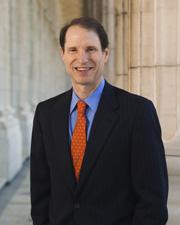
Mr. President, I ask unanimous consent to call up amendment No. 3305, and ask for its immediate consideration. I ask unanimous consent the reading of the amendment be dispensed with. Mr. President,…
Mr. President, I ask unanimous consent to call up amendment No. 3305, and ask for its immediate consideration.
I ask unanimous consent the reading of the amendment be dispensed with.
Mr. President, for a number of months I have been working with colleagues on both sides of the aisle--Senator Collins from Maine, Senator Stevens, Senator Warner--to try to get more oversight over the billions of dollars worth of contracts that have been and are being let to rebuild Iraq. I come to the floor today to offer an amendment with my colleague and friend, Senator Dorgan of North Dakota. We have discussed this amendment with Senator Levin and Senator Warner.
What Senator Dorgan and I have found is a shocking system of so- called oversight with respect to the use of taxpayers' dollars. With the nation facing rising deficits and scarce federal dollars for our many problems here at home, it is imperative that there be strong oversight over the use of taxpayers' money. What our amendment deals with is literally the outsourcing of the oversight of the billions of dollars worth of contracts to rebuild Iraq. It sounds incredible, but the heart of the problem is, instead of having Federal employees oversee these billions of dollars worth of contracts to rebuild Iraq, the Department of Defense has outsourced the oversight of these huge contracts to private companies. These companies are ``overseeing'' the work of other private companies. If many of these companies didn't already have joint ventures elsewhere or interlocking financial interests or boards of directors, I guess one could plausibly say this would be acceptable. But that has not been the case. Putting these companies in charge of oversight of one another strikes Senator Dorgan and me as simply an invitation to flagrant fraud, waste and abuse of taxpayer money.
Senator Dorgan is here as well, and I want to give him ample time to discuss this, but I would like to give a brief example of the kind of problem we seek to address in our legislation. The Parsons Company won two separate Defense Department oversight contracts that totaled nearly $72 million. Under each of those contracts, it overseas the Fluor Company in Iraq. At the same time, Fluor and Parsons have a $2.6 billion joint venture ongoing in Kazakhstan.
The question is, with such a significant shared financial interest, how in the world is anybody in a situation like that going to have a real incentive to take out a sharp pencil and protect the taxpayers.
We are talking about vast sums of money. $18 billion has been allocated by the Congress for reconstruction, and thus far 17 contracts have been let: 10 for reconstruction and 7 for overseeing the reconstruction. I thank the distinguished Senator from Virginia for his cooperation on this amendment. As I discussed with him, this amendment builds on the work that I was able to do in cooperation with Senator Dorgan and Senator Collins on the issue of no-bid contracts in Iraq. This amendment establishes that oversight and the protection of the taxpayers' interests in these billions of dollars of contracts, is a Government function. It is not something that can be outsourced. This amendment will prohibit companies with interlocking financial interests from ``overseeing'' one another.
We talk often about giving the fox the opportunity to oversee the henhouse. This is a textbook case of just such a situation.
I mentioned to the distinguished chairman of the committee, the Senator from Virginia, and the ranking member of the committee, the Senator from Michigan, that this boils down to a simple issue of commonsense. This is not a Democrat or Republican issue. Senator Dorgan and I are pursuing this as a commonsense issue--oversight should not be outsourced, particularly when the projects to be reviewed involve billions of taxpayer dollars. What's worse--these are cost-plus-plus contracts. The contractors here get any unforeseen costs, plus they are eligible for a bonus. Essentially, these contractors are rewarded if the folks they oversee perform well. But who evaluates how well those folks perform? The oversight contractors. Clearly, there are some perverse incentives at work in these oversight contracts.
We are talking about cost-plus-plus contracts that involve billions of taxpayers' dollars. It seems to me we have to get the oversight back where it belongs, and that is in the hands of the Department of Defense and not in the hands of the private contractors. Oversight is inherently a governmental function because accountability must be first and foremost to taxpayers.
I see my friend and colleague from North Dakota here. I want to yield time to him. But in wrapping up this portion of my remarks, I would like to express my appreciation to the Senator from Michigan, Mr. Levin, and to the chairman of the committee, Senator Warner. This amendment, in fact, builds on some of the earlier work we have tried to do in a bipartisan fashion. It essentially comes about because, as Senator Dorgan and I have gone forward to try to make sure taxpayers' interests are protected, we found a massive loophole, a loophole that we think nobody in the Senate confronted in the past, that allows for private companies to oversee other private companies, even when they have what strikes us as very serious potential conflicts of interest.
So we are looking forward, with Chairman Warner and Ranking Member Levin's cooperation, to have this amendment accepted. I believe it warrants bipartisan support.
I yield the floor.
Will the Senator yield?
I appreciate the Senator's point and the cooperation of the Chairman and Senator Levin.
It is also clear if anyone tries to renew any of the old contracts which we sought to set aside, they would have to meet the new conflict- of-interest standards established in our amendment, is that correct?
I yield the floor and thank the distinguished chairman and Senator Levin.

Mr. President, competitive sourcing is the process by which the Federal Government conducts a competition to compare the cost of obtaining a needed commercial service from a private sector contractor…
Mr. President, competitive sourcing is the process by which the Federal Government conducts a competition to compare the
cost of obtaining a needed commercial service from a private sector contractor rather than from Federal employees. Properly conducted, competitive sourcing can be an effective tool to achieve cost savings. Poorly utilized, however, it can increase costs and hurt the morale of the Federal workforce.
The current guidelines under which agencies conduct these competitions are contained in the Office of Management and Budget's (OMB) Circular A-76 (A-76). To ensure that we maximize the benefit and minimize the cost of competitive sourcing, A-76 competition must be conducted in a carefully crafted manner. The rules under which they take place must be fair, objective, transparent, and efficient. In one particular regard, I believe the current rules fail to meet these criteria.
Specifically, they do not allow Federal employees to protest the agency's decisions in an A-76 competition beyond the agency's own internal review processes to the General Accounting Office (GAO). Congress has vested in the GAO the jurisdiction to hear and render opinions in protests of agency acquisition decisions generally. Private sector contractors, in contrast to federal employees, have standing to protest agency procurement decisions, including those in A-76 competitions, before GAO. Today, along with my distinguished colleague, Senator Levin, I am introducing legislation to correct this imbalance by providing Federal employees with standing to protest A-76 decisions to GAO.
The current situation does not arise from any conscious policy decision of Congress, GAO or OMB. Rather, it occurs because the Federal statute that confers protest jurisdiction upon GAO, the Competition in Contracting Act of 1984 or ``CICA,'' was not drafted to address the unique nature of A-76 competitions, in particular, the role of Federal employees in the ``Most Efficient Organization'' or ``MEO,'' which is the in-house side of these competitions. This was not deliberate--this particular circumstance for protest was simply not contemplated by Congress when drafting CICA.
Recent revisions to A-76 created the potential for GAO to review past decisions by Federal courts and revisit its own opinions to see whether the revisions would merit a determination that Federal employees had gained standing to protest adverse A-76 competition decisions. However, a recent GAO protest decision indicates that GAO has concluded it lacks the authority under CICA to hear protests from Federal employees in the MEO in these competitions. As a result, corrective legislative action has become necessary in our view.
Our bill would extend GAO protest rights on behalf of the MEO in A-76 competitions to two individuals. The first is the Agency Tender Official or ``ATO.'' The ATO is the agency official who is responsible for developing and representing the Federal employees' MEO. The second is a representative chosen directly by the Federal employees in the MEO for the purposes of filing a protest with GAO where the ATO does not, in the view of a majority of the MEO, fulfill his or her duties in regards to a GAO protest.
As I mentioned, the rules under which these competitions are run must be fair. In addition to being objectively fair, however, I think they must also be perceived as fair by all parties. If the private sector perceives the rules to be unfair, they will decline to participate in competitive sourcing competitions, and the Federal Government will enjoy less competition in its acquisitions. If Federal employees perceive the rules to be unfair, there will be less interest in Federal employment at a time when we are all concerned about the Federal Government's human capital challenges. As the congressionally established Commercial Activities Panel noted in its report on competitive sourcing, the lack of GAO protest rights for Federal employees was one of the most often-heard complaints about the A-76 rules. Providing them with protest rights that are similar to those enjoyed by the private sector is, I think, vital to assuring Federal employees that the rules of the game are fair to them.
The rules must also be efficient. There are three interests that are served by A-76 rules that ensure a speedy process with finality. The Federal Government benefits by enjoying the benefits and efficiencies of competitive sourcing sooner rather than later. Federal workers benefit in that they spend less time having to worry about the outcome of these competitions, which can be stressful as they create uncertainty about employees' employment situations. Finally, because time is money in the private sector, private contractors will benefit by spending less time on competitions as well. In my view, having Federal employees vote to choose a representative to protest when they are dissatisfied with the ATO should achieve the maximum efficiency possible while respecting Federal employees' interests.
In the end, our intent is to bolster the A-76 process by providing a mechanism for Federal employees to seek redress from GAO, an entity that is well known for its fair, effective and expert handling of acquisition protests.

Mr. President, I have no objection to the Senator speaking, but he has no right to yield to him. Mr. President, I have no objection if the Senator from Oklahoma wishes to speak. I am simply going to…
Mr. President, I have no objection to the Senator speaking, but he has no right to yield to him.
Mr. President, I have no objection if the Senator from Oklahoma wishes to speak. I am simply going to offer a second-degree amendment.
Mr. President, I send an amendment to the desk.
Mr. President, I ask unanimous consent that further reading of the amendment be dispensed with.
Mr. President, I ask unanimous consent that the amendment that is now pending be set aside and that I be allowed to call up Senator Leahy's amendment No. 3292.
Mr. President, I ask unanimous consent that reading of the amendment be dispensed with.
Mr. President, I ask unanimous consent that the pending amendment be set aside, and I call up amendment No. 3307.
Mr. President, this amendment is very straightforward. The Secretary of Defense, in testimony to Congress several weeks ago, said that he is looking at ways to compensate the Iraqi nationals who were abused in American run prisons. I have no doubt that may be appropriate, but as the Defense Department considers its compensation plan, we should not forget about the American servicemen who were tortured and brutalized in this same prison, the Abu Ghraib prison, during the first Gulf War. I know many of my colleagues will remember the 17 American servicemen--including Colonel Jeff Tice from Las Vegas--who were captured and subjected to weeks of torture, beatings, electrocutions, starvation, and other despicable acts ordered by Saddam Hussein and carried out by the Iraqi intelligence service.
The Federal Government, unfortunately, has turned its back on these heroes. Instead of working with them to deliver some means of compensation for their many injuries,--in fact, the money at one time was Saddam Hussein's money--the Bush administration has been outmaneuvering them at every turn, fighting them in court, moving to vacate earlier judgments they received, and trying to quash any efforts to bring them some relief. In fact, just last week the judgment was rescinded.
I regret to say that the Justice Department has been effective, prevailing on the American POWs in this recent court of appeals case. The American POWs are back to square one. They have nothing except the permanent wounds which they suffered in Saddam's prisons.
My amendment says that as the Secretary develops the compensation plan for the Iraqi nationals, he also needs to include a provision which addresses the injuries suffered by brave American prisoners of war. I don't know what the provision will say or should say, but the Defense Department cannot continue to turn its back on the brave men we sent into battle. I welcome their entry into this debate. They have been silent about this issue for too long. Nothing about this amendment prevents the Iraqis from being compensated; it just asks for some fairness. Our own brave service men and women are entitled to it.
I did not specifically mention that. I said I would be offering an amendment. Senator Leahy will not be here until Wednesday, so he asked that I lay it down. He will not be in the Senate until Wednesday. He has a personal situation that does not allow him to be here until the day after tomorrow. He asked me last week to do this.
Senator Leahy will not be back until Wednesday.
Yes. He has been waiting around. He wanted to lay it down after Senator Kennedy, but, of course, with the circumstances we have had, he has been unable to do that. The only amendment I did discuss with you was mine. I didn't discuss Senator Dodd's.
I thought we were trying to get some amendments down. Some of them, the managers will decide, along with the leadership, as to votes that may even take place this evening. We can pick and choose what will be done with these other amendments. The only thing I mentioned to the distinguished chairman of the committee
is that it is our understanding the junior Senator from Idaho is going to lay down an amendment, which we have no objection to his laying that down, but we would not want to vote on that until there is a side-by- side with Senator Cantwell. That is the issue that has held up this bill for some time.
If the Senator is concerned, I would be happy to discuss this prior to laying down any future amendments.
Senator Leahy has been very patient.
Maybe I should have waited until you offered one on the Republican side before I offered mine.
Our next amendment will be by the senior Senator from Connecticut.
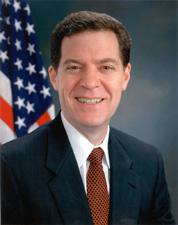
Mr. President, I am pleased to rise today to join my colleagues and support the Children and Media Research Advancement Act or CAMRA. The development of our Nation's children is vital and the way in…
Mr. President, I am pleased to rise today to join my colleagues and support the Children and Media Research Advancement Act or CAMRA. The development of our Nation's children is vital and the way in which media impacts their ability to grow and develop is imperative. For many years, I have been concerned about the impact media has on our children.
The Kaiser Family Foundation recently released their report on electronic media in the lives of infants, toddlers, and preschoolers-- ages 0 to 6 years old. Not surprisingly, the study found that children today are reared in a media saturated environment.
According to the study, 99 percent of all children live in a home with a TV set and 50 percent of these children live in a home with three or more TVs of which 36 percent have a TV in their bedroom.
Perhaps even more startling, 30 percent of children ages zero to three years and 43 percent of four to six year olds have a TV in their bedroom. Additionally, 27 percent of children have their own VCR or DVD player in their rooms and 10 percent have their own video game console in their room as well.
Further, 73 percent of children ages 0 to 6 have a computer at home, and 49 percent of these young people have a video game player.
Even more concerning is that the American Academy of Pediatrics recommends that children under two do not watch any television. The Academy further states that all children over two should be limited to one or two hours of educational screen media a day.
However, despite this recommendation, the Kaiser study found that in a typical day, 68 percent of all children under two use screen media-- 59 percent watch TV, 42 percent watch a video or DVD, five percent use computers and three percent play video games. The study also found that 74 percent of all infants and toddlers have watched TV before the age of two.
Unfortunately, there is a lack of comprehensive research that provides detailed data on the relationship between media and brain development in children. That is why I am pleased to support the Children and Media Research Advancement Act. This will not only encourage much needed research in this area, but will also serve to coordinate such research.
Providing parents and guardians with the most accurate information regarding the impact media has on their children is essential--to do anything less would be reprehensible.
Already many studies--including ones that followed children from age 8 until mid-adulthood (age 30 plus years)--have demonstrated a link between early exposure to entertainment violence and aggressive attitudes, values and behaviors, including increased levels of violent crime against others.
There are three main effects on children of viewing entertainment violence: aggression more likely to think and behave aggressively, and hold attitudes and values favorable to the use of aggression to resolve conflicts; desensitization decreased sensitivity to violence and a greater willingness to tolerate increasing levels of violence in society; fear viewers may develop the ``mean world syndrome'' in which they overestimate their risk of becoming victims of violence.
Even in the Kaiser study I referenced earlier, among all parents whose zero to six year olds watched TV, 81 percent said that they saw their children imitate behaviors from television--36 percent of parents reported that their children mimicked aggressive behavior, 78 percent mimicked positive behavior. When focusing on the four to six year age group, mimicking aggressive behaviors increase to nearly half or 47 percent, with aggressive behavior being imitated more frequently with boys, 59 percent than with girls at 35 percent.
Clearly, we must continue to encourage and fund studies that will show the effects media has on the development of the adolescent brain. I am pleased that CAMRA will encourage this much-needed research in such a crucial area.
Protecting our nation's children and ensuring that parents have the most accurate and complete information on the effects of media on their children should remain our top priority. I look forward to working with Senators Lieberman and Clinton on an issue that is vital to our society.
Show 10 more
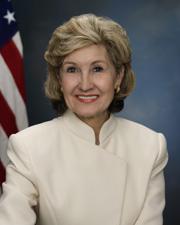
Mr. President, I rise today to acknowledge the lifetime achievements of Dr. Michael Ellis DeBakey, a public servant and world-renowned cardiologist, by offering legislation to award him the…
Mr. President, I rise today to acknowledge the lifetime achievements of Dr. Michael Ellis DeBakey, a public servant and world-renowned cardiologist, by offering legislation to award him the Congressional Gold Medal.
When he was only 23 years of age and still attending medical school, Dr. DeBakey accomplished what would be the first of many life saving accomplishments. He successfully developed a roller pump for blood transfusions--the precursor and major component of the heart-lung machine used in the first open-heart operation. This device later led to national recognition for his expertise in vascular disease.
Like many Americans of his generation, Dr. DeBakey put his practice on hold and volunteered for military service during World War II with the Surgeon General's staff. During this time, he received the rank of Colonel and chief of Surgical Consultants Division.
As a result of his military and medical experience, Dr. DeBakey made numerous recommendations to improve the military's medical procedures. His efforts led to the development of mobile army surgical hospitals, better known as MASH units, which earned him the Legion of Merit in 1945.
Following WWII, Dr. DeBakey continued his hard work by proposing national and specialized medical centers for those soldiers who were wounded or needed follow-up treatment. This recommendation evolved into the Veterans Affairs Medical Center System and the establishment of the commission on Veterans Medical Problems of the National Research Council.
In 1948, Dr. DeBakey joined the Baylor University College of Medicine, where it started its first surgical residency program and was later elected the first President of Baylor College of Medicine.
Adding to his list of accomplishments Dr. DeBakey performed the first successful procedure to treat patients with anyeurysms. In 1964, Dr. DeBakey performed the first successful coronary bypass surgery, opening the doors for surgeons to perform preventative procedures to save the lives of many people with heart disease. He was also the first to successfully use a partial artificial heart. Later that same year, President Lyndon B. Johnson appointed Dr. DeBakey as Chairman of the President's Commission on Heart Disease, Cancer and Stroke, which led to the creation of Regional Medical Programs. These programs coordinate medical schools, research institutions and hospitals to enhance research and training.
Dr. DeBakey continued to amaze the medical world when he pioneered the field of telemedicine by performing the first open-heart surgery transmitted over satellite and then supervised the first successful multi-organ transplant, where a heart, both kidneys and a lung were transplanted from a single donor into four separate recipients.
These accomplishments had led to national recognition. Dr. DeBakey has received both the Presidential Medal of Freedom with Distinction from President Johnson and the National Medal of Science from President Ronald Reagan.
Recently, Dr. DeBakey worked with NASA engineers to develop the
DeBakey Ventricular Assist Device, which may eliminate the need for some patients to receive heart transplants.
I stand here today to acknowledge Dr. DeBakey's invaluable work and significant contribution to medicine by offering a bill to award him the Congressional Gold Medal. His efforts and innovative surgical techniques have since saved the lives of thousands, if not millions, of people. I ask my Senate colleagues to join me in recognizing the profound impact this man has had on medical advances, the delivery of medicine and how we care for our Veterans. Although, Dr. DeBakey is not a native of Texas, he has made Texas proud. He has guided the Baylor College of Medicine and the city of Houston into becoming a world leader in medical advancement. On behalf of all Texans, I thank Dr. DeBakey for his lifetime of commitment and service not only to the medical community but to the world. I ask unanimous consent that the text of this bill be printed in the Record.

Mr. President, I rise to join with my colleagues Senators Lieberman and Brownback in introducing the Children and Media Research Advancement Act (CAMRA). Children today are living in an environment…
Mr. President, I rise to join with my colleagues Senators Lieberman and Brownback in introducing the Children and Media Research Advancement Act (CAMRA).
Children today are living in an environment that is saturated with electronic media. Even in the last few years, we've seen a dramatic increase in media targeted directly at children. There's now a booming market of DVDs and videos for infants and the first TV show specifically for children as young as 12 months was launched a few years back. Kids today even have their own cable TV network.
Researchers estimate that children spend an average of five-and-a- half hours a day using these media--this works out to more than they spend doing anything besides sleeping. Even kids under six spend as much time watching TV and videos, playing video games, and using computers as they do playing outside. Unfortunately, we don't really know how this trend affects our children. But we do know that a child's early years affect every aspect of his or her development--physical, emotional, and cognitive. And therefore, we know that ignorance is not bliss.
The longer we wait to understand the full impact of media on our children, the bigger risk we take. And we are gambling with our children's future. Parents need to know how television, movies, advertisements, video games, and the Internet affect their children so that they can make informed decisions about how much and what kind of media their children should be exposed to.
As parents, we know intuitively that our young children shouldn't be watching television shows with extreme violence or age-inappropriate content. But there are other issues we aren't so sure about. How much video game playing is too much? Do advertisements for cereals and junk foods contribute to childhood obesity? How are our very young children and infants impacted by media? Right now we have little idea of what it means for infant development to put babies in front of TVs for hours at a time, but we know that sometimes popping in a video is the best and only way to calm our children down.
Our bill, The Children and Media Research Advancement Act, will help answer these questions by establishing a single, coordinated research program at the National Institute of Child Health and Human Development. This program will study the impact of electronic media on children's--particularly very young children and infant's--cognitive, social and physical development.
One of the first things the program will do will be to work with the National Academy of Sciences and the Institute of Medicine to establish an independent panel of experts to review and synthesize existing research and to establish research priorities on the impact of the media on child development. They'll then award grants for research that addresses the panel's priorities.
If we are truly going to make children a priority, we have to pay attention to and take seriously the activities they're engaged in on a daily basis. Watching television, playing video games, and surfing the Internet are the things that children are doing more than anything else. We need to invest in research that will help us understand how this is affecting our children so that parents can make informed decisions about the positive effects and negative effects of these media on children.
I ask the pending amendment be set aside, and I call up an amendment numbered 3295. I ask unanimous consent the reading of the amendment be dispensed with. Madam President, I thank the chairman and…
I ask the pending amendment be set aside, and I call up an amendment numbered 3295.
I ask unanimous consent the reading of the amendment be dispensed with.
Madam President, I thank the chairman and ranking member for their cooperation on this amendment.
The purpose of this amendment is to authorize the Secretary of Agriculture to purchase 10 aircraft that were designed and built to fight fires.
The U.S. Forest Service and Bureau of Land Management need to develop a new fleet of aircraft for aerial firefighting in order to free up current military aircraft to fly military missions.
My amendment takes the first step to create a new fleet of aircraft specifically designed for aerial firefighting. Once the new fleet is in place all dedicated military aircraft will be freed up and allowed to be dedicated, once again, for military missions.
On May 10, 2004, the USDA Forest Service and the Department of the Interior terminated the contract for 33 large airtankers used for aerial fire fighting because of ``concerns over the airworthiness of the aircraft and public safety.'' The large, fixed-wing airtankers were used in wildland firefighting primarily for initial attack and structure protection support.
The old fleet was made up of aging, former military aircraft that were purchased at bargain basement prices from the surplus military market. They were the worst of the worst and required extensive repairs and refurbishing before they were ready for aerial firefighting.
The USFS has planned to replace the 33 air tankers with 8 military C130s that will be dedicated during the fire session to fly support for domestic fire fighting missions. These planes, therefore, will not be available to support necessary military missions.
The first step in relieving these planes from domestic duty, and making them available for military utilization, is to find a reasonable replacement that is safe and specifically designed for aerial fire fighting.
One example of the kind of aircraft that could be purchased is the Be-200 that would be serviced by a company in my home State of Wyoming.
It was specifically designed to operate as an air tanker and can deliver up to 6,000 gallons of water or other fire suppressants.
It is an amphibious plane that can scoop up the water on the fly.
It can mix the water with slurry in regulated amounts while in the air so it will not be required to fill up at a slurry base after every run.
And, because the water tanks were designed to fit under the cabin floor, it can also carry up to 60 firefighters and their gear as a transport plane while it is functioning as a firefighting tanker.
Our pilots put their lives on the lines to save our property and to save other lives. We owe it to them to have a modern fleet where the risks they face are significantly diminished.
We also owe it to our military to free up our military aircraft for military missions. Right now there are 8 C-130 transport aircraft that cannot be used to fly support missions in the Middle East because they have to be on hand to fight fires in the West.
We have options available to free those aircraft up and we should be developing those options as quickly as possible.
I yield the floor.
Mr. President, military action in Afghanistan and Iraq has brought to light yet another example of how outdated and burdensome government policies often punish generous employers in America.…
Mr. President, military action in Afghanistan and Iraq has brought to light yet another example of how outdated and burdensome government policies often punish generous employers in America. Apparently, when it comes to companies showing respect for employees who are called to active duty in the military, there is special meaning to the old cliche that ``no good deed goes unpunished.''
An arcane IRS interpretation of tax law actually penalizes employers that
voluntarily pay their National Guard and reservist employees the difference between these patriots' military stipends and their previous civilian salaries--which appropriately is called ``differential pay.'' The law also penalizes employers that continue making contributions to retirement plans for such employees.
According to the IRS, members of the Guard and reserves called up for active duty are required to be treated as if they are on a leave of absence by their employers under the Uniformed Services Employment and Reemployment Rights Act of 1994--USERRA. Therefore, the act does not require employers to pay workers who are on active duty. However, many employers--out of a sense of civic duty--continue to pay active duty Guard members and reservists the difference between their military stipends and their regular salaries with some employers providing such ``differential pay'' for up to three years. In additions, many of these remarkable companies go even further and allow their active duty employees to continue making contributions to their 401(k) retirement plans via deductions from the ``differential payments.''
However, rather than applauding and encouraging such selfless behavior by companies, the IRS's 1969 Revenue Ruling requires that the active duty workers be treated as if they were ``terminated.'' As a result, this law then puts at risk the retirement plan for an employers' entire workforce and could make all amounts in the plan immediately taxable to the plan's participants and the employer. Adding to the absurdity of the situation, preventing an employer from treating ``differential pay'' as wages under the law means employers are prohibited from withholding income taxes, which in turn causes their active duty former employees to face large and unexpected tax bills at the end of the year.
The Uniformed Services Differential Pay Protection Act simply amends USERRA to clarify that differential payments are to be treated as ``wages'' to current employees and that retirement plan contributions from such ``wages'' are permissible. The bill upholds the principle that these patriotic and truly remarkable employers should not be penalized for the selfless generosity they provide to our Nation's reservists and members of the National Guard.
Mr. President, today I am introducing the Korean Defense Service Combat Recognition Act of 2004 which would amend Title 10, United States Code, to revise the requirements for award of the Combat…
Mr. President, today I am introducing the Korean Defense Service Combat Recognition Act of 2004 which would amend Title 10, United States Code, to revise the requirements for award of the Combat Infantryman Badge and the Combat Medical Badge with respect to service in Korea after July 28, 1953.
The Army awards the Combat Infantry Badge (CIB) to recognize members of infantry units who have been engaged in ground combat. The Combat Medical Badge (CMB) recognizes field medics who accompany infantry troops into battle. A 1968 Army regulation makes it much more difficult for U.S. troops serving in South Korea to be awarded the CIB or CMB than for troops serving almost anywhere else in the world. Specifically, infantrymen stationed in South Korea must be in five firefights in order to qualify for the awards. In other combat zones, the requirement is one firefight.
In addition, to be awarded the medals, troops in South Korea must also have served in theater for sixty days in a hostile fire area, be authorized hostile fire pay, and be recommended by each superior up the chain-of-command to the division level.
My bill normalizes the rules so that all troops, no matter where they serve, are subject to the same eligibility requirements for these two prestigious medals.
Unfortunately, the Army regulation has had the unintended consequence of making it extra difficult for infantry and medical units serving along the DMZ in South Korea to earn combat recognition medals. A spokesman for the Korean Defense Veterans of America (KDVA) has described these requirements as making it nearly impossible to be awarded the CIB for infantrymen serving in Korea, short of getting killed in combat. The KDVA is a group of veterans and active soldiers who are serving, or who have served, in South Korea since 1953.
This language is supported by the KDVA and the Combat Infantryman's Association. The Combat Infantryman's Association is a group of Army infantrymen who have been awarded the Combat Infantry Badge.
It is unfair and wrong to require five firefights in South Korea, but only one firefight in Grenada, Panama, the Dominican Republic, Laos, Vietnam, and almost every other location in the world. The Korean Defense Service Combat Recognition Act of 2004 normalizes the rules so that all troops, no matter where they serve, are subject to the same eligibility requirements for these two prestigious medals.
I urge my colleagues to support its passage and ask unanimous consent that the text of this bill be printed in the Record.
Mr. President, today I am introducing legislation to authorize a special land resource study for the Walnut Canyon National Monument in Arizona. The study is intended to evaluate whether Federal and…
Mr. President, today I am introducing legislation to authorize a special land resource study for the Walnut Canyon National Monument in Arizona. The study is intended to evaluate whether Federal and State lands adjacent to the monument should be managed as part of the monument, and to provide recommendations for management options.
For several years, local communities adjacent to the Walnut Canyon National Monument have debated whether the land surrounding the monument would be best served by protection from future development and managed by the U.S. Forest Service or the National Park Service. The Coconino County Board and the Flagstaff City Council have passed resolutions concluding that the preferred method to determine what is best for the land surrounding the Walnut Canyon National Monument is by having a Federal study conducted. The recommendations from such a study would resolve the question of future management and whether the monument should be expanded.
The legislation also directs the Secretary of the Interior and the Secretary of Agriculture to provide recommendations for management options for maintenance of the public uses and protection of resources of the study area.
This legislation would provide a mechanism for determining the management options for one of Arizona's high uses scenic areas and protect the natural resources of this incredibly beautiful monument. Therefore, I urge my colleagues to support this legislation.

Mr. President, will the Senator yield? Well, I appreciate that. First of all, I appreciate all the Senator from Colorado has done in this field. I say to the Senator, in your statement, when you…
Mr. President, will the Senator yield?
Well, I appreciate that. First of all, I appreciate all the Senator from Colorado has done in this field.
I say to the Senator, in your statement, when you talked about that some of our allies, some of our friends, such as the Japanese, might be more susceptible because of their proximity to North Korea, I remind my colleagues what happened 6 years ago this coming August when the North Koreans did in fact fire a multistage rocket that had the capability of reaching the United States of America. So that threat is still there for us.
I was going to ask my colleague a couple questions about his amendment. But if somebody else desires the floor, that is perfectly all right.
I will ask one question. In your amendment, you talked about 30 days for considering technical assistance agreements and licenses. Will you explain what that 30 days is and the significance of that?
I thank the Senator.

Mr. President, I rise today to discuss a very important amendment to the Defense authorization bill. I have worked with my colleague from Connecticut to draft an amendment that will reimburse U.S.…
Mr. President, I rise today to discuss a very important amendment to the Defense authorization bill. I have worked with my colleague from Connecticut to draft an amendment that will reimburse U.S. troops serving in Iraq and Central Asia and their family members for flak jackets, weapons and other equipment they have bought out of their own pocket.
At the beginning of this war, the President claimed, ``We must always make sure that America's soldiers are well-equipped and well trained to fight this war on terror.'' However, the administration has not provided the adequate equipment the troops need to do their work, such as enough body armor or the most up to date Global Positioning Systems,
Mr. President, I understand there are two bills at the desk, and I ask that they be read the first time, en bloc. Mr. President, I now ask for their second reading, and in order to place the bills on…
Mr. President, I understand there are two bills at the desk, and I ask that they be read the first time, en bloc.
Mr. President, I now ask for their second reading, and in order to place the bills on the calendar under rule XIV, I object to further proceedings to these bills en bloc.
Mr. President, I understand there are two bills at the desk due for their second reading. I ask unanimous consent that the bills be given their second reading, en bloc. I object to further…
Mr. President, I understand there are two bills at the desk due for their second reading. I ask unanimous consent that the bills be given their second reading, en bloc.
I object to further proceedings on the measures, en bloc, at this time.
Bill Text
Latest available legislative text
        [Congressional Bills 108th Congress]
[From the U.S. Government Publishing Office]
[S. 2448 Placed on Calendar Senate (PCS)]

Calendar No. 534
108th CONGRESS
2d Session
S. 2448

To coordinate rights under the Uniformed Services Employment and
Reemployment Rights Act of 1994 with other Federal laws.

_______________________________________________________________________

IN THE SENATE OF THE UNITED STATES

May 19, 2004

Mr. Gregg introduced the following bill; which was read the first time

May 20, 2004

Read the second time and placed on the calendar

_______________________________________________________________________

A BILL

To coordinate rights under the Uniformed Services Employment and
Reemployment Rights Act of 1994 with other Federal laws.

Be it enacted by the Senate and House of Representatives of the
United States of America in Congress assembled,

SECTION 1. SHORT TITLE.

This Act may be cited as the ``Uniformed Services Differential Pay
Protection Act''.

SEC. 2. COORDINATION OF USERRA WITH OTHER FEDERAL LAWS.

(a) Treatment of Differential Payment as Wages for Purposes of
Income Tax Withholding.--Section 4302 of title 38, United States Code,
is amended by adding at the end the following:
``(c)(1) For purposes of chapter 24 of the Internal Revenue Code of
1986 (relating to collection of income tax at source on wages), any
differential wage payment shall be treated as a payment of wages by the
employer to the employee.
``(2) For purposes of paragraph (1), the term `differential wage
payment' means any payment which--
``(A) is made by an employer to an employee with respect to
any period during which the employee is performing service in
the uniformed services while on active duty for a period of
more than 30 days, and
``(B) represents all or a portion of the difference between
the wages the employee would have received from the employer if
not performing service in the uniformed services and the wages
paid for performing such service.''.
(b) Continued Contributions to Pension Plans.--Section 4318 of
title 38, United States Code, is amended by adding at the end the
following:
``(d) For purposes of the Employee Retirement Income Security Act
of 1974 and the Internal Revenue Code of 1986, any employer or employee
contributor to an employee pension benefit plan to which this section
applies with respect to any period during which the employee is
performing service in the uniformed services while on active duty for a
period of more than 30 days shall be treated as a contribution with
respect to a current employee of the employer.''.

Calendar No. 534

108th CONGRESS

2d Session

S. 2448

_______________________________________________________________________

A BILL

To coordinate rights under the Uniformed Services Employment and
Reemployment Rights Act of 1994 with other Federal laws.

_______________________________________________________________________

May 20, 2004

Read the second time and placed on the calendar