Medicare Trust Fund Reimbursement Act of 2004

Legislative Activity
Stay on top of the latest movement without scrolling through every action
Read twice and referred to the Committee on Finance. (text of measure as introduced: CR S6089)
May 21, 2004
View full timeline
Introduced in Senate
May 21, 2004
Sponsor introductory remarks on measure. (CR S6088-6089, S6089-6093)
May 21, 2004
Read twice and referred to the Committee on Finance. (text of measure as introduced: CR S6089)
May 21, 2004
Floor Debate
7 membersWhat members said about S. 2473 on the floor
 JK
JK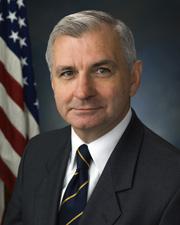 JR
JR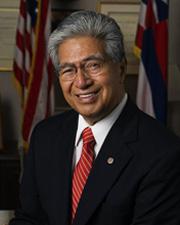 DKA
DKA RJD
RJD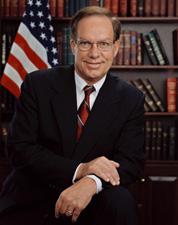 WA+2
WA+2
Floor Debate
7 membersWhat members said about S. 2473 on the floor
Mr. President, I rise today to introduce a bill that would repeal Sec. 224 of the USA Patriot Act. Section 224 provides that 16 different parts of the Patriot Act ``shall cease to have effect on…
Mr. President, I rise today to introduce a bill that would repeal Sec. 224 of the USA Patriot Act. Section 224 provides that 16 different parts of the Patriot Act ``shall cease to have effect on December 31, 2005.'' The authorities subject to this sunset include some of the most important provisions of the Act. They are sections 201, wiretapping in terrorism cases; 202, wiretapping in computer fraud and abuse felony case; 203(b) sharing wiretap information; 203(d), sharing foreign intelligence information; 204, Foreign Intelligence Surveillance Act (FISA) pen register/trap and trace exceptions; 206, roving FISA wiretaps; 207, duration of FISA surveillance of non-United States persons who are agents of a foreign power; 209, seizure of voice-mail messages pursuant to warrants; 212, emergency disclosure of electronic surveillance; 214, FISA pen register/ trap and trace authority; 215, FISA access to tangible items; 217, interception of computer trespasser communications; 218, purpose for FISA orders; 220, nationwide service of search warrants for electronic evidence; 223, civil liability and discipline for privacy violations; and 225, provider immunity for FISA wiretap assistance.
Rather than praise the Patriot Act myself, I would like to quote others who have done so. First, I would note that the President has called on Congress to renew all parts of the Patriot Act that are scheduled to expire next year. As he has emphasized, ``to abandon the Patriot Act would deprive law enforcement and intelligence officers of needed tools in the war on terror, and demonstrate willful blindness to a continuing threat.''
FBI Director Robert Mueller, in a hearing before the Judiciary Committee yesterday, also voiced strong support for renewing the Patriot Act. As he noted, ``for over two and a half years, the PATRIOT Act has proved extraordinarily beneficial in the war on terrorism and has changed the way the FBI does business. Many of our counterterrorism successes, in fact, are the direct results of provisions included in the Act, a number of which are scheduled to `sunset' at the end of next year. I strongly believe it is vital to our national security to keep each of these provisions intact.''
Similarly, in an April 14 field hearing before the Judiciary Committee, Deputy Attorney General James Comey stated that the Patriot Act ``has made us immeasurably safer.'' He also responded to the allegation, occasionally made by some critics, that the Patriot Act was passed too quickly. He replied that ``the USA Patriot Act was not rushed, it actually came 10 years too late.''
The importance of the Patriot Act to American security also has drawn the attention of the 9/11 Commission. Former New Jersey Governor Thomas Kean has noted that the Commission has had ``witness after witness tell us that the Patriot Act has been very, very helpful, and if the Patriot Act, or portions of it, had been in place before 9/11, that would have been very helpful.''
This praise has not been limited to the Republicans who have participated in the Commission's proceedings. Former Attorney General Janet Reno, for example, testified before the Commission that ``everything that's been done in the Patriot Act has been helpful.''
Nor is President Bush alone among the major candidates for President this year in hailing the importance of the Patriot Act. Indeed, his principal rival for the office, Senator Kerry, recently claimed that he would go even further than the President. According to an April 25 story in the Los Angeles Times, Senator Kerry's spokesman insists that ``it is the challenger, not the president, who brings the most muscular view of the Patriot Act into the race.'' Senator Kerry's presidential campaign website even includes a ``Plan to Restore American Security,'' which lists as its number-one priority to ``improve intelligence capabilities.'' Senator Kerry states that he ``understands that intelligence information is the key to disrupting and dismantling terrorist organizations and that we need to improve our intelligence capabilities, both domestically and internationally, in order to win the war on global terrorism.''
One reform implemented by the Patriot Act that Attorney General Reno and others have particularly emphasized is its authorization for information sharing. Because this part of the Patriot Act is often praised but infrequently described in detail, I would like to quote the following accounts of pre-Patriot barriers to information sharing, and of the investigative successes that the removal of those barriers has made possible.
The FISA Court of Review decision upholding the Patriot Act's authorization for information sharing, In re: Sealed Case, 310 F.3d 717,
F.I.S. Ct. Rev. 2002 , describes the origins of the pre-Patriot
barriers:
Apparently to avoid running afoul of the primary purpose
test used by some courts, the 1995 [Attorney General]
Procedures [(``Procedures for Contacts Between the FBI and
the Criminal Division Concerning Foreign Intelligence and
Foreign Counterintelligence Investigations'')] limited
contacts between the FBI and the Criminal Division in cases
where FISA surveillance or searches were being conducted by
the FBI for foreign intelligence (FI) or foreign
counterintelligence (FCI) purposes. The procedures state that
``the FBI and Criminal Division should ensure that advice
intended to preserve the option of a criminal prosecution
does not inadvertently result in either the fact or the
appearance of the Criminal Division's directing or
controlling the FI or FCI investigation toward law
enforcement objectives.'' Although these procedures provided
for significant information sharing and coordination between
criminal and FI or FCI investigations, based at least in part
on the ``directing or controlling'' language, they eventually
came to be narrowly interpreted within the Department of
Justice, and most particularly by OIPR, as requiring OIPR to
act as a ``wall'' to prevent the FBI intelligence officials
from communicating with the Criminal Division regarding
ongoing FI or FCI investigations. Thus, the focus became the
nature of the underlying investigation, rather than the
general purpose of the surveillance. Once prosecution of the
target was being considered, the procedures, as interpreted
by OIPR in light of the case law, prevented the Criminal
Division from providing any meaningful advice to the FBI.''
In re: Sealed Case, 310 F.3d at 727-28 citations omitted.
FBI Director Mueller, in his testimony yesterday, provided a concrete account of the impact that these information-sharing barriers had on intelligence investigations:
Prior to September 11, an [FBI] Agent investigating the
intelligence side of a terrorism case was barred from
discussing the case with an Agent across the hall who was
working the criminal side of that same investigation. For
instance, if a court-ordered criminal wiretap turned up
intelligence information, the criminal investigator could not
share that information with the intelligence investigator--he
could not even suggest that the intelligence investigator
should seek a wiretap to collect the information for himself.
If the criminal investigator served a grand jury subpoena to
a suspect's bank, he could not divulge any information found
in those bank records to the intelligence investigator.
Instead, the intelligence investigator would have to issue a
National Security Letter in order to procure that same
information.
Chicago U.S. Attorney Patrick Fitzgerald, in an October 21, 2003 hearing before the Senate Judiciary Committee, described how these pre- Patriot information-sharing limits undercut one potentially vital terror investigation. Mr. Fitzgerald discussed the grand-jury testimony of Wadih el Hage, a key member of the Al Qaeda cell in Nairobi who, in September 1997, was apprehended while changing flights in New York City. Federal prosecutors subpoenaed el Hage from the airport to testify before a Federal grand jury in Manhattan. Mr. Fitzgerald described how el Hage:
[P]rovided some information of potential use to the
intelligence community--including potential leads as to the
location of his confederate Harun and the location of Harun's
files in Kenya. Unfortunately, as el Hage left the grand-jury
room, we knew that * * * [because of pre-Patriot
restrictions] we would not be permitted to share the grand-
jury information with the intelligence community. * * *
Fortunately, we found a way to address the problem that in
most other cases would not work. Upon request, el Hage
voluntarily agreed to be debriefed by an FBI agent outside
the grand-jury room * * *. El Hage then repeated the essence
of what he told the grand jury to the FBI agent, including
his purported leads to on the location of Harun and his
files. The FBI then lawfully shared the information with the
intelligence community. In essence, we solved the problem by
obtaining the consent of a since-convicted terrorist. We do
not want to have to rely on the consent of al Qaeda
terrorists to address the gaps in our national security.
Mr. Fitzgerald went on to describe how, in August 1998, the American Embassy in Nairobi was bombed by al Qaeda. Investigators quickly learned that el Hage's associate Harun was responsible. In this particular case, investigators had been able to work around information-sharing limits because of an al Qaeda terrorist's willingness to be interviewed by the FBI, and even with this information U.S. agents were not able to stop a terrorist attack. The pre-Patriot limits were not a decisive factor in blocking U.S. intelligence agents from preventing the Kenya bombing. But they could have been. As U.S. Attorney Fitzgerald concluded, ``we should not have to wait for people to die with no explanation [other] than that interpretations of the law blocked the sharing of specific information that probably [c]ould have saved [American lives].''
As Attorney General Reno noted in her testimony before the 9/11 Commission, ``these restrictions [on information sharing] have now been eliminated as part of the Patriot Act.'' Director Mueller, in his Judiciary Committee testimony yesterday, described the impact of this change:
The removal of the ``wall'' has allowed government
investigators to share information freely. Now, criminal
investigative information that contains foreign intelligence
or counterintelligence, including grand jury and wiretap
information, can be shared with intelligence officials. This
increased ability to share information has disrupted
terrorist operations in their early stages--such as the
successful dismantling of the ``Portland Seven'' terror
cell--and has led to numerous arrests, prosecutions, and
convictions in terrorism cases.
In essence, prior to September 11th, criminal and
intelligence investigators were attempting to put together a
complex jigsaw puzzle at separate tables. The Patriot Act has
fundamentally changed the way we do business. Today, those
investigators sit at the same table and work together on one
team. They share leads. They fuse information. Instead of
conducting parallel investigations, they are fully integrated
into one joint investigation.
These Patriot Act changes can directly be credited with some important recent successes in the war on terror. For example, in February 2003, Federal prosecutors arrested and indicted Sami Al-Arian and seven other suspected terrorists. The 50-count indictment indicated that Al-Arian was the financial director and the North American leader of Palestinian Islamic Jihad, a terrorist group that has killed more than 100 people in and around Israel, including two Americans. Al-Arian wired money to groups in Israel that paid money to the families of terrorists who carried out suicide bombings. He also founded three organizations in Florida which, among other things, drafted final wills and testaments for suicide bombers.
Incredibly, through much of the 1990s, Al-Arian was secretly watched by two different sets of U.S. investigators. The FBI had been conducting a criminal probe of Al-Arian since 1995. Meanwhile, intelligence agents had monitored Al-Arian since the late 1980s. Because of pre-Patriot restrictions, the two sets of investigators were not able to share information and were not aware of the full extent of each other's investigations. It was only after the FISA Court of Review upheld Patriot
Act Sec. 203's information-sharing provisions in November 2002 that intelligence officials were able to show their files to prosecutors. Several months after this Patriot provision was upheld and made effective, prosecutors arrested and indicted Al-Arian and put an end to his activities.
Of course, the provisions of the Patriot Act subject to the Sec. 224 sunset include much more than just the three provisions that facilitate information sharing. Although I will not discuss all of those provisions in detail today--some of which have never been controversial--I would like to discuss one provision that has been a particular focus of attacks on the Patriot Act.
Section 215 of the Patriot Act allows the FBI to seek an order for ``the production of tangible things (including books, records, papers, documents, and other items) for an investigation to obtain foreign intelligence information.'' FISA defines ``foreign intelligence'' as information relating to foreign espionage, foreign sabotage, or international terrorism, or information respecting a foreign power that relates to U.S. national security or foreign policy. Thus Sec. 215 cannot be used to investigate ordinary crimes or even domestic terrorism. And in every case, a Sec. 215 order must be approved by a judge.
Alhough Sec. 215 is basically a form of subpoena authority, like that allowed for numerous other types of investigation indeed, it is more tightly restricted than other types of subpoenas because it must be pre-approved by a judge Sec. 215 has been heavily targeted by Patriot Act critics. Chief among their complaints is that Sec. 215 could be used to obtain records from bookstores or libraries. Some of these critics have even alleged that Sec. 215 would allow the FBI to investigate someone simply because of the books that he borrows from a library.
Section 215 could in fact be used to obtain library records, though neither Sec. 215 nor any other provision of the Patriot Act specifically mentions libraries or is directed at libraries. Nevertheless, Sec. 215 does authorize court orders to produce tangible records--which could include library records.
Where the critics are wrong is in suggesting that a Sec. 215 order could be obtained because of the books that someone reads or the websites that he visits. Sec. 215 allows no such thing. Instead, Sec. 215 allows an order to obtain ``tangible things'' as part of an investigation to ``obtain foreign intelligence information''-- information relating to foreign espionage or terrorism or relating to a foreign government or group and national security. By requiring a judge to approve such an order, Sec. 215 ensures that these orders will not be used for an improper purpose. And as an added protection against abuse, the Patriot Act also requires that the FBI ``fully inform'' the House and Senate Intelligence Committees on all use of Sec. 215 every six months. These checks and safeguards leave FBI agents little room for the types of witch hunts that Patriot Act critics conjure up.
Further, it bears mention that federal investigators already use an authority very similar to Sec. 215 the grand jury subpoena--to obtain bookstore records. As Deputy AG Comey recently emphasized in a letter that he submitted to the editor of the New York Times, ``orders for records under [Sec. 215] are more closely scrutinized and more difficult to obtain than ordinary grand jury supoenas, which can require production of the very same records, but without judicial approval.'' Similarly, in a September 11, 2003 editorial, ``Patriot (Act) Games,'' the Washington Post noted that investigative authority to review library records ``existed prior to the Patriot Act; the law extends it to national security investigations, which isn't unreasonable.''
Finally, I would emphasize that an intelligence or criminal investigation may have good and legitimate reasons for extending to library or bookstore records. For example, in a recent domestic terrorism case, Federal investigators sought to prove that a suspected bomber had built a particularly unusual detonator that had been used in several bombings. The investigators used a grand-jury subpoena to show that the suspect had purchased a book giving instructions on how to build such a detonator.
Moreover, we should not forget that terrorists and spies historically have used libraries to plan and carry out activities that threaten U.S. national security. We know, for example, that some terrorists have used computers at public libraries to use the internet and communicate by email. It would be unwise to place libraries and bookstores beyond the scope of anti-terror investigations.
Andrew McCarthy, a former federal prosecutor who led the 1995 terrorism case against Sheik Omar Abdel Rahman, recently elaborated on this point in a November 13, 2003 article in National Review Online, ``Patriot Act Under Siege'':
[H]ard experience--won in the course of a string of
terrorism trials since 1993--instructs us that it would be
folly to preclude the government a priori from access to any
broad categories of business record. Reading material, we now
know, can be highly relevant in terrorism cases. People who
build bombs tend to have books and pamphlets on bomb making.
Terrorist leaders often possess literature announcing the
animating principles of their organizations in a tone
tailored to potential recruits. This type of evidence is a
staple of virtually every terrorism investigation--both for
what it suggests on its face and for the forensic
significance of whose fingerprints may be on it. No one is
convicted for having it--jurors are Americans too, and they'd
not long stand for the odious notion that one should be
imprisoned for the mere act of thinking.
When a defendant pleads ``not guilty,'' however, he is
saying: ``I put the government to its proof on every element
of the crime, including that I acted with criminal purport.''
Prosecutors must establish beyond a reasonable doubt not only
that the terrorist engaged in acts but did so intending
execrable consequences. If an accused says the precursor
components he covertly amassed were for innocent use, is it
not relevant that he has just borrowed a book that covers
explosives manufacture? If he claims unfamiliarity with the
tenets of violent jihad, should a jury be barred from
learning that his paws have yellowed numerous publications on
the subject? Such evidence was standard fare throughout Janet
Reno's tenure as attorney general--and rightly so.
In his testimony yesterday, FBI Director Mueller also described the importance to antiterror investigations of some of the other Patriot Act authorities subject to expire under Sec. 224. For example, Director Mueller noted that:
The PATRIOT Act gave federal judges the authority to issue
search warrants that are valid outside the issuing judge's
district in terrorism investigations. In the past, a court
could only issue a search warrant for premises within the
same judicial district--yet our investigations of terrorist
networks often span multiple districts. The PATRIOT Act
streamlined this process, making it possible for judges in
districts where activities related to terrorism may have
occurred to issue search warrants applicable outside their
immediate districts.
In addition, the PATRIOT Act permits similar search
warrants for electronic evidence such as email. In the past,
for example, if an Agent in one district needed to obtain a
search warrant for a subject's email account, but the
Internet service provider (ISP) was located in another
district, he or she would have to contact an AUSA and Agent
in the second district, brief them on the details of the
investigation, and ask them to appear before a judge to
obtain a search warrant--simply because the ISP was
physically based in another district. Thanks to the PATRIOT
Act, this frustrating and time-consuming process can be
averted without reducing judicial oversight. Today, a judge
anywhere in the U.S. can issue a search warrant for a
subject's email, no matter where the ISP is based.
[Further], the PATRIOT Act updated the law to match current
technology, so that we no longer have to fight a 21st-century
battle with antiquated weapons. Terrorists exploit modern
technology such as the Internet and cell phones to conduct
and conceal their activities. The PATRIOT Act leveled the
playing field, allowing investigators to adapt to modern
techniques. For example, the PATRIOT Act clarified our
ability to use court-ordered pen registers and trap-and-trace
devices to track Internet communications. The Act also
enabled us to seek court-approved roving wiretaps, which
allow investigators to conduct electronic surveillance on a
particular suspect, not a particular telephone this allows
them to continuously monitor subjects without having to
return to the court.
All of the authorities described by Director Mueller obviously are critical to antiterrorism investigations--and all will expire next year unless Congress acts to repeal Sec. 224.
In responding to some of the accusations of Patriot Act critics, I do not mean to dismiss the importance of either civil liberties or of independent oversight of the federal government. I would simply emphasize that the Patriot Act is carefully crafted legislation that both guarantees protection for civil liberties and is subject to ample oversight. I would note, in this vein, that in a report filed in January
2004, Department of Justice Inspector General Glenn A. Fine--an appointee of President Clinton described the results of his investigation of all recent civil-rights and civil-liberties complaints received by the Justice Department. The Inspector General found no incidents in which the Patriot Act was used to abuse civil rights or civil liberties.
The Patriot Act's provisions for independent oversight of the new authorities created by the Act were described in detail by Deputy AG Comey in his April 14, 2004 testimony before the Judiciary Committee. Mr. Comey noted:
First, the USA PATRIOT Act preserves the historic role of
courts by ensuring that the vital role of judicial oversight
is not diminished. For example, the provision for delayed
notice for search warrants requires judicial approval. In
addition, under the Act, investigators cannot obtain a FISA
pen register unless they apply for and receive permission
from federal court. The USA PATRIOT Act actually goes farther
to protect privacy than that Constitution requires, as the
Supreme Court has long held that law enforcement authorities
are not constitutionally required to obtain court approval
before installing a pen register. Furthermore, a court order
is required to compel production of business records, in
national security investigations.
Second, the USA PATRIOT Act respects important
congressional oversight by placing new reporting requirements
on the Department. Every six months, the Attorney General is
required to report to Congress the number of times section
215 has been utilized, as well as to inform Congress
concerning all electronic surveillance under the Foreign
Intelligence Surveillance Act. Under section 1001 of the USA
PATRIOT Act, Congress receives a semiannual report from the
Department's Inspector General detailing any abuses of civil
rights and civil liberties by employees or officials of the
Department of Justice. It is important to point out that in
the Inspector General's most recent report to Congress, he
reported that his office has received no complaints alleging
misconduct by Department employees related to the use of a
substantive provision of the USA PATRIOT Act.
Finally, the USA PATRIOT Act fosters public oversight of
the Department. In addition to the role of the Inspector
General to review complaints alleging abuses of civil
liberties and civil rights, the Act provides a cause of
action for individuals aggrieved by any willful violation of
Title III or certain sections of FISA. To date, no civil
actions have been filed under this provision.
The United States has had some important successes in the war on terror so far. Worldwide, more than half of al Qaeda's senior leadership has been captured or killed. More than 3,000 al Qaeda operatives have been incapacitated. Within the United States, 4 different terrorist cells have been broken up--cells located in Buffalo, Detroit, Seattle, and Portland. 284 individuals have been criminally charged to date, and 149 individuals have been convicted or pleaded guilty, including: shoe bomber Richard Reid, six members of the Buffalo terrorist cell, two members of the Detroit cell, Ohio truck driver Iyman Faris, and U.S.-born Taliban John Walker Lindh.
Patriot-aided criminal prosecutions also have contributed to U.S. intelligence efforts to learn more about terrorist organizations. Facing long prison terms, some apprehended terrorist have chosen to cooperate with the U.S. government. So far, the Justice Department has obtained plea agreements from 15 individuals who are now cooperating with terror investigations. One individual has given the U.S. information about weapons stored by terrorists in the United States. Another cooperating terrorist has given U.S. investigators information about locations in the U.S. that are being scouted or cased for potential attacks by al Qaeda.
The Patriot Act has played a major role in what U.S. antiterror investigations have accomplished so far. And it is clear that we will continue to need the authorities created by the Patriot Act into the foreseeable future. For these reasons, I am pleased to introduce today with my colleagues a bill to repeal Sec. 224 and make the Patriot Act permanent.
I ask unanimous consent that the text of the bill be printed in the Record.
Mr. President, I rise today to introduce bipartisan legislation to expand access to college. I am pleased to be joined in this effort by Senators Collins, Kennedy, and Murray. In a year in which we…
Mr. President, I rise today to introduce bipartisan legislation to expand access to college. I am pleased to be joined in this effort by Senators Collins, Kennedy, and Murray.
In a year in which we are slated to reauthorize the Higher Education Act, we have had only a few hearings on the reauthorization in the HELP Committee. In these hearings and the discussions ongoing in the other body, there has been scant mention of our insufficient investment in need-based financial aid. Instead, the discussions have been dominated by proposals that will hurt, rather than help, the neediest students.
This is troubling, particularly as more and more students are being priced out of college, which shortchanges their future and that of our nation. Economic security is a necessity not just for the wealthy, but for every American. And the key to economic security is education.
An individual's climb up the economic ladder is directly related to the amount of education he or she receives. Given the strong correlation among educational attainment, employment, and wages, the cost of not going to college is just too high.
Almost a third of the growth in employment over the next decade is expected to occur in occupations that require at least a bachelor's degree. College graduates, on average, earn 60 percent more than high school graduates, while an individual with a professional degree earns almost four times what a high school graduate earns.
And yet, too many college students are under-prepared, underfinanced, and overworked. Those who make it through are saddled by nearly insurmountable loan debt. But many more cannot afford the cost of college at all.
Even though there have been gains due to the Higher Education Act, the current approach to student aid isn't alleviating the gaps between our lowest and highest income students nor is it addressing the gaps between the aid low-income students receive and the actual cost of attendance.
7 times as many students from high-income families 48 percent graduate from college by age 24 as students from low-income families 7 percent. Low-income, college-qualified high school graduates have an annual ``unmet need'' of nearly $4,000 in college expenses. Without drastic increases in need-based aid, over the next decade, according to a report by the Advisory Committee on Student Financial Assistance, 4.4 million low- and moderate-income college qualified high school graduates will not be able to pursue a four year degree full time and 2 million will not go to college at all.
A combination of factors has arisen to create this unfortunate situation, chief among them a decline in the purchasing power of the Pell Grant and sharp increases in the cost of college.
My predecessor, Senator Claiborne Pell, established what is now known as the Pell Grant in order to ensure higher education wasn't an ``unachievable dream.'' Almost one quarter of undergraduate students from colleges and universities nationwide receive a Pell Grant. It is the single largest source of grant aid for higher education funded by the Federal government.
Unfortunately, the Pell Grant's purchasing power has plummeted due to the slow growth in funding and the rapid rise of college prices. In the late 70s, the maximum grant covered 77 percent of costs at a public four-year institution. Today, the maximum Pell Grant of $4,050 covers only 41 percent.
On top of that, an estimated 60 percent of student aid is now in the form of loans and 40 percent in grants, a reversal of the distribution 20 years ago. Indeed, the average graduate has a student loan debt of $17,000. Pell Grant recipients, who represent the lowest income sectors of students, graduate with an average of $20,000 in student loan debt.
Over the last ten years, public and private 4-year college costs, tuition and fees, rose 47 percent and 42 percent, respectively, after adjusting for inflation, which is a more rapid growth rate than consumer prices. Over the last three years, since President Bush entered office, tuition has increased by 28 percent on average, even after inflation. Students have felt the bite as states have drastically cut funding for public colleges.
There is a further convergence of economic and demographic factors. In 2008, the largest number of students in our history will graduate from high school. A high percentage of these students will be from low- income, minority families, who will need student aid. At the same time, our Nation will need replacement workers as aging, college-educated baby boomers begin to retire in increasing numbers.
This crisis calls out for action. It should be a national imperative to ensure an educated citizenry and a world class workforce. Our Nation cannot afford to lose out on the countless returns from a robust education investment.
The legislation we introduce today, the ACCESS, Accessing College through Comprehensive Early outreach, State partnerships, and Simplification, Act, seeks to set our Nation back on the course that Senator Pell sought when he authored the grants later named after him in 1972.
The ACCESS Act revitalizes the Leveraging Educational Assistance Partnership (LEAP) program, which was established over thirty years ago to encourage States to play a role in helping low-income students go to college. Without this important, although extremely modest, Federal incentive, many States would never have established need-based grant programs and many States would not continue to maintain such programs.
Recognizing that LEAP can do even more to address the barriers to college access and persistence, the ACCESS Act forges a new Federal incentive for states--via higher levels of Federal match--to spur greater investments by states, colleges, businesses, and philanthropies in need-based grants for low-income students. At a time when public higher education is bearing the brunt of the fiscal crises confronting our States, we need to do more to encourage States to help low-income students attend college.
We want States to focus their energies on enhancing coordination and cohesion among Federal, State, and local programs and efforts of colleges, philanthropies, and businesses, with the goal of generating new investments in need-based aid sufficient to provide low-income students with an access and persistence grant to fill the gap in aid they face. All too often successful middle school students give up the dream of college because they think there is no way they can ever afford college. The ACCESS Act also requires States to notify low- income students beginning in middle school of their potential eligibility for student financial aid and encourages increased participation in early intervention, mentoring, and outreach programs.
The legislation is modeled after initiatives like the Rhode Island Children's Crusade in my home state and Indiana's 21st Century Scholars Program. A Lumina Foundation evaluation found that 21st Century Scholars--low-income students who receive an early notification of assistance, early intervention and support, and scholarships equivalent to the cost of in-state college tuition--were nearly 5 times more likely than non-participants to enroll in college. Indeed, successful college access programs are those that offer early intervention and mentoring services coupled with early information about estimated financial aid awards and adequate grant funding to make the dream of higher education a reality. Students participating in such programs are more financially and academically prepared, and thus more likely to enroll in college and persist to degree completion.
Our legislation also simplifies the financial aid process for low- income students. It allows more students to qualify for an Automatic- Zero Expected Family Contribution, aligning its eligibility with the standards for other Federal means-tested programs, like free school lunch, SSI, and Food Stamps. Students and families should not have to prove over and over again that they are low-income, and asking students to fill out lengthy forms when they already meet the eligibility level for Pell Grants is a burden we should ease.
In a similar vein, the legislation establishes a short, paper FAFSA- EZ application form for students qualifying for the auto-zero along with a tailored web-based system and a free telefile system for students without Internet access.
The ACCESS Act also expands college access for low-income students, in part by prohibiting a qualified education benefit, like education savings plans, from being considered as a student asset and by reducing the work penalty. The current income protection allowance levels are unrealistically low, creating a disincentive for students who work in order to pay college costs. I look forward to receiving further information on this and other problems addressed in the legislation when the Advisory Committee on Student Financial Assistance completes work on the congressionally mandated financial aid simplification study later this year.
We must act on this legislation and others to make sure that every student who works hard and plays by the rules gets the opportunity to live the American Dream.
I was pleased to work with the Advisory Committee on Student Financial Assistance, and a host of other higher education organizations and charitable foundations, including Scholarship America, on this legislation. I am also pleased that this legislation has the support of a range of higher education and student groups, including the American Association of Community Colleges, the American Association of State Colleges and Universities, the American Council on Education, the Association of American Universities, the Association of Jesuit Colleges and Universities, the Center for Law and Social Policy, the Council for Opportunity in Education, National Association for College Admission Counseling, the National Association of Independent Colleges and Universities, National Association of State Student Grant and Aid Programs, the National Association of State Universities and Land-Grant Colleges, the National Association of Student Financial Aid Administrators, the United Negro College Fund, and the United States Student Association.
I urge my colleagues to cosponsor this important legislation and work for its inclusion in the upcoming reauthorization of the Higher Education Act.
I ask unanimous consent that the text of this legislation be printed in the Record.
Mr. President, I rise today to introduce the Credit Card Minimum Payment Warning Act. I greatly appreciate the significant contributions Senator Durbin made to this bill, and I thank him very much…
Mr. President, I rise today to introduce the Credit Card Minimum Payment Warning Act. I greatly appreciate the significant contributions Senator Durbin made to this
bill, and I thank him very much for that. Also, I thank Senator Leahy and Senator Schumer for cosponsoring this legislation.
Americans are carrying enormous amounts of debt. In 2003, consumer debt increased for the first time to more than $2 trillion, according to the Federal Reserve. This is a 28-percent increase since the year 2000. According to the Daily Bankruptcy News, consumer debt is now equal to 110 percent of disposable income. Ten years ago, it was 85 percent; and 20 years ago, it was 65 percent. A key component of household debt can be attributed to the use of credit cards. Revolving debt, mostly comprised of credit card debt, has more than doubled from $313 billion in January 1994 to $753 billion in debt in January 2004. A U.S. Public Interest Research Group and Consumer Federation of America analysis of Federal Reserve data indicates that the average household with debt carries approximately $10,000 to $12,000 in total revolving debt and has nine credit cards.
More and more working families are trying to meet growing financial obligations and are having difficulties surviving financially. When interest rates do eventually rise, consumers' increasing debt obligations will be compounded further.
As household debt has increased, bankruptcy filings have surged to record levels. In the year 2003, more than 1.6 million consumers filed for bankruptcy. This staggering amount is an increase of 5.6 percent over the previous record set in 2002. Bankruptcies disrupt the lives of consumers and limit their ability to access credit in the future. In addition, bankruptcies lead to significant financial losses for creditors. It is imperative that we make consumers more aware of the long-term effects of their financial decisions, particularly in managing their credit card debt, so that they can avoid bankruptcy.
Even as we contemplate the consequences of more and more debt, it has become easier to access credit. Pre-approved credit card offers are now a routine piece of mail. Students are offered credit cards at earlier ages, especially in view of the success that credit card companies are having with their aggressive campaigns targeted towards college students. Mr. President, 55 percent of college students acquire their first credit card during their first year in college, and 83 percent of college students have at least one credit card. Forty-five percent of college students are in credit card debt, with the average debt being over $3,000.
While it is relatively easy to obtain credit, not enough is done to ensure that credit is properly managed. Currently, credit card statements fail to include all of the information necessary to allow individuals to make fully informed financial decisions. Additional disclosure is needed to ensure that individuals completely understand the implications of their credit card use.
Our legislation will provide a wakeup call for consumers. It will make it very clear what costs consumers will incur if they make only the minimum payments on their credit cards. The personalized information they will receive for each of their accounts will help them to make informed choices about the payments that they choose to make towards their balance.
This bill requires a minimum payment warning notification on monthly statements stating that making the minimum payment will increase the amount of interest that will be paid and extend the amount of time it will take to repay the outstanding balance. Consumers would have to be informed of how many years and months it will take to repay their entire balance if they make only the minimum payments. In addition, the total costs in interest and principal, if the consumer pays only the minimum payment, would have to be disclosed. These provisions will make individuals much more aware of the true costs of their credit card debts.
The bill also requires that credit card companies provide useful information so that people can develop strategies to free themselves of credit card debt. Consumers would have to be provided with the amount they need to pay to eliminate their outstanding balance within 36 months. Finally, the legislation would require that creditors establish a toll-free number so that consumers can access trustworthy credit counselors. In order to ensure that consumers are referred from the toll-free number to only trustworthy organizations, the agencies for referral would have to be approved by the Federal Trade Commission and the Federal Reserve Board as having met comprehensive quality standards. These standards are necessary because certain credit counseling agencies have abused their nonprofit, tax-exempt status and have taken advantage of people seeking assistance in managing their debts. People believe, sometimes mistakenly, that they can place blind trust in nonprofit organizations and that their fees will be lower than those of other credit counseling organizations.
Too many individuals may not realize that the credit counseling industry does deserve the trust that consumers often place in it.
The Credit Card Minimum Payment Warning Act has been endorsed by the Consumer Federation of America, Consumers Union, and U.S. Public Interest Research Group.
I ask unanimous consent that the letter of support and factsheet from these organizations be printed in the Record.
I also ask unanimous consent that the text of the Credit Card Minimum Payment Warning Act be printed in the Record following my remarks.
Mr. President, I urge my colleagues to support this legislation that will empower consumers by providing them with detailed personalized information to assist them in making informed choices about their credit card use and repayment. This bill makes clear the adverse consequences of uninformed choices, such as making only minimum payments, and provides opportunities to locate assistance to eliminate credit card debt.
Mr. President, I am delighted to be working with my friend the distinguished Senator from Hawaii, Senator Akaka, to introduce a measure that provides a simple yet vital commodity to users of credit…
Mr. President, I am delighted to be working with my friend the distinguished Senator from Hawaii, Senator Akaka, to introduce a measure that provides a simple yet vital commodity to users of credit cards. The commodity I speak of: information.
The modern-day credit-reporting system has benefitted consumers by making affordable credit more widely available than ever before, and the spread of credit cards is an important part of this ``credit revolution.'' Along with this revolution in credit availability, however, we need a revolution in consumers' ability to manage their credit. Two facts provide a quick and simple snapshot of our progress in that regard. In the fourth quarter of 2003, the number of delinquencies on regular consumer loans went down. That same quarter, the number of past-due credit card accounts hit an all-time high. Clearly, an increasing number of credit card holders need to do a better job of responsibility managing their credit exposure.
This bill is designed to help them to do just that by providing that vital commodity, information. It would require credit card statements to provide information that will help consumers understand the relationships among their total balance, the minimum payment due, and the accumulation of interest over time. Specifically, this bill would require that statements provide the following information: the amount of time it would take to pay off the total balance if just minimum payments are made each month; the total cost to the consumer that would be incurred over that time period, broken into interest and principle; the payment amount that would be necessary each month to pay off the total balance in three years; and a toll-free telephone number consumers could call to get a referral to a legitimate, accredited, non-profit credit counseling agency.
We would like to think that the credit card companies would be glad to provide whatever information their consumers needed to responsibly manage their credit. The fact of the matter is, though, that they do not provide the information I just described, and chances are they will not begin doing so on their own initiative. These numbers are not all that hard to calculate. A few lines of computer code is all it would take. And yet provision of these three simple numbers would provide a huge payback by helping credit card users quickly and easily get a clearer understanding of the size of their balance and what the consequences will be for them--in terms of time and financial cost--of carrying that balance.
Let me be extra clear about one thing: This bill will help markets for credit work better. As Adam Smith told us, the free flow of information is an absolute prerequisite of an efficient market. For markets to work, buyers must know and understand what they are buying. When our bill becomes law, credit card holders--who are simply buyers of credit in the marketplace--will have a better understanding of what exactly they are buying into, for the long term. The result can only be that the credit markets will better serve us, and that our households and our Nation will be on stronger financial footing.
I thank my friend Senator Akaka for working with me on this important measure. I am also delighted that my friends Senator Schumer and Senator Leahy have joined us as original cosponsors. I urge the rest of my colleagues to join us by cosponsoring this bill.
Mr. President, I rise to introduce the Guardsmen and Reservists Financial Relief Act of 2004. National guardsmen and reservists are serving our country with virtue and valor in the war on terror.…
Mr. President, I rise to introduce the Guardsmen and Reservists Financial Relief Act of 2004. National guardsmen and reservists are serving our country with virtue and valor in the war on terror. These brave men and women deserve recognition for the many sacrifices they make in serving and protecting this great country. Their families also deserve protection from potential financial hardships experienced at home that may result from the guardsmen or reservists being called to service.
Since September 11, 2004, many men and women have left their jobs in the private sector to fill vitally needed positions for our national defense. In playing the role of true citizen soldiers, some have taken drastic pay cuts from their civilian jobs in order to fulfill their duty to their country. This is beginning to create financial strains on their families.
The Department of Defense estimates that 3 percent of its reservists have been called up more than once since September 11, 2001. Additionally, the GAO reports that nearly 41 percent of reservists are impacted by a pay discrepancy between his or her military and civilian salary.
The Guardsmen and Reservists Financial Relief Act of 2004 will see that the families and loved ones of Guard members and reservists, who are called to service after September 11, 2001, can access retirement funds without incurring any penalties.
This important legislation will allow Guard members and reservists who are activated for more than 179 days to make penalty-free early withdrawals from their IRA or 401(k) plan.
This bill retroactively covers members of the Guard and Reserve who were called to service beginning on September 11, 2001, and extends coverage to those who may continue to be called on to serve on an active basis through September 12, 2005.
Furthermore, this bill will encourage repayment of any withdrawal from an IRA or 401(k) fund within 2 years of a guardsman or reservist ending their active duty, ensuring retirement, financial security for soldiers and their families.
It also temporarily lifts the contribution cap to equal the amount of the withdrawn funds to allow for full repayment.
National Guard members and military reservists have been imperative to the military strength of our Nation over the years. Today, almost half of our military strength is from those who serve in the National Guard and military Reserve. There are currently 169,000 National Guard members and military reservists on active duty helping fight the war on terror.
Since September 11, 2001, 373,707 total National Guard members and military reservists have been mobilized. There is no doubt we owe a great deal to our men and women in uniform who are so honorably serving their country by fighting the war on terror. Helping to ease the financial burdens of families of Guard members and reservists is a good start.
I look forward to working with my colleagues in the Senate on the Guardsmen and Reservists Financial Relief of 2004 to provide members of our National Guard and military Reserve with the financial relief they deserve for loyally serving and protecting this country.
Mr. President, I ask unanimous consent that the text of the bill be printed in the Record.
Show 3 more

Mr. President, today, I am pleased to be joined by my colleagues, Senators Akaka, Fitzgerald, Lieberman, and Voinovich in introducing the Thrift Savings Plan Open Elections Act of 2004. This…
Mr. President, today, I am pleased to be joined by my colleagues, Senators Akaka, Fitzgerald, Lieberman, and Voinovich in introducing the Thrift Savings Plan Open Elections Act of 2004. This legislation would provide Federal employees with maximum flexibility to tailor their investment decisions by eliminating the current restrictions on when employee contributions to the Thrift Savings Plan can begin or be modified.
Since its inception in 1987, the Thrift Savings Plan has provided Federal employees with the opportunity to participate in a retirement savings plan similar to the 401(k) plans offered by many private companies. The open seasons were created to encourage Federal employees to contribute money toward their retirement. Open seasons were practical during the early years when the Thrift Savings Plan was just getting started and lacked the administrative capability to quickly enroll participants and to implement investment elections on a real- time basis. With the introduction of the automatic record-keeping system, however, the program has outgrown its existing framework.
Under current law, newly hired employees can sign up to contribute to the Thrift Savings Plan during an initial 60-day eligibility period. If an employee chooses not to make an election, he or she must wait until an open season to do so. Further, if an employee stops contributing to the Thrift Savings Plan outside of an open season, he or she must wait until the second open season after contributions stop before contributions can resume. These
restrictions can unfairly penalize employees and discourage their participation. But allowing employees to initiate, modify, or terminate contributions to the TSP in any period, provided the amount does not exceed existing limits for contributions, the legislation ensures that Federal employees' investment decisions will no longer be restricted by the open season requirement.
In testimony before the Congress, Andrew Saul, Chairman of the Federal Retirement Thrift Investment Board, stated that the Board supports the elimination of the open season requirement because it would expand participant access and simplify the administration of the Thrift Savings Plan. Jim Sauber, Chairman of the Employee Thrift Advisory Council, testified in March 2004 that eliminating the TSP open season is perhaps the single best way to reach the 13 percent of employees in the Federal Employees Retirement System who still do not make contributions to the TSP.
In addition to the support by the Federal Retirement Thrift Investment Board and the Employee Thrift Advisory Council, the legislation is supported by the American Federation of Government Employees, the National Treasury Employees Union, the National Association of Retired Federal Employees, the Federal Managers Association, and the Senior Executives Association.
I urge my colleagues to support this important legislation.
Mr. president, yesterday, the Comptroller General of the United States ruled that the Bush administration illegally spent taxpayer dollars for political propaganda in violation of two laws. To make…
Mr. president, yesterday, the Comptroller General of the United States ruled that the Bush administration illegally spent taxpayer dollars for political propaganda in violation of two laws.
To make matters worse, these funds were taken from the Medicare Trust Fund.
In other words, money reserved for our seniors' healthcare was illegally used for political activity. It is outrageous.
The President has raised plenty of money for his campaign. Over 200 million dollars. Why does he need to use Medicare funds?
With taxpayer money, the Bush administration produced so-called ``video news released'' --fake news stories that hailed the new Medicare law--and distributed them to TV stations across the country.
This covert propaganda was never identified as being produced by the administration. As a result many news stations ran this story as real news and
viewers had no idea it was produced by the government.
The phony news stories show scenes of the President receiving a standing ovation before signing the bill into law and even end with a sign off from a fake reporter.
The GAO has said that these materials are illegal, but the money is already spent and that money will likely never be recovered unless we pass this legislation.
My bill calls on the Bush-Cheney re-election campaign to repay this money to the Federal Government. It's the right thing to do.
I have long said that this administration's so-called ``education'' campaign on the new Medicare law is fraught with questionable activity.
And now we know that they have in fact acted illegally. I think somewhere along the way they confused the word ``education'' with ``election.''
This is just the most recent incident in a long line of advertising by the Bush administration that the non-partisan GAO has called misleading and political.
If the Bush-Cheney campaign wants to spend funds dollars touting the new Medicare law, that's their prerogative--but they cannot use government agencies and taxpayer funds to do it.
I am all for educating seniors, but I will always guard against any misuse of taxpayer dollars, especially those reserved for Medicare.
I am here today to tell the President: Don't use the people's money to promote your bid for reelection. It's not only unethical, it's against the law. Taxpayer money should not be used for political purposes.
I ask unanimous consent that the text of the bill and the GAO report be printed in the Record.
Mr. president, yesterday, the Comptroller General of the United States ruled that the Bush administration illegally spent taxpayer dollars for political propaganda in violation of two laws. To make…
Mr. president, yesterday, the Comptroller General of the United States ruled that the Bush administration illegally spent taxpayer dollars for political propaganda in violation of two laws.
To make matters worse, these funds were taken from the Medicare Trust Fund.
In other words, money reserved for our seniors' healthcare was illegally used for political activity. It is outrageous.
The President has raised plenty of money for his campaign. Over 200 million dollars. Why does he need to use Medicare funds?
With taxpayer money, the Bush administration produced so-called ``video news released'' --fake news stories that hailed the new Medicare law--and distributed them to TV stations across the country.
This covert propaganda was never identified as being produced by the administration. As a result many news stations ran this story as real news and
viewers had no idea it was produced by the government.
The phony news stories show scenes of the President receiving a standing ovation before signing the bill into law and even end with a sign off from a fake reporter.
The GAO has said that these materials are illegal, but the money is already spent and that money will likely never be recovered unless we pass this legislation.
My bill calls on the Bush-Cheney re-election campaign to repay this money to the Federal Government. It's the right thing to do.
I have long said that this administration's so-called ``education'' campaign on the new Medicare law is fraught with questionable activity.
And now we know that they have in fact acted illegally. I think somewhere along the way they confused the word ``education'' with ``election.''
This is just the most recent incident in a long line of advertising by the Bush administration that the non-partisan GAO has called misleading and political.
If the Bush-Cheney campaign wants to spend funds dollars touting the new Medicare law, that's their prerogative--but they cannot use government agencies and taxpayer funds to do it.
I am all for educating seniors, but I will always guard against any misuse of taxpayer dollars, especially those reserved for Medicare.
I am here today to tell the President: Don't use the people's money to promote your bid for reelection. It's not only unethical, it's against the law. Taxpayer money should not be used for political purposes.
I ask unanimous consent that the text of the bill and the GAO report be printed in the Record.
Bill Text
Latest available legislative text
        [Congressional Bills 108th Congress]
[From the U.S. Government Publishing Office]
[S. 2473 Introduced in Senate (IS)]

2d Session
S. 2473

To require the repayment of appropriated funds that are illegally
disbursed for political purposes by the Centers for Medicare & Medicaid
Services.

_______________________________________________________________________

IN THE SENATE OF THE UNITED STATES

May 21, 2004

Mr. Lautenberg (for himself, Mr. Kennedy, Mr. Corzine, Ms. Stabenow,
Mrs. Clinton, and Mr. Reed) introduced the following bill;
which was read twice and referred to the Committee on FinanceYY

_______________________________________________________________________

A BILL

To require the repayment of appropriated funds that are illegally
disbursed for political purposes by the Centers for Medicare & Medicaid
Services.

Be it enacted by the Senate and House of Representatives of the
United States of America in Congress assembled,

SECTION 1. SHORT TITLE.

This Act may be cited as the ``Medicare Trust Fund Reimbursement
Act of 2004''.

SEC. 2. REPAYMENT TO THE MEDICARE TRUST FUNDS OF AMOUNTS ILLEGALLY
DISBURSED FOR POLITICAL PURPOSES.

(a) In General.--Notwithstanding any other provision of law, if the
Comptroller General of the United States determines that the Centers
for Medicare & Medicaid Services has violated the restriction on using
appropriated funds for publicity or propaganda purposes contained in
section 626 of division J of the Consolidated Appropriations
Resolution, 2003 (Public Law 108-7; 117 Stat. 470) or any other
provision of law, the principal campaign committee (as defined in
section 301(5) of the Federal Election Campaign Act of 1971 (2 U.S.C.
431(5))) of the President of the United States shall reimburse the
Federal Government for the amount used in committing such violation.
(b) Reimbursement of Medicare Trust Funds.--To the extent that the
amount described in subsection (a) was initially appropriated to the
Federal Hospital Insurance Trust Fund under section 1817 of the Social
Security Act or the Federal Supplementary Medical Insurance Trust Fund
under section 1841 of such Act, the amount reimbursed under such
subsection shall be credited to the Trust Fund to which the amount was
initially appropriated.
<all>