Health Care Reform Expedited Procedures Act of 2004

Legislative Activity
Stay on top of the latest movement without scrolling through every action
Read twice and referred to the Committee on Rules and Administration. (text of measure as introduced: CR 6/25/2004 S7445)
June 24, 2004
View full timeline
Introduced in Senate
June 24, 2004
Sponsor introductory remarks on measure. (CR 6/25/2004 S7443-7444)
June 24, 2004
Read twice and referred to the Committee on Rules and Administration. (text of measure as introduced: CR 6/25/2004 S7445)
June 24, 2004
Floor Debate
21 membersWhat members said about S. 2576 on the floor
 HRC
HRC JG
JG DKA
DKA MLLRDF+16
Floor Debate
21 membersWhat members said about S. 2576 on the floor
Mr. President, today, I rise to introduce the Positive Aging Act of 2004 to improve the accessibility and quality of mental health services for our rapidly growing population of older Americans with…
Mr. President, today, I rise to introduce the Positive Aging Act of 2004 to improve the accessibility and quality of mental health services for our rapidly growing population of older Americans with my colleagues Senators Breaux and Collins. Representatives Patrick Kennedy and Ileana Ros-Lehtinen are also introducing a companion bill in the House this afternoon.
My colleagues John Breaux and Patrick Kennedy introduced this bill initially to focus on mental health programs, and with constituent input we decided to broaden it to involve the aging community as well. I want to acknowledge our partners from both the mental health and aging organizations who have collaborated with us and been working hard on these issues for a long time.
Our significant success in extending the life span of older adults has created a set of challenges related to the quality of life for American's senior citizens. It is critically important now to focus on making the extra years of life as productive and healthy as possible. This legislation is designed to do just that. It puts mental health services on a par with other primary care services in community settings that are easily accessible to the elderly. I firmly believe we must integrate mental health services with other essential primary care.
The Surgeon General's report on mental health in 1999 told us that disability due to mental illness in the elderly population is fast becoming a major public health problem. Depression, dementia, anxiety, and substance abuse are growing problems among older Americans that result in functional dependence, long-term institutional care and reduced quality of life.
Nearly 20 percent of those over age 55 experience mental illnesses that are not a part of ``normal'' aging, and are all too frequently undetected and untreated. The real tragedy is that we can effectively treat many of these conditions, but in far too many instances we are not making such treatments available. Unrecognized and untreated mental illness among elderly adults can be traced to gaps in training of health professionals, and in our failure to fully integrate mental health screening and treatment with other health services. Far too often physicians and other health professionals fail to recognize the signs and symptoms of mental illness. More troubling, knowledge about effective interventions is simply not accessible to many primary care practitioners.
Research has shown that treatment of mental illnesses can reduce the need for other health services and can improve health outcomes for those with other chronic diseases. These missed opportunities to diagnose and treat mental diseases are taking a huge toll on the elderly and increasing the burden on their families and our health care system.
I know there are a number of reasons for our failure to meet the mental health needs of our seniors. Regrettably, acknowledging and seeking mental health care can be impeded by the stigma associated with mental illness. In addition, Medicare benefit discrimination related to coverage of mental health services continues to be a barrier to appropriate care for the elderly.
Finally, the lack of coverage for prescription drugs in Medicare has until now imposed significant financial burdens on many older Americans. Notwithstanding the addition of a limited Medicare drug benefit, there remains the potential that drugs needed for the treatment of mental illness will be treated unfairly through formulary restrictions, prior authorization, and higher out-of-pocket expenses. We must be especially vigilant in our oversight of this benefit to prevent such discrimination on behalf of the millions of older Americans with mental illnesses.
The bill we are introducing today provides new authorities and resources to the Administration on Aging (AOA) and the Substance Abuse and Mental Health Services Administration (SAMHSA) in the Department of Health and Human Services. For over 35 years, the AOA has provided home and community-based services to millions of older persons through the programs funded under the Older Americans Act. SAMHSA provides block grants to the States and other financial support to develop and apply best practices in the identification and treatment of mental diseases at the community level. Working together these agencies have the potential for strengthening and extending the delivery of mental health services to older Americans.
This legislation focuses on getting mental health services to community sites where primary care and other social services are provided. It will promote the integration of mental health services and the use of evidence-based practice protocols. This approach has the advantage of building on existing structures and programs, and ``mainstreaming'' mental health care for these vulnerable populations.
The bill authorizes AOA to make formula grants to the states for the development and operation of systems for providing mental health screening and treatment services to older Americans. These funds may also be used for outreach programs to increase public awareness of the availability and effectiveness of mental health assessments and treatment. Priority will be given to areas that are medically under- served and include significant numbers of older adults. States will be required to coordinate projects with existing community agencies and voluntary organizations offering services to the targeted populations.
This legislation also establishes new grant authorities at AOA to support development and operation of projects for screening and treating mental illness among seniors in rural and urban areas.
Multidisciplinary teams of mental health professionals relying on evidence-based intervention and treatment protocols are required to deliver these services. To the maximum extent possible, the grants will be coordinated with activities in senior centers, adult day care programs, and naturally occurring retirement centers (NORCs).
This legislation also authorizes two new grant programs at SAMHSA to provide new resources to support mental health screening and treatment services in clinical settings. Primary care sites serving a geriatric patient population such as public or private nonprofit community health centers or private practices would be eligible for one of these new grant programs.
The other program will provide support for geriatric mental health outreach teams to foster collaboration between clinical sites and senior centers, assisted living facilities, and other social or residential service centers.
Since the projects supported by these new grant programs are based in clinical settings, these funds will help to inform primary care practitioners and increase their capabilities in screening and treatment for mental illness. These projects build on existing health care delivery systems and extend their reach to low-income seniors in the community.
I expect these demonstrations will be a catalyst for breaking down the barriers that have limited access to mental health services and retarded the dissemination of evidence-based protocols in the primary care setting. I have specifically set a priority for projects to serve a variety of populations, including racial and ethnic minorities and low-income populations, in both rural and urban areas.
Finally, we have included in this bill several administrative provisions to raise the profile of mental health services for older adults at AOA and SAMHSA. A new Office of Older Adult Mental Health Services is established at AOA to provide a senior level focus for initiatives to improve the access of seniors to appropriate mental health screening and treatment services. At SAMHSA, the bill creates a new deputy director for geriatric mental health services within the Center for Mental Health Services to develop and implement targeted programs for older adults.
There are practical and immediate opportunities to improve mental health care for older Americans. This legislation can help to target our resources on identifying and treating a population at high risk for disability and dependence.
We have an obligation to take what is known about effective treatments and improve the quality of life and overall health of millions of seniors. It's not only the right thing to do; it's also an investment that will return enormous dividends in terms of more economical use of health resources, improved patient outcomes, and a better quality of life for older Americans. I ask unanimous consent that the text of the bill be printed in the Record.
Mr. President, I rise today to introduce legislation, with strong bi-partisan support, calling for the women's suffrage statue located in the Capitol Rotunda to include a likeness of Sojourner Truth. As many of my colleagues know, in the majestic Capitol Rotunda sits a monument honoring three pioneers of the women's suffrage movement, which led to the women of our great nation being granted the right to vote in 1920.
The monument features the busts of Lucretia Mott, Elizabeth Cady Stanton, and Susan B. Anthony that were sculpted by Adelaide Johnson, who passed away in 1955. As the Architect of the Capitol has noted, the monument was presented to the Capitol as a gift from the women of the United States by the National Women's Party and was accepted on behalf of Congress by the Joint Committee on the Library on February 10, 1921. The unveiling ceremony was held in the Rotunda on February 15, 1921, the 101st anniversary of the birth of Susan B. Anthony, and was attended by representatives of over 70 women's organizations. The Committee authorized the installation of the monument in the Crypt, where it remained until, by act of Congress in 1996, it was relocated to the Capitol Rotunda in May 1997.
In addition to the wonderful busts of Stanton, Mott, and Anthony, one of the interesting features of the monument is the existence of a large slab of stone that was never sculpted. Looking at the monument, it is clear that it was intended for a fourth person--another pioneer of the women's suffrage movement--to be sculpted. The legislation I am introducing today calls for Sojourner Truth to be that person.
Born into slavery as one of the youngest of thirteen children of James and Elizabeth in Hurley, which is in Ulster County, New York, in approximately 1897, Sojourner Truth's given name was Isabella Baumfree. Almost all of her brothers and sisters had been sold to other slave owners. Some of her earliest memories were of her parents' stories of the cruel loss of their other children.
Isabella was sold several times to various slave owners and suffered many hardships under slavery, but throughout her life she maintained a deep and unwavering faith that carried her through many difficult times.
In 1817, the New York State Legislature passed the New York State Emancipation Act, which granted freedom to those enslaved who were born before July 4, 1799. Unfortunately, however, this law declared that many men, women and children could not be freed until July 4, 1827, ten years later. While still enslaved and at the demand of her then owner, John Dumont, Isabella married an older slave named Thomas, with whom she had at least five children--Diane, Peter, Hannah, Elizabeth, and Sophia.
As the date of her release came near--July 4, 1827--she learned that Dumont was plotting to keep her enslaved, even after the Emancipation Act went into effect. For this reason, in 1826, she ran away from the Dumont plantation with her infant child, leaving behind her husband and other children.
She took refuge with a Quaker family--the family of Isaac Van Wagenen--and performed domestic work for them as well as missionary work among the poor of New York City. While working for the Van Wagenen's, she discovered that a member of the Dumont family had sold her youngest son Peter to a plantation owner in Alabama. At the time, New York law prohibited the sale of slaves outside New York State and so the sale of Peter was illegal. Isabella sued in court and won his return. In doing so, she became the first black woman in the United States to take a white man to court and win.
Isabella had always been very spiritual, and soon after being emancipated, she had a vision that affected her profoundly, leading her--as she later described it--to develop a ``perfect trust in God and prayer.'' In 1843, deciding her mission was to preach the word of God, Isabella changed her name to Sojourner Truth--her name for a traveling preacher, one who speaks the truth--and left New York. That summer she traveled throughout New England, calling her own prayer meetings and attending those of others. She preached ``God's truth and plan for salvation.''
After months of travel, she arrived in Northampton, Massachusetts, and joined the Northampton Association for Education and Industry, where she met and worked with abolitionists such as William Lloyd Garrison, Frederick Douglas, and Olive Gilbert.
As we know, during the 1850s, slavery became an especially heated issue in the United States. In 1850, Congress passed the Fugitive Slave Law, which allowed runaway slaves to be arrested and jailed without a jury trial, and in 1857, the Supreme Court ruled in the Dred Scott case that those enslaved had no rights as citizens and that the government could not outlaw slavery in the new territories.
Nevertheless, these extraordinarily difficult times did not stop Sojourner Truth from continuing her mission. Her life story--``The Narrative of Sojourner Truth: A Northern Slave''--written with the help of friend Olive Gilbert, was published in 1850.
While traveling and speaking in states across the country, Sojourner Truth met many women abolitionists and noticed that although women could be part of the leadership in the abolitionist movement, they could neither vote nor hold public office. It was
this realization that led Sojourner to become an outspoken supporter of women's rights.
In 1851, she addressed the Women's Rights Convention in Akron, Ohio, delivering her famous speech ``Ain't I a Woman?'' The applause she received that day has been described as ``deafening.'' From that time on, she became known as a leading advocate for the rights of women. Indeed, she was one of the nineteenth century's most eloquent voices for the cause of anti-slavery and women's rights.
By the mid-1850s, Truth had earned enough money from sales of her popular autobiography to buy land and a house in Battle Creek, Michigan. She continued her lectures, traveling to Ohio, Indiana, Iowa, Illinois, and Wisconsin. When the Civil War erupted in 1861, she visited black troops stationed near Detroit, Michigan, and offered encouragement. After the Emancipation Proclamation of 1863, she worked in Washington as a counselor and educator for those who had been previously enslaved through the Freedman's Relief Association and the Freedmen's Hospital. It was during this time--in October 1864--that she met with President Abraham Lincoln.
Throughout the 1870s, Sojourner Truth continued to speak on behalf of women and African Americans. Failing health, however, soon forced Sojourner to return to her Battle Creek, Michigan home, where she died on November 26, 1883.
This brief recounting of Sojourner Truth's life story only begins to speak of her faith, courage, intelligence, and steadfastness in the face of extraordinary circumstances and volatile times in our Nation's history. Though she could neither read nor write, her eloquence commanded the attention of thousands of Americans, both black and white. It therefore comes as no surprise to learn that among her many friends, admirers and staunch supporters were Frederick Douglass, Amy Post, Olive Gilbert, Parker Pillsbury, Mrs. Francis Gage, Weldell Phillips, Willilam Lloyd Garrison, Laura Haviland, Lucretia Mott, and Susan B. Anthony.
The legislation I am introducing today pays tribute to Sojourner Truth by including her in the portrait monument with three of her fellow leading suffragettes. That is why this legislation has the strong bi-partisan support of so many of my colleagues and of many organizations, including the National Council of Women's Organizations.
I also want to take a moment to say a special thanks of appreciation to Dr. C. Delores Tucker, Chair of the National Congress of Black Women, who is the champion of this legislation and for all African American women, children and families today. I know that with her continued, unwavering support, this legislation will be enacted. I ask all of my colleagues to support it. Thank you.
I ask unanimous consent that the text of the bill be printed in the Record.
Mr. President, today, I join my esteemed colleague, the Senator from Iowa, Senator Harkin, and other members, in introducing the Improving Access to Assistive Technology for Individuals with…
Mr. President, today, I join my esteemed colleague, the Senator from Iowa, Senator Harkin, and other members, in introducing the Improving Access to Assistive Technology for Individuals with Disabilities Act of 2004.
For the past 6 months we have been working in a bipartisan fashion on the reauthorization of the Assistive Technology Act. Our proposed legislation is designed to remove barriers that people with disabilities encounter when attempting to access and purchase assistive technology. Working with the disability, business, and research and development communities, the Departments of Education, Labor, and Commerce, and the Small Business Administration, we have completely rewritten the Act to accomplish this goal. More specifically, our efforts focused on three fundamental changes: improving access by reducing bureaucracy; fostering private/public sector relationships; and stabilizing the State projects funding stream
In a March 1993 report to the President and the Congress on the ``Study on the Financing of Assistive Technology Devices and Services for Individuals with Disabilities,'' the National Council on Disability heard repeatedly from witnesses at public forums about the abandonment of equipment by persons with disabilities who had no opportunity prior to purchase to try it out or see it demonstrated.
Current law authorizes State projects to conduct system change activities and provide information and referral services to people with disabilities and their families. Although these are necessary and important duties, they do not immediately impact and help a person with a disability obtain assistive technology that he or she may need today.
This bill modifies the current list of authorized activities by expanding the authority of the State assistive technology act programs to increase the ability of persons with disabilities to experience or obtain assistive technology. Our bill, written by members of the Committee on Health Education, Labor and Pensions, provides the State projects with a tangible set of mandatory activities, yet at the same time provides State flexibility to address emerging State needs.
Therefore, the new functions require States to provide citizens with access to device loan, reutilization, and financing programs, and equipment demonstration centers directly by developing such programs, or partnering with another entity in the State currently conducting these programs. The purpose of these programs is to provide individuals with disabilities the opportunity to receive proper assessments and evaluations for assistive technology, test and obtain information about various devices, borrow or rent devices and equipment before it is purchased, and be able to access low interest loans to purchase needed technology. Each of these new requirements will help make the most of limited public resources in an environment that emphasizes consumer choice in and control of assistive technology services and funding. Further, they demonstrate the benefits and costs of assistive technology.
Additionally, our bill intensifies outreach efforts to employers, providers of employment and adult services, school systems, and health care providers that have direct contact with persons with disabilities to inform them about the beneficial aspects of assistive technology. Finally, we authorize States to create an advisory board to provide enhanced flexibility, guide the actions of the State programs and establish State priorities to meet the specific assistive technology needs of State residents.
The Committee on Health Education, Labor and Pensions learned through several public forums held this and last year that employers are frequently confused by the vast array of assistive technology devices available to employees, the costs associated with purchasing assistive technology, and how or where to purchase assistive technology to meet the needs of potential employees or employees acquiring disabilities due to age, accidents and other causes. However, various studies paint a different picture. The Office of Disability Employment Policy of the Department of Labor funds the Job Accommodation Network (JAN), a free consulting service designed to increase the employability of people with disabilities. According to an ongoing JAN evaluation, 71 percent of the businesses
that used JAN for assistance on providing specific accommodation information for employees with disabilities found that the accommodation that the employee needed cost between $0.00 and $500.00.
This sent up a red flag, indicating that there is a disconnect or gap between the knowledge base as it currently exists and how that information reaches not only employers, but schools, school districts, hospitals and other entities. I imagine at schools and school officials in Berlin, NH, Clearmont, WY, Tribune, KS, or any other rural community would have a difficult time determining the assistive technology needs of a student with a disability without some type of assistance.
I am also sure that the same is true for small businesses. The Disability Business and Technical Assistance Centers (DBTACs), funded by the National Institute on Disability Rehabilitation and Research (NIDRR) Office of Special Education and Rehabilitative Services (OSERS) at the Department of Education, are regional Centers that provide training, information, and technical assistance on the Americans with Disabilities Act (ADA) to businesses, consumers, schools, and State and local governments. The DBTACs do wonderful work; however, a small business owner usually does not know where to go or where to send an employee if he or she needs an assessment or knowledge of various assistive devices so the small business can provide the necessary and appropriate assistive device.
According to statistics from the Small Business Administration office of Advocacy, small businesses pay 44.3 percent of the total private payroll in the United States, and have generated anywhere from 60 to 80 percent of net new jobs annually over the past decade. As a current high school student with disabilities graduates and looks for a job, there is a good chance that this young person will work for a small business. That being said, if the student has accommodation or technology needs, will the business know where to go for assistance?
There are quite a few State Assistive Technology Act projects that are currently conducting outreach and public awareness activities, providing technical assistance to the business community, but it is not occurring unilaterally across the Nation. While current law authorizes such activities it does not specifically state that public awareness activities should be focused on the business community.
This bill aggressively engages businesses, especially small businesses, by providing them with greater access to technical assistance so that they can accommodate employees with disabilities. Additionally, in an effort to improve access to assistive technology and to lower costs, the bill enhances competition and forges incentives for researchers and developers.
The bill accomplishes these goals by improving the utilization of federal dollars and collaborative efforts between the agency administering the Assistive Technology Act projects and other Federal departments and initiatives, such as the Small Business Administration's (SBA) and Department of Labor's (DOL) interagency initiative to improve employment opportunities for people with disabilities in small businesses.
This bill also strengthens relationships between federally funded programs, such as the Assistive Technology Act projects, with private sector employers and researchers, by directing the Office of Special Education and Rehabilitation Services at the Department of Education to make grants available to for-profit and non-profit entities to enhance public/private partnerships. These grant opportunities include creating grants to support the development of public service announcements, which can be modified for regional use, to reach out to small businesses, the aging population, and people with disabilities about the benefits of assistive technology. Grants can also fund a technical assistance provider to assist employers in addressing the needs of aging workers that are acquiring disabilities and may need assistive technology to maintain their current level of productivity.
When Congress passed the original Assistive Technology Act in 1988, Congressional intent was to provide States with time-limited Federal seed money to assist them in developing and implementing their own assistive technology programs. This Federal-State partnership has provided an important service to individuals with disabilities by strengthening the capacity of each State to assist individuals with disabilities of all ages with their assistive technology needs. However, thousands of people with disabilities could lose access to this infrastructure if the Federal contribution comes to an end. Additionally, the bill drafters have recognized that for-profit and non-profit entities have not put the necessary time and energy into fostering relationships with the State programs, fearing that the Federal contribution would end, and the State programs would no longer exist.
Three years ago, with the introduction of the President's New Freedom Initiative in the winter of 2001, the Administration launched new comprehensive programs to tell America that individuals with disabilities are valued citizens. Traditionally, individuals with disabilities have been outcasts of society--seen as burdensome and institutionalized--and have not been permitted to contribute to society or expected to pursue the American Dream that so many of us take for granted.
This Administration recognizes and believes in the full participation of people with disabilities in all areas of society. This belief has been put into action by increasing access to assistive and universally designed technologies, expanding educational and employment opportunities, promoting increased access into daily community life, and helping members of this misunderstood and underutilized group of citizens achieve and succeed. Compassionate Conservatism is what I believe our President calls it.
As the New Freedom Initiative states, ``Assistive and universally designed technologies can be a powerful tool for millions of Americans with disabilities, dramatically improving one's quality of life and ability to engage in productive work. New technologies are opening opportunities for even those with the most severe disabilities.'' This new-found sense of purpose and urgency, occurring shortly after the Olmstead decision, has re-ignited the interest and support for a Federal-State partnership to provide comprehensive, statewide assistive technology services to individuals with disabilities.
Consequently, Congress must stabilize funding for the State programs by supporting State efforts to improve the provision of assistive technology for individuals with disabilities. Congress must also ensure that the Federal commitment to independent living, and the full participation of individuals with disabilities in society, guaranteed through the President's ``New Freedom Initiative,'' is upheld. In this instance, that translates into providing States with the necessary funding to maintain the comprehensive Statewide programs of technology- related assistance for individuals with disabilities of all ages. However, the drafters of this legislation also expect States to take ownership of and expand upon the comprehensive Statewide programs of technology-related assistance.
Therefore, this bill removes the sunset provision in the 1998 Act and creates a typical reauthorization cycle, while slightly increasing the State minimum allotment to offset some of the costs for the additional requirements.
I would like to thank Senator Harkin, and his staff, particularly Mary Giliberti, for their hard work and dedication in putting together a bi-partisan bill that will assist thousands of individuals with disabilities access services and devices that they so desperately need. I would also like to thank Senators Roberts, DeWine, Warner, Ensign, Kennedy, and Reed, and their staff members, Jennifer Swenson, Mary Beth Luna, John (JK) Robinson, Lindsay Lovlien, Kent Mitchell, Connie Garner, Elyse Wasch, and Erica Swanson as they were on board and helped make this a bipartisan process from the beginning.
Senator Harkin and I were determined to make this a bipartisan process from the beginning. We have crafted a bill that we are confident will be overwhelmingly supported by both Republicans and Democrats--and most importantly by the disability community, providers of disability related
services, States, employers and businesses, and the educational community.
I ask unanimous consent that the legislation be printed in the Record.
Mr. President, I rise today to introduce the Public Land Protection and Conservation Act of 2004. I am pleased to have my esteemed colleagues Senator Frank Lautenberg, Senator Carl Levin, Senator…
Mr. President, I rise today to introduce the Public Land Protection and Conservation Act of 2004. I am pleased to have my esteemed colleagues Senator Frank Lautenberg, Senator Carl Levin, Senator Dianne Feinstein, Senator Daniel Inouye, and Senator Ron Wyden cosponsoring the bill with me. This legislation encourages Federal, State, and local agencies, non-governmental entities, and Indian tribes to work together through a cost-shared, cooperative grant program to control the spread of terrestrial invasive species. The bill authorizes the Secretary of the Interior to provide state assessment grants to inventory and prioritize invasive species problems. It provides additional grants to control invasive species on Federal land or adjacent areas. And most importantly, it provides rapid response funds for states to eradicate serious new outbreaks.
Invasive species cause devastating environmental, human health, and economic consequences throughout the Nation and world. They are responsible for damage to native ecosystems and vital industries, such as agriculture, fisheries, and ranching. The impacts of invasive species are estimated to cost the United States at least $100 billion each year. Invasive species threaten the existence of 42 percent of threatened and endangered species in the United States, and this is an issue that must be confronted.
The implications of the nationwide invasive species problem are enormous. Nowhere, however, are the impacts greater than in my home State of Hawaii, which has always been known for its biodiversity. Approximately 11,000 species are believed to have evolved from roughly 20,000 ancestors that successfully colonized at a rate of one every 35,000 years. Today, 20 to 50 new nonnative species arrive in Hawaii every year.
In total, unwanted alien pests are entering Hawaii at a rate that is about
two million times more rapid than the natural rate. Nonnative, invasive species comprise roughly 20 percent of the plants and animals in Hawaii. Invasive species are the number one cause of the decline of Hawaii's threatened and endangered species. This is a serious concern because Hawaii has more than 10,000 species found nowhere else on Earth. Of the 114 endangered species that have become extinct in the first 20 years of the Endangered Species Act, almost one-half were in Hawaii. The fragility of our native species is compounded by the fact that most introduced species have no natural predators in the state.
Let me give you just a few examples of invasive species problems in Hawaii. Control efforts for the Formosan ground termite are estimated to cost residents in Hawaii more than $150 million per year. Damage to our agricultural industry and the related control costs of the Mediterranean fruit fly are more than $450 million annually. Native birds in our rainforests are succumbing to malaria spread through introduced mosquitos.
Coqui frogs, accidentally imported on plants to Hawaii, can reach densities of 8,000 frogs per acre. Each one can produce a call at 90 decibels. The noise from 8,000 frogs at 90 decibels is equivalent to listening to a high-pitched jackhammer all night! Infestations of frogs are lowering property values and threatening Hawaii's export floriculture and nursery industries. Coqui frogs also consume more than 48,000 prey items per acre per night, depleting the food supply for threatened and endangered birds and spiders. Miconia, an invasive tree infesting over 15,000 acres of rainforest in Hawaii, eliminates the habitat of endangered plants and animals and causes serious erosion problems that threaten the water supply.
Miconia has overwhelmed all other species on these mountainsides. Miconia, like many invasives, is a major threat to native biodiversity.
The brown tree snake has invaded Guam and devastated native bird populations there. If it were to become established in Hawaii, economic costs have been estimated to exceed hundreds of millions of dollars.
Agriculture in Hawaii is threatened by the spread of the red imported fire ant, a serious problem in 14 southern states causing over $2 billion in annual damage. As you can see, the time to address the issue of invasive species is now, before there are even more serious problems.
My bill, the Public Land Protection and Conservation Act, authorizes the Secretary of the Interior to provide grants to states, nonprofit, and tribal entities to assess, control, and eradicate invasive species. There are three types of grants in this bill, one of which requires matching funds.
First, this legislation provides grants to states for assessment projects to identify, quantify, and prioritize invasive species threats. This step is a critical underpinning for invasives programs, but many states do not have the resources to carry out this assessment.
Second, the control grants supply appropriate public or private entities or Indian tribes with funding to carry out, in partnership with a Federal agency, an eradication, containment, or management project on Federal land or adjacent land. Control projects would receive a higher ranking for funding based on shared priorities in state and Federal plans, the extensiveness or severity of the invasive species impacts in a state, and whether the project fosters results through public-private partnerships, among other criteria.
Control grants are cost-shared with states. A maximum of 75 percent of funding shall be federally provided for control projects on adjacent land, with the exception of pilot or demonstration projects, or projects that conserve threatened or endangered species, which shall receive 85 percent federal funding. The Federal share of control projects carried out on Federal land shall be 100 percent.
Finally, rapid response funds, designated for States facing new outbreaks of invasive species, will provide timely resources to eradicate these organisms before they gain a foothold. Rapid response funds are critical to States in order to combat newly identified invasives.
The impacts of invasive species are already costing the United States an estimated $100 billion each year. The Department of the Interior, in its FY 2005 budget request acknowledges that invasive species pose an enormous threat to the ecological and economic health of the Nation. The Department states that the economic costs associated with invasive species are enormous already, and increasing. The Department of the Interior and U.S. Forest Service together received approximately $126 million in FY 2004, and the combined FY 2005 request is identical. Although I applaud the current efforts of the Department of the Interior and the U.S. Forest Service, we need a more coordinated attack on invasive species. The attack must have robust funding if we are to work in partnership with the states.
An estimated 5,000 to 6,000 invasive species are established in the United States. With 73 percent of the continental United States held in private lands, our Federal lands will not be adequately protected without public-private partnerships because invasive species know no boundaries.
My bill requires coordination between the National Invasive Species Council, the Department of the Interior, the U.S. Department of Agriculture, and state invasive species councils and plans. It provides the support necessary for agencies, organizations, and individuals to implement cooperative projects to address new threats and long-standing invasive species problems.
I am particularly pleased that the State of Hawaii is taking a leadership role in addressing invasive species problems as our State is intimately familiar with the serious impacts. Hawaii's Department of Land and Natural Resources, the State government, and each county's Invasive Species Councils are committed to a proactive approach to preserve the environmental heritage and economic security of our communities for generations to come. Each of these Councils now coordinates their activities on the State level through the formation of the Hawaii Invasive Species Council in 2003.
In addition to the Council, many public and private partnerships have been formed to protect our common natural resources. The East Maui Watershed Partnership brings together multiple public and private landowners and the County of Maui to control invasive species and protect 100,000 acres of our prime watershed areas. This is just one example of many highly successful and dedicated partnerships in Hawaii working to preserve our invaluable resources.
This legislation is supported by the State of Hawaii's Department of Land and Natural Resources, which has primary responsibility for land use, forests, wildlife and oceans. In his letter of support, the Chairperson of the DLNR, Mr. Peter Young, states that ``Increasing success in invasive species projects in Hawaii has come largely from the formation of strong partnerships between State, County and Federal agencies and private groups.'' The intent of this bill is to encourage partnerships like the East Maui Watershed Partnership and the Hawaii Invasives Species Council in their fight against invasives.
Most recently, the Hawaii State Legislature allocated $4 million of the $5 million requested by Governor Linda Lingle to support the Invasive Species Prevention and Control program. This request is part of the overall state proposal to earmark $20 million over the next four years. These actions demonstrate Hawaii's commitment to the problem. This money, however, is clearly not sufficient to control the nonnative species in Hawaii.
Despite their best efforts to reduce the devastation caused by invasive species, states lack the needed funds to adequately address this issue. The General Accounting Office (GAO) issued a report on September 5, 2003, documenting gaps and barriers in Federal invasive species legislation. The number one barrier identified in the report was insufficient Federal funding for state efforts to control invasive species. Another barrier identified was the inadequate amount of general information and research on invasive species. My legislation will provide States the desperately needed funding to start a serious battle against invasive species.
The GAO report also recommended authorizing the National Invasive Species Council as the most effective leadership structure for managing invasive species. I applaud Senators Levin and
DeWine for addressing this issue in legislation they have introduced during the 108th Congress, the National Aquatic Invasive Species Act of 2003. I am a cosponsor of their bill, S. 525, because aquatic invasives are important in Hawaii. I am also a cosponsor of Senator Larry Craig's Noxious Weed Control Act of 2003, S. 144, that focuses on terrestrial weeds. My bill, the Public Land Protection and Conservation Act of 2004, will fill a needed gap by addressing all invasive organisms, flora and fauna, in and around federal lands through public-private partnerships.
The National Environmental Coalition on Invasive Species, a coalition of representatives from major environmental organizations, has extended its full support for this legislation. Its letter of support calls this bill ``one of the best legislative proposals to date to deal with the growing threat that invasive species pose to our nation's ecological and economic health.'' The bill is also supported by The Conservation Council of Hawaii, the National Wildlife Federation affiliate in Hawaii. I greatly appreciate their endorsements.
Lastly, I want to acknowledge my colleague in the House, Representative Nick Rahall, for recognizing the gaps in national legislation for controlling and eradicating invasive species on Federal and adjacent lands through cooperative grants. He introduced H.R. 2310, the Species Protection and Conservation of the Environment Act, on June 3, 2003. His legislation provided a solid blueprint that inspired my bill, and I am eager to join him in the eradication of invasive species on Federal and adjacent lands.
There are increasingly severe problems and economic burdens associated with invasive species in our nation. Federal support to states to combat this problem at the ground level is crucial. If ever there was a time to commit to defending the security of our domestic resources for the future, it is now.
I ask unanimous consent that text of the bill be printed in the Record.
Mr. President, I am pleased to join my colleague Senator Alexander as we introduce this very significant conservation legislation. The junior Senator from Tennessee has been a long-time effective…
Mr. President, I am pleased to join my colleague Senator Alexander as we introduce this very significant conservation legislation. The junior Senator from Tennessee has been a long-time effective advocate for the environment and for conservation, not only in his own State of Tennessee but for our Nation.
The legislation we introduce today is a new, enhanced version of a piece of legislation that was introduced several years ago. We believe it is a very promising approach to launch one of the most significant conservation efforts ever considered by Congress. The American Outdoors Act is a landmark multiyear commitment to conservation programs directly benefiting all 50 States and hundreds of local communities. It creates a conservation royalty derived from the production of oil and gas on the Outer Continental Shelf and directs it toward the restoration of coastal wetlands, preservation of wildlife habitat, and it helps build and maintain local and State parks for our children, our children's children, for generations to come.
By enacting this legislation, we will make the most significant commitment of Federal resources to conservation ever and ensure a positive legacy of protecting and enhancing critical wildlife habitat, estuaries, marshlands, mountain ranges, open green spaces, and expanded recreational opportunity for Americans today and generations to come. The legislation builds on a great and notable effort made during the 106th Congress that was supported by Governors, mayors, and a coalition of over 5,000 organizations throughout the country. Unfortunately, despite our bipartisan and very deep and widespread support, our efforts were cut short before a final bill could be signed into law. Instead, a commitment was made by those who opposed the legislation last time to guarantee funding for these programs. And unfortunately, we all know the story and the outcome of those promises.
As we have painfully witnessed since then, these programs have not only been reduced, some of them have been eliminated completely, and are terribly underfunded in terms of the critical needs that are presented to us today.
What has happened is exactly what those of us who initiated the effort always anticipated. Each of these significant programs has been shortchanged and a number of them have been left out altogether or forced to compete with each other for Federal resources.
The legislation we are introducing today provides reliable, significant, and steady funding for the urgent and worthy conservation and outdoor recreation needs of our states and rapidly growing urban areas. What makes more sense than to take a portion of revenues from a depleting capital asset of the Nation--offshore Federal oil and gas resources--and reinvest them into sustaining the natural resources of our Nation: wetlands; parks and recreation areas and wildlife.
The Americans Outdoors Act dedicates assured funding for four distinct programs and honors promises made long ago to the American people. The four programs include:
Coastal impact assistance--$500 million to oil and gas producing coastal States to mitigate the various impacts of States that serve as the ``platform'' for the crucial development of Federal offshore energy resources from the Outer Continental Shelf as well as provide for wetland restoration. This program merely acknowledges the impacts to and contribution of States that are providing the energy to run our country's economy. The Outer Continental Shelf supplies 25 percent of our Nation's oil consumption, more than any other country including Saudi Arabia, with the promise of more, expected to reach 40 percent by 2008. Since this frontier was officially opened to significant oil and gas exploration in 1953, no single region has contributed as much to the nation's energy production as the OCS. The OCS accounts for more than 25 percent of our Nation's natural gas and oil production. With annual returns to the Federal Government averaging $5 billion annually, no single area has contributed as much to the Federal Treasury as the OCS. In fact, since 1953, the OCS has contributed $140 billion to the U.S. Treasury. Allocation to States would be based on their proximity to production. Thirty-five percent of the State's allocation would be shared with coastal political subdivisions based on a formula of 50 percent proximity to production, 25 percent miles of coastline and 25 percent coastal population;
$450 million for the State side of the Land and Water Conservation Fund, LWC, to provide stable funding to States for the planning and development of State and local parks and recreation facilities. The allocation to States would be 60 percent equally among all 50 States and 40 percent based on relative population. This program provides greater revenue certainty for State and local governments to help them meet their recreational needs through recreational facility development and resource protection--all under the discretion of State and local authorities while protecting the rights of private property owners;
Wildlife conservation, education and restoration--$350 million is allocated to all 50 States through the successful program of Pittman- Robertson for the conservation of nongame and game species, with the principal goal of preventing species from becoming endangered or listed under the Endangered Species Act. By taking steps now to prevent species from becoming endangered we are able to not only conserve the significant cultural heritage of wildlife enjoyment for the people of
this country, but also avoid the substantial costs associated with recovery for endangered species. Allocations to States would be based on a formula of \2/3\ relative population and \1/3\ relative land area; and
The Urban Parks and Recreation Recovery Program, UPARR--$125 million in the form of matching grants, 70 percent to provide direct assistance to our cities and towns so that they can focus on the needs of their populations within the more densely inhabited areas around the country where there are fewer green-spaces, playgrounds and soccer fields for our youth.
I would also like to acknowledge our interest in several programs that are not part of this initial package but will be considered as the bill moves through the process. For example, the Federal side of the Land and Water Conservation Fund which focuses primarily on Federal land acquisition. The goal of the Federal side of the LWCF was to share a significant portion of revenues from offshore development with States to provide for protection and public use of the natural environment. It is our intention to discuss this program with our colleagues on the Senate Energy and Natural Resources Committee with the goal of developing a compromise that will garner broad support. In addition, other worthy programs that are not part of the legislation we are introducing today but ideally would be part of a larger more comprehensive effort include Historic Preservation, Payment in Lieu of Taxes, PILT, and the Forest Legacy program.
While we confront a time of war, budget deficits and a struggling economy, setting aside a portion of oil and gas royalties to our states and localities for initiatives such as outdoor spaces or recreation facilities for our children to play could not be more crucial. Programs such as the State side of the Land and Water Conservation Fund are in fact the economic stimulus that our States and cities need in these times. The time has come to take the proceeds from a non-renewable resource for the purpose of reinvesting a portion of these revenues in the conservation and enhancement of our renewable resources. To continue to do otherwise, as we have over the last 50 years, is fiscally irresponsible.
As I said, the legislation we introduce today, therefore, provides a reliable, significant, and steady stream of funding that cannot be manipulated or tampered with at the whim of this or that, but will be there for conservation efforts that our local communities and States can count on to provide this great legacy and heritage for our grandchildren.
What makes more sense than taking a portion of the offshore oil and gas revenues that have generated almost $130 billion since the first well was drilled off of our shore on the Continental Shelf almost 100 years ago? What would make more sense than taking a small portion of that money and giving it back to the environment, back to our mountain ranges, to our marshes, to our coastal areas, protecting and preserving our great land for generations to come? The American Outdoors Act does exactly that.
It dedicates and assures funding for four distinct programs: Coastal impact assistance, of which Louisiana and other coastal States would benefit. Of course, we are proud to serve as oil and gas producers, helping us secure our energy independence from foreign sources, providing much critical feedstock, if you will, for our energy industry in the State, and expanding our economic opportunities. Because we produce so much oil and gas, we would deserve help with our vanishing coastline.
In addition, the other segment of this bill would fund the Land and Water Conservation Fund State side. As the Senator from Tennessee noted, he and I are firmly committed to also providing support and full funding for the Federal side of land and water, as this bill moves through the process.
Wildlife conservation, education, and restoration would be fully funded. That helps all of our States. The Urban Parks and Recreation Program, which has been so critical for quality-of-life issues and economic development in our cities, in our suburbs, our urban centers, would also be funded.
Time is not on our side. While other issues might be able to wait and other issues could maybe be funded gradually over time, for every month we delay, for every year we delay, we lose acres and acres, miles and miles of land we will never be able to recover.
Louisiana itself is literally washing away. We have lost the size of the State of Rhode Island off our coast in the last 100 years. If some foreign country attacked our country and tried to take a portion of land away from us, we would fight with every strength and every tool and every resource available. But we stand here literally in some ways twiddling our thumbs while this land is washed away into the Gulf of Mexico. And not just any land but very productive land and very necessary land, not just for Louisiana but for the entire United States.
I close with a quote from Teddy Roosevelt because it is appropriate. He was a great conservation President. Over 100 years ago he started many programs. I love taking my children to Theodore Roosevelt Island. We ride our bikes over there. I love telling them the story of Teddy Roosevelt.
I explain many stories about what he did, hunting in Louisiana, the history of the black bear, et cetera.
In his autobiography he wrote of his experiences in Coastal Louisiana:
And to lose the chance to see frigate birds soaring in
circles above the storm or, a file of pelicans winging their
way homeward across the crimson afterglow of the sunset, or a
myriad of terns flashing in the bright light of midday as
they hover in a shifting maze above the beach, why, the loss
is like the loss of a gallery of masterpieces of the artists
of old time.
This is what he said when he recalled his trip to Breton Island Sound, the second of over 540 national wildlife heritage areas designated in the last 100 years. The land in this picture is gone. It no longer exists because we have twiddled our thumbs for almost 100 years.
Today we introduce a bill to stop us from twiddling our thumbs, direct our resources, get serious about conservation, serious about the taxpayer money, and do something with it that the overwhelming majority of the taxpayers would stand up and cheer, if they had the chance to vote on it.
I thank the Chair. It will be a pleasure working with the Senator from Tennessee as we lead this great effort.
Mr. President, today I introduce the Health Care Reform Expedited Procedures Act of 2004, legislation that requires Congress to act on what may be the most pressing domestic policy issue of our time,…
Mr. President, today I introduce the Health Care Reform Expedited Procedures Act of 2004, legislation that requires Congress to act on what may be the most pressing domestic policy issue of our time, namely health care reform.
I travel to each of Wisconsin's 72 counties every year to hold town hall meetings. Year after year, the number one issue raised at these Listening Sessions is the same--health care. The failure of our health care system brings people to these meetings in droves. The frustration I hear, the anger and the desperation, have convinced me that we must change the system.
So many people now come to tell me that they used to think government involvement was a terrible idea, but not anymore. Now they tell me that their businesses are being destroyed by health care costs, and they want the government to step in. These costs are crippling our economy just as the Nation is struggling to rebound from the loss of millions of manufacturing jobs.
Our health care system has failed to keep costs in check. Costs are skyrocketing, and there is simply no way we can expect businesses to keep up. So in all too many cases, employers are left to offer sub-par benefits, or to wonder whether they can offer any benefits at all. Employers cannot be the sole provider of health care when these costs are rising faster than inflation.
One option that could help employers, especially small businesses, reduce their health care costs is to have them form health care cooperatives, where employers lower costs by purchasing care as a group. I have introduced a bill in the Senate to make it easier for business to create these cooperatives.
But this legislation certainly isn't the magic bullet that can address the whole problem. We need to come up with more comprehensive ways to address rising costs. In most cases, costs are still passed on to employees, who then face enormous premiums that demand more and more of their monthly income. People tell me that they don't understand how anyone can afford these astronomical premiums, and what can you say to that?
We can say that it's time to move toward universal coverage. I believe we can find a way to make universal coverage work in this country. Universal coverage doesn't mean that we have to copy a system already in place in another country. We can harness our Nation's creativity and entrepreneurial
spirit to design a system that is uniquely American. Universal coverage doesn't have to be defined by what's been attempted in the past. What universal coverage does mean is ending a system where nearly 44 million Americans are uninsured, and where those who are insured are struggling to pay their premiums, struggling to pay for prescription drugs, and struggling to find long term care.
We can't tolerate a system that strands so many Americans without the coverage they need. This system costs us dearly: Even though almost 44 million Americans are uninsured, the United States devotes more of its economy to health care than other industrial countries.
Leaving this many Americans uninsured affects all of us. Those who are insured pay more because the uninsured can't afford to pay their bills. And those bills are exceptionally high, because the uninsured wait so long to see a doctor. The uninsured often live sicker, and die earlier, than other Americans, so they also need a disproportionate amount of acute care.
In 2001 alone, health care providers provided $35 billion worth of uncompensated care. While providers absorb some of those costs, inevitably some of the burden is shifted to other patients. And of course the process of cost-shifting itself generates additional costs.
We are all paying the price for our broken health care system, and it is time to bring about change.
Over the years I have heard many different proposals for how we should change the health care system in this country. Some propose using tax incentives as a way to expand access to health care. Others think the best approach is to expand public programs. Some feel a national single payer health care system is the only way to go.
I don't think we can ignore any of these proposals. We need to consider all of these as we address our broken health care system.
As a former State legislator, I come to this debate knowing that States are coming up with some very innovative solutions to the health care problem. So in addition to the approaches already mentioned, I think we really need to look at what our States are doing, and add to the menu of possibilities an approach under which each State decides the best way to cover its residents.
I favor an American-style health care reform, where we encourage creative solutions to the health care problems facing our country, without using a one-size-fits-all approach. I believe that States have a better idea about what the health care needs of their residents are, and that they understand what types of reform will work best for their state. So I am in favor of a state-based universal health care system, where States, with the Federal Government's help, come up with a plan to make sure that all of their residents have health care coverage.
This approach would achieve universal health care, without the Federal Government dictating to all of the states exactly how to do it. The federal government would provide states with the financial help, technical assistance and oversight necessary to accomplish this goal. In return, a State would have to make sure that every resident has coverage at least as good as that offered in the Federal Employee Health Benefits Program, FEHBP--in other words, at least as good as the health insurance members of Congress have.
States would have the flexibility to expand coverage in phases, and would be offered a number of Federal ``tools'' to choose from in order to help them achieve universal coverage. States could use any number of these tools, or none of them, instead opting for a Federal contribution for a state-based ``single-payer'' system. In addition to designing and implementing a plan to achieve universal care, states would also be required to provide partial funding of these plans. The Federal Government would approve each State plan, and would conduct oversight of the implementation of these plans.
Federal tools that States could choose from to help expand health coverage could include an enhanced Medicaid and SCHIP federal match for expanding coverage to currently uninsured individuals; refundable and advanceable tax credits for the purchase of health insurance for individuals and/or businesses; the establishment of a community-rated health pool, similar to FEHBP, to provide affordable health coverage and expanded choices for those who enroll; and assistance with catastrophic care costs.
States could be creative in the state resources they use to expand health care coverage. For example, a state could use personal and/or employer mandates for coverage, use state tax incentives, create a single-payer system or even join with neighboring states to offer a regional health care plan.
The approach I have set forth would guarantee universal health care, but still leave room for the flexibility and creativity that I believe is necessary to ensure that everyone has access to affordable, quality health care.
As I have noted, there have been a number of interesting proposals to move us to universal health care coverage. While I will be advocating the state-based approach that I have just outlined, others have proposed alternative approaches that certainly merit consideration and debate.
And this brings us to the legislation I am introducing today, because, the reason we haven't reformed our health care system isn't because of a lack of good ideas. The problem is that Congress and the White House refuse to take this issue up. Despite the outcry from businesses, from health care providers, and from the millions who are uninsured, Washington refuses to address the problem in a comprehensive way.
That is why I am introducing this bill. My legislation will force Congress to finally address this issue. It requires the Majority and Minority Leaders of the Senate, as well as the Chairs of the Health, Education, Labor, and Pensions Committee and the Finance Committee, to each introduce a health care reform bill in the first 30 days of the next Congress. If a committee chair fails to introduce a bill within the first month, then the ranking minority party member of the respective committee may introduce a measure that qualifies for the expedited treatment outlined in my bill.
The measures introduced by the Majority Leader and Minority Leader will be placed directly on the Senate Calendar. The measures introduced by the two committee chairs, or ranking minority members, will be referred to their respective committees.
The committees have 60 calendar days not including recesses of 3 days or more to review the legislation. At the end of that time, if either committee fails to report a measure, the bills will be placed directly on the legislative calendar.
If the Majority Leader fails to move to one of the bills, any Member may move to proceed to any qualifying health care reform measure. The motion is not debatable or amendable. If the motion to proceed is adopted, the chamber will immediately proceed to the consideration of a measure without intervening motion, order, or other business, and the measure remains the unfinished business of the Senate until the body disposes of the bill.
Similar procedures are established for House consideration.
I want to emphasize, my bill does not prejudge what particular health care reform measure should be debated. There are many worthy proposals that would qualify for consideration, and this bill does not dictate which proposal, or combination of proposals, should be considered.
But what my bill does do is to require Congress to act.
It has been 10 years since the last serious debate over health care reform was killed by special interests and the soft money contributions they used to corrupt the legislative process. The legislative landscape is now much different. Soft money can no longer be used to set the agenda, and businesses and workers are crying out as never before for Congress to do something about the country's health care crisis.
It has been 10 years since we've had any debate on comprehensive health care reform. We cannot afford any further delay. I urge my colleagues to support the Health Care Reform Expedited Procedures Act of 2004.
Mr. President, I ask unanimous consent that the text of the legislation be printed in the Record.
Show 8 more
Mr. President, today I introduce the Health Care Reform Expedited Procedures Act of 2004, legislation that requires Congress to act on what may be the most pressing domestic policy issue of our time,…
Mr. President, today I introduce the Health Care Reform Expedited Procedures Act of 2004, legislation that requires Congress to act on what may be the most pressing domestic policy issue of our time, namely health care reform.
I travel to each of Wisconsin's 72 counties every year to hold town hall meetings. Year after year, the number one issue raised at these Listening Sessions is the same--health care. The failure of our health care system brings people to these meetings in droves. The frustration I hear, the anger and the desperation, have convinced me that we must change the system.
So many people now come to tell me that they used to think government involvement was a terrible idea, but not anymore. Now they tell me that their businesses are being destroyed by health care costs, and they want the government to step in. These costs are crippling our economy just as the Nation is struggling to rebound from the loss of millions of manufacturing jobs.
Our health care system has failed to keep costs in check. Costs are skyrocketing, and there is simply no way we can expect businesses to keep up. So in all too many cases, employers are left to offer sub-par benefits, or to wonder whether they can offer any benefits at all. Employers cannot be the sole provider of health care when these costs are rising faster than inflation.
One option that could help employers, especially small businesses, reduce their health care costs is to have them form health care cooperatives, where employers lower costs by purchasing care as a group. I have introduced a bill in the Senate to make it easier for business to create these cooperatives.
But this legislation certainly isn't the magic bullet that can address the whole problem. We need to come up with more comprehensive ways to address rising costs. In most cases, costs are still passed on to employees, who then face enormous premiums that demand more and more of their monthly income. People tell me that they don't understand how anyone can afford these astronomical premiums, and what can you say to that?
We can say that it's time to move toward universal coverage. I believe we can find a way to make universal coverage work in this country. Universal coverage doesn't mean that we have to copy a system already in place in another country. We can harness our Nation's creativity and entrepreneurial
spirit to design a system that is uniquely American. Universal coverage doesn't have to be defined by what's been attempted in the past. What universal coverage does mean is ending a system where nearly 44 million Americans are uninsured, and where those who are insured are struggling to pay their premiums, struggling to pay for prescription drugs, and struggling to find long term care.
We can't tolerate a system that strands so many Americans without the coverage they need. This system costs us dearly: Even though almost 44 million Americans are uninsured, the United States devotes more of its economy to health care than other industrial countries.
Leaving this many Americans uninsured affects all of us. Those who are insured pay more because the uninsured can't afford to pay their bills. And those bills are exceptionally high, because the uninsured wait so long to see a doctor. The uninsured often live sicker, and die earlier, than other Americans, so they also need a disproportionate amount of acute care.
In 2001 alone, health care providers provided $35 billion worth of uncompensated care. While providers absorb some of those costs, inevitably some of the burden is shifted to other patients. And of course the process of cost-shifting itself generates additional costs.
We are all paying the price for our broken health care system, and it is time to bring about change.
Over the years I have heard many different proposals for how we should change the health care system in this country. Some propose using tax incentives as a way to expand access to health care. Others think the best approach is to expand public programs. Some feel a national single payer health care system is the only way to go.
I don't think we can ignore any of these proposals. We need to consider all of these as we address our broken health care system.
As a former State legislator, I come to this debate knowing that States are coming up with some very innovative solutions to the health care problem. So in addition to the approaches already mentioned, I think we really need to look at what our States are doing, and add to the menu of possibilities an approach under which each State decides the best way to cover its residents.
I favor an American-style health care reform, where we encourage creative solutions to the health care problems facing our country, without using a one-size-fits-all approach. I believe that States have a better idea about what the health care needs of their residents are, and that they understand what types of reform will work best for their state. So I am in favor of a state-based universal health care system, where States, with the Federal Government's help, come up with a plan to make sure that all of their residents have health care coverage.
This approach would achieve universal health care, without the Federal Government dictating to all of the states exactly how to do it. The federal government would provide states with the financial help, technical assistance and oversight necessary to accomplish this goal. In return, a State would have to make sure that every resident has coverage at least as good as that offered in the Federal Employee Health Benefits Program, FEHBP--in other words, at least as good as the health insurance members of Congress have.
States would have the flexibility to expand coverage in phases, and would be offered a number of Federal ``tools'' to choose from in order to help them achieve universal coverage. States could use any number of these tools, or none of them, instead opting for a Federal contribution for a state-based ``single-payer'' system. In addition to designing and implementing a plan to achieve universal care, states would also be required to provide partial funding of these plans. The Federal Government would approve each State plan, and would conduct oversight of the implementation of these plans.
Federal tools that States could choose from to help expand health coverage could include an enhanced Medicaid and SCHIP federal match for expanding coverage to currently uninsured individuals; refundable and advanceable tax credits for the purchase of health insurance for individuals and/or businesses; the establishment of a community-rated health pool, similar to FEHBP, to provide affordable health coverage and expanded choices for those who enroll; and assistance with catastrophic care costs.
States could be creative in the state resources they use to expand health care coverage. For example, a state could use personal and/or employer mandates for coverage, use state tax incentives, create a single-payer system or even join with neighboring states to offer a regional health care plan.
The approach I have set forth would guarantee universal health care, but still leave room for the flexibility and creativity that I believe is necessary to ensure that everyone has access to affordable, quality health care.
As I have noted, there have been a number of interesting proposals to move us to universal health care coverage. While I will be advocating the state-based approach that I have just outlined, others have proposed alternative approaches that certainly merit consideration and debate.
And this brings us to the legislation I am introducing today, because, the reason we haven't reformed our health care system isn't because of a lack of good ideas. The problem is that Congress and the White House refuse to take this issue up. Despite the outcry from businesses, from health care providers, and from the millions who are uninsured, Washington refuses to address the problem in a comprehensive way.
That is why I am introducing this bill. My legislation will force Congress to finally address this issue. It requires the Majority and Minority Leaders of the Senate, as well as the Chairs of the Health, Education, Labor, and Pensions Committee and the Finance Committee, to each introduce a health care reform bill in the first 30 days of the next Congress. If a committee chair fails to introduce a bill within the first month, then the ranking minority party member of the respective committee may introduce a measure that qualifies for the expedited treatment outlined in my bill.
The measures introduced by the Majority Leader and Minority Leader will be placed directly on the Senate Calendar. The measures introduced by the two committee chairs, or ranking minority members, will be referred to their respective committees.
The committees have 60 calendar days not including recesses of 3 days or more to review the legislation. At the end of that time, if either committee fails to report a measure, the bills will be placed directly on the legislative calendar.
If the Majority Leader fails to move to one of the bills, any Member may move to proceed to any qualifying health care reform measure. The motion is not debatable or amendable. If the motion to proceed is adopted, the chamber will immediately proceed to the consideration of a measure without intervening motion, order, or other business, and the measure remains the unfinished business of the Senate until the body disposes of the bill.
Similar procedures are established for House consideration.
I want to emphasize, my bill does not prejudge what particular health care reform measure should be debated. There are many worthy proposals that would qualify for consideration, and this bill does not dictate which proposal, or combination of proposals, should be considered.
But what my bill does do is to require Congress to act.
It has been 10 years since the last serious debate over health care reform was killed by special interests and the soft money contributions they used to corrupt the legislative process. The legislative landscape is now much different. Soft money can no longer be used to set the agenda, and businesses and workers are crying out as never before for Congress to do something about the country's health care crisis.
It has been 10 years since we've had any debate on comprehensive health care reform. We cannot afford any further delay. I urge my colleagues to support the Health Care Reform Expedited Procedures Act of 2004.
Mr. President, I ask unanimous consent that the text of the legislation be printed in the Record.
Mr. President, today I join with my colleague from New Hampshire, Senator Gregg, and others to introduce the Assistive Technology Act of 2004. Assistive technology and accessible information…
Mr. President, today I join with my colleague from New Hampshire, Senator Gregg, and others to introduce the Assistive Technology Act of 2004.
Assistive technology and accessible information technology and telecommunication are so critical to the lives of people with disabilities. An NOD/Harris poll released today shows that 35 percent of individuals with disabilities surveyed indicated that they would not be able to take care of themselves at home without assistive technology. Over a quarter of individuals with disabilities reported that they would not be able to get around outside of their homes. Assistive technology and accessible information technology and telecommunication also provide opportunities in education, employment and civic and social participation that would not otherwise be available to some individuals with disabilities.
To quote the National Council on Disability--``For Americans without disabilities, technology makes things easier. For Americans with disabilities, technology makes things possible.''
The Assistive Technology Act that we introduce today builds upon the successes of this law, dating back to 1988. The state Assistive Technology programs have been very effective in providing information, training, and technical assistance to a wide array of individuals in their states, including people with disabilities, their families, educators, health care professionals and others. The Assistive Technology Act has also authorized alternate finance programs that have offered low interest loans and other financing to people with disabilities who otherwise could not access the funds needed to buy their assistive technology.
The most recent data available, FY 02, indicates that the programs are making a substantial difference in their states. In that year, there were 92,000 equipment demonstrations provided, 38,000 devices loaned to individuals with disabilities and over 6,000 devices exchanged or recycled. Also over 6 million dollars was loaned to individuals with disabilities so they could purchase assistive technology, ranging from a hearing device to an accessible van. The AT programs also provided needed information to a wide array of individuals, answering 151,000 requests for assistance and training over 172,000 people.
In this reauthorization, we strengthen this successful program and provide authorization for increased appropriations to carry out the many activities that are needed in the states. We emphasize programs that will improve access to assistive technology devices and also increase attention to some federal priorities, including improving education, promoting community integration, and increasing employment opportunities for individuals with disabilities.
While there are many important initiatives in this bill, I will highlight a few of the most significant.
First, the bill authorizes a minimum of $500,000 for each state program and includes an authorization of 36 million dollars in 2005 which would allow each state to receive that minimum. These funds will be used to support all of the activities specified in the law.
The bill also strengthens some of the core functions of the state assistive technology programs, focusing training and technical assistance to ensure statewide access to information and an emphasis on skills development and technical training to improve service planning for individuals with disabilities.
It further requires States focus their efforts on one of three target populations. These populations include 1. elementary and secondary school students, providers and related personnel; 2. adult service provider clients, providers and related personnel; and 3. employees, employment providers, and related personnel.
States will be required to focus their energies on service planning for one of these populations so we can ensure that assistive technology is getting out to where it is needed most--in the schools, on the job and in the community. The Senate has recently passed the Individuals with Disabilities Act and the Workforce Investment Act and we continue to be concerned about implementation of the ADA and the Olmstead decision. This targeted effort aligns the Assistive Technology Act with these other initiatives.
The bill includes provisions designed to increase access to assistive technology and accessible information technology and telecommunications by requiring that assistive technology programs operate equipment loan, device reutilization, device demonstration, and financing systems. The bill also seeks to improve information about service providers and vendors of assistive technology and accessible information technology.
Because individuals with disabilities still experience significantly fewer employment opportunities than individuals without disabilities, the bill places an emphasis on educating and targeting employers and employees. One of the projects of national significance authorized in the bill includes development of public service announcements and other means of reaching employers and others with information regarding assistive technology.
For the first time, the bill addresses the need to coordinate state program activities with the businesses that develop and produce much of the assistive technology and accessible information technology. The bill authorizes a project of national significance in research and development and authorizes the Secretary to conduct a detailed assessment of the assistive technology industry.
The bill also recognizes the ongoing contribution of protection and advocacy services in making assistive technology available to individuals with disabilities and increases minimum authorization levels for this important function. Iowa has had a very successful advocacy program, which will be continued under this bill.
These are just a few of the many significant issues addressed in this bill. It is a very comprehensive effort due to the hard work of the many stakeholders that participated.
I want to thank my colleague, Senator Gregg, and his staff, particularly Aaron Bishop and Annie White, for their work on this bipartisan initiative. I also want to recognize the work of Senators Kennedy, Roberts, Reed and Warner and their staff members, Kent Mitchell, Connie Garner, Jennifer Swenson, Elyse Wasch, Erica Swanson, and John Robinson because this has truly been a collaborative and bipartisan effort to reauthorize this important legislation.
As part of this reauthorization process, committee staff have had extensive bipartisan briefings and met with a very wide array of stakeholders. Stakeholders also participated in work groups designed to forge consensus on many of the issues addressed in this bill. As a result, I believe we have a very strong bill. I want to thank the many individuals with disabilities, family members, assistive technology programs, vendors, members of the information technology industry, the financial and business community, service providers, advocates, educators and others who gave generously of their time and worked so hard on this bill.
This bill continues the tradition of bipartisan cooperation that has marked significant disability legislation. Just as the ADA, IDEA and other bills have been bipartisan, so is this Assistive Technology Act of 2004. I look forward to moving ahead and getting it enacted into law.
Mr. President, today, Senator Landrieu and I are introducing the Americans Outdoors Act of 2004, bipartisan legislation that will provide nearly $1.5 billion annually to help Americans in every State…
Mr. President, today, Senator Landrieu and I are introducing the Americans Outdoors Act of 2004, bipartisan legislation that will provide nearly $1.5 billion annually to help Americans in every State enjoy the great American outdoors.
The Americans Outdoors Act would provide a reliable stream of funding by collecting a conservation royalty on revenues from drilling for oil and gas on offshore Federal land. It would use this conservation royalty to fully fund three existing Federal programs: the so-called State side of the Land and Water Conservation Fund, $450 million annually; wildlife conservation, $350 million annually to fully fund that Federal program; and to fully fund urban parks initiatives, another $125 million. It would also provide an additional $500 million each year for coastal impact assistance, including wetlands protection.
In addition, Senator Landrieu and I intend to offer an amendment to our legislation that would fully fund the $450 million per year Federal side of the Land and Water Conservation Fund, but only after we have consulted further with our colleagues to develop a consensus.
We offer this legislation because there is nothing more central to the American character than the great American outdoors. We offer it because we want to provide a conservation legacy for the next generation. We believe there is a huge conservation majority in America and in the Senate that will support this legislation.
In 1985, when I was Governor of Tennessee, President Ronald Reagan asked me to chair the President's Commission on American Outdoors. Gilbert Grosvenor, president of the National Geographic Society, was vice-chairman. Patrick Noonan of the Conservation Fund and other distinguished Americans served on the commission. President Reagan himself was an outdoorsman. The President challenged his commission to look ahead for a generation and tell the country how we can have appropriate places to do what we want to do outdoors.
In the report of our commission in 1987, we found many threats to the opportunity to enjoy the outdoors: exotic pollutants, loss of space through urban growth, and disappearance of wetlands. Changing lifestyles and new technology presented new challenges as well as opportunities. Differences in needs and Federal land ownership between the eastern and western States created challenging conflicts to resolve.
In our report we emphasized that most outdoors recreation occurs close to home, near towns or cities where 80 percent of us live. We therefore recommended more land trusts, greenways, city parks and scenic byways.
We suggested that most of this action be accomplished by a prairie fire of local concern rather than by action in Washington, DC, but we did recommend that Congress dedicate at least $1 billion a year from offshore oil and gas drilling revenues to provide a steady, reliable flow of funds to the Land and Water Conservation Fund.
Much of what we recommended has happened and is now law.
But it is now time to build on the commission's work of 20 years ago and look ahead for another generation.
By fully funding State wildlife grants, urban parks and the State programs of the Land and Water Conservation Fund, the Americans Outdoors Act of 2004 will continue that legacy. It will enlarge on the legacy by providing new funds for coastal assistance, including wetlands protection.
It will do so through a new steady stream of funding by creating what I think of as a ``conservation royalty.'' This new conservation royalty is not such a new idea at all. This conservation royalty is modeled after the existing State royalty for onshore oil and gas drilling that was created in the Mineral Lands Leasing Act of 1920. That act gives 50 cents of every dollar from drilling--and in the case of Alaska, 90--as a royalty to the State in which the drilling occurs.
In a similar way, The Americans Outdoors Act of 2004 would create a conservation royalty of about 25 percent for revenues of the funds collected from offshore drilling on Federal lands. Some of the royalty would go to the States where the drilling occurs. More would go to all states for parks, game and fish commissions and projects funded by the Land and Water Conservation Fund.
The idea is very simple: if drilling for oil and gas creates an environmental impact, it is wise to use some of the proceeds to create an environmental benefit. In 2001, the Federal Government received $7.5 billion in oil and gas revenues from federal offshore leases. This revenue comes from the Outer Continental Shelf, which supplies more oil to the United States than any other country, including Saudi Arabia.
Chairman Peter Domenici has scheduled a hearing in the Energy and Natural Resources Committee on July 13. In the meantime Senator Landrieu and I will continue our discussion with other committee members and other colleagues to create a consensus.
There is at least one piece of unfinished business. At some point in the process, Senator Landrieu and I will offer an amendment to our own legislation that will fully fund--at $450 million a year--the Federal side of the Land and Water conservation Fund. It was this provision in earlier legislation that helped to cause the legislation not to be enacted by the Senate. We believe
that by listening to our colleagues and developing more flexibility among states in how these dollars might be spent, we can develop legislation that will pass the Senate.
We are glad to see that Congressmen Young and Miller have introduced a similar piece of legislation in the House of Representatives. We look forward to working with them.
We are pleased tat already more than two dozen national organizations representing millions of Americans have expressed their support for the American outdoors Act of 2004. These organizations range from the U.S. Conference of Mayors, to the National Wildlife Federation, to Ducks Unlimited, and the City Parks Alliance. We invite all Americans and our colleagues of both political parties, to join with us in providing a legacy for the next generation to enjoy the great American outdoors.
Someone once said that Italy has its art, England its history, and the United States has the great American outdoors. Our magnificent land, as much of our love of liberty, is at the core of our character. It has inspired our pioneer spirit, our resourcefulness and our generosity. Its greatness has fueled our individualism and optimism, and made us believe that anything is possible. It has influenced our music, literature, science and language. It has served as the training ground of our athletes and philosophers, of poets and defenders of American ideals.
That is why there is a conservation majority--a large conservation majority--in the United States of America. That is why, I believe, that when this bill comes to the floor, there will be a large conservation majority in the U.S. Senate.
Mr. President, I ask unanimous consent that a list of the more than two dozen organizations--from the United States Conference of Mayors, to the National Wildlife Federation, to Ducks Unlimited, to the Conservation Council, and many others--representing millions of Americans in support of the Americans Outdoors Act of 2004 be printed in the Record.
Mr. President, I ask unanimous consent that the text of the bill be printed in the Record.
Mr. President, our Nation wrestles with a medical mystery that affects the health and very lives of millions of Americans every year: Why do patients with similar ailments have such disparate…
Mr. President, our Nation wrestles with a medical mystery that affects the health and very lives of millions of Americans every year: Why do patients with similar ailments have such disparate outcomes?
Albert Einstein once said: ``I cannot believe that God plays dice with the world.'' I would never quibble with Einstein. And besides, I strongly believe that myself.
I also believe we should aspire to that ideal in the earthly institutions we create, like our health care system. Medical outcomes should not be a matter of luck. Treatment should be as predictable and equal as possible within the bounds of science and human fallibility.
But that is not the system we have today. Study after study shows that we have created a health care casino where the quality of care seems to have as much to do with the luck of the dice as anything else.
In America, good medical care for all should be a given--not a gamble.
That is why today I am introducing legislation I call FairCare. FairCare will give us the tools we need to begin eliminating these across-the-board problems of medical disparities among patients with identical ailments.
In the broadest sense, we know we have two problems--quality of care and disparity of care. While these problems are distinct and separate-- solving either will help solve both.
Let me dramatize the kind of odds we are talking about when a patient enters the healthcare system. I would ask my colleagues to imagine for a moment that they are in a casino, rolling dice and need a five or a nine to win. The odds of you winning with either of those numbers is about 60 percent. Of course, that means you have a 40 percent chance of losing.
Now, if you enjoy gambling--and are not betting a lot of money--maybe that's fun. But would you bet your house on those odds? Or your children's college fund? Or your health--or your life?
Well, the odds in our imaginary dice game are the precise odds we send people into the health care system every day.
A recent study reported in the New England Journal of Medicine said that about 40 percent of patients reported medical errors in the care of either themselves or a loved one. The cost of these mistakes is staggering. Between 44,000 and 100,000 people die each year because of those medical mistakes.
To put those shocking numbers in perspective, imagine if you will that our nation experienced a day like September the 11th, at least twice a month, every month--for a year.
Overall, the cost of not getting it right the first time represents a yearly loss to the national economy of $17 to $29 billion. This is due largely to the medical complications that must be treated down the line because of the initial medical errors, as well as lost wages and productivity.
Now, while most Americans have problems finding high-quality health care at a reasonable cost, racial and ethnic minorities fare the worst.
Medical studies also show that:
When actors portrayed patients with identical complaints of chest pain, women and African Americans were 40 percent less likely to have their complaints taken seriously and be referred for further diagnostic tests.
Hispanics with asthma are almost twice as likely as white patients to face largely-avoidable emergency rooms visits or have the illness limit their daily activities.
Infants born to American Indians and Alaskan Natives are twenty-five percent more likely than the national average to die in the first year of life.
Asian American women are 20 percent less likely to get life-saving screening exams for cervical cancer than white women.
And many of these disparities persist, even when factors like income and access to health care are taken into account. Why is this? The answer is: We don't exactly know. But it is clear that we do not have a color blind healthcare system. And unequal treatment is Un-American. We cannot tolerate it. Rather, we must understand it, confront it, and fix it.
Besides, solving this medical mystery for the most severely affected minority groups will improve healthcare for everyone else as well. In other words, if we can dramatically increase the quality of medical care, unfair disparities will decline and all will benefit.
The clues to solving the problems of both medical quality and healthcare disparities are there. We just have to go find them. That will require gathering crucial information that will help us clearly identify the problems. Then we can help finance the solutions that will cure them.
That's why we need FairCare.
To begin, we need data--we need to see where we have quality problems and where we have disparities in care. FairCare will bring the medical and patient communities together to help us better measure healthcare quality in a scientific way that will give us our first comprehensive glimpse of where the problems lie.
Once glimpsed, FairCare can begin to fund improvement efforts developed by local hospitals and community health centers that fit the needs of their local neighborhoods. FairCare will use the reach and resources of Medicare to reward hospitals that improve quality and reduce disparities.
In recent testimony before the House Ways and Means Subcommittee on Health Care, Glenn Hackbarth, Chairman of Medicare Payment Advisory Commission, said he agreed with this approach. ``It is time for Medicare to take the next step in quality improvement and put financial incentives for quality directly into its payment systems,'' he said.
Under FairCare, community health centers not part of the Medicare system will be eligible for grants and bonuses. In other words, FairCare is a carrots program, not a sticks program--it rewards hospitals and health centers that perform--that make progress in implementing quality healthcare and reducing healthcare disparities.
We will also provide tax relief to help FairCare providers cover the cost of their malpractice insurance.
Taken together, FairCare will give our most overburdened and financially strapped healthcare providers--that act to deliver quality medicine--the help they need to give their communities the help they need. And when they succeed, we will all win. When they succeed, good medical care for all will be a given--not a gamble.
Just as God does not play dice with the world, we will no longer play dice with the lives of our most vulnerable--the sick and the ailing.
Mr. President, I ask unanimous consent that the text of the bill and statements of support be printed in the Record.

Mr. President, I am pleased to join with my colleague from New York in introducing the Positive Aging Act, which will help to increase older Americans' access to quality mental health screening and…
Mr. President, I am pleased to join with my colleague from New York in introducing the Positive Aging Act, which will help to increase older Americans' access to quality mental health screening and treatment services in community-based care settings.
The legislation we are introducing today is particularly important for States, like Maine, that have a disproportionate number of elderly persons. Maine currently is our Nation's seventh ``oldest'' State. Moreover, our older population will continue to grow in the future and, by the year 2025, one in five Mainers will be over the age of 65.
One of the most daunting public health challenges facing our Nation today is how to increase access to quality mental health services for the more than 44 million Americans with severe, disabling mental disorders that can devastate their lives and the lives of the people around them.
What is often overlooked, however, is the prevalence of mental illness among our Nation's elderly. Studies have shown that more than one in five Americans aged 65 and older--including more than 32,000 Mainers--experience mental illness, and that as many as 80 percent of elderly persons in nursing homes suffer from some kind of mental impairment.
Particularly disturbing is that fact that the mental health needs of older Americans are often overlooked or not recognized because of the mistaken belief that they are a normal part of aging and therefore cannot be treated.
While older Americans experience the full range of mental disorders, the most prevalent mental illness afflicting older people is depression. Ironically, while recent advances have made depression an eminently treatable disorder, only a minority of elderly depressed persons are receiving adequate treatment. Unfortunately, the vast majority of depressed elderly don't seek help. Many simply accept their feelings of profound sadness and do not realize that they are clinically depressed.
Those who do seek help are often underdiagnosed or misdiagnosed, leading the National Institute of Mental Health to estimate that 60 percent of older Americans with depression are not receiving the mental health care that they need. Failure to treat this kind of disorder leads to poorer health outcomes for other medical conditions, higher rates of institutionalization, and increased health care costs.
Untreated depression can even lead to suicide. The sad fact is that Americans over 65 are more likely to commit suicide than any other age group. Among those over 85, the suicide rate is twice the national average. What is particularly disturbing about these statistics is that studies have shown that 40 percent of older people who commit suicide have had a visit with their primary care provider within one week of their death. Seventy percent of these elderly suicide victims had a primary care visit within 30 days of their death.
Fortunately, important research is being done that is helping to develop innovative approaches to improve the delivery of mental health care for older
adults by integrating it into primary care settings. This research demonstrates that older adults are more likely to receive appropriate mental health care if there is a mental health professional on the primary care team, rather than simply referring them to a mental health specialist outside the primary care setting. Multiple appointments with multiple providers in multiple settings simply don't work for older patients who must also cope with concurrent chronic illnesses, mobility problems, and limited transportation options. The research also shows that there is less stigma associated with psychiatric services when they are integrated into general medical care.
The Positive Aging Act builds upon this research and authorizes funding for a range of projects that integrate mental health screening and treatment services into community sites and primary health care settings, including community health centers, senior centers, and assisted living facilities. Moreover, the evidence-based services under this legislation will be provided by interdisciplinary teams of mental health professionals working in collaboration with other providers of health and social services.
Among other provisions, our legislation authorizes the creation of an Office of Older Adult Mental Health Services in the Administration on Aging to develop and implement initiatives to address the mental health needs of older adults. In addition, the Administration on Aging would be authorized to provide grants to States for the development and testing of model mental health delivery systems for the diagnosis and treatment of mental illness and the elderly. It would also be authorized to award demonstration grants to projects targeted to providing screening and mental health services for seniors residing in rural areas, as well as grants to encourage the collaboration between mental health and other health and social services providers in providing screening and treatment services.
The legislation also authorizes the Substance Abuse and Mental Health Services Administration (SAMHSA) to award demonstration grants which would support the integration of evidence-based mental health services by geriatric mental health specialists into primary care settings and support the establishment of community-based mental health treatment outreach teams in settings where older adults reside or receive social services.
The Positive Aging Act will help to promote the mental health and well-being of our older citizens. It is an investment that will return tremendous dividends in terms of improved quality of life, better patient outcomes, and more efficient use of health care dollars. The legislation has been endorsed by the American Association for Geriatric Psychiatry, the National Council on Aging, the American Nurses Association, the American Psychological Association, the American Psychiatric Association and the National Association of Social Workers, and I urge all of our colleagues to join us as cosponsors.

Mr. President, I am introducing today with my colleague, Senator Gordon Smith, a bill that addresses an ecological crisis in California and Oregon that quite literally threatens to change the face of…
Mr. President, I am introducing today with my colleague, Senator Gordon Smith, a bill that addresses an ecological crisis in California and Oregon that quite literally threatens to change the face of our States, as well as others. The beloved oak trees are in grave peril. Thousands of black oak, coastal live oak, tan and Shreve's oak trees--among the most familiar and best loved features of California's landscape--are dying from a disease known as Sudden Oak Death Syndrome (SODS).
Caused by an exotic species of the Phytophthora fungus--the fungus responsible for the Irish potato famine--SODS first struck a small number of tan oaks in Marin County in 1995. Now the disease has spread to other oak species from Big Sur in the south to Humboldt County in the north. The loss of trees is approaching epidemic proportions, with tens of thousands of dead trees appearing in thousands of acres of forests, parks, and gardens. As the trees die, enormous expanses of forest, some adjacent to residential areas, are subject to extreme fire hazards. Dead oak trees near homes significantly increase fire hazards, so residents who built their homes around or among oak trees are in particular danger.
Yet, the spread of the fungus-like pathogen that causes SODS is not limited to oak trees. It has also been found on rhododendron plants in California nurseries, bay trees, wild huckleberry plants and other nursery stock and small fruit trees. Due to genetic similaries, this pathogen potentially endangers Red and Pin oak trees on the East Coast, as well as the Northeast's lucrative commercial blueberry and cranberry industries.
SODS has already had serious economic and environmental impacts. After the initial discovery of the Sudden Oak Death, the U.S. Department of Agriculture (USDA) imposed a quarantine on oak products and some nursery stock in 10 counties in Northern California and Curry County, Oregon. Subsequently, two other counties in Northern California were also put under quarantine. The discovery of the pathogen that causes SODS in two Southern California nurseries in March 2004 led the USDA to impose restrictions on the interstate movement of host and potential host plants--as well as plants within 10 meters of these plants--from all nurseries in California. To date, 17 States and Canada have placed their own restrictions on the importation of California's nursery stock, and some States have banned plants from California altogether.
If left unchecked, SODS could cause major damage to our commercial nurseries, as well the health, productivity and biodiversity of our forests. California is the nursery industry's lead producer of horticultural plants, valued at $2 billion a year. The State's oak woodlands provide shelter, habitat, and food to over 300 wildlife species. They also reduce soil erosion and help moderate extremes in temperature. Not only does SODS put all these benefits at risk, but dead and infected trees from this disease increase the threat of wildfire, threatening our communities.
More needs to be known about the pathogen that causes SODS. Scientists are struggling to better understand SODS, how the disease is transmitted, and what the best treatment options might be. In 2000, the U.S. Forest Service, the University of California, the State Departments of Forestry and Fire Protection, and County Agricultural Commissioners created an Oak Mortality Task Force to help coordinate research, management, monitoring, education, and public policies aimed at addressing SODS. Although we have learned a great deal about SODS since the, adequate Federal support is needed if we are to stop the spread of this disease before it is too late.
That is why I am introducing the Sudden Oak Death Syndrome Control Act of 2004, which is based on legislation I introduced in 2001 and which passed the Senate in 2002. The Sudden Oak Death Syndrome Control Act of 2004 would authorize $44.2 million annually over the next five years for creation of a Sudden Oak Death research and monitoring program, management and treatment activities, fire prevention activities, and education and outreach. The bill would also provide funding for a comprehensive national survey of the fungus-like pathogen that causes SODS and a risk assessment of the threat posed by this pathogen to natural and managed plant resources. Combined with the efforts of state and local officials, this legislation will help to prevent the dire predictions from becoming a terrible reality.
This bill is endorsed by the American Nursery & Landscape Association, the California Association of Nurseries and Garden Centers, the Nursery Growers Association of California, the state, local and private members of the California Oak Mortality Task Force, and the Marin County Board of Supervisors.
I thank Senator Smith for working with me on this bill and for joining me in introducing it. I urge my colleagues to join us in this effort to help ensure the protection of our nation's commercial nursery industry and precious woodlands.
I ask unanimous consent that letters from these organizations be printed in the Record.
Mr. President, today I am joined by my colleague from North Dakota, Senator Dorgan, in introducing legislation intended to address the twin natural disasters that are threatening the livelihoods of…
Mr. President, today I am joined by my colleague from North Dakota, Senator Dorgan, in introducing legislation intended to address the twin natural disasters that are threatening the livelihoods of farmers and ranchers across our State.
For much of North Dakota, the year began with great promise. Record high crop and livestock prices offered the potential for much needed improvement in farm income for producers throughout the State. The stage was set for increased returns from the marketplace, and a corresponding reduction in current costs under the 2002 Farm Bill.
Then Mother Nature intervened.
In early May, just as fieldwork was set to begin in earnest, many farmers in the northern part of the State were hit with a late snowfall and continued, unseasonably cool weather. That was followed by weeks of repeated rains, sometime several inches at a time. The deluge, and continued low temperatures, left fields soggy or underwater, and delayed and eventually prevented the planting of crops across huge swaths of the northern and northeastern part of the state, generating numerous reports of farmers being forced to abandon one-third, one- half, and even more of their crop ground.
As one hard struck farmer described the situation to me:
Our 2004 crop is late again, due to cold wet ground since
May 10. Heavy snow on May 11 and 12 and continuous rain is
delaying all field work. If we don't get some help we will be
forced to sell out. Input costs--fuel, fertilizer, and
repairs never end. We haven't been able to seed a kernel of
grain yet for 2004 due to too much water.
In the southwestern corner of North Dakota, the problem faced by livestock producers is just the opposite. Conditions are bone dry, and even though it's relatively early in the season, the land is parched, thanks to virtually no moisture since the start of the year and the lingering effect of a drought that has robbed the land of subsoil
moisture and that, for many producers, goes back two years or more.
Here's how one rancher explained what he's up against:
I am a registered Angus Producer in SW North Dakota. Our
moisture situation is bad. We have had approximately 1" of
rain all spring if you count all the little showers together.
The cool weather is the only thing that has saved what little
forage there is in the pasture. There will be no hay crop and
that includes trying to hay the ditches.
Another one wrote me:
I live in rural Sioux County North Dakota. I am a rancher.
The drought situation is getting very serious. I am looking
for options as far as feed & pasture for my cattle, but
haven't found any yet. I have sold nearly half of my cattle
since the dry conditions started in 2002. We appreciate any
and all help that you can give us. This is cow country & I
think we need to retain as much of our cattle numbers as we
can.
These producers need real help and they need it urgently. That's why the bill I am introducing today follows closely the outline of disaster assistance legislation enacted in recent years, all in an effort to speed the delivery of crop and livestock assistance to those who livelihoods hang in the balance.
The essential provisions of the ``Agricultural Assistance Act of 2004'' are as follows:
First, in the case of crop losses, eligibility for assistance would be triggered by production losses exceeding 35 percent of normal yields. Under the bill, producers who had purchased crop insurance-- which under the best of options covers only a portion of normal yields--would receive a payment equal to 50 percent of the ``established price'' for the crop. Those who did not purchase crop insurance would receive a payment equal to just 40 percent of the established price, and would be required to purchase crop insurance for each of the following two crop years. Assistance to individual producers would be limited as provided in previously-enacted disaster bills.
In the case of ranchers suffering grazing losses of 40 percent or more during three consecutive months, they would be eligible for payments to help defray the cost of purchasing feed. Payments under this program would similarly be limited as provided in past legislation.
Finally, I think it is important that in providing this assistance, we reinforce crop insurance as the foundation for agricultural risk management. This bill would do that. First, by not penalizing--as previous legislation did--those who had purchased crop insurance at higher coverage levels, and second, by decreasing the payment to those who purchased no crop insurance at all.
The natural disasters facing our farmers and ranchers demand immediate attention, and I urge the Congress, and the President, to act.

Mr. President, I rise today to offer a bill that addresses a critical element of defense funding. My bill will very simply compensate men and women from all services who will be deployed even after…
Mr. President, I rise today to offer a bill that addresses a critical element of defense funding.
My bill will very simply compensate men and women from all services who will be deployed even after their service agreement has ended.
The so called ``Stop Loss'' policy that will keep over 10,000 troops forcefully conscripted is a direct result of perhaps the most dangerous error the administration made in its planning for the war in Iraq.
The administration gravely miscalculated the military personnel required in the post-invasion stage of the Iraq campaign. It drastically underestimated the challenges of the so called ``Reconstruction Phase'' and instead naively pretended we would be greeted as liberators, with sweets and tea.
The civilian leadership at the Pentagon failed to plan for adequate personnel to ensure the security of Iraq.
But this wasn't just failure by omission. This was a deliberate neglect of expert opinion, which warned the administration that hundreds of troops would be needed to secure a country the size of California. In January 2003, three star General Eric Shinseki told the White House, the Pentagon and the public that 300,000 troops were necessary to execute the war and post-war objectives.
Not only was his expert advice ignored, but he was also fired for offering a dissenting view.
In May 2003, the administration was given a second chance to bolster its troops in Iraq; it could have solicited the support of our major allies--such as Turkey, France, India and others--and NATO and urge a truly international coalition to maintain peace in Iraq.
Unfortunately, the opportunity to bolster our troops through a real multinational coalition was squandered and now it is too late.
In fact, our troop shortage is so dire in Iraq that we are paying non-military private contractors to perform typically military functions in Iraq--everything from serving meals to securing command centers.
We now have over 20,000 private security contractors in Iraq, which is approximately the same number of individuals as the international troops from the United Kingdom, Poland, Thailand, Italy and elsewhere who are in our coalition.
And now, the military is forced to rely on the policy of forcing individuals at the end of their service term to remain with their unit if it is deployed or will be deployed to the combat theaters.
The Pentagon has cleverly borrowed the corporate term ``Stop Loss'' to describe this new policy, which will affect over 10,000 new active duty and national guard and reservists.
I call the policy: ``Going Back on Your Word.'' With the Stop Loss orders, thousands of men and women are being forcibly maintained in the services, just as they were packing their bags and preparing to return home to civilian life.
Stop Loss has an extremely large impact on all troops, but especially impacts the National Guard and Reservists, many of whom have already been deployed much longer than they expected.
These men and women have put jobs and families on hold and now the Pentagon is delaying their return further.
My bill addresses the serious strain that is currently being placed on our young men and women in uniform and their families back home. It requires the Pentagon to reimburse service members $2,000 a month for each month that they are forcibly maintained in the Armed Services, after their term of enlistment has extended.
Critics might claim that this bonus will unfairly reward some troops and not others. But the Army and other services already have instituted many different types of bonus awards that compensate service members above and beyond the base military pay. For example, we routinely give hazardous danger pay and separation pay and recently we've initiated new bonuses for those who enlist as a recruiting tool.
It's only fair that we compensate the troops who have already been fighting on the front lines of our two combat theaters.
These American heroes being sent back to war deserve a $2,000 a month bonus each and every month they are serving.
While the richest among us have been rewarded with tax cuts, the soldiers, sailors, marines, and air men and women and their families are living paycheck to paycheck. This is just one example of how this war is requiring sacrifices from only a small, overburdened segment of American society.
It is not fair and my Military Fairness Act of 2004 will begin to redress the inequity in sacrifice:
I ask unanimous consent that the text of the bill be printed in the Record.
Show 9 more
Mr. President, I rise today with Senators Allen, Hollings and Sununu to introduce the ``Junk Fax Prevention Act of 2004.'' This bill will strengthen existing laws by providing consumers the ability…
Mr. President, I rise today with Senators Allen, Hollings and Sununu to introduce the ``Junk Fax Prevention Act of 2004.'' This bill will strengthen existing laws by providing consumers the ability to prevent unsolicited fax advertisements and provide greater Congressional oversight of enforcement efforts by the Federal Communications Commission (FCC). This bill will also help businesses by allowing them to continue to send faxes to their customers in a manner that has proven successful with both businesses and consumers.
At the end of last summer, the FCC reconsidered its Telephone Consumer Protection Act (TCPA) rules and elected to eliminate the ability for businesses to contact their customers even where there exists an established business relationship. The effect of the FCC's rule would be to prevent a business from sending a fax solicitation to any person, whether it is a supplier or customer, without first obtaining prior written consent. This approach, while seemingly sensible, would impose significant costs on businesses in the form of extensive record keeping. Almost immediately after issuing this rule, the Commission stayed its implementation until January 1, 2005.
The purpose of this legislation is to preserve the established business relationship exception currently recognized under the TCPA. In addition, this bill will allow consumers to opt out of receiving further unsolicited faxes. This is a new consumer protection that does not exist under the TCPA today.
We believe that this bipartisan bill strikes the appropriate balance in providing significant protections to consumers from unwanted unsolicited fax advertisements and preserves the many benefits that result from legitimate fax communications. We hope that this body can pass this legislation in a timely manner, prior to January 1, 2005, when the FCC's stay expires.
Mr. President, I ask unanimous consent that the text of the bill be printed in the Record.
Mr. President, I am very pleased today to introduce the Small Business Growth and Opportunity Act of 2004 along with my Finance Committee colleague, Senator Breaux.
This legislation will allow S corporations to liquidate unproductive assets freeing up capital to be used to grow the business and create new jobs.
There are about 2.9 million of these small and family-owned businesses in all 50 States. Over the past few years, many of these small businesses have been forced to lay off workers and delay capital investment. At the same time, the tax code forces them to hold on to unproductive and inefficient assets or face the double tax period of the corporate ``built-in gains'' tax.
Under current law, businesses that convert from C corporation to S corporation status are penalized by a double tax burden for a period of 10 years if they sell assets they owned as a C corporation. This tax penalty is imposed at the corporate level on top of normal shareholder- level taxes, making the sale and reinvestment of these assets prohibitively expensive. In some States, this double-tax burden can exceed 70 percent of the built-in gain.
Clearly this tax penalty is neither justifiable nor sustainable as a reasonable business matter. The built-in gains tax 1. limits cash flow and availability, 2. encourages excess borrowing because the S corporation cannot access the locked-in value of its own assets, and 3. prevents these small businesses from growing and creating jobs.
While I would like to see even more generous relaxation of these rules, for revenue considerations this bill will reduce the built-in gains recognition period, the holding period, from 10 years to 7 years. This three-year reduction would be a significant start in easing this unproductive tax burden on these small and family-owned businesses.
I look forward to working with my colleagues on the Senate Finance Committee and hope the Committee will consider this proposal this year.
Mr. President, I ask unanimous consent that the text of the bill be printed in the Record.
Mr. President, I rise today to introduce the NIH Security Act. The National Institutes of Health (NIH) is one of America's most successful investments. NIH saves lives and helps Americans to live…
Mr. President, I rise today to introduce the NIH Security Act. The National Institutes of Health (NIH) is one of America's most successful investments. NIH saves lives and helps Americans to live longer and live better. Research funded by NIH has made breakthroughs on many different fronts, from cutting edge bioterrorism research to mapping the human genome. Much of the research depends on experts working with hazardous chemicals or biological substances. We must make sure NIH is safe and secure--both to protect important research that may save future lives, and to make sure hazardous materials don't fall into the wrong hands.
The main NIH campus and its satellite facilities contain approximately 3,000 research laboratories--2,500 of which are approved for the use of radioisotopes. NIH has 21 high-containment laboratories and two high-containment animal facilities. And NIH is constructing additional high-containment laboratories in order to tackle the challenging issue of defending the country against bioterrorism.
We count on the NIH Police to protect this national treasure. Yet NIH Police officers are overworked and underpaid. Security at NIH facilities may be at risk because NIH is having trouble recruiting and retraining qualified police officers, and because the Police Department is not authorized to protect all of NIH's facilities.
That's why I am introducing this bill to improve security at NIH by giving the NIH Police the authority they need to do their job and the pay and benefits they deserve for a job well done. This legislation does three things. It establishes a permanent police force at NIH. It expands their jurisdiction to cover all of NIH's campuses. And it gives NIH Police officers the same pay and retirement benefits that other Federal law enforcement officers have.
Historically, NIH Police salaries have been among the lowest for law enforcement officers in the Washington-Metropolitan area. From 1998- 2002, the NIH Police had a 70 percent attrition rate. Most officers left for positions in other Federal and local law enforcement agencies that offered better pay and benefits. The constant turnover is having a devastating effect on morale, and it's costing taxpayers hundreds of thousands of dollars in overtime pay and lost training costs. That's because NIH invests in specialized training to make sure their officers are prepared to respond to potential biological, chemical, and nuclear disasters. But other agencies are able to lure these officers away. After spending the money to give their officers the training they need, NIH isn't able to give them the pay and benefits they deserve. My bill will ensure that NIH Police officers are getting the same pay and retirement benefits as other Federal law enforcement officers.
My bill also gives NIH Police officers the authority to carry firearms, serve warrants and conduct investigations on all properties under the custody and control of the NIH. Currently, the NIH Police's jurisdiction is limited to the main campus in Bethesda, leaving thousands of employees and numerous laboratories without their protection. NIH currently employs unarmed security guards at its satellite facilities in Maryland and across the country. These security guards do the best they can, but they don't have the authority to enforce laws, and they aren't as highly trained as the NIH Police.
NIH is serious about security. Dr. Zerhouni, the Director of NIH, fully recognizes the need for a highly quality police force to protect NIH and the surrounding community, and fully supports this legislation. Let's give the NIH Police the resources they need to make sure NIH is safe and secure. This is an important issue that must be addressed. I urge my colleagues to pass this important bill quickly, and I ask unanimous consent that the full text of the bill be printed in the Record.

Mr. President, I rise today to introduce the District of Columbia and United States Territories Circulating Quarter Dollar Program Act. I am proud to cosponsor this important legislation with my…
Mr. President, I rise today to introduce the District of Columbia and United States Territories Circulating Quarter Dollar Program Act. I am proud to cosponsor this important legislation with my colleague, Sen. Robert Bennett, R-UT.
This legislation will provide the District of Columbia, American Samoa, Guam, Puerto Rico, the Virgin Islands, and the Commonwealth of the Northern Mariana Islands the opportunity to put a design of their choice on the reverse side of a quarter coin. These jurisdictions were inadvertently excluded from the 50 States Quarter Commemorative Coin Program Act, Public Law 105-124, that gave each State the same right in 1997.
As part of the 50 State Quarter Program, over twenty-two billion quarter coins representing 27 states have been minted. All the coins are minted according to the year each State ratified the Constitution of the United States or were admitted into the Union. Although States have appropriate latitude, there are limitations as to what can be used as a design.
According to Public Law 105-124, the Secretary of the Treasury has the final approval of each design. The law gives clear guidance as to what is an acceptable design concept. Suitable design concepts include State landmarks, landscapes, historically significant buildings, symbols of State resources or industries, official State flora and fauna, State icons, and outlines of States. Among the examples of suitable coins already in circulation year New York's Statue of Liberty, Missouri's depiction of Lewis and Clark as they paddled down the Missouri River with the Gateway Arch in the background, and North Carolina's first successful airplane flight.
The District of Columbia has been the unfortunate target of acts of terror, yet citizens of the District have no one who can cast a vote in Congress on policies to protect their security. Citizens of Washington, D.C., pay income taxes just like every other American. In fact on a per capita basis, District residents have the second highest Federal tax obligation. And yet they have absolutely no say in how high those taxes will be or how their tax dollars will be spent.
This legislation is a reminder of the importance of including all Americans in the symbols of American citizenship. The residents of the District are American citizens, despite their lack of voting representation in the Congress.
I believe that the least that we can do is allow the residents of the District of Columbia, as citizens of the United States, to commemorate the symbols of their own jurisdiction.
The 50 States Commemorative Coin Program Act of 1997 states that ``Congress finds that it is appropriate and timely to honor the unique Federal Republic of 50 States that comprise the United States; and to promote the diffusion of knowledge among the youth
of the United States about the individual states, their history and geography, and the rich diversity of the national heritage'' and to encourage ``young people and their families to collect memorable tokens of all of the States for the face value of the coins.''
I believe that it is of significant importance to America's youth to better understand and honor the rich, vibrant history of our nation's capital and territories, as well as that of our states. I urge my colleagues to support this meaningful legislation.
I ask unanimous consent that the text of the bill be printed in the Record.

Mr. President, I am proud to join Senators Gregg and Harkin in the introduction of the Assistive Technology Act of 2004, which will continue and expand our Nation's promise to improve access to…
Mr. President, I am proud to join Senators Gregg and Harkin in the introduction of the Assistive Technology Act of 2004, which will continue and expand our Nation's promise to improve access to assistive technology for individuals in every State and territory.
In the Senate we are dedicated to breaking down barriers to equal education, to employment opportunities and to quality and affordable health care. Assistive technology enables people with disabilities to break down the physical and other barriers which prevent them from reaching their full potential.
For an individual with difficulty communicating, a hand-writing aid or a communication board can open up a whole new world of relationships. A wheelchair or scooter can give them the freedom to engage in activities otherwise impossible. And switches and other devices can transform their home into an accessible environment and allow them to perform daily household tasks essential to independent living.
Since 1988, the Assistive Technology Act has funded projects in every State and territory to raise awareness about the enormous potential of assistive technology, give individuals an opportunity to test products, and connect them with low-cost options for purchasing technology. Each project has a different focus, but all are providing these core services, and providing them well.
In Massachusetts, the Massachusetts Assistive Technology Project trains individuals with disabilities to be self-advocates. They monitor implementation of State and Federal laws. And they operate an Equipment Exchange Trading Post for individuals to exchange or sell assistive technology products. This is just a small sample of what they are doing. They deserve great credit, and so do the other projects across the nation.
The Assistive Technology Act of 2004 makes a commitment to continue these projects. It asks them to perform device demonstrations, equipment loans, device refurbishment, and provide financing systems such as low-cost loan programs. It mandates a new focus on training local personnel who work every day with people with disabilities in adult service provider settings, in schools, and in employment settings. It gives States the flexibility to which populations to focus on, but asks that they work to make the promise of the Individuals with Disabilities Education Act, the Workforce Investment Act, and the Olmstead decision a reality.
I know they are up to the challenge, and I will work to ensure they have the resources to make it happen. To that end, the act authorizes additional resources and sets a higher minimum appropriation of $500,000 for each State project. It is vital that any final legislation include this recognition that these life-changing services need real resources.
I commend Senators Gregg, Harkin, and Reed for their hard work on this legislation. I also commend all of the disability advocates, organizations and project directors who informed this legislation. I look forward to working with them and my colleagues in the House of Representatives to get a bill signed into law this year.
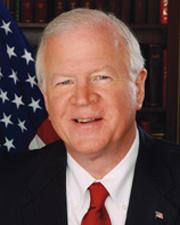
Mr. President, I rise today to introduce a bill that will facilitate the sharing of information from Federal law enforcement agencies to State and local law enforcement. Right now, existing Federal…
Mr. President, I rise today to introduce a bill that will facilitate the sharing of information from Federal law enforcement agencies to State and local law enforcement. Right now, existing Federal law authorizes the FBI to obtain certain records and information, such as telephone records, bank records, and consumer credit records, in investigations of terrorist activities. One of the tools
that the FBI uses for this purpose is the National Security Letter (or NSL), which is, in effect, a limited type of administrative subpoena that is directed to the institutions that have these records. The statutes authorizing the use of NSLs generally require that the requested information be relevant to an investigation of international terrorism or clandestine intelligence activities, and these statues prohibit investigations based solely on First Amendment-protected activities of people known under the law as ``United States persons,'' which is a group consisting of U.S. citizens and permanent resident aliens.
Unfortunately, when the FBI receives records or information provided to it in response to NSLs, several different statutes govern the circumstances under which the Bureau may disseminate this information to other agencies. The standards differ from statute to statute-- complicating the sharing of the information with other agencies that may need it for counterterrorism purposes--and a number of these provisions curiously are more restrictive about information sharing with other Federal agencies than with non-Federal agencies. The Information Sharing Improvement Act of 2004 (ISIA), which I introduce today along with my good friend from Arizona, John Kyl, would amend these statutes to allow the dissemination of information obtained through NSLs in conformity with consistent guidelines developed by the Attorney General.
The Information Sharing Improvement Act also amends a statute that authorizes sharing of national security-related investigative information with relevant Federal, State, and local officials, to make it clear that the statute applies regardless of whether the investigation in which the information was obtained is characterized as a ``criminal'' investigation or a ``national security'' investigation.
Finally, the Information Sharing Improvement Act would restore Homeland Security Act amendments that broaden the sharing of Federal grand jury information concerning threatened terrorist attacks with State and local authorities.
The Information Sharing Improvement Act does not expand the powers of the FBI or Federal prosecutors to acquire records or information, but it will improve their ability to share information--obtained under existing authorities--with Federal, State, and local agencies that need it to protect the public from terrorism.
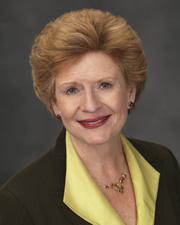
Mr. President, I rise today to introduce the Ensuring Quality and Access to Cancer Care Act of 2004. I want to thank my colleague, Senator Hutchison, for working with me on this critical issue.…
Mr. President, I rise today to introduce the Ensuring Quality and Access to Cancer Care Act of 2004. I want to thank my colleague, Senator Hutchison, for working with me on this critical issue. Regardless of how we feel about the new Medicare law, I believe we all agree that there are legitimate concerns about changes in cancer care reimbursement. Critical services that help patients and their families may be in jeopardy because Medicare reimbursement is scheduled to be drastically cut in 2005.
I believe that these changes will be disruptive to patients' care. It is especially urgent in Michigan, which is ranked fourth in the Nation in number of residents with cancer.
Doctors administer more than 70 percent of all cancer chemotherapy in their offices, but the new Medicare law drastically cuts doctors' reimbursement for drug administration. Changes in the reimbursement system will
mean that doctors will likely be paid dramatically less for chemotherapy. Preliminary estimates indicate that roughly $4.2 billion will be taken out of cancer care in the United States over the next 10 years.
Many critical services are paid for through drug administration reimbursement because they are not covered by Medicare. These include specially-trained oncology nurses and related staff; the handling, storage, and preparation of the toxic chemotherapy agents; and cognitive, nutrition, and support care services that are important indices of quality cancer care.
The result could be fewer and fewer doctors will treat cancer patients, leaving them without access to the best care possible. Furthermore, patients may lose access to vital support services.
Congress clearly recognized that questions related to the impact of the Medicare law on patient access needed to be answered. That's why the Medicare law included a temporary one-year increase in physicians' practice expenses. But access problems will likely emerge in 2005 when the temporary aid and drug reimbursement decrease significantly. And several programs to help oncologists and patients will not begin until 2006.
The ``Ensuring Quality and Access to Cancer Care Act of 2004'' would merely extend the 1-year transitional period built into the law for an additional year. It's a fair compromise so that we have time to answer important questions regarding the impact of the payment reductions. And it will ensure that policy changes do not disrupt patient access to quality cancer care.
I ask unanimous consent that the text of the bill be printed in the Record.
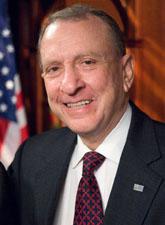
Mr. President, I have sought recognition to co-sponsor legislation to add the likeness of Sojourner Truth to the statue commemorating women's suffrage located in the rotunda of the United States…
Mr. President, I have sought recognition to co-sponsor legislation to add the likeness of Sojourner Truth to the statue commemorating women's suffrage located in the rotunda of the United States Capitol.
Sojourner Truth (1797?-1883) was the self-given name of a woman born into slavery. The year of her birth is uncertain, and is usually taken to be 1797. Originally Isabella Van Wagener, she escaped to Canada in 1827.
After New York State had abolished slavery in 1829, she returned and worked as a domestic servant for over a decade, and joined Elijah Pierson in evangelical preaching on street-corners. Later in life she became a noted speaker for both the Abolitionist movement and the women's rights movement. Perhaps one of her most famous speeches was Ain't I A Woman, a short but pointed commentary delivered in 1851 at the Women's Convention in Akron, Ohio.
During the American Civil War, she organized collection of supplies for the Union. In 1850, she worked with Olive Gilbert to produce a biography, the Narrative of Sojourner Truth.
This was a truly amazing woman who endeavored in her time to change the American experience both for her fellow freed slaves as well as women of all races. A courageous woman, Truth not only spoke out against the racial oppression that she had endured throughout her childhood but acted on her beliefs, inspiring men and women of all races with her personal strength, wisdom, and social activism.
Through her courage and perseverance, Sojourner Truth, her contemporaries, and future visionaries have led our nation and the world toward greater freedom and democracy for all. Three of these women--Lucretia Mott, Elizabeth Cady Stanton, and Susan B. Anthony--are already portrayed by the Portrait Monument, which was presented to Congress in 1920 in honor of the passage of the Nineteenth Amendment guaranteeing women the right to vote. Her recognition, as an African- American would be an appropriate, noteworthy addition to the statue.
I am pleased to offer this legislation to finally honor Sojourner Truth in the rotunda of the U.S. Capitol and encourage the retelling of her inspirational story to the American people. This is a long overdue effort and I encourage my colleagues to support this legislation.
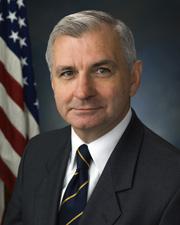
Mr. President, I rise as an original cosponsor of the Improving Access to Assistive Technology for Individuals with Disabilities Act of 2004. This important legislation reauthorizes the Assistive…
Mr. President, I rise as an original cosponsor of the Improving Access to Assistive Technology for Individuals with Disabilities Act of 2004. This important legislation reauthorizes the Assistive Technology, AT, Act, which helps States strengthen their capacity to address the assistive technology needs of individuals with disabilities and supports loan and device demonstration programs, for six years.
This legislation improves current law in several ways which will help individuals with disabilities gain access to the assistive technology devices and services that will help them lead full and productive lives. Importantly, the legislation removes the sunset provision included in the last reauthorization and increases the minimum State allotment to $500,000, ensuring that all States can continue this vital work. Assistive technology devices and services are increasingly necessary, particularly as our population ages and for soldiers returning from battle with injuries that used to be life ending.
I am particularly pleased that this legislation contains language I sought to address areas of need that I heard from assistive technology users, providers, advocates, and administrators in my State of Rhode Island. First, the bill enhances training activities to improve the capacity of local education,
early intervention, adult providers, and employers to assess, implement, and integrate AT devices. Secondly, funding is authorized for inventing and developing new AT devices and adapting, maintaining, servicing, and improving existing AT devices. Finally, the bill makes great strides to promote interagency coordination and collaboration to effectively deliver assistive technology devices and services.
I want to thank Senators Gregg, Kennedy, and Harkin for working so closely with me and my staff on this bill. It is my hope that we will be able to maintain this same cooperative, bipartisan spirit in which this bill was crafted as the reauthorization process moves forward.
Mr. President, I ask unanimous consent that the text of the bill be printed in the Record.
Mr. President, I ask unanimous consent that the text of the bill be printed in the Record.
Bill Text
Latest available legislative text
        [Congressional Bills 108th Congress]
[From the U.S. Government Publishing Office]
[S. 2576 Introduced in Senate (IS)]

108th CONGRESS
2d Session
S. 2576

To establish an expedited procedure for congressional consideration of
health care reform legislation.

_______________________________________________________________________

IN THE SENATE OF THE UNITED STATES

June 24, 2004

Mr. Feingold introduced the following bill; which was read twice and
referred to the Committee on Rules and Administration

_______________________________________________________________________

A BILL

To establish an expedited procedure for congressional consideration of
health care reform legislation.

Be it enacted by the Senate and House of Representatives of the
United States of America in Congress assembled,

SECTION 1. SHORT TITLE.

This Act may be cited as the ``Health Care Reform Expedited
Procedures Act of 2004''.

SEC. 2. SENATE CONSIDERATION OF HEALTH CARE REFORM LEGISLATION.

(a) Introduction.--
(1) In general.--Not later than 30 calendar days after the
commencement of the first session of a Congress, the chair of
the Senate Committee on Health, Education, Labor, and Pensions,
the Chair of the Senate Committee on Finance, the Majority
Leader of the Senate, and the Minority Leader of the Senate
shall each introduce a bill to provide universal health care
coverage for the people of the United States.
(2) Minority party.--These bills may be introduced by
request and only 1 qualified bill may be introduced by each
individual referred to in paragraph (1) within a Congress. If
either committee chair fails to introduce the bill within the
30-day period, the ranking minority party member of the
respective committee may instead introduce a bill that will
qualify for the expedited procedure provided in this section.
(3) Qualified bill.--
(A) In general.--In order to qualify as a qualified
bill--
(i) the title of the bill shall be ``To
reform the system of the United States and to
provide insurance coverage for all
Americans.''; and
(ii) the bill shall reach the goal of
providing health care coverage to 95 percent of
Americans within 10 years.
(B) Determination.--Whether or not a bill meets the
criteria in subparagraph (A) shall be determined by the
Chair of the Senate Budget Committee, relying on
estimates of the Congressional Budget Office, subject
to the final approval of the Senate.
(b) Referral.--
(1) Committee bills.--Upon introduction, the bill authored
by the Chair of the Senate Committee on Finance shall be
referred to that Committee and the bill introduced by the Chair
of the Senate Committee on Health, Education, Labor, and
Pensions shall be referred to that committee. If either
committee has not reported the bill referred to it (or another
qualified bill) by the end of a 60 calendar-day period
beginning on the date of referral, the committee is, as of that
date, automatically discharged from further consideration of
the bill, and the bill is placed directly on the chamber's
legislative calendar. In calculating the 60-day period,
adjournments for more than 3 days are not counted.
(2) Leader bills.--The bills introduced by the Senate
Majority Leader and the Senate Minority Leader shall, on
introduction, be placed directly on the Senate Calendar of
Business.
(c) Motion To Proceed.--
(1) In general.--On or after the third day following the
committee report or discharge or upon a bill being placed on
the calendar under subsection (b)(2), it shall be in order for
any Member, after consultation with the Majority Leader, to
move to proceed to the consideration of any qualified bill.
Notice shall first be given before proceeding. This motion to
proceed to the consideration of a bill can be offered by a
Member only on the day after the calendar day on which the
Member announces his or her intention to offer it.
(2) Consideration.--The motion to proceed to a given
qualified bill can be made even if a motion to the same effect
has previously been rejected. No more than 3 such motions may
be made, however, in any 1 congressional session.
(3) Privileged and nondebatable.--The motion to proceed is
privileged, and all points of order against the motion to
proceed to consideration and its consideration are waived. The
motion is not debatable, is not amendable, and is not subject
to a motion to postpone.
(4) No other business or reconsideration.--The motion is
not subject to a motion to proceed to the consideration of
other business. A motion to reconsider the vote by which the
motion to proceed is agreed to or disagreed to is not in order.
(d) Consideration of Qualified Bill.--
(1) In general.--If the motion to proceed is adopted, the
chamber shall immediately proceed to the consideration of a
qualified bill without intervening motion, order, or other
business, and the bill remains the unfinished business of the
Senate until disposed of. A motion to limit debate is in order
and is not debatable.
(2) Only business.--The qualified bill is not subject to a
motion to postpone or a motion to proceed to the consideration
of other business before the bill is disposed of.
(3) Relevant amendments.--Only relevant amendments may be
offered to the bill.

SEC. 3. HOUSE CONSIDERATION OF HEALTH CARE REFORM LEGISLATION.

(a) Introduction.--
(1) In general.--Not later than 30 calendar days after the
commencement of the first session of a Congress, the chair of
the House Committee on Energy and Commerce, the chair of the
House Committee on Ways and Means, the Majority Leader of the
House, and the Minority Leader of the House shall each
introduce a bill to provide universal health care coverage for
the people of the United States.
(2) Minority party.--These bills may be introduced by
request and only 1 qualified bill may be introduced by each
individual referred to in paragraph (1) within a Congress. If
either committee chair fails to introduce the bill within the
30-day period, the ranking minority party member of the
respective committee may, within the following 30 days, instead
introduce a bill that will qualify for the expedited procedure
provided in this section.
(3) Qualified bill.--
(A) In general.--To qualify for the expedited
procedure under this section as a qualified bill, the
bill shall reach the goal of providing healthcare
coverage to 95 percent of Americans within 10 years.
(B) Determination.--Whether or not a bill meets the
criteria in subparagraph (A) shall be determined by the
Speaker's ruling on a point of order based on a
Congressional Budget Office estimate of the bill.
(b) Referral.--
(1) Committee bills.--Upon introduction, the bill authored
by the Chair of the House Committee on Energy and Commerce will
be referred to that committee and the bill introduced by the
Chair of the House Committee on Ways and Means shall be
referred to that committee. If either committee has not
reported the bill referred to it (or another qualified bill) by
the end of 60 days of consideration beginning on the date of
referral, the committee shall be automatically discharged from
further consideration of the bill, and the bill shall be placed
directly on the Calendar of the Whole House on the State of the
Union. In calculating the 60-day period, adjournments for more
than 3 days are not counted.
(2) Leader bills.--The bills introduced by the House
Majority Leader and House Minority Leader will, on
introduction, be placed directly on the Calendar of the Whole
House on the State of the Union.
(c) Motion To Proceed.--
(1) In general.--On or after the third day following the
committee report or discharge or upon a bill being placed on
the calendar under subsection (b)(2), it shall be in order for
any Member, after consultation with the Majority Leader, to
move to proceed to the consideration of any qualified bill.
Notice must first be given before proceeding. This motion to
proceed to the consideration of a bill can be offered by a
Member only on the day after the calendar day on which the
Member announces his or her intention to offer it.
(2) Consideration.--The motion to proceed to a given
qualified bill can be made even if a motion to the same effect
has previously been rejected. No more than 3 such motions may
be made, however, in any 1 congressional session.
(3) Privileged and nondebatable.--The motion to proceed is
privileged, and all points of order against the motion to
proceed to consideration and its consideration are waived. The
motion is not debatable, is not amendable, and is not subject
to a motion to postpone.
(4) No other business or reconsideration.--The motion is
not subject to a motion to proceed to the consideration of
other business. A motion to reconsider the vote by which the
motion to proceed is agreed to or disagreed to is not in order.
(d) Consideration of a Qualified Bill.--
(1) In general.--If the motion to proceed is adopted, the
chamber will immediately proceed to the consideration of a
qualified bill without intervening motion, order, or other
business, and the bill remains the unfinished business of the
House until disposed of.
(2) Committee of the whole.--The bill will be considered in
the Committee of the Whole under the 5-minute rule, and the
bill shall be considered as read and open for amendment at any
time.
(3) Limit debate.--A motion to further limit debate is in
order and is not debatable.
(4) Relevant amendments.--Only relevant amendments may be
offered to the bill.
<all>