A bill to designate the annex to the E. Barrett Prettyman Federal Building and United States Courthouse located at 333 Constitution Ave. Northwest in Washington, District of Columbia, as the "Judge William B. Bryant Annex to the E. Barrett Prettyman Federal Building and United States Courthouse".

Legislative Activity
Stay on top of the latest movement without scrolling through every action
Read twice and referred to the Committee on Environment and Public Works.
July 8, 2004
View full timeline
Introduced in Senate
July 8, 2004
Sponsor introductory remarks on measure. (CR S7829)
July 8, 2004
Read twice and referred to the Committee on Environment and Public Works.
July 8, 2004
Floor Debate
11 membersWhat members said about S. 2619 on the floor
 FRL
FRL GHS
GHS DKA
DKA JMJ
JMJ LG+6
LG+6
Floor Debate
11 membersWhat members said about S. 2619 on the floor
Mr. President, I am pleased to join Senator Jeffords today in introducing the High-Performance Green Buildings Act. This legislation will reenergize the Federal Government's commitment to building…
Mr. President, I am pleased to join Senator Jeffords today in introducing the High-Performance Green Buildings Act. This legislation will reenergize the Federal Government's commitment to building design and construction into the 21st Century.
Buildings have an enormous impact on environmental quality, on energy
use, and on natural resource consumption. The statistics are staggering. Buildings devour 37 percent of the energy used in this country, including 68 percent of electricity. They are responsible for 35 percent of carbon dioxide emissions, the primary greenhouse gas associated with climate change. And they account for 49 percent of sulfur dioxide and 25 percent of nitrogen oxide emissions and generate 40 percent of the Nation's non-industrial waste stream. Moreover, building construction and demolition produce 136 million tons of waste in this country, and use 12 percent of potable water in the U.S. Mr. President, for too long these prodigious effects have gone unrecognized.
The impacts are even more far reaching than that. Since Americans spend an average of 90 percent of their time indoors, buildings have a considerable influence on public health. According to the Environmental Protection Agency, EPA, indoor air pollution concentrations may be two to five times, and in some cases 100 times, higher than in outdoor air. EPA scientists estimates that about 20,000 deaths occur related to indoor levels of radon, and that 3000 lung cancer deaths occur among nonsmoking adults due to second-hand smoke each year.
Experts at the Centers for Disease Control and Prevention, CDC, estimate that an additional 35,000 coronary disease deaths occur each year in this country among nonsmoking adults due to second-hand smoke. These losses do not include exposure to toxic pollutants emitted from building materials, such as adhesives, paints, carpets, and pressed- wood products, which many researchers believe to be significant. We must confront these environmental and public health challenges and to do so we need a vision for the future. Our legislation offers that vision.
High-performance green buildings are designed and constructed in ways that significantly reduce or eliminate negative effects on the environment, on energy use, and on resource consumption. They are also designed to reduce or eliminate harmful pressures on the health and productivity of building occupants. According to the U.S. Green Building Council, a national nonprofit organization, green design and construction practices are directed at five broad areas: 1. Sustainable site planning; 2. Safeguarding water and water efficiency; 3. Energy efficiency and renewable energy; 4. Conservation of materials and resources; and 5. Indoor environmental quality.
Green buildings have many benefits, and while the initial investment may be higher (although not necessarily) than for a traditional buildings, they significantly lower long-term costs for things such as heating and cooling. Since new government buildings are intended to be used for a long period of time--at least 50 years--it is easier to justify any initial higher investment costs. By improving working conditions and increasing daylighting, case studies have shown that green buildings improve occupant productivity and reduce employee absenteeism. This legislation would provide for research to capture and measure those impacts and incorporate the lessons learned into future construction.
The High-Performance Green Building Act focuses Federal Government efforts to promote the environmental, energy, health, and economic benefits that can be realized from green buildings. This legislation incorporates the findings of two reports that make recommendations for improving the Federal Government's role in relation to high-performance green buildings. The first report, ``Building Momentum: National Trends and Prospects for High-Performance Green Buildings,'' was prepared by the U.S. Green Building Council and the second report, ``The Federal Commitment to Green Building: Experiences and Expectations,'' was released by the President's Office of the Federal Environmental Executive.
Our legislation changes the way the Federal Government manages its thousands of buildings. The bill establishes an Office of High- Performance Green Buildings within the General Services Administration, GSA, which is the logical place for this office since this agency is the Federal Government's primary landlord. GSA manages over 8,700 buildings owned or leased by the United States. The new office will promote public outreach, coordinate and focus research and development, and improve life-cycle analysis and budgeting for building construction. This title also creates an Interagency Steering Committee to improve coordination across Federal agencies, and with state and local governments.
This bill would expand the role of EPA in supporting healthier buildings at the nation's schools. Schools can serve as the vanguard for the effort to protect our children's health and the environment, so this title authorizes the Agency to administer grants to state and local education agencies to support implementation of EPA's effective Tools for Schools Program. It also authorizes the Agency to develop Federal guidelines for school location siting that take into account the special vulnerabilities of children to the contamination of land and water.
This legislation would incorporate building life-cycle costing as a tool to achieve more efficient and economical long-term investments in government buildings, by requiring the Comptroller General to review the annual Federal budget process and submit a plan to reach these goals to Congress.
In closing, investing in green buildings is good public policy for a variety of reasons. Our bill will allow the Federal Government to take a leadership role in promoting green buildings. We have a commitment to our children and grandchildren to protect and conserve the planet's resources and to safeguard public health. I urge my colleagues to support this important bill.
Mr. President, today I am introducing legislation, with Senators Durbin, Levin and Reid, with Congressman DeFazio in the House, to bring fairness to the oil markets and do something to reverse the recent spikes in gas prices.
Our legislation will force the United States Trade Representative (USTR) to initiate World Trade Organization (WTO) proceedings against OPEC nations. Under WTO rules, countries are not permitted to maintain export quotas. But OPEC nations actually collude to set such quotas.
OPEC is an illegal cartel, plain and simple. We've allowed this cartel to operate for too long--it's time to put an end to it.
The American people are feeling the effects of the OPEC cartel every day at the gas pumps. Many families are already struggling with lost jobs, stagnant wages and the rising costs of health care. High gas prices have only made matters worse.
When President Bush took office, a gallon of gas cost $1.47. Today, a gallon of gas averages $1.90. For someone who buys one tank of gas a week, that increase costs $350 per year.
All this adds up. Oil imports now account for $125 billion annually, or one-quarter of America's trade deficit. That money could be invested here at home to create American jobs, but instead we are being gouged by oil exporters.
While Americans suffer, President Bush has done nothing to bring down gas prices. He says he will talk to his Saudi friends in the oil business. But talk is cheap. The American people want action. This bill today is an opportunity for action.
I have also released a report today, explaining the basis for a WTO complaint against OPEC.
In some ways, the allegations are simple and straightforward: OPEC manipulates world oil markets by imposing export quotas on oil. These quotas keep the price of oil artificially high.
Without OPEC, market analysts have estimated that the free market price of a barrel of oil would be around 10 to 15 dollars lower than today's price. That would make a difference in gas prices of 20 to 45 cents per gallon, saving American families hundreds of dollars per year. There is no reason to continue to tolerate OPEC's anti- competitive behavior.
Collusion to put quotas on oil exports--or any exports--is illegal under WTO rules. For example, the WTO has found that a treaty between the United States and Japan limiting semiconductor exports violated WTO rules.
The Bush administration has been lax in dealing with OPEC. In my view, President Bush's ties to the Saudis and to big oil companies prevent him from sticking up for the American consumer.
Indeed, while the squeeze was being put on American consumers, oil companies and refineries reported record profits in the first quarter of this year for operations in the United States. Earnings for U.S. domestic refining and marketing operations increased by 294 percent for Chevron-Texaco, 165 percent for BP, 125 percent for ExxonMobil, and 44 percent for Conoco-Phillips over last year's levels.
So while OPEC and their oil company allies have seen a boom, American families have seen a bust. In fact, for those middle-income Americans who will see any benefit at all from the recent tax cuts, rising gas prices alone will eat up half of those cuts.
Since the Bush administration has failed to live up to its responsibilities, it's time for the Congress to stand up for the American people and force it to take action against OPEC.
I urge support of this common-sense legislation, and I ask unanimous consent that the text of the legislation be printed in the Record.
Mr. President, I am pleased to be joined today by my colleagues, Senators Kohl and Lugar to introduce this important piece of legislation. Legislation that will ensure the United States government…
Mr. President, I am pleased to be joined today by my colleagues, Senators Kohl and Lugar to introduce this important piece of legislation. Legislation that will ensure the United States government does not turn its back on political asylees or refugees who are the most vulnerable citizens seeking safety in this great country of ours.
As many of you may know, Congress as part of Personal Responsibility and Work Opportunity Reconciliation Act (PRWORA) modified the SSI program to include a seven-year time limit on the receipt of benefits for refugees and asylees. This policy was intended to balance the desire to have people who emigrate to the United States to become citizens, with an understanding that the naturalization process also takes time to complete. To allow adequate time for asylees and refugees to become naturalized citizens Congress provided the seven-year time limit before the expiration of SSI benefits.
Unfortunately, the naturalization process often takes longer than seven years because applicants are required to live in the United States for a minimum of five years prior to applying for citizenship and the INS often takes three or more years to process the application. Because of this time delay, many individuals are trapped in the system faced with the loss of their SSI benefits.
If Congress does not act to change the law, reports show that over the next four years nearly 30,000 elderly and disabled refugees and asylees will lose their Supplemental Security Income (SSI) benefits because their seven-year time limit will expire before they become citizens. Many of these individuals are elderly who fled persecution or torture in their home countries. They include Jews fleeing religious persecution in the former Soviet Union, Iraqi Kurds fleeing the Saddam Hussein regime, Cubans and Hmong people from the highlands of Laos who served on the side of the United States military during the Vietnam War. They are elderly and unable to work, and have become reliant on their SSI benefits as their primary income. To penalize them because of delays encountered through the bureaucratic process seems unjust and inappropriate.
I would like to share the story of Yelena, a victim of religious persecution in the former Soviet Union who sought refuge in the United States seven years ago and is currently living in Portland, Oregon. At the age of 82, Yelena relies on SSI and other public benefits programs to buy food and pay her monthly bills. Yelena is now stuck in a multi- year backlog waiting for her green card, the first step toward citizenship. She was raised in a small village in the Soviet Union where she had little access to formal education and never learned English. She has struggled to grasp the language since arriving in the US and as a result, her seven-year anniversary arrived before she was able to naturalize. Yelena is now without her SSI benefits and still fighting to become a citizen. We must help Yelena and others like her.
The Administration in its fiscal year 2005 budget acknowledged the necessity to correct this problem by dedicating funding in its budget to extend refugee eligibility for SSI beyond the seven-year limit. While I am pleased that they have taken the first step in correcting this problem, I am concerned the policy does not go far enough. Data shows that most people will need at least an additional two years to navigate and complete the naturalization process. Therefore, my colleagues and I have introduced this bill, which will provide a two- year extension. We believe this will provide the time necessary to complete the process.
I hope my colleagues will join me in support of this bill, and I look forward to working with Chairman Grassley and other members of the Finance Committee to secure these changes.
Mr. President, I rise today with my colleague, Mr. Wyden, to introduce the ``Friends of the Children National Demonstration Act'' to authorize funding for Friends of the Children.
Friends of the Children is a promising early intervention program established in Portland, Oregon, in 1993. The program identifies the most disadvantaged children at the kindergarten or first grade level and matches those children with ``professional mentors'' (also known as ``Friends''). Once matched, professional mentors work with children for a period of up to 12 years.
Started over a decade ago with just three Friends serving as mentors to 24 children, Friends of the Children has grown to serve over 600 children in 11 communities throughout the United States. The mission of Friends of the Children is to help our Nation's most disadvantaged children to develop the relationships, goals, and skills necessary to break the cycles of poverty, abuse, and violence in order to become a contributing member of society.
Extensive research has shown that the single most important factor that fosters resiliency in children is having a long-term relationship with a caring, supportive adult. Friends of the Children is a unique program that provides just such a relationship for disadvantaged children.
In 1993, Friends of the Children welcomed T.R., a first grader, into the Portland program. At home, T.R. was routinely exposed to drug use, gang activity, and violence. Through the program, T.R. was matched with his mentor, Jerrell, to help maintain a support system in T.R.'s life. Jerrell tutors, counsels, advises and is a companion to T.R. whether it is discussing T.R.'s plans for the future or dealing with his family relationships. Without the help of someone like Jerrell, T.R. believes that he would probably have dropped out of school or joined a gang. Now, T.R. is giving back to his community by working for Self Enhancement, Inc., an organization that teaches leadership skills to middle school students. T.R. has overcome great adversity to mature into a responsible young adult. T.R. aspires to pursue a career in business and would like to run his own company one day.
Last week, T.R. became one of the first students to graduate from the Friends of the Children program. Along with his classmates, T.R. was identified by the program over a decade ago. He was part of a group of children identified as the most in danger of abuse, neglect, juvenile delinquency, gang and drug involvement, school failure, and teenage pregnancy. Today, these children have grown into young adults. They have positive values and show great potential to become healthy, productive members of their communities.
``The Friends of the Children National Demonstration Act'' will establish a national demonstration project to promote learning about successful early and sustained childhood intervention programs. This bill would authorize funding for Friends of the Children activities and local program operations at existing sites including ongoing evaluation, and dissemination of findings for the benefit of policy makers and other youth programs.
I look forward to working with my colleagues to enact this bill and make a commitment to improving the lives of disadvantaged children and youth.
Mr. President, today I rise to introduce the Federal Employee's Protection of Disclosures Act. Last year I introduced similar legislation, S. 1358, to amend employee safeguards for disclosing…
Mr. President, today I rise to introduce the Federal Employee's Protection of Disclosures Act. Last year I introduced similar legislation, S. 1358, to amend employee safeguards for disclosing government waste, fraud, and abuse with the support of Senators Grassley, Levin, Leahy, Durbin, Dayton, Pryor, Johnson, and Lautenberg.
Today, I am pleased that we can introduce a strong bipartisan version of this legislation with the additional support of Senators Collins, Lieberman, Fitzgerald, and Voinovich. Thanks to the work of the bill's cosponsors, we have developed legislation that strikes the right balance between the protection of Federal whistleblowers and our national security.
As my colleagues know, the events of September 11, 2001, have brought renewed attention to the security lapses at our Nation's airports, nuclear facilities, borders, and law enforcement agencies. However, in many cases, the current whistleblower system fails to protect those who would disclose information that could ensure the safety and welfare of the American people. As of May 2004, Federal whistleblowers have prevailed on the merits of their claims before the Federal Circuit Court of Appeals only once since 1994. This record sends the wrong message. How can we expect civil servants to protect and defend the United States when we permit agencies to retaliate against them for doing their job?
I know the Department of Justice (DOJ) has objected to previous legislation concerning this problem. This comes as no surprise as the Department has an institutional conflict of interest with restoring whistleblower rights as it is charged with defending agencies charged with retaliating against the whistleblower. Nonetheless, I have worked with my colleagues on the Governmental Affairs Committee to address some the concerns raised by the Justice Department while still protecting federal employees.
One of the most significant changes in the bill relates to the protection of employees who find their security clearances stripped as a means of retaliation for blowing the whistle. Current law does not permit the whistleblower to have his or her case heard by an independent adjudicator when this type of retaliation occurs.
Under our bill, the whistleblower would be able to bring a case before the Merit Systems Protection Board (MSPB) on an expedited basis when the employing agency revokes, suspends, denies, or makes another determination in relation to an employee's security clearance or access to classified materials. However, the employing agency need only prove by a preponderance of the evidence that it would have taken the action against the employee irrespective the whistleblower's disclosure. By lowering the burden of proof for the employing agency from clear and convincing, as is the standard with other whistleblower cases, to preponderance of the evidence, our legislation strikes a balance between having an open and transparent process for whistleblowers and the need to make security clearance or access determinations in the interests of national security.
The Department of Justice was also concerned with a provision in the prior bill, S. 1358, which granted independent litigating authority to the Special Counsel. In testimony before the Governmental Affairs Committee last November, the Department claimed that extending this authority to the Special Counsel would usurp DOJ's traditional unifying role as the Executive Branch's representative in court. The Department also claimed that the provision would undermine a number of important policy goals, including the presentation of uniform positions on significant legal issues and the objective litigation of cases by attorneys unaffected by concerns of a single agency that may be inimical to the interests of the Government as a whole.
However, many agencies have independent litigating authority, including the Equal Employment Opportunity Commission, the MSPB, the Environmental Protection Agency, and the Federal Labor Relations Authority. Moreover, interagency disputes are not unique. It is inappropriate for the Office of Special Counsel (OSC), the agency charged with protecting the Whistleblower Protection Act (WPA), to seek approval from DOJ, the agency charged with protecting agencies alleged to have retaliated against whistleblowers, in order to carry out its mission. Nonetheless, our bill would not provide the Special Counsel with independent litigating authority but rather provide it with independent authority to file amicus briefs with federal courts. This authority will allow the Special Counsel to protect the WPA while addressing concerns raised by the Justice Department.
In addition, our compromise measure would still provide protection to whistleblowers subject to retaliatory investigations, but not for routine or non-discretionary investigations of the employee and codify the definition of reasonable belief an employee must have in order to determine when an employee has made a protected disclosure. I am pleased that our new bill, among other things, retains language restoring congressional intent regarding the definition of a protected disclosure, codifying the anti-gag provision that has been in every appropriations law since 1988, and establishing a more reasonable test for determining government mismanagement instead of irrefragable proof. According to the Federal Circuit, in order to determine that the federal government has engaged in gross mismanagement, the whistleblower must have irrefragable proof, meaning proof impossible to refute.
The bill also retains language, subject to a five-year sunset, providing whistleblowers the opportunity to have their cases heard by federal courts other than the Federal Circuit Court of Appeals. These provisions are necessary to facilitate disclosures of government mismanagement in order for Congress to do its job and make informed decisions when carrying out its legislative, appropriation, and oversight functions for the protection the American people.
Our government is responsible for services and programs that touch all
Americans. The Federal employees who carry out these responsibilities on behalf of the American people must be able to communicate with Congress without fear of losing their jobs when reporting threats to public health and safety and government mismanagement. We must have a credible and functioning WPA. I urge my colleagues to support this bipartisan bill and ensure real protection for Federal whistleblowers.
I ask unanimous consent that the text of the bill be printed in the Record.
Mr. President, I rise today to introduce the ``High Performance Green Buildings Act of 2004.'' I would like to thank Senator Lautenberg and the other cosponsors for working with me to introduce this…
Mr. President, I rise today to introduce the ``High Performance Green Buildings Act of 2004.''
I would like to thank Senator Lautenberg and the other cosponsors for working with me to introduce this important legislation.
Preliminary studies are showing that high-performance green buildings generate huge savings in operations and maintenance costs due to their efficient operating systems. These studies have also demonstrated that high-performance green buildings provide a healthier work environment for the occupants, resulting in fewer absences due to illness. The outcome is huge savings in health related costs. All of these savings are generated, while sustaining very little impact on their surrounding environment.
In the United States, buildings account for: 36 percent of total energy use; 65 percent of electricity consumption; 30 percent of greenhouse gas emissions; 30 percent of raw materials use; 30 percent of waste output and 12 percent of potable water consumption.
Why not build buildings that strive to conserve our precious resources and reduce the harmful pollutants that are damaging to the environment?
In an era of great security concern, green buildings have reduced energy requirements and may use renewable sources of energy that are off the electricity grid. Green buildings also use less water and some even collect rainwater to use throughout the building. Should there be a terrorist act that damages or destroys our Nation's resources, these buildings could assist in keeping our government up and running.
There is no downside to utilizing high-performance buildings. This initiative is taking off in the private sector. According to the US Green Building Council, there are 118 certified green buildings across the United States with 1,395 in the pipeline. This legislation would ensure that the Federal Government is keeping pace with the real world and doing its part to protect the environment and provide a safe work place for its employees.
The General Services Administration, GSA, is the largest landlord in the United States, with over 8,700 buildings in their current inventory. This legislation creates an office within GSA to oversee the green building efforts of agencies within the government. GSA is a natural leader to focus on our federal buildings and ensure that they are safe, healthy, and efficient.
This legislation will coordinate the efforts within the Federal Government to promote high-performance green buildings, provide public outreach, and expand existing research.
The bill creates an Interagency Steering Committee to advise the Office within GSA. The Committee will be comprised of key representatives of each relevant agency, state and local governments, nongovernment organizations, and experts within the building community. This Committee will ensure that the Federal Government stays up to date with technology and the latest advancements to ensure that high- performance buildings operate efficiently while continuing to provide a healthier environment for the occupants.
In addition, research efforts will be expanded to focus on buildings and the impacts that their systems have on human health and worker productivity. We just don't know enough. Are we making our employees sick by providing poor workspace?
The High-Performance Green Buildings Act also requires that a good hard look be taken at the budget process we have used for years and explore ways to improve the approval process for government projects. We need to grow with the times and ensure that our budget process allows us to take into account life-cycle costing. This means that we allow our financial experts to factor in savings that green buildings generate over time, and don't just look at the upfront cost of a building. It has been documented that high-performance green buildings recover any initial upfront costs from incorporating efficient systems within the first few years of operation. The average life of a federal building is 50 years. In the times of soaring budget deficits, it is imperative that the Federal Government pursue all cost-saving options.
High-performance green buildings are not just for federal buildings, but involve any type of building, including schools. This legislation also focuses on providing healthier, more efficient school facilities for our children. The bill provides $10 million in grants to state and local education agencies for technical assistance and the implementation of the Environmental Protection Agency's, EPA, Tools for Schools Program. The bill will help schools develop plans to focus on the design, construction, and renovation of school facilities, and look at systematic improvements for school siting, indoor air quality, reducing contaminants, and other health issues. This legislation also encourages research to study the effects that these systems are having on student health and productivity. Our children deserve to learn in an environment that is safe and conducive to learning.
Lastly, this bill will promote leadership within the Federal Government and provide incentives for government agencies to build high-performance green buildings. It also creates a clearinghouse to keep individuals and entities, including Congress and the government, informed on the information and services that the Office will provide.
I strongly encourage your support of the ``High-Performance Green Buildings Act of 2004.'' This has been a long time coming and will benefit all of us.
I ask unanimous consent that the ``High-Performance Green Buildings Act of 2004'' be printed in the Record.
Mr. President, the Authorization for the Alternative Water Sources Act of 2000, which I originally introduced, expires this year. I am introducing a bill to extend this law for five years through…
Mr. President, the Authorization for the Alternative Water Sources Act of 2000, which I originally introduced, expires this year. I am introducing a bill to extend this law for five years through Fiscal Year 2009 at an average authorization level of $25 million per year.
Our Nation's water supply needs are great and growing. For instance, each day the State of Florida adds 900 residents. To satisfy the water needs of this daily population increase, Florida must supply 200,000 more gallons of fresh water per day. Furthermore, the additional infrastructure needed to accommodate new residents blocks rainwater penetration into aquifers, lowering the water table. In fact, residents of Florida's west coast are increasingly resorting to drinking desalinated water as fresh water sources no longer suffice. Depletion of fresh water has resulted in saltwater intrusion into inland aquifers tainting water supplies and reducing the ability of soils to grow plants.
Other States are facing similar crises.
In southern New Jersey, water demands are so great that groundwater withdrawals from aquifers have lowered the water table by 200 feet, causing saltwater intrusion.
In Georgia and South Carolina, excessive water demand has significantly lowered water levels causing the upward migration of salt water in the Brunswick area and an encroachment of seawater into the aquifer at the northern end of Hilton Head Island.
On the East Coast, which gets on average 40 inches of rain per year, water resources have long been thought to be inexhaustible. However with changing population patterns and increasing personal and commercial water use, many water-rich areas are finding that the water will not always be there when they need it.
The extension of the Alternative Water Sources Act will provide States with the assistance they need to meet the needs of growing populations without harming the environment. It will also provide funds on a cost-shared basis to States for development of non-traditional water resources that will provide much needed water and prevent future environmental damages.
The bill I introduce today, authorizes the EPA to provide grants, at an average $25 million a year for Fiscal Years 2005 through 2009, on a cost-shared basis for alternative water source projects. The EPA administrator is required to take into account the eligibility of a project for funding under the existing programs when selecting
projects for funding under this nationwide program.
This law is critical to the environmentally friendly development of water resources in the United States. It authorizes funds for innovative water reuse, reclamation and conservation projects--helping many States meet current and future water supply.
Populations in water-rich areas are drawing increasingly on limited groundwater supplies. In the past, groundwater users in the East might have been characterized as private wells and small public water systems. Today, as people move away from traditional population centers along major rivers, groundwater use is increasing. In Pennsylvania, about six million people rely on groundwater.
Yet, trillions of gallons of fresh water in the United States are wasted and flood into the sea annually. For instance, in Florida, every year approximately 970 billion gallons of fresh water are diverted into canals that flow into the Gulf of Mexico and the Atlantic. This precious fresh water would otherwise have replenished aquifers or nourished fragile aquatic ecosystems. If properly captured and stored, this water could be used for industrial or commercial activities, reducing pressure on precious drinking water sources.
Our increasing water needs require immediate attention.
We continue to make progress in conservation. In the South Florida Water Management District, nearly 200 million gallons of water are being reused per day. However, demands remain great. For instance, each resident in South Florida uses nearly 175 gallons of fresh water per day--almost twice the national average. Much of this potable water is used for watering landscaping. We must find ways to reserve potable water for drinking and make better use of other sources of water for agricultural, commercial and outdoor watering purposes.
With innovations in water quantity management, we can curtail such tremendous wastes of water and reuse the water that supply storage facilities now cannot absorb.
In 1999, I sponsored S. 968, the Alternative Water Sources Act, which authorized funding for alternative water projects in States that do not receive funds for water supply projects. In 2000, my bill was incorporated into S. 835, the Estuaries and Clean Waters Act of 2000, which became Public Law 106-457. Unfortunately, the authorization for the Alternative Water Sources Act is due to expire this year. With our Nation facing many water quantity management issues, we must act now to renew the authorization.
Congress can provide tools to ensure that Americans have the water they need for a healthy and productive future. The Alternative Water Sources Act is one such tool, and we must not let it expire. I hope that Congress will approve an extension of the Act before the end of the year.
I ask unanimous consent that the text of the bill be printed in the Record.
Show 7 more
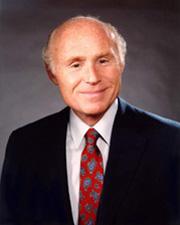
Mr. President. In December, 2003, the U.S. government unexpectedly announced plans to resettle up to 15,000 Hmong refugees from Laos currently living in Thailand. These refugees will be reunited with…
Mr. President. In December, 2003, the U.S. government unexpectedly announced plans to resettle up to 15,000 Hmong refugees from Laos currently living in Thailand. These refugees will be reunited with some 200,000 Hmong family members who were resettled here in the years after the Vietnam War, some as recently as the 1990s. Many of these Hmong fought with the CIA in Laos during the Vietnam War, providing critical assistance to U.S. forces. After the fall of Saigon, thousands of Hmong fled Laos and its communist Pathet Lao government. The United States remains indebted to these courageous individuals and their families.
While we work with the Department of Health and Human Services to identify funds to help these new refugees resettle, it is extremely important that we act to help those refugees and asylees already living in the United States. In addition to the Hmong, America has served as a shelter for Jews and Baptists fleeing religious persecution in the former Soviet Union; and for Iraqis and Cubans escaping tyrannical dictatorships. Our policy toward refugees and asylees embodies the best of our country--compassion, opportunity, and freedom. I am proud of the example our policies set with respect to the treatment of those seeking refuge.
But I am disappointed in our decision to allow these people to enter the country and then deny them the means to live. Thousands of people who fled religious and political persecution to seek freedom in the U.S. will now be punished by a short-sighted policy. A provision in the 1996 welfare reform bill restricted the amount of time that elderly and disabled refugees and asylees could be eligible for Supplemental Security Income (SSI) benefits. These benefits serve as a basic monthly income for individuals who are 65 or older, disabled or blind. Over the next 4 years, it is estimated that 40,000 refugees and political asylees could lose these important benefits on which they often rely.
The 1996 welfare law included a 7-year time limit on SSI benefits for legal humanitarian immigrants. In order to avoid losing this important support, refugees and asylees must become citizens within the 7-year limit. Unfortunately, this has proved impossible for far too many. The process of becoming a citizen only truly begins after a refugee has resided in the U.S. for 5 years as a lawful permanent resident. And beyond that, there are many other barriers, such as language skills and processing and bureaucratic delays within the various agencies, which an immigrant must overcome before they become naturalized. Beginning in 2003, immigrants trapped in this process--too often the most vulnerable elderly and families--began to lose their SSI benefits with no hope of recourse.
This inherent flaw in the system has to be changed. That is why Senators Smith, Lugar and I are introducing the SSI Extension for Disabled and Elderly Refugees Act. This legislation extends the amount of time that refugees and asylees have to become citizens to nine years. The legislation will retroactively restore benefits to many who have already lost them, and will protect those who are scheduled to lose benefits in the next two years.
I cannot stress how important this legislation is to many in the State of Wisconsin. Just last month, an article in the Green Bay Press- Gazette told of the difficulties facing 79-year-old Sia Xiong, a Hmong refugee who could lose benefits in the coming months. Like many elderly refugees, she doesn't know English, which poses a huge barrier in her application for citizenship. Despite the assistance that has been given to refugees like Xiong from agencies such as Lutheran Social Services or Kajsiab House or the Neighborhood Law Project in Madison, the length of the naturalization process has proved overwhelming to too many refugees.
Congress must take action immediately to help people like Xiong, and her family. In addition to the Hmong population in Wisconsin, almost every State in the country is home to immigrants who will be affected by the limit. Our country has long been a symbol of freedom, equality and opportunity. Our laws should reflect that. Every day that goes by could result in the loss of a refugee's support system--I urge my colleagues to support this legislation and restore the principles we were put here to protect.
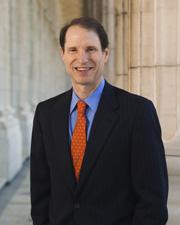
Mr. President, I am introducing today, along with my colleague, Senator Smith, the ``Friends of the Children National Demonstration Act'' to authorize funding for Friends of the Children. The…
Mr. President, I am introducing today, along with my colleague, Senator Smith, the ``Friends of the Children National Demonstration Act'' to authorize funding for Friends of the Children. The companion of this bill is being introduced in the House today by Congressman Earl Blumenauer.
This innovative program is truly a best practice in the field of youth development. Friends of the Children was started in Portland, OR, and was modeled on extensive research indicating that the strongest protective factor for highly disadvantaged children is an on-going relationship with a supportive, caring adult. Today, Friends of the Children is the only program in the Nation that provides carefully screened full-time professional mentors to disadvantaged youth for 12 years starting in kindergarten or first grade. Friends of the Children's first class of students is now graduating. These young people have outperformed their peer group of disadvantaged youth in every respect. They are in school, have passing grades, have not been incarcerated, do not abuse drugs or alcohol, and have not become involved in gang violence.
Let me share the story of one of these friends. In 1993, a first grader named Demarcus joined the Friends of the Children-Portland program in an attempt to overcome a family history of substance abuse and violence. His mother was raising three children as a single parent and she was overwhelmed. As a participant in the Friends of the Children program, Demarcus was matched with a ``Friend,'' Ruben, who has been his mentor for the past eight years. Ruben and Demarcus have developed a strong relationship through activities ranging from playing basketball to having serious conversations about life and preparing for the future. Ruben has helped
Demarcus develop anger management skills and maturity. While many of Demarcus's friends and family have been incarcerated or have been victims of gun violence, Demarcus is a success story. Now 17 years old, he is a responsible young man who makes good choices and knows that actions have consequences. When he graduates from high school, he hopes to work toward becoming a pilot, either by joining the military or attending college. Friends of the Children mentors have been major supporters of Demarcus and his goal to attain higher education. The mentors have helped him grow into the focused young adult he is today.
Last week in Portland, the first class of Friends of the Children, including Demarcus, graduated from the program. By all accounts these children have beaten the odds and are success stories. Twelve years ago these young people were identified by their elementary schools as most likely to fail. Today, they are soon-to-be high school graduates.
Currently, Friends of the Children serves over 600 children in 11 communities across the United States. ``The Friends of the Children National Demonstration Act'' will establish a national demonstration project to promote learning about successful early and sustained childhood interventions. This bill would authorize funding for Friends of the Children activities and local program operations at existing sites, ongoing evaluation, and dissemination of findings for the benefit of policy makers and other youth-serving programs.
I look forward to working with my colleagues to pass this bill and make a commitment to improving the lives of disadvantaged children and youth.
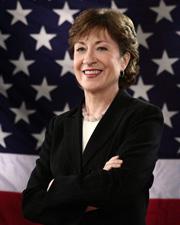
Mr. President, the United States and Israel share a strong and enduring friendship. We also share the threat of terrorist attacks against our citizens. Yet, while terrorism within our borders is…
Mr. President, the United States and Israel share a strong and enduring friendship. We also share the threat of terrorist attacks against our citizens. Yet, while terrorism within our borders is relatively new to us, Israelis have confronted this danger for decades. Israel's long history of fighting terrorism has spurred Israeli businesses, researchers and academics to develop highly sophisticated homeland security technologies, particularly in the fields of border integrity, transportation security, and first responder equipment. As the United States pursues new approaches to protecting our Nation, it only makes sense to look to Israel's extensive expertise in this area.
This is why I am introducing legislation with Senator Lieberman to establish a program to provide funds to eligible joint ventures between American firms and businesses in countries such as Israel that are already highly focused on the homeland security issue and have demonstrated the capacity for fruitful cooperation with America in the area of counterterrorism.
This program will act as a revolving fund to develop new homeland security technologies. As these technologies are deployed and become profitable, the businesses that developed them will be required to repay the program for the amount of the funds. This requirement, which has worked for similar existing programs, will help sustain the availability of funds for future funds.
The program will be managed by the Department of Homeland Security. It will dedicate $25 million toward these joint ventures that develop, manufacture, sell, or otherwise provide products and services with applications related to homeland security.
This legislation will build upon a number of other highly successful public-private partnerships between businesses in the United States and those located in countries such as Israel. Since its founding in 1977, the Bi-National Industrial Research and Development Foundation (BIRD) has created numerous research and development partnerships between American and Israeli businesses. The BIRD Foundation has invested $180 million in 600 projects during the past 27 years. Similar partnerships also exist in the development of agricultural, defense, telecommunications, and other technologies. This record demonstrates the potential of a similar binational foundation in the area of homeland security.
As recent international events have demonstrated, the fight against terrorism knows no borders. This legislation will enable our Nation to deploy the highest quality and most innovative tools to improve our homeland security. I ask you to join me in supporting this effort to enhance our Nation's fight against terrorism.
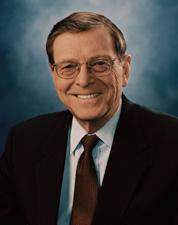
Mr. President, today, Senator Bingaman and I are introducing the ``Pecos National Historical Park Land Exchange Act of 2004''. This bill will authorize a land exchange between the Federal Government…
Mr. President, today, Senator Bingaman and I are introducing the ``Pecos National Historical Park Land Exchange Act of 2004''. This bill will authorize a land exchange between the Federal Government and a private landowner that will benefit the Pecos National Historical Park in my State of New Mexico.
I am pleased to be working on this legislation again with Senator Bingaman. This bill is nearly identical to a bill that we worked on and marked up in the Energy and Natural Resources Committee in the 106th Session of Congress.
The bill will enable the Park Service to acquire a private inholding within the Pecos National Historic Park's boundaries in exchange for the transfer of a nearby tract of National Forest System land. The National Forest parcel has been identified as surplus and available for exchange in the Santa Fe National Forest Land and Resource Management Plan and is surrounded by private lands on three sides.
The Pecos National Historical Park is located between the Great Plains and the Rio Grande Valley and that has made it the focus of the region's 10,000 years of human history. The park preserves the ruins of the great Pecos pueblo--a major trade center--and the ruins of two Spanish colonial missions dating from the 17th and 18th centuries.
The Glorieta Unit of the Park, where this exchange is located, protects key sites associated with the 1862 Civil War Battle of Glorieta Pass, a significant event that ended the Confederate attempt to expand the war into the west. This unit will directly benefit from the land exchange.
Mr. President, I am pleased to introduce a bill to designate the recently-constructed annex to the E. Barrett Prettyman United States Courthouse in Washington, DC as the ``William B. Bryant Annex.''…
Mr. President, I am pleased to introduce a bill to designate the recently-constructed annex to the E. Barrett Prettyman United States Courthouse in Washington, DC as the ``William B. Bryant Annex.''
Thomas F. Hogan, this Court's current Chief Judge, has expressed his support and the unanimous support of the other judges on the District Court for the District of Columbia. I am proud to join with Congresswoman Eleanor Holmes Norton in moving ahead with the Chief Judge's request.
Judge Bryant served with distinction of the U.S. District Court for the District of Columbia since 1965. He was the Chief Judge on that court from March 1977 to September 1981.
Judge Bryant graduated from Howard University in 1932, and from Howard University Law School, receiving an LL.B. in 1936.
Judge Bryant's lengthy public service career is one of great distinction. In addition to the time he spent on the Federal bench, Judge Bryant served in the United States Army during World War II and as an Assistant U.S. Attorney for the District of Columbia. After serving four and one half years as Chief Judge, Judge Bryant took senior status in January of 1982.
Naming the new annex to the E. Barrett Prettyman courthouse after Judge Bryant would be a fitting tribute to this distinguished jurist. Much like Judge Prettyman, Judge Bryant had an illustrious career in public service and on the bench. I am honored to offer this legislation, and I urge my colleagues to join Congresswoman Norton and me in support of this well-deserved commendation.
Mr. President, I am pleased to introduce a bill to designate the recently-constructed annex to the E. Barrett Prettyman United States Courthouse in Washington, DC as the ``William B. Bryant Annex.''…
Mr. President, I am pleased to introduce a bill to designate the recently-constructed annex to the E. Barrett Prettyman United States Courthouse in Washington, DC as the ``William B. Bryant Annex.''
Thomas F. Hogan, this Court's current Chief Judge, has expressed his support and the unanimous support of the other judges on the District Court for the District of Columbia. I am proud to join with Congresswoman Eleanor Holmes Norton in moving ahead with the Chief Judge's request.
Judge Bryant served with distinction of the U.S. District Court for the District of Columbia since 1965. He was the Chief Judge on that court from March 1977 to September 1981.
Judge Bryant graduated from Howard University in 1932, and from Howard University Law School, receiving an LL.B. in 1936.
Judge Bryant's lengthy public service career is one of great distinction. In addition to the time he spent on the Federal bench, Judge Bryant served in the United States Army during World War II and as an Assistant U.S. Attorney for the District of Columbia. After serving four and one half years as Chief Judge, Judge Bryant took senior status in January of 1982.
Naming the new annex to the E. Barrett Prettyman courthouse after Judge Bryant would be a fitting tribute to this distinguished jurist. Much like Judge Prettyman, Judge Bryant had an illustrious career in public service and on the bench. I am honored to offer this legislation, and I urge my colleagues to join Congresswoman Norton and me in support of this well-deserved commendation.
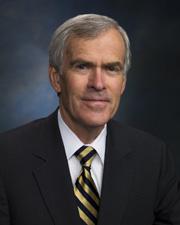
Mr. President, today, I am introducing along with Senator Domenici the ``Pecos National Historical Park Land Exchange Act of 2004''. This bill will authorize a land exchange between the Federal…
Mr. President, today, I am introducing along with Senator Domenici the ``Pecos National Historical Park Land Exchange Act of 2004''. This bill will authorize a land exchange between the Federal Government and a private landowner that will benefit the Pecos National Historical Park in my State of New Mexico.
Specifically, the bill will enable the Park Service to acquire a private inholding within the Park's boundaries in exchange for the transfer of a nearby tract of National Forest System land. The National Forest parcel has been identified as available for exchange in the Santa Fe National Forest Land and Resource Management Plan and is surrounded by private lands on three sides.
The Pecos National Historical Park possesses exceptional historic and archaeological resources. Its strategic location between the Great Plains and the Rio Grande Valley has made it the focus of the region's 10,000 years of human history. The Park preserves the ruins of the great Pecos pueblo, which was a major trade center, and the ruins of two Spanish colonial missions dating from the 17th and 18th centuries.
The Glorieta Unit of the Park protects key sites associated with the 1862 Civil War Battle of Glorieta Pass, a significant event that ended the Confederate attempt to expand the war into the West. This Unit will directly benefit from the land exchange.
I ask unanimous consent that the full text of the bill I have introduced today be printed in the Record.
Bill Text
Latest available legislative text
        [Congressional Bills 108th Congress]
[From the U.S. Government Publishing Office]
[S. 2619 Introduced in Senate (IS)]

108th CONGRESS
2d Session
S. 2619

To designate the annex to the E. Barrett Prettyman Federal Building and
United States Courthouse located at 333 Constitution Ave. Northwest in
Washington, District of Columbia, as the ``Judge William B. Bryant
Annex to the E. Barrett Prettyman Federal Building and United States
Courthouse.''.

_______________________________________________________________________

IN THE SENATE OF THE UNITED STATES

July 8, 2004

Mr. Leahy introduced the following bill; which was read twice and
referred to the Committee on Environment and Public Works

_______________________________________________________________________

A BILL

To designate the annex to the E. Barrett Prettyman Federal Building and
United States Courthouse located at 333 Constitution Ave. Northwest in
Washington, District of Columbia, as the ``Judge William B. Bryant
Annex to the E. Barrett Prettyman Federal Building and United States
Courthouse.''.

Be it enacted by the Senate and House of Representatives of the
United States of America in Congress assembled,

SECTION 1. DESIGNATION OF JUDGE WILLIAM B. BRYANT ANNEX TO THE E.
BARRETT PRETTYMAN FEDERAL BUILDING AND UNITED STATES
COURTHOUSE.

The annex to the E. Barrett Prettyman Federal Building and United
States Courthouse located at 333 Constitution Ave. Northwest in
Washington, District of Columbia, shall be known and designated as the
``Judge William B. Bryant Annex to the E. Barrett Prettyman Federal
Building and United States Courthouse''.

SEC. 2. REFERENCES.

Any reference in a law, map, regulation, document, paper, or other
record of the United States to the annex to the Federal building and
United States Courthouse referred to in section 1 shall be deemed to be
a reference to the ``Judge William B. Bryant Annex to the E. Barrett
Prettyman Federal Building and United States Courthouse''.
<all>