High-Performance Green Buildings Act
 Sen. James M. Jeffords (I-VT)
Legislative Activity
Stay on top of the latest movement without scrolling through every action
Read twice and referred to the Committee on Environment and Public Works. (text of measure as introduced: CR S7830-7833)
July 8, 2004
View full timeline
Introduced in Senate
July 8, 2004
Sponsor introductory remarks on measure. (CR S7829-7830)
July 8, 2004
Read twice and referred to the Committee on Environment and Public Works. (text of measure as introduced: CR S7830-7833)
July 8, 2004
Floor Debate
11 membersWhat members said about S. 2620 on the floor


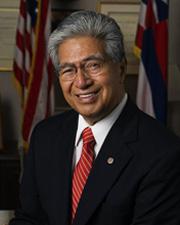
 +6
+6
Floor Debate
11 membersWhat members said about S. 2620 on the floor
Mr. President, I am pleased to join Senator Jeffords today in introducing the High-Performance Green Buildings Act. This legislation will reenergize the Federal Government's commitment to building…
Mr. President, I am pleased to be joined today by my colleagues, Senators Kohl and Lugar to introduce this important piece of legislation. Legislation that will ensure the United States government…
Mr. President, today I rise to introduce the Federal Employee's Protection of Disclosures Act. Last year I introduced similar legislation, S. 1358, to amend employee safeguards for disclosing…
Mr. President, I am pleased to join Senator Jeffords today in introducing the High-Performance Green Buildings Act. This legislation will reenergize the Federal Government's commitment to building…
Mr. President, I rise today to introduce the ``High Performance Green Buildings Act of 2004.'' I would like to thank Senator Lautenberg and the other cosponsors for working with me to introduce this…
Show 8 more
Mr. President, I rise today to introduce the ``High Performance Green Buildings Act of 2004.'' I would like to thank Senator Lautenberg and the other cosponsors for working with me to introduce this…
Mr. President, the Authorization for the Alternative Water Sources Act of 2000, which I originally introduced, expires this year. I am introducing a bill to extend this law for five years through…
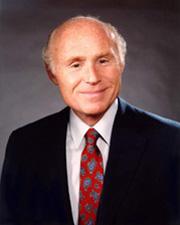
Mr. President. In December, 2003, the U.S. government unexpectedly announced plans to resettle up to 15,000 Hmong refugees from Laos currently living in Thailand. These refugees will be reunited with…
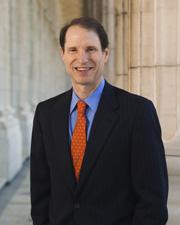
Mr. President, I am introducing today, along with my colleague, Senator Smith, the ``Friends of the Children National Demonstration Act'' to authorize funding for Friends of the Children. The…

Mr. President, the United States and Israel share a strong and enduring friendship. We also share the threat of terrorist attacks against our citizens. Yet, while terrorism within our borders is…

Mr. President, today, Senator Bingaman and I are introducing the ``Pecos National Historical Park Land Exchange Act of 2004''. This bill will authorize a land exchange between the Federal Government…

Mr. President, I am pleased to introduce a bill to designate the recently-constructed annex to the E. Barrett Prettyman United States Courthouse in Washington, DC as the ``William B. Bryant Annex.''…

Mr. President, today, I am introducing along with Senator Domenici the ``Pecos National Historical Park Land Exchange Act of 2004''. This bill will authorize a land exchange between the Federal…
Bill Text
Latest available legislative text
        [Congressional Bills 108th Congress]
[From the U.S. Government Publishing Office]
[S. 2620 Introduced in Senate (IS)]

108th CONGRESS
2d Session
S. 2620

To provide for the establishment of an Office of High-Performance Green
Buildings, and for other purposes.

_______________________________________________________________________

IN THE SENATE OF THE UNITED STATES

July 8, 2004

Mr. Jeffords (for himself, Mr. Lautenberg, Mr. Reid, Mr. Wyden, Mr.
Carper, Mr. Harkin, Mr. Leahy, and Mrs. Clinton) introduced the
following bill; which was read twice and referred to the Committee on
Environment and Public Works

_______________________________________________________________________

A BILL

To provide for the establishment of an Office of High-Performance Green
Buildings, and for other purposes.

Be it enacted by the Senate and House of Representatives of the
United States of America in Congress assembled,

SECTION 1. SHORT TITLE; TABLE OF CONTENTS.

(a) Short Title.--This Act may be cited as the ``High-Performance
Green Buildings Act''.
(b) Table of Contents.--The table of contents of this Act is as
follows:

Sec. 1. Short title; table of contents.
Sec. 2. Findings.
Sec. 3. Definitions.
TITLE I--OFFICE OF HIGH-PERFORMANCE GREEN BUILDINGS

Sec. 101. Oversight.
Sec. 102. Office of High-Performance Green Buildings.
Sec. 103. Interagency Steering Committee.
Sec. 104. Public outreach.
Sec. 105. Research and development.
Sec. 106. Budget and life-cycle costing.
Sec. 107. Authorization of appropriations.
TITLE II--HEALTHY HIGH-PERFORMANCE SCHOOLS

Sec. 201. Grants for schools.
Sec. 202. Federal guidelines for siting of school facilities.
Sec. 203. Education research program.
Sec. 204. Authorization of appropriations.
TITLE III--STRENGTHENING FEDERAL LEADERSHIP

Sec. 301. General Accounting Office.
TITLE IV--DEMONSTRATION PROJECT

Sec. 401. Coordination of goals.
Sec. 402. Authorization of appropriations.

SEC. 2. FINDINGS.

Congress finds that--
(1) buildings have profound impacts on the environment,
energy use, and health of individuals, and numerous studies
suggest that building environments affect worker productivity;
(2) buildings in the United States consume 37 percent of
the energy, 68 percent of the electricity, and 12 percent of
the potable water used in the United States, and overall
construction of buildings (including construction of related
infrastructure) consumes 60 percent of all raw materials used
in the economy of the United States (excluding materials used
for food or fuel);
(3) in the United States, buildings generate--
(A) 40 percent of the nonindustrial waste stream;
(B) 31 percent of the mercury in municipal solid
waste; and
(C) 35 percent of the carbon dioxide (the primary
greenhouse gas associated with climate change), 49
percent of the sulfur dioxide, and 25 percent of the
nitrogen oxides found in the air;
(4) buildings contribute to the ``heat island effect'' by
eliminating vegetative cover and using paving and roofing
materials that absorb heat and raise ambient temperatures,
accelerating the reaction that forms ground-level ozone;
(5) according to the Environmental Protection Agency, on
average, people in the United States spend approximately 90
percent of their time indoors, where the concentration of
pollutants may be 2 to 5 times and, in some cases, 100 times,
higher than pollution concentrations in outdoor air;
(6) the Centers for Disease Control and the Environmental
Protection Agency have connected poor indoor air quality to
significantly elevated rates of mortality;
(7) health impacts from building materials, such as
adhesives, paints, carpeting, and pressed-wood products, which
may emit pollutants such as formaldehyde or other volatile
organic compounds, are still uncertain but are believed to be
potentially significant;
(8) according to the Building Owners and Managers
Association, because costs relating to employees, at $130 per
square foot annually (including health insurance costs), are by
far the highest business costs of a building, as opposed to
total energy costs at $1.81 per square foot, measures to
improve the indoor air quality of a building can be an
important investment in reducing long-term employee costs;
(9) the use of energy efficient systems and alternative
sources of energy--
(A) reduces building costs; and
(B) improves the security of the United States by
ensuring continuing operations despite any potential
interruptions in the primary energy supply of the
United States as a result of terrorism or other
disruptions of the electricity grid;
(10) by integrating issues relating to natural resource
use, human health, materials use, transportation needs, and
other concerns into planning the life cycle of a building,
architects, designers, and developers can construct buildings
that--
(A) are healthier for occupants;
(B) reduce environmental impacts; and
(C) are less wasteful of resources;
(11) a well-designed high-performance green building can be
less expensive to build and operate throughout the lifetime of
the building than a building that is not a high-performance
green building;
(12) in 2003, in the document entitled ``The Federal
Commitment to Green Building: Experiences and Expectations'',
the Office of the Federal Environmental Executive found that
``[t]here is a mixture of diverse Federal green building
mandates in law, regulation, and Executive Orders, but not one
definitive, clear, and unified policy statement on
environmental design. Many within the Federal government are
working on green buildings, but additional coordination and
integration are needed.'';
(13) a central coordinating Federal authority for green
buildings would increase efficiency of, improve communication
between, and reduce duplication within green building programs;
and
(14) the General Services Administration, as the largest
civilian landlord in the United States, managing more than
8,300 buildings owned or leased by the United States, is the
appropriate agency to provide Federal agency coordination of
green building programs.

SEC. 3. DEFINITIONS.

In this Act:
(1) Administrator.--The term ``Administrator'' means the
Administrator of General Services.
(2) Committee.--The term ``Committee'' means the steering
committee established under section 103(a).
(3) High-performance green building.--The term ``high-
performance green building'' means a building the life cycle of
which--
(A) increases the efficiency with which the
building--
(i) reduces energy, water, and material
resource use;
(ii) improves indoor environmental quality,
reduces indoor pollution, improves thermal
comfort, and improves lighting and noise
environments that affect occupant health and
productivity;
(iii) reduces negative impacts on the
environment throughout the life cycle of the
building, including air and water pollution and
waste generation;
(iv) increases the use of environmentally
preferable products, including biobased,
recycled content, and nontoxic products with
lower life-cycle impacts;
(v) reduces the negative impacts of
emissions under the Clean Air Act (42 U.S.C.
7401 et seq.);
(vi) integrates systems in the building;
and
(vii) reduces the environmental impacts of
transportation through building location and
site design that support a full range of
transportation choices for users of the
building;
(B) considers indoor and outdoor impacts of the
building on human health and the environment,
including--
(i) improvements in worker productivity;
(ii) the life-cycle impacts of building
materials and operations; and
(iii) other factors that the Office
considers to be appropriate.
(4) High-performance school.--The term ``high-performance
school'' has the meaning given the term ``healthy, high-
performance school building'' in section 5586 of the Elementary
and Secondary Education Act of 1965 (20 U.S.C. 7277e).
(5) Life cycle.--The term ``life cycle'', with respect to a
high-performance green building, means all stages of the useful
life of the high-performance green building (including
components, equipment, systems, and controls of the building)
beginning at conception of a green building project and
continuing through siting, design, construction, landscaping,
commissioning, operation, maintenance, renovation,
deconstruction, and removal of the green building.
(6) Life cycle assessment.--The term ``life cycle
assessment'' means a comprehensive system approach for
measuring the environmental performance of a product or service
that includes an analysis of the environmental impacts of--
(A) each stage in the life of the product or
service (including acquisition of raw materials,
product manufacture, transportation, installation,
operation and maintenance, and waste management); and
(B) each component of the product or service.
(7) Life-cycle costing.--The term ``life-cycle costing'',
with respect to a high-performance green building, means an
analysis of economic costs of impacts and choices made
regarding materials used and activities carried out with
respect to the life cycle of the high-performance green
building.
(8) Local educational agency.--The term ``local educational
agency'' has the meaning given the term in section 9101 of the
Elementary and Secondary Education Act of 1965 (20 U.S.C.
7801).
(9) Office.--The term ``Office'' means the Office of High-
Performance Green Buildings established under section 102(a).

TITLE I--OFFICE OF HIGH-PERFORMANCE GREEN BUILDINGS

SEC. 101. OVERSIGHT.

(a) In General.--The Administrator shall establish within the
General Services Administration, and appoint an appropriate individual
to, a position in the career-reserved Senior Executive service to--
(1) establish and oversee the Office of High-Performance
Green Buildings in accordance with section 102; and
(2) carry out other duties as required under this Act.
(b) Compensation.--The compensation of the individual appointed
under subsection (a) shall not exceed the maximum rate of basic pay for
the Senior Executive Service under section 5382 of title 5, United
States Code, including any applicable locality-based comparability
payment that may be authorized under section 5304(h)(2)(C) of that
title.

SEC. 102. OFFICE OF HIGH-PERFORMANCE GREEN BUILDINGS.

(a) Establishment.--The individual appointed under section 101(a),
in partnership with the Administrator of the Environmental Protection
Agency, the Office of the Federal Environmental Executive, the
Secretary of Energy, the Secretary of Commerce, the Secretary of
Defense, the Secretary of Homeland Security, the Secretary of Health
and Human Services, the Director of the Office of Management and
Budget, and heads of other relevant Federal agencies, shall establish
within the General Services Administration an Office of High-
Performance Green Buildings.
(b) Duties.--The Office shall--
(1) ensure full coordination and collaboration with all
relevant agencies;
(2) establish a senior-level Federal interagency steering
committee in accordance with section 103;
(3) provide information through--
(A) outreach;
(B) education;
(C) the provision of technical assistance; and
(D) the development of a national high-performance
green building clearinghouse in accordance with section
104;
(4) provide for research and development relating to high-
performance green building initiatives under section 105(a);
(5) in partnership with the Comptroller General, review and
analyze budget and life-cycle costing issues in accordance with
section 106;
(6) complete and submit a report in accordance with
subsection (c); and
(7) carry out implementation plans described in subsection
(d).
(c) Report.--Not later than 2 years after the date of enactment of
this Act, and biennially thereafter, the Office shall submit to
Congress and the Comptroller General a report that--
(1) describes the status of the implementation of programs
under this Act and other Federal programs in effect as of the
date of the report, including--
(A) the extent to which the programs are being
carried out in accordance with this Act; and
(B) the status of funding requests and
appropriations for those programs;
(2) identifies steps within the planning, budgeting, and
construction process of Federal facilities that inhibit new and
existing Federal facilities from becoming high-performance
green buildings, as measured by--
(A) a silver rating, as defined by the Leadership
in Energy and Environmental Design Building Rating
System standard established by the United States Green
Building Council; or
(B) an improved or higher rating standard as
identified, and reassessed biannually, by the
Committee;
(3) identifies inconsistency of Federal agencies with
Federal law in product acquisition guidelines and high-
performance product guidelines;
(4) recommends language for uniform standards for use by
Federal agencies in environmentally responsible acquisition;
and
(5) includes, for the 2-year period covered by the report,
recommendations to address each of the matters, and a plan and
deadline for implementation of each of the recommendations,
described in paragraphs (1) through (4).
(d) Implementation Plan.--The Office, in consultation with the
Comptroller General, shall carry out each plan for implementation of
recommendations under subsection (c)(5).

SEC. 103. INTERAGENCY STEERING COMMITTEE.

(a) Establishment.--Not later than 180 days after the date of
enactment of this Act, the Office shall establish within the Office a
steering committee.
(b) Membership.--The Committee shall be composed of representatives
of, at a minimum--
(1) each agency referred to in section 102(a);
(2) State and local governments;
(3) nongovernmental organizations, including the United
States Green Building Council, the American Council for an
Energy-Efficient Economy, and the Rocky Mountain Institute;
(4) building design, development, and finance sectors in
the private sector; and
(5) building owners, developers, and equipment
manufacturers, including renewable, control, combined heat and
power, and other relevant technologies, as determined by the
Office.
(c) Duties.--The Committee shall--
(1) assess Federal activities and compliance with Federal
law applicable to high-performance green buildings;
(2) make recommendations for expansion of existing efforts
and development of new efforts to support activities relating
to the life cycles of high-performance green buildings by the
Federal Government, including consideration of the benefits to
national security and implementation of the Americans with
Disabilities Act of 1990 (42 U.S.C. 12101 et seq.);
(3) evaluate current high-performance green building
standards and recommend improved, higher, or supplemental
rating standards, as necessary, that are consistent with the
responsibilities of the Federal Government under this Act and
other applicable law; and
(4) provide to the individual appointed under section
101(a) such recommendations relating to Federal activities
carried out under sections 104 through 106 as are agreed to by
a majority of the members of the Committee.

SEC. 104. PUBLIC OUTREACH.

(a) Establishment.--The Office, in close coordination with Federal
agencies and departments that perform related functions, shall carry
out public outreach--
(1) to inform individuals and entities in the public
sector, including the Federal Government, of the information
and services available through the Office; and
(2) to determine how to most effectively deliver that
information to the individuals and entities.
(b) Duties.--In carrying out this section, the Office, in close
cooperation with Federal agencies and departments that perform related
functions, shall--
(1) establish and maintain a national high-performance
green building clearinghouse on the Internet that--
(A) coordinates and enhances existing similar
efforts; and
(B) provides information relating to high-
performance green buildings, including--
(i) information on, and hyperlinks to
Internet sites that describe, the activities of
the Federal Government;
(ii) hyperlinks to Internet sites relating
to--
(I) State and local governments;
(II) the private sector; and
(III) international activities; and
(iii) information on the exposure of
children to environmental hazards in school
facilities, as provided by the Administrator of
the Environmental Protection Agency;
(2) develop clear guidance and educational materials for
use by Federal agencies in implementing high-performance green
building practices;
(3) develop and conduct training sessions with budget
specialists and contracting personnel from Federal agencies and
budget examiners to apply life-cycle cost criteria to actual
projects;
(4) provide technical assistance on methods of using tools
and resources to make more cost-effective, health protective,
and environmentally beneficial decisions for constructing high-
performance green buildings;
(5) assist all branches of government at the Federal,
State, and local levels, and any other interested entity, by
providing information on relevant application processes for
certifying a high-performance green building, including
certification and commissioning;
(6) assist interested persons, communities, businesses, and
branches of government with technical information, technical
assistance, market research, or other forms of assistance,
information, or advice that would be useful in planning and
constructing high-performance green buildings, particularly
with respect to tools available to conduct life-cycle cost
assessment;
(7) provide technical training and guidance on high-
performance green buildings; and
(8) obtain such information from other Federal offices,
agencies and departments as is necessary to carry out this Act.

SEC. 105. RESEARCH AND DEVELOPMENT.

(a) Establishment.--The Office shall carry out research and
development--
(1) to survey and coordinate existing research and studies;
(2) to recommend new areas for research; and
(3) to promote the development and dissemination of high
performance green building tools.
(b) Duties.--In carrying out this section, the Office shall--
(1) ensure interagency coordination of relevant research;
(2) develop and direct a Federal high-performance green
building research plan that identifies information needs and
research that should be addressed and provides measurement
tools--
(A) to quantify the relationships between human
health and occupant productivity and each of--
(i) pollutant emissions from materials and
products in the building;
(ii) natural day lighting;
(iii) ventilation choices and technologies;
(iv) heating and cooling choices and
technologies;
(v) moisture control and mold;
(vi) maintenance, cleaning, and pest
control activities;
(vii) acoustics; and
(viii) other issues relating to the health,
comfort, productivity, and performance of
occupants of the building;
(B) to monitor and assess the life-cycle
performance of public facilities (including
demonstration projects) built as high-performance green
buildings, including through consideration of the
report required under section 401(b)(1)(D); and
(C) to quantify, review, and standardize techniques
for use in performing life cycle assessments;
(3) assist the budget and life-cycle costing functions of
the Office under section 106 in the development and
implementation of performance-based standards and life-cycle
cost measures, including the development of performance measure
tools and software for use by Federal agencies and other
interested entities; and
(4) support other research initiatives determined by the
Office to contribute to mainstreaming of high-performance
planning, design, construction, and operation and management of
buildings.

SEC. 106. BUDGET AND LIFE-CYCLE COSTING.

(a) Establishment.--The Office, in coordination with the Office of
Management and Budget and relevant agencies, shall carry out budget and
life-cycle costing for green buildings.
(b) Duties.--In carrying out this section, the Office shall--
(1) consult, as necessary, the report of the Office of the
Federal Environmental Executive entitled ``The Federal
Commitment to Buildings: Experiences and Expectations'' and
dated September 2003;
(2) be responsible for--
(A) examining policy of the Office of Management
and Budget relating to life-cycle costing for Federal
capital investments;
(B) assisting in the development of clear guidance
and implementation of life-cycle cost policy with
budget offices of other Federal agencies by
establishing a consistent standard of life-cycle cost practices for
Federal agencies;
(C) identifying tools that could support the use of
life-cycle costing to assist sound Federal budget
decisionmaking; and
(D) examining--
(i) the practicability of linking high
performance green building life cycle stages
with Federal budgets;
(ii) the effect that such a link would have
in reducing barriers to the construction of
high-performance green buildings and renovation
of existing buildings; and
(iii) means by which to incorporate the
short-term and long-term cost savings that
accrue from high-performance green buildings.

SEC. 107. AUTHORIZATION OF APPROPRIATIONS.

There are authorized to be appropriated to carry out this title
$2,000,000 for each of fiscal years 2005 through 2010.

TITLE II--HEALTHY HIGH-PERFORMANCE SCHOOLS

SEC. 201. GRANTS FOR SCHOOLS.

(a) In General.--The Administrator of the Environmental Protection
Agency may provide grants to State educational agencies and local
educational agencies for use in--
(1) providing intensive technical assistance for and
assisting the implementation of the Tools for Schools Program
of the Environmental Protection Agency; and
(2) development of State-level school environmental quality
plans, in partnership with the Environmental Protection Agency,
that may include--
(A) standards for school building design,
construction, and renovation;
(B) identification of ongoing school building
environmental problems in the State;
(C) proposals for the systematic improvement
(including benchmarks and timelines) of environmental
conditions in schools throughout the State, including
with respect to--
(i) school building siting, construction,
and maintenance;
(ii) indoor air quality;
(iii) pest control;
(iv) radon contamination;
(v) lead contamination;
(vi) environmentally preferable purchasing
of products for instruction and maintenance;
(vii) hazard identification and
remediation; and
(viii) maximization of transportation
choices for students, staff, and other members
of the community; and
(D) recommendations for improvements in the
capacity of the State to track child and adult health
complaints relating to schools.
(b) Cost Sharing.--
(1) Federal share.--The Federal share of the cost of a
project or activity carried out using funds from a grant under
subsection (a) shall not exceed 90 percent.
(2) Non-federal share.--The non-Federal share of the cost
of a project or activity carried out using funds from a grant
under subsection (a) may be provided in the form of cash or in-
kind goods and services, including goods and services used to
create prototypical designs.
(c) Grant Priority.--
(1) In general.--In providing grants under this section for
use in carrying out the program referred to in subsection
(a)(1), the Administrator of the Environmental Protection
Agency shall give priority to school districts that have a
demonstrated need for environmental improvement.
(2) Responsibility of school districts and state
educational agencies.--
(A) School districts.--Not later than 2 years after
the date of enactment of this Act, and annually
thereafter, each school district that receives funds
from the Administrator of the Environmental Protection
Agency to carry out a program described in subsection
(a) shall submit to the State educational agency with
jurisdiction over the school district a report that
includes--
(i) a list of schools in the districts
that, as of the date of the report, have
accepted funds or other assistance from the
Environmental Protection Agency for use in
carrying out this section; and
(ii) an evaluation of the impact of the
funds, including--
(I) general data regarding measures
of student health and attendance rates
before and after the intervention; and
(II) descriptions of toxic or
hazardous cleaning, maintenance, or
instructional products eliminated or
reduced in use as part of the promotion
or remediation of the indoor air
quality of schools within the school
district; and
(iii) basic information on the potential
influence of other factors (such as the
installation of carpet and HVAC systems and
similar activities) on air quality.
(B) State educational agency reports.--Not later
than 180 days after the date on which each State
educational agency has received the annual reports
under subparagraph (A) from all participating school
districts, the State educational agency shall submit to
the Administrator of the Environmental Protection
Agency and Congress a consolidated report of all
information received from the school districts.

SEC. 202. FEDERAL GUIDELINES FOR SITING OF SCHOOL FACILITIES.

(a) In General.--Using as a model guidelines such as those of the
``Child Proofing Our Communities'' School Siting Committee of the State
of California, the Administrator of the Environmental Protection Agency
shall develop school site acquisition guidelines.
(b) Vulnerability.--The guidelines should contain an analysis of
means by which to account for the special vulnerability of children to
chemical exposures in any case in which the potential for contamination
at a potential school site is assessed.
(c) Accessibility.--The guidelines shall include an analysis of
means by which to maximize transportation choices for students, staff,
and other members of the community.

SEC. 203. EDUCATION RESEARCH PROGRAM.

The Administrator of the Environmental Protection Agency, in
partnership with the Secretary of Education, shall carry out an
education research program that--
(1) describes the status and findings of Federal research
initiatives established under this Act and other Federal law
with respect to education, including relevant updates on trends
in the field, such as the impact of school facility
environments on--
(A) student and staff health, safety, and
productivity;
(B) students with disabilities or special needs;
and
(C) student learning capacity;
(2) provides technical assistance on siting, design,
management, and operation of school facilities, including
facilities used by students with disabilities or special needs;
(3) once the relevant metrics have been identified or
developed in accordance with section 105, quantifies the
relationships between--
(A) human health, occupant productivity, and
student performance; and
(B) with respect to school facilities, each of--
(i) pollutant emissions from materials and
products;
(ii) natural day lighting;
(iii) ventilation choices and technologies;
(iv) heating and cooling choices and
technologies;
(v) moisture control and mold;
(vi) maintenance, cleaning, and pest
control activities;
(vii) acoustics; and
(viii) other issues relating to the health,
comfort, productivity, and performance of
occupants of the school facilities;
(4) cooperates with federally funded pediatric
environmental health research centers to assist in on-site
school environmental investigations;
(5) assists States and State entities in better
understanding and improving the environmental health of
children; and
(6) provides to the Office a biennial report of all
activities carried out under this section.

SEC. 204. AUTHORIZATION OF APPROPRIATIONS.

There is authorized to be appropriated to carry out this title
$10,000,000 for the period of fiscal years 2005 through 2010.

TITLE III--STRENGTHENING FEDERAL LEADERSHIP

SEC. 301. GENERAL ACCOUNTING OFFICE.

(a) Restructuring of Capital Budgets.--Not later than 180 days
after the date of submission of the report under 102(c), the
Comptroller General shall--
(1) review the current budget process; and
(2) develop and submit to Congress an implementation plan
for life-cycle costing that--
(A) identifies and incorporates the short-term and
long-term cost savings that accrue from high-
performance green buildings; and
(B) includes recommendations for--
(i) restructuring of budgets to require the
use of complete energy- and environmental-cost
accounting;
(ii) the use of operations expenditures in
budget-related decisions while simultaneously
incorporating productivity and health measures
(as those measures can be quantified by the
Office, with the assistance of universities and
national laboratories); and
(iii) means by which Federal agencies may
be permitted to retain and reuse all identified
savings accrued as a result of the use of high-
performance life cycle costing for future high-
performance green building initiatives.
(b) Audits.--The Comptroller General may conduct periodic audits of
a Federal project over the life of the project to inspect whether--
(1) the design stage of high performance green building
measures were achieved; and
(2) the high performance building data were collected and
reported to the Office.

TITLE IV--DEMONSTRATION PROJECT

SEC. 401. COORDINATION OF GOALS.

(a) In General.--The Office shall establish guidelines for a
demonstration project conducted as a public-private partnership to
contribute to the research goals of the Office.
(b) Projects.--In accordance with guidelines established by the
Office under subsection (a) and the duties of the Office described in
section 101(b), the individual appointed under section 101(a) shall
carry out--
(1) for each of fiscal years 2005 through 2008, a
demonstration project, in a Federal building selected by the
Office in accordance with the criteria described in subsection
(c)(1), that--
(A) provides for the evaluation and, as
practicable, use of the information obtained through
the conduct of projects and activities under this Act;
(B) requires at least 1 project or activity
referred to in subparagraph (A) to achieve a platinum
rating, as defined by the Leadership in Energy and
Environmental Design Building Rating System standard
established by the United States Green Building Council
(or equivalent rating), for each fiscal year; and
(C) requires the submission to the Office of an
annual report describing recommendations for the use of
information gathered as a result of programs carried
out under this Act; and
(2) a demonstration project involving at least 4
universities, that, as determined by the Office in accordance
with subsection (c)(2), have appropriate research capability
and relevant projects to meet the goals of the demonstration
project established by the Office.
(c) Criteria.--
(1) Federal buildings.--With respect to the Federal
building at which a demonstration project under this section is
conducted, the Federal building shall--
(A) be an appropriate model for a project
involving--
(i) location and design that promote access
to the Federal building through walking,
biking, and mass transit;
(ii) construction or renovation to meet
high indoor environmental criteria;
(iii) deployment, and assessment of
effectiveness, of high performance
technologies;
(iv) analysis of life cycles of all
materials, components, and systems in the
building; and
(v) assessment of beneficial impacts on
public health and the health of individuals
that enter or work in the building; and
(B) possess sufficient technological and
organizational adaptability.
(2) Universities.--With respect to the 4 universities at
which a demonstration project under this section is conducted--
(A) the universities should be selected based on--
(i) successful and established public-
private research and development partnerships;
(ii) demonstrated capabilities to construct
or renovate buildings that meet high indoor
environmental qualities;
(iii) organizational flexibility;
(iv) technological adaptability;
(v) energy and environmental effectiveness
throughout the life cycles of all materials,
components, and systems deployed within the
building; and
(vi) the demonstrated capacity of at least
1 university to replicate lessons learned among
nearby or sister universities, preferably by
participation in groups or consortia that
promote sustainability;
(B) each university shall be located in a different
climatic region of the United States, each of which
regions shall have, as determined by the Office--
(i) a hot, dry climate;
(ii) a hot, humid climate;
(iii) a cold climate; or
(iv) a mild climate;
(C) each university shall agree that the focuses of
the project shall be--
(i) the effectiveness of various high
performance technologies in each of the 4
climatic regions of the United States described
in subparagraph (B);
(ii) the identification of the most
effective ways to use high performance building
and landscape technologies to engage and
educate undergraduate and graduate students;
and
(iii) quantifiable and nonquantifiable
beneficial impacts on public health and worker
and student performance.

SEC. 402. AUTHORIZATION OF APPROPRIATIONS.

(a) Federal Demonstration Project.--There is authorized to be
appropriated to carry out the Federal demonstration project described
in section 401(b)(1) $5,000,000 for the period of fiscal years 2005
through 2010.
(b) University Demonstration Projects.--There is authorized to be
appropriated to carry out the university demonstration projects
described in section 401(b)(2) $10,000,000 for the period of fiscal
years 2005 through 2010.
<all>