Ocean Research Coordination and Advancement Act
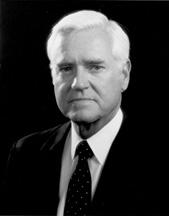 Sen. Ernest F. Hollings (D-SC)
Legislative Activity
Stay on top of the latest movement without scrolling through every action
Read twice and referred to the Committee on Commerce, Science, and Transportation. (text of measure as introduced: CR S8046-8050)
July 13, 2004
View full timeline
Introduced in Senate
July 13, 2004
Sponsor introductory remarks on measure. (CR S8045-8046)
July 13, 2004
Read twice and referred to the Committee on Commerce, Science, and Transportation. (text of measure as introduced: CR S8046-8050)
July 13, 2004
Floor Debate
16 membersWhat members said about S. 2648 on the floor



 +11
+11
Floor Debate
16 membersWhat members said about S. 2648 on the floor
Mr. President, I rise today to pay tribute to a legend of a man who has spent his career dedicated to working for the great people of South Carolina. There is nothing small about Senator Hollings.…
Mr. President, I would like to take a moment to honor my good friend and colleague, Senator Ben Nighthorse Campbell of Colorado. Ben is my best friend in the Senate. I know every one of my Senate…
Mr. President, I want to spend a few minutes talking about the Senators who will not be here when the Senate starts over again this January. The first I ever heard about Senator Fritz Hollings was…
Mr. President, today I rise to introduce the National Ocean Policy and Leadership Act, which is co-sponsored by my colleagues Senators Stevens and Inouye. The passage of this bill would mark a brand…
Mr. President, nearly 26 years ago, I arrived in Washington as a newly elected Congressman with an urgent desire to help the people of my State but not nearly as much knowledge as I wanted about…
Show 8 more
Mr. President, I rise to discuss the FY 2005 omnibus appropriations bill, which the Senate passed late last month and the President signed into law earlier today. When this legislation was considered…

Mr. President, with the close of the 108th Congress, the Senate will lose to retirement one of our most respected and admired Members, Senator Bob Graham of Florida. I remember how impressed we were…

Mr. President, I rise to join my colleagues today in paying tribute to a man who, in the President's words, ``has left his mark on virtually every major issue'' during his service in this body, the…
Mr. President, I rise today to pay tribute to departing Senators for their service and devotion to the United States Senate. They are not only my colleagues but my friends as well. The reality of…
Mr. President, today I rise to introduce the Ocean Research Coordination and Advancement Act, which is cosponsored by my colleagues Senators Stevens and Inouye. The oceans remain one of the least…

Mr. President, today I want to take a moment to pay tribute to my friend and my colleague, Senator Ben Nighthorse Campbell. Long before I arrived in the Senate, Ben had proven to be a trusted friend.…

Mr. President, today I join with my friend and colleague from the State of Colorado to introduce the Bison Nickel Restoration Act of 2004 to bring the image of the American bison back to the 5-cent…

Mr. President, I rise today to introduce the Cigarette Fire Safety Act of 2004. Joe Moakley started his effort to require less fire-prone cigarettes in 1979 and championed this issue until his death…
Show 5 more

Mr. President, I rise to join my colleagues in tribute to Senator Ernest ``Fritz'' Hollings. I will miss my good friend from South Carolina who in 2003, at the age of 81, finally became his State's…
Mr. President, I rise to join my colleagues in tribute to Senator Ernest ``Fritz'' Hollings. I will miss my good friend from South Carolina, who in 2003, at the age of 81, finally became his State's…

Mr. President, I rise today to introduce The Public Broadcasting Reauthorization Act of 2004. This legislation is designed to reauthorize the Corporation for Public Broadcasting (CPB or ``the…

Mr. President, Don Nickles first came to the Senate in 1980 as a young man of 31 with a vision. He now leaves us, 24 years later, with a record we all can envy and a reputation we all should emulate.…

Mr. President, today I am introducing the Smuggled Tobacco Prevention Act of 2004, and Representative Doggett of Texas is introducing identical legislation in the House of Representatives. As many of…
Bill Text
Latest available legislative text
        [Congressional Bills 108th Congress]
[From the U.S. Government Publishing Office]
[S. 2648 Introduced in Senate (IS)]

108th CONGRESS
2d Session
S. 2648

To strengthen programs relating to ocean science and training by
providing improved advice and coordination of efforts, greater
interagency cooperation, and the strengthening and expansion of related
programs administered by the National Oceanic and Atmospheric
Administration.

_______________________________________________________________________

IN THE SENATE OF THE UNITED STATES

July 13, 2004

Mr. Hollings (for himself, Mr. Stevens, and Mr. Inouye) introduced the
following bill; which was read twice and referred to the Committee on
Commerce, Science, and Transportation

_______________________________________________________________________

A BILL

To strengthen programs relating to ocean science and training by
providing improved advice and coordination of efforts, greater
interagency cooperation, and the strengthening and expansion of related
programs administered by the National Oceanic and Atmospheric
Administration.

Be it enacted by the Senate and House of Representatives of the
United States of America in Congress assembled,

SECTION 1. SHORT TITLE; TABLE OF CONTENTS.

(a) Short Title.--This Act may be cited as the ``Ocean Research
Coordination and Advancement Act''.
(b) Table of Contents.--The table of contents for this Act is as
follows:

Sec. 1. Short title; table of contents.
Sec. 2. Findings.
Sec. 3. Definitions.
TITLE I--OCEAN SCIENCE COORDINATION AND ADVICE

Sec. 101. National Ocean Science Committee.
Sec. 102. Subcommittee on Ocean Education.
Sec. 103. Ocean Research and Education Advisory Panel.
TITLE II--INTERAGENCY PROGRAMS TO ADVANCE OCEAN AND COASTAL KNOWLEDGE

Sec. 201. National strategy for ocean science, education, and
technology.
Sec. 202. National ocean partners program.
Sec. 203. Ocean and coastal education program.
Sec. 204. Ocean science and technology scholarship program.
TITLE III--NOAA PROGRAMS

Sec. 301. Research plan.
Sec. 302. Marine ecosystem research.
Sec. 303. National Oceanic and Atmospheric Administration education
program.
Sec. 304. Amendment to the National Sea Grant College Program Act.
TITLE IV--AUTHORIZATIONS

Sec. 401. Authorization of appropriations.

SEC. 2. FINDINGS.

The Congress finds the following:
(1) The coastal regions and marine waters of the United
States are vital to the Nation's public safety, homeland
security, transportation, trade, energy production, recreation
and tourism, food production, scientific research and
education, environmental health, and historical and cultural
heritage.
(2) Coastal development, resource extraction, and other
human activities, coupled with an expanding coastal population,
are contributing to processes of environmental change that may
significantly threaten the long-term health and sustainability
of marine and coastal ecosystems.
(3) The ocean remains one of the least explored and
understood environments on the planet providing a frontier for
new discoveries and requiring regional, ecosystem-based
management approaches.
(4) Development and implementation of education and
training programs are essential to build a national scientific
and technological workforce that meets the needs of growing
ocean and coastal economies and better prepares the Nation for
competition in the global economy.
(5) A coordinated program of education and basic and
applied research would assist the Nation and the world to
further knowledge of the oceans and the global climate system,
ensure homeland and national security, develop innovative
marine products, improve weather and climate forecasts,
strengthen management of marine and coastal resources, increase
the safety and efficiency of maritime operations, and protect
the environment and mitigate man-made and natural hazards.
(6) Increased Federal cooperation and investment are
essential to build on ocean and coastal research and education
activities that are taking place within numerous federal,
state, and local agencies, academic institutions and industries
and to establish new partnerships for sharing ocean science
resources, intellectual talent, and facilities.

SEC. 3. DEFINITIONS.

In this Act:
(1) Advisory panel.--The term ``Advisory Panel'' means the
Ocean Research and Education Advisory Panel established under
section 108.
(2) Committee.--The term ``Committee'' means the National
Ocean Science Committee established under section 101.
(3) Council.--The term ``Council'' means the National
Science and Technology Council.
(4) Ocean science.--The term ``ocean science'' includes the
exploration of ocean, coastal, and Great Lakes environments,
the development of methods and instruments to study and monitor
such environments, and the conduct of basic and applied
research and education activities to advance understanding of--
(A) the physics, chemistry, biology, and geology of
the oceans, coasts, and Great Lakes;
(B) marine and coastal processes and interactions
with other components of the total Earth system; and
(C) the impacts of the oceans, coastal regions, and
Great Lakes on society and manner in which such
environments are influenced by human activity.
(5) Strategy.--The term ``strategy'' means the National
Strategy for Ocean Science, Education, and Technology developed
under section 201.
(6) Subcommittee.--The term ``Subcommittee'' means the
Subcommittee on Ocean Education established under section 102.

TITLE I--OCEAN SCIENCE COORDINATION AND ADVICE

SEC. 101. NATIONAL OCEAN SCIENCE COMMITTEE.

(a) Committee.--The Chair of the National Science and Technology
Council, in consultation with the Chair of the Council on Ocean
Stewardship, shall establish a National Ocean Science Committee.
(b) Membership.--The Committee shall be composed of the following
members:
(1) The Administrator of the National Oceanic and
Atmospheric Administration.
(2) The Secretary of the Navy.
(3) The Director of the National Science Foundation.
(4) The Administrator of the National Aeronautics and Space
Administration.
(5) The Under Secretary of Energy for Energy, Science, and
Environment.
(6) The Administrator of the Environmental Protection
Agency.
(7) The Under Secretary of Homeland Security for Research
and Development.
(8) The Commandant of the Coast Guard.
(9) The Director of the United States Geological Survey.
(10) The Director of the Minerals Management Service.
(11) The Commanding General of the Army Corps of Engineers.
(12) The Director of the National Institutes of Health.
(13) Under Secretary of Agriculture for Research,
Education, and Economics.
(14) The Assistant Secretary of State for Oceans and
International Environmental and Scientific Affairs.
(15) The Director of the Defense Advanced Research Projects
Agency.
(16) The Director of the Office of Science and Technology
Policy.
(17) The Director of the Office of Management and Budget.
(18) The leadership of such other Federal agencies and
departments as the chair and vice chairs of the Committee deem
appropriate
(c) Chair and Vice Chairs.--The chair and vice chairs of the
Committee shall be appointed every 2 years by a selection subcommittee
of the Committee composed of, at a minimum, the Administrator of the
National Oceanic and Atmospheric Administration, the Director of the
National Science Foundation, and the Secretary of the Navy. The term of
office of the chair and vice chairs shall be 2 years. A person who has
previously served as chair or vice chair may be reappointed.
(d) Responsibilities.--The Committee shall--
(1) serve as the primary source of advice and support on
ocean science for the Council and the Council on Ocean
Stewardship and assist in carrying out the functions of the
Council as they relate to such matters, including budgetary
analyses;
(2) serve as the committee on ocean science for the Council
and carry out its functions under section 401 of the National
Science and Technology Policy, Organization, and Priorities Act
of 1976 (42 U.S.C. 6651) that relate to ocean sciences;
(3) improve cooperation among Federal departments and
agencies with respect to ocean science budgets, programs,
operations, facilities and personnel;
(4) provide a forum for development of the strategy and
oversee its implementation;
(5) suggest policies and procedures and provide support for
interagency ocean science programs, including the National
Ocean Partners Program;
(6) oversee the implementation of an integrated and
sustained ocean and coastal observing system;
(7) establish interagency subcommittees and working groups
as appropriate to develop comprehensive and balanced Federal
programs and approaches to ocean science needs;
(8) coordinate United States government activities with
those of other nations and with international ocean observing
efforts, research and technology and education; and
(9) carry out such other activities as the Council may
require.

SEC. 102. SUBCOMMITTEE ON OCEAN EDUCATION.

(a) Membership.--The Committee shall establish a Subcommittee on
Ocean Education. Each member of the Committee and the Under Secretary
of Education may designate a senior Federal agency representative with
expertise in education to serve on the Subcommittee. The Committee
shall select a Chair and one or more Vice Chairs from the membership of
the Subcommittee.
(b) Responsibilities.--The Subcommittee shall--
(1) support and advise the Committee and the Council on
matters related to ocean and coastal education and outreach and
lead development of a common perspective;
(2) provide recommendations on education goals and
priorities for the strategy and guidance for educational
investments;
(3) foster the development of education and outreach
programs that are integrated with and based upon Federal ocean
science programs;
(4) coordinate Federal ocean and coastal education
activities for students at all levels, including funding for
educational opportunities at the undergraduate, graduate; and
post-doctoral levels;
(5) identify and work to establish linkages among Federal
programs and those of States, academic institutions, museums
and aquaria, industry, foundations and other non-governmental
organizations;
(6) facilitate Federal agency efforts to work with
minority-serving institutions, historically black colleges and
universities, and traditionally majority-serving institutions
to ensure that students of underrepresented groups have access
to and support for pursuing ocean-related careers; and
(7) carry out such other activities as the Committee and
the Council request.

SEC. 103. OCEAN RESEARCH AND EDUCATION ADVISORY PANEL.

(a) Membership.--The Committee shall maintain an Ocean Research and
Education Advisory Panel consisting of not less than 10 and not more
than 18 members appointed by the chair, including the following:
(1) Members representing the National Academy of Sciences,
the National Academy of Engineering and the Institute of
Medicine.
(2) Members selected from among individuals representing
ocean industries, State governments, academia, and such other
participants in ocean and coastal activities as the chair
considers appropriate.
(3) Members selected from among individuals eminent in the
fields of marine science, marine policy, ocean engineering or
related fields.
(4) Members selected from among individuals eminent in the
field of education.
(b) Responsibilities.--The advisory panel will advise the Committee
on the following:
(1) Development and implementation of the strategy.
(2) Policies and procedures to implement the National Ocean
Partners Program and on establishment of topics and selection
and allocation of funds for partnership projects.
(3) Matters relating to national oceanographic data
requirements, ocean and coastal observing systems, ocean
science education and training, oceanographic facilities, and
modernization of the nation's marine laboratories.
(4) Any additional matters that the Committee considers
appropriate.
(c) Procedural Matters.--
(1) All meetings of the Advisory Panel shall be open to the
public, except that a meeting or any portion of it may be
closed to the public if it concerns matters or information that
pertains to national security, employment matters, litigation,
or other reasons provided under section 552b of title 5, United
States Code. Interested persons shall be permitted to appear at
open meetings and present oral or written statements on the
subject matter of the meeting. The Advisory Panel may
administer oaths or affirmations to any person appearing before
it.
(2) All open meetings of the Advisory Panel shall be
preceded by timely public notice in the Federal Register of the
time, place, and subject of the meeting.
(3) Minutes of each meeting shall be kept and shall include
a record of the people present, a description of the discussion
that occurred, and copies of all statements filed. Subject to
section 552 of title 5, United States Code, the minutes and
records of all meetings and other documents that were made
available to or prepared for the Advisory Panel shall be
available for public inspection and copying at a single
location in the partners program office.
(4) The Federal Advisory Committee Act (5 U.S.C. App.) does
not apply to the Advisory Panel.
(d) Funding.--The Chair and Vice Chairs of the Committee annually
shall make funds available to support the activities of the Advisory
Panel.

TITLE II--INTERAGENCY PROGRAMS TO ADVANCE OCEAN AND COASTAL KNOWLEDGE

SEC. 201. NATIONAL STRATEGY FOR OCEAN SCIENCE, EDUCATION, AND
TECHNOLOGY.

(a) In General--The Chair of the Council, through the Committee,
shall develop a National Strategy for Ocean Science, Education and
Technology. The Chair shall submit the strategy to the Congress within
one year after the date of enactment of this title, and a revised
strategy shall be submitted at least once every three years thereafter.
The initial strategy shall be based on the recommendations of the
United States Commission on Ocean Policy and shall establish, for the
10-year period beginning in the year the strategy is submitted, the
scientific goals and priorities for research, technology, education,
outreach, and operations which most effectively advance knowledge and
provide usable information for ocean policy decisions.
(b) Specific Actions.--The strategy shall--
(1) provide for a doubling of the Federal investment in
ocean science research over 5 years and for additional
investments in education and outreach, technology development,
and ocean exploration;
(2) identify and address relevant programs and activities
of the members of the Committee that contribute to the goals
and priorities, setting forth the role of and funding for each
such member in implementing the strategy;
(3) establish mechanisms for accelerating the transition
of--
(A) commercial or military technologies and data to
civilian research, education, and operations
applications; and
(B) technologies and tools developed by government
and university scientists to operations, including both
governmental and non-governmental uses;
(4) consider and use, as appropriate, reports and studies
conducted by Federal agencies and departments, the National
Research Council, or other entities; and
(5) make recommendations for the coordination of Federal
ocean science activities with those of States, regional
entities, other nations, and international organizations.
(c) Elements.--The strategy shall include the following elements:
(1) Global measurements on all relevant spatial and time
scales.
(2) Partnerships among Federal agencies, states, academia,
industries, and other members of the ocean science community.
(3) Oceanographic facility support, including the
procurement, maintenance and operation of observing and
research platforms, such as ships and aircraft, laboratories,
and related infrastructure.
(4) Focused research initiatives and competitive research
grants.
(5) Technology and sensor development, including the
transition of such technologies to operations.
(6) Workforce and professional development including
traineeships, scholarships, fellowships and internships.
(7) Ocean science education coordination and establishment
of mechanisms to improve ocean literacy and contribute to
public awareness of the condition and importance of the oceans.
(8) Information management systems that allow analysis of
data from varied sources to produce information readily usable
by policymakers and stakeholders.
(d) Public Participation.--In developing the strategy, the
Committee shall consult with the Advisory Panel, academic, State,
industry, and conservation groups and representatives. Not later than
90 days before the Chair of the Council submits the strategy, or any
revision thereof, to the Congress, a summary of the proposed strategy
or revision shall be published in the Federal Register for a public
comment period of not less than 60 days.

SEC. 202. NATIONAL OCEAN PARTNERS PROGRAM.

(a) Purpose.--Building on the program established under section
7901 of title 10, United States Code, the Committee shall establish and
maintain a National Ocean Partners Program that identifies and carries
out ocean science partnerships among the National Oceanic and
Atmospheric Administration, the National Science Foundation, the Office
of Naval Research and Oceanographer of the Navy, other Federal
agencies, States, academia, industries, and other members of the ocean
science community.
(b) Project Selection.--At least annually, the Committee shall
establish a limited number of topics for partnership awards and
partners may submit projects on such topics for implementation under
the program. Partnership projects shall be competitively reviewed,
selected, and allocated funding based on the following criteria:
(1) The project is consistent with the strategy and
addresses--
(A) ocean and coastal observing systems;
(B) ocean education;
(C) ocean infrastructure coordination; or
(D) interagency collaboration on national ocean
science and research priorities.
(2) The project has broad participation within the ocean
community.
(3) The partners have a long-term commitment to the
objectives of the project.
(4) Resources supporting the project are shared among the
partners.
(5) The project includes a plan for education and outreach.
(6) The project has been subject to peer review.
(c) Annual Report.-- Not later than March 1 of each year, the
Committee shall submit to Congress a report on the National Ocean
Partners Program. The report shall contain the following:
(1) A description of activities of the program carried out
during the previous fiscal year, together with a list of the
members of the Advisory Panel and any working groups in
existence during that fiscal year.
(2) A general outline of the activities planned for the
program during the fiscal year in which the report is prepared.
(3) A summary of projects continued from the previous
fiscal year and projects expected to be started during the
fiscal year in which the report is prepared and during the
following fiscal year.
(4) An analysis of trends in the Federal investment in
ocean science research, education and technology development.
(d) Partners Program Office.--The Committee shall establish a
program office for the National Ocean Partners Program. The Committee
shall use competitive procedures in selecting an operator for the
partners program office and supervise performance of duties by such
office. Responsibilities of the partners program office shall include--
(1) support for the activities of the Committee and any
working groups or subcommittees under this section;
(2) management of the process for proposing partnership
projects to the Committee, including the peer review process
for such projects;
(3) annual preparation and submission to the Committee of
status information on all partnership projects and program
activities;
(4) development and maintenance of a database on
investments by Federal agencies in ocean and coastal research
and education; and
(5) any additional duties for the administration of the
National Ocean Partners Program or to support Committee
activities that the Committee considers appropriate.
(e) Contract, Grant, and Interagency Financing Authority.--
(1) The Committee may authorize one or more of the members
of the Committee to enter into contracts and make grants, using
funds appropriated pursuant to an authorization for the
National Ocean Partners Program, for the purpose of
implementing the program and carrying out the responsibilities
of the Committee. A project or activity under such program may
be established by any instrument that the Committee considers
appropriate, including grants, memoranda of understanding,
cooperative research and development agreements, and similar
instruments.
(2) The members of the Committee are authorized to
participate in interagency financing and share, transfer,
receive and spend funds appropriated to any member of the
Committee for the purposes of carrying out any administrative
or programmatic project or activity under the National Ocean
Partnership Program, including support for a common
infrastructure and system integration for an ocean observing
system. Funds may be transferred among such departments and
agencies through an appropriate instrument that specifies the
goods, services, or space being acquired from another Committee
member and the costs of the same.
(3) The Committee shall establish uniform proposal request
and application procedures and reporting requirements for use
by each Committee member that are applicable to all projects
and activities under the National Ocean Partners Program.
(4) Projects under the program may include demonstration
projects.
(f) Transitional Plan.--The Committee shall submit a plan and
recommendations to the Congress for the transition of the National
Oceanographic Partnership Program under chapter 665 of title 10, United
States Code, to the National Ocean Partners Program established under
subsection (a) of this section not later than 2 years after the date of
enactment of this Act.
(g) Sunset of National Oceanographic Partnership Program.--Chapter
665 of title 10, United States Code, is repealed as of the date that is
3 years after the date of enactment of this Act.

SEC. 203. OCEAN AND COASTAL EDUCATION PROGRAM.

(a) Establishment.--Consistent with the strategy, the Committee,
through the Subcommittee, shall establish an interagency ocean and
coastal education program to improve public awareness, understanding
and appreciation of the role of the oceans in meeting our Nation's
economic, social and environmental needs. The ocean and coastal
education program shall include formal education activities for
elementary, secondary, undergraduate, graduate and postdoctoral
students, continuing education activities for adults, and informal
education activities for learners of all ages.
(b) Elements.--The program shall use appropriate interagency
coordination mechanisms and shall, at a minimum, provide sustained
funding for--
(1) a national network of Centers for Ocean Sciences
Education Excellence to improve the acquisition of knowledge by
students at all levels;
(2) a regional education network to support academic
competition and experiential learning opportunities for high
school students;
(3) teacher enrichment programs that provide for
participation in research expeditions, voyages of exploration
and the conduct of scientific research;
(4) development of model instructional programs for
students at all levels;
(5) student training and support to provide diverse ocean-
related education opportunities at the undergraduate, graduate,
and postdoctoral levels; and
(6) mentoring programs and partnerships with minority-
serving institutions to ensure diversity in the ocean and
coastal workforce.

SEC. 204. OCEAN SCIENCE AND TECHNOLOGY SCHOLARSHIP PROGRAM.

(a) Establishment.--
(1) The Committee shall establish a National Ocean Science
and Technology Scholarship Program that is designed to recruit
and prepare students for careers with Federal agencies and
departments represented on the Committee (hereinafter referred
to as ``participating agencies''). The program shall award
scholarships to individuals who are eligible to participate and
selected through a competitive process primarily on the basis
of academic merit, with consideration given to financial need
and the goal of promoting the participation of individuals
identified in section 33 or 34 of the Science and Engineering
Equal Opportunities Act (42 U.S.C. 1885a or 1885b).
(2) To carry out the program, participating agencies shall
enter into contractual agreements with individuals selected
under paragraph (1) under which the individuals agree to serve
as full-time employees of the participating agency for the
period described in subsection (d), in positions needed by the
participating agency and for which the individuals are
qualified, in exchange for receiving a scholarship.
(b) Eligibility Criteria.--In order to be eligible to participate
in the program, an individual shall--
(1) be enrolled or accepted for enrollment as a full-time
student at an institution of higher education (as defined in
section 101(a) of the Higher Education Act of 1965) in an
academic field or discipline described in the list made
available under subsection (c);
(2) be a United States citizen;
(3) at the time of the initial scholarship award, not be an
employee of the department or agency providing the award;
(4) not have received a scholarship under this section for
more than 4 academic years, unless the participating agency
grants a waiver; and
(5) submit an application to a participating agency at such
time, in such manner, and containing such information,
agreements, or assurances as the participating agency may
require.
(c) Scholarship Availability and Limits.--
(1) The Committee shall make publicly available a list of
academic programs and fields of study for which scholarships
under the program may be used and shall update the list as
necessary.
(2) A participating agency may provide a scholarship to an
eligible individual to cover tuition, fees, and other
authorized expenses as established by regulation. The dollar
amount of a scholarship for an academic year shall in no case
exceed the cost of attendance as such cost is determined in
section 472 of the Higher Education Act of 1965 (20 U.S.C.
1087ll).
(3) The participating agency may enter into a contractual
agreement with an institution of higher education under which
the amounts provided for a scholarship under this section for
tuition, fees, and other authorized expenses are paid directly
to the institution with respect to which the scholarship is
provided.
(d) Service.--
(1) Except as provided in subsection (f), the period of
service for which an individual shall be obligated to serve as
an employee of the participating agency is 12 months for each
academic year for which a scholarship under this section is
provided.
(2) Except as provided in subsection (f), obligated service
under paragraph (1) may include contract employment if a full
time equivalent position is not immediately available and shall
begin not later than 60 days after the individual obtains the
educational degree for which the scholarship was provided.
(e) Repayment.--
(1) Scholarship recipients who fail to maintain a high
level of academic standing, as defined by the participating
agency, who are dismissed from their educational institutions
for disciplinary reasons, or who voluntarily terminate academic
training before graduation from the educational program for
which the scholarship was awarded, shall be in breach of their
contractual agreement and, in lieu of any service obligation
arising under such agreement, shall be liable to the United
States for repayment within 1 year after the date of default of
all scholarship funds paid to them and to the institution of
higher education on their behalf under the agreement, except as
provided in subsection (f). The repayment period may be
extended by the participating agency when determined to be
necessary.
(2) Scholarship recipients who, for any reason, fail to
begin or complete their service obligation after completion of
academic training, or fail to comply with the terms and
conditions of deferment established by the participating agency
pursuant to subsection (f), shall be in breach of their
contractual agreement. When recipients breach their agreements
pursuant to this paragraph, the recipient shall be liable to
the United States for an amount equal to the total amount of
scholarships received by such individual under this section; plus the
interest on the amounts of such awards which would be payable if at the
time the awards were received they were loans bearing interest at the
maximum legal prevailing rate, as determined by the Treasurer of the
United States, multiplied by 3.
(f) Deferral, Cancellation, or Waiver.--The participating agency
shall by regulation provide for the deferral or the partial or total
waiver or suspension of any obligation of service or payment incurred
by an individual under the program (or a contractual agreement
thereunder) whenever the participating agency determines that such a
deferral, waiver or suspension is appropriate, compliance by the
individual is impossible or would involve extreme hardship, or if
enforcement of such obligation with respect to the individual would be
contrary to the best interests of the Government.

TITLE III--NOAA OCEAN SCIENCE AND EDUCATION PROGRAMS

SEC. 301. RESEARCH PLAN.

The Administrator of the National Oceanic and Atmospheric
Administration shall develop a 20-year integrated research plan for the
agency setting forth research goals and priorities, as well as
programmatic actions to carry out those goals and priorities. The plan
shall--
(1) articulate goals, priorities, and programmatic actions
for the agency in 5-year phases;
(2) identify linkages between Administration research
activities and missions;
(3) identify how Administration laboratories, joint
institutes, cooperative institutes, joint centers, and the
extramural scientific community will participate and assist in
achieving the goals of the plan;
(4) consider the recommendations of relevant reports
prepared by the National Research Council and international
scientific institutions and organizations;
(5) be developed in consultation with programmatic offices,
the extramural scientific community, and interested members of
the public; and
(6) be revised or updated every 5-to-7 years.

SEC. 302. MARINE ECOSYSTEM RESEARCH.

(a) Marine Ecosystem Research Program.--The Administrator of the
National Oceanic and Atmospheric Administration, in cooperation with
the National Science Foundation, the United States Geological Survey,
the Office of Naval Research, and other members of the Committee, shall
establish and maintain a 10-year interagency marine ecosystem research
program, including competitive research grants to the scientific
community, that complements or strengthens the Federal program for the
purposes of--
(1) improving national understanding of marine ecosystem
status and trends, including the patterns, processes, and
consequences of changing marine biological diversity;
(2) improving the linkages between marine ecological and
oceanographic sciences and providing a basis for ecosystem-
based management of the oceans and coastal resources;
(3) increasing the effectiveness of ocean, coastal and
fisheries conservation and management through application of
ecosystem-based approaches;
(4) facilitating and encouraging the use of new
technological advances, predictive models, and historical
perspectives to characterize and assess marine ecosystems and
to investigate marine biodiversity;
(5) strengthening and expanding the field of marine
taxonomy, including use of genomics and proteomics;
(6) using new understanding gained through the program to
improve predictions of the impacts of human activities on the
marine environment, including pollution and coastal
development, and of the impacts of changes in the marine
environment on human well-being; and
(7) providing Federal, regional, and State decision makers
with usable information and products to support policy and
technical decisions under existing authorities, including the
Magnuson-Stevens Fishery Conservation and Management Act, the
Marine Mammal Protection Act, the National Marine Sanctuaries
Act, and the Coastal Zone Management Act.
(b) Program Elements.--The research program established under this
section shall provide for the following:
(1) Dynamic access to biological and other data through an
integrated ocean biogeographic information system that--
(A) links marine databases; and manages data
generated by the program; and
(B) supports understanding of marine systems
required for ecosystem-based conservation and
management, including analysis of biodiversity and
related physical and ecological parameters.
(2) Integrated national and regional studies and products
that focus on appropriate scales to support ecosystem-based
management; including habitat mapping and assessment.
(3) Improved biological sensors for ocean and coastal
observing systems.
(4) Investment in exploration and taxonomy to study little
known areas and describe new species.
(5) Studies of earlier changes in marine populations to
trace information on biological abundance and diversity to the
earliest historical periods of minimum human impact.
(6) Improved predictive capability to enhance the
effectiveness of conservation and management programs and to
facilitate and minimize adverse impacts of human activities and
natural processes on marine and coastal ecosystems.
(7) Pilot projects focused on priority information needs
for critical living marine resource management decisions under
existing statutory authorities.
(c) Baseline Report and Biennial Assessments.--The Administrator of
the National Oceanic and Atmospheric Administration, through the
Committee, shall prepare and submit to the President and Congress--
(1) a baseline report on the state of knowledge concerning
marine ecosystems and their sub-components, including
recommendations for improving such knowledge base, considering
the recommendations of the United States Commission on Ocean
Policy and the priorities established under subsection (a) not
later than 1 year after the date of enactment of this Act; and
(2) a biennial assessment not later than 2 years after the
date of submission of the baseline report required under
subsection (d)(1) and every 2 years thereafter that--
(A) integrates, evaluates, and interprets the
findings of the program and discusses the scientific
uncertainties associated with such findings; and
(B) analyzes current trends in marine and coastal
ecosystems, both human-induced and natural, and
projects major trends for the subsequent decade.

SEC. 303. NATIONAL OCEANIC AND ATMOSPHERIC ADMINISTRATION EDUCATION
PROGRAM.

(a) In General.--
(1) The Administrator of the National Oceanic and
Atmospheric Administration shall conduct, develop support,
promote, and coordinate education activities that meet the
defined program scope under section 203(b) and that enhance
public awareness and understanding of the science, service, and
stewardship missions of the National Oceanic and Atmospheric
Administration. In planning the program, the Administrator
shall consult with the Subcommittee and build upon the
educational programs and activities of the National Sea Grant
College Program, The National Marine Sanctuaries Program, the
National Estuarine Research Reserve System, and programs
relating to ocean exploration, undersea research, and oceans
and human health.
(2) Authorized activities for the program shall include
education of the general public, teachers, students at all
levels, and ocean and coastal managers and stakeholders.
(3) In carrying out educational activities, the
Administrator may enter into grants, contracts, cooperative
agreements, resource sharing agreements or interagency
financing with Federal, State and regional agencies, tribes,
commercial organizations, educational institutions, non-profit
organizations or other persons.
(b) Goals.--The Administrator of the National Oceanic and
Atmospheric Administration, in consultation with the appropriate
program directors, shall ensure that educational activities and
programs conducted pursuant to subsection (a) shall--
(1) integrate agency science into high-quality educational
materials;
(2) improve access to National Oceanic and Atmospheric
Administration educational resources;
(3) support educator professional development programs to
improve understanding and use of agency sciences;
(4) promote participation in agency-related sciences and
careers, particularly by members of underrepresented groups;
(5) leverage partnerships to enhance formal and informal
environmental science education; and
(6) build capability within the agency for educational
excellence.
(c) Educational Partnership Program.--The Administrator of the
National Oceanic and Atmospheric Administration shall establish an
educational partnership with minority serving institutions to provide
support for cooperative science centers, an environmental
entrepreneurship program, a graduate sciences program and an
undergraduate scholarship program.
(d) NOAA Ocean Education Plan.--The Administrator of the National
Oceanic and Atmospheric Administration shall develop an ocean education
plan setting forth ocean education goals and priorities for the agency,
as well as programmatic actions to carry out such goals and priorities
over the next 20 years. The plan may be prepared as part of the
research plan required by section 301 or may be prepared separately and
shall--
(1) set forth the Administration's goals, priorities, and
programmatic activities for ocean education in 5-year phases;
(2) identify linkages between NOAA ocean education
activities and NOAA programs and missions;
(3) consider the recommendations of ocean science and
education experts, as well as those of professional education
associations or organizations;
(4) be developed in consultation with programmatic offices,
ocean science and education experts, and interested members of
the public; and
(5) be revised or updated every 5-to-7 years.

SEC. 304. AMENDMENT TO THE NATIONAL SEA GRANT COLLEGE PROGRAM ACT.

Section 212(a) of the National Sea Grant College Program Act (33
U.S.C 1131(a)) is amended by adding at the end the following:
``(3) Marine and aquatic science education.--In addition to the
amounts authorized for each fiscal year under paragraphs (1) and (2),
there are authorized to be appropriated for marine and aquatic science
education in each of fiscal years 2005 through 2010--
``(A) $6,000,000 in increased funding for the educational
activities of sea grant programs;
``(B) $4,000,000 for competitive grants for projects and
research that target national and regional marine and aquatic
science literacy;
``(C) $4,000,000 for competitive grants to support
educational partnerships under the national Coastal and Ocean
Education Program to be funded through the National Ocean
Partners Program or other appropriate mechanism; and
``(D) $3,000,000 in increased funding for enhanced outreach
and communications activities of sea grant programs.

TITLE IV--AUTHORIZATIONS

SEC. 401. AUTHORIZATION OF APPROPRIATIONS.

(a) Partners Program Projects and Administration.--Of the amounts
authorized to be appropriated annually to the Department of the Navy,
the National Science Foundation, the National Oceanic and Atmospheric
Administration, and the National Aeronautics and Space Administration
for fiscal year 2005 through fiscal year 2010--
(1) up to $25,000,000 from each agency may be made
available for National Ocean Partners Program projects under
section 202; and
(2) at least $600,000 or 3 percent of the amount
appropriated for the National Oceanographic Partners Program,
whichever is greater, shall be available for operations of the
partners program office established under section 202(d).
(b) National Ocean and Coastal Education Program.--Of the amounts
authorized annually to the Department of the Navy, the National Science
Foundation, the National Oceanic and Atmospheric Administration, and
the National Aeronautics and Space Administration for fiscal year 2005
through fiscal year 2010, up to $25,000,000 from each agency may be
made available for the National Ocean and Coastal Education Program
under section 203.
(c) Scholarship Program.--Of the amounts authorized annually to the
Department of the Navy, the National Science Foundation, the National
Oceanic and Atmospheric Administration, and the National Aeronautics
and Space Administration for fiscal year 2005 through fiscal year 2010,
up to $15,000,000 may be made available for National Ocean Science and
Technology Scholarships under section 204.
(d) National Oceanic and Atmospheric Administration.--
(1) Marine ecosystem research.--For development and
implementation of the research program under section 302, there
are authorized to be appropriated to the National Oceanic and
Atmospheric Administration $50,000,000 for each of fiscal years
2005 through 2010.
(2) Ocean education.--In addition to the amounts authorized
under subsection (a), (b), and (c) and under the National Sea
Grant College Program Act, there are authorized to be
appropriated to the Administrator of the National Oceanic and
Atmospheric Administration.--
(A) $25,000,000 for each of fiscal years
2005 through 2010 for education activities
under section 303(a); and
(B) $20,000,000 for each of fiscal years
2005 through 2010 for education activities
under section 303(c).
(e) Availability.--Sums appropriated pursuant to this section shall
remain available until expended.
<all>