Iran Freedom and Support Act of 2004
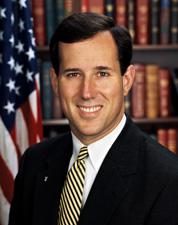 Sen. Rick Santorum (R-PA)
Legislative Activity
Stay on top of the latest movement without scrolling through every action
Read twice and referred to the Committee on Foreign Relations.
July 16, 2004
View full timeline
Introduced in Senate
July 16, 2004
Sponsor introductory remarks on measure. (CR S8278)
July 16, 2004
Read twice and referred to the Committee on Foreign Relations.
July 16, 2004
Floor Debate
3 membersWhat members said about S. 2681 on the floor


Floor Debate
3 membersWhat members said about S. 2681 on the floor
Mr. President, I am joined today by Senator Daniel K. Akaka in introducing the Financial Accountability Expansion Act of 2004, which would ensure the fiscal accountability of Federal entities. This…
Mr. President, I rise today to offer remarks about a bill that Senator Cornyn of Texas and I have introduced, the Iran Freedom and Support Act of 2004. This legislation seeks to promote the…
Mr. President, I rise today to offer remarks about a bill that Senator Cornyn of Texas and I have introduced, the Iran Freedom and Support Act of 2004. This legislation seeks to promote the…
Mr. President, I send to the desk legislation designate the U.S. Post Office located at 222 West 8th Street in Durango, CO, as the Ben Nighthorse Campbell Post Office Building. My dear friend and…
Bill Text
Latest available legislative text
        [Congressional Bills 108th Congress]
[From the U.S. Government Publishing Office]
[S. 2681 Introduced in Senate (IS)]

2d Session
S. 2681

To establish a program to support a transition to democracy in Iran.

_______________________________________________________________________

IN THE SENATE OF THE UNITED STATES

July 16, 2004

Mr. Santorum (for himself and Mr. Cornyn) introduced the following
bill; which was read twice and referred to the Committee on Foreign
Relations

_______________________________________________________________________

A BILL

To establish a program to support a transition to democracy in Iran.

Be it enacted by the Senate and House of Representatives of the
United States of America in Congress assembled,

SECTION 1. SHORT TITLE.

This Act may be cited as the ``Iran Freedom and Support Act of
2004''.

SEC. 2. FINDINGS.

Congress makes the following findings:
(1) The people of the United States have long demonstrated
an interest in the well-being of the people of Iran, including
through the work of missionaries whose work in Iran dates back
to the 1830s.
(2) Famous Americans such as Howard Baskerville, Dr. Samuel
Martin, Jane E. Doolittle, and Louis G. Dreyfus, Jr., made
significant contributions to Iranian society by furthering the
educational opportunities of the people of Iran and improving
the opportunities of the less fortunate citizens of Iran.
(3) Iran served as a key ally of the United States
following World War II and through the late 1970s serving as an
important regional ally and a key bulwark against Soviet
influence.
(4) In November 1979, following the arrival of Mohammed
Reza Shah Pahlavi in the United States, a mob of students and
extremists seized the United States Embassy in Tehran, Iran,
holding United States diplomatic personnel hostage until
January 1981.
(5) Following the seizure of the United States Embassy,
Ayatollah Ruhollah Khomeini, leader of the repressive
revolutionary movement in Iran, expressed support for the
actions of the students in taking American citizens hostage.
(6) Despite the historic victory of Mohammad Khatami in the
presidential election of May 1997, an election which Khatami
won with 69 percent of the vote and in which an estimated 91
percent of the electorate participated, control of the internal
and external affairs of the Islamic Republic of Iran is still
exercised by the courts in Iran and the Revolutionary Guards,
Supreme Leader, and Council of Guardians of the Government of
Iran.
(7) The election results of the May 1997 election and the
high level of voter participation in that election demonstrate
that the people of Iran favor economic and political reforms
and greater interaction with the United States and the Western
world in general.
(8) Despite the election of President Khatami and the
outreach of the Clinton administration to ease sanctions and to
promote people-to-people exchanges, Leader of the Islamic
Revolution Ayatollah Ali Khamenei, the Militant Clerics'
Society, the Islamic Coalition Organization, and Supporters of
the Party of God have all opposed efforts to open Iranian
society to Western influences and have opposed efforts to
change the dynamic of relations between the United States and
Iran.
(9) For the past two decades, the Department of State has
found Iran to be the leading sponsor of international terrorism
in the world.
(10) In 1983, the Iran-sponsored Hezbollah terrorist
organization conducted suicide terrorist operations against
United States military and civilian personnel in Beirut,
Lebanon, resulting in the deaths of hundreds of Americans.
(11) Intelligence analysts and law enforcement personnel
have linked Iran to attacks against American military personnel
at Khobar Towers in Saudi Arabia in 1996 and to al Qaeda
attacks against civilians in Saudi Arabia in 2004.
(12) Iran has provided a safe haven and a base of
operations for terrorist groups, including al Qaeda, Islamic
Jihad, and Ansar al Islam, and to terrorist leaders, including
Abu Musab al Zarkawi, Zayman al Zawahiri, and members of the
bin Laden family.
(13) Iran currently operates more than 10 radio and
television stations broadcasting in Iraq that support violent
actions against United States and coalition personnel in Iraq.
(14) The current leaders of Iran, Ayatollah Ali Khamenei
and Hashemi Rafsanjani, have repeatedly called upon Muslims to
kill Americans in Iraq and install a theocratic regime in Iraq.
(15) The United States intelligence community believes the
Government of Iran is pursuing a clandestine nuclear weapons
program.
(16) The Government of Iran has failed to meet repeated
pledges to arrest and extradite foreign terrorists in Iran.
(17) The United States Government believes that the
Government of Iran supports terrorists and extremist religious
leaders in Iraq with the clear intention of subverting
coalition efforts to bring peace and democracy to Iraq.
(18) The Ministry of Defense of Iran confirmed in July 2003
that it had successfully conducted the final test of the
Shahab-3 missile, giving Iran an operational intermediate-range
ballistic missile capable of striking both Israel and United
States troops throughout the Middle East and Afghanistan.

SEC. 3. SENSE OF CONGRESS ON UNITED STATES POLICY TOWARD IRAN.

It is the sense of Congress that it should be the policy of the
United States to support regime change for the Islamic Republic of Iran
and to promote the transition to a democratic government to replace
that regime.

SEC. 4. ASSISTANCE TO SUPPORT TRANSITION TO DEMOCRACY IN IRAN.

(a) In General.--The President is authorized to provide assistance
to foreign and domestic pro-democracy groups opposed to the non-
democratic Government of Iran, including the award of grants to
qualified pro-democracy radio and television broadcasting
organizations.
(b) Eligibility for Assistance.--Financial assistance may only be
provided under this section to individuals, organizations, or entities
that have--
(1) officially renounced the use of terrorism;
(2) pledged to adhere to nonproliferation regimes for
nuclear, chemical, and biological weapons and materiel;
(3) pledged to support the destruction of all prohibited
stockpiles of weapons of mass destruction in Iran; and
(4) supported the adoption of a democratic form of
government in Iran.
(c) Political Assistance.--
(1) In general.--The President is authorized to provide
assistance to support foreign and domestic pro-democracy groups
opposed to the non-democratic Government of Iran that--
(A) are dedicated to democratic values;
(B) show a commitment to human rights, equality of
women, and freedom of religious worship;
(C) demonstrate a commitment to fostering equality
of opportunity; and
(D) support freedom of the press, freedom of
speech, and freedom of association.
(2) Funding.--The President may provide assistance under
paragraph (1) using--
(A) funds available to the Middle East Partnership
Initiative (MEPI) and National Endowment for Democracy
(NED); and
(B) amounts authorized to be appropriated under
subsection (g).
(d) Notification Requirement.--The President shall notify the
Committees on Foreign Relations and Appropriations of the Senate and
the Committees on International Relations and Appropriations of the
House of Representatives at least 15 days in advance of each obligation
of assistance under this section in accordance with the procedures
under section 634A of the Foreign Assistance Act of 1961 (22 U.S.C.
2394-l).
(e) Coordination of Policy.--In order to ensure maximum
coordination among Federal agencies, the President shall appoint a
senior member of the National Security Council as special assistant to
the President on Iran matters.
(f) Sense of Congress on Diplomatic Assistance.--It is the sense of
Congress that--
(1) contacts should be expanded with opposition groups in
Iran that meet the criteria under subsection (b);
(2) support for transition to democracy in Iran should be
expressed by United States representatives and officials in all
appropriate international fora;
(3) official meetings with representatives of the
Government of Iran should be terminated;
(4) efforts to bring a halt to the nuclear weapons program
of Iran, including steps to end the supply of nuclear
components or fuel to Iran, should be intensified, with
particular attention focused on the cooperation of the
Government of Russia with that nuclear weapons program; and
(5) officials and representatives of the United States
Government should strongly and unequivocally support indigenous
efforts in Iran to call for a national referendum on the form
of government in Iran, including drawing international
attention to the violations by the Government of Iran of human
rights, freedom of religion, freedom of assembly, and freedom
of the press.
(g) Authorization of Appropriations.--There is authorized to be
appropriated to the Department of State $10,000,000 to carry out
activities under this section.

SEC. 5. DESIGNATION OF DEMOCRATIC OPPOSITION ORGANIZATIONS.

(a) Initial Designation.--It is the sense of Congress that, not
later than 90 days after the date of the enactment of this Act, the
President should designate at least one democratic opposition
organization as eligible to receive assistance under section 4.
(b) Notification Requirement.--At least 15 days before designating
a democratic opposition organization as eligible to receive assistance
under section 4, the President shall notify the Committees on Foreign
Relations and Appropriations of the Senate and the Committees on
International Relations and Appropriations of the House of
Representatives of the proposed designation.

SEC. 6. RULE OF CONSTRUCTION.

Nothing in this Act shall be construed to authorize or otherwise
approve of the use of the Armed Forces of the United States in carrying
out activities under this Act.
<all>