SAFE Act
A bill to amend the Occupational Safety and Health Act of 1970 to further improve the safety and health of working environments, and for other purposes.
Also known as Safety Advancement for Employees Act of 2004
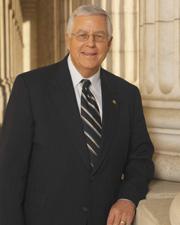 Sen. Michael B. Enzi (R-WY)
Legislative Activity
Stay on top of the latest movement without scrolling through every action
Read twice and referred to the Committee on Health, Education, Labor, and Pensions. (text of measure as introduced: CR S8697-8701)
July 22, 2004
View full timeline
Introduced in Senate
July 22, 2004
Sponsor introductory remarks on measure. (CR S8696, S8701)
July 22, 2004
Read twice and referred to the Committee on Health, Education, Labor, and Pensions. (text of measure as introduced: CR S8697-8701)
July 22, 2004
Floor Debate
23 membersWhat members said about S. 2719 on the floor




 +18
Floor Debate
23 membersWhat members said about S. 2719 on the floor
Mr. President, I rise today with my colleague, Senator Mike DeWine, to introduce legislation designed to prevent our nation's children and youth from succumbing to the dangers associated with…
Mr. President, I have sought recognition today to introduce the Prescription Drug and Health Improvement Act of 2004, which is legislation designed to reduce the high prices of prescription drugs.…
Mr. President, every year, I spend time driving across the State of South Dakota, and every year, I hear unbelievable stories from my constituents about the growing health care crisis in South Dakota…
Mr. President, I rise today to introduce the Veterans Eye Treatment Safety Act of 2004, or VETS Act, which will protect the eye care of our veterans by providing that only licensed physicians may…
Mr. President, the Federal courts propose legislation to improve their operational efficiency. Today, joined by Senator Leahy, I am introducing legislation requested by the Supreme Court of the…
Show 8 more

Mr. President, I rise today to proudly introduce the Space Commercial Human Ascent Serving Expeditions Act also known as the Space CHASE Act. Because Oklahoma has significant history in aviation, I…

Mr. President, it's a privilege to join Senator Alexander in introducing the American History Achievement Act. This bill is part of a continuing effort to renew the national commitment to teaching in…
Mr. President, I rise to introduce the Safety Advancement for Employees (SAFE) Act of 2004. Every worker in America deserves to return home safely at the end of the day. However, more than 5,500…
Mr. President, I rise to introduce the Safety Advancement for Employees (SAFE) Act of 2004. Every worker in America deserves to return home safely at the end of the day. However, more than 5,500…

Mr. President, I rise today to introduce the Death Valley National Park Administrative and Visitor Facilities Act of 2004. This is a simple common sense bill. It allows the Death Valley National Park…
Mr. President, 2004 is a momentous year for wilderness in Oregon. It marks the 40th anniversary of the 1964 Wilderness Act and the 20th anniversary of the Oregon Wilderness bill from 1984. But…
Mr. President, I rise today to introduce the American History Achievement Act. I am pleased to be joined in this effort by the Senator from Massachusetts, Mr. Kennedy. This is part of my effort to…
Mr. President, in the mid-1980's President Reagan joined with Democrats and Republicans to fashion an effective strategy to confront the challenges we then faced from the Japanese. It's time to…
Show 11 more
Mr. President, I rise today with the Senator from Nevada, Senator Reid, to introduce the Presidential $1 Coin Act of 2004. This legislation, which is modeled after the successful 50-State quarter…

Mr. President, I rise today to introduce legislation that expands treatment to millions of Americans suffering from a deadly addiction: tobacco. The Medicare, Medicaid and MCH Smoking Cessation…

Mr. President, I rise today to introduce legislation with my friend and colleague Senator Dodd to temporarily extend the Terrorism Risk Insurance Act. Senator Dodd was the author of the Terrorism…

Mr. President, I rise to introduce the Captive Exotic Animal Protection Act of 2004. This Act would prohibit the barbaric and unsporting practice of ``canned hunts.'' I am pleased to be joined by my…
Mr. President, I am pleased to join with Senator Santorum in introducing the ASPIRE Act of 2004, which would expand opportunities for young adults, encourage savings, and promote financial literacy,…

Mr. President, I rise today to introduce legislation that will create a national penalty for baby selling and help ensure that all families experience safe and legal adoptions. Although the majority…

Mr. President, I rise today, along with my good friend and colleague Senator Dodd, to introduce the Sober Truth on Preventing Underage Drinking Act--also known as the STOP Underage Drinking Act. I…
Health care continues to be among the fastest growing sectors of the U.S. economy. From 1970 to 2002, the health care consumption doubled from 7 to 14 percent of the U.S. Gross Domestic Product…

Mr. President, I submit today a bill that will assist the States of Vermont and New York in commemorating the extraordinary cultural; historical, and recreational heritage of one of Vermont's…
Mr. President, I am pleased to introduce The Indian Tribal Detention Facility Reform Act of 2004 which proposes sweeping reforms to operation of tribal detention systems in American Indian…
Mr. President, today I am introducing legislation to provide financial support to ensure that uninsured children who have failed vision screenings are able to obtain the glasses or eye treatments…
Bill Text
Latest available legislative text
        [Congressional Bills 108th Congress]
[From the U.S. Government Publishing Office]
[S. 2719 Introduced in Senate (IS)]

108th CONGRESS
2d Session
S. 2719

To amend the Occupational Safety and Health Act of 1970 to further
improve the safety and health of working environments, and for other
purposes.

_______________________________________________________________________

IN THE SENATE OF THE UNITED STATES

July 22, 2004

Mr. Enzi introduced the following bill; which was read twice and
referred to the Committee on Health, Education, Labor, and Pensions

_______________________________________________________________________

A BILL

To amend the Occupational Safety and Health Act of 1970 to further
improve the safety and health of working environments, and for other
purposes.

Be it enacted by the Senate and House of Representatives of the
United States of America in Congress assembled,

SECTION 1. SHORT TITLE; REFERENCE.

(a) Short Title.--This Act may be cited as the ``Safety Advancement
for Employees Act of 2004'' or the ``SAFE Act''.
(b) Reference.--Whenever in this Act an amendment or repeal is
expressed in terms of an amendment to, or repeal of, a section or other
provision, the reference shall be considered to be made to a section or
other provision of the Occupational Safety and Health Act of 1970 (29
U.S.C. 651 et seq.).

SEC. 2. PURPOSE.

Section 2(b) of the Act (29 U.S.C. 651(b)) is amended--
(1) in paragraph (13), by striking the period and inserting
``; and''; and
(2) by adding at the end the following:
``(14) by increasing the joint cooperation of employers,
employees, and the Secretary of Labor in the effort to ensure
safe and healthful working conditions for employees.''.

SEC. 3. THIRD PARTY CONSULTATION SERVICES PROGRAM.

(a) Program.--The Act (29 U.S.C. 651 et seq.) is amended by
inserting after section 8 the following:

``SEC. 8A. THIRD PARTY CONSULTATION SERVICES PROGRAM.

``(a) Purpose.--It is the purpose of this section to encourage
employers to conduct voluntary safety and health audits using the
expertise of qualified safety and health consultants and to proactively
seek individualized solutions to workplace safety and health concerns.
``(b) Establishment of Program.--
``(1) In general.--Not later than 18 months after the date
of enactment of this section, the Secretary, in consultation
with the advisory committee established under section 7(d),
shall establish and implement, by regulation, a program that
qualifies individuals to provide consultation services to
employers to assist employers in the identification and
correction of safety and health hazards in the workplaces of
employers.
``(2) Eligibility.--The following individuals shall be
eligible to be qualified under the program under paragraph (1)
as certified safety and health consultants:
``(A) An individual who is licensed by a State
authority as a physician, industrial hygienist,
professional engineer, safety engineer, safety
professional, or registered nurse.
``(B) An individual who has been employed as an
inspector for a State plan State or as a Federal
occupational safety and health inspector for not less
than a 5-year period.
``(C) An individual who is qualified in an
occupational health or safety field by an organization
whose program has been accredited by a nationally
recognized private accreditation organization or by the
Secretary.
``(D) An individual who has not less than 10 years
expertise in workplace safety and health.
``(E) Other individuals determined to be qualified
by the Secretary.
``(3) Geographical scope of consultation services.--A
consultant qualified under the program under paragraph (1) may
provide consultation services in any State.
``(4) Limitation based on expertise.--A consultant
qualified under the program under paragraph (1) may only
provide consultation services to an employer with respect to a
worksite if the work performed at that worksite coincides with
the particular expertise of the individual.
``(c) Safety and Health Registry.--The Secretary shall develop and
maintain a registry that includes all consultants that are qualified
under the program under subsection (b)(1) to provide the consultation
services described in subsection (b) and shall publish and make such
registry readily available to the general public.
``(d) Disciplinary Actions.--The Secretary may revoke the status of
a consultant qualified under subsection (b), or the participation of an
employer under subsection (b) in the third party consultation program,
if the Secretary determines that the consultant or employer--
``(1) has failed to meet the requirements of the program;
or
``(2) has committed malfeasance, gross negligence,
collusion or fraud in connection with any consultation services
provided by the qualified consultant.
``(e) Program Requirements.--
``(1) Full service consultation.--The consultation services
described in subsection (b), and provided by a consultant
qualified under the program under subsection (b)(1), shall
include an evaluation of the workplace of an employer to
determine if the employer is in compliance with the
requirements of this Act, including any regulations promulgated
pursuant to this Act. Employers electing to participate in such
program shall contract with a consultant qualified under
subsection (b)(2) to perform a full service visit and consultation
covering the employer's establishment, including a complete safety and
health program review. Following the guidance as specified in this
section, the consultant shall discuss with the employer the elements of
an effective program.
``(2) Consultation report.--
``(A) In general.--After a consultant conducts a
comprehensive survey of an employer under a program
under this section, the consultant shall prepare and
submit to the employer a written report that includes
an action plan identifying any violations of this Act,
and any appropriate corrective measures to address the
violations that are identified using an effective
safety and health program.
``(B) Elements.--A consultation report shall
contain each of the following elements.
``(i) Action plan.--
``(I) In general.--An action plan
under subparagraph (A) shall be
developed in consultation with the
employer as part of the initial
comprehensive survey. The consultant
and the employer shall jointly use the
onsite time in the initial visit to the
employer's place of business to agree
on the terms of the action plan and the
time frames for achieving specific
items.
``(II) Requirements.--The action
plan shall outline the specific steps
that must be accomplished by the
employer prior to receiving a
certificate of compliance. The action
plan shall address in detail--
``(aa) the employer's
correction of all identified
safety and health hazards, with
applicable time frames;
``(bb) the steps necessary
for the employer to implement
an effective safety and health
program, with applicable time
frames; and
``(cc) a statement of the
employer's commitment to work
with the consultation project
to achieve a certificate of
compliance.
``(ii) Safety and health program.--An
employer electing to participate in a program
under this section shall establish a safety and
health program to manage workplace safety and
health to reduce injuries, illnesses and
fatalities that complies with paragraph (3).
Such safety and health program shall be
appropriate to the conditions of the workplace
involved.
``(3) Requirements for safety and health program.--
``(A) Written program.--An employer electing to
participate shall maintain a written safety and health
program that contains policies, procedures, and
practices to recognize and protect their employees from
occupational safety and health hazards. Such procedures
shall include provisions for the identification,
evaluation and prevention or control of workplace
hazards.
``(B) Major elements.--A safety and health program
shall include the following elements, and may include
other elements as necessary to the specific worksite
involved and as determined appropriate by the qualified
consultant and employer:
``(i) Employer commitment and employee
involvement.--
``(I) In general.--The existence of
both management leadership and employee
participation must be demonstrated in
accordance with subclauses (II) and
(III).
``(II) Management leadership.--To
make a demonstration of management
leadership under this subclause, the
employer shall--
``(aa) set a clear worksite
safety and health policy that
employees can fully understand;
``(bb) set and communicate
clear goals and objectives with
the involvement of employees;
``(cc) provide essential
safety and health leadership in
tangible and recognizable ways;
``(dd) set positive safety
and health examples; and
``(ee) perform
comprehensive reviews of safety
and health programs for quality
assurance using a process which
promotes continuous correction.
``(III) Employee participation.--
With respect to employee participation,
the employer shall demonstrate a
commitment to working to develop a
comprehensive, written and operational
safety and health program that involves
employees in significant ways that
affect safety and health. In making
such a demonstration, the employer
shall--
``(aa) provide for employee
participation in actively
identifying and resolving
safety and health issues in
tangible ways that employees
can clearly understand;
``(bb) assign safety and
health responsibilities in such
a way that employees can
understand clearly what is
expected of them;
``(cc) provide employees
with the necessary authority
and resources to meet their
safety and health
responsibilities; and
``(dd) provide that safety
and health performance for
managers, supervisors and
employees be measured in
tangible ways.
``(ii) Workplace analysis.--The employer,
in consultation with the consultant, shall
systematically identify and assess hazards in
the following ways:
``(I) Conduct corrective action and
regular expert surveys to update hazard
inventories.
``(II) Have competent personnel
review every planned or new facility,
process material, or equipment.
``(III) Train all employees and
supervisors, conduct routine joint
inspections, and correct items
identified.
``(IV) Establish a way for
employees to report hazards and provide
prompt responses to such reports.
``(V) Investigate worksite
accidents and near accidents.
``(VI) Provide employees with the
necessary information regarding
incident trends, causes and means of
prevention.
``(iii) Hazard prevention.--The employer,
in consultation with the consultant, shall--
``(I) engage in timely hazard
control, working to ensure that hazard
controls are fully in place and
communicated to employees, with
emphasis on engineering controls and
enforcing safe work procedures;
``(II) maintain equipment using
operators who are trained to recognize
maintenance needs and perform or direct
timely maintenance;
``(III) provide training on
emergency planning and preparation,
working to ensure that all personnel
know immediately how to respond as a
result of effective planning, training,
and drills;
``(IV) equip facilities for
emergencies with all systems and
equipment in place and regularly tested
so that all employees know how to
communicate during emergencies and how
to use equipment; and
``(V) provide for emergency medical
situations using employees who are
fully trained in emergency medicine.
``(iv) Safety and health training.--The
employer, in consultation with the consultant,
shall--
``(I) involve employees in hazard
assessment, development and delivery of
training;
``(II) actively involve supervisors
in worksite analysis by empowering them
to ensure physical protections,
reinforce training, enforce discipline,
and explain work procedures; and
``(III) provide training in safety
and health management to managers.
``(4) Reinspection.--At a time agreed to by the employer
and the consultant, the consultant may reinspect the workplace
of the employer to verify that the required elements in the
consultation report have been satisfied. If such requirements
have been satisfied, the employer shall be provided with a
certificate of compliance for that workplace by the qualified
consultant.
``(f) Exemption From Civil Penalties for Compliance.--
``(1) In general.--If an employer enters into a contract
with an individual qualified under the program under this
section, to provide consultation services described in
subsection (b), and receives a certificate of compliance under
subsection (e)(4), the employer shall be exempt from the
assessment of any civil penalty under section 17 for a period
of 1 year after the date on which the employer receives such
certificate.
``(2) Exceptions.--An employer shall not be exempt under
paragraph (1)--
``(A) if the employer has not made a good faith
effort to remain in compliance as required under the
certificate of compliance; or
``(B) to the extent that there has been a
fundamental change in the hazards of the workplace.
``(g) Right To Inspect.--Nothing in this section shall be construed
to affect the rights of the Secretary to inspect and investigate
worksites covered by a certificate of compliance.
``(h) Renewal Requirements.--An employer that is granted a
certificate of compliance under this section may receive a 1 year
renewal of the certificate if the following elements are satisfied:
``(1) A qualified consultant shall conduct a complete
onsite safety and health survey to ensure that the safety and
health program has been effectively maintained or improved,
workplace hazards are under control, and elements of the safety
and health program are operating effectively.
``(2) The consultant, in an onsite visit by the consultant,
has determined that the program requirements have been complied
with and the health and safety program has been operating
effectively.
``(i) Non-Fixed Worksites.--With respect to employer worksites that
do not have a fixed location, a certificate of compliance shall only
apply to that worksite which satisfies the criteria under this section
and such certificate shall not be portable to any other worksite. This
section shall not apply to service establishments that utilize
essentially the same work equipment at each non-fixed worksite.''.

SEC. 4. ESTABLISHMENT OF SPECIAL ADVISORY COMMITTEE.

Section 7 of the Act (29 U.S.C. 656) is amended by adding at the
end the following:
``(d)(1) Not later than 6 months after the date of enactment of
this subsection, the Secretary shall establish an advisory committee
(pursuant to the Federal Advisory Committee Act (5 U.S.C. App.)) to
carry out the duties described in paragraph (3).
``(2) The advisory committee shall be composed of--
``(A) 3 members who are employees;
``(B) 3 members who are employers;
``(C) 2 members who are members of the general public; and
``(D) 1 member who is a State official from a State plan
State.
Each member of the advisory committee shall have expertise in workplace
safety and health as demonstrated by the educational background of the
member.
``(3) The advisory committee shall advise and make recommendations
to the Secretary with respect to the establishment and implementation
of a consultation services program under section 8A.''.

SEC. 5. CONTINUING EDUCATION AND PROFESSIONAL CERTIFICATION FOR
CERTAIN OCCUPATIONAL SAFETY AND HEALTH ADMINISTRATION
PERSONNEL.

Section 8 of the Act (29 U.S.C. 657) is amended by adding at the
end the following:
``(i) Any Federal employee responsible for enforcing this Act
shall, not later than 2 years after the date of enactment of this
subsection or 2 years after the initial employment of the employee
involved, meet the eligibility requirements prescribed under subsection
(b)(2) of section 8A.
``(j) The Secretary shall ensure that any Federal employee
responsible for enforcing this Act who carries out inspections or
investigations under this section, receive professional education and
training at least every 5 years as prescribed by the Secretary.''.

SEC. 6. EXPANDED INSPECTION METHODS.

(a) Purpose.--It is the purpose of this section to empower the
Secretary of Labor to achieve increased employer compliance by using,
at the Secretary's discretion, more efficient and effective means for
conducting inspections.
(b) General.--Section 8(f) of the Act (29 U.S.C. 657(f) is
amended--
(1) by adding at the end the following:
``(3) The Secretary or an authorized representative of the
Secretary may, as a method of investigating an alleged violation or
danger under this subsection, attempt, if feasible, to contact an
employer by telephone, facsimile, or other appropriate methods to
determine whether--
``(A) the employer has taken corrective actions with
respect to the alleged violation or danger; or
``(B) there are reasonable grounds to believe that a hazard
exists.
``(4) The Secretary is not required to conduct an inspection under
this subsection if the Secretary determines that a request for an
inspection was made for reasons other than the safety and health of the
employees of an employer or that the employees of an employer are not
at risk.''.

SEC. 7. WORKSITE-SPECIFIC COMPLIANCE METHODS.

Section 9 of the Act (29 U.S.C. 658) is amended by adding at the
end the following:
``(d) A citation issued under subsection (a) to an employer who
violates section 5, any standard, rule, or order promulgated pursuant
to section 6, or any other regulation promulgated under this Act shall
be vacated if such employer demonstrates that the employees of such
employer were protected by alternative methods that are equally or more
protective of the safety and health of the employees than the methods
required by such standard, rule, order, or regulation in the factual
circumstances underlying the citation.
``(e) Subsection (d) shall not be construed to eliminate or modify
other defenses that may exist to any citation.''.

SEC. 8. TECHNICAL ASSISTANCE PROGRAM.

(a) In General.--Section 21(c) of the Act (29 U.S.C. 670(c)) is
amended--
(1) by striking ``(c) The'' and inserting ``(c)(1) The'';
(2) by striking ``(1) provide'' and inserting ``(A)
provide'';
(3) by striking ``(2) consult'' and inserting ``(B)
consult''; and
(4) by adding at the end the following:
``(2)(A) The Secretary shall, through the authority granted under
section 7(c) and paragraph (1), enter into cooperative agreements with
States for the provision of consultation services by such States to
employers concerning the provision of safe and healthful working
conditions.
``(B)(i) Except as provided in clause (ii), the Secretary shall
reimburse a State that enters into a cooperative agreement under
subparagraph (A) in an amount that equals 90 percent of the costs
incurred by the State for the provision of consultation services under
such agreement.
``(ii) A State shall be reimbursed by the Secretary for 90 percent
of the costs incurred by the State for the provision of--
``(I) training approved by the Secretary for State
personnel operating under a cooperative agreement; and
``(II) specified out-of-State travel expenses incurred by
such personnel.
``(iii) A reimbursement paid to a State under this subparagraph
shall be limited to costs incurred by such State for the provision of
consultation services under this paragraph and the costs described in
clause (ii).''.
(b) Pilot Program.--Section 21 of the Act (29 U.S.C. 670) is
amended by adding at the end the following:
``(e)(1) Not later than 90 days after the date of enactment of this
subsection, the Secretary shall establish and carry out a pilot program
in 3 States to provide expedited consultation services, with respect to
the provision of safe and healthful working conditions, to employers
that are small businesses (as the term is defined by the Administrator
of the Small Business Administration). The Secretary shall carry out
the program for a period of not to exceed 2 years.
``(2) The Secretary shall provide consultation services under
paragraph (1) not later than 4 weeks after the date on which the
Secretary receives a request from an employer.
``(3) The Secretary may impose a nominal fee to an employer
requesting consultation services under paragraph (1). The fee shall be
in an amount determined by the Secretary. Employers paying a fee shall
receive priority consultation services by the Secretary.
``(4) In lieu of issuing a citation under section 9 to an employer
for a violation found by the Secretary during a consultation under
paragraph (1), the Secretary shall permit the employer to carry out
corrective measures to correct the conditions causing the violation.
The Secretary shall conduct not more than 2 visits to the workplace of
the employer to determine if the employer has carried out the
corrective measures. The Secretary shall issue a citation as prescribed
under section 5 if, after such visits, the employer has failed to carry
out the corrective measures.
``(5) Not later than 90 days after the termination of the program
under paragraph (1), the Secretary shall prepare and submit a report to
the appropriate committees of Congress that contains an evaluation of
the implementation of the pilot program.''.

SEC. 9. VOLUNTARY PROTECTION PROGRAMS.

(a) Cooperative Agreements.--The Secretary of Labor shall establish
cooperative agreements with employers to encourage the establishment of
comprehensive safety and health management systems that include--
(1) requirements for systematic assessment of hazards;
(2) comprehensive hazard prevention, mitigation, and
control programs;
(3) active and meaningful management and employee
participation in the voluntary program described in subsection
(b); and
(4) employee safety and health training.
(b) Voluntary Protection Program.--
(1) In general.--The Secretary of Labor shall establish and
carry out a voluntary protection program (consistent with
subsection (a)) to encourage excellence and recognize the
achievement of excellence in both the technical and managerial
protection of employees from occupational hazards.
(2) Program requirement.--The voluntary protection program
shall include the following:
(A) Application.--Employers who volunteer under the
program shall be required to submit an application to
the Secretary of Labor demonstrating that the worksite
with respect to which the application is made meets
such requirements as the Secretary of Labor may require
for participation in the program.
(B) Onsite evaluations.--There shall be onsite
evaluations by representatives of the Secretary of
Labor to ensure a high level of protection of
employees. The onsite visits shall not result in
enforcement of citations under the Occupational Safety
and Health Act of 1970 (29 U.S.C. 651 et seq.).
(C) Information.--Employers who are approved by the
Secretary of Labor for participation in the program
shall assure the Secretary of Labor that information
about the safety and health program of the employers
shall be made readily available to the Secretary of
Labor to share with employees.
(D) Reevaluations.--Periodic reevaluations by the
Secretary of Labor of the employers shall be required
for continued participation in the program.
(3) Exemptions.--A site with respect to which a program has
been approved shall, during participation in the program be
exempt from inspections or investigations and certain paperwork
requirements to be determined by the Secretary of Labor, except
that this paragraph shall not apply to inspections or
investigations arising from employee complaints, fatalities,
catastrophes, or significant toxic releases.
(4) Increased small business participation.--The Secretary
of Labor shall establish and implement, by regulation, a
program to increase participation by small businesses (as the
term is defined by the Administrator of the Small Business
Administration) in the voluntary protection program through
outreach and assistance initiatives and developing program
requirements that address the needs of small businesses.

SEC. 10. PREVENTION OF ALCOHOL AND SUBSTANCE ABUSE.

The Act (29 U.S.C. 651 et seq.) is amended by adding at the end the
following:

``SEC. 34. ALCOHOL AND SUBSTANCE ABUSE TESTING.

``(a) Program Purpose.--In order to secure a safe workplace,
employers may establish and carry out an alcohol and substance abuse
testing program in accordance with subsection (b).
``(b) Federal Guidelines.--
``(1) Requirements.--An alcohol and substance abuse testing
program described in subsection (a) shall meet the following
requirements:
``(A) Substance abuse.--A substance abuse testing
program shall permit the use of an onsite or offsite
testing.
``(B) Alcohol.--The alcohol testing component of
the program shall take the form of alcohol breath
analysis and shall conform to any guidelines developed
by the Secretary of Transportation for alcohol testing
of mass transit employees under the Department of
Transportation and Related Agencies Appropriations Act,
1992.
``(2) Definition.--For purposes of this section the term
`alcohol and substance abuse testing program' means any program
under which test procedures are used to take an analyze blood,
breath, hair, urine, saliva, or other body fluids or materials
for the purpose of detecting the presence or absence of alcohol
or a drug or its metabolites. In the case of urine testing, the
confirmation tests must be performed in accordance with the mandatory
guidelines for Federal workplace testing programs published by the
Secretary of Health and Human Services on April 11, 1988, at section
11979 of title 53, Code of Federal Regulations (including any
amendments to such guidelines). Proper laboratory protocols and
procedures shall be used to assure accuracy and fairness and
laboratories must be subject to the requirements of subpart B of the
mandatory guidelines, State certification, the Clinical Laboratory
Improvements Act of the College of American Pathologists.
``(c) Test Requirements.--This section shall not be construed to
prohibit an employer from requiring--
``(1) an applicant for employment to submit to and pass an
alcohol or substance abuse test before employment by the
employer; or
``(2) an employee, including managerial personnel, to
submit to and pass an alcohol or substance abuse test--
``(A) on a for-cause basis or where the employer
has reasonable suspicion to believe that such employee
is using or is under the influence of alcohol or a
controlled substance;
``(B) where such test is administered as part of a
scheduled medical examination;
``(C) in the case of an accident or incident,
involving the actual or potential loss of human life,
bodily injury, or property damage;
``(D) during the participation of an employee in an
alcohol or substance abuse treatment program, and for a
reasonable period of time (not to exceed 5 years) after
the conclusion of such program; or
``(E) on a random selection basis in work units,
locations, or facilities.
``(d) Construction.--Nothing in this section shall be construed to
require an employer to establish an alcohol and substance abuse testing
program for applicants or employees or make employment decisions based
on such test results.
``(e) Preemption.--The provisions of this section shall not preempt
any provision of State law to the extent that such State law is
inconsistent with this section.
``(f) Investigations.--The Secretary is authorized to conduct
testing of employees (including managerial personnel) of an employer
for use of alcohol or controlled substances during any investigations
of a work-related fatality or serious injury.''.

SEC. 11. DISCRETIONARY COMPLIANCE ASSISTANCE.

Subsection (a) of section 9 of the Act (29 U.S.C. 658(a)) is
amended to read as follows:
``(a)(1) Nothing in this Act shall be construed as prohibiting the
Secretary or the authorized representative of the Secretary from
providing technical or compliance assistance to an employer in
correcting a violation discovered during an inspection or investigation
under this Act without issuing a citation.
``(2) Except as provided in paragraph (3), if, upon an inspection
or investigation, the Secretary or an authorized representative of the
Secretary believes that an employer has violated a requirement of
section 5, of any regulation, rule, or order promulgated pursuant to
section 6, or of any regulations prescribed pursuant to this Act, the
Secretary may with reasonable promptness issue a citation to the
employer. Each citation shall be in writing and shall describe with
particularity the nature of a violation, including a reference to the
provision of the Act, regulation, rule, or order alleged to have been
violated. The citation shall fix a reasonable time for the abatement of
the violation.
``(3) The Secretary or the authorized representative of the
Secretary--
``(A) may issue a warning in lieu of a citation with
respect to a violation that has no significant relationship to
employee safety or health; and
``(B) may issue a warning in lieu of a citation in cases in
which an employer in good faith acts promptly to abate a
violation if the violation is not a willful or repeated
violation.''.

SEC. 12. HAZARD COMMUNICATION.

(a) Model Material Safety Data Sheets.--
(1) Purpose.--It is the purpose of this section to assist
chemical manufactures and importers in preparing material
safety data sheets pursuant to the requirements of the Hazard
Communication standard published at section 1910.1200 of title
29, Code of Federal Regulations, and to improve the accuracy,
consistency, and comprehensibility of such material safety data
sheets.
(2) Model material safety data sheets for highly hazardous
chemicals.--The Secretary of Labor shall develop model material
safety data sheets for the list of highly hazardous chemicals
contained in Appendix A to the Process Safety Management of
Highly Hazardous Chemicals standard published at section
1910.119 of title 29, Code of Federal Regulations. Such model
material safety data sheets shall--
(A) comply with the requirements of the Hazard
Communication standard published at section 1910.100 of
such title 29;
(B) be presented in a consistent format that
enhances the reliability and comprehensibility of
information about chemical hazards in the workplace and
protective measures; and
(C) be made available to the public, including
through posting on the Occupational Safety and Health
Administration's website, within 18 months after the
date of enactment of this Act.
(3) Construction.--Nothing in this subsection shall be
construed to--
(A) modify or amend the Hazard Communication
standard published at section 1910.1200 of title 29,
Code of Federal Regulations, the Process Safety
Management of Highly Hazardous Chemicals standard
published at section 1910.119 of such title 29, or any
other provision of law; and
(B) authorize the Secretary of Labor to include in
the model material safety data sheet developed under
this subsection any suggestion or recommendation as to
permissible or appropriate workplace exposure levels
for these chemicals.
(4) Authorization of appropriations.--There are authorized
to be appropriated to the Department of Labor such sums as may
be necessary to carry out this subsection.
(b) Globally Harmonized System Commission.--
(1) Establishment.--Not later than 6 months after the date
of enactment of this Act, there shall be established a
commission, to be known as the Global Harmonization Commission
(referred to in this subsection as the ``Commission''), to
consider the implementation of the United Nations Globally
Harmonized System of Classification and Labeling of Chemicals
to improve chemical hazard communication and to make
recommendations to Congress.
(2) Membership.--The Commission shall be composed of 13
members of whom--
(A) 1 shall be the Secretary of Labor;
(B) 1 shall be the Secretary of Transportation;
(C) 1 shall be the Secretary of Health and Human
Services;
(D) 1 shall be the Administrator of the
Environmental Protection Agency;
(E) 1 shall be the Chairman of the Consumer Product
Safety Commission; and
(F) 8 shall be appointed by the Secretary of Labor,
of whom--
(i) 2 shall be representatives of
manufacturers of hazardous chemicals, including
a representative of small businesses;
(ii) 2 shall be representatives of
employers who are extensive users of hazardous
chemicals supplied by others, including a
representative of small businesses;
(iii) 2 shall be representatives of labor
organizations; and
(iv) 2 shall be occupational safety and
health professionals with expertise in chemical
hazard communications.
(3) Chair and vice-chair.--The members of the Commission
shall select a chair and vice-chair from among its members.
(4) Duties.--
(A) Study and recommendations.--The Commission
shall conduct a thorough study of, and shall develop
recommendations on, the following issues relating to
the global harmonization of hazardous chemical
communication:
(i) Whether the United States should adopt
any or all of the elements of the United
Nation's Globally Harmonized System of
Classification and Labeling of Chemicals
(referred to in this subsection and the
``Globally Harmonized System'').
(ii) How the Globally Harmonized System
should be implemented by the Federal agencies
with relevant jurisdiction, taking into
consideration the role of the States acting
under delegated authority.
(iii) How the Globally Harmonized System
compares to existing chemical hazard
communication laws and regulations, including
the Hazard Communication standard published at
section 1910.1200 of title 29, Code of Federal
Regulations.
(iv) A consideration of the impact of
adopting the Globally Harmonized System on the
consistency, effectiveness, comprehensiveness,
timing, accuracy, and comprehensibility of
chemical hazard communication in the United
States.
(v) A consideration of the impact of
adopting the Globally Harmonized System on
occupational safety and health in the United
States.
(vi) A consideration of the impact of
adopting the Globally Harmonized System on
tort, insurance, and workers compensation laws
in the United States.
(vii) A consideration of the impact of
adopting the Globally Harmonized System on the
ability to bring new products to the market in
the United States.
(viii) A consideration of the cost and
benefits of adopting the Globally Harmonized
System to businesses, including small
businesses, in the United States.
(ix) Effective compliance assistance,
training, and outreach to help chemical
manufacturers, importers, and users,
particularly small businesses, understand and
comply with the Globally Harmonized System.
(B) Report.--Not later than 18 months after the
date of enactment of this Act, the Commission shall
submit to the appropriate committees of Congress a
report containing a detailed statement of the findings
and conclusions of the Commission, together with its
recommendations for such legislation as the Commission
considers appropriate.
(5) Powers.--
(A) Hearings.--The Commission may hold such
hearings, sit and act at such times and places, take
such testimony, and receive such evidence as the
Commission considers advisable to carry out this
section. The Commission shall, to the maximum extent
possible, use existing data and research to carry out
this section.
(B) Information from federal agencies.--The
Commission may secure directly from any Federal
department or agency such information as the Commission
considers necessary to carry out this section. Upon
request by the Commission, the head of such department
or agency shall promptly furnish such information to
the Commission.
(C) Postal services.--The Commission may use the
United States mails in the same manner and under the
same conditions as other departments and agencies of
the Federal Government.
(6) Personnel matters.--
(A) Compensation; travel expenses.--Each member of
the Commission shall serve without compensation but
shall be allowed travel expenses, including per diem in
lieu of subsistence, at rates authorized for employees
of agencies under subchapter I of chapter 57 of title
5, United States Code, while away from their homes or
regular places of business in the performance of
services for the Commission.
(B) Staff and equipment.--The Department of the
Labor shall provide all financial, administrative, and
staffing requirements for the Commission including--
(i) office space;
(ii) furnishings; and
(iii) equipment.
(7) Termination.--The Commission shall terminate on the
date that is 90 days after the date on which the Commission
submits the report required under paragraph (3)(B).
(8) Authorization of appropriations.--There are authorized
to be appropriated to the Department of Labor, such sums as may
be necessary to carry out this subsection.
(c) Hazard Communication Demonstration Projects.--
(1) In general.--Section 20(a) of the Act (29 U.S.C.
670(a)) is amended by adding at the end the following:
``(8) Subject to the availability of appropriations, the Secretary
of Health and Human Services, after consultation with the Secretary,
shall award grants to one or more qualified applicants in order to
carry out a demonstration project to development, implement, or
evaluate strategies or programs to improve chemical hazard
communication in the workplace through the use of technology, which may
include electronic or Internet-based hazard communication systems.''.
(2) Authorization of appropriations.--There are authorized
to be appropriated such sums as may be necessary to carry out
the amendment made by paragraph (1).

SEC. 13. CRIMINAL PENALTIES.

Subsection (e) of section 17 of the Act (29 U.S.C. 666(e)) is
amended--
(1) by striking ``fine of not more than $10,000'' and
inserting ``fine in accordance with section 3571 of title 18,
United States Code'';
(2) by striking ``six months'' and inserting ``18 months'';
(3) by striking ``fine of not more than $20,000'' and
inserting ``fine in accordance with section 3571 of title 18,
United States Code''; and
(4) by striking ``1 year'' and inserting ``3 years''.
<all>