Investing in America's Future Act of 2004
 Sen. Jeff Bingaman (D-NM)
Legislative Activity
Stay on top of the latest movement without scrolling through every action
Read twice and referred to the Committee on Health, Education, Labor, and Pensions. (text of measure as introduced: CR S8715-8720)
July 22, 2004
View full timeline
Introduced in Senate
July 22, 2004
Sponsor introductory remarks on measure. (CR S8714-8715)
July 22, 2004
Read twice and referred to the Committee on Health, Education, Labor, and Pensions. (text of measure as introduced: CR S8715-8720)
July 22, 2004
Floor Debate
23 membersWhat members said about S. 2739 on the floor

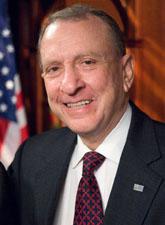
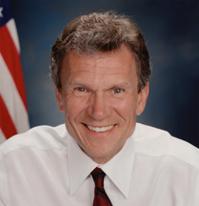

 +18
+18
Floor Debate
23 membersWhat members said about S. 2739 on the floor
Mr. President, I rise today with my colleague, Senator Mike DeWine, to introduce legislation designed to prevent our nation's children and youth from succumbing to the dangers associated with…
Mr. President, I have sought recognition today to introduce the Prescription Drug and Health Improvement Act of 2004, which is legislation designed to reduce the high prices of prescription drugs.…
Mr. President, every year, I spend time driving across the State of South Dakota, and every year, I hear unbelievable stories from my constituents about the growing health care crisis in South Dakota…
Mr. President, I rise today to introduce the Veterans Eye Treatment Safety Act of 2004, or VETS Act, which will protect the eye care of our veterans by providing that only licensed physicians may…
Mr. President, the Federal courts propose legislation to improve their operational efficiency. Today, joined by Senator Leahy, I am introducing legislation requested by the Supreme Court of the…
Show 8 more

Mr. President, I rise today to proudly introduce the Space Commercial Human Ascent Serving Expeditions Act also known as the Space CHASE Act. Because Oklahoma has significant history in aviation, I…

Mr. President, it's a privilege to join Senator Alexander in introducing the American History Achievement Act. This bill is part of a continuing effort to renew the national commitment to teaching in…
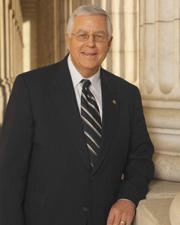
Mr. President, I rise to introduce the Safety Advancement for Employees (SAFE) Act of 2004. Every worker in America deserves to return home safely at the end of the day. However, more than 5,500…

Mr. President, I rise today to introduce the Death Valley National Park Administrative and Visitor Facilities Act of 2004. This is a simple common sense bill. It allows the Death Valley National Park…
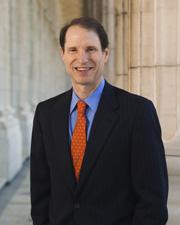
Mr. President, 2004 is a momentous year for wilderness in Oregon. It marks the 40th anniversary of the 1964 Wilderness Act and the 20th anniversary of the Oregon Wilderness bill from 1984. But…
Mr. President, I rise today to introduce the American History Achievement Act. I am pleased to be joined in this effort by the Senator from Massachusetts, Mr. Kennedy. This is part of my effort to…
Mr. President, in the mid-1980's President Reagan joined with Democrats and Republicans to fashion an effective strategy to confront the challenges we then faced from the Japanese. It's time to…
Mr. President, I rise today with the Senator from Nevada, Senator Reid, to introduce the Presidential $1 Coin Act of 2004. This legislation, which is modeled after the successful 50-State quarter…
Show 11 more

Mr. President, I rise today to introduce legislation that expands treatment to millions of Americans suffering from a deadly addiction: tobacco. The Medicare, Medicaid and MCH Smoking Cessation…

Mr. President, I rise today to introduce legislation with my friend and colleague Senator Dodd to temporarily extend the Terrorism Risk Insurance Act. Senator Dodd was the author of the Terrorism…

Mr. President, I rise to introduce the Captive Exotic Animal Protection Act of 2004. This Act would prohibit the barbaric and unsporting practice of ``canned hunts.'' I am pleased to be joined by my…
Mr. President, I am pleased to join with Senator Santorum in introducing the ASPIRE Act of 2004, which would expand opportunities for young adults, encourage savings, and promote financial literacy,…

Mr. President, I rise today to introduce legislation that will create a national penalty for baby selling and help ensure that all families experience safe and legal adoptions. Although the majority…

Mr. President, I rise today, along with my good friend and colleague Senator Dodd, to introduce the Sober Truth on Preventing Underage Drinking Act--also known as the STOP Underage Drinking Act. I…
Health care continues to be among the fastest growing sectors of the U.S. economy. From 1970 to 2002, the health care consumption doubled from 7 to 14 percent of the U.S. Gross Domestic Product…
Health care continues to be among the fastest growing sectors of the U.S. economy. From 1970 to 2002, the health care consumption doubled from 7 to 14 percent of the U.S. Gross Domestic Product…

Mr. President, I submit today a bill that will assist the States of Vermont and New York in commemorating the extraordinary cultural; historical, and recreational heritage of one of Vermont's…
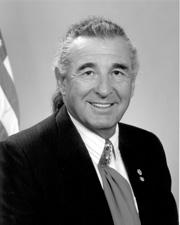
Mr. President, I am pleased to introduce The Indian Tribal Detention Facility Reform Act of 2004 which proposes sweeping reforms to operation of tribal detention systems in American Indian…
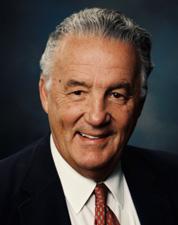
Mr. President, today I am introducing legislation to provide financial support to ensure that uninsured children who have failed vision screenings are able to obtain the glasses or eye treatments…
Bill Text
Latest available legislative text
        [Congressional Bills 108th Congress]
[From the U.S. Government Publishing Office]
[S. 2739 Introduced in Senate (IS)]

108th CONGRESS
2d Session
S. 2739

To improve the training and retention of health professionals under
titles VII and VIII of the Public Health Service Act, and for other
purposes.

_______________________________________________________________________

IN THE SENATE OF THE UNITED STATES

July 22, 2004

Mr. Bingaman introduced the following bill; which was read twice and
referred to the Committee on Health, Education, Labor, and Pensions

_______________________________________________________________________

A BILL

To improve the training and retention of health professionals under
titles VII and VIII of the Public Health Service Act, and for other
purposes.

Be it enacted by the Senate and House of Representatives of the
United States of America in Congress assembled,

SECTION 1. SHORT TITLE; TABLE OF CONTENTS.

(a) Short Title.--This Act may be cited as the ``Investing in
America's Future Act of 2004''.
(b) Table of Contents.--The table of contents of this Act is as
follows:

Sec. 1. Short title; table of contents.
TITLE I--ALLIED HEALTH

Sec. 101. Findings.
Sec. 102. Purposes.
Sec. 103. Amendments to Public Health Service Act.
TITLE II--HEALTH WORKFORCE ADVISORY COMMISSION

Sec. 201. Health Workforce Advisory Commission.
TITLE III--PHYSICIAN DEMONSTRATION PROJECTS IN RURAL STATES

Sec. 301. Definitions.
Sec. 302. Rural States physician recruitment and retention
demonstration program.
Sec. 303. Establishment of the health professions database.
Sec. 304. Evaluation and reports.
Sec. 305. Contracting flexibility.
TITLE IV--HEALTH CAREERS OPPORTUNITY PROGRAM

Sec. 401. Purpose.
Sec. 402. Authorization of appropriations.
TITLE V--PROGRAM OF EXCELLENCE IN HEALTH PROFESSIONS EDUCATION FOR
UNDERREPRESENTED MINORITIES

Sec. 501. Purpose.
Sec. 502. Authorization of appropriation.
TITLE VI--HEALTH PROFESSIONS STUDENT LOAN FUND; AUTHORIZATIONS OF
APPROPRIATIONS REGARDING STUDENTS FROM DISADVANTAGED BACKGROUNDS

Sec. 601. Student loans.
Sec. 602. National Health Service Corps; recruitment and fellowships
for individuals from disadvantaged
backgrounds.
TITLE VII--MISCELLANEOUS PROVISIONS

Sec. 703. Study by the Institute of Medicine.

TITLE I--ALLIED HEALTH

SEC. 101. FINDINGS.

Congress makes the following findings:
(1) The Bureau of the Census and other reports highlight
the increased demand for acute and chronic health care services
among both the general population and a rapidly growing aging
portion of the population.
(2) The calls for reduction in medical errors, increased
patient safety, and increased quality of care have resulted in
an amplified call for allied health professionals to provide
health care services.
(3) Several allied health professions are characterized by
workforce shortages, declining enrollments in allied health
education programs, or a combination of both factors, and
hospital officials have reported vacancy rates in positions
occupied by allied health professionals.
(4) Many allied health education programs are facing
significant economic pressure that could force their closure
due to an insufficient number of students.

SEC. 102. PURPOSES.

The purpose of this title is to ensure that the United States
health care industry will have a supply of allied health professionals
needed to support the Nation's health care system in this decade and
beyond by--
(1) providing incentives for members of the United States
population to seek and complete high-quality allied health
education and training; and
(2) providing additional funding to ensure that such
education and training can be provided to allied health
students.

SEC. 103. AMENDMENTS TO PUBLIC HEALTH SERVICE ACT.

(a) In General.--Part E of title VII of the Public Health Service
Act (42 U.S.C. 294n et seq.) is amended by adding at the end the
following:

``Subpart 3--Allied Health Professionals

``SEC. 775. DEFINITIONS.

``In this subpart:
``(1) Allied health education program.--The term `allied
health education program' means any education program at an
accredited institution of higher education leading to a
certificate, an associate's degree, a bachelor's degree, or a
post baccalaureate degree in an allied health profession.
``(2) Allied health profession.--The term `allied health
profession' means any profession practiced by an individual in
his or her capacity as an allied health professional.
``(3) Elementary school; secondary school.--The terms
`elementary school' and `secondary school' have the meanings
give to those terms in section 9101 of the Elementary and
Secondary Education Act of 1965 (20 U.S.C. 7801).
``(4) Institution of higher education.--The term
`institution of higher education' has the meaning given to that
term in section 101 of the Higher Education Act of 1965 (20 U.S.C.
1001).

``SEC. 775A. PUBLIC SERVICE ANNOUNCEMENTS.

``The Secretary shall develop and issue public service
announcements that advertise and promote the allied health professions,
highlight the advantages and rewards of the allied health professions,
and encourage individuals from disadvantaged communities and
backgrounds to enter the allied health professions.

``SEC. 775B. STATE AND LOCAL PUBLIC SERVICE ANNOUNCEMENTS.

``(a) In General.--The Secretary shall award grants to eligible
entities to support State and local advertising campaigns through
appropriate media outlets to promote the allied health professions,
highlight the advantages and rewards of the allied health professions,
and encourage individuals from disadvantaged communities and
backgrounds to enter the allied health professions.
``(b) Eligible Entity.--In this section, the term `eligible entity'
means an entity that is--
``(1) a professional, national, or State allied health
association;
``(2) a State health care provider; or
``(3) an association of entities that are each a health
care facility, an allied health education program, or an entity
that provides similar services or serves a like function.

``SEC. 775C. ALLIED HEALTH RECRUITMENT GRANT PROGRAM.

``(a) Program Authorized.--The Secretary shall award grants to
eligible entities to increase allied health professions education
opportunities.
``(b) Eligible Entity.--In this section, the term `eligible entity'
means an entity that is--
``(1) a professional, national, or State allied health
association;
``(2) a State health care provider; or
``(3) an association of entities that are each a health
care facility, an allied health education program, or an entity
that provides similar services or serves a like function.
``(c) Use of Funds.--An eligible entity that receives a grant under
this section shall use funds received under such grant to--
``(1) support outreach programs at elementary schools and
secondary schools that inform guidance counselors and students
of education opportunities regarding the allied health
professions;
``(2) carry out special projects to increase allied health
professions education opportunities for individuals who are
from disadvantaged backgrounds (including racial and ethnic
minorities underrepresented in the allied health professions)
by providing student scholarships or stipends, pre-entry
preparation, and retention activities;
``(3) provide assistance to public and nonprofit private
educational institutions to support remedial education programs
for allied health professions students who require assistance
with math, science, English, and medical terminology;
``(4) meet the costs of child care and transportation for
individuals who are taking part in an allied health education
program; or
``(5) support community-based partnerships seeking to
recruit allied health professionals in rural communities, urban
medically underserved communities, and other communities
experiencing an allied health professions shortage.

``SEC. 775D. GRANTS FOR HEALTH CAREER ACADEMIES.

``(a) In General.--The Secretary shall award grants to eligible
entities for the purpose of assisting such entities in collaborating to
carry out programs that form education pipelines to facilitate the
entry of students of secondary schools, especially underrepresented
racial and ethnic minorities, into careers in the allied health
professions.
``(b) Eligible Entity.--In this section, the term `eligible entity'
means an institution that offers an allied health education program, a
health care facility, or a secondary school.

``SEC. 775E. ALLIED HEALTH PROFESSION, PRACTICE, AND RETENTION GRANTS.

``(a) Education Priority Areas.--The Secretary may award grants to
or enter into contracts with eligible entities for--
``(1) expanding the enrollment in allied health profession
education programs, especially by underrepresented racial and
ethnic minority students; and
``(2) providing allied health education through new
technologies and methods, including distance learning
methodologies.
``(b) Practice Priority Areas.--The Secretary may award grants to
or enter into contracts with eligible entities for--
``(1) establishing or expanding allied health professions
practice arrangements in noninstitutional settings to
demonstrate methods to improve access to primary health care in
rural areas and other medically underserved communities;
``(2) providing care for underserved populations and other
high-risk groups such as the elderly, individuals with HIV/
AIDS, substance abusers, the homeless, and victims of domestic
violence;
``(3) providing managed care, information management,
quality improvement, and other skills needed to practice in
existing and emerging organized health care systems; or
``(4) developing generational and cultural competencies
among allied health professionals.
``(c) Retention Priority Areas.--
``(1) In general.--The Secretary may award grants to and
enter into contracts with eligible entities to enhance the
allied health professions workforce by initiating and
maintaining allied health retention programs pursuant to
paragraph (2) or (3).
``(2) Grants for career ladder programs.--The Secretary may award
grants to and enter into contracts with eligible entities for
programs--
``(A) to promote career advancement for allied
health professionals in a variety of training settings,
cross training or specialty training among diverse
population groups, and the advancement of individuals;
and
``(B) to assist individuals in obtaining education
and training required to enter the allied health
professions and advance within such professions, such
as by providing career counseling and mentoring.
``(3) Enhancing patient care delivery systems.--
``(A) Grants.--The Secretary may award grants to
eligible entities to improve the retention of allied
health professionals and enhance patient care that is
directly related to allied health activities by
enhancing collaboration and communication among allied
health professionals and other health care
professionals, and by promoting the involvement of
allied health professionals in the organizational and
clinical decisionmaking processes of a health care
facility.
``(B) Preference.--In making awards of grants under
this paragraph, the Secretary shall give preference to
applicants that have not previously received an award
under this paragraph and to applicants from rural,
underserved areas.
``(C) Continuation of an award.--The Secretary
shall make continuation of any award under this
paragraph beyond the second year of such award
contingent on the recipient of such award having
demonstrated to the Secretary measurable and
substantive improvement in allied health professional
retention or patient care.
``(d) Eligible Entity.--In this section, the term `eligible entity'
means a health care facility, or any partnership or coalition including
a health care facility or an allied health education program.

``SEC. 775F. DEVELOPING MODELS AND BEST PRACTICES PROGRAM.

``(a) Models and Best Practices.--
``(1) Grants.--The Secretary shall award grants to eligible
entities to enable such entities to carry out demonstrations of
models and best practices in allied health for the purpose of
developing innovative strategies or approaches for the
retention of allied health professionals.
``(2) Distribution of grants.--The Secretary shall ensure
the distribution of grants under this subsection to a range of
types and sizes of facilities, including facilities located in
rural, urban, and suburban areas and a variety of geographic
regions.
``(3) Use of fund.--The Secretary may not make a grant to
an eligible entity under this subsection unless the entity
agrees to use funds received under the grant to carry out
demonstrations of models and best practices in allied health
for the purpose of--
``(A) promoting retention and satisfaction of
allied health professionals;
``(B) promoting opportunities for allied health
professionals to pursue education, career advancement,
and organizational recognition; and
``(C) developing continuing education programs that
instruct allied health professionals on how to use
emerging medical technologies and how to address
current and future health care needs.
``(b) Models of Excellence.--The Secretary shall award grants to
area health education centers to enable such centers to enter into
contracts with allied health education programs--
``(1) to expand the operation of area health education
centers to work in communities to develop models of excellence
for allied health professionals; or
``(2) to expand any junior or senior secondary school
mentoring programs to include an allied health professions
mentoring program.
``(c) Definition.--In this section the term `eligible entity' means
a health care facility, or any partnership or coalition containing a
health care facility and an allied health education program.

``SEC. 775G. ALLIED HEALTH FACULTY LOAN PROGRAM.

``(a) Establishment.--The Secretary, acting through the
Administrator of the Health Resources and Services Administration, may
enter into an agreement with any institution of higher education
offering an allied health education program for the establishment and
operation of a faculty loan fund in accordance with this section, to
increase the number of qualified allied health faculty.
``(b) Agreements.--Each agreement entered into under this section
shall--
``(1) provide for the establishment of a loan fund by the
institution involved;
``(2) provide for deposit in the fund of--
``(A) the Federal capital contributions to the
fund;
``(B) an amount equal to not less than one-ninth of
such Federal capital contributions, contributed by such
institution;
``(C) collections of principal and interest on
loans made from the fund; and
``(D) any other earnings of the fund;
``(3) provide that the fund will be used only for loans to
faculty of allied health education programs in accordance with
subsection (c) and for the costs of collection of such loans
and interest thereon;
``(4) provide that loans may be made from such fund only to
faculty pursuing a full-time course of study or, at the
discretion of the Secretary, a part-time course of study in an
advanced degree program; and
``(5) contain such other provisions as are necessary to
protect the financial interests of the United States.
``(c) Loan Provisions.--Loans from any faculty loan fund
established by an institution pursuant to an agreement under this
section shall be made to an individual on such terms and conditions as
the institution may determine, except that--
``(1) such terms and conditions are subject to any
conditions, limitations, and requirements prescribed by the
Secretary;
``(2) in the case of any individual, the total of the loans
for any academic year made by an institution from loan funds
established pursuant to agreements under this section may not
exceed $30,000, plus any amount determined by the Secretary on
an annual basis to reflect inflation;
``(3) an amount up to 85 percent of any such loan (plus
interest thereon) shall be canceled by the institution as
follows--
``(A) upon completion by the individual of each of
the first, second, and third year of full-time
employment required by the loan agreement entered into
under this section, as a faculty member in an allied
health education program, the institution shall cancel
__ percent of the principal of, and the interest on,
the amount of such loan unpaid on the first day of such
employment; and
``(B) upon completion by the individual of the
fourth year of full-time employment, required by the
loan agreement entered into under this section, as a
faculty member in an allied health education program,
the school shall cancel 25 percent of the principal of,
and the interest on, the amount of such loan unpaid on
the first day of such employment;
``(4) such a loan may be used to pay the cost of tuition,
fees, books, laboratory expenses, and other reasonable
education expenses;
``(5) such a loan shall be repayable in equal or graduated
periodic installments (with the right of the borrower to
accelerate repayment) over the 10-year period that begins 9
months after the individual ceases to pursue a course of study
in an allied health education program; and
``(6) such a loan shall--
``(A) beginning on the date that is 3 months after
the individual ceases to pursue a course of study in an
allied health education program, bear interest on the
unpaid balance of the loan at the rate of 3 percent per
annum; or
``(B) subject to subsection (e), if the institution
determines that the individual will not complete such
course of study or serve as a faculty member as
required under the loan agreement under this
subsection, bear interest on the unpaid balance of the
loan at the prevailing market rate.
``(d) Payment of Proportionate Share.--Where all or any part of a
loan, or interest, is canceled under this section, the Secretary shall
pay to the institution and amount equal to the school's proportionate
share of the canceled portion, as determined by the Secretary.
``(e) Review by Secretary.--At the request of the individual
involved, the Secretary may review any determination by an institution
under this section.

``SEC. 775H. SCHOLARSHIP PROGRAM FOR SERVICE IN RURAL AND OTHER
MEDICALLY UNDER-SERVED AREAS.

``(a) Scholarship Program.--
``(1) In general.--The Secretary shall carry out a program
of entering into contracts with eligible individuals under
which such individuals agree to serve as allied health
professionals for a period of not less than 2 years at a health
care facility with a critical shortage of allied health
professionals in consideration of the Federal Government
agreeing to provide to the individuals scholarships for
attendance in an allied health education program.
``(2) Eligible individuals.--In this subsection, the term
`eligible individual' means an individual who is enrolled or
accepted for enrollment as a full-time or part-time student in
an allied health education program.
``(3) Service requirement.--
``(A) In general.--The Secretary may not enter into
a contract with an eligible individual under this
section unless the individual agrees to serve as an
allied health professional at a health care facility
with a critical shortage of allied health professionals
for a period of full-time service of not less than 2
years, or for a period of part-time service in
accordance with subparagraph (B).
``(B) Part-time service.--An individual may
complete the period of service described in
subparagraph (A) on a part-time basis if the individual
has a written agreement that--
``(i) is entered into by the health care
facility involved and the individual and is
approved by the Secretary; and
``(ii) provides that the period of
obligated service will be extended so that the
aggregate amount of service performed will
equal the amount of service that would be
performed through a period of full-time service
of not less than 2 years.
``(4) Preference.--In awarding scholarships under this
section, the Secretary shall give a preference to applicants
with the greatest financial need, applicants currently working
in a health care facility who agree to serve the period of
obligated service at such facility, minority allied health
applicants, and applicants with an interest in a practice area
of allied health that has unmet needs.
``(b) Reports.--Not later than 18 months after the date of
enactment of this subpart and annually thereafter, the Secretary shall
prepare and submit to Congress a report describing the programs carried
out under this section, including statements regarding--
``(1) the number of enrollees by specialty or discipline,
scholarships, and grant recipients;
``(2) the number of graduates;
``(3) the amount of scholarship payments made;
``(4) which educational institutions the recipients
attended;
``(5) the number and placement location of the scholarship
recipients at health care facilities with a critical shortage
of allied health professionals;
``(6) the default rate and actions required;
``(7) the amount of outstanding default funds of the
scholarship program;
``(8) to the extent that it can be determined, the reason
for the default;
``(9) the demographics of the individuals participating in
the scholarship program; and
``(10) an evaluation of the overall costs and benefits of
the program.

``SEC. 775I. GRANTS FOR CLINICAL EDUCATION, INTERNSHIP, RESIDENCY
PROGRAMS, AND CONTINUING EDUCATION.

``(a) Program Authorized.--The Secretary shall award grants to
eligible entities to develop allied health clinical education,
internship, residency, and continuing education programs described in
subsection (b).
``(b) Use of Funds.--The Secretary may not award a grant to an
eligible entity under this section unless the entity agrees to use the
grant to develop clinical education, internship, residency, and
continuing education programs for graduates of allied health education
programs. Each such clinical education, internship, residency, or
continuing education program shall--
``(1) provide support for allied health education program
faculty and mentors;
``(2) provide support for allied health professionals
participating on a full-time or a part-time basis; and
``(3) encourage the development of specialties.
``(c) Eligible Entity.--In this section, the term `eligible entity'
means a partnership of an allied health education program and a health
care facility.

``SEC. 775J. GRANTS FOR PARTNERSHIPS.

``(a) In General.--The Secretary shall award grants to eligible
entities to enable such entities to form partnerships to carry out the
activities described in this section.
``(b) Use of Funds.--An eligible entity that receives a grant under
this section shall use amounts received under the grant to--
``(1) provide employees of the health care facility
involved advanced training and education in an allied health
education program;
``(2) establish or expand allied health practice
arrangements in noninstitutional settings to demonstrate
methods to improve access to health care in rural and other
medically underserved communities;
``(3) purchase distance learning technology to extend
general education and training programs to rural areas, and to
extend specialty education and training programs to all areas;
and
``(4) establish or expand mentoring, clinical education,
and internship programs for training in specialty care areas.
``(c) Eligible Entity.--In this section, the term `eligible entity'
means a partnership of an allied health education program and a health
care facility formed to carry out the activities described in this
section.

``SEC. 775K. ALLIED HEALTH WORKFORCE DATA COLLECTION AND ANALYSIS.

``The Secretary, in conjunction with allied health professional
associations, shall develop a system for collecting and analyzing
allied health workforce data gathered by the Bureau of Labor
Statistics, the Health Resources and Services Administration, the
Department of Health and Human Services, the Department of Veterans
Affairs, the Center for Medicare & Medicaid Services, the Department of
Defense, allied health professional associations, and regional centers
for health workforce studies for the purpose of--
``(1) determining educational pipeline and practitioner
shortages; and
``(2) projecting future needs for such a workforce.

``SEC. 775L. REPORTS BY GOVERNMENT ACCOUNTABILITY OFFICE.

``The Comptroller General of the United States shall conduct an
evaluation of whether the activities carried out under this subpart
have demonstrably increased the number of applicants to allied health
education programs. Not later than 4 years after the date of the
enactment of this subpart, the Comptroller General shall submit a
report to the Congress on the results of such evaluation.

``SEC. 775M. AUTHORIZATION OF APPROPRIATIONS.

``There are authorized to be appropriated to carry out this
subpart, such sums as may be necessary for fiscal years 2005 through
2009.''.
(b) Centers of Excellence.--Subparagraph (A) of section 736(g)(1)
of the Public Health Service Act (42 U.S.C. 293(g)(1)) is amended by
inserting ``a school of allied health,'' after ``a school of
pharmacy,''.

TITLE II--HEALTH WORKFORCE ADVISORY COMMISSION

SEC. 201. HEALTH WORKFORCE ADVISORY COMMISSION.

(a) Establishment.--The Comptroller General of the United States
(referred to in this title as the ``Comptroller General'') shall
establish a commission to be known as the Health Workforce Advisory
Commission (referred to in this title as the ``Commission'').
(b) Membership.--
(1) In general.--The Commission shall be composed of 18
members to be appointed by the Comptroller General not later
than 90 days after the date of enactment of this Act, and an
ex-officio member who shall serve as the Director of the
Commission.
(2) Qualifications.--In appointing members to the
Commission under paragraph (1), the Comptroller General shall
ensure that--
(A) the Commission includes individuals with
national recognition for their expertise in health care
workforce issues, including workforce forecasting,
undergraduate and graduate training, economics, health
care and health care systems financing, public health
policy, and other fields;
(B) the members are geographically representative
of the United States and maintain a balance between
urban and rural representatives;
(C) the members include a representative from the
commissioned corps of the Public Health Service;
(D) the members represent the spectrum of
professions in the current and future healthcare
workforce, including physicians, nurses, and other health professionals
and personnel, and are skilled in the conduct and interpretation of
health workforce measurement, monitoring and analysis, health services,
economics, and other workforce related research and technology
assessment;
(E) at least 25 percent of the members who are
health care providers are from rural areas; and
(F) a majority of the members are individuals who
are not currently primarily involved in the provision
or management of health professions education and
training programs.
(3) Terms and vacancies.--
(A) Terms.--The term of service of the members of
the Commission shall be for 3 years, except that the
Comptroller General shall designate staggered terms for
members initially appointed under paragraph (1).
(B) Vacancies.--Any member of the Commission who is
appointed to fill a vacancy on the Commission that
occurs before the expiration of the term for which the
member's predecessor was appointed shall be appointed
only for the remainder of that term.
(4) Chairperson.--
(A) Designation.--The Comptroller General shall
designate a member of the Commission, at the time of
the appointment of such member--
(i) to serve as the Chairperson of the
Commission; and
(ii) to serve as the Vice Chairperson of
the Commission.
(B) Term.--A member of the Commission shall serve
as the Chairperson or Vice Chairperson of the
Commission under subparagraph (A) for the term of such
member.
(C) Vacancy.--In the case of a vacancy in the
Chairpersonship or Vice Chairpersonship, the
Comptroller General shall designate another member to
serve for the remainder of the vacant member's term.
(c) Duties.--The Commission shall--
(1) review the health workforce policies implemented--
(A) under titles XVIII and XIX of the Social
Security Act (42 U.S.C. 1395, 1396 et seq.);
(B) under titles VII and VIII of the Public Health
Service Act (42 U.S.C. 292, 296 et seq.);
(C) by the National Institutes of Health;
(D) by the Department of Health and Human Services;
(E) by the Department of Veterans Affairs; and
(F) by other departments and agencies as
appropriate;
(2) analyze and make recommendations to improve the methods
used to measure and monitor the health workforce and the
relationship between the number and make up of such personnel
and the access of individuals to appropriate health care;
(3) review the impact of health workforce policies and
other factors on the ability of the health care system to
provide optimal medical and health care services;
(4) analyze and make recommendations pertaining to Federal
incentives (financial, regulatory, and otherwise) and Federal
programs that are in place to promote the education of an
appropriate number and mix of health professionals to provide
access to appropriate health care in the United States;
(5) analyze and make recommendations about the appropriate
supply and distribution of physicians, nurses, and other health
professionals and personnel to achieve a health care system
that is safe, effective, patient centered, timely, equitable,
and efficient;
(6) analyze the role and global implications of
internationally trained physicians, nurses, and other health
professionals and personnel in the United States health
workforce;
(7) analyze and make recommendations about achieving
appropriate diversity in the United States health workforce;
(8) conduct public meetings to discuss health workforce
policy issues and help formulate recommendations for Congress
and the Secretary of Health and Human Services;
(9) in the course of meetings conducted under paragraph
(8), consider the results of staff research, presentations by
policy experts, and comments from interested parties;
(10) make recommendations to Congress concerning health
workforce policy issues;
(11) not later than April 15, 2005, and each April 15
thereafter, submit a report to Congress containing the results
of the reviews conducted under this subsection and the
recommendations developed under this subsection;
(12) periodically, as determined appropriate by the
Commission, submit reports to Congress concerning specific
issues that the Commission determines are of high importance;
and
(13) carry out any other activities determined appropriate
by the Secretary of Health and Human Services.
(d) Ongoing Duties Concerning Reports and Reviews.--
(1) Commenting on reports.--
(A) Submission to commission.--The Secretary of
Health and Human Services shall transmit to the
Commission a copy of each report that is submitted by
the Secretary to Congress if such report is required by
law and relates to health workforce policy.
(B) Review.--The Commission shall review a report
transmitted under subparagraph (A) and, not later than
6 months after the date on which the report is transmitted, submit to
the appropriate committees of Congress written comments concerning such
report. Such comments may include such recommendations as the
Commission determines appropriate.
(2) Agenda and additional reviews.--
(A) In general.--The Commission shall consult
periodically with the chairman and ranking members of
the appropriate committees of Congress concerning the
agenda and progress of the Commission.
(B) Additional reviews.--The Commission may from
time to time conduct additional reviews and submit
additional reports to the appropriate committees of
Congress on topics relating to Federal health
workforce-related programs and as may be requested by
the chairman and ranking members of such committees.
(3) Availability of reports.--The Commission shall transmit
to the Secretary of Health and Human Services a copy of each
report submitted by the Commission under this section and shall
make such reports available to the public.
(e) Powers of the Commission.--
(1) General powers.--Subject to such review as the
Comptroller General determines to be necessary to ensure the
efficient administration of the Commission, the Commission
may--
(A) employ and fix the compensation of the
Executive Director and such other personnel as may be
necessary to carry out its duties;
(B) seek such assistance and support as may be
required in the performance of its duties from
appropriate Federal departments and agencies;
(C) enter into contracts or make other arrangements
as may be necessary for the conduct of the work of the
Commission;
(D) make advance, progress, and other payments that
relate to the work of the Commission;
(E) provide transportation and subsistence for
personnel who are serving without compensation; and
(F) prescribe such rules and regulations as the
Commission determines necessary with respect to the
internal organization and operation of the Commission.
(2) Information.--To carry out its duties under this
section, the Commission--
(A) shall have unrestricted access to all
deliberations, records, and nonproprietary data
maintained by the Government Accountability Office;
(B) may secure directly from any department or
agency of the United States information necessary to
enable the Commission to carry out its duties under
this section, on a schedule that is agreed upon between
the Chairperson and the head of the department or
agency involved;
(C) shall utilize existing information (published
and unpublished) collected and assessed either by the
staff of the Commission or under other arrangements;
(D) may conduct, or award grants or contracts for
the conduct of, original research and experimentation
where information available under subparagraphs (A) and
(B) is inadequate;
(E) may adopt procedures to permit any interested
party to submit information to be used by the
Commission in making reports and recommendations under
this section; and
(F) may carry out other activities determined
appropriate by the Commission.
(f) Administrative Provisions.--
(1) Compensation.--While serving on the business of the
Commission a member of the Commission shall be entitled to
compensation at the per diem equivalent of the rate provided
for under level IV of the Executive Schedule under title 5,
United States Code.
(2) Meetings.--The Commission shall meet at the call of the
Chairperson.
(3) Executive director and staff.--The Comptroller General
shall appoint an individual to serve as the interim Executive
Director of the Commission until the members of the Commission
are able to select a permanent Executive Director under
subsection (e)(1)(A).
(4) Ethical disclosure.--The Comptroller General shall
establish a system for public disclosure by members of the
Commission of financial and other potential conflicts of
interest relating to such members.
(5) Audits.--The Commission shall be subject to periodic
audit by the Comptroller General.
(g) Funding.--
(1) Requests.--The Commission shall submit requests for
appropriations in the same manner as the Comptroller General
submits such requests. Amounts appropriated for the Commission
shall be separate from amounts appropriated for the Comptroller
General.
(2) Authorization of appropriations.--There are authorized
to be appropriated to carry out this section, $6,000,000 for
fiscal year 2005, and such sums as may be necessary for each
subsequent fiscal year, of which--
(A) 80 percent of such appropriated amount shall be
made available from the Federal Hospital Insurance
Trust Fund under section 1817 of the Social Security
Act (42 U.S.C. 1395i); and
(B) 20 percent of such appropriated amount shall be
made available from amounts appropriated to carry out
title XIX of such Act (42 U.S.C. 1396 et seq.).
(h) Definition.--In this title, the term ``appropriate committees
of Congress'' means the Committee on Finance of the Senate and the
Committee on Ways and Means of the House of Representatives.

TITLE III--PHYSICIAN DEMONSTRATION PROJECTS IN RURAL STATES

SEC. 301. DEFINITIONS.

In this title:
(1) COGME.--The term ``COGME'' means the Council on
Graduate Medical Education established under section 762 of the
Public Health Service Act (42 U.S.C. 294o).
(2) Demonstration program.--The term ``demonstration
program'' means the Rural States Physician Recruitment and
Retention Demonstration Program established by the Secretary
under section 302(a).
(3) Demonstration states.--The term ``demonstration
States'' means each State identified by the Secretary, based
upon data from the most recent year for which data are
available--
(A) that has an uninsured population above 16
percent (as determined by the Bureau of the Census);
(B) for which the sum of the number of individuals
who are entitled to benefits under the medicare program
under title XVIII of the Social Security Act (42 U.S.C.
1395 et seq.) and the number of individuals who are
eligible for medical assistance under the medicaid
program under title XIX of such Act (42 U.S.C. 1396 et
seq.) equals or exceeds 20 percent of the total
population of the State (as determined by the Centers
for Medicare & Medicaid Services); and
(C) that has an estimated number of individuals in
the State without access to a primary care provider of
at least 17 percent (as published in ``HRSA's Bureau of
Primary Health Care: BPHC State Profiles'').
(4) Eligible residency or fellowship graduate.--The term
``eligible residency or fellowship graduate'' means a graduate
of an approved medical residency training program (as defined
in section 1886(h)(5)(A) of the Social Security Act (42 U.S.C.
1395ww(h)(5)(A))) in a shortage physician specialty.
(5) Health professions database.--The term ``Health
Professions Database'' means the database established under
section 303(a).
(6) Medicare program.--The term ``medicare program'' means
the health benefits program under title XVIII of the Social
Security Act (42 U.S.C. 1395 et seq.).
(7) MedPAC.--The term ``MedPAC'' means the Medicare Payment
Advisory Commission established under section 1805 of the
Social Security Act (42 U.S.C. 1395b-6).
(8) Secretary.--The term ``Secretary'' means the Secretary
of Health and Human Services.
(9) Shortage physician specialty.--The term ``shortage
physician specialty'' means a medical or surgical specialty
identified in a demonstration State by the Secretary based on--
(A) an analysis and comparison of national data and
demonstration State data; and
(B) recommendations from appropriate Federal,
State, and private commissions, centers, councils,
medical and surgical physician specialty boards, and
medical societies or associations involved in physician
workforce, education and training, and payment issues.

SEC. 302. RURAL STATES PHYSICIAN RECRUITMENT AND RETENTION
DEMONSTRATION PROGRAM.

(a) Establishment.--
(1) In general.--The Secretary shall establish a Rural
States Physician Recruitment and Retention Demonstration
Program for the purpose of ameliorating physician shortage,
recruitment, and retention problems in rural States in
accordance with the requirements of this section.
(2) Consultation.--For purposes of establishing the
demonstration program, the Secretary shall consult with--
(A) COGME;
(B) MedPAC;
(C) a representative of each demonstration State
medical society or association;
(D) the health workforce planning and physician
training authority of each demonstration State; and
(E) any other entity described in section
301(9)(B).
(b) Duration.--The Secretary shall conduct the demonstration
program for a period of 10 years.
(c) Conduct of Program.--
(1) Funding of additional residency and fellowship
positions.--
(A) In general.--As part of the demonstration
program, the Secretary (acting through the
Administrator of the Centers for Medicare & Medicaid
Services) shall--
(i) notwithstanding section 1886(h)(4)(F)
of the Social Security Act (42 U.S.C.
1395ww(h)(4)(F)) increase, by up to 50 percent
of the total number of residency and fellowship
positions approved at each medical residency
training program in each demonstration State,
the number of residency and fellowship
positions in each shortage physician specialty;
and
(ii) subject to subparagraph (C), provide
funding under subsections (d)(5)(B) and (h) of
section 1886 of the Social Security Act (42
U.S.C. 1395ww) for each position added under
clause (i).
(B) Establishment of additional positions.--
(i) Identification.--The Secretary shall
identify each additional residency and
fellowship position created as a result of the
application of subparagraph (A).
(ii) Negotiation and consultation.--The
Secretary shall negotiate and consult with
representatives of each approved medical
residency training program in a demonstration
State at which a position identified under
clause (i) is created for purposes of
supporting such position.
(C) Contracts with sponsoring institutions.--
(i) In general.--The Secretary shall
condition the availability of funding for each
residency and fellowship position identified
under subparagraph (B)(i) on the execution of a
contract containing such provisions as the
Secretary determines are appropriate, including
the provision described in clause (ii) by each
sponsoring institution.
(ii) Provision described.--
(I) In general.--Except as provided
in subclause (II), the provision
described in this clause is a provision
that provides that, during the
residency or fellowship, the resident
or fellow shall spend not less than 10
percent of the training time providing
specialty services to underserved and
rural community populations other than
an underserved population of the
sponsoring institution.
(II) Exceptions.--The Secretary, in
consultation with COGME, shall identify
shortage physician specialties and
subspecialties for which the
application of the provision described
in subclause (I) would be inappropriate
and the Secretary may waive the
requirement under clause (i) that such
provision be included in the contract
of a resident or fellow with such a
specialty or subspecialty.
(D) Limitations.--
(i) Period of payment.--The Secretary may
not fund any residency or fellowship position
identified under subparagraph (B)(i) for a
period of more than 5 years.
(ii) Reassessment of need.--The Secretary
shall reassess the status of the shortage
physician specialty in the demonstration State
prior to entering into any contract under
subparagraph (C) after the date that is 5 years
after the date on which the Secretary
establishes the demonstration program.
(2) Loan repayment and forgiveness program.--
(A) In general.--As part of the demonstration
program, the Secretary (acting through the
Administrator of the Health Resources and Services
Administration) shall establish a loan repayment and
forgiveness program, through the holder of the loan,
under which the Secretary assumes the obligation to
repay a qualified loan amount for an educational loan
of an eligible residency or fellowship graduate--
(i) for whom the Secretary has approved an
application submitted under subparagraph (D);
and
(ii) with whom the Secretary has entered
into a contract under subparagraph (C).
(B) Qualified loan amount.--
(i) In general.--Subject to clause (ii),
the Secretary shall repay the lesser of--
(I) 25 percent of the loan
obligation of a graduate on a loan that
is outstanding during the period that
the eligible residency or fellowship
graduate practices in the area
designated by the contract entered into
under subparagraph (C); or
(II) $25,000 per graduate per year
of such obligation during such period.
(ii) Limitation.--The aggregate amount
under this subparagraph may not exceed $125,000
for any graduate and the Secretary may not
repay or forgive more than 30 loans per year in
each demonstration State under this paragraph.
(C) Contracts with residents and fellows.--
(i) In general.--Each eligible residency or
fellowship graduate desiring repayment of a
loan under this paragraph shall execute a
contract containing the provisions described in
clause (ii).
(ii) Provisions.--The provisions described
in this clause are provisions that require the
eligible residency or fellowship graduate--
(I) to practice in a health
professional shortage area of a
demonstration State during the period
in which a loan is being repaid or
forgiven under this section; and
(II) to provide health services
relating to the shortage physician
specialty of the graduate that was
funded with the loan being repaid or
forgiven under this section during such
period.
(D) Application.--
(i) In general.--Each eligible residency or
fellowship graduate desiring repayment of a
loan under this paragraph shall submit an
application to the Secretary at such time, in
such manner, and accompanied by such
information as the Secretary may reasonably
require.
(ii) Reassessment of need.--The Secretary
shall reassess the shortage physician specialty
in the demonstration State prior to accepting
an application for repayment of any loan under
this paragraph after the date that is 5 years
after the date on which the demonstration
program is established.
(E) Construction.--Nothing in the section shall be
construed to authorize any refunding of any repayment
of a loan.
(F) Prevention of double benefits.--No borrower
may, for the same service, receive a benefit under both
this paragraph and any loan repayment or forgiveness
program under title VII of the Public Health Service
Act (42 U.S.C. 292 et seq.).
(d) Waiver of Medicare Requirements.--The Secretary is authorized
to waive any requirement of the medicare program, or approve equivalent
or alternative ways of meeting such a requirement, if such waiver is
necessary to carry out the demonstration program, including the waiver
of any limitation on the amount of payment or number of residents under
section 1886 of the Social Security Act (42 U.S.C. 1395ww).
(e) Appropriations.--
(1) Funding of additional residency and fellowship
positions.--Any expenditures resulting from the establishment
of the funding of additional residency and fellowship positions
under subsection (c)(1) shall be made from the Federal Hospital
Insurance Trust Fund under section 1817 of the Social Security
Act (42 U.S.C. 1395i).
(2) Loan repayment and forgiveness program.--There are
authorized to be appropriated such sums as may be necessary to
carry out the loan repayment and forgiveness program
established under subsection (c)(2).

SEC. 303. ESTABLISHMENT OF THE HEALTH PROFESSIONS DATABASE.

(a) Establishment of the Health Professions Database.--
(1) In general.--Not later than 7 months after the date of
enactment of this Act, the Secretary (acting through the
Administrator of the Health Resources and Services
Administration) shall establish a State-specific health
professions database to track health professionals in each
demonstration State with respect to specialty certifications,
practice characteristics, professional licensure, practice
types, locations, education, and training, as well as
obligations under the demonstration program as a result of the
execution of a contract under paragraph (1)(C) or (2)(C) of
section 302(c).
(2) Data sources.--In establishing the Health Professions
Database, the Secretary shall use the latest available data
from existing health workforce files, including the American
Medical Association Master File, State databases, specialty
medical society data sources and information, and such other
data points as may be recommended by COGME, MedPAC, the
National Center for Workforce Information and Analysis, or the
medical society of the respective demonstration State.
(b) Availability.--
(1) During the program.--During the demonstration program,
data from the Health Professions Database shall be made
available to the Secretary, each demonstration State, and the
public for the purposes of--
(A) developing a baseline with respect to a State's
health professions workforce and to track changes in a
demonstration State's health professions workforce;
(B) tracking direct and indirect graduate medical
education payments to hospitals;
(C) tracking the forgiveness and repayment of loans
for educating physicians; and
(D) tracking commitments by physicians under the
demonstration program.
(2) Following the program.--Following the termination of
the demonstration program, a demonstration State may elect to
maintain the Health Professions Database for such State at its
expense.
(c) Authorization of Appropriations.--There are authorized to be
appropriated such sums as may be necessary for the purpose of carrying
out this section.

SEC. 304. EVALUATION AND REPORTS.

(a) Evaluation.--
(1) In general.--COGME and MedPAC shall jointly conduct a
comprehensive evaluation of the demonstration program.
(2) Matters evaluated.--The evaluation conducted under
paragraph (1) shall include an analysis of the effectiveness of
the funding of additional residency and fellowship positions
and the loan repayment and forgiveness program on physician
recruitment, retention, and specialty mix in each demonstration
State.
(b) Progress Reports.--
(1) COGME.--Not later than 1 year after the date on which
the Secretary establishes the demonstration program, 5 years
after such date, and 10 years after such date, COGME shall
submit a report on the progress of the demonstration program to
the Secretary and Congress.
(2) MedPAC.--MedPAC shall submit biennial reports on the
progress of the demonstration program to the Secretary and
Congress.
(c) Final Report.--Not later than 1 year after the date on which
the demonstration program terminates, COGME and MedPAC shall submit a
final report to the President, Congress, and the Secretary which shall
contain a detailed statement of the findings and conclusions of COGME
and MedPAC, together with such recommendations for legislation and
administrative actions as COGME and MedPAC consider appropriate.
(d) Authorization of Appropriations.--There are authorized to be
appropriated to COGME such sums as may be necessary for the purpose of
carrying out this section.

SEC. 305. CONTRACTING FLEXIBILITY.

For purposes of conducting the demonstration program and
establishing and administering the Health Professions Database, the
Secretary may procure temporary and intermittent services under section
3109(b) of title 5, United States Code.

TITLE IV--HEALTH CAREERS OPPORTUNITY PROGRAM

SEC. 401. PURPOSE.

It is the purpose of this title to diversify the healthcare
workforce by increasing the number of individuals from disadvantaged
backgrounds in the health and allied health professions by enhancing
the academic skills of students from disadvantaged backgrounds and
supporting them in successfully completing, entering, and graduating
from health professions training programs.

SEC. 402. AUTHORIZATION OF APPROPRIATIONS.

Section 740(c) of the Public Health Service Act (42 U.S.C. 293d(c))
is amended by striking ``$29,400,000'' and all that follows through
``2002'' and inserting ``$50,000,000 for fiscal year 2005, and such
sums as may be necessary for each of fiscal years 2006 through 2010''.

TITLE V--PROGRAM OF EXCELLENCE IN HEALTH PROFESSIONS EDUCATION FOR
UNDERREPRESENTED MINORITIES

SEC. 501. PURPOSE.

It is the purpose of this title to diversify the healthcare
workforce by supporting programs of excellence in designated health
professions schools that demonstrate a commitment to underrepresented
minority populations with a focus on minority health issues, cultural
and linguistic competence, and eliminating health disparities.

SEC. 502. AUTHORIZATION OF APPROPRIATION.

Section 736(h)(1) of the Public Health Service Act (42 U.S.C.
293(h)(1)) is amended to read as follows:
``(1) Authorization of appropriations.--For the purpose of
making grants under subsection (a), there are authorized to be
appropriated $50,000,000 for fiscal year 2005, and such sums as
may be necessary for each of the fiscal years 2006 through
2010.''.

TITLE VI--HEALTH PROFESSIONS STUDENT LOAN FUND; AUTHORIZATIONS OF
APPROPRIATIONS REGARDING STUDENTS FROM DISADVANTAGED BACKGROUNDS

SEC. 601. STUDENT LOANS.

Section 724(f) of the Public Health Service Act (42 U.S.C. 292t(f))
is amended by inserting before paragraph (2), the following:
``(1) In general.--With respect to making Federal capital
contributions to student loan funds for purposes of subsection
(a), there are authorized to be appropriated $35,000,000 for
fiscal year 2005, and such sums as may be necessary for each of
the fiscal years 2006 through 2010.''.

SEC. 602. NATIONAL HEALTH SERVICE CORPS; RECRUITMENT AND FELLOWSHIPS
FOR INDIVIDUALS FROM DISADVANTAGED BACKGROUNDS.

(a) In General.--Section 331(b) of the Public Health Service Act
(42 U.S.C. 254d(b)) is amended by adding at the end the following:
``(3) The Secretary shall ensure that the individuals with respect
to whom activities under paragraphs (1) and (2) are carried out include
individuals from disadvantaged backgrounds, including activities
carried out to provide health professions students with information on
the Scholarship and Repayment Programs.''.
(b) Assignment of Corps Personnel.--Section 333(a) of the Public
Health Service Act (42 U.S.C. 254f(a)) is amended by adding at the end
the following:
``(4) In assigning Corps personnel under this section, the
Secretary shall give preference to applicants who request assignment to
a federally qualified health center (as defined in section
1905(1)(2)(B) of the Social Security Act) or to a provider organization
that has a majority of patients who are minorities or individuals from
low-income families (families with a family income that is less than
200 percent of the Official Poverty Line).''.

TITLE VII--MISCELLANEOUS PROVISIONS

SEC. 703. STUDY BY THE INSTITUTE OF MEDICINE.

(a) Contract.--Not later than 90 days after the date of enactment
of this Act, the Secretary of Health and Human Services shall enter
into a contract with the Institute of Medicine for the conduct of a
study and the preparation of a report on the role of United States
medical schools in meeting the physician needs of the United States.
(b) Requirements.--In conducting the study under the contract under
subsection (a), the Institute of Medicine shall--
(1) examine the supply structure of United States
undergraduate medical education and make recommendations
concerning the advisability of expanding, enhancing, or
modifying such structure to achieve a higher degree of self-
sufficiency and equity in such medical education and to
position medical schools for the future demands generated by
the growing population of the United States; and
(2) examine the role of United States medical schools in
reducing racial and ethnic disparities in medical education
opportunities and in population health outcomes as well as in
reducing the drain on the medical education systems of other
countries.
(c) Report.--The contract under subsection (a) shall require the
Institute of Medicine to submit a report to the Secretary of Health and
Human Services on the results of the study not later than 12 months
after the date on which the contract is entered into. The Secretary
shall submit such report to the Committee on Health, Education, Labor,
and Pensions of the Senate and the Committee on Commerce of the House
of Representatives.
<all>