Health Promotion FIRST Act
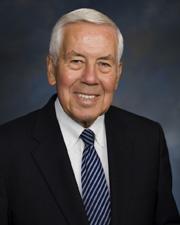 Sen. Richard G. Lugar (R-IN)
Legislative Activity
Stay on top of the latest movement without scrolling through every action
Read twice and referred to the Committee on Health, Education, Labor, and Pensions.
September 14, 2004
View full timeline
Introduced in Senate
September 14, 2004
Sponsor introductory remarks on measure. (CR S9222-9223)
September 14, 2004
Read twice and referred to the Committee on Health, Education, Labor, and Pensions.
September 14, 2004
Floor Debate
5 membersWhat members said about S. 2798 on the floor


Floor Debate
5 membersWhat members said about S. 2798 on the floor
Mr. President, I rise to introduce legislation to protect one of Americans' most valuable but vulnerable assets: Social Security Numbers. The bill I propose today is identical to legislation that is…
Mr. President, I rise today to introduce the Health Promotion FIRST (Funding Integrated Research, Synthesis and Training) Act, legislation to provide the foundation for solid planning and a…
Mr. President, I rise today to introduce the Health Promotion FIRST (Funding Integrated Research, Synthesis and Training) Act, legislation to provide the foundation for solid planning and a…
Mr. President. The safety and security of our Nation's borders has been on all of our minds lately. In the past, we have approached the problem in a stovepipe manner, focusing on what illegal items…
Mr. President, I rise today to introduce a bill to create a Federal charter for the Pulaski Cadets, Ltd. The purpose of this organization is to perpetuate the history of General Kazimierz Pulaski and…
Show 1 more
Mr. President, I ask unanimous consent that the text of the bill be printed in the Record.
Bill Text
Latest available legislative text
        [Congressional Bills 108th Congress]
[From the U.S. Government Publishing Office]
[S. 2798 Introduced in Senate (IS)]

108th CONGRESS
2d Session
S. 2798

To provide for increased planning and funding for health promotion
programs of the Department of Health and Human Services.

_______________________________________________________________________

IN THE SENATE OF THE UNITED STATES

September 14, 2004

Mr. Lugar (for himself, Mr. Bingaman, Mr. Bunning, Mr. Campbell, Ms.
Cantwell, Mrs. Clinton, Mr. Cochran, Mr. Graham of South Carolina, and
Mr. Jeffords) introduced the following bill; which was read twice and
referred to the Committee on Health, Education, Labor, and Pensions

_______________________________________________________________________

A BILL

To provide for increased planning and funding for health promotion
programs of the Department of Health and Human Services.

Be it enacted by the Senate and House of Representatives of the
United States of America in Congress assembled,

SECTION 1. SHORT TITLE.

This Act may be cited as the ``Health Promotion Funding Integrated
Research, Synthesis, and Training Act'' or the ``Health Promotion FIRST
Act''.

SEC. 2. FINDINGS.

Congress makes the following findings:
(1) Lifestyle factors are responsible for almost half of
the premature deaths in developed nations, and a large portion
of the deaths in developing nations.
(2) Lifestyle factors are a primary cause of the 6 leading
causes of death in the United States, including heart disease,
cancer, stroke, respiratory diseases, accidents, and diabetes,
which account for almost 75 percent of all deaths in the United
States.
(3) A significant portion of the health disparities in the
United States are caused by lifestyle factors, which could be
improved by health promotion programs.
(4) The United States is experiencing epidemics in diabetes
and obesity among adults and children, at the same time a
majority of the population is sedentary and eats an unhealthy
diet.
(5) Health promotion programs have been shown to be
effective in improving health knowledge, attitudes, behaviors
and conditions, and delaying disability in older age.
(6) Per capita medical care costs in the United States are
more than double those of all but 2 other countries in the
world, yet the United States ranks 24th in terms of disability
adjusted life expectancy, infant mortality, and other positive
lifestyle measures.
(7) Medical care costs are second only to education in
State government budgets.
(8) Lifestyle factors are responsible for at least \1/4\ of
employer's medical care costs in the United States.
(9) Health promotion programs have been shown to be
effective in reducing medical costs and enhancing productivity.
(10) Significant gaps exist in the basic and applied
research base of health promotion regarding how to best reach
and serve people of color, low-income people, people with
little formal education, children, and older adults, how to
create long-term health improvements, how to create supportive
environments, and how to address gender issues. More focused
research can reduce these gaps.
(11) Significant gaps exist between the best and the
typical health promotion programs. Better synthesis and
dissemination of results can reduce these gaps.
(12) The genomic revolution will soon allow genetic
information to be used to identify individual susceptibility to
common disorders such as heart disease, diabetes, cancer,
stroke, and respiratory diseases, and the most effective method
to prevent many of these diseases will be health promotion.
(13) Health promotion is the most effective strategy to
achieve a majority of the major objectives in Healthy People
2010 Objectives for the United States developed by the
Department of Health and Human Services.
(14) A significant increase in demand for health promotion
programs is expected in the next decade and a stable
infrastructure must be in place to ensure continual development
of the health promotion science base to be able to service this
demand effectively.
(15) Health promotion is the art and science of motivating
people to enhance their lifestyles to achieve complete health,
not just the absence of disease. Complete health involves a
balance of physical, mental, and social health.
(16) Health promotion programs focus on practices such as
exercising regularly, eating a nutritious diet, maintaining a
healthy weight, managing stress, avoiding dangerous substances
such as tobacco and illegal drugs, drinking alcohol in
moderation or not at all, driving safely, being wise consumers
of health care, and a number of other health related practices.
(17) The most effective health promotion programs include a
combination of strategies to increase awareness, facilitate
behavior change, and develop cultures and physical environments
that encourage and support healthy lifestyle practices.
(18) Health promotion programs can be provided in family,
clinical, child care, school, workplace, Federal, State, and
community settings.

SEC. 3. HEALTH PROMOTION RESEARCH AND DISSEMINATION.

The Public Health Service Act (42 U.S.C. 201 et seq.) is amended by
adding at the end the following:

``TITLE XXIX--HEALTH PROMOTION RESEARCH AND DISSEMINATION

``Subtitle A--Coordination of Programs of the Department of Health and
Human Services

``SEC. 2901. PLAN FOR HEALTH PROMOTION PROGRAMS.

``(a) In General.--The Secretary shall develop, and periodically
review and as appropriate revise, a plan in accordance with this
section for activities of the Department of Health and Human Services
relating to health promotion. The plan shall include provisions for
coordinating all such activities of the Department, including
activities under section 1701 to--
``(1) formulate national goals, and a strategy to achieve
such goals, with respect to health information and health
promotion, preventive health services, and education in the
appropriate use of health care;
``(2) analyze the necessary and available resource for
implementing the goals and strategy formulated pursuant to
paragraph (1), and recommend appropriate educational and
quality assurance policies for the needed manpower resources
identified by such analysis;
``(3) undertake and support necessary activities and
programs to--
``(A) incorporate appropriate health promotion
concepts into our society, especially into all aspects
of education and health care;
``(B) increase the application and use of health
knowledge, skills, and practices by the general
population in its patterns of daily living; and
``(C) establish systematic processes for the
exploration, development, demonstration, and evaluation
of innovative health promotion concepts; and
``(4) undertake and support research and demonstration
programs relating to health information and health promotion,
preventive health services, and education in the appropriate
use of health care.
``(b) Basic and Applied Science.--The plan developed under
subsection (a) shall contain provisions to address how to best develop
the basic and applied science of health promotion, including--
``(1) a research agenda;
``(2) an identification of the best combination of Federal
agency, university, and other community resources most
qualified to pursue each of the components of such agenda;
``(3) protocols to facilitate ongoing cooperation and
collaboration among the Federal agencies to pursue the agenda;
and
``(4) budgetary requirements with respect to the agenda.
``(c) Dissemination of Information.--The plan developed under
subsection (a) shall contain provisions to address how to best
synthesize and disseminate health promotion research findings to
scientists, professionals, and the public, including provisions for the
following:
``(1) Protocols for ongoing monitoring of all health
promotion research.
``(2) Preparation of systematic reviews and meta-analyses.
``(3) Distillation of findings into practice guidelines for
programs offered in clinical, workplace, school, home,
neighborhood, municipal, and State settings.
``(4) Strategies to incorporate findings into college,
university, and continuing educational curriculum for all
related health professions.
``(5) Communication of key findings to policy makers in
business, government, educational and community settings who
influence investment decisions.
``(6) Identification of the optimal combination of
government agencies to coordinate the matters referred to in
paragraphs (1) through (5).
``(d) Support and Development of Professional and Scientific
Community.--The plan developed under subsection (a) shall contain
provisions to address how to best support and develop the health
promotion professional and scientific community through enhancement of
existing or development of new professional organizations.
``(e) Integration of Health Promotion; Internal Department
Activities.--The plan developed under subsection (a) shall contain
provisions to address how resources, policies, structures, and
legislation within the Department of Health and Human Services can best
be modified or developed to integrate health promotion into all health
professions and sectors of society and make health promoting
opportunities available to all members of the public.
``(f) Integration of Health Promotion External Activities.--The
plan developed under subsection (a) shall contain provisions to address
how overall Federal Government policies, structures, and legislation
external to the Department of Health and Human Services can best be
modified or developed to integrate health promotion into all health
professions and sectors of society and to make health promoting
opportunities available to all individuals.
``(g) Perspectives.--Due to 30 years of experience showing that
traditional medical and educational approaches are not sufficient to
motivate people to make and sustain basic health behavior changes, in
developing the plan under subsection (a), the Secretary shall seek
perspectives from individuals representing a diverse range of
disciplines, including the following areas:
``(1) Agriculture.
``(2) Anthropology.
``(3) Child development.
``(4) City planning.
``(5) Commerce.
``(6) Economics.
``(7) Environmental planning and design.
``(8) Exercise physiology.
``(9) Financial analysis.
``(10) Health education.
``(11) Health policy.
``(12) Individual psychology.
``(13) Management.
``(14) Medicine.
``(15) Nursing.
``(16) Nutrition organization psychology.
``(17) Taxation.
``(18) Transportation planning.
``(h) Authorization of Appropriations.--For the purpose of carrying
out this section, there are authorized to be appropriated $6,000,000
for fiscal year 2004, $4,000,000 for fiscal year 2005, and $3,000,000
for each of fiscal years 2006 through 2008. Such authorization is in
addition to other authorizations that are available for carrying out
such purpose.

``Subtitle B--Basic Science Programs Through National Institutes of
Health

``SEC. 2911. BASIC SCIENCE.

``(a) Plan.--The Director of the National Institutes of Health
(referred to in this subtitle as `NIH'), acting through the Office of
Behavioral and Social Sciences Research, shall develop, and
periodically review and as appropriate revise, a plan on how to best
develop the basic science of health promotion through the NIH agencies.
The plan shall be consistent with and shall elaborate upon applicable
provisions of the Departmental plan under section 2901(a).
``(b) Certain Components of Plan.--The plan developed under
subsection (a) shall include the following provisions:
``(1) A research agenda to develop the basic science of
health promotion.
``(2) Recommendations on funding levels for the various
areas of research on such agenda.
``(3) Recommendations on the best combination of NIH
agencies and non-Federal entities to carry out research under
the agenda.
``(c) Allocation of Resources.--Subject to compliance with
appropriation Acts, the plan developed under subsection (a) shall
provide for the allocation of resources for research under such plan
relative to other areas of health, as appropriate taking into account
the burden of lifestyle factors on morbidity and mortality, and the
progress likely in advancing the science of health promotion given the
current and evolving level of science on health promotion, and the
relative cost of conducting research on health promotion compared to
other areas of research.

``SEC. 2912. EARLY RESEARCH PROGRAMS.

``(a) Plan.--The Director of NIH, acting through the Office of
Behavioral and Social Sciences Research, shall conduct or support early
research programs and research training regarding health promotion.
``(b) Funding.--
``(1) Authorization of appropriations.--For the purpose of
carrying out subsection (a), there is authorized to be
appropriated $30,000,000 for fiscal year 2004. Such
authorization is in addition to other authorizations that are
available for carrying out such purpose.
``(2) Reservation.--The Secretary shall reserve not less
than 90 percent of the amount appropriated under paragraph (1)
to carry out subsection (a) through the awarding of grants,
cooperative agreements, or contracts to public and private
entities, including universities, hospitals, research
organizations and health promotion venders. Of the amounts so
reserved, the Secretary shall designate a portion of such
amounts to support research training under subsection (a) to
enhance the skills and increase the numbers of scientists
trained in health promotion.

``Subtitle C--Applied Research Programs Through Centers for Disease
Control and Prevention

``SEC. 2921. RESEARCH AGENDA.

``The Secretary, acting through the Director of the Centers for
Disease Control and Prevention (referred to in this subtitle as the
`Director of CDC'), shall develop, and periodically review and as
appropriate revise, a plan that establishes for such Centers a research
agenda regarding health promotion. The plan shall be consistent with
and shall elaborate upon applicable provisions of the Departmental plan
developed under section 2901(a).

``SEC. 2922. HEALTH PROMOTION RESEARCH CENTERS.

``(a) Authorization.--The Director of the National Center for
Chronic Disease Prevention and Health Promotion (referred to in this
section as the `Director') shall award grants, on a competitive basis,
to eligible entities to enable such entities to develop Health
Promotion Research Centers (referred to in this section as `Centers').
``(b) Eligible Entity.--In this section, the term `eligible entity'
includes--
``(1) institutions of higher education;
``(2) public and private research institutions;
``(3) departments or schools of--
``(A) business;
``(B) city planning;
``(C) education;
``(D) nursing;
``(E) psychology;
``(F) public policy;
``(G) transportation; and
``(H) social work; and
``(4) private research, membership, or service
organizations.
``(c) Application.--An eligible entity that desires to receive a
grant under this section shall submit an application to the Director at
such time, in such manner, and containing such information as the
Director may require. An eligible entity may apply for not more than 3
grants each with a duration of 5-years.
``(d) Awarding of Grants.--
``(1) Number of centers.--The Director shall award grants
for the development of not more than--
``(A) 5 new Centers in fiscal year 2005;
``(B) 5 new Centers in fiscal year 2006;
``(C) 5 new Centers in fiscal year 2007;
``(D) 5 new Centers in fiscal year 2008;
``(E) 5 new Centers in fiscal year 2009; and
``(F) 5 new Centers in fiscal year 2010.
``(2) Grant period and award amount.--Grants awarded under
this section shall be for a period of 5 years. A grant award
shall be in an amount not to exceed--
``(A) $500,000 in the first year of the grant
award;
``(B) $1,000,000 in the second year of the grant
award; and
``(C) $2,000,000 in each of the third, fourth, and
fifth years of the grant award.
``(3) Focus of centers.--In awarding grants under this
section, the Director shall ensure that--
``(A) not less than 1 Center concentrates the
Center's efforts on developing the applied science of
health promotion in each of the following areas:
``(i) the workplace;
``(ii) schools;
``(iii) families;
``(iv) clinical settings; and
``(v) community settings; and
``(B) not less than 1 other Center focuses the
Center's work on each of the following areas:
``(i) program evaluation;
``(ii) training and support of the health
promotion professional workforce; and
``(iii) health promotion policy at the
Federal, State, and local level.
``(e) Uses of Funds.--
``(1) In general.--
``(A) Provision of advice and organization.--A
Center that is developed from funds from a grant
awarded under this section shall invest approximately
10 percent of the Center's staff time and resources
to--
``(i) forming relationships with, and
providing limited ongoing advice to, health
departments in the county and State where the
entity is located; and
``(ii) organizing local networks of
scientists, program managers, vendors, and
other professionals interested in health
promotion and disease prevention.
``(B) Use of outside providers.--When conducting
intervention research or research on other health
promotion programs, a Center that is developed from
funds from a grant awarded under this section shall
review the capabilities of local nonprofit and for-
profit program providers to provide the programming and
services required for the programs. The Center shall
use such program providers if the program providers
provide a clear quality and cost advantage relative to
developing such capabilities internally.
``(C) Addressing priorities and research agenda.--A
Center that is developed from funds from a grant
awarded under this section shall address the priorities
identified in the health promotion research agendas
developed by the Centers for Disease Control and
Prevention, the National Science Foundation, and the
Department of Health and Human Services.
``(2) Permissive uses.--An eligible entity that receives a
grant under this section may use the grant funds for faculty
salaries, student fellowships, outreach to the local community,
research, program development, or program administration.
``(3) Administrative costs.--An eligible entity that
receives a grant under this section may expend not more than 15
percent of the grant funds on administrative costs.

``SEC. 2923. EXTRAMURAL RESEARCH PROGRAM.

``(a) Outreach.--In carrying out the Extramural Research Program of
the Centers for Disease Control and Prevention, the Director of CDC
shall make an effort to attract grant applications from groups with
extensive experience in providing programs but limited experience in
developing research grants or conducting research, or both. Such
efforts shall include proactive outreach to such groups, providing
planning grants to fund development of grant proposals, and providing
technical assistance for the design portion of the grant application.
``(b) Applied Science of Health Promotion.--In carrying out the
Extramural Research Program of the Centers for Disease Control and
Prevention, the Director of CDC shall devote a portion of research
funding to developing the applied science of health promotion for
workplace, school, family, clinical, and community settings.

``SEC. 2924. WORKPLACE HEALTH PROGRAM.

``(a) In General.--The Director of CDC shall carry out a program--
``(1) to develop a research agenda for workplace health
promotion and shall seek perspectives from a wide range of
workplace health promotion program practitioners and scientists
in developing such agenda;
``(2) of research that addresses the important issues
identified in the research agenda under paragraph (1); and
``(3) to support synthesis of findings made in such
research and to disseminate information to educators,
practitioners, business leaders, and health policy leaders.
``(b) Authorization of Appropriations.--For the purpose of carrying
out subsection (a), there are authorized to be appropriated $6,000,000
for fiscal year 2004, $8,000,000 for fiscal year 2005, $11,000,000 for
fiscal year 2006, $15,000,000 for fiscal year 2007, and $20,000,000 for
fiscal year 2008.

``SEC. 2925. CERTAIN REQUIREMENTS.

``(a) General Goal of Programs.--The Director of CDC shall ensure
that programs carried out pursuant to this subtitle are consistent with
the general goal of developing the most effective individual and group
strategies for clinical, workplace, school, and community based
programs regarding health promotion.
``(b) Reservation for Award to Public and Private Entities.--
``(1) In general.--Of the amounts made available under this
subtitle, the Director of CDC shall reserve not less than 75
percent for the awarding of grants, cooperative agreements, or
contracts to public and private entities, including
universities, hospitals, research organizations, and local and
national health promotion venders through collaborative
efforts.
``(2) Requirement for state and local health departments.--
Awards made to State and local health departments pursuant to
this title shall be made on the condition that the departments
develop a basic staff infrastructure to manage the programs for
which the awards are made. With respect to such condition, the
departments may contract with providers in the communities
involved to secure programs and skills required to carry out
the programs.

``Subtitle D--Other Programs and Policies

``SEC. 2931. MODIFICATION OF APPLICATIONS AWARD PROCESS TO ATTRACT MOST
QUALIFIED SCIENTISTS AND PRACTITIONERS; DEVELOPING HEALTH
PROMOTION INFRASTRUCTURE.

``(a) Modification of Awards Application Process.--In awarding
grants, cooperative agreements, and contracts under this title, the
Secretary shall modify the application process to attract the most
qualified individuals and organizations, rather than those individuals
and organizations that are most sophisticated with respect to the
applications processes.
``(b) General Priority of Developing Health Promotion
Infrastructure.--The Secretary shall ensure that programs carried out
pursuant to this title are consistent with the general priority of
developing the health promotion infrastructure among universities,
nonprofit organizations, and for-profit organizations, rather than
increasing the size of State or local governments or the Federal
Government.''.
<all>