A bill to limit the transfer of certain Commodity Credit Coporation funds between conservation programs for technical assistance for the programs.
Legislative Activity
Stay on top of the latest movement without scrolling through every action
Became Public Law No: 108-498.
December 23, 2004
View full timeline
Introduced in Senate
September 28, 2004
Read twice and referred to the Committee on Agriculture, Nutrition, and Forestry. (text of measure as introduced: CR S9816)
September 28, 2004
Senate Committee on Agriculture, Nutrition, and Forestry discharged by Unanimous Consent.(consideration: CR S11331)
October 11, 2004
Senate Committee on Agriculture, Nutrition, and Forestry discharged by Unanimous Consent. (consideration: CR S11331)
October 11, 2004
Passed Senate without amendment by Unanimous Consent. (text as passed Senate: CR S11331)
October 11, 2004
Received in the House.
November 16, 2004 • 2:03 PM
Message on Senate action sent to the House.
November 16, 2004
Referred to the House Committee on Agriculture.
November 16, 2004
Mr. Goodlatte moved to suspend the rules and pass the bill.
December 6, 2004 • 2:51 PM
Considered under suspension of the rules. (consideration: CR H10906-10909)
December 6, 2004 • 2:51 PM
DEBATE - The House proceeded with forty minutes of debate on S. 2856.
December 6, 2004 • 2:51 PM
Passed/agreed to in House: On motion to suspend the rules and pass the bill Agreed to by voice vote.(text: CR H10906)
December 6, 2004 • 3:06 PM
On motion to suspend the rules and pass the bill Agreed to by voice vote. (text: CR H10906)
December 6, 2004 • 3:06 PM
Motion to reconsider laid on the table Agreed to without objection.
December 6, 2004 • 3:06 PM
Presented to President.
December 15, 2004
Signed by President.
December 23, 2004
Became Public Law No: 108-498.
December 23, 2004
Floor Debate
12 membersWhat members said about S. 2856 on the floor
 JMI
JMI PJL
PJL BG
BG CWS
CWS TH+7
TH+7
Floor Debate
12 membersWhat members said about S. 2856 on the floor
Mr. President, the recent CBS incident involving the record of President Bush's service in the Texas Air National Guard sheds light on the need for a Federal statute generally criminalizing the…
Mr. President, the recent CBS incident involving the record of President Bush's service in the Texas Air National Guard sheds light on the need for a Federal statute generally criminalizing the forgery of Federal Government documents. I believe that when it comes to crimes involving the fabrication of Federal documents or writings, the Federal Government has an obligation to step in and show the offenders there are serious consequences.
Many experts initially doubted the authenticity of the memos in question, which negatively and falsely characterized President Bush's time in the Texas Air National Guard. We now believe these memos were created on a modern word processing computer rather than the 1970-era typewriter, as alleged in the original CBS story.
LTC Jerry Killian was George Bush's commanding officer during his service in Vietnam. Unfortunately, Lieutenant Colonel Killian died in 1984 and therefore he could not defend his records that he so accurately discussed at that time about the quality of service of our President.
I would say this, though: That Colonel Killian's secretary Marion Knox typed all of his correspondence between the years 1956 and 1979. Referring to the memos in question, she said, ``I know I didn't type 'em'.''
She was very clear. She didn't qualify it. She said, ``I know I didn't type 'em'.''
It is clear that the documents CBS shared with American voters were more than suspect. After the fact--since CBS cannot verify its reporting--I am pleased to see that CBS has belatedly retracted its story.
We also now know that the Kerry campaign was aware CBS was planning to air the story 4 or 5 days before it was aired, while the White House did not know about the airing of this story until the eve of the story breaking. That shows an obvious bias. I don't think anyone can deny it.
President Bush stands by his honorable service in the Air National Guard. He should not have to worry about the threat of nefarious and petty efforts to defame his character.
I appreciated Dan Rather's words: ``I want to say personally and directly I am sorry,'' but saying I am sorry just doesn't cut it.
Under much pressure, CBS has appointed an independent panel to investigate its reporting of the President's service in the Texas Air National Guard. I understand this panel is to be headed by former Attorney General Dick Thornburg and former Associated Press chief executive and former Pennsylvania Governor Lou Boccardi.
I agree with many of my colleagues from the House of Representatives who were dismayed that CBS, a network that should be responsible for reporting objective news, involved itself in a campaign that misled the public and slandered the President. Therefore, I am proposing legislation to criminalize this type of action in general. Most people believe there is already a statute on the books that would have this criminalized.
After learning of the CBS scandal, I was curious about the penalty. I figured there had to be one for the forgery of Federal documents. In seeking the answer to this question, I called the Department of Justice. Their congressional relations office promptly responded: ``It depends.''
I ask unanimous consent that a copy of that communication be printed in the Record at the conclusion of my remarks.
Mr. President, the Justice Department stated that similar cases were often charged under the general sections of the fraud and false statements chapter of the United States Criminal Code. Those sections have proven quite useful to the prosecutors at the Department of Justice.
I learned of a loophole in the existing law regarding forgery and false statements. I learned there are no general sections of the United States Criminal Code for forgery in counterfeiting as there are in the other cases. Officials from the Department of Justice noted the absence of a general stand-alone statute that criminalizes the actions of those who would forge documents of the Federal Government, regardless of the end they seek to achieve or what these documents are. Currently, the prosecution of such actions depends completely on the context and how forged documents were the means to an end.
Chapter 25 of title 18 of the United States Code addresses various offenses in counterfeiting and forgery. The current 45 sections of the counterfeiting and forgery chapter essentially fall into four broad categories.
This is very important, because if forgery takes place and they do not fall into one of these four categories, then there is no penalty involved: No. 1, financial obligations. Obviously, this is not such a case; No. 2, military and naval discharge certificates; No. 3, transportation matters and motor vehicle documents; and No. 4, the seals of agencies, including courts, departments, and other agencies.
What we are saying is, if it doesn't fall into forgery, it doesn't fall into one of these four categories; there is no general statute that would offer a penalty.
The legislative history of the 45 sections of the counterfeiting and forgery chapter indicate that the sections were enacted piecemeal without a unifying, overarching section. If forgery takes place but does not fall into one of these sections, there is no penalty.
Chapter 47 of title 18 of the United States Code regarding the fraud and false statements chapter also contains disparate sections enacted piecemeal.
In contrast, however, the fraud and false statements chapter does have an overarching section, section 1001, that unifies its disparate, piecemeal parts as contrasted to the forgery statute.
In light of the recent situation involving President Bush's record, these broad, disparate sections need to include, in general, the fabrication of Federal writings or memos.
In speaking with officials from the Department of Justice, I have also become aware of concerns over whether the existing statute regarding fraud, 18 USCS 1001, can be used in this CBS incident. Chapter 47 on fraud and false statements specifically condemns false statements but only those with the intent to defraud the Federal Government. Again, this is talking about fraud and false statements, not the forgery statute.
There are questions as to whether the ``intent to defraud the United States or any agency thereof'' is applicable or whether it could successfully be argued that instead it was the voters of the United States who were initially defrauded, distinguishing in certain fashion the ``United States'' from voters or the like.
These concerns validate the need to criminalize the specific act of forging Federal documents. Technically, in the CBS incident, it could be argued that the forged Federal document did not monetarily or otherwise tangibly take away from the Federal Government. I would argue that it did harm the Federal Government by infringing on the Federal Government's copyright on its work. It certainly did affect millions of Americans by giving them a false and misleading impression about a Presidential candidate. But it needs to be clarified.
As placed under chapter 25 of title 18, my bill would criminalize general forgery of Federal Government documents, including those that characterize or purport to characterize official Federal activity, service, contract, obligation, duty, or property.
If someone attempts to forge in the name of an official of the Federal Government a document or memo that addresses an official Government duty or act, that person should be held accountable. There needs to be a Federal law prohibiting such forgery generally so prosecution of the same does not fall through the cracks.
Currently, there is no catchall section to address all forged Federal writings, such as a vote from one official to another about a Federal service.
I serve on the Senate Armed Services Committee and I honor those who serve in the National Guard. Not only has the CBS incident resulted in slander to the honorable National Guard service of President Bush, it also highlights the risk of the records of other military service members and, moreover, all Federal servants governmentwide alike.
A civil servant at the General Services Administration, which the Environment and Public Works Committee which I chair has to oversee, is equally deserving of being protected from a forgery of his or her work records. Right now there is no section in the forgery chapter of the United States Code that specifically addresses protection for General Services Administration personnel. This omission is a problem we must correct.
My legislation also includes language to condemn those who, knowingly or negligently failing to know, transmit or present any such forged Federal writing or record which characterizes official Federal activities or service. This general criminalization of publishing forged documents follows existing provisions of the forgery code. If a major news network broadcasts a story based on alleged Federal documents, they must take the responsibility to verify those records.
While CBS may not have taken part in the creation of the memo in question, and indeed I think I join all of us Americans in yearning to know who did forge these memos, the network still touted them as verified and broadcast the forged memos as truthful to millions of American voters. I look forward to a full criminal investigation of who did forge the documents.
I draw an analogy in distinguishing between murder and negligent homicide. Those are crimes. Murder is intentional and negligent homicide is
not, but in both crimes someone has been killed. While CBS may not have had the intention to deceive its audience, the false information was communicated when it was negligently not verified and the damage was done nevertheless.
If it were not for the work of many astute people working through the Internet and otherwise, this travesty would not have been on its way to being exposed and fully prosecuted criminally. CBS and its surrogates pointedly disparaged the people who told the truth as mere second-class journalists of the Internet and table television and talk radio persuasions. Rather, it is CBS which has proven itself to be even less than second-class journalism.
I note that numerous pundits have been discussing recently the very vitality of the networks is faltering with the explosion of other media. Pundits have cited CBS's additional poor judgment in failing to cover the political conventions as well as other media outlets did. CBS owes a separate apology to those truth tellers whom it slandered and who have shown better judgment than CBS.
It can be difficult to communicate information without also conveying one's personal conviction on a matter. However, in a free society such as ours, the news media has a responsibility to work to be fair and balanced and to tell both sides of the story without letting a journalistic spin cloud their judgment.
Television, print, and the Internet are a powerful media. They shape our lives. They provide some part of the education of our children, whether we like it or not. The time has come for the media to take responsibility for its actions rather than manipulate public opinion to lobby the causes and politicians the media support. Facts, not conclusions or erroneous records, should be reported. Elections are a powerful example of why journalists must hold themselves to the highest of standards. People can then synthesize information for themselves.
In conclusion, I argue that the media has a grave responsibility to ensure that what it reports is a true and accurate representation of the facts. It could be argued that if CBS either forged the documents or knowingly represented forged documents as being true, there is no penalty under the law. We need to criminalize and establish the consequences for forging Federal documents. I urge my colleagues to stand with me. I cannot imagine anyone not supporting such a piece of legislation.
Exhibit I
There's no stand-alone federal offense for forging
government documents.
The criminal penalties for the forgery would depend upon
the circumstances, the context, basically the underlying
facts of the matter--what type of document, for what purpose,
what was done with it, what was intended--a lot of various
factors that would influence the decision about how it would
be charged and hence what the penalties would be.
There is no stand-alone forgery of government documents
offense. It depends on the context of the matter.
I ask unanimous consent that the text of the bill be printed in the Record.
Mr. President, I am pleased to support the passage of S. 2856, legislation that will restore the conservation funding commitment Congress and the administration made to farmers and ranchers in the…
Mr. President, I am pleased to support the passage of S. 2856, legislation that will restore the conservation funding commitment Congress and the administration made to farmers and ranchers in the 2002 farm bill. I applaud the leadership of Agriculture Committee Chairman Cochran and Ranking Member Harkin for their leadership to correct the shortfall in conservation technical assistance funding. For the last 2 years I have worked to correct this problem and am pleased to join my colleagues in this effort.
Despite historic funding conservation levels in the 2002 farm bill, family farmers and ranchers offering to restore wetlands, or offering to change the way they farm to improve air and water quality continue to be rejected when they seek USDA conservation assistance. Producers are being turned away due to the Department of Agriculture's decision to divert over $200 million from working lands conservation programs to pay for the cost of administering the Conservation Reserve Program, CRP, and the Wetlands Reserve Program, WRP, over the last 2 years. In particular, USDA diverted significant funds from the Environmental Quality Incentives Program, EQIP, the Farmland and Ranchland Protection Program, FRPP, the Grasslands Reserve Program, and the Wildlife Habitat Incentives Program, WHIP, to pay for CRP and WRP technical assistance.
The 2002 farm bill clearly intended USDA to use mandatory funds from the Commodity Credit Corporation, CCC, to pay for conservation technical assistance. The plain language of the statute, the General Accounting Office, and every Member of Congress who had a hand in writing the farm bill support this interpretation of the farm bill.
Our legislation would override USDA's decision and prevent funds from working lands incentive programs like EQIP and WHIP from being used to pay for the technical assistance costs of CRP. The House Agriculture Subcommittee on Conservation has already approved similar legislation, H.R. 1907, requiring each program to pay for its own technical assistance needs. Our legislation parallels that effort. Simply put our amendment would require the administration to honor the 2002 farm bill and mandate that technical assistance for each program is derived from funds provided for that program.
By providing more than $6.5 billion for working lands programs like EQIP and WHIP in the 2002 farm bill, Congress dramatically increased funds to help farmers manage working lands to produce food and fiber and simultaneously enhance water quality and wildlife habitat. For example, EQIP helps share the cost of a broad range of land management practices that help the environment, include more efficient use of fertilizers and pesticides, and innovative technologies to store and reuse animal waste. In combination, these working lands programs will provide farmers the tools and incentives they need to help meet our major environmental challenges.
Full funding for working lands incentive programs like EQIP and WHIP is vital not only in helping farmers and ranchers improve their farm management, but also in meeting America's most pressing environmental challenges. Because 70 percent of the American landscape is private land, farming dramatically affects the health of America's rivers, lakes and bays and the fate of America's rare species. Most rare species depend upon private lands for the survival, and many will become extinct without help from private landowners. When farmers and ranchers take steps to help improve air and water quality or assist rare species, they can face new costs, new risks, or loss of income. Conservation programs help share these costs, underwrite these risks, or offset these losses of income. Unless Congress provides adequate resources for these programs, there is little reason to hope that our farmers and ranchers will be able to help to meet these environmental challenges.
In addition, USDA conservation programs promote regional equity in farm spending. More than 90 percent of USDA spending flows to a handful of large farmers in 15 mid-western and southern States. As a result, many farmers and ranchers who are not eligible for traditional subsidies, including dairy farmers, ranchers, and fruit and vegetable farmers, rely upon conservation programs to boost farm and ranch income and to ease the cost of environmental compliance. Unlike commodity subsidies, conservation payments flow to all farmers and all regions. But, the farmers and ranchers who depend upon these programs, farmers, and ranchers who already receive a disproportionately small share of USDA funds, have faced a disproportionately large cut in spending.
By passing this legislation Congress and the administration will correct the shortfall in conservation technical assistance funding by directing USDA to use CCC funds to provide technical assistance to USDA conservation program. This legislation restores the clear intent of the authors of the 2002 farm bill relating to the payment of conservation technical assistance.
Mr. Speaker, I move to suspend the rules and pass the Senate bill (S. 2856) to limit the transfer of certain Commodity Credit Corporation funds between conservation programs for technical assistance…
Mr. Speaker, I move to suspend the rules and pass the Senate bill (S. 2856) to limit the transfer of certain Commodity Credit Corporation funds between conservation programs for technical assistance for the programs.
Mr. Speaker, I yield myself such time as I may consume.
Mr. Speaker, I rise in strong support of S. 2856. Conservation was a significant part of the 2002 farm bill. Congress increased the conservation budget by nearly $2 billion per year, a 75 percent increase. However, there is a current shortfall in the Conservation Technical Service Assistance budget at the Natural Resources Conservation Service. This shortfall represents the costs necessary to administer the Conservation Reserve and Wetlands Reserve programs.
So far, those costs have been taken directly out of the pockets of farmers and ranchers, and, if you permit me, the environment, when fewer conservation benefits are provided by the Environmental Quality Incentives Program and the other so-called donor programs. In other words, the NRCS takes money from EQIP and farmland protection so that CRP and the Conservation Reserve Enhancement Program and WRP can be administered.
The USDA has also been using the Wildlife Habitat Incentives Program, or WHIP, the Farmland Protection Program, FPP, and the Grasslands Reserve Program as donor programs for CRP and WRP.
S. 2856 will help alleviate some of the implementation problems that have occurred during the last 2 years when approximately $100 million per year was being taken from the four donor programs. When the farm bill was written, it was Congress' intent that each conservation program would pay for its own technical assistance. I have been working with the Committee on the Budget and the Committee on Appropriations committees to ensure S. 2856's passage will prevent funds from being diverted from the donor programs. I have numerous groups supporting the bill, and I will include for the Record these letters.
House of Representatives,
Washington, DC, December 3, 2004.
Dear Congressman: We write today to ask for your support of
S. 2856 on Monday, December 6, 2004. This bill, which has
been adopted in the Senate, addresses a misunderstanding that
has existed between the U.S. Department of Agriculture and
the Congress as to the source of funding for the technical
assistance costs for certain Farm Bill conservation programs.
S. 2856 ensures that the original intent of Congress will
be used in the implementation of these programs where each of
them will be expected to pay for their own technical
assistance from their own share of the total funding made
available to them. As passed by the Farm Bill, these programs
have a significant backlog of requests from farmers and
ranchers for conservation assistance.
We wholeheartedly support S. 2856 because without it
several of these conservation programs will be significantly
hampered from achieving their intended purpose--helping
farmers and ranchers improve and conserve soil, air and water
quality and restore and improve wildlife habitat. We ask for
your strong support of this measure when it comes before the
House on December 6, 2004.
Sincerely,
National Soybean Association.
National Pork Producers Council.
National Cattlemen's Beef Association.
National Association of Conservation Districts.
National Association of Wheat Growers.
National Corn Growers Association.
National Cotton Council.
National Farmers Union.
National Milk Producers Federation.
National Turkey Federation.
Southeast Dairy Farmers Association.
Western United Dairymen.
Mr. Speaker, it is my pleasure to yield such time as he may consume to the gentleman from Oklahoma (Mr. Lucas) the chairman of the Subcommittee on Conservation, Credit, Rural Development and Research of the Committee on Agriculture, who has been a real leader in fighting for fairness in these conservation programs.
Mr. Speaker, I yield myself such time as I may consume.
Mr. Speaker, I want to thank the gentleman from Pennsylvania (Mr. Holden) for his contribution, as well, to this effort, and also more especially thank him for the kind words he has extended to our colleague, the gentleman from Texas (Mr. Stenholm), who has served this Congress with distinction for 26 years, the last 8 of which as the ranking member of the Committee on Agriculture. He is known across the country as somebody who has helped American agriculture.
He worked with my predecessor, our colleague Congressman Combest, his neighbor, former neighbor in Texas, to write the last farm bill which has been a noteworthy success in the first almost 4 years now of its implementation. He is somebody that I will miss as my partner in working with American agriculture, and I thank him and commend him for more than a quarter century of service to the people of this country.
Mr. Speaker, I reserve the balance of my time.
Mr. Speaker, I urge my colleagues to support S. 2856, and I yield back the balance of my time.
Mr. Speaker, I yield myself such time as I may consume. Mr. Speaker, I rise in support of S. 2856 and support its passage. I want to thank the gentleman from Virginia (Chairman Goodlatte) and the…
Mr. Speaker, I yield myself such time as I may consume.
Mr. Speaker, I rise in support of S. 2856 and support its passage. I want to thank the gentleman from Virginia (Chairman Goodlatte) and the gentleman from Oklahoma (Chairman Lucas) for working with the leadership to schedule consideration of this bill today. This is an issue that has needed attention for some time, and I am pleased we are finally addressing it.
The conservation title of the 2002 farm bill made a major investment of new funding in a variety of existing and new conservation programs. I was proud to have played a role in that effort to help our farmers and ranchers conserve and enhance the natural resources under their control.
Many of us, as well as producers out in the field, were frustrated by the actions taken by USDA to try and address how to provide technical assistance for the Conservation Reserve and Wetland Reserve programs. Borrowing from some programs to pay for the technical assistance to carry out WRP and CRP was not a good solution. It was a solution forced upon them by OMB after dueling interpretations by this administration based on language included in the 2002 farm bill. We never intended such draconian measures, which required them to rob Peter to pay Paul. This bill corrects and guides the administration on the implementation of these vital conservation programs after several attempts made by Congress to fix this problem.
There is currently a $3.4 billion backlog of applications in the various conservation programs that have not been funded, despite the infusion of new money from the 2002 farm bill. Passage of this legislation will be a small but important step in helping to address that backlog. It will also provide for some certainty for those landowners who are signing up for the CRP and WRP programs and allow us to fulfill our commitments made in the 2002 farm bill to conservation.
I urge my colleagues to support this legislation.
Mr. Speaker, I reserve the balance of my time.
Mr. Speaker, I yield such time as he may consume to the gentleman from Pennsylvania (Mr. Holden), the ranking member of the Subcommittee on Conservation.
Mr. Speaker, I yield myself such time as I may consume.
I thank my colleague, the gentleman from Pennsylvania (Mr. Holden), and I thank my chairman for the kind words. I do believe this is the last time that I will occupy this mike. I thought it was so a few weeks ago, but it was not; we had one more shot. But I do very much appreciate the kind words that have been said, and we will miss this place. Mr. Speaker, we will miss you. You do an excellent job of conducting House business. Every time you handle the gavel, you do it in a way that is very fair and very professionally done.
Mr. Chairman, it has been a pleasure serving with you, the gentleman from Virginia (Mr. Goodlatte). I would be less than honest to not say that I would much rather have had the titles reversed, but that was not to be. And were it not to be, then I appreciate the fact that the gentleman from Virginia (Mr. Goodlatte) has maintained the same bipartisan, nonpartisan activities on his part that has made the House Committee on Agriculture one of the few committees of this body that still works in the way in which I think our forefathers intended that it work: full consultation.
Listening to some of the previous comments about staff and what have you, I can honestly say that we have never had that problem on the House Committee on Agriculture, to the best of my knowledge. Our staffs, both committee and subcommittee, have always worked together in a way in which we put forward the quality work that I believe this committee has put forward to this House in the 26 years that I have had the privilege of serving here.
I want to thank my staff, those who are with me on the floor, and those who are not, who have worked and served with me, some of them my entire 26 years. We cannot do without staff. Many times they get the blame for things that go wrong, and we get the credit for things that go right. But day in and day out, this body cannot operate without the professional staff, and I want to thank my staff and thank the majority staff. Because I truly, truly mean it when I say what I already said a moment ago about the manner in which the House Committee on Agriculture has worked.
I have no further requests for time and, Mr. Speaker, I yield back the balance of my time.
Mr. Speaker, I thank the gentleman for yielding me this time. I congratulate and thank the gentleman from Virginia (Chairman Goodlatte) and our subcommittee chairman, the gentleman from Oklahoma (Mr.…
Mr. Speaker, I thank the gentleman for yielding me this time.
I congratulate and thank the gentleman from Virginia (Chairman Goodlatte) and our subcommittee chairman, the gentleman from Oklahoma (Mr. Lucas), for his hard work on this legislation. I would like to take a moment to congratulate and thank the ranking member of the committee, the gentleman from Texas (Mr. Stenholm), on an outstanding congressional career. As we all know, the gentleman from Texas (Mr. Stenholm) will be leaving us and not serving in the next Congress. But I just want to say to the gentleman that not only is the Committee on Agriculture going to miss his leadership; the entire agriculture community across the country is going to miss his guidance and his input. On a personal note I am truly going to miss his leadership, and I thank him for all of the help that he has given to me personally over the years.
Mr. Speaker, I rise today in strong support of S. 2856, which will fix a problem with technical assistance funding for agriculture conservation programs. Our intent was to allow for farm bill programs to pay for themselves. However, due to different interpretations of the law and congressional rewriting, we are now in a situation in which major programs are paying for others.
There is a huge problem with donor programs such as the Farm and Ranchland Protection Program, Wildlife Habitat Incentives Program, Grassland Reserve Program, and the Environmental Quality Incentive Program, providing technical assistance funding for the Conservation Reserve Program and Wetlands Reserve Program.
These donations continue to inhibit the implementation of these effective programs in the way that Congress intended. We must make sure that implementation reflects intent. It was never our plan to have key conservation programs act as donors for others. We
need to correct this problem, and that is exactly what S. 2856 will do.
In fiscal year 2003, there were significant contributions being made by EQIP, Farmland Protection, WHIP, and the GRP to the Conservation Reserve Program and Wetlands Reserve Program. EQIP donated $57.6 million, Farmland Protection donated $18 million, WHIP gave $5.6 million, and Grasslands Reserve gave $9.5 million.
In my home State of Pennsylvania, these conservation programs are extremely important.
In fiscal year 2003, Pennsylvania received $8.4 million to fund 293 contracts throughout the EQIP program. There were actually 1,238 unfunded contracts totaling $35.4 million. In 2004, Pennsylvania received $11.9 million, a significant increase, but not enough to fund all of the contracts that are on hold.
The problem is the same for Farmland Protection, which is critical to Pennsylvania. In 2003, Pennsylvania received $4.9 million to protect 6,266 acres. In 2004, the State received less, approximately $4 million for the program.
Allowing vital programs such as EQIP and Farm and Ranchland Protection to be donors for other conservation programs only makes the funding backlog worse.
Therefore, I urge my colleagues to support S. 2856 and implement technical assistance funding for agriculture conservation programs the way in which Congress intended.
Show 8 more
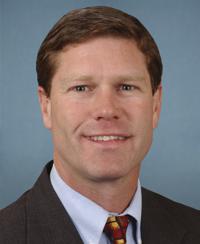
Mr. Speaker, I rise today in strong support of S. 2856. This important legislation clarifies Congress's intent in the last Farm bill--that administrative costs needed to implement voluntary…
Mr. Speaker, I rise today in strong support of S. 2856. This important legislation clarifies Congress's intent in the last Farm bill--that administrative costs needed to implement voluntary conservation programs should flow from the Commodity Credit Corporation and not from the working lands programs themselves. It is crucial that we pass this bill today otherwise scarce conservation funds will once again be lost.
Mr. Speaker, USDA has diverted more than $200 million from four working lands conservation programs. Specifically, USDA diverted precious funds from the Environmental Quality Incentives Program (EQIP), the Farmland and Ranchland Protection Program (FRPP), the Grasslands Reserve Program, and the Wildlife Habitat Incentives Program (WHIP) to pay for administrative costs.
The 2002 Farm Bill clearly intended USDA to use mandatory funds from the Commodity Credit Corporation to pay for the administrative costs of two land retirement programs. The plain language of the statute and legislative history, including a critical colloquy, support this interpretation of the Farm Bill, and GAO concurred in a recent memo. But, government lawyers misinterpreted the 2002 Farm Bill and forced USDA to divert working lands funds.
Despite the funds provided by the 2002 Farm Bill, most farmers and ranchers offering to restore wetlands and grasslands or offering to change the way they farm to improve air and water quality are still rejected when they seek USDA conservation assistance. For example, farmers and ranchers face $3 billion backlog when they seek financial assistance through the Environmental Quality Incentives Program to improve water quality or wildlife habitat. These long lines only grow longer when funds are diverted.
By providing new funds for working lands programs like EQIP and WHIP in the 2002 Farm Bill, Congress provided needed resources to help farmers manage working lands to produce food and fiber and simultaneously enhance water quality and wildlife habitat. For example, EQIP helps share the cost of a broad range of land management practices that help the environment, including more efficient use of fertilizers and pesticides, and innovative technologies to store and reuse animal waste.
Lastly, because 70 percent of the American landscape is private land, farming dramatically affects the health of America's rivers, lakes and bays and the fate of America's rare species. Most rare species depend upon private lands for the survival, and many will become extinct without help from private landowners. When farmers and ranchers take steps to help improve air and water quality or assist rare species, they can face new costs, new risks, or loss of income. Conservation programs help share these costs, underwrite these risks, or offset losses of income.
Mr. Speaker, this is an important bill to America's hardworking farmers and ranchers and I urge my colleague's support.
Mr. President, I rise today to introduce the Special Olympics Sports Empowerment Act. I am very pleased that Senator Reid has joined me in introducing this legislation to authorize $15 million for…
Mr. President, I rise today to introduce the Special Olympics Sports Empowerment Act. I am very pleased that Senator Reid has joined me in introducing this legislation to authorize $15 million for Special Olympics programs. We are also joined by 31 other cosponsors, both Republican and Democrat, conservative, moderate, and liberal, demonstrating the wide range of support for this legislation.
According to the World Health Organization, there are 170 million individuals with mental retardation worldwide. Up to 7 million of these individuals live in the United States. Unfortunately, these individuals tend to have much shorter lives--by 10-20 years--in most countries. In developed countries, there is still significant preventable morbidity, pain and suffering. This population is also generally underemployed, stigmatized and many experience violence or abuse at some point in their lives.
Thirty-six years ago, Mrs. Eunice Kennedy Shriver, who had already been working for years with individuals with intellectual disabilities, founded Special Olympics. In July 1968, Special Olympics held its first games in Chicago, hosting 1,000 athletes. Over the years, Special Olympics has continued to serve many individuals with intellectual disabilities around the world by providing year-round sports training and competitive opportunities. Special Olympics now serves over 1.5 million individuals with intellectual disabilities, their families and communities.
Special Olympics recognizes the value and dignity of every life. As well as providing children and adults with intellectual disabilities with the opportunity of athletic training and competition, these programs provide participants with health screenings using the donated time of voluntary health care providers. In addition, they help to improve awareness throughout the world of the abilities and unique contributions that individuals with intellectual disabilities can make, thus helping to dispel negative stereotypes.
The Special Olympics Sports Empowerment Act will aid an organization that is already hard at work in assisting and providing affirmation to these individuals and their families. It does this by, for the first time, authorizing funding for Special Olympics over 5 years. It authorizes $15 million in fiscal year 2005, and such sums as necessary each year through fiscal year 2009. This bill recognizes the success Special Olympics has had, will ensure that their funding is more stable, and will help Special Olympics to continue to increase the number of athletes and families they serve each year.
I am pleased to be sponsoring this legislation and to have the support of so many of my colleagues. I am hopeful that the Senate and House will act to pass this legislation during the 108th Congress.

Mr. President, I am very pleased to join my colleague and Chairman of the Committee on Agriculture, Nutrition and Forestry, Mr. Cochran in introducing this piece of legislation to correct a…
Mr. President, I am very pleased to join my colleague and Chairman of the Committee on Agriculture, Nutrition and Forestry, Mr. Cochran in introducing this piece of legislation to correct a continuing problem at the U.S. Department of Agriculture with funding for technical assistance for agricultural producers and landowners participating in agricultural conservation programs.
The 2002 farm bill contains a historic increase in funding for conservation programs, including for the Environmental Quality Incentives Program (EQIP), the Farm and Ranch Lands Protection Program (FRPP), the Wildlife Habitat Incentives Program (WHIP), the Wetlands Reserve Program (WRP), the Conservation Reserve Program (CRP), the Grassland Reserve Program (GRP) and the Conservation Security Program (CSP). These programs provide our nation's producers and landowners the financial and technical means to protect and enhance natural resources, including water, air, soil and wildlife habitat.
To realize the environmental benefits made possible by this large new investment in conservation, it is essential that farmers, ranchers and landowners receive professional technical assistance to help them plan, design and carry out effective and workable conservation practices in their specific operations. This technical assistance is provided by employees of USDA's Natural Resources Conservation Service and, under the 2002 farm bill, private sector providers.
Because technical assistance is so crucial to the effectiveness of conservation programs, the 2002 farm bill included sufficient money for technical assistance as an integral part of the mandatory funding provided for each of the conservation programs. The legislation requires USDA to use mandatory funds to carry out the conservation programs, ``including the provision of technical assistance.''
By providing funding in this manner, Congress acted to remedy the substantial and continuing shortfalls in technical assistance for mandatory conservation programs under the 1996 farm bill--which on several occasions necessitated limited stop-gap funding in appropriations measures. These shortfalls resulted from application of a limitation on transfers from the Commodity
Credit Corporation (CCC), often referred to as ``the section 11 cap''. The only conservation program not affected by this limitation was EQIP. That is because the statutory language creating and funding EQIP specifically identified technical assistance as an integral function of the program, thereby creating a funding stream through the program funds directly and outside the limitation on Section 11 transfers from
Mr. President, I am very pleased to join my colleague and Chairman of the Committee on Agriculture, Nutrition and Forestry, Mr. Cochran in introducing this piece of legislation to correct a…
Mr. President, I am very pleased to join my colleague and Chairman of the Committee on Agriculture, Nutrition and Forestry, Mr. Cochran in introducing this piece of legislation to correct a continuing problem at the U.S. Department of Agriculture with funding for technical assistance for agricultural producers and landowners participating in agricultural conservation programs.
The 2002 farm bill contains a historic increase in funding for conservation programs, including for the Environmental Quality Incentives Program (EQIP), the Farm and Ranch Lands Protection Program (FRPP), the Wildlife Habitat Incentives Program (WHIP), the Wetlands Reserve Program (WRP), the Conservation Reserve Program (CRP), the Grassland Reserve Program (GRP) and the Conservation Security Program (CSP). These programs provide our nation's producers and landowners the financial and technical means to protect and enhance natural resources, including water, air, soil and wildlife habitat.
To realize the environmental benefits made possible by this large new investment in conservation, it is essential that farmers, ranchers and landowners receive professional technical assistance to help them plan, design and carry out effective and workable conservation practices in their specific operations. This technical assistance is provided by employees of USDA's Natural Resources Conservation Service and, under the 2002 farm bill, private sector providers.
Because technical assistance is so crucial to the effectiveness of conservation programs, the 2002 farm bill included sufficient money for technical assistance as an integral part of the mandatory funding provided for each of the conservation programs. The legislation requires USDA to use mandatory funds to carry out the conservation programs, ``including the provision of technical assistance.''
By providing funding in this manner, Congress acted to remedy the substantial and continuing shortfalls in technical assistance for mandatory conservation programs under the 1996 farm bill--which on several occasions necessitated limited stop-gap funding in appropriations measures. These shortfalls resulted from application of a limitation on transfers from the Commodity
Credit Corporation (CCC), often referred to as ``the section 11 cap''. The only conservation program not affected by this limitation was EQIP. That is because the statutory language creating and funding EQIP specifically identified technical assistance as an integral function of the program, thereby creating a funding stream through the program funds directly and outside the limitation on Section 11 transfers from
Mr. President, I rise today in support of a bill I am cosponsoring with Senator Daschle. This important piece of legislation would affect the way the Farm Credit Administration, FCA, handles any…
Mr. President, I rise today in support of a bill I am cosponsoring with Senator Daschle. This important piece of legislation would affect the way the Farm Credit Administration, FCA, handles any possible sale of one of its member institutions. This bill would require the FCA to hold hearings in all the States affected by the sale, which is what my good colleague from South Dakota and I have been advocating since the time this proposed termination was announced. Additionally, the bill would prohibit the FCA from approving the termination plan no earlier than 6 months after the initial proposal is submitted. I am pleased to cosponsor this legislation with Senator Daschle as it will give the Farm Credit System, FCS, and affected parties adequate time to discern long-term implications and consequences of the possible sale of an FCS institution.
This bill is very timely, in that Rabobank, a Dutch bank, has made a bid to purchase Farm Credit Services of America, a Farm Credit System member bank. This transaction is moving ahead at a rapid pace without any hearings in the affected region of the country which happens to include my home State of South Dakota. One of my greatest concerns about the operation of the FCS is for farmers and ranchers to have the ability to ask questions about the transaction and decide if it is in their best interest to allow the transaction to occur. We must ensure that producers will always be able to have access to affordable credit, and that they are well-informed before they are obligated to vote on the potential termination of the Farm Credit Services of America, FCSA.
The Farm Credit System has been in operation in the United States for 88 years and has been serving farmers well. The system was formed to allow farmers and ranchers easy access to credit for purchases that are fundamental to their day-to-day operations. Given the myriad of challenges producers face in our agricultural communities across America, I am greatly concerned that this acquisition would place yet another burden on our ranchers and farmers. I am fully committed to ensuring our producers have adequate access to reliable credit, and support this legislation as a means to achieve that goal. I am hopeful that my Senate colleagues will support this commonsense and imperative legislation.
I ask unanimous consent that the Agriculture Committee be discharged from further consideration of S. 2856, and that the Senate proceed to its immediate consideration. I ask unanimous consent that…
I ask unanimous consent that the Agriculture Committee be discharged from further consideration of S. 2856, and that the Senate proceed to its immediate consideration.
I ask unanimous consent that the bill be read a third timed and passed, the motion to reconsider be laid upon the table, and any statements relating to this matter be printed in the Record.
Mr. President, I ask unanimous consent that the text of the bill be printed in the Record.
Mr. President, I ask unanimous consent that the text of the bill be printed in the Record.
Mr. President, I ask unanimous consent that the text of the bill be printed in the Record.
Mr. President, I ask unanimous consent that the text of the bill be printed in the Record.
Show 1 more
Mr. President, I ask unanimous consent that the text of the bill be printed in the Record.
Mr. President, I ask unanimous consent that the text of the bill be printed in the Record.
Bill Text
5 versions available
        [Congressional Bills 108th Congress]
[From the U.S. Government Publishing Office]
[S. 2856 Enrolled Bill (ENR)]

S.2856

One Hundred Eighth Congress

of the

United States of America

AT THE SECOND SESSION

Begun and held at the City of Washington on Tuesday,
the twentieth day of January, two thousand and four

An Act

To limit the transfer of certain Commodity Credit Corporation funds
between conservation programs for technical assistance for the programs.

Be it enacted by the Senate and House of Representatives of the
United States of America in Congress assembled,

SECTION 1. TECHNICAL ASSISTANCE.

(a) In General.--Section 1241 of the Food Security Act of 1985 (16
U.S.C. 3841) is amended by striking subsection (b) and inserting the
following:
``(b) Technical Assistance.--Effective for fiscal year 2005 and
each subsequent fiscal year, Commodity Credit Corporation funds made
available for each of the programs specified in paragraphs (1) through
(7) of subsection (a)--
``(1) shall be available for the provision of technical
assistance for the programs for which funds are made available; and
``(2) shall not be available for the provision of technical
assistance for conservation programs specified in subsection (a)
other than the program for which the funds were made available.''.
(b) Effective Date.--The amendment made by subsection (a) takes
effect on October 1, 2004.

Speaker of the House of Representatives.

Vice President of the United States and
President of the Senate.