A bill to amend the Low-Income Home Energy Assistance Act of 1981 to reauthorize the Act, and for other purposes.
Legislative Activity
Stay on top of the latest movement without scrolling through every action
Read the second time. Placed on Senate Legislative Calendar under General Orders. Calendar No. 789.
October 9, 2004
View full timeline
Introduced in Senate
October 8, 2004
Introduced in the Senate. Read the first time. Placed on Senate Legislative Calendar under Read the First Time.
October 8, 2004
Read the second time. Placed on Senate Legislative Calendar under General Orders. Calendar No. 789.
October 9, 2004
Floor Debate
12 membersWhat members said about S. 2949 on the floor
 KBH
KBH RWJMJ
RWJMJ OJS
OJS DF+7
DF+7
Floor Debate
12 membersWhat members said about S. 2949 on the floor
I ask unanimous consent that the Senate now proceed to the consideration of Calendar No. 76, S. 165, the air cargo security improvement bill. Mr. President, I ask unanimous consent that the reading…
I ask unanimous consent that the Senate now proceed to the consideration of Calendar No. 76, S. 165, the air cargo security improvement bill.
Mr. President, I ask unanimous consent that the reading of the amendment be dispensed with.
Mr. President, the Air Cargo Security Act will make such a difference in our Nation's air security. I think we have done a lot since 9/11. Since the 9/11 attacks, we have made tremendous progress in transportation security. We have created a new Department of Homeland Security. We have established the Transportation Security Agency and invested heavily in personnel and equipment. However the one thing we have not done in the same way that we have protected the top of the airplane and the airport, is that we have not yet secured the belly of the aircraft. This is where the cargo is shipped. That is what the bill we are passing today would do.
The Air Cargo Security Act would establish a reliable known-shipper program, mandate inspections of cargo facilities, direct the Transportation Security Agency to work with foreign countries to have regular checks at facilities that bring cargo into the United States. The legislation develops a training program for air cargo handlers, and give TSA the power to revoke the license of a shipper or freight forwarder whose practices are unsound.
As the Senator from California mentioned, her amendment will allow cargo pilots to participate in the same security training as airline pilots and the legislation will require background checks for all noncitizens who would undergo flight training. These are just a few of the provisions that I think will go a long way to securing the entire aircraft and our country.
I think we have seen a dramatic improvement in the safety of our aircraft and our airports.
I want to make sure that America has the safest aviation system in the world. I think we can do it. This air cargo bill will make a difference. This bill passed the Senate last year, and I hope very much that the House will pass the bill this year and the President will sign it. Then we will give TSA the authority it needs to do this very important work.
Today, there is no doubt in my mind that the traveling public is considerably safer than we were on September 10, 2001. That is important to recognize. Our screeners undergo background checks, training and testing. Checked bags are scrutinized. Flight crew training has been improved. We all are traveling under a more secure system.
While our efforts in the 107th Congress have dramatically enhanced security, we in the 108th must continue to strive for seamless operations. This responsibility includes closing the cargo security loophole. It makes no sense to inconvenience airline passengers with security screening and baggage checks if we do not establish controls over the cargo traveling in the belly of the same plane. Currently, twenty-two percent of all air cargo in the U.S. is carried on passenger flights, only a tiny fraction of which is inspected. That is inexcusable.
Last year, Senator Feinstein and I commissioned a GAO report on the security of our existing air cargo system, and the Commerce Committee held a closed hearing on this issue. The report reveals some very troubling facts. Security considerations prevent the report from getting too specific. But the GAO found that air cargo is vulnerable to theft and tampering while it is in
transit, and while it is in supposedly secure cargo facilities.
According to the report, identification cards used by cargo workers are generally not secured with fingerprints or other biometric identifiers. They can be counterfeited. Background checks for cargo employees are inadequate.
Perhaps the weakest link in the cargo security chain is the freight forwarder. These are the middlemen who collect cargo from shippers and deliver it to the air carrier. Regulations governing these companies are lax, and the TSA is finding security violations as it conducts inspections. Under current law, however, TSA lacks the authority to revoke the shipping privileges of freight forwarders that repeatedly violate security and procedural rules. The Air Cargo Security Act gives TSA that power.
Air cargo security is not a new problem. In 1988, Pan Am 103 went down over Lockerbie, Scotland because of explosives planted inside a radio in the cargo hold of a passenger airplane. The 1996 Valujet crash in the Everglades was caused by high-pressure tanks that never should have been place aboard a passenger aircraft.
This legislation will strengthen air cargo security on all commercial flights. Specifically, this bill establishes a more reliable known shipper program by requiring inspections of facilities, creating an accessible shipper database, and providing for tamper-proof identification cards for airport personnel. It also gives the TSA the tools required to hold shippers accountable for the contents they ship by allowing the administration to revoke the license of a shipper or freight forwarder engaged in unsound or illegal practices.
This Air Cargo Security Act also requires the TSA to develop a comprehensive training program for cargo professionals as well as an approved cargo security plan. The rules and procedures in this bill were developed in consultation with the TSA, the airlines, and the cargo carriers to ensure that the requirements are aggressive, but will not cause hardship to an already-stressed industry. In 2001, cargo accounted for about $13 billion, or 10 percent, of the passenger airlines' total revenue.
I helped craft the assistance package set forth in the recent Supplemental Appropriations bill, and I applaud the way the unions have stepped to the plate and engaged in good faith negotiations to relieve financial stress on the carriers. I will fight to protect the one million aviation-related jobs nationwide. However, the aviation industry can never afford another 9/11. Air cargo is the largest loophole left in our aviation security network. It must be closed.
We will oversee the bill's implementation to ensure that it is accomplished with a minimum of expense to our critical, yet endangered aviation industry.
To strengthen air cargo security and passenger safety, I urge my collegues to support the Air Cargo Security Act.
I thank all of my colleagues for their support. I thank the chairman of the committee, Mr. McCain, and all of those who worked with me on this. I think we are doing a great job. Senator Lott, the chairman of the Aviation Subcommittee, has worked with me on this. We have worked with the airlines. We don't want to burden the airlines at this time because they have had many shocks to their system. So we have worked with them to make sure that the actions we take are done in a responsible way.
I ask my colleagues for their support.
I yield the floor.
Mr. President, before she leaves the floor, let me commend our colleague from Texas, Senator Hutchison, who has spent an enormous amount of time on this issue. It has been particularly helpful to…
Mr. President, before she leaves the floor, let me commend our colleague from Texas, Senator Hutchison, who has spent an enormous amount of time on this issue. It has been particularly helpful to this Senator as I worked on some of the privacy issues I will be discussing. I thank my colleague for all of her good work.
Earlier this year I spoke on the floor about what I think has been the most important privacy issue of our time. That is the proposal for what is known as the Total Information Awareness Program. This would constitute the biggest surveillance program in American history. In the U.S. Senate, Senators Inouye, Stevens, and Feinstein have been working on a bipartisan basis with our colleagues in both political parties. We put in place sensible restrictions so as to ensure accurate congressional oversight.
What we called for was a requirement that first there be a report by the proponents of the program and the agencies involved on how the program would work.
Second, there is a requirement that to deploy any of the technology under the Total Information Awareness Program, there would have to be explicit congressional approval. This was a momentous step for the Senate to pass this legislation unanimously.
I am rising today to discuss what I think is yet another very significant privacy question which is an issue that needs debate in committee on this particular bill: the air cargo security legislation. The air cargo security legislation includes a proposal that I offered regarding what is known as CAPPS II, the passenger prescreening system that the Transportation Security Administration is developing. This program would do a computer search on each airline passenger to determine who should be subject to more careful security screening and, in some cases, who shouldn't be allowed to get on a plane.
All of us in the U.S. Senate understand that it is critically important to protect the security and safety of those who fly, and we certainly want to look at ways to do it that are smart and, particularly, target resources in an efficient way. But to set up a system that seeks information on each and every aircraft traveler and uses that system to assign scores to every individual--a score as to who might possibly be a threat--does raise some very significant privacy questions for the Senate.
The American people will want to know whether that system is narrowly limited for a specific purpose or whether it would become an all- purpose electronic snooping system. The public wants to know whether there are accurate safeguards to be sure the system won't be abused and sound procedures to provide passengers with the means to address mistakes.
Verbal assurances that these technologies will be used only on ``lawfully collected information'' are not enough. For one thing, ``lawfully collected information'' can include almost anything--my medical information, financial information, the books I have read, places I have visited. This same information--for each of my distinguished colleagues and millions of law-abiding citizens--can also be ``lawfully collected.''
In order to protect our civil liberties and right to privacy, Congress must be fully and publicly briefed on these types of new technological efforts.
As the New York Times editorial page said earlier this year, identifying travelers who may pose a terrorist threat is ``a worthy goal'' but also ``raises serious privacy and due process concerns, which the government needs to address in a forthright manner.'' I ask unanimous consent that the text of this article be printed in the Record.
Mr. President, this article identifies the issue with respect to travelers. I spoke about those who may pose a terrorist threat. It is a worthy goal. But I also said that this issue raises serious privacy concerns which the government needs to address in a forthright way, and addressing privacy concerns in a forthright manner is what the legislation now does as a result of the amendment involving this passenger prescreening program.
What you are going to have under the legislation now is a chance to get the key questions answered with respect to how this program would work. It is my intention that the information with respect to how this program would work would be available for public scrutiny as well.
I met with those at the TSA who spearhead this passenger prescreening program. They certainly raise a number of issues with respect to privacy protections which they would like to include. But at this point, the only written information that we have on CAPPS II was published in the Federal Register on January 15 of this year.
That program outlines a broad-based initiative that would house records such as ``risk assessment reports,'' financial and transactional data, public source information, proprietary data, and information from law enforcement and intelligent sources.
This broad array of information may then be disclosed to ``Federal, State, territorial, tribal, local, international, or foreign agencies.'' Suffice it to say, based on the Federal Register description on January 15, 2003, the public is concerned about how this kind of program is going to work.
Clearly, our country wants to fight terrorism ferociously. We want to take the steps necessary to protect our airline passengers. But something which is as sweeping and as broad as the proposal that was outlined in the Federal Register for screening airline passengers certainly ought to give the American people and the U.S. Senate pause.
I think it is important that the public not be kept in the dark on this issue. That is why the legislation on the program which I was able to include in the air cargo security bill is important. It is going to bring some sunshine to this issue--some long overdue sunshine.
I hope my colleagues will continue to work with me and others in a bipartisan basis on the privacy issues. We made very significant progress with respect to the limitations that were put on the Total Information Awareness Program. The effort that is now underway with respect to screening airline passengers presents some other very significant privacy issues. We ought to continue to make sure that as we take steps to protect the public safety, we remember that it is critically important to protect privacy rights and civil liberties. We now are making an effort to do that in the air cargo security legislation.
I urge my colleagues to support the bill tonight.
I yield the floor.
Mr. President, I move to reconsider the vote, and I move to lay that motion on the table.
The motion to lay on the table was agreed to.
Mr. President, I suggest the absence of a quorum.
Mr. President, this legislation reauthorizes the Low Income Home Energy Assistance Program, or LIHEAP. I am pleased to be joined in this effort by 13 other Senators: the Junior Senator from Maine,…
Mr. President, this legislation reauthorizes the Low Income Home Energy Assistance Program, or LIHEAP. I am pleased to be joined in this effort by 13 other Senators: the Junior Senator from Maine, Mrs. Collins, the Senior from Vermont, Mr. Leahy, the Senator from Connecticut, Mr. Dodd, the Senator from Rhode Island, Mr. Reed, the Senator from Delaware, Mr. Biden, the Senator from Massachusetts, Mr. Kennedy, the Senator from New Mexico, Mr. Bingaman, the Senator from New Jersey, Mr. Lautenberg, the Senator from Maryland, Mr. Sarbanes, the Senior Senator from Maine, Ms. Snowe, the Senator from New York, Mr. Schumer, the Senator from Wisconsin, Mr. Kohl, and the Senator from Rhode Island, Mr. Chafee.
Funding authorization for this critically important program technically expires at the end of fiscal year 2004. In a regular year, the fiscal year ends on September 30, a date that has already passed. Right now, our Government is operating under a temporary extension of the fiscal year 2004 budget that expires on November 20, 2004. Today, the Federal Government released money for the first quarter of 2005 at the old fiscal year 2004 funding levels. I know that the states are grateful to have this additional money in hand. We must do something now to ensure that this vital program is reauthorized at a higher funding level right away, so that we can provide America's low income families the extra help they need this winter to pay their home heating bills. Who knows now, when we will finish appropriations for fiscal year 2005? We may finish our appropriations legislation in December or January, and we seem headed down that path.
The bill my colleagues and I introduce today sends the right message to concerned constituents already worried about about how they will afford to heat their homes in the face of reported higher home heating costs in the next few months. With this bill we say even if Congress continues to extend last fiscal year's appropriations level or pass a new one, the Senate will increase the amount of money that can be put toward the LIHEAP program.
Fortunately, we know we have support in the Senate for the legislation my colleagues and I introduce today. On February 12, 2004, the Senate passed S. 1786 unanimously. S. 1786 is a bill to extend the Community Services Block Grant Act. Included in Title II, Section 202 of that bill is a provision that would provide an annual LIHEAP funding authorization of $3.4 billion in each of FY2004-FY2006 and at such sums as necessary through FY2010. This bill is identical to Section 202 of S. 1786. Given that it has moved unanimously in the past, it is my hope that the bill I introduce today can pass quickly and become law.
Why is this bill important, Mr. President? First, authorizing LIHEAP at a higher funding level would mean that a subsequent appropriations bill could add more funds to LIHEAP for this winter's heating season. All of the fiscal year 2004 appropriation for LIHEAP has been released, a total of $1.7 billion in regular funds and $99 million in contingency funds, and we've funded the first quarter of 2005 at that same funding level. Even if we wanted to add more money for LIHEAP this winter, Mr. President, Congress is running close to the total authorized limit for the program. Under current law, Congress can only give can only give LIHEAP up to $600 million in contingency funds, and $2 billion in annual regular funding. We are about to head into what is likely to be a cold winter with high fuel cost having nearly hit our credit limit in the amount we can spend on the LIHEAP program. That is wrong. It is poor financial planning and it does a grave injustice to the families that are counting on us, especially when we know fuel costs are going to be high this winter. We should make certain that we can give the LIHEAP program the money it needs, and do so now.
Second, this bill is important our constituents face an uncertain and frightening future with respect to energy costs. We should not continue to fund LIHEAP at last year's level when we know that costs are increasing. In Vermont, my state's fuel assistance programs are now receiving calls from constituents on fixed incomes that have fallen behind on their fuel payments and are concerned about making ends meet. Vermont's first deadline for applications for fuel assistance was August 31, 2004, and payments are not expected to reach eligible applicants until November. In response to this first deadline, my state received 1,800 more applications than last year. Vermont's increase in assistance applications reflects the increased heating costs throughout the Northeast and Midwest. Almost daily, newspapers are reporting on the effect of higher energy costs for consumers in these regions this winter. The Energy Information Administration released its winter forecast this week. They forecast that heating costs will increase, and heating a home with oil in particular will go up by more than 28% compared to a year ago and will cost an average of more than $1,300. Compared to average heating costs from 1998 to 2000, expenditures this winter are expected to be 45 percent higher for heating oil.
Vermont is not alone. The costs for all heating fuels will be greater than last year throughout New England and the Midwest. Natural gas will cost 11% more than it did last year, and propane will cost 17% more. This may be our last opportunity to act before the onset of cold weather in New England and the Midwest. Families and businesses who face a heating crisis this winter deserve our help. Again, I think my colleagues, and I urge swift passage of this bill.
Mr. President, I rise today in support of legislation before the Senate that addresses what I feel is one of the most glaring loopholes in our homeland security net: that of the lax air cargo…
Mr. President, I rise today in support of legislation before the Senate that addresses what I feel is one of the most glaring loopholes in our homeland security net: that of the lax air cargo security infrastructure in our country.
In 2001, with the passage of the Aviation and Transportation Security Act,
we reinvented aviation security. We overturned the status quo, and I am proud of the work we did. We put the Federal Government in charge of security and we have made significant strides toward restoring the confidence of the American people that it is safe to fly. We no longer have a system in which the financial ``bottom line'' interferes with protecting the flying public. We also addressed the gamut of critical issues, including baggage screening, additional air marshals, cockpit security, and numerous other issues.
There is more work to be done. We must not lose focus, and we must maintain a continuity of commitment. If we are to fulfill our obligations to confront the aviation security challenges we face in the aftermath of September 11, we must remain aggressive. We need a ``must- do'' attitude, not excuses about what ``can't be done,'' because we are only as safe as the weakest link in our aviation security system.
I am a strong supporter of legislation that we are considering today, the Air Cargo Security Act, a bill intended to strengthen the air cargo security system in this country. According to the GAO, a full 22 percent of all the cargo shipped by air in this country in 2000 was shipped on passenger flights--and half of the hull of a typical passenger plane is filled with cargo. The Department of Transportation Inspector General has recommended that current air cargo controls be tightened, particularly the process for certifying freight forwarders and assessing their compliance with security requirements, and has warned that the existing screening system is ``easily circumvented.'' This must not be allowed to stand.
Moreover, according to a Washington Post report last year, internal TSA documents warn of an increased risk of an attack designed to exploit this vulnerability because TSA has been focused primarily on meeting its new mandates to screen passengers and luggage. This is clear evidence that cargo security needs to be bolstered. And time is not on our side.
At many of the Senate Commerce Committee's aviation security hearings since 9/11, I have expressed concern about the significant outstanding air cargo security issues that we face. On January 23, I introduced legislation which would require TSA to put together a comprehensive air cargo security plan. And while TSA was developing their plan, my bill mandated that interim security measures be put into place, which include random cargo screening, greater scrutiny of shippers and a training regime for air cargo handlers.
The bill before us today, the Air Cargo Security Act, incorporates many of the provisions of my bill. First of all, it would require TSA to establish a system to ensure the security of all cargo transported in the U.S. on both passenger aircraft and cargo aircraft, which must be finalized within 6 months of enactment. It is essential that TSA have a comprehensive plan in place as soon as possible, so that they can go after the most glaring security loopholes in the air cargo system. Secondly, the bill includes language I authored establishing a pilot program would be to allow the Secretary of Homeland Security to test various techniques for screening cargo being loaded onto passenger planes including random physical screening. Today, virtually no cargo loaded onto airliners is screened, and it is vital that TSA settle soon on the best method of cargo screening with an eye towards deploying those methods in airports around the country.
Also, in response to concerns that I had raised about security at foreign cargo facilities that ship to the U.S. by air, the legislation includes a provision requiring TSA to work with foreign countries to conduct regular inspections at facilities transporting air cargo to the U.S. Finally, the bill also includes a provision from my bill to develop a detailed training program for all persons that handle air cargo. This will ensure that the cargo is properly handled and safe- guarded from security breaches.
The Air Cargo Security Act would also require TSA to establish an industrywide database of shippers who ship on passenger planes. I know that the TSA has already been working on this database. The bill also seeks to greatly increase oversight of indirect air carriers, ``freight forwarders,'' complete with a system of random TSA inspections.
On last September 11, terrorists exposed the vulnerability of our commercial aviation network in the most horrific fashion. The landmark aviation security legislation was a major step in the right direction, but we must always stay one step ahead of those who would commit vicious acts of violence on our soil aimed at innocent men, women, and children.
The bill before us works towards that goal, and therefore I am pleased to support it.
Mr. President, I thank Senator Hutchison for her work on the Air Cargo Security Act. Last year this bill passed the Senate and I look forward to passing this legislation again today. Hopefully the…
Mr. President, I thank Senator Hutchison for her work on the Air Cargo Security Act. Last year this bill passed the Senate and I look forward to passing this legislation again today. Hopefully the House will take up this legislation promptly and send it to the President's desk.
Earlier this year Senator Hutchison and I released a report from the General Accounting Office that demonstrates why the Congress and the Transportation Security Administration must--together--move quickly to shore up our vulnerabilities to protect against another terrorist attack.
I strongly believe that we must increase our defenses across the board to anticipate the next attack, not just correct the vulnerabilities that were already exploited by terrorists on September 11.
After September 11, Congress moved quickly to federalize the airport security screening workforce to prevent more hijackings, but we have not done enough to increase our air cargo security.
The General Accounting Office report shows that Congress must require the TSA to develop a strategic plan to screen and inspect air cargo to protect our Nation's air transportation system. According to this report, our air cargo system remains vulnerable to a terrorist attack because:
First, there aren't enough safeguards in place to ensure that someone shipping air cargo under the ``known shipper'' program has taken the proper steps to protect against use by terrorists;
Second, cargo tampering is possible at various points where cargo transfers from company to company;
Third, air cargo handlers are not required to have criminal background checks, and they do not always have their identification verified;
Fourth, and most importantly, most cargo shipped by air is never screened.
To address these problems, the GAO recommends that the Transportation Security Administration develop a comprehensive plan for improving air cargo security.
The air cargo legislation we are passing today, directs the TSA to: Develop a strategic plan to ensure the security of all air cargo; establish an industry-wide pilot program database of known shippers; set up a training program for handlers to learn how to safeguard cargo from tampering; and inspect air cargo shipping facilities on a regular basis.
The Aviation Security Act Congress passed after September 11 required the Transportation Security Administration to screen and inspect air cargo ``as soon as practicable.'' The GAO report shows we cannot wait any longer. The time is now for the Senate to again take up this legislation, again pass this legislation, and for the TSA to prevent terrorists from tampering with the cargo loaded into the underbelly of our airplanes.
The General Accounting Office recommends that the Under Secretary for Transportation develop a comprehensive plan for air cargo security that includes priority actions identified on the basis of risk, costs, deadlines for completing those actions, and performance targets.
The TSA has a great deal of options at its disposal. The TSA could: Screen air cargo for explosives; secure cargo with high-tech seals; control access to holding areas containing cargo; use cargo tracking systems; install more cameras in cargo areas at airports; use blast resistant containers; have more bomb-sniffing dogs; put cargo in decompression chambers before loading it onto an aircraft; require the identity of people making air cargo deliveries to be checked; establish an industrywide computer profiling system; require criminal background checks for employees at freight forwarders and consolidators; and require third party inspections.
We do not expect the TSA to X-ray and scan all cargo for explosives because shippers and carriers would be able to process only 4 percent of cargo received daily, which would severely disrupt the air cargo industry. However, the Federal Government can deploy a combination of the techniques I have listed to implement a comprehensive security plan for air cargo.
Since one half of the hull of each passenger aircraft is typically filled with cargo and 22 percent of all cargo transported by plane is loaded on passenger flights, I believe air cargo security is just as important as passenger security. In fact, you cannot keep passengers safe without stronger air cargo security.
Each time there is a major jet crash or bombing, we reexamine our aviation security. I hope it will not take another accident or attack for us to finally pass this legislation into law.
I thank Senator Hutchison, Senator McCain, and Senator Hollings for their leadership on this issue of transportation security, and I look forward to this bill being signed into law.
Show 8 more

Mr. President, Senator Hollings asked me if I would be the Democratic manager here. I want to say to Senator Hutchison, thank you so much for all your hard work. I also thank Senator Hollings and…
Mr. President, Senator Hollings asked me if I would be the Democratic manager here. I want to say to Senator Hutchison, thank you so much for all your hard work. I also thank Senator Hollings and Senator Rockefeller, Senator Wyden--frankly, the whole committee. This is one committee that does work on a bipartisan basis and it is very refreshing, I might say.
S. 165 takes needed steps to respond to concerns that have been raised about the status of air cargo security in the U.S., and will act to close a loophole that has left our aviation system vulnerable to a terrorist attack.
Last year, Admiral James Loy, the Under Secretary of Transportation for Security, expressed his concern, in testimony before the Senate Commerce Committee, that air cargo security needed to be strengthened or it would remain a potential backdoor open for terrorists to exploit. These concerns are well-founded as, prior to September 11, 2001, the Department of Transportation Inspector General's--DOT IG--Office had confirmed that it was possible to ship dangerous items on aircraft without ever having the contents of packages screened. Since the terrorist attacks of 9-11, significant changes have occurred to the cargo industry in response to this security loophole, but more must be done. Last year, the Senate passed a comprehensive cargo security bill, but time ran out on the 107th Congress before the House could properly consider it. We need to pass S. 165 now, and make certain the foundation for addressing this matter is put into law.
S. 165 will instruct the Transportation Security Administration-- TSA--to establish an inspection program for all cargo that is transported through the Nation's air transportation system. The bill includes language from the legislation which passed in the Senate last year requiring the creation of an industry-wide database of known shippers of cargo on passenger aircraft and an assessment of the current indirect air carrier program, random inspections of indirect air carrier facilities, and a report to Congress on the random audit system. In addition, S. 165 authorizes the appropriation of necessary sums for TSA to carry out an air cargo security program, and mandates the development of a training program for all air cargo handlers.
We have come close to closing the loopholes in cargo security before, but the process must be completed. This issue is critical to the future of aviation security, air travelers and our economy. Congress should act now to pass this legislation before a tragic, avoidable incident forces our hand.
I close by thanking the committee for adding actually four amendments that we worked on. I thank my staff for working so hard on this as well.
First of all, we have in this bill made sure the cargo pilots have the same opportunity to protect the cockpit as pilots in commercial planes. They are going to be part of this program now. I am very pleased about that.
Second, there is a study in here on the best way to proceed on blast- resistant containers. I have seen Kevlar material which will contain a bomb blast so that it doesn't wreak havoc and cause a horrible tragedy. So we are looking at that.
Third, something that Senator McCain mentioned, we have included a study to look at the best defense for shoulder-fired missiles. During the break, I went to San Diego and I stood on the roof of a parking garage at the airport and, believe me, I felt like I could touch the aircraft as they came in for a landing. I looked around and realized this is a great vulnerability. Many terrorist groups have these shoulder-fired missiles, or they can buy them for as little as $8,000. We have defenses we have on Air Force One, on military planes, with which El Al has their fleet protected. We need to protect our fleet.
We have a study in this particular bill just in case the study that is going on via the supplemental emergency bill gets bogged down. So it is a backup.
Last, I was very concerned to learn fake IDs are very easy to use, when you check into an airport. We have a study here to come up with a plan on how to use high technology to spot a fake ID.
I am very pleased to be here. Again, I thank Senator Hollings for giving me this honor to express my support. I believe we are going to have a voice vote. I am very happy about it and I look forward to seeing this bill become law.
With that, I yield the floor. I know my friend from Texas, the author of this bill, has a good deal to say about this important piece of legislation.
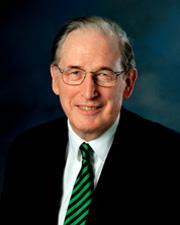
Mr. President, I rise in support of S. 165, the Air Cargo Security Improvement Act. This legislation is another critical piece in our ongoing efforts to increase the security of our aviation system.…
Mr. President, I rise in support of S. 165, the Air Cargo Security Improvement Act. This legislation is another critical piece in our ongoing efforts to increase the security of our aviation system. I commend my colleagues, Senator Hutchison and Senator Feinstein, for their continued leadership on this critical issue.
Over the past 18 months, we have worked every day to improve security in our airports and on our airplanes. While we set in place unprecedented improvements in aviation security, clear gaps remain. Today's legislation is aimed at filling security gaps in the vast and economically vital air cargo network by providing the Transportation Security Administration and related security agencies with the authority and resources they need to implement new air cargo security requirements.
This important legislation, which passed the Senate last year as part of S. 2949, the Aviation Security Improvement Act, requires TSA to establish a system to screen, inspect, or otherwise ensure security of all cargo transported by air and to establish a system for regular inspection of airport and cargo shipping facilities. Unfortunately, the House of Representatives did not act on this legislation last year. Improving the security of our nation's air cargo system must be addressed this year, and I am pleased that the Senate has acted quickly to pass this vital legislation again in the 108th Congress.
The Air Cargo bill would take several steps to improve the security of air cargo. The bill requires the Transportation Security Agency, TSA, to develop a strategic plan to ensure that all air cargo is screened, inspected, or otherwise made secure. TSA would also be required to develop a system for the regular inspection of air cargo shipping facilities, the establishment of a database of known shippers, companies and persons that regularly ship cargo, in order to bolster the Known Shipper Program, and review and assess the existing federal security program for freight forwarders, companies that accept and consolidate freight and tender it to an all cargo or passenger carrier for air shipment. The bill allows TSA to revoke the certificates of freight forwarders if the agency finds that they are not adhering to security laws or regulations.
The legislation also mandates that TSA develop a security training program for persons who handle air cargo and all cargo carriers would be required to develop security plans that would be subject to approval by TSA.
During the Commerce Committee's consideration of the legislation a number of important amendments offered by Senators Wyden, Boxer, and Bill Nelson were adopted that strengthened the bill.
These provisions included requiring Secretary of Homeland Security to report to Congress on the impact on the privacy and civil liberties of the Computer Assisted Passenger Prescreening System, requiring background checks of alien flight school applicants to include applicants for flight training of planes below 12,500 pounds, and to transfer these responsibilities from the Department of Justice to the Transportation Security Administration, and requires guidelines for verifying passenger identification.
The Committee also adopted provisions to have the FAA and TSA conduct a study on blast-resistant cargo containers, allowing cargo pilots to participate in the Federal Flight Deck Officer program, and requiring the Department of Homeland Security to issue a report on how best to defend passenger aircraft from shoulder-fired missiles.
The Air Cargo Security Improvement Act is another important step in our efforts to improve our nation's aviation security network, but it is by no means the final step. I spend countless hours each week as part of my duties on the Intelligence Committee and we all recognize that the changing nature of threats will require continued vigilant oversight and modifications to our security network. There are no guarantees, but we can and must continue to work every day to make sure that the people who fly and the places they fly from are safe.

Mr. President, I rise in support of S. 165 the Air Cargo Security Improvement Act. This legislation is another important step toward fully protecting the United States and all Americans from…
Mr. President, I rise in support of S. 165 the Air Cargo Security Improvement Act.
This legislation is another important step toward fully protecting the United States and all Americans from terrorists who intend to use our aviation system to commit future attacks.
Among other provisions, including the creation of a security program to protect our air cargo from terrorist attacks, this bill mandates crucial studies on blast resistant cargo containers, the Transportation Security Administration's passenger screening program known as CAPPS II, and most importantly, how to defend our airliners from shoulder missile attacks similar to the attack last December on an Israeli charter jet in the skies over Kenya.
We must continue to be vigilant in protecting our Nation. This legislation addresses a deep concern of mine regarding foreign citizens coming to the United States to receive pilot training on all sizes of aircraft. Unfortunately, we have seen what can happen when people come to our country with the specific intent to do us great harm. Many of the September 11 hijackers learned to fly the planes they used as deadly weapons at flight schools here in the United States.
Section 113 of the Aviation and Transportation Security Act, which was enacted in the 107th Congress, requires background checks of all foreign flight school applicants seeking training to operate aircraft weighing 12,500 pounds or more. While this provision should help prevent September 11th-style attacks by U.S.-trained pilots using hijacked jets in the future, it does nothing to prevent different types of potential attacks against our domestic security. To rectify this problem, I introduced S. 236 together with Senators Corzine, Enzi, Feinstein, and Thomas earlier this year.
The FBI has issued terrorism warnings indicating that small planes might be used to carry out suicide attacks. Small aircraft can be used by terrorists to attack nuclear facilities, carry explosives, or deliver biological or chemical agents. For example, if a crop duster filled with a combination of fertilizers and explosives were crashed into a filled sporting event stadium, thousands of people could be seriously injured or killed. We cannot allow this to happen. We need to ensure that we are not training terrorists to perform these activities. We cannot allow critical warnings to go unheeded.
This bill will close an important loophole and answer the critical warnings issued by the FBI by extending the background check requirement to all foreign applicants to U.S. flight schools, regardless of the size aircraft they seek to learn to fly. It also transfers the entire security background check program from the Department of Justice to the Department of Homeland Security, specifically to the Transportation Security Administration. It is my expectation that the Transportation Security Administration, which provided excellent advice in the fine tuning of this legislation, will apply a stringent level of background screening to all foreign nationals who seek flight training here in the United States. We cannot allow anyone to slip through the cracks. We cannot aid anyone who intends to do harm to Americans and to our Nation.
I thank the distinguished chairman and ranking member of the Commerce Committee, Senators McCain and Hollings, and their staffs, for working with me to ensure inclusion of this provision in the bill.
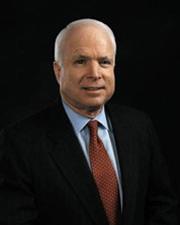
Mr. President, I am pleased that the Senate is considering S. 165, the Air Cargo Security Act. When Congress acted in the aftermath of the September 11, 2001 attacks, its focus was on passenger…
Mr. President, I am pleased that the Senate is considering S. 165, the Air Cargo Security Act. When Congress acted in the aftermath of the September 11, 2001 attacks, its focus was on passenger screening. The Aviation and Transportation Security Act set out a template for the screening of passengers and baggage. We deferred dealing with cargo carried on passenger airlines and on all-cargo aircraft until a review of cargo security could be undertaken. S. 165 is designed to bolster air cargo security and provides further guidance and authority to the Transportation Security Administration--TSA--to ensure continued improvement in these areas.
Let me say at the outset that Senator Hutchison has worked very hard on this bill and deserves a great deal of credit. Although this issue was one that everyone believed was very important, she and Senator Snowe introduced cargo security bills during the second session of last congress. Those bills became a base for the cargo security provisions in last year's S. 2949, the Aviation Security Improvement Act, which passed the Senate, but was not passed by the House. Senator Hutchison and Senator Feinstein reintroduced the air cargo provisions from last year as a stand alone bill this year.
Cargo security is one area in which we can and should be proactive to address potential problems and vulnerabilities head on. I note that TSA is already looking at improving cargo security under its mandate in
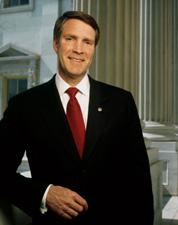
Mr. President, I understand there is a bill at the desk due for its second reading. Mr. President, I object to further proceedings on the measure at this time in order to place the bill on the…
Mr. President, I understand there is a bill at the desk due for its second reading.
Mr. President, I object to further proceedings on the measure at this time in order to place the bill on the calendar under the provisions of rule XIV.
I understand S. 2949 is at the desk, and I ask for its first reading. I ask for its second reading, and in order to place the bill on the calendar under rule XIV I object to further proceeding on…
I understand S. 2949 is at the desk, and I ask for its first reading.
I ask for its second reading, and in order to place the bill on the calendar under rule XIV I object to further proceeding on this matter.

I ask unanimous consent that the committee amendments be withdrawn. I send a substitute amendment to the desk.
I ask unanimous consent that the committee amendments be withdrawn.
I send a substitute amendment to the desk.
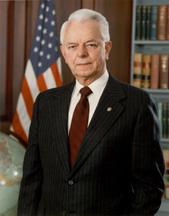
Mr. President, I ask unanimous consent that the order for the quorum call be rescinded.
Mr. President, I ask unanimous consent that the order for the quorum call be rescinded.
Bill Text
Latest available legislative text
        [Congressional Bills 108th Congress]
[From the U.S. Government Publishing Office]
[S. 2949 Placed on Calendar Senate (PCS)]

Calendar No. 789
108th CONGRESS
2d Session
S. 2949

To amend the Low-Income Home Energy Assistance Act of 1981 to
reauthorize the Act, and for other purposes.

_______________________________________________________________________

IN THE SENATE OF THE UNITED STATES

October 8, 2004

Mr. Jeffords (for himself, Ms. Collins, Mr. Leahy, Mr. Dodd, Mr. Reed,
Mr. Biden, Mr. Kennedy, Mr. Bingaman, Mr. Lautenberg, Mr. Sarbanes, Ms.
Snowe, Mr. Schumer, Mr. Kohl, Mr. Chafee, Mr. Akaka, Mr. Dorgan, Ms.
Cantwell, and Mr. Daschle) introduced the following bill; which was
read the first time

October 9, 2004

Read the second time and placed on the calendar

_______________________________________________________________________

A BILL

To amend the Low-Income Home Energy Assistance Act of 1981 to
reauthorize the Act, and for other purposes.

Be it enacted by the Senate and House of Representatives of the
United States of America in Congress assembled,

SECTION 1. REAUTHORIZATION.

(a) In General.--Section 2602(b) of the Low-Income Home Energy
Assistance Act of 1981 (42 U.S.C. 8621(b)) is amended in the first
sentence by striking ``2607A),'' and all that follows through the
period and inserting ``2607A), $3,400,000,000 for each of fiscal years
2005 through 2007, and such sums as may be necessary for each of fiscal
years 2008 through 2011.''.
(b) Program Year.--Section 2602(c) of the Low-Income Home Energy
Assistance Act of 1981 (42 U.S.C. 8621(c)) is amended by inserting
``authorized'' after ``programs and activities''.
(c) Incentive Program for Leveraging Non-Federal Resources.--
Section 2602(d) of the Low-Income Home Energy Assistance Act of 1981
(42 U.S.C. 8621(d)) is amended--
(1) in paragraph (1), by striking ``1999 through 2004'' and
inserting ``2005 through 2011''; and
(2) in paragraph (2), by striking ``1999 through 2004'' and
inserting ``2005 through 2011''.
Calendar No. 789

108th CONGRESS

2d Session

S. 2949

_______________________________________________________________________

A BILL

To amend the Low-Income Home Energy Assistance Act of 1981 to
reauthorize the Act, and for other purposes.

_______________________________________________________________________

October 9, 2004

Read the second time and placed on the calendar