Indian and Alaska Native Foster Care and Adoption Services Amendments of 2003
Legislative Activity
Stay on top of the latest movement without scrolling through every action
Read twice and referred to the Committee on Finance.
February 6, 2003
View full timeline
Introduced in Senate
February 6, 2003
Sponsor introductory remarks on measure. (CR S2055-2056)
February 6, 2003
Read twice and referred to the Committee on Finance.
February 6, 2003
Floor Debate
18 membersWhat members said about S. 331 on the floor
 MB
MB MD
MD BLD
BLD JM
JM PSS+13
Floor Debate
18 membersWhat members said about S. 331 on the floor
Mr. President, today, I am re-introducing the American Indian Welfare Reform Act, an important step in improving the lives of this country's Native Americans. I originally introduced this bill last…
Mr. President, today, I am re-introducing the American Indian Welfare Reform Act, an important step in improving the lives of this country's Native Americans. I originally introduced this bill last year and worked to include important elements of it in the welfare reform reauthorization bill approved by the Finance Committee. Unfortunately, we did not finish work on welfare reform reauthorization. So I am again offering this bill, with some improvements based on advice from tribes and other experts. I am glad to be joined by Senators Daschle, Johnson, Campbell, Bingaman, Inouye, and Akaka.
In 1996 we enacted a sweeping welfare reform law. It was a long past- due fundamental change and ended a failed system for helping low-income families in America. I was a strong supporter of that law. This year, we continue to work to reauthorize it. As we in the Finance Committee have reviewed the evidence I have been struck by how successful it has been. The ranks of those dependent on welfare in this country has been reduced by half in just five years. There is more to be done, of course. Child poverty has declined but not by as much as the fall in the welfare caseload, for example. I plan to work with my Finance Committee colleague Senator Grassley on comprehensive legislation to renew and improve the 1996 law.
One often overlooked important aspect of the 1996 law is that it didn't just devolve authority to States--it also permitted Indian tribes to operate their own welfare programs for the first time. The new welfare program, Temporary Assistance for Needy Families, TANF, is very flexible. Tribes can take advantage of that flexibility to design culturally-appropriate programs to move people from welfare to work. This is smart policy and is consistent with the important value of tribal sovereignty. I support it.
My own State of Montana is home to several tribes and I have given much thought to how we can build upon the provisions of the 1996 welfare law to help them and their members. Too often in Montana--and elsewhere--poverty has an Indian face. The numbers are cold and hard. According to the Census Bureau, 25.9 percent of American Indians live in poverty, more than twice the national poverty rate. The average household income for Indians in 2000 was only 75 percent of that of the rest of Americans. This is simply not right. We must do better. Welfare reform needs to work for everyone.
Luckily, the provisions of the 1996 law provide a good start. Now we must build upon them. The legislation I introduce today, the product of extensive dialogue and consultation, does that in several important ways.
First, more than 30 tribes--including the Confederated Salish- Kootenai and Fort Belknap tribes of Montana--have taken advantage of the opportunity to operate their own TANF programs. This bill contains provisions to help those tribes improve their programs. For example, under current law, tribes operating TANF are not eligible for the TANF high performance bonus or the TANF contingency fund while state TANF programs are. This oversight is rectified by this bill.
Second, there are many tribes interested in operating TANF programs who do not believe the current set-up allows them to do so. They want to exercise their sovereignty and adapt their program to better fit the needs of their people. We should help them do so. To that end, I propose creating a new grant fund to improve tribal governmental capacity. We have funded State administrative capacity for decades, helping States buy computer systems and train workers. We should do the same for tribal human services administration. Under this bill, a tribe which wants to operate TANF but needs to upgrade its computers to do it could receive the funding it needs--which will enable it to take over
Mr. President, I rise today to support the Tax Court Modernization Act. I am pleased to be an original cosponsor of this important legislation.
In 1969, Congress elevated the U.S. Tax Court as a Federal court of record under Article I of the Constitution of the United States.
Congress created the Tax Court to provide a judicial forum in which affected persons could dispute tax deficiencies determined by the Commissioner of the Internal Revenue Service prior to payment of the disputed amounts. That means that the Tax Court's jurisdictional requirements are, in part, a recognition that lower and middle income taxpayers cannot necessarily pay the tax deficiency before taking their dispute to court.
Congress also closely linked the legislation governing the Tax Court with the laws governing the Article III District Courts. Unfortunately, the Congress did not include the Tax Court in the changes made for Article III courts.
This legislation is designed to restore parity between the Tax Court and Article III courts, and to modernize their personnel and pension systems.
I also want to thank Senators Breaux and Hatch for their efforts in moving this legislation forward. The Finance Committee intends to markup the Tax Court Modernization Act tomorrow. It is my hope that the Committee favorably reports the legislation. I also hope that, soon after Committee action, Majority Leader Frist and Minority Leader Daschle bring the Tax Court Modernization Act to the floor for swift passage.
Mr. President, today Senator Grassley and I are taking a significant step forward in our efforts to simplify the tax code. Today, we are introducing an important simplification legislation--the Uniform Definition of Child Act.
This legislation is based on the support of many for simplification in this area of the tax law. The President's FY 2004 budget, which was released on April 15, 2002, includes a simplification proposal to provide a uniform definition of a qualifying child. This is the first in a series of Department of Treasury ``white papers'' on simplification.
The concept of a uniform definition of qualifying child also enjoys support from the American Bar Association, the American Institute of CPAs, the Tax Executives Institute, the Internal Revenue Service's Taxpayer Advocate, and staff of the Joint Committee on Taxation.
Under current law, the complexity in this area is daunting. There are five commonly used provisions that provide benefits to taxpayers with children: the dependency exemption, the child credit, the earned income credit, the dependent care credit, and head of household filing status.
Each of the five provisions uses variations of four principal criteria to determine whether a taxpayer qualifies for applicable tax benefits with respect to a particular child: age of the child, relationship of the child to the taxpayer, residency of the child with the taxpayer, and the amount of financial support provided the child by the taxpayer.
Thus, a taxpayer is required to apply different definitions with respect to the same child when determining eligibility for these provisions. A taxpayer who qualifies with respect to a child for one provision does not necessarily qualify for another. As a result, publications, forms, instructions and schedules that are applicable to child related provisions number about 200 pages for the preparation of an individual income tax return.
A tremendous number of families are impacted by these Code provisions. For example, 44 million taxpayers claimed the dependency exemption in the 2001 tax year. The IRS also indicates that a significant portion of the issued math error notices are attributable to these five provisions of the Internal Revenue Code. In 1999, for example, 44 percent of the 7.6 million math error notices were attributable to these provisions--40 percent of the total math error notices were attributable the dependency exemption, the child tax credit and the earned income tax credit alone.
The legislation reduces complexity through reconciliation of the varying child definitions into a single definition for a ``qualifying child.'' The uniform child definition generally establishes eligibility for all five tax benefits if the child meets the age requirements described below, a relationship requirement, and a residency requirement--i.e., the child has the same principal place of abode as the taxpayer for more than one-half the taxable year.
The residency requirement is an important departure from current law in which the child tax benefits frequently rely upon financial support tests which impose significantly higher administrative burdens in the form of additional record-keeping not otherwise required under the tax law. The legislation also preserves the tax rights of children who provide more than half of their own support by excluding those children from the uniform definition of a qualifying child.
The underlying policy objectives of the present law provisions are retained. For example, the legislation retains underlying policy by not adjusting the ages of qualification--i.e., under age for the dependent care credit, under age 17 for the child tax credit, and under age 19-- or age 24 if a full-time student for the dependency exemption, the earned income tax credit, and head of household filing status.
The legislation applies a single relationship test to the varying Code sections. Significantly, the proposal retains current law as an alternative to the extent that a person does not meet the revised uniform child definition--e.g., an elderly parent can still be claimed for purposes of the dependency exemption.
Under the Uniform Definition of Child Act, there will be instances in which multiple taxpayers qualify with respect to a given child. To address this issue, the proposal extends the present law earned income credit tie-breaker rule to the other benefits for multiple eligible claimants. That rule awards the tax benefit (i) to a parent over a non- parent, (ii) to the parent with longer residency or the highest AGI if residency is not determinative between parents, and (iii) to the taxpayer with the highest AGI if all claimants are non-parents. Finally, the legislation continues to allow divorced or separated spouses to assign the dependency exemption and the child tax credit to non-custodial parents provided that certain support and residency tests are met.
Simplification of the tax code should be more than just rhetoric. It is time for us to put legislation behind our words. We intend to continue to look at other areas of the tax code in need of simplification.
Senator Grassley and I also want to thank our Finance Committee colleagues, Senators Hatch, Thomas and Lincoln, for their support of the Uniform Definition of Child Act of 2003. Simplification of the tax laws for the families of our nation is not partisan, it is not political, it is simply common sense.
Mr. President, I ask unanimous consent that the Uniform Definition of Child Act of 2003 be printed in the Record.
Today, Mr. President, violent conflicts and other global threats and humanitarian concerns extend across many parts of our world. We are at war with Iraq. North Korea possesses nuclear weapons.…
Today, Mr. President, violent conflicts and other global threats and humanitarian concerns extend across many parts of our world. We are at war with Iraq. North Korea possesses nuclear weapons. HIV/AIDS is pandemic. And, terrorism threatens our daily lives.
Our world is, indeed, a very dangerous and unstable place. We know this. And, while we are well aware of the many global ``hotspots''--the conflicts and the violence and the human suffering--there are parts of the world, which I believe, we have neglected. There are parts of the world, where human tragedy is the order of the day--where children are killed, where women are raped and beaten, and where people are routinely tortured--their bodies maimed and mutilated.
One area of the world where such atrocities are occurring on a daily basis is in Sierra Leone, Africa. For at least a decade, Sierra Leone, one of the world's poorest nations, has been embroiled in civil war. Rebel groups--most notably, the Revolutionary United Front (RUF)--have been fighting for years to overthrow the recognized government. In the process, violence has erupted as the rebels have fought to seize control of the country's profitable diamond fields, which in turn, helps finance their terrorist regime.
Once in control of a diamond field, the rebels confiscate the diamonds and then launder them onto the legitimate market through other nearby nations, like Liberia. Known as ``conflict'' or ``blood'' diamonds, these gems are a very lucrative business for the rebel groups. In fact, over the past decade, the rebels have smuggled out of Africa approximately $10 billion dollars in these diamonds.
It is nearly impossible to distinguish the illegally gathered diamonds from legitimate or ``clean'' stones. And so, regrettably and unwittingly, the United States--as the world's biggest buyer of diamonds--has contributed to the violence. Our nation accounted for more than half of the $57.5 billion in global retail diamond trade last year, and some estimates suggest that illegal diamonds from Africa account for as much as 15 percent of the overall diamond trade.
Since the start of the rebel's quest for control of Sierra Leone's diamond supply, half of the nation's population of 4.5 million have left their homes, and at least a half-million have left the country. But, it is the children of Sierra Leone who are bearing the biggest brunt of the rebel insurgency. For over eight years, the RUF has conscripted children--children often as young as 7 or 8 years old--to be soldiers in their make-shift army. They have ripped at least 12,000 children from their families.
As a result of deliberate and systematic brutalization, child soldiers have become some of the most vicious--and effective--fighters within the rebel factions. The rebel army--child-soldiers included--has terrorized Sierra Leone's population, killing, abducting, raping, and hacking off the limbs of victims with their machetes. This chopping off of limbs is the RUF's trademark strategy. In Freetown, the surgeons are frantic. Scores of men, women, and children--their hands partly chopped off--have flooded the main hospital. Amputating as quickly as they can, doctors toss severed hands into a communal bucket.
The RUF frequently and forcibly injects the children with cocaine in preparation for battle. In many cases, the rebels force the child- soldiers at gunpoint to kill their own family members or neighbors and friends. Not only are these children traumatized by what they are forced to do, they also are afraid to be reunited with their families because of the possibility of retribution.
Mr. President, I cannot understate nor can I fully describe the horrific abuses these children are suffering. The most vivid accounts come from the child-soldiers themselves. I'd like to read a few of their stories, taken from Amnesty International's 1998 report, ``Sierra Leone--A Year of Atrocities against Civilians.'' According to one child's recollection:
Civilians were rounded up, in groups or in lines, and then
taken individually to a pounding block in the village where
their hands, arms, or legs were cut with a machete. In some
villages, after the civilians were rounded up, they were
stripped naked. Men were then ordered to rape members of
their own family. If they refused, their arms were cut off
and the women were raped by rebel forces, often in front of
their husbands . . . victims of these atrocities also
reported women and children being rounded up and locked into
houses which were then set [on fire].
A young man from Lunsar, describing a rebel attack, said this:
Ten people were captured by the rebels and they asked us to
form a [line]. My brother was removed from the [line], and
they killed him with a rifle, and they cut his head with a
knife. After this, they killed his pregnant wife. There was
an argument among the rebels about the sex of the baby she
was carrying, so they decided to open her stomach to see the
baby.
According to Komba, a teenager:
My legs were cut with blades and cocaine was rubbed in the
wounds. Afterwards, I felt like a big person. I saw the other
people like chickens and rats. I wanted to kill them.
Rape, sexual slavery and other forms of sexual abuse of girls and women have been systematic, organized, and widespread. Many of those abducted have been forced to become the ``wives'' of combatants.
According to Isatu, an abducted teenage girl:
I did not want to go; I was forced to go. They killed a lot
of women who refused to go with them.
She was forced to become the sexual partner of the combatant who captured her and is now the mother of their three-month-old baby:
When they capture young girls, you belong to the soldier
who captured you. I was `married' to him.
We are losing these children--an entire generation of children. If the situation does not improve, these kids have no future. But, as long as the rebel's diamond trade remains unchallenged, nothing will change.
That is why I have been working with Senators Durbin, Feingold, and Gregg for over two years to pass legislation that would help stem this illegal trade in conflict diamonds. Together, we have worked extensively with our House colleagues, including my good friend and former colleague from Ohio, Tony Hall, and Frank Wolf from Virginia, to develop much needed legislation to help remove the rebel's market incentive.
And, while we have not yet been successful in getting this legislation signed into law, I credit my colleagues' continued commitment to this often forgotten issue. I know our countless congressional hearings, meetings, letters and legislative initiatives have encouraged the Administration and the international community to keep this issue alive. We have kept the pressure on, and we are beginning to see some positive results.
Mr. President, just this past January 1st, an international agreement called the Kimberley Process Certification Scheme was launched. Specifically, this is a voluntary, international diamond certification system among over 50 participant countries, including all of the major diamond producing and trading countries. This is a positive step in the right direction, and I commend the tireless work of human rights
advocates and the diamond industry for making this certification system a reality.
Because of their success, Mr. President, today we are faced with the urgent need of providing legislative measures to enable effective U.S. implementation of the certification scheme. We need to provide the Administration with the authorization necessary to ensure U.S. compliance with this global, regulatory framework. That is why I am here today to introduce legislation that commits the United States to mandatory implementation of the Kimberley Process Certification Scheme.
I join my distinguished colleagues, Senators Grassley, Durbin, Feingold, Bingaman, Talent, and Snowe, to introduce the ``Clean Diamond Trade Act.'' This legislation is very similar to a measure introduced in the House last week, H.R. 1415. Our bill is very simple. The whole idea behind it is to commit the United States to a system of controls on the export and import of diamonds, so that buyers can be certain that their purchases are not fueling the rebel campaign.
Specifically, our legislation would prohibit the import of any rough diamond that has not been controlled through the Kimberley Process Certification Scheme. Put simply, this means that every diamond brought into the United States would require a certificate of origin and authenticity, indicating that a rebel or terrorist group has not laundered it onto the legitimate market.
Additionally, the bill calls on the President to report annually to Congress on the control system's effectiveness and also requires the General Accounting Office to report on the law's effectiveness within two years of enactment.
Finally, Mr. President, our bill emphasizes that the Kimberley Process Certification Scheme is an ongoing process and that our government should continue to work with the international community to strengthen the effectiveness of this global regulatory framework. As the world's biggest diamond customer--purchasing well over half of the world's diamonds--our nation has a moral responsibility to show continued leadership on this issue.
Quite candidly, there are a lot of things in this world--a lot of terrible, tragic things--that we don't have the power to change or to fix. But today, we can change something. We can make a difference. We have the power to help put an end to the indescribable suffering and violence caused by diamond-related conflicts. We have that power, and we must use it. And so, I urge my colleagues to join me in support of this much-needed legislation.
We have an obligation--a moral responsibility--to help stop the violence, the brutality, the needless killing and maiming. No other child should kill or be killed in diamond-related conflicts. I believe that it is absolutely imperative that we pass the bill we have introduced quickly and help end these atrocities once and for all.
It is the humane thing to do. It is the right thing to do. It is the only thing to do.
I thank the Chair and yield the Floor.
Today I am introducing legislation to correct a long- standing inequity that has caused hardship for American farmers. That inequity is the pricing of agricultural pesticides for American producers…
Today I am introducing legislation to correct a long- standing inequity that has caused hardship for American farmers. That inequity is the pricing of agricultural pesticides for American producers in relationship to Canadian pesticide pricing. My bill would solve this inequity by allowing individual States to label Canadian pesticides that have the same formula as those used in the U.S. for use by American farmers.
Farmers combine land, water, commercial inputs, labor, and their management skills into practices and systems to produce food and fiber. To sustain production over time, farmers must make a profit and preserve their resource and financial assets. Society wants food and fiber products that are low-cost, safe to consume, and aesthetically pleasing, and wants production systems that preserve or enhance the environment. These often competing goals and pressures are reflected not only in the inputs made available for production, but also in how the inputs are selected, combined, and managed at the farm level.
Time and time again I have come to Senate floor to point out the stark realities of free trade. I have talked at length about the flood of imported grain that streams across our border. Come to my State of North Dakota. Every day truckload after truckload of Canadian commodities, wheat, barley, durum, come across our border to compete with commodities grown here at home. These Canadian imports are grown with the aid of pesticides, pesticides of the same makeup and composition as those purchased in the United States. Yet Canadian producers have the luxury of buying those same chemicals at prices substantially lower than those American farmers have to pay.
Why? The answer is simple; pesticide manufacturers charge American farmers more because they can. In agricultural policy, benefits from the North American Free Trade Agreement flow the same direction as the Red River of my State, north. This is especially true of pesticide pricing.
A recent survey completed by North Dakota State University surveyed 15 different pesticides commonly used in both Canada and North Dakota. All would qualify for registration in North Dakota under this bill. Of the 15, not one, not one, had a price differential in favor of the American farmer. When you totaled it all out, those 15 chemicals cost, in North Dakota alone, $23.7 million more, in 1 year, for the American producer. That's just not right.
If we're going to have free trade, let's make it fair trade. If we are going to open our borders to Canadian grain grown with Canadian pesticides, we ought to open our borders to similar pesticides for U.S. producers at the same cost. It's time to level the playing field for American farmers, we must give them the same advantages that Canadian producers have enjoyed for years. If we're going to have a free trade agreement with Canada, let's all sing from the same page, using the same music. Because putting American farmers at a disadvantage in the world marketplace over pesticide prices that are not in harmony with our competitors is a practice that must be stopped. It must be stopped now.
Nothing in this legislation harms the environment, unless you're in the environment of profits. This legislation would create a procedure whereby individual states could apply and receive an Environmental Protection Agency label for agricultural chemicals sold in Canada that are identical or substantially similar to agricultural chemicals used in the United States. Thus, U.S. producers and suppliers could purchase such chemicals in Canada for use in the United States.
The new labels for the chemicals would still be under the strict scrutiny of the Environmental Protection Agency as would their use. This would continue to insure safety in the food supply. Food safety is a number one priority for all of us. Chemical safety is a number one priority for all of us. This bill keeps those priorities intact.
It is impossible to defend chemical price imbalance. You can't defend it to the growers, you can't defend it to the chemical distributor, and you can't defend it to the chemical retailer. Most importantly, you can't defend it to the American consumer, who ultimately pays the tab.
Let's be clear, this is not the end of the journey but the beginning. We have a long way to go to cure the imbalances of trade between our nations. If we don't begin the journey, we can't end it. This bill is a step in the right direction.
I request unanimous consent that the text of the bill be printed in the Record.
Mr. President, I rise today to introduce an important piece of legislation, which will have a tremendous impact on the lives of blind people throughout the country. In 1996, with the passage of the…
Mr. President, I rise today to introduce an important piece of legislation, which will have a tremendous impact on the lives of blind people throughout the country. In 1996, with the passage of the Senior Citizens Freedom to Work Act, Congress broke the historic 20-year link between blind people and senior citizens in regards to the Social Security earnings. Previously, that linkage to earnings limits helped many blind people become self-sufficient and productive members of society.
The Senior Citizens Freedom to Work Act raised the earnings limit for seniors, without giving blind people the same opportunity. My intent when I sponsored that legislation was not to break the link between blind people and the senior population. Since then, I have worked with a bipartisan group of senators, in the spirit of fairness, to ensure that the blind population receives a raise in earnings limits, similar to that afforded to seniors under the 1996 Act. We must not continue policies which discourage blind individuals from working and contributing to our nation. I believe we should provide blind people with the opportunity to be productive and ``make it'' on their own.
Today I am joined by my good friend Senator Dodd, and a bipartisan group of senators, in introducing the Blind Empowerment Act of 2003. This bill is
similar in purpose to the Blind Person's Earnings Equity Act, which I sponsored in previous Congresses. Over a five year period of time, the Blind Empowerment Act raises the earnings exemption for blind persons to afford them with greater flexibility to achieve their professional and personal goals, without sacrificing Social Security benefits.
The earnings test treatment of our blind and senior populations historically has been identical. From 1977, blind persons and senior citizens shared the identical earnings exemption threshold under Title II of the Social Security Act. The earnings limit for the blind is currently $1,330 a month for fiscal year (FY) 2003, had the link not been broken in the Senior Citizens Freedom to Work Act, it would be $2,560 today. Senior citizens are now given unlimited opportunity to increase their earnings without losing a portion of their Social Security benefits. The blind, however, have been left behind.
The Social Security earnings test imposes as great a work disincentive for blind people as it once did for senior citizens. In fact, the earnings test probably provides a greater aggregate disincentive for blind individuals because many blind beneficiaries are of working age and are capable of valuable and productive work.
Blindness is often associated with adverse social and economic consequences. Many blind individuals who desperately want to work encounter enormous obstacles to achieve sustained employment or any employment at all. They take great pride in being able to work and contribute to society. By linking the blind with seniors in 1977, Congress provided a great deal of hope and an incentive for blind people to enter the work force. By not allowing blind individuals the opportunity to increase their earnings, as we have for senior citizens, we are now taking that hope away from them.
Blind people are likely to respond favorably to an increase in the earnings test by working more, which will increase their tax payments and purchasing power allowing the blind to make a greater contribution to the general economy. In addition, encouraging blind individuals to work and allowing them to work more without being penalized would bring additional revenue into the Social Security trust funds as well as the federal Treasury.
I hope that this Congress will finally address issues regarding the overall structure of the Social Security system and work towards solutions that will strengthen the system for seniors of today and tomorrow without placing an unfair burden on working Americans. It is absolutely crucial that we include raising the earnings test for blind individuals as a part of any Social Security bill we enact this year.
I urge each of my colleagues to join me in sponsoring the Blind Empowerment Act of 2003, to restore fair and equitable treatment for our blind citizens and to give the blind community increased financial independence. Our Nation would be better served if we restore hope for the blind and provide them with the freedom, opportunities and fairness afforded to our Nation's seniors.
I ask unanimous consent that the text of the Blind Empowerment Act of 2003 be printed in the Record.
Mr. President, today I am re-introducing legislation, together with my colleague Senator Mikulski, to re-designate Catoctin Mountain Park as the Catoctin Mountain National Recreation Area. I first…
Mr. President, today I am re-introducing legislation, together with my colleague Senator Mikulski, to re-designate Catoctin Mountain Park as the Catoctin Mountain National Recreation Area. I first introduced this measure in October 2002, but unfortunately it was not acted upon during the closing days of the 107th Congress. It is my hope that the legislation will receive full and prompt consideration this year.
I spoke last year about the need for this legislation and would like to underscore the principal arguments today. Catoctin Mountain Park is a hidden gem in our National Park System. Home to Camp David, the Presidential retreat, it has been aptly described as ``America's most famous unknown park.'' Comprising nearly 6000 acres of the eastern reach of the Appalachian Mountains in Maryland, the park is rich in history as well as outdoor recreation opportunities. Visitors can enjoy camping, picnicking, cross-country skiing, fishing, as well as the solitude and beauty of the woodland mountain and streams in the park.
Catoctin Mountain Park had its origins during the Great Depression as one of 46 Recreational Demonstration Areas, RDA, established under the authority of the National Industrial Recovery Act. The Federal Government purchased more than 10,000 acres of mountain land that had been heavily logged and was no longer productive to demonstrate how sub-marginal land could be turned into a productive recreational area and help put people back to work. From 1936 through 1941, hundreds of workers under the Works Progress Administration and later the Civilian Conservation Corps were employed in reforestation activities and in the construction of a number of camps, roads and other facilities, including the camp now known as Camp David, and one of the earliest--if not the oldest--camp for disabled individuals. In November 1936, administrative authority for the Catoctin RDA was transferred to the National Park Service by Executive Order.
In 1942, concern about President Roosevelt's health and safety led to the selection of Catoctin Mountain, and specifically Camp Hi-Catoctin as the location for the President's new retreat. Subsequently approximately 5,000 acres of the area was transferred to the State of Maryland, becoming Cunningham Falls State Park in 1954. The remaining 5,770 acres of the Catoctin Recreation Demonstration Area was renamed Catoctin Mountain Park by the Director of the National Park Service in 1954. Unfortunately, the Director failed to include the term ``National'' in the title and the park today remains one of 17 units in the entire National Park System and one of 9 units in the National Capital Region that does not have this designation. Those units include four parkways, four wild and scenic rivers, the White House and Wolf Trap Farm Park for the Performing Arts.
The proximity of Catoctin Mountain Park, Camp David, and Cunningham Falls State Park, and the differences between national and state park management, has caused longstanding confusion for visitors to the area. Catoctin Mountain Park is continually misidentified by the public as containing lake and beach areas associated with Cunningham Falls State Park, being operated by the State of Maryland, or being closed to the public because of the presence of Camp David. National Park employees spend countless hours explaining, assisting and redirecting visitors to their desired destinations.
My legislation would help to address this situation and clearly identify this park as a unit of the National Park System by renaming it the Catoctin Mountain National Recreation Area. The mission and characteristics of this park--which include the preservation of significant historic resources and important natural areas in locations that provide outdoor recreation for large numbers of people--make this designation appropriate. This measure would not change access requirements or current recreational uses occurring within the park. But it would assist the visiting public in distinguishing between the many units of the State and Federal systems. It will also, in my judgment, help promote tourism by enhancing public awareness of the National Park unit.
The legislation is supported by the Board of County Commissioners and Tourism Council of Frederick County. I urge approval of this legislation.
Show 8 more
Mr. President, I rise today with my colleague from Connecticut, Senator Lieberman, to introduce a bill that will promote the expanded use of an environmentally sound and efficient energy…
Mr. President, I rise today with my colleague from Connecticut, Senator Lieberman, to introduce a bill that will promote the expanded use of an environmentally sound and efficient energy technology--fuel cell power.
The United States has had a long, inseparable relationship with energy. The Americans of the 19th century would not have populated the West as they did without the railroad and its steam engines. New York's Pearl Street Station, designed by Thomas Edison in 1882, demonstrated the immense possibilities of large-scale electricity generation that would revolutionize our Nation and the world. And, of course, the 20th century is posted with landmark American innovations an inventions in oil use and production, nuclear power, and solar energy.
As we begin our journey into the 21st century, we must begin a new chapter for energy use through fuel cell power. Fuel cells are not a futuristic dream, as every manned U.S. space mission has relied upon fuel cells for electricity and drinking water. From a New York City police station to a postal facility in Alaska to hospitals, schools, banks, military installations and manufacturing facilities around the world, fuel cell units are efficiently generating dependable power 24 hours a day, 7 days a week for upwards of 2 years with only routine maintenance.
Fuel cell technology offers a clean, secure, efficient, and dependable source of energy that should be part of our national energy strategy. Not only do fuel cells deliver the high quality, reliable power that is considered an absolute necessity for many portions of our society, they reduce grid demand while improving grid flexibility. Fuel cells are an ideal energy source to address the Nation's pressing energy needs.
Using electro-chemical reaction to convert energy from hydrogen-rich fuel cell sources into electricity, fuel cells reduce the need for fossil fuel consumption. And, since no combustion is involved, fuel cells produce virtually no air pollution and significantly reduce carbon dioxide emissions, the major greenhouse gas thought to be responsible for climate change variability. In fact, a 200 kilowatt fuel power plant produces less than one ounce of pollutants for every 1,000 kilowatt hours of electricity it yields. In comparison, the average fossil fuel plans produces nearly 25 pounds of pollutants to generate the same 1,000 kilowatt hours of electricity. That is 400 times the amount of a fuel cell power plant.
The current problem is that it is difficult for the consumer to take advantage of fuel cells because, as with any new technology, the introductory price is high. To create the market incentives necessary to speed the commercialization of this technology, the Lieberman-Snow legislation provides a property owner a five year, $1,000 per kilowatt stationary fuel cell tax credit, including labor and installation costs, for business and non business power plants--stationary and portable--that have an electrical generation efficiency greater than 30 percent and generate at least 0.5 kilowatts of electricity using an electrochemical process. To put this electrical generation in perspective, a home uses approximately 1 to 2 kilowatts of power, on average.
By lowering the initial price for consumers, market introduction and production volume of fuel cells will be accelerated with the end result being a significant reduction in manufacturing costs. The decrease in price would enable even more consumers to use one of the cleanest, most reliable and most efficient means to generate electricity. This tailored fuel cell tax credit for a stationary and portable fuel cells is designed to benefit the widest range of potential fuel cell customers and manufacturers with a meaningful incentive for the purchase of fuel cells for residential and commercial use.
As summer approaches, power shortages and interruptions can be expected throughout the country. We must increase our investment and commitment to non-traditional energy sources such as fuel cells. This reliable, combustion-free power provided by fuel cells in a sensible alternative that is available today. I urge my colleagues to support us for a sensible fuel cell power tax credit.

Mr. President, during the last Congress Senator Feingold and I sponsored the Transparency for Independent Livestock Producers Act, or what we have generally referred to as the ``Transparency Act''.…
Mr. President, during the last Congress Senator Feingold and I sponsored the Transparency for Independent Livestock Producers Act, or what we have generally referred to as the ``Transparency Act''. Today we are once again working together in a bipartisan fashion to re-introduce this important legislation.
As everyone knows, I introduced the packer ban this Congress because I want more competition in the marketplace. While I don't think packers should be in the same business as independent livestock producers, it's not the fact that the packers own the livestock that bothers me as much as the fact that the packers' livestock competes for shackle space and adversely impacts the price independent producers receive.
My sponsorship of the packer ban is based on the belief that independent producers should have the opportunity to receive a fair price for their livestock. The last few years have led to widespread consolidation and concentration in the packing industry. Add on the trend toward vertical integration among packers and there is no question why independent producers are losing the opportunity to market their own livestock during profitable cycles in the live meat markets.
The past CEO of IBP in 1994 explained that the reason packers own livestock is that when the price is high the packers use their own livestock for the lines and when the price is low the packers buy livestock. This means that independent producers are most likely being limited from participating in the most profitable ranges of the live market. This is not good for the survival of the independent producer.
This bipartisan legislation would guarantee that independent producers have a share in the market place while assisting the Mandatory Price Reporting system. The proposal would require that 25 percent of a packer's daily kill comes from the spot market. By requiring a 25 percent spot market purchase daily, the mandatory price reporting system, which has been criticized due to reporting and accuracy problems, would have consistent, reliable numbers being purchased from the spot market, improving the accuracy and transparency of daily prices. In addition, independent livestock producers would be guaranteed a competitive position due to the packers need to fill the daily 25 percent spot/cash market requirement.
The packs required to comply would be the same packs required to report under the Mandatory Price Reporting system. Those are packs that kill either 125,000 head of cattle, 100,000 head of hogs, or 75,000 lambs annually, over a 5 year average.
Packers are arguing that this will hurt their ability to offer contracts to producers, but the fact of the matter is that the majority of livestock contracts pay out on a calculation incorporating Mandatory Price Reporting data. If the Mandatory Price Reporting data is not accurate, or open to possible manipulation because of low numbers on the spot market, contracts are not beneficial tools for producers to manage their risk. This legislative proposal will hopefully give confidence to independent livestock producers by improving the accuracy and viability of the Mandatory Price reporting system and secure fair prices for contracts based on that data.
It's just common sense, when there aren't a lot of cattle and pigs being purchased on the cash market, it's easier for the Mandatory Price reporting data to be inaccurate or manipulated. The majority of livestock production contracts are based on that data, so if that information is wrong the contract producers suffer.
This legislation will guarantee independent livestock producers market access and a fair price. It will accomplish these goals by making it more difficult for the Mandatory Price Reporting System to be manipulated because of low numbers being reported by the packs. The Transparency Act is crucial legislation to guarantee livestock producers receive a fair shake at the farm gate and I am looking forward to working on this legislation in a bipartisan fashion.
I ask unanimous consent that the text of the bill be printed in the Record.

Mr. President, I rise today with my colleague from Arizona, Senator John McCain, to reintroduce legislation that we've sponsored in the past, the ``Blind Empowerment Act of 2003.'' This legislation…
Mr. President, I rise today with my colleague from Arizona, Senator John McCain, to reintroduce legislation that we've sponsored in the past, the ``Blind Empowerment Act of 2003.'' This legislation would restore the 20-year link between blind people and senior citizens with respect to the Social Security earnings limit. It will have a tremendous impact on the lives of many blind people, helping them become more self-sufficient and productive members of society.
Today there are nearly 1.1 million Americans who are blind, with 75,000 more becoming blind each year. With today's technology, blind and visually-impaired individuals can do just about anything. Blind people today are employed as farmers, lawyers, secretaries, nurses, managers, childcare workers, social workers, teachers, librarians, stockbrokers, accountants, and journalists, among many other things. The Federal Government should do all within its power to facilitate and encourage the blind and visually-impaired to enter the workforce. Many public and private initiatives provide the technical advancement necessary to educate and employ the blind at the same level as their sighted peers. For example, the National Federation of the Blind, NFB, has created an institute to utilize technological advancements for the blind in an effort to promote employment of the blind throughout the nation. The NFB helps employers provide adaptive technology, consultation, and training so that they can better accommodate the needs of blind and visually-impaired employees.
In 1996, Congress passed the Senior Citizens Freedom to Work Act, which broke the longstanding linkage between the treatment of blind people and seniors under Social Security. This allowed the earnings limit to be raised for seniors, but not for the blind. As a result, blind people do not have the opportunity to increase their earnings without jeopardizing their Social Security benefits. In 2002, that limit was at $14,800. If a blind individual earns more than that, his or her Social Security benefits are not protected.
The purpose of the Senior Citizens Freedom to Work Act was to allow seniors to continue contributing to society as productive workers while still receiving social security benefits. Historically, the earnings test treatment of seniors and blind people has been identical under Title II of the Social Security Act. With this legislation, we must do the same for the blind population of America as we have done for the seniors. We must provide blind people the same opportunity to be productive and contribute to their own stability. We must not discourage these individuals from working.
The current earnings test provides a disincentive for the blind population, many of whom are working age and capable of productive work. Work provides one of the fundamental ways individuals express their talents and allow them to make a contribution to society and to their loved ones. Blind individuals face constant hurdles when it comes to employment. Parents,
teachers, or counselors may tell them they can't do it. Employers sometimes don't even give them the opportunity to try. But blind people and others with severe visual impairments take great pride in being able to work, just like the rest of us. They are likely to respond favorably to an increase in the earnings test because they want to work. We don't want to create yet another hurdle to employment for blind individuals with the Social Security earnings test. By allowing those with visual impairments to work more without penalty, we would increase both their tax contribution and their purchasing power. By doing so we would also bring additional funds into the Social Security trust fund and the Federal Treasury.
I urge my colleagues to join me in sponsoring this important legislation to restore the fair and equal treatment for the blind citizens of America. The ``Blind Empowerment Act of 2003'' will provide the blind population with the same freedom and opportunities as our Nation's seniors and the rest of the citizens of this nation.

Mr. President, I rise today to introduce the Residential, Farm, Ranch and Small Business Energy Systems Act of 2003, also known as the Small Wind Energy Systems Act. I am honored to be joined by…
Mr. President, I rise today to introduce the Residential, Farm, Ranch and Small Business Energy Systems Act of 2003, also known as the Small Wind Energy Systems Act. I am honored to be joined by Senators Allard, Conrad, Harkin, Johnson, Leahy and Dorgan in introducing this legislation.
In order to foster a forward-looking energy policy, the United States needs to broaden its energy portfolio beyond fossil fuels, which are a finite energy source. Any serious attempt to create a
national energy policy must include innovative proposals for exploring and developing the use of alternative and renewable energy sources. The legislation I am introducing today would help spur the production of electricity from a limitless source--wind.
This bill, similar to legislation I introduced last year, offers a tax credit to help defray the cost of installing a small wind energy system to generate electricity for individual homes, farms, ranches and businesses. The credit can be applied only to systems up to 75 kW, and is equal to 30 percent of the cost of installation, up to $1,000 per kilowatt. I am offering this legislation in the hope that this tax credit will help make it economical for people to invest in small wind systems, thereby reducing pressures on the national power grid and increasing America's energy independence one family and business at a time.
Small wind systems are the most cost-competitive home-sized renewable energy technology, but the high up-front cost has been a barrier. A typical small, rural wind system rated at 10 kW costs $30,000-$35,000 to install. A 30 percent business investment credit would make wind energy more viable for rural America. In addition, farmers and ranchers can utilize a small wind energy system while simultaneously continuing to use their land for crop growing or grazing. Facilitating the production of renewable energy on land that is already being worked for other purposes would be a boon to our economy, environment, and national security. Finally, the tax credit would help us promote a healthier environment. A typical small system can offset seven tons of carbon dioxide per year; carbon dioxide is the most significant contributor to climate change.
I am pleased to see that others in the Senate are working to promote renewable energy. In the context of our deliberations on energy policy, I hope to work with Senators Grassley and Baucus, and others, in order to build on these efforts. In particular, I hope we can expand the residential credit provided for wind energy systems in the Energy Tax Incentives Act of 2003, S. 597, so that the cap is raised to $1,000 per kilowatt. In addition, I hope to add wind to the business investment credit section of the tax code. Although there is currently in law a business investment credit for solar and geothermal power, there is currently no Federal program to support small wind systems being installed by farmers and ranchers. The Energy Tax Incentives Act of 2003 would add fuel cells to this section of the code. I hope I can work with my colleagues to also add wind to this section, because we need to encourage investments in this source of energy.
Last year, a portion of this legislation was included in the Senate energy bill by unanimous consent. I hope to build on this success this year, by securing passage of the full measure.
For the good of our rural economy, homeowners and business owners, the environment and energy security, I encourage my colleagues to support this legislation. I ask unanimous consent that the legislation be printed in the Record.
Mr. President, today I am reintroducing legislation to correct an inequity in the laws affecting many Native American children. I am joined by Senators McCain, Inouye, Baucus, Johnson, Domenici,…
Mr. President, today I am reintroducing legislation to correct an inequity in the laws affecting many Native American children. I am joined by Senators McCain, Inouye, Baucus, Johnson, Domenici, Bingaman, Cochran and Stabenow, in sponsoring this important piece of legislation. This effort is also supported by the National Indian Child Welfare Association, the American Public Human Services Association, and the National Congress of American Indians.
Every year, for a variety of often tragic reasons, thousands of children across the country are placed in foster care. To assist with the cost of food, shelter, clothing, daily supervision and school supplies, foster parents of children who have come to their homes through state court placement receive financial assistance through Title IV-E of the Social Security Act. Additionally, States receive funding for administrative training and data collection to support this program. Unfortunately, because of a legislative oversight, many Native American children who are placed in foster care by tribal courts do not receive foster care and adoptive services and assistance to which all other income-eligible children are entitled.
Not only are otherwise eligible Native children denied foster care maintenance payments, but this inequity also extends to children who are adopted through tribal placements. Currently, the IV-E program offers limited assistance for expenses associated with adoption and the training of professional staff and parents involved in the adoption. These circumstances, sadly, have made it even harder for Indian children to attain the permanency they need and deserve.
In many instances, these children face insurmountable odds. Many come from abusive homes. Foster parents who open their doors to care for these special children deserve our help. These generous people should not have to worry about whether they have the resources to provide nourishing food or a warm coat, or even adequate shelter for these children. This legislation will go a long way to ease their concerns.
Currntly, some tribes and states have entered into IV-E agreements, but these arrangements are the exception. They also, by and large, do not include funds to train tribal social workers and foster and adoptive parents. This bill would make it clear that tribes would be treated like a state when they choose to run their own programs under the IV-E program.
The bill we are introducing today would: extend the Title IV-E entitlement programs to children placed by tribal agencies in foster and adoptive homes; authorize tribal governments to receive direct funding from the Department of Health and Human Services for administration of IV-E programs (tribes must have HHS-approved programs); allow the Secretary flexibility to modify the requirements of the IV-E law for tribes if those requirements are not in the best interest of Native children; and allow continuation of tribal-State IV- E agreements.
In a 1994 report, HHS found that the best way to serve this underfunded group is to provide direct assistance to tribal governments qualified tribal families. This bill would not result in reduced funding for the States, as they would continue to be reimbursed for their expenses under the law.
I strongly believe Congress should address this oversight and provide equitable benefits to native American children who are under the jurisdiction of their tribal governments, and I urge my colleagues to support this bill.
Mr. President, today I am reintroducing legislation to correct an inequity in the laws affecting many Native American children. I am joined by Senators McCain, Inouye, Baucus, Johnson, Domenici,…
Mr. President, today I am reintroducing legislation to correct an inequity in the laws affecting many Native American children. I am joined by Senators McCain, Inouye, Baucus, Johnson, Domenici, Bingaman, Cochran and Stabenow, in sponsoring this important piece of legislation. This effort is also supported by the National Indian Child Welfare Association, the American Public Human Services Association, and the National Congress of American Indians.
Every year, for a variety of often tragic reasons, thousands of children across the country are placed in foster care. To assist with the cost of food, shelter, clothing, daily supervision and school supplies, foster parents of children who have come to their homes through state court placement receive financial assistance through Title IV-E of the Social Security Act. Additionally, States receive funding for administrative training and data collection to support this program. Unfortunately, because of a legislative oversight, many Native American children who are placed in foster care by tribal courts do not receive foster care and adoptive services and assistance to which all other income-eligible children are entitled.
Not only are otherwise eligible Native children denied foster care maintenance payments, but this inequity also extends to children who are adopted through tribal placements. Currently, the IV-E program offers limited assistance for expenses associated with adoption and the training of professional staff and parents involved in the adoption. These circumstances, sadly, have made it even harder for Indian children to attain the permanency they need and deserve.
In many instances, these children face insurmountable odds. Many come from abusive homes. Foster parents who open their doors to care for these special children deserve our help. These generous people should not have to worry about whether they have the resources to provide nourishing food or a warm coat, or even adequate shelter for these children. This legislation will go a long way to ease their concerns.
Currntly, some tribes and states have entered into IV-E agreements, but these arrangements are the exception. They also, by and large, do not include funds to train tribal social workers and foster and adoptive parents. This bill would make it clear that tribes would be treated like a state when they choose to run their own programs under the IV-E program.
The bill we are introducing today would: extend the Title IV-E entitlement programs to children placed by tribal agencies in foster and adoptive homes; authorize tribal governments to receive direct funding from the Department of Health and Human Services for administration of IV-E programs (tribes must have HHS-approved programs); allow the Secretary flexibility to modify the requirements of the IV-E law for tribes if those requirements are not in the best interest of Native children; and allow continuation of tribal-State IV- E agreements.
In a 1994 report, HHS found that the best way to serve this underfunded group is to provide direct assistance to tribal governments qualified tribal families. This bill would not result in reduced funding for the States, as they would continue to be reimbursed for their expenses under the law.
I strongly believe Congress should address this oversight and provide equitable benefits to native American children who are under the jurisdiction of their tribal governments, and I urge my colleagues to support this bill.
Mr. President, I ask unanimous consent that the Willing Seller bill be printed in the Record. Mr. President, I am pleased to be joined by the Senator Jeffords in reintroducing legislation that seeks…
Mr. President, I ask unanimous consent that the Willing Seller bill be printed in the Record.
Mr. President, I am pleased to be joined by the Senator Jeffords in reintroducing legislation that seeks to add an important measure of flexibility to a provision of the Temporary Assistance for Needy Families program, TANF, under the Personal Responsibility and Work Opportunity Reconciliation Act of 1996. The legislation we are introducing increases from 12 to 24 months the limit on the amount of vocational education training that a State can count towards meeting its work participation rate.
Under the pre-1996 Aid to Families with Dependent Children program, welfare recipients could participate in post-secondary vocational training or community college programs for up to 24 months while receiving assistance. While I support TANF's emphasis on moving welfare recipients into jobs, I am troubled by the restriction on post- secondary education training, limiting it to 12 months. Only one year of vocational education counts as an approved work activity. The second year of post-secondary education study does not.
The limitation on post-secondary education and training raises a number of concerns, not the least of which is whether individuals may be forced into low-paying, short-term employment that will lead them back onto public assistance because they are unable to support themselves or their families. According to recent studies, this is exactly what has happened in far too many cases.
A March 13, 2001, report of the Congressional Research Service, indicates that the average hourly wage for these former welfare recipients ranged from $5.50 to $8.80 per hour. According to the U.S. Census Bureau, the mean earnings of adults with an associate degree are 20 percent higher than adults who have not achieved such a degree.
A majority of the Senate has previously voted to make 24 months of post-secondary education a permissible work activity under TANF. The Levin-Jeffords amendment to the 1997 Reconciliation bill, permitting up to 24 months of post-secondary education, received 55 votes--falling five votes short of the required procedural vote of 60. I must note the efforts of our dear friend and colleague Senator Paul
Wellstone who was committed to this issue and who subsequently, in 1998, offered similar legislation as an amendment to the Higher Education Act reauthorization, which I cosponsored. The Senate adopted his amendment, however, the amendment was dropped during conference negotiations.
In June of last year, Senator Jeffords and I were very pleased that our proposal was included in the Senate Finance Committee reported bill reauthorizing TANF. It is our hope that the Senate will again act favorably and expeditiously on this legislation and that the House will support this much-needed state flexibility. We must do what is necessary to achieve TANF's intended goal of getting families permanently off of welfare and onto self-sufficiency.
Finally, I would like to share with my colleagues some examples of the difference that completion of two years of vocational or community college can make. The following are jobs that an individual could prepare for in a structured two-year training or community college program, including the average starting salary, as provided by the Bureau of Labor Statistics.
Mr. President, today I introduce legislation that would recognize and protect the sanctity of veterans' memorials standing tributes to the brave American men and women who have fought for our…
Mr. President, today I introduce legislation that would recognize and protect the sanctity of veterans' memorials standing tributes to the brave American men and women who have fought for our enduring freedom. I am pleased to be joined by eleven of my colleagues, who are original cosponsors of this bill, the ``Veterans' Memorial Preservation and Recognition Act of 2003.''
This bill is based on legislation which passed the Senate in the 107th Congress, S.1644. When I introduced S.1644, it was four days before Veterans' Day--an appropriate marker to honor those who so admirably served our country. Under my bill, someone who willfully destroys any type of monument commemorating those in the Armed Services on Federal property would be fined or put in jail. The violator would be subject to a civil penalty in addition to a fine, equal to the cost of repairing the damage.
The second part of this bill would permit states to place supplemental
guide signs for veterans' cemeteries on Federal-aid highways. By allowing signs to be posted on well-traveled roads, these sites will gain the recognition they deserve. It is my goal to make cemeteries easily accessible to those who want to pay their respect there. Many Americans do stop and recognize the sacrifice so many have made for our freedom, and I am convinced many more would if they were aware of where our memorials are located.
Our veterans, living and lost, are reminders of our national unity. Those who have served in our Armed Services remind us of freedom and justice in the midst of conflict and during times of peace. We are losing thousands of them forever, each year, as the veteran population ages. We have to honor their sacrifices by protecting those sites that recognize them. There are hundreds of veterans' memorials, on Federal property, where we go to heal and to remember. As a veteran myself, I am committed to seeing that not a single one is stripped of its dignity.
I learned that approximately one month before introducing my bill, vandals in Mead, CO, had stolen four headstones and shattered another at a local cemetery. One of those headstones belonged to a Civil War veteran. I commend the Weld County Sheriff's office for their work on the ongoing investigation into the crime, as well as local residents who have volunteered their time to rebuild the site.
This was a local cemetery, which received overwhelming local support. Unfortunately, when heartbreaking incidents like this happen on Federal land, there currently is no comprehensive law to protect the site nor to punish the perpetrators.
I encourage my colleagues to work together for swift consideration of this important legislation. It doesn't cost the taxpayers a thing, but it could save the American people from the injustices of thoughtless vandalism. I have the support of several veterans' organizations who have offered words of encouragement for this bill. These Americans know, first hand, the concept of service. Let's honor what they and thousands of others have done so bravely to preserve our freedom.
I ask unanimous consent that the bill and letters of support be printed in the Record.
Show 7 more

Mr. President, today, I am introducing the Votes for Women's History Trail Act today in honor of Women's History Month. I recognize that this is a very difficult time in the history of our country.…
Mr. President, today, I am introducing the Votes for Women's History Trail Act today in honor of Women's History Month. I recognize that this is a very difficult time in the history of our country. Our brave soldiers are putting their lives on the line in a war halfway around the world. At times like this it is important to remember our pioneers, the people who fought for equality and liberty for all Americans. Their courage should serve as an inspiration at troubling times like these.
The Votes for Women's History Trail Act would create a moving memorial to the women's suffrage movement in upstate New York, home to many of the most notable figures and events in the fight for women's suffrage. The Women's Rights movement began in 1848 when the first Women's Rights Convention occurred in Seneca Falls, NY. Although this convention was planned on very short notice, more than 300 people descended on Seneca Falls to challenge the subordination of women to men and call for equal rights.
After the Seneca Falls convention, the women's movement, lead in large part by Elizabeth Cady Stanton and Susan B. Anthony, continued their efforts to break down barriers for women. At times, they suffered major setbacks. Susan B. Anthony was arrested when she tried to vote by claiming that the 14th amendment entitled her to as a ``citizen.'' In 1875, the United States Supreme Court upheld the decision, forcing the women's movement to pursue a different strategy. They were undeterred and launched statewide campaigns for voting rights for women. Their efforts eventually paved the way for the passage of the 19th amendment in 1920--72 years after the first Women's Rights Convention.
These pioneers believed that women ought to be full and equal partners in the social, cultural, religious, economic, educational, and political life. To a large degree, their vision has been realized. But the journey is not complete. Women still earn only $.73 for every dollar earned by men. They are still underrepresented in the highest levels of virtually every occupation and field, including the United States Congress.
The Votes for Women's History Trail Act would create a fitting tribute to this critical period in our history and to the people whose strength and clarity of vision led us through the journey. For young children and older Americans alike, it would serve as an important reminder of how very far we have come.
The National Park Service has already conducted a feasibility study about this trail. Their study concluded that the Votes for Women's History Trail is of historical value, national significance, and possesses significant potential for public use and enjoyment. The study examined over 300 properties and narrowed the list to the 20 of the most significant and easily accessible to the public.
I am proud to introduce this bill on behalf of Senators Schumer, Feinstein, Landrieu, Cantwell, and Murray, and Stabenow. I look forward to working with them and so many of my other colleagues to make the Votes for Women's History Trail a reality.
Mr. President, I rise today to introduce the Clean Diamond Trade Act. Technically, this act will implement a certification process for imports of rough diamonds. But, as many of you know, this bill…
Mr. President, I rise today to introduce the Clean Diamond Trade Act. Technically, this act will implement a certification process for imports of rough diamonds. But, as many of you know, this bill goes far beyond technicalities. This bill will help put an end to trade in conflict diamonds. As many of you know, conflict diamonds are diamonds mined and used by rebel movements in many African nations as a source of revenue to fuel armed conflict and the activities of rebel movements aimed at undermining or overthrowing legitimate governments in African countries. Millions of people have been driven from their homes by wars that have been fought for control of these diamonds. Families and entire countries have been torn apart.
That is why it is vitally important that we pass this legislation. Passage of this legislation would be a true bipartisan success and a significant step forward in stopping trade in conflict diamonds. And I would like to thank my colleagues for helping to develop the compromise legislation in this Act. I would especially like to recognize the hard work of Senators Gregg, DeWine, Durbin, Bingaman, and Feingold, whose devotion and dedication to stopping trade in conflict diamonds is unsurpassed.
Prior attempts to move similar bills have stalled in both the House and the Senate. As Chairman of the Finance Committee, I took great care to try and achieve the right balance so that we might implement a certification process that meets our international responsibilities, that can pass the House and the Senate, and most importantly, that works.
The Clean Diamond Trade Act will implement the Kimberley Process Certification Scheme. This is an international agreement establishing minimal acceptable international standards
for national certification schemes relating to cross-border trade in rough diamonds. It represents over two years of negotiations among more than 50 countries, human rights advocacy groups, the diamond industry and non-government organizations.
The next plenary session of the Kimberley Process is scheduled to convene in Johannesburg, South Africa, from April 28 to the 30, 2003. The U.S. played a leadership role in crafting the Kimberley Process Certification Scheme, and it is critical that we implement the certification process before April 28 if we are to retain this leadership. We also need to do this to ensure that the flow of legitimate diamonds into and out of the United States will continue without interruption. Most important, we need to do everything we can to stop trade in conflict diamonds as soon as possible.
Mr. President, we plan to mark-up this legislation in the Finance Committee tomorrow morning. I am confident the bill will receive strong bipartisan support in committee and am hopeful we can pass this bill by unanimous consent in the full Senate before we adjourn for the April recess. The people and countries in Africa affected by the damage of conflict diamonds deserve our support. Passing this bill is the right thing to do.

Mr. President, I rise today to introduce legislation to close a gaping loophole in the Victims of Child Abuse Act that currently ties the hands of military prosecutors. Congress passed the Victims of…
Mr. President, I rise today to introduce legislation to close a gaping loophole in the Victims of Child Abuse Act that currently ties the hands of military prosecutors.
Congress passed the Victims of Child Abuse Act to extend the statute of limitations for prosecuting offenses involving the sexual or physical abuse of minor children. But the military's highest court recently said the VCCA's extended statute of limitations doesn't apply to courts martial.
Because Congress did not expressly address the relationship of this provision to the Uniform Code of Military Justice serious crimes against children are now out of military prosecutors' reach.
This loophole became tragically apparent to me after I was contacted by the father of a young girl who was sexually abused by a member of the military. The victim's father called my office to express his frustration that the Air Force couldn't properly prosecute the man for molesting his daughter over a 7-year period. The military couldn't convict the offender on the worst counts levied against him because of the insufficient 5-year statute of limitations provided by the Uniform Code of Military Justice.
Air Force prosecutors originally used the extended statute of limitations provided by the Victims of Child Abuse Act to convict the defendant of several crimes, but the most serious convictions were overturned by the U.S. Court of Appeals for the Armed Forces which determined that the shorter statute of limitations provided by the UCMJ applied to the case instead of the extended prosecution period provided by the VCAA.
The Court's narrow interpretation of the VCAA means this sex offender will do a very short sentence at best, even though he abused this young girl for years.
The bill I introduce today is designed to ensure that kids aren't denied justice just because the defendant happens to be a member of the military. Military prosecutors need the power to put these criminals away for a long time.
The statute of limitations provided by the VCAA allows prosecutions until the victim's 25th birthday. My bill clarifies that the VCAA's statute of limitations applies to courts martial whenever a case arises involving the sexual or physical abuse of a child.
Child victims of sexual crimes sometimes struggle to come to terms with the crimes committed against them and often are not willing, or able, to bring the crime to the attention of authorities until they are much older. Applying the longer statute of limitations provided by the VCAA to courts martial will allow military prosecutors to throw the book at sexual predators.
I strongly urge my colleagues to support this simple, but very important, change to the law. Our kids deserve this protection and we should give it to them without delay.
I ask unanimous consent that the text of the bill be printed in the Record.
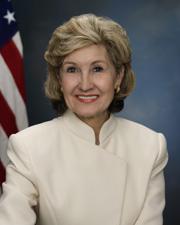
Mr. President, I am pleased to introduce a bill with Senator Bingaman that takes an important step toward modernizing the Internal Revenue Code. Decades ago, investment companies which manage mutual…
Mr. President, I am pleased to introduce a bill with Senator Bingaman that takes an important step toward modernizing the Internal Revenue Code.
Decades ago, investment companies which manage mutual funds were limited in the amount of income they could receive from investments in partnerships.
At the time, this restriction was established to address legitimate concerns and protect the interests of investors. Ownership interests in partnerships can be illiquid, so it is difficult to get one's money out of the investment. Partnerships are also not required to be transparent in their financial statements, so it could be difficult for investors to accurately assess a business
However, the world has changed. Some partnerships have been able to go public and offer shares on the stock markets, so the problem of liquidity is solved. By going public, they must meet much higher standards of financial transparency, including regularly publishing audited financial statements for investors. Currently, 50 publicly traded partnerships trade on major U.S. stock exchanges; 14 of these companies are headquartered in my home State, Texas.
Unfortunately, tax laws have not reflected this change in the business and financial worlds. Mutual funds are still restricted in how much they can invest in any partnership, including those that are publicly traded. This significantly impedes the ability of these companies to raise capital. It limits their ability to grow and create jobs.
Publicly traded partnerships play an important role in the economy. About half are in the energy sector, actively involved in building and operating infrastructure to gather, process and transport oil and natural gas. These partnerships also include timber and real estate companies. It is clear we need a healthy energy sector to ensure the availability of oil and gas at reasonable prices.
The bill Senator Bingaman and I introduce today will lead to a dramatic increase in the flow of capital to these companies. Mutual funds, which often purchase a majority of equity offerings, will be able to participate in stock offerings from publicly traded partnerships. This will expand the investor base and lower the cost of capital, ultimately helping to lower energy prices.
Our bill will also provide millions of investors an opportunity, through their mutual funds, to participate in another investment opportunity if their professional mutual fund managers believe it is an attractive investment.
It is wrong for the Federal Government to use the tax code to make decisions for investors. The bill we are introducing will modernize our tax laws so families can make their own financial planning decisions. This legislation will also provide an important source of capital for key areas of the economy. I hope my colleagues will support this long overdue improvement.

Mr. President, I rise today to introduce the Tax Court Modernization Act. I am joined in this legislation by my colleague Senator Breaux, and by the Chairman and Ranking Democrat of the Finance…
Mr. President, I rise today to introduce the Tax Court Modernization Act. I am joined in this legislation by my colleague Senator Breaux, and by the Chairman and Ranking Democrat of the Finance Committee, Senator Grassley and Senator Baucus.
The United States Tax Court plays an important role in our tax system. However, it has been years since Congress has taken a good hard look at the Tax Court. This bipartisan piece of legislation will improve this Court in a number of ways, and I would like to take a moment to summarize some of its provisions.
First, the TCMA would make minor changes in the Tax Court's jurisdiction. These are small changes that will
have a big impact on the Court's efficiency. For example, the bill would allow the Tax Court to hire employees on its own, just as other courts do. Currently, the Tax Court is forced to hire through the Executive Branch's Office of Personnel Management, entangling the executive power with the judicial power. Restoring the constitutional separation of powers in the hiring process will increase the independence of the Tax Court.
Second, the TCMA would improve the way that Tax Court judges receive retirement benefits and other non-salary benefits. I believe that Tax Court judges should be treated the same way that bankruptcy, Court of Federal Claims, and Article III judges are treated when it comes to fringe benefits.
Tax Court judges are often not provided with the same benefits as similarly appointed Article I and Article III judges. For example, Congress allows Article III, bankruptcy, and Court of Federal Claims judges to participate in the Thrift Savings Plan in addition to the Civil Service Retirement System, while Tax Court judges are ineligible to participate in this program. These disparities in the treatment of our Tax Court judges affect the Court's ability to attract and retain seasoned judges, as well as talented employees.
I have spent many years observing the Federal judiciary. I have spent many years trying to improve the Judicial Branch of our government and to make it the very finest court system the world has ever known. I look forward to working with my colleagues on the Senate Finance Committee on this important piece of legislation. I urge my colleagues, both on the Finance Committee and in the Senate as a whole, to support this legislation.
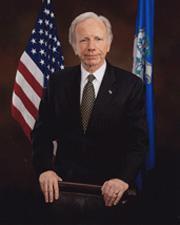
Mr. President, I rise today to introduce a bill, with Senator Olympia Snowe, to encourage the use of fuel cells, a clean and cutting-edge energy technology. Specifically, the bill would give…
Mr. President, I rise today to introduce a bill, with Senator Olympia Snowe, to encourage the use of fuel cells, a clean and cutting-edge energy technology. Specifically, the bill would give consumers a tax credit for purchasing residential and commercial fuel cell systems to power their electricity. The tax credit would apply to stationary and portable fuel cell systems, and would be applicable for 5 years.
First used for space missions in the 1960s, fuel cells use an electrochemical reaction to convert energy from hydrogen-rich fuel sources into electricity. Because no combustion is involved, fuel cells produce virtually no air pollution and significantly reduce carbon dioxide emissions. Fuel cell units in operation today are capable of running 24 hours a day, 7 days a week, with only routine maintenance. They are installed around the world in power plants, hospitals, schools, banks, military installations, and manufacturing facilities. Smaller units for homeowners and small businesses will enter the commercial market shortly.
Fuel cell technology offers a clean, secure, and dependable source of energy that should be part of our national energy strategy. With oil and gas prices now reaching record highs, fuel cells are one excellent answer to our heightened energy demand and dependence on foreign oil. This legislation will power fuel cell technology by speeding its market introduction and by increasing its uses in our everyday lives.
Mr. President, I ask that the bill be printed in the Record.
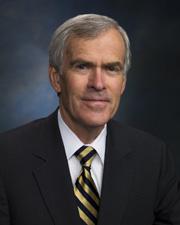
Mr. President, I rise today with my colleague from Texas, Senator Hutchison to introduce legislation that will allow publicly traded partnerships to sell their stock to mutual funds so they can raise…
Mr. President, I rise today with my colleague from Texas, Senator Hutchison to introduce legislation that will allow publicly traded partnerships to sell their stock to mutual funds so they can raise sufficient capital for new investments in pipelines and infrastructure. Because of current restrictions, publicly traded partnerships are hindered in their ability to sell their equity to mutual funds even though their equity is sold on public exchanges. The overwhelming majority of these partnerships are energy-related companies that need the ability to raise capital from mutual funds to build pipelines and other facilities. This legislation would be a strong shot in the arm for the economy as it encourages companies to begin new projects that are currently on hold for lack of capital. It also provides us with the ability to expand our pipeline network to meet our current demands for natural gas. I look forward to working with my colleagues to advance this important legislation.
Bill Text
Latest available legislative text
        [Congressional Bills 108th Congress]
[From the U.S. Government Publishing Office]
[S. 331 Introduced in Senate (IS)]

108th CONGRESS
1st Session
S. 331

To amend part E of title IV of the Social Security Act to provide
equitable access for foster care and adoption services for Indian
children in tribal areas.

_______________________________________________________________________

IN THE SENATE OF THE UNITED STATES

February 6, 2003

Mr. Daschle (for himself, Mr. McCain, Mr. Inouye, Mr. Baucus, Mr.
Johnson, Mr. Domenici, Mr. Bingaman, Mr. Cochran, and Ms. Stabenow)
introduced the following bill; which was read twice and referred to the
Committee on Finance

_______________________________________________________________________

A BILL

To amend part E of title IV of the Social Security Act to provide
equitable access for foster care and adoption services for Indian
children in tribal areas.

Be it enacted by the Senate and House of Representatives of the
United States of America in Congress assembled,

SECTION 1. SHORT TITLE.

This Act may be cited as the ``Indian and Alaska Native Foster Care
and Adoption Services Amendments of 2003''.

SEC. 2. AUTHORITY OF INDIAN TRIBES TO RECEIVE FEDERAL FUNDS FOR FOSTER
CARE AND ADOPTION ASSISTANCE.

(a) Children Placed in Tribal Custody Eligible for Foster Care
Funding.--Section 472(a)(2) of the Social Security Act (42 U.S.C.
672(a)(2)) is amended--
(1) by striking ``or (B)'' and inserting ``(B)''; and
(2) by inserting before the semicolon the following: ``, or
(C) an Indian tribe (as defined in section 479B(e)) or an
intertribal consortium if the Indian tribe or consortium is not
operating a program pursuant to section 479B and (i) has a
cooperative agreement with a State pursuant to section 479B(c)
or (ii) submits to the Secretary a description of the
arrangements (jointly developed or developed in consultation
with the State) made by the Indian tribe or consortium for the
payment of funds and the provision of the child welfare
services and protections required by this title''.
(b) Programs Operated by Indian Tribal Organizations.--Part E of
title IV of the Social Security Act (42 U.S.C. 670 et seq.) is amended
by adding at the end the following:

``SEC. 479B. PROGRAMS OPERATED BY INDIAN TRIBAL ORGANIZATIONS.

``(a) Application.--Except as provided in subsection (b), this part
shall apply to an Indian tribe that elects to operate a program under
this part in the same manner as this part applies to a State.
``(b) Modification of Plan Requirements.--
``(1) In general.--In the case of an Indian tribe
submitting a plan for approval under section 471, the plan
shall--
``(A) in lieu of the requirement of section
471(a)(3), identify the service area or areas and
population to be served by the Indian tribe; and
``(B) in lieu of the requirement of section
471(a)(10), provide for the approval of foster homes
pursuant to tribal standards and in a manner that
ensures the safety of, and accountability for, children
placed in foster care.
``(2) Determination of federal share.--
``(A) Per capita income.--
``(i) In general.--For purposes of
determining the Federal medical assistance
percentage applicable to an Indian tribe under
paragraphs (1) and (2) of section 474(a), the
calculation of an Indian tribe's per capita
income shall be based upon the service
population of the Indian tribe as defined in
its plan in accordance with paragraph (1)(A).
``(ii) Consideration of other
information.--An Indian tribe may submit to the
Secretary such information as the Indian tribe
considers relevant to the calculation of the
per capita income of the Indian tribe, and the
Secretary shall consider such information
before making the calculation.
``(B) Administrative expenditures.--The Secretary
shall, by regulation, determine the proportions to be
paid to Indian tribes pursuant to section 474(a)(3),
except that in no case shall an Indian tribe receive a
lesser proportion than the corresponding amount
specified for a State in that section.
``(C) Sources of non-federal share.--An Indian
tribe may use Federal or State funds to match payments
for which the Indian tribe is eligible under section
474.
``(3) Modification of other requirements.--Upon the request
of an Indian tribe or tribes, the Secretary may modify any
requirement under this part if, after consulting with the
Indian tribe or tribes, the Secretary determines that
modification of the requirement would advance the best
interests and the safety of children served by the Indian tribe
or tribes.
``(4) Consortium.--The participating Indian tribes of an
intertribal consortium may develop and submit a single plan
under section 471 that meets the requirements of this section.
``(c) Cooperative Agreements.--An Indian tribe or intertribal
consortium and a State may enter into a cooperative agreement for the
administration or payment of funds pursuant to this part. In any case
where an Indian tribe or intertribal consortium and a State enter into
a cooperative agreement that incorporates any of the provisions of this
section, those provisions shall be valid and enforceable. Any such
cooperative agreement that is in effect as of the date of enactment of
this section, shall remain in full force and effect subject to the
right of either party to the agreement to revoke or modify the
agreement pursuant to the terms of the agreement.
``(d) Regulations.--Not later than 1 year after the date of
enactment of this section, the Secretary shall, in full consultation
with Indian tribes and tribal organizations, promulgate regulations to
carry out this section.
``(e) Definitions of Indian Tribe; Tribal Organizations.--In this
section, the terms `Indian tribe' and `tribal organization' have the
meanings given those terms in subsections (e) and (l) of section 4 of
the Indian Self-Determination and Education Assistance Act (25 U.S.C.
450b), respectively.''.
(c) Effective Date.--The amendments made by this section take
effect on the date of enactment of this Act without regard to
regulations to implement such amendments being promulgated by such
date.
<all>