Canadian Waste Import Ban Act of 2003
Legislative Activity
Stay on top of the latest movement without scrolling through every action
Read twice and referred to the Committee on Environment and Public Works. (text of measure as introduced: CR S2367-2368)
February 12, 2003
View full timeline
Introduced in Senate
February 12, 2003
Sponsor introductory remarks on measure. (CR S2367)
February 12, 2003
Read twice and referred to the Committee on Environment and Public Works. (text of measure as introduced: CR S2367-2368)
February 12, 2003
Floor Debate
20 membersWhat members said about S. 383 on the floor
 JB
JB CT
CT JDR
JDR SMC
SMC JMJ+15
Floor Debate
20 membersWhat members said about S. 383 on the floor
Mr. President, I rise today with my colleague, the distinguished senior Senator from Idaho, Senator Craig, to introduce the Rural Four-Lane Highway Safety and Development Act of 2003. We are pleased…
Mr. President, I rise today with my colleague, the distinguished senior Senator from Idaho, Senator Craig, to introduce the Rural Four-Lane Highway Safety and Development Act of 2003. We are pleased to be joined by Senators Lincoln and Cochran in sponsoring the bill.
The purpose of this bipartisan legislation is to ensure that States have the resources they need to upgrade major two-lane roads across the Nation to high-quality four-lane divided highways. The goals of this bill are to improve the safety of our most dangerous highways and to stimulate economic development in rural areas.
I think most Senators would agree that the Dwight D. Eisenhower National System of Interstate and Defense Highways is one of the transportation marvels of the 20th century. The system's 46,000 miles of divided highways interconnect virtually every major urban area in the Nation. The system represents one of the most efficient and safest highway systems in the world.
Unfortunately, when the Interstate System was planned, it left many rural communities and smaller urban areas without direct links to the high-quality transportation network that the interstate highways provide. Many of these smaller and rural communities continue to suffer economically because of the lack of high-quality four-lane highways.
To address this issue, in 1995 Congress developed the concept of a National Highway System as a way of extending the benefits of an efficient highway network to all areas of the country. Congress designated the National Highway System to help focus Federal resources on the Nation's most important roads.
Today there are about 160,000 miles on the National Highway System, including all of the interstate highways and all other routes that are important to the Nation's economy, defense, and general mobility. The NHS comprises only 4 percent of the Nation's roads, but carries more than 40 percent of all highway traffic, 75 percent of heavy truck traffic and 90 percent of tourist traffic.
The NHS reaches nearly every part of the Nation. According to the Federal Highway Administration, about 90 percent of America's population lives within 5 miles of an NHS route. All urban areas with a population of more than 50,000, and 93 percent with a population of between 5,000 and 50,000, are within 5 miles of the NHS. Counties with NHS highways have 99 percent of
all jobs, including 99 percent of all manufacturing jobs, 97 percent of mining jobs, and 93 percent of agricultural jobs.
The NHS is the critical transportation link for most of our Nation's rural areas. The Federal Highway Administration estimates that, of the 160,000 miles now on the National Highway System, fully 75 percent, or 119,000 miles, are in rural areas. Of the 1.2 trillion total vehicle miles traveled in 2000 on NHS roads, about 60 percent were in rural areas.
I hope all Senators will agree that improving highway safety should be our top priority. When it comes to highway safety, the fact is that travel on four-lane roads is safer than two-lane roads. This is especially true in rural areas. According to the Bureau of Transportation Statistics, in 1998 the rate of traffic fatalities on all rural roads was 2.39 per 100-million vehicle miles; however, the rate on rural interstate highways was half as high--only 1.23 per 100 million vehicle-miles.
The reason for the lower fatality rate on rural interstate highways should be obvious. When a road has only one lane in each direction, trucks and other slow-moving vehicles increase the hazard of passing. Vehicles turning on or off a two-lane road can also increase risk. A divided four-lane highway greatly reduces these perils.
Of the 119,000 miles of rural NHS roads, about 33,000 miles are interstates and another 28,000 miles have been upgraded to four or more lanes. The remaining 58,000 miles--more than half of this rural highway network--are still only two-lane roads with no central divider. These are the most dangerous roads on the National Highway System.
In my State of New Mexico, we have made some progress toward upgrading our rural two-lane highways to four lanes. In recent years, US550 from Bernalillo to Bloomfield, US285 from Interstate 40 to Carlsbad, and a key segment of US54 from El Paso to Alamogordo have been widened to four lanes. In addition, upgrading of US70 from Las Cruces to Clovis is nearly completed. But much more remains to be done.
New Mexico has 2,647 miles of rural roads in the NHS. Eight hundred and ninety-two of these NHS miles are interstates. Of the balance of New Mexico's NHS highways, 1,755 miles are in the rural parts of my State, especially Chaves, Colfax, Eddy, Lincoln, Guadalupe, Otero, Quay, San Juan, and Union Counties. And almost 70 percent--1,217 miles--of New Mexico's rural NHS highways remain only two-lane roads. These two-lane roads are major transportation routes with heavy truck and commercial traffic. In 2000, a total of 10.3 billion vehicle miles were traveled on New Mexico's NHS highways, and about one quarter, or 2.7 billion miles, were traveled on these rural NHS roads.
Unfortunately, there are only very limited funds available to upgrade the most important two-lane rural NHS roads to four-lane highways. According to a recent GAO study, over two-thirds of all Federal highway funding between 1992 and 2000 has gone either to roads in urban areas or to interstate highways. Consequently, there is a continuing shortfall in Federal highway funding needed to upgrade the most important rural two-lane roads. Our bill will help address the shortfall so that more rural segments of the NHS can be improved to four-lane divided highways.
As in many States, New Mexico's rural counties strongly believe their economic future depends on access to safe and efficient four-lane highways. Basic transportation infrastructure is one of the critical elements for companies choosing where to locate. Truck drivers and the traveling public prefer the safety and efficiency of a four-lane divided highway.
Thus one of the top priorities for rural cities and counties in my State is to complete the four-lane upgrade of such key routes as US54 from Tularosa to Nara Visa, US62/180 from Carlsbad to the Texas state line, US64/87 from Clayton to Raton, and US666 from north of Gallup to Shiprock. These two-lane rural routes in New Mexico not only bear some of the State's heaviest truck and automobile traffic, but also are some of the State's most dangerous roads. In fact, US666 is considered one of the most dangerous two-lane highways in the Nation.
New Mexico is not alone among western states in needing to upgrade two-lane roads on the National Highway System. For example, Texas has almost 3,500 miles of rural two-lane NHS roads. Montana has 2,469 miles, Kansas has 2,293, Nebraska 1,964, Wyoming 1,924, Minnesota 1,897, and Missouri 1,853 miles.
In the East, where States are smaller, many NHS routes remain only two lanes. In Vermont, 78 percent of rural NHS roads are only two lanes, in New Hampshire it's 84 percent and 99 percent in Maine.
I do believe it is time Congress took action to improve the safety of travelers on the highest priority rural two-lane roads. Last year, I secured nearly $1 million in Federal funding to begin the upgrade of US64/87 between Clayton and Raton, which is part of the Ports-to-Plains High Priority Corridor on the National Highway System.
In addition, last week Senator Roberts and I introduced S. 290, which designates U.S. Highway 54 from El Paso, Texas, through New Mexico, Texas, and Oklahoma to Wichita, Kansas, as the SPIRIT High Priority Corridor. Our bipartisan bill has four cosponsors. A high-priority corridor designation provides no additional Federal funding, but helps focus attention on the need to upgrade the nation's major two-lane routes.
The purpose of the bill we are introducing today, the Rural Four-Lane Highway Safety and Development Act of 2003, is to provide direct Federal funding to States to upgrade existing two-lane roads in rural areas to safe and efficient four-lane divided highways. The States would determine which two-lane roads they wanted to upgrade. To be eligible for funding, the highway must be on the National Highway System or a congressionally designated High Priority Corridor. Our bill gives funding priority to upgrading the most dangerous two-lane highways, routes most affected by increased traffic as a result of NAFTA, highways that have high levels of commercial traffic, and projects that will help stimulate regional economic growth. Total funding for six years is $1.8 billion from the highway trust fund.
My State bears a substantial burden in the maintenance and upgrading of its portion of critical national highways. New Mexico has 3.3 percent of the Nation's land area, but only 6 tenths of one percent of the population. We have 2.2 percent of all of the interstate highway miles and 1.7 percent of all other NHS miles. At the same time, as a border State, New Mexico is common route for trucks crossing the border with Mexico and heading to or coming from the east and west coasts. It is likely that the upgrading to four lanes of the most important NHS highways in New Mexico might not occur without the supplemental funding provided in my bill.
I continue to believe strongly in the important role of highway infrastructure to economic development. Even in this age of the so- called ``new'' economy and high-speed digital communications, roads continue to link our communities together and to carry the commercial goods and products our citizens need. Safe and efficient highways are especially important to citizens in the rural parts of our country.
I recognize that the funding level in this bill is inadequate to upgrade all of the remaining two-lane routes on the NHS in the next six years. Upgrading an existing two-lane road to a full four-lane divided highway can cost upward of one million dollars per mile.
Moreover, some of the existing two-lane roads probably don't have sufficient traffic to justify upgrading at this time. In addition, some two-lane NHS routes pass through scenic areas where it may not be appropriate to upgrade to four lanes. However, I do believe the funding in this bill will take us a long way toward ensuring the most critical projects are completed in the next six years.
This year Congress will take up the reauthorization of the comprehensive six-year transportation bill, TEA-21. We are introducing this bipartisan bill today to help ensure that the issue of the safety of rural two-lane NHS routes receives the attention it deserves as the debate on reauthorization begins. I look forward to working with the chairman of the Environment and Public Works Committee, Senator Inhofe, and Senator Jeffords, the ranking member, as well as Senators Bond and
Reid of the Transportation, Infrastructure and Nuclear Safety Subcommittee, to find a way to ensure additional federal resources are in place to hasten the work of upgrading rural two-lane NHS roads to safe, efficient four-lane divided highways.
I ask unanimous consent that the text of the bill be printed in the Record.
Mr. President, the legislation I am introducing today with Senators Thomas, Lincoln, and Johnson entitled ``The Medicare Incentive Payment Program Improvement Act of 2003'' is designed to improve the flow of needed bonus payments to physicians serving Medicare patients in Health Professions Shortage Areas, HPSA.
The Medicare Incentive Payment Program, MIPP, created by the Omnibus Budget Reconciliation Act of 1987, was meant to assist physicians in defraying the higher costs and burdens of serving Medicare patients in shortage areas. Rural areas are know to suffer from physician shortages, both primary care and specialty physicians. In fact, even though 20 percent of America lives in a rural area, less than 11 percent of physicians in the U.S., practice in rural areas.
In my own State, the ongoing loss of physicians from underserved areas has affected both primary care and in particular, specialty services. In many areas, the shortage of specialists exceeds that of the primary care physicians. The New Mexico Health Policy Commission reported in its year 2000 report that 22 percent of residents in Los Alamos and Santa Fe were unable to receive needed specialist care.
While the national ratio of physicians per population is 198 doctors per 100,000 persons, New Mexico ranks 33rd in the country with only 170 physicians per 100,000 population. We are not in a position to ``grow our own doctors'' either as New Mexico ranks 37th among the 46 States with medical schools in graduating physicians per capita.
New Mexico, like many other States with large numbers health profession shortage areas, or HPSAs, must rely on its ability to recruit and retain physicians in underserved areas to meet the health care needs of its citizens. It was the original intent of the MIPP to do this, by allowing for physicians in underserved areas to receive an additional 10 percent add-on in payments for services rendered. These 10 percent ``bonuses'' are meant to be an essential component in our ongoing effort to ensure Medicare beneficiaries access to medical services, particularly in underserved areas.
Unfortunately, the Medicare Incentive Payment Program has fared poorly, with few providers choosing to receive the payments. In fact, the total annual physician payments have never exceeded $100 million, because of a series of disincentives in the legislation.
The program requires a provider to do a number of things to obtain the bonus payments. First, providers must be aware that MIPP payments are available to them. Many providers are unaware of the program's existence. Next, physicians must find out if the patient's medical care occurred in a shortage area. Following this, a unique code must be attached to the Medicare claim, which is then forwarded to the carrier. Finally, after all these steps, providers are subjected to automatic Medicare audits, just for applying for the very payments for which they are eligible.
Providers committed to serving Medicare patients in underserved areas deserve the support assured by the original legislation's intent.
The Medicare Incentive Payment Improvement Act of 2003 addresses and improves shortcomings in the original legislation by: Placing the burden for determining the bonus eligibility on the Medicare carrier. Eliminating automatic provider audits. Directing the Center for Medicare and Medicaid Services to establish a Medicare Incentive Payment Program Educational Program for Providers. Establishing an ongoing analysis of the programs, ability to improve Medicare beneficiaries' access to physician services. Continue to provide the original 10 percent add-on bonus for Part B physician payments in Health Provider Shortage Areas.
Medicare carriers are the logical arbiters to determine whether physician services occurred in a shortage area. Physicians, already overworked, lack sufficient time, resources and training to research and determine whether a service was provided in a HPSA. By placing the responsibility on carriers, with their sophisticated information systems, the physician's administrative burdens will be reduced.
The automatic audits triggered by this program, which are costly, time intensive, and unwarranted, will be lifted under our legislation. By placing the responsibility on carriers to determine payment eligibility the need for provider audits is eliminated.
While the MIPP program is intended to improve beneficiaries' access to physician services, there is no measure of the program's effect on physician availability. The legislation offered today directs CMS to perform an ongoing analysis as to whether these payments actually do improve beneficiaries' access to physician services.
I believe these improvements, in addition to others listed above, will greatly improve patient's access to care.
The following organizations have expressed support for this legislation: American College of Physicians/American Society of Internal Medicine, and the National Rural Health Association.
I ask unanimous consent that the text of the bill be printed in the Record.
Mr. President, I rise today to introduce the ``Listing and Delisting Reform Act of 2003.'' The Endangered Species Act has become one of the best examples of good intentions gone astray. Today, I am…
Mr. President, I rise today to introduce the ``Listing and Delisting Reform Act of 2003.'' The Endangered Species Act has become one of the best examples of good intentions gone astray. Today, I am taking one small step toward injecting some common sense into what has become a regulatory nightmare. It is my intention to start making the law more effective for local landowners, public land managers, communities and State governments who truly hold the key to any successful effort to conserve species. My legislation seeks to improve the listing, recovery planning and delisting processes so that recovery, the goal of the act, is easier to achieve.
In Wyoming, we have seen first hand the need to revise the listing and delisting processes of the Endangered Species Act. Listing should be a purely scientific decision. Listing should be based on credible data that has been peer-reviewed. In 1998, the Preble's Meadow Jumping Mouse was listed in the State of Wyoming. The listing process for this mouse demonstrates how the system has gone haywire, devoid of good science. One of the more significant shortcomings regarding the handling of the Preble Mouse has been the confusion between the ``known range'' as opposed to the alleged ``historical range'' of the mouse. Historical data and current knowledge do not support the high, short- grass, semi-arid plains of southeastern Wyoming as part of the mouse's historical habitat range. The U.S. Fish and Wildlife Service has even admitted to uncertainties regarding taxonomic distinctions and ranges. further, the State was not properly notified causing counties, commissioners, and landowners all to be caught off guard. Such poor practices do not foster the types of partnerships that are required if meaningful species conservation is to occur. Clearly, changes to the Endangered Species Act are desperately needed.
Not far behind the mouse in Wyoming, was the black tailed prairie dog. Petitions to list the prairie dog were filed with the U.S. Fish and Wildlife Service. I've lived in Wyoming most of my life, and I've logged a lot of miles on the roads and highways in my State over the years. I can tell you from experience that there is no shortage of prairie dogs in Wyoming. Any farmer or rancher will concur with that opinion. This petition, and countless other actions throughout the country, makes it painfully clear that some folks are intent on completely eliminating activity on public lands, no matter what the cost to individuals or local communities that rely on the land for economic survival.
My legislation will require the Secretary of the Interior to use scientific
or commercial data that is empirical, field tested and peer-reviewed. Right now, it's basically a ``postage stamp'' petition: any person who wants to start a listing process may petition a species with little or no scientific support. This legislation prevents this absurd practice by establishing minimum requirements for a listing petition that includes an analysis of the status of the species, its range, population trends and threats. The petition must also be peer reviewed. In order to list a species, the Secretary must determine if sufficient biological information exists in the petition to support a recovery plan. Under my proposal, States are made active participants in the process and the general public is provided a more substantial role.
This legislation requires explicit planning and forethought with regard to conservation and recovery at the time the species is listed. Let me be clear about the intent of this requirement. I do not question the basic premise that some species require the protection of the Endangered Species Act. However, listing a species can cause hardship on a community. For that reason, it is critically important and only reasonable that every listing be supported by sound science. We should be sure of the need for a listing before we ask the members of our communities and private landowners to make sacrifices.
In Wyoming, I have found that with several listings, the Secretary of the Interior was unable to tell me what measures were required to achieve species recovery. The Secretary could not tell me what acts or omissions we could expect to face as a consequence of listing. How can this be, if the Secretary is fully apprized of the status of the species? Conversely, if the Secretary cannot clearly describe how to reverse threatening acts to a species so that we can achieve recovery, how can we be sure that the species is, in fact, threatened?
This ambiguity has caused much undue frustration to the people of Wyoming. If the Secretary believes that certain farming or ranching practices, or a private citizen's development of their own property is the cause for a listing, then the Secretary should identify those activities that have to be curtailed or changed. If the Secretary does not have enough information to indicate what activities should be restricted, then why list a species? Why open producers and others to the burden of over-zealous enforcement and even litigation without being able to achieve the goal of recovering the species?
This legislation is ultimately designed to improve the quality of information used to support a listing. If the Secretary knows enough to list a species, that person should know enough to tell us what will be required for recovery. That should be the case under current law, and that is all that this provision would require.
Additionally, we need to revise the end of the process, the de- listing procedure. Recovery should be the goal of the Endangered Species Act. Yet, it is virtually impossible to de-list a species. There is no certainty in the process, and the State who has all the responsibility for managing the species once it is off the list are not true partners in that process. Once the recovery plan is met, the species should be de-listed.
Wyoming's experience with the Grizzly bear pinpoints some of the problems with the current de-listing process. The Interagency Grizzly Bear Committee set criteria for recovery and in the Yellowstone ecosystem, those targets have been met, but the bear has still not been removed from the list. We've been battling the U.S. Fish and Wildlife Service for years over this issue to no avail. Despite rebounded populations, we keep funneling money down a black hole.
The point is something needs to be done. People in Wyoming have grown weary of the Endangered Species Act and the efforts of a vocal minority to run roughshod over their lives and interests. It is imperative to the longevity of many species and our citizens in the West that we bring this Act to the snubbing post and gain control of the process. The changes I've suggested will have a significant affect on the quality of science, public participation, state involvement, speed in recovery and finally the delisting of a species. Species that truly need protection will be protected, but let's not lose sight of the real goal--recovery and delisting.
Mr. President, I rise today to introduce the ``State and Local Government Participation Act of 2003'' which would amend the National Environmental Policy Act, NEPA. This bill is designed to guarantee that Federal agencies identify State, county and local governments as cooperating agencies when fulfilling their environmental planning responsibilities under NEPA.
NEPA was designed to ensure that the environmental impacts of a proposed Federal action are considered and minimized by the federal agency taking that action. It was supposed to provide for adequate public participation in the decision making process on these Federal activities and document an agency's final conclusions with respect to the proposed action.
Although this sounds simple and quite reasonable, NEPA has become a real problem in Wyoming and many States throughout the Nation. A statute that was supposed to provide for additional public input in the federal land management process has instead become an unworkable and cumbersome law. Instead of clarifying and expediting the public planning process on Federal lands. NEPA now serves to delay action and shut-out local governments that depend on the proper use of these Federal lands for their existence.
The ``State and Local Government Participation Act'' is designed to provide for greater input from State and local governments in the NEPA process. This measure would simply guarantee that State, county and local agencies be identified as cooperating entities when preparing land management plans under NEPA. Although the law already provides for voluntary inclusion of state and local entities in the planning process, too often, the federal agencies choose to ignore local governments when preparing planning documents under NEPA. Unfortunately, many Federal agencies have become so engrossed in examining every environmental aspect of a proposed action on Federal land, they have forgotten to consult with the folks who actually live near and depend on these areas for their economic survival.
States and local communities must be consulted and included when proposed actions are being taken on Federal lands in their State. Too often, Federal land managers are more concerned about the comments of environmental organizations located in Washington, DC or New York City than the people who actually live in the State where the proposed action will take place. This is wrong. The concerns, comments and input of state and local communities are vital for the proper management of federal lands in the West. The ``State and Local Government Participation Act of 2003'' will begin to address this troubling problem and guarantee that local folks will be involved in proposed decision that will affect their lives.
I ask unanimous consent that the text of the bill be printed in the Record.
Mr. President, I am proud to re-introduce a bill that reauthorizes the landmark welfare reform legislation passed in 1996. It is basically the same bill as I introduced in the last Congress and it is…
Mr. President, I am proud to re-introduce a bill that reauthorizes the landmark welfare reform legislation passed in 1996. It is basically the same bill as I introduced in the last Congress and it is designed to allow States to continue the important work to promote work and personal responsibility. This reauthorization bill is designed to allow States to continue to provide the flexible initiatives that have reduced national welfare caseloads by over 50 percent and moved millions of Americans from welfare to work.
Welfare reform was a bold experiment to dramatically change a major social program. In 1996, Congress ended the entitlement of eligible families with children to cash aid. The results five years later are impressive. Over two-thirds of the people who are leaving the welfare rolls have left for work.
Seven years ago, we agreed that the bipartisan goal of welfare reform should be to promote work and to protect children. We stood here together,
on unchartered ground, and endorsed significant policy changes that we believed would help families gain independence and economic self- sufficiency, while protecting the children. States began to revise welfare service delivery with guidance based on the new reforms. Each State designed and implemented programs that were unique and specific to their populations. While the results have been mixed, I believe that encouraging progress has been made. The challenge this year will be to continue to build on our foundation, and be sensitive to the current economic situation and the fiscal crisis States face today.
When we started welfare reform, we had a strong economy. Now, States are struggling and most of their reserves are gone. I believe we can continue the progress of welfare reform, but I strongly believe we must provide the key investments that help welfare parents make a successful transition from welfare to work, including increasing child care funding.
In West Virginia, welfare reform has brought bold changes. Parents on welfare get extra support as they face new responsibilities and obligations to make the transition from welfare to jobs. In 2001, I hosted a roundtable discussion to meet with individual West Virginians who were undergoing major life transitions. They told me that they were proud to be working, but that it was often still a struggle to make ends meet and do the best for their children. The goal of this legislation is to help those parents, and millions more, to promote the well-being of their children, even as they work.
Today, I am introducing the Personal Responsibility and Work Opportunity Reconciliation Act Amendments of 2003. States need help to continue making progress. We should continue to build on this foundation, and not reduce state flexibility. It is essential that we continue welfare reform, not unravel it, or restructure it.
This bill acknowledges that we must keep the focus on work, by both requiring and rewarding work. To ensure a real focus on helping parents leave welfare rolls for a job, this legislation gradually replaces the caseload reduction credit with an employment credit, designed by Senator Lincoln of Arkansas and Congressman Levin of Michigan. Under this important provision, States will only get a bonus toward their work participation requirement if parents move from welfare to a job. This credit will acknowledge the dignity of all work by providing a bonus for parents who get jobs, both full and part-time. A mother who has never worked in her life and then gets a part-time job has achieved a true accomplishment, and that deserves recognition. It is also the first step toward independence. It is an empowering approach to promoting work and sends the proper message to families who are striving to become self sufficient. I am pleased to incorporate their proposal into my bill, and I look forward to working with them closely throughout the welfare debates during this Congress to develop an employment credit that truly rewards work.
At this point, with a soft economy, I believe it is unwise to significantly change State TANF programs to impose drastically higher work participation rates requiring 40 hours per week of work and activities. Such changes, as suggested by the Administration, would double the work requirement for mothers with children under the age of 6, and that does not seem right. Increasing work requirement without new funding for child care, transportation, and job placement activities would be, plain and simple, an unfunded mandate. It could hinder state efforts to move parents into private sector jobs. It could undermine our progress.
State officials have testified before the Finance Committee that such changes would force states to restructure existing programs that are working and turn their focus away from those who need some assistance with child care or transportation, but are no longer dependent on a welfare check. We should not cut back on necessary child care and work supports for working families who are following the rules we set in 1996.
This comprehensive welfare reform bill makes the right investments. It invests $5.5 billion more in child care, which is the amount supported by the Finance Committee in a bipartisan vote last June.
This bill also increases funding for the basic TANF block grant by $2.5 billion because of state need. It provides full funding for the Social Services at $2.8 billion, which was promised to the states in 1996. My bill also would expand and increase the supplemental grants to help the states with high growth and high poverty deal with the challenges of welfare reform. With these new investments, states will be able to increase investment in the fundamental work supports like child care, transportation, and training, that help a parent succeed in moving from welfare to work. States would have flexibility in allocating the new resources, but I believe much of the funding can and will be directed into child care, which is a major priority.
This bill would continue the transitional Medicaid program so families can keep health care coverage for a year as they move from welfare to work. In 1996, I was proud to work with Senator Breaux and the late Senator John Chafee to protect access to health care for such vulnerable families. I have incorporated Senator Breaux's bipartisan bill to continue transitional Medicaid coverage, and I appreciate his leadership on this and other key issues. Our bill also gives states more flexibility and options to place parents in vocational training and English as a Second Language programs, so parents can get real jobs. In recognition of Maine's success with the Parents as Scholar program, States have the option to follow the Maine model for 5 percent of their caseload to combine work and education.
The bill also invests $200 million to create BusinessLink Grants, competitive grants to support public and private partnerships to help parents get jobs. The Welfare-to-Work Partnership is just one example of how nonprofits working with business leaders can make a real difference. The Partnership includes over 20,000 businesses that have provided more than 1 million jobs to parents moving from welfare to work. I have met with the board members of this group, and we should encourage such partnerships. I know that other groups, like the Salvation Army and Good Will, are doing important work on providing transitional job opportunities, and these organizations would be eligible for grants as well.
A job is the first step, but for welfare parents to make a successful transition to independence, they need a range of supports. To achieve this goal, the bill will create Pathways to Self-Sufficiency Grants to improve the support network for parents. These grants are intended to provide incentives and support to TANF caseworkers and nonprofit organizations to help improve the comprehensive network of supports for working families, including Medicaid, CHIP, child care, EITC, and a range of services. Working mothers deserve to know what type of support will be available so that they do not slip back into welfare.
Work is fundamental, but we also need to be concerned about important aspects of the lives of families and children. This legislation creates a Family Formation Fund to encourage healthy families, reduce teenage pregnancy, and improve child support and participation of parents in children's lives. The bill seeks to end certain discrimination and harsh rules for two-parent families in the current system. If our goal is to support marriage, we should not penalize married couples.
Our legislation also makes a simple, but important change. Under the current TANF program, each welfare parent has an Individual Responsibility Plan that serves as an assessment and work plan. In addition to having a responsibility to work, parents have a responsibility to protect their children's well-being. To emphasize this fundamental point, this bill adds language directing states to incorporate the concept of a child's well-being into each parent's Individual Responsibility Plan. States have great flexibility, but it is important to send a clear message that one of a parent's responsibilities is the well-being of their children.
This legislation builds on the foundation of the 1996 Personal Responsibility and Work Opportunity Reconciliation Act. My hope is that this framework will help promote bipartisan discussion about how we can make even more improvements in our welfare system,
while maintaining our partnership with the States, particularly at this time of severe fiscal problems in our States.
Mr. President, I am pleased to join Senator Jeffords in introducing the Clean Power Act of 2003. This bill will remove the loophole that has allowed the dirtiest, most polluting power plants in the…
Mr. President, I am pleased to join Senator Jeffords in introducing the Clean Power Act of 2003. This bill will remove the loophole that has allowed the dirtiest, most polluting power plants in the Nation to escape significant pollution controls for more than 30 years.
Maine is one of the most beautiful and pristine States in the Nation. It is also one of the most environmentally responsible States in the Nation. Maine has fewer emissions of the pollutants that cause smog and acid rain than all but a handful of states. Maine also has one of the lowest emissions of carbon dioxide nationwide.
Unfortunately, despite the collective environmental consciousness of both the citizens and industries of Maine, Maine still suffers from air pollution. Every lake, river, and stream in Maine is subject to a state mercury advisory that warns pregnant women and young children to limit consumption of fish caught in those waters. Even Acadia National Park, one of the most beautiful national parks in the Nation, experiences days in which visibility is obscured by smog.
Where does all this pollution come from? A large part of it comes from a relatively small number of mostly coal-fired power plants that use loopholes to escape the provisions of the Clean Air Act. Coal-fired power plants are the single largest source of air pollution, mercury contamination, and greenhouse gas emissions in the nation. A single coal-fired power plant can emit more of the pollutants that cause smog and acid rain than all of the cars, factories, and businesses in Maine combined.
As the easternmost State in the Nation, Maine is downwind of almost all power plants in the United States. Many of the pollutants emitted by these power plants--mercury, sulfur dioxide, nitrogen oxides, and carbon dioxide--end up in or over Maine. Airborne mercury falls into our lakes and
streams, contaminating freshwater fish and threatening our people's health. Carbon dioxide is causing climate change that threatens to alter Maine's delicate ecological balance. Sulfur dioxide and nitrogen oxides come to Maine in the form of acid rain and smog that damage the health of our people and the health of our environment.
A single power plant can emit nearly a ton of mercury in a single year. That's equivalent to incinerating over 1 million mercury thermometers and is enough to contaminate millions of acres of freshwater lakes. In contrast, Maine has zero power plant emissions of mercury. This bill would reduce mercury emissions from power plants by 90 percent by 2009.
I am pleased that there has been so much recognition recently of the problems that so many States are facing on clean air. President Bush has proposed a ``Clear Skies'' initiative that will reduce emissions of mercury, sulfur dioxide, and nitrogen oxides. Last year, Senators Carper, Chafee, Breaux, and Baucus also introduced legislation that would reduce these pollutants, as well as carbon dioxide.
There are important differences between these proposals. The Jeffords/Collins bill does more to reduce smog, acid rain, mercury pollution, and global warming than any other bill. Our bill provides more public health and environmental benefits than any other serious proposal, and it provides the benefits sooner. However, any step which reduces air pollution is a step in the right direction. Our parks and our people have waited far too long for clean air.
I think virtually everyone agrees that we need to reduce power plant pollution. I look forward to working with the Administration and my colleagues on both sides of the aisle to provide cleaner air.
Mr. President, today, I rise to offer to the Senate some good news for our mailers and, indeed, anyone who uses the United States Postal Service. The USPS, which has been losing significant amounts of money in recent years despite repeated increases in postage rates, has determined that its finances are in better order than previously thought. If Congress acts expeditiously on legislation that I am introducing today along with my colleague, Senator Carper, the Postal Service will avoid an imminent rate hike.
In recent years, the United States Postal Service has been raising postal rates at a rapid pace. When the USPS last raised rates in 2002, it was the third such rate increase during an 18-month period. Such steep, irregular rate increases make it very difficult for businesses to plan for their postal costs. This is a particular problem for
catalog companies and magazine publishers, which set their prices in advance based on assumptions about postal rates. Mailing costs for some smaller catalog businesses, I am told, now can exceed production costs.
In so many ways, postage rate increases have a significant economic impact. As rates increase, so do the costs Americans bear to send letters, mail packages, and pay their bills. Rate increases also raise the cost of goods, which, of course, reflect not only the cost to ship but also the cost to advertise by mail.
But rate increases reflect the price of maintaining an ever-expanding postal network and the infrastructure to sustain it. Each year, the Postal Service adds 1.7 million new addresses. This equates to 4,800 new letter carriers making deliveries to over 513 million new delivery stops each year, all while maintaining one of the lowest first-class letter rates in the world.
In addition to providing a critical service to individual postal patrons, the Postal Service is a powerful economic engine. The USPS is the eleventh largest enterprise in the Nation with $66 billion in annual revenue, more than Microsoft, McDonald's and Coca Cola combined. While the Postal Service itself employs more than 700,000 career employees, it is also the linchpin of a $900 billion mailing industry that employs nine million Americans in fields as diverse as direct mailing, printing and paper production.
That is why the deteriorating state of the United States Postal Service's finances has been a source of great concern to many of us. After several years of large losses, the USPS has been slowly approaching its statutory borrowing limit of $15 billion.
A few months ago, however, the Office of Personnel Management discovered that the USPS will dramatically over-fund its contributions to the Civil Service Retirement Fund unless the law is changed. After having based the Postal Service's annual contributions on the assumption that it had an actuarial deficit of $32 billion, OPM discovered instead that the USPS's CSRS deficit was actually only $5 billion. The difference is primarily due to higher than expected yields on pension investments by the Department of the Treasury. If the USPS continues to fund the CSRS at its current pace, it will over-fund its CSRS liability by $78 billion.
If Congress approves the changes to the payment schedule as my bill provides, the Postal Service's CSRS retirement expense would be reduced by $2.9 billion in fiscal year 2003 and another $2.8 billion in fiscal year 2004. The USPS would be able to reduce its debt by more than $3 billion in fiscal year 2003, and anticipated rate increases would be delayed until at least 2006, ushering in an era of stable and predictable postal rates.
My initial response upon hearing this good news was one of pleasant surprise but mixed, I admit, with a healthy dose of skepticism. As the old saying goes, ``if it sounds too good to be true, it probably is.'' However, the Office of Management and Budget, as well as the U.S. Treasury Department, have confirmed OPM's analysis. Further, having spoken with experts outside the government as well, I have become satisfied that this situation represents a rare exception to the rule.
That is why Senator Carper and I today introduce the Postal Civil Service Retirement System Funding Act of 2003. Our bill will correct the statutory funding mechanism for the Civil Service Retirement System, CSRS. This legislation is necessary to prevent the overpayment of retirement contributions by the U.S. Postal Service. Most important, this bill directs OPM to determine a new amortization schedule that will pay off the Postal Service's existing unfunded CSRS liability of $5 billion.
In addition, the legislation requires that the savings resulting from this Act be used to reduce the postal debt in a manner that the Secretary of Treasury shall specify. It also expresses the sense of Congress that the Postal Service should use these savings to fulfill its commitment to hold postal rates unchanged until at least 2006, to begin to pay a portion of their massive unfunded health care liabilities, and that the savings not be used to pay bonuses to Postal Service executives.
The USPS needs other changes as well, something acknowledged by everyone inside and outside the Postal Service. I was pleased that President Bush appointed a Commission on the U.S. Postal Service that is modeled along the principles outlined in legislation I introduced last year. I am hopeful that when the Commission reports this summer, it will provide us with a blueprint to ensure that our postal system is ready to serve twenty-first century America as ably as it has served us in the past. I look forward to receiving the Commission's report and any recommendations for legislation it may include.
I ask unanimous consent that the text of the bill be printed in the Record.
Mr. President, today I am pleased to introduce the Clean Power Act of 2003 along with 19 of my colleagues, Republicans and Democrats. That is a fifth of the Senate on record supporting a measure…
Mr. President, today I am pleased to introduce the Clean Power Act of 2003 along with 19 of my colleagues, Republicans and Democrats. That is a fifth of the Senate on record supporting a measure which dramatically reduces emissions of four pollutants coming from power plants--sulfur dioxide, nitrogen oxides, carbon dioxide and mercury.
These pollutants create or contribute to smog, soot, acid rain, mercury contamination and global warming. They cause death, disease, ecological degradation, birth defects, and increase the risk of abrupt and unwelcome climate changes.
The nation has made some impressive strides in reducing air pollution since 1990. But there is a lot of unfinished business, a fact confirmed every day by more and ever better science.
Power plants are still the nation's single largest source of air pollution, including greenhouse gases. They are responsible for 60 percent or more of national sulfur dioxide emissions, 25 percent of nitrogen oxides, 40 percent of carbon dioxide, and about 45 tons of mercury annually.
Fine particulate matter coming from power plants, mainly through SOX and NOX emissions, is causing or contributing to the premature deaths of approximately 30,000 people.
More than 130 million people are living in areas with unhealthy air. Ground-level ozone triggers over 6.2 million asthma attacks each summer in the eastern United States alone, and some studies show that it may actually cause asthma. Another 160,000 people are sent to emergency rooms due to smog-induced respiratory illness. Power plants are significant contributors to this air quality degradation, as well as causing major reductions in visibility in our national parks and wild places. The National Park Service posts air quality warning signs for hikers in the Great Smoky Mountains every other day on average during the high ozone season.
Acid rain continues to fall on the Northeast, and the Southeast, damaging sensitive ecosystems and acidifying lakes and streams. In my state of Vermont, the red spruce, the sugar maple, and other species are becoming more and more immune-compromised.
The Hubbard Brook Research Foundation says we must reduce sulfur dioxide emissions by 80 percent from current Clean Air Act requirements to begin biological recovery mid-century in the Northeastern U.S. That means bringing emissions way down now, not prolonging the wait for healthy trees and lakes.
Coal-fired power plants emit the bulk of the uncontrolled mercury emissions in the U.S. Mercury is a potent neurotoxic pollutant. It contaminates fish causing fish consumption warnings in 41 States. And mercury puts over 60,000 children at risk of negative developmental effects due to fetal exposure.
Despite our international commitment to reduce greenhouse gas emissions to 1990 levels through voluntary means, we have failed. In particular, power sector emissions of carbon dioxide, a major greenhouse gas, have increased by more than 25 percent since 1990. This failure increases the risks from global warming.
It is plainly obvious that we must make swift and major reductions in these pollutants for the sake of public health, the environment, and the world's climate. Without quick action, the nation's fleet of fossil power plants will continue to inefficiently belch out millions of tons of harmful pollutants.
The Clean Power Act of 2003 will mainly use the largely successful cap-and-trade system in the 1990 Clean Air Act Amendments to make quick and cost-effective reductions in these pollutants. At the same time, this bill does not abolish or eliminate any of the vital local and regional air quality protection programs in the Clean Air Act. Our bill reduces emissions of sulfur dioxide by 81 percent from 2000. Nitrogen oxides will be reduced by 71 percent from 2000. And carbon dioxide will be capped at 21 percent below 2000 levels. Mercury will be controlled to 90 percent below 1999 levels.
This bill has a hybrid allocation system for distributing the allowances for the three capped and tradable pollutants (NOX, SOX, CO2). Most allocations, about \2/3\, go to households and consumers. The rest go to renewable energy, energy efficiency, and other categories. This system rewards cleaner power producers and ensures that the public gets compensated for the polluters' use of the atmosphere.
Our bill is intended to save the lives that are now being lost prematurely to lung disease and other illnesses. We want to continue on the path set in 1990 of reducing acid rain.
We want certainty that mercury will no longer threaten unborn children and the future environment will be safer and cleaner for them when they are grown.
Certainty is a valuable commodity. Industry witnesses have testified that certainty is critical to their investment strategies. Our bill provides a
clear signal on exactly what is expected of pollution sources and when.
I want certainty that the promise of the Clean Air Act will be delivered to all Americans.
At the Environment and Public Works Committee, we have heard many times that technologies are readily available to meet the challenges in our bill. And that these challenges can be met in a cost-effective manner that allows our economy to prosper and improve public health.
We can't afford to slow down progress on achieving better air quality and we must start to make real progress in reducing greenhouse gas emissions. The voluntary approach has failed for 12 years now and we must do better.
As Senators may know, when I was Chairman of the Senate Environment and Public Works Committee, we approved a bill nearly identical to the bill that we are introducing today. The only significant difference is that the deadline for compliance with all the pollution caps except mercury have been moved later by one year. Mercury still follows the schedule in the consent decree which requires compliance by 2008.
I look forward to entering into serious discussions with the Administration on signing into law good, comprehensive four-pollutant legislation. However, their actions so far on air quality matters have not fostered an atmosphere of trust and cooperation.
I ask unanimous consent that a brief summary of the legislation and the text of the bill be printed in the Record.
Show 8 more

Mr. President, I rise today, along with my colleague from New York, Senator Clinton, to introduce the Childhood Vaccine Supply Act--a bill that would help ensure that our nation's public health…
Mr. President, I rise today, along with my colleague from New York, Senator Clinton, to introduce the Childhood Vaccine Supply Act--a bill that would help ensure that our nation's public health system has an adequate vaccine supply.
Vaccinations are critical in our efforts to keep our population, particularly children and the elderly, healthy. They are key in protecting the elderly from influenza during flu season or protecting children from contracting polio or the mumps. They--vaccinations, inoculations, immunizations, whatever you want to call them--also help lessen the threat of bacterial or viral infections and potential disease outbreaks.
Currently, it is recommended that children receive 12 routine vaccinations against preventable diseases. These vaccinations are given in a series of shots and booster shots by the age of two, with an additional four doses later in life. This ends up being about 16 to 20 doses of vaccines for children. Yet, just last year, over half of the vaccines children need were in short supply.
That shortage of vaccines was not acceptable, and we should do all we can to prevent any future shortage and do all we can to protect our kids from illness and disease. As a Senator, and more importantly, as a father of eight and grandfather of eight, nothing is more important to parents than the health and safety of our children.
While we are not currently experiencing a shortage, we know that the vaccine market is unstable and unpredictable. According to the Centers for Disease Control's National Immunization Program, there were several reasons for the shortages last year. The CDC concluded and posted on its website that the ``reasons for these shortages were multi-factorial and included companies leaving the vaccine market, manufacturing or production problems, and insufficient stockpiles.'' The CDC did as good a job as it possibly could, especially considering the vaccine shortages our nation faced last year. The agency's website posted information about shortages and released revised vaccine schedules to keep our public informed and knowledgeable about vaccination shortages.
But, even with the strong efforts of the CDC, we can work toward preventing a future vaccine shortage. We can work toward a more permanent solution. The bill I am introducing with my colleague from New York will go a long way to do just that.
The bill we are introducing today--the Childhood Vaccine Supply Act-- would help bring some stability to our fragile vaccine supply. Unlike drug manufacturers, vaccine manufacturers do not have to give notice when they stop making a vaccine--whether the vaccine is withdrawn from the market intentionally or because the manufacturer is simply unable to continue making the vaccine. Essentially, these manufacturers leave the marketplace with no notice and no warning. Most doctors and hospitals--and more importantly parents and older adults--often have no idea that a vaccine is in short supply until they line up for a flu shot or go to the doctor for their child's immunizations.
Our bill would change this. It would require any manufacturer of a vaccine to give notice of discontinuance. By giving notice, the Centers for Disease Control, CDC, and the Food and Drug Administration, FDA, would be better able to ensure an adequate vaccine supply for our Nation's population. Additionally, our bill would require all drug and vaccine manufacturers to give notice when they withdraw from the market. This change would ensure that we have a better sense of who is making vaccines and drugs and would allow the CDC and FDA to monitor the manufacturer's production and release of vaccines. Let me explain why this is important.
Vaccines, or biological products, are difficult to develop and manufacture. They are more complex than drugs. Because of this, it takes longer for a biological product to reach the market.
For example, a pharmaceutical company that manufactured tetanus vaccine stopped producing it, leaving only one company to produce tetanus vaccine for the entire country. The remaining company increased production to accommodate all of the needs of the United States. Despite this, it still required about 11 months for the vaccine to be ready for release. In other words, it took 11 months for the company to ramp-up production to meet demand. Our bill would create a notification mechanism to capture those drugs and vaccines leaving the market so we can avoid future vaccine and drug shortages.
Our bill would take another important step toward ensuring an adequate vaccine supply. It would confirm the authority of the CDC to develop a plan for the purchase, storage, and rotation of a supply of vaccines sufficient to provide routinely recommended vaccinations for a six-month period for children and adults. Essentially, our bill would create a framework for the CDC to develop a national vaccine stockpile to ensure that childhood vaccine shortages simply do not occur.
Our children deserve timely vaccinations. When childhood vaccinations are in short supply or are unavailable, they do without, living unprotected against disease. That should never happen. Our bill is a step toward ensuring children get the vaccines they need and that they get them at the right time. I urge my colleagues to join us in support of this important public health legislation.
Mr. President, I ask unanimous consent that the text of the bill be printed in the Record.

Mr. President, I rise today to cosponsor Senator Jeffords' bill--as I did in the 106th and 107th Congresses--as I am dedicated to reducing power plant emissions that cause some of the Nation's--and…
Mr. President, I rise today to cosponsor Senator Jeffords' bill--as I did in the 106th and 107th Congresses--as I am dedicated to reducing power plant emissions that cause some of the Nation's--and Maine's--most serious public health and environmental problems.
For too many years, coal-burning power plants exempt from emissions standards under the Clean Air Act have created massive pollution problems for the Northeast because whatever spews out of their smokestacks in the Midwest, blows into the Northeast, including my State of Maine, giving it the dubious distinction of being at the ``end of the tailpipe'', so to speak.
The Jeffords' legislation calls for reductions of power plant emissions for pollutants that cause smog, soot, respiratory disease; acid rain that kills our forests; mercury that contaminates our lakes, rivers and streams; and climate variabilities that cause severe shifts in our weather patterns. Maine currently leads the Nation in asthma cases per capita, which is not a surprise, but which it can do little about when nearly 80 percent of the State's dirty air is not of their own making but is transported by winds blowing in from the Midwest and Southeast.
The bill will dramatically cut aggregate power plant emissions by 2009 of the four major power plant pollutants: nitrogen oxides NOX, the primary cause of smog, by 71 percent from 2000 levels; sulfur dioxide, SO2, that causes acid rain and respiratory disease, by 81 percent from 2000 levels; mercury, Hg, which poisons our lakes and rivers, causing fish to be unfit for human consumption, through a 90 percent reduction by 2008; and carbon dioxide, CO2, the greenhouse gas most directly linked to global climate variabilities, by 21 percent from 2000 levels. Of note, the NOX, SO2, and mercury reductions are set at levels that are known to be cost effective with available technology.
The bill will also eliminate the outdated coal-burning power plants that were grandfathered in the Clean Air Act unless they apply the best available pollution control technology by their 40th birthday or 2014, whichever is later. The thinking for the exemption in the Clean Air Act was based, at the time, on the assumption that the plants would not stay on line much longer. However, as energy has gotten more expensive, companies are keeping these older, dirtier plants up and running.
Furthermore, just as the Clean Air Act already provides tradable allowances for sulfur dioxide that causes acid rain, the Jeffords' legislation also allows for tradable allowances to control emissions for three other pollutants--NOX, SOX, CO2,--by using market-oriented mechanisms to meet emissions reduction requirements.
The tradable allowances would be distributed to five main categories, including 63 percent or more to households; six percent for transition assistance to affected communities and industries, which will decline over time; up to 20 percent to renewable energy generation, efficiency projects and clean energy sources, based on avoided pollution; 10 percent to existing electric generating facilities based on 2000 output; and up to 1.5 percent of the carbon dioxide allowances for biological and geological carbon sequestration. Of note, trading will not be allowed if it enables a power plant to pollute at a level that damages public health or the environment.
I realize that the Administration's Clear Skies Initiative does not address carbon dioxide as a pollutant nor does it address emissions reductions for CO2. While I recognize that the pollutants listed under the Clear Air Act have been to achieve healthier air for humans by cutting back on smog and soot, and also for mercury contamination, I believe it is long past due that carbon dioxide be recognized as a pollutant that is harming the health of the planet.
I am supporting the goal of CO2 emissions reduction in the Jeffords' bill in the hopes that the bill will be a rallying point to further the debate for reducing CO2 and at the same time, get our air cleaner on a quicker timeframe. In particular, Congress needs to develop a market mechanism approach for CO2 emissions trading--such as we now have for acid rain--to allow U.S. industries the flexibility and certainty to reduce CO2 emissions without the threat of higher energy production costs in the future that will be passed on to the consumer. I will continue to work with my colleagues, the White House and representatives from various industry groups, and environmental organizations to achieve this goal.
The bottom line is that we have the opportunity to raise the bar for cleaner domestic energy production in an economically effective manner. Solutions exist in available and developing technologies, and most of all in the entrepreneurial spirit of the American people who want a cleaner and healthier environment, including those in Maine who want to ensure that the State's pristine lakes and coast will remain clean and our forests healthy for generations to come. States like Maine are leading the way in trying to reduce CO2 emissions--and the Jeffords' legislation sends a powerful message to those who would pollute our air: your days are numbered.
I am optimistic that the Congress can come together with the President, industry and all those who want cleaner, healthier air to create a cohesive policy that is best suited for our nation, so I urge my colleagues to support the Jeffords' legislation.
Mr. President, today I am introducing legislation to prohibit the use of taxpayer funds to advocate a position on the meaning of the Second Amendment that is inconsistent with existing Supreme Court…
Mr. President, today I am introducing legislation to prohibit the use of taxpayer funds to advocate a position on the meaning of the Second Amendment that is inconsistent with existing Supreme Court precedent, as expressed in the Supreme Court case of United States v. Miller.
This legislation responds to the Bush Administration's filing of two unprecedented briefs to the United States Supreme Court, which argued that the
Second Amendment establishes an individual right to possess firearms. In taking this position, the Justice Department directly contradicted the well-established precedents of the Supreme Court, as expressed in the seminal case of United States v. Miller. In that 1939 case, the Supreme Court found that the Second Amendment did not establish a private right of individuals to possess firearms, but rather was intended to ensure the effectiveness of groups of citizen-soldiers known at the time as the Militia.
The Court in United States v. Miller explained the historical background to the Second Amendment and issued its ruling clearly and unambiguously. That ruling has never been reversed, and the Court has followed it in every subsequent related case. Similarly, the precedent in United States v. Miller has been followed by every Justice Department over the past several decades, including the Justice Departments of Presidents Ronald Reagan, Richard Nixon and George H.W. Bush.
The meaning of the Second Amendment should not be a partisan issue. In fact, it should not be a political issue. It is a legal and constitutional issue. And the law on this question has been clearly established by the highest court in the land in case after case for a period of many decades.
Unfortunately, instead of following the law, as Attorney General promised to do during his confirmation hearing, the Bush Administration and the Justice Department have used their authority to file briefs as a means of pursuing a partisan political agenda that flies in the face of established Supreme Court precedents. This is wrong. And, in my view, it is a misuse of taxpayer dollars.
Congress should not have to pass a law to ensure that the Executive Branch follows the Constitution, as clearly interpreted by the Supreme Court. Unfortunately, in light of the Bush's Administration's latest actions, Congress must step in. After all, Congress's ultimate power is the power of the purse. And we have a responsibility to use that power, when necessary, to ensure that the Executive Branch complies with constitutional law.
This responsibility flows from Congress's obligation to preserve, protect and defend the Constitution. It also flows from our obligation to ensure that taxpayer dollars are not misused. The American people should not be forced to pay taxes to support an unreasonable interpretation of the Second Amendment that is not only inconsistent with constitutional law, but that threatens to undermine legislation needed to reduce gun violence and to save lives.
In 1998, more than 30,000 Americans died from firearm-related deaths. That is almost as many as the number of Americans who died in the entire Korean War. In my view, there is much that Congress needs to do to reduce these deaths, including enacting reasonable gun safety legislation. Yet if the Bush Administration prevails in its effort to radically revise the Second Amendment, such laws could well be undermined. The end result would be more death and more families losing loved ones to the scourge of gun violence.
I have asked the Congressional Research Service whether there are any constitutional precedents that would bar the Congress from adopting this legislation, and the answer was ``no.'' I also would note that there is precedent for Congress prohibiting the use of taxpayer dollars to advocate positions with which Congress disagrees. For example, Congress for many years prohibited the Justice Department from using appropriated money to overturn certain rules under our antitrust laws. This responded to the filing of a brief in the Supreme Court by the Justice Department urging a revision of its precedents on resale price maintenance, and the legislation effectively blocked the Department from filing similar briefs.
In conclusion, we should not allow taxpayer dollars to be used to misrepresent the meaning of the Second Amendment on behalf of a partisan, political agenda. We should defend the Constitution against such ideological attacks. We should protect taxpayers from being forced to subsidize ideological gambits. And we should ensure that the Constitution is not misused to undermine gun safety legislation that could save the lives of many innocent Americans.
I hope my colleagues will support the bill, and I ask unanimous consent that the text of the legislation be printed in the Record, along with some related materials about this matter.
Mr. President, I rise today to introduce a bill to address the growing problem of Canadian waste shipments to Michigan. In 2001, Michigan imported almost 3.6 million tons of municipal solid waste,…
Mr. President, I rise today to introduce a bill to address the growing problem of Canadian waste shipments to Michigan.
In 2001, Michigan imported almost 3.6 million tons of municipal solid waste, more than double the amount that was imported in 1999. This gives Michigan the unduly distinction of being the third largest dumping ground of waste in the United States.
My colleagues may be surprised to know that the biggest source of this waste was not another State, but our neighbor to north, Canada. More than half the waste that was shipped to Michigan in 2001 was from Ontario, Canada, and these imports are growing rapidly. On January 1, 2003, as another Ontario landfill closed its doors, the City of Toronto switched from shipping two-thirds of its trash, to shipping all of its trash--1.1 million tons--to a Michigan landfill. And this deal could last 20 years! Experts predict that soon there will be virtually no local disposal capacity in Ontario, which could mean even more waste being shipped across the border to Michigan.
Not only does this waste dramatically decrease Michigan's own landfill capacity, but it has a tremendous negative impact on Michigan's environment and the public health of citizens. Currently, Canadian municipal solid waste is sent to landfills in seven different Michigan counties--Genesee, Huron, Macomb, Monroe, Oakland, Washtenaw, and Wayne counties. Based on current usage statistics, the Michigan Department of Environmental Quality, DEQ, estimates that Michigan has capacity for 15-17 years of disposal in landfills. However, with the proposed dramatic increase in importation of waste, this capacity is less than 10 years. The Michigan DEQ estimates that for every five years of disposal of Canadian waste at the current usage volume, Michigan is losing a full year of landfill capacity. The Canadian waste also hampers the effectiveness of Michigan's State and local recycling efforts, since Ontario does not have a bottle law requiring recycling.
These Canadian waste shipments also present a threat to homeland security. Currently, 130 truckloads of waste come into Michigan each day from Canada. These trucks cross the Ambassador Bridge and Blue Water Bridge and travel through the busiest parts of Metro Detroit. In addition to causing traffic delays, and filling our air with the stench of exhaust and garbage, these trucks also present a security risk at our Michigan-Canadian border, since by their nature trucks full of garbage are harder for Customs agent to inspects then traditional cargo.
Last year, I joined with Senator Levin and Congressman Dingell to introduce legislation to enforce the protections that Michigan is already entitled to which are contained in an international agreement between the United States and Canada. I continue to be supportive of this bill and I was proud to join as an original co-sponsor when it was reintroduced last month. However, with the recent landfill closings in Ontario, this problem has spiraled out of control.
That is why today I am introducing ``the Canadian Waste Import Ban Act of 2003.'' This bill would stop these shipments by placing an immediate federal ban on the importation of Canadian municipal solid waste. The ban will be in place until the EPA enforces ``the Agreement Concerning the Transboundary Movement of Hazardous Waste.'' Under this existing agreement, the EPA is supposed to receive notification of Canadian waste shipments, and then would have 30 days to consent or object to the shipment. Not only have these notification provisions not been enforced, but the EPA has indicated that they would not object to the municipal waste shipments.
In addition, the bill requires the EPA to Michigan's or any State's consent before receiving any shipment of Canadian municipal solid waste. In enforcing the agreement, the EPA must obtain the consent of the receiving State, before consenting to a Canadian municipal solid waste shipment. The EPA must also consider the impact of the shipment on homeland security, the environment, and public health.
This legislation will stop the importation of Canadian trash until Michigan residents are given the voice they deserve in deciding whether or not this waste should be sent to their landfills. We need to give the states a real voice in these decisions and my bill guarantees that the states through the EPA will get to decide whether or not they want to receive this Canadian waste. Mr. President, I ask unanimous consent that the text of the bill be printed in the Record.
Mr. President, I rise today to introduce a bill to address the growing problem of Canadian waste shipments to Michigan. In 2001, Michigan imported almost 3.6 million tons of municipal solid waste,…
Mr. President, I rise today to introduce a bill to address the growing problem of Canadian waste shipments to Michigan.
In 2001, Michigan imported almost 3.6 million tons of municipal solid waste, more than double the amount that was imported in 1999. This gives Michigan the unduly distinction of being the third largest dumping ground of waste in the United States.
My colleagues may be surprised to know that the biggest source of this waste was not another State, but our neighbor to north, Canada. More than half the waste that was shipped to Michigan in 2001 was from Ontario, Canada, and these imports are growing rapidly. On January 1, 2003, as another Ontario landfill closed its doors, the City of Toronto switched from shipping two-thirds of its trash, to shipping all of its trash--1.1 million tons--to a Michigan landfill. And this deal could last 20 years! Experts predict that soon there will be virtually no local disposal capacity in Ontario, which could mean even more waste being shipped across the border to Michigan.
Not only does this waste dramatically decrease Michigan's own landfill capacity, but it has a tremendous negative impact on Michigan's environment and the public health of citizens. Currently, Canadian municipal solid waste is sent to landfills in seven different Michigan counties--Genesee, Huron, Macomb, Monroe, Oakland, Washtenaw, and Wayne counties. Based on current usage statistics, the Michigan Department of Environmental Quality, DEQ, estimates that Michigan has capacity for 15-17 years of disposal in landfills. However, with the proposed dramatic increase in importation of waste, this capacity is less than 10 years. The Michigan DEQ estimates that for every five years of disposal of Canadian waste at the current usage volume, Michigan is losing a full year of landfill capacity. The Canadian waste also hampers the effectiveness of Michigan's State and local recycling efforts, since Ontario does not have a bottle law requiring recycling.
These Canadian waste shipments also present a threat to homeland security. Currently, 130 truckloads of waste come into Michigan each day from Canada. These trucks cross the Ambassador Bridge and Blue Water Bridge and travel through the busiest parts of Metro Detroit. In addition to causing traffic delays, and filling our air with the stench of exhaust and garbage, these trucks also present a security risk at our Michigan-Canadian border, since by their nature trucks full of garbage are harder for Customs agent to inspects then traditional cargo.
Last year, I joined with Senator Levin and Congressman Dingell to introduce legislation to enforce the protections that Michigan is already entitled to which are contained in an international agreement between the United States and Canada. I continue to be supportive of this bill and I was proud to join as an original co-sponsor when it was reintroduced last month. However, with the recent landfill closings in Ontario, this problem has spiraled out of control.
That is why today I am introducing ``the Canadian Waste Import Ban Act of 2003.'' This bill would stop these shipments by placing an immediate federal ban on the importation of Canadian municipal solid waste. The ban will be in place until the EPA enforces ``the Agreement Concerning the Transboundary Movement of Hazardous Waste.'' Under this existing agreement, the EPA is supposed to receive notification of Canadian waste shipments, and then would have 30 days to consent or object to the shipment. Not only have these notification provisions not been enforced, but the EPA has indicated that they would not object to the municipal waste shipments.
In addition, the bill requires the EPA to Michigan's or any State's consent before receiving any shipment of Canadian municipal solid waste. In enforcing the agreement, the EPA must obtain the consent of the receiving State, before consenting to a Canadian municipal solid waste shipment. The EPA must also consider the impact of the shipment on homeland security, the environment, and public health.
This legislation will stop the importation of Canadian trash until Michigan residents are given the voice they deserve in deciding whether or not this waste should be sent to their landfills. We need to give the states a real voice in these decisions and my bill guarantees that the states through the EPA will get to decide whether or not they want to receive this Canadian waste. Mr. President, I ask unanimous consent that the text of the bill be printed in the Record.
Mr. President, it is with great pleasure that I join my good friend and colleague, Senator Bunning today in introducing legislation that will repeal the Special Occupational Tax, (SOT), on taxpayers…
Mr. President, it is with great pleasure that I join my good friend and colleague, Senator Bunning today in introducing legislation that will repeal the Special Occupational Tax, (SOT), on taxpayers who manufacture, distribute, and sell alcoholic beverages. The special occupational tax is
not a tax on alcoholic products, but rather operates as a license fee on businesses. The tax is imposed on those engaged in the business of selling alcohol beverages. Believe it or not, this tax was originally established to help finance the Civil War. That war is over, and this inequitable tax has outlived its original purpose. Clearly an example of an anticipated approach to Federal taxation, repealing the SOT has an element of simplification in it.
The SOT on alcohol dramatically increased during the budget process in 1988 and has unfairly burdened business owners across the country since. From Thompson Falls to Sidney, from Chinook to Billings, small businesses are burdened with yet another tax in the form of the SOT. According to the ATF, there are 480,427 locations nationwide that pay SOT's every year, including 485,603 retailers. These retail establishments account for $114 million out of $126 million in SOT revenues.
In Montana, there are 3,378 locations, including 3,254 restaurants and 494 convenience stores, which pay nearly $2 million dollars in the SOT every year. Seasonal resorts in Whitefish and Yellowstone, ``mom and pop'' convenience stores in Butte, and allowing alleys, flower shops, and restaurants across Montana, and the United States, pay the Federal Government almost $100 million per year for the privilege of running businesses that sell beer, wine, or alcoholic beverages.
The SOT is extremely regressive. Retailers must annually pay $250 per location; wholesalers pay $500; vintners and distillers pay $1000. Because the SOT is levied on a per location basis, a sole proprietorship must pay the same amount as one of the Nation's largest retailers, and locally-owned chains having to pay per location, would have to pay as much as, if not more than, the Nation's largest single site brewery. In testimony before the Finance Committee last spring, a small business owner from Helena, MT who runs four convenience stores and three restaurants said it best. ``Whether it's a seasonal restaurant, an Elks Lodge or American Legion, a bowling center, campground, a florist who delivers gift baskets containing wine, or a convenience store operator, no one is spared from the tax.'' This is not what Congress had in mind 150 years ago, and I don't believe it's a situation we want today.
Repealing the SOT on alcohol is supported by a broad-based group of business organizations and enjoys wide-spread bipartisan support on Capital Hill. Similar legislation is being introduced in the House today, and a bill, identical to this one, was introduced in the previous Congress, but for one reason or another, the law was not enacted.
The legislation preserves ATF's record-keeping requirements, while removing the agency's enforcement burden, and will save up to $2 million per year. The GAO examined SOT efficacy several times, and found it fundamentally flawed. The Joint Committee on Taxation called for the elimination of SOT in its June 2001 simplification study.
More than 90 percent of all SOT revenue comes from retailers--a great majority of that number are small businesses. Recently, President Bush met with a group of small business owners and employees in St. Louis. He said, ``The best way to encourage job growth is to let [small businesses] keep more of their own money, so they can invest in their business and make it easier for somebody to find work.'' Repealing the SOT would provide an immediate and visible tax cut to small business owners.
Now, as the Federal Government considers ways to provide additional economic stimulus to the people who need it most, the time is right for us to move forward and enact this legislation to repeal the SOT an alcohol. We urge our colleagues to join us in this endeavor.
I ask unanimous consent that the text of the bill be printed in the Record.
Mr. President, our tribal colleges and universities have come to play a critically important role in educating Native Americans across the country. For more than 30 years, these institutions have…
Mr. President, our tribal colleges and universities have come to play a critically important role in educating Native Americans across the country. For more than 30 years, these institutions have proven instrumental in providing a quality education for those who had previously been failed by our mainstream educational system. Before the tribal college movement began, only six or seven out of 100 Native American students attended college. Of those few, only one or two would graduate with a degree. Since these institutions have curricula that is culturally relevant and is often focused on a tribe's particular philosophy, culture, language and economic needs, they have a high success rate in educating Native American people.
I had the honor today of meeting with students, faculty and presidents from South Dakota's tribal colleges to talk about the educational needs of Native Americans and the role tribal colleges play in strengthening tribal communities. It, like so many of the meetings I have had with representatives of tribal colleges, was a fascinating conversation. I am consistently impressed by the enduring spirit, sense of community and hope for a better quality of life that these institutions support. After meeting these students and educators, I have no doubt that the future of Indian Country is in good hands.
The results of a tribal college education are impressive. Recent studies show that 91 percent of 1998 tribal college and university graduates are working or pursuing additional education one year after graduating. In addition, the unemployment rate of recently polled tribal college graduates was 15 percent, compared to 55 percent on many reservations overall.
While tribal colleges and universities have been highly successful in helping Native Americans obtain a higher education, many challenges remain to ensure the future success of these institutions. These schools rely heavily on Federal resources to provide educational opportunities for all students. As a result, I strongly support efforts to provide additional funding to these colleges through the Interior, Agriculture and Labor, Health and Human Services, and Education Appropriations bills.
In addition to resource constraints, administrators have expressed a particular frustration over the difficulty they experience in attracting qualified individuals to teach at tribal colleges. Geographic isolation and low faculty salaries have made recruitment and retention particularly difficult for many of these schools. This problem is increasing as enrollment rises.
That is why I am introducing the Tribal College and University Teacher Loan Forgiveness Act. This legislation will provide loan forgiveness to individuals who commit to teach for up to five years in one of the 34 tribal colleges nationwide. Individuals who have Perkins, Direct, or Guaranteed loans may qualify to receive up to $15,000 in loan forgiveness. This program will provide these schools extra help in attracting qualified teachers, and thus help ensure that deserving students receive a high quality education.
This measure will benefit individual students and their communities. By providing greater opportunities for Native American students to develop skills and expertise, this bill will spur economic growth and help bring prosperity and self-sufficiency to communities that desperately need it. Native Americans and the tribal college system deserve nothing less. I believe our responsibility was probably best summed up by one of my state's greatest leaders, Sitting Bull. He once said, ``Let us put our minds together and see what life we can make for our children.''
I am pleased that Senator's Baucus, Bingaman, Conrad, Johnson, and Kohl are original cosponsors of this bill, and I look forward to working with my colleagues to pass this important legislation.
I ask unanimous consent that the text of the Tribal College and University Teacher Loan Forgiveness Act be printed in the Record.
Mr. President, I am pleased to be introducing today the Medicare Cholesterol Screening Coverage Act of 2003, along with my colleagues, Senators Campbell, Bingaman, Inouye, Lincoln, Landrieu, Warner,…
Mr. President, I am pleased to be introducing today the Medicare Cholesterol Screening Coverage Act of 2003, along with my colleagues, Senators Campbell, Bingaman, Inouye, Lincoln, Landrieu, Warner, Johnson, Cantwell and Talent. Companion legislation is being introduced in the House of Representatives today by Representative Dave Camp and Representative William Jefferson.
I think it is appropriate to be introducing this bill during ``American Heart Month.'' For the last 40 years, Congress and the President have recognized American Heart Month because of the need to continue the fight against heart disease--our country's #1 killer and a leading cause of disability. Cardiovascular diseases take an enormous human and financial toll on our Nation. Every 33 seconds, an American dies from cardiovascular disease. About 41 percent of deaths each year are from cardiovascular diseases--more than the next 6 leading causes of death combined. Adding cholesterol screening testing to the menu of preventive services already covered by Medicare is yet another step we can and should take in the fight against these insidious diseases.
Cardiovascular diseases account for one-third of all of Medicare's spending for hospitalizations. Yet the identification of one of the major, changeable risk factors for cardiovascular disease--high levels of cholesterol--is not covered by Medicare.
The National Heart, Lung, and Blood Institute and the American Heart Association recommend that all Americans over the age of 20 have their cholesterol levels tested at least once every five years. But when an American turns 65 and enters the Medicare program, their coverage for cholesterol screening stops. That is just not right.
Adding a cholesterol screening benefit to Medicare is a common-sense, cost-effective step. According to the Congressional Budget Office, this benefit would cost only $20 million a year--a small fraction of the $26 billion that Medicare spends each year for hospitalizations of patients with cardiovascular diseases.
I am pleased that language similar to my bill was included in S. 3018, bipartisan Medicare legislation introduced last fall by the leaders of the Finance
Committee, Senators Grassley and Baucus. Unfortunately, however, the Senate did not act on this bill before adjourning last year.
I hope Congress will act soon to provide Medicare coverage of cholesterol screening, and I encourage my colleagues to cosponsor this bill.
Another way my colleagues can help in the fight against heart disease is by joining the Congressional Heart and Stroke Coalition. The Congressional Heart and Stroke Coalition was founded in 1996 and I am honored to serve as one of its co-founders and co-chairs. Since its inception, this bicameral, bipartisan Coalition has grown to nearly 200 Members.
Its purpose is to raise awareness among Congress and the public about heart attack, stroke, and other cardiovascular diseases and to support public policies to prevent, treat, and ultimately cure these diseases. I encourage those Members who have not already joined the Congressional Heart and Stroke Coalition to do so.
I look forward to working with my colleagues to add a cholesterol screening benefit for Medicare beneficiaries and to make progress in the fight against cardiovascular diseases.
I ask unanimous consent that the text of this bill be printed in the Record.
Show 8 more
Mr. President, I rise today with my friends Senator Lincoln, Senator Rockefeller, and Senator Thomas to introduce the ``Medicare Access Equity Act of 2003,'' a bill to address the inequality that…
Mr. President, I rise today with my friends Senator Lincoln, Senator Rockefeller, and Senator Thomas to introduce the ``Medicare Access Equity Act of 2003,'' a bill to address the inequality that exists in Medicare reimbursement levels to urban and rural physicians.
Nothing is more important to our families than accessible and available health care. When we become ill and need treatment, we must turn to our doctors for help. But, imagine this, a hospital filled with the latest technology, and no doctors to administer treatment.
Does this sound ridiculous? It's not. Rural patients often have difficulty obtaining timely care due to a shortage of physicians, and, the problem I have described is not just occurring in my home State of New Mexico, forty-one other States are experiencing similar problems because of a common set of rules and procedures.
In most rural areas, Federal policy undermines a doctor's ability to see Medicare patients by establishing disparity in reimbursement levels. Rural physicians are among the lowest Medicare dollar reimbursement recipients in the country, and I submit that this is the reason these areas cannot effectively recruit and retain their physicians.
Medicare payments for physician services are based upon a fee schedule, intended to relate payments for a given service to the actual resources used in providing that service. One component of this fee schedule is ``physician work.'' CMS defines ``physician work'' as the amount of time, skill and intensity necessary to provide service.
Each component of the fee schedule is multiplied by a geographic index; designed to adjust for variations in cost. The geographic index as it relates to ``physician work'' is lower in rural areas than in metropolitan/urban areas. Thus, although rural physicians put in as much or even more time, skill, and intensity into their work as physicians in metropolitan/urban areas; rural physicians are paid less for their work.
This practice is unfair and it is discriminatory. There is no reason doctors in Albuquerque, NM should be paid less for their time than doctors in New
York City. Doctors should be valued equally, irrespective of geography.
The ``Medicare Access Equity Act of 2003'' fixes this problem. The Bill creates a more equitable Medicare reimbursement formula for doctors in 56 different fee schedule areas in 42 different States. It continues to apply the current formula to determine geographic index as it relates to physician work. However, once the calculation has been completed, The Secretary will increase the work geographic index to one for any locality for which such index is below one. Those fee schedule areas that are currently at or above one will not be affected by this legislation.
Our Bill builds upon the simple proposition that increased Medicare Physician reimbursements improve patient access to care and the ability of states to recruit and retain physicians. If Medicare physician reimbursement rates are raised, patients will be the ultimate beneficiaries.
Thank you and I look forward to working with my colleagues Senator Lincoln, Senator Rockefeller, and Senator Thomas on this very important issue.
I ask unanimous consent that the text of the bill be printed in the Record.
Mr. President, I rise today to discuss an important issue to which I have pledged my constant dedication throughout my career--ensuring that children have access to affordable and safe vaccines.…
Mr. President, I rise today to discuss an important issue to which I have pledged my constant dedication throughout my career--ensuring that children have access to affordable and safe vaccines. These vaccines are one of the most successful and cost- effective tools we have to prevent disease and death.
Yet only a year ago, however, doctors had to turn families away at the door because of national vaccine shortages for eight out of the eleven vaccine-preventable diseases. During the vaccine shortage, children became ill with pneumococcal meningitis and pneumonia, diseases that could have been prevented with an adequate supply of the pneumococcal vaccine.
Since the HELP Committee met to discuss the vaccine shortage crisis, we have witnessed some significant progress, which is a credit to a collaborative effort by public health officials, vaccine manufacturers and providers. Shortages for five vaccines have stopped, and childhood vaccines for eight different diseases are no longer being delayed. These shortages, temporarily alleviated, could return at any time. I know that my home state of New York, like the rest of the Nation, only has a one-to-two month stockpile for some of the routinely recommended childhood vaccines.
At the most recent HELP Committee hearing no vaccines, we listened to a GAO report that acknowledged two critical components to protecting our children's health security, and today I rise to present legislation that would take these two important steps.
Having the government stockpile vaccines is important because vaccine production is a complex process. The GAO report confirmed that a pause in production for safety reasons could happen again and would have a critical and devastating impact on the ability to vaccinate children and adults. I appreciate the administration's announced commitment to provide funds in the 2004 Budget for a vaccine stockpile. The Childhood Vaccine Supply Act would strengthen and support the administration's authority in these efforts and assure that the stockpile includes adults as well as all children, who were affected by the tetanus- diphtheria toxoid shortage last year.
* * *
We also need an additional buffer because DCD acknowledges that it will take 4 years before we can have a 6-month stockpile of childhood vaccines. We need a notification mechanism so that CDC can work with other manufacturers to maintain the vaccine supply when a manufacturer cannot produce an adequate supply of vaccine. Each of the four major vaccine producers has stated that they do not object to this sort of an advance notice provision. The Childhood Vaccine Supply Act would create a notification mechanism for manufacturers to give one-year advance notice when they intend to stop making a vaccine.
We have worked amicably with Senators Frist, Gregg, and Kennedy on both of these vaccine provisions. We have work amicably with Senator
Frist on this issue and our vaccine provisions, and fully expect to continue working with this bipartisan group of Senators to accomplish the important goal of assuring safe vaccines for all children.
Mr. President, I rise today to introduce legislation to pay tribute to one of our Nation's most prominent individuals, Dr. Martin Luther King, Jr. The Martin Luther King, Jr. Commemorative Coin Act…
Mr. President, I rise today to introduce legislation to pay tribute to one of our Nation's most prominent individuals, Dr. Martin Luther King, Jr. The Martin Luther King, Jr. Commemorative Coin Act of 2003 instructs the Secretary of the Treasury to mint coins to recognize Dr. King's contribution to the people of the United States. Revenues from the surcharge on the coin would go to the Library of Congress to purchase and maintain historical documents and other materials associated with the life and legacy of Martin Luther King, Jr. This honor is long overdue.
His contributions to our Nation are well known and well documented. From 1955 when he helped lead the Montgomery Boycott to his death at the hands of an assassin in 1968, Dr. King dedicated his life to the cause of civil rights. In those 13 years, he was jailed several times, got cursed at and stoned by mobs, reviled by racist attacks in the South. Civil rights marches for freedoms we take for granted today like the right to vote or drink from the same water fountain, were met with police dogs and fire hoses.
Honoring Dr. King also means honoring those local leaders in the civil rights struggle who kept Dr. King's vision alive at the grassroots. In my particular home State of Louisiana, Rev. Dr. T.J. Jemison led a successful bus boycott in our State capital Baton Rouge. He became an advisor to Dr. King during the Montgomery Bus boycott. Many of these local leaders faced constant danger at home. One Louisianan, Dr. C.O. Simpkins of Shreveport had his home bombed simply because he dared to stand by Dr. King and demand that the buses in Shreveport be integrated.
But Dr. King urged us to fight hate with love, quell violence with peace, and to replace ignorance with understanding. He believed in a higher calling for America. In his famous ``I Have a Dream'' speech at the Lincoln Memorial in 1963, he called on America to live up to its creed, that all men were created equal. America heeded his call by passing landmark civil rights legislation in 1958 and 1964. For his work, he received the Novel Peace Prize in 1964. At 35 years old, Dr. King was the youngest recipient of the Peace Prize.
Today, our Nation is a better place than it was just 40 years ago. It is truly remarkable how much this nation has changed in the lifetimes of virtually everyone currently serving in the Senate. Our nation has made great strides forward, but race relations in our country are not perfect. But we are working to get there.
A nineteenth century rabbi named Zadok Rabinwitz said that ``A man's
dreams are an index to his greatness.'' Dr. King had a dream. His dream is becoming our nation's reality. By any measure his dreams were great and they made a great Nation even greater. I urge my colleagues to support the Martin Luther King, Jr. Commemorative Coin Act of 2003.

Mr. President, it is a privilege to join my colleagues, Senators Kerry, Clinton, Sarbanes, Corzine, Mikulski, Dodd, Levin, Reed, Lieberman, Feingold, Inouye, and Akaka in introducing the Safe Nursing…
Mr. President, it is a privilege to join my colleagues, Senators Kerry, Clinton, Sarbanes, Corzine, Mikulski, Dodd, Levin, Reed, Lieberman, Feingold, Inouye, and Akaka in introducing the Safe Nursing and Patient Care Act.
Current Federal safety standards limit work hours for pilots, flight attendants, truck drivers, railroad engineers and other professionals, in order to protect the public safety. However, no similar limitation currently exists for the Nation's nurses, who care for so many of our most vulnerable citizens.
The Safe Nursing and Patient Care Act will limit mandatory overtime for nurses in order to protect patient safety and improve working conditions for nurses. Across the country today, the widespread practice of mandatory overtime means that over-worked nurses are often providing care in unacceptable circumstances. Restrictions for mandatory overtime will help ensure that nurses are able to provide the highest quality of care to their patients.
Some hospitals have taken action to deal with this serious problem. Over the last few years in Massachusetts Brockton Hospital and St. Vincent Hospital agreed to limit mandatory overtime as part of negotiations following successful strikes by nurses. These limits will protect patients and improve working conditions for the nurses, and will help in the recruitment and retention of nurses in the future.
Job dissatisfaction and harsh overtime hours are major factors in the current shortage of nurses. Nationally, the shortfall is expected to rise to 20 percent in coming years. The goal of the Safe Nursing and Patient Care Act is to improve the quality of life for nurses, so that more persons will enter the nursing profession and remain in it.
The bill limits mandatory overtime to declared states of emergency. Clearly, there are times when other options are exhausted and hospitals need additional help. The bill takes account of such needs. The bill requires health providers to notify nurses of these new rights, and nurses who report violations are guaranteed protection from workplace discrimination. In addition, the bill requires the Agency for Health Care Research and Quality to report to Congress on appropriate standards for the maximum numbers of hours that nurses should work in various health settings without compromising patient care.
Improving conditions for nurses is an essential part of our ongoing effort to reduce medical errors, improve patient outcomes, and encourage more Americans to become and remain nurses. The power of providers to force nurses to work beyond what is safe for themselves and their patients is one of the major drawbacks to careers in nursing. The Safe Nursing and Patient Care Act is a significant step that Congress can take to support the Nation's nurses, and I urge my colleagues to support it.
Mr. President, I am pleased to join my colleague Senator Pete Domenici today in introducing the ``Medicare Access Equity Act of 2003.'' This important legislation will significantly help rural…
Mr. President, I am pleased to join my colleague Senator Pete Domenici today in introducing the ``Medicare Access Equity Act of 2003.''
This important legislation will significantly help rural physicians in Arkansas and across the country keep their doors open to Medicare beneficiaries. By correcting a disparity in the Medicare physician fee schedule, Medicare will pay rural physicians more fairly for their individual effort in treating Medicare patients.
In my home State of Arkansas, 60 percent of seniors live in rural areas. Consequently, Medicare patients make up a large percentage of a rural physician's practice.
It is simply unfair that current Federal policy doesn't value physician work in all areas, urban and rural, in the same way. Because the component of the fee schedule that relates to physician work is multiplied by a geographic indicator adjusting for variants in cost, Medicare payment policy devalues the amount of time and skill that rural physicians spend in providing medical services.
I believe that work is work, regardless of where it is performed. It takes the same amount of time and skill for a physician in Pea Ridge, AR to treat a wound or diagnose a patient as a physician in Los Angeles, CA. It is time to correct this inequity.
The Medicare Access Equity Act does this by revising the geographic practice cost indices GPCI, to establish a minimum index of 1 for the ``physician work'' component. The bill applies the current formula to determine physician work GPCIs, but if a GPCI is calculated to be less than 1, the Secretary of Health and Human Services will increase it to 1.
This is critical to my home State of Arkansas, where the physician work GPCI is currently 0.953, the sixth lowest GPCI in the country. Increasing Arkansas' work GPCI to 1 will automatically pump more money to rural physicians in Arkansas, where many may begin to close their doors due to the rising costs of providing health care.
It is my hope that Senator Domenici and I, with help from the Senate Rural Health Caucus, can pass this important legislation as part of any Medicare reform we consider this year. Fair reimbursement is key to ensuring that rural Americans retain the quality health care they receive from their doctors.

Mr. President, today, there is a greater awareness of the precarious financial condition confronting our Nation's Social Security system. Unfortunately, partisanship has controlled the debate on…
Mr. President, today, there is a greater awareness of the precarious financial condition confronting our Nation's Social Security system. Unfortunately, partisanship has controlled the debate on reform, polarizing and paralyzing Congress, while the fate of Social Security has become more grim and the consequent need for reform has become more urgent.
It is now time for us to come together to reform and revitalize this system, so that Social Security will continue to benefit both the seniors of today and tomorrow. As elected officials, we have an obligation to ensure that Social Security benefits are paid as promised, without unfairly burdening the workers of today.
American workers deserve to know the true financial status of the Social Security program. Each individual should have the right to honest information, including the real value of their personal retirement benefits. Most Americans have little knowledge of the true financial status of Social Security because the current system does not provide them with practical, easy to understand information.
Today, Senator Lindsey Graham and I are introducing a bill that will require the inclusion of that practical information in annual Social Security statements sent to all taxpaying Americans. These statements will include straight forward information regarding the average rate of return workers can expect to receive from Social Security as compared to the amount of taxes an individual pays into the program, the amount Social Security receives in payroll, how much revenue is needed to give promised benefits to seniors, and the date when the program will no longer have sufficient funds to pay promised benefits. It is only fair and just to provide everyone with the true facts about how much they will pay in payroll taxes and what the limited return will be on their contributions.
We must talk straight to Americans about Social Security and begin working together in a bipartisan fashion to make the necessary changes to strengthen and save the Nation's retirement program for the seniors of today and tomorrow.
I ask unanimous consent that the text of this legislation be printed in the Record.
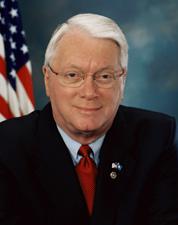
Mr. President, I am happy to join my colleague, Senator Baucus, in the introduction of legislation to repeal the Special Occupational Tax on the sale of alcoholic beverages. This is an unfair tax…
Mr. President, I am happy to join my colleague, Senator Baucus, in the introduction of legislation to repeal the Special Occupational Tax on the sale of alcoholic beverages.
This is an unfair tax imposed on all businesses that manufacture, distribute or sell alcohol products. It has a particularly egregious impact on the Nation's small businesses--the ``Mom and Pop'' convenience stores, the local bowling alleys, the small sandwich shop, the seasonal bait shop, and the community lodges. This regressive tax imposes the same tax on little businesses and large businesses. The tax is levied as a fixed amount per location--$250 for retailers, $500 for wholesalers, and $1,000 for vinters and distillers--with no adjustment for the size of a business. Thus, a family which owns two small convenience stores will pay twice as much as a large one-location ``super'' party store. This tax results in small retail outlets paying a larger percentage of their revenue towards this tax. In addition, the tax is not prorated, meaning that seasonal businesses such as bait shops or marinas that are open for three months a year will pay the same rate as businesses that are open year-around.
Largely due to the negative impact of this tax on small businesses, there has been strong bi-partisan support for its repeal in both the Senate and the House. The effectiveness of the tax--which is traditionally quite expensive to administer--has been found to be flawed by the General Accounting Office in several examinations. In a 2001 study on the simplification of the Federal tax system, the Joint Committee on Taxation recommended the repeal of the Special Occupancy Tax on alcohol. The Joint Committee found that the tax is in the nature of a business license fee and serves no tax policy purpose.
I hope my colleagues will join Senator Baucus and me in repealing this burdensome tax once and for all.
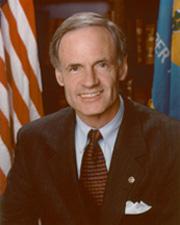
I am pleased today to be able to join my friend from Maine, the chair of the Governmental Affairs Committee, in introducing the Postal Civil Service Retirement System Funding Reform Act of 2003. This…
I am pleased today to be able to join my friend from Maine, the chair of the Governmental Affairs Committee, in introducing the Postal Civil Service Retirement System Funding Reform Act of 2003. This bill is of vital interest to the future of the Postal Service and enjoys the strong support of postal management, postal employees and postal customers.
According to OPM and GAO, the Postal Service will significantly overfund its obligations to its employees enrolled in the Civil Service Retirement System if it continues paying at the current rate. The Reform Act addresses this by reducing the amount of money the Postal Service is required to pay into CSRS each year to reflect a more accurate estimate of its obligations that has been prepared by OPM. In the current fiscal year, this will reduce the Postal Service's annual
Bill Text
Latest available legislative text
        [Congressional Bills 108th Congress]
[From the U.S. Government Publishing Office]
[S. 383 Introduced in Senate (IS)]

108th CONGRESS
1st Session
S. 383

To amend the Solid Waste Disposal Act to prohibit the importation of
Canadian municipal solid waste without State consent.

_______________________________________________________________________

IN THE SENATE OF THE UNITED STATES

February 12, 2003

Ms. Stabenow introduced the following bill; which was read twice and
referred to the Committee on Environment and Public Works

_______________________________________________________________________

A BILL

To amend the Solid Waste Disposal Act to prohibit the importation of
Canadian municipal solid waste without State consent.

Be it enacted by the Senate and House of Representatives of the
United States of America in Congress assembled,

SECTION 1. SHORT TITLE.

This Act may be cited as the ``Canadian Waste Import Ban Act of
2003''.

SEC. 2. CANADIAN MUNICIPAL SOLID WASTE.

(a) In General.--Subtitle D of the Solid Waste Disposal Act (42
U.S.C. 6941 et seq.) is amended by adding at the end the following:

``SEC. 4011. CANADIAN MUNICIPAL SOLID WASTE.

``(a) Definitions.--In this section:
``(1) Agreement.--The term `Agreement' means--
``(A) the Agreement Concerning the Transboundary
Movement of Hazardous Waste between the United States
and Canada, signed at Ottawa on October 28, 1986 (TIAS
11099) and amended on November 25, 1992; and
``(B) any regulations promulgated to implement and
enforce that Agreement.
``(2) Canadian municipal solid waste.--The term `Canadian
municipal solid waste' means municipal solid waste that is
generated in Canada.
``(3) Municipal solid waste.--
``(A) In general.--The term `municipal solid waste'
means--
``(i) material discarded for disposal by--
``(I) households (including single
and multifamily residences); and
``(II) public lodgings such as
hotels and motels; and
``(ii) material discarded for disposal that
was generated by commercial, institutional, and
industrial sources, to the extent that the
material--
``(I)(aa) is essentially the same
as material described in clause (i); or
``(bb) is collected and disposed of
with material described in clause (i)
as part of a normal municipal solid
waste collection service; and
``(II) is not subject to regulation
under subtitle C.
``(B) Inclusions.--The term `municipal solid waste'
includes--
``(i) appliances;
``(ii) clothing;
``(iii) consumer product packaging;
``(iv) cosmetics;
``(v) debris resulting from construction,
remodeling, repair, or demolition of a
structure;
``(vi) disposable diapers;
``(vii) food containers made of glass or
metal;
``(viii) food waste;
``(ix) household hazardous waste;
``(x) office supplies;
``(xi) paper; and
``(xii) yard waste.
``(C) Exclusions.--The term `municipal solid waste'
does not include--
``(i) solid waste identified or listed as a
hazardous waste under section 3001, except for
household hazardous waste;
``(ii) solid waste, including contaminated
soil and debris, resulting from--
``(I) a response action taken under
section 104 or 106 of the Comprehensive
Environmental Response, Compensation,
and Liability Act (42 U.S.C. 9604,
9606);
``(II) a response action taken
under a State law with authorities
comparable to the authorities contained
in either of those sections; or
``(III) a corrective action taken
under this Act;
``(iii) recyclable material--
``(I) that has been separated, at
the source of the material, from waste
destined for disposal; or
``(II) that has been managed
separately from waste destined for
disposal, including scrap rubber to be
used as a fuel source;
``(iv) a material or product returned from
a dispenser or distributor to the manufacturer
or an agent of the manufacturer for credit,
evaluation, and possible potential reuse;
``(v) solid waste that is--
``(I) generated by an industrial
facility; and
``(II) transported for the purpose
of treatment, storage, or disposal to a
facility (which facility is in
compliance with applicable State and
local land use and zoning laws and
regulations) or facility unit--
``(aa) that is owned or
operated by the generator of
the waste;
``(bb) that is located on
property owned by the generator
of the waste or a company
with which the generator is affiliated; or
``(cc) the capacity of
which is contractually
dedicated exclusively to a
specific generator;
``(vi) medical waste that is segregated
from or not mixed with solid waste;
``(vii) sewage sludge or residuals from a
sewage treatment plant;
``(viii) combustion ash generated by a
resource recovery facility or municipal
incinerator; or
``(ix) waste from a manufacturing or
processing (including pollution control)
operation that is not essentially the same as
waste normally generated by households.
``(b) Ban on Canadian Municipal Solid Waste.--
``(1) In general.--Except as provided in paragraph (2),
until the date on which the Administrator promulgates
regulations to implement and enforce the Agreement (including
notice and consent provisions of the Agreement), no person may
import into any State, and no solid waste management facility
may accept, Canadian municipal solid waste for the purpose of
disposal or incineration of the Canadian municipal solid waste.
``(2) Election by governor.--The Governor of a State may
elect to opt out of the ban under paragraph (1), and consent to
the importation and acceptance by the State of Canadian
municipal solid waste before the date specified in that
paragraph, if the Governor submits to the Administrator a
notice of that election by the Governor.
``(c) Authority of Administrator.--
``(1) In general.--Beginning immediately after the date of
enactment of this section, the Administrator shall--
``(A) perform the functions of the Designated
Authority of the United States described in the
Agreement with respect to the importation and
exportation of municipal solid waste under the
Agreement; and
``(B) implement and enforce the Agreement
(including notice and consent provisions of the
Agreement).
``(2) Consent to importation.--In considering whether to
consent to the importation of Canadian municipal solid waste
under article 3(c) of the Agreement, the Administrator shall--
``(A) obtain the consent of each State into which
the Canadian municipal solid waste is to be imported;
and
``(B) consider the impact of the importation on
homeland security, public health, and the
environment.''.
(b) Conforming Amendment.--The table of contents of the Solid Waste
Disposal Act (42 U.S.C. prec. 6901) is amended by adding after the item
relating to section 4010 the following:

``Sec. 4011. Canadian municipal solid waste.''.
<all>