Asbestos Claims Criteria and Compensation Act of 2003
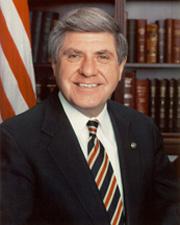
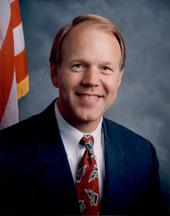 Sen. Don Nickles (R-OK)
Legislative Activity
Stay on top of the latest movement without scrolling through every action
Read twice and referred to the Committee on the Judiciary. (text of measure as introduced: CR S2493-2495)
February 13, 2003
View full timeline
Introduced in Senate
February 13, 2003
Sponsor introductory remarks on measure. (CR S2492-2493)
February 13, 2003
Read twice and referred to the Committee on the Judiciary. (text of measure as introduced: CR S2493-2495)
February 13, 2003
Floor Debate
24 membersWhat members said about S. 413 on the floor



 +19
Floor Debate
24 membersWhat members said about S. 413 on the floor
Mr. President, today I introduce the Federal Death Penalty Abolition Act of 2003. This bill would abolish the death penalty at the Federal level. It would put an immediate halt to executions and…
Mr. President, I have previously given a statement and a speech on the floor of the Senate with regard to Mr. Estrada's nomination. I voted against him in the Judiciary Committee. The concerns I had…
Madam President, I rise to introduce legislation that I believe will go a long way in helping to improve the safety and durability of the Nation's highway bridges. Today, with great pleasure I am…
Madam President, I join several of my colleagues today to introduce a series of bills related to the reauthorization of the Higher Education Act (HEA). These five bills emphasize a number of issues…
Mr. Speaker, across our country, the state of our economy is the number one issue on people's minds. America's economy is reeling from a 3-year-old recession and the shock of September 11 and war…
Show 8 more

Mr. President, I am pleased to introduce the Gunsmith Excise Tax Simplification Act of 2003. This bill will protect funding for the Federal Aid to Wildlife Restoration Fund by simplifying…

Madam President, today I am pleased to introduce the Geriatric Care Act of 2003, a bill to increase the number of geriatricians in our country through training incentives and Medicare reimbursement…

Madam President, over the last several years, I have tried to correct a long-standing injustice impacting our Nation's veterans. Under a law that is now over 110 years old, most veterans who retire…
Madam President, today I introduce the ``Campus Classmate Offenders in Rehabilitation and Treatment Act of 2003.'' The legislation I am introducing today is based on legislation I previously…
Mr. President, 194 years ago this week, a son was born to Nancy and Thomas Lincoln in Elizabethtown, Kentucky. That son, Abraham, would go on to become President of the United States at one of the…
Mr. President, I rise today to introduce a bill and to speak about a litigation crisis affecting both the overall well-being of our nation and our ability to stimulate economic recovery. I'm speaking…
Madam President, I thank you for the opportunity to speak about what is clearly a bipartisan issue. I would like to add to what my colleague from Minnesota said about the Fuels Security Act offered…

Madam President, headlines in daily papers all across the country underscore our economy's vulnerability to foreign oil. Today, a new generation is learning what many Americans have known since the…
Show 11 more
Madam President, if I may, in contrast to the very partisan tone of the Estrada filibuster and this partisan divide that is stopping us from moving forward, I want to spend a few minutes talking…
Madam President, I come to the floor this morning to speak briefly about an important, comprehensive fuels bill that I will introduce today, along with Senators Daschle, Lugar, Johnson, Voinovich,…

Madam President, I am pleased that we are reintroducing renewable fuels legislation and that we are taking time today to talk about the benefits and importance of this bill. I want to acknowledge the…
Mr. President, I am pleased and honored to join with my colleagues to introduce two pieces of legislation to help meet the child care challenges facing families around the Nation. These bills…
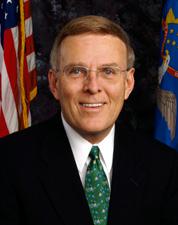
Madam President, I am pleased to join my colleagues, Senator Daschle, as well as Senator Lugar, Senator Hagel, Senator Johnson and others in introducing this bipartisan piece of legislation today.…

Mr. President, I rise today to introduce important tax legislation on behalf of myself and Senators Baucus, Conrad, Crapo, Breaux, Leahy, Harkin, Durbin, Craig, Johnson, Chafee, Snowe, and Kerry.…

Madam President, I first introduced legislation on this issue all the way back in 1992. Then again in 1993, then again in 1994, then again in 1995. In 1999, I drafted legislation that became law--as…
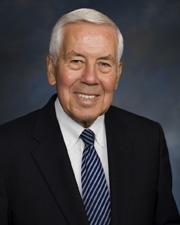
Madam President, I am pleased to join with my colleague, Senator Daschle, in reintroducing the Renewable Fuels Act. I am thankful for this opportunity to remind my colleagues about the importance of…

Mr. President, I rise today with my colleagues, Senators Fitzgerald, Sarbanes, and Akaka to introduce the Education for Retirement Security Act of 2003. This bill will provide access to badly needed…

Mr. President, I rise to introduce, along with Senator Sam Brownback, the Child Modeling Exploitation Prevention Act. Many Senators may not be aware of what I am talking about. I was not until…
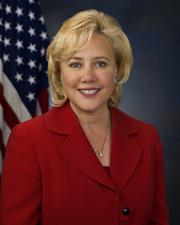
Mr. President, I rise today to speak on an issue of great importance to our military retirees. This issue I want to address is the Survivor's Benefit Plan and the need to eliminate the Social…
Bill Text
Latest available legislative text
        [Congressional Bills 108th Congress]
[From the U.S. Government Publishing Office]
[S. 413 Introduced in Senate (IS)]

108th CONGRESS
1st Session
S. 413

To provide for the fair and efficient judicial consideration of
personal injury and wrongful death claims arising out of asbestos
exposure, to ensure that individuals who suffer harm, now or in the
future, from illnesses caused by exposure to asbestos receive
compensation for their injuries, and for other purposes.

_______________________________________________________________________

IN THE SENATE OF THE UNITED STATES

February 13, 2003

Mr. Nickles introduced the following bill; which was read twice and
referred to the Committee on the Judiciary

_______________________________________________________________________

A BILL

To provide for the fair and efficient judicial consideration of
personal injury and wrongful death claims arising out of asbestos
exposure, to ensure that individuals who suffer harm, now or in the
future, from illnesses caused by exposure to asbestos receive
compensation for their injuries, and for other purposes.

Be it enacted by the Senate and House of Representatives of the
United States of America in Congress assembled,

SECTION 1. SHORT TITLE; TABLE OF CONTENTS.

(a) Short Title.--This Act may be cited as the ``Asbestos Claims
Criteria and Compensation Act of 2003''.
(b) Table of Contents.--The table of contents is as follows:

Sec. 1. Short title; table of contents.
Sec. 2. Findings and purposes.
Sec. 3. Definitions.
Sec. 4. Physical impairment.
Sec. 5. Procedures; removal.
Sec. 6. Statute of limitations; two-disease rule.
Sec. 7. Miscellaneous provisions.
Sec. 8. Effective date.

SEC. 2. FINDINGS AND PURPOSES.

(a) Findings.--Congress finds that--
(1) asbestos is a mineral that was widely used before the
1980s for insulation, fireproofing, and other purposes;
(2) millions of American workers and others were
significantly exposed to asbestos, especially during and after
World War II and before the advent of regulation by the
Occupational Safety and Health Administration in the early
1970s;
(3) exposure to asbestos has been associated with various
types of cancer, including mesothelioma and lung cancer, and
such nonmalignant conditions as asbestosis, pleural plaques,
and diffuse pleural thickening;
(4) the diseases caused by asbestos have latency periods of
up to 40 years or more, but the most serious asbestos-related
disease, mesothelioma, is fatal within 1 to 2 years, and other
related cancers are often fatal;
(5) although the use of asbestos has dramatically declined
since 1980 and workplace exposures have been regulated since
1971 by the Occupational Safety and Health Administration, past
exposures will continue to result in significant death and
disability from mesothelioma and other cancers well into the
21st century;
(6) exposure to asbestos has created a flood of litigation
targeting approximately 8,400 defendant companies in Federal
and State courts that the United States Supreme Court has
characterized as ``an elephantine mass'' of cases that ``defies
customary judicial administration and calls for national
legislation,'' Ortiz v. Fibreboard Corporation, 119 S. Ct.
2295, 2302 (1999);
(7) the American Bar Association supports enactment of
Federal legislation that would--
(A) allow persons alleging non-malignant asbestos-
related disease claims to file a cause of action in
Federal or State court only if those persons meet the
medical criteria in the ``ABA Standard for Non-
Malignant Asbestos-Related Disease Claims'' dated
February 2003 or an appropriate similar medical
standard; and
(B) toll all applicable statutes of limitations
until such time as the medical criteria in such
standard are met;
(8) asbestos personal injury litigation can be unfair and
inefficient, imposing a severe burden on litigants and
taxpayers alike, in most cases involving defendant companies
that were never involved in the production of asbestos;
(9) the extraordinary volume of nonmalignant asbestos cases
continues to strain Federal and State courts, with over 200,000
cases pending and over 50,000 new cases filed each year;
(10) asbestos personal injury litigation has already
contributed to the bankruptcy of more than 60 companies and the
rate of asbestos-driven bankruptcies is accelerating;
(11) the vast majority of asbestos claims are filed by
individuals who--
(A) have been exposed to asbestos;
(B) may have some physical sign of exposure; and
(C) suffer no present asbestos-related impairment;
(12) the cost of compensating exposed persons who are not
sick--
(A) jeopardizes the ability of defendants to
compensate people with cancer and other serious
asbestos-related diseases, now and in the future; and
(B) strains the ability of courts to manage the
deluge of cases involving nonimpaired plaintiffs;
(13) an estimated 50,000 to 60,000 workers have lost their
jobs as a direct result of asbestos litigation and related
bankruptcies of defendant companies and each displaced worker
will, on average, lose between $25,000 and $50,000 in lost
wages;
(14) employees of defendant companies declaring bankruptcy
(who are often stockholders of those companies) will, on
average, lose 25 percent of the value of their retirement
investment under section 401(k) of the Internal Revenue Code of
1986 because of lost stock value;
(15) concerns about statutes of limitations can force
claimants who have been exposed to asbestos but who have no
current injury to bring premature lawsuits in order to protect
against losing their rights to future compensation should those
claimants become impaired;
(16) consolidations, joinder, and similar procedures, to
which some courts have resorted in order to deal with the mass
of asbestos cases, can undermine the appropriate functioning of
the judicial process and encourage the filing of thousands of
cases by exposed persons who are not yet sick and who may never
become sick;
(17) the availability of sympathetic forums in States with
no connection to the plaintiff or to the exposures that form
the basis of a lawsuit has encouraged the filing of thousands
of cases on behalf of exposed persons who are not yet sick and
may never become sick;
(18) asbestos litigation, if left unchecked by reasonable
congressional intervention, will--
(A) continue to inhibit the economy and run counter
to plans to stimulate economic growth and the creation
of new jobs;
(B) threaten the savings, retirement benefits, and
employment of defendants' current and retired
employees;
(C) affect adversely the communities in which these
defendants operate; and
(D) impair interstate commerce and national
initiatives, including national security; and
(19) the public interest and the interest of interstate
commerce requires deferring the claims of exposed persons who
are not sick in order to--
(A) preserve, now and for the future, defendants'
ability to compensate people who develop cancer and
other serious asbestos-related injuries; and
(B) safeguard the jobs, benefits, and savings of
American workers and the well-being of the national
economy.
(b) Purposes.--It is the purpose of this Act to--
(1) give priority to those asbestos claimants who can
demonstrate actual physical harm or illness caused by asbestos;
(2) fully preserve the rights of claimants who were exposed
to asbestos to pursue compensation should those claimants
become sick in the future;
(3) enhance the ability of the Federal and State judicial
systems to supervise and control asbestos litigation and
asbestos-related bankruptcy proceedings; and
(4) conserve the scarce resources of the defendants, and
marshal assets in bankruptcy, to allow compensation of cancer
victims and others who are physically harmed by exposure to
asbestos while securing the right to similar compensation for
those who may suffer physical harm in the future.

SEC. 3. DEFINITIONS.

In this Act:
(1) AMA guides to the evaluation of permanent impairment.--
The term ``AMA Guides to the Evaluation of Permanent
Impairment'' means the American Medical Association's Guides to
the Evaluation of Permanent Impairment (Fifth Edition 2000).
(2) Asbestos.--The term ``asbestos'' includes all minerals
defined as ``asbestos'' under section 1910 of title 29 of the
Code of Federal Regulations.
(3) Asbestos claim.--The term ``asbestos claim''--
(A) means any claim for damages or other relief
presented in a civil action or bankruptcy proceeding,
arising out of, based on, or related to the health
effects of exposure to asbestos, including loss of
consortium and any other derivative claim made by or on
behalf of any exposed person or any representative,
spouse, parent, child or other relative of any exposed
person; and
(B) does not include claims for benefits under a
workers' compensation law or veterans' benefits
program, or claims brought by any person as a subrogee
by virtue of the payment of benefits under a workers'
compensation law.
(4) Asbestosis.--The term ``asbestosis'' means bilateral
diffuse interstitial fibrosis of the lungs caused by inhalation
of asbestos fibers.
(5) Certified b-reader.--The term ``certified B-reader''
means an individual qualified as a ``final'' or ``B-reader''
under section 37.51(b) of title 42 of the Code of Federal
Regulations.
(6) Civil action.--The term ``civil action''--
(A) means all suits of a civil nature in Federal or
State court, whether cognizable as cases at law or in
equity or in admiralty; and
(B) does not include an action relating to any
workers' compensation law, or a proceeding for benefits
under any veterans' benefits program.
(7) Exposed person.--The term ``exposed person'' means any
person whose exposure to asbestos or to asbestos-containing
products is the basis for an asbestos claim.
(8) FEV1.--The term ``FEV1'' means forced expiratory volume
in the first second, which is the maximal volume of air
expelled in 1 second during performance of simple spirometric
tests.
(9) FVC.--The term ``FVC'' means forced vital capacity,
which is the maximal volume of air expired with maximum effort
from a position of full inspiration.
(10) ILO scale.--The term ``ILO Scale'' means the system
for the classification of chest x-rays set forth in the
International Labour Office's Guidelines for the Use of ILO
International Classification of Radiographs of Pneumoconioses
(1980) as amended by the International Labour Office.
(11) Nonmalignant condition.--The term ``nonmalignant
condition'' means any condition that is caused or may be caused
by asbestos other than a diagnosed cancer.
(12) Pathological evidence of asbestosis.--The term
``pathological evidence of asbestosis'' means a statement by a
Board-certified pathologist that--
(A) more than 1 representative section of lung
tissue uninvolved with any other disease process
demonstrates a pattern of peribronchiolar or
parenchymal scarring in the presence of characteristic
asbestos bodies; and
(B) there is no other more likely explanation for
the presence of the fibrosis.
(13) Predicted lower limit of normal.--The term ``predicted
lower limit of normal'' for any test means the fifth percentile
of healthy populations based on age, height, and gender, as
referenced in the AMA Guides to the Evaluation of Permanent
Impairment.
(14) Radiological evidence of asbestosis.--The term
``radiological evidence of asbestosis'' means a chest x-ray
showing small, irregular opacities (s,t) graded by a certified
B-reader as at least 1/1 on the ILO scale.
(15) Radiological evidence of diffuse pleural thickening.--
The term ``radiological evidence of diffuse pleural
thickening'' means a chest x-ray showing bilateral pleural
thickening of at least B2 on the ILO scale and blunting of at
least 1 costophrenic angle.
(16) State.--The term ``State'' means any State of the
United States, the District of Columbia, Commonwealth of Puerto
Rico, the Northern Mariana Islands, the Virgin Islands, Guam,
American Samoa, and any other territory or possession of the
United States or any political subdivision of any of the
entities under this paragraph.
(17) Veterans' benefits program.--The term ``veterans'
benefits program'' means any program for benefits in connection
with military service administered by the Veterans'
Administration under title 38, United States Code.
(18) Workers' compensation law.--The term ``workers'
compensation law''--
(A) means a law respecting a program administered
by a State or the United States to provide benefits,
funded by a responsible employer or an insurance
carrier of that employer, for occupational diseases or
injuries or for disability or death caused by
occupational diseases or injuries;
(B) includes the Longshore and Harbor Workers'
Compensation Act (33 U.S.C. 901 et seq.) and chapter 81
of title 5, United States Code; and
(C) does not include the Federal Employer's
Liability Act (45 U.S.C. 51 et seq.).

SEC. 4. PHYSICAL IMPAIRMENT.

(a) Impairment Essential Element of Claim.--Physical impairment of
the exposed person, to which asbestos exposure was a substantial
contributing factor, shall be an essential element of an asbestos
claim. For purposes of this section, cancer shall be presumed to
involve physical impairment.
(b) Prima Facie Evidence of Physical Impairment.--
(1) In general.--No person shall bring or maintain a civil
action alleging a nonmalignant asbestos claim in the absence of
a prima facie showing of physical impairment as a result of a
medical condition to which exposure to asbestos was a
substantial contributing factor.
(2) Requirements of prima facie showing.--A prima facie
showing under this subsection shall include all of the
following minimum requirements:
(A) Permanent respiratory impairment rating.--A
determination by a qualified physician, on the basis of
a medical examination and pulmonary function testing,
that the exposed person has a permanent respiratory
impairment rating of at least Class 2 as defined by and
evaluated under the AMA Guides to the Evaluation of
Permanent Impairment.
(B) Diagnosis.--A diagnosis by a qualified
physician of asbestosis or diffuse pleural thickening,
based at a minimum on pathological evidence of
asbestosis, radiological evidence of asbestosis, or
radiological evidence of diffuse pleural thickening.
(C) Substantial contributing factor.--A
determination by a qualified physician that asbestosis
or diffuse pleural thickening (rather than solely
chronic obstructive pulmonary disease) is a substantial
contributing factor to the exposed person's physical
impairment, based at a minimum on a determination that
the exposed person has either--
(i) a ratio of FEV1 to FVC that is equal to
or greater than the predicted lower limit of
normal; or
(ii) a chest x-ray showing small, irregular
opacities (s,t) graded by a certified B-reader
at least 2/1 on the ILO scale.
(c) Compliance With Technical Standards.--
(1) In general.--Evidence relating to physical impairment
under this section, including pulmonary function testing and
diffusing studies, shall comply with--
(A) the technical recommendations for examinations,
testing procedures, quality assurance and quality
control, and equipment of the AMA Guides to the
Evaluation of Permanent Impairment; or
(B) if the AMA Guides to the Evaluation of
Permanent Impairment are not applicable, other
authoritative standards.
(2) Adjustments.--No adjustments with respect to pulmonary
function testing shall be made on the basis of race.
(d) No Presumption at Trial.--Presentation of prima facie evidence
of asbestos-related impairment meeting the requirements of this section
shall not result in any presumption at trial that the exposed person is
impaired by an asbestos-related condition, and evidence that the
exposed person made a prima facie showing of impairment shall not be
admissible at trial.

SEC. 5. PROCEDURES; REMOVAL.

(a) Consolidation.--A court may consolidate for trial any number
and type of asbestos claims with consent of all the parties. In the
absence of such consent, the court may consolidate for trial only
asbestos claims relating to the same exposed person and members of the
household of the exposed person.
(b) Venue.--
(1) In general.--A civil action asserting an asbestos claim
may only be brought in the State of the plaintiff's domicile or
a State in which there occurred exposure to asbestos that is a
substantial contributing factor to the physical impairment on
which the claim is based.
(2) Inapplicability.--Paragraph (1) shall not apply to a
claim that--
(A) is based upon an exposed person's cancer; and
(B) is filed by an exposed person who is diagnosed
with fatal mesothelioma or other asbestos-related
cancer by a qualified physician, resulting in a short
life expectancy of less than 3 years after the date on
which the claim is filed.
(c) Preliminary Proceedings.--The plaintiff in any civil action
involving an asbestos claim shall file with the complaint or other
initial pleading a written report and supporting test results
constituting prima facie evidence of the exposed person's asbestos-
related impairment meeting the requirements of section 4(b). The
defendant shall be afforded a reasonable opportunity to challenge the
adequacy of the proffered prima facie evidence of asbestos-related
impairment. The plaintiff's claim shall be dismissed without prejudice
upon a finding of failure to make the required prima facie showing.
(d) Removal.--
(1) In general.--If a State court refuses or fails to apply
this section, any party in a civil action for an asbestos claim
may remove such action to a district court of the United States
in accordance with chapter 89 of title 28, United States Code.
(2) Jurisdiction over removed actions.--The district courts
of the United States shall have jurisdiction of all civil
actions removed under this subsection, without regard to the
amount in controversy and without regard to the citizenship or
residence of the parties.
(3) Removal by any defendant.--A civil action may be
removed to the district court of the United States under this
subsection by any defendant without the consent of all
defendants.
(4) Remand.--The district court shall remand any civil
action removed solely under this subsection, unless the court
finds that--
(A) the State court failed to comply with
procedures prescribed by law; or
(B) the failure to dismiss by the State court
lacked substantial support in the record before the
State court.

SEC. 6. STATUTE OF LIMITATIONS; TWO-DISEASE RULE.

(a) Statute of Limitations.--Notwithstanding any other provision of
law, with respect to any nonmalignant asbestos claim not barred on the
effective date of this Act, the limitations period shall not begin to
run until the exposed person discovers, or through the exercise of
reasonable diligence should have discovered, that the exposed person is
physically impaired by an asbestos-related nonmalignant condition.
(b) Two-Disease Rule.--An asbestos claim arising out of a
nonmalignant condition shall be a distinct cause of action from an
asbestos claim relating to the same exposed person arising out of
asbestos-related cancer. No damages shall be awarded for fear or risk
of cancer in any civil action asserting only a nonmalignant asbestos
claim.
(c) General Releases From Liability Prohibited.--No settlement of a
nonmalignant asbestos claim concluded after the date of enactment of
this Act shall require, as a condition of settlement, release of any
future claim for asbestos-related cancer.

SEC. 7. MISCELLANEOUS PROVISIONS.

(a) Construction With Other Laws.--This Act shall not be construed
to--
(1) affect the scope or operation of any workers'
compensation law or veterans' benefit program;
(2) affect the exclusive remedy or subrogation provisions
of any such law; or
(3) authorize any lawsuit which is barred by any such
provision of law.
(b) Constitutional Authority.--The Constitutional authority for
this Act is contained in Article I, section 8, clause 3 and Article
III, section 1 of the Constitution of the United States.

SEC. 8. EFFECTIVE DATE.

This Act shall take effect on the date of enactment of this Act and
apply to any civil action asserting an asbestos claim in which trial
has not commenced as of that date.
<all>