Sacramento Public Safety Act of 2003

Legislative Activity
Stay on top of the latest movement without scrolling through every action
Read twice and referred to the Committee on Environment and Public Works. (text of measure as introduced: CR S2710)
February 25, 2003
View full timeline
Introduced in Senate
February 25, 2003
Sponsor introductory remarks on measure. (CR S2710)
February 25, 2003
Read twice and referred to the Committee on Environment and Public Works. (text of measure as introduced: CR S2710)
February 25, 2003
Floor Debate
8 membersWhat members said about S. 444 on the floor
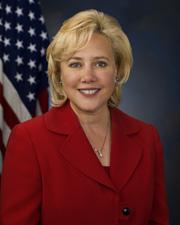 MLL
MLL PJLBB
PJLBB DF
DF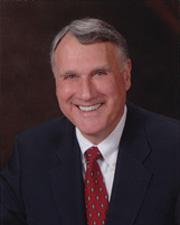 JK+3
JK+3
Floor Debate
8 membersWhat members said about S. 444 on the floor
Mr. President, I rise today to offer legislation that will help our Nation's reservists and members of the National Guard who have been called to active duty. Since 1991, the U.S. military has…
Mr. President, I rise today to offer legislation that will help our Nation's reservists and members of the National Guard who have been called to active duty.
Since 1991, the U.S. military has significantly scaled down its troop levels to reflect the end of the Cold War. With the reduction of active duty troops, the military has become increasingly dependent on the Reserves and National Guard to supplement troops who have been sent to deal with crises all over the world.
In addition to this, we have had to rely on an increasingly diverse group of people to fight our wars. The conflict in Afghanistan was heavily reliant on new technologies in the air and personnel intensive techniques on the ground. In order to properly execute the war on terror, we have relied on highly skilled individuals such as linguists and Civil Affairs personnel who have worked closely with the population of Afghanistan. We will have to rely on them again in Iraq. Many of these men and women have been reservists.
These two trends reflect a dramatic shift in the structure of our armed forces. Gone are the Cold War days when we had a massive military positioned all over the globe. We are now reliant on a much leaner force, which views the Reserves and National Guard as necessary components to any conflict, and not forces of last resort.
Between 1945 and 1989, a period which encompassed most of the Cold War, reservists and Guardsmen were called up four times: during the Korean War, the Berlin Crisis of 1961, the Cuban Missile Crisis, and the Vietnam War. A majority of those mobilized during this period were called up during the Korean War, when over 800,000 troops were activated to supplement the 900,000 active duty forces fighting in Korea.
Between 1990 and today, reservists and Guardsmen have been called up six separate times. Over 230,000 reservists and Guardsmen were mobilized for the Gulf War, forming nearly half of the force that drove Iraqi forces from Kuwait. Since then, reservists and Guardsmen have been activated for the Haiti Intervention, the ongoing Bosnian Peacekeeping mission, the ongoing patrol of the No Fly Zones in Iraq, the Kosovo conflict, and the War on Terrorism which has seen 151,348 reservists and Guardsmen activated in support of Operations Enduring Freedom and Noble Eagle. Many of them are in the Persian Gulf Region today.
Over the past ten years, the OPTEMPO of the Reserves has increased by fifty percent.
This OPTEMPO has had a significant strain on reservists and their families. In almost every instance, when a reservist or Guardsman is activated, their military salary is significantly smaller then their civilian salary. In many cases, service member's income is cut in half. This places a particular strain to reservists and Guardsmen as their household budget is structured by their civilian salary. The decrease in income that activation brings makes it increasingly difficult to pay the bills. Whether or not the Nation is at war, mortgages, rent, credit card debt, student loans, and other household expenses must be paid.
When we send our fighting men and women into harm's way, it is important that they concentrate on one
thing: their mission. When Guardsmen and reservists are worried about having enough money for rent of the mortgage or whether their children have enough to see a doctor, they cannot concentrate on the mission, and this becomes a readiness issue.
Many corporations volunteer to make up the difference between the military and civilian salaries of their Guardsmen and reservists. Not only do these employers sacrifice important members of their companies for national defense, they hold their jobs for them and they voluntarily choose to continue paying them. In some instances, employers have continued to provide health insurance and other benefits. This represents a significant burden that the employer has undertaken, in order to ensure that their employees and their families are taken care of during times of national emergency.
In order to alleviate the burden that these employers face and to encourage more employers to pay the difference to Reserve and Guard employees, I have drafted legislation that would provide an incentive for employers to make up the difference between the military and civilian pay of activated reservists. The Reservists and Guardsmen Pay Protection Act of 2003 provides a tax credit to employers who continue paying their service members after they are activated. It also requires the Federal Government to make up the difference between civilian and military pay for Federal employees who are activated.
I ask unanimous consent that the text of this bill be printed in the Record.
Mr. President, many bills were introduced in the last Congress that would lower the age at
which Reservists can receive retirement benefits. Most of these bills were met with resistance from the Department of Defense, due to cost estimates over a 10-year period. It is my hope that his Bill, the Reserve Retirement and Retention Act of 2003, will serve as a compromise measure and deliver retirement benefits to Reservists and Guardsmen at an earlier age. This legislation would lower the retirement age of a Reservist by one year for every 2-year period that he or she serves past the requisite 20 years for retirement. For example, if a Reservist should serve for 22 years, he or she could receive retirement benefits at age 59. This legislation will serve as a critical tool in encouraging the most experienced Reservists and Guardsmen to stay past the 20-year mark. It is my hope that this measure will encourage our Reservists and Guardsmen to stay in their units longer, while making their retirement benefits more generous for them and their families.
I ask unanimous consent that the text of this bill be printed in the Record.
Mr. President, When the President give the order to activate reservists and National Guardsmen, the lives of those men and women are put on hold. Businesses, careers, and families are left behind so that America's interests may be served. Students make up a substantial part of our National Guard and Reserve forces. When these students are activated, it jeopardizes their academic standing, as well as their scholarships and grants. This bill would preserve their academic standing for the duration of their service as well as a one year period that follows that service. It would also preserve their scholarships and grants, as well as entitle them to a refund of unused tuition and fees. Federal law already safeguards the employment status of activated reservists and Guardsmen. It is time that we extend the same guarantee to students.
This legislation would require colleges, universities, and community colleges to grant National Guardsmen and reservists a leave of military absence when they are called to active duty. This leave of absence would last while the student is serving on active duty and a one year period at the conclusion of active service. This bill would preserve the academic credits that the student had earned before being activated. It would also preserve the scholarships and grants awarded to the student before being activated. Under this legislation, students would be entitled to receive a refund of tuition and fees or credit the tuition and fees to the next period of enrollment after the student returns from military leave. If a student elects to receive a refund, it would allow them to receive a full refund, minus the percentage of time the student spent enrolled in classes.
The protections that are already afforded our reservists and Guardsmen are appropriate considering the hardships they endure on the nation's behalf. We need to acknowledge the many college students who are in the ranks of the Guard and Reserve and extend to them the protections they deserve. In this day of uncertainty on the world stage, our reservists must be prepared to be called up at a moments notice. Thousands have already been activated for Operations Enduring Freedom, and many thousands more are either in Kuwait or on their way there. Once they get to their duty station, they need to focus all of their attention on the mission. This legislation provides our student reservists with the proper safeguards on their academic career which will allow them to accomplish their mission.
Mr. President, I ask unanimous consent that the text of this bill be printed in the Record.
Mr. President, I rise today, joined by my good friends, Senators Grassley and Specter, to introduce the Domestic Surveillance Oversight Act of 2003. This bill does not change or diminish any power…
Mr. President, I rise today, joined by my good friends, Senators Grassley and Specter, to introduce the Domestic Surveillance Oversight Act of 2003. This bill does not change or diminish any power available to the government in the pursuit of homeland security, but it does create important mechanisms to allow the Congress and the public to assess how effectively and appropriately the government is using its domestic surveillance powers.
I also rise to speak about an important bipartisan report being released today by myself, Senator Specter, and Senator Grassley entitled ``FBI Oversight in the 107th Congress by the Senate Judiciary Committee: FISA Implementation Failures,'' ``FIF Report''. The report summarizes our joint conclusions based upon our bipartisan oversight of the FBI and DOJ's performance in using the Foreign Intelligence Surveillance Act, ``FISA'', an important tool in conducting domestic surveillance. The report distills our mutual findings and conclusions from numerous bipartisan hearings, classified briefings and other oversight activities. It concludes that the FBI continues to be in need of serious reform. The report also sets forth our bipartisan disappointment with the DOJ and FBI's non-responsiveness to our oversight efforts and the resulting necessity for better oversight tools, such as the bill we introduce today.
Our committee worked with the FBI and the Justice Department to achieve initial reforms both through administrative steps and also through legislation. Most notably, last fall we enacted a new Department of Justice charter that included some provisions of the FBI Reform Act. We need to enact the rest of that bipartisan bill.
Taken together, this bill and report represent a bipartisan statement about the importance of oversight and, where possible, sunshine on the government's domestic surveillance efforts. Only by fulfilling our constitutional responsibility to conduct such oversight, can we in Congress help to protect both the security and the liberty of the American people.
In times of national stress there is an understandable impulse for the government to ask for more power. Sometimes more power is needed, but many times it is not. After the September 11 attacks, we worked together in a bipartisan fashion and with unprecedented speed to craft and enact the USA PATRIOT Act which enhanced the government's powers.
Now, as word continues to circulate about a possible sequel to the USA PATRIOT Act that the Department of Justice is considering in secret and that supposedly would give government even more power, it is constructive for us to first examine and understand how Federal agencies are using the power they already have. We must answer two questions.
First, is that power being used effectively, so that our citizens not only feel safer, but are in fact safer?
Second, is that power being used appropriately, so that our liberties are not sacrificed?
In short, before we can craft and enact new laws, we must first make sure that the Department of Justice and FBI are properly using the laws that are already on the books. That is the purpose of enhanced Congressional oversight.
Domestic Surveillance Oversight Act:
Today, with the Senior Senator from Iowa and the Senior Senator from
Pennsylvania, I am introducing the bipartisan Domestic Surveillance Oversight Act of 2003. This bill provides basic information to Congress and the American people about the FBI's use of FISA to conduct surveillance on Americans. Such domestic surveillance is certainly appropriate in some cases, and the bill does not intrude in any way upon law enforcement or diminish its ability to conduct FISA surveillance when necessary and appropriate. Nor does it require the Department of Justice to publicly release any sensitive or classified information. Rather, it seeks reporting only on the aggregate number of FISA wiretaps and other surveillance measures directed specifically against Americans each year. In this way, the public and Congress can assess over time whether the government has turned more of its powerful surveillance techniques on its own citizens, as opposed to non-U.S. persons. If necessary, we can ask it to explain its actions.
The amendment also clarifies that the Foreign Intelligence Surveillance Court, FISC, and FISA Court of Review have the authority to adopt rules and procedures, and it requires that those rules be shared with the Intelligence and Judiciary Committees of the Senate and House of Representatives as well as the Supreme Court. In the last year, and only after requests from Senators Grassley, Specter and myself, the FISC shared its rules with Congress for the first time. One of those rules and one which was eventually rejected by the FISA Review Court embodied a controversial legal interpretation of a provision we crafted in the USA PATRIOT Act. The Congress ought to have been immediately informed of that court rule either by the FISC or the DOJ, but it was not. It is entirely appropriate that a court be enabled to promulgate its own rules. It is entirely inappropriate that those rules be kept secret from Congress.
Consistent with national security, the bill directs the Attorney General to include in an annual public report the portions of applications to and opinions of the FISC and FISA Court of Review that contain significant legal interpretations of FISA or the Constitution. These disclosures will not include the facts of any particular case, which this provision requires to be redacted in order to preserve national security. This type of disclosure, however, will prevent secret case law from developing which interprets both FISA and the Constitution in ways unknown to the Congress and the public.
The first annual report required under this provision is also to include the same type of legal information for the four years before the year of the first report.
Finally, the bill would require a report to appropriate committees of Congress on the use of National Security Letters to request information from public libraries or libraries affiliated with high schools or universities. Such letters are functionally equivalent to an administrative subpoena and require no court approval. We have heard from members of the library community that the FBI may be returning to a discredited practice from the Hoover days of monitoring public and college libraries to ascertain what books people are reading. In fact, a media report from Vermont, which I ask consent to place in the Record, indicates that bookstore owners there are scared to keep records for just this reason. Again, this provision would not in any way limit the use of National Security Letters, but would merely require an annual report of such activities to Congress, so that we can ascertain whether or not these administrative subpoenas are being used for improper purposes. This section would also ensure that reports on the use of such letters are provided to all appropriate oversight committees.
This enhanced reporting is exactly what was called for by the American Bar Association in a resolution adopted on February 10, and echoed in a Washington Post editorial on February 12, 2003. As the Post editorialized, the Department of Justice ``needs to disclose how it is using the [powers] it already has. Yet the Justice Department has balked at reasonable oversight and public information requests . . . Congress should insist on a full understanding of what the [D]epartment is doing.'' I ask unanimous consent to print a copy both of the ABA resolution as well as the Washington Post editorial in the Record.
Mr. President, I am pleased to introduce legislation to name the Federal courthouse building now under construction at Tulare and ``O'' Streets in downtown Fresno, CA the ``Robert E. Coyle United…
Mr. President, I am pleased to introduce legislation to name the Federal courthouse building now under construction at Tulare and ``O'' Streets in downtown Fresno, CA the ``Robert E. Coyle United States Courthouse.''
It is fitting that the Federal courthouse in Fresno be named for Senior U.S. District Judge Robert E. Coyle, who is greatly respected and admired for his work as a judge and for his foresight and persistence which contributed so much to the Fresno Courthouse project. Judge Coyle has been a leader in the effort to build a new courthouse in Fresno for more than a decade.
In the course of his work, Judge Coyle, working with the Clerk of the United States District Court for the Eastern District, conceived and founded a program called ``Managing a Capitol Construction Program'' to help others understand the process of having a courthouse built. This Eastern District program was so well received by national court administrators that is now a nationwide program run by Judge Coyle.
In addition to meeting the needs of the court for additional space, the courthouse project has become a key element in the downtown revitalization of Fresno. Judge Coyle's efforts, and those in the community with whom he worked, produced a major milestone when the groundbreaking for the new courthouse took place.
Judge Coyle has had a distinguished career as an attorney and on the bench. Appointed to California's Eastern District bench by President Ronald Reagan in 1982, Judge Coyle has served as a judge for the Eastern District for 20 years, including 6 years as senior judge. Judge Coyle earned his law degree from University of California, Hastings College of the Law in 1956. He then worked for Fresno County as a Deputy District Attorney before going into private practice in 1958 with McCormick, Barstow, Sheppard, Coyle & Wayte, where he remained until his appointment by President Reagan.
Judge Coyle is very active in the community and has served in many judicial leadership positions, including: Chair of the Space and Security Committee; Chair of the Conference of the Chief District Judges of the Ninth Circuit; President of the Ninth Circuit District Judges Association; Member of the Board of Governors of the State Bar of California; and President of the Fresno County Bar.
My hope is that, in addition to serving the people of the Eastern District as a courthouse, this building will stand as a reminder to the community and people of California of the dedicated work of Judge Robert E. Coyle.
Mr. President, today I am introducing legislation to transfer the B.F. Sisk Federal Courthouse in Fresno, CA to the County of Fresno, when the new Federal courthouse is completed.
Fresno County is rapidly growing county in the heart of California's Great Central Valley. The County of Fresno's Superior Court has a serious need for new court space that will grow in the years ahead. The Sisk Building contains courthouses and related space that will help the people of Fresno County meet those needs. The Sisk Building's existing security measures are a perfect fit for Fresno County's justice system.
This legislation is a common sense measure that will allow appropriate utilization of the Sisk Building, while contributing to the ongoing revitalization of downtown Fresno. I am proud that it is yet another opportunity for the Federal Government to improve the lives of Fresno County's people.
Mr. President, today I am introducing a bill to improve flood protection for Sacramento, CA. The flood control project authorized by this bill has been evaluated by the U.S. Army Corps of Engineers and will be conducted in accordance with the Report of the Chief of Engineers dated November 5, 2002. This is a companion bill to one that Representative Matsui is introducing today in the House.
Currently, Sacramento has woefully inadequate flood protection. This bill would raise the existing walls of Folsom Dam by seven feet, which would substantially increase flood protection for the Sacramento region. Without this improvement, $40 billion of property, including the California State Capitol, 6 major hospitals, 26 nursing home facilities, over 100 schools, three major freeway systems, and approximately 160,000 homes and apartments, are at risk if there is a devastating flood.
For a city of its size, Sacramento falls shockingly below the flood protection that it deserves. The Folsom Mini-Raise is the critical next step in providing Sacramento necessary flood protection, enabling the system to handle storms far larger than any recorded event in the American River Watershed.
Previous plans to raise the level of the Folsom Dam called for the building of a temporary bridge to handle the traffic that would be disrupted while the Folsom Dam Road was closed during the construction project. Security concerns now warrant an indefinite closure of the Folsom Dam Road.
So, in addition to authorizing the Mini-Raise, this bill authorizes the U.S. Department of Transportation to work with the State of California to design and construct a permanent bridge west of and adjacent to Folsom Dam over the American River to replace the current two-lane road over the dam. It will alleviate security concerns by moving traffic away from the dam while still providing the thousands of area commuters with a reliable means of transportation across the river.
This bill would provide important safeguards to the people of one of the fastest growing areas in the Nation. By raising Folsom Dam and replacing the road across the dam, we can greatly increase public safety in the Sacramento area. I ask unanimous consent that the text of the bill be printed in the Record.
Mr. President, I rise in support of the legislation being introduced by my colleague from California the Sacramento Public Safety Act. This Bill would authorize flood control protection and ecosystem…
Mr. President, I rise in support of the legislation being introduced by my colleague from California the Sacramento Public Safety Act.
This Bill would authorize flood control protection and ecosystem restoration through a Mini-Raise of the Folsom Dam as well as authorize the design and construction of a permanent bridge to replace the road that currently runs on top of the Dam.
Providing Sacramento with flood protection is a critical public safety need. Further delays only serve to expand opportunities for a catastrophic flood.
No urban area in the United States is at higher risk of flooding than Sacramento, CA.
Located at the confluence of two major rivers, the American and Sacramento, the floodplain is home to half-a-million residents, $40 billion in property, 5,000 businesses and the necessary supporting infrastructure, all of which has less than 100-year flood protection.
With more than $30 billion in damageable property in the floodplain, the Corps of Engineers has estimated the damage from a flood would range from a minimum of $7 billion to as much as $15 billion.
As one of the largest economic engines in the world, a flood in California's capital city would effectively shut down the State's government and seriously disrupt regional commerce and transportation.
The Mini-Raise will provide Sacramento with a 213-year level of protection. It will allow the system to safely handle a storm 50 percent larger than anything ever recorded in the 3,000-year history of the American River Watershed; it will add 95,000 acre-feet of new emergency flood storage capacity to allow operators to control dam outflows in accordance to what the downstream levees can safely carry; it will bring Folsom Dam into compliance with Federal Dam safety standards; it will restore wildlife habitat along the Lower American River; and it will improve conditions for naturally spawning Steelhead and Salmon by mechanizing temperature control shutters.
The project has wide support at Federal, State, and local level. It is supported by the Army Corp of Engineers and funded in the Bush administration's budget request.
The project has bi-partisan support in Congress including Republican Congressman Pombo, as well as Democrats: Robert Matsui, George Miller, Mike Thompson, and Ellen Tauscher.
It has the local support of Heather Fargo, Mayor of Sacramento; Deborah Ortiz, California State Senator; Darrell Steinberg, California Assemblyman; Illa Collin, Chairman of the Sacramento County Board of Supervisors; Butch Hodkins, Executive Director of the Sacramento Area Flood Control Agency; Karolyn W. Simon, President of American River Flood Control Alliance; Donald Gerth, California State University, Sacramento; and Vicki Lee, Conservation Chair of the Sierra Club.
The bill also calls for a permanent bridge to replace the road that currently runs atop Folsom Dam. Given the recent announcement by the Bureau of Reclamation and the Department of the Interior to close the road over the Dam, the need for such a bridge has become doubly important. This bridge will serve the needs of nearly 20,000 commuters who use the Folsom Dam Road every day.
I want to thank my colleague from California for introducing this critical piece of legislation and I ask for support from the rest of the Senate.
Mr. President, I rise in support of the legislation being introduced by my colleague from California the Sacramento Public Safety Act. This Bill would authorize flood control protection and ecosystem…
Mr. President, I rise in support of the legislation being introduced by my colleague from California the Sacramento Public Safety Act.
This Bill would authorize flood control protection and ecosystem restoration through a Mini-Raise of the Folsom Dam as well as authorize the design and construction of a permanent bridge to replace the road that currently runs on top of the Dam.
Providing Sacramento with flood protection is a critical public safety need. Further delays only serve to expand opportunities for a catastrophic flood.
No urban area in the United States is at higher risk of flooding than Sacramento, CA.
Located at the confluence of two major rivers, the American and Sacramento, the floodplain is home to half-a-million residents, $40 billion in property, 5,000 businesses and the necessary supporting infrastructure, all of which has less than 100-year flood protection.
With more than $30 billion in damageable property in the floodplain, the Corps of Engineers has estimated the damage from a flood would range from a minimum of $7 billion to as much as $15 billion.
As one of the largest economic engines in the world, a flood in California's capital city would effectively shut down the State's government and seriously disrupt regional commerce and transportation.
The Mini-Raise will provide Sacramento with a 213-year level of protection. It will allow the system to safely handle a storm 50 percent larger than anything ever recorded in the 3,000-year history of the American River Watershed; it will add 95,000 acre-feet of new emergency flood storage capacity to allow operators to control dam outflows in accordance to what the downstream levees can safely carry; it will bring Folsom Dam into compliance with Federal Dam safety standards; it will restore wildlife habitat along the Lower American River; and it will improve conditions for naturally spawning Steelhead and Salmon by mechanizing temperature control shutters.
The project has wide support at Federal, State, and local level. It is supported by the Army Corp of Engineers and funded in the Bush administration's budget request.
The project has bi-partisan support in Congress including Republican Congressman Pombo, as well as Democrats: Robert Matsui, George Miller, Mike Thompson, and Ellen Tauscher.
It has the local support of Heather Fargo, Mayor of Sacramento; Deborah Ortiz, California State Senator; Darrell Steinberg, California Assemblyman; Illa Collin, Chairman of the Sacramento County Board of Supervisors; Butch Hodkins, Executive Director of the Sacramento Area Flood Control Agency; Karolyn W. Simon, President of American River Flood Control Alliance; Donald Gerth, California State University, Sacramento; and Vicki Lee, Conservation Chair of the Sierra Club.
The bill also calls for a permanent bridge to replace the road that currently runs atop Folsom Dam. Given the recent announcement by the Bureau of Reclamation and the Department of the Interior to close the road over the Dam, the need for such a bridge has become doubly important. This bridge will serve the needs of nearly 20,000 commuters who use the Folsom Dam Road every day.
I want to thank my colleague from California for introducing this critical piece of legislation and I ask for support from the rest of the Senate.
Show 5 more
Mr. President, on behalf of Senator McCain and myself I am introducing legislation today that would codify the largest water claims settlement in the history of Arizona. This bill represents the…
Mr. President, on behalf of Senator McCain and myself I am introducing legislation today that would codify the largest water claims settlement in the history of Arizona. This bill represents the tremendous efforts of literally hundreds of people in Arizona and here in Washington over a period of five years. Looking ahead, this bill could ultimately be nearly as important to Arizona's future as was the authorization of the Central Arizona Project, CAP, itself.
Since Arizona began receiving CAP water from the Colorado River, litigation has divided water users over how the CAP water should be allocated and exactly how much Arizona was required to repay the federal government. This bill will, among other things, codify the settlement reached between the United States and the Central Arizona Water Conservation District over the state's repayment obligation for costs incurred by the United States in constructing the Central Arizona Project. It will also resolve, once and for all, the allocation of all remaining CAP water. This final allocation will provide the stability necessary for State water authorities to plan for Arizona's future water needs. In addition, approximately 200,000 acre-feet of CAP water will be made available to settle various Indian water claims in the State. The bill would also authorize the use of the Lower Colorado River Basin Development Fund, which is funded solely from revenues paid by Arizona entities, to construct irrigation works necessary for tribes with congressionally approved water settlements to use CAP water.
Title II of this bill settles the water rights claims of the Gila River Indian Community. It allocates nearly 100,000 acre-feet of CAP water to the Community, and provides funds to subsidize the costs of delivering CAP water and to construct the facilities necessary to allow the Community to fully utilize the water allocated to it in this settlement. Title III provides for long-needed amendments to the 1982 Southern Arizona Water Settlement Act for the Tohono O'odham Nation, which has never been fully implemented.
This bill will allow Arizona cities to plan for the future, knowing how much water they can count on. The Indian tribes will finally get ``wet'' water, as opposed to the paper rights to water they have now, and projects to use the water. In addition, mining companies, farmers, and irrigation delivery districts can continue to receive water without the fear that they will be stopped by Indian litigation.
While some minor issues remain, we have every confidence that these issues will be resolved as the legislation progresses. In addition, we hope that negotiations with the San Carlos Apache Tribe, the only party not yet included in the settlement, will move forward so that all claims can be resolved by this bill.
In summary, this bill is vital to the citizens of Arizona and will provide the certainty needed to move forward with water use decisions. Furthermore, the United States can avoid litigating water rights and damage claims and satisfy its trust responsibilities to the Tribes. The parties have worked many years to reach consensus rather than litigate, and I believe this bill represents the best opportunity to achieve a fair result for all the people of Arizona.

Mr. President, I rise today to introduce the Idaho Panhandle National Forest Improvement Act of 2003. This bill is an opportunity to provide lands for local benefits and to meet the facility needs of…
Mr. President, I rise today to introduce the Idaho Panhandle National Forest Improvement Act of 2003. This bill is an opportunity to provide lands for local benefits and to meet the facility needs of the Forest Service in the Silver Valley of Idaho. This bill will offer for sale or exchange administrative parcels of land in the Idaho Panhandle National Forest that the Forest Service has identified as no longer in the interest of public ownership and that disposing of them will serve the public better. The proceeds from these sales will be used to improve or replace the Forest Service's Ranger Station in Idaho's Silver Valley.
The Forest Service administrative parcels identified for disposal include the land permitted by the Granite/Reeder Sewer District on Priest Lake, Shoshone Camp in Shoshone County, and the North-South Ski Bowl, south of St. Maries.
The bill also directs the Forest Service to improve or construct a new ranger station in the Silver Valley. The current ranger station is in dire need of repair or replacement, and this will ensure my commitment to a continued and increased presence of the Forest Service in the Silver Valley.
This is a win-win situation for the taxpayers, the Forest Service, the residents of the Silver Valley, and the permittees on the parcels of land to be disposed of.
Mr. President, I rise today to introduce the, ``Sandpoint Land and Facilities Act of 2003''. This bill is a unique opportunity to meet the facility needs of the Forest Service in Sandpoint, ID and to provide facilities for the local county government. This bill will transfer ownership of the local General Service Administration building currently housing the Forest Service to that agency. The bill also provides authority for the Forest Service to work with Bonner County, ID to exchange the existing building to Bonner County in exchange for a new and more functional building to the Forest Service. This transfer of ownership will not only provide the opportunity for the local Forest Service office to obtain a facility that best meets their needs but also will meet the facility needs of Bonner County.
The transfer of this facility will allow the Forest Service to improve service to the public, improve public and employee safety, make the Idaho Panhandle National Forest more financially competitive, and allow increased spending on resource programs that contribute to healthier ecosystems. In turn, Bonner County will benefit by providing to them a building that consolidates county offices so that better services can be provided to the local public, including ADA compliant access to the county courtrooms.
Additionally, the GSA will dispose of a building that is only partially occupied and is remotely located from other GSA facilities.
This is a win-win situation for the Forest Service, Bonner County, GSA, and the taxpayers and an outstanding example of the Federal Government at the local level working with the county government to create common sense solutions that result in more efficient operations and better service to the public.
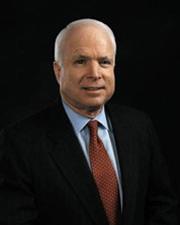
Mr. President, I am pleased to join my colleague, Senator Kyl, as a co-sponsor of this important legislation, the Arizona Water Settlements Act of 2003, which would ratify negotiated settlements for…
Mr. President, I am pleased to join my colleague, Senator Kyl, as a co-sponsor of this important legislation, the Arizona Water Settlements Act of 2003, which would ratify negotiated settlements for Central Arizona Project, CAP, water allocations to municipalities, agricultural districts and Indian tribes, state CAP repayment obligations, and final adjudication of long-standing Indian water rights claims.
These settlements reflect more than 5 years of intensive negotiations by state, Federal, tribal, municipal, and private parties. I commend all those involved in these negotiations for their extraordinary commitment and diligence to reach this final stage in the settlement process. I also praise my colleague, Senator Jon Kyl, and Interior Secretary Gail Norton, for their leadership in facilitating these settlements. From my experience in legislating past agreements, I recognize the enormous challenge of these negotiations, and I appreciate their personal dedication to this settlement process.
This legislation is vitally important to Arizona's future because these settlements will bring greater certainty and stability to Arizona's water supply by completing the allocation of CAP water supplies. Pending water rights claims by various Indian tribes and non- Indian users will be permanently settled as well as the repayment obligations of the State of Arizona for construction of the CAP.
I join with Senator Kyl today to express support for the agreements embodied in this bill and to encourage conclusion of this settlement process in the near future. Significant progress has been made in resolving key issues since we last sponsored a bill to facilitate this agreement in the 107th Congress. Some of these key issues pertain to the final apportionment of CAP water supplies, cost-sharing of CAP construction and water delivery systems, amendment of the 1982 settlement agreement with the Tohono O'odham Nation, mitigation measures necessitated by sustained drought conditions, and equitable apportionment of drought shortages.
While this bill reflects agreements reached on a host of issues after an intensive and extended effort by the numerous parties involved, it is important to emphasize that this bill does not represent the final settlement. All parties recognize that a very limited number of the provisions of this bill may be modified as the negotiations continue. We fully expect that the legislative process will culminate with a final agreement early in the next congressional session.
Mr. President, we introduce this bill today as an expression of our strong support of the various parties to successfully achieve conclusion to this process. The Arizona Water Settlements Act will be a historic accomplishment that will benefit all citizens of Arizona, the tribal communities, and the United States.
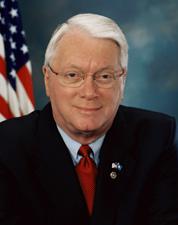
Mr. President, the Social Security system is one of this country's most important programs. Millions of older and disabled Americans rely on their Social Security checks each month as a reliable…
Mr. President, the Social Security system is one of this country's most important programs. Millions of older and disabled Americans rely on their Social Security checks each month as a reliable source of income.
We all know the long-term financial problems the Social Security system faces, and it is critical that Congress enact legislation to overhaul the system as soon as possible to ensure that our children and grandchildren can rely on a robust and healthy Social Security program.
Today, I am introducing a bill, the Social Security Protection Act, that will immediately begin protecting the integrity and finances of the Social Security system by combating fraud and abuse.
Fraud and abuse in the Social Security system not only threatens its long-term viability, but it also robs money from the millions of Americans who are contributing a portion of their hard-earned paychecks each month to the program.
The Social Security Protection Act makes several common-sense and much-needed changes, including denying Social Security benefits to individuals who are fugitive felons and parole violators, creating new civil monetary penalties to combat fraud, and providing additional protections to Social Security employees while on the job.
The bill also provides additional oversight of representative payees who are appointed by the Social Security
Administration to manage the finances of beneficiaries who are unable to do so by themselves. Aside from additional oversight, the bill also imposes harsher penalties on representative payees who have misused their clients' funds, and even allows the Social Security Administration in certain circumstances to reissue misused funds to beneficiaries.
Finally, the bill makes some changes to Social Security's attorney- fee withholding process, and expands it to Supplemental Security Income claims, as well. The bill also makes some other minor and non- controversial changes to Social Security law and the Ticket to Work and Work Incentives Improvement Act of 1999.
Last year, a similar version of this legislation came close to passing Congress. I hope that we can work in a bipartisan fashion with the House of Representatives to get this legislation passed so that our Social Security system can be better protected against fraud and abuse.
Mr. President, today I am introducing a bill to improve flood protection for Sacramento, CA. The flood control project authorized by this bill has been evaluated by the U.S. Army Corps of Engineers…
Mr. President, today I am introducing a bill to improve flood protection for Sacramento, CA. The flood control project authorized by this bill has been evaluated by the U.S. Army Corps of Engineers and will be conducted in accordance with the Report of the Chief of Engineers dated November 5, 2002. This is a companion bill to one that Representative Matsui is introducing today in the House.
Currently, Sacramento has woefully inadequate flood protection. This bill would raise the existing walls of Folsom Dam by seven feet, which would substantially increase flood protection for the Sacramento region. Without this improvement, $40 billion of property, including the California State Capitol, 6 major hospitals, 26 nursing home facilities, over 100 schools, three major freeway systems, and approximately 160,000 homes and apartments, are at risk if there is a devastating flood.
For a city of its size, Sacramento falls shockingly below the flood protection that it deserves. The Folsom Mini-Raise is the critical next step in providing Sacramento necessary flood protection, enabling the system to handle storms far larger than any recorded event in the American River Watershed.
Previous plans to raise the level of the Folsom Dam called for the building of a temporary bridge to handle the traffic that would be disrupted while the Folsom Dam Road was closed during the construction project. Security concerns now warrant an indefinite closure of the Folsom Dam Road.
So, in addition to authorizing the Mini-Raise, this bill authorizes the U.S. Department of Transportation to work with the State of California to design and construct a permanent bridge west of and adjacent to Folsom Dam over the American River to replace the current two-lane road over the dam. It will alleviate security concerns by moving traffic away from the dam while still providing the thousands of area commuters with a reliable means of transportation across the river.
This bill would provide important safeguards to the people of one of the fastest growing areas in the Nation. By raising Folsom Dam and replacing the road across the dam, we can greatly increase public safety in the Sacramento area. I ask unanimous consent that the text of the bill be printed in the Record.
Bill Text
Latest available legislative text
        [Congressional Bills 108th Congress]
[From the U.S. Government Publishing Office]
[S. 444 Introduced in Senate (IS)]

108th CONGRESS
1st Session
S. 444

To authorize the Secretary of the Army to carry out a project for flood
damage reduction and ecosystem restoration for the American River,
Sacramento, California, and for other purposes.

_______________________________________________________________________

IN THE SENATE OF THE UNITED STATES

February 25, 2003

Mrs. Boxer (for herself and Mrs. Feinstein) introduced the following
bill; which was read twice and referred to the Committee on Environment
and Public Works

_______________________________________________________________________

A BILL

To authorize the Secretary of the Army to carry out a project for flood
damage reduction and ecosystem restoration for the American River,
Sacramento, California, and for other purposes.

Be it enacted by the Senate and House of Representatives of the
United States of America in Congress assembled,

SECTION 1. SHORT TITLE.

This Act may be cited as the ``Sacramento Public Safety Act of
2003''.

SEC. 2. FLOOD DAMAGE REDUCTION AND ECOSYSTEM RESTORATION, AMERICAN
RIVER, CALIFORNIA.

The Secretary of the Army is authorized to carry out the project
for flood damage reduction and ecosystem restoration, American River,
Sacramento, California, substantially in accordance with the plans, and
subject to the conditions, described in the Report of the Chief of
Engineers for the project dated November 5, 2002.

SEC. 3. CONSTRUCTION OF PERMANENT BRIDGE ADJACENT TO FOLSOM DAM.

(a) In General.--As part of the project authorized by section 2,
the Secretary of Transportation shall carry out a project to design and
construct a bridge west of and adjacent to Folsom Dam, California. In
carrying out the project, the Secretary shall also construct necessary
linkages from the bridge to existing roadways.
(b) Design and Construction.--In designing and constructing the
bridge, the Secretary shall--
(1) coordinate with the Secretary of the Army regarding the
project authorized by section 2; and
(2) provide appropriate sizing and linkages to support
present and future traffic flow requirements for the city of
Folsom, California.
(c) Grant Assistance.--The Secretary of Transportation shall make a
grant to the State of California in an amount sufficient to pay not
less than 80 percent of the cost of the project authorized by this
section.
<all>