Patient Navigator, Outreach, and Chronic Disease Prevention Act of 2003
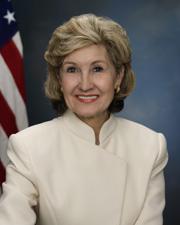 Sen. Kay Bailey Hutchison (R-TX)
Legislative Activity
Stay on top of the latest movement without scrolling through every action
Read twice and referred to the Committee on Health, Education, Labor, and Pensions. (text of measure as introduced: CR S2844-2848)
February 26, 2003
View full timeline
Introduced in Senate
February 26, 2003
Sponsor introductory remarks on measure. (CR S2843-2844)
February 26, 2003
Read twice and referred to the Committee on Health, Education, Labor, and Pensions. (text of measure as introduced: CR S2844-2848)
February 26, 2003
Floor Debate
12 membersWhat members said about S. 453 on the floor



 +7
+7
Floor Debate
12 membersWhat members said about S. 453 on the floor
Mr. President, I rise today with colleagues Senator Kennedy and Senator Dayton to introduce the Leave No Child Behind Act of 2003, legislation that provides a comprehensive blueprint for addressing…
Mr. President, today I am proud to introduce with Senator Snowe a bipartisan bill that will repeal a rider in the Omnibus Appropriations Conference Report. After the Conference Committee met and…
Mr. President, I rise today to introduce legislation along with Senator Kay Bailey Hutchison that will help raise the standard of living for hundreds of thousands of Americans who live near the…
Mr. President, I rise to speak in support of the ``Tribal Recognition and Indian Bureau Enhancement Act.'' I am proud to join the senior Senator from Connecticut in reintroducing this legislation.…
Mr. President, I have long worked with my colleagues from Arizona and other border states to address issues, from health care to crime, that are associated with illegal immigration. In the 107th…
Show 8 more

Mr. President, I rise today to introduce legislation that will correct an injustice being visited upon the survivors of our servicemembers killed in action and military retirees under the current…
Mr. President, I ask unanimous consent that the text of the bill be printed in the Record. Mr. President, I am pleased to introduce legislation today that will reduce barriers to health care for…
Mr. President, I am pleased to introduce legislation today that will reduce barriers to health care for millions of patients across the country, particularly those from medically underserved and…

Mr. President, the Cold War was the longest war in United States history. Lasting 50 years, the Cold War cost thousands of lives, trillions of dollars, changed the course of history, and left America…

Mr. President, I rise today to introduce the Melanie Stokes Postpartum Depression Research and Care Act along with Senator Fitzgerald and Senator Clinton. My legislation is named after a Chicago…

Mr. President, I ask unanimous consent that the text of the bill be printed in the Record.

Mr. President, I ask unanimous consent that the text of the bill be printed in the Record.
Mr. President, I ask unanimous consent that the text of the bill be printed in the Record.
Bill Text
Latest available legislative text
        [Congressional Bills 108th Congress]
[From the U.S. Government Publishing Office]
[S. 453 Introduced in Senate (IS)]

108th CONGRESS
1st Session
S. 453

To authorize the Health Resources and Services Administration and the
National Cancer Institute to make grants for model programs to provide
to individuals of health disparity populations prevention, early
detection, treatment, and appropriate follow-up care services for
cancer and chronic diseases, and to make grants regarding patient
navigators to assist individuals of health disparity populations in
receiving such services.

_______________________________________________________________________

IN THE SENATE OF THE UNITED STATES

February 26, 2003

Mrs. Hutchison (for herself, Mr. Bingaman, Mr. Cochran, and Mrs.
Feinstein) introduced the following bill; which was read twice and
referred to the Committee on Health, Education, Labor, and Pensions

_______________________________________________________________________

A BILL

To authorize the Health Resources and Services Administration and the
National Cancer Institute to make grants for model programs to provide
to individuals of health disparity populations prevention, early
detection, treatment, and appropriate follow-up care services for
cancer and chronic diseases, and to make grants regarding patient
navigators to assist individuals of health disparity populations in
receiving such services.

Be it enacted by the Senate and House of Representatives of the
United States of America in Congress assembled,

SECTION 1. SHORT TITLE.

This Act may be cited as the ``Patient Navigator, Outreach, and
Chronic Disease Prevention Act of 2003''.

SEC. 2. FINDINGS.

Congress makes the following findings:
(1) Despite notable progress in the overall health of the
Nation, there are continuing disparities in the burden of
illness and death experienced by African Americans, Latinos and
Hispanics, Native Americans, Alaska Natives, Asian and Pacific
Islanders and the poor, compared to the United States
population as a whole.
(2) Many racial and ethnic minority groups suffer
disproportionately from cancer. Mortality and morbidity rates
remain the most important measures of the overall progress
against cancer. Decreasing rates of death from cancer reflect
improvements in both prevention and treatment. Among all ethnic
groups in the United States, African American males have the
highest overall rate of mortality from cancer. Some specific
forms of cancer affect other ethnic minority communities at
rates up to several times higher than the national averages
(such as stomach and liver cancers among Asian American
populations, colon and rectal cancer among Alaska natives, and
cervical cancer among Hispanic and Vietnamese-American women).
(3) Regions characterized by high rates of poverty also
have high mortality for some forms of cancer. For example, in
Appalachian Kentucky the incidence of lung cancer among white
males was 127 per 100,000 in 1992, a rate higher than that for
any ethnic minority group in the United States during the same
period.
(4) Major disparities for other chronic diseases exist
among population groups, with a disproportionate burden of
death and disability from cardiovascular disease in racial and
ethnic minority and low-income populations. Compared with rates
for the general population, coronary heart disease mortality
was 40 percent lower for Asian Americans but 40 percent higher
for African-Americans.
(5) Minority populations are disproportionately impacted by
diabetes and other chronic diseases. Hispanics are twice as
likely to have diabetes as non-Hispanic whites; diabetes is the
fourth leading cause of death among Hispanic women and elderly.
African Americans are 1.7 times as likely to have diabetes as
the general population. More than 15% of the combined
populations of Native Americans and Alaska Natives have
diabetes.
(6) Culturally competent approaches to chronic disease care
are needed to encourage increased participation of racial and
ethnic minorities and the medically underserved in chronic
disease prevention, early detection and treatment programs.

SEC. 3. HRSA GRANTS FOR MODEL COMMUNITY CANCER AND CHRONIC DISEASE CARE
AND PREVENTION; HRSA GRANTS FOR PATIENT NAVIGATORS.

Subpart I of part D of title III of the Public Health Service Act
(42 U.S.C. 254b et seq.) is amended by adding at the end the following:

``SEC. 330L. MODEL COMMUNITY CANCER AND CHRONIC DISEASE CARE AND
PREVENTION; PATIENT NAVIGATORS.

``(a) Model Community Cancer and Chronic Disease Care and
Prevention.--
``(1) In general.--The Secretary, acting through the
Administrator of the Health Resources and Services
Administration, may make grants to public and nonprofit private
health centers (including health centers under section 330,
Indian Health Service Centers, tribal governments, urban Indian
organizations, clinics serving Asian Americans and Pacific
Islanders and Alaskan Natives, rural health clinics, and
qualified nonprofit entities that enter into partnerships with
public and nonprofit private health centers to provide
navigation services, which demonstrate the ability to perform
all the functions described in this subsection and subsections
(b), and (c)) for the development and operation of model
programs that--
``(A) provide to individuals of health disparity
populations prevention, early detection, treatment, and
appropriate follow-up care services for cancer and
chronic diseases;
``(B) ensure that the health services are provided
to such individuals in a culturally competent manner;
``(C) assign patient navigators, in accordance with
applicable criteria of the Secretary, for managing the
care of individuals of health disparity populations
to--
``(i) accomplish, to the extent possible,
the follow-up and diagnosis of an abnormal
finding and the treatment and appropriate
follow-up care of cancer or other chronic
disease; and
``(ii) facilitate access to appropriate
health care services within the health care
system to ensure optimal patient utilization of
such services, including aid in coordinating
and scheduling appointments and referrals,
community outreach, assistance with transportation arrangements, and
assistance with insurance issuers and other barriers to care;
``(D) require training for patient navigators
employed through model programs under this paragraph to
ensure the ability of such navigators to perform all of
the duties required under this subsection and in
subsection (b), including training to ensure that such
navigators are informed about health insurance systems
and are able to aid patients in resolving access
issues; and
``(E) ensure that consumers have direct access to
patient navigators during regularly scheduled hours of
business operation.
``(2) Outreach services.--A condition for the receipt of a
grant under paragraph (1) is that the applicant involved agree
to provide ongoing outreach activities while receiving the
grant, in a manner that is culturally competent for the health
disparity population served by the program, to inform the
public, and the specific community that the program is serving,
of the services of the model program under the grant. Such
activities shall include facilitating access to appropriate
health care services and patient navigators within the health
care system to ensure optimal patient utilization of these
services.
``(3) Data collection and report.--
``(A) In general.--To provide for effective program
evaluation, a grant recipient under this subsection
shall collect specific patient data with respect to
services provided to each patient served through the
program and shall establish and implement procedures
and protocols, consistent with applicable Federal and
State laws (including sections 160 and 164 of title 45,
Code of Federal Regulations) to ensure the
confidentiality of all information shared by a patient
in the program (or their personal representative) and
their health care providers, group health plans, or
health insurance insurers.
``(B) Use of data.--A grant recipient under this
subsection may, consistent with applicable Federal and
State confidentiality laws, collect, use, or disclose
aggregate information that is not individually
identifiable (as such term is defined for purposes of
sections 160 and 164 of title 45 Code of Federal
Regulations).
``(C) Report.--Using data collected under this
paragraph, a grantee shall prepare and submit to the
Secretary an annual report that summarizes and analyzes
such data and provides information on the need for
navigation services, the types of access difficulties
resolved, the sources of repeated resolutions, and the
flaws in the system of access, including insurance
barriers.
``(4) Application for grant.--A grant may be made under
paragraph (1) only if an application for the grant is submitted
to the Secretary and the application is in such form, is made
in such manner, and contains such agreements, assurances, and
information as the Secretary determines to be necessary to
carry out this section.
``(5) Evaluations.--
``(A) In general.--The Secretary, acting through
the Administrator of the Health Resources and Services
Administration, shall, directly or through grants or
contracts, provide for evaluations to determine which
outreach activities under paragraph (2) were most
effective in informing the public, and the specific
community that the program is serving, of the model
program services and to determine the extent to which
such programs were effective in providing culturally
competent services to the health disparity population
served by the programs.
``(B) Dissemination of findings.--The Secretary
shall as appropriate disseminate to public and private
entities the findings made in evaluations under
subparagraph (A).
``(6) Coordination with other programs.--The Secretary
shall coordinate the program under this subsection with the
program under subsection (b), with the program under section
417D, and to the extent practicable, with programs for
prevention centers that are carried out by the Director of the
Centers for Disease Control and Prevention.
``(b) Program for Patient Navigators.--
``(1) In general.--The Secretary, acting through the
Administrator of the Health Resources and Services
Administration, may make grants to public and nonprofit private
health centers (including health centers under section 330,
Indian Health Service Centers, tribal governments, urban Indian
organizations, clinics serving Asian Americans and Pacific
Islanders and Alaskan Natives, rural health clinics, and
qualified nonprofit entities that enter into partnerships with
public and nonprofit private health centers to provide
navigation services, which demonstrate the ability to perform
all the functions described in subsections (a), (b), and (c))
for the development and operation of programs to pay the costs
of such health centers in--
``(A) assigning patient navigators, in accordance
with applicable criteria of the Secretary, for managing
the care of individuals of health disparity populations
for the duration of receiving health services from the
health centers, including aid in coordinating and
scheduling appointments and referrals, community
outreach, assistance with transportation arrangements,
and assistance with insurance issuers and other
barriers to care;
``(B) ensuring that the services provided by the
patient navigators to such individuals include case
management and psychosocial assessment and care or
information and referral to such services;
``(C) ensuring that the patient navigators with
direct knowledge of the communities they serve provide
services to such individuals in a culturally competent
manner;
``(D) developing model practices for patient
navigators, including with respect to--
``(i) coordination of health services,
including psychosocial assessment and care;
``(ii) appropriate follow-up care,
including psychosocial assessment and care;
``(iii) determining coverage under health
insurance and health plans for all services;
``(iv) ensuring the initiation,
continuation, or sustained access to care
prescribed by the patients' health care
providers; and
``(v) aiding patients with health insurance
coverage issues;
``(E) requiring training for patient navigators to
ensure the ability of such navigators to perform all of
the duties required under this subsection and in
subsection (a), including training to ensure that such
navigators are informed about health insurance systems
and are able to aid patients in resolving access
issues; and
``(F) ensuring that consumers have direct access to
patient navigators during regularly scheduled hours of
business operation.
``(2) Outreach services.--A condition for the receipt of a
grant under paragraph (1) is that the applicant involved agree
to provide ongoing outreach activities while receiving the
grant, in a manner that is culturally competent for the health
disparity population served by the program, to inform the
public, and the specific community that the patient navigator
is serving, of the services of the model program under the
grant.
``(3) Data collection and report.--
``(A) In general.--To provide for effective patient
navigator program evaluation, a grant recipient under
this subsection shall collect specific patient data
with respect to navigation services provided to each
patient served through the program and shall establish
and implement procedures and protocols, consistent with
applicable Federal and State laws (including sections
160 and 164 of title 45, Code of Federal Regulations)
to ensure the confidentiality of all information shared
by a patient in the program (or their personal
representative) and their health care providers, group
health plans, or health insurance insurers.
``(B) Use of data.--A grant recipient under this
subsection may, consistent with applicable Federal and
State confidentiality laws, collect, use, or disclose
aggregate information that is not individually
identifiable (as such term is defined for purposes of
sections 160 and 164 of title 45 Code of Federal
Regulations).
``(C) Report.--Using data collected under this
paragraph, a grantee shall prepare and submit to the
Secretary an annual report that summarizes and analyzes
such data and provides information on the need for
navigation services, the types of access difficulties
resolved, the sources of repeated resolutions, and the
flaws in the system of access, including insurance
barriers.
``(4) Application for grant.--A grant may be made under
paragraph (1) only if an application for the grant is submitted
to the Secretary and the application is in such form, is made
in such manner, and contains such agreements, assurances, and
information as the Secretary determines to be necessary to
carry out this section.
``(5) Evaluations.--
``(A) In general.--The Secretary, acting through
the Administrator of the Health Resources and Services
Administration, shall, directly or through grants or
contracts, provide for evaluations to determine the
effects of the services of patient navigators on the
individuals of health disparity populations for whom
the services were provided, taking into account the
matters referred to in paragraph (1)(C).
``(B) Dissemination of findings.--The Secretary
shall as appropriate disseminate to public and private
entities the findings made in evaluations under subparagraph (A).
``(6) Coordination with other programs.--The Secretary
shall coordinate the program under this subsection with the
program under subsection (a) and with the program under section
417D.
``(c) Requirements Regarding Fees.--
``(1) In general.--A condition for the receipt of a grant
under subsection (a)(1) or (b)(1) is that the program for which
the grant is made have in effect--
``(A) a schedule of fees or payments for the
provision of its health care services related to the
prevention and treatment of disease that is consistent
with locally prevailing rates or charges and is
designed to cover its reasonable costs of operation;
and
``(B) a corresponding schedule of discounts to be
applied to the payment of such fees or payments, which
discounts are adjusted on the basis of the ability of
the patient to pay.
``(2) Rule of construction.--Nothing in this section shall
be construed to require payment for navigation services or to
require payment for health care services in cases where the
care is provided free of charge, including the case of services
provided through programs of the Indian Health Service.
``(d) Model.--Not later than three years after the date of the
enactment of this section, the Secretary shall develop a peer-reviewed
model of systems for the services provided by this section. The
Secretary shall update such model as may be necessary to ensure that
the best practices are being utilized.
``(e) Duration of Grant.--The period during which payments are made
to an entity from a grant under subsection (a)(1) or (b)(1) may not
exceed five years. The provision of such payments are subject to annual
approval by the Secretary of the payments and subject to the
availability of appropriations for the fiscal year involved to make the
payments. This subsection may not be construed as establishing a
limitation on the number of grants under such subsection that may be
made to an entity.
``(f) Definitions.--For purposes of this section:
``(1) The term `culturally competent', with respect to
providing health-related services, means services that, in
accordance with standards and measures of the Secretary, are
designed to effectively and efficiently respond to the cultural
and linguistic needs of patients.
``(2) The term `appropriate follow-up care' includes
palliative and end-of-life care.
``(3) The term `health disparity population' means a
population where there exists a significant disparity in the
overall rate of disease incidence, morbidity, mortality, or
survival rates in the population as compared to the health
status of the general population. Such term includes--
``(A) racial and ethnic minority groups as defined
in section 1707; and
``(B) medically underserved groups, such as rural
and low-income individuals and individuals with low
levels of literacy.
``(4)(A) The term `patient navigator' means an individual
whose functions include--
``(i) assisting and guiding patients with a symptom
or an abnormal finding or diagnosis of cancer or other
chronic disease within the health care system to
accomplish the follow-up and diagnosis of an abnormal
finding as well as the treatment and appropriate
follow-up care of cancer or other chronic disease; and
``(ii) identifying, anticipating, and helping
patients overcome barriers within the health care
system to ensure prompt diagnostic and treatment
resolution of an abnormal finding of cancer or other
chronic disease.
``(B) Such term includes representatives of the target
health disparity population, such as nurses, social workers,
cancer survivors, and patient advocates.
``(g) Authorization of Appropriations.--
``(1) In general.--
``(A) Model programs.--For the purpose of carrying
out subsection (a) (other than the purpose described in
paragraph (2)(A)), there are authorized to be
appropriated such sums as may be necessary for each of
the fiscal years 2004 through 2008.
``(B) Patient navigators.--For the purpose of
carrying out subsection (b) (other than the purpose
described in paragraph (2)(B)), there are authorized to
be appropriated such sums as may be necessary for each
of the fiscal years 2004 through 2008.
``(C) Bureau of primary health care.--Amounts
appropriated under subparagraph (A) or (B) shall be
administered through the Bureau of Primary Health Care.
``(2) Programs in rural areas.--
``(A) Model programs.--For the purpose of carrying
out subsection (a) by making grants under such
subsection for model programs in rural areas, there are
authorized to be appropriated such sums as may be
necessary for each of the fiscal years 2004 through
2008.
``(B) Patient navigators.--For the purpose of
carrying out subsection (b) by making grants under such
subsection for programs in rural areas, there are
authorized to be appropriated such sums as may be
necessary for each of the fiscal years 2004 through
2008.
``(C) Office of rural health policy.--Amounts
appropriated under subparagraph (A) or (B) shall be
administered through the Office of Rural Health Policy.
``(3) Relation to other authorizations.--Authorizations of
appropriations under paragraphs (1) and (2) are in addition to
other authorizations of appropriations that are available for
the purposes described in such paragraphs.''.

SEC. 4. NCI GRANTS FOR MODEL COMMUNITY CANCER AND CHRONIC DISEASE CARE
AND PREVENTION; NCI GRANTS FOR PATIENT NAVIGATORS.

Subpart 1 of part C of title IV of the Public Health Service Act
(42 U.S.C. 285 et seq.) is amended by adding at the end following:

``SEC. 417E. MODEL COMMUNITY CANCER AND CHRONIC DISEASE CARE AND
PREVENTION; PATIENT NAVIGATORS.

``(a) Model Community Cancer and Chronic Disease Care and
Prevention.--
``(1) In general.--The Director of the Institute may make
grants to eligible entities for the development and operation
of model programs that--
``(A) provide to individuals of health disparity
populations prevention, early detection, treatment, and
appropriate follow-up care services for cancer and
chronic diseases;
``(B) ensure that the health services are provided
to such individuals in a culturally competent manner;
``(C) assign patient navigators, in accordance with
applicable criteria of the Secretary, for managing the
care of individuals of health disparity populations
to--
``(i) accomplish, to the extent possible,
the follow-up and diagnosis of an abnormal
finding and the treatment and appropriate
follow-up care of cancer or other chronic
disease; and
``(ii) facilitate access to appropriate
health care services within the health
care system to ensure optimal patient utilization of such services,
including aid in coordinating and scheduling appointments and
referrals, community outreach, assistance with transportation
arrangements, and assistance with insurance issuers and other barriers
to care;
``(D) require training for patient navigators
employed through model programs under this paragraph to
ensure the ability of such navigators to perform all of
the duties required under this subsection and in
subsection (b), including training to ensure that such
navigators are informed about health insurance systems
and are able to aid patients in resolving access
issues; and
``(E) ensure that consumers have direct access to
patient navigators during regularly scheduled hours of
business operation.
``(2) Eligible entities.--For purposes of this section, an
eligible entity is a designated cancer center of the Institute,
an academic institution, an Indian Health Services Clinic, a
tribal government, an urban Indian organization, a hospital, a
qualified nonprofit entity that enters into a partnership with
public and nonprofit private health centers to provide
navigation services and which demonstrates the ability to
perform all the functions described in subsections (a), (b),
and (c), or any other public or private entity determined to be
appropriate by the Director of the Institute that provides
services described in paragraph (1)(A) for cancer and chronic
diseases, a nonprofit organization, or any other public or
private entity determined to be appropriate by the Director of
the Institute, that provides services described in paragraph
(1)(A) for cancer or chronic diseases.
``(3) Data collection and report.--
``(A) In general.--To provide for effective program
evaluation, a grant recipient under this subsection
shall collect specific patient data with respect to
services provided to each patient served through the
program and shall establish and implement procedures
and protocols, consistent with applicable Federal and
State laws (including sections 160 and 164 of title 45,
Code of Federal Regulations) to ensure the
confidentiality of all information shared by a patient
in the program (or their personal representative) and
their health care providers, group health plans, or
health insurance insurers.
``(B) Use of data.--A grant recipient under this
subsection may, consistent with applicable Federal and
State confidentiality laws, collect, use, or disclose
aggregate information that is not individually
identifiable (as such term is defined for purposes of
sections 160 and 164 of title 45 Code of Federal
Regulations).
``(C) Report.--Using data collected under this
paragraph, a grantee shall prepare and submit to the
Secretary an annual report that summarizes and analyzes
such data and provides information on the need for
navigation services, the types of access difficulties
resolved, the sources of repeated resolutions, and the
flaws in the system of access, including insurance
barriers.
``(4) Outreach services.--A condition for the receipt of a
grant under paragraph (1) is that the applicant involved agree
to provide ongoing outreach activities while receiving the
grant, in a manner that is culturally competent for the health
disparity population served by the program, to inform the
public, and the specific community that the program is serving,
of the services of the model program under the grant. Such
activities shall include facilitating access to appropriate
health care services and patient navigators within the health
care system to ensure optimal patient utilization of these
services.
``(5) Application for grant.--A grant may be made under
paragraph (1) only if an application for the grant is submitted
to the Director of the Institute and the application is in such
form, is made in such manner, and contains such agreements,
assurances, and information as the Director determines to be
necessary to carry out this section.
``(6) Evaluations.--
``(A) In general.--The Director of the Institute,
directly or through grants or contracts, shall provide
for evaluations to determine which outreach activities
under paragraph (3) were most effective in informing
the public, and the specific community that the program
is serving, of the model program services and to
determine the extent to which such programs were
effective in providing culturally competent services to
the health disparity population served by the programs.
``(B) Dissemination of findings.--The Director of
the Institute shall as appropriate disseminate to
public and private entities the findings made in
evaluations under subparagraph (A).
``(7) Coordination with other programs.--The Secretary
shall coordinate the program under this subsection with the
program under subsection (b), with the program under section
330I, and to the extent practicable, with programs for
prevention centers that are carried out by the Director of the
Centers for Disease Control and Prevention.
``(b) Program for Patient Navigators.--
``(1) In general.--The Director of the Institute may make
grants to eligible entities for the development and operation
of programs to pay the costs of such entities in--
``(A) assigning patient navigators, in accordance
with applicable criteria of the Secretary, for managing
the care of individuals of health disparity populations
for the duration of receiving health services from the
health centers, including aid in coordinating and
scheduling appointments and referrals, community
outreach, assistance with transportation arrangements,
and assistance with insurance issuers and other
barriers to care;
``(B) ensuring that the services provided by the
patient navigators to such individuals include case
management and psychosocial assessment and care or
information and referral to such services;
``(C) ensuring that patient navigators with direct
knowledge of the communities they serve provide
services to such individuals in a culturally competent
manner;
``(D) developing model practices for patient
navigators, including with respect to--
``(i) coordination of health services,
including psychosocial assessment and care;
``(ii) follow-up services, including
psychosocial assessment and care; and
``(iii) determining coverage under health
insurance and health plans for all services;
``(iv) ensuring the initiation,
continuation, or sustained access to care
prescribed by the patients' health care
providers; and
``(v) aiding patients with health insurance
coverage issues;
``(E) requiring training for patient navigators to
ensure the ability of such navigators to perform all of
the duties required under this subsection and in
subsection (a), including training to ensure that such
navigators are informed about health insurance systems
and are able to aid patients in resolving access
issues; and
``(F) ensuring that consumers have direct access to
patient navigators during regularly scheduled hours of
business operation.
``(2) Outreach services.--A condition for the receipt of a
grant under paragraph (1) is that the applicant involved agree
to provide ongoing outreach activities while receiving the
grant, in a manner that is culturally competent for the health
disparity population served by the program, to inform the
public, and the specific community that the patient navigator
is serving, of the services of the model program under the
grant.
``(3) Data collection and report.--
``(A) In general.--To provide for effective patient
navigator program evaluation, a grant recipient under
this subsection shall collect specific patient data
with respect to navigation services provided to each
patient served through the program and shall establish
and implement procedures and protocols, consistent with
applicable Federal and State laws (including sections
160 and 164 of title 45, Code of Federal Regulations)
to ensure the confidentiality of all information shared
by a patient in the program (or their personal
representative) and their health care providers, group
health plans, or health insurance insurers.
``(B) Use of data.--A grant recipient under this
subsection may, consistent with applicable Federal and
State confidentiality laws, collect, use, or disclose
aggregate information that is not individually
identifiable (as such term is defined for purposes of
sections 160 and 164 of title 45 Code of Federal
Regulations).
``(C) Report.--Using data collected under this
paragraph, a grantee shall prepare and submit to the
Secretary an annual report that summarizes and analyzes
such data and provides information on the need for
navigation services, the types of access difficulties
resolved, the sources of repeated resolutions, and the
flaws in the system of access, including insurance
barriers.
``(4) Application for grant.--A grant may be made under
paragraph (1) only if an application for the grant is submitted
to the Director of the Institute and the application is in such
form, is made in such manner, and contains such agreements,
assurances, and information as the Director determines to be
necessary to carry out this section.
``(5) Evaluations.--
``(A) In general.--The Director of the Institute,
directly or through grants or contracts, shall provide
for evaluations to determine the effects of the
services of patient navigators on the health disparity
population for whom the services were provided, taking
into account the matters referred to in paragraph
(1)(C).
``(B) Dissemination of findings.--The Director of
the Institute shall as appropriate disseminate to
public and private entities the findings made in
evaluations under subparagraph (A).
``(6) Coordination with other programs.--The Secretary
shall coordinate the program under this subsection with the
program under subsection (a) and with the program under section
330I.
``(c) Requirements Regarding Fees.--
``(1) In general.--A condition for the receipt of a grant
under subsection (a)(1) or (b)(1) is that the program for which
the grant is made have in effect--
``(A) a schedule of fees or payments for the
provision of its health care services related to the
prevention and treatment of disease that is consistent
with locally prevailing rates or charges and is
designed to cover its reasonable costs of operation;
and
``(B) a corresponding schedule of discounts to be
applied to the payment of such fees or payments, which
discounts are adjusted on the basis of the ability of
the patient to pay.
``(2) Rule of construction.--Nothing in this section shall
be construed to require payment for navigation services or to
require payment for health care services in cases where the
care is provided free of charge, including the case of services
provided through programs of the Indian Health Service.
``(d) Model.--Not later than three years after the date of the
enactment of this section, the Director of the Institute shall develop
a peer-reviewed model of systems for the services provided by this
section. The Director shall update such model as may be necessary to
ensure that the best practices are being utilized.
``(e) Duration of Grant.--The period during which payments are made
to an entity from a grant under subsection (a)(1) or (b)(1) may not
exceed five years. The provision of such payments are subject to annual
approval by the Director of the Institute of the payments and subject
to the availability of appropriations for the fiscal year involved to
make the payments. This subsection may not be construed as establishing
a limitation on the number of grants under such subsection that may be
made to an entity.
``(f) Definitions.--For purposes of this section:
``(1) The term `culturally competent', with respect to
providing health-related services, means services that, in
accordance with standards and measures of the Secretary, are
designed to effectively and efficiently respond to the cultural
and linguistic needs of patients.
``(2) The term `appropriate follow-up care' includes
palliative and end-of-life care.
``(3) The term `health disparity population' means a
population where there exists a significant disparity in the
overall rate of disease incidence, morbidity, mortality, or
survival rates in the population as compared to the health
status of the general population. Such term includes--
``(A) racial and ethnic minority groups as defined
in section 1707; and
``(B) medically underserved groups, such as rural
and low-income individuals and individuals with low
levels of literacy.
``(4)(A) The term `patient navigator' means an individual
whose functions include--
``(i) assisting and guiding patients with a symptom
or an abnormal finding or diagnosis of cancer or other
chronic disease within the health care system to
accomplish the follow-up and diagnosis of an abnormal
finding as well as the treatment and appropriate
follow-up care of cancer or other chronic disease,
including information about clinical trials; and
``(ii) identifying, anticipating, and helping
patients overcome barriers within the health care
system to ensure prompt diagnostic and treatment
resolution of an abnormal finding of cancer or other
chronic disease.
``(B) Such term includes representatives of the target
health disparity population, such as nurses, social workers,
cancer survivors, and patient advocates.
``(g) Authorization of Appropriations.--
``(1) Model programs.--For the purpose of carrying out
subsection (a), there are authorized to be appropriated such
sums as may be necessary for each of the fiscal years 2004
through 2008.
``(2) Patient navigators.--For the purpose of carrying out
subsection (b), there are authorized to be appropriated such
sums as may be necessary for each of the fiscal years 2004
through 2008.
``(3) Relation to other authorizations.--Authorizations of
appropriations under paragraphs (1) and (2) are in addition to
other authorizations of appropriations that are available for
the purposes described in such paragraphs.''.

SEC. 5. IHS GRANTS FOR MODEL COMMUNITY CANCER AND CHRONIC DISEASE CARE
AND PREVENTION; IHS GRANTS FOR PATIENT NAVIGATORS.

Title II of the Indian Health Care Improvement Act (25 U.S.C. 162
et seq.) is amended by adding at the end the following:

``SEC. 226. MODEL COMMUNITY CANCER AND CHRONIC DISEASE CARE AND
PREVENTION; PATIENT NAVIGATORS.

``(a) Model Community Cancer and Chronic Disease Care and
Prevention.--
``(1) In general.--The Director of the Service may make
grants to Indian Health Service Centers, tribal governments,
urban Indian organizations, tribal organizations, and qualified
nonprofit entities that enter into partnerships with public and
nonprofit private health centers serving Native American
populations to provide navigation services and that demonstrate
the ability to perform all the functions described in this
subsection and subsections (b) and (c), for the development and
operation of model programs that--
``(A) provide to individuals of health disparity
populations prevention, early detection, treatment, and
appropriate follow-up care services for cancer and
chronic diseases;
``(B) ensure that the health services are provided
to such individuals in a culturally competent manner;
``(C) assign patient navigators, in accordance with
applicable criteria of the Secretary, for managing the
care of individuals of health disparity populations
to--
``(i) accomplish, to the extent possible,
the follow-up and diagnosis of an abnormal
finding and the treatment and appropriate
follow-up care of cancer or other chronic
disease; and
``(ii) facilitate access to appropriate
health care services within the health care
system to ensure optimal patient utilization of
such services, including aid in coordinating
and scheduling appointments and referrals,
community outreach, assistance with
transportation arrangements, and assistance
with insurance issuers and other barriers to
care;
``(D) require training for patient navigators
employed through model programs under this paragraph to
ensure the ability of such navigators to perform all of
the duties required under this subsection and in
subsection (b), including training to ensure that such
navigators are informed about health insurance systems
and are able to aid patients in resolving access
issues; and
``(E) ensure that consumers have direct access to
patient navigators during regularly scheduled hours of
business operation.
``(2) Outreach services.--A condition for the receipt of a
grant under paragraph (1) is that the applicant involved agree
to provide ongoing outreach activities while receiving the
grant, in a manner that is culturally competent for the health
disparity population served by the program, to inform the
public, and the specific community that the program is serving,
of the services of the model program under the grant. Such
activities shall include facilitating access to appropriate
health care services and patient navigators within the health
care system to ensure optimal patient utilization of these
services.
``(3) Data collection and report.--
``(A) In general.--To provide for effective program
evaluation, a grant recipient under this subsection
shall collect specific patient data with respect to
services provided to each patient served through the
program and shall establish and implement procedures
and protocols, consistent with applicable Federal and
State laws (including sections 160 and 164 of title 45,
Code of Federal Regulations) to ensure the
confidentiality of all information shared by a patient
in the program (or their personal representative) and
their health care providers, group health plans, or
health insurance insurers.
``(B) Use of data.--A grant recipient under this
subsection may, consistent with applicable Federal and
State confidentiality laws, collect, use, or disclose
aggregate information that is not individually
identifiable (as such term is defined for purposes of
sections 160 and 164 of title 45 Code of Federal
Regulations).
``(C) Report.--Using data collected under this
paragraph, a grantee shall prepare and submit to the
Secretary an annual report that summarizes and analyzes
such data and provides information on the need for
navigation services, the types of access difficulties
resolved, the sources of repeated resolutions, and the
flaws in the system of access, including insurance
barriers.
``(4) Application for grant.--A grant may be made under
paragraph (1) only if an application for the grant is submitted
to the Director of the Service and the application is in such
form, is made in such manner, and contains such agreements,
assurances, and information as the Director determines to be
necessary to carry out this section.
``(5) Evaluations.--
``(A) In general.--The Director of the Service,
directly or through grants or contracts, shall provide
for evaluations to determine which outreach activities
under paragraph (2) were most effective in informing
the public, and the specific community that the program
is serving, of the model program services and to
determine the extent to which such programs were
effective in providing culturally competent services to
the health disparity population served by the programs.
``(B) Dissemination of findings.--The Director of
the Service shall as appropriate disseminate to public
and private entities the findings made in evaluations
under subparagraph (A).
``(6) Coordination with other programs.--The Director of
the Service shall coordinate the program under this subsection
with the program under subsection (b), with the program under
section 417D of the Public Health Service Act, and to the
extent practicable, with programs for prevention centers that
are carried out by the Director of the Centers for Disease
Control and Prevention.
``(b) Program for Patient Navigators.--
``(1) In general.--The Director of the Service may make
grants to Indian Health Service Centers, tribal governments,
urban Indian organizations, tribal organizations, and qualified
nonprofit entities that enter into partnerships with public and
nonprofit private health centers serving Native American
populations to provide navigation services, and that
demonstrate the ability to perform all the functions described
in this subsection and subsections (b) and (c), for the
development and operation of model programs to pay the costs of
such entities in--
``(A) assigning patient navigators, in accordance
with applicable criteria of the Secretary, for managing
the care of individuals of health disparity populations
for the duration of receiving health services from the
health centers, including aid in coordinating and
scheduling appointments and referrals, community
outreach, assistance with transportation arrangements,
and assistance with insurance issuers and other
barriers to care;
``(B) ensuring that the services provided by the
patient navigators to such individuals include case
management and psychosocial assessment and care or
information and referral to such services;
``(C) ensuring that patient navigators with direct
knowledge of the communities they serve provide
services to such individuals in a culturally competent
manner;
``(D) developing model practices for patient
navigators, including with respect to--
``(i) coordination of health services,
including psychosocial assessment and care;
``(ii) follow-up services, including
psychosocial assessment and care;
``(iii) determining coverage under health
insurance and health plans for all services;
``(iv) ensuring the initiation,
continuation, or sustained access to care
prescribed by the patients' health care
providers; and
``(v) aiding patients with health insurance
coverage issues;
``(E) requiring training for patient navigators to
ensure the ability of such navigators to perform all of
the duties required under this subsection and in
subsection (a), including training to ensure that such
navigators are informed about health insurance systems
and are able to aid patients in resolving access
issues; and
``(F) ensuring that consumers have direct access to
patient navigators during regularly scheduled hours of
business operation.
``(2) Outreach services.--A condition for the receipt of a
grant under paragraph (1) is that the applicant involved agree
to provide ongoing outreach activities while receiving the
grant, in a manner that is culturally competent for the health
disparity population served by the program, to inform the
public, and the specific community that the patient navigator
is serving, of the services of the model program under the
grant.
``(3) Data collection and report.--
``(A) In general.--To provide for effective patient
navigator program evaluation, a grant recipient under
this subsection shall collect specific patient data
with respect to navigation services provided to each
patient served through the program and shall establish
and implement procedures and protocols, consistent with
applicable Federal and State laws (including sections
160 and 164 of title 45, Code of Federal Regulations)
to ensure the confidentiality of all information shared
by a patient in the program (or their personal
representative) and their health care providers, group
health plans, or health insurance insurers.
``(B) Use of data.--A grant recipient under this
subsection may, consistent with applicable Federal and
State confidentiality laws, collect, use, or disclose
aggregate information that is not individually
identifiable (as such term is defined for purposes of
sections 160 and 164 of title 45 Code of Federal
Regulations).
``(C) Report.--Using data collected under this
paragraph, a grantee shall prepare and submit to the
Director of the Service an annual report that
summarizes and analyzes such data and provides
information on the need for navigation services, the
types of access difficulties resolved, the sources of
repeated resolutions, and the flaws in the system of
access, including insurance barriers.
``(4) Application for grant.--A grant may be made under
paragraph (1) only if an application for the grant is submitted
to the Director of the Service and the application is in such
form, is made in such manner, and contains such agreements,
assurances, and information as the Director determines to be
necessary to carry out this section.
``(5) Evaluations.--
``(A) In general.--The Director of the Service,
directly or through grants or contracts, shall provide
for evaluations to determine the effects of the
services of patient navigators on the health disparity
population for whom the services were provided, taking
into account the matters referred to in paragraph
(1)(C).
``(B) Dissemination of findings.--The Director of
the Service shall as appropriate disseminate to public
and private entities the findings made in evaluations
under subparagraph (A).
``(6) Coordination with other programs.--The Director of
the Service shall coordinate the program under this subsection
with the program under subsection (a) and with the program
under section 417D of the Public Health Service Act.
``(c) Requirements Regarding Fees.--
``(1) In general.--A condition for the receipt of a grant
under subsection (a)(1) or (b)(1) is that the program for which
the grant is made have in effect--
``(A) a schedule of fees or payments for the
provision of its health care services related to the
prevention and treatment of disease that is consistent
with locally prevailing rates or charges and is
designed to cover its reasonable costs of operation;
and
``(B) a corresponding schedule of discounts to be
applied to the payment of such fees or payments, which
discounts are adjusted on the basis of the ability of
the patient to pay.
``(2) Rule of construction.--Nothing in this section shall
be construed to require payment for navigation services or to
require payment for health care services in cases where the
care is provided free of charge, including the case of services
provided through programs of the Indian Health Service.
``(d) Model.--Not later than three years after the date of the
enactment of this section, the Director of the Service shall develop a
peer-reviewed model of systems for the services provided by this
section. The Director shall update such model as may be necessary to
ensure that the best practices are being utilized.
``(e) Duration of Grant.--The period during which payments are made
to an entity from a grant under subsection (a)(1) or (b)(1) may not
exceed five years. The provision of such payments are subject to annual
approval by the Director of the Service of the payments and subject to
the availability of appropriations for the fiscal year involved to make
the payments. This subsection may not be construed as establishing a
limitation on the number of grants under such subsection that may be
made to an entity.
``(f) Definitions.--For purposes of this section:
``(1) The term `culturally competent', with respect to
providing health-related services, means services that, in
accordance with standards and measures of the Secretary, are
designed to effectively and efficiently respond to the cultural
and linguistic needs of patients.
``(2) The term `appropriate follow-up care' includes
palliative and end-of-life care.
``(3) The term `health disparity population' means a
population where there exists a significant disparity in the
overall rate of disease incidence, morbidity, mortality, or
survival rates in the population as compared to the health
status of the general population. Such term includes--
``(A) racial and ethnic minority groups as defined
in section 1707 of the Public Health Service Act; and
``(B) medically underserved groups, such as rural
and low-income individuals and individuals with low
levels of literacy.
``(4)(A) The term `patient navigator' means an individual
whose functions include--
``(i) assisting and guiding patients with a symptom
or an abnormal finding or diagnosis of cancer or other
chronic disease within the health care system to
accomplish the follow-up and diagnosis of an abnormal
finding as well as the treatment and appropriate
follow-up care of cancer or other chronic disease,
including information about clinical trials; and
``(ii) identifying, anticipating, and helping
patients overcome barriers within the health care
system to ensure prompt diagnostic and treatment
resolution of an abnormal finding of cancer or other
chronic disease.
``(B) Such term includes representatives of the target
health disparity population, such as nurses, social workers,
cancer survivors, and patient advocates.
``(g) Authorization of Appropriations.--
``(1) In general.--
``(A) Model programs.--For the purpose of carrying
out subsection (a) (other than the purpose described in
paragraph (2)(A)), there are authorized to be
appropriated such sums as may be necessary for each of
the fiscal years 2004 through 2008.
``(B) Patient navigators.--For the purpose of
carrying out subsection (b) (other than the purpose
described in paragraph (2)(B)), there are authorized to
be appropriated such sums as may be necessary for each
of the fiscal years 2004 through 2008.
``(C) Bureau of primary health care.--Amounts
appropriated under subparagraph (A) or (B) shall be
administered through the Bureau of Primary Health Care.
``(2) Programs in rural areas.--
``(A) Model programs.--For the purpose of carrying
out subsection (a) by making grants under such
subsection for model programs in rural areas, there are
authorized to be appropriated such sums as may be
necessary for each of the fiscal years 2004 through
2008.
``(B) Patient navigators.--For the purpose of
carrying out subsection (b) by making grants under such
subsection for programs in rural areas, there are
authorized to be appropriated such sums as may be
necessary for each of the fiscal years 2004 through
2008.
``(C) Office of rural health policy.--Amounts
appropriated under subparagraph (A) or (B) shall be
administered through the Office of Rural Health Policy.
``(3) Relation to other authorizations.--Authorizations of
appropriations under paragraphs (1) and (2) are in addition to
other authorizations of appropriations that are available for
the purposes described in such paragraphs.''.
<all>