Senator Paul Wellstone Mental Health Equitable Treatment Act of 2003
Legislative Activity
Stay on top of the latest movement without scrolling through every action
Read twice and referred to the Committee on Health, Education, Labor, and Pensions. (text of measure as introduced: CR S2972-2973)
February 27, 2003
View full timeline
Introduced in Senate
February 27, 2003
Sponsor introductory remarks on measure. (CR S2971-2972)
February 27, 2003
Read twice and referred to the Committee on Health, Education, Labor, and Pensions. (text of measure as introduced: CR S2972-2973)
February 27, 2003
Floor Debate
20 membersWhat members said about S. 486 on the floor
 TAD
TAD CT
CT TH
TH SMC
SMC MD+15
MD+15
Floor Debate
20 membersWhat members said about S. 486 on the floor
Mr. President, this past Saturday, thousands of people in Sioux Falls, SD, and 35 other cities across America, took part in walks to raise public awareness of mental health. The walks were sponsored…
Mr. President, this past Saturday, thousands of people in Sioux Falls, SD, and 35 other cities across America, took part in walks to raise public awareness of mental health. The walks were sponsored by the National Alliance for the Mentally Ill.
In Sioux Falls, more than 300 people dodged rain showers to walk through Falls Park. They were different ages, with different backgrounds. But most shared at least one important distinction: They, or someone close to them, has a mental illness.
The same is true of nearly all Americans. A 1999 report by the Surgeon General found that more than 50 million Americans--one in five--suffer from mental illness each year. Many Members of this Senate--Republicans and Democrats--have spoken bravely and movingly about how mental illness has devastated their own parents, children or siblings.
No Senator who is with us today has demonstrated greater leadership on issues involving mental health than our distinguished colleague from New Mexico, Senator Domenici. He knows--from watching a daughter he loves very much struggle with schizophrenia--that mental illnesses don't affect just one person; they affect whole families.
Senator Domenici also knows about the stigma attached to mental illness, and the discrimination and suffering that people with mental health problems suffer as a result of that stigma.
Almost a decade ago, this proud conservative Republican found a proud liberal Democratic ally in the Senate. Like Pete Domenici, Paul Wellstone had seen someone he loved battle a serious mental illness. In Paul's case, it was his older brother. Pete Domenici and Paul Wellstone were an ``odd couple.'' But they were fiercely united in their determination to end discrimination against people with mental illness.
In 1996--thanks to their leadership--Congress passed the Mental Health Parity Act. The law--for the first time--prevented private health insurance plans that offer mental health coverage from setting annual or lifetime limits that are lower than those set for other illnesses. It was an important step forward. But it left a loophole. It allowed companies to set much higher deductibles and co-payments for mental health coverage. It also allowed insurers to set lower limits for outpatient visits or the number of days of inpatient treatment for mental illness. As a result, effective, affordable mental health treatment remains unaffordable for millions of Americans who need it.
The General Accounting Office estimates that nearly 90 percent of the Nation's health plans engage in legal discrimination based on mental health diagnoses. The results can be devastating: unemployment, broken homes, shattered lives, poverty, poor school performance--even suicide.
In 2000, Senator Domenici and Senator Wellstone introduced a new bill--the Mental Health Equitable Treatment Act--to close the loopholes. It is a modest proposal. It does not require employers to provide health insurance. It does not require employers that provide health insurance to offer mental health coverage. It simply says that, for employers that choose to offer mental health benefits, insurers cannot provide more restrictive coverage for mental health benefits than they do for other medical and surgical benefits.
In late Fall 2001, the Mental Health Equitable Treatment Act was unanimously added to the Senate version of the FY 2002 Labor HHS Appropriations bill. But it was stripped out of the final conference report at the insistence of the White House and the House Republican leadership.
More than two years ago, in April 2002, President Bush traveled to New Mexico with Senator Domenici and announced that he supports ``full mental health parity.'' After listening to families talk about their mental health horror stories, the President said, ``Americans with mental illness deserve our understanding and they deserve excellent care. They deserve a health care system that treats their illness with the same urgency as physical illness.''
Months later, in late October 2002, Paul Wellstone died in a plane crash, along with his wife, Sheila, their daughter, Marcia, and four others. At a memorial service for them in Washington, Senator Domenici delivered a beautiful eulogy to his friend; he announced that he was renaming the bill ``The Senator Paul Wellstone Mental Health Equitable Treatment Act,'' and vowed to pass it.
Despite having 69 Senate co-sponsors, more than a year-and-a-half after it was re-introduced in this Congress, the Wellstone bill--S. 486--remains stuck in the HELP Committee.
Wellstone Action, the grassroots organization frmed by Paul and Sheila
Wellstone's two sons to continue their parents' work, has set passage of the Wellstone mental health bill as its only legislative goal this year. Over the last several months, Wellstone Action members have sent more than 32,000 faxes and letters to Congress asking us to pass the Wellstone bill.
Bernie Cameron is one of these letter writers. She lives in Deerfield, NH. Her brother Joe was diagnosed with schizophrenia 50 years ago, when he was just 12. By the age of 14, Joe was living in a State hospital for children. He has spent a total of only about 5 years outside of institutions since then.
Bernie Cameron's parents were both Portuguese immigrants who came to this country when they were 16 years old. Her father worked as a furniture refinisher. Her mother worked at a shoe store. They had 6 children and never had much money. They visited Joe at least three times a week.
``Can you imagine visiting your child in a place that smells of urine, where people are screaming,'' Bernie asks. ``It was so frustrating to them that they couldn't afford a better place for Joe.''
The powerful medications Joe was prescribed gave him tremors and other health problems.
In 1983, after Joe's father died, his mother sold the family home. With the proceeds of the sale, the family sent Joe to McLean's, a very good private psychiatric hospital in Boston. He was then in his late 40s. The hospital changed Joe's medication, which finally brought his seizures under control. But, after a year, they told his family there was nothing else they could do that would make a real difference in the quality of his life; to much time had been lost.
Before Joe got sick, he was a straight A student. Today, he lives in a sheltered halfway house. He still has flashes of unusual intellect and wit. When that happens, his sister wonders, ``If we could have gotten him into a place like McLean's early on, would it have made a difference?''
Bernie Cameron calls her brother's story ``a perfect illustration of the 2-tier health care system in this country.'' If you have insurance and your illness involves a part of your body other than your brain, you get health care. But if your brain is affected--even if you have insurance--there's a good chance you won't get the health care you need.
A new poll by the Coalition for Fairness in Mental Health Coverage shows that 83 percent of Americans surveyed support mental health parity in insurance. When asked whether they would support parity if it raised the premiums one percent--the high-end cost estimated for the Wellstone bill--66 percent of Americans continued to say yes.
The Wellstone bill, as I said, has 69 co-sponsors in the Senate, and 245 co-sponsors in the House. It is also supported by more than 360 national organizations.
Mr. President, I ask unanimous consent that the complete list be printed in the Record at the close of my remarks.
Yet the Wellstone bill remains stuck in the HELP Committee because of fierce opposition from the insurance industry and its allies.
Opponents of mental health parity claim it will drive up the cost of health coverage, which will result in more people losing their insurance.
Let me be clear. Their claims are not true. They are scare tactics. We have heard them all before.
To begin with, small businesses with fewer than 50 employees would be totally exempt.
In addition, two highly respected organizations have analyzed the Wellstone bill. The private accounting firm of PricewaterhouseCoopers predicts it would increase health insurance premiums by 1 percent. That is it, 1 percent. That works out to $1.32 per month.
The Congressional Budget Office predicts an even smaller average increase, nine-tenths of 1 percent. I think most families would think that is a pretty good deal.
Senators Domenici and Wellstone modeled their bill on the mental health parity provisions in the Federal Employees Health Benefits Program. According to the Office of Personnel Management, those provisions have increased FEHB premiums only 1.3 percent, and that includes treatment for substance abuse which is not part of the Wellstone bill.
Even these very small cost estimates are probably high because they do not factor in the cost savings resulting from parity.
The National Institute of Mental Health estimates the cost of untreated mental illness, including criminal justice and social welfare costs, at about $300 billion a year.
A 1999 Surgeon General report on mental illness estimates the direct business costs of lack of parity at $70 billion a year, mostly in reduced productivity and increased use of sick leave.
By comparison, when workers with depression were treated with prescription medications, medical costs declined by $882 per employee per year, and absenteeism dropped by 9 days, according to a study published in the Health Economics journal.
Why single out people with mental illness to hold down health care costs? Why not deny treatment for heart disease or diabetes or cancer? Psychiatric treatment does cost money, but so do heart surgeries, kidney dialysis, and chemotherapy.
Health insurers are using incorrect and outdated ideas about the nature and causes of mental illness to deny millions of Americans essential health care and maximize their profits.
Thirty-four States already have mental health parity laws on the books, but the laws vary widely. Many cover only a handful of illnesses, and they cannot cover large, multistate employers or employers who self-insure. Only a Federal law can guarantee real mental health parity for all Americans.
Last October, on the first anniversary of the plane crash that killed Paul and Sheila, their daughter Marcia and four others, I asked unanimous consent that the Senate take up and pass the Wellstone Mental Health Equitable Treatment Act. It would have been a perfect tribute to Paul.
The Republican leadership blocked that request, but they gave us their word that the Senate would consider the Wellstone mental health bill early this year. We are now closing in on the Memorial Day recess. Time is fast running out on this Congress, too. We have been waiting months now to see a proposed amendment from Senator Gregg and the scope of the bill.
On June 10, people are coming to Washington from all over America for a mental health rally to urge passage of the Wellstone bill.
Two years ago in New Mexico, the President said he would work with Congress to help press a mental health parity bill. The true test of the President's leadership is not what the President says; it is his ability to convince Republican leaders in the House and Senate to allow votes on the bill.
Congress can pass this bill quickly, if the President will help. We cannot do this alone; we need his help. What we cannot do is allow mental health benefits to be a luxury only for the very wealthy or the very fortunate.
I yield the floor.
Mr. President, I thank the Senator from Nevada for his eloquent comments regarding our deceased colleague. I share his admiration for our departed colleague. He was
a man who had passion, conviction, and yet a good sense of humor that allowed that passion and conviction to be embraced by even those who may not have agreed with him on every issue. But his passion about mental health, his conviction that it was the right thing for us to do, to pass mental health parity, lasts way beyond his life. It is not only in tribute to Paul, but I think in recognition of the appropriateness of his conviction and his passion that we remind our colleagues of the debt we owe to him and to our country in passing meaningful legislation at long last to address this embarrassment and this extraordinary deficiency in society today.
I again thank the Senator from Nevada and yield the floor.
Exhibit 1
366 Organizations Supporting the Paul Wellstone Mental Health Equitable
Treatment Act
Advocates for Youth, Alaska State Medical Association,
Alliance for Aging Research, Alliance for Children and
Families, Alliance For Mental Health Consumers Rights,
Alzheimer's Association, American Academy of Child and
Adolescent Psychiatry, American Academy of Cosmetic Surgery,
American Academy of Family Physicians, American Academy of
Neurology, American Academy of Ophthalmology, American
Academy of Otolaryngology-Head and Neck Surgery, American
Academy of Pediatrics, American Academy of Physical Medicine
and Rehabilitation, American Academy of Physician Assistants,
American Academy of Psyciatry and the Law, American Academy
of Sleep Medicine, American Association for Geriatric
Psychiatry, American Association for Marriage and Family
Therapy, American Association for Psychosocial
Rehabilitation.
American Association for Thoracic Surgery, American
Association of Children's Residential Centers, American
Association of Clinical Endocrinologists, American
Association of Pastoral Counselors, American Association of
Practicing Psychiatrists, American Association of School
Administrators, American Association of Suicidology, American
Association on Mental Retardation, American Board of
Examiners in Clinical Social Work, American College of
Cardiology, American College of Chest Physicians, American
College of Emergency Physicians, American College of Medical
Genetics, American College of Mental Health Administration,
American College of Nurse-Midwives, American College of
Obstetricians and Gynecologists, American College of
Occupational and Environmental Medicine, American College of
Osteopathic Family Physicians, American College of
Osteopathic Surgeons, American College of Physicians.
American College of Preventive Medicine, American College
of Radiology Association, American College of Surgeons,
American Congress of Community Supports and Employment
Services (ACCSES), American Counseling Association, American
Diabetes Association, American Family Foundation, American
Federation of State, County and Municipal Employees, American
Federation of Teachers, American Foundation for Suicide
Prevention, American Gastroenterological Association,
American Geriatrics Society, American Group Psychotherapy
Association, American Heart Association, American Hospice
Foundation, American Hospital Association, American Humane
Association, American Jail Association, American Managed
Behavioral Healthcare Association (AMBHA), American
Medical Association.
American Medical Directors Association, American Medical
Group Association, American Medical Rehabilitation Providers
Association, American Medical Student Association, American
Mental Health Counselors Association, American Music Therapy
Association, American Network of Community Options and
Resources, American Nurses Association, American Occupational
Therapy Association, American Orthopaedic Foot and Ankle
Society, American Orthopsychiatric Association, American
Osteopathic Academy of Orthopedics, American Osteopathic
Association, American Pediatric Society, American Political
Science Association, American Psychiatric Association,
American Psychiatric Nurses Association, American
Psychoanalytic Association, American Psychological
Association, American Psychotherapy Association.
American Public Health Association, American School
Counselor Association, American School Health Association,
American Society for Adolescent Psychiatry, American Society
for Clinical Pathology, American Society of Addiction
Medicine, American Society of Anesthesiologists, American
Society of Clinical Oncology, American Society of Clinical
Pharmacology, American Society of Plastic Surgeons, American
Therapeutic Recreation Association, American Thoracic
Society, America's Health Together, Anna Westin Foundation,
Anorexia Nervosa and Related Eating Disorders, Inc., Anxiety
Disorders Association of America, Arizona Medical
Association, Arkansas Medical Society, Association for the
Advancement of Psychology, Association for Ambulatory
Behavioral Healthcare.
Association for Clinical Pastoral Education, Inc.,
Association for Science in Autism Treatment, Association of
American Medical Colleges, Association of Asian Pacific
Community Health Organizations, Association of Jewish Aging
Services of North America, Association of Jewish Family &
Children's Agencies, Association of Maternal and Child Health
Programs, Association of Medical School Pediatric Department
Chairs, Association of Orthopaedic Foot and Ankle
Surgeons, Association of University Centers on
Disabilities, Association to Benefit Children, Attention
Deficit Disorders Association, Autism Society of America,
Barbara Schneider Foundation, Bazelon Center for Mental
Health Law, Brain Injury Association of America, Inc.,
California Medical Association, Camp Fire USA, The Carter
Center, Catholic Charities USA.
Center for the Advancement of Health, Center for Women
Policy Studies, Center on Disability and Health, Center on
Juvenile and Criminal Justice, Central Conference of American
Rabbis, Chicago Public Schools, Child & Adolescent Bipolar
Foundation, Child Neurology Society, Children and Adults with
Attention-Deficit/Hyperactivity Disorder, Children's Defense
Fund, Children's Healthcare Is a Legal Duty, Children's
Hospital Boston, Child Welfare League of America, Christopher
Reeve Paralysis Foundation, Church of the Brethren Washington
Office, Clinical Social Work Federation, Coalition for
Juvenile Justice, College of Psychiatric and Neurologic
Pharmacists, Colorado Medical Society, Commission on Social
Action of Reform Judaism.
Connecticut State Medical Society, Corporation for the
Advancement of Psychiatry, Council for Exceptional Children,
Council of State Administrators of Vocational Rehabilitation,
Council on Social Work Education, County of Santa Clara, CA,
Cure Autism Now, Dads and Daughters, Depression and Bipolar
Support Alliance, Disability Rights Education and Defense
Fund, Inc., Disability Service Providers of America, Disabled
American Veterans, Division for Learning Disabilities (DLD)
of the Council for Exceptional Children, Easter Seals, Eating
Disorders Coalition for Research, Policy & Action, Employee
Assistance Professionals Association, Epilepsy Foundation,
Families For Depression Awareness, Families USA, Family
Violence Prevention Fund, Family Voices, Federation of
American Hospitals.
Federation of Behavioral, Psychological & Cognitive
Sciences, Federation of Families for Children's Mental
Health, Florida Medical Association, Freedom From Fear,
Friends Committee on National Legislation (Quaker), Harvard
Eating Disorders Center, Hawaii Medical Association, Human
Rights Campaign, Idaho Medical Association, Illinois State
Medical Society, Inclusion Research Institute, Indiana State
Medical Association, Institute for the Advancement of Social
Work Research, International Association of Jewish Vocational
Services, International Association of Psychosocial
Rehabilitation Services, International Community Corrections
Association, International Dyslexia Association,
International Society of Psychiatric-Mental Health Nurses,
International Spinal Injection Society, Iowa Medical Society.
Iris Alliance Fund, Jewish Federation of Metropolitan
Chicago, Johnson Institute, Joint Council of Allergy, Asthma
and Immunology, Kentucky Medical Association, Kids Project,
Kristen Watt Foundation for Eating Disorder Awareness, Latino
Behavioral Health Association, Learning Disabilities
Association of America, Legal Action Center, Louisiana State
Medical Society, Lutheran Ofc. for Governmental Affairs,
Evangelical Lutheran Church in America, Lutheran Services in
America, Maine Medical Association, Massachusetts Medical
Society, MedChi, the Maryland State Medical Society, Medical
Association of Georgia, Medical Association of the State of
Alabama, Medical Group Management Association, Medical
Society of Delaware.
Medical Society of the District of Columbia, Medical
Society of New Jersey, Medical Society of the State of New
York, Medical Society of Virginia, Medicare Rights Center,
MentalHealth AMERICA, Inc., Michigan State Medical Society,
Minnesota Medical Association, Mississippi State Medical
Association, Missouri State Medical Association, Montana
Medical Association, NAADAC, The Association for Addiction
Professionals, National Advocacy Center of the Sisters of the
Good Shepherd, National Alliance for Austism Research,
National Alliance for the Mentally Ill, National Alliance for
Research on Schizophrenia and Affective Disorders,
National Alliance to End Homelessness, National Asian
American Pacific Islander Mental Health Association,
National Asian Women's Health Organizations, National
Assembly of Health and Human Service Organizations.
National Association for the Advancement of Colored People
(NAACP), National Association for the Advancement of
Orthotics & Prosthetics, National Association for Children's
Behavioral Health, National Association for the Dually
Diagnosed, National Association for Medical Direction of
Respiratory Care, National Association for Rural Mental
Health, National Association of Anorexia Nervosa and
Associated Disorders--ANAD, National Association of Case
Management, National Association of Children's Hospitals,
National Association of Community Health Centers, National
Association of Counties, National Association of County
Behavioral Health Directors, National Association of County
and City Health
Officials, National Association of Development Disabilities
Councils, National Association of Mental Health Planning &
Advisory Councils, National Association of Pediatric Nurse
Practitioners, National Association of Protection and
Advocacy Systems, National Association of Psychiatric Health
Systems, National Association of School Nurses, National
Association of School Psychologists.
National Association of Social Workers, National
Association of State Directors of Special Education, National
Association of State Mental Health Program Directors,
National Center for Policy Research for Women & Families,
National Center on Institutions and Alternatives, National
Coalition Against Domestic Violence, National Coalition for
the Homeless, National Coalition of Mental Health Consumers
and Professionals, National Committee to Preserve Social
Security and Medicare, National Council for Community
Behavioral Healthcare, National Council of Jewish Women,
National Council of La Raza, National Council on the Aging,
National Council on Alcoholism and Drug Dependence, National
Council on Family Relations, National Council on Problem
Gambling, National Council on Suicide Prevention, National
Down Syndrome Congress, National Down Syndrome Society,
National Eating Disorders Association.
National Educational Alliance for Borderline Personality
Disorder, National Education Association, National Exchange
Club Foundation, National Foundation for Depressive Illness,
National Health Council, National Health Law Program,
National Hispanic Medical Association, National Hopeline
Network, National Housing Conference, National Latino
Behavioral Health Association, National Law Center on
Homelessness & Poverty, National Leadership on African
American Behavioral Health, National League of Cities,
National Medical Association, National Mental Health
Association, National Mental Health Awareness Campaign,
National Mental Health Consumers' Self-Help Clearinghouse,
National Multiple Sclerosis Society, National Network for
Youth, National Organization for Rare Disorders.
National Organization of People of Color Against Suicide,
National Organization on Fetal Alcohol Syndrome, National
Osteoporosis Foundation, National Partnership for Women and
Families, National PTA, National Recreation and Park
Association, National Rural Health Association, National
Schizophrenia Foundation, National Senior Citizens Law
Center, National Therapeutic Recreation Society, National
Treatment and Research Advancements Association for
Personality Disorder, Native American Counseling Inc.,
Nebraska Medical Association, NETWORK, a Catholic Social
Justice Lobby, Nevada State Medical Association, New
Hampshire Medical Society, New Mexico Medical Society, NISH
(National Industries for the Severely Handicapped), North
american Association of Masters in Psychology, North Carolina
Medical Society.
North Dakota Medical Association, Obsessive Compulsive
Foundation, Office & Professional Employees International
Union, Ohio State Medical Association, Oklahoma State Medical
Association, Older Adult Consumer Mental Health Alliance,
Oregon Medical Association, Organization of Student Social
Workers, Partnership for Recovery, Pennsylvania Medical
Society, People For the American Way, People With
Disabilities Foundation, Physicians for Social
Responsibility, Presbyterian Church (USA), Washington Office,
Prevent Child Abuse America, Rebecca Project for Human
Rights, Renfrew Center Foundation, Rhode Island Medical
Society, Samaritans Suicide Prevention Center, School Social
Work Association of America.
Screening for Mental Health, Inc., Service Employees
International Union, Shaken Baby Alliance, Sjogren's Syndrome
Foundation, Society for Adolescent Medicine, Society for
Pediatric Research, Society for Personality Assessment,
Society for Public Health Education, Society for Research
on Child Development, Society for Social Work Research,
Society for Women's Health Research, Society of American
Gastrointestinal Endoscopic Surgeons, Society of Medical
Consultants to Armed Forces, Society of Professors of
Child and Adolescent Psychiatry, Society of Thoracic
Surgeons, South Carolina Medical Association, South Dakota
State Medical Association, STOP IT NOW!, Suicide Awareness
Voice of Education, Suicide Prevention Action Network USA,
Tennessee Medical Association.
Texas Medical Association, The Arc of the United States,
Title II Community AIDS National Network, Tourette Syndrome
Association, Treatment and Research Advancements Association
for Personality Disorder, Union of American Hebrew
Congregations, Unitarian Universalist Association of
Congregations, United Cerebral Palsy Association, United
Church of Christ, Justice and Witness Ministry, United Jewish
Communities, United Methodist General Board of Church and
Society, Utah Medical Association, Vermont Medical Society,
Volunteers of America, Washington State Medical Association,
Wellstone Action, West Virginia State Medical Association,
Wisconsin Medical Society, Working Assets, Women of Reform
Judaism, Wyoming Medical Society, Yellow Ribbon Suicide
Prevention Program, Youth Law Center.
Mr. President, I would like to use a few minutes of my leader time to talk about a remarkable new effort that is being launched today to try to develop a broader national consensus about the kind of…
Mr. President, I would like to use a few minutes of my leader time to talk about a remarkable new effort that is being launched today to try to develop a broader national consensus about the kind of future we want in America and how we can achieve it. It is called the Wellstone Civic Dialog Project. It is being organized by Wellstone Action, a progressive advocacy organization created by Paul and Sheila Wellstone's sons Mark and David to keep their parents' work and spirit alive.
The first meetings will be held this evening. In what may be the largest book group ever, thousands of ordinary Americans in 40 States will meet in private homes, schools, churches, community centers, bookstores, and hundreds of other places to discuss the direction and the future of our Nation. Those attending the discussion are encouraged to read a book Senator Wellstone wrote which was published the year before he died. It is called ``The Conscience Of A Liberal.'' If the title evokes memories of another book, it is deliberate.
In the introduction of his own book, Paul recalled the good-natured ribbing some of his Republican colleagues gave him when he attended Barry Goldwater's funeral service.
They gave me Goldwater's ``The Conscience of a
Conservative'' to read on the plane. ``Paul,'' they said,
``read this; we read this book at young ages and it set us on
the right path. We still have hope for you.''
Paul replied that he, too, had read Senator Goldwater's book at a young age and explained: ``That's why I'm a liberal.''
``But,'' he said, ``I also told them that I admired Barry Goldwater for his political integrity.''
More than almost anyone else I have ever known, Paul Wellstone had an unshakable faith in the fundamental decency of most people and in the genius of democracy. He believed if we
faced our challenges squarely and listened respectfully to each other, we would discover that most of us share the same values, the same concerns, and the same dreams; that we would also discover the solutions and strength to overcome almost any obstacle.
The Wellstone Civic Dialogue Project is an attempt to bring ordinary Americans together to develop a consensus to move America in a more humane, more progressive direction. It is what Paul called ``citizen democracy.''
Groups will meet in more than 600 communities throughout America. In a touch that I am sure Paul Wellstone and Barry Goldwater would have appreciated greatly, in several of the groups self-declared Republicans and Democrats have agreed to sit face to face and discuss their ideas and values.
The first meetings, as I said, will take place this evening in more than 600 communities throughout America. A topic for tonight's discussion is ``Can we dream again?'' It is a reference to a quote by Eleanor Roosevelt that Paul loved and preached often. The future will belong to those ``who believe in the beauty of their dreams.''
It is expected that groups will meet as many as eight additional times over the next several months to discuss issues ranging from education and health care, to domestic violence, money and politics, and the war in Iraq. Anyone interested in attending a Civic Dialog Project discussion can go to the Wellstone Action Web site, www.wellstone.org, to find a discussion group near them or to download study guides for any of the discussion topics.
If there isn't a group in your neighborhood, you might want to consider starting one. The Wellstone Action group has trained hundreds of volunteer facilitators to help people set up and run discussion groups in their own communities.
Before Paul came to the Senate, he was a political science professor. But there was nothing the slightest bit academic or abstract about his politics. He used to say: ``People yearn for a `politics of the center'--not the `center' so widely discussed by politicians and pundits in Washington but, rather, a politics that speaks to the center of people's lives: affordable child care, good education for children, health security, living-wage jobs that will support families, respect for the environment and human rights, and clean elections and clean campaigns.
You can see that yearning today in the record turnouts in Presidential caucuses in primaries in Iowa, New Hampshire, and so many other States. Instead of questioning each other's character and motives and patriotism, people want politicians to talk honestly about the concerns at the center of people's everyday lives.
One of the concerns is the refusal by some insurers to provide fair and equitable treatment for people with mental illness. Nothing made Paul angrier nor offended him more deeply than the stigma attached to mental illness and the discrimination and suffering that people with mental health problems suffer as a result of that stigma. He thought it was cruel that people with mental health problems often received lesser care than those with physical health problems. He was outraged by the terrible toll such discrimination often takes on people with mental illness and their families. He and Senator Domenici introduced a bill-- now called the Paul Wellstone Mental Health Equitable Treatment Act--to end such discrimination. The bill was reintroduced at the beginning of this Congress, but it has been stalled in committee for more than a year now because of opposition from the insurance industry and its allies.
Last October, on the first anniversary of the plane crash that killed Paul and Sheila, their daughter Marcia, and four others, I asked unanimous consent that the Senate take up and pass the Wellstone Mental Health and Treatment Act. It would have been the perfect tribute to Paul.
The Republican leadership blocked that request. But they gave us their word that the Senate will consider the Wellstone mental health bill early this year. I am here to say, very clearly, that Democrats intend to hold them to that promise.
Like tens of millions of Americans, Paul Wellstone knew well the anguish that mental illness can cause families.
Nearly 50 years ago, when his older brother Stephen was a freshman in college, he suffered a severe mental breakdown. Stephen Wellstone spent the next 2 years in mental hospitals. Eventually, he recovered and graduated from college--with honors--in 3 years. But it took his immigrant parents 20 years to pay off the bill from those 2 years.
In his book, Paul recalled the years that Stephen was hospitalized. ``For two years,'' he wrote, ``the house always seemed dark to me--even when the lights were on. It was such a sad home.''
Fifty years later, there are still far too many sad homes in America; there are still far too many families that are being devastated by the physical and financial consequences of mental health problems. In many cases, they have health insurance. But their insurance companies refuse to pay for the mental health care they or their loved ones need.
I hear from such families every week.
Three days ago, a woman from Sioux Falls called my office. She is about 50. She and her husband have two children, and they have health insurance through his job. Years ago, she suffered one of the most agonizing losses a person can endure: Her 3-year-old daughter died from spinal meningitis.
She now suffers from chronic depression, which she manages with the help of medication and therapy.
Recently, the cost of her medication jumped from $100 a month to $500 a month, and her insurance company informed her that she has now hit their lifetime cap on mental health benefits, so they will no longer pay anything for her medications or her therapy.
So she and her husband now face a choice: pay the entire cost of her prescriptions and her therapy each month, out of pocket, or pay their mortgage.
She was fighting back tears when she called my office. She said, ``If I had a heart ailment, they wouldn't think twice about sending me to a cardiologist. But there's such a stigma associated with mental health.''
She added, ``This isn't something I've chosen any more than people who suffer from diabetes or heart disease chose their conditions.''
What makes her story even more terrible is how many other people in this country are having to fight the same fight, and make the same awful choices. No family is untouched by mental health problems. Fifty- four million Americans suffer from some form of mental illness. They include Republicans, Democrats, and people who don't care at all about party labels.
Paul Wellstone and Pete Domenici were about as far apart politically as two people could be. But they shared a common bond: They both had people in their families, who they loved, who were affected by mental illness. They were unlikely but great allies.
In 1996, thanks in large part to their leadership, Congress passed the Mental Health Parity Act. It says that group health plans sponsored by employers with 50 or more workers cannot place annual or lifetime dollars limits on mental health benefits that are more restrictive than their limits for physical health care.
It was an important step forward. But discrimination persists; we know that. Some insurers openly disregard the law. Some have found new ways to restrict mental health benefits. The results can be devastating: unemployment, broken homes, shattered lives, poverty, poor school performance--even suicide.
The Paul Wellstone Mental Health Equitable Treatment Act does not force employers to offer mental health coverage. It simply says that if employers offer mental health benefits, insurers cannot provide more restrictive coverage for mental health benefits than they do for other medical and surgical benefits.
Some insurers already meet this basic fairness standard. They are to be commended for doing the right thing. But others will not do the right thing unless they are required by law to do so. So Congress needs to act.
The insurance industry claims--incorrectly--that requiring insurers to treat mental illness the same way they treat physical illness will drive premiums up so high that more people will lose their health insurance. Their claims are not true. They are simply scare tactics; we've heard them before.
The truth is, two highly respected organizations have analyzed the Paul Wellstone Mental Health Equitable Treatment Act. The private accounting firm of PricewaterhouseCoopers predicts the bill would increase health insurance premiums by one percent. One percent. That works out to $1.32 per month. The Congressional Budget Office predicts an even smaller average increase: nine-tenths of 1 percent. I think most families would consider that was a very good deal.
Senators Domenici and Wellstone modeled their bill on the mental health parity provisions on the Federal Employee Health Benefits Program. For 3 years, Senators and the other 8.5 million members of that program have had the protection of genuine mental health parity. According to the Office of Personnel Management, it has increased premiums only 1.3 percent. And that includes parity for substance abuse services, which are not included in the Wellstone mental health bill.
Nearly 2 years ago, President Bush said, ``Our country must make a commitment: Americans with mental illness deserve our understanding and they deserve excellent care. They deserve a health care system that treats their illness with the same urgency as physical illness.'' We urge the President to back up his words with leadership.
The Paul Wellstone Mental Health Equitable Treatment Act is cosponsored by 68 Senators--more than two-thirds of this Senate. It is also supported by more than 360 national organizations--90 of which have added their support just since October.
Groups endorsing the Wellstone bill include the American Academy of Pediatrics, the Alzheimer's Association, the National PTA, the Evangelical Lutheran Church in America, Catholic Charities, the National Association of Counties, the American Medical Association, the American Nurses Association, the American Association of Pastoral Counselors, the Christopher Reeve Paralysis Foundation, the National Rural Health Association, the National Organization on Fetal Alcohol Syndrome, and many other groups.
I ask unanimous consent that the complete list be inserted at the close of my remarks in the Congressional Record.
Mr. President, nearly 50 years after mental illness brought such sadness and financial strain to Paul Wellstone, doctors and scientists have made great strides in understanding and treating many mental health problems. But those advances mean little to those who cannot afford them.
In South Dakota and throughout America, there are still too many homes that seem dark even when the lights are on. There are too many people who are being denied essential mental health care because of arbitrary decisions by insurance companies putting profits ahead of people.
The Wellstone bill can change that. We have a commitment from the Majority Leader that the Senate will deal with this issue early this year. We are determined to see that that happens.
I yield the floor.
Exhibit 1
361 organizations supporting the paul wellstone mental health equitable
treatment act (domenici/kennedy (s. 486) and kennedy/ramstad (h.r.
953)), january 29, 2004
Advocates for Youth
Alaska State Medical Association
Alliance for Aging Research
Alliance for Children and Families
Alliance For Mental Health Consumers Rights
Alzheimer's Association
American Academy of Child and Adolescent Psychiatry
American Academy of Cosmetic Surgery
American Academy of Family Physicians
American Academy of Neurology
American Academy of Ophthalmology
American Academy of Otolaryngology-Head and Neck Surgery
American Academy of Pediatrics
American Academy of Physical Medicine and Rehabilitation
American Academy of Physician Assistants
American Academy of Psychiatry and the Law
American Academy of Sleep Medicine
American Association for Geriatric Psychiatry
American Association For Marriage and Family Therapy
American Association for Psychological Rehabilitation
American Association for Thoracic Surgery
American Association of Children's Residential Centers
American Association of Clinical Endocrinologists
American Association of Pastoral Counselors
American Association of Practicing Psychiatrists
American Association of School Administrators
American Association of Suicidology
American Association on Mental Retardation
American Board of Examiners in Clinical Social Work
American College of Cardiology
American College of Chest Physicians
American College of Emergency Physicians
American College of Medical Genetics
American College of Mental Health Administration
American College of Nurse-Midwives
American College of Obstetricians and Gynecologists
American College of Occupational and Environmental Medicine
American College of Osteopathic Family Physicians
American College of Osteopathic Surgeons
American College of Physicians
American College of Preventive Medicine
American College of Radiology Association
American College of Surgeons
American Congress of Community Supports and Employment
Services (ACCSES)
American Counseling Association
American Diabetes Association
American Family Foundation
American Federation of State, County and Municipal Employees
American Federation of Teachers
American Foundation for Suicide Prevention
American Gastroenterological Association
American Geriatrics Society
American Group Psychotherapy Association
American Heart Association
American Hospice Foundation
American Hospital Association
American Humane Association
American Jail Association
American Managed Behavioral Healthcare Association (AMBHA)
American Medical Association
American Medical Directors Association
American Medical Group Association
American Medical Rehabilitation Providers Association
American Medical Student Association
American Mental Health Counselors Association
American Music Therapy Association
American Network of Community Options and Resources
American Nurses Association
American Occupational Therapy Association
American Orthopaedic Foot and Ankle Society
American Orthopsychiatric Association
American Osteopathic Academy of Orthopedics
American Osteopathic Association
American Pediatric Society
American Political Science Association
American Psychiatric Association
American Psychiatric Nurses Association
American Psychoanalytic Association
American Psychological Association
American Psychotherapy Association
American Public Health Association
American School Counselor Association
American School Health Association
American Society for Adolescent Psychiatry
American Society for Clinical Pathology
American Society of Addiction Medicine
American Society of Anesthesiologists
American Society of Clinical Oncology
American Society of Clinical Pharmacology
American Society of Plastic Surgeons
American Therapeutic Recreation Association
American Thoracic Society
America's HealthTogether
Anna Westin Foundation
Anorexia Nervosa and Related Eating Disorders, Inc.
Anxiety Disorders Association of America
Arizona Medical Association
Arkansas Medical Society
Association for the Advancement of Psychology
Association for Ambulatory Behavioral Healthcare
Association for Clinical Pastoral Education, Inc.
Association for Science in Autism Treatment
Association of American Medical Colleges
Association of Asian Pacific Community Health Organizations
Association of Jewish Aging Services of North America
Association of Jewish Family & Children's Agencies
Association of Material and Child Health Programs
Association of Medical School Pediatric Department Chairs
Association of Orthopaedic Foot and Ankle Surgeons
Association of University Centers on Disabilities
Association to Benefit Children
Attention Deficit Disorders Association
Austism Society of America
Barbara Schneider Foundation
Bazelon Center for Mental Health Law
Brain Injury Association of America, Inc.
California Medical Association
Camp Fire USA
The Carter Center
Catholic Charities USA
Center for the Advancement of Health
Center for Women Policy Studies
Center for Disability and Health
Center on Juvenile and Criminal Justice
Central Conference of American Rabbis
Chicago Public Schools
Child & Adolescent Bipolar Foundation
Child Neurology Society
Children and Adults with Attention-Deficit/Hyperactivity
Disorder
Children's Defense Fund
Children's Healthcare Is a Legal Duty
Children's Hospital Boston
Child Welfare League of America
Crhistopher Reeve Paralysis Foundation
Church of the Brethren Washington Office
Clinical Social Work Federation
Coalition for Juvenile Justice
College of Psychiatric and Neurologic Pharmacists
Colorado Medical Society
Commission on Social Action of Reform Judaism
Connecticut State Medical Society
Corporation for the Advancement of Psychiatry
Council for Exceptional Children
Council of State Administrators of Vocational Rehabilitation
Council on Social Work Education
County of Santa Clara, CA
Cure Autism Now
Dads and Daughters
Depression and Bipolar Support Alliance
Disability Rights Education and Defense Fund, Inc.
Disability Service Providers of America
Division for Learning Disabilities (DLD) of the Council for
Exceptional Children
Easter Seals
Eating Disorders Coalition for Research, Policy & Action
Employee Assistance Professionals Association
Epilepsy Foundation
Families For Depression Awareness
Families USA
Family Violence Prevention Fund
Family Voices
Federation of American Hospitals
Federation of Behavioral, Psychological & Cognitive Sciences
Federation of Families for Children's Mental Health
Florida Medical Association
Freedom From Fear
Friends Committee on National Legislation (Quaker)
Harvard Eating Disorders Center
Hawaii Medical Association
Human Rights Campaign
Idaho Medical Association
Illinois State Medical Society
Inclusion Research Institute
Indiana State Medical Association
Institute for the Advancement of Social Work Research
International Association of Jewish Vocational Services
International Association of Psychosocial Rehabilitation
Services
International Community Corrections Association
International Dyslexia Association
International Society of Psychiatric-Mental Health Nurses
International Spinal Injection Society
Iowa Medical Society
Iris Alliance Fund
Jewish Federation of Metropolitan Chicago
Johnson Institute
Joint Council of Allergy, Asthma and Immunology
Kentucky Medical Association
Kids Project
Kristen Watt Foundation for Eating Disorder Awareness
Latino Behavioral Health Association
Learning Disabilities Association of America
Legal Action Center
Louisiana State Medical Society
Lutheran Ofc. for Governmental Affairs, Evangelical Lutheran
Church in America
Lutheran Services in America
Maine Medical Association
Massachusetts Medical Society
MedChi, the Maryland State Medical Society
Medical Association of Georgia
Medical Association of the State of Alabama
Medical Group Management Association
Medical Society of Delaware
Medical Society of the District of Columbia
Medical Society of New Jersey
Medical Society of the State of New York
Medical Society of Virginia
Medicare Rights Center
MentalHealth AMERICA, Inc.
Michigan State Medical Society
Minnesota Medical Association
Mississippi State Medical Association
Missouri State Medical Association
Montana Medical Association
NAADAC, The Association for Addiction Professionals
National Advocacy Center of the Sisters of the Good Shepherd
National Alliance for Autism Research
National Alliance for the Mentally Ill
National Alliance for Research on Schizophrenia and Affective
Disorders
National Alliance to End Homelessness
National Asian American Pacific Islander Mental Health
Association
National Asian Women's Health Organization
National Assembly of Health and Human Services Organizations
National Association for the Advancement of Colored People
(NAACP)
National Association for the Advancement of Orthotics &
Prosthetics
National Association for Children's Behavioral Health
National Association for the Dually Diagnosed
National Association for Medical Direction of Respiratory
Care
National Association for Rural Mental Health
National Association of Anorexia Nervosa and Associated
Disorders--ANAD
National Association of Case Management
National Association of Children's Hospitals
National Association of Community Health Centers
National Association of Counties
National Association of County Behavioral Health Directors
National Association of County and City Health Officials
National Association of Developmental Disabilities Councils
National Association of Mental Health Planning & Advisory
Councils
National Association of Pediatric Nurse Practitioners
National Association of Protection and Advocacy Systems
National Association of Psychiatric Health Systems
National Association of School Nurses
National Association of School Psychological
National Association of Social Workers
National Association of State Directors of Special Education
National Association of State Mental Health Program Directors
National Center for Policy Research for Women & Families
National Center on Institutions and Alternatives
National Coalition Against Domestic Violence
National Coalition for the Homeless
National Coalition of Mental Health Consumers and
Professionals
National Committee to Preserve Social Security and Medicare
National Council for Community Behavioral Healthcare
National Council of Jewish Women
National Council of La Raza
National Council on the Aging
National Council on Alcoholism and Drug Dependence
National Council on Family Relations
National Council on Problem Gambling
National Council on Suicide Prevention
National Down Syndrome Congress
National Down Syndrome Society
National Eating Disorders Association
National Educational Alliance for Borderline Personality
Disorder
National Education Association
National Exchange Club Foundation
National Foundation for Depressive Illness
National Health Council
National Health Law Program
National Hispanic Medical Association
National Hopeline Network
National Housing Conference
National Latino Behavioral Health Association
National Law Center on Homelessness & Poverty
National Leadership on African American Behavioral Health
National League of Cities
National Medical Association
National Mental Health Association
National Mental Health Awareness Campaign
National Multiple Sclerosis Society
National Network for Youth
National Organization for Rare Disorders
National Organization of People of Color Against Suicide
National Organization on Fetal Alcohol Syndrome
National Osteoporosis Foundation
National Partnership for Women and Families
National PTA
National Recreation and Park Association
National Rural Health Association
National Schizophrenia Foundation
National Senior Citizens Law Center
National Therapeutic Recreation Society
National Treatment and Research Advancements Association for
Personality Disorder
Native American Counseling, Inc.
Nebraska Medical Association
NETWORK, a Catholic Social Justice Lobby
Nevada State Medical Association
New Hampshire Medical Society
New Mexico Medical Society
NISH (National Industries for the Severely Handicapped)
Northamerican Association of Masters in Psychology
North Carolina Medical Society
North Dakota Medical Association
Obsessive Compulsive Foundation
Office & Professional Employees International Union
Ohio State Medical Association
Oklahoma State Medical Association
Older Adult Consumer Mental Health Alliance
Oregon Medical Association
Organization of Student Social Workers
Partnership for Recovery
People For the American Way
Pennsylvania Medical Society
Presbyterian Church (USA), Washington Office
Prevent Child Abuse America
Rebecca Project for Human Rights
Renfrew Center Foundation
Rhode Island Medical Society
Samaritans Suicide Prevention Center
School Social Work Association of America
Service Employees International Union
Shaken Baby Alliance
Sjogren's Syndrome Foundation
Society for Adolescent Medicine
Society for Pediatric Research
Society for Personality Assessment
Society for Public Health Education
Society for Research on Child Development
Society for Social Work Research
Society for Women's Health Research
Society of American Gastrointestinal Endoscopic Surgeons
Society of Medical Consultants to Armed Forces
Society of Professors of Child and Adolescent Psychiatry
Society of Thoracic Surgeons
South Carolina Medical Association
South Dakota State Medical Association
Madam President, I ask unanimous consent that the order for the quorum call be rescinded. Madam President, a number of us have come to the floor today to remember and celebrate someone most of us…
Madam President, I ask unanimous consent that the order for the quorum call be rescinded.
Madam President, a number of us have come to the floor today to remember and celebrate someone most of us knew and many of us loved. Paul Wellstone believed that politics is about more than money; it is about more than power. As he said so often, in the last analysis politics is what we create by what we do, by what we hope for, by what we dare to imagine. Paul Wellstone dared to imagine so much.
There is a quote he loved from the famous abolitionist, Wendell Phillips. One day, after Phillips had given a speech, a friend told him: Wendell, you were on fire.
Phillips replied: Brother, I'm on fire because I have mountains of ice before me to melt.
Paul Wellstone saw good in everyone, including people whose politics he disagreed with strongly and who disagreed just as strongly with him, but Paul also saw injustice and he had the fire and the conviction to end it.
He used his wit, his charm, his astonishing organizing abilities and every ounce of his hyperkinetic energy to fight for people with few champions in places of power. He fought for family farmers on the edge of foreclosure. He fought for workers facing layoffs, for older people trying to decide which prescription to fill this month. He and Sheila, his indispensable partner, fought for women and children threatened by violence. He fought for teachers and coal miners, for Vietnam veterans. He fought for immigrant parents who work at less than minimum wage jobs and who worry about not being able to give their children what they need. He listened to them and looked them in the eye, and when he did he used to say he saw his own parents. He gave voice to the voiceless. He demanded fairness for those to whom life had been unfair. He gave people hope and courage.
He himself had that rarest sort of courage. It was a moral courage. Even when he knew the vote was likely to be
99 to 1, he was not afraid to speak and vote his conscience. It was a reflection of his respect for the people who elected him, that he trusted they would respect him for doing what he believed was right.
Saturday we mark the 1-year anniversary of the plane crash on the Iron Range that claimed the lives of Paul and Sheila Wellstone, their beloved middle child, Marcia Wellstone Marcus, their campaign aides and friends, Mary McEvoy, Tom Lapic, Will McLaughlin, and their pilots, Richard Conry and Michael Guess.
To keep their parents' work alive, Paul and Sheila's other two children, Mark and David, have started a progressive democracy organization. Through their advocacy, which they call, appropriately, Wellstone Action, the spirit of Paul and Sheila is very much alive.
If you go to the Wellstone Action Web site, you can read hundreds of messages from people the Wellstones inspired. One is from John Nichols, the editorial page editor of The Capital Times newspaper in Madison, WI, and the Washington correspondent for The Nation magazine. Mr. Nichols was in rural Wisconsin at a conference of family farm advocates. He had just finished giving the keynote address about the need for activists to go into politics when the news came. When he told the audience, he wrote:
Cries of, ``No'' and ``My God, my God'' filled the room.
Grown men felt for tables to keep their balance. Husbands and
wives hugged one another and everyone began an unsuccessful
effort to choke back tears. People wept in silence until
finally a woman began to recite the Lord's Prayer for the son
of Russian Jewish immigrants who had touched the lives and
heart of solid Midwestern Catholic and Lutheran farmers who
do not think of themselves as having many friends in
Congress.''
Another message is from a man who was a junior at St. Cloud State University in Minnesota. When he volunteered to help on Paul's first and improbable Senate campaign in 1990, they met when Paul visited the campus for a Fourth of July parade. He writes:
It was stifling hot that day in St. Cloud--at least 95
degrees with stick-to-your-shirt humidity. The plan was for
the two staffers and me to hand out Wellstone literature
while Paul would walk along and wave to the crowd. Much to my
amazement, Paul proceeded to run--not walk, not even jog, but
to run from left to right, for the entire two-mile route,
which took about an hour to complete--trying to shake the
hand of every single parade-goer.
Almost no one knew who he was--and most probably weren't
likely Wellstone voters, anyway. Didn't matter. He even said
that to people . . .
``Vote for me or vote for someone else. Just make sure you
vote in November.'' He was always moving, always smiling,
always talking.
This former campaign volunteer wrote that when he got back to his dorm room he called a few friends and told them: You wouldn't believe the guy I just met. I don't think he has a prayer of winning but, by God, it is not going to be for lack of effort.
In the last few years Paul didn't run much. He had that pronounced limp that he and his doctors first attributed to old wrestling injuries but that turned out to be a symptom of multiple sclerosis. Even though he was in pain most of the time, his illness never dulled his sense of humor. He joked that at least he had gotten a progressive disease.
His efforts never flagged. Until the end he gave every ounce of energy he had to try to bring hope and help to others.
I have been told there is a tradition in Judaism, on the first anniversary of the death of someone you love, you pray his soul will find proper rest. Well, I loved--I loved Paul Wellstone. But it is still hard to imagine him at rest. I know, with absolute certainty, he would not want us to mark this first anniversary by resting or by talking. How many times did we hear Paul say:
Intentions are good. But it's not intentions that count.
What counts is action.
One of the injustices that made Paul Wellstone the most angry, that offended him the most deeply, was the stigma attached to mental illness and the discrimination and suffering people with mental health problems suffer as a result of that stigma. He thought it was cruel that people with mental health problems very often received lesser care than those with physical health problems. He was outraged by the terrible toll such discrimination often takes on the people with mental illness, and their families.
Unanimous Consent Request--S. 486
So, Madam President, now, in the name of Paul Wellstone, I ask unanimous consent that the HELP Committee be discharged from further consideration of S. 486, the Paul Wellstone Mental Health Equitable Treatment Act, the Senate proceed to its immediate consideration, and the motion to reconsider be laid upon the table.
I am told at the request and on behalf of the majority leader and others on the Republican side, there is an objection to this legislation. I acknowledge that and I present that objection on behalf of the majority leader at this time.
Words alone are just not a fitting tribute to Paul Wellstone, It is the action that counts. I was deeply moved by Senator Domenici's beautiful eulogy for Paul last fall at the memorial for the Wellstones in Washington. In that eulogy Senator Domenici vowed to do everything he could to pass the Paul Wellstone Mental Health Equitable Treatment Act this year. He has worked very hard to keep that promise and we thank him for it. He and Senator Kennedy introduced the Paul Wellstone Mental Health Equitable Treatment Act 8 months ago in the early days of this session. Unfortunately, despite the efforts of Senators Domenici and Kennedy and many others, despite the support of 66 Senators, two-thirds of this Senate, including the distinguished Presiding Officer, despite the fact that the Senate voted overwhelmingly last year to pass this measure as an amendment to the Labor-HHS appropriations bill, the Paul Wellstone Mental Health Equitable Treatment Act remains stuck in committee today because of opposition from the insurance industry and its backers.
The insurance industry claims incorrectly that requiring insurers to treat mental illness the same way as they treat physical illness will drive up premiums so high that more people will lose their health insurance. That is not true. Those are the same kinds of scare tactics we have heard from that industry on other occasions.
As another of our departed friends, Senator Moynihan, used to say, everyone is entitled to their own opinion but they are not entitled to their own set of facts.
The truth is, two highly respected organizations have analyzed the Paul Wellstone Mental Health Equitable Treatment Act. The private accounting firm of PricewaterhouseCoopers predicts the bill would increase health insurance premiums by 1 percent--1 percent. That works out to $1.32 per month. I think most families would think that was a very good deal. The Congressional Budget Office predicts an even smaller increase, nine-tenths of 1 percent.
We also know from experience that requiring mental health parity in insurance has a negligible, if any, effect on premiums.
In 1999, President Clinton signed an executive order giving the 8 million Federal workers in the Federal Employees Health Benefits Plan the same protections the Wellstone bill would extend to others.
On the website of the Federal Office of Personnel Management, there is a list of ``frequently asked questions'' about mental health and substance abuse parity under the Federal Employees Health Benefits Plan. This is what that website says:
Recent advancements in the treatment and management of
mental illness have left no justifiable rationale for
disparate treatment of mental illness. The National
Institutes of Mental Health informed us that most diagnoses
have well-established biological bases, diagnoses are
reliable, and treatment is effective and affordable.
The website goes on to say:
A growing body of research and actual industry experiences
indicate that parity can be implemented without substantially
increasing premiums, as long as it is coupled with efforts to
manage the benefits.
Those are the facts.
In 1996, Congress passed the Mental Health Parity Act, which was also sponsored by Paul Wellstone and Pete Domenici. The 1996 act says that group health plans sponsored by employers with 50 or more workers cannot place annual or lifetime dollars limits on mental health benefits that are more restrictive than their limits for physical health care.
Paul Wellstone and Pete Domenici may have seemed like unlikely allies to some, but they shared a deep bond. They had both seen close family members struggle with serious mental illness.
So have many others. Fifty-four million Americans suffer from mental illness.
They include Republicans, Democrats and people who don't care a whit about party labels. No family is untouched by mental illness.
Four days ago I received an email from a man in Sioux Falls. His name is Jamie Snyder.
His wife Bonnie suffered severe abuse in her first marriage and, as a result, she suffers from post traumatic stress disorder. Nine years ago, her doctor and two other doctors--including the head of the American Psychological Association in South Dakota--said she needed to be hospitalized.
Unfortunately, a doctor who worked for Jamie Snyder's employer, which was self-insured--a doctor who was hundreds of miles away in another State and who never laid eyes on Bonnie Snyder--ruled that she didn't need to be hospitalized. So the Snyder's were left with an $8,000 hospital bill.
Jamie Snyder tried for years to resolve this dispute with his employer. When that failed, he hired an attorney and went to court-- only to be told that he couldn't bring a claim because too much time had passed.
Then he started getting calls from bill collectors. In desperation, he signed an agreement with a collection agency that charges exorbitant interest rates. If he misses a payment for any reason, the agency garnishes his wages and adds huge penalties.
Since 1996, Jamie Snyder has paid $8,000 on his initial $8,000 bill. Yet today, he still owes the collection agency $15,950.
Bonnie Snyder still suffers from post-traumatic stress disorder, and now, on top of that, depression and agoraphobia. But she doesn't want to get counseling because she doesn't want to add to her family's debt.
The irony is that she has been on full disability since 1992. The government would rather pay her disability every month than see that she gets the help she needs to return to work and a full life.
Another family in Sioux Falls has a daughter who was always outgoing, socially active--a straight-A student. When she was a freshman in high school, she won debate competitions.
When she was a sophomore, she told her mother, ``I'm a failure'' and admitted she had thought about suicide. It took 4 months to get an appointment with a psychiatrist. Eventually, the young woman received treatment in another State. She was diagnosed with bipolar disorder.
Despite that diagnosis, the insurance company refused to pay for her treatment, so her mother was forced to take out a $20,000 mortgage on their home. After a long fight, the insurance company finally paid the bill.
Today, that young woman is a freshman in college. Medications help her control her illness. But they cost $3,000 a month.
She will probably need to take the medications for the rest of her life.
She is covered under her mother's health plan--for now. But that won't always be the case.
She and her mother worry about what will happen when she has to leave her mother's policy. Will she be able to get affordable insurance on her own?
If so, will it pay for the mental health care she needs to stay healthy?
That young woman knows about the Paul Wellstone Mental Health Equitable Treatment Act. She tracks its progress on the Internet.
She is counting on us to do the right thing and help end the stigma and discrimination that makes it even harder for her to live with a tough disease.
There is another young woman in college who is watching what we do on this bill. I know her. Her name is Erica Gitis-Miles. She is a junior at South Dakota State University, my alma mater.
Erica's birth mother drank heavily during her pregnancy and Erica has fetal alcohol syndrome as a result. Erica was neglected by her birth mother and severely abused by her birth mother's boyfriend. She was in and out of 13 foster care placements by the time she was 4 years old. She was adopted into a loving home when she was 7.
Fetal alcohol syndrome causes serious brain damage. Most people struck with that illness also have serious mental health problems.
Erica suffers recurrent depression. A year ago, during a serious depression, Erica cut herself. The doctors who treated her decided that she might be a danger to herself, so Erica was ordered held in a mental health unit for 72 hours.
Her parent's insurance company refused to pay for the hospitalization. They said Erica chose to hurt herself, so it was not their responsibility to pay for her care. So Erica and her parents are stuck with the bill.
She says she is fortunate. Her father is a medical doctor. But she worries about all the families who aren't able to help themselves as they helped her. Who, she asks, will help them?
The Mental Health Parity Act of 1996 was an important step forward. But we know that discrimination persists. Insurers have found new ways to restrict mental health benefits.
They continue to discriminate by limiting visits, and requiring higher co-pays and deductibles. And some even continue to impose lower annual and lifetime spending limits for mental illness--and make little effort to deny it.
The results can be devastating: unemployment, broken homes, shattered lives, poverty, poor school performance--even suicide.
A report earlier this year by the GAO showed that at least 12,000 parents a year are forced to give up custody of their children because they cannot get them the mental health care they need. What family values is that?
Wellstone Action has made passing the Paul Wellstone Mental Health Equitable Treatment Act its sole legislative priority for this year.
The Paul Wellstone Mental Health Equitable Treatment Act also has the support of 274 national organizations, including the American Academy of Pediatrics, the Alzheimer's Association, the National PTA, the Evangelical Lutheran Church in America, Catholic Charities, The National Association of Counties, the American Medical Association, the American Nurses Association, the American Association of Pastoral Counselors, The Christopher Reeve Paralysis Foundation, the National Rural Health Association, the National Organization on Fetal Alcohol Syndrome and many other groups.
I ask unanimous consent that the complete list be printed in the Congressional Record at this time.
More than a year and a half ago, in a speech at the University of New Mexico with Senator Domenici by his side, President Bush said:
Our country must make a commitment: Americans with mental
illness deserve our understanding and they deserve excellent
care. They deserve a health care system that treats their
illnesses with the same urgency as physical illness.
In the great consensus-seeking spirit of Paul Wellstone, I must say I agree with the President. I appreciate his words. But words alone will not solve this problem. We urge the President to join us, help us take up and pass the Paul Wellstone Mental Health Equitable Treatment Act now, this year.
Paul was the champion of many causes, but no cause was more dear, more personal to him than making sure people with mental illness are treated fairly, are treated with dignity. Intentions are fine, but it is the actions that count. Millions of American families are counting on us to act for mental health parity. Let us agree to do it now as a tribute to Paul Wellstone, and let us keep his spirit alive.
I suggest the absence of a quorum.
Mr. President, I come to the floor to talk about one of the things that is so important. Obviously, items connected with terrorism, the war in Iraq have to be dealt with. We have to deal with…
Mr. President, I come to the floor to talk about one of the things that is so important. Obviously, items connected with terrorism, the war in Iraq have to be dealt with. We have to deal with heightened homeland security and related issues. Health care is an area we need to talk about. Prescription drugs is in the process of this.
One issue that is particularly important is an energy policy. I don't think there has ever been a time when it has been more apparent and more important to deal with energy policy. We have an economy, prices with gas and energy that are high. We have uncertainty, certainly, in the Middle East. We have had a Venezuelan problem. We had a very cold winter. We cannot seem to come together to put together a policy that will allow us to move forward, an aggressive energy policy. I would like to talk briefly about a component of that which I think is very important, and that is an electric component.
I rise today to introduce the Electric Transmission Reliability and Enhancement Act of 2003. It is my intention to build on a changing wholesale, competitive, open access market and to suggest that we build that into a policy. Things have changed in the way energy is generated, the way energy is transmitted, the way energy is sold. We need to change our policy, as well.
Very simply, what we have is: In years past, there was a generator that generated for their own distribution area. That was pretty simple. Prices were controlled. It was a simple technique. Now we have more and more merchant generators, people who do not have a constituency or distribution system of their own but they sell into the marketplace. This is good. There is competition. And we will see more and more of that. But to do that, we have to update our laws and we have to update the regulations that go with that. My legislation would extend and improve open nondiscriminatory access policies. Access to transmission would remove antiquated Federal barriers that stand in the way of competitive wholesale markets. Wholesale markets that are competitive are new. We have to change to meet those needs. We have to encourage increased investments in our transmission system and establish reliability standards.
We saw what happened in California 2 years ago. If there is no reliability, we cannot depend upon getting that energy to people's homes, to businesses, and then we have a very difficult situation.
Particularly what has changed now is it is interstate. For years we grew up with the fact that in your State the State controlled both the generation and the distribution, and that worked well. Now we go across interstate lines and there needs to be something different.
Legislatively we have to pare down our wish list so we get to the bare essentials and keep those things that are necessary.
It seems clear, if we are going to have a truly wholesale market, we need to ensure that all the industry participants play by the same rules. Only Congress can give FERC, the Federal Energy Regulatory Commission, the tools it needs to ensure that all participants get treated fairly in a competitive marketplace. Under the Federal law, currently FERC has no jurisdiction or authority over transmission owned by public power agencies, municipals, cooperatives, yet they want to participate and need to participate and should participate. Many of them--most--are willing to participate.
These nonregulated utilities represent 52 percent of the total, so we do not want to move forward with FERC's so-called market plan. I think it goes too far getting into the authority of the States. But there are some changes that need to be made, and we would like to do that.
We also need to protect those cooperatives. I grew up in a area of cooperatives and spent much of my life working with cooperatives. So we have given that break. Those that sell less than 4 million megawatt hours per year are entirely exempt. We think that is as it should be.
We would repeal the Public Utility Holding Company Act, PUHCA, because it needs to be restructured and the deployment of capital in this industry needs to go where it is desperately needed. We need to do that. There is ample regulation over those investments now in the existing business. We want to make it easier for people to be able to invest, produce competitively, and go into the marketplace.
The Department of Justice, Federal Trade Commission, and the State commissions would still be able to monitor rates and prevent cross- subsidies. So my legislation would prospectively eliminate mandatory purchase and sales obligations of PURPA, one that was put in a very long time ago. Despite the State administering it, it causes favoritism to many utilities and changes things.
Over the years the grid has been protected through voluntary standards and that is exactly right. But what we are now faced with is to have RTOs, regional transportation organizations, where they can make those decisions within the RTO. There would be a Western one, a Midwestern one, a New England one, and so on. But then connecting with those will be an interstate, like an interstate highway. That has to, of course, be organized and controlled by a national group because it serves all these different ones.
So what we need is to modernize our system so we can accommodate things that have changed. Reliability organizations must be run by market participants and be overseen by FERC. Reliability organizations must be made up of representatives of everyone who is affected: residential, commercial, industrial. That can be done, and this provides an opportunity to do that.
During our discussions last year, we were made to address some of the more egregious behavior and found a great deal of issues that needed to be dealt with--market manipulation, those kinds of things. This is very complex. I believe we can address these issues with regulatory agencies, things that truly can exist.
So my legislation would provide a greater price in the transmission of availability of information and outlaw the practice of roundtrip trading. In the past we found some trading where they went around, got it back, made a profit on the sale, and served no one.
We prohibit the reporting of false information for the purpose of manipulating price indices. Again, we go back a little bit to the California situation, where there obviously is a great need to do some opening up so there is visibility of what is happening. That is what we are seeking to do. It would increase civil and criminal penalties for the violation of the Federal Power Act and would accelerate the effective dates of refunds and so on.
In the end, it is about consumers, it is about serving consumers, it is about competition, it is about reliability, it is about keeping the lights on--the part of energy that probably affects more people and more businesses than any other. It is my hope that the Electric Transmission Reliability Enhancement Act of 2003 will produce a more reliable, efficient transmission system, a more dependable and more affordable product for the end user, and perhaps more than anything else, bring our system and our oversight into the modern time of electric generation and transmission.
Things change. We need to change. Now is the time. We will have an energy bill. It needs to have an energy component.
Mr. President, any comprehensive energy bill must contain an electric component. That is why, today, I rise to introduce the ``Electric Transmission and Reliability Enhancement Act of 2003.'' It is my intention to build on the competitive wholesale open access policies adopted by the Congress in the 1992 Energy Policy Act. My legislation would extend and improve these open, non-discriminatory access policies; remove antiquated federal statutory barriers that stand in the way of competitive wholesale markets; encourage increased investment in our transmission system and establish enforceable reliability standards to help ensure the continued reliability of the interstate transmission system.
The state of the industry is far weaker financially than it has been in years. Billions of dollars of shareholder value has evaporated. Access to capital is becoming an important issue for large segments of the industry that are fighting for survival. In addition, the Federal Energy Regulatory Commission, FERC, policy regarding wholesale markets seems to be in a state of constant change. The Standard Market Design, SMD, Notice of Proposed Rulemaking, NOPR, has divided regulators and industry participants in a way that may be unprecedented, threatening more years of rulemakings, litigation and regulatory uncertainty.
If we are to legislate successfully, we will have to par down our wish list to the bare essentials, plus those issues necessary for the electric industry to attract the capital it needs to keep our lights on. Last year, the Enron fallout dominated the debate. By being on the defensive most of last year, it was not possible to successfully advance those issues most important to consumers and the industry that serves them.
It seems clear that if truly competitive wholesale markets are to exist, there is a need to ensure that all industry participants play by the same rules. While FERC has tried to ensure this, the Commission's tools are limited. Only Congress can give FERC the tools it needs to ensure that all industry participants in competitive wholesale markets play by the same rules.
The Wyoming State commissioners wrote that ``under present Federal law the FERC has no jurisdiction or authority over transmission facilities owned by public power agencies, municipalities and cooperatives. In the West these types of entities own a substantial portion, perhaps as much as half of the interstate electric transmission system.'' As a matter of fact, in the Western Electric Coordinating Council, an area that encompasses all or part of 11 Western States and parts of Canada, non-FERC jurisdictional facilities account for 52 percent of transmission miles.
The Wyoming commissioners claim that, ``without the full participation of all of those who own transmission in the West, the FERC's wholesale market initiative will fail to provide the full spectrum of benefits Congress expected when it created wholesale electricity markets. System optimization requires that bulk power be able to move freely throughout the interconnected system without regard to who owns the facilities over which the power travels. Removing the institutional impediments to the free movement of bulk power is also requisite to identifying the physical constraints that exist in the western system. Proper planning for the relief of such constraints depends on properly identifying and quantifying them, absent other economic and institutional constraints.''
They go on to say that such a vision for the future of wholesale power markets makes a compelling case for the inclusion of all facilities which can be used to move bulk power across the West, regardless of ownership. Anything less than 100 percent participation by transmission owning entities will simply perpetuate some level of inefficiency in the system and will continue to afford those who do not participate the ability to favor their own generation resources.
My legislation would permit FERC to require certain nonregulated utilities to offer transmission serviced at comparable rates to those they charge themselves, and on terms and conditions comparable to those applicable to jurisdictional public utilities. Currently nonregulated transmitting utilities would not be subject to the full panoply of FERC regulation under this provision. Instead, a ``light handed'' form of regulation would apply and small nonregulated entities, such as those that sell less than 4,000,000 MW/h per year, would be entirely exempt from these nondiscrimination requirements.
It also seems clear that the Public Utility Holding Company Act PUHCA, is hindering necessary restructuring of the industry and the deployment of capital into an industry that desperately needs it. Investors are deterred simply because they do not want to deal with the PUHCA rules and restrictions. If repealed, utility securities will continue to be regulated by the Securities and Exchange Commission, SEC, FERC and most state commissions. Mergers and acquisitions of jurisdictional assets would still require FERC and state commission approval and review by Department of Justice, DOJ, and the Federal Trade Commission, FTC. FERC and State commissions would still be able to monitor rates and prevent cross-subsidies.
Despite State progress in administering the Public Utility Regulatory Policies Act of 1978, PURPA, more in-tune with markets, it is clear that PURPA continues to provide special privileges to certain favored generators at the expense of utilities and their customers. Like PUHCA, PURPA is no longer needed in today's competitive wholesale markets. My legislation prospectively eliminates the mandatory purchase and sell obligations of PURPA.
Over the years the grid has been well protected through voluntary standards established by the North American Electric Reliability Council, NERC, NERC's voluntary reliability standards--which are not enforceable--have generally been complied with by the electric power industry. But with the opening of the wholesale power market to competition, our transmission grid is being used in ways for which it was not designed. New system strains are also being created by the breakup of vertically integrated utilities and by the emergence of new market structures and participants. The results of these changes have been an increase in the number and severity of violations of NERC's voluntary rules.
My legislation converts the existing NERC voluntary reliability system into a mandatory reliability system. A nation-wide organization would have the authority to establish and enforce reliability standards, and take into account regional differences. The new reliability organization will be run by market participants, and will be overseen by the FERC in the U.S. The reliability organization will be made up of representatives of everyone who is affected--residential, commercial and industrial consumers; state public utility commissions; independent power producers; electric utilities and others. There is no question that we need a new system to safeguard the integrity of our electric grid. My legislation would do this, using language that was effectively agreed upon last fall by House and Senate conferees for the energy bill.
During discussions last year, efforts were made to address some of the more egregious behavior and attempted market manipulation through legislation. While this area is obviously very complex, I believe that we need to address this issue if regulatory gaps truly do exist. I realize my attempt might not be perfect, but I wanted to intimate discussion on this very important topic if, in fact, regulatory agencies do need additional authority to police and monitor the industry.
My legislation will provide greater price and transmission availability information, outlaw the practice of round trip trading and prohibit reporting of false information for the purpose of manipulating price indices. In addition, I've included authority the FERC has requested and that would increase civil and criminal penalties for violation of the Federal Power Act and accelerate the refund effective date to the date of filing of a complaint.
In the end it's about the consumer. It is my hope and vision that the ``Electric Transmission and Reliability and Enhancement Act of 2003'' I am introducing today will produce a more reliable and efficient transmission system and that these improvements will result in a more dependable and affordable product for the end user. This legislation is the best solution to move forward with a better product for all classes of consumers and the industry as a whole.
I ask unanimous consent that the text of the bill be printed in the Record.
Madam President, I join with my colleagues here on the Senate floor today to mark the 1-year anniversary of the tragic death of our friend and beloved colleague, Paul Wellstone, and his wife Sheila.…
Madam President, I join with my colleagues here on the Senate floor today to mark the 1-year anniversary of the tragic death of our friend and beloved colleague, Paul Wellstone, and his wife Sheila.
As I look around the Chamber here in the Senate today, I see men and women of remarkable talents and ability. It is kind of a family here in the Senate. Regardless of our ideological beliefs or party preferences, we all understand what we went through to get here and how we work and what we have to do. We have our differences. We meet, we argue, and we vote. But underneath it all, the Senate is kind of a family. That is good. Like all families, we may have our squabbles, but like a family, I have a strong sense there is kind of a void in our midst. A very special Senator, a Member who played a unique role in this body, is missing. It is as though we are suffering from the phantom-limb syndrome. The phantom-limb syndrome is when a person loses a limb, and even as time goes on, sometimes it feels like it is there. When an issue of moral urgency and an issue of conscience comes to the Senate floor, I still expect to see Paul standing over there chopping the air with his hands, speaking with his own unique special passion, and urging us to do the right thing. Yes, it is like we have the phantom- limb syndrome. Once in a while, you expect to hear Paul speaking out here. He was truly the soul of the Senate.
No one wore the title of Senator better or used it less. He loved ordinary folks. Strangers would come up to him and call him Paul. I can't tell you how many times I would walk off the Senate floor and down the steps with him. We would go together back to the Hart Building or someplace. Policemen would come up. They might say Senator Harkin, but they always called him Paul. People working on the grounds called him Paul. He took that as a sign that ordinary people knew he was one of them; that he was approachable; that he cared, all of which was Paul Wellstone to the core.
Paul had so many friends in my State of Iowa. Iowans knew him personally, and many more Iowans felt they knew him personally. I often said before his death and after that he was one of my best friends in and out of the State. But in truth, Paul Wellstone was one of those rare souls who so many saw as their best friend.
He had a powerful authenticity about him that made a miner on the Iron Range know he was as important to Paul as the President of the United States. Paul never had to proclaim his decency. It shone forth in great acts of political courage and in small acts of human kindness. He never had to say he cared. He never had to proclaim his compassion. We saw these qualities in him every day in dozens of ways--from his passionate speeches here on the Senate floor, standing up for those who otherwise had no voice, to the countless people he reached out to hug and to hear and to help all across Minnesota and all across the Nation.
Thirty years later, he retraced Robert Kennedy's journey to places of hunger and hurt in the heart of America. The hard-working folks he cared about most didn't have lobbyists or influence or money. But they had Paul Wellstone, and he truly was their best friend.
Paul always had a great sense of humor and a sense of perspective. He never took himself too seriously. One of his favorite stories, which I heard him tell many times, was the story of one of his early Senate speeches which he thought was rather eloquent and passionate. You can read about it in his book, ``Conscience of a Liberal.'' Our friend, the senior Senator from South Carolina, who sits across the aisle from me, Fritz Hollings, approached him after the speech and said, ``Young man, you remind me of Hubert Humphrey.'' Paul, as he told the story, swelled up with pride and thought this was wonderful until Senator Hollings said, ``You talk too much.'' Paul would love to tell that story. He would get that big grin and his eyes would squint and he would roar with laughter. As I said, he never took himself seriously.
Paul may have talked a lot, but he meant every word. He showed us that way to lead is by following your conscience. When injustice was proposed or unfairness was advancing or selfishness was on the march, Paul would go into battle. It was OK with him if he went into battle all by himself. Paul Wellstone may have suffered from a bad back, but he had a spine of steel.
Paul was the soul of the Senate. He believed politics could truly be a noble profession, putting principle above polls. Sometimes he cast votes that even some of his friends disagreed with--on war, welfare, education. And when he did, he was the mirror in which we, his colleagues, looked at ourselves and searched our own hearts as to the correctness of our own positions.
So 1 year later, we remember this political science professor whose measure of truth was never in political theory but in the impact our decisions have on real people. We remember the community organizer, the farm organizer, who understood how to bring people together, rural and urban, environmentalists and labor, Republicans and Democrats and, as I have often said, even Minnesotans and Iowans. We remember a leader, a proud Democratic-Farmer-Labor Party, a liberal who constantly reminded those who are Democrats that the real center of gravity of our party, the progressive ground of our being, is everyone should have a chance to reach their full potential.
We remember a man of principle who for all his convictions also had the rarest of gifts in politics: Paul actually sometimes came to the conclusion that the other person was right. He could partner with Ted Kennedy or Pete Domenici. He could fearlessly oppose Senator Jesse Helms' views yet become Jesse Helms' friend. It was all perfectly consistent with his guiding star. The decency Paul Wellstone demanded of society was the decency he lived out in his own life.
Paul once said politics is about what we create about what we do, what we hope for, and what we dare to imagine. Paul Wellstone did not just dare to imagine a better America, he helped to build one. Sure, he was willing to fight the lonely fight if he thought it was the right thing to do, but he also knew how to turn idealism into ideas and ideas into actions to improve people's lives: investing in education, expanding health care, fighting killer diseases like Parkinson's, helping homeless veterans and veterans exposed to radiation. Thanks to his hard work in the Senate, farmers have a better future. Because of what he demanded, mental illness will some day be treated equally in our health care system. Because of who he married, Sheila, and because of Sheila's passionate charge, more women and children will find safe harbor from the scourge of domestic abuse.
Paul was a hopeful man. His campaign colors were always green. I always thought that was the color of springtime. It is also the color of hope. This picture captures Paul and Sheila Wellstone, standing on that green bus with all kinds of people around him, smiling, with Sheila standing by his side, and the American flag over his head waving proudly, with a big smile on his face. That was Paul Wellstone.
He bought this bus 13 years ago and used it in his campaigns time and time again. I often said he got that bus on his journey to build a better America. But he never wanted to be on the bus by himself. He never meant it to be a solo voyage. He wanted us all on board that bus.
Although Paul is no longer with us, we all must get on that bus, the bus of hope, the bus leading to a better America, a bus that is on a journey for justice, equality, a bus that is on a journey to ensure every individual in our society, no matter the circumstances of birth, has the potential to reach his or her full potential.
As we listen to the tributes this morning, it is clear our memories of Paul Wellstone remain rich and warm. His spirit is still very much with us. He still inspires us. He still calls us to conscience. He still makes us smile when we think of his puckish humor.
Today, 1 year later, let's agree that our period of grieving has passed. The darkness has dissipated. What remains is the light Paul radiated every day in this Chamber. He was truly the finest of human nature.
In addition to Paul and Sheila, six other wonderful people died in that plane crash 1 year ago. Paul would not want us 1 year later to just remember him or to just remember him and Sheila, because as he always said, we are all
part of his family, the campaign workers, the people who flew him around. So we remember them, too: Their daughter, Marcia; Tom Lapic, who died, and was Paul's long-time trusted aide and served many years in Paul's Senate offices here in Washington and St. Paul. We remember and miss Tom today. He was also a member of our Senate family. We remember Mary McEvoy, a professor of early childhood education at the University of Minnesota, always by Sheila Wellstone's side; Will McLaughlin, 23 years old, Paul's driver. Again, Paul always reached out to bring young people into politics. We remember the two pilots, Richard Conry and Michael Guess, of that ill-fated plane.
Finally, there is one piece of Paul's legacy that is not complete, and it has been spoken of by the Senator from Minnesota, Mr. Dayton, and I just heard Senator Reed speak about it, and I know Senator Lautenberg spoke about it: the issue of mental health parity. Paul worked tirelessly to overcome the barriers to mental health treatment. Specifically, he championed legislation that would require group health plans to treat mental health benefits as generously as they do surgical or medical benefits. If Paul were here this morning, he would remind us how crucially important this is to millions of Americans. He and Sheila never faltered on this issue.
I can think of no better way to honor Paul's memory and to complete his legacy than to pass the Paul Wellstone Mental Health Equitable Treatment Act in this Congress. This bill passed the Senate overwhelmingly in the last Congress. It was attached to the appropriations bill in Labor, Health and Human Services, and Education Subcommittee. We took it to conference and the conferees would not agree to adopt it, but we were given assurances this would be addressed. Paul Wellstone was given assurances this would be addressed, that we would pass it in a form--maybe not in an appropriations bill-- but pass it in a form that would then go to the House.
The bill today is supported by an overwhelming number of Senators. Madam President, 67 Senators now are supporting this bill, Republicans and Democrats, including 18 Republicans--at least that is my count on it anyway. So with that many supporting the bill, you would think we would not have much problem getting it through. The American people want this bill desperately. They have waited too long for its passage.
According to the Surgeon General's report, mental disorders collectively account for 15 percent of the overall burden of disease from all causes, and it is even more than the burden associated with all forms of cancer in our society. And yet, how many people burdened with mental disorders cannot get the help they need because their insurance carrier does not cover it and they cannot afford it?
We all know what happens. We know what happens when people have mental problems and they are not treated--things degenerate, families break up, domestic abuse happens, people lose their lives. Sometimes people are thrown in prison for long periods of time because in the beginning they did not get mental health treatment.
I have seen some figures that indicate that close to half of the people serving long-term prison sentences today are there because they have mental disorders--depression, schizophrenia, bipolar illnesses-- which led them through a series of stages that culminated in probably some heinous crime. But in the beginning they did not get the mental health they needed.
So we have waited too long. It is critical we find an opportunity to bring up this bill and pass it before we adjourn this year.
Next week, the HELP Committee, of which I am a member, will be marking up legislation that will provide for parity in insurance coverage for recreational activities, such as riding a motorcycle or skiing. In other words, your insurance carrier has to give you the same coverage for any kind of injury that would happen to you if you were skiing or riding a motorcycle, or something like that, as if it happened purely accidentally some other way. It begs credulity that somehow we can cover that but cannot give mental health parity to people who, through no fault of their own, are suffering from mental illness in our country.
It is this Senator's intention to try to attach this bill to this piece of legislation. We have waited too long. I have been hearing all year that soon we are going to bring up this bill. We have 67 Senators on it. We have waited too long. It is the legacy of Paul Wellstone. We are going to get it passed. And yet, days go by, weeks go by, months go by, and nothing happens.
Now, I am too respectful of the Senate and of the agreements that are reached here to ask unanimous consent that we bring it up and pass it today. Some have suggested we do that in honor of Paul Wellstone, but I know that most Senators are not present. We are not voting today.
But I will say this. There will be some time before we leave this year when I intend to bring up the Mental Health Equitable Treatment Act and seek a vote on it, either through committee or on the floor, and somehow try to get it into a conference with the House before the year ends.
President Bush said last spring that he supported mental health parity. So if the White House supports it and the President supports it, and we have so many Senators and Members of the House support it, what is stopping us?
I know some of the big insurance companies and others are kind of opposed to it, but all of the studies we have seen show this is cost- effective. According to SAMHSA, undertreated and untreated mental disorders are costing this Nation over $200 billion a year in lost work, crimes, and incarceration. It is a huge impact on our society, and we have to respond. That is why we have to bring up this bill and get it passed.
I can think of no better time in which to talk about it--and to state, unequivocally, we are going to have a vote on this bill this year--than on this the first anniversary of the death of our beloved colleague, Paul Wellstone, his wife, and those who were with them on that tragic day.
Madam President, I yield the floor and suggest the absence of a quorum.
Show 8 more
Mr. President, I rise today to introduce two pieces of legislation that will improve the lives of our Nation's fishermen who are struggling to make a living on the sea. Fishing is more than just a…
Mr. President, I rise today to introduce two pieces of legislation that will improve the lives of our Nation's fishermen who are struggling to make a living on the sea.
Fishing is more than just a profession in New England. Fishing is a culture and a way of life. This way of life is being threatened, however, by excessive regulation and unnecessary litigation. Despite scientific evidence of a rebound in fish stocks, New England's fishermen are suffering under ever more burdensome restrictions. Everyday, I hear from fishermen who struggle to support their families because they have been deprived of their right to make an honest living on the seas. The ``working waterfronts'' of our communities are in danger if disappearing, likely to be replaced by development. When that happens, a part of Maine's heritage is lost forever.
Today, I am introducing a package of amendments to the Magnuson- Stevens Act that will deliver a resource management strategy that is balanced, responsive, and sensible. It recognizes the fishermen's strong commitment to conserving the stocks, and acknowledges fishermen as partners in fisheries management.
The Fisheries Science and Management Improvement Act of 2003 will address much needed improvements in the science and regulatory standards of fisheries management. The Nation's fisheries management system, as it is currently designed, is broken. If anyone doubts this is the case, I want to point out that more than 100 lawsuits are currently pending against the Department of Commerce involving fisheries management plans.
Litigation is no way to manage one of our Nation's most important ecological and economic resources. The fact is, the courts are simply not well-suited to making biological and regulatory decisions. Fisheries management is best left to those who know the subject best: the fishermen, scientists, and regulators working together cooperatively.
No one in the country knows this better than New England groundfishermen. Over the last two years, a court case has thrown New England's groundfishing industry into a crisis. The case ended when a Federal judge ordered severe restrictions on groundfishing, including a 20-percent
cut in Days-at-Sea. The effect of this court order has been simply catastrophic for New England's groundfishing industry--an industry made up of small, independently-owned, and often family-owned, businesses.
These severe restrictions were ordered despite the fact that the science clearly demonstrates that the biomass for New England groundfish has increased every year since 1996. If the biomass is increasing, and the stock is clearly rebuilding, it makes no sense to enforce an arbitrarily structured and unscientifically based timeframe on the rebuilding process. This is especially true when the survival of a culture is at stake.
My legislation would inject consistency and common-sense standards into the fisheries management process: it addresses the importance of solid and reliable science in fisheries management. It strengthens the definition of ``best scientific information available'' and requires scientific data, including all stock assessments, to be peer-reviewed and to include the consideration of anecdotal information gathered from the people who know fishing best--the fishermen themselves. My bill ensures that the process of rebuilding stocks is based on rational and comprehensive science. Under current law, when fisheries are classified as overfished, the Councils are required to implement rebuilding plans to attain a historic high level of abundance within ten years, regardless of whether or not the current state of the marine environment can sustain such an abundance level. My bill redefines the concept of ``overfishing'' to take into consideration natural fluctuations in the marine environment. It also eliminates the ten-year rebuilding requirement--a requirement that has no foundation in science--and requires rebuilding periods to take into consideration the biology of the fish stock and the economic impact on fishing communities.
The legislation also addresses problems with the current conception of Essential Fish Habitat. Currently, the entire Exclusive Economic Zone has been defined as Essential Fish Habitat instead of more discrete units of habitat as originally conceived. Further, current law allows the Councils to regulate the impacts of fishing activity on Essential Fish Habitat, while the Councils cannot regulate other commercial activities--such as mining and coastal development and the laying of telecommunications cables--that affect these areas. My bill focuses the management of these areas on ``Habitat Areas of Particular Concern''--more discrete units of fish habitat that are more consistent with the congressional intent behind the Essential Fish Habitat concept.
My proposal treats the fishing industry as a legitimate interest in fisheries management by acknowledging the important role that commercial fishing plays in food security and healthy food consumption. My bill also ensures that the cumulative economic and social impacts of fisheries management decisions are considered, rather than assessed in isolation from one another.
Finally, the legislation would reduce the litigation burden on the fisheries management system. My proposal ensures that fishery management plans are pre-determined to be compliant with NEPA requirements, thereby preventing NEPA law from being used in an incorrect way to regulate fisheries. It would still require fishery management plans to meet all the other conservation provisions, including those governing rebuilding of overfished stocks, set out in the law. The Nation's Councils have asked for this protection from lawsuits so they may resume their proper role as a regulatory body.
I want to acknowledge the important role that my colleagues Senators Snowe and Kerry, Chair and Ranking Member of the Oceans and Fisheries Subcommittee, are playing in addressing the problems of Magnuson- Stevens. My hope is that my proposal will help propel a discussion in the upcoming months as their committee moves forward with their own ideas.
The second piece of legislation I am offering is the Commercial Fishermen Safety Act of 2003, a bill to help fishermen purchase the life-saving safety equipment they need to survive when disaster strikes. I am pleased to be joined by my good friend from Massachusetts, Senator Kerry, in introducing this legislation. Senator Kerry has been a leader in the effort to sustain our fisheries and to maintain the proud fishing tradition that exists in his state and throughout the country.
The release of the movie The Perfect Storm provided millions of Americans with a glimpse of the challenges and dangers associated with earning a living in the fishing industry. While based on a true story, the movie merely scratches the surface of what it is like to be a modern-day fisherman. Everyday, members of our fishing communities struggle to cope with the pressures of running a small business, complying with extensive regulations, and maintaining their vessels and equipment. Added to these challenges are the dangers associated with fishing, where disaster can strike in conditions that are far less extreme than those depicted by the movie.
Year-in and year-out, commercial fishing is among the nation's most dangerous occupations. According to data compiled by the Coast Guard and the Bureau of Labor Statistics, 536 fishermen have lost their lives at sea since 1994. In fact, with an annual fatality rate of about 150 deaths per 100,000 workers, fishing is 30 times more dangerous than the average occupation.
The year 2000 will always be remembered in Maine's fishing communities as a year marked by tragedy. All told, nine commercial fishermen lost their lives off the coast of Maine in the year 2000, exceeding the combined casualties of the three previous years.
Yet as tragic as the year was, it could have been worse. Heroic acts by the Coast Guard and other fishermen resulted in the rescue of 13 commercial fishermen off the coast of Maine in the year 2000. In most of these circumstances, these fishermen were returned to their families because they had access to safety equipment that made the difference between life and death.
Coast Guard regulations require all fishing vessels to carry safety equipment. The requirements vary depending on factors such as the size of the vessel, the temperature of the water, and the distance the vessel travels from shore to fish.
When an emergency arises, safety equipment is priceless. At all other times, the cost of purchasing or maintaining this equipment must compete with other expenses such as loan payments, fuel, wages, maintenance, and insurance. Meeting all of these obligations is made more difficult by a regulatory framework that uses measures such as trip limits, days at sea, and gear alterations to manage our marine resources.
The Commercial Fishermen Safety Act of 2003 lends a hand to fishermen attempting to prepare in case disaster strikes. My bill provides a tax credit equal to 75 percent of the amount paid by fishermen to purchase or maintain required safety equipment. The tax credit is capped at $1500. Items such as EPIRBs and immersion suits cost hundreds of dollars, while life rafts can reach into the thousands. The tax credit will make life-saving equipment more affordable for more fishermen, who currently face limited options under the federal tax code.
I believe these two bills will assist our Nation's fishermen as they struggle to make their living on the seas. Fishing is a legitimate profession that deserves to be treated with the common-sense and consistency that we treat other professions. The legislation I am introducing gives these communities the tools they need to safely make their living in a way that still protects the resource.
Mr. President, I want to thank the distinguished majority leader for setting aside time today for those of us who wish to share our tributes and thoughts regarding our colleague who, 1 year ago…
Mr. President, I want to thank the distinguished majority leader for setting aside time today for those of us who wish to share our tributes and thoughts regarding our colleague who, 1 year ago tomorrow, passed away in a tragic plane crash, Senator Paul Wellstone.
Paul was a friend of mine for over 20 years and my colleague, mentor, and partner here for the first 2 years of my term. It is hard to believe it was a year ago now that he boarded a small charter plane to go up to northern Minnesota and somehow, impossibly and horribly, it crashed as it was trying to land there. It was demolished by the impact and by a fire that killed all eight people on board--Senator Wellstone; his wife and partner of 39 years Sheila; his daughter Marcia; the associate chair of the Minnesota Democratic Party, Mary McEvoy; and two of Paul's trusted aides, Tom Lapic and Will McLaughlin; as well as the plane's two pilots.
I have felt deep sadness and futile anger many times as I have entered this Chamber during the past year and as I walk by Paul's desk--which to me will always be Paul's desk. I have always felt his absence at caucus lunches, committee hearings, and policy debates. Always I miss his courage, his eloquence, his passion, and his deep caring for other people and their well-being, especially for all the people who have most often been ignored or forgotten in the stampedes of the rich and powerful, which occur regularly around here.
Thousands of Minnesotans and other Americans have felt similar grief, despair, anger, hopelessness, and profound loss during this past year. No one in my lifetime has meant so much to so many people in Minnesota as Paul and Sheila Wellstone.
Paul once wrote that politics is not about left, right, or center; it is about speaking to the concerns and circumstances of people's lives. Paul practiced what he preached. He was both by gut instinct and by reasoned conviction a man of the people. The rich and the famous held no special sway over him. Senatorial trappings, perks, and offerings did not appeal to him.
Instead, he was drawn to the real people, everyday Americans going about their business in their homes, schools, farms, offices, and union halls. They were the people who aroused his personal passions and instructed his political purposes. Their misfortunes became his causes. Their injustices forged his remedies. Their hopes and dreams inspired his orations. He was their Senator, their champion, and their hero.
Paul liked to say he was the Senator for the little fellows, as he jokingly pointed at his own height. He may have been short, but he was in every other respect a big, big man, with a big heart, big ideas, big courage.
He became a towering political leader. His popularity and prestige were enormous in Minnesota, and they were growing nationwide, especially with people who were hungry for real leadership. Had he lived and had he won reelection, his star would be shining even more brightly than ever before, which is why the darkness surrounding his absence is so hard to bear for his family, his friends, and his followers.
His best was still to come. He understood, as he said, that people yearned for a politics that speaks to and includes them and that offers them something real. As Paul admonished his colleagues, especially those of us in his own caucus, the question is not how to communicate our agenda but whether we have an agenda worth communicating. Paul did.
Nothing illustrated better his greatness, his unfailing ability to rise up to the challenge, to summon his courage, and to act rightly than one of his last votes in the Senate a year ago. The Senate was about to begin its consideration of a resolution authorizing the President to initiate military action against Iraq. Paul was in the final weeks of a very tough reelection contest against my distinguished colleague from Minnesota who is presiding at this moment, and many of his friends and political advisers were urging Paul to support this resolution. Doing so, they said, would assure his victory. Voting against it, they warned, could seal his defeat.
Paul was still wrestling with this decision when an article appeared in one of the Capitol press reports which quoted an unnamed Senate aide as saying the Democratic caucus was trying to devise a political cover to help Paul and others in close reelections finesse this tough vote.
At a caucus meeting later that day, Paul was as furious as I had ever seen him. He wasn't seeking anyone's cover, he fumed. He had never tried to duck a difficult vote, and he refused to do so now. He finished by saying: Whether Minnesotans agree with my decisions or not, they know I am doing what I believe is right. If I lose that trust, I have lost everything.
He left the meeting and went straight to the Senate floor and gave a powerful speech announcing he would vote against any resolution which gave the President complete and unilateral authority to start the war in Iraq.
In the following days, his last days on Earth, Paul was the most relaxed and upbeat I had seen him since his reelection campaign began. He was, of course, delighted with what he said were poll numbers which had boosted his standing after making that speech but, more importantly, he knew he had done what he believed was right. Principle had again prevailed over expediency. His integrity, his courage to stand up for his convictions, and his inspiring eloquence in speaking the truth were the essence of what he offered to the voters of Minnesota, and he knew
he had reestablished that connection, that special bond that he and only he had with so many Minnesotans.
He boarded that plane a year ago tomorrow, hopeful and optimistic of a victory in 11 days. That we will never know. But I say: Paul, you were right. You were and you always will be a winner.
Ernest Hemmingway, in his book ``Farewell to Arms,'' wrote:
Few men are willing to brave the disapproval of their
fellows, the censure of their colleagues, the wrath of their
society. Moral courage is a rarer commodity than bravery in
battle or great intelligence. Yet it is the one essential
vital quality of those who seek to change a world which
yields most painfully to change.
The Senate body recognized Paul's rare greatness last year by authorizing $10 million for a project selected by Paul and Sheila's two surviving sons, David and Mark Wellstone, the Neighborhood House in St. Paul. Mr. President, $8.9 million was appropriated for fiscal year 2003 through the good efforts of my colleague, Senator Coleman. He and I share the hope that the remaining $1.1 million, to fulfill the Senate's commitment, will be appropriated for fiscal year 2004. It is a wonderful project, and it will benefit many people in Paul and Sheila's name for many years to come.
We can do something even more significant, even more befitting Paul's memory. We can pass the legislative initiative that was closest to his heart and to which he devoted himself in the last 5 years of his life, and that is mental health parity.
Senator Domenici, whose personal dedication to this just cause equals Paul's, has carried that torch forward. He has been joined by Senator Kennedy who, like Paul, has also championed so many efforts to help those among us who are most in need. Senator Domenici informed me this week he is optimistic the bill will be considered by the Health, Education, Labor, and Pensions Committee within the next 2 weeks, and hopefully will be passed out of that committee and put on the Senate calendar where it might even be taken up and acted upon this year.
That is incredibly good news for Paul and Sheila's families for whom this means so much. It is incredibly good news to the many organizations throughout the country that have joined to help support and enact this critically important and needed legislation. It is most incredibly good news to the many Americans who will benefit from it, who will finally have access to the health care they need at prices they can afford.
Even then, however, the bill faces major obstacles. The House leadership is reportedly opposed to it; the White House is supposedly against it; the insurance companies hate it; and many health care providers would also prefer that it just not be passed.
So nothing has changed down here, Paul. It is the same battle: Profits for the bigger fellows versus services for the little fellows. Only this time, Paul Wellstone will not be able to champion the cause for the little fellows. He cannot come to this Senate floor every month, week, or even every day, if necessary, to remind us, to challenge us, to cajole us, to do what is best for most of our constituents. So all of us must do it without him and do it for him. Surely we can find it within ourselves to vote once for something to which Paul gave his entire life, and his life itself.
So, my friend and colleague, we will go on missing you. We will do our best without you to advance the causes which you have championed.
Somehow saying ``rest in peace'' does not seem to fit your style. So instead, I hope there is a great debating hall up in heaven, that you are seated with other great Senate voices such as Daniel Webster and Henry Clay. I hope your microphone cord is long enough for you to roam while you speak and that there are no time agreements limiting debate. Please keep your eye on the rest of us down here and, if you can, send us a little of your wisdom and your inspiration, especially when we face the choices between principles and expediency, profits and people, between what is easiest for us and what is best for everyone else, the people we are elected to serve. Keep reminding us, if you will, that as once said, inasmuch as ye have done so unto the least of these thy brethren, ye have done so unto me.
I yield the floor, and I suggest the absence of a quorum.
Mr. President, I rise today with my colleagues Senator DeWine, Senator Feinstein, Senator Schumer, Senator Reed, Senator Mikulski, Senator Corzine, and Senator Levin to reintroduce the…
Mr. President, I rise today with my colleagues Senator DeWine, Senator Feinstein, Senator Schumer, Senator Reed, Senator Mikulski, Senator Corzine, and Senator Levin to reintroduce the ``Technological Resource to Assist Criminal Enforcement'' ``TRACE'' Act, a bill to require ballistics testing of all firearms manufactured or imported in the United States.
The science of ballistics testing has given police the ability to solve multiple crimes simply by comparing bullets and shell casings found at the scene of a crime to a gun seized in a seemingly unrelated incident. This comparison is possible because every gun has a unique ``fingerprint'' it leaves on spent shell casings and bullets after it is fired. Just as human fingerprints can be grouped into general classifications such as loops and whorls, but still possess individual characteristics and then analyzed for its unique characteristics, firearms evidence can be similarly grouped and then analyzed by trained technicians for unique identifying characteristics.
Let me explain more specifically how this technology works. Today, ballistics technology equipment allows firearms technicians to acquire digital images of the images of the markings made by a firearm on bullets and cartridge casings; the images then undergo an automated initial comparison. If a high confidence match emerges, experts compare the original evidence to confirm a match. Once a match is found, law enforcement can begin tracing that weapon from its original sale to the person who used it to commit the crime.
Microscopic comparison of bullets and shell casings has been in practice for many years, even before formal databases were established. However, in the past 15 years, through the use of computer databases, ballistics technology described above has developed into a systematic tool for law enforcement to solve gun crimes. Since the early 1990's, more than 250 crime labs and law enforcement agencies in more than 40 States have been operating independent ballistics systems maintained by either the Bureau of Alcohol, Tobacco, Firearms, and Explosives ``ATFE'', or the Federal Bureau of Investigation. Together, ATFE's Integrated Ballistics Identification System, ``IBIS'', and the FBI's DRUGFIRE system have been responsible for linking 5,700 guns to two or more crimes where corroborating evidence was otherwise lacking. These links have helped law enforcement and prosecutors bring thousands of dangerous criminals to justice.
Never before have the tremendous law enforcement benefits of ballistics testing been so apparent. I would like to take the opportunity to describe a few instances where ballistics technology helped solve otherwise unsolvable crimes.
Last fall, law enforcement officials used ballistics testing to match the bullets and shell casings found at the scenes of the sniper shootings in the Nation's Capital region, and later to other deadly shootings across the country. The bullets and casings were also linked to the gun that the accused assailants had in their possession when they were arrested. This ballistics information has provided vital evidence to prosecutors and will help keep the snipers behind bars.
In another example, the only evidence at the scene of a brutal homicide in Milwaukee was 9 millimeter cartridge casings--there were no other clues. But 4 months later, when a teenage male was arrested on an unrelated charge, he was found to be in possession of the firearm that had discharged those casings. Ballistics linked the two cases. Prosecutors successfully prosecuted three adult suspects for the homicide and convicted the teen in juvenile court.
On September 9, 2000, several suspects were arrested in Boston for the illegal possession of three handguns. Each of the guns was test fired, and the ballistics information was compared to evidence found at other crime scenes. The police quickly found that the three guns were used in the commission of 15 felonies in Massachusetts and Rhode Island. This routine arrest for illegal possession of firearms provided police with new leads in the investigation of 15 unsolved crimes. Without the ballistics testing, these crimes would not have been linked and might have never been solved.
As you can see, ballistics technology helps law enforcement exponentially in their efforts to solve gun crimes. But while success stories are increasingly frequent, the full potential of ballistics
testing is still untapped. One way that the Bureau of Alcohol, Tobacco, Firearms and Explosives is making ballistics testing more accessible to state and local law enforcement is through the installation of a new network of ballistics imaging machines. The final introduction of the machines across the country is almost complete and, once it is, the computers will be able to access each other and search for a greater number of images. The National Integrated Ballistics Information Network, better know as ``NIBIN,'' will be a regional network of databases that will permit law enforcement in one locality access to information stored in other gun crime databases around the entire country. According to the ATFE, ``the NIBIN program is a key element to ATFE's efforts [to remove violent offenders from America's streets].''
But ballistics testing is only as useful as the number of images in the database. Today, almost all jurisdictions are limited to images of bullets and cartridge casings that come from guns used in crimes. The TRACE Act would dramatically expand the scope of that database by mandating that all guns manufactured or imported be test fired before being placed into the stream of commerce. The images collected from the test firing would then be collected and accessible to law enforcement-- and law enforcement only--for the purpose of investigating and prosecuting gun crimes.
Recently, studies done about ballistics testing and ballistics databases have been in the news. Concern has been expressed by some about the size and practicality of a large database. However, it is important to point out that this bill would merely expand upon the existing network of 16 multi-state regional databases, rather than create a single large national database. In addition, accusations that systems would be log-jammed with too many entries has been refuted by ATFE ballistics experts. Since its inception, the speed and efficiency of ballistics databases has substantially increased. For example, from 1994 to 1999 the IBIS correlation speed for cartridge casings dropped from 35 seconds to 1.7 seconds, and correlation speed for bullets dropped from 4 seconds to 0.3 seconds. The conversion to NIBIN is expected to yield an even faster return of correlation results, regardless of an increase in entries.
Of course no investigative tool is perfect or effective in every single situation, not even fingerprints. However, ATFE maintains that the availability of an open-case file of many thousands of exhibits, searchable within minutes, provides invaluable information to law enforcement authorities. TRACE would enhance the current ballistics databases by giving federal, state, and local law enforcement access to even more evidence that will help them solve more gun crimes and make our communities safer.
Today, police can find out more about a human being than they can about a gun used in a crime. Law enforcement can use DNA testing, take fingerprints and blood samples, search a person's health records, peruse bank records and credit card statements, obtain phone records and get a list of book purchases to link a suspect to a crime. Yet, the bullets found at the scene of a crime often cannot be traced back to the gun used because our ballistics images database is not comprehensive. Many of those on the front lines of the fight against crime are in favor of ballistics testing. In fact, in my home state of Wisconsin, over 75 percent of police chiefs surveyed are supportive of the use of ballistics technology.
The burden on manufacturers is minimal--we authorize funds to underwrite the cost of testing--and the assistance to law enforcement is considerable. And don't take our word for it, ask the gun manufacturers and the police. Listen to what Paul Januzzo, the vice- president of the gun manufacturer Glock, said in reference to ballistics testing, ``Our mantra has been that the issue is crime control, not gun control . . . it would be two-faced of us not to want this.'' In their agreement with the Department of Housing and Urban Development, Smith & Wesson agreed to perform ballistics testing on all new handguns. And Ben Wilson, the chief of the firearms section at ATFE, emphasized the importance of ballistics testing as a investigative device, ``This [ballistics] allows you literally to find a needle in a haystack.''
To be sure, we are sensitive to the notion that law abiding hunters and sportsmen need to be protected from any misuse of the ballistics database by government. The TRACE Act explicitly prohibits ballistics information from being used for any purpose unless it is necessary for the investigation of a gun crime.
The TRACE Act will enhance a revolutionary new technology that helps solve crime. The technology is becoming more and more advanced to accommodate high volume-usage, and it is expected to continue to get better and better. Ballistics testing will help solve more gun crimes, prosecute more criminals, and ensure that more communities are protected from violence. TRACE is a worthwhile piece of crime control legislation and I hope that the Senate will move quickly to pass it.
I ask unanimous consent that the text of the legislation be printed in the Record.
Mr. President, today I am sending to the desk a bill by myself and Senator Miller to amend the IRS Code. It is a bill to provide jobs and economic growth for our country. Mr. President, this bill…
Mr. President, today I am sending to the desk a bill by myself and Senator Miller to amend the IRS Code. It is a bill to provide jobs and economic growth for our country.
Mr. President, this bill Senator Miller and I are introducing is the President's economic and growth package. This is a package the President has put together that would help American families. This is a package that is profamilial and progrowth. It is a bill that will create jobs. It is a bill that will create an incentive to invest. It is a bill to eliminate unfair punitive taxes on corporate earnings that are distributed to the owners of the corporation. It is a bill that will help stimulate and grow our economy.
I compliment the President for his work in proposing this. I am happy to introduce it. Let me talk about a couple of the provisions of the bill.
This bill will expand the 10-percent bracket. This is to help people of all incomes. But the lowest income people will be the true beneficiaries of this package. It will accelerate reductions in the individual income tax rates that were passed in 2001. You might remember the 2001 tax bill that we passed which had individual rate reductions phased in over the years. There was a 1 percent reduction in most of the rates in 2004, and another percent reduction in 2006. These are accelerated to 2003.
It means that the maximum personal income tax bracket would be 35 percent instead of the present 38.6 percent. It means that individuals would not have to pay taxes at rates greater than corporations. The bulk of the benefit of this will come to individuals who are self- employed, individuals who are sole proprietors, and individuals who own or operate their own business. They will receive the bulk of the benefit of this rate reduction. Some people may want to demagog some of the estimates that benefit primarily the wealthy. I disagree.
We also might keep in perspective that when President Clinton was elected, the maximum rate was 31 percent. He increased it to 39.4 percent. When we totally implement President Bush's tax reduction, the maximum rate will be 35 percent, which is still significantly higher than the 31 percent just 10 years ago.
The President's proposal that we are introducing today would also accelerate the reduction in the marriage penalty. This is a very big item to help married couples reduce their taxes. The net impact of this is it would double the 15-percent bracket that individuals have for couples.
To give you an example, individuals presently pay 15 percent, I believe, on income up to about $28,000. But couples have to start paying a 28-percent or 27-percent bracket when they have income above $47,000. We say that instead of paying 27 percent for taxable income above $47,000, no, that should be double the individual amount. So couples don't have to pay above the 15-percent bracket unless their income exceeds $56,000.
It is not very complicated. Couples should have for the 15-percent bracket twice what individuals have. Individuals pay 15 percent up to $28,000. So we doubled that amount for couples. The net impact of that is you pay 15 percent instead of 27 percent for a total of about $9,000. It saves couples a total of $1,022. If the couples have two children, they would get additional child credit. We increase the child credit, which is presently $600, to $1,000. That is an increase of $400 per child. If you have two children, that is $800 of tax credit--not deductions, tax credit. It reduces your tax bill by $800.
If you have a taxable income of $56,000, you also get the $1,122 of marriage penalty relief. You get $100 savings from the 10-percent bracket expansion. Total tax relief for a family that has taxable income of $56,800 totals over $2,000. Actually, it is $2,022. That is about a 22-percent tax cut for middle-income families. That will help thousands--millions--of families all across the country.
Also, this bill would eliminate the double taxation on corporate earnings. Presently, in the United States, unfortunately, unbelievably, we tax corporate earnings that are distributed to the owners more than almost any other country in the world. Only one country, Japan, taxes corporate earnings distributed to the owners higher than the United States.
Our combined tax rate of 35 percent corporate and the individual tax percentage, depending on the individual's income tax bracket--it could be 15 percent, it could be 30 percent, it could be 38.6 percent--if you add the 38.6 percent plus the 35 percent, it is over 70 percent. If it is 30 percent for the individual rate, and the corporation rate is 35, it is 65 percent. So for a corporation that makes $1,000 and wants to distribute that to the owners, the Federal Government gets 65 percent; and the beneficiary, the owner of the company, gets 35 percent. That is absurd. That is embarrassing. That is indefensible. And countless people--economists, the President, candidates and others--said we should eliminate this unfair double taxation of dividends.
The President has come up with a proposal to do that. I am happy to introduce it for him. I urge my colleagues--before they demagog it, before they castigate it--to look at the facts.
Does it really make sense for us to be taxing corporate distributions to all owners--incidently, the majority of owners are senior citizens-- does it really make sense for us to be taxing these proceeds higher than any other country in the world but one? It makes no sense.
Does it really make sense to have the Tax Code skewed to where it really is beneficial to go into debt because you can expense your interest expense? But, oh, yes, if you go the equity route, you have to pay taxes on anything that is generated in the company. And the individual who receives the benefits pays taxes, so the Government gets two-thirds of the money, two-thirds of the distribution. That does not make sense. It discourages investment. It encourages debt. Not a good corporate policy.
Present law encourages a lot of corporate shenanigans and corporate games trying to get around taxes when they realize that such a great percentage of the distribution to owners is going to be paid in taxes-- ``Let's figure out other ways.'' Maybe they do it through bonuses, but they might do it through all kinds of schemes. And we have seen some of those.
This would be great corporate reform, very positive, well-needed reform, and long overdue--long overdue.
In this package that the President has proposed, it also has something I am very much in favor of: expensing for small business. I used to have a small business. But it triples the amount a small businessperson can expense from $25,000 to $75,000. In other words, if they write a check for that amount, they can expense it in the year that the check is written. That
will greatly encourage investment because they get to recoup the investment that is made in the same year the check is written--a very positive, progrowth proposal. Most jobs are created in small businesses, and this is a good, positive small business provision that will create jobs.
So we reduce taxes on business owners, sole proprietors. They would not have to pay taxes more than corporations. We would reduce taxes on married couples. We would discontinue the present policy of penalizing them for being married and filing joint returns. We would allow them to keep more of their own money. We would allow them to keep more of their own money if they have kids.
Certainly, if you have kids, it costs a lot of money to raise them. We say you should have a $1,000 tax credit per child. So for every child you have, you get to save $1,000 in taxes. I have four kids, so that is $4,000 per year. A couple with four kids would get to save $4,000 per year. That is significant. That is profamily. That is positive. That allows people who really need the money raising families to keep it.
One, we eliminate the marriage penalty, and, two, we allow them to keep more for their own kids. Very significant benefits. When you add all the benefits together, it really makes the income tax even more progressive.
The upper income groups would still pay a greater percentage of income tax, even after we pass this proposal. I can just envision people saying: Well, this is class warfare. I hope they do not play those arguments because this is very family friendly and also investment friendly and will create jobs.
We need to do some things. Revenues have been declining for the last 2 years. We need to figure out ways to get revenues to grow. That means a growing economy. It means the stock market needs to move up instead of down.
This proposal will do that. This proposal is investment friendly. And the main beneficiaries will not be just the owners, it will be the people who get a job because the investment was not going to be made without it.
So let's do some things that will create an incentive for investment, for expensing, for people to go to work, and for people who are working to be able to keep more of their own money so they can take care of their families.
That is what the President's proposal is all about. So I am delighted to introduce this today with my colleague and friend, Senator Zell Miller of Georgia.
I ask unanimous consent to have printed in the Record two charts to further explain the breakout of this proposal.
I urge my colleagues to seriously consider this proposal. And I welcome their support of it.
I yield the floor.

Mr. President, today I am introducing important legislation to affirm Federal jurisdiction over the waters of the United States. I am pleased to have three members of the Environment and Public Works…
Mr. President, today I am introducing important legislation to affirm Federal jurisdiction over the waters of the United States. I am pleased to have three members of the Environment and Public Works Committee, the Senator from California, Mrs. Boxer, the Senator from Vermont, Mr. Jeffords, and the Senator from Connecticut, Mr. Lieberman, as original cosponsors of this bill.
In the U.S. Supreme Court's January 2001 decision, Solid Waste Agency of Northern Cook County versus the Army Corps of Engineers, a 5 to 4 majority limited the authority of Federal agencies to use the so-called migratory bird rule as the basis for asserting Clean Water Act jurisdiction over non-navigable, intrastate, isolated wetlands, streams, ponds, and other bodies of water.
This decision, known as the SWANCC decision, means that the Environmental Protection Agency and Army Corps of Engineers can no longer enforce Federal Clean Water Act protection mechanisms to protect a waterway solely on the basis that it is used as habitat for migratory birds.
In its discussion of the case, the Court went beyond the issue of the migratory bird rule and questioned whether Congress intended the Clean Water Act to provide protection for isolated ponds, streams, wetlands and other waters, as it had been interpreted to provide for most of the last 30 years. While not the legal holding of the case, the Court's discussion has resulted in a wide variety of interpretations by EPA and Corps officials that jeopardize protection for wetlands, and other waters.
The wetlands at risk include prairie potholes and bogs, familiar to many in Wisconsin, and many other types of wetlands.
In effect, the Court's decision removed much of the Clean Water Act protection for between 30 percent to 60 percent of the Nation's wetlands. An estimate from my home state of Wisconsin suggested that more than 60 percent of the wetlands in my state lost federal protection. Wisconsin is not alone. The National Association of State Wetland Managers has been collecting data from states across the country. For example, Nebraska estimates that it will lose protection for more than 40 percent of its wetlands. Indiana estimates they will lose 31 percent of total wetland acreage and 74 percent of the total number of wetlands. Delaware estimates the loss of protection for 33 percent or more of their freshwater wetlands.
These wetlands absorb floodwaters, prevent pollution from reaching our rivers and streams, and provide crucial habitat for most of the nations ducks and other waterfowl, as well as hundreds of other bird, fish, shellfish and amphibian species. Loss of these waters would have a devastating effect on our environment.
In addition, by narrowing the water and wetland areas subject to Federal regulation, the decision also shifts more of the economic burden for regulating wetlands to State and local governments. My home State of Wisconsin has passed legislation to assume the regulation of isolated waters, but many other States have not. This patchwork of regulation means that the standards for protection of wetlands nationwide is unclear, confusing, and jeopardizes the migratory birds and other wildlife that depend on these wetlands.
Since 2001, the confusion over the interpretation of the SWANCC decision is growing. On January 15, 2003, the EPA and Army Corps of Engineers published in the Federal Register an Advanced Notice of Proposed Rulemaking raising questions about the jurisdiction of the Clean Water Act. Simultaneously, they released a guidance memo to their field staff regarding Clean Water Act jurisdiction.
The agencies claim these actions are necessary because of the SWANCC case. But both the guidance memo and the proposed rulemaking go far beyond the holding in SWANCC. The guidance took effect right away and has had an immediate impact. It tells the Corps and EPA staff to stop asserting jurisdiction over isolated waters without first obtaining permission from headquarters. Based on this guidance, waters that the EPA and Corps judge to be outside the Clean Water Act can be filled, dredged, and polluted without a permit or any other long-standing Clean Water Act safeguard.
The rulemaking announces the Administration's intention to consider even broader changes to Clean Water Act coverage for our waters. Specifically, the agencies are questioning whether there is any basis for asserting Clean Water Act jurisdiction over additional waters, like intermittent streams. The possibility for a redefinition of our waters is troubling because there is only one definition of the term ``water'' in the Clean Water Act. The wetlands program, the point source program which stops the dumping of pollution, and the non-point program governing polluted runoff all depend on this definition.
If we don't protect a category of waters from being filled under the wetlands program, we also fail to protect them from having trash or raw sewage dumped in them, or having other activities that violate the Clean Water Act conducted in them as well.
Congress needs to re-establish the common understanding of the Clean Water Act's jurisdiction to protect all waters of the U.S.--the understanding that Congress held when the Act was adopted in 1972--as reflected in the law, legislative history, and longstanding regulations, practice, and judicial interpretations prior to the SWANCC decision.
The proposed legislation does three things, and it is a very simple bill. It adopts a statutory definition of ``waters of the United States'' based on a longstanding definition of waters in the EPA and Corps of Engineers' regulations. Second, it deletes the term navigable from the Act to clarify that Congress's primary concern in 1972 was to protect the nation's waters from pollution, rather than just sustain the navigability of waterways, and to reinforce that original intent. Finally, it includes a set of findings that explain the factual basis for Congress to assert its constitutional authority over waters and wetlands on all relevant Constitutional grounds, including the Commerce Clause, the Property Clause, the Treaty Clause, and Necessary and Proper Clause.
In conclusion, I am very pleased to have the support of so many environmental and conservation groups, and well as organizations that represent those who regulate and manage our country's wetlands, such as: the Natural Resources Defense Council, Earthjustice, the National Wildlife Federation, Sierra Club, American Rivers, the National Audubon Society, U.S. Public Interest Research Group, Defenders of Wildlife, the Ocean Conservancy, Trout Unlimited, the Izaac Walton League, and the Association of State Floodplain Managers. They know, as I do, that we need to re-affirm the federal government's role in protecting our water. This legislation is a first step in doing just that.
I ask unanimous consent that the text of the legislation be printed in the Record.
Mr. President, I rise today to introduce legislation on behalf of Wisconsin's seniors and taxpayers whose wallets are being gauged by certain pharmaceutical companies. My legislation is in response to certain pharmaceutical companies' decision to target seniors who are crossing into Canada to get more affordable prescription drugs for their own use.
If these pharmaceutical companies are going to price gauge seniors's wallets, they don't deserve the taxpayers' support.
A growing number of American seniors are obtaining their prescription drugs from Canada for personal use.
Unfortunately, many of these seniors who are crossing the boarder to access more affordable prescription drugs for their personal use are being targeted by the very pharmaceutical companies that receive millions in tax breaks.
I recently received a call from seniors in my state that Glaxo Smith Klein had decided to stop supplying Canadian pharmacies that resell its drugs to Americans, thereby preventing them from receiving the same benefits these pharmacies provide to Canadians.
The Seniors in my State were not the only ones who took notice of this action. On February 21st of this month, Seniors groups from 12 States, including Wisconsin, sent Glaxo a message by launching a boycott of nonprescription products of Glaxo-Smith-Kline.
Congress should also send all pharmaceutical companies a message that this practice simply is unacceptable.
I think the single most important step we can take is to modernize Medicare and make it better is to eliminate the current inequities in the Medicare system and provide the prescription drug coverage senior citizens need.
At the same time Congress should pass legislation, that Senators Schumer, McCain, and I introduced that would bring lower-cost generic drugs to the market faster and lower the cost of prescription drugs by $60 billion.
Until we pass a comprehensive prescription drug benefit, we must ensure that seniors are not targeted by pharmaceutical companies. If these drug companies actively discriminate against American seniors, we should not provide them tax breaks.
That's why my legislation would deny tax breaks to drug companies who discriminate against Canadian pharmacies that provide Americans the same discount that they provide to Canadians.
I urge my colleagues to join me in cosponsoring this legislation.
Mr. President, I rise today with my friend Senator Kennedy to introduce the ``Senator Paul Wellstone Mental Health Equitable Treatment Act of 2003.'' I have mixed emotions today, because, while we…
Mr. President, I rise today with my friend Senator Kennedy to introduce the ``Senator Paul Wellstone Mental Health Equitable Treatment Act of 2003.''
I have mixed emotions today, because, while we are once again fighting for parity, my long time partner, Paul Wellstone is not standing across the aisle from me. Unfortunately, my colleagues are to aware of Senator Wellstone's tragic passing last year. So, while I feel a profound sense of sadness, I also have a renewed determination to win a parity victory for the millions of Americans affected by these dreaded diseases.
The time has come to end this blatant pattern of discrimination against people merely because they suffer from a mental illness. The human brain is the organ of the mind and just like the other organs of our body, it is subject to illness. And just as we must treat illnesses to our other organs, we must also treat illnesses of the brain.
Building upon that, I would ask the following question: what if forty years ago our Nation had decided to exclude heart disease from health insurance coverage? Think about some of the wonderful things we would not be doing today like angioplasty, bypasses, and valve replacements and the millions of people helped because insurance covers these procedures.
I would submit these medical advances have occurred because insurance dollars have followed the patient through the health care system. The presence of insurance dollars has provided an enticing incentive to treat those individuals suffering from heart disease. But sadly, those suffering from a mental illness do not enjoy those same benefits of treatment and medical advances because all too often insurance discriminates against illnesses of the brain.
Individuals suffering from a mental illness face this discrimination even though medical science is in an era where we can accurately diagnosis mental illnesses and treat those afflicted so they can be productive. I simply do not understand, why with this evidence would we not cover these individuals and treat their illnesses like any other disease? There simply should not be a difference in the coverage provided by insurance companies for mental health benefits and medical benefits, merely because an individual suffers from a mental illness.
The introduction of our Bill marks a historic opportunity for us to take the next step towards mental health parity. The timing of our Bill is even more important because the second consecutive one year extension of the landmark Mental Health Parity Act of 1996 will sunset later this year.
As my colleagues know, this is an issue I have a long involvement with
and I would like to begin with a few observations.
I believe that we have made great strides in providing parity for the coverage of mental illness. However, mental illness continues to exact a heavy toll on many, many lives.
Even though we know so much more about mental illness, it can still bring devastating consequences to those it touches; their families, their friends, and their loved ones. These individuals and families not only deal with the societal prejudices and suspicions hanging on from the past, but they also must contend with unequal insurance coverage.
I would submit the Mental Health Parity Act of 1996 is a good first start, but the Act is also not working. While there may adherence to the letter of the law, there are certainly violations of the spirit of the law. For instance, ways are being found around the law by placing limits on the number of covered hospital days and outpatient visits.
That is why I believe it is time for a change.
Some will immediately say we cannot afford it or that inclusion of this treatment will cost too much. But, the facts simply do not support that conclusion. First, I would direct them to the Congressional Budget Office's, CBO, score of the bill. CBO scored the cost of the bill as 0.9 percent or less than one percent. Second, I would point out the Mental Health Parity Act of 1996 contains a provision allowing companies to no longer comply with the law if their costs increase by more than one percent. And do you know how many companies have opted out because their costs have increased by more than one percent? Less than ten companies throughout our entire country.
With that in mind I would like to share a couple of facts about mental illness with my colleagues: within the developed world, including the United States, 4 of the 10 leading causes of disability for individuals over the age of five are mental disorders; in the order of prevalence the disorders are major depression, schizophrenia, bipolar disorder, and obsessive compulsive disorder; one in every five people--more than 40 million adults--in this Nation will be afflicted by some type of mental illness; and schizophrenia alone is 50 times more common than cystic fibrosis, 60 times more common than muscular dystrophy and will strike between 2 and 3 million Americans.
Let us also look at the efficacy of treatment for individuals suffering from certain mental illnesses, especially when compared with the success rates of treatments for other physical ailments. For a long time, many who are in this field--especially on the insurance side-- have behaved as if you get far better results for angioplasty than you do for treatments for bipolar illness.
Treatment for bipolar disorders--that is, those disorders characterized by extreme lows and extreme highs--have an 80 percent success rate if you get treatment, both medicine and care. Schizophrenia, the most dreaded of mental illnesses, has a 60-percent success rate in the United States today if treated properly. Major depression has a 65 percent success rate.
Let's compare those success rates to several important surgical procedures that everybody thinks we ought to be doing: Angioplasty has a 41-percent success rate and Atherectomy has a 52-percent success rate.
I would now like to take a minute to discuss the Senator Paul Wellstone Mental Health Equitable Treatment Act of 2003. The Bill seeks a very simple goal: provide the same mental health benefits already enjoyed by Federal employees.
The Bill is modeled after the mental health benefits provided through the Federal Employees Health Benefits Program, FEHBP, and expands the Mental Health Parity Act of 1996 to prohibit a group health plan from imposing treatment limitations or financial requirements on the coverage of mental health benefits unless comparable limitations are imposed on medical and surgical benefits.
Our Bill provides full parity for all categories of mental health conditions listed in the Diagnostic and Statistical Manual of Mental Disorders, Fourth Edition, DSM IV, with coverage being contingent on the mental health condition being included in an authorized treatment plan, the treatment plan is in accordance with standard protocols, and the treatment plan meets medical necessity determination criteria.
Like the Mental Health Parity Act of 1996, the Bill does not require a health plan to provide coverage for alcohol and substance abuse benefits. Moreover, the Bill does not mandate the coverage of mental health benefits, but rather the Bill only applies if the plan already provides coverage for mental health benefits.
In conclusion, the Bill provides mental heath benefits on par with those already enjoyed by Federal employees and members of Congress and I would urge my colleagues to support this important piece of legislation.
I ask unanimous consent that the text of the Bill be printed in the Record.
Mr. President, I rise today with my friend Senator Kennedy to introduce the ``Senator Paul Wellstone Mental Health Equitable Treatment Act of 2003.'' I have mixed emotions today, because, while we…
Mr. President, I rise today with my friend Senator Kennedy to introduce the ``Senator Paul Wellstone Mental Health Equitable Treatment Act of 2003.''
I have mixed emotions today, because, while we are once again fighting for parity, my long time partner, Paul Wellstone is not standing across the aisle from me. Unfortunately, my colleagues are to aware of Senator Wellstone's tragic passing last year. So, while I feel a profound sense of sadness, I also have a renewed determination to win a parity victory for the millions of Americans affected by these dreaded diseases.
The time has come to end this blatant pattern of discrimination against people merely because they suffer from a mental illness. The human brain is the organ of the mind and just like the other organs of our body, it is subject to illness. And just as we must treat illnesses to our other organs, we must also treat illnesses of the brain.
Building upon that, I would ask the following question: what if forty years ago our Nation had decided to exclude heart disease from health insurance coverage? Think about some of the wonderful things we would not be doing today like angioplasty, bypasses, and valve replacements and the millions of people helped because insurance covers these procedures.
I would submit these medical advances have occurred because insurance dollars have followed the patient through the health care system. The presence of insurance dollars has provided an enticing incentive to treat those individuals suffering from heart disease. But sadly, those suffering from a mental illness do not enjoy those same benefits of treatment and medical advances because all too often insurance discriminates against illnesses of the brain.
Individuals suffering from a mental illness face this discrimination even though medical science is in an era where we can accurately diagnosis mental illnesses and treat those afflicted so they can be productive. I simply do not understand, why with this evidence would we not cover these individuals and treat their illnesses like any other disease? There simply should not be a difference in the coverage provided by insurance companies for mental health benefits and medical benefits, merely because an individual suffers from a mental illness.
The introduction of our Bill marks a historic opportunity for us to take the next step towards mental health parity. The timing of our Bill is even more important because the second consecutive one year extension of the landmark Mental Health Parity Act of 1996 will sunset later this year.
As my colleagues know, this is an issue I have a long involvement with
and I would like to begin with a few observations.
I believe that we have made great strides in providing parity for the coverage of mental illness. However, mental illness continues to exact a heavy toll on many, many lives.
Even though we know so much more about mental illness, it can still bring devastating consequences to those it touches; their families, their friends, and their loved ones. These individuals and families not only deal with the societal prejudices and suspicions hanging on from the past, but they also must contend with unequal insurance coverage.
I would submit the Mental Health Parity Act of 1996 is a good first start, but the Act is also not working. While there may adherence to the letter of the law, there are certainly violations of the spirit of the law. For instance, ways are being found around the law by placing limits on the number of covered hospital days and outpatient visits.
That is why I believe it is time for a change.
Some will immediately say we cannot afford it or that inclusion of this treatment will cost too much. But, the facts simply do not support that conclusion. First, I would direct them to the Congressional Budget Office's, CBO, score of the bill. CBO scored the cost of the bill as 0.9 percent or less than one percent. Second, I would point out the Mental Health Parity Act of 1996 contains a provision allowing companies to no longer comply with the law if their costs increase by more than one percent. And do you know how many companies have opted out because their costs have increased by more than one percent? Less than ten companies throughout our entire country.
With that in mind I would like to share a couple of facts about mental illness with my colleagues: within the developed world, including the United States, 4 of the 10 leading causes of disability for individuals over the age of five are mental disorders; in the order of prevalence the disorders are major depression, schizophrenia, bipolar disorder, and obsessive compulsive disorder; one in every five people--more than 40 million adults--in this Nation will be afflicted by some type of mental illness; and schizophrenia alone is 50 times more common than cystic fibrosis, 60 times more common than muscular dystrophy and will strike between 2 and 3 million Americans.
Let us also look at the efficacy of treatment for individuals suffering from certain mental illnesses, especially when compared with the success rates of treatments for other physical ailments. For a long time, many who are in this field--especially on the insurance side-- have behaved as if you get far better results for angioplasty than you do for treatments for bipolar illness.
Treatment for bipolar disorders--that is, those disorders characterized by extreme lows and extreme highs--have an 80 percent success rate if you get treatment, both medicine and care. Schizophrenia, the most dreaded of mental illnesses, has a 60-percent success rate in the United States today if treated properly. Major depression has a 65 percent success rate.
Let's compare those success rates to several important surgical procedures that everybody thinks we ought to be doing: Angioplasty has a 41-percent success rate and Atherectomy has a 52-percent success rate.
I would now like to take a minute to discuss the Senator Paul Wellstone Mental Health Equitable Treatment Act of 2003. The Bill seeks a very simple goal: provide the same mental health benefits already enjoyed by Federal employees.
The Bill is modeled after the mental health benefits provided through the Federal Employees Health Benefits Program, FEHBP, and expands the Mental Health Parity Act of 1996 to prohibit a group health plan from imposing treatment limitations or financial requirements on the coverage of mental health benefits unless comparable limitations are imposed on medical and surgical benefits.
Our Bill provides full parity for all categories of mental health conditions listed in the Diagnostic and Statistical Manual of Mental Disorders, Fourth Edition, DSM IV, with coverage being contingent on the mental health condition being included in an authorized treatment plan, the treatment plan is in accordance with standard protocols, and the treatment plan meets medical necessity determination criteria.
Like the Mental Health Parity Act of 1996, the Bill does not require a health plan to provide coverage for alcohol and substance abuse benefits. Moreover, the Bill does not mandate the coverage of mental health benefits, but rather the Bill only applies if the plan already provides coverage for mental health benefits.
In conclusion, the Bill provides mental heath benefits on par with those already enjoyed by Federal employees and members of Congress and I would urge my colleagues to support this important piece of legislation.
I ask unanimous consent that the text of the Bill be printed in the Record.
Mr. President, I am pleased to join today with Senators Warner, Lugar, Mikulski and Durbin in introducing legislation that would extend the legislative authority for the Martin Luther King, Jr.…
Mr. President, I am pleased to join today with Senators Warner, Lugar, Mikulski and Durbin in introducing legislation that would extend the legislative authority for the Martin Luther King, Jr. Memorial for an additional three years. The monument to Martin Luther King, Jr., which will be built on the Mall, will honor one of this Nation's most treasured citizens. Dr. King challenged us to live by the principles set forth at this Nation's inception, and forever changed the fabric of this country.
Despite the enormous dedication of the Martin Luther King, Jr. National Memorial Project Foundation, Inc., additional time is necessary for the Foundation to erect a fitting tribute to Dr. King. The Commemorative Works Act currently requires that construction of the Memorial begin by November 2003. However, meeting the administrative procedures and fundraising requirements of the Act has been a very slow process.
On November 12, 1996, legislation was enacted authorizing construction of the Memorial within a seven-year period. It then took Congress another two years to pass legislation authorizing placement of the Memorial in Area I of the Capital. Then the Foundation worked with the National Capital Planning Commission and the Commission for Fine Arts for over a year to locate an appropriate site for the Memorial within Area I. As a result, the Foundation was unable to select a design for the Memorial until September 2000.
This consultative process has been challenging, but it has resulted in a design for a Memorial on the Tidal Basin that will fittingly reflect the legacy of the greatest civil rights leader of our time. Initial estimates indicate that the construction costs of the Memorial alone could be as much as $60 million, and the Foundation is actively engaged in fundraising for the Memorial. However, it does not expect to have the necessary funds to receive the construction permit by the deadline of November 2003 as dictated by the Commemorative Works Act. One hundred percent of the funding must be privately financed, and the total cost of the project could near $100 million. Our legislation would give the Foundation an additional three years to raise the necessary funds to obtain the construction permit, and would ensure that work on the Memorial is completed. This extension of legislative authority has been done before for other memorials, given the length of time it usually takes to embark on a project of this magnitude, and it should be done for the Martin Luther King, Jr. Memorial.
Dr. King serves as a reminder that change is brought about most powerfully when it is done by non-violent means. This country owes much to Dr. King, most notably his legacy of non-violent protest that has informed and influenced subsequent rights campaigns in our nation. Visitors will come to the Memorial from every part of this country and indeed the world, to be inspired anew by Dr. King's words and deeds, and the extraordinary story of his life. Mr. President, I ask my colleagues to support this important legislation and grant the Foundation the additional time it needs to complete this significant monument.
I ask unanimous consent that the text of the legislation be printed in the Record.
Mr. President, today I am once again introducing legislation together with Senators Warner, Campbell, Murray, Clinton, Sessions, Hutchison and Miller which would grant a Federal Charter to the Korean War Veterans Association, Incorporated. This legislation, which has passed the Senate in the past two Congresses, recognizes and honors the 5.7 million Americans who fought and served during the Korean War for their struggles and sacrifices on behalf of freedom and the principles and ideals of our nation.
For the past three years, under the direction of Public Law 105-85, we have been marking the 50th Anniversary of the events of the Korean War--beginning with the events of June 1950 when the North Korea People's Army swept across the 38th Parallel to occupy Seoul, South Korea. Members of our Armed Forces--including many from the State of Maryland--immediately answered the call of the U.N. to repel this forceful invasion. Without hesitation, these soldiers traveled to an unfamiliar corner of the world to join an unprecedented multi-national force comprised of 22 countries and risked their lives to protect freedom. The Americans who led this international effort were true patriots who fought with remarkable courage.
In battles such as Pork Chop Hill, the Inchon Landing and the frozen Chosin Reservoir, which was fought in temperatures as low as fifty- seven degrees below zero, they faced some of the most brutal combat in history. This year, on July 27, we will commemorate the 50th Anniversary of the signing of the Military Armistice Agreement which officially ended armed hostilities. By the time the fighting had ended, 8,177 Americans were listed as missing or prisoners of war--some of whom are still missing--and over 36,000 Americans had died. One hundred and thirty-one Korean War Veterans were awarded the nation's highest commendation for combat bravery, the Medal of Honor. Ninety-four of these soldiers gave their lives in the process.
There is an engraving on the Korean War Veterans Memorial which reflects these losses and how brutal a war this was. It reads, ``Freedom is not Free.'' Yet, as a Nation, we have done little more than establish this memorial to publicly acknowledge the bravery of those who fought in the Korean War. The Korean War has been termed by many as the ``Forgotten War.'' Freedom is not free. We owe our Korean War Veterans a debt of gratitude. Granting this Federal charter--at no cost to the government--is a small expression of appreciation that we as a Nation can offer to these men and women, one which will enable them to work as a unified front to ensure that the ``Forgotten War'' is forgotten no more.
The Korean War Veterans Association was originally incorporated on June 25, 1985. Since its first annual reunion and memorial service in Arlington, Virginia, where its members decided to develop a national focus and strong commitment to service, the association has grown substantially to a membership of approximately 19,000. A Federal charter would allow the Association to continue and grow its mission and further its charitable and benevolent causes. Specifically, it will afford the Korean War Veterans' Association the same status as other major veterans organizations and allow it to participate as part of select committees with other congressionally chartered veterans and military groups. A Federal charter will also accelerate the Association's ``accreditation'' with the Department of Veterans Affairs which will enable its members to assist in processing veterans' claims.
The Korean War Veterans have asked for very little in return for their service and sacrifice. I urge my colleagues to join me in supporting this legislation and ask that the text of the measure be printed in the Record.
Show 11 more

Mr. President, faced with uncertainties in electricity energy markets, turmoil in the Mideast, the need to cut back on the fossil fuel emissions linked to global warming, air pollution that…
Mr. President, faced with uncertainties in electricity energy markets, turmoil in the Mideast, the need to cut back on the fossil fuel emissions linked to global warming, air pollution that contributes to high rates of asthma and fills even our national parks with smog, the United States must diversify its energy supply by promoting the growth of renewable energy.
Since 1999, Las Vegas electricity rates have increased by 60 percent. In the same period, natural gas prices across Nevada have doubled. We need to change the energy equation. We need to diversify the Nation's energy supply to reduce volatility and ensure a stable supply of electricity. We must harness the brilliance of the sun, the strength of the wind, and the heat of the Earth to provide clean, renewable energy for our nation.
I rise today to introduce a bill with Senators Smith, Snowe, Cantwell, Harkin, Liberman, Feinstein, Jeffords, and Wyden expands the existing Section 45 production tax credit for renewable energy resources to cover all renewable energy resources. Our legislation accomplishes this by adding geothermal, incremental geothermal, solar, open-loop biomass, incremental hydropower, landfill gas, and animal waste to the list of renewable energy resources that would quality for a production tax credit.
Our legislation also makes the production tax credit permanent to signal America's long-term commitment to renewable energy resources. The existing production tax credit that covers wind energy, poultry waste, and closed-look biomass will expire at the end of 2003! Since it inception in 1992, the production tax credit has expired and been renewed twice; in 1999 and 2001. Development of wind energy has closely mirrored these renewal cycles. Clearly, the private investment necessary to develop renewable energy resources requires the business certainly afforded a long-term extension of the production tax credit.
Our bill allows for co-production credits to encourage blending of renewable energy with traditional fuels and provides a credit for renewable facilities on native American and native Alaskan lands. In northern Nevada, the Pyramid Lake Paiute Tribe is working with Advanced Thermal Systems to develop geothermal resources on Indian lands that will spur economic development by creating business opportunities and jobs for tribal members.
This legislation also provides production incentives to not-for- profit public power utilities and rural electric cooperatives, which serve 25 percent of the Nation's power customers, by allowing them to transfer of their credits to taxable entities.
The good news is that the production tax credit for renewable energy resources really works to promote the growth of renewable energy. In 1990, the cost of wind energy was 22.5 cents per kilowatt hour and, today, with new technology and the help of a modest
production tax credit, wind is a competitive energy source at 3 to 4 cents per kilowatt hour. In the last 5 years, wind energy has experience a 30 percent growth rate. This year, Nevada utilities have signed contracts for more then 130 MW of wind energy.
The production tax credit provides 1.8 cents for every kilowatt-hour of electricity produced. Similar to wind energy, this credit will allow geothermal energy, incremental hydropower, and landfill gas to immediately compete with fossil fuels, while biomass will follow closely behind. The Department of Energy estimates that we would increase our geothermal energy production almost ten fold, supplying ten percent of the energy needs of the West. As fantastic as it sounds, enough sunlight falls on a 100 mile by 100 miles of southern Nevada that--if covered with solar panels--could power the entire Nation.
Let's never lose sight of the fact that renewable energy resources are domestic sources of energy, and using them instead of foreign sources contributes to our energy security. Renewables provide fuel diversify and price stability. After all, the fuel--the wind, the sun, heat from the core of the earth--costs nothing. And they provide jobs, especially in rural areas that have been largely left out of American recent economic growth.
The production tax credit for renewable energy resources is a powerful, fast acting stimulus to the economy. According to the Western Government Association, the Department of Energy's Initiative to deploy 1,000 MWs of concentrated solar power in the Southwestern area of the United States by the year 2006 would create approximately 10,0000 jobs and estimated expenditures of more than 3.7 billion over 14 years. Nevada has already developed 200 Megawatts of geothermal power, with a longer-term potential of more than 2,500 Megawatts. This development will provide billions of private investment and create thousands of jobs. Our production tax credit means immediate economic development and jobs!
In the U.S. today, we get less than 3 percent of our electricity from renewable energy sources like wind, solar, geothermal, and biomass. But the potential for much greater supply is here. For example, Nevada is considered the Saudi Arabia of geothermal. My state could use geothermal energy to meet one-third of its electricity needs, but today this source of energy only supplies 2.3 percent. I'm proud to say that Nevada has adopted one of the most aggressive Renewable Portfolio Standard in the Nation, requiring that 5 percent of the State's electricity needs be met by renewable energy resources in 2003, which then grows to 15 percent by 2013.
After pouring billions of dollars into oil and gas, we need to invest in a clean energy future. Fossil fuel plants pump over 11 million tons of pollutants into our air each year. Federal energy policy must promote reductions in greenhouse gas emissions. By including landfill gas in this legislation, we systematically reduce the largest single human source of methane emissions in the United States, effectively eliminating the greenhouse gas equivalent of 223 million tons of carbon dioxide.
An article in The Journal of the American Medical Association revealed an alarming link between soot particles from power plants and motor vehicles and lung cancer and heart disease. The adverse health effects of power plant and vehicle emissions cost Americans billions of dollars in medical care, and our cost in human suffering is immeasurable. Simply put, the human cost of dirty air is staggering. If we factor in environmental and health effects, the real cost of energy becomes apparent, and renewable energy become the fuel of choice.
America's abundant and untapped renewable resources can fuel our journey into a more prosperous and safer tomorrow without compromising air and water quality.
Renewable energy is the cornerstone of a successful, forward looking, and secure energy policy for the 21st Century.
Madam President, I ask unanimous consent that the order for the quorum call be rescinded. Madam President, I rise today to commemorate the life of Senator Paul Wellstone and to urge the Senate…
Madam President, I ask unanimous consent that the order for the quorum call be rescinded.
Madam President, I rise today to commemorate the life of Senator Paul Wellstone and to urge the Senate Republican leadership to pave the way for the expeditious passage of the Paul Wellstone Mental Health Parity Act.
Earlier this week, I joined a number of my colleagues in sending a letter to the majority leader, urging him to set aside other business yesterday so we could take up and pass this very important legislation. I regret that could not be accomplished yesterday.
This Saturday, October 25, marks the 1-year anniversary of the tragic death of our dear colleague, Paul Wellstone, his lovely wife Sheila, and six others: his daughter Marcia; Mary McEvoy of St. Paul, a professor of educational psychology at the University of Minnesota and also the associate chairwoman of the State Democratic-Farmer-Labor Party; Tom Lapic, of Eden Prairie--Tom was Senator Wellstone's deputy State director and long-time associate and aide, and William McLaughlin, a 23-year-old who was Senator Wellstone's personal assistant and driver.
All of these individuals were dedicated, passionate public servants who shared Paul Wellstone's vision, his dedication and commitment to a better America, a place where opportunity was the heritage of all. For anyone who had the honor to serve with Paul and to see him here, his image and his memory still linger in this Chamber. To see him passionately and fearlessly fight for people--and not the wealthiest, but poorest, those who needed an opportunity to move ahead--that image of him stays with me and stays with so many of my colleagues.
Many times we would not agree. Many times we would differ. But no one in this Chamber doubted his passion, his commitment, and his selfless dedication to this country. He challenged us. In fact, Paul probably challenged his colleagues more than any other Member.
He would speak here when it was inopportune and inconvenient for him, but he would do it because he felt a commitment and a need to speak, to give voice to those who were voiceless in this country.
He believed the Government had not only the obligation but also the ability to help people--not just to cradle them from birth through their lives but to give them opportunities and skills so they could use these skills to better themselves and better the Nation.
He was enthusiastic about helping people lift themselves out of poverty, about bringing justice to those who had been victimized, and hope to those who were desperate.
He cared about all the issues that are before us in the Senate. But one issue he cared so much about, for which he advocated so strenuously and which he articulated so passionately, was the fact that our mental health system needs additional improvement; that there is disparity between the treatment given to those with physical pain and treatments given to those individuals with mental anguish.
He also was passionate in denouncing the stigma we attach to mental illness too often in this country. He fought effectively, and his efforts culminated in 1996 with the original Mental Health Parity Act. It was thought that this historic bill that would put mental health services on the same level as physical health services by essentially telling insurers whatever you do in terms of physical health problems you must also do in terms of mental health problems. However, it was discovered after passage of the Act that insurance companies and others were able to find ways to circumvent the law, so additional efforts would be necessary.
He stood up, along with our colleague and our friend Senator Pete Domenici of New Mexico, to lead the fight to make the parity law of 1996 even better, more effective, and stronger.
Last summer it appeared we were on the verge of a breakthrough when President Bush indicated he supported this concept of a mental health parity standard. Yet we are still without effective action.
I was very pleased to join Senator Domenici, Senator Kennedy, and others to sign on to the Paul Wellstone Mental Health Equitable Treatment Act in honor of our esteemed colleague. But today, despite having 66 cosponsors, this legislation has not been brought to the floor of the Senate. We are indeed seeing tremendous strains on our health care system, but this is one of the most critical problems. There are those who say it is going to cost too much if we address mental health parity seriously. My argument is the costs today are immense, and if we don't deal with these mental health issues, it will continue to grow.
In my State of Rhode Island, we have a very active community mental health system. I suggest we probably have saved dollars over the course of the last couple of decades. But we can't do this unless we have a commitment to parity between physical health issues and mental health issues.
The majority leader has indicated that his preference is to do this through the committee process. We have a markup scheduled for next Wednesday on health care issues. That would be the ideal opportunity to schedule the Paul Wellstone legislation and do our best to pass it. Working with the majority leader and the chairman of the HELP committee, I hope we can do that, or certainly at the earliest possible opportunity have committee action to take up the Paul Wellstone bill.
There is one other area which Senator Wellstone was passionate about. In fact, I can hear him now. His desk was right behind me. He would prowl up and down the corridor, and go as far as the cord would let him go. He would speak out. One issue on which he spoke so eloquently was the issue of funding education--the No Child Left Behind Act. He was one of the few dissenters. He said prophetically this might be a good plan, but without resources it wouldn't work. Ironically, today we struggle to get those resources. He would say, we can't reform education on a tin cup. Unfortunately, we still seem to be passing around that tin cup rather than funding education robustly as we must.
I hope we can move aggressively on the Paul Wellstone Mental Health Parity Act. I hope also we can find those resources to fund education and the No Child Left Behind Act. In doing that, we will pay tribute to a Senator who honored us and honored his country with his public service.
I yield the floor.
Mr. President, today, I am joined by Senators Breaux, Durbin, Leahy, Harkin and Johnson in introducing legislation to extend the current federal wind energy production tax credit, PTC, for an…
Mr. President, today, I am joined by Senators Breaux, Durbin, Leahy, Harkin and Johnson in introducing legislation to extend the current federal wind energy production tax credit, PTC, for an additional five years. This tax credit is scheduled to expire at the end of the year. A long-term extension of the credit will give wind energy developers the certainty they need to grow this important domestic industry with its seemingly limitless energy potential.
One of the most promising alternative energy sources on this country's horizon comes from one of nature's most abundant assets: the wind. Over 2,000 megawatts of new wind energy capacity has been added to the nation's electricity grid in just the last 2 years. This new wind generation has pumped over $2 billion into the struggling economy.
Congress has helped promote wind energy by making significant financial investments in Federal research and private-sector development over the last decade. Among other things, Congress has provided a Federal income tax credit for facilities that produce electricity from wind, which allows them to bring state-of-the-art wind turbines to the marketplace at a competitive rate.
More and more utilities that have produced electricity from traditional fossil fuels are now looking to wind energy and other alternative energy sources to meet a larger share of this country's future energy demands. Soaring oil and natural gas prices also remind us of the importance of reducing our reliance on foreign energy sources and keeping a diverse energy supply here at home.
However, despite broad bipartisan congressional support for the wind energy production tax credit, its fate remains cloudy. As I mentioned, the wind energy tax credit is scheduled to expire at the end of the year. Congress will surely extend the credit. But we can't wait until the last day of the session--or even later--to do so.
Unfortunately, this is not merely polemics. Congress has twice allowed the PTC to expire. First, Congress allowed it to expire in July 1999 and failed to reinstate it until December 1999. As a result, wind energy investments plummeted from 661 megawatts installed in 1999 to only 53 megawatts in 2000. Inexplicably, the Congress let the PTC expire a second time--at the end of 2001--and did not reinstate the credit until March of the following year. This failure contributed to another major drop in wind investments dropping from 1696 megawatts installed in 2001 to just 410 megawatts in 2002.
Today, wind energy industry officials tell me that if we do not extend the production tax credit by mid-year, thousands of jobs and billions of dollars in economic activity would be lost. And this shouldn't come as a surprise to my Senate colleagues. For many years, wind energy developers have told us that one of the major stumbling blocks to greater deployment of new wind technologies is the continued uncertainty surrounding the availability of the wind energy production tax credit. Even so, we still provided for just another short-term extension of the tax credit last March. A few short months from now, financial lenders will stop providing needed capital to new wind initiatives. As a result, projects already underway will quickly come to a halt, while new projects will be shelved. Many developers will simply be unable to build and purchase equipment and secure the financing that is needed to bring wind turbine generators on-line by year's end.
When the tax credit last expired, I heard from manufacturers in my state and across the nation about impending layoffs, because of the lack of certainty at that time. A tower developer in my state of North Dakota has again laid off 17 workers, because of the uncertainty this industry still faces, due to the soon-to-expire tax credit. We can help eliminate this uncertainty by extending the production tax credit for a longer term.
If we fail to act promptly to extend the tax credit this time around, North Dakota's wind energy industry would suffer another serious economic blow. I am told that DMI Industries, a major producer of wind turbine towers in North Dakota, would experience a 40-percent drop in business activity, resulting in some $15 million in lost revenue. The company's plan to expand its operation by 75 employees in 2004 would also be derailed. Delay in extending the production tax credit would mean that 100-125 new jobs would not be created in the coming year by LM Glasfiber, which is a major blade manufacturer in Grand Forks.
There is a great deal of discussion in Washington, D.C. about passing a stimulus package to provide a needed boost to our ailing economy. This very effort would be needlessly undermined if we fail to extend the wind energy production tax credit in a timely manner and make it available over the long term.
In North Dakota, we put up several wind turbines last year and launched an 80-megawatt project for North Dakota and South Dakota. At a time when this industry is just beginning to ramp up in the Great Plains, it would be foolish to thwart these efforts by failing to extend this wind energy production tax credit for sufficient time to get substantial new projects off the design boards and up and running.
Again, the bill I'm introducing today would extend the current production tax credit for qualifying wind facilities that are placed in service on or before December 31, 2008. The wind energy production tax credit has enjoyed strong bipartisan support in both the Senate and the House of Representatives in previous years, so we should be able to pass this legislation quickly this year.
I urge my Senate colleagues to cosponsor this legislation and work with me to get it enacted into law as soon as
possible. If we fail to act promptly, many new wind energy initiatives will come to a halt at a time when this country can least afford it.
Madam President, I ask unanimous consent that the order for the quorum call be rescinded. Madam President, I rise today to pay tribute to a friend and former colleague, Paul Wellstone. I know we have…
Madam President, I ask unanimous consent that the order for the quorum call be rescinded.
Madam President, I rise today to pay tribute to a friend and former colleague, Paul Wellstone. I know we have just heard from the distinguished Senator from Minnesota, and I listened carefully to his message. He conveyed so much of what we all feel.
The Senator from Minnesota had the privilege of knowing Paul Wellstone very well, and that was indeed a privilege because everybody with whom he worked knew what an unusual and--I will use a trite word-- fantastic fellow he was as a person.
It hardly seems possible that a year has passed since we received the terrible news that Paul and Sheila, his beloved wife--they were a great team--their daughter Marcia, and loyal staff members Tom Lapic, Mary McEvoy, and Will McLaughlin were also lost in that tragic plane crash. The crash also claimed the lives of the two pilots, Richard Conry and Michael Guess.
This weekend marks the first anniversary of this immeasurable loss to our country, and we pause for a moment to honor the memory of these extraordinary individuals. Our thoughts and prayers go out to their families and their loved ones.
Paul and Sheila Wellstone devoted their lives to giving a voice to the voiceless. He saw his mission in the Senate and his life as comforting the afflicted and, when necessary, afflicting the comfortable. That was Paul Wellstone in a nutshell. In social justice circles, it is called speaking truth to power.
Everyone admired Paul for the fact that he spoke from his heart. He cast his votes in this Chamber based on his deep beliefs. He had a strong moral compass, unwavering in his convictions, never changing his message to please any particular audience. One of his favorite expressions in that connection was an old Jewish proverb that you cannot dance at two weddings at the same time. He was always answering to the mission that he believed could mean something to most people.
He conformed his style somewhat after coming to the Senate, but he never sold out. He always had that kind of impish look, a half smile on his face, but often at the same time with a deeply furrowed brow. He never joined the establishment. He just had diplomatic relations with it.
During his time in the Senate, Paul led legislative battles to make health care more accessible, protect seniors' pensions from corporate raiders, and authored historic ethics and lobbying reform legislation that is now the law of the land. He has forever changed how we do business here on Capitol Hill.
He and Sheila were leaders in combating the scourge of domestic violence. Sheila was a working member of Paul's office and became a respected national voice in her own right as she traveled the country, dedicating herself to this important cause. In the year 2000, Paul teamed with his colleagues on the other side of the aisle to pass historic bipartisan legislation to prevent the international sex trafficking of women and girls, establishing the first ever penalty for those so despicable as to enslave and traffic in other people.
He teamed with our colleague, Senator Domenici, to require health insurance companies to provide more equitable coverage and benefits to people suffering from mental illness. It was the right thing to do, it was the fair thing to do, and he prevailed.
It is my hope that before the end of this Congress we are going to honor Paul Wellstone's fighting, fair-minded spirit by passing the Paul Wellstone Mental Health Parity Act into law. It would also be the right thing to do.
Paul Wellstone deeply loved his country and, speaking from my view of Paul Wellstone, his country loved him. Many people who did not know him as we had the privilege of doing, would so much respect him from hearing his
fiery oration about what was right. And he stood up to anybody. He was willing to be the odd person out when it came to issues of significance. He wanted them always to be right.
He demanded that we be the best that we can be and was never more passionate than when he was trying to right a wrong, holding up a mirror to a government that has not always kept its promises-- especially to its veterans. Paul worked tirelessly on behalf of veterans, helping to pass legislation to aid homeless veterans and to secure compensation for atomic veterans suffering from cancers due to radiation exposure during their military service.
In Paul's words:
I am very proud that atomic veterans and their families
will finally get the VA benefits and compensation they
deserve, and also the recognition of the terrible personal
sacrifices that they made on behalf of the nation, so long
denied to them.
He continued:
This has been a long fight, but one that was well worth it.
This was a victory, not only for atomic veterans, it was a
victory for justice, and for all of our Nation's citizen-
soldiers. America is a safer place because of it.
One of the last votes Paul cast in this Chamber was for a multilateral approach to our situation in Iraq. During the debate, he argued as follows:
Acting now on our own might be a sign of our power. Acting
sensibly and in a measured way, in concert with our allies,
with bipartisan congressional support, would be a sign of our
strength.
Paul Wellstone will long be remembered for his strength: for his strength of mind, strength of spirit, and the steely tenacity and strength of his convictions. What gifts he gave to us all. He will forever be missed.
I yield the floor. I suggest the absence of a quorum.

Mr. President, I rise today as the lead cosponsor of Senator Leahy's Omnibus Mercury Reduction Act of 2003 to ask support for our continued efforts to dramatically reduce mercury pollution that has…
Mr. President, I rise today as the lead cosponsor of Senator Leahy's Omnibus Mercury Reduction Act of 2003 to ask support for our continued efforts to dramatically reduce mercury pollution that has been shown to pose serious health risks, especially for pregnant women, and can cause irreversible nerve damage in young children.
This legislation responds to the Environmental Protection Agency's just released report on ``America's Children and the Environment: Measures of Contaminants, Body Burdens, and Illnesses'', which states that EPA remains concerned about children potentially exposed to mercury in the womb.
Mercury is among the least-controlled and most dangerous toxins threatening pregnant women and children from mercury exposure through the air and water in America today, and we need to continue the fight to pass a national approach to better control its use. Because mercury pollution knows no State borders, a national initiative is necessary to control it and better understand its health effects.
The Omnibus Mercury Emissions Reduction Act of 2003 would require the U.S. Environmental Protection Agency, EPA, to impose new restrictions on mercury emissions by utility power plants, coal and oil-fired commercial boilers, solid waste incinerators, and other sources of emissions. According to the EPA, an estimated 30 tons of mercury emissions per year come from municipal waste combustors because of the presence of mercury-containing items such as fluorescent lamps, fever thermometers, thermostats, and switches.
Our bill requires utility power plants and commercial boilers to reduce mercury emissions by 95 percent in five years, and requires the EPA to publish a list of mercury-containing items that need to be separated and removed from the waste streams that feed solid waste management facilities. The most effective way to reduce mercury emissions from incinerators is to reduce the volume of mercury- containing items before they reach the incinerator.
The bill would also expand research on the effects of mercury on sensitive subpopulations such as pregnant women and children, and it directs the EPA to work with the States to improve the quality and dissemination of State fish consumption advisories.
Even in Maine, where great efforts have been made to preserve clean air and water, mercury arrives as an unseen threat, carried in the air from hundreds of miles away and deposited in our lakes, rivers and coastal regions through rain and snowfall. This bill complements the steps Maine has taken to reduce mercury emissions, and by addressing what happens outside our borders, it also can ensure that Maine's actions will not be in vain.
Mercury is a dangerous toxin present in coal, which is burned to produce 65 percent of the nation's electricity, other fossil fuels, and various household and industrial products. When mercury is burned, fine particles are released and carried by precipitation back to earth, contaminating water bodies, fish, and wildlife, and ultimately posing a threat to humans. Nationwide, 39 States have issued warnings about eating certain fish in more than 50,000 bodies of water, up from 27 States in 1993.
While Maine ranks 49th among the least-polluting States in terms of mercury emissions, nearly all of its lakes are under health advisories due to airborne mercury pollution transported in air currents from other States. Because mercury is an element and cannot be destroyed, it cycles endlessly through the environment, necessitating control of the toxin at the source.
With the technology and resources available, we can and must find creative ways to substantially reduce mercury pollution, and this bill kicks that process into gear and will go a very long way toward removing this harmful toxin as a threat to human health and the environment.
In partnership with the Omnibus mercury bill, I am also a cosponsor of Senator Jeffords' Clean Power Act that calls for a 90 percent reduction of mercury from coal burning power plants by 2008. By 2009, the Jeffords bill also dramatically cuts aggregate power plant emissions of the three other major power plant pollutants: nitrogen oxides, NOx, the primary cause of smog, by 71 percent from 2000 levels; sulfur dioxide, SO2, that causes acid rain and respiratory disease, by 81 percent from 2000 levels; and carbon dioxide, CO2, the greenhouse gas most directly linked to global climate variabilities, by 21 percent from 2000 levels. Of note, the NOx, SO2, and mercury reductions are set at levels that are known to be cost effective with available technology.
I hope to work with my colleagues in the 108th Congress to see that provisions in these two bills are fully debated and policy is passed to protect our environment and our population from the ravages of these major air pollutants. We must move forward for the health of the unborn, the American public and the entire planet.
Madam President, exactly 1 year ago tomorrow, October 25, our Nation lost Senator Paul Wellstone, a truly great American and a hero to many. I remember that tragic day as if it were yesterday. The…
Madam President, exactly 1 year ago tomorrow, October 25, our Nation lost Senator Paul Wellstone, a truly great American and a hero to many. I remember that tragic day as if it were yesterday. The initial shock and pain of losing Paul has been transformed into a profound sadness akin to losing a parent--a brother. You never forget what they meant to your life. A year ago and to this day, millions of Americans still grieve and share this deep sense of loss.
I served with Paul for only 2 short years, but in that brief time, he became one of my closest friends. His enthusiasm was infectious, his values, uncompromised and his honor, unquestioned. His loss was a personal and painful one for me, and I miss him every day.
Indeed, Paul's loss was a tragedy for the entire United States Senate. As most would agree, there was no Senator quite like Paul Wellstone. He was unique. He left a void in this body that no one will ever fill.
What was it about Paul that made him so unique? It's hard to point to any one thing.
Perhaps it was his sincerity. Paul was a real, genuine person who never tried to be someone other than who he was. He said what he thought. He was the same man in the back rooms as under the glaring lights of the Senate floor. Paul was Paul.
Perhaps it was his humility. To say that Paul didn't put on airs would be an understatement. There simply wasn't an ounce of pretense to Paul--none. He wasn't trying to impress anyone. He wasn't impressed with himself. He should have been, but he wasn't.
Perhaps it was his empathy. Paul cared about other people, and he cared deeply. He spent his life helping others. It's what made him tick. It's what drove his politics. It's how he lived his life.
Perhaps more than his sincerity, more than his humility, and even more than his empathy, what made Paul--Paul was his passion.
To this day, Paul Wellstone was the most passionate public servant I have ever met. In a day and age when it is difficult to reconcile a public servant's actions with their statements, Paul was truly unique. His stirring words--``We should never separate the lives we live from the words we speak'' were the compass by which he set his course. He didn't just speak about helping others, he did it. He didn't just preach about righting wrongs, he did it. He wasn't just talking about the need for social justice, human rights, civil rights, workers' rights, health care, education, environmental protection, and political reform. Paul was the most committed, compassionate, and tireless advocate for these causes I have ever met.
Paul's passions defined him as a human being, and you could not be around this Chamber for long without witnessing those passions first hand. He would come to this Chamber to speak, and it wouldn't be long before his voice would rise, his fist would pound the desk, and his finger would jab the air. When Paul spoke, he dominated the Chamber, and we listened.
No, we will not see another person like Paul Wellstone for a very long time. And this body, and our Nation, will be the worse for it.
In many ways, Paul was the conscience and soul of the Senate. When he saw something that wasn't right, he would speak out. He didn't wait for a cadre of his colleagues to approve. Often, that meant he upset some of us. Frequently, it meant he upset lobbyists and special interests. But, for millions of working Americans, Paul was the one voice on which they could always depend. And, they were grateful for him. Sometimes, all it took was Paul Wellstone to raise a wrong--to bring it into the sunlight for all to see--for it to be made right. He truly was our conscience and our soul, and he made a difference.
That is why I wanted to come to the floor to honor Paul's memory. These speeches are not what he would have sought. He probably would have been embarrassed. That said, he would have hoped we would come to advocate his causes--none more personal, none more passionate, than his quest for mental health parity.
Paul Wellstone was not only a hero. He was a model for all of us who are representatives of all the people. It's only right that we honor him here in this Chamber--where he stood for so many. Remembering who he was and what he stood for can only make us better Senators.
Sadly, unavoidably, it also reminds us of the terrible loss that this Senate and our Nation suffered on that heartbreaking day 1 year ago.
Paul--like all of us--I was blessed to know you and will always remember that you said, ``Politics is what we create by what we do, what we hope for and what we dare to imagine.'' Thank you for daring to hope and imagine. I miss you. We all do.

Mr. President, the Mentally Ill Offender Treatment and Crime Reduction Act is a good bipartisan bill that would help State and local governments deal effectively with a serious law enforcement and…
Mr. President, the Mentally Ill Offender Treatment and Crime Reduction Act is a good bipartisan bill that would help State and local governments deal effectively with a serious law enforcement and mental health problem--the extent to which mentally ill individuals commit crimes and recidivate without ever receiving appropriate attention from the mental health, law enforcement, or corrections systems. I am pleased that the bill passed the Judiciary Committee unanimously last week, and the Senate unanimously last night.
I have enjoyed working on this bill with Senator DeWine, who has shown commitment and leadership on this issue. I am also pleased that Senators Cantwell, Domenici, Durbin, Grassley, and Hatch have joined Senator DeWine and I as cosponsors of this bill.
The issues this bill addresses have received increasing attention of late. For example, Human Rights Watch released a report just last week discussing the fact ``that jails and prisons have become the Nation's default mental health system.'' The first recommendation in the report was for Congress to enact this bill.
All too often, people with mental illness rotate repeatedly between the criminal justice system and the streets of our communities, committing a series of minor offenses. The ever scarcer time of our law enforcement officers is being occupied by these offenders who divert them from more urgent responsibilities. Meanwhile, offenders find themselves in prisons or jails, where little or no appropriate medical care is available for them. This bill gives State and local governments the tools to break this cycle, for the good of law enforcement, corrections officers, the public safety, and mentally ill offenders themselves.
I held a Judiciary Committee hearing last June on the criminal justice system and mentally ill offenders. At that hearing, we heard from State mental health officials, law enforcement officers, corrections officials, and the representative of counties around our Nation. All of our witnesses agreed that people with untreated mental illness are more likely to commit crimes, and that our State mental health systems, prisons, and jails do not have the resources they need to treat the mentally ill, and prevent crime and recidivism. We know that more than 16 percent of adults incarcerated in U.S. jails and prisons have a mental illness, that about 20 percent of youth in the juvenile justice system have serious mental health problems, and that up to 40 percent of adults who suffer from a serious mental illness will come into contact with the American criminal justice system at some point in their lives. We know these things, but we have not done enough about them at the Federal level, and our State and local officials need our help.
The bill does not mandate a ``one size fits all'' approach to addressing this issue. Rather, it allows grantees to use the funding authorized under the bill for mental health courts or other court-based programs, for training for criminal justice and mental health system personnel, and for better mental health treatment in our communities and within the corrections system. The funding is also generous enough to make a real difference, with $100 million authorized for each of the next two fiscal years. This is an area where government spending can not only do good but can also save money in the long run--a dollar spent today to get mentally ill offenders effective medical care can save many dollars in law enforcement costs in the long run.
This bill has brought law enforcement officers and mental health professionals together, as we have seen at both of the hearings the committee has held on this issue.
Now that we have passed this bill, I would hope the Senate could turn its attention to S. 486, the Paul Wellstone Mental Health Equitable Treatment Act. Senators Domenici and Kennedy introduced this bill in February and it has 66 cosponsors. It would provide for equal insurance coverage for mental health benefits, and would do a great deal to accomplish some of the same objectives we seek to achieve through this bill. I would hope that we could find an hour in the time we have remaining in this session to debate and pass this bipartisan and broadly supported bill.

Madam President, I rise today to speak in honor of our late friend and colleague, Senator Paul Wellstone, and to remember his wife, Sheila, their daughter, Marcia, the campaign staff and the pilots…
Madam President, I rise today to speak in honor of our late friend and colleague, Senator Paul Wellstone, and to remember his wife, Sheila, their daughter, Marcia, the campaign staff and the pilots who died in a plane crash one year ago.
I speak today to praise Paul's work and to praise his passion, to praise his vision, and to praise his legacy. He was truly a great Senator and a great human being. His love of all people was his guiding principle. He is very much missed in the Senate, in this country, and especially in the great State of Minnesota.
Born in Washington, D.C., Paul began a journey that would take him from Virginia, to North Carolina, to Minnesota, and back to Washington, D.C. to serve in the United States Senate. His life experiences along the way back here developed and defined his political vision. Seeing his father cope with Parkinson's gave him insight into the failures of our health care system, and the struggle with his brother's mental illness fueled his desire to raise awareness and expand care for mental illness.
From the beginning of his service in the Senate, Paul left an impressive legacy. In his first Senate campaign in 1990, Paul was the only candidate to beat an incumbent Senator. During this campaign, he was the underdog. He was an unknown candidate challenging an incumbent; he was outspent 6-to-1 and he had never held elected office in his life.
Despite these odds, however, Paul battled, town by town, to be elected Senator from Minnesota. He traveled throughout the State on an old green school bus, making stump speeches and inspiring grassroots organization. In many ways, his campaign for Senate is an allegory for his entire political life. He was often viewed as the underdog, fighting for the little guys, against moneyed and powerful special interests, refusing to give up or accept defeat.
Paul once stated ``I still believe Government can be used as a force for good in people's lives.'' A simple but profound statement, it guided him in his journey in public service. Whether he was advocating for universal healthcare, or fighting for victims of domestic violence, he truly believed that he, and the United States Senate, could do good in people's lives.
One need only listen to the tributes from the Members of this body to truly see that Paul himself was also a force of good in people's lives. Many people that were opposed to Paul politically and philosophically still respected him very much. Last year, Senator Domenici, an ally of Paul's in the fight for mental health parity, made a beautiful statement when he found out Paul had
died. Senator Lott, too, gave a wonderful tribute to Paul, praising his compassion and his optimism. It is truly a tribute to the character of Paul Wellstone that he was so respected, even by people who disagreed with him.
Paul loved the Senate and the Senators with whom he served. He was a master at delivering moving speeches, usually speaking when there were no Members in the Chamber to hear him speak. I remember that as he would speak, he would start to speak at his desk, not far from my own desk, and would walk back and forth behind the desks, up and down the aisle. He could not contain his excitement or his passion.
In his book, ``Conscience of a Liberal,'' Paul wrote this about Diane Feldman, a member of his campaign staff:
She told me that Minnesotans did not agree with me on every
issue, but many of them admired my courage and integrity. I
hope and pray that Minnesotans will always feel this way
about me.
I believe that Minnesotans do admire and respect him for his courage and integrity. Most people that have met Paul Wellstone admire and respect him for his courage and integrity.
Paul was called a number of things in his career as a Senator: ``the happy warrior,'' ``the soul of the Senate,'' ``embarrassingly liberal,'' ``Senator softie.'' But I am truly honored to be able to call him a friend, and I consider myself lucky to have served in this distinguished body with such a great human being.
Mr. President, today I am introducing legislation, the Training for Realtime Writers Act of 2003, on behalf of myself and my colleagues, Senators Grassley, Kennedy, Cochran, Lincoln, Kerry, Bingaman,…
Mr. President, today I am introducing legislation, the Training for Realtime Writers Act of 2003, on behalf of myself and my colleagues, Senators Grassley, Kennedy, Cochran, Lincoln, Kerry, Bingaman, Dodd, and Baucus. The 1996 Telecom Act required that all television broadcasts were to be captioned by 2006. This was a much needed reform that has helped millions of deaf and hard-of-hearing Americans to be able to take full advantage of television programing. As of today, it is estimated that 3,000 captioners will be needed to fulfill this requirement, and that number continues to increase as more and more broadband stations come online. Unfortunately, the United States only has 300 captioners. If our country expects to have media fully captioned by 2006, something must be done.
This is an issue that I feel very strongly about because my late brother, Frank, was deaf. I know personally that access to culture, news, and other media was important to him and to others in achieving a better quality of life. More than 28 million Americans, or 8 percent of the population, are considered deaf or hard of hearing and many requires captioning services to participate in mainstream activities. In 1990, I authored legislation that required all television sets to be equipped with a computer chip to decode closed captioning. This bill completes the promise of that technology, affording deaf and hard of hearing Americans the same equality and access that captioning provides.
Though we don't necessarily think about it, on the morning of September 11 was a perfect example of the need for captioners. Holli Miller of Ankeny, IA, was captioning for Fox News. She was supposed to do her three and a half hour shift ending at 8:00 a.m. but as we all know, disaster struck. Despite the fact that she had already worked most of her shift and had two small children to care for, Holli Miller stayed right where she was and for nearly five more hours and continued to caption. Without even the ability to take bathroom breaks, Holli Miller made sure that deaf and hard of hearing people got the same news the rest of us got on September 11. I want to personnally say thank you to Holli Miller and all the many captioners and other people across the country that made sure all Americans were alert and informed on that tragic day.
But let me emphasize that the deaf and hard of hearing population is only one of a number of groups that will benefit from the legislation. The audience for captioning also includes individuals seeking to acquire or improve literacy skills, including approximately 27 million functionally illiterate adults, 3 to 4 million immigrants learning English as a second language, and 18 million children learning to read in grades kindergarten through 3. In addition, I see people using closed captioning to stay informed everywhere--from the gym to the airport. Captioning helps people educate themselves and helps all of us stay informed and entertained when audio isn't the most appropriate medium.
Although we have a few years to go until the deadline given by the 1996 Telecom Act, our nation is facing a serious shortage of captioners. Over the past five years, student enrollment in programs that train court reporters to become realtime writers has decreased significantly, causing such programs to close on many campuses. Yet the need for these skills continues to rise. That is why my colleagues and I are introducing this vital piece of legislation. The Training for Realtime Writers Act of 2003 would establish competitive grants to be used toward training real time captioners. This is necessary to ensure that we meet our goal set by the 1996 Telecom Act.
I urge my colleagues to review this legislation and I hope they will join us in support and join us in our effort to win its passage. I ask unanimous consent that the text of the bill be printed in the Record.

Madam President, it has been a year since we heard the terrible news of Paul Wellstone's death and trudged through, with broken hearts, the days and months that followed. Kind, compassionate, a voice…
Madam President, it has been a year since we heard the terrible news of Paul Wellstone's death and trudged through, with broken hearts, the days and months that followed. Kind, compassionate, a voice for those without a voice, a bundle of energy, Paul Wellstone was unique, he was priceless, he was irreplaceable. When we learned of Paul's death, our grief was magnified by the deaths of the two women he loved most--his wife Sheila and his daughter Marcia--and by the deaths of his devoted aides, Tom Lapic, Will McLaughlin, and Mary McEnvoy.
Their loss still cuts deep. I vividly remember flying back from California to speak in the Senate about Paul, and being overcome by a sense of profound loss seeing the black shroud and flowers over the desk he loved, the launching pad for his extraordinary, impassioned speeches.
I want to read some of the statement I made that day, as what I said then remains true for me now.
``Paul was never afraid to speak out when it might be unpopular, nor was he afraid to be on the losing side of a Senate vote. He had courage. And when you told him that, when you said: `Paul, you have courage,' he shrugged it off. He would say something like: `What else could I do? It's just not right!' He would say that--determined, brave.
``Paul was a powerful man. His power did not come from his physical stature. He was strong but he was slight of build. His power did not come from generations of family wealth. He was not a man of moneyed wealth. His parents were immigrants: Leon and Minnie Wellstone. His power did not come from political connections. His connections were with regular people.
``Let me tell you where his power came. It came from a fierce dedication to justice and truth and honesty and righteousness. He gave comfort and he gave hope to those he touched. And he gave them some of his power--the power to see the possibilities of their own lives. Paul died on his way to give comfort and hope to those facing death. He was flying to a funeral service.''
As his staff wrote at the time of his death, ``He was a passionate visionary who never gave up hope that we could make the world a better place for everyone; a committed fighter for social justice who gave a voice to the voiceless; a man with a huge heart who lit up a room--and the hearts of others when he walked in. He was a man who valued others for who they were, not where they came from, or what they wore, or their position or social status. He was dedicated to the little guy in a business dominated by the big guys.''
You cannot speak about Paul Wellstone without speaking about the center of his life--his wife Sheila, his children and grandchildren. Paul and Sheila were partners in the truest sense, and shared almost 40 years of love and affection for each other. They were inseparable, and it was obvious to anyone who saw them together, they were deeply in love. They were also partners in public service, and in their shared sense of idealism, values, and purpose. They died as they had lived-- together, even probably holding hands.
Paul and Sheila adored their daughter Marcia, whose radiant smile could light up the darkness, and doted on her very special child and their grandson, Joshua. They reveled in their sons David and Mark, and were enormously proud of David's entrepreneurial spirit and the gift he had at being a good father, and Mark's skill with Spanish and his talent as a teacher in the classroom. All of their grandchildren-- Joshua, Cari, Keith, Acacia, Sydney, and Matt--delighted them and brought boundless joy to their lives.
Today we say to Paul again: We will give comfort and hope to those you left behind by doing all that we can to continue your legacy and your dream. What a gift you gave us all. You are impossible to replace. We will always miss you.
(At the request of Mr. Daschle, the following statement was ordered to be printed in the Record.)
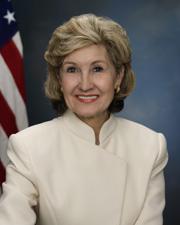
Mr. President, I am pleased to introduce a bill to correct an injustice in the tax code that harms citizens in every state of this great Nation. State and local governments have various alternatives…
Mr. President, I am pleased to introduce a bill to correct an injustice in the tax code that harms citizens in every state of this great Nation.
State and local governments have various alternatives for raising revenue. Some levy income taxes, some use sales taxes, and others use a combination of the two. The citizens who pay State and local income taxes are able to offset some of what they pay by receiving a deduction on their Federal taxes. Before 1986, taxpayers also had the ability to deduct their sales taxes.
The philosophy behind these deductions is simple: people should not have to pay taxes on their taxes. The money that people must give to one level of government should not also be taxed by another level of government.
Unfortunately, these common sense deductions have slowly been eroded over the years. First, the deduction for State and local sales tax was eliminated in the 1986 tax reform legislation. Second, the alternative minimum tax has reduced the benefit of the income tax deduction for many.
The elimination of the sales tax deduction discriminates against those living in states, such as my home State of Texas, with no income taxes. It is important to remember the lack of an income tax does not mean citizens in these States do not pay State taxes; revenues are simply collected differently.
It is unfair to give citizens from some States a deduction for the revenue they provide their State and local governments, while not doing the same for citizens from other States. Federal tax law should not treat people differently on the basis of State residence and differing tax collection methods.
This discrepancy has a significant impact on Texas. According to the Texas Comptroller, if taxpayers could deduct their sales taxes, more than $700 million would stay in the hands of Texans. This could lead to the creation of more than 16,000 new jobs and add almost $900 million in economic activity. The impact of this growth would be particularly beneficial during this period when many States are facing record- breaking deficits. At the same time, such a tax change would cost the Federal Government less than one percent of what the current State and local income tax deduction costs.
For those in states with income taxes, their tax deduction benefit has been diminished by the alternative minimum tax, AMT. People can deduct their state and local income taxes when calculating their regular taxes, but not when determining the AMT. The difference often is the reason people must pay the higher alternative tax.
In fact, state and local taxes account for 54 percent of the difference between the AMT and the regular tax calculation. This particularly hurts the 60 percent of AMT payers who are from states with higher income tax rates. Eliminating this discrepancy would go a long way toward reducing the number of people affected by the AMT.
The legislation I am offering today will fix these problems. First, it will provide all taxpayers with the option of deducting State and local sales taxes, instead of income taxes, when calculating their Federal tax. This will end the discrimination suffered by my fellow Texans and citizens of other states who do not have the option of an income tax deduction. It will also allow people from states with both a sales and an income tax to choose the most advantageous deduction.
My bill will also provide for a State and local income and sales tax deduction in the AMT. This is an important step in reducing the ballooning growth of the AMT, which will impact almost a third of all taxpayers by 2010.
The legislation I am introducing today is about reestablishing equity to the tax code and defending the important principle of eliminating taxes on taxes. I hope my fellow Senators will support this effort.
Mr. President, I ask unanimous consent that the text of the bill be printed in the Record.
Bill Text
Latest available legislative text
        [Congressional Bills 108th Congress]
[From the U.S. Government Publishing Office]
[S. 486 Introduced in Senate (IS)]

108th CONGRESS
1st Session
S. 486

To provide for equal coverage of mental health benefits with respect to
health insurance coverage unless comparable limitations are imposed on
medical and surgical benefits.

_______________________________________________________________________

IN THE SENATE OF THE UNITED STATES

February 27, 2003

Mr. Domenici (for himself, Mr. Kennedy, Mr. Coleman, Mr. Dayton, Mr.
Grassley, Mr. Reed, Mr. Cochran, Mr. Dodd, Mr. Warner, Mr. Reid, Mr.
Thomas, Mr. Johnson, Mr. Specter, Mr. Harkin, Mr. Lugar, Mr. Daschle,
Mr. Graham of South Carolina, Mrs. Murray, Ms. Collins, Ms. Cantwell,
Mr. Roberts, Mr. Edwards, Mr. Chafee, Mrs. Lincoln, Mr. Bennett, and
Mr. Lautenberg) introduced the following bill; which was read twice and
referred to the Committee on Health, Education, Labor, and Pensions

_______________________________________________________________________

A BILL

To provide for equal coverage of mental health benefits with respect to
health insurance coverage unless comparable limitations are imposed on
medical and surgical benefits.

Be it enacted by the Senate and House of Representatives of the
United States of America in Congress assembled,

SECTION 1. SHORT TITLE.

This Act may be cited as the ``Senator Paul Wellstone Mental Health
Equitable Treatment Act of 2003''.

SEC. 2. AMENDMENT TO THE EMPLOYEE RETIREMENT INCOME SECURITY ACT OF
1974.

(a) In General.--Section 712 of the Employee Retirement Income
Security Act of 1974 (29 U.S.C. 1185a) is amended to read as follows:

``SEC. 712. MENTAL HEALTH PARITY.

``(a) In General.--In the case of a group health plan (or health
insurance coverage offered in connection with such a plan) that
provides both medical and surgical benefits and mental health benefits,
such plan or coverage shall not impose any treatment limitations or
financial requirements with respect to the coverage of benefits for
mental illnesses unless comparable treatment limitations or financial
requirements are imposed on medical and surgical benefits.
``(b) Construction.--
``(1) In general.--Nothing in this section shall be
construed as requiring a group health plan (or health insurance
coverage offered in connection with such a plan) to provide any
mental health benefits.
``(2) Medical management of mental health benefits.--
Consistent with subsection (a), nothing in this section shall
be construed to prevent the medical management of mental health
benefits, including through concurrent and retrospective
utilization review and utilization management practices,
preauthorization, and the application of medical necessity and
appropriateness criteria applicable to behavioral health and
the contracting and use of a network of participating
providers.
``(3) No requirement of specific services.--Nothing in this
section shall be construed as requiring a group health plan (or
health insurance coverage offered in connection with such a
plan) to provide coverage for specific mental health services,
except to the extent that the failure to cover such services
would result in a disparity between the coverage of mental
health and medical and surgical benefits.
``(c) Small Employer Exemption.--
``(1) In general.--This section shall not apply to any
group health plan (and group health insurance coverage offered
in connection with a group health plan) for any plan year of
any employer who employed an average of at least 2 but not more
than 50 employees on business days during the preceding
calendar year.
``(2) Application of certain rules in determination of
employer size.--For purposes of this subsection--
``(A) Application of aggregation rule for
employers.--Rules similar to the rules under
subsections (b), (c), (m), and (o) of section 414 of
the Internal Revenue Code of 1986 shall apply for
purposes of treating persons as a single employer.
``(B) Employers not in existence in preceding
year.--In the case of an employer which was not in
existence throughout the preceding calendar year, the
determination of whether such employer is a small
employer shall be based on the average number of
employees that it is reasonably expected such employer
will employ on business days in the current calendar
year.
``(C) Predecessors.--Any reference in this
paragraph to an employer shall include a reference to
any predecessor of such employer.
``(d) Separate Application to Each Option Offered.--In the case of
a group health plan that offers a participant or beneficiary two or
more benefit package options under the plan, the requirements of this
section shall be applied separately with respect to each such option.
``(e) In-Network and Out-of-Network Rules.--In the case of a plan
or coverage option that provides in-network mental health benefits,
out-of-network mental health benefits may be provided using treatment
limitations or financial requirements that are not comparable to the
limitations and requirements applied to medical and surgical benefits
if the plan or coverage provides such in-network mental health benefits
in accordance with subsection (a) and provides reasonable access to in-
network providers and facilities.
``(f) Definitions.--For purposes of this section--
``(1) Financial requirements.--The term `financial
requirements' includes deductibles, coinsurance, co-payments,
other cost sharing, and limitations on the total amount that
may be paid by a participant or beneficiary with respect to
benefits under the plan or health insurance coverage and shall
include the application of annual and lifetime limits.
``(2) Medical or surgical benefits.--The term `medical or
surgical benefits' means benefits with respect to medical or
surgical services, as defined under the terms of the plan or
coverage (as the case may be), but does not include mental
health benefits.
``(3) Mental health benefits.--The term `mental health
benefits' means benefits with respect to services, as defined
under the terms and conditions of the plan or coverage (as the
case may be), for all categories of mental health conditions
listed in the Diagnostic and Statistical Manual of Mental
Disorders, Fourth Edition (DSM IV-TR), or the most recent
edition if different than the Fourth Edition, if such services
are included as part of an authorized treatment plan that is in
accordance with standard protocols and such services meet the
plan or issuer's medical necessity criteria. Such term does not
include benefits with respect to the treatment of substance
abuse or chemical dependency.
``(4) Treatment limitations.--The term `treatment
limitations' means limitations on the frequency of treatment,
number of visits or days of coverage, or other similar limits
on the duration or scope of treatment under the plan or
coverage.''.
(b) Effective Date.--The amendment made by this section shall apply
with respect to plan years beginning on or after January 1, 2004.

SEC. 3. AMENDMENT TO THE PUBLIC HEALTH SERVICE ACT RELATING TO THE
GROUP MARKET.

(a) In General.--Section 2705 of the Public Health Service Act (42
U.S.C. 300gg-5) is amended to read as follows:

``SEC. 2705. MENTAL HEALTH PARITY.

``(a) In General.--In the case of a group health plan (or health
insurance coverage offered in connection with such a plan) that
provides both medical and surgical benefits and mental health benefits,
such plan or coverage shall not impose any treatment limitations or
financial requirements with respect to the coverage of benefits for
mental illnesses unless comparable treatment limitations or financial
requirements are imposed on medical and surgical benefits.
``(b) Construction.--
``(1) In general.--Nothing in this section shall be
construed as requiring a group health plan (or health insurance
coverage offered in connection with such a plan) to provide any
mental health benefits.
``(2) Medical management of mental health benefits.--
Consistent with subsection (a), nothing in this section shall
be construed to prevent the medical management of mental health
benefits, including through concurrent and retrospective
utilization review and utilization management practices,
preauthorization, and the application of medical necessity and
appropriateness criteria applicable to behavioral health and
the contracting and use of a network of participating
providers.
``(3) No requirement of specific services.--Nothing in this
section shall be construed as requiring a group health plan (or
health insurance coverage offered in connection with such a
plan) to provide coverage for specific mental health services,
except to the extent that the failure to cover such services
would result in a disparity between the coverage of mental
health and medical and surgical benefits.
``(c) Small Employer Exemption.--
``(1) In general.--This section shall not apply to any
group health plan (and group health insurance coverage offered
in connection with a group health plan) for any plan year of
any employer who employed an average of at least 2 but not more
than 50 employees on business days during the preceding
calendar year.
``(2) Application of certain rules in determination of
employer size.--For purposes of this subsection--
``(A) Application of aggregation rule for
employers.--Rules similar to the rules under
subsections (b), (c), (m), and (o) of section 414 of
the Internal Revenue Code of 1986 shall apply for
purposes of treating persons as a single employer.
``(B) Employers not in existence in preceding
year.--In the case of an employer which was not in
existence throughout the preceding calendar year, the
determination of whether such employer is a small
employer shall be based on the average number of
employees that it is reasonably expected such employer
will employ on business days in the current calendar
year.
``(C) Predecessors.--Any reference in this
paragraph to an employer shall include a reference to
any predecessor of such employer.
``(d) Separate Application to Each Option Offered.--In the case of
a group health plan that offers a participant or beneficiary two or
more benefit package options under the plan, the requirements of this
section shall be applied separately with respect to each such option.
``(e) In-Network and Out-of-Network Rules.--In the case of a plan
or coverage option that provides in-network mental health benefits,
out-of-network mental health benefits may be provided using treatment
limitations or financial requirements that are not comparable to the
limitations and requirements applied to medical and surgical benefits
if the plan or coverage provides such in-network mental health benefits
in accordance with subsection (a) and provides reasonable access to in-
network providers and facilities.
``(f) Definitions.--For purposes of this section--
``(1) Financial requirements.--The term `financial
requirements' includes deductibles, coinsurance, co-payments,
other cost sharing, and limitations on the total amount that
may be paid by a participant, beneficiary or enrollee with
respect to benefits under the plan or health insurance coverage
and shall include the application of annual and lifetime
limits.
``(2) Medical or surgical benefits.--The term `medical or
surgical benefits' means benefits with respect to medical or
surgical services, as defined under the terms of the plan or
coverage (as the case may be), but does not include mental
health benefits.
``(3) Mental health benefits.--The term `mental health
benefits' means benefits with respect to services, as defined
under the terms and conditions of the plan or coverage (as the
case may be), for all categories of mental health conditions
listed in the Diagnostic and Statistical Manual of Mental
Disorders, Fourth Edition (DSM IV-TR), or the most recent
edition if different than the Fourth Edition, if such services
are included as part of an authorized treatment plan that is in
accordance with standard protocols and such services meet the
plan or issuer's medical necessity criteria. Such term does not
include benefits with respect to the treatment of substance
abuse or chemical dependency.
``(4) Treatment limitations.--The term `treatment
limitations' means limitations on the frequency of treatment,
number of visits or days of coverage, or other similar limits
on the duration or scope of treatment under the plan or
coverage.''.
(b) Effective Date.--The amendment made by this section shall apply
with respect to plan years beginning on or after January 1, 2004.

SEC. 4. PREEMPTION.

Nothing in the amendments made by this Act shall be construed to
preempt any provision of State law, with respect to health insurance
coverage offered by a health insurance issuer in connection with a
group health plan, that provides protections to enrollees that are
greater than the protections provided under such amendments. Nothing in
the amendments made by this Act shall be construed to affect or modify
section 514 of the Employee Retirement Income Security Act of 1974 (29
U.S.C. 1144).

SEC. 5. GENERAL ACCOUNTING OFFICE STUDY.

(a) Study.--The Comptroller General shall conduct a study that
evaluates the effect of the implementation of the amendments made by
this Act on the cost of health insurance coverage, access to health
insurance coverage (including the availability of in-network
providers), the quality of health care, and other issues as determined
appropriate by the Comptroller General. Such study shall also include
an estimate of the cost that would be incurred if such amendments were
extended in a manner so as to provide coverage for the treatment of
substance abuse and chemical dependency.
(b) Report.--Not later than 2 years after the date of enactment of
this Act, the Comptroller General shall prepare and submit to the
appropriate committees of Congress a report containing the results of
the study conducted under subsection (a).
<all>