Native American Energy Development and Self-Determination Act of 2003
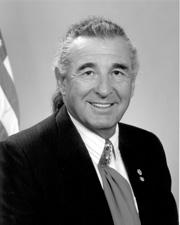 Sen. Ben Nighthorse Campbell (R-CO)
Legislative Activity
Stay on top of the latest movement without scrolling through every action
Committee on Indian Affairs. Ordered to be reported with an amendment in the nature of a substitute favorably.
April 10, 2003
View full timeline
Introduced in Senate
March 5, 2003
Sponsor introductory remarks on measure. (CR S3172)
March 5, 2003
Read twice and referred to the Committee on Indian Affairs. (text of measure as introduced: CR S3172-3175)
March 5, 2003
Committee on Indian Affairs. Hearings held. Hearings printed: S.Hrg. 108-61.
March 19, 2003
Committee on Indian Affairs. Ordered to be reported with an amendment in the nature of a substitute favorably.
April 10, 2003
Floor Debate
20 membersWhat members said about S. 522 on the floor



 +15
+15
Floor Debate
20 membersWhat members said about S. 522 on the floor
Mr. President, I ask unanimous consent that the order for the quorum call be rescinded. Mr. President, we have two Senators who wish to speak on the pending amendment. The junior Senator from Texas…
Mr. President, I will not object at all. I want to understand, I thought I already had 15 minutes from yesterday. I am just clarifying that point. Mr. President, I thank the Senator. Mr. President, I…
Mr. President, I send an amendment to the desk. I ask unanimous consent that further reading of the amendment be dispensed with. Mr. President, I will try to explain the amendment. Indian lands…
I am pleased to join my colleague from Washington, Senator Patty Murray, as well as my colleague and co-chair of the Senate Diabetes Caucus, Senator John Breaux, in introducing the Pancreatic Islet…
Mr. President, today, my colleague from Maine, Senator Collins and I are very pleased to introduce the National Aquatic Invasive Species Act of 2003. This bill, which reauthorizes the Nonindigenous…
Show 8 more

Mr. President, I rise today in support of the National Aquatic Invasive Species Act and the National Invasive Species Council Act. As a Senator representing a Great Lake State, I am proud to be an…

Mr. President, I am proud to introduce the Lifespan Respite Care Act of 2003 today, a bill to establish the availability of respite services for our family caregivers, and to increase coordination of…

Mr. President, I rise today to introduce the Indian School Bus Route Safety Reauthorization Act of 2003. This bill continues an important Federal program begun in TEA-21 that addresses a unique…
Mr. President, today I am introducing the Native American Capital Formation and Economic Development Act of 2003. Before the Europeans landed on these shores, Indian nations were vigorous and vital:…

Mr. President, I rise today with Senator Craig Thomas to introduce legislation that would exclude loan repayments made through the National Health Service Corps from taxable income. I am pleased that…

Mr. President, I ask unanimous consent that the order for the quorum call be rescinded. I may need another 5 minutes. Mr. President, I thank Senator Reid. I wish to speak as cosponsor of the…

Madam President, I understand the Senator from New Mexico has 11 minutes remaining. Is that correct? Thank you, Madam President. I would like 5 of those minutes. Madam President, today I rise in…

Mr. President, I rise today with my colleagues Senator Warner, Senator Hollings, Senator Reed, Senator Daschle, Senator Lieberman, Senator Clinton, Senator Sarbanes, and Senator Landrieu to introduce…
Show 11 more
Madam President, I rise to support the Graham amendment. I thank my colleague from California for speaking so eloquently about how important it is for the entire west coast of the United States. I…
Mr. President, I rise today to introduce a bill of critical importance to our Nation's economic well-being and the security of our borders: the Border Infrastructure and Technology Modernization Act.…

Mr. President, today I am introducing the Social Security Benefits Tax Relief Act of 2003. This is a simple bill that would repeal the income tax increase on Social Security benefits that went into…

Madam President, I think it appropriate I make a few comments. My committee does have jurisdiction over any environmental aspects of the OCS. I consider this to be significant. I think it is very…
Mr. President, I ask unanimous consent that the Committee on Foreign Relations be authorized to meet during the session of the Senate on Wednesday, March 19, 2003 at 9:30 a.m. to hold a hearing on…
Mr. President, I rise to express my concern over provisions included in the Senate Energy bill that threaten the existing moratoria on leasing and preleasing activities related to oil drilling on…

Mr. President, I am pleased to join Senators Domenici, Dorgan, Kyl, Feinstein, Murkowski, Burns, and Murray to introduce the Border Infrastructure and Technology Modernization Act. For most of us,…

Mr. President, it is my understanding that the vote is scheduled for 11:15. Mr. President, I would like to close on the amendment that is sponsored by Senator Graham, and a number of other Senators,…
Madam President, I wish to comment on what I hope is the progress of our Energy Policy Act of 2003 that is before us. It is a policy that is essential to our Nation's energy security, to our economic…

Mr. President, today I am introducing legislation on behalf of thousands of Federal firefighters and emergency response personnel worldwide who, at great risk to their own personal health and safety,…

Mr. President, I rise today to introduce a bill designed to provide assistance to vulnerable Medicare beneficiaries: the Medicare Improvements for Special Needs Beneficiaries Act of 2003. This…
Bill Text
Latest available legislative text
        [Congressional Bills 108th Congress]
[From the U.S. Government Publishing Office]
[S. 522 Introduced in Senate (IS)]

108th CONGRESS
1st Session
S. 522

To amend the Energy Policy Act of 1992 to assist Indian tribes in
developing energy resources, and for other purposes.

_______________________________________________________________________

IN THE SENATE OF THE UNITED STATES

March 5, 2003

Mr. Campbell (for himself and Mr. Domenici) introduced the following
bill; which was read twice and referred to the Committee on Indian
Affairs

_______________________________________________________________________

A BILL

To amend the Energy Policy Act of 1992 to assist Indian tribes in
developing energy resources, and for other purposes.

Be it enacted by the Senate and House of Representatives of the
United States of America in Congress assembled,

SECTION 1. SHORT TITLE.

This Act may be cited as the ``Native American Energy Development
and Self-Determination Act of 2003''.

SEC. 2. INDIAN ENERGY.

(a) In General.--Title XXVI of the Energy Policy Act of 1992 (25
U.S.C. 3501 et seq.) is amended to read as follows:

``TITLE XXVI--INDIAN ENERGY

``SEC. 2601. FINDINGS; PURPOSES.

``(a) Findings.--Congress finds that--
``(1) the energy resources of Indians and Indian tribes are
among the most valuable natural resources of Indians and Indian
tribes;
``(2) there exists a special legal and political
relationship between the United States and Indian tribes as
expressed in treaties, the Constitution, Federal statutes,
court decisions, executive orders, and course of dealing;
``(3) Indian land comprises approximately 5 percent of the
land area of the United States, but contains an estimated 10
percent of all energy reserves in the United States,
including--
``(A) 30 percent of known coal deposits located in
the western portion of the United States;
``(B) 5 percent of known onshore oil deposits of
the United States; and
``(C) 10 percent of known onshore natural gas
deposits of the United States;
``(4) coal, oil, natural gas, and other energy minerals
produced from Indian land represent more than 10 percent of
total nationwide onshore production of energy minerals;
``(5) in 2000, 9,300,000 barrels of oil, 299,000,000,000
cubic feet of natural gas, and 21,400,000 tons of coal were
produced from Indian land, representing $700,000,000 in Indian
energy revenue;
``(6) the Department of the Interior estimates that only 25
percent of the oil and less than 20 percent of all natural gas
reserves on Indian land have been developed;
``(7) the Department of Energy estimates that the wind
resources of the Great Plains could meet 75 percent of the
electricity demand in the contiguous 48 States;
``(8) the development of Indian energy resources would
assist--
``(A) Indian communities in carrying out community
development efforts; and
``(B) the United States in securing a greater
degree of independence from foreign sources of energy;
and
``(9) the United States, in accordance with Federal Indian
self-determination laws and policies, should assist Indian
tribes and individual Indians in developing Indian energy
resources.
``(b) Purposes.--The purposes of this title are--
``(1) to assist Indian tribes and individual Indians in the
development of Indian energy resources; and
``(2) to further the goal of Indian self-determination,
particularly through the development of stronger tribal
governments and greater degrees of tribal economic self-
sufficiency.

``SEC. 2602. DEFINITIONS.

``In this title:
``(1) Commission.--The term `Commission' means the Indian
Energy Resource Commission established by section 2606(a).
``(2) Director.--The term `Director' means the Director of
the Office of Indian Energy Policy and Programs.
``(3) Indian.--The term `Indian' means an individual member
of an Indian tribe who owns land or an interest in land, the
title to which land--
``(A) is held in trust by the United States; or
``(B) is subject to a restriction against
alienation imposed by the United States.
``(4) Indian land.--The term `Indian land' means--
``(A) any land located within the boundaries of an
Indian reservation, pueblo, or rancheria;
``(B) any land not located within the boundaries of
an Indian reservation, pueblo, or rancheria, the title
to which is held--
``(i) in trust by the United States for the
benefit of an Indian tribe;
``(ii) by an Indian tribe, subject to
restriction by the United States against
alienation; or
``(iii) by a dependent Indian community;
and
``(C) land conveyed to a Native Corporation under
the Alaska Native Claims Settlement Act (43 U.S.C. 1601
et seq.).
``(5) Indian reservation.--The term `Indian reservation'
includes--
``(A) an Indian reservation in existence as of the
date of enactment of this paragraph;
``(B) a public domain Indian allotment;
``(C) a former reservation in the State of
Oklahoma;
``(D) a parcel of land owned by a Native
Corporation under the Alaska Native Claims Settlement
Act (43 U.S.C. 1601 et seq.); and
``(E) a dependent Indian community located within
the borders of the United States, regardless of whether
the community is located--
``(i) on original or acquired territory of
the community; or
``(ii) within or outside the boundaries of
any particular State.
``(6) Indian tribe.--The term `Indian tribe' has the
meaning given the term in section 4 of the Indian Self-
Determination and Education Assistance Act (25 U.S.C. 450b).
``(7) Native corporation.--The term `Native Corporation'
has the meaning given the term in section 3 of the Alaska
Native Claims Settlement Act (43 U.S.C. 1602).
``(8) Program.--The term `Program' means the Indian energy
resource development program established under section 2603(a).
``(9) Secretary.--The term `Secretary' means the Secretary
of Energy.
``(10) Tribal consortium.--The term `tribal consortium'
means an organization that consists of at least 3 entities, 1
of which is an Indian tribe.
``(11) Vertical integration of energy resources.--The term
`vertical integration of energy resources' means--
``(A) the discovery and development of renewable
and nonrenewable energy resources;
``(B) electricity transmission; and
``(C) any other activity that is carried out to
achieve the purposes of this title, as determined by
the Secretary.

``SEC. 2603. INDIAN ENERGY RESOURCE DEVELOPMENT PROGRAM.

``(a) In General.--The Secretary shall establish and implement an
Indian energy resource development program to assist Indian tribes and
tribal consortia in achieving the purposes of this title.
``(b) Grants and Loans.--In carrying out the Program, the Secretary
shall, at a minimum--
``(1) provide development grants to Indian tribes and
tribal consortia for use in developing or obtaining the
managerial and technical capacity needed to develop energy
resources on Indian land;
``(2) provide grants to Indian tribes and tribal consortia
for use in carrying out projects to promote the vertical
integration of energy resources, and to process, use, or
develop those energy resources, on Indian land; and
``(3) provide low-interest loans to Indian tribes and
tribal consortia for use in the promotion of energy resource
development and vertical integration or energy resources on
Indian land.
``(c) Authorization of Appropriations.--There are authorized to be
appropriated to carry out this section such sums as are necessary for
each of fiscal years 2004 through 2014.

``SEC. 2604. INDIAN TRIBAL RESOURCE REGULATION.

``(a) In General.--The Secretary may provide to Indian tribes and
tribal consortia, on an annual basis, grants for use in developing,
administering, implementing, and enforcing tribal laws (including
regulations) governing the development and management of energy
resources on Indian land.
``(b) Use of Funds.--Funds from a grant provided under this section
may be used by an Indian tribe or tribal consortium for--
``(1) the development of a tribal energy resource inventory
or tribal energy resource;
``(2) the development of a feasibility study or other
report necessary to the development of energy resources;
``(3) the development of tribal laws and technical
infrastructure to protect the environment under applicable law;
or
``(4) the training of employees that--
``(A) are engaged in the development of energy
resources; or
``(B) are responsible for protecting the
environment.
``(c) Other Assistance.--To the maximum extent practicable, the
Secretary and the Secretary of the Interior shall make available to
Indian tribes and tribal consortia scientific and technical data for
use in the development and management of energy resources on Indian
land.

``SEC. 2605. LEASES, BUSINESS AGREEMENTS, AND RIGHTS-OF-WAY INVOLVING
ENERGY DEVELOPMENT OR TRANSMISSION.

``(a) In General.--Notwithstanding any other provision of law--
``(1) an Indian or Indian tribe may enter into a lease or
business agreement for the purpose of energy development,
including a lease or business agreement for--
``(A) exploration for, extraction of, processing
of, or other development of energy resources; and
``(B) construction or operation of--
``(i) an electric generation, transmission,
or distribution facility located on tribal
land; or
``(ii) a facility to process or refine
energy resources developed on tribal land; and
``(2) a lease or business agreement described in paragraph
(1) shall not require the approval of the Secretary if--
``(A) the lease or business agreement is executed
under tribal regulations approved by the Secretary
under subsection (e); and
``(B) the term of the lease or business agreement
does not exceed 30 years.
``(b) Rights-of-Way for Pipelines or Electric Transmission or
Distribution Lines.--An Indian tribe may grant a right-of-way over the
tribal land of the Indian tribe for a pipeline or an electric
transmission or distribution line without specific approval by the
Secretary if--
``(1) the right-of-way is executed under and complies with
tribal regulations approved by the Secretary under subsection
(e);
``(2) the term of the right-of-way does not exceed 30
years; and
``(3) the pipeline or electric transmission or distribution
line serves--
``(A) an electric generation, transmission, or
distribution facility located on tribal land; or
``(B) a facility located on tribal land that
processes or refines renewable or nonrenewable energy
resources developed on tribal land.
``(c) Renewals.--A lease or business agreement entered into or a
right-of-way granted by an Indian tribe under this section may be
renewed at the discretion of the Indian tribe in accordance with this
section.
``(d) Validity.--No lease, business agreement, or right-of-way
under this section shall be valid unless the lease, business agreement,
or right-of-way is authorized in accordance with tribal regulations
approved by the Secretary under subsection (e).
``(e) Tribal Regulatory Requirements.--
``(1) In general.--An Indian tribe may submit to the
Secretary for approval tribal regulations governing leases,
business agreements, and rights-of-way under this section.
``(2) Approval or disapproval.--
``(A) In general.--Not later than 120 days after
the date on which the Secretary receives tribal
regulations submitted by an Indian tribe under
paragraph (1) (or such later date as may be agreed to
by the Secretary and the Indian tribe), the Secretary
shall approve or disapprove the regulations.
``(B) Conditions for approval.--The Secretary shall
approve tribal regulations submitted under paragraph
(1) only if the regulations include provisions that,
with respect to a lease, business agreement, or right-
of-way under this section--
``(i) ensure the acquisition of necessary
information from the applicant for the lease,
business agreement, or right-of-way;
``(ii) address the term of the lease or
business agreement or the term of conveyance of
the right-of-way;
``(iii) address amendments and renewals;
``(iv) address consideration for the lease,
business agreement, or right-of-way;
``(v) address technical or other relevant
requirements;
``(vi) establish requirements for
environmental review in accordance with
subparagraph (C);
``(vii) ensure compliance with all
applicable environmental laws;
``(viii) identify final approval authority;
``(ix) provide for public notification of
final approvals; and
``(x) establish a process for consultation
with any affected States concerning potential
off-reservation impacts associated with the
lease, business agreement, or right-of-way.
``(C) Environmental review process.--Tribal
regulations submitted under paragraph (1) shall
establish, and include provisions to ensure compliance
with, an environmental review process that, with
respect to a lease, business agreement, or right-of-way
under this section, provides for--
``(i) the identification and evaluation of
all significant environmental impacts (as
compared with a no-action alternative);
``(ii) the identification of proposed
mitigation;
``(iii) a process for ensuring that the
public is informed of and has an opportunity to
comment on any proposed lease, business
agreement, or right-of-way before tribal
approval of the lease, business agreement, or
right-of-way (or any amendment to or renewal of
a lease, business agreement, or right-of-way);
and
``(iv) sufficient administrative support
and technical capability to carry out the
environmental review process.
``(3) Public participation.--The Secretary may provide
notice and opportunity for public comment on tribal regulations
submitted under paragraph (1).
``(4) Disapproval.--If the Secretary disapproves tribal
regulations submitted by an Indian tribe under paragraph (1),
the Secretary shall--
``(A) notify the Indian tribe in writing of the
basis for the disapproval;
``(B) identify what changes or other actions are
required to address the concerns of the Secretary; and
``(C) provide the Indian tribe with an opportunity
to revise and resubmit the regulations.
``(5) Execution of lease or business agreement or granting
of right-of-way.--If an Indian tribe executes a lease or
business agreement or grants a right-of-way in accordance with
tribal regulations approved under this subsection, the Indian
tribe shall provide to the Secretary--
``(A) a copy of the lease, business agreement, or
right-of-way document (including all amendments to and
renewals of the document); and
``(B) in the case of tribal regulations or a lease,
business agreement, or right-of-way that permits
payment to be made directly to the Indian tribe,
documentation of those payments sufficient to enable
the Secretary to discharge the trust responsibility of
the United States as appropriate under applicable law.
``(6) Liability.--The United States shall not be liable for
any loss or injury sustained by any party (including an Indian
tribe or any member of an Indian tribe) to a lease, business agreement,
or right-of-way executed in accordance with tribal regulations approved
under this subsection.
``(7) Compliance review.--
``(A) In general.--After exhaustion of tribal
remedies, any person may submit to the Secretary, in a
timely manner, a petition to review compliance of an
Indian tribe with tribal regulations of the Indian
tribe approved under this subsection.
``(B) Action by secretary.--The Secretary shall--
``(i) not later than 60 days after the date
on which the Secretary receives a petition
under subparagraph (A), review compliance of an
Indian tribe described in subparagraph (A); and
``(ii) on completion of the review, if the
Secretary determines that an Indian tribe is
not in compliance with tribal regulations
approved under this subsection, take such
action as is necessary to compel compliance,
including--
``(I)(aa) rescinding a lease,
business agreement, or right-of-way
under this section; or
``(bb) suspending a lease, business
agreement, or right-of-way under this
section until an Indian tribe is in
compliance with tribal regulations; and
``(II) rescinding approval of the
tribal regulations and reassuming the
responsibility for approval of leases,
business agreements, or rights-of-way
associated with an energy pipeline or
distribution line described in
subsection (b).
``(C) Compliance.--If the Secretary seeks to compel
compliance of an Indian tribe with tribal regulations
under subparagraph (B)(ii), the Secretary shall--
``(i) make a written determination that
describes the manner in which the tribal
regulations have been violated;
``(ii) provide the Indian tribe with a
written notice of the violation together with
the written determination; and
``(iii) before taking any action described
in subparagraph (B)(ii) or seeking any other
remedy, provide the Indian tribe with a hearing
and a reasonable opportunity to attain
compliance with the tribal regulations.
``(D) Appeal.--An Indian tribe described in
subparagraph (C) shall retain all rights to appeal as
provided in regulations promulgated by the Secretary.
``(f) Agreements.--
``(1) In general.--Any agreement by an Indian tribe that
relates to the development of an electric generation,
transmission, or distribution facility, or a facility to
process or refine renewable or nonrenewable energy resources
developed on tribal land, shall not require the specific
approval of the Secretary under section 2103 of the Revised
Statutes (25 U.S.C. 81) if the activity that is the subject of
the agreement is carried out in accordance with this section.
``(2) Liability.--The United States shall not be liable for
any loss or injury sustained by any person (including an Indian
tribe or any member of an Indian tribe) resulting from an
action taken in performance of an agreement entered into under
this subsection.
``(g) No Effect on Other Law.--Nothing in this section affects the
application of any provision of--
``(1) the Act of May 11, 1938 (commonly known as the
`Indian Mineral Leasing Act of 1938') (25 U.S.C. 396a et seq.);
``(2) the Indian Mineral Development Act of 1982 (25 U.S.C.
2101 et seq.);
``(3) the Surface Mining Control and Reclamation Act of
1977 (30 U.S.C. 1201 et seq.); or
``(4) any Federal environmental law.

``SEC. 2606. INDIAN ENERGY RESOURCE COMMISSION.

``(a) Establishment.--There is established a commission to be known
as the `Indian Energy Resource Commission'.
``(b) Members.--The Commission shall consist of--
``(1) 8 members appointed by the Secretary of Interior,
based on recommendations submitted by Indian tribes with
developable energy resources, at least 4 of whom shall be
elected tribal leaders;
``(2) 3 members appointed by the Secretary of Interior,
based on recommendations submitted by the Governors of States
in which are located--
``(A) 1 or more Indian reservations; or
``(B) Indian land with developable energy
resources;
``(3) 2 members appointed by the Secretary of Interior from
among individuals in the private sector with expertise in
tribal and State taxation of energy resources;
``(4) 2 members appointed by the Secretary of Interior from
among individuals with expertise in oil and gas royalty
management administration, including auditing and accounting;
``(5) 2 members appointed by the Secretary of Interior from
among individuals in the private sector with expertise in
energy development;
``(6) 1 member appointed by the Secretary of Interior,
based on recommendations submitted by national environmental
organizations;
``(7) the Secretary of the Interior; and
``(8) the Secretary.
``(c) Appointments.--Members of the Commission shall be appointed
not later than 120 days after the date of enactment of the Native
American Energy Development and Self-Determination Act of 2003.
``(d) Vacancies.--A vacancy in the Commission--
``(1) shall be filled in the same manner as the original
appointment was made; and
``(2) shall not affect the powers of the Commission.
``(e) Chairperson.--The members of the Commission shall elect a
Chairperson from among the members of the Commission.
``(f) Quorum.--Eleven members of the Commission shall constitute a
quorum, but a lesser number may hold hearings and convene meetings.
``(g) Organizational Meeting.--Not later than 30 days after the
date on which at least 11 members have been appointed to the
Commission, the Commission shall hold an organizational meeting to
establish the rules and procedures of the Commission.
``(h) Compensation of Members.--
``(1) Non-federal employees.--A member of the Commission
who is not an officer or employee of the Federal Government
shall be compensated at a rate equal to the daily equivalent of
the annual rate of basic pay prescribed for level IV of the
Executive Schedule under section 5315 of title 5, United States
Code, for each day (including travel time) during which the
member is engaged in the performance of the duties of the
Commission.
``(2) Federal employees.--A member of the Commission who is
an officer or employee of the Federal Government shall serve
without compensation in addition to the compensation received
for the services of the member as an officer or employee of the
Federal Government.
``(i) Travel Expenses.--A member of the Commission shall be allowed
travel expenses, including per diem in lieu of subsistence, at rates
authorized for an employee of an agency under subchapter I of chapter
57 of title 5, United States Code, while away from the home or regular
place of business of the member in the performance of the duties of the
Commission.
``(j) Staff.--
``(1) In general.--The Chairperson of the Commission may,
without regard to the civil service laws (including
regulations), appoint and terminate an executive director and
such other additional personnel as are necessary to enable the
Commission to perform the duties of the Commission.
``(2) Confirmation of executive director.--The employment
of an executive director shall be subject to confirmation by
the Commission.
``(3) Compensation.--
``(A) In general.--Except as provided in
subparagraph (B), the Chairperson of the Commission may
fix the compensation of the executive director and
other personnel without regard to the provisions of
chapter 51 and subchapter III of chapter 53 of title 5,
United States Code, relating to classification of
positions and General Schedule pay rates.
``(B) Maximum rate of pay.--The rate of pay for the
executive director and other personnel shall not exceed
the rate payable for level IV of the Executive Schedule
under section 5316 of title 5, United States Code.
``(4) Experts and consultants.--With the approval of the
Commission, the executive director may retain and fix the
compensation of experts and consultants as the executive
director considered necessary to carry out the duties of the
Commission.
``(5) Detail of federal government employees.--
``(A) In general.--An employee of the Federal
Government may be detailed to the Commission without
reimbursement.
``(B) Civil service status.--The detail of the
employee shall be without interruption or loss of civil
service status or privilege.
``(k) Duties of Commission.--The Commission shall--
``(1) develop proposals to address dual taxation by Indian
tribes and States of the extraction of energy minerals on
Indian land;
``(2) make recommendations to improve the management,
administration, accounting, and auditing of royalties
associated with the production of energy minerals on Indian
land;
``(3) develop alternatives for the collection and
distribution of royalties associated with the production of
energy minerals on Indian land;
``(4) develop proposals for incentives to foster the
development of energy resources on Indian land;
``(5) identify barriers or obstacles to the development of
energy resources on Indian land, and make recommendations
designed to foster the development of energy resources on
Indian land, in order to promote economic development;
``(6) develop proposals for the promotion of vertical
integration of energy resources on Indian land; and
``(7) develop proposals on taxation incentives to foster
the development of energy resources on Indian land, including
investment tax credits and enterprise zone credits.
``(l) Powers of Commission.--The Commission or, at the direction of
the Commission, any subcommittee or member of the Commission, may, for
the purpose of carrying out this title--
``(1) hold such hearings, meet and act at such times and
places, take such testimony, receive such evidence, and
administer such oaths;
``(2) secure directly from any Federal agency such
information; and
``(3) require, by subpoena or otherwise, the attendance and
testimony of such witnesses and the production of such books,
records, correspondence, memoranda, papers, documents, tapes,
and materials;
as the Commission, subcommittee, or member considers advisable.
``(m) Commission Report.--
``(1) In general.--Not later than 2 years after the date of
enactment of the Native American Energy Development and Self-
Determination Act of 2003, the Commission shall submit to the
President, the Committee on Resources of the House of
Representatives, and the Committee on Indian Affairs and the
Committee on Energy and Natural Resources of the Senate, a
report that describes the proposals, recommendations, and
alternatives described in subsection (k).
``(2) Review and comment.--Before submission of the report
required under this subsection, the Chairperson of the
Commission shall provide to each interested Indian tribe and
each State in which is located 1 or more Indian reservations or
Indian land with developable energy resources, a draft of the
report for review and comment.
``(n) Authorization of Appropriations.--There are authorized to be
appropriated to the Commission such sums as are necessary to carry out
this section, to remain available until expended.
``(o) Termination.--The Commission shall terminate 30 days after
the date of submission of the report under subsection (m)(1).

``SEC. 2607. ENERGY EFFICIENCY AND STRUCTURES ON INDIAN LAND.

``(a) Technical Assistance to Nonprofit and Community
Organizations.--The Secretary of Housing and Urban Development, in
cooperation with Indian tribes or tribally-designated housing entities
of Indian tribes, shall provide, to eligible (as determined by the
Secretary of Housing and Urban Development) nonprofit and community
organizations, technical assistance to initiate and expand the use of
energy-saving technologies in--
``(1) new home construction;
``(2) housing rehabilitation; and
``(3) housing in existence as of the date of enactment of
the Native American Energy Development and Self-Determination
Act of 2003.
``(b) Review.--The Secretary of Housing and Urban Development and
the Secretary of the Interior, in consultation with Indian tribes or
tribally-designated housing entities of Indian tribes, shall--
``(1) complete a review of regulations promulgated by the
Secretary of Housing and Urban Development and the Secretary of
the Interior to identify any feasible measures that may be
taken to promote greater use of energy efficient technologies
in housing for which Federal assistance is provided under the
Native American Housing Assistance and Self-Determination Act
of 1996 (25 U.S.C. 4101 et seq.);
``(2) develop energy efficiency and conservation measures
for use in connection with housing that is--
``(A) located on Indian land; and
``(B) constructed, repaired, or rehabilitated using
assistance provided under any law or program
administered by the Secretary of Housing and Urban
Development or the Secretary of the Interior,
including--
``(i) the Native American Housing
Assistance and Self-Determination Act of 1996
(25 U.S.C. 4101 et seq.); and
``(ii) the Indian Home Improvement Program
of the Bureau of Indian Affairs; and
``(3) promote the use of the measures described in
paragraph (2) in programs administered by the Secretary of
Housing and Urban Development and the Secretary of the
Interior, as appropriate.

``SEC. 2608. INDIAN MINERAL DEVELOPMENT REVIEW BY SECRETARY OF THE
INTERIOR.

``(a) In General.--As soon as practicable after the date of
enactment of the Native American Energy Development and Self-
Determination Act of 2003, the Secretary of the Interior shall conduct
and provide to the Secretary a review of all activities being conducted
under the Indian Mineral Development Act of 1982 (25 U.S.C. 2101 et
seq.) as of that date.
``(b) Report.--Not later than 1 year after the date of enactment of
the Native American Energy Development and Self-Determination Act of
2003, the Secretary shall submit to the Committee on Resources and the
Committee on Energy and Commerce of the House of Representatives and
the Committee on Indian Affairs and the Committee on Energy and Natural
Resources of the Senate a report that includes--
``(1) the results of the review;
``(2) recommendations to ensure that Indian tribes have the
opportunity to develop Indian energy resources; and
``(3)(A) an analysis of the barriers to the development of
energy resources on Indian land (including legal, fiscal,
market, and other barriers); and
``(B) recommendations for the removal of those barriers.

``SEC. 2609. INDIAN ENERGY STUDY BY SECRETARY OF ENERGY.

``(a) In General.--Not later than 2 years after the date of
enactment of the Native American Energy Development and Self-
Determination Act of 2003, and every 2 years thereafter, the Secretary
shall submit to the Committees on Energy and Commerce and Resources of
the House of Representatives and the Committee on Energy and Natural
Resources and the Committee on Indian Affairs of the Senate a report on
energy development potential on Indian land.
``(b) Requirements.--The report shall--
``(1) identify barriers to the development of renewable
energy by Indian tribes (including legal, regulatory, fiscal,
and market barriers); and
``(2) include recommendations for the removal of those
barriers.

``SEC. 2610. CONSULTATION WITH INDIAN TRIBES.

``In carrying out this title, the Secretary and the Secretary of
Interior shall, as appropriate and to the maximum extent practicable,
involve and consult with Indian tribes in a manner that is consistent
with the Federal trust and the government-to-government relationships
between Indian tribes and the Federal Government.''.
(b) Energy Efficiency in Federally-Assisted Housing.--
(1) Finding.--Congress finds that the Secretary of Housing
and Urban Development should promote energy conservation in
housing that is located on Indian land and assisted with
Federal resources through--
(A) the use of energy-efficient technologies and
innovations (including the procurement of energy-
efficient refrigerators and other appliances);
(B) the promotion of shared savings contracts; and
(C) the use and implementation of such other
similar technologies and innovations as the Secretary
of Housing and Urban Development considers to be
appropriate.
(2) Amendment.--Section 202(2) of the Native American
Housing and Self-Determination Act of 1996 (25 U.S.C. 4132(2))
is amended by inserting ``improvement to achieve greater energy
efficiency,'' after ``planning,''.
<all>