National Invasive Species Council Act
 Sen. Mike DeWine (R-OH)
Legislative Activity
Stay on top of the latest movement without scrolling through every action
Sponsor introductory remarks on measure. (CR S3495-3496)
March 11, 2003
View full timeline
Introduced in Senate
March 5, 2003
Sponsor introductory remarks on measure. (CR S3189)
March 5, 2003
Read twice and referred to the Committee on Environment and Public Works.
March 5, 2003
Sponsor introductory remarks on measure. (CR S3495-3496)
March 11, 2003
Floor Debate
21 membersWhat members said about S. 536 on the floor



 +16
+16
Floor Debate
21 membersWhat members said about S. 536 on the floor
I am pleased to join my colleague from Washington, Senator Patty Murray, as well as my colleague and co-chair of the Senate Diabetes Caucus, Senator John Breaux, in introducing the Pancreatic Islet…
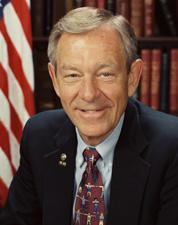
Mr. President, today, my colleague from Maine, Senator Collins and I are very pleased to introduce the National Aquatic Invasive Species Act of 2003. This bill, which reauthorizes the Nonindigenous…
Mr. President, I rise today in support of the National Aquatic Invasive Species Act and the National Invasive Species Council Act. As a Senator representing a Great Lake State, I am proud to be an…
Mr. President, I rise today in support of the National Aquatic Invasive Species Act and the National Invasive Species Council Act. As a Senator representing a Great Lake State, I am proud to be an…
Mr. President, I am proud to introduce the Lifespan Respite Care Act of 2003 today, a bill to establish the availability of respite services for our family caregivers, and to increase coordination of…
Show 8 more
Mr. President, I rise today to introduce the Indian School Bus Route Safety Reauthorization Act of 2003. This bill continues an important Federal program begun in TEA-21 that addresses a unique…
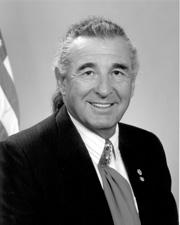
Mr. President, today I am introducing the Native American Capital Formation and Economic Development Act of 2003. Before the Europeans landed on these shores, Indian nations were vigorous and vital:…

Mr. President, I rise today with Senator Craig Thomas to introduce legislation that would exclude loan repayments made through the National Health Service Corps from taxable income. I am pleased that…

Mr. President, I rise today with my colleagues Senator Warner, Senator Hollings, Senator Reed, Senator Daschle, Senator Lieberman, Senator Clinton, Senator Sarbanes, and Senator Landrieu to introduce…

Mr. President, I rise today to introduce a bill of critical importance to our Nation's economic well-being and the security of our borders: the Border Infrastructure and Technology Modernization Act.…
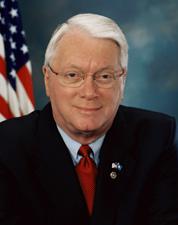
Mr. President, today I am introducing the Social Security Benefits Tax Relief Act of 2003. This is a simple bill that would repeal the income tax increase on Social Security benefits that went into…

Mr. President, I am pleased to join Senators Domenici, Dorgan, Kyl, Feinstein, Murkowski, Burns, and Murray to introduce the Border Infrastructure and Technology Modernization Act. For most of us,…

Mr. President, today I am introducing legislation on behalf of thousands of Federal firefighters and emergency response personnel worldwide who, at great risk to their own personal health and safety,…
Show 10 more

Mr. President, I rise today to introduce a bill designed to provide assistance to vulnerable Medicare beneficiaries: the Medicare Improvements for Special Needs Beneficiaries Act of 2003. This…

Mr. President, I would like to express my strong support for the National Aquatic Invasive Species Act of 2003, NAISA. During the 107th Congress, I introduced S. 1034, the Great Lakes Ecology…
Mr. President, today I am pleased to join with Senators Levin, Collins, Reed, Voinovich, and Stabenow, to introduce the National Invasive Species Council Act--a bill to permanently establish the…
Mr. President, today I am pleased to join with Senators Levin, Collins, Reed, Voinovich, and Stabenow, to introduce the National Invasive Species Council Act--a bill to permanently establish the…
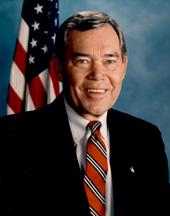
I am pleased to rise today to introduce the National Health Service Corps Loan Repayment Act with my colleague from Washington, Ms. Cantwell. Specifically, this legislation will exclude loan…
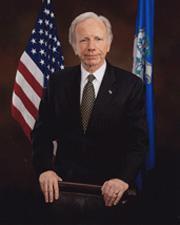
Mr. President, I rise today to introduce legislation to designate the coastal plain of the Arctic Refuge as wilderness. America's dependence on foreign oil is an urgent and stubborn problem. But the…

Mr. President, I rise today to join my colleagues, Senator Levin and Senator Snowe in introducing the ``National Aquatic Invasive Species Act of 2003.'' The waters of the United States continue to…
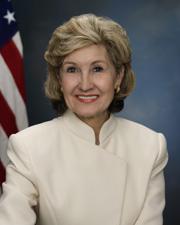
Mr. President, today I rise to introduce legislation to improve the deplorable housing situation in the valley region of the Texas border with Mexico. Our colonias are among the most distressed areas…

Mr. President, I am pleased my colleague from South Dakota, Senator Tim Johnson, is joining me today in introducing this Missouri River Enhancement and Monitoring Act of 2003, and I thank him for his…

Mr. President, I am pleased to be joining my colleague Senator Dodd in the introduction of the Staffing for Adequate Fire and Emergency Response Act. The SAFER Act establishes a new grant program…
Bill Text
Latest available legislative text
        [Congressional Bills 108th Congress]
[From the U.S. Government Publishing Office]
[S. 536 Introduced in Senate (IS)]

108th CONGRESS
1st Session
S. 536

To establish the National Invasive Species Council, and for other
purposes.

_______________________________________________________________________

IN THE SENATE OF THE UNITED STATES

March 5, 2003

Mr. DeWine (for himself, Mr. Levin, Ms. Collins, Mr. Reed, Mr.
Voinovich, and Ms. Stabenow) introduced the following bill; which was
read twice and referred to the Committee on Environment and Public
Works

_______________________________________________________________________

A BILL

To establish the National Invasive Species Council, and for other
purposes.

Be it enacted by the Senate and House of Representatives of the
United States of America in Congress assembled,

SECTION 1. SHORT TITLE.

This Act may be cited as the ``National Invasive Species Council
Act''.

SEC. 2. DEFINITIONS.

In this Act:
(1) Council.--The term ``Council'' means the National
Invasive Species Council established by section 4(a).
(2) Invasive species.--The term ``invasive species'' means
a species--
(A) that is nonnative to an ecosystem; and
(B) the introduction of which to that ecosystem
causes or may cause harm to the environment, the
economy, or human health.
(3) National management plan.--The term ``National
Management Plan'' means the National Invasive Species
Management Plan developed by the Council under section 6(a).
(4) Species.--The term ``species'' means a category of
taxonomic classification that--
(A) ranks below a genus or subgenus; and
(B) consists of related organisms capable of
interbreeding.

SEC. 3. LIMITATION ON FEDERAL ACTIONS.

(a) In General.--No Federal agency may authorize, fund, or carry
out any action that would likely cause or promote the introduction or
spread of an invasive species in the United States or any other
location, unless the head of the Federal agency, at the head of the
agency's sole discretion and in accordance with guidelines developed
under subsection (b), determines that--
(1) the benefits of the action under consideration clearly
outweigh the potential harm to the environment, the economy,
and human health caused by the introduction or spread of the
invasive species; and
(2) all feasible and prudent measures to minimize risk of
harm to the environment, the economy, and human health will be
taken in carrying out the action.
(b) Guidelines.--The Council on Environmental Quality, in
conjunction with the Council, shall develop guidelines for Federal
agencies to use in analyzing actions under subsection (a).

SEC. 4. NATIONAL INVASIVE SPECIES COUNCIL.

(a) Establishment.--
(1) In general.--There is established, as an independent
entity in the executive branch, the National Invasive Species
Council.
(2) Duties.--The Council shall provide leadership and
coordination among Federal agencies, and between the Federal
Government and State and local governments, with respect to
efforts--
(A) to minimize the environmental, economic, and
human health impacts caused by invasive species; and
(B) to reduce the threat of further invasions of
invasive species.
(b) Membership.--
(1) In general.--The Council shall consist of--
(A) the Secretary of the Interior;
(B) the Secretary of Agriculture;
(C) the Secretary of Commerce;
(D) the Secretary of State;
(E) the Secretary of the Treasury;
(F) the Secretary of Defense;
(G) the Secretary of Transportation;
(H) the Secretary of Health and Human Services;
(I) the Administrator of the Environmental
Protection Agency;
(J) the Administrator of the United States Agency
for International Development; and
(K) such additional members as are appointed under
paragraph (2).
(2) Additional members.--With the concurrence of a majority
of the members of the Council, the chairperson of the Council
may appoint additional members to the Council from among
individuals who are officers or employees of the Federal
Government with significant responsibilities concerning
invasive species.
(c) Chairperson.--
(1) Initial chairperson.--The Secretary of the Interior
shall serve as chairperson of the Council for the 3-year period
beginning on the date of enactment of this Act.
(2) Subsequent chairpersons.--After the initial 3-year
period described in paragraph (1), the chairperson shall rotate
every 3 years among the following members, in the following
order:
(A) The Secretary of Agriculture.
(B) The Secretary of Commerce.
(C) The Secretary of the Interior.
(d) Meetings.--The Council shall meet at the call of the
chairperson, but not less often than semiannually.
(e) Executive Director.--
(1) Appointment.--The President shall appoint the Executive
Director of the Council, by and with the advice and consent of
the Senate.
(2) Consultation.--Before appointing an individual under
paragraph (1), the President shall consult with--
(A) the Secretary of the Interior;
(B) the Secretary of Agriculture; and
(C) the Secretary of Commerce.
(3) Qualifications.--An individual appointed as Executive
Director of the Council shall have--
(A) legal or scientific experience and training in
the area of natural resources, ecology, or agriculture;
and
(B) experience in dealing with public policy
matters concerning aquatic and terrestrial invasive
species.
(4) Term.--The Executive Director of the Council shall
serve for a term of 6 years.
(5) Compensation.--The Executive Director shall be paid at
the maximum rate of basic pay prescribed for level GS-15 of the
General Schedule.

SEC. 5. DUTIES.

(a) In General.--The Council shall ensure that the efforts of
Federal agencies concerning invasive species are coordinated,
effective, complementary, and cost-efficient.
(b) Duties.--To carry out subsection (a), the Council shall--
(1) coordinate with other organizations addressing invasive
species (such as the Federal Interagency Committee for the
Management of Noxious and Exotic Weeds, the Aquatic Nuisance
Species Task Force established under section 1201 of the
Nonindigenous Aquatic Nuisance Prevention and Control Act of
1990 (16 U.S.C. 4721), regional panels established under that
Act, and the White House Office of Science and Technology
Policy) to implement the National Management Plan;
(2) develop recommendations for international cooperation
between the Federal Government, State governments, and foreign
countries on tools, policies, and methods to prevent the
introduction and export of invasive species into and from,
respectively, the United States;
(3) develop guidelines for Federal agency efforts to ensure
that Federal programs concerning invasive species, including
outreach programs, are coordinated with State, local, and
tribal governments;
(4) develop, in consultation with the Council on
Environmental Quality and in accordance with the National
Environmental Policy Act of 1969 (42 U.S.C. 4321 et seq.),
guidance for Federal agencies on prevention, control, and
eradication of invasive species;
(5) establish and maintain a publicly accessible,
coordinated, up-to-date information sharing system on invasive
species that--
(A) allows the access to and exchange of
information among Federal agencies and the public; and
(B) uses, to the maximum extent practicable, the
Internet;
(6) ensure that Federal agencies implement the plans,
programs, and policies adopted by the Council in the National
Management Plan through appropriate actions, including working
in cooperation with Federal agencies on development of budgets
for the annual submission by the President to Congress of the
budget of the United States Government under section 1105 of
title 31, United States Code;
(7)(A) evaluate Federal programs that are likely to cause
or promote the introduction or spread of invasive species in
the United States; and
(B) recommend actions Federal agencies can take to minimize
the risk of introductions or further spread of invasive
species; and
(8) develop and submit to the appropriate committees of
Congress and the Director of the Office of Management and
Budget an annual list of priorities, ranked in high, medium,
and low categories, of Federal efforts and programs in
prevention, eradication, control, and monitoring of, and
research and outreach concerning, invasive species.

SEC. 6. NATIONAL INVASIVE SPECIES MANAGEMENT PLAN.

(a) Development.--
(1) In general.--The Council shall develop a National
Invasive Species Management Plan that details and recommends
performance-oriented goals and specific measures of success for
carrying out activities by Federal agencies relating to
invasive species.
(2) Development process.--The National Management Plan
shall be developed through a public process and in consultation
with Federal agencies, appropriate State and local entities,
and other appropriate stakeholders.
(3) Contents.--The National Management Plan shall include
recommendations of effective, cost-efficient, environmentally
sound, and science-based approaches for--
(A) preventing the introduction of invasive
species, including approaches for identifying pathways
by which invasive species are introduced and for
minimizing the risk of introductions via those
pathways, which recommended approaches shall provide
for--
(i) a process to evaluate risks associated
with the introduction and spread of invasive
species; and
(ii) a coordinated and systematic risk-
based process to identify, monitor, and
interdict pathways that may be involved in the
introduction of invasive species;
(B) cooperating with other countries to increase
their capacity--
(i) to control invasive species; and
(ii) to prevent the spread of invasive
species across international borders;
(C) rapidly detecting and responding to incipient
invasions of invasive species;
(D) managing new and established populations of
invasive species by--
(i) eradicating the invasive species; or
(ii) controlling the spread of the invasive
species;
(E) accurately and reliably monitoring new and
established populations of invasive species;
(F) restoring native species and habitat conditions
in ecosystems that have been invaded by invasive
species;
(G) conducting research on the matters referred to
in subparagraphs (A) through (F);
(H) evaluating and documenting the impacts of
invasive species on the environment, the economy, and
human health;
(I) developing technologies to prevent the
introduction and provide for the management of invasive
species; and
(J) promoting public education on invasive species
and the means to address invasive species.
(4) Identification of needed resources.--The National
Management Plan shall identify the personnel, other resources,
and additional levels of coordination needed to achieve the
goals included in the National Management Plan.
(b) Existing Plan.--The National Invasive Species Management Plan
of the Invasive Species Council adopted in 2001 shall be treated as the
National Management Plan required under subsection (a) until the date
of issuance of the National Management Plan under subsection (c)(1).
(c) Issuance and Updating of National Management Plan.--The Council
shall--
(1) not later than December 31, 2003, issue the National
Management Plan;
(2) not later than December 31, 2005, and biennially
thereafter, update the National Management Plan; and
(3) concurrently with the process of updating the National
Management Plan, evaluate and report to Congress on success in
achieving the goals included in the National Management Plan.
(d) Agency Reports.--Not later than 18 months after the date of
issuance of any update of the National Management Plan that recommends
action by a Federal agency, the head of the Federal agency shall submit
to Congress a report that--
(1) describes each of the recommended actions that the
agency has not taken; and
(2) provides an explanation of why the action is not
feasible.

SEC. 7. INVASIVE SPECIES ADVISORY COMMITTEE.

(a) Establishment.--
(1) In general.--The Council shall maintain an advisory
committee, to be known as the ``Invasive Species Advisory
Committee'', to provide information and advice for
consideration by the Council.
(2) Organization, functions, and authorities.--Except as
otherwise provided in this section, the advisory committee
shall be organized, perform the functions, and have the
authorities specified in the charter for the advisory committee
signed by the Secretary of the Interior on October 30, 2001.
(b) Appointment.--Members of the advisory committee shall be
appointed by the chairperson of the Council, after consultation with
the other members of the Council, from among individuals representing
stakeholders with respect to Federal programs for minimizing the
environmental, economic, and human health impacts caused by invasive
species.
(c) Functions.--In addition to the functions specified in the
charter referred to in subsection (a), the advisory committee shall
recommend to the Council plans and actions at the regional, State,
local, tribal, and ecosystem-based levels to achieve the goals of the
National Management Plan.
(d) Continuing Operation of Existing Committee.--Any advisory
committee appointed before the date of enactment of this Act in
accordance with the charter referred to in subsection (a)(2) may
continue in effect under this section.

SEC. 8. BUDGET ANALYSIS AND SUMMARY.

Not later than March 31, 2003, and March 31 of each year
thereafter, the Director of the Office of Management and Budget shall
prepare, and submit to Congress and the Council, a budget analysis and
summary of all Federal programs relating to invasive species.

SEC. 9. EXISTING EXECUTIVE ORDER.

Executive Order No. 13112, dated February 3, 1999 (42 U.S.C. 4321
note; relating to invasive species), shall be of no effect.

SEC. 10. AUTHORIZATION OF APPROPRIATIONS.

There is authorized to be appropriated to carry out this Act
$2,000,000 for each of fiscal years 2004 through 2006.
<all>