Paleontological Resources Preservation Act
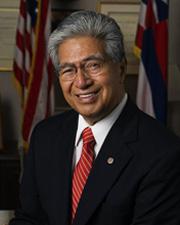 Sen. Daniel K. Akaka (D-HI)
Legislative Activity
Stay on top of the latest movement without scrolling through every action
Executive Comment Requested from Interior, USDA.
July 24, 2003
View full timeline
Introduced in Senate
March 6, 2003
Sponsor introductory remarks on measure. (CR S3265-3266)
March 6, 2003
Read twice and referred to the Committee on Energy and Natural Resources. (text of measure as introduced: CR S3266-3268)
March 6, 2003
Committee on Energy and Natural Resources Subcommittee on National Parks. Hearings held. With printed Hearing: S.Hrg. 108-69.
June 10, 2003
Committee on Energy and Natural Resources. Ordered to be reported with an amendment in the nature of a substitute favorably.
June 25, 2003
Committee on Energy and Natural Resources. Reported by Senator Domenici with an amendment in the nature of a substitute. With written report No. 108-93.
July 11, 2003
Placed on Senate Legislative Calendar under General Orders. Calendar No. 201.
July 11, 2003
Passed Senate with an amendment by Unanimous Consent. (consideration: CR S9605-9618; text as passed Senate: CR S9610-9612; text of measure as reported in Senate: CR S9608-9610)
July 17, 2003
Received in the House.
July 18, 2003 • 9:05 AM
Message on Senate action sent to the House.
July 18, 2003
Referred to the Committee on Resources, and in addition to the Committee on Agriculture, for a period to be subsequently determined by the Speaker, in each case for consideration of such provisions as fall within the jurisdiction of the committee concerned.
July 18, 2003
Referred to the Subcommittee on Department Operations, Oversight, Nutrition and Forestry.
July 22, 2003
Referred to the Subcommittee on National Parks, Recreation and Public Lands.
July 24, 2003
Referred to the Subcommittee on Forests and Forest Health.
July 24, 2003
Referred to the Subcommittee on Fisheries Conservation, Wildlife and Oceans.
July 24, 2003
Executive Comment Requested from Interior, USDA.
July 24, 2003
Floor Debate
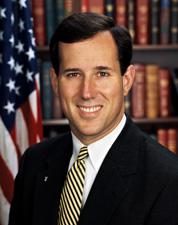
20 membersWhat members said about S. 546 on the floor



 +15
+15
Floor Debate
20 membersWhat members said about S. 546 on the floor
Mr. President, earlier this week, the Senate, in a 94- 0 vote, went on record expressing its unanimous opposition to last week's decision by the Ninth Circuit Court of Appeals refusing to review a…
Mr. President, today I am introducing a bill that will provide revolutionary changes to the health insurance choices available for small businesses. This bill, ``The Small Business Health Fairness…
Mr. President, I ask unanimous consent that the Committee on Armed Services be authorized to meet during the session of the Senate on Wednesday, June 25, 2003, at 9:30 a.m., in open session to…
Mr. President, this year, due to the rapid and tremendous advancements in our knowledge and in the science of organ transplantation, thousands of Americans will receive a life-saving organ…
Mr. President, today I rise to introduce the Emergency Communications and Competition Act, ECCA, along with my colleague from New Hampshire, Senator Sununu. We are joined by twelve of our colleagues,…
Show 8 more
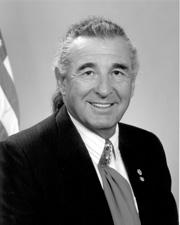
Mr. President, I am pleased to be joined by Senators Inouye and Thomas in introducing key legislation to help stop Indian land fractionation. One of the most enduring and damaging legacies of…

Mr. President, I am pleased to join my colleague from Illinois in reintroducing this legislation to recognize and promote bicycling's important impact on energy savings and public health. With…

Mr. President, I rise today to introduce the Homeland Protection and Tax Hike Prevention Act of 2003. As I speak, State governments face a budget gap of $80 billion in 2004, according to the National…

Mr. President, for tragic reasons, organ donation has been in the spotlight of late. On Saturday, February 23, 2002, 17-year-old Jessica Santillan died after receiving organs from a donor with an…

Mr. President, I rise to introduce the Alzheimer's Disease Research, Prevention, and Care Act of 2003. I am pleased that Senators Bond, Kennedy, Lincoln, Breaux, and Dodd are joining me as original…
Mr. President, I rise today to introduce The Paleontological Resources Preservation Act to protect and preserve the Nation's important fossil record for the benefit of our citizens. I am pleased to…
Mr. President, I rise today to introduce The Paleontological Resources Preservation Act to protect and preserve the Nation's important fossil record for the benefit of our citizens. I am pleased to…

Mr. President, I rise today to introduce the Sunshine in the Courtroom Act of 2003, a bill to allow media coverage of court proceedings. This legislation will provide Federal judges with the…
Show 10 more

Mr. President, I rise today to introduce the Conserve by Bike Act to promote energy conservation and improve public health. I am pleased to be joined by my colleagues from Maine, Senator Susan…

Mr. President, as a senior member of the Senate Committee on Veterans' Affairs, I am proud to reintroduce legislation today intended to strengthen mental health programs within the Department of…
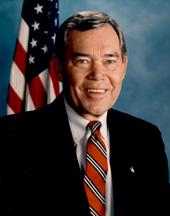
Mr. President, I would like to announce for the information of the Senate and the public that the following hearing has been scheduled before the Subcommittee on National Parks of the Committee on…

Mr. President, I am pleased today to show my support for the Milk Import Tariff Equity Act of 2003 by being an original cosponsor of Senator Craig's bill. This legislation will prevent foreign dairy…
Mr. President, I rise to introduce legislation to designate the Director of the Indian Health Service as an Assistant Secretary for Indian Health within the Department of Health and Human Services.…

Mr. President, I am pleased to join my colleagues Senator Mark Dayton and Senator Larry Craig in introducing the bipartisan Milk Import Tariff Equity Act. Our bill will prevent importers of dairy…

Mr. President, I ask unanimous consent that the Committee on Armed Services be authorized to meet during the session of the Senate on Tuesday, June 10, 2003, at 9:30 a.m., in closed session to…
Mr. President, I would like to announce that the Committee on Indian Affairs will meet on Tuesday, June 3, 2003 at 10 a.m. in room 485 of the Russell Senate Office Building to conduct an oversight…
Mr. President, by request, I introduce for appropriate reference a bill to establish the Millennium Challenge Account and the Millennium Challenge Corporation in order to reduce global poverty…
Mr. President, I ask unanimous consent that the Senate proceed, en bloc, to the immediate consideration of the following Energy bills: Calendar No. 198, S. 470; Calendar No. 199, S. 490; Calendar No.…
Bill Text
4 versions available
        [Congressional Bills 108th Congress]
[From the U.S. Government Publishing Office]
[S. 546 Referred in House (RFH)]

1st Session
S. 546

_______________________________________________________________________

IN THE HOUSE OF REPRESENTATIVES

July 18, 2003

Referred to the Committee on Resources, and in addition to the
Committee on Agriculture, for a period to be subsequently determined by
the Speaker, in each case for consideration of such provisions as fall
within the jurisdiction of the committee concerned

_______________________________________________________________________

AN ACT

To provide for the protection of paleontological resources on Federal
lands, and for other purposes.

Be it enacted by the Senate and House of Representatives of the
United States of America in Congress assembled,

SECTION 1. SHORT TITLE.

This Act may be cited as the ``Paleontological Resources
Preservation Act''.

SEC. 2. DEFINITIONS.

As used in this Act:
(1) Casual collecting.--The term ``casual collecting''
means the collecting of a reasonable amount of common
invertebrate and plant paleontological resources for non-
commercial personal use, either by surface collection or the
use of non-powered hand tools resulting in only negligible
disturbance to the Earth's surface and other resources. As used
in this paragraph, the terms ``reasonable amount'', ``common
invertebrate and plant paleontological resources'' and
``negligible disturbance'' shall be determined by the
Secretary.
(2) Secretary.--The term ``Secretary'' means the Secretary
of the Interior with respect to lands controlled or
administered by the Secretary of the Interior or the Secretary
of Agriculture with respect to National Forest System Lands
controlled or administered by the Secretary of Agriculture.
(3) Federal lands.--The term ``Federal lands'' means--
(A) lands controlled or administered by the
Secretary of the Interior, except Indian lands; or
(B) National Forest System lands controlled or
administered by the Secretary of Agriculture.
(4) Indian lands.--The term ``Indian Land'' means lands of
Indian tribes, or Indian individuals, which are either held in
trust by the United States or subject to a restriction against
alienation imposed by the United States.
(5) State.--The term ``State'' means the fifty States, the
District of Columbia, the Commonwealth of Puerto Rico, and any
other territory or possession of the United States.
(6) Paleontological resource.--The term ``paleontological
resource'' means any fossilized remains, traces, or imprints of
organisms, preserved in or on the earth's crust, that are of
paleontological interest and that provide information about the
history of life on earth, except that the term does not
include--
(A) any materials associated with an archaeological
resource (as defined in section 3(1) of the
Archaeological Resources Protection Act of 1979 (16
U.S.C. 470bb(1)); or
(B) any cultural item (as defined in section 2 of
the Native American Graves Protection and Repatriation
Act (25 U.S.C. 3001)).

SEC. 3. MANAGEMENT.

(a) In General.--The Secretary shall manage and protect
paleontological resources on Federal lands using scientific principles
and expertise. The Secretary shall develop appropriate plans for
inventory, monitoring, and the scientific and educational use of
paleontological resources, in accordance with applicable agency laws,
regulations, and policies. These plans shall emphasize interagency
coordination and collaborative efforts where possible with non-Federal
partners, the scientific community, and the general public.
(b) Coordination.--To the extent possible, the Secretary of the
Interior and the Secretary of Agriculture shall coordinate in the
implementation of this Act.

SEC. 4. PUBLIC AWARENESS AND EDUCATION PROGRAM.

The Secretary shall establish a program to increase public
awareness about the significance of paleontological resources.

SEC. 5. COLLECTION OF PALEONTOLOGICAL RESOURCES.

(a) Permit Requirement.--
(1) In general.--Except as provided in this Act, a
paleontological resource may not be collected from Federal
lands without a permit issued under this Act by the Secretary.
(2) Casual collecting exception.--The Secretary may allow
casual collecting without a permit on Federal lands controlled
or administered by the Bureau of Land Management, the Bureau of
Reclamation, and the Forest Service, where such collection is
consistent with the laws governing the management of those
Federal lands and this Act.
(3) Previous permit exception.--Nothing in this section
shall affect a valid permit issued prior to the date of
enactment of this Act.
(b) Criteria for Issuance of a Permit.--The Secretary may issue a
permit for the collection of a paleontological resource pursuant to an
application if the Secretary determines that--
(1) the applicant is qualified to carry out the permitted
activity;
(2) the permitted activity is undertaken for the purpose of
furthering paleontological knowledge or for public education;
(3) the permitted activity is consistent with any
management plan applicable to the Federal lands concerned; and
(4) the proposed methods of collecting will not threaten
significant natural or cultural resources.
(c) Permit Specifications.--A permit for the collection of a
paleontological resource issued under this section shall contain such
terms and conditions as the Secretary deems necessary to carry out the
purposes of this Act. Every permit shall include requirements that--
(1) the paleontological resource that is collected from
Federal lands under the permit will remain the property of the
United States;
(2) the paleontological resource and copies of associated
records will be preserved for the public in an approved
repository, to be made available for scientific research and
public education; and
(3) specific locality data will not be released by the
permittee or repository without the written permission of the
Secretary.
(d) Modification, Suspension, and Revocation of Permits.--
(1) The Secretary may modify, suspend, or revoke a permit
issued under this section--
(A) for resource, safety, or other management
considerations; or
(B) when there is a violation of term or condition
of a permit issued pursuant to this section.
(2) The permit shall be revoked if any person working under
the authority of the permit is convicted under section 9 or is
assessed a civil penalty under section 10.
(e) Area Closures.--In order to protect paleontological or other
resources and to provide for public safety, the Secretary may restrict
access to or close areas under the Secretary's jurisdiction to the
collection of paleontological resources.

SEC. 6. CURATION OF RESOURCES.

Any paleontological resource, and any data and records associated
with the resource, collected under a permit, shall be deposited in an
approved repository. The Secretary may enter into agreements with non-
Federal repositories regarding the curation of these resources, data,
and records.

SEC. 7. PROHIBITED ACTS; CRIMINAL PENALTIES.

(a) In General.--A person may not--
(1) excavate, remove, damage, or otherwise alter or deface
or attempt to excavate, remove, damage, or otherwise alter or
deface any paleontological resources located on Federal lands
unless such activity is conducted in accordance with this Act;
(2) exchange, transport, export, receive, or offer to
exchange, transport, export, or receive any paleontological
resource if, in the exercise of due care, the person knew or
should have known such resource to have been excavated or
removed from Federal lands in violation of any provisions,
rule, regulation, law, ordinance, or permit in effect under
Federal law, including this Act; or
(3) sell or purchase or offer to sell or purchase any
paleontological resource if, in the exercise of due care, the
person knew or should have known such resource to have been
excavated, removed, sold, purchased, exchanged, transported, or
received from Federal lands.
(b) False Labeling Offenses.--A person may not make or submit any
false record, account, or label for, or any false identification of,
any paleontological resource excavated or removed from Federal lands.
(c) Penalties.--A person who knowingly violates or counsels,
procures, solicits, or employs another person to violate subsection (a)
or (b) shall, upon conviction, be fined in accordance with title 18,
United States Code, or imprisoned not more than 10 years, or both; but
if the sum of the commercial and paleontological value of the
paleontological resources involved and the cost of restoration and
repair of such resources does not exceed $500, such person shall be
fined in accordance with title 18, United States Code, or imprisoned
not more than one year, or both.
(d) General Exception.--Nothing in subsection (a) shall apply to
any person with respect to any paleontological resource which was in
the lawful possession of such person prior to the date of the enactment
of this Act.

SEC. 8. CIVIL PENALTIES.

(a) In General.--
(1) Hearing.--A person who violates any prohibition
contained in an applicable regulation or permit issued under
this Act may be assessed a penalty by the Secretary after the
person is given notice and opportunity for a hearing with
respect to the violation. Each violation shall be considered a
separate offense for purposes of this section.
(2) Amount of penalty.--The amount of such penalty assessed
under paragraph (1) shall be determined under regulations
promulgated pursuant to this Act, taking into account the
following factors:
(A) The scientific or fair market value, whichever
is greater, of the paleontological resource involved,
as determined by the Secretary.
(B) The cost of response, restoration, and repair
of the resource and the paleontological site involved.
(C) Any other factors considered relevant by the
Secretary assessing the penalty.
(3) Multiple offenses.--In the case of a second or
subsequent violation by the same person, the amount of a
penalty assessed under paragraph (2) may be doubled.
(4) Limitation.--The amount of any penalty assessed under
this subsection for any one violation shall not exceed an
amount equal to double the cost of response, restoration, and
repair of resources and paleontological site damage plus double
the scientific or fair market value of resources destroyed or
not recovered.
(b) Petition for Judicial Review; Collection of Unpaid
Assessments.--
(1) Judicial review.--Any person against whom an order is
issued assessing a penalty under subsection (a) may file a
petition for judicial review of the order in the United States
District Court for the District of Columbia or in the district
in which the violation is alleged to have occurred within the
30-day period beginning on the date the order making the
assessment was issued. Upon notice of such filing, the
Secretary shall promptly file such a certified copy of the
record on which the order was issued. The court shall hear the
action on the record made before the Secretary and shall
sustain the action if it is supported by substantial evidence
on the record considered as a whole.
(2) Failure to pay.--If any person fails to pay a penalty
under this section within 30 days--
(A) after the order making assessment has become
final and the person has not filed a petition for
judicial review of the order in accordance with
paragraph (1); or
(B) after a court in an action brought in paragraph
(1) has entered a final judgment upholding the
assessment of the penalty,
the Secretary may request the Attorney General to institute a
civil action in a district court of the United States for any
district in which the person if found, resides, or transacts
business, to collect the penalty (plus interest at currently
prevailing rates from the date of the final order or the date
of the final judgment, as the case may be). The district court
shall have jurisdiction to hear and decide any such action. In
such action, the validity, amount, and appropriateness of such
penalty shall not be subject to review. Any person who fails to
pay on a timely basis the amount of an assessment of a civil
penalty as described in the first sentence of this paragraph
shall be required to pay, in addition to such amount and
interest, attorneys fees and costs for collection proceedings.
(c) Hearings.--Hearings held during proceedings instituted under
subsection (a) shall be conducted in accordance with section 554 of
title 5, United States Code.
(d) Use of Recovered Amounts.--Penalties collected under this
section shall be available to the Secretary and without further
appropriation may be used only as follows:
(1) To protect, restore, or repair the paleontological
resources and sites which were the subject of the action, or to
acquire sites with equivalent resources, and to protect,
monitor, and study the resources and sites. Any acquisition
shall be subject to any limitations contained in the organic
legislation for such Federal lands.
(2) To provide educational materials to the public about
paleontological resources and sites.
(3) To provide for the payment of rewards as provided in
section 11.

SEC. 9. REWARDS AND FORFEITURE.

(a) Rewards.--The Secretary may pay from penalties collected under
section 9 or 10--
(1) consistent with amounts established in regulations by
the Secretary; or
(2) if no such regulation exists, an amount equal to the
lesser of one-half of the penalty or $500,
to any person who furnishes information which leads to the finding of a
civil violation, or the conviction of criminal violation, with respect
to which the penalty was paid. If several persons provided the
information, the amount shall be divided among the persons. No officer
or employee of the United States or of any State or local government
who furnishes information or renders service in the performance of his
official duties shall be eligible for payment under this subsection.
(b) Forfeiture.--All paleontological resources with respect to
which a violation under section 9 or 10 occurred and which are in the
possession of any person, and all vehicles and equipment of any person
that were used in connection with the violation, shall be subject to
civil forfeiture, or upon conviction, to criminal forfeiture. All
provisions of law relating to the seizure, forfeiture, and condemnation
of property for a violation of this Act, the disposition of such
property or the proceeds from the sale thereof, and remission or
mitigation of such forfeiture, as well as the procedural provisions of
chapter 46 of title 18, United States Code, shall apply to the seizures
and forfeitures incurred or alleged to have incurred under the
provisions of this Act.
(c) Transfer of Seized Resources.--The Secretary may transfer
administration of seized paleontological resources to Federal or non-
Federal educational institutions to be used for scientific or
educational purposes.

SEC. 10. CONFIDENTIALITY.

Information concerning the nature and specific location of a
paleontological resource the collection of which requires a permit
under this Act or under any other provision of Federal law shall be
exempt from disclosure under section 552 of title 5, United States
Code, and any other law unless the Secretary determines that disclosure
would--
(1) further the purposes of this Act;
(2) not create risk of harm to or theft or destruction of
the resource or the site containing the resource; and
(3) be in accordance with other applicable laws.

SEC. 11. REGULATIONS.

As soon as practical after the date of the enactment of this Act,
the Secretary shall issue such regulations as are appropriate to carry
out this Act, providing opportunities for public notice and comment.

SEC. 12. SAVINGS PROVISIONS.

Nothing in this Act shall be construed to--
(1) invalidate, modify, or impose any additional
restrictions or permitting requirements on any activities
permitted at any time under the general mining laws, the
mineral or geothermal leasing laws, laws providing for minerals
materials disposal, or laws providing for the management or
regulation of the activities authorized by the aforementioned
laws including but not limited to the Federal Land Policy
Management Act (43 U.S.C. 1701-1784), the Mining in the Parks
Act, the Surface Mining Control and Reclamation Act of 1977 (30
U.S.C. 1201-1358), and the Organic Administration Act (16
U.S.C. 478, 482, 551);
(2) invalidate, modify, or impose any additional
restrictions or permitting requirements on any activities
permitted at any time under existing laws and authorities
relating to reclamation and multiple uses of Federal lands;
(3) apply to, or require a permit for, casual collecting of
a rock, mineral, or invertebrate or plant fossil that is not
protected under this Act;
(4) affect any lands other than Federal lands or affect the
lawful recovery, collection, or sale of paleontological
resources from lands other than Federal lands;
(5) alter or diminish the authority of a Federal agency
under any other law to provide protection for paleontological
resources on Federal lands in addition to the protection
provided under this Act; or
(6) create any right, privilege, benefit, or entitlement
for any person who is not an officer or employee of the United
States acting in that capacity. No person who is not an officer
or employee of the United States acting in that capacity shall
have standing to file any civil action in a court of the United
States to enforce any provision or amendment made by this Act.

SEC. 13. AUTHORIZATION OF APPROPRIATIONS.

There are authorized to be appropriated such sums as may be
necessary to carry out this Act.

Passed the Senate July 17, 2003.

Attest:

EMILY J. REYNOLDS,

Secretary.