Public Safety Employer-Employee Cooperation Act of 2003
 Sen. Judd Gregg (R-NH)
Legislative Activity
Stay on top of the latest movement without scrolling through every action
Placed on Senate Legislative Calendar under General Orders. Calendar No. 411.
November 24, 2003
View full timeline
Introduced in Senate
March 12, 2003
Sponsor introductory remarks on measure. (CR S3623-3624)
March 12, 2003
Read twice and referred to the Committee on Health, Education, Labor, and Pensions. (text of measure as introduced: CR S3624-3625)
March 12, 2003
Committee on Health, Education, Labor, and Pensions. Ordered to be reported without amendment favorably.
October 2, 2003
Committee on Health, Education, Labor, and Pensions. Reported by Senator Gregg without amendment. Without written report.
November 24, 2003
Placed on Senate Legislative Calendar under General Orders. Calendar No. 411.
November 24, 2003
Floor Debate
9 membersWhat members said about S. 606 on the floor

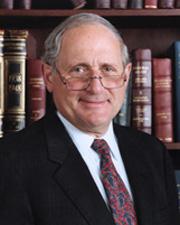


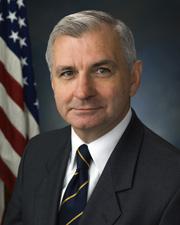 +4
+4
Floor Debate
9 membersWhat members said about S. 606 on the floor
Mr. President, last year when I voted to support passage of the Homeland Security Act, HSA, I voiced concerns about several flaws in the legislation. I called for the Administration and my colleagues…
Mr. President, today I join with Senators Leahy, Byrd, Jeffords, and Lieberman to introduce the Restore Freedom of Information Act, Restore FOIA, that will provide the public with access to…
Mr. President, I rise today to introduce ``The Pathways to Self-Sufficiency Act of 2003.'' I am pleased to be joined in introducing this important legislation by my colleagues Senators Baucus,…
Mr. President, I am honored today to join Senator Gregg in introducing the Public Safety Employer-Employee Cooperation Act of 2003. This bill is an important bipartisan effort to help protect our…
Mr. President, I am honored today to join Senator Gregg in introducing the Public Safety Employer-Employee Cooperation Act of 2003. This bill is an important bipartisan effort to help protect our…
Show 6 more
Mr. President, I rise today to introduce the Personnel Excellence for Children with Disabilities Act of 2003 to ensure high quality personnel to serve students with disabilities. I have long worked…
Mr. President, today, I am pleased to be joined by Senators Kennedy, DeWine, Harkin, Smith, Mikulski, Collins, Bingaman, Snowe, Sarbanes, Kerry, Bayh, Corzine, and Dayton in introducing the Public…
Mr. President, today, I am pleased to be joined by Senators Kennedy, DeWine, Harkin, Smith, Mikulski, Collins, Bingaman, Snowe, Sarbanes, Kerry, Bayh, Corzine, and Dayton in introducing the Public…
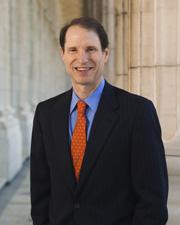
Mr. President, I rise today as an original co-sponsor of the McLoughlin House Preservation Act. Dr. John McLoughlin, a powerful 6'4" man, is known, officially and fondly, as the ``Father of Oregon.''…

Mr. President, I rise today to introduce legislation that would allow States with successful welfare to renew them for the next five years. In this effort, I am joined by Senators Wyden, Baucus,…
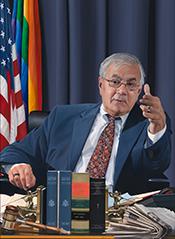
Mr. Speaker, earlier this year, I received a very thoughtful letter from Eugene O'Kelly, the Chairman and Chief Executive Officer of KPMG. I was thoroughly impressed to receive a strong letter in…
Bill Text
2 versions available
        [Congressional Bills 108th Congress]
[From the U.S. Government Publishing Office]
[S. 606 Reported in Senate (RS)]

Calendar No. 411
108th CONGRESS
1st Session
S. 606

To provide collective bargaining rights for public safety officers
employed by States or their political subdivisions.

_______________________________________________________________________

IN THE SENATE OF THE UNITED STATES

March 12, 2003

Mr. Gregg (for himself, Mr. Kennedy, Mr. DeWine, Mr. Harkin, Mr. Smith,
Ms. Mikulski, Ms. Collins, Mr. Bingaman, Ms. Snowe, Mr. Sarbanes, Mr.
Kerry, Mr. Bayh, Mr. Corzine, Mr. Dayton, Mr. Durbin, Mr. Daschle, Mr.
Johnson, Mr. Dodd, Mr. Pryor, Mrs. Lincoln, Mr. Wyden, Mr. Reid, Mrs.
Boxer, Mr. Nelson of Florida, Mrs. Murray, and Mr. Edwards) introduced
the following bill; which was read twice and referred to the Committee
on Health, Education, Labor, and Pensions

November 24, 2003

Reported by Mr. Gregg, without amendment

_______________________________________________________________________

A BILL

To provide collective bargaining rights for public safety officers
employed by States or their political subdivisions.

Be it enacted by the Senate and House of Representatives of the
United States of America in Congress assembled,

SECTION 1. SHORT TITLE.

This Act may be cited as the ``Public Safety Employer-Employee
Cooperation Act of 2003''.

SEC. 2. DECLARATION OF PURPOSE AND POLICY.

The Congress declares that the following is the policy of the
United States:
(1) Labor-management relationships and partnerships are
based on trust, mutual respect, open communication, bilateral
consensual problem solving, and shared accountability. Labor-
management cooperation fully utilizes the strengths of both
parties to best serve the interests of the public, operating as
a team, to carry out the public safety mission in a quality
work environment. In many public safety agencies it is the
union that provides the institutional stability as elected
leaders and appointees come and go.
(2) The Federal Government needs to encourage conciliation,
mediation, and voluntary arbitration to aid and encourage
employers and their employees to reach and maintain agreements
concerning rates of pay, hours, and working conditions, and to
make all reasonable efforts through negotiations to settle
their differences by mutual agreement reached through
collective bargaining or by such methods as may be provided for
in any applicable agreement for the settlement of disputes.
(3) The absence of adequate cooperation between public
safety employers and employees has implications for the
security of employees and can affect interstate and intrastate
commerce. The lack of such labor-management cooperation can
detrimentally impact the upgrading of police and fire services
of local communities, the health and well-being of public
safety officers, and the morale of the fire and police
departments. Additionally, these factors could have significant
commercial repercussions. Moreover, providing minimal standards
for collective bargaining negotiations in the public safety
sector can prevent industrial strife between labor and
management that interferes with the normal flow of commerce.

SEC. 3. DEFINITIONS.

In this Act:
(1) Authority.--The term ``Authority'' means the Federal
Labor Relations Authority.
(2) Emergency medical services personnel.--The term
``emergency medical services personnel'' means an individual
who provides out-of-hospital emergency medical care, including
an emergency medical technician, paramedic, or first responder.
(3) Employer; public safety agency.--The terms ``employer''
and ``public safety agency'' mean any State, political
subdivision of a State, the District of Columbia, or any
territory or possession of the United States that employs
public safety officers.
(4) Firefighter.--The term ``firefighter'' has the meaning
given the term ``employee engaged in fire protection
activities'' in section 3(y) of the Fair Labor Standards Act
(29 U.S.C. 203(y)).
(5) Labor organization.--The term ``labor organization''
means an organization composed in whole or in part of
employees, in which employees participate, and which represents
such employees before public safety agencies concerning
grievances, conditions of employment and related matters.
(6) Law enforcement officer.--The term ``law enforcement
officer'' has the meaning given such term in section 1204(5) of
the Omnibus Crime Control and Safe Streets Act of 1968 (42
U.S.C. 3796b(5)).
(7) Management employee.--The term ``management employee''
has the meaning given such term under applicable State law in
effect on the date of enactment of this Act. If no such State
law is in effect, the term means an individual employed by a
public safety employer in a position that requires or
authorizes the individual to formulate, determine, or influence
the policies of the employer.
(8) Public safety officer.--The term ``public safety
officer''--
(A) means an employee of a public safety agency who
is a law enforcement officer, a firefighter, or an
emergency medical services personnel;
(B) includes an individual who is temporarily
transferred to a supervisory or management position;
and
(C) does not include a permanent supervisory or
management employee.
(9) Substantially provides.--The term ``substantially
provides'' means compliance with the essential requirements of
this Act, specifically, the right to form and join a labor
organization, the right to bargain over wages, hours, and
conditions of employment, the right to sign an enforceable
contract, and availability of some form of mechanism to break
an impasse, such as arbitration, mediation, or fact finding.
(10) Supervisory employee.--The term ``supervisory
employee'' has the meaning given such term under applicable
State law in effect on the date of enactment of this Act. If no
such State law is in effect, the term means an individual, employed by
a public safety employer, who--
(A) has the authority in the interest of the
employer to hire, direct, assign, promote, reward,
transfer, furlough, lay off, recall, suspend,
discipline, or remove public safety officers, to adjust
their grievances, or to effectively recommend such
action, if the exercise of the authority is not merely
routine or clerical in nature but requires the
consistent exercise of independent judgment; and
(B) devotes a majority of time at work exercising
such authority.

SEC. 4. DETERMINATION OF RIGHTS AND RESPONSIBILITIES.

(a) Determination.--
(1) In general.--Not later than 180 days after the date of
enactment of this Act, the Authority shall make a determination
as to whether a State substantially provides for the rights and
responsibilities described in subsection (b). In making such
determinations, the Authority shall consider and give weight,
to the maximum extent practicable, to the opinion of affected
parties.
(2) Subsequent determinations.--
(A) In general.--A determination made pursuant to
paragraph (1) shall remain in effect unless and until
the Authority issues a subsequent determination, in
accordance with the procedures set forth in
subparagraph (B).
(B) Procedures for subsequent determinations.--Upon
establishing that a material change in State law or its
interpretation has occurred, an employer or a labor
organization may submit a written request for a
subsequent determination. If satisfied that a material
change in State law or its interpretation has occurred,
the Director shall issue a subsequent determination not
later than 30 days after receipt of such request.
(3) Judicial review.--Any State, political subdivision of a
State, or person aggrieved by a determination of the Authority
under this section may, during the 60 day period beginning on
the date on which the determination was made, petition any
United States Court of Appeals in the circuit in which the
person resides or transacts business or in the District of
Columbia circuit, for judicial review. In any judicial review
of a determination by the Authority, the procedures contained
in subsections (c) and (d) of section 7123 of title 5, United
States Code, shall be followed, except that any final
determination of the Authority with respect to questions of
fact or law shall be found to be conclusive unless the court
determines that the Authority's decision was arbitrary and
capricious.
(b) Rights and Responsibilities.--In making a determination
described in subsection (a), the Authority shall consider whether State
law provides rights and responsibilities comparable to or greater than
the following:
(1) Granting public safety officers the right to form and
join a labor organization, which may exclude management and
supervisory employees, that is, or seeks to be, recognized as
the exclusive bargaining representative of such employees.
(2) Requiring public safety employers to recognize the
employees' labor organization (freely chosen by a majority of
the employees), to agree to bargain with the labor
organization, and to commit any agreements to writing in a
contract or memorandum of understanding.
(3) Permitting bargaining over hours, wages, and terms and
conditions of employment.
(4) Requiring an interest impasse resolution mechanism,
such as fact-finding, mediation, arbitration or comparable
procedures.
(5) Requiring enforcement through State courts of--
(A) all rights, responsibilities, and protections
provided by State law and enumerated in this section;
and
(B) any written contract or memorandum of
understanding.
(c) Failure To Meet Requirements.--
(1) In general.--If the Authority determines, acting
pursuant to its authority under subsection (a), that a State
does not substantially provide for the rights and
responsibilities described in subsection (b), such State shall
be subject to the regulations and procedures described in
section 5.
(2) Effective date.--Paragraph (1) shall take effect on the
date that is 2 years after the date of enactment of this Act.

SEC. 5. ROLE OF FEDERAL LABOR RELATIONS AUTHORITY.

(a) In General.--Not later than 1 year after the date of enactment
of this Act, the Authority shall issue regulations in accordance with
the rights and responsibilities described in section 4(b) establishing
collective bargaining procedures for public safety employers and
officers in States which the Authority has determined, acting pursuant
to its authority under section 4(a), do not substantially provide for
such rights and responsibilities.
(b) Role of the Federal Labor Relations Authority.--The Authority,
to the extent provided in this Act and in accordance with regulations
prescribed by the Authority, shall--
(1) determine the appropriateness of units for labor
organization representation;
(2) supervise or conduct elections to determine whether a
labor organization has been selected as an exclusive
representative by a majority of the employees in an appropriate
unit;
(3) resolve issues relating to the duty to bargain in good
faith;
(4) conduct hearings and resolve complaints of unfair labor
practices;
(5) resolve exceptions to the awards of arbitrators;
(6) protect the right of each employee to form, join, or
assist any labor organization, or to refrain from any such
activity, freely and without fear of penalty or reprisal, and
protect each employee in the exercise of such right; and
(7) take such other actions as are necessary and
appropriate to effectively administer this Act, including
issuing subpoenas requiring the attendance and testimony of
witnesses and the production of documentary or other evidence
from any place in the United States, and administering oaths,
taking or ordering the taking of depositions, ordering
responses to written interrogatories, and receiving and
examining witnesses.
(c) Enforcement.--
(1) Authority to petition court.--The Authority may
petition any United States Court of Appeals with jurisdiction
over the parties, or the United States Court of Appeals for the
District of Columbia Circuit, to enforce any final orders under
this section, and for appropriate temporary relief or a
restraining order. Any petition under this section shall be
conducted in accordance with subsections (c) and (d) of section
7123 of title 5, United States Code, except that any final
order of the Authority with respect to questions of fact or law
shall be found to be conclusive unless the court determines
that the Authority's decision was arbitrary and capricious.
(2) Private right of action.--Unless the Authority has
filed a petition for enforcement as provided in paragraph (1),
any party has the right to file suit in a State court of
competent jurisdiction to enforce compliance with the
regulations issued by the Authority pursuant to subsection (b),
and to enforce compliance with any order issued by the
Authority pursuant to this section. The right provided by this
subsection to bring a suit to enforce compliance with any order
issued by the Authority pursuant to this section shall
terminate upon the filing of a petition seeking the same relief
by the Authority.

SEC. 6. STRIKES AND LOCKOUTS PROHIBITED.

A public safety employer, officer, or labor organization may not
engage in a lockout, sickout, work slowdown, or strike or engage in any
other action that is designed to compel an employer, officer, or labor
organization to agree to the terms of a proposed contract and that will
measurably disrupt the delivery of emergency services, except that it
shall not be a violation of this section for an employer, officer, or
labor organization to refuse to provide services not required by the
terms and conditions of an existing contract.

SEC. 7. EXISTING COLLECTIVE BARGAINING UNITS AND AGREEMENTS.

A certification, recognition, election-held, collective bargaining
agreement or memorandum of understanding which has been issued,
approved, or ratified by any public employee relations board or
commission or by any State or political subdivision or its agents
(management officials) in effect on the day before the date of
enactment of this Act shall not be invalidated by the enactment of this
Act.

SEC. 8. CONSTRUCTION AND COMPLIANCE.

(a) Construction.--Nothing in this Act shall be construed--
(1) to invalidate or limit the remedies, rights, and
procedures of any law of any State or political subdivision of
any State or jurisdiction that provides collective bargaining
rights for public safety officers that are equal to or greater
than the rights provided under this Act;
(2) to prevent a State from enforcing a right-to-work law
that prohibits employers and labor organizations from
negotiating provisions in a labor agreement that require union
membership or payment of union fees as a condition of
employment;
(3) to invalidate any State law in effect on the date of
enactment of this Act that substantially provides for the
rights and responsibilities described in section 4(b) solely
because such State law permits an employee to appear on his or
her own behalf with respect to his or her employment relations
with the public safety agency involved; or
(4) to permit parties subject to the National Labor
Relations Act (29 U.S.C. 151 et seq.) and the regulations under
such Act to negotiate provisions that would prohibit an
employee from engaging in part-time employment or volunteer
activities during off-duty hours; or
(5) to prohibit a State from exempting from coverage under
this Act a political subdivision of the State that has a
population of less than 5,000 or that employs less than 25 full
time employees.
For purposes of paragraph (5), the term ``employee'' includes each and
every individual employed by the political subdivision except any
individual elected by popular vote or appointed to serve on a board or
commission.
(b) Compliance.--No State shall preempt laws or ordinances of any
of its political subdivisions if such laws provide collective
bargaining rights for public safety officers that are equal to or
greater than the rights provided under this Act.

SEC. 9. AUTHORIZATION OF APPROPRIATIONS.

There are authorized to be appropriated such sums as may be
necessary to carry out the provisions of this Act.

Calendar No. 411

108th CONGRESS

1st Session

S. 606

_______________________________________________________________________

A BILL

To provide collective bargaining rights for public safety officers
employed by States or their political subdivisions.

_______________________________________________________________________

November 24, 2003

Reported without amendment