Medicare Safety Net Access Act of 2003
Legislative Activity
Stay on top of the latest movement without scrolling through every action
Read twice and referred to the Committee on Finance.
March 18, 2003
View full timeline
Introduced in Senate
March 18, 2003
Sponsor introductory remarks on measure. (CR S3901-3902)
March 18, 2003
Read twice and referred to the Committee on Finance.
March 18, 2003
Floor Debate
21 membersWhat members said about S. 654 on the floor
 MB
MB OGH
OGH MBE
MBE MD
MD JE+16
JE+16
Floor Debate
21 membersWhat members said about S. 654 on the floor
Mr. President, I ask unanimous consent that the time for the next two votes be limited to 10 minutes. Mr. President, I ask unanimous consent that the pending amendments be set aside. Mr. President,…
Mr. President, I ask unanimous consent that the time for the next two votes be limited to 10 minutes.
Mr. President, I ask unanimous consent that the pending amendments be set aside.
Mr. President, on behalf of Senators Feinstein and Nickles, I send an amendment to the desk regarding an income-related increase in Part B premiums and ask for its immediate consideration.
Mr. President, I ask unanimous consent that reading of the amendment be dispensed with.
Mr. President, I ask unanimous consent that all pending amendments be set aside.
Mr. President, on behalf of Senator Akaka, I send an amendment to the desk regarding the treatment of Hawaii as a low-DSH State and ask for its immediate consideration.
Mr. President, I suggest the absence of a quorum.
Mr. President, I would like to speak about the underlying bill.
Mr. President, I think one of the greatest achievements of the Medicare bill that has been reported out by the Senate Finance Committee is the compromise Senator Grassley and I worked out on the issue of private prescription drug plans.
Over the course of this 4-year debate over prescription drugs--and I might add, it has been very frustrating for a lot of Senators. We have been trying to find a way to get prescription drug benefits passed for seniors but have been at loggerheads the last 4 years. Both sides wanted their view and neither was willing to compromise. But I think, finally, it is clear we have reached an agreement.
I commend the chairman of the committee, Senator Grassley, and all those who helped to work to make this possible. Frankly, a lot of people are to be complimented--everybody from Senator Breaux to Senator Kennedy. And the list is just endless. Senator Snowe, for example, has been a great advocate, tirelessly trying to get a compromise agreement over the years.
We finally agreed private entities should administer a Medicare prescription drug program. I know that is something that many, particularly on the Republican side of the aisle, are very interested in.
Both sides of the aisle envision these entities might include pharmacy benefit managers, so-called PBMs. They could include insurance companies, chain store pharmacies, or partnerships among these entities. Any one of those groups would contract with HHS and be the private entity or the contracting company that would contract out the prescription drug benefits to beneficiaries.
The main disagreement was whether these private plans should be required to bear insurance risk for the prescription drug benefit. Without being too arcane, there is a question of performance risk and insurance risk. Performance risk has traditionally been borne by the pharmacy benefits manager. But the performance risk means the administrative risk and the cost of doing a good job just administratively; that is, without addressing the question of insurance risk as to whether people are going to buy these prescription drugs and how much the subsidy is or is not.
Now, some argue if plans are required to bear insurance risk in addition to the performance risk, they will be more efficient and prudent managers of prescription drug costs, the argument clearly being if you are a company or a PBM, and you have to bear the entire cost, the entire risk, including not only performance risk but insurance risk, you are probably going to be more efficient and probably a more prudent manager than you otherwise might be.
Plans will have stronger incentives, if they have that risk, to negotiate better prices and implement cost-containment strategies to minimize unnecessary utilization, the argument goes, if these plans bear at least some level of insurance risk.
Now, there have been critics of this model. Those critics argue if plans are required to bear insurance risk, they would structure their benefit design to discourage high-cost patients from enrolling in their plans; that is, they would cherry pick. We would be in the unfortunate world of adverse selection, where some plans would model their program they would offer to seniors in a way to discourage high-cost patients and encourage lower cost patients, and they therefore would be more profitable, leaving some of the higher cost patients, that is, those who really need drugs, out in the cold.
The health insurance industry has not been exactly rushing to the table to offer these benefits. The insurance industry does not seem willing to offer prescription drug benefits to seniors, even with the subsidies they would get if they are required to bear all of the risk.
Without a strong commitment from the health insurance industry, many fear that the insurance risk structure would lead to an unstable benefit. There would be a lot more instability because we don't know whether companies would be participating by offering plans. After all, this is something that is new. Plans would come in and out at will, forcing seniors to switch plans and possibly their medication.
In writing this bill, one of the greatest challenges Senator Grassley and I faced was how to find the right balance between efficiency and plan stability. There have been several major prescription drug benefit bills and approaches. One we hear a lot about is the tripartisan bill of last year. Another one which explains this phenomenon was the so- called Graham or Kennedy bill of last year. The tripartisan model, in trying to resolve the dilemma between efficiency and stability, tilted more toward efficiency and away from stability. It had many more competitive components in it to
allow companies to be more efficient and cut costs and be more likely to participate. On the other hand, it was more unstable from the point of view of beneficiaries, probably more unstable from the point of view of the company as well, and that was a problem that many on the Democratic side had with that benefit design, particularly that model.
On the other hand, last year a major bill that was considered by the Senate was the so-called Graham-Kennedy bill. That bill tilted much more toward stability at the expense of efficiency. It was more expensive. More than $400 billion had been allocated over 10 years, and seniors would have had more predictability. They would know what they were getting because there was more money for companies. On the other hand, companies would not be able to compete among themselves, and there was much less competition and, therefore, under that model, much less efficiency.
One of the main merits of this bill is that it is in the middle. It is between the so-called tripartisan bill and the Graham bill. In trying to find the right balance between efficiency and stability, we are pretty much in the middle. We have found that balance. We both agreed that we needed to create strong incentives to keep prescription drug prices low. We also agreed that we needed stronger assurances that private plans would be ready and willing to enroll beneficiaries come January 1, 2006, when the benefit begins.
We have found that balance in this bill. This bill was passed out of the Finance Committee by a large bipartisan margin, which is some indication that we found the balance.
There are several important elements of this compromise I would like to highlight. First, our proposal would phase in insurance risk carefully over time through the use of reinsurance payments and risk corridors. Those are pretty big terms. What do they mean? Plans would receive Federal reinsurance payments for 80 percent of their enrollees' costs above the stop-loss level. These payments are intended to ensure that plans have strong incentives to enroll high-cost beneficiaries. That is, Federal reinsurance payments would cover 80 percent of the enrollees' costs above the stop-loss levels contained in the bill.
In addition, our proposal added another component to moderate risk through the use of what we call risk corridors. What in the world is a risk corridor? Simply put, it would limit a plan's loss if the plan sustained substantial financial losses. And by the same token, risk corridors would limit a plan's gains if it earned potential profits. We phase in risk over the first couple of years so that the private plans would have a little cushion, a little better opportunity to know how well their plan is working, and that errs a little bit more on stability at the expense of efficiency. But after a couple years, the tilt is a little more toward efficiency, having gained a couple years of experience, hopefully, of more stability.
During the first couple years the bill would establish a narrow corridor of risk. Over time the risk corridor would be expanded, thereby shifting a greater share of the risk on to the health plan. By phasing in risk over time, this bill addresses one of the biggest concerns plans had in considering whether to participate in the new program. That is, the uncertainty during the first couple years of the benefit.
This uncertainty takes many forms. For example, who will sign up for the benefit? That is a big question. Very few people know. Second, will drug costs increase faster than Congressional Budget Office projections? That is a big question. Moreover, will beneficiaries consume more prescription drugs once the benefit has been implemented?
That is another big question. It is hard to know. That is why we believe it is important to phase in risk rather than just cold turkey, 100 percent insurance risk the first day of the first year.
So during this period of uncertainty, we will ask the plans to bear a minimal level of insurance risk. As plans develop more experience, we will require them to assume more risk.
I am more confident than I was last year that private drug plans will provide a stable delivery system for Medicare beneficiaries under this new plan both in urban and rural areas. I remain concerned that not all seniors will have a choice of two or more prescription drug plans in the region. Plans may simply, given all the provisions we have added to this bill to help give them a little bit of reassurance, not be willing to participate in some parts of the country. After all, it is their choice whether plans want to participate.
This concern is why I insisted that any private plan delivery system must offer all beneficiaries the choice of at least two private plans, and if any part of the country does not have at least two choices, the Secretary would be required to contract with a plan that is a Federal fallback or a backup plan that would offer the standard benefit at the national average premium. Some might argue this delivery model does not provide enough efficiency and cost management. Others might argue that this will prove to be too unstable, too much efficiency, too much instability, despite the changes we have made. Plans may come and go. Worse, they may not even appear and seniors will be confused. That is a concern, and it is a legitimate concern, believe me.
Nevertheless, I believe that given the competing forces of efficiency on the one hand--competition and cost containment--and stability on the other--making sure that seniors have the prescription drugs they want-- we have found a balance between these two fairly legitimate concerns.
I am not here to say it is the perfect balance. Clearly, others have better ideas how to address the question of where the balance is. I do believe the provisions of this bill are pretty close to it.
As we implement this benefit, we will have to carefully monitor the new delivery system very closely to ensure that, in fact, it is fair to our seniors and also fair to our taxpayers and to our private sector partners.
There are a lot of concerns here. One surely is making sure the senior citizens get the prescription drug benefit. But then equally important is that the American taxpayers' concerns are respected, and that we get savings, where we can honestly get savings, not at the expense of beneficiaries. That is why I believe an inclusion of private competition is important. It is very important.
Health care in our country is evolving, as you know, very quickly, and into areas we can hardly even imagine. I believe that in the next 10 to 20 years, when we are also faced with the problem of the baby boomers, there are going to be dramatic changes. What are the three areas going to be?
First of all, with the massive computational power that is developing, nanotechnology, married with the biotechnology, we will be able to, in not too many years from now--10, 12, 15 years--predict, with the human genome project, the interaction of systems in our bodies and the effect of DNA and predict what maladies or illnesses people are going to have in the future. We will develop machines that will detect things at a molecular level, with thousands of tests, that will be able to predict what will happen to each individual, or whether some of us are more inclined to get cancer or to have coronary disease--you name it. We are going to be able to predict very precisely in not too many years from now.
In addition, we will then be able to take actions to prevent illnesses with much greater certainty than we can today. We will be able to prevent it, since we know better what will happen to each of us with respect to our health, by deciding whether to take this pill or that pill or that new medicine that addresses a potential coronary disease that may occur with absolute certainty, or near certainty, 30 years later, or a cancer disease that may, with almost near certainty, occur 20 years later. That is where we will be in Medicare. It is changing so much.
Then, basically, health care will change from remedial care to personal wellness care. That is, doctors and people in the health care industry will be working with individuals to determine what illnesses they may or may not get and things they can do right now to prevent those illnesses from occurring. It will be a big shift from remedial care, which is about 90 percent of today's health care, to wellness and preventive care.
What else will happen? Seniors are going to live a lot longer. The quality
of our lives will be a lot better. It will change the demographics of the country and the health care in our country. The main point is that there are going to be a lot of changes in health care in the not-too- distant future.
What we are passing today on prescription drug benefits will also change. It is almost impossible for us to predict what the legislation should be in the years 2009, 2014, as this bill does. Yet we are doing the very best we can.
My point is that, given where we are today, in June 2003, I think this is a very good and aggressive attempt to try to find the right balance given all the different considerations we face. We can be very sure--and the chairman and I will give it utmost vigilance and oversight to make sure--that this delivers what is being promised to all our Medicare beneficiaries, the seniors of our country.
I respectfully urge my colleagues to closely evaluate the provisions and the merits of this compromise proposal. I have mentioned components that I think some Senators haven't had time to look at yet. I am talking about the balance between efficiency and stability. I am talking about phasing in risks, the risk corridors, as a good-faith effort to try to help make competition work--if it does work. If it does not work, we will know after a period of time. If it does not work, the bill provides a safety backup plan so that seniors are protected.
As I said, with all of the health care changes and the changes in the medical care that will happen over the years, we will probably revisit this in the not-too-distant future to address current conditions and the provisions of this bill.
As Senators study it more closely, they will realize there is a little more good in this bill than a lot of Senators originally thought. A lot of people have just not had an opportunity to focus on this.
I yield the floor.
Mr. President, I ask unanimous consent that the order for the quorum call be rescinded.
Mr. President, I address an issue that many of my colleagues have asked me about over the past 2 weeks. It is an issue of great concern to many, particularly on my side of the aisle. That is, if this bill is enacted, how much will premiums vary and what will the actual effect of premium variation be for seniors?
Now, we have had a couple of votes already on this subject. I have not had a chance to address it directly and I would like to do so at this point. The issue again is the extent to which benefits and premiums may vary under this new Medicare drug benefit.
My Democratic colleagues are concerned that if benefits and premiums for participating drug plans are allowed to vary seniors will be confused and they will be unable to make informed choices, that is, the premiums seniors would pay, the monthly amounts they would pay for prescription drug coverage, should they volunteer to participate--that is, if they volunteer to participate, because it is an entirely voluntary program. It is not mandatory like the old catastrophic coverage bill was--in 1989 I think it was. This is voluntary. Seniors have a choice of whether they want to sign up for this new prescription drug benefit plan. If they do sign up, they pay a monthly premium of $35 a month for participating in the prescription drug plan.
Then the question is: How much can premiums vary and how much confusion might that cause among people trying to figure out the various merits of the various plans?
I might say they will not be able to make an apples-to-apples comparison between plans that are available in their own area. That is their concern; they just will not be able to compare fairly. As I said, these concerns are legitimate.
Certainly, those who believe in competition believe choice should be based on price and on quality. It should not be based on a plan's effort to select the healthiest beneficiaries and jettison the sickest. It should also not be based on distortions in the market. That is, we want fairness. We want equity. We do not want so-called cherry picking. We do not want to have certain plans pick the healthiest seniors, adjust premiums to get the healthiest, and leave out other seniors who require more prescription drugs that are not as healthy. That would just not be fair.
At the same time, we want to have some competition, and this bill does provide for private plans to provide a drug delivery benefit. The reason for relying on the competitive delivery system rather than the Government-based program is to allow for innovation and benefit design, to let companies look to try to find a better way of doing things, that is, of containing costs, and be more efficient, without sacrificing quality and stability to our seniors.
I think most of us believe that kind of innovation will lead to efficiency. The attempt is to design it in a way that does not lead to a risk in selection because that would be very unfair. So the question is: How can we ensure that choice is in fact based on the right factors, that is on price and on quality? How can we make sure there is enough flexibility so plans can adapt to changing needs and to a marketplace innovation, without providing so much flexibility that seniors have a difficult time choosing among plans? That is the challenge. That is what we are trying to resolve in this bill.
I think the proposal before us, the legislation reported out of the Finance Committee that has come to the floor, does a pretty good job of constructing that balance, and I will explain why I believe that is true.
First, on benefit variation--that is different benefits seniors may get because of different plans--the Grassley-Baucus bill limits benefits variation at several levels. First, the $275 deductible and the $3,700 out-of-pocket limit are fixed in the statute. Those two figures cannot vary. So plans are permitted to improve the benefit, but they cannot go higher than the deductible outlined in the law, and they cannot raise the stop loss beyond the level specified in the law. So that is one check. It does leave some potential variation on the premium and copay, but at least two components--deductible and stop loss--are fixed in the law.
All plans, whatever the benefit design is, whatever they offer, have to have those two provisions as prescribed in the statute.
Now, a benefit variation is also constrained through various limitations in what the Congressional Budget Office calls actuarial value or expected cost of the benefit. In plain English, that means the value of the benefit must be roughly equal to the standard benefit package outlined in the legislation.
We have all heard about the standard benefit package, the deductible, the stop loss, the premium, and what the copays are, so that the value of the benefit of any plan any company offers must be roughly equal to the standard benefit package outlined in the legislation.
As I understand from actuaries who spend their time thinking about these things, the practical effect of these provisions combined is there will not be significant variation in benefit packages. There just cannot be. All companies are going to know pretty much what they can charge. The actuaries do not predict much variation.
The bill also, however, attempts to minimize premium variation. How? Well, the bill includes various provisions that are intended to control variation in the premiums so beneficiaries will not be faced with widely varying premiums within their own region or across different parts of the country.
For example, if my mother learned her friends in Florida were paying far less in monthly premiums than she was paying in Montana, I believe I would get an earful. I would hear from my
mother. She would wonder whether the system we created is fair. And she would be right; it probably would not be fair.
What do we try to do about this? It is not perfect, but I think it is a major effort, and I think it is a good effort.
First, all Medicare beneficiaries who are enrolled in the new drug program will be combined for purposes of calculating premiums and payments to plans, regardless of whether those beneficiaries are in fee for service, enrolled in a drug-only plan, or whether they are enrolled in a private PPO or HMO. All senior citizens who are enrolled in Medicare will be combined for the purposes of calculating premiums and payments to plans, regardless.
Mr. President, I yield 1 minute to the Senator from Virginia.
Mr. President, we have all been devastated by the repeated news flashes of violent crimes being committed against children across the Nation. In June 2002, Elizabeth Smart, a 14 year old from my home…
Mr. President, we have all been devastated by the repeated news flashes of violent crimes being committed against children across the Nation. In June 2002, Elizabeth Smart, a 14 year old from my home State of Utah was kidnapped at gun point from her home in Salt Lake City. Just this past week, the entire Nation rejoiced with the Smart family after Elizabeth was found alive and reunited with her loved ones.
Five year old Samantha Runnion was not so lucky. Just one month after Elizabeth Smart's abduction, Samantha was kidnapped while playing with a neighborhood friend down the street from her home in Stanton, CA. The following day, her body was found along a highway, nearly 50 miles from her home. California authorities have charged Alejandro Avila with Runnion's abduction, sexual assault and murder. Reportedly, Avila was acquitted two years ago of molesting two young girls under the age of 14.
Elizabeth Smart and Samantha Runnion are just two, among many, recent child victims. The list of tragic cases involving minor victims goes on and on.
These horrific incidents illustrate the need for comprehensive legislation--at both the State and national level--to protect our children. We need to ensure that federal and state law enforcement officers have all the tools and resources they need to find, prosecute, and punish those who commit crimes against our youth.
Today, I rise to reintroduce the ``Comprehensive Child Protection Act of 2003'' which enhances existing laws, investigative tools, criminal penalties and child crime resources in a variety of ways. I introduced this important bill with Senator Feinstein last year, but it failed to go anywhere. My unwavering commitment to this issue compels me to introduce it again this year. Let me elaborate on the Act's specific provisions.
By broadening existing laws, the Act enhances the ability of child victims to pursue and prevail in criminal proceedings against their predators.
First, the Act extends the statute of limitations period that applies to offenses involving the sexual or physical abuse of children under 18 years of age. Current law permits such cases to be brought until the victim reaches the age of 25 years. This amendment will allow meritorious cases of child sexual and physical abuse to be brought up until the date the minor reaches the age of 35 years.
It is well-documented that child abuse victims often do not come forward until years after the abuse occurred. Victims fail to come forward because they fear their disclosures will lead to further humiliation, shame, and even ostracism. Abusers should not benefit from the lasting psychological harms they have inflicted on innocent children.
I believe that there should rarely, if ever, be a time when we say to a victim who has suffered as a child at the hands of an abuser: you have identified your abuser; you have proven the crime; yet the abuser will remain free because you, the victim, waited to long to come forward. Our criminal justice system should be ready to adjudicate all meritorious claims of child abuse. This amendment is meant to recognize that the arm of the law should be long in the prosecution of crimes of this heinous nature.
Second, the Act amends an existing Federal evidentiary rule, Federal Rule of Evidence 414, to permit the admission into evidence of prior offenses involving child molestation, or the possession of sexually explicit materials containing actual or apparent minors. The current evidentiary rule permits such evidence to be admitted only where the victim was under 14 years of age. This amendment extends the rule to apply to any minor--any victim who was under 18 years of age at the time the offense was committed.
In addition, the amendment makes clear that even where an individual possesses what may be virtual, as opposed to actual, child pornography, and therefore, may have a valid defense against prosecution in light of the Supreme Court's recent decision in Ashcroft v. Free Speech Coalition, 122 S. Ct. 1389 (2002), such evidence is nonetheless admissible under Rule 414. Like the possession of actual child pornography, the possession of virtual child pornography is highly probative evidence that should be admissible in a case involving child molestation or exploitation.
Third, the Act also limits the scope of the common law marital privileges by making them inapplicable in a criminal child abuse case in which the abuser or his or her spouse invokes a privilege to avoid testifying. Where a child abuser is charged with a crime against the child of either spouse, or a child under the custody or control of either spouse, neither the abuser nor his or her spouse should be permitted a marital privilege to avoid providing critical evidence.
The marital privileges exist because we in society believe that forcing a person to testify against his or her spouse, or permitting a spouse to testify about confidential marital communications, may jeopardize a marriage. While we value trusting, harmonious marriages, our societal interest in the proper administration of justice far exceeds our interest in preserving marital harmony where a spouse has chosen a vulnerable, defenseless child in the home as his or her victim. In my view, it is more important to prosecute and punish child abusers than it is to minimize the potential risk to the life of a marriage in which child abuse is occurring.
The Act increases the investigative tools available to law enforcement agencies in several significant ways.
First, the Act amends the DNA Analysis and Backlog Elimination Act by increasing the categories of offenses that are included in the database of convicted offender DNA profiles, the Combined DNA Index System, CODIS. Without question, DNA--which is unique to each individual and maintains its evidentiary integrity for long periods of time--is a valuable investigatory tool. Time and again DNA evidence has aided in solving difficult criminal cases by linking suspects to crimes and by eliminating others.
This Act expands the class of offenses that are included in CODIS by adding all federal felony offenses to the database. Currently, the DNA Analysis and Backlog Elimination Act includes only select Federal offenses. The successful experiences of approximately 19 States, including Utah, which currently authorize the collection of DNA samples for all felony offenses illustrate the need for this extension. These States have solved numerous crimes where DNA has been found--frequently based on an offender's conviction for a nonviolent offense--such as burglary, theft or a narcotics offense.
Remarkably, not all States currently authorize the collection of DNA samples from all types of child offenders. Thus, the Act also expands the definition of qualifying offense to include all state offenses against children, such as those involving child kidnapping or abuse. This expansion will increase law enforcement's ability to solve such crimes where DNA evidence is found.
Second, the Act extends the Federal wiretap statute by adding sex trafficking, sexual abuse, exploitation, and other sex-related offenses as predicate offenses to the statute. As we all know, the Internet is becoming an increasingly popular means by which sexual predators make contact with child victims. Although predators typically initiate a relationship online, they ultimately seek to make personal contact with the child--both over the telephone and through face to face meetings. But as the law exists today, investigators are restricted in their ability to investigate such predators. This provision will enable investigators, who meet the statutory requirements of the Federal wiretap statute, to obtain court authorization to monitor such communications. This amendment will not only aid investigators in obtaining evidence of these crimes, it will also help
stop these crimes before a sexual predator makes contact with a child.
To obtain a wiretap, law enforcement authorities will still need to meet the strict statutory guidelines of the wiretap statute and obtain authorization from a court. Thus, the legislation will not undermine the legitimate expectations of privacy of law-abiding Americans. This expanded tool will be particularly useful to investigators who track sexual predators and child pornographers.
The Act also strengthens criminal penalties by extending the supervised release period that applies to certain offenders, increasing the maximum penalties that apply to offenses involving transportation for illegal sexual activity, and directing the United States Sentencing Commission to review the guidelines that apply to criminal offenses with which child predators are frequently charged to determine whether they are sufficiently severe.
The Act grants Federal judges the discretion to impose up to lifetime periods of supervised release for individuals who are convicted of sexual abuse, sexual exploitation, transportation for illegal sexual activity, or sex trafficking offenses. Under current Federal law, a judge can impose no more than 5 years of supervised release for a serious felony, and no more than 3 years for a lesser categorized offense. This amendment to the general supervised release statute will not require judges to impose a period of supervised release longer than 5 years; it will simply authorize them to do so where a judge sees fit based on the nature and circumstances of the case.
In my view, if there is any class of offenders on which our criminal justice system should keep a close eye, it is sexual predators. It is well documented that sex offenders are more likely than other violent criminals to commit future crimes. And if there is any class of victims we should seek to protect from repeat offenders, it is those who have been sexually assaulted. They suffer tremendous physical, emotional and psychological injuries. By ensuring that egregious sexual offenders are supervised for longer periods of time, we will increase the chance that they will be deterred from and punished for future criminal acts.
The Act increases the maximum penalties that apply to certain offenses, including sexual offenses that involve the trafficking of children and transportation. Stiffer penalties are needed to punish and deter individuals who commit such offenses.
The Act also directs the United States Sentencing Commission to review the sentencing guidelines that apply to various offenses that apply to kidnappers, sexual abusers and exploiters, to ensure that Federal sentences are sufficiently severe where aggravating circumstances exist, such as where the victim was abducted, injured, killed, or abused by more than one person.
In a number of significant ways, the Act enhances the resources that are available to investigate and prosecute crimes against children.
First, the Act directs the Attorney General to appoint a Deputy Assistant Attorney General to oversee a new section at the Department of Justice designated to focus solely on crimes against children. Among other things, the new section will be tasked with prosecuting crimes against children, providing guidance and assistance to Federal, State, and local law enforcement agencies and personnel who handle such cases, coordinating efforts with international law enforcement agencies to combat crimes against children, and acting as a liaison with the legislative and judicial branches of government to ensure that adequate attention and resources are focused on protecting our children from predators of all types.
In addition, the Act tasks the new Crimes Against Children section to create an Internet site that consolidates sex offender information which States currently disclose under the Federal reporting act. The Act also direct States that have not developed Internet sites to do so. The creation of a national Internet site will enable concerned citizens to find in one, easily accessible place, critical information about sexual predators.
Currently, all 50 States have registration statutes that require sex offenders to register and to share information with the United States Attorney General through the Federal Bureau of Investigation, and over 30 States make offender information available to the public on the Internet. A national Internet site will enhance the public's ability to find and access information that is already available in the public record, and will protect citizens in States where sex offenders move to try to avoid detection of their past criminal acts. In short, the national Internet site will provide parents and other concerned citizens with essential information about the whereabouts and backgrounds of child abusers, so they can take all necessary steps to protect our Nation's children from harm's way.
The Act also increases resources and funding for the Federal Bureau of Investigation. The recent series of tragic events involving child victims has convinced me that we need to take a more proactive approach to prevent, deter and prosecute child predators of all types--abusers, molesters, pornographers and traffickers. And at the same time, we need to provide our children, the vulnerable victims of such predators, with the support systems they need to recover fully from such horrendous crimes and to assist law enforcement in effectively investigating and prosecuting these crimes.
To this end, the Act directs the FBI to establish a National Crimes Against Children Response Center whose primary mission will be to develop a comprehensive and rapid response plan to reported crimes involving the victimization of children. While the National Response Center is to be established by the FBI, in consultation with the Deputy Assistant Attorney General for the Crimes Against Children Office, it will integrate the resources and expertise of other Federal, State, and local law enforcement agencies, as well as other child serving professionals. By creating and training rapid response teams comprised of federal, state and local prosecutors, investigators, victim witness specialists, mental health and other child serving professionals, the Center will greatly enhance our national response and prevention efforts. The combination of valuable expertise and resources provided by such multi-jurisdictional and multi-disciplinary partnerships will increase the likelihood that law enforcement authorities will successfully identify, prosecute and punish child predators, and that child serving professionals will provide child victims with much needed support.
The ``Comprehensive Child Protection Act of 2003'' will enhance our ability to combat crimes against children, but it is by no means an end. Congress needs to continue to explore additional ways in which we can improve our ability on a national level to protect our children. Our children fall victim to many of the same crimes we face as adults, and they are also subject to crimes that are specific to childhood, like child abuse and neglect. The effects of such heinous crimes are devastating and often lead to an intergenerational cycle of violence and abuse.
I want to do all I can to ensure that we devote the same intensity of purpose to crimes committed against children, as we do to other serious criminal offenses, such as those involving terrorism. We have no greater resource than our children. I invite the Department of Justice, the Federal Bureau of Investigation and other non governmental entities and professionals who are charged with protecting our children to work with me to improve our Federal laws and to assist States in doing the same.
Mr. President, I ask the body to vote no on the Edwards amendment to increase drug costs. This is a new drug approval. The amendment masquerades as a direct-to-consumer advertising amendment while…
Mr. President, I ask the body to vote no on the Edwards amendment to increase drug costs. This is a new drug approval. The amendment masquerades as a direct-to-consumer advertising amendment while sweeping away carefully calibrated FDA drug approval standards.
While the Edwards amendment masquerades as an amendment to ``strengthen protections against misleading direct-to-consumer advertising,'' the amendment drastically changes the requirements for drug approval in the United States.
We have a great system that is working. Under the current law, pharmaceuticals must demonstrate they are safe and effective to be approved by the Food and Drug Administration. Under the Edwards amendment, the Secretary of Health and Human Services would be authorized to vary this standard on a
drug-by-drug basis to create new hurdles to drug approvals.
These new hurdles include lengthy, costly comparative trials and a showing that the drug is safer or more effective for a subpopulation or condition than a previously approved drug.
These changes to fundamental, longstanding law could hurt patients by delaying, and possibly denying, the approval of new drugs that patients need; by dramatically adding to drug development costs, discouraging companies from developing additional drugs to treat the same conditions; and increasing drug spending by reducing brand-to-brand competition.
We know far more about pharmaceuticals than many other medical interventions since, unlike most other interventions, they must obtain approval under FDA's safe and effective standard before they can be used. We should reject this amendment as it would add another regulatory hurdle to the already long and costly drug development and approval process.
Madam President, I ask unanimous consent to set the pending amendments aside and call up amendment No. 1051.
Madam President, I ask unanimous consent that reading of the amendment be dispensed with.
Madam President, I rise to offer an amendment that would build upon the protections for seniors and pharmacists that the Senate approved last week. I am pleased to be joined by my distinguished colleague from Arkansas, Senator Lincoln, in offering this amendment.
This amendment would ensure that seniors have convenient access to local pharmacies. The amendment would accomplish this in two ways.
First, there is language in the Finance Committee's bill that requires
the Government to develop a standard for ensuring that seniors have convenient access to local pharmacies. This amendment would further define what we mean by ``convenient access.''
The amendment would ensure that access to retail pharmacies under Medicare is ``no less favorable to enrollees'' than the access standards under the TRICARE retail pharmacy program.
TRICARE is the health care program for active-duty and retired members of the uniformed services, their families, and survivors. TRICARE is a regionally managed program that offers eligible beneficiaries three choices for their health care.
First, there is TRICARE Prime, where military facilities such as Department of Defense hospitals are the principal source of health care services. There is also TRICARE Extra, a preferred provider option. Finally, there is a TRICARE Standard, the fee-for-service option that used to be known as CHAMPUS.
For all three options, TRICARE offers pharmacy benefits that include access to a retail pharmacy network. To win an award to manage TRICARE benefits for the military, a contractor must maintain a retail pharmacy network that ``minimizes the number of eligible beneficiaries who will have to change pharmacies'' to use the contractor's network.
There are three minimum beneficiary access standards for the TRICARE retail pharmacy network.
In urban areas, the contractor must have a network pharmacy within 2 miles of 90 percent of eligible beneficiaries. In suburban areas, the standard is a pharmacy within 5 miles of 90 percent of the beneficiaries. In rural areas, the standard is a pharmacy within 15 miles of 70 percent of the beneficiaries.
The Enzi-Lincoln amendment would not require Medicare drug plans to meet these exact standards. It would only require that a Medicare drug plan's network be ``no less favorable'' to seniors than the TRICARE program is for active-duty military and retirees, including those who participate in the new TRICARE Senior Pharmacy Program, provided by the 2001 National Defense Authorization Act. If the Administrator of the new Center for Medicare Choices or a Medicare drug plan had a better way of meeting or exceeding the TRICARE standard, they would not be restrained from doing so.
As I mentioned earlier, there is another way this amendment would ensure that seniors have convenient access to their local pharmacies. The amendment includes a provision that prohibits a Medicare drug plan operator from requiring pharmacies to accept non-Medicare business and reimbursement rates as a condition of participating in the plan's Medicare business, or vice versa.
I expect that health plans and pharmacy benefits managers that operate in the commercial insurance market will be the same companies that will compete to provide Medicare drug plans and Medicare Advantage preferred provider options to seniors. If a plan wins a bid to provide a Medicare drug benefit, they may offer reimbursement rates to retail pharmacies that are better or worse than the rates they offer in their private sector commercial business. That is fine with me.
What concerns me is the possibility of these large plans ``tying'' their Medicare and non-Medicare business together. A Medicare drug plan should not be able to require a community pharmacist to accept an unprofitable reimbursement rate for its private sector business as a condition of participating in its Medicare network. Likewise, a community pharmacist should not have to take a money-losing Medicare reimbursement rate in order to keep its non-Medicare business from the same large plan.
We should allow community pharmacists to refuse unprofitable private sector business from a health insurer or a pharmacy benefits manager yet participate in a Medicare drug plan run by the same entities. By doing so, we will further ensure that seniors have convenient access to local pharmacies based on fair reimbursement rates that should take into account the added costs pharmacies incur in providing counseling and advice to Medicare beneficiaries, especially since pharmacists are rarely reimbursed directly for the time and effort it takes to provide that counseling and advice.
I urge my colleagues to join with Senator Lincoln and me in continuing to improve this Medicare bill by ensuring that seniors have convenient access to their local pharmacists.
I yield the floor to my colleague on this amendment.
Mr. President, I thank the Senator from Arkansas for her diligent effort. I ask my colleagues to vote for it.
Madam President, I ask unanimous consent to set aside the pending amendment and call up amendment No. 1030.
Madam President, I ask unanimous consent that further reading of the amendment be dispensed with.
Madam President, this amendment would make the Medicare Advantage preferred provider organization option more attractive to people in areas of the country that have shortages of doctors and other health care providers.
The proposed amendment would ensure that Medicare Advantage plans pay for covered services provided by any properly licensed health professionals to seniors in ``medically underserved States.''
In other words, if a MedicareAdvantage plan covers a service, then the plan must pay for the service if it is provided by a licensed provider in a medically underserved State, regardless of other plan limitations on the types of health professionals that may provide the service.
I assure my colleagues that this is nothing new. The law that governs the Federal Employees Health Benefits Program provides special consideration for enrollees of preferred-provider plans who live in States with critical shortages of physicians and other health professionals. Such States are designated as ``medically underserved areas'' for purposes of the Federal employees program, and the law requires preferred provider organizations to pay for services provided by any qualified providers in these States.
As a result, in medically underserved areas, Federal employees' health plans must treat any licensed health professional as a ``covered provider'' for any covered services performed within the scope of that State's licensure laws.
This amendment simply would require the same treatment by MedicareAdvantage plans of seniors who live in medically underserved States. If the plan says that a physician must provide a service, but a nurse practitioner is permitted under State law to provide the service, a senior in a medically underserved State could get that service from his or her local nurse practitioner.
The amendment would define a ``medically underserved State'' in the same way it is defined for the Federal Employees Health Benefits Program. The Federal employees program law defines a ``medically underserved State'' as one in which 25 percent or more of the population lives in health professional shortage areas, as defined by the Secretary of Health and Human Services. This amendment would transfer that language to MedicareAdvantage.
In 2003, the following States were considered ``medically underserved'' for purposes of the Federal employees health plan: Alabama, Idaho, Kentucky, Louisiana, Maine, Mississippi, Missouri, Montana, New Mexico, North Dakota, South Carolina, South Dakota, Texas, Utah, West Virginia and Wyoming.
By the way, Louisiana, Maine, and West Virginia were added to the list in 2003, which demonstrates that the list if flexible enough to recognize States that may not have shortages of health professionals right now, but may have a shortage in the future.
Here's an example of how this provision works in the Federal employees program. The Rural Letter Carrier Benefit Plan allows physical and occupational therapy services to be provided by qualified and licensed physical therapists, occupational therapists, and physicians. However, the Govern-
ment Employees Hospital Association Benefit Plan, or the G-E-H-A plan, does not generally allow qualified physicians to provide physical or occupational therapy services. As a result, physicians who may have special expertise in rehabilitation medicine, for example, cannot provide such services to members of the G-E-H-A plan.
However, in medically underserved States, the G-E-H-A plan must allow Federal employees to receive physical or occupational therapy services from any physician who is qualified to do so and whose State license permits him or her to do so.
As a result, Federal employees in medically underserved States who live 50 miles from the nearest physical or occupational therapist don't have to drive 50 miles to receive a service they could get from the local physician.
Here's another example. The Rural Letter Carriers plan allows chiropractors to perform manipulation of the spine and extremities, as well as related procedures such as ultrasound and cold-pack application. The G-E-H-A plan allows chiropractors to perform manipulation of the spine and certain X-rays to detect and determine nerve interferences, but it doesn't allow for chiropractors to perform ultrasound or other related procedures like the Rural Letter Carriers plan does. Both plans also reserve certain procedures for other types of health professionals.
However, in medically underserved States, both plans must permit chiropractors to perform any service that the plans cover--provided that the services are within the scope of the chiropractor's State license.
Now that I have explained what this amendment would accomplish, let me be clear about what this amendment would not do.
First, the amendment would not require MedicareAdvantage plans to pay for services that they would not ordinarily cover. It would only require that plans pay for covered services in medically underserved States without limiting the types of professionals who may provide the service. Again, this provision only applies to services that the plan has already decided to cover.
Second, this amendment is not an ``any willing provider'' amendment. A number of States have ``any willing provider'' laws that require health plans to permit all providers to participate in the network if they agree to accept the plan's contract terms, especially their payment rates.
This amendment, however, would not require MedicareAdvantage plans to allow any health care provider to participate in the plan's network just because he or she is willing to do so. Nor would this amendment provide that a MedicareAdvantage plan could not pay a non-network provider any less than whit it pays a network provider.
This amendment simply directs plans to pay either their in-network or out-of-network for covered services that are provided by any type of health professional who is licensed to provide the service in a medically underserved State.
Finally, this amendment is not intended to favor physicians versus physical therapists, nurse practitioners, or other health professionals, or for that matter, to favor those other health professionals versus physicians.
This amendment simply would recognize the reality of healthcare in rural and frontier America--there simply aren't enough healthcare providers to go around. In States like Wyoming, the problem is getting worse, not better. Many of our doctors and other health professionals are growing older and retiring, while others are leaving our State to move to places with better medical liability laws.
In States with dire shortages of doctors and other healthcare providers, seniors shouldn't have to get into the car in the heat of summer or the cold of winter to drive to the nearest city to get healthcare services that they could get in their own town, or the town next door.
Even going to the town next door can be a challenge in Wyoming, because the town next door may be many miles away!
I want seniors in Wyoming and other sparsely populated States to be able to choose a MedicareAdvantage plan if they want comprehensive health coverage. These plans will be competing to offer seniors an integrated medical and drug benefit, innovative services like disease management, and more complete preventive services to keep seniors healthier.
For seniors in rural States to choose MedicareAdvantage, they need to know that a plan's network provides real access. There's a big difference between a network of health care providers being available, and a network of health care providers being accessible.
This amendment would provide protection and peace-of-mind to seniors who might consider joining a MedicareAdvantage plan. It's the same safeguard enjoyed by other Federal employees, including the Members of this Body. I ask my colleagues to join me in passing this amendment to ensure that seniors in rural and frontier States receive the same protection and piece-of-mind that we have in our own Federal health plan.
I yield the floor.
Mr. President, I rise today with my colleague from Utah, Senator Hatch, to reintroduce the ``Comprehensive Child Protection Act of 2003''--a bill to help protect our Nation's children from child…
Mr. President, I rise today with my colleague from Utah, Senator Hatch, to reintroduce the ``Comprehensive Child Protection Act of 2003''--a bill to help protect our Nation's children from child molestation and other forms of abuse. Senator Hatch and I introduced this bill for the first time on September 10, 2002.
Sexual abuse of children is a pervasive and extremely troubling problem in the United States. I learned that over 25 years ago when I was serving as the County Prosecutor in Greene County, Ohio. I saw what this kind of abuse does to innocent, helpless children and how pervasive the crimes are in our communities. In fact, according to the Congressional Research Service, one of every three girls and one of every seven boys will be sexually abused before they reach the age of 18.
Our local police and prosecutors are on the front line in the fight against these criminals, and they deserve credit and our thanks for their hard work. For example, in Greene County recently, a number of child pornographers were identified and prosecuted when local law enforcement carried out a successful Internet sting operation.
Despite successes like this, however, the data suggest that law enforcement is fighting an uphill battle. In 2001 alone, there were over 5,400 registered sex offenders living in my home State of Ohio--an increase of 319 percent over 1998. Equally troubling, many child molesters prey upon dozens of victims before they are reported to law enforcement. Some evade detection for so long because many children never report the abuse. According to the Bureau of Justice Statistics, between 60 percent and 80 percent of child molestations and 69 percent of sexual assaults are never reported to the police. And, according to the Congressional Research Service, of reported sexual assaults, 71 percent of the victims are children.
For these reasons, it is vitally important that Congress do everything in its power to support law enforcement in its efforts to protect our nation's most vulnerable citizens. Enacting the ``Comprehensive Child Protection Act of 2003'' would be a step in the right direction. By enacting this measure, we would help protect our children from sexual predators, pornographers, and others who abuse children. Among its major provisions, this legislation would: 1. Direct the FBI to establish a new center that creates and trains ``rapid response teams'' (composed of prosecutors, investigators, and others) to respond promptly to reported crimes against children; 2. Establish a national Internet site that would make sex offender information available to the public in one, easily accessible place. Currently, about 30 states make offender information available to the public online; 3. Authorize the collection of DNA samples from registered sex offenders and the inclusion of these DNA samples in the Combined DNA Index System, or ``CODIS;'' 4. Permit the prosecution of child abuse offenses until a victim reaches the age of 35 (as opposed to the age of 25 under current law). This provision recognizes that victims of such crimes often do not come forward until years after the abuse, out of shame or a fear of further humiliation; 5. Make it easier for investigators to track sexual predators and child pornographers and make it easier to prosecute criminal child abuse/molestation cases; 6. Create a new section at the Department of Justice to focus solely on crimes against children; and 7. Stiffen penalties for sex-related offenses involving children.
This is a good bill--a bill that would help ensure that our children are protected from some of the most heinous of criminals. It is a bill that would increase the punishment for those criminals. And, it is a bill that, quite simply, is the right thing to do. I encourage my colleagues to join us in co-sponsoring this important measure.
Mr. President, I rise today to talk about a very important subject--one that affects parents, doctors, hospitals, nurses and our children each and every day. The subject that I am talking about is the safety and efficacy of the medicines that doctors give our children when they are sick.
Nearly six years ago, I was astonished to learn that close to 80 percent of drugs on the market were not tested for use in children-- yet, doctors were prescribing these drugs to our children. Doctors had no choice but to prescribe these drugs for children if they thought the medicines would be helpful. And, sometimes the medicines did help-- sometimes a child's pain was relieved, or a child would be able to breathe easier or digest food better because of the medicines the doctors prescribed them. But, even when the drugs do work, an anxious feeling remains among doctors and parents about whether these medicines are safe for children. How are doctors and parents to know for certain which medicines will work if they haven't been tested for safety and efficacy in children?
There are many examples, of situations where drugs have been misprescribed for children because doctors simply weren't aware of the effects these drugs would have on kids. For example, the drug, Neurontin, which is used to treat chronic pain, was given to children without being properly tested, and doctors eventually learned they were under-dosing children by 50 percent. That means children were suffering from pain because they were being under-dosed. They weren't being given the proper dose of medication to relieve their pain.
Another drug, Lithium, which has been prescribed to treat bipolar disorder since 1940 was never tested for long-term use in children until just a few months ago. This is an example of a drug that doctors have been prescribing ``off-label'' for years, and only now we are finally getting some evidence of its effect in children. According to doctors, the testing of Lithium revealed important information because children who suffer from bipolar disorder cycle between mania and depression quicker than adults, and they can even have signs of both at the same time. Unlike adults, they don't have periods of normalcy. Doctors now know that Lithium can be used to treat bipolar disorder in children.
Doctors have taken a chance in prescribing medicines for children. Doctors tell parents to cut a pill in half or in quarters so it can be given to a child. Doctors use the best information they have to determine how much or what kind of medicines to give a child. That is all they can do when the medicines children need have not been tested for their use.
Doctors and pediatricians should not be left to guess how much medicine our children should receive. And, parents shouldn't have to feel anxious or question whether the half a pill that's been ground up and put in applesauce will still be effective in treating their child-- or whether it's even safe for their child to take.
It's been over a year now since the Senate passed and the President signed into law the Best Pharmaceuticals for Children's Act. As many of my colleagues know, that law has been part of a solution--but just a part of a solution--to address the problem I just mentioned. The law provides a six-month patent extension to pharmaceutical companies in exchange for the testing of medicines in children. And, for as long as the bill has been law, the Food and Drug Administration is reporting its success in ensuring that more medicines are tested for use in children. With the incentive provided by Best Pharmaceuticals, companies are seeing the value of studying their drugs in children and are applying for the patent extension.
But, the Best Pharmaceuticals incentive cannot work alone to ensure that medicines in children do not go untested. The incentive in the Best Act was never intended to work alone. When the Best Act became law, there was already a rule on the books that helped ensure that no medicine used to treat children, including vaccines or other biologics, would go untested. Back in 1997, the Food and Drug Administration proposed what is known today as the Pediatric Rule. The Pediatric Rule allowed FDA to require that the drugs the agency felt are important for children are safe, effective, and properly labeled for children.
Unfortunately, the Pediatric Rule has come under legal challenge, with a District Court ruling just a few months ago stating that FDA lacked the statutory authority to require pediatric studies. This was a troubling step backward for children's health--a troubling step at a time when 75 percent of the medicines on the market still aren't tested and labeled for pediatric use. We've made some improvements from the 80 percent of medicines on the market, but 75 percent is still too much. Without the Pediatric Rule, new medicines and biologics coming onto the market are not required to be tested for use in children. Congress needs to make sure that the FDA continues to have every tool--that includes the market incentives and the pediatric rule--available to them to ensure that drugs for children are tested for safety and efficacy and that they are labeled properly.
Everyday that a drug manufacturer chooses not to participate in the incentive program, the number of medicines
that go untested for use in children increases. Everyday that we don't have the Pediatric Rule, we sacrifice our children's safety. Medicines that are used by children should be tested for safety and efficacy. That is why Senators Clinton, Gregg, Dodd, and Kennedy and I are introducing a bill today--the Pediatric Research Equity Act--that would ensure that the Pediatric Rule continues to work alongside the Best Act, so that children will remain on safe footing when it comes to the testing of the medications they use.
Congress needs to make sure the Pediatric Rule stays in place, because right now, the Pediatric Rule and the Best Act incentive work together to ensure that drugs are tested for use in children. As I said already, the Best Act was never intended to substitute the rule, but rather to reinforce and work with the rule. For example, the Pediatric Rule may be invoked in instances where pediatric information is essential, but the patent exclusivity is no longer available.
The Pediatric Rule also applies to biologics, whereas the Best Pharmaceuticals does not. A significant portion of therapeutics used in children, including many cancer treatments, are biological products (products that include a live agent). Because Best Pharmaceuticals does not apply to biologics, the Pediatric Rule is the only way to ensure pediatric labeling.
Finally, the Best Pharmaceuticals is voluntary. For any number of reasons, including insufficient sales, a manufacturer may choose not to conduct the testing necessary to receive additional exclusivity under the Best Act. But, just because a drug manufacturer chooses not to study the drug in children does not mean that drug is not critical to the proper treatment of our children. Without the Pediatric Rule, there is no way to guarantee that a drug that is used in the pediatric population is tested for children's use.
With the establishment of the Pediatric Rule and the financial incentives of the Best Pharmaceuticals law, there has been a dramatic increase in the number of studies that have been undertaken. Let me quote from the Government's Response to Plaintiff's Notice of Reauthorization of FDA Modernization Act. This is the document that the government filed to defend the lawsuit against the Rule: ``These two options [the Best Pharmaceuticals for Children Act and the Pediatric Rule] have resulted in a number of drugs being labeled for use in pediatric populations. As of March 31, 2002, 94 applications containing complete or partial pediatric use information had been submitted to the agency. Of these 94 applications, 45 are attributable to the statutory exclusivity provisions. FDA attributes 48 of the 94 applications to the authority of the pediatric rule alone.''
The bill that my colleagues and I are introducing today would help maintain that progress--not erode it. Our bill would provide the FDA with the authority it needs to ensure that the medicines children take are studied for safety and efficacy. And, our bill would give FDA this authority in a way so that it does not conflict with the incentives provided in the Best Pharmaceuticals Act.
Our bill would preserve the waiver and deferral process, so that drug companies can get waivers or deferrals for a range of legitimate reasons. Drug companies could get a waiver or deferral of studies for safety or ethical concerns. A drug company could get a waiver or deferral if the pediatric testing would interfere with the drug's availability for adults.
Ultimately, though, our bill would help make certain that children are no longer a therapeutic afterthought by ensuring that all new drugs are studied for pediatric use at the time a drug comes to market. This would put children on a level playing field with adults for the first time. Our children deserve no less, and I encourage my colleagues to join in support of this legislation.
I ask unanimous consent that the text of the bill be printed in the Record.
I move to lay that motion on the table. The motion to lay on the table was agreed to. Madam President, I will speak on the pending amendment that Senator Hagel and I have offered. This amendment is…
I move to lay that motion on the table.
The motion to lay on the table was agreed to.
Madam President, I will speak on the pending amendment that Senator Hagel and I have offered. This amendment is similar to the bill we offered in last year's Medicare prescription drug debate. We offered it as a complete substitute last year. I will describe this legislation.
What we are proposing to do is substitute our piece of legislation for the prescription drug portion of the pending legislation. It is very important to have a prescription drug benefit for those seniors, especially those who are low or middle income, who have serious diseases and sometimes have to choose between prescription drugs and rent or prescription drugs and maybe even the type of food they eat.
I have heard story after story around my State of seniors who literally sometimes do not take their medications or maybe take half a dose because they cannot afford the prescriptions their doctor has recommended.
The Hagel-Ensign amendment has several advantages over the current portion of the committee bill. First, it takes effect one full year earlier than the committee bill. Second, we do not have monthly premiums for our prescription drug benefit. Under the committee's mark, seniors pay $35 a month; under ours, it is a one-time annual fee of $25, that is all. They pay that once a year, unless they are low- income, and then we waive that annual fee. Under the committee's mark, it is $35 a month.
We have several other differences in the bill. In the committee's mark, low-
income seniors have a very generous benefit for those above Medicaid income but who are below 160 percent of poverty. We recognize it is very generous. As a matter of fact, I submit it is overly generous and we will see an overutilization by those senior citizens because they do not have anything at stake. One to two dollar co-pays when you are paying 97.5 percent of their out-of-pocket expenses is not enough to discourage overutilization. We are going to see an explosion of utilization of drugs, especially in the low-income market.
Let me explain the amendment. We offer a prescription drug benefit with the seniors paying up to a certain percent depending on income, up to a certain dollar figure, and after that the Government will pick up 90 percent of the cost. For people who are below 200 percent of poverty, which is around $18,000 a year for an individual or $24,000 for a couple, they would be capped at an out-of-pocket expense of $1,500, and after that the Government picks up 90 percent. Between 200 and 400 percent of poverty, incomes for an individual up to nearly $36,000, and for a couple a little over $45,000, they would be capped at an out-of-pocket expense once again of $3,500 a year, and the Government pays 90 percent above that. Between 400 and 600 percent they are capped at $5,500 out-of-pocket a year. For people above that, the wealthier seniors, 20 percent of their income is their deductible under this plan.
All of these people get a prescription drug discount card. That prescription drug discount card can provide a discount of 25 to 40 percent on the drugs they purchase. Before these ever kick in they have already saved money for every senior. This is a completely voluntary plan. If seniors like the coverage they have today, they can stay in the coverage they have today. If they want to try something guaranteed to cap their out-of-pocket expenses, this is the plan for them.
We have several real-life examples to compare with the committee mark. First, James Johnson is 68 years old with an income of around $16,000. He is above 160 percent of poverty. He is being treated for diabetes. These are typical medications of someone being treated for diabetes: glucophage, glyburide, neurontin, lescol, zoloft. This totals $5,736 a year that this person pays for prescription drugs.
Let's compare under the committee mark versus the Hagel-Ensign approach. Under the committee mark, this person would have a total out- of-pocket expense of $4,000. Under the Hagel-Ensign, this person would have about $1,900. This person would do a little over $2,000 better under Hagel-Ensign than under the committee mark. For those low-to- middle income seniors who have a serious disease, they do better under our approach.
Everyone wants to help the most those who need it the most. Under our approach that is exactly what happens. Those people who are sick, who need the most help, get the most help under our plan.
Here is another real life example. Doris Jones is 75 years old with an income of around $17,000 per year and is being treated for diabetes, hypertension, and high cholesterol. She takes lipitor, glucophage, insulin, coumadin, with total drug costs around $3,600. To compare the committee mark, the bill before us compared to Hagel-Ensign would spend around $2,380 a year under the committee bill; under the Hagel-Ensign approach she spends about $1,700. Although she did not have as much out-of-pocket drug costs for the year, she saves almost $700 a year under the Hagel-Ensign approach.
And the last real-life example, Betty Smith is 66 years old. She has an income of around a little over $15,000 per year and is being treated for breast cancer. She is still receiving low-dose radiation therapy with nolvadex. Her medication profile is as follows: morphine, paxil, dexamethasone, aciphex, and nolvadex, with total costs for drugs around $8,000 a year. To compare Betty's costs between the Hagel-Ensign approach and the committee mark: her total out-of-pocket expenses will be $4,340 with the committee mark; under our bill, she will spend around $2,100, which would be a savings to her of almost $2,200 a year.
Once again, comparing the two approaches, those middle- to low-income seniors who have serious diseases are going to get much more help under the Hagel-Ensign plan.
Our bill actually costs less money than the committee approach and because of that we are going to be offering an amendment, which subsidizes the costs for people with incomes 160 percent of poverty and under; I will talk about that in just a minute. But the reason our bill comes in at less money is because the seniors are paying the first dollars out of pocket. After that, the Government kicks in to subsidize their costs. So, by them paying the first dollars out of pocket, we encourage people to be accountable in the system. The person who is receiving the drugs is responsible for paying those first dollars. Guess what: that causes them to go out and shop. They call the various pharmacies and find out what the best price is. They ask their doctor, Is there a generic drug available that is just as effective? If it is something maybe not life-threatening and they want to take the generic version of the drug, the doctor can say, Yes, I have had good experience with patients with this. They can take the generic drug, saving themselves money and saving the whole system money.
That is why our bill overall would cost less money. What Senator Hagel and I have decided to do is, because there is $400 billion available to spend under the budget, we have taken around $60 billion, spread over 10 years, to put toward those people who are truly poor, below 160 percent of poverty. Our plan would give them, in a pharmaceutical benefit account, $700 to spend on prescription drugs. If they do not use it, it rolls over to the next year. By the way, if it rolls over 2 years in a row, and the third year they get another $700, at the end of the year they get to keep anything above $1,500. So there is an incentive; they have something at stake, so they will still shop around for the best price for their drugs. So it keeps market forces at play within our Medicare prescription drug system. That is one of the strong points, we feel, about our plan.
There are several other advantages that we think are in our bill that are not included in the committee mark. I asked this question yesterday; I asked the administration, I asked Secretary Thompson, and I asked the director who oversees Medicare, What will happen under the committee's mark to the State plans? My State of Nevada and many other States, New York, Massachusetts, West Virginia--have State plans that help senior citizens with prescription drugs. What will happen to those state low-income plans--above Medicaid level but below around 160 percent of poverty--if the committee mark is enacted?
The simple answer is: all of those plans will go away because, for those seniors under this plan, there is no reason for the States to pick them up anymore. The committee mark will pick them up completely.
Our plan works with the States, instead of substituting for the States. Those plans in the States that are already working, and working well, will continue. As a matter of fact, each State can learn from the other. If they want to be a little more generous, a little less generous, they can do that. But it doesn't supplant the States, like the committee mark does.
The other big problem I have heard articulated with the committee's prescription drug benefit is that private companies that currently have plans are going to start dropping their plans left and right. Under our bill, because we offer a higher deductible than most of the plans offer, there is not going to be the incentive for them to drop their plans. So it is not going to be a transfer from the private sector onto the public sector. And when I say public sector, I mean the taxpayer-- younger people paying the taxes for older citizens.
There are many benefits to our plan, we think, over the committee mark. Let me just quickly repeat those.
First, we help those seniors, especially in the middle- to low- income, much more than the committee mark does, those who have serious diseases.
Second, we have no monthly premiums. The committee mark has a $35-a- month monthly premium.
Third, our plan does not replace State plans, it works with State plans.
Fourth, our plan also does not encourage the replacement of private
plans that companies have set up for their retirees.
Fifth, I believe our bill will control drug costs into the future. I applaud the committee. They have gotten together in a bipartisan way, trying to come up with a fix to a serious problem. But the problem I see is that it is right now scored by the Congressional Budget Office at around $400 billion. I think there is going to be so much overutilization in that, that it is going to end up being more like $800 billion or a $1 trillion plan. Young people are going to have to pay that.
That is just how much it is going to cost in the next 8 to 10 years. When you start extending that out into the 10 years beyond that, you start doubling and tripling those costs as we get the new, more expensive drugs into the marketplace.
So I think we should do the responsible thing. That is why we are encouraging our colleagues to take a look at this. We had the same bill voted on last year. We got a bipartisan vote. We had 51 Senators vote for this plan. If we got that for this amendment, this amendment would be adopted as part of the bill.
I know there have been deals made: Let's just defeat all amendments. I encourage people to say, If we can improve this bill, let's improve this bill. Let's make it responsible to the next generation. But let's also do what we say we all want to do, and that is to help those seniors who truly need the help. Let's help those who are the sickest and those who are in the lower-income categories, who end up having to make those decisions I talked about: choosing between prescription drugs and rent, between prescription drugs and food, or maybe only taking one of their prescriptions or a half dose of their prescription because they cannot afford the full dose.
In conclusion, I plead with my colleagues to study this issue. I know this bill is being rushed through, so people have not had a chance to take a look at all the options. This is so serious. This is the biggest entitlement program that any Senator who is currently serving will ever vote on. This has incredible implications for generations to come. We'd better do it right the first time because coming back for a fix a couple of years from now--we have seen how difficult it was to get to this point--is going to be virtually impossible.
So we'd better do it right the first time--at least get as close to right as we can. That is why we are encouraging our colleagues to take a serious look at the Hagel-Ensign amendment and do something right for the country.
I yield the floor.
Show 8 more

I see my colleague from Nebraska. There as a unanimous consent that I was to be recognized. I know the Senator has come to the floor. I hope we can work out a time that the Senator from Nebraska…
I see my colleague from Nebraska. There as a unanimous consent that I was to be recognized. I know the Senator has come to the floor. I hope we can work out a time that the Senator from Nebraska might be able to speak.
I will finish at no later than 1 o'clock.
Madam President, understand what this debate is about. It is the first time Congress has seriously considered offering help to senior citizens to pay for prescription drugs. I have said to Senators Grassley and Baucus, who bring S. 1, the bill that is before us, to the floor, that I congratulate them for their good efforts. It is not an easy achievement.
For the first time in American history, we will offer this kind of assistance to seniors. But I have to say, having conceded their valiant effort, this prescription drug plan they have brought to the floor still has major deficiencies and major problems. I think it is going to run into a firestorm of criticism, primarily from senior citizens and their families, once they understand the specifics of S. 1.
For example, a lot has been said about a $35 monthly premium. This bill, S. 1, doesn't guarantee a $35 monthly premium for prescription drug coverage. It is a suggestion. It is not even worth the paper it is printed on. What is guaranteed is a $275 deductible, which means you really don't get any drug coverage until you have spent at least $275. For some people, that is not a major outlay from their own personal budget. For others, it could be.
There also is no assurance in terms of the amount of money that will be paid for your prescription drugs by the Government. The goal is 50/ 50--that you would split it with the Government. There is no assurance that will happen.
There is also going to be a gap in coverage. In other words, if you sign up for this voluntary program, if you pay your monthly premium of $35 plus, and if you start receiving checks from the Government, you may find a time, perhaps during the end of the year, when the Government checks stop coming because there is a gap in coverage.
My friend, Senator Boxer of California, will offer an amendment later to say what are we going to do about cancer victims--people who take expensive drugs that are necessary to save their lives. Under the bill before us, there will come a point in time each year when the Government stops helping cancer victims pay for the prescription drugs they need to stay alive. That gap in coverage is troubling, and it should be.
Also, there is no allocation for money spent by employers on behalf of retirees, that that be counted for the employee's benefit to qualify for this plan, which means that some employers might be tempted not to provide coverage at all to their retirees, and others won't see the benefit of that coverage because it doesn't translate into help under
Madam President, I thank the Senator from Minnesota, and I think it really does come down to whether we are going to pass a prescription drug plan in name only or something that seniors truly want and can use and is fair for them.
The Senator from Minnesota led us yesterday in an amazing rollcall vote, 93 to 3. We, as Members of the Senate, said we would live by the prescription drug plan that is created by this bill. Well, stay tuned. See if that amendment survives the conference committee or ever comes back to us.
If it does not, if it is taken out, the Senator from Minnesota has made a point. As Members of Congress, we will have a benefit twice as generous as what we are now offering to seniors across America, and what we are offering is not that generous to the seniors.
Look at what it is. We estimate over the next 10 years the cost of prescription drugs for seniors in America will be $1.8 trillion. In that period of time, we are going to spend $400 billion in this prescription drug benefit. So that is less than one-fourth of the total cost of prescription drugs.
How can that one-fourth, $400 billion, go further? If the overall costs are reduced down from $1.8 trillion.
Let me give an idea of how that works. The Veterans' Administration has cut drug prices for veterans by as much as 50 percent by negotiating with drug companies. There is no provision in S. 1 that requires the Federal Government or Medicare or anyone to negotiate with the drug companies on behalf of senior citizens--none. At best, we hope some private insurance companies will work out a formulary that gives them an opportunity for a profit by reducing the cost of drugs. That is as good as it gets. That is as close as this Senate will come to saying to the drug companies that they have to do better.
When it came to our veterans, we stood up as a government and said: We are going to stand behind them. When it comes to this situation for prescription drugs for seniors, we do not.
Health and Human Services has a similar formulary of drugs available across America for community health centers and the like. They bargain down prices. But when it comes to seniors, the largest unprotected group of prescription drug users across America, this bill is silent; it does nothing. The alternative which I am proposing will do something.
Medicare has 25 times the number of people as the Veterans' Administration. It has bargaining power. It can reduce the cost of drugs. At this point, we know the inspector general of HHS compared a list of 24 drugs covered by both Medicare and VA and found that VA spent 52 percent less for the same drugs. The inspector general estimated that Medicare would have saved $760 million in 1 year on those 24 drugs alone.
Let me say parenthetically, when we went to the Congressional Budget Office to score this, incredibly, they refused to even concede that we could get a discount on drugs. Now, I like the Congressional Budget Office. I am sure they are the greatest people in the world. But to whom are they listening? They are ignoring the reality of the Veterans' Administration. There is real cost savings that we can anticipate.
Let me tell my colleagues what the savings are for seniors when we move from the 50/50 split that is proposed by this bill to a 70/30 split, 70 percent paid by the Government for prescription
drugs, assuming a $35 monthly premium.
Take a look at it. If a senior in 1 year spent $1,000 for prescription drugs, they would end up spending out of pocket $720 under our proposal--that is under MediSAVE--but under the Grassley-Baucus bill, they would actually spend over $1,000.
How is that possible? A thousand dollars of prescription drugs and it costs more than $1,000? Do not forget the monthly premium. The monthly premium has to be added in. That has to be paid. So if a senior signs up for this voluntary prescription drug benefit under this plan, for the first $1,000 in drugs they have spent, they are not going to get anything back; they are still going to be out of pocket.
Now let's look at what happens with $2,300, which is the average that seniors pay for prescription drugs. Under our MediSAVE plan, it says a senior will spend out of pocket $1,110--that counts your monthly premium. Under the Grassley-Baucus bill, it is $1,708. We are going to save them about $600 if they are the average senior with the average annual cost for prescription drugs of $2,300. Our bill will save seniors $600 over the Grassley-Baucus plan.
As we go up to $4,000, $1,620 is what a senior would pay out of the $4,000 prescription drug bill under our plan, $2,558 under the Grassley-Baucus plan. For the $5,000 plan, the situation is a senior would pay $1,920 under MediSAVE, $3,307 under the Grassley-Baucus bill. And then for $10,000, here is a situation where a senior would have out of pocket $2,420 for a $10,000 bill--and prescription drugs can reach that cost; ask people on cancer therapies--$4,539 if they took the Grassley-Baucus plan.
So by every single measure at every single stop along the road, the plan I am proposing is going to offer much better and real savings for seniors.
Some I have talked to on the Republican side of the aisle say: Durbin, there you go again; this would be a price control. Well, the Veterans' Administration bargains with drug companies. We do not call it price control. When Canada stands up for its citizens to the same American drug companies, I think they are standing up for a national value and a family value. It is not a matter of corrupting the marketplace. The marketplace now is being driven by a handful of prescription drug companies that have little or no competition.
So unless and until some force such as the Government or the Veterans' Administration or the Department of Health and Human Services steps in, the average family, the average senior, does not have a fighting chance.
Incidentally, we brought this other chart out so people can see that even under this administration, we have had efforts by the Secretary of Health and Human Services to bargain down the cost of drugs.
Remember the anthrax scare? They said perhaps everybody should be prepared to buy Cipro. They took a look at Cipro market prices, and it was $4.67 per tablet. People said: If we have an anthrax problem across America, how will we afford this?
The Secretary of Health and Human Services, Tommy Thompson, went in and bargained it down to 95 cents and ultimately to 75 cents a pill from $4.67, and they made a profit at 75 cents. Do you want to know what the markup is on your prescription drugs? Look at what he achieved.
I will quote Secretary Thompson, who achieved this, and I commend him for it:
Everyone said I wouldn't be able to reduce the price of
Cipro. I'm a tough negotiator.
He obviously was, but when it comes to tough negotiations, this bill is silent. S. 1, the bill before us, is silent when it comes to these negotiations. We need to have someone who will stand up for seniors, families, and against the excessive prices charged by drug companies. The reason the drug companies want this bill is that no one is standing against them.
The bill I am offering, the MediSAVE substitute, will have exactly the opposite impact. We will bring down the excessive costs of prescription drugs. We will guarantee a $35 monthly premium, no deductible. We will make certain there is no gap in coverage so the private insurance companies cannot yank the chains of seniors across America. We will always give you a Medicare option so, as a senior, you can turn back to that agency and you can have a not-for-private low administrative overhead cost formulary that is discounted always available to you.
That is what seniors want. That is what they need. That is why so many organizations endorsed this bill. This is the bill we should be passing. We should send this to the House and say: What you are offering is a pale alternative to the real thing; MediSAVE is the real thing.
I commend it to my colleagues. I hope they join in voting for passage of this amendment.
I yield the floor.
Mr. President, reserving the right to object, I have a modification at the desk with additional modifications. I ask unanimous consent, first, that the modification be accepted. Mr. President, I rise…
Mr. President, reserving the right to object, I have a modification at the desk with additional modifications. I ask unanimous consent, first, that the modification be accepted.
Mr. President, I rise today, together with my friend, Senator Tom Harkin from Iowa, to introduce an amendment to bring down the cost of prescription drugs. As everyone knows, the cost of prescription drugs has been skyrocketing. We have to bring these costs under control, not only to lower the drug costs for seniors but also to lower drug costs for all Americans, including those who will not get a prescription drug benefit under the Medicare Program.
There are lots of reasons drug costs are rising, and I have offered several proposals to address that in the past. This amendment addresses two particular concerns. The first is what is called the ``me too'' drugs that provide minimal benefits for people but large profits for drug companies. The second is the massive growth in the direct-to- consumer advertising that does not genuinely educate consumers.
This amendment, from Tom Harkin and me, would address these problems with two steps. First, we call on the Secretary of HHS to require drug manufacturers to prove that ``me too'' drugs actually provide benefits before they are approved. Second, we would impose new requirements for fairness and balance in drug advertising.
Drug companies provide a very important service to America and to the sick. They deserve to make a profit for that, all of us agree on that. But they should also fulfill their mission as businesses, to generate innovative drugs that reduce pain, alleviate suffering, and cure disease.
Unfortunately, many drug companies seem to be giving that mission short shrift. We know they spend far more on marketing, advertising, and administration than they spend on research and development. We also know that instead of focusing on truly innovative breakthroughs, drug companies are focusing on ``me-too'' drugs to compete against blockbuster treatments for chronic conditions like allergies and high cholesterol. I want to talk about that for a minute.
Me-too drugs can be good things. They can help a specific population, or they can be safer and more effective. Of course those are good things. But here is the problem. Companies should not be able to profit off of a me-too drug just by misleading consumers about the benefits compared to existing drugs. Consumers should know how exactly the new drug stacks up against the existing drug.
Senator Clinton spoke of the same need last night, when she introduced her very sound amendment. Consumers need to be given the ability to make an informed choice about the best drug for them.
This amendment would give the Secretary of HHS the authority to require drug companies to test drugs against their competitors. And if the drug company is going to advertise its ``me-too'' drug, it should tell the consumer how that drug compares to what they may already be taking for that condition.
Now, I want to talk about the larger point, which is drug advertising.
Some drug advertising is a good thing. Drug ads can let people know about drugs about which they don't otherwise hear. The drug industry's major trade group, PhRMA, says the purpose of direct-to-consumer advertising is:
. . . to educate consumers about diseases, about the symptoms
that may help them identify diseases, and the available
therapies developed to treat them.
Those are good. Those are good goals. Here is the problem. Does anyone think drug advertising today is genuinely about educating consumers, as PhRMA says, rather than marketing? Does anyone believe that?
Are drug companies educating consumers about allergy medicines by showing this picture of a woman running through a field? I think all of us know, when this kind of advertisement, as in this picture, is shown on television, it is clearly about selling and about marketing. This is not for the purpose of educating consumers, and the American people know that. They know that without anyone telling them that.
Are they educating consumers about arthritis with images of a couple dancing in their kitchen? If this were about education, would an announcement read: ``Health warnings: Headache, nausea,'' and so on, while the picture on the screen still shows happy pictures of a mom and her kids? Absolutely not. These ads are not about education; they are about marketing.
There is nothing wrong with marketing and persuasion in most contexts. If they are selling paper towels or shaving cream, companies should go ahead and market as aggressively as they can. But prescription drugs are different. There is nothing more important in our lives than our health, and there is nothing more important than drugs for our health. These are matters of life and death for families, for seniors, and for kids. Advertisements for these products should be held to a much higher standard. They should educate, not just market.
That is not what these ads do. You don't have to take my word for it; that is what Consumer Reports says, that is what doctors say, and, most importantly, it is what common sense says. These ads make promises they cannot keep. They overstate benefits and they understate risks. Let me give just a couple of examples from recent research.
This is from a study from the magazine Consumer Reports. They studied drug ads and they found:
. . . a broad and disconcerting range of misleading messages:
ads that minimize the product's risk, exaggerated its
efficacy, made false claims of superiority over competing
products; promoted unapproved uses for an approved drug; or
promoted use of a drug still in the experimental stage.
In a recent FDA survey of 500 general practitioners, family doctors, 7 out of 10 said advertisements about drugs confused patients about the risks and benefits of medicines. In another study, 75 percent of doctors said their patients came away with the impression that the drugs they saw in advertisements work better than they actually do.
The Kaiser Family Foundation did a survey of nearly 2000 adults who saw drug advertisements; 7 out of 10 said they learned little or nothing about what the treated condition; 6 out of 10 said they learned little or nothing about the drug. Here are comments from Arnold Relman and Marcia Angell, two former editors-in-chief of the New England Journal of Medicine. They said:
DTC ads mainly benefit the bottom line of the drug
industry, not the public. They mislead consumers more than
they inform them, and they pressure physicians to prescribe
new, expensive, and often marginally helpful drugs, although
a more conservative option might be better for the patient.
So this amendment is simple. It says that drug ads should be balanced. They should include information about other drugs that may address conditions better. And they should have a real balance between the images selling the drug and the images questioning the drug.
Now, the Bush administration sees it differently. They think see it as drug companies should be able to use whatever marketing gimmicks they want to sell their drugs.
The FDA is supposed to stop ads that are misleading. But last year the Bush administration's FDA instituted a new policy that slows down the FDA's efforts. As a result, the FDA issued two-thirds fewer warning letters last year
than the year before. The GAO looked into this and found that warning letters are often ``not issued until after the advertising campaign has run its course.''
This is a gift to the drug companies. Without the threat of a warning letter, they can basically air whatever kind of ad they want and just ask for forgiveness afterwards.
Take the case of an ad for the prescription drug Tamiflu that ran on the radio last year. It featured Eric Bergoust, the Olympic gold-medal skier, who said ``I felt better so soon that I didn't miss a single day of training.'' The FDA told the drug maker Hoffmann-La Roche to stop running the ad because Bergoust's words ``misleadingly overstated the drug's efficacy.'' But the FDA's request came nearly three months after the company had submitted the ad for review, a month after the flu season had ended, and well after the company stopped running the ad.
Our amendment would make sure this kind of thing cannot happen. The FDA should speed up the review process and use their authority to have misleading ads pulled before millions of consumers have already seen them. And drug companies need to be held accountable when they repeatedly violate FDA regulations. In this amendment, Senator Harkin and I call for stiff civil penalties for such offenders.
So, in short, this amendment would not bar all direct-to-consumer advertising. It would simply require the advertising to educate, rather than simply market. I urge my colleagues to support this amendment.
This amendment is for the purpose of doing something to control drug advertising, to make sure that it is, in fact, about education, and to make sure these ``me too'' drugs actually have a benefit before they are approved by the FDA.
Thank you, Mr. President.
Vote On Amendment No. 972
Mr. President, I ask for the yeas and nays.
Mr. President, the purpose of this amendment is to do something about the skyrocketing costs of prescription drugs in this country. Whatever we do to provide a real prescription drug benefit for seniors under Medicare, both for the purpose of keeping the cost of that plan down and for the purpose of doing something for all Americans who have no prescription drug coverage, we have to bring the cost of prescription drugs under control.
There are two abuses at which this amendment is aimed: First, stopping the proliferation of ``me too'' drugs that have no meaningful benefit; second, stopping the abuses in advertising.
Everyone has seen the ads: Couples dancing in the kitchen; people running through fields. These are not for the purpose of education. They are for the purpose of marketing. We are trying to bring this under control by putting fairness, honesty, and accuracy in that advertising.
The purpose of the amendment is to help control both those activities and, in the process, bring down the cost of prescription drugs.
Mr. President, I ask my colleague, the coauthor of this amendment, Senator Harkin from Iowa, what he believes we need to do to bring down the cost of prescription drugs. I yield to Senator Harkin.
Madam President, I ask unanimous consent to lay aside the pending amendments.
Madam President, I have an amendment I send to the desk.
Madam President, I ask unanimous consent that reading of the amendment be dispensed with.
Madam President, I ask unanimous consent that the amendment be laid aside.
I suggest the absence of a quorum.
Yes.

Mr. President, I rise to introduce, with my good friends Senator Hatch, Senator Mikulski and Senator Durbin, the Federal Prosecutors' Retirement Benefit Equity Act of 2003. This bill would correct an…
Mr. President, I rise to introduce, with my good friends Senator Hatch, Senator Mikulski and Senator Durbin, the Federal Prosecutors' Retirement Benefit Equity Act of 2003. This bill would correct an inequity that exists under current law, whereby Federal prosecutors receive substantially less favorable retirement benefits than other nearly all other people involved in the Federal criminal justice system. The bill would increase the retirement benefits given to Assistant United States Attorneys by including them as ``law enforcement officers'', LEOs, under the Federal Employees' Retirement System and the Civil Service Retirement System. The bill would also allow the Attorney General to designate other attorneys employed by the Department of Justice who act primarily as criminal prosecutors as LEO's for purposes of receiving these retirement benefits.
The primary reason for granting enhanced retirement benefits to LEOs is the often dangerous work of law enforcement. Currently, Assistant United States Attorneys, AUSAs, and other Federal prosecutors are not eligible for these enhanced benefits, which are enjoyed by the vast majority of other employees in the criminal justice system. This exclusion is unjustified. The relevant provisions of the United States Code dealing with retirement benefits define an LEO as an employee whose duties are, ``primarily the investigation, apprehension, or detention'' of individuals suspected or convicted of violating federal law. See 5 U.S.C. Sec. Sec. 8331(20) & 8401(17). AUSAs and other federal prosecutors participate in planning investigations, interviewing witnesses both inside and outside of the office setting, debriefing defendants, obtaining warrants, negotiating plea agreements and representing the government at trials and sentencings, all of which fall within the definition of the duties performed by law enforcement officers. Indeed, once a defendant is brought to into the criminal justice system, the person with whom they have the most face-to-face contact, and often in an extremely confrontational environment, is the Federal prosecutor.
Although prosecutors do not personally execute arrests, searches and other physically dangerous activities, LEO status is accorded to many criminal justice employees who do not perform such tasks, such as pretrial services officers and probation officers and accountants, cooks and secretaries of the Bureau of Prisons. Moreover, because they are often the most conspicuous representatives of the government in the criminal justice system, Federal prosecutors are natural targets for threats of reprisals by vengeful criminals. Indeed, there are numerous incidents in which assaults and serious death threats have been made against federal prosecutors, sometimes resulting in significant disruption of their personal and family lives.
Only recently a veteran Federal prosecutor in the Western District of Washington was murdered in his home, and, although the crime remains unsolved, based upon the facts of the case the authorities have referred to the crime as a hit. In addition, I have received many other accounts from Federal prosecutors regarding specific threats to which they and their families have been subjected because of the performance of their duties. Federal prosecutors have written to me that they have been forced to relocate themselves and their families due to death threats; that they have been assaulted; that they and their families have been followed by members of criminal organizations; that have been forced to install security systems at their homes and to change their routes to and from the office to protect their safety and the safety of their families.
As our fight against terrorism continues, Federal prosecutors arel on the front lines once again as the symbols of our criminal justice system, and unfortunately therefore the targets of those who seek its downfall. Among other tasks, the Attorney General has designated AUSA's to play a major role working with police and Federal agents in each judicial district's Anti-Terrorism Task Force. One Federal prosecutor wrote to me stating that shortly after his name was in the local news as heading his district's Anti-Terrorism Task Force and he had spoken to his family about taking suitable precautions, that his young son came into his bedroom one night holding a hockey stick for protection asking about their safety. Thus, Federal prosecutors and their families will deal more than ever with a level of stress and danger that justifies their being treated as LEOs.
Another example of the danger facing Federal prosecutors appeared in the USA Today earlier this month. That article, which I ask unanimous consent to make part of the Congressional Record, reports that United States Attorney's will also be asked to play an advisory role in potential hostilities with Iraq. If there was ever an illustration of the importance of granting Federal prosecutors equal retirement status as their other law enforcement partners, this is it.
Enhanced retirement benefits are also justified by the Federal Government's need for experienced prosecutors to bring ever more sophisticated cases under increasingly complex Federal criminal laws. In recent years, we have seen the growth of complex Federal prosecutions to combat the threats posed by organized crime, drug cartels, terrorist groups and other sophisticated criminals. The prosecution of such difficult cases is best handled by experienced prosecutors. It is therefore in the public interest to provide reasonable financial incentives for talented, experienced prosecutors to remain in government service.
This bill would make Assistant United States Attorneys and other Federal prosecutors designated by the Attorney General eligible for immediate, unreduced retirement benefits at age 50 with 20 years of service. For example, prosecutors who are covered by the Civil Service Retirement System would receive 50 percent of the average of their three highest years' salary. At
the same time, it would exempt prosecutors from the mandatory retirement provisions that require other law enforcement officers to retire at age 57. Because the loss of physical strength and agility does not adversely affect a person's ability to function as a prosecutor, there is no reason to mandate early retirement.
Two important features of this bill will contain its costs. First, the bill provides that incumbent Federal prosecutors are themselves responsible for making up the difference in individual contributions owed to the Civil Service Retirement and Disability Fund for their prior service. An incumbent has the choice of making up this difference either by making a payment up front or by accepting a reduction in retirement benefits. Second, government contributions for the prior service of incumbents are made ratably over a ten-year period under this bill. Thus, payments for prior government contributions are spread out to lessen the financial impact. These two provisions will insure that the cost of the bill is kept well within reason.
This bill enjoys broad, grass roots support. When Senator Hatch and I introduced this same bill in the last Congress, I received literally hundreds of letters supporting this bill, sent from over 40 states, District of Columbia and Puerto Rico. The bill also enjoys support in the law enforcement community. The National Association of Assistant United States Attorneys, the Federal Criminal Investigators Association, and the Southern States Police Benevolent Association have all wrote me to voice support for the inclusion of AUSAs in the definition of an LEO. I tried, with Senator Hatch, to include this measure in our Department of Justice Authorization legislation in the last Congress, but the House would not agree to its inclusion in the conference report. I hope that we can work together in both houses to enact the bill in this Congress.
In addition, I know that other Senators, including Senator Mikulski, are considering additional measures to expand these same retirement benefits to other Federal employees who perform law enforcement functions, including IRS employees whose primary duty is to collect delinquent taxes. I cosponsored such a measure in the last Congress, and I continue to support and commend her leadership in bringing these matters to the forefront.
For all of these reasons, I am pleased to introduce this legislation with Senators Hatch, Mikulski and Durbin, and I urge its swift enactment into law.
I ask unanimous consent that the text of the bill be printed in the Record along with the sectional analysis and the newspaper article to which I referred.

Mr. President, I am very pleased to again join with the Senator from Illinois, Mr. Durbin, as an original co-sponsor of legislation to designate more than one million acres of Bureau of Land…
Mr. President, I am very pleased to again join with the Senator from Illinois, Mr. Durbin, as an original co-sponsor of legislation to designate more than one million acres of Bureau of Land Management, BLM, lands in Utah as wilderness.
I had an opportunity to travel twice to Utah. I viewed firsthand some of the lands that would be designated for wilderness under Senator Durbin's bill. I was able to view most of the proposed wilderness areas from the air, and was able to enhance my understanding through hikes outside of the Zion National Park on the Dry Creek Bench wilderness unit contained in this proposal and inside the Grand Staircase- Escalante National Monument to Upper Calf Creek Falls. I also viewed the lands proposed for designation in this bill from a river trip down the Colorado River, and in the San Rafael Swell with members of the Emery County government.
I support this legislation, for a few reasons, but most of all because I have personally seen what is at stake, and I know the marvelous resources that Wisconsinites and all Americans own in the BLM lands of Southern Utah.
Second, I support this legislation because I believe it sets the broadest and boldest mark for the lands that should be protected in Southern Utah. I believe that when the Senate considers wilderness legislation it ought to know, as a benchmark, the full measure of those lands which are deserving of wilderness protection. This bill encompasses all the BLM lands of wilderness quality in Utah. Unfortunately, the Senate has not, as we do today, always had the benefit of considering wilderness designations for all of the deserving lands in Southern Utah. During the 104th Congress, I joined with the former Senator from New Jersey, Mr. Bradley, in opposing that Congress's Omnibus Parks legislation. It contained provisions, which were eventually removed, that many in my home state of Wisconsin believed not only designated as wilderness too little of the Bureau of Land Management's holding in Utah deserving of such protection, but also substantively changed the protections afforded designated lands under the Wilderness Act of 1964.
The lands of Southern Utah are very special to the people of Wisconsin. In writing to me over the last few years, my constituents have described these lands as places of solitude, special family moments, and incredible beauty. In December 1997, Ron Raunikar of the Capital Times, a paper in Madison, WI, wrote: ``Other remaining wilderness in the U.S. is at first daunting, but then endearing and always a treasure for all Americans. The sensually sculpted slickrock of the Colorado Plateau and windswept crag lines of the Great Basin include some of the last of our country's wilderness which is not fully protected. We must ask our elected officials to redress this circumstance, by enacting legislation which would protect those national lands within the boundaries of Utah. This wilderness is a treasure we can lose only once or a legacy we can be forever proud to bestow to our children.''
I believe that the measure being introduced today will accomplish that goal. Identical in its designations to legislation sponsored in the other body by Rep. Maurice Hinchey of New York, it is the culmination of more than 17 years and five Congresses of effort in the other body beginning with the legislative work of our recent deceased colleague, the former Congressman from Utah, Mr. Owens.
The measure protects wild lands that really are not done justice by any description in words. In my trip I found widely varied and distinct terrain, remarkable American resources of red rock cliff walls, desert, canyons and gorges which encompass the canyon country of the Colorado Plateau, the Mojave Desert and portions of the Great Basin. The lands also include mountain ranges in western Utah, and stark areas like the Grand Staircase-Escalante National Monument. These regions appeal to all types of American outdoor interests from hikers and sightseers to hunters.
Phil Haslanger of the Capital Times, answered an important question I am often asked when people want to know why a Senator from Wisconsin would co-sponsor legislation to protect lands in Utah. He wrote on September 13, 1995 simply that ``These are not scenes that you could see in Wisconsin. That's part of what makes them special.'' He continues, and adds what I think is an even more important reason to act to protect these lands than the landscape's uniqueness, ``the fight over wilderness lands in Utah is a test case of sorts. The anti- environmental factions in Congress are trying hard to remove restrictions on development in some of the nation's most splendid areas.''
Wisconsinites are watching this test cane closely. I believe, that Wisconsinites view the outcome of this fight to save Utah's lands as a sign of where the nation is headed with respect to its stewardship of natural resources. For example, some in my home state believe that among federal lands that comprise the Apostle Islands National Lakeshore and the Nicolet and Chequamegon National Forests there are lands that are deserving of wilderness protection. These federal properties are incredibly important, and they mean a great deal to the people of Wisconsin. Wisconsinites want to know that, should additional lands in Wisconsin be brought forward for wilderness designation, the type of protection they expect from federal law is still available to be extended because it had been properly extended to other places of national significance.
What Haslanger's Capital Times comments make clear is that while some in Congress may express concern about creating new wilderness in Utah, wilderness, as Wisconsinites know, is not created by legislation. Legislation to protect existing wilderness insures that future generations may have an experience on public lands equal to that which is available today. The action of Congress to preserve wild lands by extending the protections of the Wilderness Act of 1964 will publicly codify that expectation and promise.
Third, this legislation has earned my support, and deserves the support of others in this body, because all of the acres that will be protected under this bill are already public lands held in trust by the federal government for the people of the United States. Thus, while they are physically located in Utah, their preservation is important to the citizens of Wisconsin as it is for other Americans.
Finally, I support this bill because I believe that there will likely be action during this Congress to develop consensus legislation to protect the lands contained in this proposal. We all need to be involved in helping to forge that consensus in order to ensure the best stewardship of that land. As many in this body know, the BLM has completed a review of the lands designated in the bill sponsored in the 106th Congress by the Senator from Illinois, Mr. Durbin, and adjacent areas. BLM has found that 5.8 million acres of lands, slightly more than the acreage of the old bill, meet the criteria for wilderness protection under the Wilderness Act. While the re-inventory is not a formal recommendation to Congress for wilderness designation, it suggests that there are and should be more lands in play as the debate over wilderness protection in Utah moves forward.
I am eager to work with my colleague from Illinois, Mr. Durbin, to protect these lands. I commend him for introducing this measure.
Madam President, I thank my colleague from Wyoming. I am extremely pleased to offer this amendment with him to help our seniors by ensuring that local pharmacists can continue providing their…
Madam President, I thank my colleague from Wyoming. I am extremely pleased to offer this amendment with him to help our seniors by ensuring that local pharmacists can continue providing their services under the new prescription drug program created under this bill. I compliment him on his leadership--as well as the hard work of his staff--in crafting a very plausible solution to many of our problems.
I was proud to have supported another amendment offered by my friend Senator Enzi and Senator Reed of Rhode Island which sought to ensure that PBMs can't force seniors into mail order programs. For those of us, such as the Presiding Officer and others, who represent large tracts of rural areas in our States, it is important to know that all seniors across this great Nation are going to get a fair shake when it comes to a prescription drug package. We want to make sure that the package we design and the law we produce are going to ensure that every senior has the same quality of care, the same quality of product, and the same quality of access through this prescription drug package.
Many Arkansas pharmacists, including Gene Boeckmann, owner of Wynne Apothecary, have explained to me the many problems with mail order pharmacy operations. For one, it weakens the personal contact between customer and pharmacist, a vital connection when it comes to one's health and particularly when you live in a rural area where medical professionals may not be there full time. I know many of our communities--the one just mentioned--have medical facilities that are satellites of hospitals from larger communities. Consequently, many of their medical professionals are not full-time residents. Oftentimes the only medical professional they have happens to be the pharmacist, someone they can call on a weekend or late at night if they run into problems.
Mail order pharmacies that are owned by PBMs also take money out of local communities. In many small towns across Arkansas, pharmacists such as Mr. Boeckmann are the ones paying the taxes. They support the local community baseball and softball teams. They donate money so the school band can go to competitions. They are serving their communities. They have the right and responsibility to do that and, through this bill, we want them to continue. Our communities need leaders such as Mr. Boeckmann. It is for this reason I am proud to support the Enzi- Reed amendment.
As we began drafting the amendment, we attempted to include a provision to prevent conflicts of interest. I hope we will be able to address this issue in conference. Our original amendment would have prohibited a PBM from favoring a mail order contractor it owns. Regrettably, we could not work out language agreeable to everyone, but I do hope we can continue to address the conflict of interest issue in conference. I will be working diligently with others to see that we can.
The amendment seeks to build on that effort by ensuring that seniors have access to their community pharmacists. Over the many years of this debate, I have heard from countless seniors who have told me how important their community pharmacist is to their health care.
I have told them time and time again, they are preaching to the choir with me. I can look back in my own life to when my grandmother was diagnosed with cancer. She lived with us the last 2 years of her life in the back of the house in the room next to mine. I can remember when she would suffer from discomfort, she didn't want to talk to the doctor. She knew what her ailment was. She wanted to talk to the pharmacist.
She would call him. He would say: Mrs. Adne, you need to stop taking your blue pill and keep your yellow pill, but remember it is going to upset
your stomach if you don't take it with a glass of milk or a biscuit.
She found great relief in the knowledge that the pharmacist could provide her. There was nothing more the doctors could do for her. Yet the pharmacist could provide her that information.
I look back on the journey my family had with my own father when we traveled down almost 10 years of a road through the disease of Alzheimer's, recognizing very little could be done by the physicians. Yet the pharmacist was the one we could call in our small community who actually could tell us how we could provide relief, ways we could enhance the quality of life for my father as he lived out those last few years and then those last few days in his own home, in the very woods he grew up in as a little boy.
These are the qualities of life we are talking about for our families, for our loved ones in rural areas, to make it possible essentially for them to be able to do that. What we are talking about is really putting common sense into the bill and recognizing how important it is to maintain that contact in rural areas. Seniors like my late grandmother or my father don't need a mail order service with a 1-800 number and a recording. They need their local pharmacist to talk to.
This amendment seeks to guarantee seniors convenient access to pharmacists. ``Convenient access'' would be defined as access standards that are at least as favorable as the Department of Defense's TRICARE program, to which Senator Enzi referred. That should be the minimum level of access. The TRICARE program requires that at least 90 percent of beneficiaries in urban areas have access to a network pharmacy within 2 miles, 90 percent of beneficiaries in suburban areas have access to a network pharmacy within 5 miles, and 70 percent of beneficiaries in rural areas have access to a network pharmacy within 15 miles.
Second, our amendment seeks to prevent PBMs from tying one contract with a pharmacist to another contract. The practice of committing pharmacists with one contract to another simply ties their hands from being able to provide the kind of service they should be able to provide.
As several of my colleagues have mentioned, PBMs play a major role in the negotiating process between pharmacists and drug companies. Some PBMs have the market power to require a pharmacy provider to accept one contract rate as a condition of participating in a totally unrelated program. This ``tying,'' as it is termed, of one contract to another is an abuse of market power, and it should be prohibited in the Medicare Program. Our amendment would prohibit tying.
I encourage my colleagues to join us by supporting this important amendment that will make Medicare a better program for our seniors and for our pharmacists. Let's make this easier for the seniors and keep the pharmacists in the business.
As I urge my colleagues to support the amendment Senator Enzi and I have offered, I also encourage them to think back to a circumstance, perhaps, in which they found themselves or a story they have heard from one of their rural constituents who can best describe to them in their own words how vital it is to have these important health care providers remain in our communities.
I thank my colleague from Wyoming for his great leadership and the hard work of his staff. I am proud to join him in offering the amendment. I do encourage all of our colleagues to support it and to support rural America so that all seniors across the Nation will have a benefit that will be equal in terms of access and for the information they need in order to find quality of life through the prescription drug package we believe they can.
I thank the Senator.
Amendment No. 1030

Mr. President, today I am introducing a bill to close an unfortunate loophole in health insurance coverage for families of Reserve and Guard members who are called up for active duty. As we face the…
Mr. President, today I am introducing a bill to close an unfortunate loophole in health insurance coverage for families of Reserve and Guard members who are called up for active duty.
As we face the likelihood of war with Iraq, one hundred and fifty thousand members of the National Guard and the Reserves have been mobilized for service. These soldiers, sailors, marines, and airmen are standing by their country in a time of national emergency. But unless the Congress takes immediate action, too many of the spouses and children of these brave men and women may find the quality of their heath care reduced.
Today's military relies more heavily than ever before on the Reserve and Guard. Currently, over 150,000 National Guard and reserve soldiers, sailors, Marines and airmen have been mobilized. They are spending an average of thirteen times longer on active duty today than compared to a decade ago.
Our men and women in uniform are working and training hard for the serious challenges before them. They are living in the desert, enduring harsh conditions, and contemplating the horrors of the approaching war. At the same time, they must put their lives on hold, dealing with family crises by phone and email. We must do our best to take care of those they have left at home.
During the Vietnam war, only 20 percent of all Army personnel were married. Today over 50 percent of the active military are married. These numbers are even higher in the Guard and Reserves. This service places heavy strain on the families who are left behind to worry and cope with the sudden new demands of running a household alone.
For the Guard and Reservists' families, a recall to active duty brings new bureaucratic challenges. Employers are not required to keep paying the health insurance for reservists while they are deployed. Many guardsmen and reservists may not be able to afford to pay for health care for their families while they are away.
If a guardsman or reservist is activated for more than thirty days, their family is eligible to enroll in the TRICARE program. However, during that first month, the family may not have any health insurance. In addition, if their family doctor does not participate in TRICARE, the family must find a new doctor while coping with all the other demands of the service member's absence. A family with a sick child and a father or mother sent off to war should not have to cope with the added burden of giving up the family doctor they trust.
The bill I am introducing will assure continuity of health insurance coverage for families of Reservists and National Guard personnel called to active duty. Under this bill, these families retain the option of private health insurance coverage during the period of active duty, rather than enrolling in TRICARE.
The bill amends the COBRA coverage rules to specify that loss of employment-based coverage due to active-duty allows them to use the COBRA mechanism to retain their health care coverage. The Federal Government will pay the cost of premiums not covered by employers. This assistance will relieve some of the financial burden on families when the service member leaves a more lucrative private sector job to serve in the military. The Federal Government will also pay the cost of continuing family coverage purchased in the individual insurance market, for those who do not have employment-based coverage.
The cost of the modest additional help for the families of our servicemen will be small, since spouses and children who continue to use their private insurance policies will not be using TRICARE medical services that would otherwise be the government's responsibility.
This bill will not change the health care coverage for service members who will continue to receive health care through the military medical system. Nor will it change the health care coverage for active duty family members who retain TRICARE eligibility and receive health care either through the direct care system or TRICARE network.
When Reservists and members of the National Guard are called to active duty in time of international crisis, they are asked to put their lives on the line for their country. The least we can do for them is assure that their families can continue to receive quality health care without interruption during their absence.
I urge my colleagues to move promptly to enact this legislation.
Mr. President, I ask unanimous consent that a letter of support be printed in the Record.
Mr. President, today, Senators Murray, Cantwell, Corzine, Dayton, Dodd, Kerry, Lieberman, Schumer, Stabenow, Clinton, Durbin, Landrieu, Harkin, Feingold, Sarbanes, Mikulski, Feinstein, Boxer and I are re-introducing the Equal Rights Amendment to the Constitution. In doing so, we reaffirm our strong commitment to equal rights for men and women.
Adoption of the ERA is essential to guarantee that the freedoms protected by our Constitution apply equally to men and women. From the beginning of our history as a Nation, women have had to wage long and difficult battles to win the rights that men possess automatically because they are male. In 1920, we amended the Constitution to guarantee women the right to vote, and we must do so again to eliminate discrimination against women. A constitutional amendment is necessary to do so, because existing statutory prohibitions against discrimination have clearly failed to give women the assurance of equality with men.
Despite passage of the Equal Pay Act and the Civil Rights Act in the 1960s, discrimination against women continues to permeate the workforce and the vast majority of areas of the economy. Today, women earn less than 75 cents for each dollar earned by men, and the gap is even greater for women of color. In the year 2000, African American women earned just 64 percent of the earnings of white men, and Hispanic women earned only 52 percent. Women with college and professional degrees have achieved advances in a number of professional and managerial occupations in recent years--yet more than 60 percent of working women are still clustered in a narrow range of traditionally female, traditionally low-paying occupations, and female-headed households continue to dominate the bottom rungs of the economic ladder.
The routine discrimination that so many women so often face proves that there is still a need for the ERA today. A bolder effort is clearly needed to enable Congress and the States to live up to our commitment of full equality. The ERA alone cannot remedy all discrimination, but it will clearly strengthen the ongoing efforts of women across the country to obtain equal treatment.
We know from the failed ratification experiences of the past that achieving the ERA's adoption will not be easy. But its extraordinary significance requires us to continue the battle. I urge my colleagues to approve the ERA in this Congress, and join the battle for ratification in the States. Women have waited long enough for full recognition of their equal rights by the Constitution.
I ask unanimous consent that the text of our joint resolution be printed in the Record.
Mr. President, I ask unanimous consent that the order for the quorum call be rescinded. Mr. President, I ask unanimous consent to call up amendment No. 972 on Medicare community health center…
Mr. President, I ask unanimous consent that the order for the quorum call be rescinded.
Mr. President, I ask unanimous consent to call up amendment No. 972 on Medicare community health center payments.
I ask unanimous consent to revise the list of sponsors of the amendment to read: Senators Snowe, Bingaman, Smith, Hollings, and Hatch.
Mr. President, I thank the chairman and ranking member for agreeing to this very important amendment related to our Nation's community health centers. I also thank Senator Snowe, with whom all who are now cosponsoring this amendment introduced S. 654, the Medicare Safety Net Access Act of 2003. Her leadership on the Nation's community health centers has been unwavering and has made it possible to get to the point where we can adopt this amendment.
I also thank Senator Smith, Senator Hollings, Senator Hatch, and Senator Conrad for their longstanding advocacy support for community health centers. Senator Smith and Senator Hollings need to be thanked for their constant advocacy and push to see this amendment pass.
In addition, it should be noted that Senators Hatch and Conrad spearheaded a very similar effort to protect community health centers in the Medicaid Program back in 1997.
As we proceed with the passage of S. 1, we need to be careful not to create potential unintended consequences as a result of our actions. This amendment corrects an important unintended consequence that this legislation could have had on our Nation's community health centers. Community health centers have broad bipartisan support. The President and the Congress have committed to doubling the funding for community health centers over a 5-year period. The health centers provide care for over 13 million people annually. Nearly one million of those are low-income Medicare beneficiaries. They receive section 330 Federal Public Health Service Act grant funds to support care for the uninsured and for low-income patients. To ensure those grant funds are used entirely for that purpose, Congress has specifically taken action to ensure that both Medicare and Medicaid are fully reimbursing health centers for the costs associated with the care provided for Medicare and Medicaid beneficiaries.
Simply put, the funding intended for low-income and uninsured people should not be diverted and instead used to subsidize Medicare underpayments. Therefore, health centers are reimbursed by Medicare under a cost-base system. This amendment would simply extend the same requirement to the new Medicare Advantage programs by ensuring that community health centers are provided with a wraparound or supplemental payment equal to the difference between the payments they now receive under Medicare generally and the payment they would receive from Medicare Advantage plans. This is not a new concept.
In 1997, Congress allowed States to dramatically increase the number of patients who were enrolled in Medicaid managed care. We recognized the potential adverse impact on community health centers, and to deal with that we required the Medicaid Program to provide a wraparound or supplemental payment for the difference between the managed care organizations payment and a health centers reasonable cost. Again, Senators Hatch and Conrad were instrumental in that effort.
With this important amendment we are proposing today we would do the same in the Medicare Program. According to testimony Tom Scully gave at the Center for Medicare and Medicaid Services and testimony that the Congressional Budget Office gave on the 13th of June, their estimates for how many Medicare beneficiaries actually were enrolled in the private health plans ranged all over the board. It went from 9 percent in one estimate, the CBO estimate, to 43 percent, the estimate that Tom Scully's actuaries developed. It was a fivefold difference in those estimates.
In the words of Dr. Holtz-Eakin, the head of the CBO, these are honest differences in trying to read a very uncertain future.
We do have clearly ahead of us a very uncertain future as to how many people will choose to leave traditional Medicare and move into the private plans. Mr. Scully is correct that health centers will lose their guarantee of cost-base reimbursement to 43 percent of their Medicare patients. Potentially, this could result in centers having to dip into their Federal grant fund money intended to provide care to the uninsured, and they would have to dip into those Federal grant funds in order to make up for losses they were incurring trying to provide services to Medicare patients.
Our Nation's safety net is already fragile. We need to take this action to ensure we are not jeopardizing it through the passage of this legislation.
Again, both the President and Congress have committed to double the capacity of our Nation's health centers to deal with the growing number of uninsured in this country. In light of this, the amendment we are offering today would protect the vital role that health centers play. It would ensure that health centers are not forced to decide either between subsidizing the Medicare Program with their grant dollars or refusing to provide services to some of the 1 million low-income Medicare beneficiaries that currently depend upon them for services.
I thank the chairman and ranking member for agreeing to accept this amendment. I thank all the chief sponsors, Senator Snowe, and all cosponsors for their hard work. I believe it is a very important amendment. I urge my colleagues to support it.
Mr. President, I rise today to introduce the ``Medicare Safety Net Act of 2003.'' I am particularly pleased to introduce this bill with my good friend and colleague, Senator Bingaman. Last year we…
Mr. President, I rise today to introduce the ``Medicare Safety Net Act of 2003.'' I am particularly pleased to introduce this bill with my good friend and colleague, Senator Bingaman. Last year we worked together on this bill, and I am confident that with the modifications that we made to the legislation, we will be able to get it enacted into law.
This legislation will improve Medicare beneficiaries' access to primary care services and preventative treatments by increasing access to Community Health Centers. Community Health Centers, also known as federally qualified health centers, provide care to more than 1 million medically underserved Medicare beneficiaries. In many cases, Community Health Centers are the only source of primary and preventive services to which Medicare beneficiaries have access. This is especially true for people living in America's rural medically underserved areas.
In Maine, nearly 20 percent of all Community Health Center patients are on Medicare, and this figure is expected to rise dramatically in the coming years as 25 percent of health center patients will be aging into Medicare in the upcoming decades.
Besides primary and preventive care services, Community Health Centers provide other crucial services to seniors and the disabled, including treatment of chronic diseases, like diabetes and hypertension, mental health services and prescribed medications. Community Health Centers also provide transportation services or arrange for transportation that allows seniors to access health care in the absence of public transportation or a personal vehicle. In short, Community Health Centers provide the ease of ``one-stop health care shopping,'' meaning that seniors, instead of moving from location to location to receive comprehensive primary health services, typically can receive all of their essential primary care in one place.
The Medicare Safety Net Access Act makes four changes to the Medicare program to ensure that Community Health Centers can fully participate in the Medicare program and provide seniors with the vital services. Ensuring that Medicare pays its fair share is important to the stability of Community Health Centers. While one in five of all Health Center patients in Maine are Medicare beneficiaries, Medicare represents only 17 percent of total Health Center revenues. For Health Centers to remain a viable part of the health care delivery system, we must make changes.
Because Medicare currently does not reimburse health centers for the full cost of providing many vital services, like mammograms, nutrition assistance, laboratory and x-rays, health centers must utilize federal grant funding intended to serve the uninsured to cover these costs. This bill will require that Medicare, like state Medicaid programs, allow health centers to provide all Medicare-covered ambulatory services to Medicare beneficiaries in their communities.
Further, Community Health Centers face many challenges in their fight to remain in business and serve their communities. In rural communities that have Community Health Centers, the health center physicians often continue treating patients when they enter long-term care facilities, such as a nursing home. And while Congress took steps to ensure that the new SNF prospective payment system did not adversely affect this relationship, it was not successful in identifying all of the services that are provided. This bill will add health centers to the current list of providers that can bill for services provided to patients in a hospital or nursing home.
Given the role that Health Centers play in serving low-income and uninsured members of the community, providers often are willing to establish special arrangements with the Health Centers to provide additional assistance to these clients. An example of this type of arrangement is offering a reduced price for laboratory work for clients of a Community Health Center. However, under Federal anti-kickback laws this and other arrangements could be deemed illegal. Given the importance of developing community support for Health Centers and the need to encourage private-public partnerships to ensure that community financial support exists to care for low-income and uninsured individuals, this bill creates a safe harbor under the anti-kickback statute.
The final step that this legislation takes to improve access to primary and preventative services for Medicare beneficiaries is to ensure that Medicare covers a Community Health Center's cost of providing care to
Medicare+Choice beneficiaries. While the federal government requires Medicare, under the traditional fee-for-service program, to reimburse health centers for their cost to deliver care to beneficiaries, the same requirement does not exist for Medicare+Choice plans. This bill would require Medicare, like the Medicaid program, to provide wrap- around payments covering the difference between the amount paid to the health center under the managed care arrangement and the amount the health center would have received under traditional Medicare.
By making these four straightforward changes, we will be able to enhance the care that all Medicare beneficiaries receive, especially those living in underserved communities. And we will ensure that Medicare patients are not diluting federal funding intended to help the 41 million Americans that were uninsured in 2001.
Show 11 more
Mr. President, I rise today to introduce the ``Medicare Safety Net Act of 2003.'' I am particularly pleased to introduce this bill with my good friend and colleague, Senator Bingaman. Last year we…
Mr. President, I rise today to introduce the ``Medicare Safety Net Act of 2003.'' I am particularly pleased to introduce this bill with my good friend and colleague, Senator Bingaman. Last year we worked together on this bill, and I am confident that with the modifications that we made to the legislation, we will be able to get it enacted into law.
This legislation will improve Medicare beneficiaries' access to primary care services and preventative treatments by increasing access to Community Health Centers. Community Health Centers, also known as federally qualified health centers, provide care to more than 1 million medically underserved Medicare beneficiaries. In many cases, Community Health Centers are the only source of primary and preventive services to which Medicare beneficiaries have access. This is especially true for people living in America's rural medically underserved areas.
In Maine, nearly 20 percent of all Community Health Center patients are on Medicare, and this figure is expected to rise dramatically in the coming years as 25 percent of health center patients will be aging into Medicare in the upcoming decades.
Besides primary and preventive care services, Community Health Centers provide other crucial services to seniors and the disabled, including treatment of chronic diseases, like diabetes and hypertension, mental health services and prescribed medications. Community Health Centers also provide transportation services or arrange for transportation that allows seniors to access health care in the absence of public transportation or a personal vehicle. In short, Community Health Centers provide the ease of ``one-stop health care shopping,'' meaning that seniors, instead of moving from location to location to receive comprehensive primary health services, typically can receive all of their essential primary care in one place.
The Medicare Safety Net Access Act makes four changes to the Medicare program to ensure that Community Health Centers can fully participate in the Medicare program and provide seniors with the vital services. Ensuring that Medicare pays its fair share is important to the stability of Community Health Centers. While one in five of all Health Center patients in Maine are Medicare beneficiaries, Medicare represents only 17 percent of total Health Center revenues. For Health Centers to remain a viable part of the health care delivery system, we must make changes.
Because Medicare currently does not reimburse health centers for the full cost of providing many vital services, like mammograms, nutrition assistance, laboratory and x-rays, health centers must utilize federal grant funding intended to serve the uninsured to cover these costs. This bill will require that Medicare, like state Medicaid programs, allow health centers to provide all Medicare-covered ambulatory services to Medicare beneficiaries in their communities.
Further, Community Health Centers face many challenges in their fight to remain in business and serve their communities. In rural communities that have Community Health Centers, the health center physicians often continue treating patients when they enter long-term care facilities, such as a nursing home. And while Congress took steps to ensure that the new SNF prospective payment system did not adversely affect this relationship, it was not successful in identifying all of the services that are provided. This bill will add health centers to the current list of providers that can bill for services provided to patients in a hospital or nursing home.
Given the role that Health Centers play in serving low-income and uninsured members of the community, providers often are willing to establish special arrangements with the Health Centers to provide additional assistance to these clients. An example of this type of arrangement is offering a reduced price for laboratory work for clients of a Community Health Center. However, under Federal anti-kickback laws this and other arrangements could be deemed illegal. Given the importance of developing community support for Health Centers and the need to encourage private-public partnerships to ensure that community financial support exists to care for low-income and uninsured individuals, this bill creates a safe harbor under the anti-kickback statute.
The final step that this legislation takes to improve access to primary and preventative services for Medicare beneficiaries is to ensure that Medicare covers a Community Health Center's cost of providing care to
Medicare+Choice beneficiaries. While the federal government requires Medicare, under the traditional fee-for-service program, to reimburse health centers for their cost to deliver care to beneficiaries, the same requirement does not exist for Medicare+Choice plans. This bill would require Medicare, like the Medicaid program, to provide wrap- around payments covering the difference between the amount paid to the health center under the managed care arrangement and the amount the health center would have received under traditional Medicare.
By making these four straightforward changes, we will be able to enhance the care that all Medicare beneficiaries receive, especially those living in underserved communities. And we will ensure that Medicare patients are not diluting federal funding intended to help the 41 million Americans that were uninsured in 2001.

Mr. President, for the information of Senators, we are going to have this block of votes. Then there is going to be a period of time where the two leaders have agreed there would be no amendments…
Mr. President, for the information of Senators, we are going to have this block of votes. Then there is going to be a period of time where the two leaders have agreed there would be no amendments voted on. At about 2:30 or quarter to 3, we are going to try to line up a batch of votes to take up time this afternoon.
So for the information of Senators, at 2:30 or quarter to 3, the two managers and leaders are going to try to line up a bunch of votes.
Amendment No. 985, As Modified Further
I announce that the Senator from Florida (Mr. Graham), the Senator from Massachusetts (Mr. Kerry), and the Senator from Connecticut (Mr. Lieberman) are necessarily absent.
I further announce that, if present and voting, the Senator from Massachusetts (Mr. Kerry) would vote ``yea.''
I move to reconsider the vote and I move to lay that motion on the table.
The motion to lay on the table was agreed to.
Amendment No. 956
Madam President, it is my understanding the next matter is the Graham amendment.
Madam President, on behalf of Senators Graham, Feinstein, Murkowski, Johnson, and this Senator, this is a tremendous piece of work Senator Graham has done. It is good legislation. At least 12 percent of our seniors would be subject to a gap in coverage under this bill. Standard coverage would require seniors to pay 100 percent of the cost of prescriptions between $4,500 and $5,812 in total spending. At the same time, they are paying 100 percent of each prescription, and they are still required to pay a monthly premium.
Collecting a premium while a senior is in the gap is equivalent to levying a tax on the sick. This amendment suspends the payment of premium once the beneficiary hits the gap in coverage. This amendment is endorsed by the National Committee to Preserve Social Security, the Alliance of Retired Americans, and the National Council on Aging.
The amendment is offset by clarification of the Medicare secondary payer provision. This noncontroversial offset, which yields $8.9 billion over 10 years, is fully supported by the Department of Justice and is in the House Republican drug bill.
I ask for the yeas and nays.
I move to reconsider the vote.
Madam President, I ask unanimous consent that Senator Edwards be recognized to offer an amendment--and he will speak, if necessary, at a later time--and, following the offering of his amendment, Senator Enzi be recognized to offer two amendments; and following that, Senator Durbin--we hope at 12:30 or 12:35--be recognized to offer his amendment; that following the offering and the speech by Senator Durbin, we ask that Senator Ensign be recognized to offer an amendment--sometime around 1 o'clock this afternoon.
For the information of Senators, the two managers are working to get a list of at least four amendments to vote on starting at 3 o'clock this afternoon. I ask unanimous consent for what I asked previously except for the voting at 3 o'clock.
Mr. President, I ask unanimous consent that the order for the quorum call be rescinded.
Mr. President, I call for the regular order with respect to Grassley amendment No. 974 and send an amendment to the desk on behalf of Senator Boxer.
Mr. President, I ask unanimous consent that reading of the amendment be dispensed with.
Mr. President, we on this side have been as cooperative as we could be. We have done everything we can to move this legislation along. And I have said publicly that I appreciate how Senator Frist has handled legislation since he has become the Republican leader. He has not tried to shut off debate. He has rarely filed cloture, and that is commendable. And I have said, on more than one occasion, I appreciate that.
But we are in a situation now where, as part of the regular process of doing business here, we have a difficult amendment. It is a tough vote for a lot of people. It is a Boxer amendment. In effect, it would allow coverage--without exception--for prescription drugs for people who are diagnosed as having cancer.
We have been told by various people on the side of the majority that we are not going to have a vote on this. Well, my response to that is, we are going to do nothing else on the bill. This is now the regular order. And until there is an agreement made that we are going to vote on this, we are going to do nothing else. This is it. We have a lot of tough votes here, and this is one of them.
Now, Mr. President, we could have, if we had been mischievous, done other things. Some said: Why don't we have Alzheimer's? Why don't we have diabetes? Why not have juvenile diabetes? Why not have Parkinson's? The Senator from California, acting in good faith, recognizing the need to move this legislation, said she would limit her amendment to cancer. And that is what has happened.
So, Mr. President, we are now at a point where there is going to have to be a decision made by the majority when we are going to vote. We want a vote. That is all we want. We want a vote. We will do it at any time, but until there is an agreement, there will be an agreement on nothing on this bill.
Mr. President, we have had conversations while the manager has been speaking. We have been assured by the majority that we will have a vote on the Boxer amendment in the next 24 hours. Having said that, I withdraw the Boxer amendment.
Mr. President, I suggest the absence of a quorum.

Mr. President, I take a couple of minutes to explain an amendment we will be voting on later that was introduced on my behalf by Senator Reid and to let my colleagues know I think it is a stunning…
Mr. President, I take a couple of minutes to explain an amendment we will be voting on later that was introduced on my behalf by Senator Reid and to let my colleagues know I think it is a stunning situation when suddenly, after fighting back all the amendments that we had to try to improve the benefits, that we are giving our seniors-- miraculously there is $12 billion found and it will start a whole new experiment, which may be very interesting and may be just fine. It will push some people out of Medicare and see if it works better in the private sector. I hate to say we have tried it and it hasn't worked but that is fine.
At the same time, we are going to allow Medicare to do more prevention and do more pharmaceutical benefit. We will see what that looks like when it comes to us.
The point I am making, yesterday the Senator from Pennsylvania was railing against some Members who wanted to make this plan better because there was no money. It was so expensive. But they found money to do some experiment.
Today I have an amendment to give people a chance to decide if they want to help people with cancer, if they want to help people who are diagnosed with cancer.
I don't know if you have ever had the experience of having cancer in your family, but surely we all know people who have had that experience. Life in that family comes to a halt. People are reeling from the diagnosis of cancer, whether it is breast cancer, lung cancer, prostate cancer, colon cancer, stomach cancer, blood cancer which is leukemia, lymphoma; millions of Americans are touched. And we have a drug benefit that stops at $4,500 and then $1,300 later you start getting help for your medication.
Yesterday, I gave the Senate a chance to close that benefit shutdown, close that coverage gap, and the Senate refused to do it, mostly on a party-line vote.
Today I offer an amendment to let people redeem themselves. What I say is, if you are diagnosed with cancer, you should never have your drug benefit shut down. You are reeling from this diagnosis. You are sick with this disease. And you should not have to worry about whether you can afford your medicine.
Later in the day we are going to have a chance to see if people are willing to have enough compassion in their heart to stop the benefit shutdown for families where there is a cancer diagnosis. Why do I choose cancer? I could have chosen a number of other diseases. I chose that one because it touches so many families. If it passes, I am going to offer one where there is an Alzheimer's diagnosis. If that passes, I will offer one where there is a Parkinson's diagnosis.
There are a couple of good things in this bill. It starts a prescription drug benefit. That is a plus. We are going to have to fix it. It is a mess. It is the only plan in the country I have found that has such a benefit shutdown. The premiums can go up at any time. HMOs and PPOs can drop out of the business and then you do not know what you are going to do. The fact there is a benefit is important. And it is generous to those who are very poor.
But I want it to be fair to those in the middle class and I want it to be fair to those who need their pharmaceutical products the most. So I am going to give my colleagues a chance to end the benefit shutdown for people who have cancer. If you want to vote no, vote no. If you want to tell people you had a chance to make sure they have those pharmaceutical products through a period of their lives when they are frightened, when they are fighting a disease, go ahead. Do it. Do it.
But I ask you to look inside your soul. You are about to vote on a new program of $12 billion. Don't walk away from the people with cancer just to give money to HMOs, because that vote will come back to haunt you. That is how I feel.
I was very disappointed yesterday that we had a straight party-line vote, pretty much, on my amendment to end the benefit shutdown. But around here you have to be held accountable for what you do. So I am going to give people a chance to come back and say, OK, in the case of cancer, people are not going to have their benefits shut down. Just imagine what it is like, going through chemotherapy, taking all kinds of risks so you can live, because chemotherapy, as you know, basically kills a lot of healthy cells, too.
And, if that is not enough, you are going to have to deal with the accountants with their eyeshades in the HMOs, who will say, What have you done? You really didn't get to $4,500. Why are you shutting down my benefit? You will be begging them not to shut you out because your doctor says if you miss this medicine you could reverse the progress you are making on this disease.
I am going to stop discussing this amendment. I think it is pretty clear. Senators will have a chance to help people with cancer. If you do not want to do it, then you have to live with that vote.
Mr. President, I yield the floor and I look forward to this vote on my amendment.
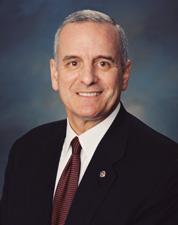
I thank the Chair. Madam President, I thank Senator Durbin. I commend my distinguished colleague from Illinois, Senator Durbin, who has spearheaded the development of this amendment, and for the…
I thank the Chair.
Madam President, I thank Senator Durbin. I commend my distinguished colleague from Illinois, Senator Durbin, who has spearheaded the development of this amendment, and for the leadership he has shown in this and so many other areas. I stand proudly with the Senator today.
The Durbin amendment is the essential test for this body. It is going to be the measure of our commitment to seniors and to other Medicare beneficiaries all over America. It is going to be a test of our sincerity of what we said we intend to do for those people who are either disabled, through no choice of their own and are required to be on Medicare at an early age, or senior citizens who have worked throughout this country who have served this country so well and now are in their retirement years, the largest users by age of prescription drug medicines. So they are the ones most dependent on the quality of coverage we provide for them.
I heard again today from colleagues on the other side of the aisle, as I have heard others say throughout this Chamber, and as I have said many times in Minnesota, that our senior citizens deserve prescription drug coverage that is as good as Members of Congress receive; that is as good as the Federal employees receive through the plan of which we are all part. Yes, we pay into that plan, but it is also very well covered--``subsidized'' would be the right word--by our employer, the Federal Government; the same in the case of Senator Durbin's amendment, at a level of parity to our plan.
If we want to provide senior citizens and other Medicare beneficiaries with the same level of coverage that we get in Congress, then Senator Durbin's amendment is the way to do that.
S. 1, by contrast, provides half of those benefits overall--one-half of what we get in Congress. That is not right, that is not fair, and that is contrary to what I have heard most of my colleagues rhetorically say over the last month, and even the last couple of years, about the intent.
We cannot have it both ways. It is either going to be only half as good under S. 1 for senior citizens as it is for Members of Congress or it is going to be as good as Members of Congress receive under the Durbin amendment.
Do we have the resources? Yes, we have the resources. We surely had plenty of resources when I came to the Senate 2\1/2\ years ago, surpluses for a decade, as far as the eye could see. Now that we have been shifted into deficit mode, suddenly we are talking about a bill that is inadequate.
It is not lack of money. It is a lack of priorities. It is a lack of the right priorities for people in this country, and Senator Durbin's amendment would say we are going to go back to the drawing board and do what is right for seniors and Medicare, and then we are going to turn around and do what we must to balance that equation.
As the Senator from Illinois also pointed out so well, if we want to do anything to address the ravaging of budgets of people of all ages by these prescription drug prices, it has to be through the kind of structured program which the Senator has proposed; otherwise, it is just a continued license to steal for the pharmaceutical industry.
S. 1 does nothing except say taxpayers are going to pay the costs of these rapidly escalating drug prices. Seniors will have to pay for a part of it as well. And then all of the taxpayers who are not senior citizens who are paying for part of this program for seniors are going to have to go to the drugstores for their families and themselves and keep paying prices that go higher and higher.
I had a deck of cards made that I am handing out in Minnesota. They compare the prices of these drugs now in Canada and the United States. Aside from the exchange rates, they show a fair comparison of prices for the same medicine, same manufacturer, same packaging, everything exactly the same in Canada as the United States. The prices in Canada are sometimes as low as 10 percent of what they are in the United States, 20 percent quite common, a third--one can get the same medicine in Canada for one-third the price in the United States.
Why? Because the Canadian Government stands up for its citizens. The Canadian Government says: We are not going to allow you to charge these exorbitant prices and make these excessive profits out of the pockets of our people. Tragically, our Government does nothing of the sort. This bill would continue that policy: Hands off; pharmaceutical industry, take whatever you can get.
So I commend the Senator from Illinois. I am grateful to him for putting this amendment together. I am proud to cosponsor it. I commend it to my colleagues, and I ask the people of America to keep an eye on this vote because it is going to determine whether we mean what we say.
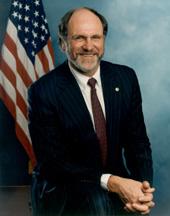
Mr. President, I rise today to introduce a very important piece of legislation, the Medicare Mental Health Modernization Act of 2003. I introduce this bill today, along with Representative Pete Stark…
Mr. President, I rise today to introduce a very important piece of legislation, the Medicare Mental Health Modernization Act of 2003. I introduce this bill today, along with Representative Pete Stark (D-CA), in fond memory of our former colleague and friend, the late Senator Paul Wellstone. Paul was a crusader in many ways and for many causes; however, we will always remember his commitment to ensuring that all Americans have meaningful and equitable access to mental health treatment.
It is because of Paul's efforts that so many Americans, including many in the Congress, have rallied around the call for parity in the treatment of mental illness. Many of us are all too familiar with the stigma that still surrounds mental illness and the disparities in accessing treatment that permeate the private health insurance market. What many of us do not realize is that these inequities also exist in the Medicare program.
Our Nation's Medicare beneficiaries--our elderly and disabled population--have limited access to mental health services. Medicare restricts the types of mental health services available to beneficiaries and the types of providers who are allowed to offer such care. It also charges higher copayments for mental health services than it does for all other health care. In order to receive mental health care, seniors and the disabled must pay 50 percent of the cost of a visit to their mental health specialist, as opposed to the 20 percent that they pay for other services. Medicare also limits the number of days a beneficiary can receive mental health care in a hospital setting to 190 days over an individual's lifetime.
As we talk about modernizing the Medicare program we must address this problem. The need is glaring. Almost 20 percent of Americans over age 65 have a serious mental disorder. They suffer from depression, Alzheimer's disease, dementia, anxiety, late-life schizophrenia and, all too often, substance abuse. These are serious illnesses that must be treated. Unfortunately, they are often unidentified by primary care physicians, or the appropriate services are simply out of reach. Americans age 65 and older have the highest rate of suicide of any other population in the United States. An alarming 70 percent of elderly suicide victims have visited
their primary care doctor in the month prior to committing suicide.
Medicare is also the primary source of health insurance for millions of non-elderly disabled. More than 20 percent of these individuals suffer from mental illness and/or addiction. This very needy population faces the same discrimination in their mental health coverage.
As our population ages, the burden of mental illness on seniors, their families, and the health care system will only continue to increase. Experts estimate that by the year 2030, 15 million people over 65 will have psychiatric disorders, with the number of individuals suffering from Alzheimer's disease doubling. If we do not reform the Medicare program to provide greater access to detection and treatment of mental illness, the cost of not treating these diseases will rapidly escalate. Without the appropriate outpatient mental health services, too many of our seniors are forced into nursing homes and hospitals. If we truly want to modernize Medicare and make it more efficient, we must provide access to these services. Not only will they likely reduce costs in the long-term, but they will also increase Medicare beneficiaries' quality of life.
The Medicare Mental Health Modernization Act takes critical steps to address these issues. First, the bill reduces the 50 percent copayment for mental health services to 20 percent. The proposed 20 percent copayment is the same as the copayment for all other outpatient services in Medicare. Second, the bill would provide access to intensive residential services for those who are suffering from severe mental illness. This will give people with Alzheimer's disease and other serious mental illness the opportunity to be cared for in their homes or in community-based settings. Third, the bill expands the number of qualified mental health professionals eligible to provide services through the Medicare program. This includes licensed professional mental health counselors, clinical social workers, and marriage and family therapists. This expansion of qualified providers is critical to ensuring that seniors throughout the nation, particularly those in rural areas, are able to receive the services they need.
In closing, I urge all of my colleagues to step forward to support the Medicare Mental Health Modernization Act of 2003. It is time for the Medicare program to stop discriminating against seniors and the disabled who are suffering from mental illness.
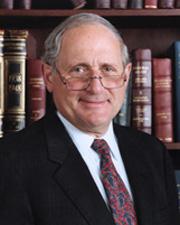
Mr. President, I am introducing today along with Senators Collins, Jeffords and others the Brownfields Redevelopment Assistance Act of 2003. As a resident of Michigan I am familiar with the obstacles…
Mr. President, I am introducing today along with Senators Collins, Jeffords and others the Brownfields Redevelopment Assistance Act of 2003. As a resident of Michigan I am familiar with the obstacles facing local communities in their attempts to return brownfields sites to productive economic uses. As co-chair of the Senate Smart Growth Task Force I understand the national economic importance of these efforts.
Brownfields are abandoned, idled or under-used industrial and commercial properties where expansion or redevelopment is hindered by real or perceived environmental contamination. More than 450,000 of these sites taint our nation's landscape, inhibiting economic development and posing a threat to human health and the environment. Undeveloped, or underdeveloped, brownfields sites blight communities forcing development onto greenfields where they exacerbate the problems associated with urban sprawl. If brownfields were instead redeveloped they could offer new opportunities for business, housing and open space.
Brownfields redevelopment is a fiscally-sound way to bring investment back to neglected neighborhoods, clean-up the environment, maximize use of existing infrastructure, create jobs and relieve development pressure on our urban fringe and farmlands. My
home state of Michigan is a national leader in brownfields redevelopment. For example, the City of Traverse City managed to leverage $662,000 of government brownfields funding to turn a former gas station and junk yard site into a $20 million private investment in a retail, office and parking facility called Radio Center. The City of Ludington used brownfields funding to spur the development of a multi- use retail/office/condominium complex adjacent to a marina. These are only two examples of the many successful efforts by local communities to leverage Federal, State and local money to harness the resources and expertise of the private sector in economic development efforts. The Brownfields Redevelopment Assistance Act of 2003 would open up the possibilities of redevelopment to numerous other communities nationwide.
The Brownfields Redevelopment Assistance Act expands the Department of Commerce's Economic Development Administration, EDA, initiatives to assist communities with brownfields redevelopment. The bill authorizes $60 million annually for five years for brownfields redevelopment. Grant money will be used for purposes including collaborative economic development planning, eco-industrial development and revolving loan funds. By encouraging development in existing communities the brownfields program will strengthen local economies, preserve precious resources and make best use of existing infrastructure. This bill for the first time would provide specific authority and funding to the EDA for these initiatives. The new projects authorized by the bill would complement the existing and successful brownfields efforts of the Environmental Protection Agency, the Department of Commerce and the Department of Housing and Urban Development.
The U.S. Conference of Mayors estimates that redevelopment of all of the brownfields nationwide could generate more than 550,000 additional jobs that would benefit our many economically struggling communities. Cities and States could see as much as $2.4 billion in new tax revenues. The Economic Development Administration has helped distressed communities attract investment, create jobs and strengthen their economies for the last forty years. This bill will build on EDA's success in helping localities improve their infrastructure and help them redevelop their brownfields sites. Communities nationwide have expressed interest in brownfields redevelopment but lack the financial resources necessary to accomplish their goals. This bill is an excellent example of how the Federal Government can be supportive of local economic development projects. The Brownfield Redevelopment Assistance Act of 2003 advances the goals of the smart growth movement by helping create healthier communities and strengthens the economy through federally supportive, locally driven initiatives.
Many organizations support these bills, including the American Institute of Architects, American Planning Association, American Society of Civil Engineers, Enterprise Institute, National Business Incubation Association, National Association of Counties, National Association of Regional Councils, National League of Cities, US Conference of Mayors, National Congress for Community Economic Development, Smart Growth America and others. I ask unanimous consent to have letters endorsing this bill printed, the Record. I also ask unanimous consent that the text of the bill be printed in the Record.

Mr. President, today, I again rise in support of the Comprehensive Child Protection Act. I am proud to be standing with Senator Hatch as a co-sponsor of a bill that represents one of the most…
Mr. President, today, I again rise in support of the Comprehensive Child Protection Act. I am proud to be standing with Senator Hatch as a co-sponsor of a bill that represents one of the most comprehensive pieces of legislation ever drafted to protect children. The miracle that Elizabeth Smart was found safe and sound, reminds us of how important this bill is.
As a former chairman of the Youth Violence Subcommittee and Ranking Republican on the Subcommittee on Crime and Drugs during the 107th Congress, I have been greatly concerned with the increase in reports of child abductions and murders, so I am glad to be a part of this effort to address this growing problem. In my tenure on the Judiciary Committee, I have long fought for our Nation's children, and have ardently supported laws that bring them and their families greater protection.
This legislation comes at a critical time because we are hearing more and more about children being taken from their homes or schools and abused, or worse, murdered. Our children are a gift to us, are our national treasure, and are our future. We must do all that we can to protect these innocents and give law enforcement every tool possible to ferret out the criminals who would do our children harm. With this legislation, we will be ensuring a greater measure of protection for our children. The miracle that Elizabeth Smart was found safe and sound, reminds us of how important this bill is.
The bill does many important things. First, it helps law enforcement respond immediately to incidents of child abduction, because, as we've seen with the Amber Alert system, time is critical in any abduction case to thwart further injury or harm. The bill creates a National Crimes Against Children Response Center at the FBI that will integrate the resources and expertise of all Federal, State and local law enforcement sources to provide a rapid response for crimes involving child victims. The bill also helps law enforcement by making it possible to get wire taps for suspected sex trafficking and exploitation offenses, and will require that all Federal child sex crimes offenders have their DNA added to the national DNA registry. So the bill will help to centralize information about criminals and crimes, and makes the job of the criminal investigator easier and more accurate through wiretaps and DNA evidence.
The bill also creates a website registry for convicted child sexual offenders so that parents, neighbors, and police know who in their communities is a convicted child predator. This website will supplement registries in all 50 States. This important tool will help families make better and fully informed decisions about their children's safety, and will greatly aid law enforcement's response to reports of child abductions and other offenses against children. The bill also gives new tools to prosecutors and the courts. It extends the statute of limitations for prosecuting child offenders, allows prosecutors to introduce evidence of past child sex crimes in sentencing hearings, removes the so-called ``spousal privilege'' so that a spouse can't stand silent in the prosecution of the other spouse for child sexual abuse, and increases the maximum sentences and probation periods for child sex offenders. These important tools will make our communities safer by helping to rid them of child predators, and by keeping a tight leash on predators when they get released from prison.
So this bill helps the public know about sexual predators in their communities, improves the nation's ability to respond to child abduction reports, and aids criminal investigators and prosecutors in their efforts to protect the public by identifying and locking-up child predators. I ask my fellow Senators to support this important bill.

Mr. President, the textile mills and tanneries of Maine helped fuel our country's economic growth. But as these industries closed, brownfields replaced once vibrant factories. In many communities…
Mr. President, the textile mills and tanneries of Maine helped fuel our country's economic growth. But as these industries closed, brownfields replaced once vibrant factories. In many communities across Maine these sites remain a legacy of our industrial history.
Left undeveloped, brownfields pose threats to the public health, environmental quality and economic strength of our communities. But redeveloped, these sites offer opportunities for new industries, job growth and economic development. I am pleased to join Senators Levin and Jeffords in introducing the Brownfields Redevelopment Assistance Act. This legislation will provide communities with economic development resources to redevelop brownfields and return them to productive uses.
The legislation we are introducing today would provide EDA with increased funding flexibility to help States, local communities, Indian tribes and nonprofit organizations return brownfield sites to productive use. The bill authorizes $60 million each year for five years for brownfields redevelopment. This funding authorized by this bill will result in hundreds of millions of dollars worth of economic benefits for States and local communities through the leveraging of local and State funds and private investments.
The bill gives EDA the authority to provide grants for brownfield redevelopment projects, including: development of public facilities and public services; business development; activities to help communities diversify their economies; and collaborative economic development planning. This will help States and communities facilitate effective economic development planning for brownfield reuse; develop infrastructure necessary to prepare sites for re-entry into the market; and, provide the capital necessary to support new business development.
The decline of the New England textile industry led to the closure of many textile mills throughout the region, including the Bates Mill in the City of Lewiston, ME. The Bates Mill was once the State's largest employer providing more than 5,000 jobs. Economic decline and layoffs left the residents of Lewiston with large abandoned mill buildings that have been a challenge to redevelop. As a small city of 36,000 people, continued support for redeveloping brownfields located in the heart of downtown is critical to the city's future economic vitality. In 1998, the city received a $200,000 grant from the Environmental Protection Agency to help facilitate the cleanup and redevelopment of the one million square foot mill complex. Today, the City has redeveloped about one-third of the mill and created 1,000 new jobs. The City estimates that it will require $54 million to develop the remaining buildings in the Bates Mill Complex. The economic development resources provided in the Brownfields Redevelopment Assistance Act will help Lewiston and other communities across the nation rebuild their communities and create new economic opportunity.
Brownfields redevelopment is a fiscally responsible strategy for strengthening local economies and reusing existing infrastructure while protecting open space. We recycle cans, bottles and newspapers now we must try harder to recycle our land. I am proud to be an original co- sponsor of the bill to aid in this effort.
Mr. President, I rise today to introduce America's Red Rock Wilderness Act. This legislation is in keeping with our Nation's bipartisan commitment to preserve our natural heritage. The preservation…
Mr. President, I rise today to introduce America's Red Rock Wilderness Act. This legislation is in keeping with our Nation's bipartisan commitment to preserve our natural heritage. The preservation of our Nation's vital natural resources will be one of our most important legacies.
Unfortunately, remaining wilderness areas are increasingly threatened and degraded by oil and gas development, mining, claims of rights of way, logging and off-road vehicles. America's Red Rock Wilderness Act will designate 9.1 million acres of land managed by the Bureau of Land Management, BLM, in Utah as wilderness under the Wilderness Act. Wilderness designation will preserve the land's wilderness character, along with the values associated with that wilderness--scenic beauty, solitude, wildlife, geological features, archaeological sites, and other features of scientific, educational, and historical value.
America's Red Rock Wilderness Act will provide wilderness protection for red rock cliffs offering spectacular vistas of rare rock formations, canyons and desert lands, important archaeological sites, and habitat for rare plant and animal species.
Volunteers took detailed inventories of thousands of square miles of BLM land in Utah to help determine which lands should be protected. These volunteers provided extensive documentation to ensure that these areas meet federal wilderness criteria.
The BLM also completed a re-inventory of approximately 6 million acres of Federal land in the same area. The results provide a convincing confirmation that the areas designated for protection under this bill meet Federal wilderness criteria.
For more than twenty years Utah conservationists have been working to add the last great blocks of undeveloped BLM-administered land in Utah to the National Wilderness Preservation System. The lands we propose to protect surround and connect eight of Utah's nine national park, monument and recreation areas. These proposed BLM wilderness areas easily equal their neighboring national parklands in scenic beauty, opportunities for recreation, and ecological importance. Yet, unlike the parks, most of these scenic treasures lack any form of long-term protection.
I'd like to thank all of my colleagues who are original cosponsors of this
measure this year, many of whom have supported the bill since it was first introduced. The original cosponsors of the measure are Senators Feingold, Leahy, Harkin, Kennedy, Bayh, Cantwell, Corzine, Wyden, Stabenow, Reed, Schumer, Boxer, and Kerry. Additionally, I would like to thank The Utah Wilderness Coalition, which includes The Wilderness Society and Sierra Club; The Southern Utah Wilderness Alliance; and all of the other national, regional and local, hard-working groups who, for years, have championed this legislation.
Theodore Roosevelt once stated, ``The Nation behaves well if it treats the natural resources as assets which it must turn over to the next generation increased and not impaired in value.'' Enactment of this legislation will help us realize Roosevelt's vision. In order to protect these precious resources in Utah for future generations, I urge my colleagues to support America's Red Rock Wilderness Act.
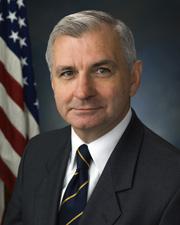
Mr. President, I am pleased to reintroduce the Pharmacy Education Aid Act along with my colleagues, Senator Enzi, Senator Johnson and others. Last year, the Senate recognized and acted to address the…
Mr. President, I am pleased to reintroduce the Pharmacy Education Aid Act along with my colleagues, Senator Enzi, Senator Johnson and others. Last year, the Senate recognized and acted to address the growing, nationwide shortage of pharmacists, by creating a demonstration program under the National Health Service Corps whereby pharmacists agree to serve in rural and medically underserved areas in exchange for partial loan repayment. I commend my colleagues for responding in such a strong, bipartisan way to this critically important health care issue. The bill I am introducing today, the Pharmacy Education Aid Act seeks to build on that bipartisan step while taking a multi-faceted approach to the problem of workforce shortages in the pharmacy sector.
The December 2000 Health Resources and Services Administration, HRSA, report, ``The Pharmacist Workforce: A Study of the Supply and Demand for Pharmacists'' concluded that due to the rapid increase in demand for pharmacists and our limited ability to expand the number pharmacy education programs to train more pharmacists, the shortage was unlikely to abate without significant changes to the current system.
Pharmacists represent the third largest and most trusted health professional group in the United States. In 2000, 190,000 pharmacists were in practice. While this figure is expected to grow to 224,500 by 2010, demand for pharmacists is expected to continue to outpace supply.
These shortages, while particularly acute in rural and medically underserved areas, are felt throughout of health care system. A November 2001 GAO report found that, on average, hospitals report 21 percent of their pharmacist positions are currently unfilled. Vacancy rates are even higher in federal health systems, such as the Department of Veterans Affairs, the Department of Defense and the Indian Health Service.
The Pharmacy Education Act seeks to address these chronic shortfalls in the supply and distribution of pharmacists by building upon Title VII of the Public Health Service Act, with particular emphasis on students with the greatest financial need.
In addition to enhancing students' opportunities to pursue an education in pharmacy, the bill also makes available much needed resources to Colleges of Pharmacy to upgrade and expand facilities and laboratory space as well as to recruit and retain talented faculty to educate future generations of pharmacists.
As Congress works to provide a Medicare prescription drug benefit, the need for more pharmacist involvement in health care decision making, including medication therapy management, formulary development and drug utilization review, will be essential to its long-term success. We must address the pharmacist shortage now. As such, I look forward to working with my colleagues towards expeditious consideration and passage of this timely and important legislation.
I ask unanimous consent that a letter of support be printed in the Record.
Mr. President, I rise in strong support of the Bingaman- Snowe-Hatch amendment. This amendment addresses an important issue for both Medicare beneficiaries and community health centers by ensuring…
Mr. President, I rise in strong support of the Bingaman- Snowe-Hatch amendment. This amendment addresses an important issue for both Medicare beneficiaries and community health centers by ensuring that
Medicare beneficiaries, regardless of their Medicare health coverage choice, would receive seamless coverage if they choose to receive services from a community health center. And, it provides the Community Health Centers the ability to give the Medicare beneficiaries that they serve seamless health coverage as well.
I have been a strong supporter of community health centers for many years. These health centers provide care to over 13 million people annually; nearly one million are low-income Medicare beneficiaries. These health centers receive funding under the Public Health Service Act in order to provide quality care to their uninsured and low-income patients. To ensure those dollars are used only to provide health care to health center patients, Congress has taken action to ensure that both the Medicare and Medicaid programs are reimbursing health centers for the costs associated with care to Medicare and Medicaid beneficiaries. Therefore, community health centers are reimbursed by Medicare and Medicaid under a cost-based system.
In 1997, Congress allowed States to increase greatly the number of patients enrolled in Medicaid managed care by requiring the Medicaid program to provide a ``wrap-around' payments for the difference between the managed care organization's payment and a health center's reasonable costs.
This amendment ensures that we do the same thing for Medicare beneficiaries in the MedicareAdvantage program. More specifically, the amendment ensures that community health centers are provided with a ``wrap-around'' or supplemental payment equal to the difference between the payments they now receive under Medicare through the cost-based system and the payment they would receive from MedicareAdvantage plans.
Officials at the Centers for Medicare and Medicaid Services and the Congressional Budget Office estimate that nine to 43 percent of Medicare beneficiaries will enroll in private health plans offered through the MedicareAdvantage program. If these estimates are accurate, then health centers will lose their guarantee of cost-based reimbursement for up to 43 percent of their Medicare patients. This could result in centers having to dip into their Federal funding received through the Public Health Service Act. This funding is intended to provide care to the uninsured--not to fill in the gaps for certain Medicare health center patients.
The Bingaman-Snowe-Hatch amendment would not only protect the vital role of health centers but would also ensure that these health centers would continue to provide seamless health coverage to one million low- income Medicare beneficiaries. I urge my colleagues to support this amendment.
I suggest the absence of a quorum.
Bill Text
Latest available legislative text
        [Congressional Bills 108th Congress]
[From the U.S. Government Publishing Office]
[S. 654 Introduced in Senate (IS)]

108th CONGRESS
1st Session
S. 654

To amend title XVIII of the Social Security Act to enhance the access
of medicare beneficiaries who live in medically underserved areas to
critical primary and preventive health care benefits, to improve the
Medicare+Choice program, and for other purposes.

_______________________________________________________________________

IN THE SENATE OF THE UNITED STATES

March 18, 2003

Ms. Snowe (for herself, Mr. Bingaman, Mr. Bond, and Mr. Hollings)
introduced the following bill; which was read twice and referred to the
Committee on Finance

_______________________________________________________________________

A BILL

To amend title XVIII of the Social Security Act to enhance the access
of medicare beneficiaries who live in medically underserved areas to
critical primary and preventive health care benefits, to improve the
Medicare+Choice program, and for other purposes.

Be it enacted by the Senate and House of Representatives of the
United States of America in Congress assembled,

SECTION 1. SHORT TITLE; TABLE OF CONTENTS.

(a) Short Title.--This Act may be cited as the ``Medicare Safety
Net Access Act of 2003''.
(b) Table of Contents.--The table of contents of this Act is as
follows:

Sec. 1. Short title; table of contents.
Sec. 2. Coverage of additional Federally qualified health center
services.
Sec. 3. Providing safe harbor for certain collaborative efforts that
benefit medically underserved populations.
Sec. 4. Supplemental reimbursement for Federally qualified health
centers participating in medicare managed
care.

SEC. 2. DELIVERY OF MEDICARE-COVERED PRIMARY AND PREVENTIVE SERVICES AT
FEDERALLY QUALIFIED HEALTH CENTERS.

(a) Coverage of Medicare-Covered Ambulatory Services by FQHCs.--
Section 1861(aa)(3) of the Social Security Act (42 U.S.C. 1395x(aa)(3))
is amended to read as follows:
``(3) The term `Federally qualified health center services' means--
``(A) services of the type described in subparagraphs (A)
through (C) of paragraph (1), and such other services furnished
by a Federally qualified health center for which payment may
otherwise be made under this title if such services were
furnished by a health care provider or health care professional
other than a Federally qualified health center; and
``(B) preventive primary health services that a center is
required to provide under section 330 of the Public Health
Service Act,
when furnished to an individual as a patient of a Federally qualified
health center and such services when provided by a health care provider
or health care professional employed by or under contract with a
Federally qualified health center shall be treated as billable visits
for purposes of payment to the Federally qualified health center.''.
(b) Ensuring FQHC Reimbursement Under Hospital and Skilled Nursing
Facility Prospective Payment Systems.--
(1) Patients of hospitals and critical access hospitals.--
Section 1862(a)(14) of the Social Security Act (42 U.S.C.
1395y(a)) is amended by inserting ``Federally qualified health
center services,'' after ``qualified psychologist services,''.
(2) Patients of skilled nursing facilities.--Section
1888(e)(2)(A) of the Social Security Act (42 U.S.C.
1395yy(e)(2)(A)) is amended--
(A) in clause (i)(II), by striking ``clauses (ii)
and (iii)'' and inserting ``clauses (ii) through
(iv)''; and
(B) by adding at the end the following new clause:
``(iv) Exclusion of federally qualified
health center services.--Services described in
this clause are Federally qualified health
center services (as defined in section
1861(aa)(3)).''.
(c) Technical Corrections.--Clauses (i) and (ii)(II) of section
1861(aa)(4)(A) of the Social Security Act (42 U.S.C. 1395x(aa)(4)(A))
are each amended by striking ``(other than subsection (h))''.
(d) Effective Dates.--The amendments made--
(1) by subsections (a) and (b) shall apply to services
furnished on or after January 1, 2004; and
(2) by subsection (c) shall take effect on the date of
enactment of this Act.

SEC. 3. PROVIDING SAFE HARBOR FOR CERTAIN COLLABORATIVE EFFORTS THAT
BENEFIT MEDICALLY UNDERSERVED POPULATIONS.

(a) In General.--Section 1128B(b)(3) (42 U.S.C. 1320a-7(b)(3)) is
amended--
(1) in subparagraph (E), by striking ``and'' after the
semicolon at the end;
(2) in subparagraph (F), by striking the period at the end
and inserting ``; and''; and
(3) by adding at the end the following new subparagraph:
``(G) any remuneration between a public or
nonprofit private health center entity described under
clause (i) or (ii) of section 1905(l)(2)(B) and any
individual or entity providing goods, items, services,
donations or loans, or a combination thereof, to such
health center entity pursuant to a contract, lease,
grant, loan, or other agreement, if such agreement
contributes to the ability of the health center entity to maintain or
increase the availability, or enhance the quality, of services provided
to a medically underserved population served by the health center
entity.''.
(b) Rulemaking for Exception for Health Center Entity
Arrangements.--
(1) Establishment.--
(A) In general.--The Secretary of Health and Human
Services (in this subsection referred to as the
``Secretary'') shall establish, on an expedited basis,
standards relating to the exception described in
section 1128B(b)(3)(G) of the Social Security Act, as
added by subsection (a), for health center entity
arrangements to the antikickback penalties.
(B) Factors to consider.--The Secretary shall
consider the following factors, among others, in
establishing standards relating to the exception for
health center entity arrangements under subparagraph
(A):
(i) Whether the arrangement between the
health center entity and the other party
results in savings of Federal grant funds or
increased revenues to the health center entity.
(ii) Whether the arrangement between the
health center entity and the other party
restricts or limits a patient's freedom of
choice.
(iii) Whether the arrangement between the
health center entity and the other party
protects a health care professional's
independent medical judgment regarding
medically appropriate treatment.
The Secretary may also include other standards and
criteria that are consistent with the intent of
Congress in enacting the exception established under
this section.
(2) Interim final effect.--No later than 180 days after the
date of enactment of this Act, the Secretary shall publish a
rule in the Federal Register consistent with the factors under
paragraph (1)(B). Such rule shall be effective and final
immediately on an interim basis, subject to such change and
revision, after public notice and opportunity (for a period of
not more than 60 days) for public comment, as is consistent
with this subsection.

SEC. 4. REIMBURSEMENT FOR FEDERALLY QUALIFIED HEALTH CENTERS
PARTICIPATING IN MEDICARE MANAGED CARE.

(a) Reimbursement.--
(1) In general.--Section 1833(a)(3) of the Social Security
Act (42 U.S.C. 1395l(a)(3)) is amended to read as follows:
``(3) in the case of services described in section
1832(a)(2)(D)--
``(A) except as provided in subparagraph (B), the
costs which are reasonable and related to the cost of
furnishing such services or which are based on such
other tests of reasonableness as the Secretary may
prescribe in regulations, including those authorized
under section 1861(v)(1)(A), less the amount a provider
may charge as described in clause (ii) of section
1866(a)(2)(A), but in no case may the payment for such
services (other than for items and services described
in section 1861(s)(10)(A)) exceed 80 percent of such
costs; or
``(B) with respect to the services described in
clause (ii) of section 1832(a)(2)(D) that are furnished
to an individual enrolled with a Medicare+Choice
organization under part C pursuant to a written
agreement described in section 1853(j), the amount by which--
``(i) the amount of payment that would have
otherwise been provided under subparagraph (A)
(calculated as if `100 percent' were
substituted for `80 percent' in such
subparagraph) for such services if the
individual had not been so enrolled; exceeds
``(ii) the amount of the payments received
under such written agreement for such services
(not including any financial incentives
provided for in such agreement such as risk
pool payments, bonuses, or withholds),
less the amount the Federally qualified health center
may charge as described in section 1857(e)(3)(C);''.
(b) Continuation of Medicare+Choice Monthly Payments.--
(1) In general.--Section 1853 of the Social Security Act
(42 U.S.C. 1395w-23) is amended by adding at the end the
following new subsection:
``(j) Payment Rule for Federally Qualified Health Center
Services.--If an individual who is enrolled with a Medicare+Choice
organization under this part receives a service from a Federally
qualified health center that has a written agreement with such
organization for providing such a service (including any agreement
required under section 1857(e)(3))--
``(1) the Secretary shall pay the amount determined under
section 1833(a)(3)(B) directly to the Federally qualified
health center not less frequently than quarterly; and
``(2) the Secretary shall not reduce the amount of the
monthly payments to the Medicare+Choice organization made under
section 1853(a) as a result of the application of paragraph
(1).''.
(2) Conforming amendments.--
(A) Paragraphs (1) and (2) of section 1851(i) of
the Social Security Act (42 U.S.C. 1395w-21(i)(1)) are
each amended by inserting ``1853(j),'' after
``1853(h),''.
(B) Section 1853(c)(5) is amended by striking
``subsections (a)(3)(C)(iii) and (i)'' and inserting
``subsections (a)(3)(C)(iii), (i), and (j)(1)''.
(c) Additional Medicare+Choice Contract Requirements.--Section
1857(e) of the Social Security Act (42 U.S.C. 1395w-27(e)) is amended
by adding at the end the following new paragraph:
``(3) Agreements with federally qualified health centers.--
``(A) Payment levels and amounts.--A contract under
this part shall require the Medicare+Choice
organization to provide, in any contract between the
organization and a Federally qualified health center,
for a level and amount of payment to the Federally
qualified health center for services provided by such
health center that is not less than the level and
amount of payment that the organization would make for
such services if the services had been furnished by a
provider of services that was not a Federally qualified
health center.
``(B) Cost-sharing.--Under the written agreement
described in subparagraph (A), a Federally qualified
health center must accept the Medicare+Choice contract
price plus the Federal payment provided for in section
1833(a)(3)(B) as payment in full for services covered
by the contract, except that such a health center may
collect any amount of cost-sharing permitted under the
contract under this part, so long as the amounts of any
deductible, coinsurance, or copayment comply with the
requirements under section 1854(e) and do not result in
a total payment to the center in excess of the amount
determined under section 1833(a)(3)(A) (calculated as
if `100 percent' were substituted for `80 percent' in
such section).''.
(d) Safe Harbor From Antikickback Prohibition.--Section 1128B(b)(3)
of the Social Security Act (42 U.S.C. 1320a-7b(b)(3)), as amended by
section 3(a), is amended--
(1) in subparagraph (F), by striking ``and'' after the
semicolon at the end;
(2) in subparagraph (G), by striking the period at the end
and inserting ``; and''; and
(3) by adding at the end the following new subparagraph:
``(H) any remuneration between a Federally
qualified health center (or an entity controlled by
such a health center) and a Medicare+Choice
organization pursuant to the written agreement
described in section 1853(j).''.
(e) Effective Date.--The amendments made by this section shall
apply to services provided on or after January 1, 2004, and contract
years beginning on or after such date.
<all>