Genomes to Life Research and Development Act
 Sen. Pete V. Domenici (R-NM)
Legislative Activity
Stay on top of the latest movement without scrolling through every action
Read twice and referred to the Committee on Energy and Natural Resources. (text of measure as introduced: CR S4279-4280)
March 21, 2003
View full timeline
Introduced in Senate
March 21, 2003
Sponsor introductory remarks on measure. (CR S4278-4279)
March 21, 2003
Read twice and referred to the Committee on Energy and Natural Resources. (text of measure as introduced: CR S4279-4280)
March 21, 2003
Floor Debate
11 membersWhat members said about S. 682 on the floor

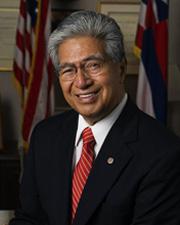


 +6
+6
Floor Debate
11 membersWhat members said about S. 682 on the floor
Mr. President, I rise today to introduce the Electricity Market Manipulation Prevention Act--legislation I believe is critical in ensuring our Nation's consumers will never again have to suffer from…
Thank you, Mr. President. I rise today to speak on the Low Income Taxpayer Protection Act of 2003, which Senator Bingaman and I are introducing today. I thank Senator Bingaman for his leadership on…
Mr. President, I rise today to right a wrong. I am doing so on behalf of myself and Mr. Wyden, Mr. Allard, Mr. Bayh, Mr. Bond, Mr. Brownback, Mr. Miller, Mr. Nickles, Mr. Santorum, and Mr. Specter.…
Mr. President, I rise today to introduce--along with my colleagues Chairman Domenici, and Senators Bingaman and Murray--the Genomes to Life Research and Development Act. This bill capitalizes on the…
Mr. President, I am pleased to join with my colleagues-- Senators Murray, Landrieu, Breaux, Bingaman, and Inouye--to introduce the Poison Control Center Awareness and Enhancement Act of 2003. Our…
Show 8 more
Mr. President, today I am introducing legislation to bring a small measure of relief to the families of our brave military personnel who are being deployed for the ongoing fight against terrorism,…
Mr. President, I rise to introduce the Genomes to Life Research and Development Act. I appreciate the bipartisan sponsors, Senator Cantwell, Senator Murray and Senator Bingaman who join me in its…
Mr. President, I rise to introduce the Genomes to Life Research and Development Act. I appreciate the bipartisan sponsors, Senator Cantwell, Senator Murray and Senator Bingaman who join me in its…
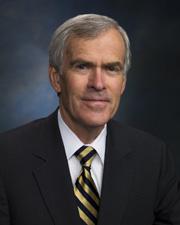
Mr. President, I rise today with my colleague from Hawaii, Senator Akaka, to re-introduce the Low Income Taxpayer Protection Act of 2003. This legislation, if enacted, will give taxpayers much needed…

Mr. President, I rise today to introduce this bill that will end the practice of forcing electric utilities to purchase unneeded electricity at above market rates--a practice that ultimately costs…

Mr. President, today I am introducing legislation to require that the Secretary of Defense issue regulations that would prevent a mother and father of minor children from being deployed to a combat…

Mr. President, I ask unanimous consent that the text of this bill be printed in the Record.
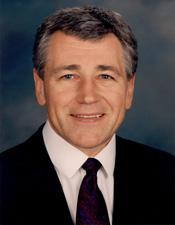
Mr. President, I ask unanimous consent that the text of the bill be printed in the Record.
Bill Text
Latest available legislative text
        [Congressional Bills 108th Congress]
[From the U.S. Government Publishing Office]
[S. 682 Introduced in Senate (IS)]

108th CONGRESS
1st Session
S. 682

To authorize funding for Genomes to Life Research and Development at
the Department of Energy for fiscal years 2004 through 2008.

_______________________________________________________________________

IN THE SENATE OF THE UNITED STATES

March 21, 2003

Mr. Domenici (for himself, Ms. Cantwell, Mrs. Murray, and Mr. Bingaman)
introduced the following bill; which was read twice and referred to the
Committee on Energy and Natural Resources

_______________________________________________________________________

A BILL

To authorize funding for Genomes to Life Research and Development at
the Department of Energy for fiscal years 2004 through 2008.

Be it enacted by the Senate and House of Representatives of the
United States of America in Congress assembled,

SECTION 1. SHORT TITLE.

This Act may be cited as ``The Genomes to Life Research and
Development Act''.

SEC. 2. FINDINGS.

The Congress finds the following:
(1) The Department of Energy's Genomes to Life initiative
involves the emerging fields of systems biology and proteomics,
which address the ability to understand the composition and
function of the biochemical networks and pathways that carry
out the essential processes of living organisms.
(2) The Genomes to Life initiative builds on the Department
of Energy's integral role in the Human Genome Project, which
has led to the mapping, sequencing and identification of
genetic material. Genomes to Life will go beyond mapping to
develop an understanding of how genetic components interact to
perform cellular activities vital to life.
(3) The ability of the United States to respond to the
national security, energy and environmental challenges of the
21st century will be driven by science and technology. An
integrated and predictive understanding of biological systems
will enable the United States to develop new technologies
related to the detection of biological and chemical agents,
energy production, carbon sequestration, bioremediation and
other Department of Energy statutory missions. These advances
will also enhance the strength of U.S. science, technology, and
medicine generally.
(4) The fundamental intellectual challenges inherent in the
Genomes to Life initiative are considerable, and require public
support for basic and applied research and development.
Significant advances in areas such as the characterization of
multiprotein complexes and gene regulatory networks will be
required before biologically-based solutions and technologies
will be useful in national security applications, as well as to
the energy, medical and agricultural industries.
(5) The development of new scientific instruments will also
be required to advance Genomes to Life research. Such
instruments are likely to be large and costly. Specialized
facilities are also likely to be required in order to advance
the field and to realize its promise. Such facilities will be
sufficiently expensive that they will have to be located and
constructed on a centralized basis, similar to a number of
unique facilities already managed by the Department of Energy.
(6) Contributions from individual researchers as well as
multidisciplinary research teams will be required to advance
systems biology and proteomics.
(7) The Department of Energy's Office of Science is well
suited to manage systems biology and proteomics research for
the Department. Through its support of research and development
pursuant to the Department's statutory authorities, the Office
of Science is the principal federal supporter of the research
and development in the physical and computational sciences. The
Office is also a significant source of federal support for
research in genomics and the life sciences. The Office supports
research and development by individual investigators and
multidisciplinary teams, and manages special user facilities
that serve investigators in both university and industry.

SEC. 3. DEPARTMENT OF ENERGY PROGRAM.

(a) Establishment.--The Secretary shall carry out a program of
research, development, demonstration, and commercial application, to be
known as the Genomes to Life Program, in systems biology and proteomics
consistent with the Department's statutory authorities.
(b) Planning.--
(1) In general.--The Secretary shall prepare a program plan
describing how knowledge and capabilities would be developed by
the program and applied to Department missions relating to
energy, environmental cleanup, and mitigation of global climate
change.
(2) Consultation.--The program plan will be developed in
consultation with other relevant Department technology
programs.
(3) Long-term goals.--The program plan shall focus science
and technology on long-term goals including--
(A) contributing to U.S. independence from foreign
energy sources,
(B) stabilizing atmospheric levels of carbon
dioxide to counter global warming,
(C) advancing environmental cleanup, and
(D) providing the science and technology basis for
new industries in biotechnology.
(4) Specific goals.--The program plan shall identify
appropriate research, development, demonstration, and
commercial application activities to address the following
issues within the next decade--
(A) identifying new biological sources of fuels and
electricity, with particular emphasis on creating
biological technologies for the production and
utilization of hydrogen;
(B) understanding the Earth's natural carbon cycle
and create strategies to stabilize atmospheric carbon
dioxide;
(C) developing a knowledge and capability base for
exploring more cost effective cleanup strategies for
Department sites; and
(D) capturing key biological processes in
engineered systems not requiring living cells.
(c) Program Execution.--In carrying out the program under this Act,
the Secretary shall--
(1) support individual investigators and multidisciplinary
teams of investigators;
(2) subject to subsection (d), develop, plan, construct,
acquire, or operate special equipment or facilities for the use
of investigators conducting research, development,
demonstration, or commercial application in systems biology and
proteomics;
(3) support technology transfer activities to benefit
industry and other users of systems biology and proteomics;
(4) coordinate activities by the Department with industry
and other federal agencies; and
(5) award funds authorized under this Act only after an
impartial review of the scientific and technical merit of the
proposals for such awards has been carried out by or for the
Department.
(d) Genomes to Life User Facilities and Ancillary Equipment.--
(1) Authorization.--Within the funds authorized to be
appropriated pursuant to this Act, the amounts specified under
section 4(b) shall, subject to appropriations, be available for
projects to develop, plan, construct, acquire, or operate
special equipment, instrumentation, or facilities for
investigators conducting research, development, demonstration,
and commercial application in systems biology and proteomics
and associated biological disciplines.
(2) Projects.--Projects under paragraph (1) may include--
(A) the identification and characterization of
multiprotein complexes;
(B) characterization of gene regulatory networks;
characterization of the functional repertoire of
complex microbial communities in their natural
environments at the molecular level; and
(C) development of computational methods and
capabilities to advance understanding of complex
biological systems and predict their behavior.
(3) Facilities.--Facilities under paragraph (1) may include
facilities for--
(A) the production and characterization of
proteins;
(B) whole proteome analysis;
(C) characterization and imaging of molecular
machines; and
(D) analysis and modeling of cellular systems.
(4) Collaboration.--The Secretary shall encourage
collaborations among universities, laboratories and industry at
facilities under this subsection. All facilities under this
subsection shall have a specific mission of technology transfer
to other institutions.

SEC. 4. AUTHORIZATION OF APPROPRIATIONS.

(a) Total Authorization.--The following sums are authorized to be
appropriated to the Secretary, to remain available until expended, for
the purposes of carrying out this Act:
(1) $100,000,000 for fiscal year 2004.
(2) $170,000,000 for fiscal year 2005.
(3) $325,000,000 for fiscal year 2006.
(4) $415,000,000 for fiscal year 2007.
(5) $455,000,000 for fiscal year 2008.
(b) User Facilities and Ancillary Equipment.--Of the funds under
subsection (a), the following sums are authorized to be appropriated to
carry out section 3(d):
(1) $16,000,000 for fiscal year 2004.
(2) $70,000,000 for fiscal year 2005.
(3) $175,000,000 for fiscal year 2006.
(4) $215,000,000 for fiscal year 2007.
(5) $205,000,000 for fiscal year 2008.

SEC. 5. DEFINITIONS.

For purposes of this Act:
(1) Department.--The term ``Department'' means the
Department of Energy.
(2) Proteomics.--The term ``proteomics'' means the
determination of the structure, function, and expression of the
proteins encoded in any genome, including new protein sequences
encoded in a genome for which the structural or functional
correlates are not currently known.
(3) Secretary.--The term ``Secretary'' means the Secretary
of Energy, acting through the Biological and Environmental
Research Program of the Office of Science of the Department.
<all>