A bill to amend the Robert T. Stafford Disaster Relief and Emergency Assistance Act to make private, nonprofit medical facilities that serve industry-specific clients eligible for hazard mitigation and disaster assistance.

Legislative Activity
Stay on top of the latest movement without scrolling through every action
Read twice and referred to the Committee on Environment and Public Works.
April 3, 2003
View full timeline
Introduced in Senate
April 3, 2003
Sponsor introductory remarks on measure. (CR S4826-4827)
April 3, 2003
Read twice and referred to the Committee on Environment and Public Works.
April 3, 2003
Floor Debate
13 membersWhat members said about S. 775 on the floor
 MB
MB JMJ
JMJ PJL
PJL EFH
EFH JB+8
JB+8
Floor Debate
13 membersWhat members said about S. 775 on the floor
Mr. President, I rise today to join my friend and colleague Senator Inhofe in introducing a bill that will make a real difference in schools on or near military bases, Indian reservations, and other…
Mr. President, I rise today to join my friend and colleague Senator Inhofe in introducing a bill that will make a real difference in schools on or near military bases, Indian reservations, and other Federal lands. Our bill will make the Impact Aid Program a Federal entitlement.
We require public schools to accept all children from military families and tribal reservations. It is the right thing to do. But families in Federal housing or on reservations do not pay local property taxes, a traditional revenue source for school districts. While Impact Aid was designed to make up the difference, we have not met our obligation to public schools. Instead, we have let the Impact Aid Program fall prey to the annual appropriations process. This means that payments to Impact Aid schools are never guaranteed, are usually underfunded, and rarely arrive on time. In fact, Impact Aid has not been fully funded since the early 1980s. The result of this underfunding can been seen in Impact Aid schools in States across the country. Schools are cutting programs and staff, not buying new books and materials, and deferring maintenance on buildings to help cover classroom costs. As a result, schools like Hays Lodge Pole School in Montana cannot teach their students and maintain their school facility; in the last couple of years, the Hays Lodge Pole School has been susceptible to electrical fires and other structural hazards.
I am so proud of the students, teachers, and administrators that learn and work in our Impact Aid districts. They have gone above and beyond to make due with scant resources. In many cases, however, we have stretched school districts to the breaking point. We have an obligation to our schools and the students. We can and must do better than we have in the past.
The bill that Senator Inhofe and I are introducing today will make a difference. It requires the Federal Government to meet its obligation to these schools. As a result, districts will know when and how much they will receive. The guesswork will vanish, and school leaders will be able to focus on student achievement instead of budget games.
I recognize that creating a Federal entitlement program is not an easy task. But Impact Aid is not like other discretionary programs. It was set up to compensate school districts for the ``substantial and continuing financial burden resulting from Federal activities.'' It is not a program that supplements local programming. It is the only game in town, and when we do not meet our Federal obligation, there is no other program to pick up the slack. Other Federal education programs, such as title I, supplement insufficient local resources.
Importantly, Impact Aid is a Federal program that addresses Federal needs. Our bill recognizes that providing Impact Aid resources on time and in full helps federally impacted students learn and achieve. It also recognizes that Impact Aid funds are better spent in our schools than on plane tickets and expenses for Impact Aid officials to come to Washington to fight for dollars that they inherently deserve.
Finally, I want to say a little about my personal perspective on education. I honestly believe there is nothing more important than giving our children the best opportunities to succeed in life. That is a principle I hold very deeply. Nothing we can do for our children will make a bigger difference in their lives than giving them a solid education. Education provides greater advantages in the workplace, and greater personal enrichment; both of which lead to future personal and professional success. I have always believed that a quality public education system is not only the right of every child, but also the key to smart economic development. The investments we make in our education system today will provide our children with the skills and knowledge to be successful in the 21st century economy.
Our bill recognizes the importance of education and makes sure that our federally impacted school districts receive the money they deserve. More importantly, our bill makes sure that students in federally impacted schools will have an education that will prepare them for personal and professional success.
Mr. President, today I am introducing a very important piece of legislation to modify the cooperative dividend allocation rule. I would like to thank Senator Grassley and my other colleagues that have signed on the bill for their support for correcting this rule.
America's agriculture industry has not had it easy in recent years. In Montana and other areas of the country, drought, low prices and the economic downturn have hit our farms and ranches hard. Over the past few years Congress has worked diligently to help our Nation's smaller agriculture producers. However, there is more work to be done.
Senator Grassley and I recently introduced ``The Tax Empowerment and
Relief for Farmers and Fisherman Act'', TERFF, with the intention of giving farmers the tools to help themselves. One provision within that Act deals with the payment of dividends on cooperatives' stock. Today we are introducing that provision on its own to emphasize the importance of changing the dividend allocation rule.
Currently, the dividend allocation rule reduces patronage income when a cooperative pays a dividend on capital stock from non-patronage earnings. This reduces the amount cooperatives can pay back to their farmer patrons and inhibits their ability to equity-finance operations.
Modifying this rule will make farmer cooperatives more competitive and provide better access to capital. This piece of legislation will help revitalize farmer cooperatives by providing more accurate tax treatment for patronage and non-patronage income.
I look forward to working with my colleagues to enact the critical piece of legislation.
I ask unanimous consent that the text of the legislation be printed in the Record.
Mr. President, I rise today with Senators Lautenberg, Graham of Florida, and Lieberman to introduce the Wastewater Treatment Works Security and Safety Act. This legislation provides for the safety…
Mr. President, I rise today with Senators Lautenberg, Graham of Florida, and Lieberman to introduce the Wastewater Treatment Works Security and Safety Act. This legislation provides for the safety and security of our Nation's wastewater treatment works by providing needed funds to conduct vulnerability assessments and implement security improvements. In addition, this bill will ensure long-term safety and security by providing funds for researching innovative technologies and enhancing proven vulnerability assessment tools already in use.
Since the terrible events of September 11, we have taken several comprehensive steps to protect our water supplies and infrastructure. I have spoken on the many initiatives taking place on the Committee on Environment and Public Works and at the Environmental Protection Agency to protect our Nation's critical water infrastructure. I am pleased to say that we have made some progress.
EPA worked with State and local governments to expeditiously provide guidance on the protection of drinking water facilities from terrorist attacks. Based on the recommendations of Presidential Decision Directive 63, issued by President Clinton in 1998, the Environmental Protection Agency and its industry partner, the Association of Metropolitan Water Agencies, established a communications system, a water infrastructure Information Sharing and Analysis Center, designed to provide real-time threat assessment data to water utilities throughout the Nation.
Last year, Senator Smith and I worked to include the authorization of $160 million for vulnerability assessments at drinking water facilities as part of the Public Health Security and Bioterrorism Preparedness and Response Act of 2002. Despite our hard work during the conference, we were unable to include a provision in that bill for wastewater facilities due to jurisdictional issues in the House.
While these initial efforts are essential, our task is by no means finished. We cannot forget the vital importance of protecting our Nation's wastewater facilities. Everyday we take for granted the hundreds of thousand of miles of
pipes buried underground and the thousands of wastewater treatment works that keep our water clean and safe. Like all our Nation's critical infrastructure, the disruption or destruction of these structures could have a devastating impact on public safety, health, and the economy.
The legislation I am introducing today will take us one step further by authorizing support of ongoing efforts to develop and implement vulnerability assessments and emergency response plans at wastewater facilities.
Using existing tools such as the Sandia Laboratory's vulnerability assessment tool or the Association of Metropolitan Sewerage Association's Vulnerability Self-Assessment Tool, treatment works will be able to securely identify critical areas of need. With the funds provided by this bill, EPA will also ensure that treatment works remedy areas of concerns. Using the results of the vulnerability assessment, treatment works will develop or revise emergency response plans to minimize damage if an attack were to occur.
This bill authorizes $180 million for fiscal years 2004 through 2008 for grants to conduct the vulnerability assessments and implement basic security enhancements. The bill also recognizes the need to address immediate and urgent security needs with a special $20 million authorization over 2004 and 2005.
In my home State of Vermont, we have only three towns of over 25,000 people. The small water facilities serving these communities have been particularly challenged to meet today's new homeland security challenges. Many times, water managers operate the town's water facilities as a part-time job or even as a free service. We must ensure that they are afforded the same consideration under this act as the medium and large facilities. This bill authorizes $15 million for grants to help small communities conduct vulnerability assessments, develop emergency response plans, and address potential threats to the treatment works. It also instructs the Administrator of the EPA to provide guidance to these communities on how to effectively use these security tools.
To ensure the continued development of wastewater security technologies, the Wastewater Treatment Works Security and Safety Act authorizes $15 million for research for 2004 through 2008. It also provides $500,000 to refine vulnerability self-assessment tools already in existence.
I look forward to working with my colleagues on this legislation and other efforts to enhance the security of our Nation's water infrastructure in the weeks, months, and years to come. We truly have something to protect--clean, safe, fresh water is worth our investment.
Mr. President, Senator Kerry and I are pleased to introduce the ``Fair and Independent Judiciary Act of 2003.'' This legislation arises from our belief that we must remain steadfast in our commitment…
Mr. President, Senator Kerry and I are pleased to introduce the ``Fair and Independent Judiciary Act of 2003.'' This legislation arises from our belief that we must remain steadfast in our commitment to preserving the vitality of our third branch of government. Ensuring a fair and independent judiciary is critical to preserving the system of checks and balances established in our Constitution. The Fair and Independent Judiciary Act includes measures to respond to the shortfall in real judicial compensation, to repeal the link of judicial pay to congressional pay, to improve survivorship benefits, and to instill greater public confidence in our courts.
The National Commission on Public Service, a blue-ribbon panel of experts headed by Paul Volcker, recently concluded that Congress' budgetary treatment of this co-equal branch threatens its ability to perform its essential mission. This legislation addresses a problem that the Chief Justice has repeatedly brought to our attention--the decline in real judicial salaries.
As a member of both the Senate Judiciary Committee and the Appropriations Subcommittee on Commerce, Justice, State and the Judiciary, I have worked hard to help preserve a fair and independent judiciary. I was very disappointed that the Continuing Resolutions approved by Congress failed to give the Federal judiciary a cost-of- living adjustment, COLA, for fiscal year 2003.
Earlier this year, Senator Hatch and I were joined by Senator DeWine and Senator Specter to cosponsor legislation in the Senate to provide the Federal judiciary with a COLA for the present fiscal year. House Judiciary Chairman Sensenbrenner was joined by that Committee's Ranking Democratic Member, Congressman Conyers, and others to introduce identical legislation. Congress eventually passed a measure to give the Judiciary their cost of living adjustment for fiscal year 2003 but this effort failed to compensate the judiciary for many other previously skipped COLAs.
The Fair and Independent Judiciary Act would correct the earlier failures to provide COLAs and prevent this situation from happening again.
It is important to put our budgetary treatment of this co-equal branch in historical context. In 1975, Congress enacted the Executive Salary Cost-of-Living Adjustment Act, intended to give judges, Members of Congress and other high-ranking Executive Branch officials automatic COLAs as accorded other Federal employees unless rejected by Congress. In 1981, Congress enacted Section 140 of Public Law 97-92, mandating specific congressional action to give COLAs to judges.
Five times in the last decade Congress failed to provide the Judiciary with a COLA. We believe that this treatment was unfair to the judiciary and that we should restore their salaries to what they would be had the COLAs been granted. In order to have their salaries reflect the current cost of living we should unlink the salaries of Members of Congress and Members of the Judiciary by repealing Section 140.
In their thorough report, the Volcker Commission recommended that Congress unlink judicial salaries from those of Members of Congress. The Commission explained that due to ``the reluctance of members of Congress to risk the disapproval of their constituents . . . Congress has regularly permitted salaries to fall substantially behind cost-of- living increases.'' Urgent Business for America: Revitalizing the Federal Government for the 21st Century, January 2003, Recommendation 10. Therefore, the Commission found that ``executive and judicial salaries must be determined by procedures that tie them to the needs of the government, not the career-related political exigencies of members of Congress.''
The Fair and Independent Judiciary Act would restore the skipped cost of living adjustments that occurred in 1995, 1996, 1997, 1999 and 2002 so that the salaries of our judges and justices are not outpaced by inflation.
Chief Justice Rehnquist has called judicial pay ``the most pressing issue'' facing the courts.
We look forward to Senate consideration of the Fair and Independent Judiciary Act to restore previously skipped cost of living adjustments for the Justices and judges of the United States. We hope we can all work together to preserve the vitality of our third branch of government and to instill even greater confidence in our federal courts.
I ask unanimous consent that the January 6, 2003 editorial from the Washington Post, and the text of the bill be printed in the Record.
Mr. President, I rise today to address a crucial issue that is affecting our competitiveness in the world economy. Since that first flight in 1903 when the Wright brothers took off on our great…
Mr. President, I rise today to address a crucial issue that is affecting our competitiveness in the world economy. Since that first flight in 1903 when the Wright brothers took off on our great journey, the United States has piloted the course of aerospace and aviation technology development. Now that leading role is being threatened. The European Union has embarked on an ambitious plan to dominate the industry that historically we have led. Last year, for the first time, Airbus surpassed Boeing, by grabbing 54 percent of the market share in terms of aircraft units.
Air travel is critical to our competitiveness in the global economy. The movement of passengers and goods throughout our nation feeds American business and keeps us close to our families and friends. The impact of civil aviation on the U.S. economy exceeds $900 billion a year, which is 9 percent of
the Gross National Product. In terms of jobs, civil aviation employs 11 million Americans. We can not sit idle as this important industry is threatened.
To compete we must have the most advanced and safest technology; yet the Air Traffic Management System in the United States is still reliant on ground-based technology that was developed over 30 years ago. Congress, FAA, NASA and the aviation industry must work together to update this system to accommodate future aviation demand and to take advantage of satellite navigation and advances in aircraft avionics. Historically upgrades to air traffic management have been slow and often come in over budget. We must focus on creating the next generation of air traffic management technology in a more efficient and effective manner that will enhance safety and increase capacity.
Aerospace and aviation advancement are also dependent upon a well- trained and skilled workforce. According to the Commission Report on Aerospace, 26 percent of the science, engineering and manufacturing workforce will be eligible to retire in the next five years. New entrants to the aerospace industry are at a historical low as the number of layoffs have increased. In order to maintain our dominance in aerospace, we must continue to foster a qualified workforce.
Our international competitors have been persistent in providing government support to aerospace research and aeronautical advancement. The subsidies offered by our foreign competitors, hinder the U.S. companies that often bear the majority of the burden for research and development. In order to give our companies a competitive advantage and to ensure that advances in aviation and aerospace technology continue, Congress must invest ample resources in fundamental aeronautical research. The President's FY 04 budget proposal cuts investment in FAA and NASA research, engineering and development. This will only hasten our descent in this industry. During this time of competing interests for the Federal dollar we cannot be too quick to divest ourselves from needed research that will renew our aviation business and maintain our global dominance.
To turn an idea into a product, the process is often tedious and long. NASA and FAA must promote technological advancement and enable American industry to bring their products to market. Collaboration with government and industry is critical to ensure that research efforts lead to viable products that will enhance our aerospace and aviation industry.
As we reflect on the last 100 years of advancement in the aviation and aerospace fields we cannot help to be proud of our accomplishments. But, we cannot afford to be content with those successes. We must look higher, faster, and farther than we have before--that is the American prerogative. And so with the help of my colleagues Senators Brownback, Rockefeller, Inouye, Cantwell and Kerry, I have crafted legislation to increase aeronautical research, nurture our industry's workforce, and ensure a collaborative partnership between government and private industry with the goal of ensuring the ``Second Century of Flight'' is as exciting and awe inspiring as the first.
Mr. President, I rise today to introduce the Business Links Act, on behalf of myself, Senator Rockefeller and Senator Breaux. The Business Links Act is a companion bill to the Education Works Act,…
Mr. President, I rise today to introduce the Business Links Act, on behalf of myself, Senator Rockefeller and Senator Breaux.
The Business Links Act is a companion bill to the Education Works Act, which I introduced a short time ago. Both of these bills address the need to support State efforts to use welfare to work strategies that combine work with a flexible mix of education, training and other supports. The Business Links Act, more specifically, provides resources to States seeking to implement one of the most effective of these types of programs: transitional jobs programs. These programs provide subsidized, temporary, wage-paying jobs for 20 to 35 hours a week, along with access to job readiness, basic education, vocational skills, and other barrier-removal services based on individualized plans. The Business Links Act would provide states with funding to implement these transitional jobs programs and other training and support programs such as Business Links.
Existing transitional jobs programs are achieving great outcomes. Research has shown that 81 percent to 94 percent of those who completed transitional jobs programs went on to unsubsidized jobs with wages, and that most of these individuals moved into full-time employment. Transitional jobs can be particularly effective for the hardest to serve welfare recipients. For people who face barriers, or who lack the skills or experience to compete successfully in the labor market, paid work in a supportive environment, together with access to needed services provides a real chance to move into stable, permanent employment. Transitional jobs not only help individuals, but communities as well. In providing work opportunities for hard-to-employ individuals, these programs reduce pressure on local emergency systems and decrease government expenditures on health care, food stamps, and cash assistance.
Our legislation also supports ``business link'' programs that provide individuals with fewer barriers and those who have historically found only very low wage employment with intensive training and skill development activities designed to lead to long-term, higher paid employment. These programs are based on partnerships with the private sector. In my home State, just such a program is producing great results the Teamworks program. During a 12-week course, participants are provided with training in life and employment skills, necessary supports such as childcare and transportation, assistance in their job search efforts and ongoing support for 18 months after job placement. Impressively, the average wage of those completing the program is $1.50 per hour higher than other programs and job retention rates are 20 percent higher.
Additional Federal support for transitional job and business link programs is sorely needed. The Welfare-to-work funds that have previously been used to support these programs are nearly exhausted. In addition, in a period of rising caseloads and state budget crises such as we are now facing, funding transitional jobs solely with existing TANF funds will be very difficult.
I urge my colleagues to join me in supporting the Business Links Act, which will provide States with the tools they need to implement programs that work. I ask unanimous consent that the text of the bill be printed in the Record.
Show 8 more

Mr. President, I rise to introduce legislation to authorize expansion of the Petrified Forest National Park in Arizona. I'm pleased that Representative Rick Renzi will introduce companion legislation…
Mr. President, I rise to introduce legislation to authorize expansion of the Petrified Forest National Park in Arizona. I'm pleased that Representative Rick Renzi will introduce companion legislation in the House of Representatives.
The Petrified Forest National Park is a national treasure among the Nation's parks, renowned for its large concentration of highly colored petrified wood, fossilized remains, and spectacular landscapes. However, it is much more than a colorful, scenic vista, for the Petrified Forest has been referred to as ``one of the world's greatest storehouses of knowledge about life on earth when the Age of the Dinosaurs was just beginning.''
For anyone whom has ever visited this park, one is quick to recognize the wealth of scenic, scientific, and historical values of this park. Preserved deposits of petrified wood and related fossils are among the most valuable representations of Triassic-period terrestrial ecosystems in the world. These natural formations were deposited more than 220 million years ago. Scenic vistas, designated wilderness areas, and other historically significant sites of pictographs and Native American ruins are added dimensions to the park.
The Petrified Forest was originally designated as a National Monument by former President Theodore Roosevelt in 1906 to protect the important natural and cultural resources of the Park, and later re-designated as a National Park in 1962. While several boundary adjustments were made to the Park, a significant portion of unprotected resources remain in outlying areas adjacent to the Park.
A proposal to expand the Park's boundaries was recommended in the park's General Management Plan in 1992, in response to concerns about the long-term protection needs of globally significant resources and the Park's viewshed in nearby areas. For example, one of the most concentrated deposits of petrified wood is found within the Chinle encarpment, of which only thirty percent is included within the current Park boundaries.
Increasing reports of theft and vandalism around the Park have activated the Park, local communities, and other interested entities to seek additional protections through a proposed boundary expansion. It has been estimated that visitors to the Park steal about 12 tons of petrified wood every year. Other reports of destruction to archaeological sites and gravesites have also been documented. Based on these continuing threats to resources intrinsic to the Park, the National Parks Conservation Association listed the Petrified Forest National Park on its list of Top Ten Most Endangered Parks in 2000.
Support for this proposed boundary expansion is extraordinary, from the local community of Holbrook, scientific and research institutions, state tourism agencies, and environmental groups, such as the National Parks Conservation Association, NPCA. I ask unanimous consent that a letter of support from the National Parks Conservation Association be printed in the Record.
Mr. President, today I am introducing legislation that would amend Title V of the United States Code. It authorizes the Office of Personnel Management, OPM, to make payments to a disability trust or…
Mr. President, today I am introducing legislation that would amend Title V of the United States Code. It authorizes the Office of Personnel Management, OPM, to make payments to a disability trust or a pooled trust which is set up for a disabled dependent of a Federal worker in a way that would allow him or her to continue to receive Medicaid benefits.
My bill would put disabled dependents of federal workers on a par with disabled dependents of those in the private sector. In 1993, Congress passed a statute allowing disabled persons to have trusts. And, in 1999, the Supplemental Security Income, SSI, statute was amended to conform with the basic Medicaid law. But, as current law is interpreted, these protective trusts cannot be set up for disabled dependents of federal workers in a way that allows them to keep their other benefits.
This oversight can cause devastating and confusing circumstances for disabled dependents and their guardians. In Colorado, Lisa Neikirk, a Downs Syndrome child, became entitled to a small civil service retirement annuity from her father when he died in 1994. This benefit in the amount of $310 per month was just high enough to push her off SSI and Medicaid and she lost her benefits at that time.
Because Congress had recently passed a Medicaid statute allowing disabled people to have trusts, Lisa's mother created a trust for her. However, the Social Security Administration took the position that OPM statutes do not permit Lisa's benefit to be assigned to a trust without negating her Medicaid benefits. The Social Security Administration accepts these trusts with other assets but the OPM statute preexisted the 1993 law and would not allow benefits to be assigned to these trusts without this change. Lisa's situation is only one of several such cases throughout the country.
The bill I am introducing would grant to OPM the discretion to pay a retirement annuity to a disability trust which is set up for a person in a way which would allow them to continue to receive Medicaid benefits. This policy change has been very carefully drafted so that it cannot be abused. It stipulates a trust that is qualified under Medicaid law and adheres to two Medicaid statutes.
I believe it is important that we better protect disabled children of Federal workers. We need to make it clear that disabled dependents of Federal workers are protected by laws that now protect people in the private sector. In today's uncertain world, I believe dependents of federal workers need all the protection that is available to them under the law. We must not let outdated federal statutes put federal workers and their dependents at a disadvantage.
This legislation provides another step toward making our laws fair for the disabled in our country. I urge my colleagues to support its passage.
I ask unanimous consent that the text of the bill be printed in the Record.
There being no objective, the bill was ordered to be printed in the Record, as follows:

Mr. President, I rise today to once again introduce legislation to simplify and restore fairness to the tax accounting rules under which our six major U.S. naval shipyards determine their tax…
Mr. President, I rise today to once again introduce legislation to simplify and restore fairness to the tax accounting rules under which our six major U.S. naval shipyards determine their tax liability on the naval ship contracts they are awarded by the Navy.
Quite simply, this legislation would permit naval shipyards to use a method of accounting under which shipbuilders would pay income taxes upon delivery of a ship rather than during construction. Under current law, profits must be estimated during the construction phases of the shipbuilding process and taxes must be paid on those estimated profits, a process known as the ``Percent of Completion Method'' of accounting.
The major shortcoming of this method is that shipbuilders must report progress payments as ``revenue'' rather than as a source of financing, which had been recognized and permitted for the 64 years between 1918 and 1982. Additionally, it creates a ``legal fiction'' of an ``interim profit,'' when in reality a profit or loss is not reasonably known until after a ship is completed. This places a financial burden on shipbuilders during the critical construction phase; reduces the resources available to invest in facilities and processes to reduce construction costs; places a burden on the cash flow management of the shipbuilder; and weakens the financial health of the defense shipbuilding industrial base.
The legislation being proposed would simply allow naval shipbuilders and their team members to use a modified ``Completed Contract Method'' of accounting, under which the shipbuilder would pay taxes when the ship is actually delivered to the Navy. In other words, the delivery of each ship would be treated as the completion of the contract for ``Completed Contract'' purposes, regardless of how many ships are built under a contract.
Prior to 1982, Federal law permitted shipbuilders to use this method but the law was changed due to abuses by Federal contractors in another sector, having absolutely nothing to do with shipbuilding. Moreover, non-government shipbuilding contracts are already allowed to use this method of accounting, and this legislation contains provisions designed to prevent the types of abuses witnessed in the past. Specifically, the bill would restrict shipyards from deferring tax payments for a period beyond the time it takes to build a single ship.
This bill would not reduce the amount of taxes ultimately paid by the shipbuilder. It simply would defer payment until the profit is actually known upon delivery of the ship. I believe that this is the most fair and most sensible accounting method. It is the method that naval shipbuilders employed in the past. It is the method which commercial builders are permitted to use to this day. This legislation has the strong support of the major shipyards that build for the Navy. As such, I strongly urge my colleagues to join me in a strong show of support for this effort.
Mr. President, I rise today to introduce a bill that would allow private, non-profit medical facilities which service industry-specific clients to be eligible for hazard mitigation and disaster…
Mr. President, I rise today to introduce a bill that would allow private, non-profit medical facilities which service industry-specific clients to be eligible for hazard mitigation and disaster assistance. Under the current law, institutions such as these are limited in their ability to receive the Federal funds needed for both preparedness and response in the case of emergencies.
In particular, I speak today of the Motion Picture & Television, MPTF, Hospital, located in the earthquake-prone San Fernando Valley. Set up more than 80 years ago to provide members of the entertainment industry with vital medical care and social services, the MPTF Hospital is the only institution of its kind in the United States.
With an acute care hospital, six outpatient facilities staffed with primary care physicians, a children's center, retirement facilities, and programs for the elderly, the MPTF Hospital provides comprehensive care for a significant sector of the population of the greater Los Angeles community. It is the only non-profit institution providing industry-specific health and human services to the entertainment industry and to the general public.
This legislation is important because in the aftermath of the Northridge Earthquake of 1994, considered one of the worst natural disasters in U.S. history, the MPTF Hospital was unable to receive federal assistance to repair structural and equipment damages suffered from the earthquake. Furthermore, that same year, the California Senate enacted legislation requiring all hospitals to be seismically retrofitted by 2010. The costs of both the reparations and structural upgrades are enormous, and the MPTF Hospital cannot receive federal funds because as an institution serving an industry-specific clientele, it does not qualify under the current definition of a ``private, nonprofit facility'' within the Robert T. Stafford Disaster Relief and Emergency Assistance Act of 1988, Stafford Act.
To address this problem, this legislation broadens that definition to include tax-exempt facilities that provide medical services to specific occupational or industry segments of the general public.
Under this change, facilities such as the MPTF Hospital would have the opportunity to apply for federal assistance under the Stafford Act, alongside other private, nonprofit institutions.
There is no up-front cost stemming from this amendment to the Stafford Act. This bill simply puts the MPTF Hospital on equal footing with other critical care facilities when applying for Federal disaster assistance.
This legislation is timely and necessary. Hospitals such as the MPTF deserve an opportunity to apply for Federal funding, and desperately need this financial assistance in order to both meet California's 2010 deadline for seismic retrofitting and respond adequately to future disasters. I call on this body to enact this legislation promptly.
Mr. President, I rise today to introduce a bill that would allow private, non-profit medical facilities which service industry-specific clients to be eligible for hazard mitigation and disaster…
Mr. President, I rise today to introduce a bill that would allow private, non-profit medical facilities which service industry-specific clients to be eligible for hazard mitigation and disaster assistance. Under the current law, institutions such as these are limited in their ability to receive the Federal funds needed for both preparedness and response in the case of emergencies.
In particular, I speak today of the Motion Picture & Television, MPTF, Hospital, located in the earthquake-prone San Fernando Valley. Set up more than 80 years ago to provide members of the entertainment industry with vital medical care and social services, the MPTF Hospital is the only institution of its kind in the United States.
With an acute care hospital, six outpatient facilities staffed with primary care physicians, a children's center, retirement facilities, and programs for the elderly, the MPTF Hospital provides comprehensive care for a significant sector of the population of the greater Los Angeles community. It is the only non-profit institution providing industry-specific health and human services to the entertainment industry and to the general public.
This legislation is important because in the aftermath of the Northridge Earthquake of 1994, considered one of the worst natural disasters in U.S. history, the MPTF Hospital was unable to receive federal assistance to repair structural and equipment damages suffered from the earthquake. Furthermore, that same year, the California Senate enacted legislation requiring all hospitals to be seismically retrofitted by 2010. The costs of both the reparations and structural upgrades are enormous, and the MPTF Hospital cannot receive federal funds because as an institution serving an industry-specific clientele, it does not qualify under the current definition of a ``private, nonprofit facility'' within the Robert T. Stafford Disaster Relief and Emergency Assistance Act of 1988, Stafford Act.
To address this problem, this legislation broadens that definition to include tax-exempt facilities that provide medical services to specific occupational or industry segments of the general public.
Under this change, facilities such as the MPTF Hospital would have the opportunity to apply for federal assistance under the Stafford Act, alongside other private, nonprofit institutions.
There is no up-front cost stemming from this amendment to the Stafford Act. This bill simply puts the MPTF Hospital on equal footing with other critical care facilities when applying for Federal disaster assistance.
This legislation is timely and necessary. Hospitals such as the MPTF deserve an opportunity to apply for Federal funding, and desperately need this financial assistance in order to both meet California's 2010 deadline for seismic retrofitting and respond adequately to future disasters. I call on this body to enact this legislation promptly.

Mr. President, the Dividend Allocation Rule, DAR, is the result of several old court cases and subsequent IRS interpretation that applies only to cooperatives which are corporations. When a non…
Mr. President, the Dividend Allocation Rule, DAR, is the result of several old court cases and subsequent IRS interpretation that applies only to cooperatives which are corporations. When a non cooperative corporation pays a dividend to its shareholder the corporation pays tax on the dividend issued and the shareholder pays a tax on the dividend received, so they pay two levels of taxation. In fact, under the President's dividend exclusion proposal as presented to the U.S. Congress, the President of the United States makes a compelling argument that being taxed twice is inherently unfair and it would be good for the Nation's economy that only one level of tax should be paid by the corporation and that the shareholder would receive the dividend tax free.
Well--if two levels of taxation on corporations and their shareholders is unfair and adverse to the creation of capital and the economy--how would you like to try to operate as a fiscally sound business entity if you had to figure out every day how you were going to generate enough cash flow to pay THREE levels of taxation.
Current law requires corporate cooperatives to treat income from their member-owners, patrons, separate from income of their non-members money. Contributions and earnings used by the cooperative to operate is typically called retained patronage. The member, unlike a shareholder, has to pay income tax on that amount even if the Cooperative retains the money for operation expenses. Then, because of the IRS' rules, when the Cooperative returns money to its non-members it loses its corporate deduction which in turn reduces the return of earnings that the patron has already paid taxes on--the result is a triple layer of tax. This rule is inherently unfair to our corporate cooperatives.
Now is the time to finally correct this injustice. The Congress passed this bill in 106th Congress, but it was subsequently vetoed by the President. It was a part of a bill I sponsored the ``Tax Empowerment and Relief for Farmers and Fishermen, TERFF, Act'' in the 107th, and now it is time for the Senate to pass it again in the 108th. As Chairman of the Finance Committee, I am proud to join with my Ranking Member Max Baucus to introduce the bill to repeal the Dividend Allocation Rule. We have been joined by many of our farm States' Senators in a truly bipartisan effort to correct this financial injustice.
The time to act is now and this bi-partisan legislation will eliminate the adverse tax problem and will help rejuvenate over 100 of our farmer cooperative networks in Iowa and nearly 3000 of our cooperatives across the America.
Mr. President, I rise today to introduce a bill to make the Impact Aid Program a Federal entitlement. Impact Aid is one of the oldest Federal education programs, dating from the 1950's, and is meant…
Mr. President, I rise today to introduce a bill to make the Impact Aid Program a Federal entitlement.
Impact Aid is one of the oldest Federal education programs, dating from the 1950's, and is meant to compensate a local school district for financial losses resulting from Federal properties or lands in that district. Congress met its obligation of fully funding Impact Aid until the 1970's. When the funding was cut in 1971, many districts that greatly depend on Impact Aid began to suffer. In the past few years, the Impact Aid payment formula has become increasingly complex, causing great funding disparities for the same types of students in different districts.
I have consistently supported increased appropriations for Impact Aid because it not only provides an essential revenue source for impacted districts, but it is also a Federal obligation. Often, close to 90 percent of a local school's funding is comprised of the local tax base. When the presence of the Federal Government in a community takes away from this tax base, we must compensate for this loss. When we do not fulfill our obligation by adequately funding Impact Aid, our children suffer the consequence such as lower test scores, lower attendance rates, crowded classrooms, and fewer and older facilities.
Although funding for Impact Aid has increased over the past few years, it still remains under-funded. Today, I am taking the first step to correct this inequity. My bill will require Congress to meet its duty to these children and schools that have been under-funded for so long. I urge my colleagues to join me in fulfilling our obligation by permanently fully funding the Impact Aid program.
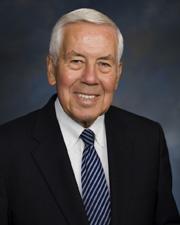
Mr. President, by request, I introduce for appropriate reference a bill entitled the Foreign Relations Authorization Act, Fiscal Years 2004 and 2005. This proposed legislation has been requested by…
Mr. President, by request, I introduce for appropriate reference a bill entitled the Foreign Relations Authorization Act, Fiscal Years 2004 and 2005.
This proposed legislation has been requested by the Department of State and I am introducing it in order that there may be a specific bill to which Members of the Senate and the public may direct their attention and comments.
I reserve my right to support or oppose this bill, as well as to make any suggested amendments to it, when the matter is considered by the Committee on Foreign Relations.
I ask unanimous consent that the bill be printed in the Record, together with a section-by-section analysis of the bill and the letter from the Assistant Secretary of State for Legislative Affairs dated April 2, 2003.
Show 1 more
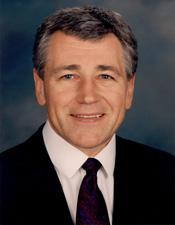
Mr. President, I ask unanimous consent that the text of the bill be printed in the Record.
Mr. President, I ask unanimous consent that the text of the bill be printed in the Record.
Bill Text
Latest available legislative text
        [Congressional Bills 108th Congress]
[From the U.S. Government Publishing Office]
[S. 775 Introduced in Senate (IS)]

108th CONGRESS
1st Session
S. 775

To amend the Robert T. Stafford Disaster Relief and Emergency
Assistance Act to make private, nonprofit medical facilities that serve
industry-specific clients eligible for hazard mitigation and disaster
assistance.

_______________________________________________________________________

IN THE SENATE OF THE UNITED STATES

April 3, 2003

Mrs. Feinstein introduced the following bill; which was read twice and
referred to the Committee on Environment and Public Works

_______________________________________________________________________

A BILL

To amend the Robert T. Stafford Disaster Relief and Emergency
Assistance Act to make private, nonprofit medical facilities that serve
industry-specific clients eligible for hazard mitigation and disaster
assistance.

Be it enacted by the Senate and House of Representatives of the
United States of America in Congress assembled,

SECTION 1. HAZARD MITIGATION AND DISASTER ASSISTANCE FOR CERTAIN
PRIVATE, NONPROFIT MEDICAL FACILITIES.

Section 102(9) of the Robert T. Stafford Disaster Relief and
Emergency Assistance Act (42 U.S.C. 5122(9)) is amended--
(1) by striking ```Private nonprofit facility' means'' and
inserting the following:
``(A) In general.--The term `private nonprofit
facility' means''; and
(2) by adding at the end the following:
``(B) Inclusion.--The term `private nonprofit
facility' includes a facility that--
``(i) provides medical services to a
specific occupational or industrial segment of
the public; and
``(ii) is operated by an organization
described in subsection (c) or (d) of section
501 of the Internal Revenue Code of 1986 (26
U.S.C. 501) that is exempt from taxation under
section 501(a) of that Code.''.
<all>