Protecting Children Against Crime Act of 2003

Legislative Activity
Stay on top of the latest movement without scrolling through every action
Sponsor introductory remarks on measure. (CR S5053-5054)
April 9, 2003
View full timeline
Introduced in Senate
April 8, 2003
Read twice and referred to the Committee on the Judiciary. (text of measure as introduced: CR S4959)
April 8, 2003
Sponsor introductory remarks on measure. (CR S5053-5054)
April 9, 2003
Floor Debate
14 membersWhat members said about S. 810 on the floor
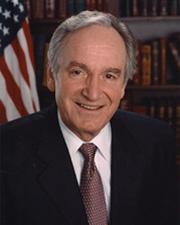 TH
TH JFK
JFK OJS
OJS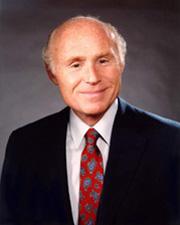 HK
HK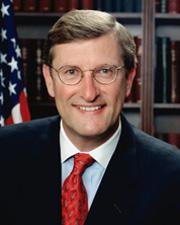 KC+9
KC+9
Floor Debate
14 membersWhat members said about S. 810 on the floor
Mr. President, imagine a world with cars that spew out no smog, no toxic emissions, and no greenhouse gases. The only thing that would come out of the tailpipe would be water pure enough to drink.…
Mr. President, imagine a world with cars that spew out no smog, no toxic emissions, and no greenhouse gases. The only thing that would come out of the tailpipe would be water pure enough to drink.
Imagine a world in which we don't import a drop of Mideast oil, because clean, domestic, renewable energy sources meet all of our needs.
Imagine a world in which we don't need to worry about a terrorist strike on our large nuclear power plants, or a storm causing a blackout over a large region, because we get all of our electricity from small distributed generators on farms and in buildings throughout the country.
Sound too good to be true? The technology to do this, using hydrogen energy and fuel cells, is out of the labs and being tested on our streets and in our buildings today. For those of us who have been working for many years to bring this vision into reality, that is very exciting. But we still need a major effort to bring the costs down and commercialize the technology.
And there is remarkable bipartisan agreement on the need for government action. A couple years ago we were fighting for scraps of funding. Now the President has proposed $1.7 billion over 5 years toward getting hydrogen fuel cell vehicles on the road. The Senate energy bill last year, before it died in conference, included tax incentives for stationary fuel cells, fuel cell vehicles, hydrogen vehicles, hydrogen fueling infrastructure, and hydrogen fuel.
But we are still too timid to bring about the fundamental shift to the hydrogen economy. The Department of Energy is working toward a go- no go decision by the car companies by 2015, and mass production of vehicles by 2020. But the car companies themselves have been talking about commercial vehicles by 2010.
We need a bolder, more comprehensive plan. That's why I am introducing the Hydrogen and Fuel Cell Energy Act of 2003. This bill addresses three critical requirements to bringing hydrogen energy and fuel cells into commerce, and start gaining their environmental and security benefits, as soon as technically feasible.
First we need a technological push. We need better fuel cell stack components to reduce costs and improve longevity. We need lighter, more efficient ways to store hydrogen on-board vehicles. In the long term, we need cheaper ways of converting renewable energy to hydrogen fuel.
This bill reauthorizes the Matsunaga Act, which established the Federal hydrogen energy research program. It updates the language and sets clearer priorities. It expands the authorization to cover fuel cell research and development as well, to reflect the technical and bureaucratic reality that research on fuel cells--the most efficient, flexible, and cleanest way to use hydrogen energy--has become inextricably linked to research on hydrogen energy. It supports work on domestic and international codes and standards, to work through a major regulatory barrier to working with combustible hydrogen and to making all the infrastructure pieces fit together. It includes a specific mandate to do public education on hydrogen and fuel cells and to do university training in critical skills needed in the industry. And it increases funding levels over the next few years to accelerate progress in pre-commercial technologies.
Second, and perhaps most important right now, we need a near-term demand pull. As long as the fuel cells and hydrogen appliances are made by hand, they will remain very expensive. But it's also expensive to build the factories to build them more cheaply. We need support to get industry over that initial cost hump.
The first step is large demonstration programs that serve a dual purpose: they provide a realistic test of how the laboratory technologies work in the real world, and they provide funding for pre- commercial prototypes of the technologies, including starting to build a hydrogen fueling infrastructure.
The Hydrogen and Fuel Cell Energy Act authorizes several new, large demonstration programs:
The main demostration program would provide over $1 billion over 7 years for demonstrations of the full range of fuel cell applications and associated hydrogen infrastructure. These demonstrations would include fleets of fuel cell passenger vehicles, fuel cell buses and farm vehicles, stationary fuel cells in houses and commercial buildings, and portable fuel cells such as auxiliary power units in trucks.
A second, closely related program, would provide hydrogen fueling infrastructure over major transportation corridors and entire regions, and then demonstrate hydrogen-powered vehicles that are not tethered to a single pump. Early demonstrations, at least, would likely use vehicles that burn hydrogen; these are similar to gas-electric hybrids that you can buy today, but run on hydrogen rather than gasoline. These vehicles provide most of the benefits of fuel cell vehicles at a fraction of the current cost. They are not as good as fuel cell vehicles in the long term, they are less efficient, less flexible, and produce a little pollution, but would move us a long way toward the goal and would provide a good large-scale test of a hydrogen fueling system.
A third program would demonstrate hydrogen and fuel cell technologies in foreign countries. Hydrogen energy could have an early application in places where a competing fossil fuel infrastructure is not already well-developed. And assisting this application is in our national interest in order to promote global development without causing global warming and other harmful environmental effects, and to increase the global market for American hydrogen and fuel cell technologies.
The last program would focus on emerging technologies for production of hydrogen from renewable resources. Two approaches show particular promise for clean, efficient production of hydrogen at this time. Biorefineries make hydrogen and other products from biomass. And in ``electrofarming'' the hydrogen is produced and used on the same farm. The hydrogen might be made by growing and reforming biomass, from wind energy, or from farm waste; it could be used in farm vehicles and equipment and for heat and electricity in farm buildings.
All these demonstration programs would be conducted using competitive merit review of funding proposals from a wide variety of companies and organizations, and they would require cost-sharing from awardees.
Third, we need to show there will be a market for commercial hydrogen and fuel cell technologies in the long term. The Federal Government can do this by buying early commercial products and by providing incentives to others to do so, in recognition of their public benefits.
The bill includes Federal purchase requirements for both zero emission vehicles and stationary fuel cells. The vehicle requirements are similar to Federal fleet requirements for purchase of alternative fuel vehicles. They would require zero emission vehicles, most likely hydrogen fuel cell vehicles, to make up an increasing percentage of Federal fleet vehicle purchases up to 75 percent. Alternative fuel vehicles with very low emissions, such as hydrogen hybrid vehicles, would get partial credit. For stationary fuel cells, the bill
would require modifying energy efficiency regulations for Federal buildings to presume use of fuel cells to power new Federal buildings and to encourage their use in older buildings.
The bill also provides a broad array of tax incentives for stationary and portable fuel cells, hydrogen and fuel cell vehicles, hydrogen fueling infrastructure, and hydrogen fuel. These incentives are similar to those that have been proposed in the CLEAR Act on alternative fuel vehicles, in previous bills on stationary fuel cells, and in last year's energy bill. However, this bill makes some important changes. It makes all the tax credits tradable so that government agencies and non- profit organizations can use them as well as consumers and private companies. It increases the credit for hydrogen fueling infrastructure to recognize the cost of making the hydrogen on-site, not just pumping it. It adds an additional incentive for hydrogen from renewable resources to encourage a transition to a sustainable hydrogen system. And most importantly, it extends the tax credits so the industry will know the incentives will be there when they are needed--when real commercial products are available.
Finally, the bill ensures effective coordination and oversight of the expanded Federal hydrogen and fuel cell energy activities, with a new interagency task force to coordinate activities, a revamped technical advisory panel, and periodic outside review by the National Academies.
These measures will require a significant Federal investment in our energy future. But with these measures we can use hydrogen and fuel cell technologies to turn into reality a vision of cars that don't pollute, of power that won't go out, and of feeling less dependent on an area of the world where we are fighting the second war in recent years. It is time to take these steps now.
Mr. President, in the early 1990s, a large number of U.S. companies began a process of switching their defined benefit pension plans to cash balance plans. Many of the employees whose pension plans were to be altered drastically weren't told and didn't notice that they were essentially going to be working for years without earning any more benefits. Their not knowing was viewed as a key benefit by management. And the retirees were furious.
As Keith Williams with Watson Wyatt Worldwide and Amy Viener with William Mercer, two firms that put together these plans in 1998 said at an Actuaries conference:
Mr. Williams: I've been involved in cash balance plans five
or six years down the road and what I have found is that
while employees understand it, it is not until they are
actually ready to retire that they understand how little they
are actually getting.
Ms. Viener: Right, but they're happy while they're
employed.
One of the most abusive practices in cash balance conversions is known as ``wear away.'' Older workers see nothing added to their pensions as the value of the pensions is frozen, often for many years, until it reaches the lower value of the new pension plan. At the same time younger workers are getting their pensions increased. In my view, this is clearly age discrimination and bad pension policy. In 1999, I introduced a bill to make it illegal for corporations wear away the benefits of older workers during conversions to cash balance plans. I offered my bill as an amendment. Forty-eight Senators, including 3 Republicans, voted to waive the budget point of order so we could consider this amendment. We did not have enough votes then, but I believe the tide is turning.
After that vote, more and more stories came out about how many workers were losing their pensions. In September of 1999, the Secretary of the Treasury put a moratorium on conversions from defined benefit plans to cash balance plans. That moratorium has been in effect now for over three years. In April of 2000, I offered a sense-of-the-Senate resolution to stop this practice, and it passed the Senate unanimously.
But last December, the Treasury decided to end that moratorium. The Department proposed a regulation that will allow hundreds of companies, many employing thousands of workers each to go forward with conversions that will allow for the wear-away of the current benefits of people across the country. This plan is breathtaking in its audacity. In a time when people have lost their life savings to market downturns and corporate duplicity, they are looking at changing the rules so that employers can once again bolster their bottom line by shifting funds from the pensions they promised their workers. I will not stand by and let it happen.
There are over 800 age discrimination complaints currently pending before the EEOC based on cash balance conversions. How many more will there be if we again start allowing companies to make these abusive conversions?
I want to make it very clear: I am not opposed to all cash balance plans. Some cash balance plans can be very good. What I oppose is the unilateral decision of a company being able to change their plans and stop contributing to older employees' pensions while benefits are given to newer employees.
That is what this issue is all about. It is fairness. It is equity. I know discussion of pension law can become very convoluted. But in essence, what some of these companies have been doing to these workers is nothing less than sheer thievery. They are able to save millions, in some cases hundreds of millions of dollars, by converting their plans, robbing workers who have been loyal and hard working, robbing them of their rightful claims on future benefits, It is not right. It is not fair.
There is one thing that has distinguished the American workplace from others around the world. We have valued loyalty. At least we used to. That is one of the reasons pension plans exist--the longer you work somewhere, the more you earn in your pension program. Obviously, the longer you work someplace, the better you do your job, the more you learn about it, the more productive you are. We should value that loyalty.
If companies are able to wear away the benefits of the longest serving workers, what kind of a signal does that send to the workers? It tells workers they are fools if they are loyal because if you put in 20 to 25 years, the boss can just change the rules of the game, and break their promise. It tells younger workers that it would be crazy to work for a company for a long time, that it's best to hedge your bets and move on as soon as it is convenient.
This destroys the kind of work ethic we have come to value and that we know built this country. But some of these cash balance conversions counter all of that. Her is an analogy. Imagine I hire someone for five years with a promise of a $50,000 bonus at the end of five years of service. At the end of three years, however, I renege on the $50,000 bonus. But the employee has three years invested. Had they known that the deal was going to be off, perhaps they would not have gone to work for me. They could have gone to work someplace else for a total higher compensation package. Is that the way we want to treat workers in this country, where the employer has all the cards and employees have none, and employers can make whatever deal they want, but can change the rules at any time?
That is why I am introducing this legislation. It is simple. It says that you have to give older, longer serving employees a choice, at retirement, when their pension plan is converted to a cash balance plan to get the benefits earned in the old plan instead. It also says that employers must start counting the new cash balance benefits where the old defined benefit plan left off, instead of starting the cash balance
plan at a lower level than an employee had already earned.
In the March 3, 2002 issue of Fortune magazine, Janice Revell said of the possible impending flood of cash balances conversions: ``Brace yourself for a very un-fairy-tale ending to this tory. Millions of American workers are sure to see a large slice of their retirement income go up in smoke. It may not happen right away, but the groundwork is being laid right now.''
I urge my colleagues in the Senate to join me in cosponsoring this measure, so that we can stop the flood before it starts.
Mr. President, I am pleased to join with my friend and colleague, Chairwoman of the Senate Committee on Small Business and Entrepreneurship, Olympia Snowe, in reintroducing the ``Independent Office…
Mr. President, I am pleased to join with my friend and colleague, Chairwoman of the Senate Committee on Small Business and Entrepreneurship, Olympia Snowe, in reintroducing the ``Independent Office of Advocacy Act'', which our Committee and the full Senate endorsed unanimously last Congress. This legislation will help ensure the Small Business Administration's, SBA, Office of Advocacy has the necessary autonomy to remain an independent voice for America's small businesses. I would like to thank Senator Snowe and her staff for working with me and my staff to make the necessary changes to this legislation to garner bipartisan support.
The independent Office of Advocacy Act rewrites the law that created the Small Business Administration's Office of Advocacy to allow for increased autonomy. It reaffirms the Office's statutory and financial independence by creating a separate funding account for the Office from the General Fund of the Treasury instead of being allocated through the SBA's annual appropriation.
At its heart, this legislation will allow the Office of Advocacy to better represent small business interests before Congress, Federal agencies, and the Federal Government without fear of reprisal for disagreeing with the position of any current Administration.
For those of my colleagues without an intimate knowledge of the critical role the Office of Advocacy and its Chief Counsel play in protecting and promoting America's small businesses, I will briefly elaborate its important functions and achievements. From studying the role of small business in the U.S. economy, to promoting small business exports, to advocating for the best interests of small business in a myriad of areas, to lightening the regulatory burden of small businesses through the Regulatory Flexibility Act, RFA, and the Small Business Regulatory Enforcement Fairness Act, SBREFA, the Office of Advocacy has a wide scope of authority and responsibility.
The U.S. Congress created the Office of Advocacy, headed by a Chief Counsel to be appointed by the President from the private sector and confirmed by the Senate, in June of 1976. The rationale was to give small businesses a louder voice in the councils of government.
Each year, the Office of Advocacy advises Congress and the executive branch regarding policy issues affecting small businesses, brings together
small business people with members of Congress, congressional staff and executive branch officials to resolve issues affecting small business, publishes numerous studies and reports, compiles vast amounts of data and successfully lightens the regulatory burden on America's small businesses. In the area of contracting, the Office of Advocacy developed PRO-Net, a database of small businesses used by Federal contracting officers to find small business interests interested in selling to the Federal Government.
The U.S. Congress, the Administration, and, of course, small businesses have all benefited from the work of the Office of Advocacy. In October 2001, an Advocacy research study titled, The Impact of Regulatory Costs on Small Business, established that small businesses with less than 20 employees spend nearly $7,000 each year, per employee just to comply with Federal regulations and mandates. By working with Federal agencies to implement the Regulatory Flexibility Act, the Office of Advocacy in 2002 saved small businesses over $21 billion in foregone regulatory costs that can now be used to create jobs, buy equipment and expand access to health care for millions of Americans.
Small businesses remain the backbone of the U.S. economy. According to a study conducted by the Small business Administration Office of Economic Research and released in January 2003, small businesses account for approximately 99 percent of all employers, account for 51 percent of private-sector output, represent 52 percent of GDP and, in 2002, provided two-thirds of all net new jobs.
Small businesses have also taken the lead in moving people from welfare to work and an increasing number of women and minorities are turning to small business ownership as a means to gain economic self- sufficiency. Put simply, small businesses represent what is best in the United States economy, providing innovation, competition and entrepreneurship.
Their interests are vast, their activities divergent, and the difficulties they face to stay in business are numerous. To provide the necessary support to help them, SBA's Office of Advocacy needs our support.
The responsibility and authority given the Office of Advocacy and the Chief Counsel are crucial to their ability to be an effective independent voice in the Federal Government for small businesses. This bill has been endorsed by the U.S. Chamber of Commerce, the Small Business Legislative Council and the National Federation of Independent Businesses. Small businesses are asking us to do everything we can to protect and strengthen this essential office. I believe this legislation accomplishes that important goal.
I have always been a strong supporter of the Office of Advocacy and I am pleased to join with Chairwoman Snowe in introducing this legislation, which will ensure that the Office of Advocacy remains an independent and effective voice representing America's small businesses.
Mr. President, with most of the country's attention focused on the war in Iraq, important issues at home are falling through the cracks. Today I rise to talk about one of the needs of working moms and dads and their children--child care. We have a shortage of childcare in this country, and it is a problem for our families, a problem for our businesses, and a problem for our economy. The Census Bureau estimates that there are approximately 24 million school age children with parents who are in the workforce or pursuing education, and the numbers are growing. There has been a 43 percent increase in dual-earner families and single parent families over the last half a century. As parents leave the home for work and education, the need for quality child care in America continues to increase.
As the Ranking Democrat of the Committee on Small Business and Entrepreneurship, I think we can foster the establishment and expansion of existing child care businesses through the Small Business Administration, SBA. Today with Senators Harkin, Landrieu, Pryor, Lieberman, Daschle, Bingaman, and Johnson. I am introducing the Child Care Lending Pilot Act of 2003, a bill to create a three-year pilot that allows small, non-profit child care providers to access financing through SBA's 504 loans.
There is a real need to help finance the purchase of buildings, to expand existing facilities and improve the conditions of established centers to meet the demand for child care. It is appropriate to provide financing through the 504 program because it was created to spur economic development and rebuild communities, and child care is critical to businesses and their employees. Financing through 504 could spur the establishment and growth of child care businesses because the program requires the borrower to put down only between 10 and 20 percent of the loan, making the investment more affordable. Another advantage of 504 loans is that they have terms of up to 20 years, with fixed interest rates, allowing small businesses to keep their monthly payments low and predictable.
As anyone with children knows, quality childcare comes at a very high cost to a family, and it is especially burdensome to low-income families. The Children's Defense Fund has estimated that child care for a 4-year-old in a child care center averages $4,000 to $6,000 per year in cities and states around the Nation. In all but one state, the average annual cost of child care in urban area child care centers is more than the average annual cost of public college tuition.
These high costs make access to child care all but non-existent for low-income families. While some states have made efforts to provide grants and loans to assist childcare businesses, more must be done to increase the supply of childcare and improve the quality of programs for low-income families. According to the Child Care Bureau, state and federal funds are so insufficient that only one out of 10 children in low-income working families who are eligible for assistance under federal law receives it.
For parts of the country, when affordable child care is available, it is provided through non-profit child care businesses. I formed a task force in my home state of Massachusetts to study the state of child care, and of the many important findings, we discovered that more than 60 percent of the child care providers are non-profit and that there is a real need to help them finance the purchase of buildings or expand their existing space. Child care in general is not a high-earning industry, and the owners don't have spare money lying around. Asking centers to charge less or cut back on employees is not the way to make child care more affordable for families and does not serve the children well. An adequate staff is needed to make sure children receive proper supervision and support. Furthermore, if centers are asked to lower their operating costs in order to lower costs to families, the safety and quality of the child care provided would be in jeopardy.
I urge my colleagues to join us in supporting this legislation so non-profit childcare providers can access funds to start new centers or expand and improve upon existing centers. As we have done in Massachusetts, Senators could bring together 504 lenders, childcare providers not for-profit and non-profit--and the state department of child welfare to facilitate the increase of childcare providers in their states.
As common sense tells us, and the child advocates if we listen, there is no magic bullet to addressing the shortage of safe and affordable child care in this country--it takes coordinated and complementary efforts to make a real difference. This is as much a child welfare issue as a workforce issue, and it makes sense to leverage one of SBA's effective resources to try and contribute to making a positive difference. I argue--we argue--that allowing non-profit child care centers to receive SBA loans can increase the availability of child care in the United States. Non-profit child care centers provide the same quality of care as the for-profit centers, and non-profit centers often serve our nation's neediest communities. I hope that my colleagues will recognize the vital role that early education plays in the development of fine minds and productive citizens and realize that in this great nation, child care should be available to all families in all income brackets.
I ask unanimous consent that several letters of support be printed in the Record. These letters demonstrate that this is a good investment and good for our country.
Mr. President, I rise to introduce the ``Independent Office of Advocacy Act of 2003.'' The SBA's Office of Advocacy is, unfortunately, one of our government's best kept secrets, and in many cases,…
Mr. President, I rise to introduce the ``Independent Office of Advocacy Act of 2003.'' The SBA's Office of Advocacy is, unfortunately, one of our government's best kept secrets, and in many cases, the best hope for small businesses faced with over burdensome Federal regulations. The Office of Advocacy serves two critical roles: 1. it represents small business' interests before the Federal government in regulatory matters--taking advantage of its statutorily granted independence to argue against regulatory actions that impose too great a burden on small businesses to our economy and the forces that have an effect on them.
This bill is designed to build on the success achieved by the Office of Advocacy over the past 26 years and to strengthen that foundation by making the Office of Advocacy a stronger, more effective advocate for all small businesses throughout the United States. This bill was approved unanimously by the Senate during the 106th and 107th Congresses. However, regrettably, the House failed to act in both cases.
The Office of Advocacy, headed by the Chief Counsel for Advocacy, is a unique office with the Federal government. It is part of the SBA, and the Chief Counsel for Advocacy is nominated by the President and confirmed by the Senate. At the same time, the Office is also intended to be the independent voice for small business within the Federal Government. It is supposed to develop proposals for changing government policies to help small businesses, and it is supposed to represent the views and interests of small businesses before other Federal agencies in rulemaking activities. These roles can sometimes come into conflict.
The ``Independent Office of Advocacy Act of 2003'' resolves such conflicts in favor of the small businesses that rely on the Chief Counsel and the Office of Advocacy to be a fully independent advocate within the Executive Branch acting on their behalf. The bill would establish a clear mandate that the Office of Advocacy must fight on behalf of small businesses, regardless of the position taken on critical issues by the President and his or her Administration.
The Office of Advocacy, under the direction of the Chief Counsel, as envisioned by the ``Independent Office of Advocacy Act of 2003'', would be a wide-ranging advocate, free to take positions contrary to the Administration's policies and to advocate change in government programs and attitudes as they affect small businesses. During its consideration of the bill in 1999, the Committee on Small Business adopted unanimously an amendment to require the Chief Counsel to be appointed ``from civilian life.'' This qualification is intended to emphasize that the person nominated to serve in this important role should have a strong small business background.
In 1976, Congress established the Office of Advocacy in the SBA to be the eyes, ears and voice for small business within the Federal government. Since then, the Office of Advocacy has become the ``independent'' voice for small business. Unfortunately, in certain cases, the Office has not been as independent as necessary to do the job for small business.
For example, funding for the Office of Advocacy currently comes from the Salaries and Expense Account of the SBA's budget. Staffing is allocated by the SBA Administrator to the Office of Advocacy from the overall staff allocation for the Agency. In 1990, there were 70 full- time employees working on behalf of small businesses in the Office of Advocacy. The current allocation of staff is 49, and fewer are actually on-board as the result of the long-standing hiring freeze at the SBA. The independence of the Office is diminished when the Office of Advocacy staff is reduced to allow for increased staffing for new programs and additional initiatives in other areas of SBA, at the discretion of the Administrator.
To address this problem, the ``Independent Office of Advocacy Act of 2003'' builds a firewall to prevent political intrusion into the management of day-to-day operations of the Office of Advocacy similar to the one that protects Inspectors General. The bill would require the Federal budget to include a separate account for the Office of Advocacy drawn directly from General Fund of the Treasury. No longer would its funds come from the general operating account of the SBA. This will free the Chief Counsel for Advocacy from having to seek approval from the SBA Administrator to hire staff for the Office of Advocacy.
Additionally, the bill provides that any funds appropriated will remain available without fiscal year limitation until expended. This will give the Chief Counsel the flexibility to use these funds as necessary instead of being forced to spend them, perhaps prematurely, because of the coming end of a fiscal year.
The bill would leave unchanged current law that allows the Chief Counsel to hire individuals critical to the mission of the Office of advocacy without going through the normal competitive procedures directed by Federal law and the Office of Personnel Management, OPM. This long-standing special hiring authority, which is limited only to employees within the Office of Advocacy, is beneficial because it allows the Chief Counsel to hire quickly those persons who can best assist the Office in responding to changing issues and problems confronting small businesses.
As the New Chair of the Senate Committee on Small Business and Entrepreneurship, I have heard repeatedly about the importance of the Office of Advocacy and the vital role it plays for small enterprises and the self employed across the nation. With these comments in mind, I am committed to ensuring the complete independence of the Office of Advocacy in all matters, at all times, for the continued benefit of all small businesses. However, so long as any administration controls the budget allocated to the Office of Advocacy, the independence of the Office may be in jeopardy. We must correct this situation, and the sooner we do it, the better it will be for the small business community.
In addition to resolving the critical funding issues, the ``Independent Office of Advocacy Act of 2003'' would direct the Chief Counsel to submit an annual report on Federal agency compliance with the Regulatory Flexibility Act, RFA, to the President, the Senate Committee on Small Business and Entrepreneurship, House Committee on Small Business, the Senate Committee on Governmental Affairs, the House Committee on Government Reform, and the Senate and House Committees on the Judiciary.
The RFA is a very important weapon in the war against the over- regulation of small businesses. It requires agencies to analyze their regulations to determine their impact on small businesses before they are proposed and to explore alternatives to reduce the regulatory burden. In August, 2002, President Bush issued Executive Order 13272, which requires Federal agencies to establish plans detailing how they will handle their obligations under the Regulatory Flexibility Act and directs the Office of Advocacy to work with the agencies in developing these plans. In addition, the Executive Order directs the agencies to respond to comments from the Office of Advocacy regarding the agencies' analyses. Thus, there is even more reason today to have the Chief Counsel report to the President and Congress on how Federal agencies are complying with the Regulatory Flexibility Act than there was when this bill was introduced in previous Congresses.
The ``Independent Office of Advocacy Act of 2003'' is a sound bill. It is the product of a great deal of thoughtful, objective review and consideration by me; the former Chairman of the Committee on Small Business and Entrepreneurship, Senator Bond; staff of the Committee; representatives of the small business community; former Chief Counsels for Advocacy and many others. In short, this bill has been thoroughly vetted in my Committee and has been approved unanimously by the Senate in 1999 and 2001. It is time we see this bill enacted into law, and I urge my colleagues to support this important legislation for America's small businesses and entrepreneurs. I look forward to moving this bill through the Senate again, and hope that the third time will lead to the President's desk.
I ask unanimous consent that the text of the bill be printed in the Record.
Mr. President, I rise today to introduce the Sunshine in Litigation Act of 2003, a measure to address the abuse of secrecy orders issued by federal courts. All too often, courts sign off on secret…
Mr. President, I rise today to introduce the Sunshine in Litigation Act of 2003, a measure to address the abuse of secrecy orders issued by federal courts. All too often, courts sign off on secret settlements that shield important public health and safety information from the public view from mothers and fathers and children whose lives are potentially at stake, and from public officials we have asked to protect our health and safety.
The problem is a simple one and has been recurring for decades. An individual brings a cause of action against a manufacturer for an injury or fatality resulting from a product defect. The plaintiff, often reticent to continue the litigation process because of grief or lack of resources, settles the lawsuit quickly. In exchange, the defendant insists that the plaintiff agree to the inclusion of a confidentiality clause. This mechanism prevents either party from disclosing information revealed during the process of litigation. Both of the parties to the lawsuit believe that they have ``won'': the plaintiff won a satisfactory financial settlement, and the defendant won the right to conceal ``smoking gun'' documents.
But not everybody wins. Future victims of injuries or fatalities resulting from the same product defect lose, because they or their families must ``re-invent the wheel'' as they litigate virtually the same case. Even worse, the American public loses with this outcome, because they remain unaware of the critical public health and safety information which could prevent harm and save lives.
Currently, judges have broad discretion in granting protective orders when ``good cause'' is shown. But these protective orders are being misused. Tobacco companies, automobile manufacturers and pharmaceutical companies have settled with victims and used the legal system to hide information which, if it became public, could protect the American public but endanger their business or reputation. We can all agree that the only appropriate use for such orders is to protect trade secrets and other truly confidential company information and our legislation makes sure it is protected. But protective orders are certainly not supposed to be used to hide public safety information from the public, especially when such information is neither trade secret nor proprietary.
There are no records kept of the number of confidentiality orders accepted by state or federal courts. However, anecdotal evidence suggests that court secrecy and confidential settlements are prevalent. Let me share some examples that illustrate the dangerous and often deadly consequences
that result from protective orders: Although an internal memo suggests that General Motors, ``GM'', was aware of the risk of fire deaths from crashes of pickup trucks with ``side saddle'' fuel tanks, an estimated 750 people were killed in fires involving these fuel tanks. When victims sued, GM disclosed documents only under protective orders and settled these cases only on the condition that these documents remained secret. This type of fuel tank was installed for 15 years before being discontinued.
Sixteen month-old Michael Bancroft was buckled into a Kolcraft booster-style safety seat in his mother's car when the car was involved in an accident. Due to a defect in product design, however, the seat did not protect him from a broken neck and paralysis. Kolcraft and the Bancrofts settled for $4.25 million and signed a confidentiality agreement that concealed the product's defect. Because this information remained a secret, countless parents continued to feel a false sense of safety when securing their children in Kolcraft safety seats.
From 1992-2000, tread separation of certain Bridgestone and Firestone tires caused a great number of car accidents, many involving serious injuries or fatalities. Bridgestone/Firestone quietly settled dozens of lawsuits resulting from faulty tire crashes, most of which included secrecy agreements. It was only in 1999, when a Houston public television broke the story, that the company admitted the defect and recalled 6.5 million tires.
Some States have been proactive in dealing with this problem. Florida, for example, has in place a Sunshine in Litigation law that severely limits the ability of parties to conceal information that effects public health and safety. Michigan has a rule that requires that secret settlements be unsealed two years after they are approved. And just last year, the judges of the United States District Court for the District of South Carolina unanimously agreed not to accept any secret settlements at all.
While these steps indicate movement in the right direction, we still have a long way to go. It is time to initiate a federal solution for this problem. The Sunshine in Litigation Act is a modest proposal that would require Federal judges to perform a simple balancing test to ensure that the defendant's interest in secrecy truly outweighs the public interest in information related to public health and safety. Specifically, prior to making any portion of a case confidential or sealed, a judge would have to determine by making a particularized finding of fact--that doing so would not restrict the disclosure of information relevant to public health and safety. Moreover, all courts, both Federal and State, would be prohibited from issuing protective orders that prevent disclosure to relevant regulatory agencies.
And don't just take it from me. During his confirmation hearings before the Judiciary Committee in January 2001, Attorney General John Ashcroft voiced his support for this legislation, saying, ``I think unnecessarily hiding or otherwise concealing from the public those [public health and safety hazards] would be against the interests of the people . . . I think there's great danger in not providing public information.''
This legislation does not prohibit secrecy agreements across the board. It does not place an undue burden on judges or our courts. It simply states that where the public interest in disclosure outweighs legitimate interests in secrecy, courts should not shield important health and safety information from the public and from regulators. This is an entirely reasonable balancing test. It is time to eliminate the dark dangers of court secrecy and bring matters of public health and safety into the light, where they belong.
Mr. President, today, Senator Thomas and I would like to introduce the Health Care Access and Rural Equity, (H-CARE), Act of 2003. This proposal is the result of a tripartisan and Bicameral effort.…
Mr. President, today, Senator Thomas and I would like to introduce the Health Care Access and Rural Equity, (H-CARE), Act of 2003.
This proposal is the result of a tripartisan and Bicameral effort. We are proud to be joined by 24 Members who also support the bill, including--Senators Harkin, Grassley, Roberts, Daschle, Dorgan, Smith, Johnson, Lincoln, Domenici, Rockefeller, Burns, Bingaman, Jeffords, Cochran, Levin, Talent, Edwards, Bond, Pryor, Dayton, Snowe, Cantwell and Murray. I would also like to thank our House companions, led by Representatives Moran (R-KS), and Pomeroy.
Working together, I believe we are taking important steps toward improving access to health care in our rural communities.
In addition, I would like to thank the National Rural Health Association, the Federation of American Hospitals, the American Hospital Association, Premier Hospital Alliance and the Coalition representing Sole Community Hospitals for their support of this effort.
As my colleagues may know, rural health care providers are often forced to operate with significantly less resources that larger, urban facilities. In my State of North Dakota, rural hospitals often receive only half the reimbursement of their urban counterparts--for treating the same patient. For example, a rural facility in North Dakota receives approximately $4,200 for treating pneumona, while a hospital in New York City can receive more than $8,500.
This funding disparity is simply unfair and has placed many rural providers on shaky ground. Continued funding shortfalls have resulted in rural providers having much tighter inpatient cost margins than their urban counterparts--today, the average rural hospital operates with a slim 3.9 percent cost margin compared to 11.3 percent for urban providers). This situation has resulted in more than 43 percent of rural hospitals operating in the red.
When you look at overall cost margins, the situation is even more bleak--rural providers are working with an average negative 2.9 percent Medicare margin, compared to 6.3 percent for urban hospitals). Our rural facilities cannot continue to provide high quality services if they lose nearly 3 percent on every Medicare patient they serve.
To address these problems, the bill we are introducing today would take many important steps to improve the rural health care system.
First, it would provide a much-needed low-volume adjustment payment. Today, it is nearly impossible for rural hospitals to take advantage of economies of scale realized by facilities located in larger communities. This situation has resulted in the majority of small facilities losing money. To address this problem, our bill would provide a new, extra payment to hospitals serving less than 2,000 patients per year. This provision would provide up to 25 percent in additional funding to help rural providers cover inpatient hospital services.
Second, H-CARE would close the gap in payments hospitals receive for serving low-income patients. It would do this by allowing rural hospitals to receive the same level of special ``Disproportionate Share--or DISH Payments'' currently available to urban providers.
Third, our legislation would take steps to permanently equalize the ``base payment amount,'' which has been 1.6 times higher for urban facilities. The recent Omnibus bill temporarily fixed this problem--but only until the end of FY03. Our bill finishes the job.
Fourth, this legislation would help hospitals better meet labor costs by making some needed improvements to the Medicare ``wage index'' calculation. Across the Nation, rural hospitals have reported that the wage index does not accurately account for labor costs in their area. Our bill takes steps to address this problem.
Fifth, our bill would ensure that rural hospitals continue to be paid fairly for outpatient services. It does this by extending a provision in current law that protects these hospitals against losses under the current Medicare payment system. It also includes measures to protect rural hospitals' access to lab services.
I am happy to say that this set of proposals would go a long way toward placing rural facilities on much sounder financial footing. Let me provide some examples.
Today, the average small hospital located in the Midwest receives $3,926 as an average payment for inpatient services. If all the changes laid out in our bill are enacted, this will improve payments to smaller rural hospitals by about 25 percent.
If you look at a more specific service--such as treating pneumonia-- this same hospital would see payments increase from about $4,326 to $5,405. These increases are clearly big improvements, which will bring reimbursements for rural hospitals more in line with their costs.
Before I close, I'd also like to mention that this bill would establish a new grant program to help rural hospitals repair crumbling buildings. Under this program, rural providers
could apply for up to $5m in loan assistance. It is my hope these resources will help strengthen the infrastructure of our Nation's rural hospitals.
Finally, our bill includes a set of provisions that will make small-- but important--changes to the Critical Access Hospital, CAH, program. These include measures to ensure CAHs have 24-hour emergency on-call providers and to ensure they can afford to provide quality ambulance care.
In total, the changes laid out in our bill will bring more than $72 million in new resources to my State of North Dakota over the next ten years. The bill will provide similar benefits to other rural States.
Thank you again to my Senate and House colleagues, as well as the organizations who worked with us, for your cooperation in developing this important health care proposal. It is my hope that this legislation will help to strengthen and sustain our Nation's rural health care system.
Show 8 more

Mr. President, at a time when our men and women in uniform are fighting valiantly to bring peace and opportunity to an oppressed people and ensure the security of our homeland, I am pleased to…
Mr. President, at a time when our men and women in uniform are fighting valiantly to bring peace and opportunity to an oppressed people and ensure the security of our homeland, I am pleased to introduce the Selected Reserve Educational Assistance Act of 2003 to extend the opportunity of higher education to many of those very same men and women in uniform. This legislation provides our National Guard and Reserve personnel, hundreds of thousands of whom are currently mobilized, deployed, and fighting around the globe, with educational opportunities as intended by the Montgomery GI bill. I am pleased that my colleagues, Senators Tom Daschle, Tim Johnson, and Bill Nelson, have joined as cosponsors.
Through this legislation, we week to promote both service to country and education in a way that is both logical and fair. Members of our National Guard and Reserve are members of our communities. The skills they learn from military service are reflected in the positions of leadership they assume among us. These citizen-soldiers have demonstrated their commitment to serve and as members of the ``total force'' deserve opportunities to further improve themselves through the civilian educational opportunities the Montgomery GI bill promotes. Service and education are prerequisites of a strong, vibrant democracy. This legislation seeks to further this combined effort.
The original GI bill, known as the Servicemen's Readjustment Act, was enacted in 1944. That bill provided a $500 annual education stipend as well as a $50 subsistence allowance. As a result of this initiative, 7.8 million World War II veterans were able to take advantage of post- service education and training opportunities, including more than 2.2 million veterans who went on to college. My own father was among those veterans who volunteered for the war, fought bravely, and then returned to college with assistance from the GI bill.
Since the 1940's various versions of servicemen's education assistance have allowed millions of veterans to take advantage of educational opportunities. Over time, however, inflation and the escalating costs of higher education have eroded the value of those educational benefits. During the 107th Congress with the enactment of Public Law 107-103 Senator Johnson and I, along with many of our colleagues, made great strides returning value to educational assistance benefits available for active component service members and veterans. More remains to be done.
The United States military is an all volunteer force. In times of peace and prosperity and in times of trial, we rely on young men and women to come forward of their own accord to stand up for our collective defense. Though service to country and patriotism, particularly in times of crisis, factor into recruiting this all volunteer force, benefits still do and ought to matter. We must remain vigilant, as we are constantly recruiting new members of our armed forces, ensuring the benefits these individuals receive from military service are commensurate with the service they render to this nation.
At its inception in 1985, the Reserve Montgomery GI bill program, had been pegged at 47 percent of basic active component Montgomery GI bill benefits. During the ensuing 18 years, the parity of the reserve program with its active duty counterpart has slipped. At present the Chapter 1606 program, Selected Reserve Montgomery GI bill, is only about 28 percent of the Chapter 30 program. This legislation attempts to bring the reserve program back in line with the active component benefit.
In each of the last three years over 75,000 National Guard and Reserve members have taken advantage of Veterans Administration educational benefits for pursuing their educational or vocational objectives. While those citizen-soldiers currently mobilized may become eligible for veterans benefits, we must correct the disparity between the active and reserve Montgomery GI bill programs. Only two benefit increases have been legislated in the reserve program since its inception in 1985, other than cost-of-living increases. The reserve Montgomery GI bill benefit for full-time study stands at $276 compared to $985 per month for the Title 38 program. This legislation will bring the reserve Montgomery GI bill benefit to $428 per month in fiscal year 2004 and $473 per month in fiscal year 2005 and continue out-year increases in accordance with advances in the consumer price index.
The Military Coalition comprised of 33 member organizations representing over 5.5 million veterans and family members endorses rate increases and funds for the reserve Montgomery GI bill program so that National Guard and Reserve service members can reap an educational return on their voluntary service to country.
It is time to return reserve educational assistance benefits to the level intended by the original drafting of the Reserve Montgomery GI Bill. Coupling and reinforcing service with higher education will pay dividends for our future security, strength and prosperity. This legislation fulfills the promise made to our Nation's service members, helps with recruiting and retention, strengthens the economy, and partly offsets the increasing costs of higher education.
I urge all Members of the Senate to join me in support of the Selected Reserve Educational Assistance Act of 2003 and quickly pass this legislation.
I ask unanimous consent that the text of the bill be printed in the Record.
Mr. President, as you know, April is Child Abuse Prevention Month, and this week is National Crime Victims' Rights Week. Furthermore, just last week, I joined with my friends and colleagues, Senators…
Mr. President, as you know, April is Child Abuse Prevention Month, and this week is National Crime Victims' Rights Week. Furthermore, just last week, I joined with my friends and colleagues, Senators Lincoln and Shelby, in announcing our creation of a new, bipartisan Senate
Caucus on Missing, Exploited, and Runaway Children. And, just yesterday, I introduced the Protecting Children Against Crime Act of 2003, S.810.
I thank Senators Grassley, Hutchison, and Shelby for joining me as original cosponsors of the Protecting Children Against Crime Act of 2003. This important legislation would help protect our nation's children from the most heinous of criminals--child abductors, child pornographers, and others who would exploit or abuse children.
Every day, our local police and prosecutors are on the front line in the fight against the criminals who target children, and they deserve recognition for their hard work. However, the data suggest that law enforcement is fighting an uphill battle--child victimization remains a large, pervasive, and extremely troubling problem in the United States.
According to the Congressional Research Service, up to one in three girls and one in seven boys will be sexually abused in this nation before they reach the age of 18. Many child molesters prey upon dozens of victims before they are reported to law enforcement. Furthermore, some child molesters evade detection for long periods because many children never report the abuse. In fact, Bureau of Justice Statistics suggests that between 60 percent and 80 percent of child molestations and 69 percent of sexual assaults are never reported to the police. Of those sexual assaults that are reported, 71 percent of the victims are children.
We also have a long way to go on behalf of missing children. According to the National Center for Missing and Exploited Children, in 2001, 840,279 persons--adults and juveniles--were reported missing and entered into the FBI's national crime computer. As many as 725,000 of those reported missing were juveniles. On average, 2,000 children per day were reported missing to law enforcement in 2001, according to the National Center for Missing and Exploited Children.
Most missing children are eventually returned safely to their parents, but a small group of them are victims of more predatory abductors. The average victim of abduction and murder is a ``low risk'' 11-year-old girl from a middle-class neighborhood with a stable family relationship who has initial contact with an abductor within one- quarter mile of her home--this is according to a report by the U.S. Department of Justice and the Washington State Attorney General's Office.
For all of these reasons, it is vitally important that Congress do everything in its power to support parents and law enforcement in their efforts to protect our nation's most vulnerable citizens. Enacting the Protecting Children Against Crime Act of 2003 would be a step in the right direction.
Among its major provisions, this legislation would eliminate the statute of limitations, under our federal criminal code, for prosecuting certain sex crimes against children and child abduction offenses. This provision recognizes that victims of such crimes often do not come forward until years after the abuse, out of shame or a fear of further humiliation. It is important that a sexual predator still be held accountable once a sexual abuse victim courageously chooses to come forward.
In addition, this bill would call for those who produce or distribute child pornography to be included in the national sex offender registry. As stated by the United States Supreme Court more than two decades ago, child pornography ``is intrinsically related to the sexual abuse of children.'' Families need to know when a child pornographer moves into the neighborhood.
To assist States in finding their missing and runaway children, our bill also would authorize a new, grants-to-States program that encourages technology enhancements in the States' Amber Alert Communications Plans. Similar language, authored by Congressman Mark Foley, already has passed the House of Representatives as part of the Child Abduction Prevention Act, H.R. 1104. This language builds on the national Amber Alert legislation authored by Senator Hutchison and passed by the Senate earlier this year. Under the bill I introduced yesterday, this new grant program would be authorized at $5 million per year in each of fiscal years 2004 through 2007.
Finally, our bill would require the National Research Council of the National Academy of Sciences to conduct a study for Congress on the feasibility of having Internet Service Providers monitor online traffic to detect child pornography sites. The study also would examine both the extent to which credit cards are used to facilitate the sale of online child pornography and options for encouraging greater reporting of such illicit transactions to law enforcement officials.
Our bill would help ensure that our children are protected from the most treacherous of criminals. This is a fight we need to win and a fight for which we must give our law enforcement officers every tool at our disposal. I urge my colleagues to support the enactment of S. 810.
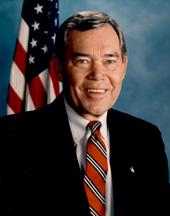
Mr. President, I am pleased to rise today to introduce the ``Health Care Access and Rural Equity Act (H-CARE) of 2003'' with Senator Conrad and fellow Senate Rural Health Caucus members, Senators…
Mr. President, I am pleased to rise today to introduce the ``Health Care Access and Rural Equity Act (H-CARE) of 2003'' with Senator Conrad and fellow Senate Rural Health Caucus members, Senators Harkin, Grassley, Johnson, Roberts, Domenici, Daschle, Bingaman, Bond, Lincoln, Cochran, Burns, Rockefeller, Jeffords, Talent, Levin, Smith, Dayton, Snowe, Edwards, Cantwell, Dorgan, Coleman and Murray. As always, it is important to note that rural health care legislation has a long history of bipartisan and bicameral collaboration and cooperation.
The ``Health Care Access and Rural Equity Act of 2003'' will go a long way in addressing current inequities in the Medicare payment system that continually place rural providers at a disadvantage. This legislation recognizes the unique needs of rural hospitals and levels the playing field between them and their urban counterparts.
Rural hospitals are more dependent on Medicare payments as part of their total revenue. In fact, Medicare accounts for almost 70 percent of total revenue for small, rural hospitals. Rural hospitals have lower patient volumes, but must compete nationally to recruit providers due to the nursing and other health professional workforce shortages.
Additional burdens are placed on rural hospitals because of higher uninsured rates in rural America. Also, seniors living in rural areas tend to be poorer and have more chronic conditions than their urban and suburban counterparts.
H-CARE recognizes the special circumstances faced by rural hospitals and addresses these issues by equalizing Medicare Disproportionate Share Hospital, DSH, payments. These add-on payments help hospitals cover the costs of serving a high proportion of low income and uninsured patients. Current law allows urban facilities to receive unlimited add-ons based on the percentage of these types of patients served. However, small, rural hospital add-on payments are capped at 10 percent. H-CARE eliminates the Sole Community Hospital and small rural hospital caps, bringing their payments in line with the benefits urban facilities received.
This legislation permanently closes the gap between urban and rural `'standardized payment'' levels. Inpatient hospital payments are calculated by multiplying several different factors, including a standardized payment amount. The fiscal year 2003 appropriations bill corrected the 1.6 percent disparity, but the provision expires at the end of the fiscal year.
Our bill also acknowledges that low-volume hospitals have a higher cost per case, which results in negative operation margins. To alleviate this problem, H-CARE creates a low-volume inpatient payment adjustment for hospitals that have less than 2,000 annual discharges per year and are located more than 15 miles from another hospital. This provision will improve payments for more than one-third of all rural hospitals. Almost two-thirds of Wyoming hospitals would qualify for the low-volume provisions in H-CARE, which would result in $26.5 million in increased payments over 10 years.
Rural hospitals have long sought changes to the wage index which adjusts hospital inpatient payments to reflect the effect of their labor costs. Currently, the labor-related share of hospital inpatient payments is set nationally at 71 percent. As rural hospitals generally have a lower wage index than their urban counterparts, their inpatient payment is adjusted downward. H-CARE would lower the labor-related percent from 71 percent to 62 percent, which will increase payments to rural hospitals.
There are now more than 700 hospitals nationwide that have converted to Critical Access Hospital status. This program was created in the Balanced Budget Act of 1997 and allows our smallest communities crucial access to 24 hour emergency services and some hospital care in their home towns. Almost 25 percent of my State's hospitals have downsized to Critical Access Hospital status. H-CARE contains several provisions to strengthen this important rural hospital program.
It is time for the Federal Government to recognize that rural hospitals are long overdue for a fair shake from the Medicare program. Rural providers care for patients under different circumstances than urban hospitals and H-CARE ensures that rural hospitals are paid accurately and fairly. I strongly encourage all my colleagues with an interest in rural health to cosponsor this legislation.
I also want to thank the American Hospital Association, the Federation of American Hospitals, Premier and the National Rural Health Association for their work and support in this effort.
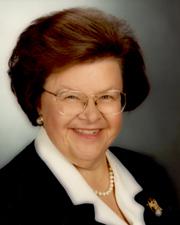
Mr. President, I rise today to introduce the Law Enforcement Officers Retirement Equity act of 2003. I am proud to be joined on this bill by my colleagues, Senators Sarbanes, Leahy and Campbell. This…
Mr. President, I rise today to introduce the Law Enforcement Officers Retirement Equity act of 2003. I am proud to be joined on this bill by my colleagues, Senators Sarbanes, Leahy and Campbell. This legislation will ensure that all Federal law enforcement officers have the same retirement options and that their pay and benefits conform with the Federal law enforcement retirement system.
Under current law, most Federal law enforcement officers and firefighters are eligible to retire at age 50 with 20 years of Federal service. But, some Federal law enforcement personnel, such as customs and immigration inspectors at the Department of Homeland Security or police officers at Veterans Affairs, are not eligible for these same benefits. This legislation will amend current law and grant the same pay and 20-year retirement to all law enforcement officers.
We must honor our Federal law enforcement personnel. The names of Federal law enforcement officials who have died in the line of duty are engraved on the Law Enforcement Memorial. We include the names of the officers from Homeland Security and Veterans Affairs. We honor them when they die, but we don't recognize them when they are living.
We need to make sure that all Federal law enforcement officers earn the pay and benefits that they deserve. These brave men and women are the country's first line of defense against terrorism and the smuggling of illegal drugs at our borders. They have the same law enforcement training as all other law enforcement personnel, and face the same risks and challenges.
For example, U.S. Customs inspectors are responsible for the most arrests performed by Customs Service employees. Yet, they do not qualify for law enforcement officer status. Along with U.S. customs agents, uniformed U.S. Customs inspectors are helping provide additional security at the Nation's airports and help enforce U.S. customs laws. They were among the first to respond to the tragedy at the World Trade Center. After September 11, Customs inspectors are playing a critical role in ensuring that terrorists don't get their hands on weapons of mass destruction and smuggle them into the country.
In 2002, the U.S. Custom Service impounded over 4,100 pounds of heroin and 167,000 pounds of cocaine, and confiscated over 39,000 firearms and 6.4 million rounds of ammunition. In fact, on a typical day, employees of the Customs Service inspect over 57,000 trucks and containers. Customers inspectors are vital in winning the war on drugs and keeping America safe from terrorism.
Like customs inspectors, immigration inspectors at the Department of Homeland Security are also on the front lines of defense against terrorism. Immigration inspectors enforce the Nation's immigration laws at more than 300 ports of entry. In the normal course of their duties, they enforce criminal law, make arrests, interrogate applicants for entry, search persons and effects, and seize evidence. Inspector's responsibilities have become increasing complex as political, economic and social unrest has increased globally. The threat of terrorism only increases these responsibilities.
These immigration inspectors help secure our borders. In FY 2001, over 510 million inspections were performed by these inspectors with 700,000 individuals denied entry, and approximately 71,000 criminal aliens were removed from the country.
This legislation is cost effective. Any cost that is created by this act is more than offset by savings in training costs and increased revenue collection. A 20-year retirement bill for these critical employees will reduce turnover, increase productivity, decrease employee recruitment and development costs, and enhance the retention of a well-trained and experienced work force. These vital Federal employees bear the same risks and work under similar conditions to other law enforcement officials and deserve to receive the same level of benefits.
This bill will improve the effectiveness of our inspector and revenue officer work force to ensure the integrity of our borders and proper collection of the taxes and duties owed to the Federal Government. This bill is supported by the Fraternal Orders of Police and the National Treasury Employees Union. I urge my colleagues to join me again in this Congress in expressing support for this bill and finally getting it enacted.
I ask unanimous consent that the text of the bill be printed in the Record.
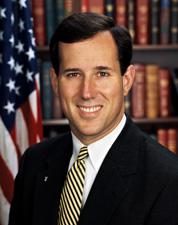
Mr. President, I am pleased to join today with my colleague, Senator Blanche Lincoln, as well as Senators Jeffords, Kyl, Coleman and Clinton, in introducing the Medicare Innovation Responsiveness Act…
Mr. President, I am pleased to join today with my colleague, Senator Blanche Lincoln, as well as Senators Jeffords, Kyl, Coleman and Clinton, in introducing the Medicare Innovation Responsiveness Act of 2003.
Given all that is going on in the world today, it is sometimes difficult to focus on issues related to Medicare coverage, coding and payment procedures. But we must, because every day there are seniors and people with disabilities in need of lifesaving and life-enhancing medical treatments and technologies.
And every day, there are creative people in Pennsylvania, Arkansas, and all across our great country developing new ways to prevent and treat illness and save lives. Medicare patients should not be denied access to these new procedures and technologies because the Medicare program is slow to respond to innovations in medical care and the changing needs of patients.
Congress passed legislation with strong bipartisan support in 1999 and in 2000 to try to address these problems. Unfortunately, however, Medicare has failed to deliver on key commitments in the legislation and these barriers persist.
That is why we are here today--to introduce legislation that will finally make timely access to lifesaving advanced medical tests and treatments for Medicare patients a reality. Our bill builds on constructive approaches the Centers for Medicare and Medicaid Services, CMS, has taken recently to help Medicare keep up with advancements in treating patients.
For example, CMS recently took proactive, unprecedented steps to address one of the newest innovations in minimally invasive cardiology that will soon be available for patients: drug-eluting stents. These tiny medal scaffolds, long-used to reopen blocked heart arteries, can be more effective now that researchers have combined them with time- released drugs to prevent the growth of unwanted cells. The Agency established new hospital inpatient codes and reimbursements for the new stints because it recognized that the technology will quickly become the standard of care when approved by
FDA in the coming weeks. The Agency understood the potential the stents hold to transform patient care and health care delivery--and acted in a timely fashion.
This forward-looking approach should be the rule, not the exception, in dealing with new treatment breakthroughs. And that is what our legislation today seeks to achieve.
At an event where Senator Lincoln and I spoke to underscore the need for this legislation, we were pleased to be joined by medical professionals from our respective states, people who took time out of their busy schedules to come to Washington, DC and help us explain the importance of some of the provisions in the bill we are introducing today.
For example, three years after a mandate from Congress, Medicare has yet to provide special transitional payments for any new medical device used in the inpatient setting. As a result, Medicare will continue to take anywhere from 15 months to five years to integrate a new medical technology into the inpatient setting--and that is after it has already been approved as safe and effective by the FDA. Dr. Mark Wholey from Pittsburgh is involved in research on carotid stenting, and he commented today on the promise of this new treatment option and the importance of reducing barriers to Medicare patient access for new and innovative technologies.
In another area of coverage policy, Medicare discourages development of breakthrough devices like heart assist devices because it does not cover the routine costs of clinical trials for many innovative technologies. Dr. Walter Pae, Professor of Surgery at Penn State University, also came to Washington today to share some details of the pioneering work he is doing at Hershey Medical Center and to reinforce the importance of patient access to these promising clinical trials.
These reforms are reasonable and bipartisan. Most importantly, they are critical to patients in need of new and breakthrough technologies. I look forward to working with Senator Lincoln and my colleagues on the Finance Committee in moving these important reforms in Committee and the Senate this year.
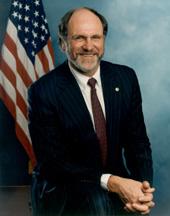
Mr. President, I rise today with my colleagues Senators Akaka and Sarbanes to introduce the Financial Literacy for Self- Sufficiency Act. Our bill would require States to promote financial education…
Mr. President, I rise today with my colleagues Senators Akaka and Sarbanes to introduce the Financial Literacy for Self- Sufficiency Act.
Our bill would require States to promote financial education through their TANF, Temporary Assistance to Needy Families, programs. Financial education--education that promotes an understanding of consumer, economic, and personal finance concepts--is extremely important for all families, and is especially important for low-income families who are moving from welfare to work.
While TANF focuses on moving families off cash assistance and into work, it fails to provide recipients with the tools they need to maximize their earnings and manage their expenses in order to achieve financial stability once they are employed. If we truly expect to move these families to achieve financial independence, we must give them the tools they will need to make that transition.
One of these tools is a bank account. Millions of low-income families remain outside of the formal banking system, with many of them spending too much of their hard-earned dollars at costly check cashing operations. In fact, more than eight million families earning under $25,000 a year lack a checking or savings account. A study conducted by the United States Department of the Treasury in 2000 found that a worker earning $12,000 a year would pay approximately $250 a year just to cash their payroll checks at such an outlet. And, nearly 16 percent of the checks cashed at check cashing outlets are government benefit checks--including welfare benefit checks.
In addition to expanding the number of banks that do business in low- income communities, educating low-income unbanked families about the benefits of formal checking and savings accounts can significantly improve access to financial services.
But, financial education isn't just about bank accounts and savings. It is also about protecting low-income families form predatory lending and devastating credit arrangements. Financial education that addresses abusive lending practices can help prevent unaffordable loan payments, equity stripping, and foreclosure. I strongly support legislative efforts to end predatory lending practices in our country, but until we do, ensuring that consumers are aware of unfair and abusive loan terms is a measure that will provide them some protection from these tactics.
Finally, families leaving welfare for work face many challenges, including securing child care and transportation. One challenge that often is not mentioned, however, is the challenge of transitioning from a benefits-based income to a wage income. Financial literacy programs that educate families transitioning from welfare to work about taxes and tax benefits that they may be eligible for, such as the Dependent Care Tax Credit and the Earned Income Tax Credit, will ensure that they have access to these important work benefits.
The Financial Literacy for Self-Sufficiency Act will allow States to use their TANF funds to collaborate with community-based organizations, banks, and community colleges to create financial education programs for low-income families receiving welfare and for those transitioning from welfare to work. As Federal Reserve Chairman Alan Greenspan Chairman Greenspan has noted, ``Educational and training programs may be the most critical service offered by community-based organizations to enhance the ability of low-income households to accumulate assets.''
I hope members of the Senate Finance Committee will join my colleagues and me in promoting financial education for our nation's TANF recipients when they act to create a reauthorization framework for our nation's welfare program.
I ask unanimous consent that the text of the legislation be printed in the Record.

Mr. President, today I am introducing legislation guaranteeing a community's right-to-know about pollution discharges, seepage and potential drinking water contamination by the toxic chemical…
Mr. President, today I am introducing legislation guaranteeing a community's right-to-know about pollution discharges, seepage and potential drinking water contamination by the toxic chemical perchlorate.
Perchlorate is the main ingredient in rocket fuel, which accounts for 90 percent of its use. Perchlorate is also used in lesser amounts for ammunition, fireworks, and other products. It dissolves readily in many liquids, including water, and moves easily and quickly.
The sources of drinking water for up to 10 million Californians and millions of other Americans are contaminated with perchlorate. Alarming levels of perchlorate have been discovered in Lake Mead and the Colorado River, the drinking water source for millions of Southern Californians. Communities in the Inland Empire, San Gabriel Valley, Santa Clara Valley, and the Sacramento area are also grappling with perchlorate contamination. In addition, more than 20 million Americans in at least 19 states drink water contaminated with perchlorate.
Perchlorate is a clear and present danger to California's public health. Perchlorate poses a variety of serious health risks relating to thyroid function, especially in newborns, children, and pregnant women. Exposure to perchlorate interferes with the thyroid gland's ability to produce the hormones needed for normal prenatal development. This can cause both physical and mental retardation. Perchlorate is also linked to thyroid cancer.
Despite the gravity of the situation, we currently have no way of knowing who is dumping it or where they are dumping it. We cannot wait four more years to address this threat while EPA continues to delay regulation and clean ups. Communities need to get moving to protect their drinking water sooner rather than later. Guaranteeing a community the right-to-know about potential perchlorate contamination is a first step.
My bill would do just this. First, my bill addresses the legacy of perchlorate contamination by requiring anyone who has stored more than 375 pounds of perchlorate since January 1, 1950, to report annually to the U.S. EPA, beginning no later than June 1, 2005. This does not apply to facilities that store
perchlorate for a retail or law enforcement purpose. EPA must annually publish the list of all perchlorate storage facilities in existence since January 1, 1950, beginning no later than June 1, 2005.
Second, my bill would also require anyone who discharges perchlorate into the water to report the discharge, its volume, monitoring methods, and remedial actions to the EPA. EPA must publish this information annually in the Federal Register beginning no later than June 1, 2005.
Third, failure to report as required under my bill would result in fines. All fines will be deposited into a loan fund for public water suppliers and private well owners to pay for clean water when their water supply is shut down because of perchlorate contamination.
Communities have a right to know what is in their water and where it comes from. My bill will ensure that communities have the necessary information to act now to address the health threat of perchlorate. I look forward to working with my colleagues to pass this important legislation.
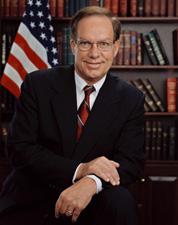
Mr. President, I rise today to introduce the American Dream Downpayment Act. I am pleased to have Senator Sessions join me in introducing this bill. Homeownership has long been the American dream,…
Mr. President, I rise today to introduce the American Dream Downpayment Act. I am pleased to have Senator Sessions join me in introducing this bill.
Homeownership has long been the American dream, and we are incredibly fortunate that in America more and more families have been able to achieve the dream of homeownership. In fact, right now more American families own their home than ever before, and that number continues to increase.
However, for some working families, low income families, women-headed households, minority families, urban dwellers, and young families the dream of homeownership remains elusive.
This is particularly true for minority families. While Americans enjoy the world's greatest opportunities for becoming homeowners, only 47 percent of African-American and Hispanic families own their homes, as compared to 75 percent of white families.
We must eliminate this gap in homeownership, so I am pleased to join with President Bush and Secretary Martinez in the initiative to create 5.5 million new minority homeowner families by the end of the decade.
One key component of this initiative is the American Dream Downpayment Initiative, which I am pleased to introduced today in the Senate. This bill will provide $200 million annually to State and local governments for downpayment assistance programs.
One of the greatest barriers for families in becoming homeowners is their inability to afford the downpayment requirements and closing costs. These are hard working families that can make mortgage payments, they simply need assistance with the downpayment and closing costs.
The American Dream Downpayment Initiative will create 40,000 new homeowners each year, focusing on low-income and first-time homebuyers. And because the initiative will be administered through HUD's existing HOME program, it will minimize bureaucracy and duplication while maximizing flexibility for local jurisdictions.
Homeownership has many benefits for cities, neighborhood, and families. In fact, a study released by the Homeownership Alliance revealed that children living in an owned home scored nine percent higher on math tests and seven percent higher in reading achievement.
Homeownership has the power to transform individual lives and to
strengthen entire communities. Increasing homeownership, particularly among minorities, is a top goal for me.
The $200 million for the American Dream Downpayment Fund will help make that dream come true for more American families.
I look forward to the opportunity to working with my colleagues to get the American Dream Downpayment Initiative enacted into law.
I ask unanimous consent that the text of the bill be printed in the Record.
Show 3 more

Mr. President, I ask unanimous consent that the Sleeping Bear Dunes expansion bill be printed in the Record.
Mr. President, I ask unanimous consent that the Sleeping Bear Dunes expansion bill be printed in the Record.
Mr. President, I ask unanimous consent that the text of the bill be printed in the Record.
Mr. President, I ask unanimous consent that the text of the bill be printed in the Record.
Mr. President, I ask unanimous consent that the text of the bill be printed in the Record.
Mr. President, I ask unanimous consent that the text of the bill be printed in the Record.
Bill Text
Latest available legislative text
        [Congressional Bills 108th Congress]
[From the U.S. Government Publishing Office]
[S. 810 Introduced in Senate (IS)]

108th CONGRESS
1st Session
S. 810

To enhance the protection of children against crime by eliminating the
statute of limitations for child abduction and sex crimes, providing
for registration of child pornographers as sex offenders, establishing
a grant program in support of AMBER Alert communications plans, and for
other purposes.

_______________________________________________________________________

IN THE SENATE OF THE UNITED STATES

April 8, 2003

Mr. DeWine (for himself, Mr. Grassley, Mr. Shelby, and Mrs. Hutchison)
introduced the following bill; which was read twice and referred to the
Committee on the Judiciary

_______________________________________________________________________

A BILL

To enhance the protection of children against crime by eliminating the
statute of limitations for child abduction and sex crimes, providing
for registration of child pornographers as sex offenders, establishing
a grant program in support of AMBER Alert communications plans, and for
other purposes.

Be it enacted by the Senate and House of Representatives of the
United States of America in Congress assembled,

SECTION 1. SHORT TITLE.

This Act may be cited as the ``Protecting Children Against Crime
Act of 2003''.

SEC. 2. NO STATUTE OF LIMITATIONS FOR CHILD ABDUCTION AND SEX CRIMES.

(a) Statute of Limitations.--
(1) In general.--Chapter 213 of title 18, United States
Code, is amended by adding at the end the following:
``Sec. 3297. Child abduction and sex offenses
``Notwithstanding any other provision of law, an indictment may be
found or an information instituted at any time without limitation for
any offense under section 1201 involving a minor victim, and for any
felony under chapter 109A, 110, or 117, or section 1591.''.
(2) Clerical amendment.--The table of sections at the
beginning of chapter 213 of title 18, United States Code, is
amended by adding at the end the following new item:

``3297. Child abduction and sex offenses.''.
(b) Application.--The amendments made by this section shall apply
to the prosecution of any offense committed before, on, or after the
date of the enactment of this section.

SEC. 3. REGISTRATION OF CHILD PORNOGRAPHERS IN THE NATIONAL SEX
OFFENDER REGISTRY.

(a) Jacob Wetterling Crimes Against Children and Sexually Violent
Offender Registration Program.--Section 170101 of subtitle A of title
XVII of the Violent Crime Control and Law Enforcement Act of 1994 (42
U.S.C. 14071(a)) is amended--
(1) by striking the section heading and inserting the
following:

``SEC. 170101. JACOB WETTERLING CRIMES AGAINST CHILDREN AND SEXUALLY
VIOLENT OFFENDER REGISTRATION PROGRAM.'';

and
(2) in subsection (a)(3)--
(A) in clause (vii), by striking ``or'' at the end;
(B) by redesignating clause (viii) as clause (ix);
and
(C) by inserting after clause (vii) the following:
``(viii) production or distribution of
child pornography, as described in section
2251, 2252, or 2252A of title 18, United States
Code; or''.
(b) Authorization of Appropriations.--There are authorized to be
appropriated to the Department of Justice, for each of fiscal years
2004 through 2007, such sums as may be necessary to carry out the
amendments made by this section.

SEC. 4. GRANT PROGRAM FOR NEW TECHNOLOGIES TO IMPROVE AMBER ALERT
COMMUNICATIONS PLANS.

(a) Program Required.--The Attorney General of the United States
shall carry out a program to provide grants to States for the
development or enhancement of programs and activities for the support
of AMBER Alert communications plans.
(b) Activities.--Activities funded by grants under the program
under subsection (a) may include the development and implementation of
new technologies to improve AMBER Alert communications.
(c) Federal Share.--The Federal share of the cost of any activities
funded by a grant under the program under subsection (a) may not exceed
50 percent of the total cost thereof.
(d) Distribution of Grant Amounts on Geographic Basis.--The
Attorney General shall, to the maximum extent practicable, ensure the
distribution of grants under the program under subsection (a) on an
equitable basis throughout the various regions of the United States.
(e) Administration.--The Attorney General shall prescribe
requirements, including application requirements, for grants under the
program under subsection (a).
(f) Authorization of Appropriations.--
(1) In general.--There is authorized to be appropriated to
the Department of Justice $5,000,000 for each of fiscal years
2004 through 2007, to carry out this section.
(2) Availability.--Amounts appropriated pursuant to the
authorization of appropriations in paragraph (1) shall remain
available until expended.

SEC. 5. NATIONAL RESEARCH COUNCIL STUDY AND REPORT CONCERNING ON-LINE
PORNOGRAPHY.

(a) Study.--The National Research Council of the National Academy
of Sciences shall conduct a study of--
(1) the extent to which it is possible for Internet service
providers to monitor Internet traffic to detect illicit child
pornography sites on the Internet, and the extent to which they
do so;
(2) the extent to which purveyors use credit cards to
facilitate the sale of illegal child pornography on the
Internet;
(3) which credit card issuers have in place a system to
facilitate the identification of purveyors who use credit cards
to facilitate the sale of illicit child pornography; and
(4) options for encouraging greater reporting of such
illicit transactions to law enforcement officials.
(b) Report to Congress.--Not later than 12 months after the date of
enactment of this Act, the National Research Council shall submit a
report to the Congress on the study conducted under subsection (a).

SEC. 6. SEVERABILITY.

If any provision of this Act, an amendment made by this Act, or the
application of such provision or amendment to any person or
circumstance is held to be unconstitutional, the remainder of this Act,
the amendments made by this Act, and the application of the provisions
of such to any person or circumstance shall not be affected thereby.
<all>