Incentives to Educate American Children (I Teach) Act of 2003
Legislative Activity
Stay on top of the latest movement without scrolling through every action
Read twice and referred to the Committee on Finance.
April 10, 2003
View full timeline
Introduced in Senate
April 10, 2003
Sponsor introductory remarks on measure. (CR S5182)
April 10, 2003
Read twice and referred to the Committee on Finance.
April 10, 2003
Floor Debate
23 membersWhat members said about S. 857 on the floor
 JK
JK JC
JC JFKJDR
 RW+18
RW+18
Floor Debate
23 membersWhat members said about S. 857 on the floor
Mr. President, I rise today to introduce the Intermediate Sanctions Compensatory Revenue Adjustment Act of 2003, ISCRAA. This legislation will restore to the States billions of dollars in revenue due…
Mr. President, I rise today to introduce the Intermediate Sanctions Compensatory Revenue Adjustment Act of 2003, ISCRAA. This legislation will restore to the States billions of dollars in revenue due to them from a massive lawsuit recently conducted on their behalf the tobacco-Related Medicaid expenses litigation. ISCRAA amends an existing provision of the Federal tax code in order to enforce basic, universally accepted fiduciary standards governing the award of attorneys fees. By applying these standards to the attorneys who represented the states in the tobacco settlement, ISCRAA reasonably can be expected to restore to the states income with a present value of approximately $9 billion. I have included at the end of my statement a chart detailing how much each state can expect to recover.
ISCRAA's tax formula is borrowed from the 1996 Tax Act's Intermediate Sanctions Tax, IST, which applies a two-step excise tax to any excessive or unreasonable compensation that the managers of a trust pay to themselves from the assets of the trust. The IST framework encourages the trustee to restore the excessive portion of any fee to the trust--when he does so, the IST's punitive taxes do not apply.
ISCRAA extends the IST to another type of trust relationship: that between a lawyer and his client. ISCRAA applies the IST tax formula to any unreasonable or excessive income that a lawyer collects from litigation resulting in a judgment or settlement in excess of $100 million. To avoid IST taxes, an attorney must restore the excessive portion of the fee to the client.
As my colleague Senator Cornyn will explain today, the ethical and legal abuses that resulted from the 1998 State tobacco settlement make the need for this legislation manifest. Senator CORNYN also will discuss the law of attorneys' fiduciary obligations, which establishes that a fee award is the property of the client--and that any unethical fee must be restored to the client, regardless of how the fee award is structured.
I will discuss today how ISCRAA will affect massive litigations generally. In order to gauge the reasonableness of a lawyer's fee award, ISCRAA adopts and codifies a liberal version of the lodestar- multiplier system. As I will later explain in greater detail, ISCRAA allows fee multipliers of up to 500 percent of reasonable hourly rates. This limit is as generous as the most liberal limits adopted by state courts, and considerably more generous than the limits that federal courts have applied in $100 million cases. ISCRAA's fee formula guarantees that attorneys' fiduciary obligations will be respected, while providing plaintiff's lawyers with ample incentive to provide high-quality legal representation in these types of cases.
Federal supervision of fee awards resulting from $100 million litigations is appropriate for several reasons. First, because of their sheer size, these types of lawsuits inevitably operate as a tax on the consuming public. Few defendants actually can afford to pay such judgments with cash on hand. Instead, the affected industries simply will raise the prices that they charge to their customers.
This is exactly what has happened in the State Medicaid tobacco settlement--according to the leading proponents of that litigation. The first State attorney general to file suit against the tobacco companies has admitted that ``what always happens in these cases is the industry passes the costs to the consumer.'' Other commentators agree that this has occurred in the tobacco litigation. As one law-review article notes, ``the [tobacco] settlement * * * is a tax because it's a set of payments made by tobacco companies that depend on how many packs they sell; in short, it looks like a tax and quacks like a tax.''
Because of the way that these massive judgments typically are satisfied, it is particularly important to ensure that attorneys are paid in proportion to the services that they provided--rather than solely on the basis of the size of the recovery. Again, the State tobacco settlement highlights the nature of the problem. As two of the leading academic commentators have noted, it is ``very troubl[ing]'' that under that agreement, ``a group of private citizens [are] getting paid a percentage of a tax increase they helped pass.'' The sheer size of the tobacco settlement--and the fact that attorneys fees were based on this size, rather than on the attorneys' actual efforts--has given the fee awards an uncanny resemblance to the medieval practice of tax farming. In all but name, the government has licensed a group of private individuals to collect a tax from the consuming public.
I would emphasize at this point that ISCRAA is not an attack on the State tobacco lawsuits. The bill does not pass judgment on the merits or the appropriateness of this type of litigation. ISCRAA simply is designed to ensure that when such lawsuits are brought on the public's behalf, the public receive its fair share of the proceeds. If a State chooses to seek compensatory revenue from industry for past harms, then the resulting tax on the public--minus the reasonable value of the legal services actually provided--must go to the State treasury.
There are several reasons why $100 million is an appropriate threshold for applying ISCRAA's fee formula. First, the courts themselves have indicated that fee agreements based primarily on the size of the recovery tend to become unreasonable when judgements reach this size. As one court has stated, ``in much smaller cases, a fee award of 33 percent does not present the danger of providing the plaintiff's counsel with the windfall that would accompany a `megafund' settlement of $100 million or upwards. But it is quite different when the figures hit the really big time.'' Or as the Third Circuit notes, ``courts have generally decreased the percentage awarded [for attorneys fees] as the amount recovered increases, and $100 million seems to be the informal marker of a 'very large' settlement.''
The logic of avoiding judgment-based awards in these very large cases is straightforward. As one court explains, ``it is not 150 times more difficult to prepare, try, and settle a $150 million case than it is to try a $1 million case, but the application of a percentage comparable to that in a smaller case may yield an award 150 times greater.'' Thus, according to another court, ``there is considerable merit'' to disallowing standard percentage awards as the ``size of the [recovery] fund increases. In many instances the increase [in the recovery] is merely a factor of the size of the class and has no direct relationship to the efforts of counsel.''
It also bears mention that because of its $100 million threshold, ISCRAA applies to a fairly limited universe of cases. As courts have remarked, ``there are few so-called `megafund' cases with settlements over $100 million.'' In 2001, the U.S. Court of Appeals for the Third Circuit attempted to catalogue all common-fund cases in federal court that resulted in recoveries greater than $100 million. Though such litigations have been more frequent in recent years, the Third Circuit identified only 22 such cases since 1985. See in re Cendant Corp. PRIDES Litig., 243 F.3d 722, 737 (3d Cir. 2001).
ISCRAA is somewhat broader than the criteria that Cendant Corp. employed to collect cases. ISCRAA is not limited to common-fund cases-- it also applies to judgments won on behalf of tax-exempt entities or even single individuals. ISCRAA also applies to cases brought in State court, and it aggregates identical claims that are brought against common defendants in separate actions, in order to prevent evasion of its limits through the subdivision of actions. Nevertheless, ISCRAA's scope remains fairly narrow. An academic specialist who is familiar with developments in this field has reviewed the bill and concluded that because of its ``relatively high threshold,'' ISCRAA probably would apply only to about 15-20 litigations per year. I will include a copy of this professor's letter to me in the Congressional Record.
Finally, a $100 million threshold also is appropriate because it limits ISCRAA's reach to litigations that are a natural subject of congress's authority to regulate interstate commerce. It is well- established that ``Congress' commerce authority includes the power to regulate . . . those [economic] activities that substantially affect interstate commerce.'' United States v. Morrison, 529 U.S. 598, 609 (2000). See also United States v. Lopez, 514 U.S. 549 (1995). Both the executive and the legislative branches previously have identified $100 million as guideline for determining whether a matter has a significant impact on interState commerce. See, e.g. Executive Order 12866; Congressional Review Act, 5 U.S.C. Sec. 804(2); Unfunded Mandates Act, 2 U.S.C. Sec. 1532(a). Because it is limited to litigations of this size, ISCRAA is consistent with congress's power and obligation to protect the flow of commerce between states.
Another point that I would like to emphasize today is that ISCRAA is not an anti-plaintiffs' lawyer bill. It is not stingy toward trial attorneys. ISCRAA is carefully designed to protect fiduciary interests while providing plaintiffs' lawyers with ample incentives to provide high-quality legal representation in large litigations. ISCRAA's fee formula is as generous as the limits set by the most liberal State courts that engage in meaningful review of attorneys fees, and is considerably more generous than the Federal courts' practices in $100 million cases. Moreover, the multiplier criteria that ISCRAA employs universally are recognized as legitimate prerequisites for a contingency fee--even by trial lawyers' professional associations.
Federal courts primarily rely on two systems for calculating attorneys fees in cases, such as class actions, in which they are required to set ``reasonable fees:'' the percentage method and the lodestar-multiplier method. The percentage method, as its name implies, calculates fees as a percentage of the total recovery. The lodestar system, by contrast, requires a court to first calculate a fee based on the number of hours that the lawyer worked multiplied by prevailing hourly rates, the ``lodestar''. The court then multiplies this lodestar fee again in order to reward the attorney for the risk of nonpayment of fees that he assumed and for any exceptional services that he provided.
Over the last thirty years, courts have moved back and forth between these two systems. Only a few courts make lodestar-multipliers the exclusive means of awarding attorneys fees. But as one academic commentator has noted, ``lodestar, or hours-based methods, have been adopted in every [federal judicial] circuit.''
And more importantly, in large-recovery cases, there has been very little difference between lodestar and percentage systems. This is because even when courts apply a percentage to calculate fees, and as judgements become very large, courts typically also calculate a reasonable lodestar in order to determine what constitutes a reasonable percentage. Thus, again, as the Third Circuit notes, ``courts have generally decreased the percentage awarded as the amount recovered increases, and $100 million seems to be the informal marker of a `very large' settlement.''
Courts have been wary of awarding fees based on percentages alone. As one State supreme court explains: ``to begin the assessment by arbitrarily picking a percentage amount without any reliance on a cognizable structure invites decisions that are nonobjective and inconsistent. What constitutes a reasonable percentage may differ from one judge to another depending on each judge's predilections, background, and geographical location in the state.''
Thus ``courts that employ the percentage approach appear to be motivated in part by a lodestar dynamic. Because courts are reluctant to give fee awards totally incommensurate with the efforts of the attorneys, percentage awards generally decrease as the amount of the recovery increases.''
One result of the cross-use of the lodestar and percentage systems is that even when courts use the percentage system, those awards overwhelmingly tend to reflect a reasonable lodestar multiplier. Therefore, even percentage-based cases tend to provide evidence of the range of multipliers that the courts consider to be reasonable.
In 2001, the Third Circuit ``set forth a chart of fee awards given in Federal courts since 1985 in class actions in which the settlement fund exceeded $100 million and in which the percentage of recovery method was used.'' Cendant Corp. The court identified 17 such cases. In almost every case, the Third Circuit could calculate the multiplier that was used, and ``the lodestar multiplier in those cases never exceeded 2.99.'' And in the direct lodestar-multiplier cases that court identified, the multiplier ranged from 1.2 to 3.25.
Other courts, surveying smaller cases than the $100 million recoveries examined in Cendant Corp., have identified larger multipliers. One Federal district court has ``observe[d] that in virtually every case where the court notes a lodestar but awards fees based upon a percentage, the lodestar multiplier converted from this percentage is in the range of 1 to 4.'' Another Federal district court has found that ``the range of lodestar multipliers in large and complicated class actions runs from a low of 2.26 to a high of 4.5.''
By contrast, some courts have declared that they would allow only lower multipliers. One Federal court has stated that ``only in the most exceptional circumstances would this court award a multiplier of 3 or greater. . . . this court believes that lodestars enhanced by multipliers less than 3 should adequately compensate even the most talented counsel.'' And the Seventh Circuit has suggested that ``it may be that a doubling of the lodestar would provide a sensible ceiling.''
On the other hand, the Florida Supreme Court--which is generally regarded as one of the more plaintiff-friendly courts in the United States--has announced that: ``we set the maximum multiplier available in this common-fund category of cases at 5. . . . [A] multiplier which increases fees to five times the accepted hourly rate is sufficient to alleviate the contingency risk factor involved and attract high level counsel to common fund cases while producing a fee that remains within the bounds of reasonableness. We emphasize that 5 is a maximum multiplier.''
ISCRAA adopts this more liberal standard. It allows fees as high as 500 percent of reasonable hourly rates. ISCRAA awards multipliers based on two criteria: it allows up to 300 percent to be added onto the amount of reasonable hourly fees if a case that involved a substantial risk of nonrecovery of fees, and allows an additional 100 percent add- on if the attorney provided exceptional services that improved the plaintiff's recovery.
The criteria that ISCRAA employs universally are recognized as necessary prerequisites to the legitimacy of a contingency fee. ``Courts in general have insisted that a contingent fee be
truly contingent. The typically elevated fee reflecting the risk to the lawyer of receiving no fee will be permitted only if the representation indeed involves a significant degree of risk.'' Charles W. Wolfram, Modern Legal Ethics Sec. 9.4, at 532 (1986). The risk requirement has been recognized ever since contingency fees first were allowed in the United States. The American Bar Association even noted at that time that ``a contract for a contingent fee, where sanctioned by law, should be reasonable under all the circumstances of the case, including the risk and uncertainty of the compensation.'' ABA Canons of Professional Ethics, Canon 13 (1908). Indeed, even the professional associations of plaintiffs' attorneys have, at times, acknowledged that contingent fees should be based on an actual contingency. In a guide to its members, the Association of Trial Lawyers of America has ``recommend[ed]'' that attorneys ``exercise sound judgment in using a percentage in the contingent fee contract that is commensurate with the risk, cost and effort required.'' ATLA, Keys to the Courthouse: Quick Facts on the Contingency Fee System 13 (1994).
The criteria that ISCRAA employs are universally accepted--and the limits that it sets should be universally acceptable. ISCRAA is not intended to alter the considered standards of any jurisdiction. Rather, it is intended to enforce those standards--and to correct the occasional extreme outlier. Because ISCRAA incorporates a fee formula that is substantially more liberal than the usual practices of the federal courts in $100 million cases, we can be confident that high- quality legal representation will remain available to plaintiffs in these large litigations. See, e.g. in re Sumitomo Copper Litig., 74 F. Supp. 2d 393, S.D.N.Y. 1999, RICO and Commodities Exchange Act case resulting in $116 million recovery; attorneys reviewed millions of pages of documents located throughout the world, many requiring translation from Japanese; Federal district court awards multiplier of 250 percent for total fee of $32 million.
Another issue that I will address today is the argument--occasionally raised in opposition to proposals to limit attorneys fees--that such restrictions violate attorneys' rights to freedom of contract.
The first principle to keep in mind when questions of attorneys fees are considered is that ``a fiduciary relationship exists as a matter of law between attorney and client.'' (Illinois Supreme Court.) As one academic commentator has noted: ``[I]t is uncontroverted today that a lawyer is a fiduciary for, and therefore has a duty to deal fairly with, the client. . . . Lawyers are fiduciaries because retention of an attorney to exercise 'professional judgment' on the client's behalf necessarily involves reposing trust and confidence in the attorney. Exercising professional judgment requires that the lawyer advance the client's interests as the client would define them if the client were well-informed.''
The lawyer's status as fiduciary places limits on his dealings with his client--including with regard to his fee. ``An attorney's freedom to contract with a client is subject to the constraints of ethical considerations.'' New Jersey Supreme Court. ``In setting fees, lawyers are fiduciaries who owe their clients greater duties than are owed under the general law of contracts.'' Massachusetts Appeals Court. ``As a result of lawyers' special role in the legal system, contracts between lawyer and client receive special scrutiny. . . . While freedom of contract is the guiding principle underlying contract law, contractual freedom is muted in the lawyer-client and lawyer-lawyer contexts.'' Joseph M. Perillo, law professor.
The unique status of attorney fee contracts has led courts to reject analogies between such agreements and other business or service contracts. Perhaps the fullest exposition is provided by the Arizona Supreme Court: ``We realize that business contracts may be enforced between those in equal bargaining capacities, even though they turn out to be unfair, inequitable or harsh. However, a fee agreement between lawyer and client is not an ordinary business contract. The profession has both an obligation of public service and duties to clients which transcend ordinary business relationships and prohibit the lawyer from taking advantage of the client. Thus, in fixing and collecting fees the profession must remember that it is a branch of the administration of justice and not a mere money getting trade.' ABA Canons of Professional Ethics, Canon 12.''
The same principle has been identified by the Florida Supreme Court: There is but little analogy between the elements that control the determination of a lawyer's fee and those which determine the compensation of skilled craftsmen in other fields. Lawyers are officers of the court. The court is an instrument of society for the administration of justice. Justice should be administered economically, efficiently, and expeditiously. The attorney's fee is, therefore, a very important factor in the administration of justice, and if it is not determined with proper relation to that fact it results in a species of social malpractice that undermines the confidence of the public in the bench and bar. It does more than that. It brings the court into disrepute and destroys its power to perform adequately the function of its creation.''
In order to protect the lawyer's public role and to enforce his fiduciary obligations, the courts read a reasonableness requirement into every attorney fee contract. ``[T]he requirement that a fee be reasonable in amount overrides the terms of the contract, so that an `unreasonable' fee cannot be recovered, even if agreed to by the client.'' G. Hazard, Jr. & W. Hodes, The Law of Lawyering 1. 5:205 Fee Litigation and Arbitration 120 (1998 Supp.).
As one court has stated, ``[A]n attorney is only entitled to fees which are fair and just and which adequately compensate him for his services. This is true no matter what fee is specified in the contract, because an attorney, as a fiduciary, cannot bind his client to pay a greater compensation for his services than the attorney would have the right to demand if no contract had been made. Therefore, as a matter of public policy, reasonableness is an implied term in every contract for attorney's fees.''
Finally, when assessing whether a fee is reasonable, courts ask whether the fee is proportional to the services that were actually provided. ``Fees must be reasonably proportional to the services rendered and the situation presented.'' (Arizona Supreme Court.) ``If an attorney's fee is grossly disproportionate to the services rendered and is charged to a client who lacks full information about all of the relevant circumstances, the fee is `clearly excessive' . . . even though the client consented to such fee.'' West Virginia Supreme Court.
Because attorneys are fiduciaries, they simply do not have complete freedom of contract in negotiating their fees. An attorney's dealings with his client always must reflect that the client comes to him in a position of trust--and therefore, the attorney's fee always must be reasonable. ISCRAA will help ensure that this important obligation is respected.
Another subject that I would like to address today is ISCRAA's effective date. ISCRAA applies to attorney fee payments received after June 1, 2002. This effective date is appropriate under the circumstances of the State tobacco settlement for several reasons: first, Congress routinely enacts major tax legislation with effective dates that look back much further than does ISCRAA. The Supreme Court has ``repeatedly upheld [such moderately] retroactive tax legislation against a due process challenge.'' United States v. Carlton, 512 U.S. 26, 30-31, 1994; see id. at 33, upholding tax whose ``actual retroactive effect . . . extended for a period only slightly greater than one year''.
Second, ISCRAA is not even truly retroactive. ISCRAA does not change the substantive law governing attorneys fee awards. Rather, it simply enforces established, pre-existing fiduciary standards that already bind every attorney in every state. The Model Rules of Professional Conduct, at Rule 1.5(a), contain a clear, direct command that ``a lawyer's fee shall be reasonable.'' Similarly, the Model Code of Professional Responsibility, at DR 2-106, directs that an attorney ``shall not enter into an agreement for, charge, or collect an illegal or clearly excessive fee.'' The Model Code further explains that an attorneys fee is ``clearly excessive when, after a review of the facts, a
lawyer of ordinary prudence would be left with a definite and firm conviction that the fee is in excess of a reasonable fee.'' Finally, as academic commentators point out, in addition to the model rules, ``all State rules of professional conduct prohibit attorneys from charging excessive fees.''
As I described earlier, to enforce fiduciary standards, ISCRAA codifies and applies a very generous version of the fee multiplier system, allowing attorneys fees as high as 500 percent of reasonable hourly rates. This is considerably more generous than what Federal courts typically allow in large-judgment cases. No attorney can be heard to complain that he is subjected to a law that is more generous than his existing fiduciary obligations.
Further, none of the tobacco-settlement attorneys can reasonably maintain that they have a vested right to see their fiduciary duties to the states go unenforced. Nevertheless, in order to be fair to all parties, ISCRAA's excise taxes are applied only to fees that were paid after June 1, 2002. By this date, all of the tobacco lawyers twice had received notice from George W. Bush that he intended to enact legislation to enforce their fiduciary obligations. In February 2000, then-candidate Bush promised that he would ``extend[] the `excess benefits' provision of the tax code to private lawyers who contract with states and municipalities,'' with ``the reasonableness of the fees * * * [to] be determined by the standard judicial `lodestar' method.'' And as early as February 2001, the current Administration announced that it anticipated providing ``additional public health resources for the States from the President's proposal to extend fiduciary responsibilities to the representatives of States in tobacco lawsuits.'' See A Blueprint for New Beginnings: A Responsible Budget for America's Priorities 80, Office of Management and Budget, February 28, 2001.
Under ISCRAA, all of the attorneys who participated in the State tobacco settlement still will be very liberally compensated. Because ISCRAA does not apply to the first three-and-a-half years of fee payments under the settlement, it exempts the first two-and-a-half billion dollars that these lawyers received. Every one of the tobacco lawyers will have more than enough money left to pay for the yachts, luxury cars, and vacation homes that were purchased with the tobacco proceeds. ISCRAA might simply be described as the one-yacht-per-lawyer rule.
But most importantly, because ISCRAA applies to the last year's worth of tobacco fee payments, and to all future payments, it will return a substantial amount of funds to the States--money that already should belong to the States under any reasonable interpretation of fiduciary standards. It is critical that these funds be restored in this time of widespread fiscal crisis. Today a large number of the States face massive budget deficits that threaten their ability to provide health care to the indigent, to fully fund public education, and to guarantee adequate and effective law enforcement. When such needs risk going unmet, fee abuses that cost the States billions of dollars simply can no longer be ignored. The States must receive their fair share of the tobacco settlement proceeds--funds that are badly needed to support basic public services.
Under the terms of the November 1998 Master Settlement Agreement, MSA, between the States and tobacco companies, $500 million in cigarette taxes is set aside every year to pay the attorneys who chose to have their fees awarded in arbitration. Because extraordinarily high fees were awarded by the arbitrators--estimated to total $15 billion-- the $500-million-a-year income stream, which is not adjusted for inflation, may have to be paid in perpetuity. In addition to this annuity, the MSA also sets aside an additional $1.25 billion in cigarette taxes to compensate those lawyers who choose to forego arbitration and negotiate their fees directly with the tobacco companies.
The present value of the $500-million-a-year fee stream--discounting all future payments for the time value of money--has been conservatively estimated at just over $8 billion. Current and future payments from the $1.25 billion fee fund are less certain, since the grants made from that fund and their disbursement schedule have been kept obscure from the public. Because ISCRAA's effective date is June 1, 2002, ISCRAA will probably recoup for the States an additional $1 billion above the present value of future $500 million-a-year payments. ISCRAA does not affect the first three-and-a-half years of fees paid under the MSA. Because these payments almost certainly are adequate to pay all reasonable fees incurred in the litigation, ISCRAA would restore to the States virtually all fees paid after its effective date. Thus the net present value of the sums that ISCRAA would provide to the States can conservatively be estimated at $9 billion.
By restoring these excess fee payments to the states' MSA escrow account and returning them to the States on a per capita basis, ISCRAA guarantees every State a very substantial recovery. Based on the estimates that I have described, even our Nation's smallest State, Wyoming, would recoup at least $15 million in tobacco fee payments, and other small States, such as North Dakota, would receive approximately $20 million. On the other hand, our nation's largest State, California, can expect to recoup at least $1 billion. Other large States would also see generous returns: Florida, $511 million; Illinois, $397 million; Michigan, $318 million; New York, $607 million; Ohio, $363 million; and Texas, $667 million.
Here is how much each State can expect to recover:
Alabama....................................................$142,220,272 Alaska.......................................................20,046,569 Arizona.....................................................164,079,935 Arkansas.....................................................85,496,543 California................................................1,083,230,642 Colorado....................................................137,556,275 Connecticut.................................................108,911,511 Delaware.....................................................25,059,883 District of Columbia.........................................18,294,706 Florida.....................................................511,123,686 Georgia.....................................................261,806,474 Hawaii.......................................................38,745,502 Idaho........................................................41,381,203 Illinois....................................................397,174,614 Indiana.....................................................194,456,664 Iowa.........................................................93,585,167 Kansas.......................................................85,976,825 Kentucky....................................................129,257,603 Louisiana...................................................142,919,876 Maine........................................................40,772,615 Maryland....................................................169,384,021 Massachusetts...............................................203,046,997 Michigan....................................................317,835,940 Minnesota...................................................157,327,166 Mississippi..................................................90,973,451 Missouri....................................................178,937,382 Montana......................................................28,852,605 Nebraska.....................................................54,726,966 Nevada.......................................................63,905,164 New Hampshire................................................39,520,996 New Jersey..................................................269,094,724 New Mexico...................................................58,173,915 New York....................................................606,875,689 North Carolina..............................................257,420,675 North Dakota.................................................20,537,847 Ohio........................................................363,078,559 Oklahoma....................................................110,353,478 Oregon......................................................109,417,889 Pennsylvania................................................392,753,669 Rhode Island.................................................33,525,716 South Carolina..............................................128,305,961 South Dakota.................................................24,140,253 Tennessee...................................................181,945,847 Texas.......................................................666,850,647 Utah.........................................................71,417,756 Vermont......................................................19,470,563 Virginia....................................................226,374,115 Washington..................................................188,496,659 West Virginia................................................57,831,660 Wisconsin...................................................171,532,756 Wyoming......................................................15,791,372
I ask unanimous consent that the text of the bill and the following four articles be printed in the Record.
Mr. President, I am pleased to join my colleague, Senator Kyl, to introduce today this landmark legislation to clean up our civil justice system. This legislation would enact a badly needed reform to…
Mr. President, I am pleased to join my colleague, Senator Kyl, to introduce today this landmark legislation to clean up our civil justice system. This legislation would enact a badly needed reform to the way in which attorneys are paid in some of the Nation's largest cases. It is designed to address some of the worst abuses of our civil justice system that I have witnessed in my nearly thirty years in the legal profession as a lawyer in private practice, as a state trial and appellate judge, and as state attorney general.
This legislation, the Intermediate Sanctions Compensatory Revenue Adjustment Act of 2003, ISCRAA, will combat the gross abuse of attorney contingent fee agreements, abuses which we have been witnessing at an increasing rate in recent years. The legislation will enforce attorneys' fiduciary duties to their clients in a small but important category of cases--those resulting in judgments greater than $100 million.
Contingent fee agreements can have an important role to play in our civil justice system. Sometimes, when people are injured but cannot afford to hire lawyers out of their own pockets, attorneys will accept the case with the expectation that, if their clients prevail, the attorney will be paid for his or her services out of the judgment or settlement that the attorney is able to secure for the client. Such agreements between attorneys and their clients are called contingent fee agreements, because the attorney's fee is contingent on the client obtaining a money judgment or settlement. Contingent fee agreements, properly understood and utilized, reward attorneys for their work in obtaining monetary recovery for their clients, and the risk that they take that, despite their hard work and best efforts, they are unable to obtain any recovery for the client at all.
Contingent fees can thus help ensure that plaintiffs with legitimate claims have the opportunity to obtain justice from our courts through the assistance of counsel. But contingent fees also present serious ethical problems for our legal system--particularly in cases in which the dollar amounts at stake are extraordinary, and result in a contingent fee award that overwhelmingly exceeds the relatively light or even negligible effort and risk actually undertaken by the attorneys.
Under the time-tested traditions of our legal system, clients hire attorneys with the understanding and expectation that the attorney is ethically, legally, and morally obliged to represent their best interests, and that the attorney will use his or her legal skills in order to produce the best possible result--not for the attorney, but for the client.
Thus, as my colleague has noted, contingent fee agreements are no ordinary agreements between consumers and businesses. It is a bedrock principle and well-established tenet of our Anglo-American system of justice that attorneys are not ordinary businessmen who can engage in hard bargaining with their customers, as courts have made clear on countless occasions. Rather, attorneys are officers of the court who bear a fiduciary duty to their clients. As fiduciaries, attorneys occupy a position of trust in their dealings with their clients, a trust which attorneys may not lawfully abuse.
One obligation that flows from this status as a fiduciary is the attorney's obligation not to charge an unreasonable or excessive fee. This obligation is a fundamental part of an attorney's ethical duties, universally recognized in the ethics rules of all 50 States. Courts have made clear, time and time again, that every attorney fee contract automatically and necessarily includes the requirement that the fee be a reasonable one, a fundamental and basic duty of all attorneys, and one that no provision of such agreements may abrogate.
ISCRAA affirms and reinforces the longstanding substantive law of attorneys' fiduciary duties, by providing a special mechanism to enforce those duties in a particularly high risk category of cases--a category that the courts themselves have singled out as posing special risks of unethical, windfall fees. Courts have noted that allowing standard contingency fee agreements in cases involving judgments of
$100 million or more have a distinct tendency of grossly overcompensating attorneys for their actual services rendered.
ISCRAA prevents attorneys from evading their obligation to charge a reasonable fee in extraordinarily large recovery cases, by effectively limiting awards to a generous multiple of reasonable hourly fees. State courts, Federal courts, and even trial lawyers' themselves have all recognized that a reasonable fee must be proportional to the attorney's actual efforts. ISCRAA codifies and enforces this principle, while continuing to guarantee lawyers ample and generous compensation for their efforts--using fee multipliers that are as generous as the most liberal limits adopted by state courts, and which are considerably more generous than the limits set by federal courts in $100 million cases.
This legislation thus promises to clean up our civil justice system and to repudiate the grossest abuses of our legal system. Make no mistake: Although all attorneys are supposed to uphold a strict ethical code, under which they are strictly forbidden from charging their clients unreasonable or excessive attorney fees, the temptation to abuse contingent fee agreements is a strong one, and even more so when the dollar amounts are truly extraordinary--such as in the $100 million cases that would be covered by this legislation. And make no mistake: the victim of such attorney fee abuse, and the beneficiary of this legislation, is not the defendant who pays the judgment--after all, the defendant pays the same total amount whether the money goes to the attorney or to the client. Rather, the real victim of this abuse, and the real beneficiary of this legislation, is the injured client, whose money is being taken away from the lawyer through an abusive contingent fee arrangement.
As my colleague has also noted, ISCRAA is unquestionably an appropriate exercise of Congress's power to regulate and protect interstate commerce, considering the large size of the litigations to which it applies. $100 million is a standard threshold used by the federal government to determine whether an economic transaction significantly affects interstate commerce.
But the most important reason for federal intervention in this area I have not yet mentioned, and I would like to take a moment to discuss it here: the gross abuses that we have already witnessed in large litigation fee awards. Recent experience amply demonstrates that, if the Federal Government does not act to prevent unethical and grossly abusive fee awards in massive, nationwide lawsuits, no one will. Moreover, recent experience further demonstrates that unreasonable fee payments in such suits threaten not just the attorneys' fiduciary obligations; they also place at risk the integrity of our governmental institutions. The unwholesome incentives created by windfall, unethical fee awards in large-scale litigations have induced some public officials to abandon their civic obligations.
The textbook example of the types of abuses that make ISCRAA necessary is the attorney fee arrangement awarded in the State lawsuits to recover tobacco-related Medicaid expenses. Individual law firms that represented the States in that litigation have been given hundreds of millions and sometimes even billions of dollars in fees. To date, approximately $15 billion in fees has been awarded to the tobacco settlement lawyers, to be paid out in $500-million-a-year increments. Attorneys representing just three of the States--Mississippi, Texas, and Florida--were awarded $8.2 billion in fees. In many cases, such fees were paid to attorneys who filed duplicate, copycat lawsuits at a time when settlement negotiations had already begun and the risk that the states would not recover any money was negligible. Yet these lawyers nevertheless received massive contingency fees, for suits that involved no real contingency. And for most of the tobacco settlement lawyers, the size of the fee awards bears no reasonable relation to the actual effort expended or risk involved.
There is widespread agreement that the fees awarded in the tobacco settlement are excessive and unreasonable. Perhaps the most damning indictments come from those who took the plaintiffs' side in this litigation--including from plaintiff lawyers themselves. For example, Michael Ciresi, a pioneer in the tobacco litigation who represented the state of Minnesota in its lawsuit, and who is no doubt familiar with what these lawsuits actually require, has said that the Texas, Florida, and Mississippi lawyers' fee awards ``are far in excess of these lawyers' contribution to any of the state results.'' Similarly, former Food and Drug Administration Commissioner David Kessler, another leader in the fight against tobacco, has said that the states' private lawyers ``did a real service, but I think the fee is outrageous. All the legal fees are out control.'' Washington, D.C. lawyer and tobacco-industry opponent John Coale has denounced the fee awards as ``beyond human comprehension'' and stated that ``the work does not justify them.'' Even the Association of American Trial Lawyers, the nation's premier representative of the plaintiffs bar, has condemned attorney fees requested in the state tobacco settlement. The President of ATLA has noted: ``Common sense suggests that a one billion dollar fee is excessive and unreasonable and certainly should invite the scrutiny, of the courts. ATLA generally refrains from expressing an institutional opinion regarding a particular fee in a particular case, but we have a strong negative reaction to reports that at least one attorney on behalf of the plaintiffs in the Florida case is seeking a fee in excess of one billion dollars.''
This letter, written in 1997, only concerned one of the Florida lawyers' request for attorney fees. Ultimately, Florida's private counsel was awarded a total of $3.4 billion in fees. These statements demonstrate beyond all doubt that there is real abuse going on here, and that the victim of this abuse is the client, the plaintiff--and not the defendant.
Perhaps the best gloss on the tobacco fee awards is that provided by Professor Lester Brickman, a professor of law at Cardozo Law School and noted authority on legal ethics and attorney fees. Professor Brickman has stated:
``Under the rules of legal ethics, promulgated partly as a justification for the legal profession's self-governance, fees cannot be `clearly excessive.' Indeed, that standard has now been superseded in most States by an even more rigorous standard: fees have to be `reasonable.' Are these fees, which in many cases amount to effective hourly rates of return of tens of thousands--and even hundreds of thousands--of dollars an hour, reasonable? I think to ask the question is to answer it.''
The attorney fees awarded in the state tobacco settlement are simply indefensible. And the process by which the fees were awarded partly explains how they came to be so. Outside counsel fees were determined by a private arbitration panel established by the Master Settlement Agreement, MSA, that resolved 46 of the states' litigation. Four other states had settled their suits earlier. Their lawyers, however, also were paid out of the accounts created by the MSA. Amazingly, the settlement agreement explicitly immunized all fee awards from judicial review. Even more amazingly, one of the three arbitrators who made the awards had a clear conflict of interests: he was the father of a South Carolina lawyer whose law firm has received the largest fee awards of all, believed to amount to over $2 billion. Another one of the arbitrators had no background in fee arbitrations or any related matter, and simply ignored the law in order to make outrageous awards, using the salaries of sports stars and entertainers as a basis of measure. Revealingly, the third arbitrator, a retired Federal judge appointed by President Carter, dissented from the key fee decisions.
As incredible as the MSA fee awards and the arbitration procedures may seem, even more dubious is the process by which many of the law firms that participated in this lucrative litigation were selected in the first place to represent the states.
In my home State of Texas, trial lawyers have accused the then-state attorney general of demanding $1 million in campaign contributions in exchange for their being hired to represent the state in the tobacco litigation. One prominent lawyer--a former president of the Texas Trial Lawyers Association--has since said that the attorney general's solicitation was so blatant that ``I knew th[at] instant . . . that I
could not be involved in the matter.'' He even later wondered if the meeting had been a ``sting operation.'' Another lawyer simply characterized his encounter with the attorney general as a bribery solicitation.
This former Texas attorney general was recently indicted on Federal charges of attempting to fraudulently divert $260 million in tobacco- settlement legal fees to one of his personal friends. He had given a sworn affidavit that this lawyer had served as Texas' ``primary adviser'' in its tobacco lawsuit--despite the apparent fact that the lawyer had attended no court hearings, depositions, or strategy meetings, wrote no memos or legal briefs about the case, and apparently never even spoke to any of the other attorneys. The attorney general even went so far as to forge and fraudulently backdate documents in order to win his friend a share of the tobacco settlement fee.
As for the five law firms that actually did represent Texas in the tobacco litigation, they filed relatively late lawsuits that were based on other lawyers' work--and yet, despite the minimal energy expended on those suits, were awarded $3.3 billion in attorney fees. This award amounts to compensation that, even assuming that the attorneys worked all day every day during the entire period of the litigation, remains well in excess of $100,000 an hour. As one newspaper editorial has noted, for the amount of money that these lawyers were awarded, Texas could hire 10,000 additional teachers or policemen for ten years. Instead, four of these firms gave the attorney general $150,000 in campaign contributions in recent years.
Texas' experience is not an isolated example. In other states as well, lawyers' participation in the tobacco litigation appears to have been the product of political favoritism--and to have resulted in unfathomable fees that bear no reasonable relation to the services provided. For example: New Jersey: The private in-state lawyers who represented this state in the tobacco litigation have admitted that they had no mass-tort litigation experience and played no role in the state settlement talks. They have also admitted that all the key work in the state's lawsuit was done by out-of-state firms--the in-state firms' principal work was drafting pro hac vice motions to have these outside lawyers admitted in New Jersey courts. Any work that the New Jersey lawyers did was submitted to the outside lawyers, who made all of the substantive arguments. Result: these in-state lawyers were awarded $350 million in the MSA fee arbitration. Connections: the New Jersey lawyers were an inside group of past presidents of the New Jersey trial lawyers' association. The State refused to even consider hiring a nonprofit firm to conduct the New Jersey lawsuit.
Pennsylvania: Settlement talks had already begun, the states' tobacco litigation was being resolved, and all of the legal theories already had been developed long before the Pennsylvania state suit was filed. Result: Pennsylvania's private lawyers were awarded $50 million in the MSA arbitration--equivalent to 1000 percent of a reasonable hourly rate. As one expert has noted, ``there's not $50 million of work in there.'' Connections: the two law firms that the state Attorney General selected to conduct the litigation were among his top campaign contributors. The firms were awarded no-bid contracts. As one Pennsylvania commentator has noted, ``obviously, it was a political kind of thing.''
Maryland: Billionaire tort lawyer Peter Angelos demanded a one billion dollar fee for his work on that State's case, even though, according to the State Senate President, the State legislature had retroactively ``changed centuries of precedent to ensure [Angelos] a win in the case.'' Angelos ultimately received an accelerated $150 million payment for this no-risk lawsuit.
Louisiana: The private law firms that represented the State in the tobacco litigation were awarded $575 million. The MSA arbitration panel actually increased this award on the ground that the State government-- the lawyers' supposed client--was opposed to suing tobacco companies. The Louisiana fee award amounts to almost $7,000 an hour, based on the lawyers' estimate that they worked a total 85,000 hours. Moreover, this estimate is unverifiable, because the state's private lawyers kept no billing records--as the attorney general explained, ``I wasn't that big on hourly or written reports.'' The dissenting member of the arbitration panel simply noted that the Louisiana fee award ``shocks the conscience'' The single biggest beneficiary of this largesse-- receiving $115 million in attorney fees--was a law firm based in Lake Charles, the hometown of the state's attorney general. This firm and the next largest fee recipient had donated over $42,000 to the attorney general's political campaigns. Together, all of the firms that represented Louisiana gave more than $100,000 to the attorney general in the years before they were selected to participate in the state's tobacco team.
Ohio: The lawyers representing this State received fees estimated to exceed $50,000 per hour, despite the fact that, according to independent observers, ``all of the legal issues were resolved long before these Ohio lawyers stepped up to the plate.'' The state's outside counsel had donated $26,000 in campaign contributions to the State attorney general prior to their appointment to the state's tobacco team. After the attorney general chose one private lawyer to serve as the state's ``lead special counsel,'' that lawyer hired one of the attorney general's top aides for an undisclosed sum in order to--in the lawyer's own words--``help me get acquainted with a technique called PowerPoint.'' When told that ``there were many people in Ohio capable of doing a PowerPoint presentation,'' the state's outside counsel responded that this particular attorney general's aide ``was the only one I knew of.''
Massachusetts: According to other tobacco plaintiffs' lawyers, Massachusetts's suit piggybacked on the work of other lawyers and was not pivotal to the outcome of the tobacco litigation. Result: $775 million was awarded to the Massachusetts lawyers in the MSA arbitration.
New York: When this State's then-attorney general hired private counsel to represent the State in its tobacco lawsuit, tobacco companies already had paid $15 billion to Florida and Mississippi for identical claims and a national settlement agreement already was under discussion. As one local anti-tobacco leader has noted, ``these were copycat lawsuits, there wasn't all that much work to do.'' The firms' primary job was to collect New York-specific data in order to calculate damages. Ultimately, the New York firms represented the State for just 13 months. And they received a fee award of $625 million. This amounts to at least $14,000 an hour, for a lawsuit that by all accounts involved no risk. The dissenting member of the arbitration panel has denounced the award as ``an astronomical sum unrelated to, the attorneys', efforts or achievements.'' The New York firms had contributed more than $250,000 to New York politicians and their campaign organizations in the years preceding their selection - and another $200,000 after the State settlement.
Wisconsin: The Wisconsin lawyers' tobacco litigation work has been described as chiefly consisting of media and public relations efforts on their own behalf. Their billing records included time spent selecting office space and buying furniture. One lawyer effectively billed $3,000 to the State for reading an article in a Madison newspaper. The lawyers also billed the State for limousine rides around the state, trips on private jets, and stays at luxury hotels. Result: $75 million was awarded to the Wisconsin lawyers. Based on the law firms' records of the total number of hours they devoted to the case-- including work by paralegals--this fee amounts to $3,000 per hour.
Missouri: A State supreme court justice in Missouri resigned his post in order to join one of the private law firms expected to receive a portion of the MSA arbitrators' fee award. Ultimately, the firms representing the State spent just 5 months on the state's lawsuit. They received a fee award of $111 million. One State leader has described the award as ``the biggest rip-off in the 180-year history of the state.'' The law firms receiving these fees had donated more than $500,000 to State politicians and parties in the years leading up to their selection as the State's outside counsel.
These examples are too numerous to dismiss. In State after State, the temptations created by the massive, windfall fees awarded in the Medicaid tobacco settlement corrupted not only lawyers involved, but the government as well. The fee awards poisoned everything that they touched. No one who examines these events closely--who surveys the obscene fee awards, and the political cronyism that determined who benefited--can disagree that this must never be allowed to happen again.
As a final point, I would like to address a question that has been raised with regard to remedy. Some have argued that nothing can be done to correct the excesses of the tobacco settlement fee awards--even with regard to fees that are still being or have yet to be paid. On several occasions, State judges who were called upon to approve their State's tobacco settlement have also, on their own initiative, inquired into the apparent unreasonableness of the fees awarded. In each case, both the plaintiffs' lawyers--and in some cases, even State officials--have challenged the State courts' authority to act. They have argued that these courts lack jurisdiction to review a national settlement, and that excessive fees cannot be restored to the State. One state's attorney general implicated in these events has argued that it is a ``misconception'' that the tobacco settlement ``attorneys' fees are coming out of the public's pocket. That is not the case. They [sic] defendants have agreed to pay these fees.''
Because of the way that the MSA fee payments are structured, no lawyer's award comes out of any one particular, identifiable State's recovery. Instead, all of the lawyers are being paid from one of two separate accounts, each of which is funded by the tobacco companies.
It is a mistake, however, to contend that, because the MSA fee payments are made directly from defendants to plaintiffs' lawyers-- without ever formally or actually passing through the plaintiffs' hands--they are immunized against ethical scrutiny or correction. It is well and long established in our law that fee awards originate as the property of the client regardless of how the fee agreements are structured. The courts have been very clear on this point. As they have stated: ``The allowance of attorney fees in a judgment gives the attorneys no interest and ownership in the judgment to the extent of the amount of the fee allowed, but the judgment in its entirety is the property of the client. The award for fees is for the client, not the attorney.''
``[A]ttorneys' fee provisions exist for the benefit of parties and not the attorneys. . . . Several jurisdictions have noted that the real party in interest with regard to fees is the client and not the attorney.''
``A judgment for costs is a judgment in favor of the party, and not of his attorney, and the money represented by the costs is the property of the party.''
``[T]he award of attorney fees [is] made not to the attorneys but to the litigant who was personally liable to the attorneys. This is also the view in other states when the courts award attorney fees.''
``An award of attorney's fees belongs to the client and not the attorney.''
Indeed, an award of attorney fees is generally taxable as income to the client. In a recent case, the U.S. Court of Appeals for the Ninth Circuit noted that a plaintiff's obligation to compensate the law firm that represented him ``was satisfied by [the defendant]. The payment was therefore to [the client]. The discharge by a third person of an obligation to him is equivalent to receipt by the person taxed.'' The Ninth Circuit emphasized that the fact ``[t]hat [the client] never laid hands on the money paid to the lawyers does not obliterate their constructive receipt.'' In other words, the fee award belongs to the client, regardless of how the award is made.
The rule that fee awards belong to the client is strongly supported by important policy considerations. It is necessary because any other rule would be an invitation to collusion and self-dealing between plaintiffs' lawyers and defendants. Again, the courts have been very clear on this point. As the Third Circuit has noted: ``[A] defendant is interested only in disposing of the total claims asserted against it, and the allocation between the [plaintiff's] payment and the attorneys' fees is of little or no interest to the defense. Moreover, the divergence in class members' and class counsel's financial incentives creates the danger that the lawyers might urge a class settlement at a low figure or on a less-than-optimal basis in exchange for red-carpet treatment for fees.''
The Second Circuit has made the same point, noting: ``Defendants, once the settlement amount has been agreed to, have little interest in how it is distributed and thus no incentive to oppose the [attorneys] fee. Indeed, the same dynamic creates incentives for collusion--the temptation for lawyers to agree to a less than optimal settlement in exchange for [generous fees].''
The Ninth Circuit has also addressed the question of ``whether a class member has standing to appeal class counsel's attorney fee and cost award when that award is payable by the defendant independently, and not out of the class settlement.'' The court concluded that ``[e]ven if class counsel's attorney fees are not to be paid from the class settlement . . . , the aggregate amount of the attorney fees and the class settlement payments may be viewed as ``a constructive common fund.'' The court reasoned that ``[i]f . . . class counsel agreed to accept excessive fees and costs to the detriment of class plaintiffs, then class counsel breached their fiduciary duty to the class. If that were the case, any excessive award could be considered property of the class plaintiffs, and any injury they suffered could be at least partially redressed by allocating to them a portion of that award.''
As several commentators have noted, the policy considerations underpinning the rule that fee awards belong to the client apply with full force to the State tobacco settlement. Indeed, that settlement could serve as a textbook example for why this rule exists. As Professor Brickman has noted: ``To the tobacco companies, dollars are dollars, whether paid to States or paid to lawyers. So the real amount on the bargaining table was not the $246 billion that the states settled for, but a larger sum, including the amount to be paid to the attorneys. . . . Stated simply, because dollars are fungible, the fees are coming out of the settlements.''
Even foreign commentators have noted that the State tobacco settlement's ``arbitration is a mere figleaf. The money going to the lawyers was clearly part of the overall amount that the tobacco companies were willing to pay to settle the case. Whatever the lawyers get, the states do not.''
And this point has not been lost upon members of Congress. Representative Chris Cox, R-CA, has testified on the matter: ``It is specious to argue that, billions of dollars, in fees are not being diverted out of funds available for public health and taxpayers. The tobacco industry is willing to pay a certain sum to get rid of these cases. That sum is the total cost of the payment to the plaintiffs and their lawyers. It is a matter of indifference to the industry how that sum is divided--75 percent for the plaintiffs and 25 percent for their lawyers, or vice versa. That means that every penny paid to the plaintiffs' lawyers--whether it is technically ``in'' the settlement or not--is money that the industry could have paid to the state or the private plaintiffs. Excessive attorneys' fees in this case will not be a victimless crime.''
These authorities and their reasoning should be more than sufficient to permanently dispel the notion that an attorney fee agreement can be structured so as to evade the ethical obligation to charge only a reasonable fee. The defenders of the MSA fee payments are simply misleading the public and this distinguished body when they assert that a particular lawyer's award under the settlement does not come out of a particular state's recovery. That fee comes out of all of the State's recoveries. All excessive or unreasonable fees should be restored to all 50 of the States.
Senator Kyl has already presented estimates of the monetary recovery each State can expect if ISCRAA is enacted. I would simply point out here that, according to those estimates, Texas has been charged excessive and unreasonable attorney fees in the amount of $667 million, and therefore would recover those funds if this legislation is adopted.
ISCRAA's return of unethical tobacco-settlement fee awards to the
states is manifestly proper in light of the fact that all fee awards are the property of the client, and the attorney is entitled only to a reasonable fee. No attorney is above these ethical rules and obligations. They cannot be waived or ignored. And in light of our experience with the State tobacco settlement fee awards, and their effect on our public officials, these ethical duties must be carried out and enforced strictly and fully.
Our Federal and State courts generally do a good job of protecting consumers and enforcing the rights of all Americans. But there are problems in our courts that require attention and significant reform. Class action abuse not only threatens the integrity and the perception of rationality in our nation's courts, it also strongly hinders economic and job growth. Tort reform is badly needed to rescue many industries, especially our health care industry, from abuses of our legal system. The judicial confirmation process at the federal level has become bitter, severe and destructive, and that broken process poses a serious threat to judicial independence and the quality and efficiency of our courts. And abusive attorney fee arrangements make a mockery of our civil justice system, all while enriching a small band of unscrupulous litigators at the expense of the real victims, their clients.
To enforce the longstanding fiduciary duty of all attorneys to charge only a reasonable fee, in a class of cases that poses heightened risks of abuse and special significance to the national economy, I urge that this Senate consider expediently, and approve quickly, this important measure, the Intermediate Sanctions Compensatory Revenue Adjustment Act of 2003.
Mr. President, I am pleased to join my colleague Senator Snowe in introducing the Medicare Mental Health Copayment Equity Act. This legislation will establish mental health care parity in the…
Mr. President, I am pleased to join my colleague Senator Snowe in introducing the Medicare Mental Health Copayment Equity Act. This legislation will establish mental health care parity in the Medicare program.
Medicare currently requires patients to pay a 20 percent co-payment for all Part B services except mental health care services, for which patients are assessed a 50 percent co-payment. Thus, under the current system, if a Medicare patient sees an endocrinologist for diabetes treatment, an oncologist for cancer treatment, a cardiologist for heart disease treatment or an internist for treatment of the flu, the co- payment is 20 percent of the cost of the visit. If, however, a Medicare patient visits a psychiatrist for treatment of mental illness, the co- payment is 50 percent of the cost of the visit. This disparity in outpatient co-payments represents blatant discrimination against Medicare beneficiaries with mental illness.
The prevalence of mental illness in older adults is considerable. According to the U.S. Surgeon General, 20 percent of older adults in the community and 40 percent of older adults in primary care settings experience symptoms of depression, while as many as one out of every two residents in nursing homes are at risk of depression. The elderly have the highest rate of suicide in the United States, and there is a clear correlation between major depression and suicide: 60 to 70 percent of suicides among patients 75 and older have diagnosable depression. In addition to our seniors, 400,000 non-elderly disabled Medicare beneficiaries become Medicare-eligible by virtue of severe and persistent mental disorders. To subject the mentally disabled to discriminatory costs in coverage for the very conditions for which they became Medicare eligible is illogical and unfair.
There is ample evidence that mental illness can be treated. Unfortunately, those in need of treatment often do not seek it because they are ashamed of their condition. Among our Medicare population, the mentally ill face a double burden: not only must they overcome the stigma about their illness, but once they seek treatment they must pay one-half of the cost of care out of their own pocket. The Medicare Mental Health Copayment Equity Act will phase-down the 50 percent co- payment for mental health care services to 20 percent over six years. By applying the same co-payment rate to mental health services to which all other outpatient services are subjected, the Medicare Mental Health Copayment Equity Act will bring parity to the Medicare program and improve access to care for our senior and disabled beneficiaries who are living with mental illness. I urge my colleagues to join with us to pass this critical legislation.
I ask unanimous consent that several letters of support be printed in the Record.
Mr. President, owning your own home is the foundation of the American dream. It encourages personal responsibility, improves child development, provides economic security and gives families a greater stake in the development of their communities. Communities where homeownership rates are highest have lower crime rates, better schools and provide a better quality of life for families to raise their children.
However, too many low- and moderate-income families living in urban and rural areas across our nation have not been able to share in the dream and benefits of homeownership due to the lack of available housing or the high cost of what housing is available.
Today, I am introducing the Community Development Homeownership Tax Credit Act, along with Senators Santorum, Sarbanes, Allard, Daschle, Kennedy, Stabenow and Clinton to encourage the construction and substantial rehabilitation of 500,000 homes over the next ten years for low- and moderate-income families in economically distressed areas.
The bill will increase the supply of affordable homes for sale in inner-cities, rural areas and low- and moderate-income neighborhoods across the United States. It will bridge the gap that exists today between the cost of developing-affordable housing and the price at which these homes can be sold in many low-income neighborhoods by providing investors with a tax credit of up to 50 percent of the cost of home construction or rehabilitation.
By facing the mounting challenge of producing affordable housing, I strongly believe we can help provide critically needed economic development low- and moderate-income communities across our country and provide an important stimulus in the development of our nation's economy. The production of new homes provided in this legislation will create both construction and construction-related jobs which will both increase economic growth and lower the unemployment rate. New Economic activity can revitalize many inner-city neighborhoods and rural areas where unemployment and crime have been a fact of life for too long.
Buying a new home also leads to the purchase of new appliances and furnishings. Average new homebuyers spend almost $5,000 on appliances and
furnishings during the first year of living in their new home. This will help stimulate the manufacturing section of our economy. It is clear that building new homes creates jobs and moves our economy forward.
Over the past decade, we have made substantial progress in increasing the homeownership rate in the United States. In 2000, the U.S. homeownership rate reached a record high of 67.1 percent with some 71 million U.S. households owning their own home. However, many working families have been struggling to find an affordable home in our nation's cities. Over the past two generations, many families have moved out of cities and into the suburbs, which has depressed the development of housing in the inner-city. In 1999, the homeownership rate in the central-city areas was 50.4 percent, this is more than 20 percent lower than the suburban homeownership rate of 73.6 percent.
Working families with low- and moderate-income have also had difficulties buying a home. Currently, 83.3 percent of households with family income higher than the median family income are homeowners, while only 52.4 percent of households with family income below the median income are homeowners.
Too many communities face a lack of available homes because developers are concerned that the new houses may not be sold for the cost of construction. Many properties or sites that could be developed into affordable homes now sit vacant, and neighborhoods remain undeveloped because the gap between development costs and market prices has not been filled. The lack of affordable single-family homes affect many urban and rural areas where a majority of residents earn less than the median income.
Today, too many minority families face barriers in their attempts to reach the American Dream of homeownership. According to Census data for the fourth quarter of 2002, non-Hispanic whites have a 74.8 percent homeownership rate, while minority groups have just a 55.4 percent homeownership rate. African Americans have only a 47.5 percent homeownership rate, and Hispanics have a 49.5 percent homeownership rate in the same study. The gap between white and African American homeownership rates has been approximately 25 percent to 30 percent for most of the last century. These numbers are simply unacceptable.
Despite our efforts at the federal level to promote homeownership, many minorities also face higher than average denial rates for mortgage applications. A recent study by the University of Massachusetts shows that racial and ethnic lending disparities continue in Boston. For example, African Americans were 2.73 times as likely as whites to be denied in their mortgage applications. Latinos were 2.25 times as likely as whites to be denied in their mortgage applications. Finally, Asians were 1.55 times as likely as whites to be denied in their mortgage applications.
Along with a lack of available homes in urban and rural areas, our nation is also facing an affordable rental housing crisis. Thousands of low-income families with children, the disabled, and the elderly are finding it difficult to obtain or afford privately owned affordable rental housing units. Recent changes in the housing market have limited the availability of affordable housing across the country, while the growth in our economy in the last decade has dramatically increased the cost of the housing that remains. Constructing new housing will help many families move out of rental housing and help increase the number of available rental housing units and help ease the affordable housing crisis we now face.
The story of Benjamin and Rita Okafor shows how working families in Massachusetts have great difficulty obtaining a decent home of their own. For many years, the Okafor's and their two young children were forced to live in a one-bedroom apartment. Benjamin Okafor, who worked full time as a cab driver in Boston, spent days and months looking for a bigger apartment for his family. However, the lack of affordable housing in the Boston area made it impossible for him to find anything appropriate. When his wife Rita became pregnant with their third child, the Okafor's knew something had to change in their living situation. Luckily, Ben was accepted into the Habitat for Humanity program and worked 300 sweat equity hours constructing a house. In August 2000, the Okafor family moved into a new home of their own in Dorchester. Ben says that this new home gives them the hope and stability they need. Yet, there are still far too many working families living a substandard housing and many more families that desperately need assistance to become homeowners. A new tax incentive for developers to build affordable homes in distressed areas will help working families like the Okafor's to afford a home for the first time.
The benefits of owning a home can bring families financial rewards and personal satisfaction with a deep sense of security. Real estate values have historically risen over time. Homeowners may deduct mortgage interest and property taxes as an expense against income. Real estate has generally been seen as marketable, allowing for property to be sold at a predictable price to a dependable group of available buyers.
We know that owning a home instead of renting leads to a better quality of life for its residents, but we are now learning more and more about the impact homeownership has on the cognitive and behavioral outcomes for children. A recent study by Ohio State University shows that children of families who own their home have fewer behavioral problems and are able to learn more effectively. Specifically, a child's cognitive abilities are 9 percent higher in math and 7 percent higher in reading for children living in their own homes. The study also shows that these children also experienced up to 3 percent lower behavioral problems than other children. This study proves that the national goal of homeownership has an added benefit of helping America's children learn and behave better, which helps our schools produce better citizens and will help our economy develop in the long term.
The Community Development Tax Credit Act, which I am introducing today, bridges the gap between development costs and market value to enable the development of new or refurbished homes in urban and rural areas to blossom. The tax credit would be available to developers or investors that build or substantially rehabilitate homes for sale to low- or moderate-income buyers in low-income areas. The credit would generate equity investment sufficient to cover the gap between the cost of development and the price at which the home can be sold to an eligible buyer.
The tax credit volume would be limited to $1.75 per capita for each State and allocated by the States themselves. Credits would be claimed over 5 years, starting when homes are sold. I believe this legislation will result in approximately 50,000 homes built or refurbished annually, assuming about $40,000 per home.
The maximum tax credit equals 50 percent of the cost of construction, substantial rehabilitation, and building acquisition. The eligible cost may not exceed the Federal Housing Administration single-family mortgage limits. The minimum rehabilitation costs is $25,000. Eligible building acquisition costs are limited to one-half of rehabilitation costs. States will allocate only the level of tax credits necessary for financial feasibility of individual projects. Ten percent of the available credit will be set aside for nonprofit organizations.
The eligible areas for the tax credit are defined as Census Tracts with median income below 80 percent of the area or state median. Rural areas that are currently eligible for USDA housing programs will be eligible for the tax credit. Indian tribal lands will be eligible for the tax credit. State-identified areas of chronic economic distress will also be eligible for tax credit, subject to disapproval by the Department of Housing and Urban Development.
Those eligible to buy homes built or refurbished using the tax credit include: individuals with incomes up to 80 percent of the area or state median and up to 100 percent of area median income in low-income/high- poverty Census Tracts.
Individual states will write plans to allocate the available tax credits using the following selection criteria: contribution of the development to community stability and revitalization; community and local government support; need for homeownership development in the area; sponsor capability; and the long-term sustainability of the
project as owner-occupied residences. Then individual developers along with investors can apply to the state to be awarded a tax credit for developing a property in a low- or moderate-income area. If chosen by the state, investors can start to claim the tax credit as the homes are sold to eligible buyers. They can continue to claim the tax credit for five years. Investors are not subject to recapture. If the home owner sells the residence within five years, a scale would determine the percentage of the gain that would be recaptured by the Federal Government. In the first two years, 100 percent of the gain and 80, 70 and 60 percent in the third, fourth, and fifth years, respectively, would be recaptured.
The Community Development Homeownership Tax Credit Act that I am introducing today will positively affect the lives for approximately 500,000 families over the next 10 years, help resolve the affordable rental housing crisis we face, and help create jobs and grow our economy. I ask all of my colleagues to help expand the foundation of the American Dream by supporting this new tax incentive to encourage the construction and rehabilitation of homes for low- and moderate- income families in economically distressed areas.
This legislation is supported by the U.S. Conference of Mayors, Fannie Mae, Freddie Mac, the Enterprise Foundation, Local Initiatives Support Coalition, Mortgage Bankers Association of America, National Association of Home Builders, National Low Income Housing Coalition, National Association of Local Housing Finance Agencies, National Association of Realtors, National Council of La Raza, National Hispanic Housing Conference, Habitat for Humanity International and others.
Mr. President, today I am introducing two key education initiatives designed to promote quality education across our country and respond to the compelling needs in our schools. When I meet with…
Mr. President, today I am introducing two key education initiatives designed to promote quality education across our country and respond to the compelling needs in our schools. When I meet with teachers and parents, and even business leaders in West Virginia, everyone is concerned about the condition of our school buildings and the importance of qualified committed teachers working in those classrooms.
To address these clear and compelling needs, I am introducing two education bills. The first initiative, America's Better Classroom Act of 2003, is a school construction initiative to respond to the overwhelming needs for school construction. The Department of Education reports that the average public school building is 42 years old. In 1995, GAO estimated that we needed $112 billion for school construction and renovations. A more recent survey in 2001 in the Journal of Education Finance indicates that the need is increasing, and the unmet need for school infrastructure over the next decade is over $200 billion. My State of West Virginia will need as much as $2 billion for school construction and renovations.
America's Better Classroom Act provides the financial tools to help build and renovate our schools. It will continue the Qualified Zone Academy Bonding, QZAB, Program that has helped economically disadvantaged communities. This provision would provide $2.8 billion to continue and expand the successful QZAB Program. In recent years, this program has provided $4.2 million for support school construction and renovations in disadvantaged communities. Effective programs have earned continued support.
But the truth is that many schools districts need help with school construction and renovations, which is why the America's Better Classroom Act creates a $22 billion Qualified School Bonding Program. Funding will be allocated to the states based on the Title 1 formula so it is targeted, but the states will have flexibility in allocating support among school districts.
Last summer, I toured two schools in Berkeley County, WV--Martinsburg High School and South Middle School. The high school was built in 1928, but it had been renovated. The middle school was built in 1954, and needed serious work. The cafeteria had to serve as a part-time classroom, and they used portable trailers. These schools are in our eastern panhandle which is the region of the greatest population growth, so Berkeley County predicts that it will need to build or renovate nine schools over the next 10 years. Given the current state fiscal crisis, states and communities need the America's Better Classroom Act so that we can make needed investments. Also school construction can play a positive role in helping to stimulate our economy and create needed jobs. School construction is a more reliable economic stimulus, and an important investment in our children's education. I am proud to have Senators Tom Harkin, Tom Daschle, and Tim Johnson as cosponsors of this important initiative. Senator Harkin has been a true leader on education issues throughout this career, including school construction and renovations.
The next initiative to improve education is a bipartisan bill, known as Incentives to Educate American Children Act, or I TEACH. I am proud to have Senators DeWine, Landrieu, and Cochran as cosponsors.
Under No Child Left Behind, every classroom should have a qualified teacher. Studies suggest that an estimated 2 million new teachers will be needed in our classrooms over the next decade. It will be important to ensure that we recruit and retain good teachers in every classroom, including our most disadvantaged schools and our rural schools, which often have more trouble recruiting and keeping teachers.
Unfortunately, without our help, America's disadvantaged and rural schools may not be able to attract the qualified teachers required by the No Child Left Behind Act. Isolated and impoverished, competing against higher paying and well-funded school districts for scarce classroom talent, they are already facing a desperate shortage of qualified teachers. As pressure to hire increases, that shortage could become a crisis, and children already at a disadvantage in relation to their more affluent and less isolated peers will be the ones who suffer most. Principals in West Virginia already are reporting shortages of trained teachers.
To help bring dedicated and qualified teaching professionals into our schools, the I TEACH Act will provide teachers a $1000 refundable tax credit every year they practice their profession in the public schools where they are needed most. In addition to this incentive for disadvantage and rural schools, every public school teacher has the ability to earn a $1000 refundable tax credit if a teacher achieves the National Board for Professional Teaching Standards certification. Under the bill, every teacher willing to work in underserved schools will earn a tax credit. Every teacher who gets Board certification will earn a tax credit. Teachers who work in rural or poor schools and get certified will have both credits, worth $2000. Schools who desperately need help attracting teachers will get a boost. And children educated in poor and rural schools will benefit most.
One-fourth of America's children attend public schools in rural areas, and of the 250 poorest counties in the United States, 244 are rural. West Virginia has rural schools scattered throughout 36 of its 55 counties, and these schools face real challenges in recruiting and retaining teachers, as well as dealing with other issues related to their rural location. Attracting teachers to these schools is difficult in large part due to the vast gap between what rural districts are able to offer and the salaries paid by more affluent school districts--as wide as $20,000 a year, according to one study. Poor urban schools must overcome similar difficulties. It is often a challenge for these schools to attract and keep qualified teachers. Yet, according to the 2001 No Child Left Behind Act, every school must have qualified teachers by the end of the 2005-2006 school year.
In my State of West Virginia, as in over 30 other States, there is already a state fiscal incentive for teachers who earn National Board certification. My legislation builds upon the West Virginia program; together, they add up to a powerful tax incentive for teachers to remain in the classroom and to use their skills where they are most needed.
Education should be among our top national priorities, essential for every family with a child and vital for our economic and national security. I supported the bold goals and higher standards of the 2001 No Child Left Behind Act, but they won't be met unless we invest in quality schools and good teachers. I am committed to working closely with my Senate colleagues this fall to secure as much funding as possible for our children's education.
Mr. President, I rise today to introduce the Adoption Equality Act of 2003. I am proud to have a bipartisan group of cosponsors including Senators DeWine, Landrieu, Collins, Levin and Johnson. Work on this legislation is based on the bipartisan work of the Senate coalition that supported the 1997 Adoption and Safe Families Act, an historic effort to ensure that a child's safety and health are paramount, and that every child should have a permanent home.
The Adoption and Safe Families Act was the most sweeping and comprehensive piece of child welfare legislation passed in over a decade, and since its enactment, adoptions from our foster care system have nearly doubled. In my State of West Virginia, adoptions have nearly tripled. Those adopted children now have a permanent home. But there are still 131,000 in foster care nationwide who have the goal of adoption but are still waiting. In West Virginia, we have 520 children in foster care waiting for adoption, but only 343 children might qualify for support. I believe each child with special needs who is waiting for adoption deserves help but under current law only some do. They are the innocent ones who were victims of abuse and neglect. Clearly we must do more for those children.
Throughout the process of developing the Adoption Act we heard about the challenging circumstances facing children described as having ``special needs''. These include children who are the most difficult to place into permanent homes, often due to their age, disability or status as part of a group of siblings needing to be placed together.
One of the most significant provisions of ASFA was the assurance of ongoing health care coverage for all children with special needs who move from foster care to adoption. Parents willing to adopt such children were promised health care coverage in 1997 which is essential.
While all special needs children that are adopted maintain health care coverage, only half are eligible for adoption assistance payments. Current law provides for the payment of federal adoption subsidies to families who adopt only those special needs children whose biological family would have qualified for welfare benefits under the old 1996 AFDC standards. Federal adoption subsidy payments provide essential income support to help families finance the daily basic costs of raising these special children, as well as support for special services like therapy, tutoring, or special equipment for disabled children. Federal adoption subsidies are a vital link in securing adoptive homes for special needs children who by definition would not be adopted without support.
Under current law, a child's eligibility for these important benefits is dependent on the income of his or her biological parents even though these parents' legal rights to the child have been terminated, and these are the parents who either abused or neglected the child. This is, simply, wrong. The Adoption Equality Act will eliminate this anomaly in Federal law by making all special needs children eligible for Federal adoption subsidies.
The Adoption Equality Act is the next logical step to streamline and promote adoptions from foster care. The bill is designed to ``level the playing field'' by ensuring that all children with special needs, and the loving families who adopt them, have the support they need to grow and develop.
First, the bill removes the requirement that an income eligibility determination be made in regard to the child's biological parents, whom the child is leaving, thereby allowing Federal adoption subsidy to be paid to all families who adopt children who meet the definition of special needs.
Second, the bill continues to give states flexibility to determine the definition of a child with special needs, but it is clear that adoption subsidies should only be provided if the child could not be adopted without such assistance.
Third, the bill requires that States reinvest the monies they save as a result of this bill back into their state child abuse and neglect programs which should help promote prevention and family support.
When we talk about how to help abused and neglected children in this country, many complex questions are raised about what constitutes best policy, and how Federal tax dollars should be spent. Yet, at the heart of all the questions are vulnerable children who desperately want a safe, permanent home. The lack of modest financial resources to support these adoptions is often the only barrier that stands between an abused child and a safe, loving and permanent home.
Federal adoption subsidies are designed to encourage adoption of children with special needs--those children who have the hardest time finding permanent, adoptive families. It is an absurd policy to discriminate against thousands of children with special needs based upon the income of their biological, and often abusive, parents. It is time to create a Federal policy that levels the playing field and gives all children with special needs an equal and fair chance at being adopted.
The Adoption Equality Act will treat every special needs child the same. It is designed to encourage adoption and support those admirable parents willing to help a child with special needs and a history of abuse or neglect. Such children may have physical disabilities, or other may have emotional challenges due to past abuse and neglect. Such children and families often need special counseling or support services, and that is why the adoption assistance payments are key. If we want to truly help our most vulnerable children find a permanent home, this is a wise investment.
Mr. President, Senators Collins, Clinton, Byrd, Lieberman and I want the rebuilding of Iraq to be done in the best way possible-- for the Iraqi people and for the American taxpayers who will foot the…
Mr. President, Senators Collins, Clinton, Byrd, Lieberman and I want the rebuilding of Iraq to be done in the best way possible-- for the Iraqi people and for the American taxpayers who will foot the bill. To ensure that happens, we're introducing bipartisan legislation today to ensure accountability in the awarding of U.S. contracts to rebuild Iraq.
Usually in situations like this, open and competitive bidding is used to get the best deal for the taxpayers. The same needs to hold true here. Contracts to rebuild Iraq should be awarded in the sunshine--not behind a smokescreen. If the Federal Government chooses not to use free market competition to get the most reasonable price from the most qualified contractor, then, at a minimum, they should have to tell the American people why.
The bill we're introducing today is called the Sunshine in Iraq Reconstruction Contracting Act. It's intended to shine light into the secretive practices the United States Agency for International Development, USAID, and other Federal agencies are using to hand out in Iraqi work.
There are dollars-and-cents reasons for doing this. The potential cost of rebuilding Iraq has been estimated at around $100 billion. That's a lot of taxpayer money. And the U.S. General Accounting Office, GAO, reports that sole-source and limited-source contracts aren't usually the best buy. Investigator found that Army officials often just took whatever level of services the contractor gave, without ever asking if it could be done more efficiently or at a lower cost.
Despite that, sole-source and limited-source contracts look like the rule, not the exception, for rebuilding Iraq. And these are costing some big cash. Contracts awarded for oil fire fighting and other projects are so-called ``cost-plus'' contracts. They pay a company's expenses, plus a guaranteed profit of one to eight percent. There are no limits on total costs, so the more a firm charges in expenses, the more profit it makes. If the Federal Government's going to spend my constituents' money that way, without asking for competitive bids, I think my constituents deserve to know why.
Let me give you two concrete examples of the kind of secrecy I'm talking about. A lot of the known details come from press reports. In February and March, USAID invited a handful of companies to bid on $1.7 billion in Iraqi projects--rebuilding highways, bridges, schools. Competition for one $600 million contract was limited to seven large U.S. engineering firms. USAID apparently put out some bid invitations before the war even started.
On March 24, the Army Corps of Engineers announced a sole-source, unlimited contract to two American companies to control Iraqi oil fires. The no-bid contract is still classified. Information that should be available to the public was finalized on March 8 but is still under wraps. What we know is that other firms that had experience putting out oil well fires in Kuwait in 1991 were left out of the process altogether. And we also know that as early as last fall, the parent company of these contractors got an exclusive contract to study how to supply oil services during an invasion of Iraq.
Anybody looking to find an explanation for this closed-door contracting is likely to come up short. So far the agencies haven't said much. Last month, USAID announced that it would limit competition to companies with demonstrated technical ability, proven accounting mechanisms, ability to field a qualified technical team on short notice, and authority to handle classified national security material. The USAID Director told The New York Times that to work in Iraq you have to have a security clearance, and only these few American companies have that clearance.
I sit on the Intelligence Committee, and don't know of any good reason why a contractor bidding to rebuild a school, hospital, sewer system or any other part of Iraq's infrastructure would need a security clearance. In any case, four of USAID's eight reconstruction projects will allow subcontracting to companies that don't have to meet the security requirements. So that argument doesn't hold up.
Our bill has a simple premise to ensure accountability in the awarding process. It says that any Federal entity bypassing competitive bidding for Iraqi reconstruction projects has to disclose some key information. Most importantly, that means revealing the documents used to justify a sole-source or limited contract. Agencies are already required by law to prepare this rationale for sole source bidding. Our bill just makes the information accessible. We've written provisions to protect classified information, while still giving Congress full oversight over the billions in taxpayer money that Americans are being asked to commit in Iraq.
There are too many questions and the stakes are too high for Congress not to demand public disclosure of this information. I am pleased that Senators Collins, Clinton, Byrd and Lieberman are joining me in introducing this legislation to bring greater accountability and openness to the contracting for Iraq reconstruction.
I ask unanimous consent that a copy of our bill be printed in the Record.
Mr. President, I am pleased today to be teaming up again with my good friend Senator Burns to reintroduce legislation to address the rising tide of unsolicited commercial e-mail, commonly known as ``spam.''
In the last Congress, our anti-spam legislation was approved unanimously by the Senate Commerce Committee. Since that time--nearly a year ago now--the problem of spam has been increasing at an alarming rate. Roughly
40 percent of all e-mail traffic in the United States is spam, up from 8 percent in late 2001 and nearly doubling in the past six months. By 2004, according to some estimates, a typical company that fails to take defensive action could find that over 50 percent of its e-mail messages will be spam. This isn't just annoying, it's costly: one consulting group has estimated that spam will cost U.S. organizations more than $10 billion this year, due to expenses for anti-spam equipment and manpower and lost productivity.
If nothing is done, the situation is only likely to get worse. The fundamental problem--and what makes spam different from other types of marketing--is that it is so cheap to send huge volumes of messages. With the stroke of a key, the spammer can let fly a massive torrent of e-mails. And since the sender doesn't pay any per-message postage, the incentive is to send as many as possible. The cost of all these extra messages is borne by the Internet service providers, ISPs, and the recipients, not by the sender. So as far as the spammer is concerned, the sky is the limit.
Anyone who uses e-mail should be deeply concerned about this trend. In a few short years, e-mail quickly went from a novelty to a core medium of communication for millions of Americans. They came to rely on it daily, for business and personal communications alike. But just as quickly as e-mail rose to prominence, its usefulness could dwindle-- buried under an avalanche of endless ``Get Rich Quick,'' ``Lose Weight Fast,'' and offensive pornographic marketing pitches. As consumers grow frustrated with bloated in-boxes, and as ISP networks and e-commerce websites are slowed by mounting junk e-mail traffic jams, enthusiasm for the entire medium of e-mail and e-commerce could sour.
Right now, e-mail users and ISPs are trying to manage the problem as best they can. They use filtering software, or lists of known spammers, or sign up for special anti-spam services. But these tactics can be burdensome, costly, and only partially effective. The fact is, existing laws do not provide sufficient tools. More help is needed.
Many States have moved to address the issue. But e-mail is not a medium that respects, or even recognizes, State borders. Indeed, e-mail addresses tell nothing about which State the user is located in, so the sender and recipient of an e-mail message may have no clue where the other is located. Therefore, this is one area where a State-by-State patchwork of rules makes no sense. It is time for a nationwide approach.
That is why Senator Burns and I are reintroducing the ``Controlling the Assault of Non-Solicited Pornography and Marketing Act''--the CAN SPAM Act, for short. This bipartisan legislation says that if you want to send unsolicited marketing e-mail, you've got to play by a set of rules--rules that allow the recipient to see where the messages are coming from, and to tell the sender to stop. The basic goal is simple: give the consumer more control.
Specifically, the bill would prohibit the use of falsified or deceptive headers or subject lines, so that consumers will be able to identify the true source of the message. A sender of unsolicited marketing e-mail would also be required to provide the recipient with a return address or similar mechanism that can be used to tell the sender, ``no more.'' And once a consumer says ``no more,'' a sender would be required to honor that request. Senders of unsolicited commercial messages would also be required to include a clear notification that the message is an advertisement or solicitation, and a valid physical postal address.
The bill includes strong enforcement provisions to ensure compliance. Spammers that intentionally disguise their identities would be subject to misdemeanor criminal penalties. The Federal Trade Commission would have authority to impose civil fines. State attorneys general would be able to bring suit on behalf of the citizens of their states. And ISPs would be able to bring suit to keep unlawful spam off their networks. In all cases, particularly high penalties would be available for true ``bad actors''--the shady, high-volume spammers who have no intention of behaving in a lawful and responsible manner.
Our goal here is not to discourage legitimate online communications between businesses and their customers. Senator Burns and I have no intention of interfering with a company's ability to use e-mail to inform customers of warranty information, provide account holders with monthly account statements, and so forth. Rather, we want to go after those unscrupulous individuals who use e-mail in an annoying and misleading fashion. I believe this bill strikes that important balance.
Senator Burns and I have been at this for three years now, and have worked with many different groups in shaping the legislation. We believe we have made real progress in addressing some of the legitimate concerns that were raised about previous versions of the bill. Naturally, there are interested parties who have additional ideas for measures they would like to see. We will be happy to continue to work with them, and I would also point out that the bill calls for a study to evaluate this initial Federal step against spam and to determine whether further provisions are needed. But the bill we are introducing today offers a workable, common-sense approach that should be politically viable this year.
I am pleased that Senators Breaux, Landrieu, Schumer, and Thomas are joining Senator Burns and me in cosponsoring this legislation. I urge the rest of my Senate colleagues to join with us on moving it forward as promptly as possible, so that the Senate won't still be debating the issue, with no action taken, several years from now.
Show 8 more
Mr. President, I rise today to introduce legislation that will restore to the members of the Confederated Tribes of the Coos, Lower Umpqua and Siuslaw Indians a small portion of their ancestral…
Mr. President, I rise today to introduce legislation that will restore to the members of the Confederated Tribes of the Coos, Lower Umpqua and Siuslaw Indians a small portion of their ancestral homelands.
The story of these Tribes' experience is well worth hearing. For many of my colleagues, parts of it will sound familiar, as it reflects the history of the early west. In 1850, gold was discovered at a place known as Eight Dollar Bar, near what we now call Cave Junction, OR. Within months thousands of miners with gold fever moved into the area. Indians struggled to protect their land while miners aggressively pursued their vision of the American dream.
In 1855, Joel Palmer, an Indian Agent for the Oregon Territory was sent in by the Federal Government to negotiate treaties with Oregon tribes. Treaties with the tribes of the Rogue River, Umpqua/Cow Creek, and Calapooyas were established, but not the tribes of the central and southern Oregon coast. Much of this land is now in the Siuslaw National Forest.
The Coos, Lower Umpqua and Siuslaw Indians were not a warring people. They were prepared to share their ancestral homelands, which approximated about 1.6 million acres in the coast mountain range, living on a small portion of the land and receiving compensation for the balance. In 1855 and in good faith the tribes signed the Empire Treaty with the Federal Government. But, somewhere between Empire, Oregon and the floor of the U.S. Senate the treaty was lost. No land was allotted for their reservation and no compensation given.
In 1856 the Rogue River War began and the Coos, Lower Umpqua and Siuslaw Indians were marched north and held prisoner in what was called the Coast Reservation. They were held against their will until the mid- 1870s. It was during this dark period in their history that over half their population died.
With their release, tribal members returned to their homelands, only to find they had neither land nor resources left. At this point, the three tribes formed a Confederation. In 1954, by Presidential order the Confederation's tribal status was terminated. These decades were difficult ones for members of this Tribe. Lack of education and economic opportunities in the area, and racism by some of their white neighbors took a heavy toll.
In 1984, the Oregon congressional delegation sought and achieved federal recognition for the Confederated Tribes of the Coos, Lower Umpqua and Siuslaw Indians. At the same time, no reservation lands were granted to the tribe and no compensation offered. The Tribe received a donation of approximately 6 acres in Empire, Oregon. This is now the site of their tribal hall where services are provided to their members and tribal council meetings and tribal events are held. Small, additional tracts have been purchased over time.
The Indian Self-Determination Act encourages tribes to develop plans to achieve the goals of cultural restoration, economic self-sufficiency and attain the standard of living enjoyed by other citizens of the United States. The Confederated Tribes have been working diligently since 1954 to attain those goals.
An essential component in this effort is the Reservation Plan and Forest Land Restoration Proposal. It will provide a long-term source of revenue and lessen dependence on federal funding to operate Tribal government programs and to provide economic benefits to local communities. The Plan will revitalize Tribal culture by reconnecting Tribal people to their ancestral homelands and it will provide a net benefit to the environment by improving the health of ancestral watersheds.
My staff and I began meeting with Tribal members soon after I was first elected to the Senate. Years of work with local citizens, communities and governments to gain understanding and support for the land restoration proposal have been successful. Hundreds of individual meetings, workshops and open forums have been held by the Tribes. Development of the Reservation Plan and Forest Land Restoration Proposal has led to a clear understanding of what activities can occur on these lands which is reflected in the legislation that I have introduced today.
I am proud to introduce legislation today that will return approximately 63,000 acres of their ancestral homeland to the Confederated Tribes of the Coos, Lower Umpqua and Siuslaw Indians. These U.S. Forest Service lands encompass a portion of the Siuslaw National Forest. Under the legislation, management of the restored lands would be transferred to the Bureau of Indian Affairs with title held in trust by the Secretary of the Interior for the Confederated Tribes.
These lands contain significant cultural sites: encampments, spiritual and burial sites. My proposal will allow these people to meet their cultural goals, and provide economic and environmental benefits to all of the citizens of the region. The legislation ensures continued public access to these lands for hunting and fishing, recreation and transportation. Applicable
State and Federal laws will be followed. Payments to county governments will not be impacted under this proposal. Timber harvested from this land will be processed domestically by local mills. Twenty percent of the revenues from the land will be reinvested in watershed management activities to restore habitat. These lands contain some significant environmental sites. They will be preserved. These lands are not suitable for nor will the laws allow gaming to occur on them.
Revenue gained from activities on these lands will help meet the self-sufficiency goals of the Confederated Tribes. It will be used to assist seniors through elder housing programs, youth through scholarships, low income housing for those in need and provide health care benefits for all of the Tribal members.
The Confederated Tribes of the Coos, Lower Umpqua and Siuslaw are the only federally recognized tribe in Oregon that has never received any land or compensation for the loss of their homeland from the United States Government. This legislation works to right that wrong, to restore a Tribe, to restore a forest, and to restore a very special relationship between the two.
Mr. President, I rise today to introduce the Economic Stimulus Act of 2003, legislation that will allow a 50 percent bonus depreciation over a 5 year period. Last year I was proud to introduce and pass a 30 percent bonus depreciation incentive as part of legislation signed into law in March 2002. We had great bipartisan support on this issue and I hope that similar action will take place during consideration of this year's tax bill.
I introduce the Economic Stimulus Act of 2003 in order to build on last year's effort by both increasing that bonus to 50 percent and extending it through 2008. Our economy clearly needs a boost, and this provision will complement many of the provisions in President Bush's economic growth package.
Recently, U.S. Department of Commerce data revealed that private investment in high tech equipment ended it's decline as this provision went into effect last year and has begun to increase modestly in the past year. A significant increase in that bonus along with an extension of its effective date can only boost business investment even further. By extending the effective date past next year, businesses will be able to better plan for sustained increases in technology investment.
This legislation will provide an immediate and broad stimulus to the U.S. economy by encouraging business investment. In my own state of Oregon I can look to both heavy industry and the hi tech sector and see the real return this legislation will have on our economy. Heavy industry in my state will have an ability to save family-wage jobs and put additional employees to work in Oregon. For example, the rail supply industry has been hard hit, and though there is a need for investment, there has been a reluctance to invest significant sums that are necessary to sustain this industry. Bonus depreciation provisions is an additional incentive that will lead institutional investors, leasing companies, shippers and railroads to invest in new rail equipment.
In Oregon's high-tech sector the strong increase in the first year depreciation amount will have a real and positive impact on the investment environment for high-tech equipment, such as computer hardware, software and broadband network infrastructure. This legislation will definitely stimulate the demand for the software and the whole high-tech sector. In Oregon, the hi-tech sector has been a major component of economic growth and I am intent that this engine of growth continue to provide stimulus to the economy.
I note that there are a myriad of bonus depreciation proposals out there. Most don't provide enough lead time however to make real and substantive business decisions. The current downturn is caused in part by a decline in business investment. So what kind of investment can be stimulated by a year-long depreciation incentive? It probably gives business people time to buy a chair and some new wastebaskets.
But a year is not enough time to start a major project that could employ thousands of people. It doesn't allow time to build heavy equipment, modernize a lumber mill, revamp a corporate computer system, repair a railbed, or construct an airplane. It doesn't allow enough time to obtain building permits, perform environmental reviews, or complete architectural or engineering studies.
We need to create a booming economy not just for today, but for the next several years. So I must emphasize that short depreciation proposals lack economic weight.
Bonus depreciation is probably the best idea of any stimulus proposal. I ask that all my colleagues consider and support the Economic Stimulus Act of 2003. I ask unanimous consent that the text of this bill be printed in the Record.

Mr. President, I rise today to introduce the Medicare Mental Health Copayment Equity Act with my colleague on the Finance Committee, Senator John Kerry. In brief, my bill would a correct a serious…
Mr. President, I rise today to introduce the Medicare Mental Health Copayment Equity Act with my colleague on the Finance Committee, Senator John Kerry.
In brief, my bill would a correct a serious disparity in payment for treatment of mental disorders under Medicare law. Medicare beneficiaries typically pay 20 percent copayment for outpatient services, including doctor's visits and Medicare pays the remaining 80 percent. But for treatment of mental disorders, Medicare law requires patients pay a 50-percent copayment. Under my bill, this copayment will be reduced over a six year period, starting in 2004, from the current 50 percent to 20 percent. This means that in 2010, patients seeking outpatient treatment for mental illness will pay the same 20 percent copayment required of Medicare patients that receive treatment for any other illness.
Let's look at this issue in another way. If a Medicare patient has an office visit for treatment for cancer or heart disease, the patient is responsible for 20 percent of the doctor's fee. But if a Medicare patient has an office visit with a psychiatrist, psychologist, social worker, or other professional for treatment for depression, schizophrenia, or any other condition diagnosed as a mental illness, the copayment for the outpatient visit for treatment of the mental illness is 50 percent. What sense does this make?
Indeed, my bill has a larger purpose, to help end an outdated distinction between physical and mental disorders, and ensure that Medicare beneficiaries have equal access to treatment for all health conditions. Perhaps this disparity would matter less if mental disorders were not so prevalent. But the Surgeon General has told us otherwise.
The importance of access to treatment for mental disorders is emphasized in a landmark report on mental health released by the Surgeon General in 1999. The Surgeon General reported mental illness was second only to cardiovascular diseases in years of healthy life lost to either premature death or disability. And the occurrence of mental illness among older adults is widespread with a substantial proportion of the population 55 and older--almost 20 percent of this age group--experiencing specific mental disorders that are not part of ``normal'' aging.
Further, older Americans have the highest rate of suicide in the country,
and the risk of suicide increases with age. In fact, in the State of Maine, the suicide rate for seniors is three times as high as the rate for adolescents. Untreated depression among the elderly substantially increases the risk of death by suicide.
There is another sad irony. While Medicare often is viewed as health insurance for people over age 65, Medicare also provides health insurance coverage for people with severe disabilities. The single most frequent cause of disability for Social Security and Medicare benefits is mental disorders--affecting almost 1.4 million of 6 million Americans who receive Social Security disability benefits. Yet, at the same time, Medicare pays less for critical mental health services needed by these beneficiaries than if they had a non-mental disability.
But there also is very good news that there are increasingly effective treatments for mental illnesses. With proper treatment, the majority of people with a mental illness can lead productive lives. By removing financial barriers that inhibit access to treatment services, we will be able to eliminate stigmas and overcome a lack of understanding of mental disorders.
I urge my colleagues to join with me to bring Medicare payment policy for mental disorders into the 21st century.
Mr. President, I rise today to introduce the Small Business Investment Company Capital Access Act of 2003 whose purpose is to increase the amount of venture capital available to small businesses. As the chair of the Committee on Small Business and Entrepreneurship, I am pleased that my good friend and former chairman of the Committee, Senator Bond, and the chairman of the Senate Finance Committee, Senator Grassley, have agreed to be the principal cosponsors of this important bill.
During the past 2 years, there has been a significant contraction of the private equity market. During this same period, the Small Business Administration's Small Business Investment Company program has taken on a significant role in providing venture capital to small businesses seeking investments in the range of $500,000 to $3 million.
Small Business Investment Companies are government-licensed, government-regulated, privately managed venture capital firms created to invest only in original issue debt or equity securities of U.S. small businesses that meet size standards set by law. In the current economic environment, the SBIC program represents an increasingly important source of capital for small enterprises.
While debenture SBICs qualify for SBA-guaranteed borrowed capital, the Government guarantee forces a number of potential investors, namely pension funds and university endowment funds, to avoid investing in SBICs because they would be subject to tax liability for unrelated business taxable income. More often than not, tax-exempt investors opt to invest in venture capital funds that do not create UBTI. As a result an estimated 60 percent of the private capital potentially available to these SBICs is effectively off limits.
The Small Business Investment Company Capital Access Act of 2003 would correct this problem by excluding government-guaranteed capital of debenture SBICs from debt for purposes of the UBTI rules. This change would permit tax-exempt organizations to invest in SBICs without the burdens of UBTI recordkeeping or tax liability.
In 1958, Congress created the SBIC program to assist small business owners in obtaining investment capital. More than 40 years later, small businesses continue to experience difficulty in obtaining investment capital from banks and traditional investment sources. Although investment capital is readily available to large businesses from traditional Wall Street investment firms, small businesses seeking investments in the range of $500,000 to $3 million have to look elsewhere. SBICs are frequently the only sources of investment capital for growing small businesses.
Often we are reminded that the SBIC program has helped some of our Nation's best known companies. It has provided a financial boost at critical points in the early growth period for many companies that are familiar to all of us. For example, when Federal Express needed help from reluctant credit markets, it received a needed infusion of capital from two SBA-licensed SBICs at a critical juncture in its development stage. The SBIC program also helped other well-known companies, when they were not so well known, such as Intel, Outback Steakhouse, America Online, and Callaway Golf.
What is not well known is the extraordinary help the SBIC program provides to main street America small businesses. These are companies we know from hometowns all over the United States. Main street companies provide both stability and growth in our local business communities.
In 1991, the SBIC program was experiencing major losses, and the future of the program was in doubt. Consequently, in 1992 and 1996, the Committee on Small Business worked closely with the Small Business Administration to correct deficiencies in the law in order to ensure the future of the program.
Today, the SBIC program is expanding rapidly in an effort to meet the growing demands of small business owners for debt and equity investment capital. And it is important to focus on the significant role that is played by the SBIC program in support of growing small businesses. When Fortune Small Business compiled its list of 100 fastest growing small companies in 2000, six of the top 12 businesses on the list received SBIC financing during their critical growth year.
The Small Business Investment Company Capital Access Act of 2003 is important for one simple reason: once enacted it paves the way for more investment capital to be available for more small businesses that are seeking to grow and hire new employees. According to the National Association of Small Business Investment Companies, a conservative estimate of the effect of this bill would be to increase investments in debenture SBICs by $200 million per year from tax-exempt investors. Together with SBA-guaranteed leverage, that will mean as much as $500 million per year in new capital assets for debenture SBICs to invest in U.S. small businesses.
According to the SBA, one job is created for every $36,000 invested in a small company. At that rate, this bill could be responsible for the creation or support of as many as 16,600 jobs--within companies receiving investments directly as well as within those firms benefitting indirectly through increased sales of goods and services to the former companies. In short, this bill is a jobs creator.
And the cost? The Joint Committee on Taxation estimated in the last Congress that this bill would result in tax revenue loss of only $1 million per year for the next 10 years.
Mr. President, the cost is low and the potential for economic gain is great. Passage of the bill will make the Government's existing SBIC program more effective in providing growth capital for America's small business entrepreneurs.
And most importantly, it will provide sorely needed capital for the sector of our economy that provides a majority of the net new jobs in this country--small businesses. That is a real stimulus that would cause new investments to be made and the creation of critically needed new jobs. Our economy is primed for this kind of support, and I urge my colleagues to support this important bill.
I ask unanimous consent that the text of the bill and a summary of its provisions be printed in the Record.
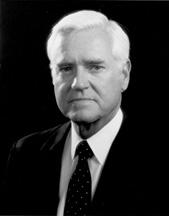
Mr. President, I rise today with my colleague Senator Gregg to introduce the Coastal and Estuarine Land Protection Act of 2003. Senator Gregg and I introduced this bill last session, and it was…
Mr. President, I rise today with my colleague Senator Gregg to introduce the Coastal and Estuarine Land Protection Act of 2003. Senator Gregg and I introduced this bill last session, and it was reported favorably by the Commerce Committee, but time did not permit action to be completed on the bill before the end of the Congress. My colleagues and I will work hard to pass this important piece of legislation during the 108th Congress.
I would like to thank our cosponsors, 24 in all, Senators Kerry, Snowe, Inouye, Jack Reed, Breaux, DeWine, Sarbanes, Biden, Kennedy, Mikulski, Cochran, Murray, Corzine, Collins, Dodd, Levin, Bill Nelson, Wyden, Lieberman, Feinstein, Lautenberg, Cantwell, and Chafee for their strong support of this bill, which marks another important chapter of our thirty year effort to put coastal and ocean issues at the forefront of environmental policy.
I am also proud to say that the bill is strongly supported by The Trust for Public Land, Coastal States Organization, The Nature Conservancy, Land Trust Alliance, International Association of Fish and Wildlife Agencies, American Sportfishing Association, and the South Carolina Wildlife Federation. I understand that the U.S. Commission on Ocean Policy will also endorse this approach.
When I was Governor of South Carolina over 30 years ago, I experienced first hand the need for Federal direction and assistance to the States to enable them to effectively and sustainably manage coastal development. My experiences during a series of coastal hearings and continued research in the Senate led me to write the Coastal Zone Management Act of 1972, which provided clear policy objectives for states to establish coordinated coastal zone management programs to help balance coastal development with protection.
But we appear to need more tools to help States continue the job we started in 1972. In the year 2003, as our population grows, more and more people are moving to the coast to enjoy its beauty and recreational opportunities. In fact, by 2010, an estimated 60 percent of Americans will live along our coasts, which represent less than 17 percent of our land area. More than 3,000 people move to coastal areas everyday, and 14 of the Nation's 20 largest cities are on the coast, and are five times more densely populated than the interior of the country. As these good folks move to take advantage of coastal living, we have to be careful that we don't destroy the natural resources and quality of life that draw them to our shores. Big changes are coming to all of our coastal counties, and we must make some careful and smart decisions if we want to keep the very resources we depend on.
In particular, estuaries and wetlands have many unique attributes that make them important to both our natural resources and our economy. Estuaries, and the watersheds that flow into them, support fisheries and wildlife and contribute immensely to the coastal area economies. But these ecologically and economically important watersheds are also under the most threat from land development and conversion away from their natural state. Coastal urbanization trends are particularly strong in the southeastern areas. In my State alone, the Forest Service has estimated natural forests of the coastal plain will decrease by 1.9 million acres in the next 40 years--a 35 percent loss of South Carolina's forests. These findings and future trends tell me that for the good of our coastal communities we need some fast, targeted action to protect ecologically important coastal areas most threatened with development or conversion.
Now more than ever, the pressures of urbanization and pollution along our nation's coasts threaten to impair watersheds, impact wildlife habitat and cause irreparable damage to the fragile coastal ecology. The Environmental Protection Agency has reported that some areas of the country are seeing some improvement from the heavily polluted status of the past, but predicts that the more pristine areas like the Southeast, which has some of the best water quality in the Nation, will experience degradation of water quality due primarily to runoff of pollutants from rapid development in our coastal watersheds. This is very bad news for the shrimpers, oystermen, and recreational users who depend on these waters for their livelihood and quality of life.
We see strong signals of what continuing down this path will bring us: beach and shellfish closings, fish kills, and human health impacts. The National Research Council reports that over the next 20 years over 70 percent of our estuaries will experience more low oxygen--or ``eutrophic''--conditions, such as the Gulf ``Dead Zone.'' If this trend continues, our coastal economies will suffer and perhaps never recover. I know in my state the economy would falter greatly from the lack of fishing, shrimping and tourism opportunities, and this is true up and down the Atlantic coast, which contains 37 percent of the Nation's estuarine areas.
The good news is that there are ways we can make a difference, and we have some good models we can turn to. I am proud to say my home State of South Carolina is a leader in this area. The past decade I have led an extensive cooperative conservation effort, bringing together the State of South Carolina, private landowners, groups like the Nature Conservancy, Ducks Unlimited and federal partners like NOAA and the Fish and Wildlife Service to protect the ACE Basin. It is now the largest pristine estuarine reserve on the East Coast, a 350,000-acre area at the convergence of the Edisto, Ashepoo and Combahee Rivers, which comprises many ecologically important habitats that are home to many fish and bird species, including a number of endangered species. An outcome of these efforts is that the ACE Basin, already home to a National Wildlife Refuge, was declared a National Estuarine Research Reserve in 1992, and has been growing in size ever since. In building the ACE Basin, the partners worked creatively and in a coordinated manner, and we successfully obtained land acquisition funds through a variety of
federal sources, including the Forest Legacy Program.
What became clear, however, is that there is no Federal program explicitly setting aside funding for conservation of coastal lands, where the needs are clearly the greatest. That is exactly what the Coastal and Estuarine Land Protection Act of 2003 will do. It authorizes a competitive matching grant program in NOAA to enable states to permanently protect important coastal areas.
Under this NOAA program, coastal states can compete for matching funds of up to 75 percent to acquire land or easements for the protection of endangered coastal areas that have considerable conservation, recreation, ecological, historical or aesthetic values threatened by development or conversion. The bill also provides funding for a regional watershed demonstration project that can be used as a model for future watershed-scale programs. The program is authorized at $60 million for fiscal year 2004 and beyond, with an additional $5 million for the regional watershed demonstration project.
By establishing a plan for the preservation of our coastal areas, the Coastal and Estuarine Land Protection Act will build on the foundation laid down by the CZMA, all in stride with the changing times, growing number of people, and limited resources available today. When it comes to the environment, rules and regulations sometimes can't do it all. Sometimes cooperative actions work better and we can turn to models that encourage joint conservation projects among folks who all want the same thing--sustainable coasts.
Partnership programs among federal government, state agencies, local governments, private landowners and non-profits, like the ACE Basin Project, work and we need to encourage these partnerships in all our coastal areas if we are to prevent degradation of our coastal resources. The good news is that we can make a difference today by providing the funding for land conservation partnerships provided for by the Coastal and Estuarine Land Protection Act. I am proud to be a sponsor of this bill, which will not only improve the quality of the coastal areas and marine life it supports, but also sustain surrounding communities and their way of life.
I ask unanimous consent that the text of the bill be printed in the Record.

Mr. President, today I rise on behalf of myself and my colleagues, Senators Charles Schumer and Lindsey Graham, in support of the Sickle Cell Treatment Act of 2003, which will help hundreds of…
Mr. President, today I rise on behalf of myself and my colleagues, Senators Charles Schumer and Lindsey Graham, in support of the Sickle Cell Treatment Act of 2003, which will help hundreds of thousands of people who suffer from Sickle Cell Disease. SCD, a genetic disease that affects red blood cells. This bill has bipartisan and bicameral support, as Representatives Danny K. Davis, a Democrat, and Richard Burr, a Republican, will introduce the companion bill today.
Sickle Cell Disease is an inherited blood disorder that is a major health problem in the United States, primarily affecting African Americans. People with sickle cell disease have red blood cells that contain an abnormal type of hemoglobin. Sometimes these red blood cells become sickle-shaped--crescent shaped--and have difficulty passing through small blood vessels. When sickle-shaped cells block small blood vessels, less blood can reach that part of the body. Tissue that does not receive a normal blood flow eventually becomes damaged. This is what essentially causes the potentially life-threatening complications of sickle cell disease. There is currently no cure.
More than 2,500,000 Americans, mostly African Americans, have the sickle cell trait. Among newborn American infants, SCD occurs in approximately 1, in 300 African Americans. The most feared complication for children with SCD is a stroke, which may affect infants as young as 18 months of age. While some patients can remain without symptoms for years, many others may not survive infancy or early childhood.
Many adults with SCD have severe physical problems, such as acute lung complications that can result in death. Adults with SCD can also develop chronic problems, including pulmonary disease, pulmonary hypertension, and kidney failure. The average life span for an adult with SCD is the mid-40s. Stroke in the adult SCD population commonly results in both mental and physical disabilities for life.
The Sickle Cell Treatment Act of 2003 helps combat SCD by providing Federal matching funds for SCD-related services under Medicaid, and by allowing States to receive a Federal 50-50 match for nonmedical expenses related to SCD treatment such as genetic counseling. This bill also authorizes a grant program in the amount of $10 million per year for 5 years to fund 40 health centers nationwide. Although I will go into detail about the bill, its focus is to encourage States to partner with SCD providers, who have historically been on the frontlines of this issue, to treat and find a cure for SCD patients.
With regard to the Federal matching funds, this bill allows states to reimburse SCD services beyond current Medicaid law, which only covers physician and laboratory services. For example, if a State wanted to increase reimbursement rates for SCD blood transfusions, it could do so through rate setting for the new SCD benefit without having to increase reimbursement for all Medicaid blood transfusions, therefore, making it easier for a State to reimburse at a higher rate for SCD-related treatment.
The bill also provides Federal reimbursement for education and other services related to the prevention and treatment of SCD. This will allow States to get a Federal 50-50 match for nonmedical, administrative expenses to include outreach and genetic counseling about SCD and its treatment for SCD patients of any age. This is critical to helping this historically underserved population, many of who may not know about SCD or its symptoms until it is too late.
This bill also allows hospitals and clinics to do outreach with non- medical personnel to educate high-risk communities about recognizing SCD. It would also allow nonmedical personnel like counselors to spend time with SCD families to discuss how to manage the disease. Providing this one-stop shop will centralize SCD-related treatment and counseling services to better serve those with SCD.
In addition to the diagnosis and treatment components, this bill creates a grant program for 40 health centers nationally. Specifically, the U.S. Department of Health and Human Services is authorized to distribute grants to up to 40 eligible health centers nationwide for $5 million for the next 5 fiscal years. Grants may be used for purposes including the education, treatment--i.e., genetic counseling and testing--and continuity of care for individuals with SCD, for training health professionals, and to identify and secure additional Federal funds to continue SCD treatment.
This bill also creates a National Coordinating Center to collect, monitor and distribute information on new and innovative practices to prevent and treat SCD, establish a model protocol for the grant recipients to follow as a quality control mechanism, develop educational materials regarding the prevention and treatment of SCD, and submit a report to Congress to ensure fiscal accountability and provide information of recent developments towards a cure for SCD.
The Sickle Cell Treatment Act of 2003 provides tremendous benefits to States. The approach taken in this bill is to add services related to SCD to the list of services covered by Medicaid for those people who are eligible for Medicaid under current eligibility rules.
For example, the bill allows States to use Medicaid funds to work with providers to better serve areas with a high prevalence of SCD in fields such as education and counseling,which are currently not reimbursed by Medicaid. This bill also allows the States to create opportunities to partner with providers to determine ``best practices'' to encourage the most effective and efficient use of medical resources toward SCD treatment and education.
In introducing the Sickle Cell Treatment Act of 2003, we are trying to help thousands of Americans who live with this disease. This legislation will provide many of these patients with access to the essential treatments that they need. It has the support of many important groups representing the SCD, African-American and children's health care communities as well as the providers and researchers who are working to treat and find a cure for this disease. For example, Allan Platt, Program Coordinator, The Georgia Comprehensive Sickle Cell Center at Grady Health System in Atlanta, GA has written me the following letter, which states in part, ``You did a wonderful thing for sickle cell patients and for those who are caring for them. Let us know how we can rally support for this.''
I want to offer my appreciation to the Sickle Cell Disease Association of American Inc., SCDAA, for its vigilant efforts to help find a cure for SCD, and working with my office to help craft this critical piece of legislation. SCDAA President and Chief Operating Officer, Lynda K. Anderson, has provided tireless support on behalf of this effort. Also I would like to acknowledge the efforts of SCDAA Board Member Michael R. DeBaun, M.D., M.P.H, Assistant Professor of Pediatrics and Biostatistics at the Washington University School of Medicine in St. Louis, MO. Lynda and Michael have brought the issues addressed in this bill to my attention and helped to bring the introduction of this bill to fruition.
The SCDAA was founded in 1971 to provide an effective coordinated community-based approach to developing and implementing strategies to resolve issues surrounding sickle cell disease. Through three decades, SCDAA and its member organizations have demonstrated how community- based organizations and comprehensive health and research centers can work with local, State and Federal agencies in furtherance of national health care objectives. To this day, SCDAA continues to pursue legislative initiatives to secure additional government funding for research and community-based services. Moreover, it has demonstrated its capacity to provide continued leadership in this area as a potential national coordinator center, and I look forward to the organization applying for such a designation, once this measure has been enacted into law. My colleagues and I on both sides of the aisle and in both legislative bodies look forward to working with SCDAA to fight this good fight and to secure the resources required to address the very unique needs of patients, families and communities affected by
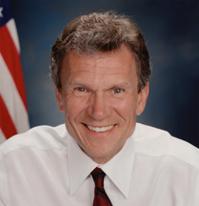
Mr. President, today I join with a bipartisan group of colleagues from the Senate Guard Caucus to introduce the National Guard and Reserve Comprehensive Health Benefits Act of 2003. This bill will…
Mr. President, today I join with a bipartisan group of colleagues from the Senate Guard Caucus to introduce the National Guard and Reserve Comprehensive Health Benefits Act of 2003. This bill will allow reservists and their families to receive health coverage through Tricare by paying a modest premium.
These dedicated men and women deserve a better benefit package, given the dramatic expansion of their role within our military. Indeed, there is concern that the high rate of mobilizations--which no one expects to abate--will erode this force's ability to recruit and retain top-notch personnel. South Dakota Guard leaders tell me this bill would be perhaps the most powerful tool we could give them for recruiting and retention. By providing access to quality affordable health care for reservists and their families, this bill will also ensure that when they are mobilized, they are healthy and ready to go.
As I stand before you today, nearly 2,000 members of South Dakota's Guard and Reserves are deployed throughout the world--from force- protection missions at home to assignments in Europe and the Persian Gulf. Most of these reservists will be mobilized for 6 months, and some will stay activated for up to 2 years. And while South Dakota has one of the highest per-capita mobilization rates in the country, it is not unique. As the U.S. role as an international leader evolves, the National Guard and Reserves are being called upon at unprecedented rates to bolster our Nation's defense.
Indeed, since the 1991 gulf war, and particularly since the terrorists attacks of September 11, the demands on Reserve and Guard units have increased steadily. Not only are more reservists deployed more often, they are also activated for increasingly diverse tasks. Historically, this force has helped address a wide variety of social needs--from enforcing civil rights laws to fighting forest fires--and homeland defense is shaping us a major new duty that will require its sustained engagement.
While the demands we place on reservists have grown markedly in the last decade, the Federal Government's commitment to this dedicated group of men and women has not kept pace. In fact, the basic pay and benefit structure that was established during the cold war--when reservists could see their entire career pass by without being activated--remains in place today. As a result, leaders of the National Guard and Reserves are increasingly worried about their ability to recruit and retain new members.
The legislation we are introducing today takes a major step toward providing the men and women of our Reserve components with the support they need to carry out their new, vital role in the total force structure. It will offer Reserve and National Guard members the opportunity to participate for themselves and their family members in the same Tricare program available to active-duty service members and their families. Reservists and their families will share the cost of premium payments with the Department of Defense, with the same cost distribution as used in the Federal Employees Health Benefit Plan. This program will help the National Guard and Reserves attract and keep the best and brightest men and women in the Nation.
The National Guard Association of the United States reports that the average cost of a family health care plan through a civilian HMO is $7,541 per year. In contrast, it estimates that the Tricare cost per family is only $5,173 per year, even without the Government sharing any of the cost. With Government cost-sharing, this will be an attractively priced option for securing health coverage.
Beyond recruitment and retention, this program will improve readiness. More than 20 percent of the Ready Reserve--and as much as 40 percent of young enlisted personnel--do not currently have health insurance. Providing access to quality health care during all phases of service can drastically reduce the occurrence of situations in which large portions of a unit are unable to deploy because of medical reasons. Maintaining a healthy force is absolutely essential to maintaining a prepared force.
Our legislation will also reduce the incidence of problems that invariably occur during mobilization, when families leave their private-sector health plan and enter a wholly new plan, Tricare. Last month, I worked with Secretary of Defense Donald Rumsfeld to end a nationwide problem among families of mobilized reservists. Simply put, they were being forced, unfairly and improperly, to join a more expensive Tricare plan. We did solve that problem, but many families had to wait weeks without knowing whether they should try to extend their private coverage or whether they could afford Tricare. That is simply unacceptable. It is the last thing a reservist should have to worry about when preparing, possibly, for deployment to a war zone.
Another challenge for families going through mobilization is learning the Tricare benefit structure and understanding its system for helping those with problems or questions. Again, all this would be eliminated if families could enroll in Tricare before mobilization. If a family believes its employer's civilian plan is superior, they would be free to remain, and, during periods of mobilization, those premiums would be partially subsidized.
We have developed this bill in consultation with leaders of the National Guard and Reserves at the State and National levels. I appreciate their concern for this problem and their work to help develop a solution. In this regard, I would particularly like to acknowledge the efforts and strong support of the South Dakota National Guard, as well as the Military Officers Association of America, the Enlisted Association of the National Guard, the National Guard Association of the United States, the Reserve Officers Association, the Marine Corps Reserve Officers Association, the National Military Family Association, the National Association for Uniformed Services, and the National Military/Veterans Association.
I would like also to thank my cosponsors, Senator Leahy, Senator DeWine, and Senator Gordon Smith, for helping advance this project.
Guaranteeing that all reservists have access to health care--either through civilian employers or Tricare--will ensure that this force is ready to fight at a moment's notice. The bill we are introducing today will not only improve the readiness of the current Reserve Force, but will pay dividends in the future by improving our ability to recruit and retain the best and brightest men and women for the National Guard and Reserves.
The Senate has set aside time each day for the last 3 weeks to honor and support the dedicated service of our troops in Iraq. Surely we can agree that one of our high priorities should be to ensure that, as long as they continue their service to our country, they will always have access to high-quality affordable health care.
Mr. President, today I am introducing two key education initiatives designed to promote quality education across our country and respond to the compelling needs in our schools. When I meet with…
Mr. President, today I am introducing two key education initiatives designed to promote quality education across our country and respond to the compelling needs in our schools. When I meet with teachers and parents, and even business leaders in West Virginia, everyone is concerned about the condition of our school buildings and the importance of qualified committed teachers working in those classrooms.
To address these clear and compelling needs, I am introducing two education bills. The first initiative, America's Better Classroom Act of 2003, is a school construction initiative to respond to the overwhelming needs for school construction. The Department of Education reports that the average public school building is 42 years old. In 1995, GAO estimated that we needed $112 billion for school construction and renovations. A more recent survey in 2001 in the Journal of Education Finance indicates that the need is increasing, and the unmet need for school infrastructure over the next decade is over $200 billion. My State of West Virginia will need as much as $2 billion for school construction and renovations.
America's Better Classroom Act provides the financial tools to help build and renovate our schools. It will continue the Qualified Zone Academy Bonding, QZAB, Program that has helped economically disadvantaged communities. This provision would provide $2.8 billion to continue and expand the successful QZAB Program. In recent years, this program has provided $4.2 million for support school construction and renovations in disadvantaged communities. Effective programs have earned continued support.
But the truth is that many schools districts need help with school construction and renovations, which is why the America's Better Classroom Act creates a $22 billion Qualified School Bonding Program. Funding will be allocated to the states based on the Title 1 formula so it is targeted, but the states will have flexibility in allocating support among school districts.
Last summer, I toured two schools in Berkeley County, WV--Martinsburg High School and South Middle School. The high school was built in 1928, but it had been renovated. The middle school was built in 1954, and needed serious work. The cafeteria had to serve as a part-time classroom, and they used portable trailers. These schools are in our eastern panhandle which is the region of the greatest population growth, so Berkeley County predicts that it will need to build or renovate nine schools over the next 10 years. Given the current state fiscal crisis, states and communities need the America's Better Classroom Act so that we can make needed investments. Also school construction can play a positive role in helping to stimulate our economy and create needed jobs. School construction is a more reliable economic stimulus, and an important investment in our children's education. I am proud to have Senators Tom Harkin, Tom Daschle, and Tim Johnson as cosponsors of this important initiative. Senator Harkin has been a true leader on education issues throughout this career, including school construction and renovations.
The next initiative to improve education is a bipartisan bill, known as Incentives to Educate American Children Act, or I TEACH. I am proud to have Senators DeWine, Landrieu, and Cochran as cosponsors.
Under No Child Left Behind, every classroom should have a qualified teacher. Studies suggest that an estimated 2 million new teachers will be needed in our classrooms over the next decade. It will be important to ensure that we recruit and retain good teachers in every classroom, including our most disadvantaged schools and our rural schools, which often have more trouble recruiting and keeping teachers.
Unfortunately, without our help, America's disadvantaged and rural schools may not be able to attract the qualified teachers required by the No Child Left Behind Act. Isolated and impoverished, competing against higher paying and well-funded school districts for scarce classroom talent, they are already facing a desperate shortage of qualified teachers. As pressure to hire increases, that shortage could become a crisis, and children already at a disadvantage in relation to their more affluent and less isolated peers will be the ones who suffer most. Principals in West Virginia already are reporting shortages of trained teachers.
To help bring dedicated and qualified teaching professionals into our schools, the I TEACH Act will provide teachers a $1000 refundable tax credit every year they practice their profession in the public schools where they are needed most. In addition to this incentive for disadvantage and rural schools, every public school teacher has the ability to earn a $1000 refundable tax credit if a teacher achieves the National Board for Professional Teaching Standards certification. Under the bill, every teacher willing to work in underserved schools will earn a tax credit. Every teacher who gets Board certification will earn a tax credit. Teachers who work in rural or poor schools and get certified will have both credits, worth $2000. Schools who desperately need help attracting teachers will get a boost. And children educated in poor and rural schools will benefit most.
One-fourth of America's children attend public schools in rural areas, and of the 250 poorest counties in the United States, 244 are rural. West Virginia has rural schools scattered throughout 36 of its 55 counties, and these schools face real challenges in recruiting and retaining teachers, as well as dealing with other issues related to their rural location. Attracting teachers to these schools is difficult in large part due to the vast gap between what rural districts are able to offer and the salaries paid by more affluent school districts--as wide as $20,000 a year, according to one study. Poor urban schools must overcome similar difficulties. It is often a challenge for these schools to attract and keep qualified teachers. Yet, according to the 2001 No Child Left Behind Act, every school must have qualified teachers by the end of the 2005-2006 school year.
In my State of West Virginia, as in over 30 other States, there is already a state fiscal incentive for teachers who earn National Board certification. My legislation builds upon the West Virginia program; together, they add up to a powerful tax incentive for teachers to remain in the classroom and to use their skills where they are most needed.
Education should be among our top national priorities, essential for every family with a child and vital for our economic and national security. I supported the bold goals and higher standards of the 2001 No Child Left Behind Act, but they won't be met unless we invest in quality schools and good teachers. I am committed to working closely with my Senate colleagues this fall to secure as much funding as possible for our children's education.

Mr. President, I would like to introduce a bill which names one of our post offices in Billings, Montana, after one of this Nation's greatest leaders and true patriot: former President Ronald Reagan.…
Mr. President, I would like to introduce a bill which names one of our post offices in Billings, Montana, after one of this Nation's greatest leaders and true patriot: former President Ronald Reagan. His legacy extends far beyond his Presidency. I think it's only fitting that I introduce this legislation today, since President Reagan worked tirelessly to end the Cold War and liberate millions of people, and we see the same dedication today to free the people of Iraq. President Reagan spoke about the threat of Saddam Hussein, and asked, ``will we be ready to respond?'' He went on to answer this question by saying, ``In the end, it all comes down to leadership. This is what this country is looking for now. It was leadership here at home that gave us strong American influence abroad and the collapse of imperial communism. Great nations have responsibilities to lead and we should always be cautious of those who would lower our profile because they might just wind up lowering our flag.'' He made these comments not two weeks ago, and not even two months ago. President Reagan, already sensitive to the threat posed by Saddam Hussein, asked this rhetorical question in 1994. This foresight was evident during President Reagan's tenure in the White House. President Reagan played a significant role in framing the modern political landscape, and I am proud to do what I can to commemorate his contribution to America and the world. I can clearly remember President Reagan's visit to Big Sky Country in 1982 for the Centennial celebration for Billings and Yellowstone County. He arrived in the Billings Metra Arena, one of the largest venues in the State, riding in a stagecoach. He embraced the ideals that Montana stood for, and said he was trying to bring a little of it to Washington. I feel much the same way as President Reagan did when he said, ``What we're trying to do in Washington is reawaken the government to the very values that you here in Billings represent-- determination, responsibility, confidence, and common sense--the kind of common sense that says if it ain't broke, don't fix it. We are reintroducing the idea that progress is still an American word and that optimism is still an American trait. I believe if we cling to our hopes and dreams, I believe the future will flower just as it did for the founders of Billings, Montana.'' Now more than ever, we need to remember that ``progress'' and ``optimism'' are part of the American vocabulary. The wisdom of President Reagan helped guide us in the right direction, and I am pleased and honored to introduce this legislation today so that we may dedicate a piece of Montana to a great visionary and statesman.
Thank you, Mr. President. I rise today to introduce the CAN-SPAM bill along with my good friend and colleague Senator Wyden. The CAN-SPAM bill addresses an issue of critical importance to the further development of commerce on the Internet: how to control the explosion of unsolicited commercial e-mail. I also want to thank the additional original cosponsors of the bill, Senator Stevens, Senator Breaux, Senator Thomas, Senator Landrieu and Senator Schumer.
While it is obvious to anyone with an e-mail account that the scourge of ``spam'' has continued to worsen, the numbers and the trends they represent paint an even more disturbing picture. According to an article in the Washington Post less than a month ago, spam currently accounts for 40 percent of all e-mail traffic. Spam has become more than just an inconvenience that we have learned to live with; it has now become a fundamental part of any e-mail inbox with serious economic consequences. According to one study done by a consulting group, spam will cost U.S. businesses more than $10 billion this year alone.
Spam also makes working on the Internet less efficient, by clogging up servers on one end and inboxes on the other. I want some accountability brought to bear on this issue, and feel that by introducing this legislation today, we have taken an appropriate and meaningful step to tame a horse we can't seem to break just yet. This problem continues to escalate, and experts warn that more than half of e-mail traffic will be spam by this summer. This point bears repeating: within months, you will waste more than half of your time with unsolicited e-mail.
The CAN-SPAM bill would require e-mail marketers to comply with a straightforward set of workable, common-sense rules designed to give consumers more control over spam. Specifically, the bill would require a sender of marketing e-mail to include a clear and conspicuous ``opt- out'' mechanism so that they could ``unsubscribe'' from further unwanted e-mail. Also, the bill would prohibit e-mail marketers from using deceptive headers or subject lines, so that consumers will be able to tell who initiated the solicitation.
The bill includes strong enforcement provisions to ensure compliance. The Federal Trade Commission would have authority to impose steep civil fines of up to $500,000 on spammers. This fine could be tripled if the violation is found to be intentional. In short, this bill provides broad consumer protection against bad actors, while still allowing Internet advertising a justified means of flourishing.
Spamming is a serious economic problem and I believe it is absolutely critical that we address this now, so that the Internet is allowed to reach its full potential. Because of the vast distances in Montana, many of my constituents are forced to pay long-distance charges for their time on the Internet. Spam makes it nearly impossible for these people to enjoy the experience, and it makes it even harder for them to see how this will help rural America flourish in the 21st century. Also, Internet service providers are bombarded with spam that often corrupts or shuts down their systems. In today's information age where beating the competitor to the next sale is absolutely critical to survival, these shutdowns can cause real economic damage. We may be in a downturn in the American economy and especially in the high technology sector, but the efficiencies created through vast information sharing are here to stay and will help propel our economy to levels beyond our imagination, but in order to reach this potential we must eliminate the bad actors who threaten these efficiencies.
The fact that this bill is strongly supported by pillars of the Internet age such as Yahoo, America Online and eBay is a testament to its common-sense approach. I think these companies for their critical expertise in perfecting this bill which would help to address this scourge of the digital age. I also appreciate the numerous valuable suggestions from the many concerned cyber-citizens who want to see this Pandora's box of digital dreck closed once and for all.
Mr. President, I ask unanimous consent that the text of the bill be printed in the Record.

Mr. President, I am honored to be a cosponsor of the Microbicides Development Act of 2003. The legislation calls for a redoubling of the effort at the National Institutes of Health and the Centers…
Mr. President, I am honored to be a cosponsor of the Microbicides Development Act of 2003. The legislation calls for a redoubling of the effort at the National Institutes of Health and the Centers for Disease Control to develop microbicides, a class of products that can prevent transmission of HIV and other sexually transmitted diseases in women and their partners.
As this Congress continues to fight AIDS, taking tiny steps in pursuit of a challenge racing away from us, I see the development of microbicides as another ``tiny'' step forward. I believe microbicides are an important addition to the arsenal to fighting AIDS, and indeed the Global AIDS bill I introduced, The Global CARE Act of 2003, S. 250, includes microbicides among the preventative measures the U.S. should support.
I, and the other cosponsors of this important legislation, see a real need and urgency to expand the range of preventive interventions for HIV transmission. The ABC options for preventing HIV infection, which remain a key part of our response and contribute to the world's ability to slow the spread of HIV/AIDS, have not changed since the 1980s: A, abstinence when it comes to sexual activity; B, be faithful to one partner; C, if you are going to ignore the other two, use a condom. Despite the effectiveness of the ABCs in many areas, HIV/AIDS continues to spread. We urgently need more prevention options.
Microbicides, defined as antimicrobial products that can be applied topically for the prevention of sexually transmitted diseases, STDs, including HIV, may offer one of the most promising preventive interventions. They could prove to be safe, effective, inexpensive, readily available, and widely acceptable. Microbicides will add to the range of options available. Most importantly, microbicides offer an additional method of prevention that can be controlled by women.
Notwithstanding the knowledge of successful HIV prevention strategies--condom use, reduction in the number of sexual partners, diagnosis and treatment of sexually transmitted infections--HIV continues to spread at an alarming rate especially among women in developing countries.
In sub-Saharan Africa, the area hardest hit by the pandemic, women and girls account for 58 percent of those living with AIDS. Worldwide, women represent 50 percent of those infected, an increase of 9 percent in five years. In some of the hardest hit countries in southern Saharan Africa, HIV prevalence among girls aged 15 to 19 is four to seven times higher than among boys their age. Attitudes, beliefs, and taboos surrounding sex, the status of women and children, and the source and causes of AIDS also complicate attempts to control transmission and provide appropriate prevention and treatment.
In the United States, more than 30 percent of newly reported HIV cases diagnosed are occurring in women, according to the most recent data collected by the Centers of Disease Control. As in the rest of the world, the majority of these reported HIV infections among U.S. women result from heterosexual transmission, and the data suggest that younger women are disproportionately at risk for acquiring HIV.
Microbicides will be particularly attractive to those who do not wish to draw attention to the fact that they are using a prevention method. Unlike male or female condoms, microbicides are a potential preventive option that women can easily control and that does not require the cooperation, consent or even knowledge of the partner. Microbicides are likely to be cheaper than condoms and, in the future, microbicides could be used to prevent mother-to-child transmission of HIV.
Microbicides have been under development for more than a decade. Yet, it is unlikely that they will be available before 2007, which leads to the general perception that there has been insufficient progress in this area. Three versions are currently in the final stages of clinical trials to determine whether they are safe and effective. Many factors contribute to this slow progress. The National Institutes of Health, NIH, reports that microbicide research requires huge and complex efficacy and effectiveness studies that must be conducted in areas with high HIV incidence rates. Such rates occur predominantly in developing countries where the research infrastructure is underdeveloped. Given this dependency on poorer, developing nations, it is not surprising that no large pharmaceutical company is interested in funding microbicide development. A second obstacle lies in the ethical obligation to provide counseling and make condoms available to the study subjects, which adds to the complexity and
size of the trials. As a result, NIH explains, few Phase III efficacy trials have been completed. Of those completed, few have yielded promising results.
Reflecting on the reality of the global epidemic, United Nations Secretary General Kofi Annan stated that the face of the HIV epidemic is that of a woman. ``If you want to save Africa,'' Annan says, ``you must save the African woman first. It is they who care for the young, the old, the sick and the dying. It is they who nurture social networks that help societies share burdens.''
Lack of access to treatment and care means that for the majority of HIV-positive women throughout the world, HIV infection is a death sentence. In Haiti, for example, AIDS is now the leading cause of death for women of childbearing age.
Microbicides will never become a viable option for prevention unless a serious amount of money is invested in their development. Senator Corzine's legislation will make microbicide research a priority, calling for the expansion and coordination of microbicide activities at the National Institutes of Health and other agencies working in this field. The bill requires the Centers for Disease Control to implement a 5-year topical research plan and requires the U.S. Agency for International Development to develop and implement a microbicide agenda.
I am proud to join Senator Corzine as a cosponsor of this legislation and hope that my colleagues will join us as we determine the next steps in our battle against AIDS, including the development of prevention efforts that may help women take control of their lives and their survival.
Show 11 more

Mr. President, today I am joined by Senator DeWine, by our minority leader, Senator Daschle, and by Senator Smith in introducing legislation that will boost the readiness of our Nation's military…
Mr. President, today I am joined by Senator DeWine, by our minority leader, Senator Daschle, and
by Senator Smith in introducing legislation that will boost the readiness of our Nation's military Reserve.
Never has our Nation relied more heavily on the Selected Reserve-- more than 875,000 men and women, who stand ready for deployments at home or abroad, at a moment's notice. More than 54 percent of the U.S. Army's and 34 percent of the U.S. Air Force's end strength resides in the Selected Reserve. Both the Army and the Marine Corps rely on these Reserve forces for almost 20 percent of their manpower strength. The skill, experience and professionalism of these dedicated citizens often meet and exceed those of their brave counterparts in the active force.
It is no wonder that more than 200,000 reservists have been called to duty for service that is related to the war in Iraq. Many States have thousands of their citizens who have temporarily dropped their civilian jobs and left their families for deployments halfway across the globe. More than 300 citizen-soldiers, sailors, airmen, and marines in my home State of Vermont are serving proudly at the moment, here and abroad. When you include the call-ups since the September 11 attacks, the number of activated reservists across the country far exceeds those in the first gulf war.
These deployments have spotlighted some specific and solvable problems that have affected the readiness of the reserves and, in turn, our entire military. Some of the troops who have been called up have not been as healthy as possible. Others have faced the stress of leaving their families behind while looking back in concern as their families try to navigate the sometimes arcane military health care system. While often experiencing a loss of income, reserve family members also have had to leave their civilian doctors and join the military's TRICARE program.
More troubling, many of the members of the Guard and Reserve who might be activated any day do not currently have access to affordable health insurance. A recent General Accounting Office report underscores the fact that most of these uninsured Guard and Reservists reside in the lower enlisted ranks, where the reserve soldiers, sailors, airmen, and marines oftentimes are unemployed or switch jobs frequently. It is unfair to them and their families, and it is unwise for the preparedness of our military, to expect someone to deploy anywhere at the drop of a hat, but then to disregard whether they will be as healthy as possible when we need to call them to active duty.
These men and women are ready to make the ultimate sacrifice for their country, and so are their families. But they are performing as full-time soldiers with part-time benefits.
This situation is preventing the National Guard and the Reserve from being as ready as possible for action. At the same time, the stress and strain that activations place on families has hurt recruiting and retention. To ensure the strongest and most effective reserve and the strongest and most effective military capability, it is critical that we address these issues and provide comprehensive health insurance coverage.
The National Guard and Reserve Comprehensive Health Benefits Act of 2003 will provide seamless health coverage to our reserve forces at all phases of their service. Under our plan, if one of 876,000 members of the Selected is in a drill status, that reservist and his or her family will become eligible to join the TRICARE military health insurance program. The reservist will pay an annual premium, around 30 percent of the annual cost of providing care. For a single reservist, the premium would be about $420 per year, while for a family the annual payment would be about $1,450. This is not rock-bottom-cheap health care, but our aim is to ensure affordable health insurance for hard-working families that may not otherwise have access to coverage.
If a reservist is activated, he or she will continue to have free health care through the military health system. But under our legislation, the reservist's family will be able to avoid the considerable difficulties of switching doctors and health insurance. They also can apply to have their civilian health insurance reimbursed. The program will not cost any more to the Federal Government than the current arrangement because the per capita costs are capped to ensure that they are no more than the cost of TRICARE. And when a reservist comes off active duty, he or she will be able to enter the new premium- based TRICARE program, just as before deployment.
Because reservists will be able to have access to affordable insurance whatever their deployment status, this legislation is being supported by several leading organizations, including the National Guard Association of the United States, NGAUS, the Enlisted National Guard Association of the United States, EANGUS, the Reserve Officers Association, ROA, the Naval Reserve Association, NRA, the National Military Family Association, NMFA, Marine Corps Reserve Officers Association, the National Association for Uniformed Services, the National Military/Veterans Association, and the Military Officers Association, MOA. This legislation is the top priority of The Military Coalition's Guard/Reserve Committee.
We have worked hard to fully understand the existing problems and to construct this efficient and effective solution. I would particularly like to thank former Undersecretary of Defense Fred Pang and former House Armed Services Committee Professional Staff Member Karen Heath for their sage counsel and guidance in developing this legislation. We are part of a strong, bipartisan coalition that will push for enactment of this long-overdue legislation. In the coming weeks we plan to welcome additional cosponsors for this comprehensive bill as we begin the process of moving it without delay through the legislative process and to the President's desk.
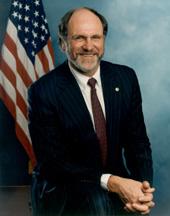
Mr. President, I rise today to introduce legislation, the Microbicides Development Act of 2003. I am very pleased to be introducing this bipartisan bill along with my colleagues, Senators Snowe,…
Mr. President, I rise today to introduce legislation, the
Microbicides Development Act of 2003. I am very pleased to be introducing this bipartisan bill along with my colleagues, Senators Snowe, Cantwell, Gordon Smith, Dodd, Leahy, Murray, Durbin, and Lautenberg. I thank my colleagues for their support of this important legislation, which we believe is vital to the pursuit of combating the global HIV/AIDS crisis.
As you know, recently released UN reports paint the most horrendous picture yet of the HIV epidemic, with AIDS continuing to kill more people worldwide than any other infectious disease, and sparing no corner of the world. According to the UN, China could have more than 10 million HIV-infected people by 2010. Infection rates in Russia and Eastern Europe are rising faster than anywhere else. India may soon have the largest number of people living with HIV/AIDS in the world. And Sub-Saharan Africa remains devastated by an epidemic that has lowered life expectancy from 62 years on average to just 47. In hard- hit countries like Botswana, where 45 percent of women attending prenatal clinics are HIV-positive, a 15-year old youth has an 80 percent chance of dying of AIDS.
The UN reports come on the heels of CIA assessments that the AIDS pandemic is entering a ``stage of substantial increases in size and scope.''
Despite alarm bells ringing from the organizations as diverse in mandate as the UN and the CIA, little attention is paid to the reality that the face of the HIV epidemic both at home and abroad is increasingly female. As of the end of 2002, according to the Joint United Nations/World Health Organization Programme on HIV/AIDS, half of the world's HIV/AIDS-infected people were women. In Sub-Saharan Africa, 58 percent of all adult HIV/AIDS cases were found in women, and in hard-hit nations such as Zambia, girls are five times more likely than boys to be HIV positive.
Here in the United States, 30 percent of new HIV infections each year occur among women, most of whom, 64 percent, are African-American. The majority of U.S. women, 75 percent, acquire the disease through heterosexual transmission. My own State of New Jersey has the Nation's highest HIV/AIDS infection rate among women and the sixth highest infection rate among all adults. And here in our Nation's capital, one in three people with HIV now is a woman.
Biologically, women are four times more vulnerable to HIV infection. Their vulnerability increases due to their lack of economic and social power in many societies, where women often cannot control sexual encounters or insist on protective measures such as abstinence or mutual monogamy. The typical woman who gets infected with HIV has only one partner--her husband. This trend devastates families and puts children at risk.
This astounding reality bears restating: The single greatest risk factor for a woman in the developing world of contracting the HIV virus is being married.
Women need HIV-prevention tools that they can control to safeguard their health and that of their families and communities. Unfortunately, there exists absolutely no HIV or STD prevention method that is within a woman's personal control. Condom use must be negotiated with a partner. We are all aware that for too many women, particularly low- income women in the developing world and many in our own country who rely upon a male partner for economic support, there is no power of negotiation. We know these women are at risk--yet, we expect them to protect themselves without any tools.
Today we have the opportunity to invest in groundbreaking research that can produce these tools, and ultimately, empower women. Microbicides are self-administered products that women could use to prevent transmission of STDs, including HIV/AIDS. I say ``could'' because due to insufficient research investments, no microbicides have been brought to market. This legislation would expand federal investments for microbicide research at the National Institutes for Health, NIH, the Centers for Disease Control and Prevention, CDC, and the United States Agency for International Development, USAID.
In addition to encouraging new investments in microbicide research, the Microbicides Development Act will expedite the implementation of the NIH's five-year strategic plan for microbicide research, as well as expand coordination among Federal agencies already involved in this research, including NIH, CDC, and the United States Agency on International Development, USAID.
Perhaps most importantly, the legislation calls for the establishment of a Microbicide Research and Development Branch within the National Institute of Allergy and Infectious Diseases.
The National Institutes of Health, principally through the National Institute of Allergy and Infectious Diseases, NIAID, spends the majority of Federal dollars in this area. However, microbicide research at NIH is currently conducted with no single line of administrative accountability or specific funding coordination. In addition, other federal agencies such as CDC and USAID undertake microbicides research and development activities. Because there is no federal coordination, however, there is the risk that inefficiencies and duplication of effort could result. Through a variety of committees Congress has requested that NIH and its Office of AIDS Research provide Congress with a ``federal coordination plan'' for research and development in this area, but formal submission of this plan has been repeatedly delayed.
A branch dedicated to microbicide research and development at the NIH is essential to providing the appropriate staff and funding for the coordination of these activities at the NIH and across agencies.
I ask unanimous consent that the text of the bill be printed in the Record.
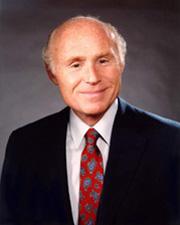
Mr. President, I rise today to introduce the Child Safety Lock Act of 2003, on behalf of myself, Senator Durbin, Senator Schumer, Senator Corzine, and Senator Feinstein. Our measure will save…
Mr. President, I rise today to introduce the Child Safety Lock Act of 2003, on behalf of myself, Senator Durbin, Senator Schumer, Senator Corzine, and Senator Feinstein. Our measure will save children's lives by reducing the senseless tragedies that result when children get their hands on improperly stored and unlocked handguns.
Each year, children and teenagers are involved in more than 10,000 accidental shootings in which close to 800 of them die. In addition, each year more than 1,000 young people killed themselves with a firearm--that is almost three per day. Safety locks can be effective in deterring or preventing many of these incidents.
The sad truth is that we are inviting disaster every time an unlocked gun is stored in a place that is still accessible to children. Parents take a number of precautions to ensure their children's safety, from equipping them with bike helmets, to securing them in automobiles, to changing smoke detector batteries. Unfortunately, not all parents are as safety conscious about child proofing their firearms.
Guns are kept in 43 percent of American households with children. In 23 percent of these households, the guns are kept loaded. And alarmingly, in one out of every eight of those homes the loaded guns are left unlocked.
This is wrong and unacceptable.
Such startlingly cold statistics cannot even begin to describe in human terms the daily tragedies that could be prevented by the use of a safety lock.
For example, in January a 21-month-old little boy was fatally shot when he tipped over a laundry hamper containing a loaded handgun. The handgun did not have a lock. The boy had no supervision. The result was tragic. A lock would have also saved the life of a four-year-old in Florida who shot himself playing with his grandfather's gun while the rest of his family was sleeping. Last September, a Detroit mother lost her son because he accidentally shot himself with a gun she had borrowed to protect herself. And, of course, no one will ever forget the Santana High School shooting two years ago, when a high school freshman opened fire on his classmates, killing two and injuring 13 others with a handgun and multiple rounds of ammunition he found at home.
Our legislation will help prevent tragedies like these. It is simple, effective, and straightforward. It requires that a child safety device--or trigger lock--be sold with every handgun. These devices vary in form, but the most common resemble a padlock that wraps around the gun trigger and immobilizes it. Trigger locks can be purchased in virtually any gun store for less than ten dollars. They are already used by tens of thousands of responsible gun owners to protect their firearms from unauthorized use and have surely saved many lives.
Protection is only as good as the safety lock itself, therefore the Child Safety Lock Act of 2003 includes standards for the safety locks. Studies by the Consumer Product Safety Commission and recalls by safety lock manufacturers conclusively demonstrate the child safety locks are often not made well enough. A lock that is easily picked or one that breaks apart with little force defeats the purpose of this bill. We would not use a lock that is less than foolproof to guard our most valuable possessions. We should not use defective locks to protect what is most valuable to us--our children.
Support for this simple, common sense proposal is widespread. In 1999, a child safety lock provision passed the Senate by an overwhelming vote of 78 to 20 as an amendment during the juvenile justice debate. This proposal is as popular with the rest of the country
and the law enforcement community as it was with the 106th Senate. Polls show that between 75 and 80 percent of the American public, including gun owners, favor the mandatory sale of child safety locks with guns. When I surveyed almost 500 of Wisconsin's police chiefs and sheriffs last summer, 90 percent of respondents agreed that child safety locks should be sold with each gun.
During his campaign, President Bush indicated that if Congress passes a bill making child safety locks mandatory he would sign it into law. Two years ago, Attorney General Ashcroft affirmed the Administration's support of the mandatory sale of child safety locks during his confirmation hearings before the Senate Judiciary Committee.
Mr. President, this legislation is necessary to ensure that safety locks are provided with all handguns so that numerous lives are not lost in easily preventable accidents. We already protect children by requiring that seat belts be installed in all automobiles and that childproof safety caps be provided on medicine bottles. We should be no less vigilant when it comes to gun safety. I hope that the Senate will move to pass the Child Safety Lock Act of 2003 so that further unnecessary death and injury can be avoided.
Mr. President, I ask unanimous consent that the text of the bill be printed in the Record.
Mr. President, I rise today to introduce two important pieces of legislation that offer a helping hand to the members and families of the National Guard, the Reserves, and the regular active- duty…
Mr. President, I rise today to introduce two important pieces of legislation that offer a helping hand to the members and families of the National Guard, the Reserves, and the regular active- duty military.
The National Guard and Reserves used to be called ``forces of last resort,'' but they have become much more. Between 1945 and 1989, the Guard and Reserves were activated four times. Only four times in 45 years. Between 1990 and the present, in less than 15 years, the Guard and Reserves were activated six times. They have become a central element of our national defense.
We've come to rely on them to fight side-by-side with full-time active duty soldiers. Each time our Nation has needed them, the Guard and Reserves members have left their jobs, their homes, and their families to serve this nation with pride and distinction. They view activation as an opportunity for service, but the truth is that activation does cause challenges at home. We should do right by them.
Over the past few weeks, this body has considered a number of important measures for the Guard, the Reserves, and our entire military. I was pleased to support Senator Landrieu's amendment to raise combat and family separation pay and to modernize equipment. I also supported Senator Lincoln's effort to make sure that all members of the National Guard and Reserves can participate in the same health program that's available to full-time soldiers and their families. It's hard to believe, but 20 percent of the men and women in the Guard and Reserves don't even have health insurance.
Today, I am introducing two new pieces of legislation to address unique difficulties facing Guard and Reserve members and, in fact, members of the regular military as well. I've traveled around the bases in my State and, time and time again, soldiers and their families have told me they need help.
My first proposal is for child care. A few weeks ago, I outlined my ideas for addressing the growing challenges facing working families. Parents are working longer hours, earning less, and spending less time with their kids. One idea I offered was expanding afterschool programs for kids of working parents.
The child care crunch is enormously exacerbated for military families. When one parent is called away, the other must take on all the responsibilities around the home. And at the same time, many members of the Guard and
Reserves take a pay cut, making it more difficult to hire help.
Families can get child care on a military base, which is great for some families. But members of the Guard in North Wilkesboro, for example, live 173 miles away from the nearest military installation. Those families are totally left out.
My National Guard and Reserves Child Care Relief Act would give families financial help for child care in their hometown. We would help families with a mom or dad called away on active duty. This is a concrete, practical way to make a difference in people's lives.
I also have a bill to provide some help paying for education for the men and women who serve our country in the military. Nearly a quarter of Guardsmen and Reservists are college students, and many more are graduates with student loans.
While these patriots are fighting for their country overseas, we charge them interest on their student loans here at home. This happens even if they're serving on the frontlines in Iraq; even if they took a huge pay cut because they're in the Guard or Reserves; even if they have a very low income to begin with.
For somebody with an average size loan of $17,000, this can add up to as much as $1,400 in interest a year. That's not right. No one should return to civilian life deeper in debt because they took time off to serve their country. We should waive the interest on these Federal loans.
The Secretary of Education has the authority to waive interest under the HEROES Act of 2001, but he has chosen not to exercise it. My Fairness for America's Soldiers in Higher Education Act would require him to do just that.
It would also permanently end an Education Department policy- suspended during the current conflict--that makes many guardsmen and reservists who have to drop college courses when they are activated pay back student aid.
As we consider trillion-dollar budgets, these are modest ideas, but they would make a real difference in the lives of Americans serving their country and signal our appreciation for their sacrifice.
I urge my colleagues to support these important bills. I ask unanimous consent that the text of the bills be printed in the Record.

Mr. President, I rise today to join with my colleagues in introducing the Child Custody Protection Act and express my strong support for this important piece of legislation. Similar legislation was…
Mr. President, I rise today to join with my colleagues in introducing the Child Custody Protection Act and express my strong support for this important piece of legislation. Similar legislation was previously introduced in past sessions of Congress but, and I am sad to say, never was signed into law. However, I hope that today is the beginning of a new day to help protect the health and safety of children while safeguarding the rights and responsibilities of parents.
This bill is a reasonable effort to build upon two basic points with which many agree--despite other longstanding differences. The first is the desirability of parental involvement in a minor's abortion decision, and the other is the need to protect a pregnant minor's physical health.
This bill does not supersede, override, or in any way alter existing State parental consent or notification laws. Nor does this bill require States to implement their own parental involvement laws. The Child Custody Protection Act simply makes it a Federal offense to knowingly transport a female minor across a state line, with the intent that she obtain an abortion, in circumvention of State laws requiring parental consent or notification.
This bill, I would emphasize, is not a Federal parental involvement law; it merely ensures that State laws are not evaded through interstate activity. The Federal Government is not trying to tell the States how they must act and when, and this bill is not forcing parents to be good parents. This legislation strengthens the effectiveness of State laws, which is where the issue is best addressed and enforced. If we fail to pass this bill, we would be choosing to ignore the legitimacy and constitutionality of States to create and pass laws that specifically address the needs and desires of its citizens, especially when it comes to the health and safety of children.
The Child Custody Protection Act is a reasonable and rational approach to fixing a serious problem. In most places, a school nurse cannot provide an aspirin to a student for a headache without permission from the parent. Students cannot go on field trips without parental approval. Some report cards need a parent's signature to verify the parent knows how their child is performing academically.
This bill is not addressing something relatively trivial; it is drawing attention to a very serious medical procedure and protecting the health and safety of young girls. States that choose to implement parental notification laws because of their concerns with the well- being and safety of children should have every tool necessary to enforce their own laws.
An abortion is a risky medical procedure, especially for young teenagers. This bill is designed to protect children from the health and safety risks associated with abortion. In many cases, only a young girl's parents know of her prior psychological and medical history, including allergies to medication and anesthesia. Many other medical procedures in this country require the
consent of parents before they are performed. Also, parents are usually the only people who can provide authorization for post-abortion medical procedures or even release important information from family physicians. Given all of these other important medical situations that require parental consent, it is only reasonable and logical to recognize and enforce a States law asking for parental consent or notification for certain abortions.
We all know how contentious the issue of abortion can get around here, and across the country. But this matter is not really even about abortion. This bill is simply about protecting the health and safety of minor children and the rights that their own States have concluded their parents should have.
I would urge all of my colleagues to support this legislation and prevent circumvention of State laws, especially when the health and safety of children is involved.
Mr. President, I rise to introduce the Child Custody Protection Act. This legislation makes it a Federal offense to knowingly transport a minor across a State line, with the intent that she obtain an…
Mr. President, I rise to introduce the Child Custody Protection Act. This legislation makes it a Federal offense to knowingly transport a minor across a State line, with the intent that she obtain an abortion, in circumvention of a State's parental consent or parental notification law.
I have three young children in school, including a daughter, so I know something about parental consent. My wife and I, like most parents, have to give our written consent for school activities all the time.
In most schools, an underage child can't go on a school field trip without a signed permission slip. An underage child also can't receive mild medication at school, such as aspirin, for the alleviation of pain or discomfort unless a parent signs a release form permitting the school nurse to administer it. In some schools, a child may not take sex education class without parental consent. Nothing, however, prevents this same child from being taken across State lines, in direct disobedience of State laws, for the purpose of undergoing a life- altering abortion.
The Child Custody Protection Act simply attempts to strengthen the effectiveness of State laws designed to protect children from the health and safety risks associated with abortion. In many cases, only a girl's parents know of her prior psychological and medical history, including allergies to medication and anesthesia. Also, parents are usually the only people who can provide authorization for post-abortion medical procedures or the release of pertinent data from family physicians. When a pregnant girl is taken to have an abortion without her parents' knowledge, none of these precautions can be taken. The harsh reality is that leaving parents uniformed about their underage daughter's abortion may not only be detrimental to the physical and mental health of the child but may, in some instances, be fatal.
This legislation does not supercede, override, or in any way alter existing State parental involvement laws. It does not impose any parental notice or consent requirement on any State. The Child Custody Protection Act addresses the interstate transportation of minors in order to circumvent valid, existing state laws and uses the authority of Congress to regulate interstate activity to protect those laws from evasion.
Currently, forty-three States have laws requiring a minor to get the consent of or notify one or both parents prior to an abortion, but only thirty-three are enforcing those measures. Most of the statutes apply to a child under the age of 18 and provide for a court bypass procedure should she be unable to involve her parents.
This legislation is a common sense solution to a dire problem. A minor who is forbidden to drink alcohol, to stay out past a certain hour, or to drive a car in some states is certainly not prepared to make a life-altering, hazardous decision, such as an abortion, without the consultation or consent of at least one parent.
In fact, a poll found that 85 percent of voters, including 75 percent of ``pro-choice'' voters, said ``No'' when asked, ``Should a person be able to take a minor girl across State lines to obtain an abortion without her parents' knowledge?''
I would like to thank the original cosponsors of this bill for their support, Senators Brownback, Inhofe, Talent, Santorum, Grassley, Enzi, Sessions, Allen, Bunning, Fitzgerald, Chambliss, DeWine, McConnell, Coleman, Kyl, Nickles, Lindsey Graham, Bond, Hagel, Craig, McCain and Hatch. I look forward to working with them, and other members of the Senate, to ensure that underage girls are protected from unscrupulous individuals who want them to make a life-altering decision without parental involvement.
I ask unanimous consent that the text of the bill be printed in the Record.
Mr. President, I rise today along with Senator Hollings to introduce the Coastal and Estuarine Land Protection Act. We are introducing this much needed coastal protection act along with Senators…
Mr. President, I rise today along with Senator Hollings to introduce the Coastal and Estuarine Land Protection Act. We are introducing this much needed coastal protection act along with Senators Kerry, Snowe, Inouye, Reed, Breaux, DeWine, Sarbanes, Biden, Kennedy, Mikulski, Cochran, Murray, Corzine, Collins, Dodd, Levin, Nelson, Wyden, Lieberman, Feinstein, Lautenberg, Cantwell, and Chafee. In addition, this legislation is supported by the Trust for Public Land, the Coastal States Organization, the Nature Conservancy, International Association of Fish and Wildlife Agencies, American Sportfishing Association, and the Land Trust Alliance.
The Coastal and Estuarine Land Protection Act promotes coordinated land acquisition and protection efforts in coastal and estuarine areas by fostering partnerships between non-governmental organizations and Federal, State, and local governments. With Americans rapidly moving to the coast, pressures to develop critical coastal ecosystems are increasing. There are fewer and fewer undeveloped and pristine areas left in the Nation's coastal and estuarine watersheds. These areas provide important nursery habitat for two-thirds of the Nation's commercial fish and shellfish, provide nesting and foraging habitat for coastal birds, harbor significant natural plant communities, and serve to facilitate coastal flood control and pollutant filtration.
The Coastal and Estuarine Land Protection Act pairs willing sellers through community-based initiatives with sources of Federal funds to enhance environmental protection. Lands can be acquired in full or through easements, and none of the lands purchased through this program would be held by the Federal Government. This bill puts land conservation initiatives in the hands of state and local communities. This new program, authorized through the National Oceanic and Atmospheric Administration at $60,000,000 per year, would provide Federal matching funds to States with approved coastal management programs or to National Estuarine Research Reserves through a competitive grant process. Federal matching funds may not exceed 75 percent of the cost of a project under this program, and non-Federal sources may count in-kind support toward their portion of the cost share.
This coastal land protection program provides much needed support for local coastal conservation initiatives throughout the country. In my role on the Commerce, Justice, State Appropriations Subcommittee, I have been able to secure significant funds for the Great Bay estuary in New Hampshire. This estuary is the jewel of the seacoast region, and is home to a wide variety of plants and animal species that are particularly threatened by encroaching development and environmental pollutants. By working with local communities to purchase lands or easements on these valuable parcels of land, New Hampshire has been able to successfully conserve the natural and scenic heritage of this vital estuary.
Programs like the Coastal and Estuarine Land Protection Program will now enable other States to participate in these community-based conservation efforts in coastal areas. This program was modeled after the U.S. Department of Agriculture's successful Forest Legacy Program, which has conserved millions of acres of productive and ecologically significant forest land around the country.
I welcome the opportunity to offer this important legislation, with my close friend, Senator Hollings. I am thankful for his strong leadership on this issue, and look forward to working with him to make the vision for this legislation a reality, and to successfully conserve our coastal lands for their ecological, historical, recreational, and aesthetic values.

Mr. President, I rise today to introduce a bill entitled the Department of Energy Catalysis Research and Development Act. Catalysis is at the heart of fuels production in the petroleum and chemical…
Mr. President, I rise today to introduce a bill entitled the Department of Energy Catalysis Research and Development Act.
Catalysis is at the heart of fuels production in the petroleum and chemical industries. Catalytic converters help reduce emissions of cars. Catalysis can help reduce carbon dioxide from industrial plants, which can contribute to global warming. The science of catalysis can help our pharmaceutical industry by one day mimicking nature's enzymes which are nature's catalysts. The industries I just mentioned contribute $500 billion to our gross national product; they all rely on catalysis to produce new compounds as efficiently as possible.
The catalysis science program is one of the hidden gems at the Department of Energy's Office of Science. The Department supports over 60 percent of the catalysis research in the Federal Government. I feel it is important that our energy bill highlights its basic research, and recommends a steady increase in funding levels for it.
The bill seeks to help the Department meet what it called the ''grand challenge'' in catalytic chemistry. The ``grand challenge'' which this bill seeks to address is first, the ability to design, at the atom level, catalytic structures to control ``catalytic activity'', or the rate at which a chemical reaction proceeds. The second part of this ``grand challenge'' is to control the ``selectivity'' of a catalytic reaction, or the ability of a catalytic compound to precisely seek out other chemicals through which to start a reaction. To achieve this `'grand challenge'', this bill directs the Department to design new catalytic compounds using the latest advancements in scientific computing. Today's computers are rapidly approaching a point where we can model a chemical reaction by simulating its atom level constituents. This bill directs the Department to utilize its state-of- the-art diagnostic equipment at its national laboratories and universities to analyze catalytic reactions in real time, and at the atomic level. These diagnostics will be used to validate computational models being developed in the advanced scientific computing program. This bill directs the Department to use the emerging field of nanoscience to tailor new catalytic compounds atom by atom, so as to accelerate reactions to produce clean fuels at rates that far exceed what we know today. In that regard, I expect the Department to utilize its nanoscience facilities to help design these new compounds. If we are successful in meeting this grand challenge, we will bring fuels to market quicker to meet increasing energy demands, while using less overall energy to produce them.
Finally, the bill directs the Secretary fund these efforts in multidisciplinary teams including computer scientists, chemists, biochemists, materials scientists and physicists. It requires the Department to transfer its catalysis research to industry so that they can bring to market the full fruits of our Government's advanced energy research in the shortest time possible.
We are currently debating an energy bill in the Energy and Natural Resources Committee. We plan to shortly mark up the research and development section, and, I think it is vitally important that this section address the topic of catalysis to produce future fuels for our Nation.
Mr. President, I ask unanimous consent that the text of the bill be printed in the Record.
Mr. President. Today I am introducing legislation, the Assure Access to Mammography Act of 2003, on behalf of myself and my colleagues, Senators Snowe, Inouye, Graham of South Carolina, Murray,…
Mr. President. Today I am introducing legislation, the Assure Access to Mammography Act of 2003, on behalf of myself and my colleagues, Senators Snowe, Inouye, Graham of South Carolina, Murray, Corzine, Biden, Specter, Landrieu, Johnson, Lincoln, Hollings, Mikulski, Clinton, and Ms. Collins to ensure women have full and timely access to preventive breast cancer screenings. As you know, the earlier a woman is diagnosed with breast cancer, the earlier she can begin to receive treatment and the more likely she will survive.
Unfortunately, due to inadequate reimbursement rates for mammograms, women increasingly are having problems getting the mammograms they need. Across the nation, there have been reports of women waiting up to six months for an appointment for this simple procedure. While mammograms often cost up to $150 to administer, Medicare's reimbursement rate is currently set at about $82, barely over half the actual cost of the procedure. This disparity increasingly makes access a real problem, forcing many private centers to shut down and creating a shortage of providers willing to provide services significantly below cost.
The Assure Access to Mammography Act would reverse this growing and alarming trend by correcting the two primary causes of the problem. First, it would increase Medicare reimbursement to radiologists to a reasonable level to ensure health care providers are reimbursed fairly for mammography services. Second, the bill would increase the number of radiologists by increasing the Graduate Medical Education payments to provide for three additional radiologists in each teaching hospital. Finally, the Assure Access to Mammography Act would provide a MEDPAC study on the Medicare reimbursement structure for gender specific medical procedures so that Congress and CMS have the tools we need to make appropriate health policy decisions.
This is an issue that hits close to home for me. Both of my sisters died of breast cancer, at a time when mammograms were not readily available. While imperfect, mammograms are the best-known way to diagnose breast cancer at an early stage in order to reduce mortality. As our society ages, one million additional women each year are needing regular mammograms. The Assure Access to Mammography Act will provide the resources our health care system needs to guarantee all women access to the mammograms they need to ensure that breast cancer is detected early enough to apply appropriate treatments effectively. I look forward to working with my colleagues to pass this needed bipartisan legislation.

Mr. President, today we are introducing the Tax Administration Good Government Act. The legislation contains five major components. First, it provides additional safeguards for taxpayers. Second, the…
Mr. President, today we are introducing the Tax Administration Good Government Act.
The legislation contains five major components. First, it provides additional safeguards for taxpayers. Second, the legislation significantly simplifies the current interest and penalty regimes. Third, the Act also includes the proposals passed out of the Finance Committee on April 2, 2003 and included in a bill introduced by Senators Hatch and Breaux to modernize the United States Tax Court.
Fourth, our legislation also includes several provisions, some of which were requested by the Treasury Department and the Joint Committee on Taxation, to strike an appropriate balance in protecting taxpayer confidentiality through disclosure reforms. Finally, the legislation takes a small, but important step toward simplification of the tax code through the elimination of obsolete provisions.
We have worked closely with the Treasury Department, the Internal Revenue Service, the National Taxpayer Advocate and the Joint Committee on Taxation to develop this package of proposals to promote good government in the administration of our tax code.
Congress's responsibility for the tax system does not stop after we pass tax law changes. We have an oversight responsibility to ensure that taxpayer rights are protected, that our tax laws are not administered counter to Congressional intent, that the judicial
body with primary jurisdiction over the tax laws has the tools necessary to provide independent review of controversies between taxpayers and the Internal Revenue Service, and to take steps to simplify the tax code whenever possible.
It is our intention to pass a package of tax administration good government proposals out of the Finance Committee in the coming months. We urge our colleagues to support this important legislation.
We also submit for the Record a more detailed description of the specific provisions included in the Tax Administration Good Government Act.
I ask unanimous consent that the text of the bill and the description be printed in the Record.

Mr. President, today I am joined by Senators Dorgan, Brownback, and Ensign in introducing the Commercial Spectrum Enhancement Act. This bill is designed to streamline the process of relocating…
Mr. President, today I am joined by Senators Dorgan, Brownback, and Ensign in introducing the Commercial Spectrum Enhancement Act. This bill is designed to streamline the process of relocating government users from spectrum reallocated for commercial use.
The bill would establish a separate fund on the books of the United States Treasury called the Spectrum Relocation Fund. When spectrum occupied by a Federal agency is auctioned, the proceeds from the auction would be deposited into the fund. Federal agencies would be able to withdraw from the fund the estimated expenses associated with the relocation, with additional expenses being approved by the Office of Management and Budget, with notice provided to Congress and the General Accounting Office, GAO, as necessary.
Currently, when spectrum assigned to a Government agency is auctioned, the law requires the agency to negotiate with the winning bidder to determine the cost of purchasing or returning new equipment necessary for the agency to transfer out of the spectrum band. These negotiations would be time-consuming and difficult for both parties. This bill would eliminate the need for lengthy negotiations between these parties. Thus it would accelerate the pace of introduction of new services using the spectrum.
Spectrum is a critical resource of our armed services. It is important that any relocation process consider the needs of our military operations. I believe that this bill would allow our military to have confidence that its relocation costs will be fully and timely reimbursed, while providing commercial bidders with certainty regarding the full cost of the right to use the spectrum and the ability to use it in a timely fashion.
Finally, the bill provides important oversight functions for Congress and the GAO to ensure that the fund is used in a manner that is fair and justified. In this way, American taxpayers are assured that their resources are used most efficiently.
Mr. President, I ask unanimous consent that the text of the bill be printed in the Record.
Bill Text
Latest available legislative text
        [Congressional Bills 108th Congress]
[From the U.S. Government Publishing Office]
[S. 857 Introduced in Senate (IS)]

108th CONGRESS
1st Session
S. 857

To amend the Internal Revenue Code of 1986 to provide a tax incentive
to individuals teaching in elementary and secondary schools located in
rural or high unemployment areas and to individuals who achieve
certification from the National Board for Professional Teaching
Standards, and for other purposes.

_______________________________________________________________________

IN THE SENATE OF THE UNITED STATES

April 10, 2003

Mr. Rockefeller (for himself, Mr. DeWine, Ms. Landrieu, and Mr.
Cochran) introduced the following bill; which was read twice and
referred to the Committee on Finance

_______________________________________________________________________

A BILL

To amend the Internal Revenue Code of 1986 to provide a tax incentive
to individuals teaching in elementary and secondary schools located in
rural or high unemployment areas and to individuals who achieve
certification from the National Board for Professional Teaching
Standards, and for other purposes.

Be it enacted by the Senate and House of Representatives of the
United States of America in Congress assembled,

SECTION 1. SHORT TITLE.

This Act may be cited as the ``Incentives to Educate American
Children (I Teach) Act of 2003''.

SEC. 2. FINDINGS AND PURPOSES.

(a) Findings.--Congress makes the following findings:
(1) An estimated 2,000,000 new teachers will be needed over
the next decade.
(2) Under the No Child Left Behind Act of 2001, States must
recruit qualified teachers by 2006, yet schools in rural areas
and public schools with high poverty have trouble attracting
and retaining teachers.
(3) Fourteen percent of America's school children attend
rural schools, and according to the Rural School and Community
Trust 2000 report, ``Why Rural Matters'', rural education is
crucial or very important to overall education performance in
25 States, so recruitment and retention of teachers is
essential.
(4) A 2000 study by the Education Trust reports that high
poverty schools are twice as likely not to have teachers
certified in their fields than other schools, which highlights
that high poverty schools will need special help to meet the
goals of the No Child Left Behind Act of 2001.
(5) The National Board for Professional Teaching Standards
was founded in 1987 as a follow up to the landmark 1983 report,
``A Nation at Risk'', by the Carnegie Task Force on Teaching.
The National Board for Professional Teaching Standards is an
independent, nonprofit, and nonpartisan organization the
mission of which is to establish high and rigorous standards
for what accomplished teachers should know and be able to do.
(6) Over 16,000 teachers from all 50 States and the
District of Columbia have completed certification by the
National Board for Professional Teaching Standards, which
certification is a rigorous assessment process for teachers.
(7) Recent data from the Accomplished Teaching Validation
Study have demonstrated that teachers who are certified by the
National Board for Professional Teaching Standards
significantly outperform their peers who are not National Board
certified on 11 of 13 key measures of teaching expertise.
(8) Teacher salaries have remained stagnant over the past
decade, according to a study by the National Education
Association, and \2/3\ of the States do not meet the national
average of $40,582 for teacher salaries.
(b) Purposes.--The purposes of this Act are as follows:
(1) To encourage teachers, through a refundable tax credit,
to work in public elementary and secondary schools located in
rural areas or schools with high poverty.
(2) To provide an additional tax credit to teachers who
achieve certification from the National Board for Professional
Teaching Standards in order to recruit and retain highly
qualified teachers in public elementary and secondary schools.

SEC. 3. REFUNDABLE TAX CREDIT FOR INDIVIDUALS TEACHING IN ELEMENTARY
AND SECONDARY SCHOOLS LOCATED IN HIGH POVERTY OR RURAL
AREAS AND CERTIFIED TEACHERS.

(a) In General.--Subpart C of part IV of subchapter A of chapter 1
of the Internal Revenue Code of 1986 (relating to refundable credits)
is amended by redesignating section 36 as section 37 and by inserting
after section 35 the following new section:

``SEC. 36. TAX CREDIT FOR INDIVIDUALS TEACHING IN ELEMENTARY AND
SECONDARY SCHOOLS LOCATED IN HIGH POVERTY OR RURAL AREAS
AND CERTIFIED TEACHERS.

``(a) Allowance of Credit.--In the case of an eligible teacher,
there shall be allowed as a credit against the tax imposed by this
subtitle for the taxable year an amount equal to the applicable amount
for the eligible academic year ending during such taxable year.
``(b) Applicable Amount.--For purposes of this section--
``(1) Teachers in schools in rural areas or schools with
high poverty.--
``(A) In general.--In the case of an eligible
teacher who performs services in a public kindergarten
or a public elementary or secondary school described in
subparagraph (B) during the eligible academic year, the
applicable amount is $1,000.
``(B) School described.--A public kindergarten or a
public elementary or secondary school is described in
this subparagraph if--
``(i) at least 75 percent of the students
attending such kindergarten or school receive
free or reduced-cost lunches under the school
lunch program established under the Richard B.
Russell National School Lunch Act, or
``(ii) such kindergarten or school has a
School Locale Code of 7 or 8, as determined by
the Secretary of Education.
``(2) Certified teachers.--In the case of an eligible
teacher who is certified by the National Board for Professional
Teaching Standards for the eligible academic year, the
applicable amount is $1,000.
``(3) Certified teachers in schools in rural areas or
schools with high poverty.--In the case of an eligible teacher
described in paragraphs (1) and (2), the applicable amount is
$2,000.
``(c) Eligible Teacher.--For purposes of this section, the term
`eligible teacher' means, for any eligible academic year, an individual
who is a kindergarten through grade 12 classroom teacher or instructor
in a public kindergarten or a public elementary or secondary school on
a full-time basis for such eligible academic year.
``(d) Additional Definitions.--For purposes of this section--
``(1) Elementary and secondary schools.--The terms
`elementary school' and `secondary school' have the respective
meanings given such terms by section 9101 of the Elementary and
Secondary Education Act of 1965.
``(2) Eligible academic year.--The term `eligible academic
year' means any academic year ending in a taxable year
beginning after December 31, 2003.''.
(b) Conforming Amendments.--
(1) Paragraph (2) of section 1324(b) of title 31, United
States Code, is amended by inserting before the period ``, or
from section 36 of such Code''.
(2) The table of sections for subpart C of part IV of
subchapter A of chapter 1 of the Internal Revenue Code of 1986
is amended by striking the item relating to section 36 and
inserting the following new items:

``Sec. 36. Tax credit for individuals teaching in elementary and
secondary schools located in high poverty
or rural areas and certified teachers.
``Sec. 37. Overpayments of tax.''.
(c) Effective Date.--The amendments made by this section shall
apply to academic years ending in taxable years beginning after
December 31, 2003.
<all>