United States Consensus Council Act of 2003
 Sen. Susan M. Collins (R-ME)
Legislative Activity
Stay on top of the latest movement without scrolling through every action
Placed on Senate Legislative Calendar under General Orders. Calendar No. 221.
July 22, 2003
View full timeline
Introduced in Senate
April 11, 2003
Read twice and referred to the Committee on Governmental Affairs.
April 11, 2003
Committee on Governmental Affairs. Ordered to be reported with an amendment favorably.
June 17, 2003
Committee on Governmental Affairs. Reported by Senator Collins with amendments. With written report No. 108-110.
July 22, 2003
Placed on Senate Legislative Calendar under General Orders. Calendar No. 221.
July 22, 2003
Floor Debate
23 membersWhat members said about S. 908 on the floor

 +18
+18
Floor Debate
23 membersWhat members said about S. 908 on the floor
Madam President, I rise to speak about the subject of taxation from a little different perspective, a legislative proposal which, if adopted, would add very considerably to productivity in America,…
Madam President, I rise today to introduce legislation that will provide State and local governments the flexibility they need for preparedness activities associated with the planning, procurement…
Mr. President, I rise today in support of The Unemployment Benefits Extension Act of which I am a proud cosponsor. The purpose of this bill is to extend the Temporary Extended Unemployment…
Mr. President, article I, section 8, clauses 12 and 13 are the source of Congress' power regarding the Army and the Navy. Interestingly, while clause 12 of the Constitution gives Congress the power…
Mr. President, today, my colleagues and I are introducing legislation to recognize the enormous contributions of immigrants in the military. The Naturalization and Family Protection for Military…
Show 8 more
Madam President, I rise today to introduce the Terrorist Victim Citizenship Relief Act, a bill that would provide citizenship relief to many families adversely affected by the attacks of September…
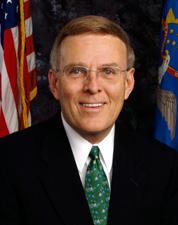
Madam President, today I am pleased to join my colleague, Senator Collins, in introducing legislation that would create the United States Consensus Council. This council would be a nonprofit,…
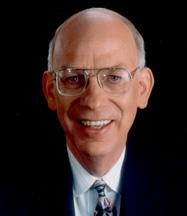
Mr. President, I ask unanimous consent that the Committee on Finance be authorized to meet during the session on Tuesday, June 17, 2003, at 10:00 a.m., to hear testimony on the ``Implementation of…
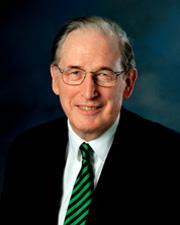
Mr. President, I rise today to introduce the Broadband Internet Access Act of 2003. Last year, this bill had broad bipartisan support with 65 cosponsors. Its companion legislation in the House of…
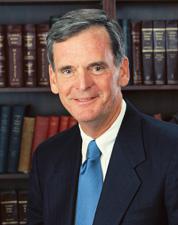
Mr. President, today I rise to introduce legislation reauthorizing the Museum and Library Services Act. I am joined in this effort by Senator Reed, Senator Frist, Senator Kennedy, Senator Enzi, and…
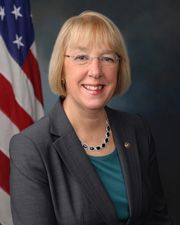
Mr. President, I am pleased today to introduce the Supporting Success for High Need Students Act, and I thank Senator Collins and Senator Kennedy for joining me in offering this legislation. In…
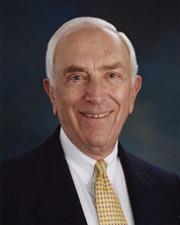
Mr. President, I rise to introduce the ``State and Local Reservist First Responders Assistance Act of 2003.'' My bill would reimburse State and local governments for the additional costs they incur…

Madam President, I am extremely pleased to join with my colleague Senator Santorum today to introduce the Workplace Religious Freedom Act of 2003. Senators Ensign, Mikulski, Smith, Murray, Hatch,…
Show 11 more
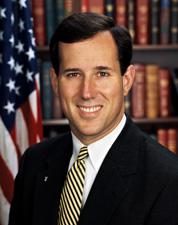
Mr. President, today I am pleased to join concerned colleagues, both Republicans and Democrats, as well as concerned citizens, including Christians, Jews, Muslims, and Sikhs among many other faiths.…

Mr. President, the tragic events of September 11, 2001, and the ongoing military action in Iraq have changed the way that our country thinks about defense policy, including about how we protect our…
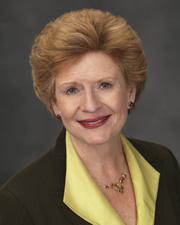
Madam President, today I rise to introduce the Health Care Access for Small Businesses Act of 2003. Last month, thousands of Americans participated in a week-long discussion about covering the…
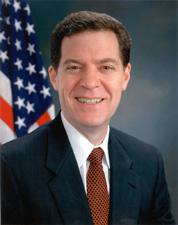
Mr. President, I am pleased to join Senator Kennedy today in introducing legislation to honor the contributions of immigrants who have shown their dedication both to this country and to creating a…
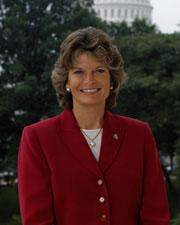
Madam President, I rise to introduce a bill with great significance for snowmachine and snowmobile advocates both in Alaska and nationwide. As many of my colleagues know, the use of snowmobiles is…
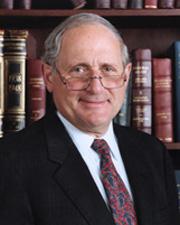
Madam President, today I am pleased to introduce, with Senators Alexander, Bingaman and Warner, legislation that would authorize increased funding for the Department of Energy's, DoE, Office of…

Mr. President, the American people are united in support of our service members, many of whom are serving today in Iraq, Afghanistan, and elsewhere abroad. We have the finest Armed Forces in the…
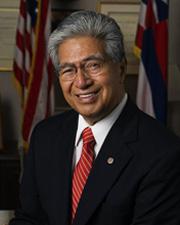
Madam President, I rise today to introduce legislation to preserve important non-homeland security missions in the Department of Homeland Security. I am pleased to be joined by the Senator from…
Madam President, I rise today to introduce the ``National Mormon Pioneer Heritage Area Act of 2003.'' The story behind and about the Mormon pioneers' 1400 mile trek from Illinois to the Great Salt…
Mr. President, I rise today to introduce a piece of legislation that helps a large number of family farmers on the border of Montana and North Dakota. The Lower Yellowstone Irrigation Projects Title…

Mr. President, I rise today for myself, Senator Kennedy, Senator Durbin, Senator Brownback, Senator Coleman, Senator McCain, Senator Schumer, Senator Boxer, Senator Leahy, and Senator Hagel to…
Bill Text
2 versions available
        [Congressional Bills 108th Congress]
[From the U.S. Government Publishing Office]
[S. 908 Reported in Senate (RS)]

Calendar No. 221
108th CONGRESS
1st Session
S. 908

[Report No. 108-110]

To establish the United States Consensus Council to provide for a
consensus building process in addressing national public policy issues,
and for other purposes.

_______________________________________________________________________

IN THE SENATE OF THE UNITED STATES

April 11, 2003

Ms. Collins (for herself, Mr. Dorgan, Mr. Santorum, Mr. Conrad, Mr.
Leahy, and Mr. Daschle) introduced the following bill; which was read
twice and referred to the Committee on Governmental Affairs

July 22 (legislative day, July 21), 2003

Reported by Ms. Collins, with amendments
[Omit the part struck through and insert the part printed in italic]

_______________________________________________________________________

A BILL

To establish the United States Consensus Council to provide for a
consensus building process in addressing national public policy issues,
and for other purposes.

Be it enacted by the Senate and House of Representatives of the
United States of America in Congress assembled,

SECTION 1. SHORT TITLE.

This Act may be cited as the ``United States Consensus Council Act
of 2003''.

SEC. 2. FINDINGS AND PURPOSE.

(a) Findings.--Congress finds that--
(1) throughout the Nation there is increasing success in
the use of collaborative and consensus-building approaches to
address critical public policy issues at the national, State,
and local levels;
(2) there is a need for a national Council that serves the
Nation by promoting and conducting consensus-building processes
that primarily address legislative policy issues of national
importance;
(3) such a Council may enroll specific stakeholders, both
public and private, to build agreements that ultimately may be
implemented by Congress, Federal agencies, or other
policymaking bodies;
(4) such a Council will strive to create public policy
agreements that integrate differing perspectives into highest
common denominator solutions;
(5) the establishment of such a Council is an appropriate
investment by the people of this Nation in a capacity that
works in cooperation with Congress and others to assist the
current public policymaking processes on selected issues;
(6) the existence of such a Council could contribute
especially to resolving differences on contentious policy
issues, preventing polarization on emerging policy issues and
addressing issues of complexity that involve multiple parties
and perspectives;
(7) the establishment of such a Council may contribute
significantly to a renewed sense of civility and respect for
differences, while at the same time promoting vigorous
interchange and open communications among those with differing
points of view; and
(8) the Council may become a repository of wisdom and
experience on public policy collaboration and consensus-
building that can be shared with public and private sector
policymakers and the public in the interest of promoting more
effective public policy and the increased use of collaborative
processes.
(b) Purpose.--The purpose of this Act is to establish an
independent, nonprofit, national Council to serve the Nation by seeking
to produce consensus on policy issues of national importance through
collaborative processes.

SEC. 3. DEFINITIONS.

In this Act, the term--
(1) ``Board'' means the Board of Directors of the Council;
(2) ``Council'' means the United States Consensus Council
established under this Act; and
(3) ``Director'' means an individual appointed to the Board
of Directors of the Council.

SEC. 4. UNITED STATES CONSENSUS COUNCIL.

(a) Establishment.--There is established the United States
Consensus Council.
(b) District of Columbia Nonprofit Corporation; Status;
Restrictions.--The Council shall be established as an independent
nonprofit corporation under the District of Columbia Nonprofit
Corporation Act (D.C. Code, section 29-301 et seq.). Upon establishment
under that Act, the Council shall conform to all the requirements
applicable to a nonprofit corporation so established in the District
and shall be subject to such oversight by the District of Columbia as
is applicable to a nonprofit corporation so established. The Council is
not an agency or instrumentality of the United States.
(c) Trade Name and Trademark Rights; Vested Rights Protected;
Condition for Use of Federal Identity.--
(1) In general.--The Council has the sole and exclusive
right to use and to allow or refuse others the use of the term
``United States Consensus Council'' and the use of any official
United States Consensus Council emblem, badge, seal, and other
mark of recognition or any colorable simulation thereof.
(2) United states references.--The Council may use ``United
States'' or ``U.S.'' or any other reference to the United
States Government or Nation in its title or in its corporate seal,
emblem, badge, or other mark of recognition or colorable simulation
thereof in any fiscal year only if there is an authorization of
appropriations, or appropriations, for the Council for such fiscal year
provided by law.

SEC. 5. POWERS AND DUTIES.

(a) In General.--The Council may exercise the powers conferred upon
a nonprofit corporation by the District of Columbia Nonprofit
Corporation Act (D.C. Code, section 29-301 et seq.) consistent with
this Act.
(b) Description of Specific Activities.--
(1) In general.--The Council may--
(A) develop and conduct processes to build
consensus on national policy issues;
(B) enter into formal and informal relationships
with other institutions, public and private, for
purposes not inconsistent with this Act;
(C) identify particular public policy issues as to
which the Council's expertise would be useful in
building a consensus;
(D) subject to paragraph (2), coordinate with, make
referrals to and receive referrals from, other conflict
or dispute resolution instrumentalities of the United
States, including the United States Institute for
Environmental Conflict Resolution or the Federal
Mediation and Conciliation Service; and
(E) develop and apply criteria for the purpose of
determining whether the Council will enter into a
consensus-building process on a particular issue.
<DELETED>    (2) Limitations on certain activities.--The
Council shall consult and coordinate with the United States
Institute for Environmental Conflict Resolution and the Federal
Mediation and Conciliation Service to ensure that the
activities of the Council do not--</DELETED>
<DELETED>    (A) duplicate the activities of the
Institute or Service; or</DELETED>
<DELETED>    (B) interfere with the Institute or
Service in carrying out their respective statutory
responsibilities.</DELETED>
(2) Consultation and coordination with the institute and
service.--
(A) Definition.--In this paragraph, the term--
(i) ``Institute'' means the United States
Institute for Environmental Conflict
Resolution; and
(ii) ``Service'' means the Federal
Mediation and Conciliation Service.
(B) Limitations on certain activities.--The Council
may not--
(i) take any action relating to a matter
within the authority of the Institute or the
Service without the consent of the Institute or
Service, as applicable;
(ii) duplicate the activities of the
Institute or the Service; or
(iii) interfere with the Institute or
Service in carrying out their respective
statutory responsibilities.
(C) Response to request for consent.--The Institute
or Service shall respond to a request for consent
described under subparagraph (B)(i), not later than 30
days after the date of receiving a request, unless the
Council and the Institute or Service agree otherwise.
(D) Consultation.--The Council, Institute, and
Service shall consult among each other to identify
opportunities for collaboration in fulfillment of their
respective purposes and programs.
(3) Consensus-building process.--With respect to each
consensus-building process, the Council--
(A) shall consider such factors as the degree of
congressional interest in the issue, as well as issue
complexity, cost, ripeness, likelihood of participation
by key stakeholders, and any other relevant indices
that may assist the Council in determining whether to
enter into a particular consensus process;
(B) may identify any appropriate facilitator for
the negotiation process;
(C) may identify the key stakeholders involved or
interested in the outcome of a particular issue,
including those individuals who have the authority to
implement the recommendations that result from the
Council's consensus building processes;
(D) may develop and publish a common set of facts
to inform and assist consensus-building processes;
(E) may establish ground rules, including matters
related to confidentiality, representation of counsel,
and ex parte communications;
(F) may work to promote consensus among the
stakeholders by methods such as negotiation,
discussion, meetings, and any other process of dispute
resolution;
(G) may build and construct agreements among
stakeholders;
(H) may issue a report reflecting the results of
consideration by the Council on consensus-building
efforts; and
(I) may provide training and technical assistance
on any issue within the Council's competence.
(4) Other activities.--The Council also may engage in any
other activity consistent with its mission.
(c) General Authority.--The Council may do any and all lawful acts
necessary or desirable to carry out the objectives and purposes of this
Act.
(d) Guidelines for Council Operations.--As necessary, the Council
shall develop guidelines, through its bylaws or otherwise, to address--
(1) policies relating to personal service contracts;
(2) standards to ensure that the Council, its Directors,
employees, and agents, avoid conflicts of interest that may
arise;
(3) fundraising policies, donor development programs, and
matters related to the acceptance of private donations;
(4) procedures to ensure that all participants in a
consensus-building process are informed of--
(A) the sources of funding of the Council; and
(B) the source and purpose of any donation for
which a purpose is specified when donated to the
Council;
(5) the duties and responsibilities of the Council, its
Board, officers, employees, and agents; and
(6) the establishment of advisory committees, councils, or
other bodies, as the efficient administration of the business
and purposes of the Council may require.

SEC. 6. BOARD OF DIRECTORS.

(a) Vested Powers.--The powers of the Council shall be vested in a
Board of Directors unless otherwise specified in this Act or delegated
by the Board.
(b) Appointments.--The Board of Directors shall consist of 12
voting members as follows:
(1) Four individuals, including private citizens or State
or local employees, no more than 2 of whom shall be of the same
political party, appointed by the President. The President
shall appoint members of the opposing party only on the
recommendation of the leaders of Congress from that party. The
President shall make all 4 of the initial appointments under
this paragraph on the same date.
(2) Two individuals, including private citizens or State or
local employees, appointed by the Majority Leader of the
Senate.
(3) Two individuals, including private citizens or State or
local employees, appointed by the Minority Leader of the
Senate.
(4) Two individuals, including private citizens or State or
local employees, appointed by the Speaker of the House of
Representatives.
(5) Two individuals, including private citizens or State or
local employees, appointed by the Minority Leader of the House
of Representatives.
(c) Term of Office: Commencement and Termination, Interim and
Remainder Service, Limitation.--
(1) Term of office.--Directors appointed under subsection
(b) of this section shall be appointed to 4-year terms, with no
Director serving more than 2 consecutive terms, except that--
(A) as designated by the President, the terms of 2
of the 4 Directors initially appointed under subsection
(b)(1) shall be 2 years, subject to appointment to no
more than 2 additional 4-year terms in the manner set
forth in this section;
(B) as designated by the Speaker of the House of
Representatives, the terms of the 2 Directors initially
appointed under subsection (b)(4) shall be 2 years,
subject to appointment to no more than 2 additional 4-
year terms in the manner set forth in this section; and
(C) as designated by the Minority Leader of the
House of Representatives, the terms of the 2 Directors
initially appointed under subsection (b)(5) shall be 2
years, subject to appointment to no more than 2
additional 4-year terms in the manner set forth in this
section.
(2) Remainder service.--Any Director appointed to the Board
to replace a Director whose term has not expired shall be
appointed to serve the remainder of that term.
(3) President of council.--The President of the Council
shall serve as a nonvoting Director of the Board.
(d) Qualifications.--
(1) In general.--A demonstrated interest in the mission of
the Council or expertise in consensus building shall be
considered in appointments made under this section.
(2) Non-federal employees.--No Director may be an officer
or employee of the Federal Government, including a Member of
Congress.
(e) Removal From Office.--A Director may be replaced by the
appointing official or may be removed by a process to be established in
the Council's bylaws.
(f) Meetings; Notice in Federal Register.--Meetings of the Board
shall be conducted pursuant to the Council's bylaws, except as provided
in the following:
(1) Initial organizational meeting.--
(A) In general.--The Board shall hold an initial
organizational meeting within 60 days after the
appointment of at least \1/3\ of the members under this
section. The initial organizational meeting may be held
only if equal numbers of members from each of the 2
major political parties are appointed to the Board as
of the date of that meeting. The purpose of the meeting
shall be to provide for the incorporation of the
Council as a non-profit corporation in the District of
Columbia as provided under section 4 and to adopt the
interim bylaws and guidelines required under this
section for its operation.
(B) Required ratification of actions of
organizational meeting.--The Articles of Incorporation
and the interim bylaws and guidelines adopted in the
initial organizational meeting shall be effective only
until the first meeting of the Board after the
appointment of all members under this section, at which
time the articles, bylaws, or guidelines may be
ratified or modified by the Board.
(2) Meetings; quorum.--The Board shall meet at least
semiannually. A majority of the Directors in office shall
constitute a quorum for any Board meeting.
(3) Open meetings.--All official governing meetings of the
Board shall be open to public observation and shall be preceded
by reasonable public notice. Notice in the Federal Register
shall be deemed to be reasonable public notice for purposes of
the preceding sentence. In exceptional circumstances, the Board
may close those portions of a meeting, upon a majority vote of
Directors present and with the vote taken in public session,
which are likely to disclose information affecting or relating
to the status of individual Directors or employees of the
Council or to ongoing litigation to which the Council is a
party.
(g) Compensation.--
(1) In general.--Subject to paragraphs (2) and (3), a
Director may be compensated at a rate not to exceed the daily
equivalent of the rate payable for a position at level IV of
the Executive Schedule under section 5315 of title 5, United
States Code, for each day during which that Director is engaged
in the performance of the duties of the Council.
(2) Directors who may be compensated.--A Director may be
compensated under paragraph (1), if that Director notifies the
Board of an election to receive compensation.
(3) Effective date.--A Director shall be compensated under
this subsection for the performance of duties after the date of
notification under paragraph (2).
(h) Travel Expenses.--While away from home or regular place of
business in the performance of duties for the Board, a Director may
receive reasonable travel, subsistence, and other necessary expenses.

SEC. 7. OFFICERS AND EMPLOYEES.

(a) President of the Council.--There shall be a President who shall
be appointed by the Board. The President shall be the chief executive
officer of the Council and shall carry out or cause to be carried out
the functions of the Council subject to the supervision and direction
of the Board.
(b) Compensation of President of the Council.--The President of the
Council shall be compensated at an annual rate of pay not to exceed the
rate payable for a position at level II of the Executive Schedule under
section 5313 of title 5, United States Code.
(c) Assignment of Federal Officers or Employees to the Council.--
The Council may request the assignment of any Federal officer or
employee to the Council by an appropriate executive department, agency,
or congressional official or Member of Congress and may enter into an
agreement for such assignment, if the affected officer or employee
agrees to such assignment and such assignment causes no prejudice to
the salary, benefits, status, or advancement within the department,
agency, or congressional staff of such officer or employee. The
assigning office shall be fully reimbursed by the Council for the costs
associated with such an assignment. The assigned officer or employee
shall remain an officer or employee of the United States during the
course of such assignment.
(d) Personnel.--The President of the Council, with the approval of
the Board, may appoint and fix the compensation of such additional
personnel as determined necessary. The President and employees of the
Council shall not be employees of the United States.
(e) Compensation for Services or Expenses; Prohibition on Loans to
Council Directors and Personnel.--
(1) In general.--No part of the financial resources,
income, or assets of the Council or of any legal entity created
by the Council shall inure to any agent, employee, officer, or
Director or be distributable to any such person during the life
of the corporation or upon dissolution or final liquidation.
Nothing in this section may be construed to prevent the payment
of reasonable compensation for services or expenses to the
Directors, officers, employees, and agents of the Council in
amounts approved in accordance with this Act.
(2) Loans.--The Council shall not make loans to its
Directors, officers, employees, or agents.

SEC. 8. PROCEDURES AND RECORDS.

(a) Monitoring and Evaluation of Programs.--The Council shall
monitor and evaluate and provide for independent evaluation if
necessary of programs supported in whole or in part under this Act to
ensure that the provisions of this Act and the bylaws, rules,
regulations, and guidelines promulgated under this Act are adhered to.
(b) Accounts of Receipts and Disbursements; Financial Reports.--
(1) In general.--The Council shall keep complete books and
records of accounts, including--
(A) separate and distinct accounts of receipts and
disbursements of Federal funds and donations; and
(B) records of the purpose of any donation for
which a purpose is specified when donated to the
Council.
(2) Annual financial reports.--The Council's annual
financial report shall identify the use of all funding and
shall present a clear description of the full financial
situation of the Council.
(c) Minutes of Proceedings.--The Council shall keep minutes of the
proceedings of its Board and of any committees having authority under
the Board.
(d) Record and Inspection of Required Items.--
(1) In general.--The Council shall keep a record of--
(A) the names and addresses of its Directors,
copies of this Act, and any other Act relating to the
Council;
(B) all Council bylaws, rules, regulations, and
guidelines;
(C) required minutes of proceedings;
(D) all applications and proposals and issued or
received contracts and grants; and
(E) financial records of the Council.
(2) Inspection.--All items required by this subsection may
be inspected by any Director or any agent or attorney of a
Director for any proper purpose at any reasonable time.
(e) Audits.--The accounts of the Council shall be audited annually
in accordance with generally accepted auditing standards by independent
certified public accountants or independent licensed public
accountants, certified or licensed by a regulatory authority of a State
or other political subdivision of the United States. The audit shall be
conducted at the place or places where the accounts of the Council are
normally kept. All books, accounts, financial records, files, and other
papers, things, and property belonging to or in use by the Council and
necessary to facilitate the audit shall be made available to the person
or persons conducting the audit, and full facilities for verifying
transactions with the balances or securities held by depositories,
fiscal agents, and custodians shall be afforded to such person or
persons.
(f) Annual Report to Congress; Copies for Public.--
(1) In general.--The Council shall provide a report to the
President and to each House of Congress not later than 6 months
following the close of the fiscal year for which the audit is
made.
(2) Contents.--Each report under this subsection shall
include--
(A) a statement of the Council's activities for the
prior year;
(B) a copy of the audit report prepared under
subsection (e); and
(C) a disclosure statement of--
(i) the source of all funds received by the
Council in the prior year; and
(ii) the purpose for which the funds were
contributed or made available.
(3) Public availability.--Each report under this subsection
shall be made available to the public.
(g) GAO Review.--The annual report submitted under subsection (f)
shall be submitted simultaneously to the General Accounting Office for
its review.

SEC. 9. PROHIBITION ON LOBBYING ACTIVITIES.

(a) Definitions.--In this section--
(1) the terms ``covered executive branch official'',
``covered legislative branch official'', and ``client'' have
the meanings given under section 3 of the Lobbying Disclosure
Act of 1995 (2 U.S.C. 1602);
(2) the term ``lobbying activities'' has the meaning given
under section 3(7) of the Lobbying Disclosure Act of 1995 (2
U.S.C. 1602(7)), except the definition of the term ``lobbying
contact'' shall be applied as modified under this section; and
(3) the term ``lobbying contact''--
(A) has the meaning given under paragraph (8) of
section 3 of the Lobbying Disclosure Act of 1995 (2
U.S.C. 1602(8)), except that a communication made on
behalf of a client referred to under subparagraph (A)
of that paragraph shall apply instead to a
communication made on behalf of the Council; and
(B) does not include a communication between the
Council and a covered executive branch official or
covered legislative branch official relating to--
(i) appropriations for the Council; or
(ii) proposed legislation directly
affecting the Council.
(b) Prohibitions.--The Council may not--
(1) engage in lobbying activities; or
(2) be a client.

SEC. 10. FUNDING.

(a) Authorization of Appropriations.--For the purpose of carrying
out this Act, there are authorized to be appropriated $2,000,000 for
fiscal year 2003 and such sums as may be necessary for fiscal years
2004 through 2008.
(b) Availability.--Funds appropriated under the authority of
subsection (a) shall remain available until expended.
(c) Availability of Funds From Fiscal Year 2003.--Any funds
authorized to be made available through the General Services
Administration during fiscal year 2003 for the purpose of carrying out
this Act shall remain available until expended.
(d) Investment of Funds.--Funds appropriated to the Council shall
be invested only in instruments backed by the full faith and credit of
the United States or in a federally insured financial institution. Any
interest earned on such investments shall be used only for the purposes
set out in this Act.

SEC. 11. DISSOLUTION OR LIQUIDATION.

Upon dissolution or final liquidation of the Council, all funds
appropriated by the United States to the Council including any interest
attributable to such funds, but not any other funds, shall revert to
the United States Treasury. Other funds held by the Council shall be
handled under the laws of the District of Columbia applicable to
nonprofit corporations.

Calendar No. 221

108th CONGRESS

1st Session

S. 908

[Report No. 108-110]

_______________________________________________________________________

A BILL

To establish the United States Consensus Council to provide for a
consensus building process in addressing national public policy issues,
and for other purposes.

_______________________________________________________________________

July 22 (legislative day, July 21), 2003

Reported with amendments