Patient and Physician Safety and Protection Act of 2003
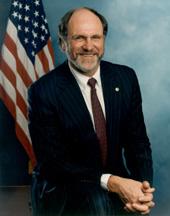 Sen. Jon S. Corzine (D-NJ)
Legislative Activity
Stay on top of the latest movement without scrolling through every action
Read twice and referred to the Committee on Finance. (text of measure as introduced: CR S5599-5600)
April 30, 2003
View full timeline
Introduced in Senate
April 30, 2003
Sponsor introductory remarks on measure. (CR S5598-5599)
April 30, 2003
Read twice and referred to the Committee on Finance. (text of measure as introduced: CR S5599-5600)
April 30, 2003
Floor Debate
17 membersWhat members said about S. 952 on the floor


 +12
+12
Floor Debate
17 membersWhat members said about S. 952 on the floor
Mr. President, I am pleased to cosponsor legislation being introduced today that will dramatically improve the child tax credit. I thank my friend and colleague, Senator Lincoln, for her hard work on…
Mr. President, as millions of public school students and teachers around the country prepare to complete their first school year under the No Child Left Behind Act, NCLB, I am introducing a bill that…
Mr. President, today I offer a bill that will make a very small change in our Cuba policy. It deals only with travel provisions to Cuba. I have been watching Cuba since the 1960s. I went to George…
Mr. President, I rise today to introduce this morning a bill on which my distinguished colleagues from Minnesota and Maine and I have collaborated. That is the Older Americans Prescription Drug Tax…
Mr. President, I rise today to reintroduce the Patient Abuse Prevention Act, which will go a long way in protecting patients in long-term care from abuse and neglect. This legislation will establish…
Show 8 more
Mr. President, I rise today to reintroduce my legislation, the Patient and Physician Safety and Protection Act of 2003, to limit medical resident work hours to 80 hours a week and to provide real…
Mr. President, I rise today to reintroduce my legislation, the Patient and Physician Safety and Protection Act of 2003, to limit medical resident work hours to 80 hours a week and to provide real…
Mr. President, this morning, my colleague from Wyoming, Senator Enzi, has introduced a piece of legislation I am an original cosponsor of. I want to make a point about the legislation. The…
Mr. President, I rise today to introduce legislation to correct an inequity in the HUBzone contracting program administered by the Small Business Administration, SBA. This bill amends the criteria by…
Madam President, I rise today to offer legislation, along with my colleagues Senator Enzi and Senator Dorgan, that would end the restrictions placed on travel to Cuba. I understand our colleagues in…
Mr. President, on July 31, 2002, the Federal Energy Regulatory Commission, FERC, issued a notice of proposed rulemaking to create a one-size-fits-all template for electric markets referred to as…
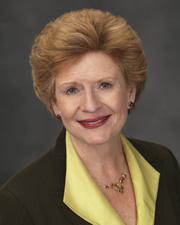
Mr. President, I rise today to speak on behalf of a bill I am introducing to turn the historic United States Coast Guard Cutter Bramble, into a floating maritime museum in Port Huron, MI, after she…
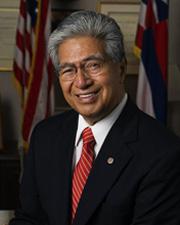
Mr. President, I rise today to introduce legislation to authorize three important water reclamation projects in the State of Hawaii. In addition, this bill increases the amount authorized for the…
Show 5 more
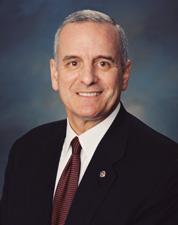
I commend my colleague from Wyoming and his leadership in relationship to Cuba, which is of strong interest to businesses and farmers in my home State of Minnesota. I ask unanimous consent to be…
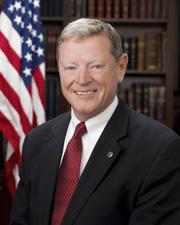
Mr. President, as the Senate's only commercially licensed pilot, I rise today, along with my colleagues, Senator Kyl, Senator Burns, Senator Thomas and Senator Grassley, to introduce a bill that will…

Mr. President, I am pleased to introduce the ``Flight Attendant Certification Act.'' Since September 11, flight attendants have become a last line of defense against terrorist attacks. As we all…

Mr. President, I ask unanimous consent that the text of the bill be printed in the Record.
Mr. President, I ask unanimous consent that the text of the bill be printed in the Record.
Bill Text
Latest available legislative text
        [Congressional Bills 108th Congress]
[From the U.S. Government Publishing Office]
[S. 952 Introduced in Senate (IS)]

108th CONGRESS
1st Session
S. 952

To amend title XVIII of the Social Security Act to reduce the work
hours and increase the supervision of resident-physicians to ensure the
safety of patients and resident-physicians themselves.

_______________________________________________________________________

IN THE SENATE OF THE UNITED STATES

April 30, 2003

Mr. Corzine introduced the following bill; which was read twice and
referred to the Committee on Finance

_______________________________________________________________________

A BILL

To amend title XVIII of the Social Security Act to reduce the work
hours and increase the supervision of resident-physicians to ensure the
safety of patients and resident-physicians themselves.

Be it enacted by the Senate and House of Representatives of the
United States of America in Congress assembled,

SECTION 1. SHORT TITLE.

This Act may be cited as the ``Patient and Physician Safety and
Protection Act of 2003''.

SEC. 2. FINDINGS.

Congress finds the following:
(1) The Federal Government, through the medicare program,
pays approximately $8,000,000,000 per year solely to train
resident-physicians in the United States, and as a result, has
an interest in assuring the safety of patients treated by
resident-physicians and the safety of resident-physicians
themselves.
(2) Resident-physicians spend as much as 30 to 40 percent
of their time performing activities not related to the
educational mission of training competent physicians.
(3) The excessive numbers of hours worked by resident-
physicians is inherently dangerous for patient care and for the
lives of resident-physicians.
(4) The scientific literature has consistently demonstrated
that the sleep deprivation of the magnitude seen in residency
training programs leads to cognitive impairment.
(5) A substantial body of research indicates that excessive
hours worked by resident-physicians lead to higher rates of
medical error, motor vehicle accidents, depression, and
pregnancy complications.
(6) The medical community has not adequately addressed the
issue of excessive resident-physician work hours.
(7) The Federal Government has regulated the work hours of
other industries when the safety of employees or the public is
at risk.
(8) The Institute of Medicine has found that as many as
98,000 deaths occur annually due to medical errors and has
suggested that 1 necessary approach to reducing errors in
hospitals is reducing the fatigue of resident-physicians.

SEC. 3. REVISION OF MEDICARE HOSPITAL CONDITIONS OF PARTICIPATION
REGARDING WORKING HOURS OF MEDICAL RESIDENTS, INTERNS,
AND FELLOWS.

(a) In General.--Section 1866 of the Social Security Act (42 U.S.C.
1395cc) is amended--
(1) in subsection (a)(1)--
(A) by striking ``and'' at the end of subparagraph
(R);
(B) by striking the period at the end of
subparagraph (S) and inserting ``, and''; and
(C) by inserting after subparagraph (S) the
following new subparagraph:
``(T) in the case of a hospital that uses the services of
postgraduate trainees (as defined in subsection (j)(4)), to
meet the requirements of subsection (j).''; and
(2) by adding at the end the following new subsection:
``(j)(1)(A) In order that the working conditions and working hours
of postgraduate trainees promote the provision of quality medical care
in hospitals, as a condition of participation under this title, each
hospital shall establish the following limits on working hours for
postgraduate trainees:
``(i) Subject to subparagraphs (B) and (C), postgraduate
trainees may work no more than a total of 24 hours per shift.
``(ii) Subject to subparagraph (C), postgraduate trainees
may work no more than a total of 80 hours per week.
``(iii) Subject to subparagraph (C), postgraduate
trainees--
``(I) shall have at least 10 hours between
scheduled shifts;
``(II) shall have at least 1 full day out of every
7 days off and 1 full weekend off per month;
``(III) subject to subparagraph (B), who are
assigned to patient care responsibilities in an
emergency department shall work no more than 12
continuous hours in that department;
``(IV) shall not be scheduled to be on call in the
hospital more often than every third night; and
``(V) shall not engage in work outside of the
educational program that interferes with the ability of
the postgraduate trainee to achieve the goals and
objectives of the program or that, in combination with
the program working hours, exceeds 80 hours per week.
``(B)(i) Subject to clause (ii), the Secretary shall promulgate
such regulations as may be necessary to ensure quality of care is
maintained during the transfer of direct patient care from 1
postgraduate trainee to another at the end of each shift.
``(ii) Such regulations shall ensure that, except in the case of
individual patient emergencies, the period in which a postgraduate
trainee is providing for the transfer of direct patient care (as
referred to in clause (i)) does not extend such trainee's shift by more
than 3 hours beyond the 24-hour period referred to in subparagraph
(A)(i) or the 12-hour period referred to in subparagraph (A)(iii)(III),
as the case may be.
``(C) The work hour limitations under subparagraph (A) and
requirements of subparagraph (B) shall not apply to a hospital during a
state of emergency declared by the Secretary that applies with respect
to that hospital.
``(2) The Secretary shall promulgate such regulations as may be
necessary to monitor and supervise postgraduate trainees assigned
patient care responsibilities as part of an approved medical training
program, as well as to assure quality patient care.
``(3) Each hospital shall inform postgraduate trainees of--
``(A) their rights under this subsection, including methods
to enforce such rights (including so-called whistle-blower
protections); and
``(B) the effects of their acute and chronic sleep
deprivation both on themselves and on their patients.
``(4) For purposes of this subsection, the term `postgraduate
trainee' means a postgraduate medical resident, intern, or fellow.''.
(b) Designation.--
(1) In general.--The Secretary of Health and Human Services
(in this subsection referred to as the ``Secretary'') shall
designate an individual within the Department of Health and
Human Services to handle all complaints of violations that
arise from a postgraduate trainee (as defined in paragraph (4)
of section 1886(j) of the Social Security Act, as added by
subsection (a)) who reports that the hospital operating the
medical residency training program for which the trainee is
enrolled is in violation of the requirements of such section.
(2) Grievance rights.--A postgraduate trainee may file a
complaint with the Secretary concerning a violation of the
requirements under such section 1886(j). Such a complaint may
be filed anonymously. The Secretary may conduct an
investigation and take such corrective action with respect to
such a violation.
(3) Enforcement.--
(A) Civil money penalty enforcement.--Subject to
subparagraph (B), any hospital that violates the
requirements under such section 1886(j) is subject to a
civil money penalty not to exceed $100,000 for each
medical residency training program operated by the
hospital in any 6-month period. The provisions of
section 1128A of the Social Security Act (other than
subsections (a) and (b)) shall apply to civil money
penalties under this paragraph in the same manner as
they apply to a penalty or proceeding under section
1128A(a) of such Act.
(B) Corrective action plan.--The Secretary shall
establish procedures for providing a hospital that is
subject to a civil monetary penalty under subparagraph
(A) with an opportunity to avoid such penalty by
submitting an appropriate corrective action plan to the
Secretary.
(4) Disclosure of violations and annual reports.--The
individual designated under paragraph (1) shall--
(A) provide for annual anonymous surveys of
postgraduate trainees to determine compliance with the
requirements under such section 1886(j) and for the
disclosure of the results of such surveys to the public
on a medical residency training program specific basis;
(B) based on such surveys, conduct appropriate on-
site investigations;
(C) provide for disclosure to the public of
violations of and compliance with, on a hospital and
medical residency training program specific basis, such
requirements; and
(D) make an annual report to Congress on the
compliance of hospitals with such requirements,
including providing a list of hospitals found to be in
violation of such requirements.
(c) Whistleblower Protections.--
(1) In general.--A hospital covered by the requirements of
section 1866(j) of the Social Security Act, as added by
subsection (a), shall not penalize, discriminate, or retaliate
in any manner against an employee with respect to compensation,
terms, conditions, or privileges of employment, who in good
faith (as defined in paragraph (2)), individually or in
conjunction with another person or persons--
(A) reports a violation or suspected violation of
such requirements to a public regulatory agency, a
private accreditation body, or management personnel of
the hospital;
(B) initiates, cooperates, or otherwise
participates in an investigation or proceeding brought
by a regulatory agency or private accreditation body
concerning matters covered by such requirements;
(C) informs or discusses with other employees, with
a representative of the employees, with patients or
patient representatives, or with the public, violations
or suspected violations of such requirements; or
(D) otherwise avails himself or herself of the
rights set forth in such section or this subsection.
(2) Good faith defined.--For purposes of this subsection,
an employee is deemed to act ``in good faith'' if the employee
reasonably believes--
(A) that the information reported or disclosed is
true; and
(B) that a violation has occurred or may occur.
(d) Effective Date.--The amendments made by subsection (a) shall
take effect on the first July 1 that begins at least 1 year after the
date of enactment of this Act.

SEC. 4. ADDITIONAL FUNDING FOR HOSPITAL COSTS.

There are hereby appropriated to the Secretary of Health and Human
Services such amounts as may be required to provide for additional
payments to hospitals for their reasonable additional, incremental
costs incurred in order to comply with the requirements imposed by this
Act (and the amendments made by this Act).
<all>