Local Law Enforcement Enhancement Act of 2003

Legislative Activity
Stay on top of the latest movement without scrolling through every action
Read twice and referred to the Committee on the Judiciary. (text of measure as introduced: CR S5653-5655)
May 1, 2003
View full timeline
Introduced in Senate
May 1, 2003
Sponsor introductory remarks on measure. (CR S5652-5653)
May 1, 2003
Read twice and referred to the Committee on the Judiciary. (text of measure as introduced: CR S5653-5655)
May 1, 2003
Floor Debate
21 membersWhat members said about S. 966 on the floor
 PJL
PJL ASEMK
ASEMK RJD
RJD ZM+16
ZM+16
Floor Debate
21 membersWhat members said about S. 966 on the floor
Mr. President, I want to commend our two leaders. I have been working with Senator Daschle for months, as well as with the White House, to find a way out of the impasse in judicial confirmations.…
Mr. President, I want to commend our two leaders. I have been working with Senator Daschle for months, as well as with the White House, to find a way out of the impasse in judicial confirmations. Senator Frist and I have spoken at length about this, and he has been working on it, as well.
I was delighted to see the meeting that Senator Daschle, Senator Frist, and Mr. Card had today in which the White House agreed to no more recess appointments of judges. I think we have demonstrated our good faith. In the 17 months that the Democrats were in charge of the Senate, we confirmed 100 of President Bush's nominees to lifetime positions on the Federal bench. And the Republicans, during the 23 months that they have been in charge of the Senate, they have confirmed another 73 plus one today. With this agreement, I think we should be in
a position to confirm another two dozen judicial nominees and achieve a total this is outstanding for a Presidential term. So I commend my friend from Tennessee. I commend my friend from South Dakota. And I appreciate their work in helping achieve this arrangement.
I am pleased that the Senate has now received assurances from the White House that the President will not further abuse the recess appointment power by making judicial recess appointments this presidential term. It was the White House's refusal to reach a reasonable accommodation of the concerns of many Senators about the unilateral approach of the President regarding his recess appointments to the federal courts that complicated our efforts to reach agreement regarding votes on less controversial judicial nominees. Thanks to the work of the Democratic leader and the Republican leader, we have now received a firm commitment from the White House in that regard.
I supported the nomination of Marcia Cooke. The Florida Senators supported the nomination of Marcia Cooke. All Democratic members of the Senate Judiciary Committee supported the nomination of Marcia Cooke. I am pleased to vote today to confirm the nomination of Marcia Cooke.
The selection of Ms. Cooke to be a judicial nominee for the Southern District of Florida serves as an example of how the judicial nominations process should work. She was interviewed and recommended by Florida's bipartisan judicial selection commission. This selection commission was created by Senators Graham and Nelson in a negotiated agreement with the White House and it has produced talented and well- respected attorneys for the lifetime appointments on the district courts in Florida.
Ms. Cooke currently serves as an assistant county attorney in Miami- Dade County. She previously worked for 3 years as Governor Jeb Bush's Inspector General in Florida with oversight responsibilities regarding Florida administrative agencies. Ms. Cooke also was selected as a Federal Magistrate Judge in Detroit, after serving as a Federal prosecutor and also as a public defender.
I acted to report her nomination unanimously from the Judiciary Committee and welcome her confirmation today. Marcia Cooke is highly regarded. I congratulate Ms. Cooke and her family on her unanimous confirmation vote today.
I note that President Bush has nominated only 16 African Americans to the Federal courts, only about a quarter of the number of African Americans nominated by President Clinton to the federal bench. In fact, this President has put more people actively involved in the Federalist Society on the bench than African Americans, Hispanics and members of other minority groups combined.
With today's confirmation vote on Marcia Cooke to the U.S. District Court in Florida, the Senate has already confirmed 174 judicial nominees of President George W. Bush in 3\1/2\ years and blocked only a handful of the most extreme. Due to Democratic cooperation and bipartisanship, the Senate has confirmed more judges for this President than in President Ronald Reagan's entire first 4 years in office--and it was President Reagan who ultimately appointed more judges than any other President in U.S. history. In fact, we have cooperated in reducing the 110 vacancies we inherited from Republican obstruction of President Clinton's judicial nomination to near 40 and attained the lowest vacancy level in 14 years.
Today, the Senate and the White House reached an agreement regarding 25 of this President's judicial nominations pending on the floor, including Judge Cooke. Not all of these nominees are uncontroversial and some may require significant debate before their confirmation vote. With this agreement, the Senate is poised to confirm 198 judicial nominees of President Bush for lifetime positions on the Federal courts, including 35 circuit court nominees.
We have already confirmed 30 circuit court nominees of President Bush. More of his circuit nominees have been confirmed than President Reagan had confirmed by this point in his first term. Recall that from the time Republicans assumed majority control of the Senate in 1995 until Democratic control in the summer of 2001, circuit court vacancies more than doubled from 16 to 33. We have worked to cut those vacancies in half by confirming 30 of President Bush's circuit court nominees. With five additional circuit court nominees part of the agreement, President Bush will exceed the number of circuit court appointments during President Reagan's first term, as well.
Republicans rarely acknowledge that 100 of President Bush's judicial nominees to the bench were confirmed under Democratic Senate leadership during 17 months. During the 23 months I have not served as Chairman of the Judiciary Committee and Republicans have been in control, the Senate has confirmed 74 additional judges. So in 30 percent more time, Senate Republicans have confirmed 26 percent fewer judges.
With the agreement reached today, the Senate will confirm a total of 29 judicial nominees of President Bush this year, including five circuit court nominees. With the progress we have already made this year and under the action agreed to today, the Senate will reach this mark before the July 4th recess. This is 29 times more judicial nominees than were allowed to be confirmed by Republicans before July during 1996, the last time an incumbent President was seeking reelection. During that session, Senate Republicans did not allow a single judicial nominee of President Clinton's to be confirmed before July. During that entire session Republicans allowed only 17 judicial nominees to be confirmed, none of them for the circuit courts. During that session when Republicans were in control of the Senate, they made sure that none of President Clinton's circuit court nominees were confirmed all session, not a single one. With our fifth judicial confirmation this year, we are well ahead of 1996.
Republicans have made no apology for the way in which they acted in 1996 but seek to employ a double standard now that a Republican occupies the White House.
All told, Republicans blocked more than 60 of President Clinton's judicial nominees. Yet Republicans Senators now routinely claim that every judicial nominee of President Bush is entitled to a confirmation vote. Suddenly, without regard to history, including their own very recent history, they claim that the Constitution requires a confirmation vote, at least for Republican nominees. The Constitution certainly does not say that. Republicans seem to have ``confirmation amnesia'' when they complain that Senate Democrats have filibustered six judicial nominees of President Bush after Republicans defeated by delay 10 times more judicial nominees of President Clinton through anonymous holds and without accountability.
Republicans know that they filibustered Justice Abe Fortas' Supreme Court nomination and several Clinton nominees. Republicans cannot erase their history, try as they might. Republicans defeated more than 60 Clinton judicial nominees and more than 200 of his executive branch nominees through delay. One judicial nomination was defeated when the Republican caucus took the unprecedented action of voting lockstep along party lines against confirmation of Judge Ronnie White.
With the agreement reached today, we are likely to adjourn with fewer vacancies than at any time in nearly a quarter of a century, since President Reagan's first term and well below the level of vacancies tolerated by Republicans during President Clinton's two terms. Having defeated more than 60 of President Clinton's nominees, including almost two dozen circuit court nominees, through concerted inaction, Senate Republicans have no standing to complain about the way in which the Senate is acting on President Bush's nominees. We have acted more fairly, more quickly and on more nominees than Republicans would allow when President Clinton was making much more moderate nominations.
I am pleased that the White House has promised to refrain from any more abuses of the recess appointment power. With that commitment, we have agreed to vote on two dozen judicial nominees this year. Even with the historically low vacancy levels we will reach as a result, I have no doubt that some partisan Republicans will still
complain that they did not get 100 percent of their judicial nominees confirmed. Something no President in memory has achieved. This Congress we reached the lowest level of vacancies since 1990. There are more federal judges on the bench now than at any time in U.S. history.
Unfortunately, we are faced with continued White House defiance of the Senate's role as part of the checks and balances established by our Constitution. President Bush defied the Senate by recess appointing William Pryor and Charles Pickering, who were widely opposed due to their records of activism and poor ethics. No American President has ever abused the recess appointment power to put judges on the bench whose nominations were debated at length by the Senate and on which it had withheld its consent. The President's appointment of Charles Pickering was unprecedented, yet we noted our objection, turned the other cheek and continued to cooperate in the confirmation of judicial nominees. When the President abused his power a second time and appointed William Pryor, we had no alternative but to make our objection meaningful by seeking assurances from the White House that such abuse would not happen again.
Over the past several weeks, I have shared with the Senate information about a number of divisive developments regarding judicial nominations including the Pickering recess appointment during the weekend for commemorating Dr. Martin Luther King Jr. In spite of all the affronts, Senate Democrats cooperated in confirming four additional judicial nominees this year and continued to participate in hearings for judicial nominees.
The President's recess appointment of William Pryor was the last straw. It was properly termed an abuse of power by the Senate Democratic Leader. It was an abuse of the constitutional authority of the Executive to make necessary recess appointments during the unavailability of the Senate. The judicial recess appointments of nominees debated at length by the Senate was unprecedented.
Actions like this showed the American people that this White House was determined to try to turn the independent federal judiciary into an arm of the Republican Party. Doing this further erodes the White House's credibility as well as the respect and confidence that the American people have for the courts.
This is an administration that promised to unite the American people but that has chosen time and again to act in ways that divide us, to disrespect the Senate and our representative democracy. This is an administration that squandered the good will and good faith that Democrats showed in the aftermath of September 11, 2001. This is an administration that refused to acknowledge the strides we made in filling 100 judicial vacancies under Democratic Senate leadership during 17 difficult months in 2001 and 2002, while overcoming the September 11 attacks, the subsequent anthrax attacks and in spite of Republican mistreatment of scores of qualified, moderate judicial nominees of President Clinton.
This is an administration that has time and time again demonstrated its unilateralism, arrogance and intention to divide the American people and the Senate with its controversial judicial nominations. With its recess appointments, the President acted--as he has in so many areas over the past 3\1/2\ years--unilaterally, overextending and expanding his power, with disregard for past practice and tradition, and the rule of law.
The recess appointment of Mr. Pryor threatens both the independence of the judiciary and the constitutional balance of power between the legislative and executive branches. We entrust to the stewardship of lifetime judges in our independent Federal judiciary the rights that all of us are guaranteed by our Constitution and laws. That is an awesome responsibility. Accordingly, the Constitution was designed so that it would only be extended after the President and the Senate agreed on the suitability of the nomination. The President chose for the second time in as many months to circumvent this constitutional design and impose his will unilaterally.
I have sought in good faith to work with this administration for the last 3\1/2\ years in filling judicial vacancies, including so many left open by Republican obstruction of President Clinton's qualified nominees. When Chairman, I made sure that President Bush's nominees were not treated the way his predecessor's had been. They were treated far more fairly, as I had promised. Republicans had averaged only 37 confirmations a year while vacancies rose from 65 to 110 and circuit vacancies more than doubled from 16 to 33. Under Democratic leadership, we reversed those trends and opened the system to public accountability and debate by making home-State Senators' objections public for the first time. We openly debated and voted on nominations. We were able to confirm 100 judges in just 17 months and virtually doubled the Republican annual average of 37 with 72 confirmations in 2002, alone.
I have urged that we work together, that we cooperate, and that the President live up to the promise he made to the American people during the last campaign when he said he would act as a uniter and not a divider. I have offered to consult and made sure we explained privately and in the public record why this President's most extreme and controversial nominations were unacceptable.
Both his recess appointments are troubling. The President says that he wants judges who will ``follow the law'' and complains about what he calls ``judicial activism.'' Yet, he has acted--with disregard for the constitutional balance of powers and the Senate's advice and consent authority--unilaterally to install on the Federal bench two nominees from whom the Senate withheld its consent precisely because they are seen by so many as likely to be judicial activists, who will insert their personal views in decisions and will not follow the law.
In the case of Mr. Pryor, he is among the most extreme and ideologically committed and opinionated nominees ever sent to the Senate. Mr. Pryor's nomination to a lifetime appointment on the Federal bench was opposed by every Democratic member on the Senate Judiciary Committee after hearings and debate. It was opposed on the Senate floor because he appears to have extreme--some might say ``radical''--ideas about what the Constitution should provide with regard to federalism, criminal justice and the death penalty, violence against women, the Americans with Disabilities Act, and the Government's ability to protect the environment on behalf of the American people. He has been a crusader for the ``federalist'' revolution. He has urged that Federal laws on behalf of the disabled, the aged, women, minorities, and the environment all be limited. His comments have revealed insensitivity to the barriers that disadvantaged persons and members of minority groups and women continue to face in the criminal justice system. He has testified before Congress in support of dropping a crucial part of the Voting Rights Act and has repeatedly described the Supreme Court and certain justices in overtly political terms. He received the lowest possible qualified rating from the American Bar Association--a partial rating of ``Not Qualified''--underscoring his unfitness for the bench. In sum, Mr. Pryor demonstrated that he is committed to an ideological agenda that puts corporate interests over the public's interests and that he would roll back the hard-won rights of consumers, minorities, women, and others.
Mr. Pryor's nomination was considered in committee and on the Senate floor. The Senate debated his nomination, and had enough concerns about his fitness for a lifetime appointment that two motions to end debate on his nomination failed. That is the constitutional right of the Senate.
But President Bush decided to use the recess appointment clause of the Constitution to end-run the Senate. As far as I know, this power has never been used this way before this President. Of course this is the first President in our Nation's history to renominate someone rejected after hearings, debate and a fair vote by the Senate Judiciary Committee. He did that twice. He has now twice overridden the Senate's withholding of its consent after hearings and debate on judicial nominees. This demonstrates contempt for the Constitution and the Senate. The New York Times editorialized about ``President Bush . . . stacking the courts with right-wing judges of dubious judicial qualifications'' and even
the Washington Post observed that recess appointments of judges ``should never be used to mint judges who cannot be confirmed on their merits.''
The recess appointments clause of the Constitution was not intended to change the balance of power between the Senate and the President that is established as part of the fundamental set of checks and balances in our Government. Indeed, the appointments clause in the Constitution requires the consent of the Senate as just such a fundamental check on the Executive. This was meant to protect against the ``aggrandizement of one branch at the expense of the other.'' The clause was debated at the Constitutional Convention, and the final language--with shared power--is intended to be a check upon favoritism of the President and prevent the appointment of unfit characters.
The President's claimed power to make a unilateral appointment of a nominee the Senate considered and effectively rejected, slights the Framers' deliberate and considered decision to share the appointing power equally between the President and the Senate. This President's appointment of Mr. Pryor to the Eleventh Circuit--after he was considered by the full Senate seems irreconcilable with the original purpose of the appointments and recess appointment clauses in the Constitution. Perhaps that explains why the Pryor and Pickering recess appointments by this President are the first times in our centuries- long history that the recess appointment power has been so abused. No other President has engaged in this manner. No other President sought such unilateral authority without balance from the Senate.
The President chose to sully the Martin Luther King Jr. weekend with his unilateral appointment of Judge Pickering. Sadly, he chose the Presidents' Day congressional break unilaterally to appoint Mr. Pryor. After the Presidents' Day weekend, we resumed our proceedings in the Senate with the traditional reading of President's George Washington's Farewell Address. The Senate proceeds in this way every year. I urge this President and those in his administration to recall the wisdom of our first President. George Washington instructs us on the importance of not abusing the power each branch is given by the Constitution. He urges the three branches of our Government to ``confine themselves within their respective constitutional spheres.'' He said more than 200 years ago words that ring true to this day:
The spirit of encroachment tends to consolidate the powers
of all the departments in one, and thus to create, whatever
the form of government, a real despotism . . . The necessity
of reciprocal checks in the exercise of political power, by
dividing and distributing it into different depositaries, and
constituting each the guardian of the public weal against
invasions by the others, has been evinced by experiments
ancient and modern. . . To preserve them must be as necessary
as to institute them.
The current occupant of the White House might do well to take this wisdom to heart and respect the constitutional allocations of shared authority that have protected our nation and our rights for more than 200 years so brilliantly and effectively.
The recess appointments power was intended as a means to fill vacancies when the Senate was not available to give its consent; it was intended to ensure effective functioning of the government when the Senate adjourned for months at a time. It was never intended as an alternative means of appointment by the Executive when the President chose to serve some partisan short-term goal by simply overriding the will of the Senate to employ his own--especially with respect to our third branch of Government, the Federal judiciary.
This administration and its partisan enablers have demonstrated their disdain for the constitutional system of checks and balances and for shared power among the three branches of our Federal Government. By such actions, this Administration shows that it seeks all power consolidated in the Executive and that it wants a Judiciary that will serve its narrow ideological purposes.
Such overreaching by this administration hurts the courts and the country. President Bush and his partisans have disrespected the Senate, its constitutional role of advice and consent on lifetime appointments to the Federal courts, the Federal courts, and the representative democracy that is so important to the American people. It is indicative of the confrontational and ``by any means necessary'' attitude that underlies so many actions by this administration and that created a climate on the Judiciary Committee in which Republican staff felt justified in spying upon their counterparts and stealing computer files.
After 8 years in office in which more than 60 judicial nominees had been stalled from consideration by Republican partisans, President Clinton made his one and only recess appointment of a judge. Contrast that appointment with the actions of the current President:
President Clinton acted to bring diversity to the Fourth Circuit, the last federal circuit court not to have had an African-American member. Judge Roger Gregory was subsequently approved by the Senate for a lifetime appointment under Democratic Senate leadership in the summer of 2001. This was made possible by the steadfast support of Senator John Warner, the senior Senator from Virginia, and I have commended my friend for his actions in this regard. When Judge Gregory's nomination was finally considered by the Senate, it passed by consensus and with only one negative vote. Senator Lott explained his vote as a protest vote against President Clinton's use of the recess appointment power. How ironic then that Judge Pickering now serves based on President Bush's abuse of that power.
Judge Gregory was one of scores of highly qualified judicial nominations stalled under Republican Senate leadership. Indeed, Judge Gregory and so many others were prevented from having a hearing, from ever being considered by the Judiciary Committee and from ever being considered by the Senate. Sadly, others, such as the nominations of Bonnie Campbell, Christine Arguello, Allen Snyder, Kent Markus, Kathleen McCree Lewis, Jorge Rangel, Carlos Moreno, and so many more, have not been reinstated and considered. But President Clinton did not abuse his recess appointment power. Instead, his appointment of Judge Gregory was in keeping with traditional practices and his use of that power with respect to judicial appointments was limited to that one occasion.
By contrast, the current President made two circuit recess appointments in 2 months and his White House had threatened that more were on the way. These appointments are from among the most controversial and contentious nominations this administration has sent the Senate. After reviewing their records and debating at length, the Senate withheld its consent. The reasons for opposing these nominations were discussed in hearings and open debate during which the case was made that these nominees were among the handful that a significant number of Senators determined had not demonstrated their fairness and impartiality to serve of judges.
Contrast Roger Gregory's recess appointment, which fit squarely in the tradition of President's exercising such authority in order to expand civil rights and to bring diversity to the courts, with that of Mr. Pryor. Four of the five first African American appellate judges were recess-appointed to their first Article III position, including Judge William Hastie in 1949, Judge Thurgood Marshall in 1961, Judge Spottswood Robinson in 1961, and Judge Leon Higginbotham in 1964. The recent appoints of Judge Pickering and Mr. Pryor stand in sharp contrast to these outstanding nominees and the public purposes served by their appointments.
The nominations of Judge Pickering and Mr. Pryor were opposed by individuals, organizations and editorial pages across the Nation. Organizations and individuals concerned about justice before the Federal courts, such as Log Cabin Republicans, the Leadership Conference on Civil Rights, and many others opposed the Pryor nomination. The opposition extended to include organizations that rarely take positions on nominations but felt so strongly about Mr. Pryor that they were compelled to lodge their opposition in the record, such as the National Senior Citizens Law Center, Anti-Defamation League, and Sierra Club. Rather than bring people together and move the
country forward, this President's recess appointments are more examples of unnecessarily divisive action.
Further, the legality of this President's use of the recess appointments power, without precedent and during such a short Senate break, is itself now a source of division and dispute. Recent Attorneys General have all opined that a recess of 10 days or less does not justify the President's use of the recess appointments power and would be considered unconstitutional. Starting in 1921, Attorney General Daugherty advised the President that he could make recess appointments during a mid-session adjournment of approximately four weeks but two days was not sufficient ``nor do I think an adjournment for five or even 10 days can be said to constitute the recess intended by the Constitution.'' More recently, a memo from the Reagan administration Justice Department concluded: ``Under no circumstances should the President attempt to make recess appointment during intrasession recess of less than 10 days.'' This year, a Federalist Society paper noted the dubious constitutionality of appointments during short intrasession breaks.
We will not resolve the question of legality of these recess appointments here today, but we can all anticipate challenges to rulings in which Mr. Pryor participates. Thus, we can expect this audacious action by the administration will serve to spawn litigation and uncertainty for months and years to come.
I thank the Democratic leader for the statements he made and the actions that he took in connection with the abuse of the recess appointment power by this President. I remind the Senate that a few years ago when President Clinton used his recess appointment power with regard to a short-term Executive appointment of James Hormel to serve as Ambassador to Luxembourg, Senator Inhofe responded by saying that President Clinton had ``shown contempt for Congress and the Constitution'' and declared that he would place ``holds on every single Presidential nomination.'' Republicans continued to block nominations until President Clinton agreed to make recess appointments only after Congress was notified in advance. On November 10, 1999, 17 Republican Senators sent a letter to President Clinton telling him that if he violated the agreement, they would ``put holds for the remaining of the term of your Presidency on all of the judicial nominees.''
In November 1999, President Clinton sent a list of 13 positions to the Senate that he planned to fill through recess appointments. In response, Senator Inhofe denounced 5 of the 13 civilian nominees with a threat that if they went forward, he would personally place a hold on every one of President Clinton's judicial nominees for the remainder of his term. That led to more delays and to the need for a floor vote on a motion to proceed to consider the next judicial nomination, in order to override Republican objections.
When President Clinton appointed Judge Gregory at the end of 2000, Senator Inhofe called it ``outrageously inappropriate for any president to fill a federal judgeship through a recess appointment in a deliberate way to bypass the Senate.'' When the Gregory nomination was confirmed with near unanimity under Senate Democratic leadership in 2001, Senator Lott's spokesperson indicated that Senator Lott's solitary opposition was to underscore his position that ``any appointment of federal judges during a recess should be opposed.''
Democrats have been measured in our response. Indeed, we continued our work after the unprecedented recess appointment of Judge Pickering. It was only with the repeated abuse of the recess appointment power to place Mr. Pryor on the Federal bench and the threat of additional recess appointments that we acted. I urged the White House to renounce this abuse of the recess appointment power so that we could resume Senate consideration of judicial nominations and increase our record number of confirmations before the end of the year. I am glad that the White House has finally decided to make a firm commitment against any additional judicial recess appointments.
We are defending fair courts. We have acted to protect the Senate's role as a check on excessive White House power grabs and to block the lifetime appointments of a handful of nominees for lifetime seats, nominees who have records of extremism. The American people deserve a Federal judiciary with fair judges who will enforce their rights and uphold the law. Rather than work with all Senators, the White House has fixated on forcing through the most divisive people for these lifetime jobs. This White House has the wrong priorities and is taking the country in the wrong direction.
President Bush ran as a ``uniter'' but has consciously chosen to send divisive nominees to the Senate. As a Presidential candidate, Bush promised the American people he would have ``no litmus test'' for Federal judges on reproductive rights ``or any other issue'' and that he would choose ``competent judges'' who would ``not use the bench for writing social policy.'' As President, he has broken these and other promises repeatedly.
President Bush's choices for the only lifetime jobs in our system of Government show that he views the Federal courts as a spoils system for partisan activists, including some whose records prove that they will not be fair and impartial judges, but would use the Federal bench to write social policies they prefer into the law. Under our Constitution, the power to make lifetime appointments to the courts is shared: the President has the power to nominate or propose judges, but only the Senate has the power to confirm or reject those nominations. Throughout American history, the Senate has rejected judicial nominees. Not even President Washington saw all of his nominees confirmed. Senate Democrats have opposed only the most troubling judicial nominees of President Bush.
In his judicial appointments, President Bush has sought out judicial activists, often quite young, with the hope that these judges will rule for decades to come in ways that advance the Republican Party's narrow and partisan political and social agenda. President Bush has proposed many nominees to the federal courts, especially the appellate courts, who have records of extreme partisanship, activism or just plain poor ethics.
For example, President Bush nominated 41-year-old William Pryor for the appeals court after Mr. Pryor led the effort to undermine protections against age, sex and disability discrimination, to limit the reach of the Clean Water Act, to repeal the Voting Rights Act, to overturn Roe v. Wade, and to oppose lawsuits for tobacco-related deaths and illnesses. Mr. Pryor himself believes that President Bush should not appoint moderate judges to the federal courts, stating: ``I'm probably the only one who wanted [Bush v. Gore] 5-4.'' He said, ``I wanted Governor Bush to have a full appreciation of the judiciary and judicial selection so we can have no more appointments like Justice Souter.''
Justice Souter's apparent ``offense'' was to be more faithful to the Constitution than to the partisan politics of the party of the President who nominated him to the highest court. Mr. Pryor was rejected under the Senate's longstanding Rules after extensive debate. But President Bush put him on the bench anyway. He is now sitting on the Court of Appeals for the Eleventh Circuit temporarily.
President Bush also appointed Judge Charles Pickering to the appeals court even though the Senate refused consent to his nomination. Judge Pickering was opposed due to the low quality of his judging, his habit of inserting his personal views into his decisions, and his questionable ethics. Judge Pickering willfully violated judicial ethics by his extraordinary campaign to get around a mandatory prison sentence for a man convicted by a jury of his peers of burning a cross on an interracial couple's lawn. His record was criticized by civil rights leaders and organizations. Numerous African Americans in Mississippi and from across the country wrote in opposition to his nomination. President Bush recess appointed him to the Fifth Circuit on the weekend designated to honor the memory of Dr. Martin Luther King Jr.
President Bush also nominated to the D.C. Circuit Justice Janice Rogers Brown of California who has a reputation for injecting her political views into her judicial opinions. In speeches and decisions, she literally advocated turning back the clock 100 years to the
era when worker protections were declared unconstitutional by activist judges. Justice Brown has even described the year 1937--when her brand of judicial activism was repudiated--as ``the triumph of our own socialist revolution.'' Her views are so extreme and rigid she has suggested: ``There are so few true conservatives left in America that we probably should be included on the endangered species list.'' The Senate refused to grant consent to her nomination at the end of the 40- hour talkathon Republicans engineered to shut down the Senate last year.
President Bush also selected State Judge Carolyn Kuhl for an appellate judgeship after she spearheaded a failed effort to give tax- exempt status to racially discriminatory schools like Bob Jones University, led the effort to get the Reagan Justice Department to seek the reversal of Roe v. Wade, sought to curtail discrimination laws, and tried to limit protections for whistleblowers. Before she was nominated to the Federal bench, Judge Kuhl also ruled in a case that a breast cancer patient had no privacy claims against a doctor who allowed a drug salesman to watch her breast examination without her permission. Both California Senators opposed Judge Kuhl's nomination and the Senate withheld its consent.
Additionally, President Bush chose Texas Supreme Court Justice Priscilla Owen for the federal bench after statements by her fellow judges in a wide range of cases--from environmental regulation to personal injury law to privacy to discrimination--that she was injecting her personal views into her opinions. Her opinions were called, among other things, ``nothing more than inflammatory rhetoric'' and an approach that ``defies the Legislature's clear and express limits on our jurisdiction.'' One opinion in which she tried to write her preferred social policies into law was called ``an unconscionable act of judicial activism'' by then Justice Alberto Gonzales, who is now President Bush's White House Counsel. The Senate withheld its consent from her nomination after extensive debate.
The nomination of Miguel Estrada, who was 39 when nominated to the nation's second highest court, is another example of President Bush's practice of dividing instead of uniting Americans. Despite concerns that were raised whether Mr. Estrada could keep his personal views out of his legal work at the Justice Department and the ample precedent for the Senate's request for legal memos in nominations. President Bush decided to stonewall the Senate. This stonewalling, combined with Mr. Estrada's refusal to answer numerous questions about his views prompted the extended debate that led to his withdrawal.
Currently pending are William James Haynes, II and Brett Kavanaugh. Mr. Haynes has been less than forthcoming about his actions as the general counsel at the Department of Defense and his role in subverting legal protections in ways that may have contributed to the breakdown of compliance with the Geneva Conventions, our treaties against torture and the Constitution. Mr. Kavanaugh is another youthful nominee whose background as an aide to Kenneth Starr and in the White House is among the more partisan we have seen, even among this President's very partisan nominees.
For doing their job and upholding their constitutional responsibilities, Democratic Senators have been wrongly attacked as anti-woman, anti-Hispanic, anti-Christian and anti-Catholic. Those charges are reprehensible, ad hominem attacks without basis. This is partisan sniping at its worst. Republican Senators have been all too willing to fuel such baseless claims and the President has shown his willingness to play partisan politics with judicial nominations.
Some of this President's appointments have already started using their seat on the Federal bench to write their political, social or cultural views into law, despite promises that they would not do so. We are now seeing the impact of the Bush judges the Senate has confirmed in courts all over the country where a radically narrow view of the power of Congress, informed by a Federalist Society philosophy, is beginning to take hold. Let me give you a few examples of the ways in which these judges are attempting to remake the legal landscape in their own reactionary ideological image.
Judge Jeffrey Sutton has written a dissent in a federal arson case putting forward a distressingly narrow interpretation of Congress' power under the Commerce Clause. Judge Sutton was an extremely controversial Bush nominee who promised the Senate that he would not have an agenda on the bench to narrow congressional power and he was confirmed by one of the smallest number and proportion of positive votes in history, 52-41.
Judge John Roberts, another controversial nominee of President Bush, has questioned the constitutionality of the Endangered Species Act under a similar theory, showing his willingness to curtail Congress's ability to protect the environment. He has also ruled for the administration in the ongoing case seeking more transparency and accountability from Vice President Cheney and his Energy Task Force.
Judge Edith Clement of the Fifth Circuit, another Bush circuit court nominee, has also showed her Federalist bent by voting to limit the Hobbs Act, also under the reasoning that Congress' ability to legislate under the Commerce Clause is more narrow than legal precedent actually shows. Other Bush judges have taken extreme positions and been criticized by their peers, often other conservatives, for overstepping bounds or substituting their views for the trial court's. Their tenure on the federal bench has so far been short, but even these few examples show that as it lengthens, the number of ideological opinions will grow.
While Democrats have not imposed ideological litmus tests on the Bush nominees, it is clear that President Bush has. President Bush has named to the bench many who have been leaders in the right-to-life movement and none who have been leaders on the other side of that social issue. The President has sought out people he hopes share his social agenda for our Federal courts.
President Bush has also used federal judgeships to reward lawyers who worked closely with Ken Starr or on the Florida recount, including some for lifetime seats who were as young as 34 years old. Many of his nominees have been drawn from a select group of neoconservatives whose views are surprisingly rigid given their youth. Indeed, more than half of President Bush's circuit court nominees have been involved with the Federalist Society and overall almost a quarter of all of his judicial nominees have been associated with this organization whose mission is to ``reorder the legal priorities'' along ideological lines. In fact, President Bush has chosen more judicial nominees involved in the Federalist Society than nominees who are Hispanic, African American or Asian Pacific combined.
No one is entitled to a lifetime job as a judge, entrusted with making decisions that affect the lives, liberties and property of millions of Americans. I will continue to oppose judicial nominees who I do not think will be fair, independent Federal judges. We are committed to defending the rights guaranteed by the Constitution and to ensuring that our Federal courts have fair judges who will be faithful to the Constitution and its precedents, not loyal to the partisan political agenda of President Bush. The fairness of the Federal judiciary is indivisible from our American ideal of justice for all.
Whether Congress may regulate lead in our water, whether we can provide leave for families during medical crises, and whether fundamental protections for our liberty, equality and privacy will be preserved, all these matters will be reviewed and decided by Federal judges. Our freedoms are the fruit of too much sacrifice to confirm those who will not fully enforce Federal protections.
It is imperative that there be fair judges for all people--poor or rich, Republican or Democrat, of any race or religion. A number of President Bush's nominees have records that do not demonstrate that they will be impartial. Democrats have refused to rubber-stamp judicial activists. We know that the Federal courts should not be an arm of the Republican Party.
There are any number of issues and bills that the Senate could and should be addressing instead of arguing over cloture petitions for judicial nominees. Judicial vacancies is about the only number going in the right direction.
With the deficit up, the debt up, the numbers of uninsured, unemployed and impoverished Americans up, but the number of Federal court vacancies going down, the Senate has much more to do.
Of course, April 15 was the legal deadline for adoption of a Federal budget. Even though Republicans have excluded congressional Democrats from the discussion, they have not been able to agree even among themselves on the Federal budget resolution. That statutory requirement is being violated daily.
The transportation bill is long overdue. Again, it is Republicans who cannot agree on a transportation bill that will fix our roads, bridges and provide for public transportation. That bill would mean hundreds of billions of dollars to our local communities and States all across the country.
A supposed priority this year was going to be welfare legislation. Republicans have not agreed on a welfare reform extension.
We have no legislation to confront the soaring gas prices that affect all Americans, nor will the Republican leadership schedule action on the bipartisan NOPEC bill that was unanimously reported by the Judiciary Committee to clarify that OPEC cannot act collusively with impunity from the law.
This week we mark the 50th anniversary of the Supreme Court's decision in Brown v. Board of Education, a landmark decision of the United States Supreme Court. It offered African-Americans throughout our Nation hope that the Government of the United States was prepared to make real Jefferson's declaration that ``all men are created equal.'' It made good on Justice Harlan's famous words of dissent in Plessy v. Ferguson: ``In view of the Constitution, in the eye of the law, there is in this country no superior, dominant, ruling class of citizens. There is no caste here.''
Of course, the decision in Brown was not universally celebrated at the time. It was condemned from some quarters and sparked defiance in many parts of this nation. It was the beginning, not the end, of a long process of desegregation that was fought vigorously in many communities. Even today, 50 years later, there is still significant work to be done to ensure equal educational opportunity for all of our children. Schools in our cities are all too often in disrepair, both physically and in the quality of education they can offer to the most vulnerable children among us.
As we commemorate Brown, we must also note that the Republican Congress has funded Title I--the Federal program most directly targeted toward those schools and toward reducing educational inequality--at $6.3 billion below its authorized level for the current year.
We should celebrate the brave families who desegregated our schools, and the accomplished lawyers, including Thurgood Marshall, who led the fight. We should commemorate the nine Justices who were unanimous in their dedication to the constitutional principle of equality. And we should remember the many leaders who have continued the battle for justice in the decades since.
This anniversary should not be the cause of complacency or self- congratulation--our work is not done. There is much else we could be doing--but are not--in the area of civil rights. The Voting Rights Act is slated to expire in 2007, and the Majority Leader and the Chairman of the Judiciary Committee have said they want to make its key provisions permanent. I have said that I support this goal and want to make sure we achieve it in the way most likely to survive an inevitable constitutional challenge before a Supreme Court that shows little deference to Acts of Congress. Senator Kennedy and I have both said we want to work with Senators Frist and Hatch to begin committee consideration of the Voting Rights Act and build the legislative history that would justify making it permanent to the judicial branch. Up until now, we have received no response.
We have been fighting now for many years to pass hate crimes legislation that would both improve our existing hate crimes laws and apply them against criminals who target gay and lesbian Americans. I am one of 49 cosponsors of S. 966, the Local Law Enforcement Enhancement Act. This bill has passed the Senate before, only to be blocked by the Republican leadership in the House. In recent years, however, we have been unable to get the Senate to adopt it. In the last Congress, almost every Republican Senator voted against cloture on the hate crimes bill, dooming it to failure. In the current Congress, we have not considered the bill.
Meanwhile, the bipartisan Employment Non-Discrimination Act (``ENDA'') of 2003 (S. 1705) is bottled up in the HELP Committee. This bill has 43 cosponsors. It would prohibit workplace discrimination based on sexual orientation. One might think that opposing firing people simply because they are gay is a rather commonplace position in 2004. In the Senate, however, we cannot get a vote on ENDA.
The Development, Relief, and Education for Alien Minors Act (``DREAM Act'') S. 1545, continues to languish on the Senate calendar. This is a bill that the Judiciary Committee approved last November. It has 46 cosponsors, including a dozen Republicans. Its lead sponsors are Senator Hatch and Senator Durbin. It would restore to States the right to provide in-state tuition to undocumented aliens who graduate from U.S. high schools.
The beneficiaries would be young people who came here as children, not of their own volition. They would be people like Jazmin Segura, a Los Angeles high school senior from a high-crime neighborhood with a 3.88 GPA. Ms. Segura, who came to the United States from Mexico when she was nine years old, was featured in a Wall Street Journal article last month. She had been accepted at the University of California at Berkeley and at UCLA, but did not know whether she would be able to afford to go.
We have legislation at the ready that could help Ms. Segura and many others like her. If we held a vote on this bill right now, it would undoubtedly pass by a wide margin. But the Republican leadership--eager to reach out only rhetorically to the Hispanic community--has refused to bring it up for a vote.
I came to the floor nearly two weeks ago to decry the Senate's failure to consider legislation to respond to a crisis affecting industries throughout the economy that depend on temporary labor. More than 2 months ago the Department of Homeland Security announced that for the first time ever the annual cap for H-2B visas had been met. These visas are used by a wide range of industries throughout the nation to fill temporary labor needs. In my home State of Vermont, they are used primarily by the tourist industry.
In response to this announcement, I joined with a substantial bipartisan coalition in introducing S. 2252, the Save Summer Act of 2004. Senator Kennedy is the lead sponsor of this bipartisan bill, which has 18 cosponsors, including 8 Republicans. Our bill would add 40,000 visas for the current fiscal year, providing relief to those summer-oriented businesses that had never even had the opportunity to apply for visas. Senator Hatch introduced a competing bill sponsored only by Republicans, S. 2258. I do not think that bill is as good as our bipartisan bill, but it is certainly better than nothing. Unfortunately, a small minority of the Republican caucus has demanded we do nothing, and the Republican leadership has acceded to that demand. Either the Save Summer Act of Senator Hatch's bill would command the support of an overwhelming majority of Senators, but the majority leader has brought neither forward for a vote.
When it comes to immigration, the Republican leadership has ignored not only the concerns of the tourism industry and other businesses that depend on temporary summer workers, but even to the needs of farmers. Senators Craig and Kennedy joined together in introducing S. 1645, the Agricultural Job, Opportunity, Benefits, and Security Act. This bill has 62 cosponsors, including 25 Republicans. It would solve problems in the H-2A program that have plagued American farmers for years, while also providing a path to legalization for farm workers who have been working here illegally for years. It has the vociferous support of both farmers and farm workers; it is indeed an example of the sort of compromise legislation that used to be a
hallmark of this body. But we cannot get a vote on this bill.
So while the Republican leadership has devoted time last week and this to an impasse over judicial nominees caused by the President's abuse of the recess appointment power, we have seen little effort to work on matters of significance that can and should be considered and acted upon by the Senate to make bipartisan progress for all Americans.
While we celebrate progress today on judicial nomination, I hope that we will also soon see progress on these legislative matters. Through bipartisan action we can do much to serve the American people.
Mr. President, I have sought recognition to join Senator Tom Harkin, my colleague and distinguished ranking member of the Appropriations Subcommittee on Labor, Health and Human Services and…
Mr. President, I have sought recognition to join Senator Tom Harkin, my colleague and distinguished ranking member of the Appropriations Subcommittee on Labor, Health and Human Services and Education, which I chair, in introducing the ``Medicaid Attendant Care Services and Supports Act of 2003.'' This creative proposal addresses a glaring gap in Federal health coverage, and assists one of our Nation's most vulnerable populations, persons with disabilities.
In an effort to improve the delivery of care and the comfort of those with long-term disabilities, this vital legislation would allow for reimbursement for community-based attendant care services, in lieu of institutionalization, for eligible individuals who require such services based on functional need, without regard to the individual's age or the nature of the disability. The most recent data available tell us that 58.5 million individuals receive care for disabilities under the Medicaid program. The number of disabled who are not currently enrolled in the program who would apply for this improved benefit is not easily counted, but would likely be substantial given the preference of home and community-based care over institutional care.
Under this proposal, States may apply for grants for assistance in implementing ``systems change'' initiatives, in order to eliminate the institutional bias in their current policies and for needs assessment activities. Further, if a state can show that the aggregate amounts of Federal expenditures on people living in the community exceeds what would have been spent on the same people had they been in nursing homes, the state can limit the program. No limiting mechanism is mandated under this bill, And finally, States would be required to maintain expenditures for attendant care services under other Medicaid community-based programs, thereby preventing the states from shifting patients into the new benefit proposed under this bill.
Let me speak briefly about why such a change in Medicaid law is so desperately needed. In 1999 the Supreme Court held in Olmstead v. L.C., 119 S. Ct. 2176 (1999), that the Americans with Disabilities Act, ADA, requires States, under some circumstances, to provide community-based treatment to persons with mental disabilities rather than placing them in institutions. This decision and several lower court decisions have pointed to the need for a structured Medicaid attendant-care services benefit in order to meet obligations under the ADA. Disability advocates strongly support this legislation, arguing that the lack of Medicaid community-based services options is discriminatory and unhealthful for disabled individuals. Virtually every major disability advocacy group supports this bill, including ADAPT, the Arc, the National Council on Independent Living, Paralyzed Veterans of America, and the National Spinal Cord Injury Association.
Senator Harkin and I recognize that such a shift in the Medicaid program is a huge undertaking--but feel that it is a vitally important one. We are introducing this legislation today in an attempt to move ahead with the consideration of crucial disability legislation and to provide a starting point for debate. The time has come for concerted action in this arena.
I urge the Congressional leadership, including the appropriate committee chairmen, to move forward in considering this legislation, and take the significant next step forward in achieving the objective of providing individuals with disabilities the freedom to live in their own communities.
Mr. President, I have sought recognition today to introduce legislation designed to permit certain youths, those exempt from attending school, between the ages of 14 and 18 to work in sawmills under special safety conditions and close adult supervision. I introduced identical measures in the past three Congresses. Similar legislation introduced by my distinguished colleague, Representative Joseph R. Pitts, has already passed in the House in the 105th and 106th Congresses. I am hopeful the Senate will also enact this important issue.
As Chairman of the Labor, Health and Human Services and Education Appropriations Subcommittee, I have strongly supported increased funding for the enforcement of the important child safety protections contained in the Fair Labor Standards Act. I also believe, however, that accommodation must be made for youths who are exempt from compulsory school-attendance laws after the eighth grade. It is extremely important that youths who are exempt from attending school be provided with access to jobs and apprenticeships in areas that offer employment where they live.
The need for access to popular trades is demonstrated by the Amish community. In 1998, I toured an Amish sawmill in Lancaster County, PA, and had the opportunity to meet with some of my Amish constituency. In December 2000, Representative Pitts and I held a meeting in Gap, PA with over 20 members of the Amish community to hear their concerns on this issue. On May 3, 2001, I chaired a hearing of the Labor, Health and Human Services and Education Appropriations Subcommittee to examine these issues.
At the hearing the Amish explained that while they once made their living almost entirely by farming, they have increasingly had to expand into other occupations as farmland has disappeared in many areas due to pressure from development. As a result, many of the Amish have come to rely more and more on work in sawmills to make their living. The Amish culture expects youth, upon the completion of their education at the age of 14, to begin to learn a trade that will enable them to become productive members of society. In many areas, work in sawmills is one of the major occupations available for the Amish, whose belief system limits the types of jobs they may hold. Unfortunately, these youths are currently prohibited by law from employment in this industry until they reach the age of 18. This prohibition threatens both the religion and lifestyle of the Amish.
Under my legislation, youths would not be allowed to operate power machinery, but would be restricted to performing activities such as sweeping, stacking wood, and writing orders. My legislation requires that the youths must be protected from wood particles or flying debris and wear protective equipment, all while under strict adult supervision. The Department of Labor must monitor these safeguards to insure that they are enforced.
The Department of Justice has raised serious concerns under the Establishment Clause with the House legislation. The House measure conferred benefits only to a youth who is a ``member of a religious sect or division thereof whose established teachings do not permit formal education beyond the eighth grade.'' By conferring the ``benefit'' of working in a sawmill only to the adherents of certain religions, the Department argues that the bill appears to impermissibly favor religion to ``irreligion.'' In drafting my legislation, I attempted to overcome such an objection by conferring permission to work in sawmills to all youths who ``are exempted from compulsory education laws after the eighth grade.'' Indeed, I think a broader focus is necessary to create a sufficient range of vocational opportunities for all youth who are legally out of school and in need of vocational opportunities.
I also believe that the logic of the Supreme Court's 1972 decision in Wisconsin v. Yoder supports my bill. In Yoder, the Court held that Wisconsin's compulsory school attendance law requiring children to attend school until the age of 16 violated the Free Exercise Clause. The Court found that the Wisconsin law imposed a substantial burden on the free exercise of religion by the Amish since attending school beyond the eighth grade ``contravenes the basic religious tenets and practices of the Amish faith.'' I believe a similar argument can be made with respect to Amish youth working in sawmills. As their population grows and their subsistence through an agricultural way of life decreases, trades such as sawmills become more and more crucial to the continuation of their lifestyle. Barring youths from the sawmills denies these youths the very vocational training and path to self- reliance that was central to the Yoder Court's holding that the Amish do not need the final two years of public education.
I offer my legislation with the hope that my colleagues will work with me to provide relief for the Amish community.
Mr. President, I have sought recognition today to introduce legislation designed to improve the Department of Transportation's Essential Air Services program and reinstate Lancaster, PA's eligibility to receive subsidized air service.
The Essential Air Services program provides operating subsidies to airlines, enabling them to serve smaller markets which would otherwise be unable to attract or retain commercial flights. To be eligible to receive such a subsidy, the community where the airport is located must be greater than 70 miles from the nearest large or medium hub airport. If the airport is located within 70 miles of a hub airport, the Secretary of Transportation may use his or her discretion to award a subsidy if the most commonly used highway route between both places is greater than 70 miles. It is up to the Department of Transportation to determine what route is used in making this mileage determination.
Residents and businesses in many rural and smaller communities throughout the United States rely heavily upon air service to provide a necessary link to larger cities. Lancaster, PA is one such community which had been designated as an Essential Air Services city since the Airline Deregulation Act of 1978. Up until the events of September 11, when the Airport faced a sharp decline in passenger revenue, Lancaster had never required a subsidy under this program.
When Lancaster ultimately found it necessary to seek a subsidy for its three daily flights to Pittsburgh, the Department of Transportation issued an Order to Show Cause on March 8, 2002, stating that Lancaster was not eligible for an Essential Air Services subsidy because it was located within 70 miles of Philadelphia International Airport. The Secretary of Transportation declined to use his discretion to award the subsidy because the Department identified a driving route of less than 70 miles between Lancaster City and Philadelphia Airport. While there is no question that such a route exists, it is by no means the most commonly used highway route as required by law.
The route selected by the Department of Transportation is one which the average person would never travel, via back roads and seldom used streets. In making its distance determination, the Department used a 66 mile route along Route 30 which would take over three hours to drive. The more commonly used highway route to the Philadelphia International Airport would be along US 222 to the Pennsylvania Turnpike, and then on to I-76, which is over 70 miles.
The legislation I am introducing today addresses this issue by designating an area's local metropolitan planning organization, rather than the Department of Transportation, as the organization responsible for determining the most commonly used highway route. If no such organization exists, the Governor of the State in which the airport is located, or the Governor's designee will make the determination. I believe that a local entity, not the Department of Transportation, is better suited to identify the route most travelers would drive. In such cases where that route exceeds 70 miles, the Department should be required to designate a community as eligible to receive subsidized air service.
My legislation will not place too great a burden upon the Essential Air Services program by allowing additional airports to participate. I am advised that there are only eight other communities, including Lancaster, which could become newly eligible to receive subsidized air service as a result of the changes I am proposing. Further, I would note that of the $113 million the program received in Fiscal Year 2002, there was an excess of $10.9 million which remained unspent and which carried over into Fiscal Year 2003.
Lancaster Airport's only commercial air carrier, Colgan Air, ceased operations on March 23, 2003, because it could not sustain service without a subsidy. The loss of commercial air service has already had a serious impact upon the Lancaster community. I am confident that my legislation will not only reinstate Lancaster's eligibility for subsidized air service and allow for the return of commercial air service, but it will also provide for a greater level of fairness for other communities which rely so heavily upon this important program.
Mr. President, it's a privilege to join my colleagues Senator Durbin, Senator Leahy, and Senator Feingold in introducing this important legislation, the ANTI-GANG Act. Gang violence is a serious…
Mr. President, it's a privilege to join my colleagues Senator Durbin, Senator Leahy, and Senator Feingold in introducing this important legislation, the ANTI-GANG Act.
Gang violence is a serious problem in many communities across the nation, and it deserves a serious response by Congress. The key to success is an effective strategy that rejects partisanship and ``lock- em-up'' sound bites in favor of tough, targeted law enforcement; aggressive steps to take guns out of the hands of criminal gang members and other violent juvenile offenders; and heavy emphasis on prevention programs that discourage gang membership and provide realistic alternatives for at-risk youth.
The past decade saw a dramatic reduction in violent juvenile crime, in large part because of these crime-fighting strategies. Many of us remember the dire ``juvenile superpredator'' predictions that were common before that reduction took place. In 1996, William Bennett and John Walters wrote that America was a ``ticking crime bomb,'' faced with the ``youngest, biggest, and baddest generation'' of juvenile offenders that our country had ever known. Fortunately, these predictions were wrong. From 1993 to 2001, arrest rates for violent juvenile crime fell by more than two-thirds. We're still reaping the benefits of this lower crime rate today.
The decrease in crime is explained partly by the sensible measures taken by Congress on gun safety in the early 1990's, including the ban on assault weapons. In 1999, the National Center for Juvenile Justice concluded that all of the increase in homicides by juveniles between the mid-1980's and mid-1990's was firearms-related. The Surgeon General concluded that guns were responsible for both the epidemic in juvenile violence in the late 1980's and the decrease in violence after 1993. ``It is now clear,'' the Surgeon General wrote, ``that the violence epidemic was caused largely by an upsurge in the use of firearms by young people. . . . Today's youth violence is less lethal, largely because of a decline in the use of firearms.'' The current ban on assault weapons is scheduled to expire in September, and given its proven results against crime, it is reckless for anyone to oppose its continuation.
Another factor that contributed to the remarkable decrease in juvenile violent crime was the innovative, cooperative crime-fighting strategy developed in Boston and other communities across the nation. The Boston strategy was neither a ``liberal'' nor a ``conservative'' approach. It engaged the entire community, including police and probation officers, clergy and community leaders, and even gang members themselves in a united effort to crack down on gang violence, strengthen after-school prevention programs, and take guns out of the hands of juvenile offenders. This strategy was very successful-- juvenile homicides dropped 80 percent from 1990 to 1995--and it succeeded without prosecuting more juveniles as adults, without housing nonviolent juvenile offenders in adult facilities, and without spending huge sums of money on new juvenile facilities.
The call for expanding federal prosecution of juveniles as adults was already controversial in those years when juvenile violent crime was at its peak. It makes no sense today, when juvenile violent crime rates have fallen to historic lows.
Unfortunately, an expansion is exactly what is sought by the supporters of S. 1735, the Gang Prevention and Effective Deterrence Act. Their bill responds to the problem of gang violence in the wrong way. They want the expanded federal prosecution of juveniles as adults. They want to federalize a broad range of street crimes now being prosecuted effectively at the local level. They want to create an unnecessary bureaucratic morass by duplicating law enforcement efforts now taking place on drug trafficking. They support a one-size-fits-all, Washington-knows-best approach to juvenile crime that ignores the achievements of the past decade and will only make the current problem of gang violence worse.
Our bill, the ANTI-GANG Act, avoids the most serious defects of S. 1735 by recognizing, first and foremost, the primary role of state and local law enforcement in responding to violent crime. The American Bar Association and the Judicial Conference have both called on Congress to consider the risks of federalizing offenses that have traditionally been the responsibility of state criminal justice systems. Many of us support the Local Law Enforcement Enhancement Act (S. 966), to deal with hate crimes. It would require the Justice Department to certify the need for federal involvement before commencing federal prosecution of a hate crime. We also oppose the enactment of federal ``concealed carry'' laws, which would undermine state and local gun-safety laws.
Instead of ignoring the primary role of state and local governments in fighting violent gang crimes in their communities, our ANTI-GANG Act strengthens that role, by giving local law enforcement and prosecutors the resources they need. It authorizes $52 million for cooperative prevention, investigation, and prosecution of gang crimes. It authorizes $20 million for technology, equipment, and training, so that state and local sheriffs, police agencies, and prosecutors can improve their identification of gang members and maintain databases with information to facilitate coordination among law enforcement and prosecutors. It authorizes $60 million for the protecting and relocation of witnesses and victims of gang crimes, and $40 million for grants for gang prevention, research, and intervention services.
The resources in our bill for witness relocation and protection are particularly important. At a Judiciary Committee hearing last September, state and local prosecutors specifically asked for Congress's help in protecting witnesses of gang crimes. Our bill responds to this need by authorizing $60 million in assistance. By contrast, the most recently revised version of S. 1735 authorizes only $12 million.
In addition, our bill amends the current law on governing federal witness relocation and protection to make clear that the Attorney General can use these provisions to support witnesses in state gang, drug, and homicide cases. We also allow states to obtain the temporary protection of witnesses in gang cases, without any requirement of reimbursement. The current complex reimbursement procedures deter state and local prosecutors from obtaining witness protection assistance from the federal government, even in emergencies. Our bill offers needed relief to state prosecutors undertaking difficult prosecutions of gang offenders, but no such relief is included in S. 1735.
The ANTI-GANG Act respects the primary role of state and local governments in fighting street crime, but it also recognizes that violent gangs can be a substantial impact on federal interests. According to the most recent National Drug Threat Assessment, criminal street gangs are responsible for the distribution of much of the cocaine, methamphetamine, heroin, and other illegal drugs being distributed in communities throughout the United States. Gang activity interferes with lawful commerce and undermines the freedom and security of entire communities.
The current provision on criminal street gangs in federal law is a seldom-used penalty enhancement. To address these legitimate federal interests, the ANTI-GANG Act replaces that provision with a stronger set of measures criminalizing participation in criminal street gangs, recruitment and retention of gang members, and witness intimidation. It also increases penalties for gang members who target minors for recruitment. It targets gang violence and gang crimes in a sensible way, avoiding the confusing and counterproductive approach taken in S. 1735. Before any federal prosecution can take place under our bill, a high-level representative from the Justice Department, after consultation with state and local prosecutors, must certify that the federal prosecution is in the public interest and necessary to achieve substantial justice.
The Act strengthens the ability of prosecutors at all levels-- federal, state and local--to prosecute violent street gangs, and it does so without increasing any mandatory minimum sentences or unnecessarily expanding the federal death penalty to include state murder offenses.
An increasing number of judges, prosecutors, defense lawyers, and other criminal justice authorities now agree that mandatory minimum sentences are, in the words of Justice Anthony Kennedy, ``unfair, unjust, and unwise.'' They are inconsistent with and undermine the sentencing guidelines that Congress established in the Sentencing
Reform Act of 1984. The supporters of S. 1735 have commendably removed some of the mandatory sentencing provisions in their original bill, but even a single increased mandatory minimum is counterproductive and unjustified.
The ANTI-GANG Act also requires the General Accounting Office to conduct a comprehensive study and report on the current treatment of juveniles by states and local governments and the capability of the Bureau of Prisons and other parts of the federal criminal justice system to take on the additional cases that would result from an expansion of the federal prosecutions of juvenile offenders as adults. This report will enable Congress to make a better informed decision on this criminal issue.
Finally, the Act encourages the recruitment and retention of highly- qualified prosecutors and public defenders by establishing a student loan forgiveness program modeled on the current program for federal employees. According to the National District Attorneys Association, this provision ``would allow prosecutors to relieve the crushing burden of student loans that now cause so many young attorneys to abandon public service.'' The provision is also strongly supported by the National Legal Aid and Defender Association and the American Council of Chief Defenders.
I commend my colleagues for their leadership in developing this important legislation to protect American communities from gang violence without undermining fundamental principles of fairness and federal-state relations. I urge the Senate to approve it.
Mr. President, it's a privilege to join my colleagues in introducing this legislation to combat hate crimes. Hate crimes are a violation of all our country stands for. They send the poisonous message…
Mr. President, it's a privilege to join my colleagues in introducing this legislation to combat hate crimes. Hate crimes are a violation of all our country stands for. They send the poisonous message that some Americans deserve to be victimized solely because of who they are. Like acts of terrorism, hate crimes have an impact far greater than the impact on the individual victims. They are crimes against entire communities, against the whole Nation, and against the fundamental ideals on which America was founded. As Attorney General Ashcroft has said, ``Criminal acts of hate run counter to what is best in America--our belief in equality and freedom.''
Although there was a significant overall reduction in violent crimes during the 1990s, the number of hate crimes continued to grow. According to the Federal Bureau of Investigation, 9,730 hate crimes were reported in the United States in 2001. That is over 26 hate crimes a day, every day. More than 83,000 hate crimes have been reported since 1991.
The need for an effective national response is as compelling as it has ever been. Hate crimes against Arabs and Muslims rose dramatically in the weeks following the September 11 terrorist attacks. These hate crimes included murder, beatings, arson, attacks on mosques, shootings, and other assaults. In 2001, anti-Islamic incidents were the second highest-reported type of hate crimes based on religion--second only to anti-Jewish hate crimes.
Los Angeles and Chicago reported a massive increase in the number of anti-Arab and anti-Muslim crimes after 9/11.
Hate crimes based on sexual orientation continue to be a serious danger, constituting 14 percent of all hate crimes reported.
Each person's life is valuable, and even one life lost is too many. It is not the frequency of hate crimes alone that makes these acts of violence so serious. It is the terror and intimidation they inflict on the victims, their families, their communities, and, in some cases, the entire Nation.
Congress cannot sit silent while this hatred spreads. It is long past time for us to do more to end hate-motivated violence. The Local Law Enforcement Enhancement Act will strengthen the ability of Federal, State and local governments to investigate and prosecute these vicious and senseless crimes. Our legislation is supported by over 175 law enforcement, civil rights, civic, and religious organizations.
The current Federal law on hate crimes was passed soon after the assassination of Dr. Martin Luther King Jr. Today, however, it is a generation out of date. It has two significant deficiencies. It does not cover hate crimes based on sexual orientation, gender, or disability. And even in cases of hate crimes based on race, religion, or ethnic background, it contains excessive restrictions requiring proof that the victims were attacked because they were engaged in certain ``federally protected activities.''
Our bill is designed to close these substantial loopholes. It has six principal provisions: 1. It removes the ``federally protected activity'' barrier. 2. It adds sexual orientation, gender and disability to the existing categories of race, color, religion, and national origin. 3. It protects State interests with a strict certification procedure that requires the Federal Government to consult with local officials before bringing a Federal case. 4. It offers federal assistance to State and local law enforcement officials to investigate and prosecute heated crimes in any of the federal categories. 5. It offers training grants for local law enforcement. 6. It amends the Federal Hate Crime Statistics Act to add gender to the existing categories of race, religion, ethnic background, sexual orientation, and disability.
These much needed changes in current law will help ensure that the Department of Justice has what it needs to combat the growing problem of hate-motivated violence more effectively.
Nothing in the bill prohibits or punishes speech, expression, or association in any way--even ``hate speech.'' It addresses only violent actions that result in death or injury. The Supreme Court has ruled repeatedly--and as recently as this year, in the cross-burning decision Virginia v. Black--that a hate crimes statute that considers bias motivation directly connected to a defendant's criminal conduct does not violate the First Amendment. No one has a First Amendment right to commit a crime.
A strong Federal role in prosecuting hate crimes is essential, because crimes have an impact far greater than their impact on individual victims. Nevertheless, our bill fully respects the primary role of state and local law enforcement in responding to violent crime. The vast majority of hate crimes will continue to be prosecuted at the state and local level. The bill authorizes the Justice Department to assist State and local authorities in hate crimes cases, but it authorizes Federal prosecutions only when a state does not have jurisdiction, or when it asks the Federal Government to take jurisdiction, or when it fails to act against hate-motivated violence. In other words, the bill establishes an appropriate back-up for State and local law enforcement, to deal with hate crimes in cases where states request assistance, or cases that would not otherwise be effectively investigated and prosecuted.
Working cooperatively, State, local and Federal law enforcement officials have the best chance to bring the perpetrators of hate crimes to justice. Federal resources and expertise in the identification and proof of hate crimes can provide invaluable assistance to state and local authorities without undermining the traditional role of states in prosecuting crimes. As Attorney General Ashcroft has said of current law, ``Cooperation between federal agents and local law enforcement officers and between Justice Department prosecutors and local prosecutors has been outstanding.'' And it will continue to be so, and be even more effective, when this legislation is enacted into law.
Now is the time for Congress to speak with one voice and insist that all Americans will be guaranteed the equal protection of the laws. Now is the time to make combating hate crimes a high national priority. The Local Law Enforcement Enhancement Act is a needed response to a serious problem that continues to plague the nation, and I urge the Senate to support it.
I ask unanimous consent that the text of the bill be printed in the Record.
Mr. President, it is a privilege to join Senator Fitizgerald and Senator Snowe in introducing the Treatment of Children's Deformities Act. The purpose of our bill is to see that health insurers and health plans cover the treatment of children's congenital and developmental deformities and disorders.
About 7 percent of all children are born with significant problems, including cleft lips or cleft palates, serious skin lesions such as port wine stains, malformations of the ear, or facial deformities. Plastic surgery can correct many of these conditions, but too often parents face significant barriers in obtaining care for their children. More than half of all plastic surgeons report that these patients are denied insurance coverage or had the struggle to receive it. Too often, insurers deny coverage by calling the treatment cosmetic or not medically necessary.
The medical, developmental, and psychological problems associated with denied or delayed treatment of these deformities are enormous. Treatment often requires a series of treatments as the child grow. No child should be forced to live with an untreated cleft lip or a facial deformity while parents appeal an insurer's unfair denial. Delayed or denied treatment puts a child's physical and mental health at risk.
Our bill requires health insurers and health plans to provide coverage to treat a child's congenial or developmental deformity, or disorders caused by disease, trauma, infection, or tumor. It is supported by many medical organizations, including the American Academy of Pediatrics, the American Medical Association, and the American Society of Plastic Surgeons. I urge the Senate to support this important bill, and give children and families the support they deserve.
Mr. President, today, I am joined by Senators Leahy, Kennedy, and Feinghold in introducing the American Neighborhoods Taking the Initiative--Guarding Against Neighborhood Gangs (ANTI-GANG) Act, which…
Mr. President, today, I am joined by Senators Leahy, Kennedy, and Feinghold in introducing the American Neighborhoods Taking the Initiative--Guarding Against Neighborhood Gangs (ANTI-GANG) Act, which is a comprehensive, tailored bill that will help State and local prosecutors prevent, investigate, and prosecute gang crimes in their neighborhoods.
The National Youth Gang Center has reported evidence of resurgence in gang violence, and this is clearly reflected in Chicago, IL, where 45 percent of the homicides last year were gang-related. In Chicago, there are 98 identified gangs, with an estimated 100,000 gang members; over 13 percent of the gang members nationwide are located within Chicago's city limits.
I would like to commend the State and local prosecutors and law enforcement agencies for their work in fighting this problem. The ANTI- GANG Act would authorize $862.5 million in grants over the next 5 years to provide them with the tools they need and have specifically requested of Congress to combat violent gangs.
For example, the National District Attorneys Association (NDAA) wrote the following: ``We must find new methods of protecting those individuals brave enough to come forward as
witnesses. Our biggest problem is getting the financial help to establish, and run, meaningful witness protection programs.'' The National Alliance of Gang Investigators (NAGI) also has identified a trend in witness intimidation that is ``dramatically affecting the prosecution of violent gang offenders.'' The ANTI-GANG Act responds by authorizing $300 million over 5 years for the protection of witnesses and victims of gang crimes. This bill also would allow the Attorney General to provide for the relocation and protection of witnesses in State gang, drug, and homicide cases, and it would allow States to obtain the temporary protection of witnesses in Stage gang cases through the Federal witness relocation and protection program, without any requirement of reimbursement for those temporary services.
The ANTI-GANG Act also authorizes $200 million for grants to develop gang prevention, research, and intervention services. However, these grants should not be limited to those areas already identified as ``high intensity'' interstate gang activity areas. The NAGI also has identified a trend of gangs migrating from larger cities to smaller communities, which is fueled in large part by an increase in gang involvement in drug trafficking. This may be related to the spread of methamphetamine, which is the fastest-growing drug in the United States and, according to Illinois Attorney General Lisa Madigan, the ``single- greatest threat to rural America today.'' In response to these trends, the ANTI-GANG Act would allow rural communities and other jurisdictions to apply for these grants, to prevent gang violence from occurring in the first place.
The ANTI-GANG Act also authorizes $262.5 million over five years for the cooperative prevention, investigation, and prosecution of gang crimes. Most of this funding would be for criminal street gang enforcement teams made up of local, State, and Federal law enforcement authorities that would investigate and prosecute criminal street gangs in high intensity interstate gang activity areas (HIIGAAs). Importantly, this bill would allow HIIGAAs to be integrated with High Intensity Interstate Drug Trafficking Areas (HIIDTAs), to avoid conflicts in those areas where the two entities would coexist.
The ANTI-GANG Act also authorizes $100 million over five years for technology, equipment, and training to identify gang members and violent offenders and to maintain databases to facilitate coordination among law enforcement and prosecutors.
In addition to these new resources, the ANTI-GANG Act will effectively strengthen the ability of prosecutors to prosecute violent street gangs, by creating a stronger federal criminal gang prosecution offense. This new offense criminalizes participation in criminal street gangs, recruitment and retention of gang members, and witness intimidation. At the same time, it responds to concerns raised by the NDAA regarding potential conflicts with local investigation and prosecution efforts, by requiring certification by the Department of Justice before any prosecution under this bill could be undertaken in federal court.
The ANTI-GANG Act also promotes the recruitment and retention of highly-qualified prosecutors and public defenders by establishing a student loan forgiveness program modeled after the current program for federal employees. Almost a third of prosecutors' offices across the country have problems with recruiting or retaining staff attorneys, and low salaries were cited as the primary reason for recruitment and retention problems. This proposed loan forgiveness program is supported by the American Bar Association, the NDAA, the National Association of Prosecutor Coordinators, the National Legal Aid and Defender Association, and the American Council of Chief Defenders.
The ANTI-GANG Act will effectively strengthen the ability of prosecutors at the local, state, and federal level to prosecute violent street gangs, and it will give state and local governments the resources they need to protect witnesses and prevent youth from joining gangs in the first place. This bill achieves these important goals without increasing any mandatory minimum sentences, which conservation jurists such as Justice Anthony Kennedy have criticized as ``unfair, unjust, unwise.'' It also does not unnecessarily expand the federal death penalty--a measure which has been included in other federal gang legislation but is opposed by the Leadership Conference on Civil Rights, NAACP, ACLU, and National Association of Criminal Defense Lawyers.
Finally, the Juvenile Justice and Delinquency Prevention Coalition has raised the following concerns regarding federal gang legislation that would allow more juveniles to be prosecuted as adults in the federal system: ``[T]he fact remains that transfer of youth to the adult system, simply put, is a failed public policy. Comprehensive national research on the practice of prosecuting youth in the adult system has shown conclusively that transferring youth to the adult criminal justice system does nothing to reduce crime and actually has the opposite effect. In fact, study after study has shown that youth transferred to the adult criminal justice system are more likely to re- offend and to commit more serious crimes upon release than youth who were charged with similar offenses and had similar offenses histories but remained in the juvenile justice system. Moreover, national data show that young people incarcerated with adults are five times as likely to report being a victim of rape, twice as likely to be beaten by staff and 50 percent more likely to be assaulted with a weapon than youth held in juvenile facilities. A Justice Department report also found that youth confined in adult facilities are nearly 8 times more likely to commit suicide than youth in juvenile facilities.''
In light of these concerns, the ANTI-GANG Act provides Congress with the necessary data to decide whether to expand the federal role in prosecuting juvenile offenders, by requiring a comprehensive report on the current treatment of juveniles by the states and the capability of the federal criminal justice system to take on these additional cases and house additional prisoners. The American Bar Association has written that this study is ``the more prudent course of action at this time.''
The ANTI-GANG Act is a comprehensive, common-sense approach to fight gang violence. I urge my colleagues to join me in support of this important legislation.
Mr. President, I ask unanimous consent that a summary of the bill be printed in the Record.
Show 8 more
Madam President, we live in perilous times. The leader of the free world's power has become so neutered he cannot, even with the support of the majority of the Senate, appoint highly qualified…
Madam President, we live in perilous times. The leader of the free world's power has become so neutered he cannot, even with the support of the majority of the Senate, appoint highly qualified individuals endorsed by the American Bar to a Federal court. He cannot conduct a war without being torn to shreds by partisans with their eyes set, not on he defeat of our enemy but on the defeat of our President.
The Senate has become just one big, bad, ongoing joke, held hostage by special interests, and so impotent an 18-wheeler truck loaded with Viagra would do no good.
Andrew Young, one of the most thoughtful men in America, recently took a long and serious look at the Senate. He was thinking about making a race for it. After visiting Washington, he concluded that the Senate is composed of:
A bunch of pompous, old--
And I won't use his word here, I would say ``folks''--
listening to people read statements they didn't even write
and probably don't believe.
The House of Representatives, theoretically the closest of all the Federal Government to the people, cannot restrain its extravagant spending nor limit our spiraling debt, and incumbents are so entrenched you might as well call off 80 percent of the House races. There are no contests.
Most of the laws of the land, at least the most important and lasting ones, are made not by elected representatives of the people but by unelected, unaccountable legislators in black robes who churn out volumes of case law and hold their jobs for life. A half dozen dirty bombs the size of a small suitcase planted around the country could kill hundreds of thousands of our citizens and bring this Nation to its knees at any time, and yet we can't even build a fence along our border to keep out illegals because some nutty environmentalists say it will cause erosion.
This Government is in one hell of a mess. Frankly, as Rett Butler said--my dear, very few people up here give a damn.
It is not funny. It is sad. It is tragic. And it can only get worse-- much worse. What this Government needs is one of those extreme makeovers they have on television, and I am not referring to some minor nose job or a little botox here and there.
Congressional Quarterly recently devoted an issue to the mandate wars, with headlines blaring: ``Unfunded Mandates Add to Woes, States Say; Localities Get the Bill for Beefed Up Security; Transportation Money Comes With Strings, and Medicare Stuck in Funding Squabbles,'' et cetera, et cetera, et cetera.
One would think that the much heralded Unfunded Mandate Reform Act of 1995 never passed. The National Conference of State Legislatures has set the unfunded mandate figure for the States at $33 billion for 2005. This, along with the budget problems they have been having for the last few years, has put States under the heel of a distant and unresponsive government. That is us. And it gives the enthusiastic tax raisers at the State level the very excuse they are looking for to dig deeper and deeper into the pockets of their taxpayers.
It is not a pretty picture. No matter who you send to Washington, for the most part smart and decent people, it is not going to change much because the individuals are not so much at fault as the rotten and decaying foundation of what is no longer a Republic. It is the system that stinks, and it is only going to get worse because that perfect balance our brilliant Founding Fathers put in place in 1787 no longer exists.
Perhaps, then, the answer is a return to the original thinking of those wisest of all men, and how they intended for this government to function. Federalism, for all practical purposes, has become to this generation of leaders, some vague philosophy of the past that is dead, dead, dead. It isn't even on life support. The line on that monitor went flat some time ago.
You see, the reformers of the early 1900s killed it dead and cremated the body when they allowed for the direct election of U.S. Senators.
Up until then, Senators were chosen by State legislatures, as James Madison and Alexander Hamilton had so carefully crafted.
Direct elections of Senators, as great and as good as that sounds, allowed Washington's special interests to call the shots, whether it is filling judicial vacancies, passing laws, or issuing regulations. The State governments aided in their own collective suicide by going along with that popular fad at the time.
Today it is heresy to even think about changing the system. But can you imagine those dreadful unfunded mandates being put on the States or a homeland security bill being torpedoed by the unions if Senators were still chosen by and responsible to the State legislatures?
Make no mistake about it. It is the special interest groups and their fundraising power that elect Senators and then hold them in bondage forever.
In the past five election cycles, Senators have raised over $1.5 billion for their election contests, not counting all the soft money spent on their behalf in other ways. Few would believe it, but the daily business of the Senate in fact is scheduled around fundraising.
The 17th amendment was the death of the careful balance between State and Federal Government. As designed by that brilliant and very practical group of Founding Fathers, the two governments would be in competition with each other and neither could abuse or threaten the other. The election of Senators by the State legislatures was the lynchpin that guaranteed the interests of the States would be protected.
Today State governments have to stand in line because they are just another one of the many special interests that try to get Senators to listen to them, and they are at an extreme disadvantage because they have no PAC.
You know what the great historian Edward Gibbons said of the decline of the Roman Empire. I quote: ``The fine theory of a republic insensibly vanished.''
That is exactly what happened in 1913 when the State legislatures, except for Utah and Delaware, rushed pell-mell to ratify the popular 17th amendment and, by doing so, slashed their own throats and destroyed federalism forever. It was a victory for special-interest tyranny and a blow to the power of State governments that would cripple them forever.
Instead of Senators who thoughtfully make up their own minds as they did during the Senate's greatest era of Clay, Webster, and Calhoun, we now have too many Senators who are mere cat's-paws for the special interests. It is the Senate's sorriest of times in its long, checkered, and once glorious history.
Having now jumped off the Golden Gate Bridge of political reality, before I hit the water and go splat, I have introduced a bill that would repeal the 17th amendment. I use the word ``would,'' not ``will,'' because I know it doesn't stand a chance of getting even a single cosponsor, much less a single vote beyond my own.
Abraham Lincoln, as a young man, made a speech in Springfield, IL, in which he called our founding principles ``a fortress of strength.'' Then he went on to warn, and again I quote, that they ``would grow more and more dim by the silent artillery of time.''
A wise man, that Lincoln, who understood and predicted all too well the fate of our republican form of government. Too bad we didn't listen to him.
I ask unanimous consent that the text of the joint resolution be printed in the Record.
Mr. President, I rise to introduce a critical piece of legislation, the Homeland Security Gun Safety Act. In the aftermath of the tragic events of 9-11, the Federal Government has reassessed the…
Mr. President, I rise to introduce a critical piece of legislation, the Homeland Security Gun Safety Act.
In the aftermath of the tragic events of 9-11, the Federal Government has reassessed the Nation's vulnerabilities to acts and threats of terrorism.
And in response, the United States Congress gave the Department of Justice expanded powers to detain suspected terrorists, conduct surveillance and obtain confidential information on American citizens. In addition, we have created the new Department of Homeland Security-- the largest reorganization of the Federal Government since the 1940s.
In short, the events of 9-11 required us to reevaluate our safety concerns and the security of the Nation.
Echoing this need, President Bush said before the United Nations on November 10, 2001, that ``we have the responsibility to deny weapons to terrorists and to actively prevent private citizens from providing them.''
I wholeheartedly agree with this statement. And I believe the American people want the U.S. Senate to follow through with concrete legislative action.
However, we have failed to address a significant remaining threat: the accessibility to firearms and explosives within our own borders.
How can we truly protect this Nation, if we do not enact legislation which prevents terrorists and potential terrorists from acquiring guns in the United States?
Terrorists have identified the lax gun laws of the United States as a means to advance their evil goal to terrorize and harm the American people.
In December 2001, during the war on terror, we attacked a terrorist training facility south of Kabul. Found among the rubble at that facility was a manual called: ``How I Can Train Myself for Jihad.''
This manual, contains an entire section on ``Firearms Training'' and singles out the United States for its easy availability of firearms. It stipulates that terrorists living in the U.S. should ``obtain an assault weapon legally, preferably AK-47 or variations.'' It also advises would-be terrorsts on how they should conduct themselves in order to avoid arousing suspicion as they amass and transport firearms.
There are other examples where terrorists have sought to take advantage of this nation's lax gun laws.
On the eve of the September 11 terrorist attack, on September 10, 2001, a Federal jury convicted Ali Boumelhem, a known member of the terrorist group Hezbollah on seven counts of weapons charges and conspiracy to ship weapons and ammunition to Lebanon.
And we have seen how firearms can be used to terrorize an entire community.
We are all familiar with the case of John Muhammad and John Malvo, who terrorized the Washington, DC area for more than three weeks as they embarked on a shooting spree with a sniper rifle, shooting 13 innocent people before being caught.
Homeland Security Secretary Tom Ridge agrees that there is a dangerous link between guns and terror. During his confirmation hearing before Governmental Affairs Committee on January 17, 2003, in response to a question I asked him about guns and terror, Secretary Ridge said:
[W]hen anyone uses a firearm, whether it's the kind of
terrorism that we are trying to combat with al Qaeda and
these non-state terrorists, or as a former district attorney
involved in the conviction of an individual who used firearms
against innocent citizens--regardless of how we define
terrorism, that individual and that family felt that they
were victims of a terrorist act. Brandishing a firearm in
front of anybody under any set of circumstances is a
terrorist act and needs to be dealt with.
Well, the Homeland Security Gun Safety Act deals with it. The Act deals with this threat that leaves America especially vulnerable to future terrorist attacks.
The Homeland Security Gun Safety Act would enact specific measures that would help prevent terrorists from acquiring firearms within our own borders.
Under current law, there are cases when law enforcement is blocked from conducting an adequate investigation when a terrorist or criminal tries to buy a gun.
Current law says if law enforcement takes over three days to conduct a background check on someone who wants a weapon--just hand over the gun.
That is ludicrous--especially when we are in an elevated state of terrorist threat.
When we are at Code Yellow, the Department of Homeland Security has determined that we are at a significant risk of terrorist attack.
The bill I am introducing today would suspend these loopholes in our gun safety laws when we are at Code Yellow or above in the interest of homeland security.
The three-day limit on law enforcement is nothing more than a loophole in our laws put there by the gun lobby.
And it's a dangerous loophole--a recent study showed that, from December 1998 to June 2001, nearly 10,000 people who should not have been permitted to buy guns, did receive guns because the three-day period passed before law enforcement could finish a background check.
Our bill will also require that the Federal Government retain records of weapons transactions while we are in an elevated state of alert. There is no reason we should handicap law enforcement during such a dangerous time.
This bill will also close a number of loopholes that have allowed rogue gun dealers to skirt the law. These are the same few gun dealers that are now the subject of lawsuits across the country.
These dangerous loopholes that the gun lobby built into our gun laws now pose a major threat to homeland security.
This bill will help shut down those loopholes. The bill would require gun dealers to: immediately report ``missing'' guns or face suspension of their license; and put appropriate security measures in place to prevent theft of their weapons; and check with the FBI's Stolen Gun Registry to make sure that secondhand weapons they purchase are not stolen.
This bill will also step up enforcement of gun dealers: law enforcement would not be restricted in its ability to inspect dealers. Currently, law enforcement is only allowed one unannounced inspection per year.
The bill will also increase the penalties for violations of gun dealer laws to a felony. Right now, the maximum penalty is only a misdemeanor. It has no teeth.
I know the NRA will cry wolf to gun owners about this bill. But this bill will not affect the vast majority of honest, law abiding Americans who want to purchase guns. This bill focuses on preventing weapons from getting into the hands of terrorists and criminals.
Over 75 percent of background checks are performed in mere minutes. However, there are those purchasers who raise red flags that require further investigation.
Those are red flags we can no longer afford to ignore.
When we are at Code Yellow, everyday Americans are prevented from taking a tour of the White House--but a terrorist can buy weapons.
It makes no sense.
This bill offers Congress a clear choice: protect our homeland or protect the gun lobby.
I ask unanimous consent that a summary of my bill, the Homeland Security Gun Safety Act, be printed in the Record.
Mr. President, I rise today to introduce the Healthy Employees, Healthy Small Businesses Act of 2004. This legislation addresses a number of fundamental problems: the fact that millions of hard…
Mr. President, I rise today to introduce the Healthy Employees, Healthy Small Businesses Act of 2004. This legislation addresses a number of fundamental problems: the fact that millions of hard working American families have no health insurance, they live in fear that financial ruin is just one illness away, or that a family member will need medical treatment that they simply can't afford; the fact that small businesses in this country are facing health care costs that are skyrocketing far beyond the rate of inflation, and that as much as many small business owners would like to provide health benefits to their employees, it is becoming more and more difficult for them to afford these costs; and the fact that this health care dilemma is damaging our Nation's competitive position internationally.
In 2002, 44 million Americans lived without health insurance for the entire year. 85 percent of these uninsured people belong to working families.
Think about that. The vast majority of the people in the United States of America who have no health insurance work.
These uninsured workers are trapped in the middle--in fact, most of them are middle class families. They do not receive health coverage through their jobs. They are too young to qualify for Medicare. They earn too much to qualify for a public health insurance program.
Yet they cannot afford private insurance plans.
For each one of those 44 million people, and each one of those millions of families, living without health coverage causes real and serious problems.
Living without health insurance is difficult for anyone. It is especially hard for parents with children. In addition to the constant worry about whether their child will have an accident or get sick, there are serious long-term consequences for kids who grow up without health insurance.
Uninsured kids have a higher rate of acute and infectious diseases than children who are covered by health insurance, and uninsured kids actually have a higher number of hospitalizations, because their problems don't get treated until they become serious.
Uninsured children are: four times as likely to have necessary care delayed; five times more likely to use a hospital emergency room as their regular source of care; and six times as likely as other children to go without the care they need.
But having no health care is a problem even when kids are not sick. It forces parents into the kinds of choices that none of us would want to make, and that nobody in America should have to make.
When your daughter is uninsured, you have to think twice about signing her up for a youth soccer league, because she might break her arm.
When your son has no health coverage, maybe it is not safe to let him ride his bike through the neighborhood, or try out his friend's new rollerblades.
Accidents happen to everyone, especially to active children. But when your family has no health insurance, a simple fall requiring a few stitches, a broken bone, or a minor sports-related injury could result in hundreds or even thousands of dollars in emergency room fees.
In the end, in a lot of families, living without health insurance sometimes means that kids do not get to do very much living at all.
In her book The Betrayal of Work, Beth Shulman asked Flor Segunda, a working mom with no health insurance, about how her family's uninsured status affects her kids. Segunda says:
Doctors require immediate payment before they will see you,
but many times I don't have the money. Right now, [my son]
Luis has a temperature. But I try to take care of it myself
because I can't afford to take him to the doctor every time.
It is one of the reasons I don't like my children to play
outside. They will get sick and I can't afford it.
A lack of access to health care can destroy a family's financial security in a heartbeat--that is certainly true. But it can also deny uninsured kids some of the most basic and simple pleasures of being a child: going outside to play, joining a tee-ball team, riding a bike.
Surely we can do better.
Living without health insurance is a terrible problem. So why are so many families forced to do it? Who are these families trapped in the middle--earning too much to qualify for free care, but not enough to pay for private insurance?
It turns out that more than half of the uninsured people in our country live in a family supported by someone who works for a small business--meaning a company that employs fewer than 100 workers.
This is not because small businesses are less committed to their workers than larger employers. On the contrary, the small business owners in my State seem to care a great deal about their employees. Most small business owners work closely with their employees, and they understand that the success of their enterprise depends on the loyalty of the people who work for them.
The reason small businesses are less likely to provide health insurance is simply a matter of economics.
At a small business, where people are delivering a product or service with just a handful of employees, the margin between revenues and costs can be pretty slim.
That does not leave much room for error--or for rising costs. But health care costs are spiraling out of control.
Every year for the last several years, we have seen double-digit inflation in health care prices. With health care costs rising out of sight, small business owners are rightly concerned about whether these uncontrolled prices represent too much of a risk to their overall business health.
My legislation would create a Federal refundable tax credit to reimburse small employers for part of the costs they incur for providing health insurance coverage to their employees.
The HEHSB tax credit would operate on a sliding scale, providing a large tax credit to all businesses with fewer than 50 employees, but giving the greatest tax relief to the smallest enterprises.
Last year, the average health insurance plan for a single person costs $3,383, of which the employee paid an average of $508 and the employer paid an average of $2,875.
For a family policy, the average cost totalled $9,068, with the employee bearing $2,412 and the employer shouldering $6,656.
Under my bill, companies with fewer than 10 employees would be eligible to claim a credit of 50 percent of the cost of each eligible employee's policy, up to a limit of $1,500 for an individual policy or $3,400 for a family policy.
Companies with 25 to 50 employees would be eligible to claim a credit of 35 percent of the cost of each eligible employee's policy, up to a limit of $750 for
a self-only policy or $1,700 for a family policy.
I believe that this legislation will give more small business owners the ability to do what they want to do in the first place: provide their first-rate employees with first-rate benefits.
It will shield them from the worst risks associated with rising health care costs.
And I hope that it will eventually result in families like the Segundas feeling a little more security and happiness.
Mr. President, I am introducing a bill today that I hope will take us one step closer to achieving permanent protections for Montana's magnificent Rocky Mountain Front. The Front, as we call it back…
Mr. President, I am introducing a bill today that I hope will take us one step closer to achieving permanent protections for Montana's magnificent Rocky Mountain Front.
The Front, as we call it back home, is part of one of the largest and most intact wild places left in the lower 48. To the North, the Front includes a 200 square mile area known as the Badger-Two Medicine in the Lewis and Clark National Forest. This area sits just south-east of Glacier National Park, one of our greatest national treasures. The Badger-Two Medicine area is sacred ground to the Blackfeet Tribe. In January of 2002, portions of the Badger-Two, known as the Badger-Two Medicine Blackfoot Traditional Cultural District, were declared eligible for listing in the National Register of Historic Places.
South of the Badger-Two, the Front includes a 400 square mile strip of national forest land and about 20 square miles of BLM lands, including three BLM Outstanding Natural Areas.
Not only does the Front still retain almost all its native species, but it also harbors the country's largest bighorn sheep herd and second largest elk herd. The Rocky Mountain Front supports one of the largest populations of grizzly bears south of Canada and is the only place in the lower 48 states where grizzly bears still roam from the mountains to their historic range on the plains.
Because of this exceptional habitat, the Front offers world renowned hunting, fishing and recreational opportunities. Sportsmen, local land owners, hikers, local communities and many other Montanans have worked for decades to protect and preserve the Front for future generations.
In short, a majority of Montanans feel very strongly that oil and gas development, and Montana's Rocky Mountain Front, just don't mix. The habitat is too rich, the landscape too important, to subject it to the roads, drills, pipelines, industrial equipment, chemicals, noise and human activity that come with oil and gas development.
Building upon a significant public and private conservation investment and following an extensive public comment process, the Lewis and Clark National Forest decided in 1997 to withdraw for 15 years 356,000 acres in the Front from any new oil and gas leasing. This was a significant first step in protecting the Front from development that I wholeheartedly supported.
However, in many parts of the Rocky Mountain Front, oil and gas leases exist that pre-date the 1997 decision or are located in the Badger-Two Medicine area, where the lease suspension could be lifted soon. These leaseholders have invested time and resources in acquiring their leases. Several leaseholders have applied to the federal government for permits to drill. These leases are the subject of my proposed bill.
History has shown that energy exploration and development in the Front is likely to result in expensive and time-consuming environmental studies and litigation. This process rarely ends with a solution that is satisfactory to the oil and gas lessee. For example, in the late 1980's both Chevron and Fina applied for permits to drill in the Badger Two Medicine portion of the Front.
After millions of dollars spent on studies and years of public debate, Chevron abandoned or assigned all of its lease rights, and Fina sold its lease rights back to the original owner.
Therefore, I think we should be fair to those leaseholders. We want them to continue to provide for our domestic oil and gas needs, but they are going to have a long, difficult and expensive road if they wish to develop oil and gas in the Rocky Mountain Front.
My legislation would direct the Interior Department to evaluate non- producing leases in the Rocky Mountain Front and look at opportunities to cancel those leases, in exchange for allowing leaseholders to explore for oil and gas somewhere else, namely in the Gulf of Mexico or in the State of Montana. In conducting this evaluation, the Secretary would have to consult with leaseholders, with the State of Montana, the public and other interested parties.
When Interior concludes this study in two years, the bill calls for the agency to make recommendations to Congress and the Energy and Natural Resources Committee on the advisability of pursuing lease exchanges in the Front and any changes in law and regulation needed to enable the Secretary to undertake such an exchange.
Finally, in order to allow the Secretary to conduct this study, my bill would continue the current lease suspension in the Badger-Two Medicine Area for three more years. This lease suspension would only apply to the Badger-Two Medicine Area, not the entire Front.
That's it, that's all my bill does. It doesn't predetermine any outcome, it doesn't impact any existing exploration activities or environmental processes. It just creates a process through which the federal government, the people of Montana and leaseholders can finally have a real, open and honest discussion about the fate of the Rocky Mountain Front.
I would also point out that the Administration recently completed an inventory of the onshore oil and gas reserves on federal lands in five basins in the Interior West, including the Rocky Mountain Front, also known as the Montana Thrust Belt. The Administration's study found that this area contains the smallest volumes of oil and gas resources of all five of the Western inventory areas. For example, the mean estimate of all natural gas reserves in the Uinta/Pinceance Basin in Colorado and Utah is 22 trillion cubic feet. In the Front, the mean estimate is only 8.6 trillion cubic feet.
Additionally, the study concluded that in reality, the vast majority of Federal lands in the interior West are available for leasing with few if any restrictions. Although a large percentage of federal lands in the Front are currently unavailable for leasing, many of those lands are unavailable because they lie under Glacier National Park, Indian lands, and already established wilderness areas, which comprise much of the Federal land in the Front. So, not only is the Front relatively poor in terms of oil and gas reserves, many of those reserves--by Congressional mandate, executive order or treaty--will never be available for leasing.
We should look for ways to fairly compensate leaseholders for investments they've made in their leases if they decide to leave the Front rather than waste years and millions fighting to explore for uncertain--and small--oil and gas reserves. A lot of Montanans just don't want to see the Front developed, and they will fight to protect it. Including me.
So, developers can wait years, or decades, or most likely never, for oil and gas to flow from the Front. Or we can look at ways to encourage domestic production much sooner, in much more cost effective, appropriate and efficient ways somewhere else.
That is what I hope this legislation will accomplish Mr. President, and I hope my colleagues in the Senate will support it.
Mr. President, today Senator Specter and I and others introduce the Medicaid Community-Based Attendant Services and Supports Act of 2003, MICASSA. This legislation is needed to truly bring people…
Mr. President, today Senator Specter and I and others introduce the Medicaid Community-Based Attendant Services and Supports Act of 2003, MICASSA. This legislation is needed to truly bring people with disabilities into the mainstream of society and provide equal opportunity for employment and community activities.
In order to work or live in their own homes, Americans with disabilities and older Americans need access to community-based services and supports. Unfortunately, under current Federal Medicaid policy, the deck is stacked in favor of living in an institution. The purpose of our bill is to level the playing field and give eligible individuals equal access to community-based services and supports.
The Medicaid Community Attendant Services and Supports Act accomplishes four goals.
First, the bill amends Title XIX of the Social Security Act to provide a new Medicaid plan benefit that would give individuals who are currently eligible for nursing home services or an intermediate care facility for the mentally retarded equal access to community-based attendant services and supports.
Second, for a limited time, States would have the opportunity to receive additional funds to support community attendant services and supports and for certain administrative activities. Each State currently gets Federal money for their Medicaid program based on a set percentage. This percentage is the Medicaid match rate. This bill would increase that percentage to provide some additional funding to States to help them reform their long term care systems.
Third, the bill provides States with financial assistance to support ``real choice systems change initiatives'' that include specific action steps to increase the provision of home and community based services.
Finally, the bill establishes a demonstration project to evaluate service coordination and cost sharing approaches with respect to the provision of services and supports for individuals with disabilities under the age of 65 who are dually eligible for Medicaid and Medicare.
Some States have already recognized the benefits of home and community based services. Every State offers certain services under home and community based waiver programs, which serve a capped number of individuals with an array of home and community based services to meet their needs and avoid institutionalization. Some States also are now providing the personal care optional benefit through their Medicaid program.
However, despite this market progress, home and community based services are unevenly distributed within and across states and only reach a small percentage of eligible individuals.
Those left behind are often needlessly institutionalize because they cannot access community alternatives. A person with a disability's civil right to be integrated into his or her community should not depend on his or her address. In Olmstead v. LC, the Supreme Court recognized that needless institutionalization is a form of discrimination under the Americans With Disabilities Act. We in Congress have a responsibility to help States meet their obligations under Olmstead.
This MICASSA legislation is designed to do just that and make the promise of the ADA a reality. It will help rebalance the current Medicaid long term care system, which spends a disproportionate amount on institutional services. For example, in 2000, 49.5 billion dollars were spent on institutional care, compared to 18.2 billion on community based care. In the same year, only 3 States spent 50 percent or more of their long term care funds under the Medicaid program on home and community based care.
And that means that individuals do not have equal access to community based care throughout this country. An individual should not be asked to move to another state in order to avoid needless segregation. They also should not be moved away from family and friends because their only choice is an institution.
For example, I know a young man in Iowa, Ken Kendall, who is currently living in a nursing home because he cannot access home and community based care. Ken was injured in a serious accident at the age of 17 and sustained a spinal chord injury. With the help of community based services covered by his insurance company, Ken could live in his home in Iowa City. Remaining independent made a tremendous difference in his life.
However, several years ago, Ken lost his health insurance and after a time, he went onto Medicaid. As a Medicaid recipient, Ken was only given the option to live in a nursing home in Waterloo, almost two hours from his friends and family in Iowa City. In the nursing home, Ken has become isolated. He is very far from his family and friends and does not have access to transportation. He has not been to a restaurant or a movie since he moved to the nursing home over two years ago. His life has dramatically changed from when he lived in his own apartment and hired his own attendants to care for him. MICASSA would give him that choice again--the choice to control his own life and live a full and meaningful life in his home community surrounded by his friends and family.
Federal Medicaid policy should reflect the consensus reached in the ADA that Americans with Disabilities should have equal opportunity to contribute to our communities and participate in our society as full citizens. That means no one has to sacrifice their full participation in society because they need help getting out of the house in the morning or assistance with personal care or some other basic service.
I am very pleased that the administration has included the Real Choice Systems Change grants in its budget this year at $40 million dollars. Senator Specter and I have supported these grants for several years now. I also applaud the administration's commitment to The President's New Freedom Initiative for People with Disabilities and believe that this legislation helps promote the goals of that initiative.
Community based attendant services and supports allow people with disabilities to lead independent lives, have jobs, and participate in the community. Some will become taxpayers, some will get an education, and some will participate in recreational and civic activities. But all will experience a chance to make their own choices and govern their own lives.
This bill will open the door to full participation by people with disabilities in our workplaces, our economy, and our American Dream, and I urge all my colleagues to support us on this issue. I want to thank Senator Specter for his leadership on this issue and his commitment to improving access to home and community based services for people with disabilities. I would also like to thank Senators Kennedy, Cochran, Biden, Landrieu, Kerry, Corzine, Schumer, and Clinton for joining me in this important initiative.
I ask unanimous consent that the text of the bill be printed in the Record.

Mr. President, I rise in support of legislation introduced by Senators Boxer and Ensign to improve disclosure of stock option grants in company financial statements while, at the same time, delaying…
Mr. President, I rise in support of legislation introduced by Senators Boxer and Ensign to improve disclosure of stock option grants in company financial statements while, at the same time, delaying the adoption of new accounting standards that could fundamentally distort reported earnings.
I believe that at this time of continued economic weakness it is critical that we take action to both increase transparency and improve corporate governance, without which we cannot hope to restore investor confidence.
The Broad-Based Stock Option Plan Transparency Act would increase the transparency of stock option grants at all levels of public companies, particularly executive compensation, and would provide investors with additional tools to make investment decisions.
Increased disclosure provisions in the bill include: expanded disclosure of the dilutive effect of employee stock options on reported earnings per share; a ``plain English'' discussion of share value dilution, which would allow individual investors to understand the impact of options grants on their investment; more prominent placement and increased comparability of stock option-related footnotes; and a summary of stock options granted to the 5 most highly compensated executives of the company.
These provisions help us fulfill the goal of greater transparency in our markets and improved corporate governance. With passage of the Sarbanes-Oxley accounting reform legislation last summer, we took a major step in that direction, and I believe this bill adds to those achievements.
If individual investors do not feel comfortable with the information reported by public companies or the advice given by banks and other major players in our financial markets, they will not feel comfortable making new investments and our markets are unlikely to recover.
In addition to requiring new disclosure of the impact of employee stock options on a company's earnings per share, this bill also requires the SEC to
monitor the effectiveness of increased disclosure requirements for 3 years.
The bill also specifies that the SEC must examine the impact of broad-based stock option plans on worker productivity and the performance of the firms which use such plans.
As anyone who has spent time in Silicon Valley can attest, the phenomenal achievements of high tech companies in California and across the country would not have been possible without employee stock options.
Stock options give employees a stake in the success of their company and create a degree of employee loyalty, productivity, and achievement that simply would not be possible if cash were the only form of compensation available. Moreover, it has allowed start-ups that are cash-poor to hire and retain talent that might otherwise have been available only to established firms.
A mandatory expensing standard will sharply limit the use of stock options, particularly for rank and file workers, and will slow our economic recovery.
Without a strong high tech sector developing new technologies and bringing new products to market, we cannot hope to return to the robust economic growth of the last decade.
Moreover, mandatory expensing could actually decrease transparency for the average investor. The Financial Accounting Standards Board (FASB) has indicated it will implement such a rule within the next year, but has not come up with an adequate means of valuing those options for expensing purposes.
The binomial pricing model currently used to value short-term derivatives, also known as Black/Scholes, does not work with the types of long-term, restricted options packages granted to employees. Without an accurate valuation methodology, we risk giving investors a much less accurate picture of a company's financial health than they would have otherwise.
I have spoken with the chief executive officers of a number of companies in my state, including John Chambers, CEO of Cisco Systems, Craig Barrett, CEO of Intel, and Richard Kovacevich, CEO of Wells Fargo. Each one of those corporate leaders has told me that a mandatory expensing standard would lead them to sharply limit the number of options he grants to his employees.
They also told me that it would lead them cut back on hiring and possibly send more jobs abroad. I found those comments disturbing, and they should give us pause and compel us to act prudently. That is why we should support further study of the accounting treatment of stock options, during which period no new accounting rules pertaining tot stock options could be adopted.
I would like to describe briefly the impact of employee stock options on the value of an investor's holdings in the company that granted the option.
In order for employee stock options not to be counted as an expense, they must be set at or above the average closing price of the company's stock during a fixed period. They are also generally restricted, and usually cannot be exercised for several years after their grant date.
Should the value of the underlying shares fall during the life of the option, the options are underwater and are effectively worthless. Should the share price increase, however, the exercise of those options creates no cash charge to the company whatsoever. Instead, it increases the total number of shares outstanding.
To take one concrete example, Cisco Systems recently reported approximately 7.3 billion shares outstanding in their latest annual report. They also reported approximately 600 million options to purchase shares that were ``in the money,'' or had an exercise price below the current share price.
If all those options were exercised, and no shares were repurchased, each share would be entitled to approximately 8 percent less in dividends than before. In fact, the actual dilution would likely be somewhat less.
If options are expensed, however, the impact on Cisco's bottom line would be dramatic, despite the fact that their only tangible impact is on the number of shares outstanding. Had Cisco expensed their stock options for the 2001 fiscal year, their reported profits would have been 171 percent lower. A roughly $1 billion profit would instead have been a nearly $1 billion loss.
Yet the actual value of those options now is almost nil. They were all granted at exercise prices well above the current share price, and may never be exercised.
Options are not a cash expense and represent no tangible exchange of assets. They are a form of incentive pay that may ultimately be worthless. In short, they are nothing like a cash salary.
The legislation introduced by Senators Boxer and Ensign recognizes the need for further study, but does not place an indefinite moratorium on FASB action. It is a balanced bill that will help the average investor and ultimately strengthen our financial markets.
I urge my colleagues to support the Broad-Based Stock Option Transparency Act.
Mr. President, it's a privilege to join my colleagues in introducing this legislation to combat hate crimes. Hate crimes are a violation of all our country stands for. They send the poisonous message…
Mr. President, it's a privilege to join my colleagues in introducing this legislation to combat hate crimes. Hate crimes are a violation of all our country stands for. They send the poisonous message that some Americans deserve to be victimized solely because of who they are. Like acts of terrorism, hate crimes have an impact far greater than the impact on the individual victims. They are crimes against entire communities, against the whole Nation, and against the fundamental ideals on which America was founded. As Attorney General Ashcroft has said, ``Criminal acts of hate run counter to what is best in America--our belief in equality and freedom.''
Although there was a significant overall reduction in violent crimes during the 1990s, the number of hate crimes continued to grow. According to the Federal Bureau of Investigation, 9,730 hate crimes were reported in the United States in 2001. That is over 26 hate crimes a day, every day. More than 83,000 hate crimes have been reported since 1991.
The need for an effective national response is as compelling as it has ever been. Hate crimes against Arabs and Muslims rose dramatically in the weeks following the September 11 terrorist attacks. These hate crimes included murder, beatings, arson, attacks on mosques, shootings, and other assaults. In 2001, anti-Islamic incidents were the second highest-reported type of hate crimes based on religion--second only to anti-Jewish hate crimes.
Los Angeles and Chicago reported a massive increase in the number of anti-Arab and anti-Muslim crimes after 9/11.
Hate crimes based on sexual orientation continue to be a serious danger, constituting 14 percent of all hate crimes reported.
Each person's life is valuable, and even one life lost is too many. It is not the frequency of hate crimes alone that makes these acts of violence so serious. It is the terror and intimidation they inflict on the victims, their families, their communities, and, in some cases, the entire Nation.
Congress cannot sit silent while this hatred spreads. It is long past time for us to do more to end hate-motivated violence. The Local Law Enforcement Enhancement Act will strengthen the ability of Federal, State and local governments to investigate and prosecute these vicious and senseless crimes. Our legislation is supported by over 175 law enforcement, civil rights, civic, and religious organizations.
The current Federal law on hate crimes was passed soon after the assassination of Dr. Martin Luther King Jr. Today, however, it is a generation out of date. It has two significant deficiencies. It does not cover hate crimes based on sexual orientation, gender, or disability. And even in cases of hate crimes based on race, religion, or ethnic background, it contains excessive restrictions requiring proof that the victims were attacked because they were engaged in certain ``federally protected activities.''
Our bill is designed to close these substantial loopholes. It has six principal provisions: 1. It removes the ``federally protected activity'' barrier. 2. It adds sexual orientation, gender and disability to the existing categories of race, color, religion, and national origin. 3. It protects State interests with a strict certification procedure that requires the Federal Government to consult with local officials before bringing a Federal case. 4. It offers federal assistance to State and local law enforcement officials to investigate and prosecute heated crimes in any of the federal categories. 5. It offers training grants for local law enforcement. 6. It amends the Federal Hate Crime Statistics Act to add gender to the existing categories of race, religion, ethnic background, sexual orientation, and disability.
These much needed changes in current law will help ensure that the Department of Justice has what it needs to combat the growing problem of hate-motivated violence more effectively.
Nothing in the bill prohibits or punishes speech, expression, or association in any way--even ``hate speech.'' It addresses only violent actions that result in death or injury. The Supreme Court has ruled repeatedly--and as recently as this year, in the cross-burning decision Virginia v. Black--that a hate crimes statute that considers bias motivation directly connected to a defendant's criminal conduct does not violate the First Amendment. No one has a First Amendment right to commit a crime.
A strong Federal role in prosecuting hate crimes is essential, because crimes have an impact far greater than their impact on individual victims. Nevertheless, our bill fully respects the primary role of state and local law enforcement in responding to violent crime. The vast majority of hate crimes will continue to be prosecuted at the state and local level. The bill authorizes the Justice Department to assist State and local authorities in hate crimes cases, but it authorizes Federal prosecutions only when a state does not have jurisdiction, or when it asks the Federal Government to take jurisdiction, or when it fails to act against hate-motivated violence. In other words, the bill establishes an appropriate back-up for State and local law enforcement, to deal with hate crimes in cases where states request assistance, or cases that would not otherwise be effectively investigated and prosecuted.
Working cooperatively, State, local and Federal law enforcement officials have the best chance to bring the perpetrators of hate crimes to justice. Federal resources and expertise in the identification and proof of hate crimes can provide invaluable assistance to state and local authorities without undermining the traditional role of states in prosecuting crimes. As Attorney General Ashcroft has said of current law, ``Cooperation between federal agents and local law enforcement officers and between Justice Department prosecutors and local prosecutors has been outstanding.'' And it will continue to be so, and be even more effective, when this legislation is enacted into law.
Now is the time for Congress to speak with one voice and insist that all Americans will be guaranteed the equal protection of the laws. Now is the time to make combating hate crimes a high national priority. The Local Law Enforcement Enhancement Act is a needed response to a serious problem that continues to plague the nation, and I urge the Senate to support it.
I ask unanimous consent that the text of the bill be printed in the Record.
Mr. President, I am pleased to cosponsor the introduction of the ANTI-Gang Act with my good friends on the Judiciary Committee, Senators Durbin, Kennedy and Feingold. The American Neighborhoods…
Mr. President, I am pleased to cosponsor the introduction of the ANTI-Gang Act with my good friends on the Judiciary Committee, Senators Durbin, Kennedy and Feingold.
The American Neighborhoods Taking the Initiative--Guarding Against Neighborhood Gangs Act of 2004 is a bill carefully crafted to target violent criminal street gangs whose activities extend beyond the neighborhood and have a substantial impact on Federal interests.
As a former county prosecutor, I have long expressed concern about making Federal crimes out of every offense that comes to the attention of Congress. I know that States have competent and able police departments, county sheriffs' offices, prosecutors and judges. Gangs are, more often than not, locally-based, geographically-oriented criminal associations, and our local communities are on the front lines of the fight against gang violence. We should be supplementing the work of our State and local law enforcement officers, not usurping them. This is why this bill specifically targets only those gangs where there is a provable Federal interest. This is why this bill requires consultation with our State and local counterparts before embarking on a Federal prosecution of historically State crimes. And this is why major provisions of the bill are directed toward helping State and local law enforcement officers prevent, investigate, and prosecute gang crimes in their own neighborhoods.
There are four major sections of the bill:
First, the bill gives State and local prosecutors financial resources to guard against neighborhood gangs by authorizing $72.5 million for the cooperative prevention, investigation, and prosecution of gang crimes; $40 million for grants to develop gang prevention,
research, and intervention services; and $60 million for the protection of witnesses and victims of gang crimes. Federal funds are also provided for hiring new Assistant U.S. Attorneys and to fund technology, equipment and training grants to increase accurate identification of gang members and violent offenders and to maintain databases with such information to facilitate state and Federal coordination.
The first defense in protecting our youth against gang influence is a good offense. I have long thought that programs aimed at combating gang activity must incorporate gang prevention and education--programs that would examine why our youth choose to associate in gangs and prey on others--to be effective. When Chairman Hatch appropriately targeted gang violence as a subject for a full Committee hearing last year, all agreed that we should be doing more to deter our youth from joining gangs in the first place. This bill heeds that call.
Another unifying theme of the expert witnesses at the Committee's hearing was the serious need for Federal assistance in protecting witnesses who will provide information about and testify against gangs from intimidation. Our bill not only provides funding to help protect witnesses, it also makes it a Federal crime to intimidate witnesses in certain State prosecutions involving gang activity.
Second, the bill defines a Federal criminal street gang by using well-established legal principles and providing recognizable limits. Rather than create yet another cumbersome and broad-reaching Federal crime that overlaps with numerous existing Federal statutes, this bill actually targets the problem that needs to be addressed: violent criminal street gangs. It recognizes that gangs are ongoing entities whose members commit crimes more easily simply because of their association with one another. Gangs prove the old adage: there is safety in numbers. Gang members can be sheep-like in their loyalty and allegiance to the gang. In this regard, the bill also explicitly and evenhandedly addresses the evidentiary significance of gang symbolism in gang prosecutions.
In addition to witness intimidation, other important crimes established by this bill include: One, participation in criminal street gangs by any act that is intended to effect the criminal activities of the gang; two, participation by committing a crime in furtherance of or for the benefit of the gang, and three, recruitment and retention of gang members. There are increased penalties for those who target minors for recruitment in a criminal street gang.
Third, the bill requires a comprehensive report on the current treatment of juveniles by the States, and the capability of the Federal criminal justice system to take on these additional cases and house additional prisoners, so that Congress can make an informed decision about whether or not to expand the Federal role in prosecuting juvenile offenders.
Some have suggested that the Federal Government has been unable to proceed effectively against gang crime because of Federal law's protections for juvenile offenders. I have not seen sufficient evidence to support his claim, but I think that Congressional consideration of this issue would benefit greatly from a comprehensive General Accounting Office study on this topic. We need to know both whether justice would be served by increasing the Federal role, and whether the Federal system--including both our prosecutors and the Bureau of Prisons--is prepared for such a step.
Fourth, the bill promotes the recruitment and retention of highly- qualified State and local prosecutors and public defenders by establishing a student loan forgiveness program modeled after the current program for Federal employees.
We have worked very hard in crafting this legislation not to further blur the lines between Federal and State law enforcement responsibilities or to add more burdens to the FBI as the primary Federal investigative agency. Federal law enforcement has been faced with a unique challenge since the September 11 attacks. The FBI is no longer just an enforcement agency, but also has a critical terrorism prevention mission. This mission is a daunting one, and our Federal law enforcement resources are not limitless. I, for one, do not want the FBI or U.S. Attorneys to focus these limited resources on cases that are best handled at the local level.
Combating gang violence should not be a partisan battle. The tragedy of gang violence affects too many. No community can afford to lose a single youth to the arms of a waiting gang. No gang should be allowed to flourish without consequence in our communities. I urge your support for this important bill.
Show 11 more
Mr. President, I rise today with my colleague, Senator Russ Feingold, to introduce the ``Purchase Card Waste Elimination Act of 2004,'' to help eliminate wasteful spending through the use of…
Mr. President, I rise today with my colleague, Senator Russ
Feingold, to introduce the ``Purchase Card Waste Elimination Act of 2004,'' to help eliminate wasteful spending through the use of governmental credit cards.
Today, the Governmental Affairs Committee explored the federal government's use of ``purchase cards,'' which are commercial charge cards used by federal agencies to buy billions of dollars worth of goods and services. The Committee heard the results of the General Accounting Office's investigation into waste, fraud, and abuse in the purchase card program.
The American people have the right to expect the federal government to spend their tax dollars carefully and wisely. While this is true at all times, it is never more so than today, when the government faces enormous fiscal pressures and a growing budget deficit.
The Governmental Affairs Committee has a mandate to help safeguard those tax dollars from waste, fraud, and abuse. To meet this mandate, the Committee has launched an initiative to root out government waste. Today's hearing was part of that effort and focused on wasteful, inefficient, and in some cases, fraudulent, transactions using purchase cards.
These cards were first introduced by the General Services Administration on a government-wide basis in 1989. Purchase cards are used primarily for making routine purchases such as office supplies, computers and copying machines. Purchase cards are similar to the personal credit cards we all carry, but with one important difference: The taxpayers pays the bill. Although the card is only supposed to be used for official purposes, the Federal Government is responsible for paying all charges by authorized cardholders, regardless of what was purchased.
While legitimate purchases are usually small, they nevertheless add up to big money. Purchase card use has soared during the past decade-- from less than $1 billion in fiscal year 1994 to more than $16 billion in fiscal year 2003. There are more than 134,000 purchase cardholders in the Defense Department alone.
This explosive growth presents both challenges and opportunities. While there are many benefits to the purchase card, such as expediting purchases, cutting red tape, and saving administrative costs, the General Accounting Office and the Inspectors General have reported that inadequate controls over purchase cards leave agencies vulnerable to waste, fraud, and abuse.
The Governmental Affairs Committee heard testimony describing how smarter use of purchase cards could save taxpayers hundreds of millions of dollars. A GAO report that I requested along with Senator Feingold and Congresswoman Schakowsky, which is being released today, highlights several wasteful purchasing practices.
The GAO concludes that many agency cardholders fail to obtain readily available discounts on purchase card buys. In too many cases, purchase cardholders are buying goods and services from vendors that already agreed to provide government discounts through the GSA schedule, yet cardholders often lack the information and training needed to obtain the discounted prices. As a result, GAO found numerous instances of cardholders paying significantly more for items for which discounts already had been negotiated. In light of the fact that conscientious shoppers often can obtain savings beyond the schedule discounts, these findings indicate that some federal agencies are substantially overpaying for routine supplies.
For example, an analysis of the Department of Interior's purchase card buys of ink cartridges found that most of the time the cardholder paid more than the government schedule price to which the vendors had already agreed. One vendor had agreed to a schedule price of $24.99 for a particular ink cartridge, yet of 791 separate purchases of this model,only two were at or below that price. Some purchasers paid $34.99 or about 40 percent more for the same item.
In conducting its investigation, the GAO examined six agencies that together account for over 85 percent of all government purchase card transactions. If the six agencies reviewed in this study negotiated automatic discounts of just 10 percent from major vendors, and if agency employees had used those discounts, GAO estimates annual savings of $300 million. Over 10 years, that's $3 billion. Pretty soon, as Senator Dirksen once observed, we're talking real money.
The GAO also found that agencies should be making greater efforts to collect and analyze data on purchase card transactions. This would help agencies to eliminate waste and to expose fraud and abuse.
We must assure taxpayers that the federal government is shopping carefully, wisely and honestly. That's why the legislation we introduce today would require the Office of Management and Budget to direct agencies to better train cardholders and to more effectively scrutinize their purchases. This legislation would also instruct the General Services Administration to increase its efforts to secure discount agreements with vendors and to better provide agencies with the tools needed to control wasteful spending. According to testimony by GAO, this legislation would be a strong first step to eliminating $300 million in wasteful spending.
The American people have the right to expect the federal government to spend their tax dollars carefully and wisely. I urge my colleagues to cosponsor this legislation and help eliminate wasteful purchase card spending.
Mr. President, I rise today to introduce legislation which will simplify and update a provision of the tax code that affects the sale of timber. It is both a simplification measure and a fairness…
Mr. President, I rise today to introduce legislation which will simplify and update a provision of the tax code that affects the sale of timber. It is both a simplification measure and a fairness measure. I call it the Timber Tax Simplification Act.
Under current law, landowners that are occasional sellers of timer are often classified by the Internal Revenue Service as ``dealers.'' As a result, the small landowner is forced to choose, because of the tax code, between two different methods of selling their timber. The first method, ``lump sum sales provides for good business practice but is subjected to a high income tax. The second method ``pay-as-cut'' sales, allows for lower capital gains tax treatment, but often results in an underrealization of the fair value of the contract. Why, one might ask, do these conflicting incentives exist for our Nation's timber growers?
Ealier in this century, outright, or ``lump sum,'' sales on a cash in advance, sealed basis, were associated with a ``cut and run'' mentality that did not promote good forest management. ``Pay-as-cut sales,'' however, in which a timber owner is only paid for timber that is harvested, were associated with ``enlighted'' resource management. Consequently, in 1943, Congress, in an effect to provide an incentive for improved forest management, passed legislation that allowed capital gains treatment under 631(b) of the IRS Code for pay-as-cut sales, leaving lump-sum sales to pay the much higher rate of income tax. It is said that President Roosevelt opposed the bill and almost vetoed it.
Today, however, Section 631(b) like so many provisions in the IRS Code, is outdated. Forest management practices are much different from what they were in 1943 and lump-sum sales are no longer associated with poor forest management. And while there are occasional special situations where other methods may be more appropriate, most timber owners prefer this method over the ``pay-as-cut'' method. The reasons are simple: title to the timber is transferred upon the closing of the sale and the buyer assumes the risk of any physical loss of timber to fire, insects, disease, storms, etc. Furthermore, the price to be paid for the timber is determined and received at the time of the sale.
Unfortunately, in order for timber owners to qualify for the favorable capital gains treatment, they must market their timber on a ``pay-as-cut'' basis under Section 631(b) which requires timber owners to sell their timber with a ``retained economic interest.'' This means that the timber owner, not the buyer, must bear the risk of any physical loss during the timber sale contract period and must be paid only for the timber that is actually harvested. As a result, this type of sale can be subject to fraud and abuse by the timber buyer. Since the buyer pays only for the timber that is removed and scaled, there is an incentive to waste poor quality timber by breaking the tree during the logging process, underscaling the timber, or removing the timber without scaling. But because 631(b) provides for the favorable tax treatment, many timber owners are forced into exposing themselves to unnecessary risk of loss by having to market their timber in this disadvantageous way instead of the more preferable lump-sum method.
Like many of the provisions in the tax code, Section 631(b) is outdated and prevents good forestry business management. Timber farmers, who have usually spent decades producing their timber ``crop,'' should be able to receive equal tax treatment regardless of the method used for marketing their timber.
In the past, the Joint Committee on Taxation has studied this legislation to consider what impact it might have on the Treasury and found that it would have no real cost--only a ``negligible change'' according to their analysis.
The IRS has no business stepping in and dictating the kind of sales contract a landowner must choose. My legislation will provide greater consistency by removing the exclusive ``retained economic interest'' requirement in the IRC Section 631(b). Reform of 631(b) is important to our Nation's non-industrial, private landowners because it will improve the economic viability of their forestry investments and protect the taxpayer from unnecessary exposure to risk of loss. This in turn will benefit the entire forest products industry, the U.S. economy and especially small landowners.
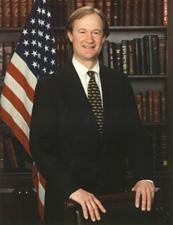
Mr. President, I am pleased to be joined today by Senator Harry Reid and others in introducing the Breast Cancer and Environmental Research Act of 2003. This bill would establish research centers…
Mr. President, I am pleased to be joined today by Senator Harry Reid and others in introducing the Breast Cancer and Environmental Research Act of 2003. This bill would establish research centers that would be the first in the Nation to specifically study the environmental factors that may be related to the development of breast cancer. The lack of agreement within the scientific community and among breast cancer advocates on this question highlights the need for further study.
It is generally believed that the environment plays some role in the development of breast cancer, but the extent of that role is not understood. The Breast Cancer and Environmental Research Act of 2003 will enable us to conduct more conclusive and comprehensive research to determine the impact of the environment on breast cancer. Before we can find the answers, we must determine the right questions we should be asking.
While more research is being conducted into the relationship between breast cancer and the environment, there are still several issues that must be resolved to make this research more effective. They are as follows:
There is no known cause of breast cancer. There is little agreement in the scientific community on how the environment affects breast cancer. While studies have been conducted on the links between environmental factors like pesticides, diet, and electromagnetic fields, no consensus has been reached. There are other factors that have not yet been studied that could provide valuable information. While there is much speculation, it is clear that the relationship between environmental exposures and breast cancer is poorly understood.
There are challenges in conducting environmental research. Identifying linkages is difficult. Laboratory experiments and cluster analyses, such as those in Long Island, New York, cannot reveal whether an environmental exposure increases a woman's risk of breast cancer. Epidemiological studies must be designed carefully, because environmental exposures are difficult to measure.
Coordination between the National Institutes of Health, NIH, the National Cancer Institute, NCI, and the National Institute of Environmental Health Sciences, NIEHS, needs to occur. NCI and NIEHS are the two institutes in the NIH that fund most of the research related to breast cancer and the environment; however, comprehensive information is not currently available.
This legislation would establish eight Centers of Excellence to study these potential links. These ``Breast Cancer Environmental Research Centers'' would provide for multi-disciplinary research among basic, clinical, epidemiological and behavioral scientists interested in establishing outstanding, state-of-the-art research programs addressing potential links between the environment and breast cancer. The NIEHS would award grants based on a competitive peer-review process. This legislation would require each Center to collaborate with community organizations in the area, including those that represent women with breast cancer. The bill would authorize $30 million for the next five years for these grants.
``Genetics loads the gun, the environment pulls the trigger,'' as Ken Olden, the Director of NIEHS, frequently says. Many scientists believe that certain groups of women have genetic variations that may make them more susceptible to adverse environmental exposures. We need to step back and gather evidence before we come to conclusions--that is the purpose of this bill. People are hungry for information, and there is a lot of inconclusive data out there, some of which has no scientific merit whatsoever. We have the opportunity through this legislation to gather legitimate and comprehensive data from premier research institutions across the nation.
According to the American Cancer Society, each year 800 women in Rhode Island are diagnosed with breast cancer, and 200 women in my state will die of this terrible disease this year. We owe it to these women who are diagnosed with this life-threatening disease to provide them with answers for the first time.
I urge my colleagues to join me in supporting and cosponsoring this important legislation, and ask unanimous consent that the text of the legislation be printed in the Record.

Mr. President, I rise today to introduce legislation, along with my colleague, Senator Allen, to mint a commemorative coin celebrating the 400th anniversary of the founding of Jamestown, VA in 2007.…
Mr. President, I rise today to introduce legislation, along with my colleague, Senator Allen, to mint a commemorative coin celebrating the 400th anniversary of the founding of Jamestown, VA in 2007.
The lasting significance of Jamestown stretches far beyond its contributions to the Commonwealth of Virginia. Our Nation is indebted to the 104 original inhabitants of Jamestown who, after completing a harrowing journey across the Atlantic in May of 1607, established the first permanent English settlement in America.
The legacies of Jamestown extend from the founding of our representative democracy in which we serve today, to the free market enterprise system on which our economy has flourished. Our unshakeable traditions of common law, agricultural production, manufacturing, and our free market economy received their humble beginnings from the entrepreneurial spirit of the Jamestown colonists.
The colonists established and implemented the principles of a representative government to build our American democracy that has withstood the test of time and internal conflict. The Jamestown settlers elected America's first democratic assembly, the Virginia House of Burgesses. The structure and procedures of this first legislative body still resonates in the chamber we serve in today. Our political philosophies and traditions took hold in the untamed landscape of Jamestown Island and remain the cornerstone of our republic today.
Jamestown also marked the beginning of the American cultural identity, hosting a combination of diverse cultural traditions. The settlement united English, Native American, and African cultures compelling each one to learn valuable lessons from the others. The colonists at Jamestown were the first immigrants to travel to America, making us a nation of immigrants of which we are so proud today.
The colony at Jamestown showcased the triumph of American ingenuity and hard work. Colonists at Jamestown were forced to battle starvation, disease, and the weather of their new home. Life in Jamestown was a struggle, and the determination shown by the colonists set the foundation for the revolutionary ideas that guided Americans through the colonial era.
Now 395 years later, the history of our Nation continues to come alive in Jamestown. Since 1994, archaeologists have found the remains of the original Jamestown fort constructed in 1607 and over 350,000 artifacts from the colonial period. These fascinating discoveries have given scholars, visitors, and most importantly, America's young people, a realistic view of 17th century American life. The continuing restoration and discovery of the original Jamestown colony provides all Americans with a window on their roots, and to the foundation on which this great Nation was built.
The proceeds from this commemorative coin will help both the National Park Service and the Association for the Preservation of Virginia Antiquities continue their research at the Jamestown site, complete necessary construction projects at the Jamestown National Park, and provide funds for events surrounding the 400th anniversary celebration. In addition, this legislation would help ensure that the Jamestown Rediscovery project will have adequate funds to continue educating the American public on our colonial history. In the 106th Congress, the House and Senate created the Jamestown 400th Commemoration Commission to ensure that the anniversary in 2007 is a truly national event. This legislation that I introduce today continues along this same line.
Recent events have brought about a renewed reverence and interest in our nation's history among the American people. This legislation would help bring national attention to this important anniversary and would serve as a fitting tribute to America's first permanent settlers. This event celebrates America's colonial history and gives every American a chance to help support America's Hometown, Jamestown, VA.
I ask my colleagues in the Senate to join me in supporting our Nation's and Virginia's colonial traditions with this important legislation. I ask unanimous consent that the text of this legislation be printed in the Record.

Mr. President, I rise today to introduce the Children's Deformities Act of 2003, which will require insurance companies to cover corrective surgeries for children with congenital or developmental…
Mr. President, I rise today to introduce the Children's Deformities Act of 2003, which will require insurance companies to cover corrective surgeries for children with congenital or developmental deformities.
According to the March of Dimes, 3.8 percent of babies born annually--about 150,000 babies per year suffer from birth defects. Approximately 50,000 of these babies require reconstructive surgery. Examples of these deformities include cleft lip, cleft palate, skin lesions, vascular anomalies, malformations of the ear, hand, or foot, and other more profound craniofacial deformities.
Plastic surgeons are able to correct many of these problems, and doing so is critical to both the physical and mental health and development of the child. On average, children with congenital deformities or developmental anomalies will need three to five surgical procedures before normalcy is achieved. An increasing number of insurance companies are denying access
to care by labeling the surgical procedures cosmetic or nonfunctional in nature. In some cases, carriers may provide coverage for initial procedures, but resist covering later, necessary procedures, claiming that they are cosmetic and not medically necessary.
Although insurance companies ultimately have decided to cover some of these procedures, families have had to battle through the appeals process of insurance companies for extended periods of time, thereby forcing children to wait unnecessarily for needed surgeries. The treatment plan for children with congenital defects usually requires staged surgical care in accordance with the child's growth pattern. Onerous and time-consuming appeals procedures can jeopardize the physical and psychological health of children with deformities.
The American Medical Association defines cosmetic surgery as being performed to reshape normal structures of the body in order to improve the patient's appearance and self-esteem. In contrast, reconstructive surgery is defined as being performed on abnormal structures of the body, caused by congenital defects, developmental abnormalities, trauma, infection, tumors, or disease. According to the American Society of Plastic Surgeons, reconstructive surgery is performed in order to improve function and approximate a normal appearance.
The Treatment of Children's Deformities Act of 2003 will prohibit insurers from denying coverage for reconstructive surgery for children. This bill identifies the difference between cosmetic and reconstructive surgery and incorporates the American Medical Association's definition of reconstructive surgery. The measure requires group and individual health insurers and group health plans to provide coverage for treatment of a minor child's congenital or developmental deformity, disease, or injury. The legislation defines ``treatment'' to include reconstructive surgical procedures. These are procedures that are performed on abnormal structures of the body caused by congenital defects, developmental abnormalities, trauma, infection, tumors, or disease.
The Treatment of Children's Deformities Act of 2003 has been endorsed by the American Society of Plastic Surgeons, the American Medical Association, the American Academy of Pediatrics, and several other medical organizations. Fifteen States have already enacted legislation that to different degrees require insurance companies to cover treatment of craniofacial and congenital anomalies. While governor of Texas, George W. Bush signed into law legislation that is similar to the legislation I introduce today.
I would like to thank Senator Kennedy and Senator Snowe for cosponsoring this important legislation. I urge all of my colleagues to join me in supporting this bill so that children who suffer from congenital deformities or developmental anomalies do not have to wait unnecessarily for needed treatment.
I ask unanimous consent that the bill be printed in the Record following the conclusion of my remarks.

Mr. President, today I am introducing legislation is to ensure that American taxpayers and American businesses are protected when the Federal Government procures property or services. The purpose of…
Mr. President, today I am introducing legislation is to ensure that American taxpayers and American businesses are protected when the Federal Government procures property or services.
The purpose of this legislation is to close certain loopholes that allow Federal agencies to enter into contracts through a process that does not ensure full and open competition. Current law provides several exceptions that allow Federal agencies to limit competition or provide a sole-source contract. My legislation does not eliminate any of these exceptions, but it does place a 90-day limitation on the broadest exceptions to ensure that a full and fair bidding process takes place as soon as possible.
This bill does not extend the 90-day limitation on sole-source or limited-source contracts when full and open competition is not practicable. For example, the legislation will continue to allow sole- source or limited-source contracts when there is a threat to the national security of the United States or when the property or service is only available from one party.
But we must take a common-sense approach to shield taxpayers from waste and abuse. This bill does just that. I have heard from people throughout my state who believe that the administration is abusing its authority in providing sole-source and limited-source contacts in Iraq.
One example is the sole-source contract worth up to $7 billion that was awarded earlier this year to Kellogg, Brown and Root--a subsidiary of Halliburton--to extinguish oil fires in Iraq. The exception under Federal law used to provide KBR with the sole-source contract was that a full and open bid process would cause unacceptable delays. While it is understandable that oil fires cannot be allowed to burn while an open bid process takes place, it is not acceptable that the term of this contract was 2 years.
Recently, the administration announced that this contract would be terminated and an open bid process take place. While I applaud this move, I fear it would not have happened without the outcry of the American people. My legislation will ensure that certain sole-source contracts will be limited to 90 days. During the 90-day period, a full and open competition would take place so that the long-term contract is awarded to the qualified low-bidder.
It is the responsibility of Congress to ensure that these contracts are awarded in a competitive manner whenever possible. This legislation is a step in the right direction.
I ask unanimous consent that the text of the bill be printed in the Record.
Mr. President, today I am reintroducing the Syria Accountability Act, a bill that aims to end Syrian support for terrorism by diplomatic and economic means.
It is well known that terrorist organizations like Hizballah, Hamas, and the Popular Front for the Liberation of Palestine maintain offices, training camps, and other facilities on Syrian territory and in areas of Lebanon occupied by the Syrian armed forces. We must address this issue not with saber rattling but by confronting the Government of Syria in a diplomatic way that shows the seriousness of our concerns.
The Syria Accountability Act works to achieve our foreign policy goals by expanding economic and diplomatic sanctions against Syria until the President certifies that Syria has ended its support of terrorism, withdrawn from Lebanon, ceased its chemical and biological weapons program, and no longer illegally imports Iraqi oil. The bill provides flexibility to the President by allowing him to choose from a variety of sanctions, as well as the authority to waive sanctions if it is in the interest of United States national security.
I hope this legislation will receive the support of the Administration and Congress because it provides the President with the flexibility to target specific sanctions against Syria, but in no way threatens or condones the use of military force against Syria.

Mr. President, I am today introducing, along with Senators Murkowski, Domenici, Burns, Roberts, Bunning, Cochran, Crapo, Bennett, and Reid, the National Geologic Mapping Reauthorization Act of 2004.…
Mr. President, I am today introducing, along with Senators Murkowski, Domenici, Burns, Roberts, Bunning, Cochran, Crapo, Bennett, and Reid, the National Geologic Mapping Reauthorization Act of 2004. This is an act that has been very beneficial to the Nation and deserves to be reauthorized.
The National Geologic Mapping Act was originally signed into law in 1992, creating the National Cooperative Geologic Mapping Program (NCGMP). This program exists as a partnership between the USGS and the State geological surveys, whose purpose is to provide the Nation with urgently-needed geologic maps that can be and are used by a diverse clientele. These maps are vital to understanding groundwater regimes, mineral resources, geologic hazards such as landslides and earthquakes, and geology essential for all types of land use planning; as well as providing basic scientific data. The NCGMP contains three parts: FedMap--the U.S. Geological Survey's geologic mapping program, StateMap--the State geological survey's part of the act, and EdMap--a program to encourage the training of future geologic mappers at our colleges and universities. All three components are reviewed annually by a Federal Advisory Committee to ensure program effectiveness and to provide future guidance.
FedMap geologic mapping priorities are determined by the needs of Federal land-management agencies, regional customer forums, and cooperatively with the State geological surveys. FedMap also coordinates national geologic mapping standards. StateMap is a competitive program wherein the States submit proposals for geologic mapping that are critiqued by a peer review panel. A requirement of this section of the legislation is that each Federal dollar be matched one-for-one with State funds. Each participating State has a State Advisory Committee to ensure that its proposal addresses priority areas and needs as determined in the NGMA. The success of this program ensured reauthorization of similar legislation in 1997 and in 1999 with widespread bipartisan support in both the House and Senate. To date approximately $50M has been awarded to State geological surveys through StateMap, and these Federal dollars have been more than matched by State dollars.
In 2003, more than 450 new digital geologic maps were published by NCGMP, covering over 120,000 square miles of the Nation. These high quality geologic maps will be used by a very broad base of customers including geotechnical consultants, Federal, State and local land managers, and mineral and energy exploration companies. Information on how to obtain all of these maps is provided on the Internet by the National Geologic Map Database, allowing ease of access for all users.
EdMap has trained over 550 university students at 118 universities across the Nation. The best testament to the quality of this training are its beneficiaries--an unusually high percentage of these students go on to careers in Earth Science, becoming university professors, energy company exploration scientists, or mapping specialists themselves. Their EdMap program experience provides them with a remarkable self-confidence, having completed a difficult and independent field mapping experience. At this very moment, a former EdMap student, Sergeant Alexander Stewart, is serving his Nation in Operation Iraqi Freedom, where his geologic mapping skills have been put to excellent use training his unit in all aspects of map making and interpretation.
Mr. President, the National Geologic Mapping Reauthorization Act benefits numerous citizens every day by assuring there is accurate, usable geologic information available to communities and individuals so that safe, educated resource use decisions can be made. I encourage my colleagues to support this legislation and am committed to its timely consideration.
I ask unanimous consent that the text of the bill be printed in the Record.
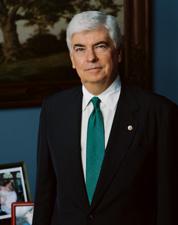
Mr. President, I rise today to introduce legislation that is important to America's Federal law enforcement officers and the people they protect across the country. I am joined today by Senator…
Mr. President, I rise today to introduce legislation that is important to America's Federal law enforcement officers and the people they protect across the country. I am joined today by Senator Collins, Senator Clinton, Senator Corzine, Senator Cantwell, Senator Durbin, Senator Grassley, Senator Leahy, Senator Snowe, Senator Reed, Senator Biden, Senator Feinstein, Senator Schumer,
Senator Lieberman, Senator Warner, Senator Johnson, Senator Murray, Senator Carper, Senator Kerry, Senator Baucus, Senator Reid, Senator Sarbanes, and Senator Jeffords.
The legislation that we are offering will amend the Federal Law Enforcement Pay Reform Act of 1990 to ensure that the government treats Federal law enforcement officers fairly. This bill will partially increase the locality pay adjustments paid to Federal agents in certain high cost areas. These areas have pay disparities so high they are negatively affecting our Federal law enforcement officers, since locality pay adjustments have either not been increased since 1990, or have been increased negligibly.
All over America, Federal law enforcement personnel are enduring tremendous stress associated with our Nation's effort to protect citizens from the threat of terrorism. Unfortunately, that stress has been compounded by ongoing pressing concerns among many such personnel about their pay. I have heard from officers who have described long commutes, high personal debts, and in some cases, almost all-consuming concerns about financial insecurity. Many of these problems occur when agents or officers are transferred from low-cost parts of the country to high-cost areas. I have been told that some Federal officers are forced to separate from their families and rent rooms in the cities to which they have been transferred because they cannot afford to rent or buy homes large enough for a family.
Unfortunately, the raise in the cost of living in many cities across America has outstripped our Federal pay system. I recognize that this is a problem for other Federal employees and I am prepared to work with my colleagues to address this larger issue. The cost of living has also had a very negative impact on non-federal employees as well and I have consistently worked to ensure that all working Americans enjoy a truly livable wage. The legislation that we are introducing today in no way suggests that the needs of other workers should be ignored, but it acknowledges that as we continue to ask Federal law enforcement personnel to put in long hours and remain on heightened alert, we must provide them with a salary sufficient to allow them to focus on their vital work without nagging worries about how to provide their families with the essentials of food, clothing, and shelter.
The Federal Law Enforcement Officers Association, representing more than 19,000 Federal agents, along with the Fraternal Order of Police, National Association of Police Organizations, National Troopers Coalition, National Organization of Black Law Enforcement Executives, International Brotherhood of Police, and the Police Executive Research Forum have endorsed this legislative proposal.
In these difficult times, we must remain committed to recruiting, hiring, and retaining law enforcement officers of the highest caliber. However, we must also recognize that the Federal government is in competition with State and Local police departments that often pay more and provide better standards of living.
I urge all of my colleagues to join us in this effort. I hope that we can quickly pass this important legislation because it will improve the lives of the men and women who are dedicated to protecting us. In so doing, it will improve the Nation's domestic security.
I ask unanimous consent that the text of the bill be printed in the Record.

Mr. President, I am pleased to support S. 2358, the Anti-Gang Act. This critical legislation will provide State and Federal law enforcement with the tools and resources needed to successfully fight…
Mr. President, I am pleased to support S. 2358, the Anti-Gang Act. This critical legislation will provide State and Federal law enforcement with the tools and resources needed to successfully fight the expanding presence of violent gangs that bring drugs like methamphetamine into our communities.
Time and time again, we in Congress have heard the call of prosecutors and law enforcement for more resources to combat the problem of gang violence. The Anti-Gang Act gives local prosecutors and law enforcement what they have asked Congress for most--targeted financial assistance. The bill will help combat the growth and proliferation of violent gangs by authorizing funds for the cooperative prevention, investigation, and prosecution of gang crimes. In addition, grant money will be made available for the protection of witnesses and victims of gang violence. These funds will not be tied to restrictive formulas that would keep the majority of the assistance from reaching suburban and rural communities. This money will be able to go to the communities in Wisconsin and the rest of the country where rural and smaller law enforcement agencies are financially limited in their ability to deal with the exploding increase in gang violence associated with methamphetamines and other narcotics.
The Anti-Gang Act also promotes hiring and long-term service of highly qualified prosecutors and public defenders by establishing a student loan forgiveness program. Prosecuting gangs is some of the most demanding and challenging work a prosecutor will tackle. Loan forgiveness will allow Assistant District Attorneys and Assistant Attorney Generals to remain in public service and allow them to take their wealth of experience and use it to combat gang violence.
The Anti-Gang Act also replaces the current Federal RICO statute that was never intended to be used against violent street gangs with a tough statute that not only criminalizes participation in criminal street gangs, but addresses the serious problem of the recruitment and retention of gang members. The Anti-Gang Act targets gang violence and gang crimes in a logical, straightforward manner. The bill also recognizes that the vast majority of gang investigations and prosecutions have been and will continue to be done at the State and local level. The bill requires that Federal prosecutors consult with State and local law enforcement before seeking an indictment and that a Federal prosecution is in the public interest and necessary to secure substantial justice.
Finally, the Anti-Gang Act will provide Congress with the data necessary to decide whether to expand the Federal role in prosecuting juvenile offenders by requiring a comprehensive report on the current treatment of juveniles by the States and the capability of the Federal criminal justice system to take on more juvenile cases and to house additional prisoners. Some have proposed indicting and prosecuting more juveniles in Federal courts as a way of combating gang violence without being able to tell us why this is necessary and what effect it might have on the criminal justice system. With this review, Congress can intelligently consider whether to expand the Federal role in prosecuting juveniles.
Our citizens should be able to send their children to school, use their parks and walk their streets without fearing that ever-spreading gang violence will grow unfettered in their community. The Anti-Gang Act is an important step towards making all of our neighborhoods safe and I urge my colleagues to support it.

Mr. President, I am pleased to be joined today by Senator Kyl in introducing the Arizona Trail Feasibility Study Act. This bill would authorize the Secretaries of Agriculture and Interior to conduct…
Mr. President, I am pleased to be joined today by Senator Kyl in introducing the Arizona Trail Feasibility Study Act. This bill would authorize the Secretaries of Agriculture and Interior to conduct a joint study to determine the feasibility of designating the Arizona Trail as a National Scenic or National Historic Trail. A companion bill is being introduced in the House of Representatives today by Representative Kolbe and rest of the Arizona delegation.
Since 1968, when the National Trails System Act was established, Congress has designated twenty national trails. This legislation is the first step in the process of national trail designation for the Arizona Trail. If the study concludes that designating the Arizona Trail as a part of the national trail system if feasible, subsequent legislation will be introduced to designate the Arizona Trail as either a National Scenic Trail or National Historic Trail.
The Arizona Trail is a beautifully diverse stretch of public lands, mountains, canyons, deserts, forests, historic sites, and communities. The Trail begins at the Coronado National Memorial on the U.S.-Mexico border and ends in the Bureau of Land Management's Arizona Strip District on the Utah border. In between these two points, the Trail winds through some of the most rugged, spectacular scenery in the Western United States.
For the past 10 years, over 16 Federal, state and local agencies, as well as community and business organizations, have worked to form a partnership to create, develop, and manage the Arizona Trail. Designating the Arizona Trail as a national trail would help streamline the management of the Trail to ensure that this pristine stretch of diverse land is preserved for future generations to enjoy.
The corridor for the Arizona Trail encompasses the wide range of ecological diversity in the state, and incorporates a host of existing trails into one continuous trail. The Arizona Trail extends through seven ecological life zones including such legendary landmarks as the Sonoran Desert and the Grand Canyon. It connects the unique lowland desert flora and fauna in Saguaro National Park and the pine-covered San Francisco Peaks, Arizona's highest mountains at 12,633 feet in elevation. In fact, the Trail route is so topographically diverse that a person can hike from the Sonoran Desert to Alpine forests in one day. The Trail also takes travelers through ranching, mining, agricultural, and developed urban areas, as well as remote, pristine wildlands.
With nearly 700 miles of the 800-mile trail already completed, the Arizona Trail is a boon to recreationists. The Arizona State Parks recently released data showing that two-thirds of Arizonans consider themselves trail users. Millions of visitors also use Arizona's trails each year. In one of the fastest-growing states in the U.S., the designation of the Arizona Trail as a National Scenic or National Historic Trail would ensure the preservation of a corridor of open space for hikers, mountain bicyclists, cross country skiers, snowshoers, eco-tourists, equestrians, and joggers.
I commend the Arizona Trail Association for taking the lead in building
a coalition of partners to bring the Arizona Trail from its inception to a nearly completed, multiple-use, non-motorized, long-distance trail. Trail enthusiasts look forward to the completion of the Arizona Trail. Its designation as a national trail would help to protect the natural, cultural, and historic resources it contains for the public to use and enjoy.
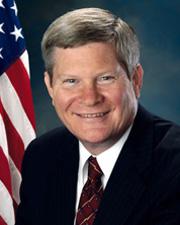
Mr. President, I rise today to introduce the Fair Pay for Military Firefighters Act. This bill authorizes hazardous duty incentive pay for our Nation's military firefighters. It may come as a…
Mr. President, I rise today to introduce the Fair Pay for Military Firefighters Act. This bill authorizes hazardous duty incentive pay for our Nation's military firefighters.
It may come as a surprise to many of my colleagues, as it did to me, that military firefighters are not currently eligible to receive hazardous duty incentive pay. This issue was first brought to my attention in a letter I received several months ago from an Air Force Staff Sergeant stationed at Ellsworth Air Force Base. The letter stated, ``We are in one of the most dangerous jobs in the world. We face danger not only when we deploy like other jobs that get this pay but we face hazards at our home station.''
As the Staff Sergeant said, firefighting is in itself a dangerous profession, but military firefighters must confront a wide variety of threats and are exposed to toxic materials distinctive to the military. The fires they fight often involve fuel and propellants, munitions, or chemicals which present unique and extremely dangerous situations. These servicemembers face risks not only when in combat, but as a part of their every day duties. Despite these dangers, most of the approximate 5,000 military firefighters serving in the Armed Forces are not eligible to receive hazardous duty incentive pay. If these servicemembers are willing to take the risk, our nation should be willing to provide them the benefits they deserve.
In addition to being the right thing to do, I believe there are broader reasons to support hazardous duty incentive pay for military firefighters. First, there is an issue of fairness. Federal civilian firefighters, who also face great risk and are critically important to protecting our nation, rightly have risk calculated into their compensation package. This creates a situation where federal civilian and military firefighters, who often work side-by-side, are exposed to the same risk but are compensated differently.
Second, it is my understanding that each of the Services supports providing this benefit to our military firefighters because they see it as a manning and retention issue. In fact, according to survey results, lack of hazardous duty incentive pay was cited by military firefighters as one of the top three reasons for morale and retention problems. The Air Force has specifically stated that the lack of hazardous duty incentive pay is a primary factor in poor retention rates among its military firefighters. In my view, providing hazardous duty incentive pay is essential to retaining our best firefighters and maintaining this crucial capability within our Armed Forces.
Mr. President, I am pleased the Fair Pay for Military firefighters Act has been endorsed by both the Fleet Reserve Association and the Air Force Sergeants Association and I thank them for their assistance in preparing this legislation. I ask unanimous consent that the full text of two letters from these distinguished organizations be printed in the Record and the bill be printed in the Record.
I look forward to working with my colleagues to pass the Fair Pay for Military Firefighters Act and to extending hazardous duty incentive pay benefits to our nation's military firefighters. There can be no doubt that firefighting is one of the most dangerous professions. Military firefighters understand this threat and deserve the recognition of receiving hazardous duty incentive pay for the sacrifices they make and the risks they take.
Bill Text
Latest available legislative text
        [Congressional Bills 108th Congress]
[From the U.S. Government Publishing Office]
[S. 966 Introduced in Senate (IS)]

108th CONGRESS
1st Session
S. 966

To provide Federal assistance to States and local jurisdictions to
prosecute hate crimes.

_______________________________________________________________________

IN THE SENATE OF THE UNITED STATES

May 1, 2003

Mr. Kennedy (for himself, Mr. Specter, Mr. Daschle, Mr. Smith, Mr.
Leahy, Ms. Collins, Mr. Lieberman, Ms. Snowe, Mr. Wyden, Mr. Jeffords,
Mr. Schumer, Mr. Chafee, Mr. Akaka, Mr. Ensign, Mr. Bayh, Mr. Biden,
Mr. Bingaman, Mrs. Boxer, Mr. Breaux, Ms. Cantwell, Mr. Carper, Mrs.
Clinton, Mr. Corzine, Mr. Dayton, Mr. Dodd, Mr. Dorgan, Mr. Durbin, Mr.
Edwards, Mrs. Feinstein, Mr. Graham of Florida, Mr. Harkin, Mr. Inouye,
Mr. Johnson, Mr. Kerry, Ms. Landrieu, Mr. Levin, Mrs. Lincoln, Ms.
Mikulski,  Mr. Miller, Mrs. Murray, Mr. Nelson of Nebraska, Mr. Nelson
of Florida, Mr. Reed, Mr. Reid, Mr. Rockefeller, Mr. Sarbanes, Ms.
Stabenow, Mr. Lautenberg, and Mr. Pryor) introduced the following bill;
which was read twice and referred to the Committee on the Judiciary

_______________________________________________________________________

A BILL

To provide Federal assistance to States and local jurisdictions to
prosecute hate crimes.

Be it enacted by the Senate and House of Representatives of the
United States of America in Congress assembled,

SECTION 1. SHORT TITLE.

This Act may be cited as the ``Local Law Enforcement Enhancement
Act of 2003''.

SEC. 2. FINDINGS.

Congress makes the following findings:
(1) The incidence of violence motivated by the actual or
perceived race, color, religion, national origin, gender,
sexual orientation, or disability of the victim poses a serious
national problem.
(2) Such violence disrupts the tranquility and safety of
communities and is deeply divisive.
(3) State and local authorities are now and will continue
to be responsible for prosecuting the overwhelming majority of
violent crimes in the United States, including violent crimes
motivated by bias. These authorities can carry out their
responsibilities more effectively with greater Federal
assistance.
(4) Existing Federal law is inadequate to address this
problem.
(5) The prominent characteristic of a violent crime
motivated by bias is that it devastates not just the actual
victim and the family and friends of the victim, but frequently
savages the community sharing the traits that caused the victim
to be selected.
(6) Such violence substantially affects interstate commerce
in many ways, including--
(A) by impeding the movement of members of targeted
groups and forcing such members to move across State
lines to escape the incidence or risk of such violence;
and
(B) by preventing members of targeted groups from
purchasing goods and services, obtaining or sustaining
employment, or participating in other commercial
activity.
(7) Perpetrators cross State lines to commit such violence.
(8) Channels, facilities, and instrumentalities of
interstate commerce are used to facilitate the commission of
such violence.
(9) Such violence is committed using articles that have
traveled in interstate commerce.
(10) For generations, the institutions of slavery and
involuntary servitude were defined by the race, color, and
ancestry of those held in bondage. Slavery and involuntary
servitude were enforced, both prior to and after the adoption
of the 13th amendment to the Constitution of the United States,
through widespread public and private violence directed at
persons because of their race, color, or ancestry, or perceived
race, color, or ancestry. Accordingly, eliminating racially
motivated violence is an important means of eliminating, to the
extent possible, the badges, incidents, and relics of slavery
and involuntary servitude.
(11) Both at the time when the 13th, 14th, and 15th
amendments to the Constitution of the United States were
adopted, and continuing to date, members of certain religious
and national origin groups were and are perceived to be
distinct ``races''. Thus, in order to eliminate, to the extent
possible, the badges, incidents, and relics of slavery, it is
necessary to prohibit assaults on the basis of real or
perceived religions or national origins, at least to the extent
such religions or national origins were regarded as races at
the time of the adoption of the 13th, 14th, and 15th amendments
to the Constitution of the United States.
(12) Federal jurisdiction over certain violent crimes
motivated by bias enables Federal, State, and local authorities
to work together as partners in the investigation and
prosecution of such crimes.
(13) The problem of crimes motivated by bias is
sufficiently serious, widespread, and interstate in nature as
to warrant Federal assistance to States and local
jurisdictions.

SEC. 3. DEFINITION OF HATE CRIME.

In this Act, the term ``hate crime'' has the same meaning as in
section 280003(a) of the Violent Crime Control and Law Enforcement Act
of 1994 (28 U.S.C. 994 note).

SEC. 4. SUPPORT FOR CRIMINAL INVESTIGATIONS AND PROSECUTIONS BY STATE
AND LOCAL LAW ENFORCEMENT OFFICIALS.

(a) Assistance Other Than Financial Assistance.--
(1) In general.--At the request of a law enforcement
official of a State or Indian tribe, the Attorney General may
provide technical, forensic, prosecutorial, or any other form
of assistance in the criminal investigation or prosecution of
any crime that--
(A) constitutes a crime of violence (as defined in
section 16 of title 18, United States Code);
(B) constitutes a felony under the laws of the
State or Indian tribe; and
(C) is motivated by prejudice based on the race,
color, religion, national origin, gender, sexual
orientation, or disability of the victim, or is a
violation of the hate crime laws of the State or Indian
tribe.
(2) Priority.--In providing assistance under paragraph (1),
the Attorney General shall give priority to crimes committed by
offenders who have committed crimes in more than 1 State and to
rural jurisdictions that have difficulty covering the
extraordinary expenses relating to the investigation or
prosecution of the crime.
(b) Grants.--
(1) In general.--The Attorney General may award grants to
assist State, local, and Indian law enforcement officials with
the extraordinary expenses associated with the investigation
and prosecution of hate crimes.
(2) Office of justice programs.--In implementing the grant
program, the Office of Justice Programs shall work closely with
the funded jurisdictions to ensure that the concerns and needs
of all affected parties, including community groups and
schools, colleges, and universities, are addressed through the
local infrastructure developed under the grants.
(3)  Application.--
(A) In general.--Each State that desires a grant
under this subsection shall submit an application to
the Attorney General at such time, in such manner, and
accompanied by or containing such information as the
Attorney General shall reasonably require.
(B) Date for submission.--Applications submitted
pursuant to subparagraph (A) shall be submitted during
the 60-day period beginning on a date that the Attorney
General shall prescribe.
(C) Requirements.--A State or political subdivision
of a State or tribal official applying for assistance
under this subsection shall--
(i) describe the extraordinary purposes for
which the grant is needed;
(ii) certify that the State, political
subdivision, or Indian tribe lacks the
resources necessary to investigate or prosecute
the hate crime;
(iii) demonstrate that, in developing a
plan to implement the grant, the State,
political subdivision, or tribal official has
consulted and coordinated with nonprofit,
nongovernmental victim services programs that
have experience in providing services to
victims of hate crimes; and
(iv) certify that any Federal funds
received under this subsection will be used to
supplement, not supplant, non-Federal funds
that would otherwise be available for
activities funded under this subsection.
(4) Deadline.--An application for a grant under this
subsection shall be approved or disapproved by the Attorney
General not later than 30 business days after the date on which
the Attorney General receives the application.
(5) Grant amount.--A grant under this subsection shall not
exceed $100,000 for any single jurisdiction within a 1 year
period.
(6) Report.--Not later than December 31, 2004, the Attorney
General shall submit to Congress a report describing the
applications submitted for grants under this subsection, the
award of such grants, and the purposes for which the grant
amounts were expended.
(7) Authorization of appropriations.--There is authorized
to be appropriated to carry out this subsection $5,000,000 for
each of fiscal years 2004 and 2005.

SEC. 5. GRANT PROGRAM.

(a) Authority To Make Grants.--The Office of Justice Programs of
the Department of Justice shall award grants, in accordance with such
regulations as the Attorney General may prescribe, to State and local
programs designed to combat hate crimes committed by juveniles,
including programs to train local law enforcement officers in
identifying, investigating, prosecuting, and preventing hate crimes.
(b) Authorization of Appropriations.--There are authorized to be
appropriated such sums as may be necessary to carry out this section.

SEC. 6. AUTHORIZATION FOR ADDITIONAL PERSONNEL TO ASSIST STATE AND
LOCAL LAW ENFORCEMENT.

There are authorized to be appropriated to the Department of the
Treasury and the Department of Justice, including the Community
Relations Service, for fiscal years 2004, 2005, and 2006 such sums as
are necessary to increase the number of personnel to prevent and
respond to alleged violations of section 249 of title 18, United States
Code, as added by section 7.

SEC. 7. PROHIBITION OF CERTAIN HATE CRIME ACTS.

(a) In General.--Chapter 13 of title 18, United States Code, is
amended by adding at the end the following:
``Sec. 249. Hate crime acts
``(a) In General.--
``(1) Offenses involving actual or perceived race, color,
religion, or national origin.--Whoever, whether or not acting
under color of law, willfully causes bodily injury to any
person or, through the use of fire, a firearm, or an explosive
or incendiary device, attempts to cause bodily injury to any person,
because of the actual or perceived race, color, religion, or national
origin of any person--
``(A) shall be imprisoned not more than 10 years,
fined in accordance with this title, or both; and
``(B) shall be imprisoned for any term of years or
for life, fined in accordance with this title, or both,
if--
``(i) death results from the offense; or
``(ii) the offense includes kidnaping or an
attempt to kidnap, aggravated sexual abuse or
an attempt to commit aggravated sexual abuse,
or an attempt to kill.
``(2) Offenses involving actual or perceived religion,
national origin, gender, sexual orientation, or disability.--
``(A) In general.--Whoever, whether or not acting
under color of law, in any circumstance described in
subparagraph (B), willfully causes bodily injury to any
person or, through the use of fire, a firearm, or an
explosive or incendiary device, attempts to cause
bodily injury to any person, because of the actual or
perceived religion, national origin, gender, sexual
orientation, or disability of any person--
``(i) shall be imprisoned not more than 10
years, fined in accordance with this title, or
both; and
``(ii) shall be imprisoned for any term of
years or for life, fined in accordance with
this title, or both, if--
``(I) death results from the
offense; or
``(II) the offense includes
kidnaping or an attempt to kidnap,
aggravated sexual abuse or an attempt
to commit aggravated sexual abuse, or
an attempt to kill.
``(B) Circumstances described.--For purposes of
subparagraph (A), the circumstances described in this
subparagraph are that--
``(i) the conduct described in subparagraph
(A) occurs during the course of, or as the
result of, the travel of the defendant or the
victim--
``(I) across a State line or
national border; or
``(II) using a channel, facility,
or instrumentality of interstate or
foreign commerce;
``(ii) the defendant uses a channel,
facility, or instrumentality of interstate or
foreign commerce in connection with the conduct
described in subparagraph (A);
``(iii) in connection with the conduct
described in subparagraph (A), the defendant
employs a firearm, explosive or incendiary
device, or other weapon that has traveled in
interstate or foreign commerce; or
``(iv) the conduct described in
subparagraph (A)--
``(I) interferes with commercial or
other economic activity in which the
victim is engaged at the time of the
conduct; or
``(II) otherwise affects interstate
or foreign commerce.
``(b) Certification Requirement.--No prosecution of any offense
described in this subsection may be undertaken by the United States,
except under the certification in writing of the Attorney General, the
Deputy Attorney General, the Associate Attorney General, or any
Assistant Attorney General specially designated by the Attorney General
that--
``(1) he or she has reasonable cause to believe that the
actual or perceived race, color, religion, national origin,
gender, sexual orientation, or disability of any person was a
motivating factor underlying the alleged conduct of the
defendant; and
``(2) he or his designee or she or her designee has
consulted with State or local law enforcement officials
regarding the prosecution and determined that--
``(A) the State does not have jurisdiction or does
not intend to exercise jurisdiction;
``(B) the State has requested that the Federal
Government assume jurisdiction;
``(C) the State does not object to the Federal
Government assuming jurisdiction; or
``(D) the verdict or sentence obtained pursuant to
State charges left demonstratively unvindicated the
Federal interest in eradicating bias-motivated
violence.
``(c) Definitions.--In this section--
``(1) the term `explosive or incendiary device' has the
meaning given the term in section 232 of this title; and
``(2) the term `firearm' has the meaning given the term in
section 921(a) of this title.''.
(b) Technical and Conforming Amendment.--The analysis for chapter
13 of title 18, United States Code, is amended by adding at the end the
following:

``249. Hate crime acts.''.

SEC. 8. DUTIES OF FEDERAL SENTENCING COMMISSION.

(a) Amendment of Federal Sentencing Guidelines.--Pursuant to the
authority provided under section 994 of title 28, United States Code,
the United States Sentencing Commission shall study the issue of adult
recruitment of juveniles to commit hate crimes and shall, if
appropriate, amend the Federal sentencing guidelines to provide
sentencing enhancements (in addition to the sentencing enhancement
provided for the use of a minor during the commission of an offense)
for adult defendants who recruit juveniles to assist in the commission
of hate crimes.
(b) Consistency With Other Guidelines.--In carrying out this
section, the United States Sentencing Commission shall--
(1) ensure that there is reasonable consistency with other
Federal sentencing guidelines; and
(2) avoid duplicative punishments for substantially the
same offense.

SEC. 9. STATISTICS.

Subsection (b)(1) of the first section of the Hate Crimes
Statistics Act (28 U.S.C. 534 note) is amended by inserting ``gender,''
after ``race,''.

SEC. 10. SEVERABILITY.

If any provision of this Act, an amendment made by this Act, or the
application of such provision or amendment to any person or
circumstance is held to be unconstitutional, the remainder of this Act,
the amendments made by this Act, and the application of the provisions
of such to any person or circumstance shall not be affected thereby.
<all>