Colombian Temporary Protected Status Act of 2003
 Sen. Harry Reid (D-NV)
Legislative Activity
Stay on top of the latest movement without scrolling through every action
Read twice and referred to the Committee on the Judiciary. (text of measure as introduced: CR S5731)
May 5, 2003
View full timeline
Introduced in Senate
May 5, 2003
Sponsor introductory remarks on measure. (CR S5730-5731)
May 5, 2003
Read twice and referred to the Committee on the Judiciary. (text of measure as introduced: CR S5731)
May 5, 2003
Floor Debate
7 membersWhat members said about S. 986 on the floor



 +2
+2
Floor Debate
7 membersWhat members said about S. 986 on the floor
Mr. President, today I am introducing legislation, the Rural Health Care Fairness and Medicare Equity Act, that will help to make Medicare reimbursement more fair and equitable for rural and small…
Mr. President, I rise today to introduce my Child Nutrition Initiatives Act of 2003. This legislation consists of a number of proposals that I believe will significantly improve the nutrition…
Mr. President, I rise to introduce The Rural Health Care Fairness and Medicare Equity Act with my good friend and colleague, Senator Dorgan, from North Dakota. Many predominately rural States, such…
Mr. President, I rise today to introduce legislation to simplify the taxation of life insurance companies. I am joined by my colleague from North Dakota, Mr. Conrad, and my colleague from Kentucky,…
Mr. President, today I introduce the Registered Nurses' Safe Staffing Act of 2003. I'm introducing this bill on behalf of the American Nurses Association's Chief Executive Officer and President Linda…
Show 3 more
Mr. President, amid all the discussions about reconstruction in Afghanistan and Iraq, it is easy for us to lose sight of other humanitarian crises. One particularly pressing yet overlooked crisis is…
Mr. President, amid all the discussions about reconstruction in Afghanistan and Iraq, it is easy for us to lose sight of other humanitarian crises. One particularly pressing yet overlooked crisis is…
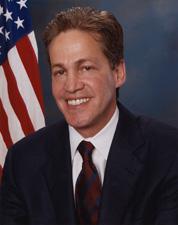
Mr. President, I ask unanimous consent that the bill I introduce today to amend the Workforce Investment Act of 1998 to provide for a job training grant pilot program be printed in the Record.
Bill Text
Latest available legislative text
        [Congressional Bills 108th Congress]
[From the U.S. Government Publishing Office]
[S. 986 Introduced in Senate (IS)]

108th CONGRESS
1st Session
S. 986

To designate Colombia under section 244 of the Immigration and
Nationality Act in order to make nationals of Colombia eligible for
temporary protected status under such section.

_______________________________________________________________________

IN THE SENATE OF THE UNITED STATES

May 5, 2003

Mr. Reid introduced the following bill; which was read twice and
referred to the Committee on the Judiciary

_______________________________________________________________________

A BILL

To designate Colombia under section 244 of the Immigration and
Nationality Act in order to make nationals of Colombia eligible for
temporary protected status under such section.

Be it enacted by the Senate and House of Representatives of the
United States of America in Congress assembled,

SECTION 1. SHORT TITLE.

This Act may be cited as the ``Colombian Temporary Protected Status
Act of 2003''.

SEC. 2. FINDINGS.

Congress finds that--
(1) Colombia has been embroiled in a 38-year internal
conflict, resulting in the death of tens of thousands of
civilians and combatants;
(2) the 2 main armed anti-government rebel groups, the
Revolutionary Armed Forces of Colombia (Fuerzas Armadas
Revolucionarias de Colombia, or FARC) and the National
Liberation Army (Ejercito de Liberacion Nacional, or ELN), have
engaged in military activities in 700 of 1,098 municipalities
in Colombia, and in recent years have influenced local
governments in as much as 40 percent to 50 percent of Colombian
territory;
(3) the FARC and ELN not only attack police and military
forces but also regularly attack civilian populations, commit
massacres and extrajudicial killings, collect war taxes, compel
citizens into their ranks, force farmers to grow illicit crops,
and regulate travel, commerce, and other activities;
(4) paramilitary groups such as the United Self-Defense
Groups of Colombia (Autodefensas Unidas de Colombia or AUC),
originally established to protect rural landowners, have grown
dramatically in recent years to become a major national
military force in Colombia;
(5) paramilitary groups are responsible, according to human
rights groups, for the greatest number of extrajudicial
killings and forced disappearances in Colombia since 1995;
(6) the FARC, ELN, and AUC, all designated by the State
Department as foreign terrorist organizations, have an
estimated combined force of 25,000 combatants;
(7) the Government of Colombia, particularly during the
administration of President Andres Pastrana, has afforded armed
rebel groups numerous opportunities to negotiate a peace
agreement, including the extraordinary step in November 1998 of
creating a safe haven for the FARC by withdrawing its security
forces from 5 municipalities covering some 16,000 to 17,000
square miles;
(8) despite having been given the opportunity to seek
peace, the FARC instead used the safe haven to enhance its
military capability to further its violent campaign against the
government and people of Colombia;
(9) while President Pastrana and the Colombian government
negotiated in good faith, the FARC proceeded to kidnap
political officials;
(10) in February 2002, the FARC's actions forced President
Pastrana to withdraw from the peace process and begin the
process of retaking the safe zone he had previously ceded to
the FARC and other rebel groups;
(11) after the election of Alvaro Uribe as Colombia's
President, the FARC began targeting mayors with letters
declaring that they had 24 hours to leave or would be
considered ``military targets'';
(12) although before the recent Presidential election the
violence had been mostly contained in rural areas, it has now
spread to the urban areas, with cities such as Medellin
experiencing an average of 13 killings a day;
(13) an average of 2.8 rebel bombs go off every day in
Colombia while bomb squads disarm another 5;
(14) the middle and upper classes have been targeted for
kidnaping, with an average of 3,250 Colombians being kidnaped
each year since 1998;
(15) between 1,500,000 and 2,000,000 people have been
forced to leave their homes, representing the third largest
internal refugee crisis in the world; and
(16) between 1,500 and 2,500 Colombians were massacred in
contested rural areas in 2001.

SEC. 3. SENSE OF CONGRESS.

It is the sense of Congress that, in view of the recent escalation
of the current civil war in Colombia, Colombia qualifies for
designation under section 244(b)(1)(A) of the Immigration and
Nationality Act (8 U.S.C. 1254a(b)(1)(A)), pursuant to which Colombian
nationals would be eligible for temporary protected status in the
United States.

SEC. 4. DESIGNATION FOR PURPOSES OF GRANTING TEMPORARY PROTECTED STATUS
TO COLOMBIANS.

(a) Designation.--
(1) In general.--For purposes of section 244 of the
Immigration and Nationality Act (8 U.S.C. 1254a), Colombia
shall be treated as if it had been designated under subsection
(b) of that section, subject to the provisions of this section.
(2) Period of designation.--The initial period of such
designation shall begin on the date of enactment of this Act
and shall remain in effect for 1 year.
(b) Aliens Eligible.--In applying section 244 of the Immigration
and Nationality Act (8 U.S.C. 1254a) pursuant to the designation made
under this section, subject to section 244(c)(3) of the Immigration and
Nationality Act (8 U.S.C. 1254a(c)(3)), an alien who is a national of
Colombia meets the requirements of section 244(c)(1) of that Act (8
U.S.C. 1254a(c)(1)) only if--
(1) the alien has been continuously physically present in
the United States since the date of enactment of this Act;
(2) the alien is admissible as an immigrant, except as
otherwise provided under section 244(c)(2)(A) of the
Immigration and Nationality Act (8 U.S.C. 1254a(c)(2)(A)), and
is not ineligible for temporary protected status under section
244(c)(2)(B) of that Act (8 U.S.C. 1254a(c)(2)(B)); and
(3) the alien registers for temporary protected status in a
manner that the Secretary of Homeland Security shall establish.
(c) Consent To Travel Abroad.--The Secretary of Homeland Security
shall give the prior consent to travel abroad described in section
244(f)(3) of the Immigration and Nationality Act (8 U.S.C. 1254a(f)(3))
to an alien who is granted temporary protected status pursuant to the
designation made under this section, if the alien establishes to the
satisfaction of the Secretary of Homeland Security that emergency and
extenuating circumstances beyond the control of the alien require the
alien to depart for a brief, temporary trip abroad. An alien returning
to the United States in accordance with such an authorization shall be
treated the same as any other returning alien provided temporary
protected status under section 244 of the Immigration and Nationality
Act (8 U.S.C. 1254a).
<all>