A bill to amend the Workforce Investment Act of 1998 to provide for a job training grant pilot program.
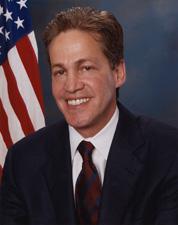 Sen. Norm Coleman (R-MN)
Legislative Activity
Stay on top of the latest movement without scrolling through every action
Read twice and referred to the Committee on Health, Education, Labor, and Pensions. (text of measure as introduced: CR S5733-5734)
May 5, 2003
View full timeline
Introduced in Senate
May 5, 2003
Read twice and referred to the Committee on Health, Education, Labor, and Pensions. (text of measure as introduced: CR S5733-5734)
May 5, 2003
Floor Debate
7 membersWhat members said about S. 988 on the floor




 +2
+2
Floor Debate
7 membersWhat members said about S. 988 on the floor
Mr. President, today I am introducing legislation, the Rural Health Care Fairness and Medicare Equity Act, that will help to make Medicare reimbursement more fair and equitable for rural and small…
Mr. President, I rise today to introduce my Child Nutrition Initiatives Act of 2003. This legislation consists of a number of proposals that I believe will significantly improve the nutrition…
Mr. President, I rise to introduce The Rural Health Care Fairness and Medicare Equity Act with my good friend and colleague, Senator Dorgan, from North Dakota. Many predominately rural States, such…
Mr. President, I rise today to introduce legislation to simplify the taxation of life insurance companies. I am joined by my colleague from North Dakota, Mr. Conrad, and my colleague from Kentucky,…
Mr. President, today I introduce the Registered Nurses' Safe Staffing Act of 2003. I'm introducing this bill on behalf of the American Nurses Association's Chief Executive Officer and President Linda…
Show 3 more

Mr. President, amid all the discussions about reconstruction in Afghanistan and Iraq, it is easy for us to lose sight of other humanitarian crises. One particularly pressing yet overlooked crisis is…
Mr. President, I ask unanimous consent that the bill I introduce today to amend the Workforce Investment Act of 1998 to provide for a job training grant pilot program be printed in the Record.
Mr. President, I ask unanimous consent that the bill I introduce today to amend the Workforce Investment Act of 1998 to provide for a job training grant pilot program be printed in the Record.
Bill Text
Latest available legislative text
        [Congressional Bills 108th Congress]
[From the U.S. Government Publishing Office]
[S. 988 Introduced in Senate (IS)]

108th CONGRESS
1st Session
S. 988

To amend the Workforce Investment Act of 1998 to provide for a job
training grant pilot program.

_______________________________________________________________________

IN THE SENATE OF THE UNITED STATES

May 5, 2003

Mr. Coleman introduced the following bill; which was read twice and
referred to the Committee on Health, Education, Labor, and Pensions

_______________________________________________________________________

A BILL

To amend the Workforce Investment Act of 1998 to provide for a job
training grant pilot program.

Be it enacted by the Senate and House of Representatives of the
United States of America in Congress assembled,

SECTION 1. JOB TRAINING GRANT PILOT PROGRAM.

Section 171 of the Workforce Investment Act of 1998 (29 U.S.C.
2916) is amended by striking subsection (d) and inserting the
following:
``(d) Job Training Grant Pilot Program.--
``(1) In general.--
``(A) Grants.--The Secretary shall provide grants
to qualified job training programs as follows:
``(i) Placement grants.--Grants in an
amount to be determined by the Secretary shall
be provided to qualified job training programs
upon placement of a qualified graduate in
qualifying employment.
``(ii) Retention grants.--An additional
grant in an amount to be determined by the
Secretary shall be provided to qualified job
training programs upon retention of a qualified
graduate in qualifying employment for a period
of 1 year.
``(B) Determination.--In determining the amount of
the grants to be provided under subparagraph (A), the
Secretary shall consider the economic benefit received
by the Government from the employment of the qualified
graduate, including increased tax revenue and decreased
unemployment benefits or other support obligations.
``(2) Qualified job training program.--For purposes of this
subsection, a qualified job training program is 1 that--
``(A) is operated by a nonprofit or for-profit
entity, partnership, or joint venture formed under the
laws of--
``(i) the United States or a territory of
the United States;
``(ii) any State; or
``(iii) any county or locality;
``(B) offers education and training in--
``(i) basic skills, such as reading,
writing, mathematics, information processing,
and communications;
``(ii) technical skills, such as
accounting, computers, printing, and machining;
``(iii) thinking skills, such as reasoning,
creative thinking, decision making, and problem
solving; and
``(iv) personal qualities, such as
responsibility, self-esteem, self-management,
honesty, and integrity;
``(C) provides income supplements when needed to
eligible participants (defined for purposes of this
paragraph as an individual who meets the criteria
described in subparagraphs (A) through (C) of paragraph
(3)) for housing, counseling, tuition, and other basic
needs;
``(D) provides eligible participants with not less
than 160 hours of instruction, assessment, or
professional coaching; and
``(E) invests an average of $10,000 in training per
graduate of such program.
``(3) Qualified graduate.--For purposes of this subsection,
a qualified graduate is an individual who is a graduate of a
qualified job training program and who--
``(A) is 18 years of age or older;
``(B) had in either of the 2 preceding taxable
years Federal adjusted gross income not exceeding the
maximum income of a very low-income family (as defined
in section 3(b)(2) of the United States Housing Act of
1937 (42 U.S.C. 1437a(b)(2))) for a single individual;
and
``(C) has assets of not more than $10,000,
exclusive of the value of an owned homestead, indexed
for inflation.
``(4) Qualifying employment.--For purposes of this
subsection, qualifying employment shall include any permanent
job or employment paying annual wages of not less than $18,000,
and not less than $10,000 more than the qualified graduate
earned before receiving training from the qualified job
training program.''.
<all>