A concurrent resolution condemning the selection of Libya to chair the United Nations Commission on Human Rights, and for other purposes.
 Sen. Frank R. Lautenberg (D-NJ)
Legislative Activity
Stay on top of the latest movement without scrolling through every action
Held at the desk.
March 10, 2003 • 12:07 PM
View full timeline
Introduced in Senate
March 5, 2003
Submitted in the Senate and ordered held at desk. (text of measure as introduced: CR S3199-3200)
March 5, 2003
Measure laid before Senate by unanimous consent. (consideration: CR S3338-3339)
March 6, 2003
Resolution agreed to in Senate with an amendment and with a preamble by Unanimous Consent. (text: CR S3338-3339)
March 6, 2003
Message on Senate action sent to the House.
March 10, 2003
Received in the House.
March 10, 2003 • 12:03 PM
Held at the desk.
March 10, 2003 • 12:07 PM
Floor Debate
9 membersWhat members said about S.Con.Res. 13 on the floor
 +4
+4
Floor Debate
9 membersWhat members said about S.Con.Res. 13 on the floor
Mr. President, I rise today to introduce a resolution condemning the recent selection of Libya to chair the 59th session of the United Nations Commission on Human Rights. If it was not so tragic,…
Mr. President, I rise today to join my colleague, Senator Feinstein in introducing a resolution to prohibit employment discrimination in the Senate based on sexual orientation. Senate rules currently…
Mr. President, today I am joined by the chairman and ranking member of the Senate Judiciary Committee, Senators Hatch and Leahy, along with 16 other Senators, in introducing this resolution to keep…
Mr. President, it is a privilege to join with my colleague from New Jersey, Senator Lautenberg in expressing our deepest concern that Libya will chair the next session of the United Nations Human…
Mr. President, I rise today to submit a resolution to prohibit employment discrimination in the Senate based on sexual orientation. I would like to thank the Senator from Oregon, Mr. Smith, as well…
Show 5 more
SA 251. Mrs. FEINSTEIN (for herself, Mr. Leahy, Mr. Wyden, and Mr. Harkin) proposed an amendment to the resolution of ratification for Treaty Doc. 107-8, The Treaty Between the United States of…
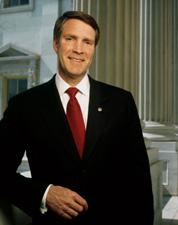
I ask unanimous consent that the Senate proceed to the immediate consideration of S. Con. Res. 13, which is at the desk. This is a resolution introduced by Senators Lautenberg and Smith. I ask…
Mr. President, I ask unanimous consent that the order for the quorum call be rescinded. Mr. President, I send the resolution to the desk and ask unanimous consent that it be held there. Mr.…

Mr. President, I thank my colleague from New Jersey. I think the resolution that he and other colleagues bring before us is certainly one that should be considered seriously for those who are…

Mr. President, I suggest the absence of a quorum.
Bill Text
3 versions available
        [Congressional Bills 108th Congress]
[From the U.S. Government Publishing Office]
[S. Con. Res. 13 Engrossed in Senate (ES)]

1st Session
S. CON. RES. 13

_______________________________________________________________________

CONCURRENT RESOLUTION

Whereas on January 20, 2003, Libya, a gross violator of human rights and State
sponsor of terrorism, was elected to chair the United Nations Commission
on Human Rights (the ``Commission''), a body charged with the
responsibility of promoting universal respect for human rights and
fundamental freedoms for all;
Whereas according to the rotation system that governs the selection of the
Executive Board of the Commission, 2003 was designated as the year for
the Africa Group to chair the Commission, and the Africa Group selected
Libya as its candidate;
Whereas South Africa's Democratic Alliance spokeswoman, Dene Smuts, was quoted
by the British Broadcasting Corporation as saying that the Government of
South Africa's decision to support the election of Libya was an insult
to human rights and that African countries ``should have supported a
candidate of whom all Africans could be proud'';
Whereas Amnesty International has repeatedly documented that the human rights
situation in Libya continues to seriously deteriorate, with systematic
occurrences of gross human rights violations, including the
extrajudicial execution of government opponents and the routine torture,
and occasional resulting death, of political detainees during
interrogation;
Whereas Human Rights Watch recently declared that ``[o]ver the past three
decades, Libya's human rights record has been appalling'' and that
``Libya has been a closed country for United Nations and nongovernmental
human rights investigators'';
Whereas Human Rights Watch further asserted that ``Libya's election poses a real
test for the Commission,'' observing that ``[r]epressive governments
must not be allowed to hijack the United Nations human rights system'';
Whereas the Lawyers Committee for Human Rights urged that ``the Government of
Libya should not be entrusted by the United Nations to lead its
international effort to promote human rights around the world'';
Whereas Freedom House declared that ``[a] country [such as Libya] with such a
gross record of human rights abuses should not direct the proceedings of
the United Nation's main human rights monitoring body'' because it would
``undermine the United Nation's moral authority and send a strong and
clear message to fellow rights violators that they are in the clear'';
Whereas on November 13, 2001, a German court convicted a Libyan national for the
1986 bombing of the La Belle disco club in Berlin which killed two
United States servicemen, and the court further declared that there was
clear evidence of responsibility of the Government of Libya for the
bombing;
Whereas Libya was responsible for the December 21, 1988, explosion of Pan
American World Airways Flight 103 (``Pan Am Flight 103'') en route from
London to New York City that crashed in Lockerbie, Scotland, killing 259
passengers and crew and 11 other people on the ground;
Whereas a French court convicted 6 Libyan government officials in absentia for
the bombing of UTA Flight 772 over Niger in 1989;
Whereas, in response to Libya's complicity in international terrorism, United
Nations Security Council Resolution 748 of March 31, 1992, imposed an
arms and air embargo on Libya and established a United Nations Security
Council sanctions committee to address measures against Libya;
Whereas United Nations Security Council Resolution 883 of November 11, 1993,
tightened sanctions on Libya, including the freezing of Libyan funds and
financial resources in other countries, and banned the provision to
Libya of equipment for oil refining and transportation;
Whereas United Nations Security Council Resolution 1192 of August 27, 1998,
reaffirmed that the measures set forth in previous resolutions remain in
effect and binding on all Member States, and further expressed the
intention of the United Nations to consider additional measures if the
individuals charged in connection with the bombings of Pan Am Flight 103
and UTA Flight 772 had not promptly arrived or appeared for trial on
those charges in accordance with paragraph (8) of that Resolution;
Whereas in January 2001, a three-judge Scottish court sitting in the Netherlands
found Libyan Abdel Basset al-Megrahi guilty of the bombing of Pan Am
Flight 103, sentenced him to life imprisonment, and said the court
accepted evidence that he was a member of Libya's Jamahariya Security
Organization, and in March 2002, a five-judge Scottish appeals court
sitting in the Netherlands upheld the conviction;
Whereas United Nations Security Council Resolutions 731, 748, 883, and 1192
demanded that the Government of Libya provide appropriate compensation
to the families of the victims, accept responsibility for the actions of
Libyan officials in the bombing of Pan Am Flight 103, provide a full
accounting of its involvement in that terrorist act, and cease all
support for terrorism;
Whereas Libya remains on the Department of State's list of state-sponsors of
terrorism;
Whereas the United States found the selection of Libya to chair the Commission
to be an affront to international human rights efforts and, in
particular, to victims of Libya's repression and Libyan-sponsored
terrorism, and therefore broke with precedent and called for a recorded
vote among Commission members on Libya's chairmanship;
Whereas Canada and one other country joined the United States in voting against
Libya, with 17 countries abstaining from the recorded vote among
Commission members on Libya's chairmanship of the Commission;
Whereas the common position of the members of the European Union was to abstain
from the recorded vote on the selection of Libya as chair of the
Commission;
Whereas 33 countries ignored Libya's record on human rights and status as a
country subject to United Nations sanctions for the terrorist bombing of
Pan Am Flight 103 and voted for Libya to lead the Commission;
Whereas the majority of the countries that voted for Libya are recipients of
United States foreign aid;
Whereas the selection of Libya to chair the Commission is only the most recent
example of a malaise plaguing the Commission that has called into
question the Commission's credibility as the membership ranks of the
Commission have swelled in recent years with countries that have a
history of egregious human rights violations;
Whereas the challenge by the United States to the selection of Libya is part of
a broader effort to reform the Commission, reclaim it from the
oppressors, and ensure that it fulfills its mandate;
Whereas on January 20, 2003, Ambassador Kevin Moley, United States Permanent
Representative to the United Nations and Other International
Organizations in Geneva, emphasized that the United States ``seek[s] to
actively engage and strengthen the moral authority of the Commission on
Human Rights, so that it once again proves itself a forceful advocate
for those in need of having their human rights protected'' and that
``[w]e are convinced that the best way for the Commission to ensure the
ideals of the Universal Declaration of Human Rights over the long-term
is to have a membership comprised of countries with strong human rights
records at home'';
Whereas a majority of the 53 member states of the Commission are participants in
the Community of Democracies and signed the Community of Democracies
Statement on Terrorism (the ``Statement on Terrorism'') on November 12,
2002, at the Second Ministerial Conference of the Community of
Democracies held in Seoul, South Korea (the ``Seoul Ministerial''),
calling upon democratic nations to work together to uphold the
principles of democracy, freedom, good governance, and accountability in
international organizations;
Whereas the Seoul Ministerial participants declared in the Statement on
Terrorism that they ``strongly denounced terrorism as a grave threat to
democratic societies and the values they embrace[,]...reaffirmed that
terrorism constitutes a threat to international peace and security as
well as to humanity in general and indeed to the very foundation on
which democracies are built[,]'' and stated that ``[t]he most recent
terrorist attacks confirm that international cooperation against
terrorism will remain a long-term effort and requires a sustained
universal commitment'';
Whereas the United Nations sanctions against Libya, though suspended, remain in
effect; and
Whereas Libya's continued status as an international outlaw nation and its
continued unwillingness to accept responsibility for its terrorist
actions provide ample justification for barring Libya from consideration
as a candidate for membership in the United Nations Security Council or
any other United Nations entity or affiliated agency: Now, therefore, be
it
Resolved by the Senate (the House of Representatives concurring),
That Congress--
(1) strongly condemns the selection of Libya to chair the
United Nations Commission on Human Rights (the ``Commission'');
(2) commends the President for the principled position of
the United States in objecting to and calling for a vote on
Libya's chairmanship of the Commission;
(3) commends countries that joined the United States in
objecting to Libya's selection as chair of the Commission;
(4) expresses its dismay at the European Union countries'
common position of abstention on the critical vote over Libya's
chairmanship;
(5) expresses its shock and dismay over the support
provided to Libya in its efforts to lead the Commission;
(6) highlights its grave concern over the continuing
efforts of countries violating human rights and terrorist
countries to use international fora--
(A) to legitimize their regimes; and
(B) to continue to act with impunity;
(7) calls on the President to raise United States
objections to such efforts during bilateral and multilateral
discussions and to direct pertinent members of the President's
Cabinet to do the same;
(8) calls on countries at various stages of democratization
to--
(A) demonstrate their commitment to human rights,
democracy, peace and security; and
(B) support efforts to reform the Commission;
(9) calls on the President to instruct the Secretary of
State to consult with the appropriate congressional committees,
within 60 calendar days after the adoption of this resolution,
regarding the priorities and strategy of the United States for
the 59th session of the Commission on Human Rights and its
strategy and proposals for reform of the Commission;
(10) objects to the continued suspension of United Nations
sanctions against Libya until the Government of Libya--
(A) publicly accepts responsibility for the bombing
of Pan American World Airways Flight 103;
(B) provides appropriate compensation to the
victims of the bombing; and
(C) fully complies with all of the other
requirements of the United Nations sanctions imposed as
a result of Libya's orchestration of the terrorist
attack on Pan American World Airways Flight 103; and
(11) calls on the Secretary of State to engage Member
States of the United Nations to support efforts to ensure that
states that are gross violators of human rights, sponsors of
terrorist activities, or subjects of United Nations sanctions
are not elected to--
(A) leadership positions in the United Nations
General Assembly; or
(B) membership or leadership positions on the
United Nations Commission on Human Rights, the United
Nations Security Council, or any other United Nations
entity or affiliate.

Passed the Senate March 6, 2003.

Attest:

Secretary.
108th CONGRESS

1st Session

S. CON. RES. 13

_______________________________________________________________________

CONCURRENT RESOLUTION

Condemning the selection of Libya to chair the United Nations
Commission on Human Rights, and for other purposes.