A concurrent resolution permitting the Chairman of the Committee on Rules and Administration of the Senate to designate another member of the Committee to serve on the Joint Committee on Printing in place of the Chairman.
Legislative Activity
Stay on top of the latest movement without scrolling through every action
Motion to reconsider laid on the table Agreed to without objection.
March 25, 2003 • 2:06 PM
View full timeline
Introduced in Senate
March 13, 2003
Submitted in the Senate, considered, and agreed to without amendment by Unanimous Consent. (consideration: CR S3759; text as passed Senate: CR S3759; text of measure as introduced: CR S3751)
March 13, 2003
Message on Senate action sent to the House.
March 17, 2003
Received in the House.
March 17, 2003 • 12:03 PM
Held at the desk.
March 17, 2003 • 12:04 PM
Considered by unanimous consent. (consideration: CR H2283)
March 25, 2003 • 2:06 PM
Mr. Ney asked unanimous consent to take from the Speaker's table and consider.
March 25, 2003 • 2:06 PM
Passed/agreed to in House: On agreeing to the resolution Agreed to without objection.(text as passed House: CR H2283)
March 25, 2003 • 2:06 PM
On agreeing to the resolution Agreed to without objection. (text as passed House: CR H2283)
March 25, 2003 • 2:06 PM
Motion to reconsider laid on the table Agreed to without objection.
March 25, 2003 • 2:06 PM
Floor Debate
19 membersWhat members said about S.Con.Res. 20 on the floor
 SB
SB MD
MD HRC
HRC JT
JT BN+14
BN+14
Floor Debate
19 membersWhat members said about S.Con.Res. 20 on the floor
Mr. President, I ask unanimous consent that the pending amendment be set aside. Mr. President, I send an amendment to the desk. Mr. President, I ask unanimous consent that reading of the amendment be…
Mr. President, I ask unanimous consent that the pending amendment be set aside.
Mr. President, I send an amendment to the desk.
Mr. President, I ask unanimous consent that reading of the amendment be dispensed with.
Mr. President, on this amendment, I am being joined by Senator Lieberman and Senator Zell Miller.
It is a simple issue. I want to take a few minutes to explain it. I am hopeful we will get strong support in this body as in the House. A similar bill came up earlier in the House and it passed that body 391 to 22. The same issue passed the Commerce Committee in the Senate 14 to 0 on a recorded vote.
It is an issue of fines and decency on over-the-air broadcasts-- whether it be radio or television.
I think it is important to put my comments in context today by explaining the policy history of this issue; that is, decency on over- the-air public airwaves.
At the invention of television, our Nation established a public policy of providing citizens with free over-the-air television. It gave broadcasters wishing to provide that service with the use of valuable spectrum. Not everyone can broadcast over the Nation's public airwaves. These are airwaves owned by the public. That is why the statute requires the Federal Communications Commission to evaluate not just the ability but the character of an entity to operate.
When handing out a broadcast license, in return for a license, each broadcaster agrees not to air indecent or obscene content between the hours of 6 a.m. and 10 p.m. The broadcaster gets a valuable piece of spectrum, which is public property. The broadcaster gets the right to use that. In exchange, one of the requirements is they not broadcast indecent or obscene content between the hours of 6 a.m. and 10 p.m.
Fines and license revocations have always been the discipline tool available to the FCC to help enforce America's longstanding commitment to broadcast decency.
This is an issue about license. It is an issue about the use of public property, and some modest limitation of that.
We live in a nation where we hold the first amendment in high regard, as well we should. In an effort to maintain the free exchange of information, thoughts, and opinions, we strive to avoid government involvement in communications content.
At the same time, as a nation, we strive to project decency and justice for all. As a nation raising children, we do the same. With the turning of a tuning knob, or the click of a remote, minors all across America are presented with the content of the public airwaves.
Broadcasters have a legal and a moral duty to ensure that American taxpayers--and especially children--are not assaulted by explicit material.
For years, we have been asking and waiting for the broadcasters to police themselves in this effort. Unfortunately, instead of fulfilling the public interest duty, they have allowed the content to grow steadily worse and worse.
Meanwhile, the companies that own the broadcast stations have grown steadily larger--and not surprisingly. Some of these broadcasters' profit margins have made them immune to the FCC's current fine structure. Let me give you an example.
Today's maximum fine for an indecent broadcast is $27,500. That seems like a lot of money--and it is to some. But it isn't to others. Compare that fact to a 30-second commercial during the 2004 Super Bowl which cost advertisers an average of $2.3 million for a 30-second ad.
In the words of the FCC Commissioner, Michael Powell, these fines are peanuts to the big media conglomerates. That is why we are here to increase the fine structure for indecency and obscene broadcasts. The threat of these fines will be taken seriously and force broadcasters to protect their consumers from explicit content.
Nothing in this amendment forges any new ground in broadcast decency law. The intent is simple: To increase the fines for indecent broadcasts to mask the realities of today's media markets. This amendment would increase the maximum fines tenfold, from $27,500 to $270,000, with a maximum $3 million cap per incident per day.
Why do we need to do this? We need this amendment to end the growing volume of graphic content on free over-the-air broadcasts. Remember, broadcasters profit from exclusive and free use of the public airwaves which gives them unique access to all Americans, particularly America's youth. With that access to our country's intellectual, moral, and social development comes a set of moral and social responsibilities and obligations that are agreed to in the licensing process.
I am very disappointed by the apparent confusion the broadcasters are having between the right to do something and the right thing to do when it comes to the public airwaves.
Recently, FOX and VIACOM announced they were going to appeal the FCC Bono ruling so they can use the ``F'' word on broadcast television. This is their response in spite of the fact that the FCC overturned the original rule in response to a fierce public outcry.
This hostile response the public is getting from broadcasters is inexcusable. We see time and again media leaders defending their profit-driven
motives by airing explicit content and then falsely hiding behind their so-called first amendment rights. Broadcasters have joined the shock jocks of the country to shout down those who publicly question harmful content as an anti-first-amendment censor. In abandoning their duty to adhere to decency standards, broadcasters point to the absence of decency regulations on cable television. This is just a red herring. We are talking about public airwaves and a public right to air decent material.
The broadcasters argue they have a right to air indecent, obscene, and profane material. But that is a disgraceful abuse of the first amendment. I support the first amendment and its guarantees of free speech. It is the basis of much of the freedoms we enjoy in our great democracy. But there are limits, and particularly here, where we are dealing with a public license and the use of public property where the licensee has agreed to not broadcast indecent material.
This principle has been affirmed by the Supreme Court of the United States in the famous Pacifica case where it was upheld that the Government had the right to protect the public airwaves. This case came to the Court in the early 1970s when George Carlin's famous ``filthy words monologue'' was broadcast during the middle of the day on a New York radio station owned by Pacifica Foundation. A father driving with his son heard the broadcast and complained to the FCC. The FCC said that if those kinds of words were used again, the radio station airing them would be fined. Just like today, the broadcasters challenged the ruling and the case went all the way to the Supreme Court. The Court upheld the FCC action and added that it could continue to fine broadcasters in the future because broadcasters had to take special care not to air material that would offend or shock children.
The majority opinion stressed that of all the forms of communication, broadcasting has the most limited first amendment protection because it extends into the privacy of the home and is uniquely accessible to children.
The FCC has been too lax for too long enforcing the law on broadcasters. A recent public outcry has been a wake-up call for the FCC. The Commission told us they do not have all the tools they need for effective enforcement. That is why we are here today.
Passing this legislation will tell the broadcasters that we are serious about protecting our airwaves and we will give the FCC updated tools to get the job done. I don't know if I need to remind my colleagues that this came to the forefront at this year's Super Bowl, an event families across the country watch together. At the halftime show, the incident between Justin Timberlake and Janet Jackson set off a firestorm that had been brewing for a long period of time.
Finally people said: Look, I have had enough; I don't want to see this any more, particularly when I am watching TV with my family. That is what launched this forward.
We have been waiting for years for the broadcasters to voluntarily take care of this growing problem. They have failed. Instead, they are fighting tooth and nail for the availability to air graphic material so they can increase their profit margins.
America deserves better. That is why we need to make the consequences of broadcasting indecency punitive so the standards are no longer ignored.
I urge my colleagues to vote for this amendment. Increasing the fines will help clean up our Nation's free, over-the-air television and radio by holding accountable broadcasters who use the public airwaves and individuals who use the opportunity of a live performance to gain notoriety through indecent acts.
As I noted previously, this has been considered by the Senate Commerce Committee and it has passed unanimously in that committee. It has been considered previously by the House of Representatives, which has voted 391 in favor with only 22 against increasing these fines. They actually have some teeth in today's marketplace. I urge my colleagues to vote for this amendment.
I ask for the yeas and nays when we vote on this Monday. I further ask unanimous consent that when we go back to this amendment on Monday that I be recognized first to speak if there are any further amendments that are proposed to this that are to be considered on Monday.
Mr. President, I have been informed that we need colleagues on the other side to respond to yeas and nays and I will not ask for that until we do get that agreement from my colleagues on the other side of the aisle.
I yield the floor.
Mr. President, I ask unanimous consent that the order for the quorum call be rescinded.
Mr. President, in speaking to the Burns second-degree amendment, this is an amendment that was considered in the Commerce Committee and added to the base bill at that time. What he is proposing to do makes a lot of sense. I do not see a problem with that at all, so I would be supportive of doing that.
Overall, we want to get this to move it forward. The House has moved on this action. The FCC is seeking this authority. So we really want to try to get this to move on through the process, if at all possible. We are not having further rollcall votes until Monday, so we will proceed at that time, and I will ask for a rollcall vote then.
Mr. President, I am pleased to put my full support behind an agreement made between Senators Dodd, McCain, Warner, Levin, and Hollings to attach the Assistance to Firefighters Act of 2004, as…
Mr. President, I am pleased to put my full support behind an agreement made between Senators Dodd, McCain, Warner, Levin, and Hollings to attach the Assistance to Firefighters Act of 2004, as amendment No. 3309, to the pending Department of Defense Authorization bill.
Each day, we entrust our lives and the safety of our families, friends, and neighbors to the capable hands of the brave men and women in our local police departments. These individuals are willing to risk their lives and safety out of a dedication to their citizens and their commitment to public service.
We ask local firefighters to risk no less than their lives, as well, every time they respond to an emergency fire alarm, a chemical spill, or as we saw on September 11--terrorist attacks. We ask them to risk their lives responding to the nearly 2 million reports of fire that they receive on an annual basis. Every 18 seconds while responding to fires, we expect them to be willing to give their lives in exchange for the lives of our families, neighbors, and friends. One hundred firefighters lost their lives in 2002 in the line of duty, and nearly 450 lost their lives in 2001. The unyielding commitment these individuals have made to public safety surely deserves an equally strong commitment from the Federal Government.
In 2000, Congress affirmed the value of having a properly trained, equipped, and staffed fire service by passing the Firefighter Investment and Response Enhancement, FIRE, Act--legislation that Senator Dodd and I introduced, along with Congressmen Pascrell, Weldon, and many others, on the House side. In the 4 years since the FIRE Act became law, fire departments have made significant progress in terms of filling the substantial needs outlined in the National Fire Protection Association's ``needs assessment.''
To date, Congress has appropriated nearly $2 billion dollars for the FIRE Act program. Virtually every penny of
that amount has gone directly to local fire departments through FIRE grants to provide firefighter personal protective equipment, training to ensure more effective firefighting practices, breathing apparatus, new firefighting vehicles, emergency medical services supplies, fire prevention programs, and other important uses.
The direct nature of the FIRE Act grant program--funds literally go straight from the Federal Government to local fire departments--is an extremely important aspect of the law, particularly in light of the difficulties we are seeing with other homeland security grant programs getting money to flow directly to the intended recipients.
FIRE Act grants are awarded based on a competitive, peer-review process that helps ensure that the most important needs are filled first and that funding will be used in an effective manner. I am proud to note that 86 of Ohio's 88 counties have received FIRE Act funding up to this point and that the fire service in my home state is much better prepared to respond to emergencies as a result. The bottom line is this: The FIRE Act program has proven to be an extremely valuable tool for fire-based first responders.
The time has come to reauthorize this important legislation--to build upon the successes of the original FIRE Act and to refine the program where improvements can be made. Amendment No. 3309, which I am offering along with Senator Dodd, accomplishes just that.
Our amendment focuses on four central themes. First, we take steps to make the grant program more accessible for fire departments serving small, rural communities and to eliminate barriers to participation faced by departments serving heavily populated jurisdictions. Second, we codify changes made in program administration since its transfer to the recently created Department of Homeland Security. Third, the amendment increases the emphasis within the program on life-saving Emergency Medical Services and technologies. And fourth, we evaluate the program through a series of reports to help ensure that resources are targeted to the areas of greatest need. These priorities have been developed jointly with the fire service, and represent a means to strengthen the FIRE Act program for years to come.
Our amendment would help the FIRE Act program more accessible for fire departments serving the very largest and smallest jurisdictions in America. Our experience over the past four years has been that a number of features in the program make participation difficult for departments serving these populations. Career fire departments, most of which serve populations well in excess of 50,000, have been receiving only a small percentage of the total grants thus far. After consulting with the fire service organizations, fire chiefs in my home State of Ohio, and officials administering the program at the Department of Homeland Security, we have found that there are two main reasons why this has been the case.
First, matching requirements for large departments, currently fixed at 30 percent, have been particularly difficult to meet. Second, current law dictates that departments--whether they serve a large city, such as Cleveland and have numerous fire stations, or a small town, such as Cedarville, OH, and have only one station--are eligible for the exact same level of funding each year: $750,000. These two elements of the current program have caused a number of large fire departments to forgo applying for FIRE grants. With respect to smaller, often volunteer-based departments serving populations of 20,000 or less, budgets are often so limited that meeting the current match is simply not possible. Many of these departments struggle with even the most basic needs, such as having an adequate number of staff available to respond to a structure fire.
Our legislation addresses each of these problems in a simple and straightforward fashion. Specifically, the amendment would reduce matching requirements by one third for departments serving communities of 50,000, and by one half for departments serving 20,000 or fewer residents in order to encourage increased participation by these departments. The amendment also would re-structure caps on grant amounts to reflect population served, with up to $2,250,000 for departments serving one million or more, $1,500,000 for departments serving between 500,000 and one million, and $1,000,000 for departments serving fewer than 500,000 residents. Together, these two changes would go a long way toward increasing the accessibility of the program for the very largest and smallest departments in the United States.
The second major component of our legislation has to do with the transfer of the FIRE Act Administration from the Federal Emergency Management Administration, FEMA, to the Department of Homeland Security, DHS. When FEMA's functions were transferred into the DHS, the FIRE grant program, along with the U.S. Fire Administration, also were transferred to DHS. As a part of that transfer, formal administration of the FIRE grant program has been delegated to the Department to the Office of Domestic Preparedness, ODP, which oversees all DHS grant programs. While the U.S. Fire Administration--the real fire experts within the Federal Government--remains involved, we need to take steps to formalize the management of the program following the transfer to
Mr. President, I rise to thank the chairman and ranking member for the work they and their staffs have done, along with the Senator from Missouri and myself and our staffs, to accept an amendment…
Mr. President, I rise to thank the chairman and ranking member for the work they and their staffs have done, along with the Senator from Missouri and myself and our staffs, to accept an amendment that addresses two issues critical to our men and women in uniform. First, through this amendment we are attempting to develop better policies and information in order to track the health of soldiers and others in uniform after a deployment overseas.
Second, we are seeking to improve the medical and dental readiness of our National Guard members and reservists.
Last month, Senator Talent and I introduced the Armed Forces Personnel Medical Readiness and Tracking Act of 2004. I am delighted that many of the ideas we have advocated are included in this legislation because of our amendment.
It has been a pleasure working with my colleague on the Armed Services Committee, Senator Talent, and with his staff.
When I was First Lady, I worked to bring attention to the problems and symptoms that many of our veterans returning from the 1991 gulf war experienced. This constellation of symptoms came to be known as the Gulf War Syndrome.
During Senate Armed Services Committee hearings in February 2003, before the current Iraq war, I asked the Chairman of the Joint Chiefs, General Myers, and each of the Service Chiefs, whether they would be monitoring and tracking the health of our soldiers who are deployed in the gulf.
They assured me they would. But I am afraid that based on reports from soldiers returning from this deployment, we have not done all we should to screen and track the health of our soldiers. Indeed, several weeks ago we had several soldiers from the 442 MP unit out of Orangeburg, NY, who are being treated at Fort Dix for injuries and symptoms they incurred in Iraq, including headache, sleeplessness, and many others.
We know very well our enemy stops at nothing. The use of Sarin in an artillery shell in Iraq last month demonstrates more than ever the need to have adequate information about the health of our young men and women.
The legislation we have championed that is being adopted seeks to establish procedures to ensure that the information is systematically collected so that, if soldiers return exhibiting certain symptoms, there will be a base of information on which we can determine what could have caused that.
The amendment requires the Department of Defense to develop a comprehensive plan to improve medical readiness and tracking before, during, and after deployment. It establishes a Joint Medical Readiness Oversight Committee to advise the Secretary of Defense on the medical readiness and health status of members of the active Reserve components.
It requires compliance of the Armed Forces with medical readiness and tracking policies. It requires that we develop and implement the annual readiness plan.
The committee will include DOD officials and experts in the military service organizations, veterans service organizations, and civilians.
Finally, current law requires the information about the health of soldiers returning from deployment to be collected, but it appears these provisions are not being enforced. So we require audits of blood serum collection programs, as well as the predeployment and postdeployment health assessment database that DOD is supposed to maintain.
These problems have come to light because of our many Guard and Reserve members who have been deployed, and we are finding too many examples where they don't have the requisite medical readiness and where they are not sufficiently tracked.
This is an effort to do what we should do--the right thing to treat our young men and women in uniform. I am hoping it provides a good base for us to learn more about what they are supposed to do during their deployment in the gulf and elsewhere around the world.
I thank my colleague from Missouri as well as the chairman and ranking member for working with us and I look forward to seeing this implemented to further the health of our young men and women.
Thank you, Mr. President.
I would like 5, but I probably will not use them. Mr. President, I wish to say a few words on our amendment, but before I do that, let me take a minute to compliment again Senator Bond, who laid down…
I would like 5, but I probably will not use them.
Mr. President, I wish to say a few words on our amendment, but before I do that, let me take a minute to compliment again Senator Bond, who laid down the amendment and Senator Harkin for cosponsoring it, to assist former employees in Iowa and Missouri who were affected because they worked in plants that produced the atomic materials from which we made the atom bombs which won the war and then kept us safe.
Because of their exposure to the radiation, they have become ill and they deserve compensation. They are not getting it because of the convoluted procedures that are currently in place. We simply want to allow them to be treated separately as already occurs with employees in the four States.
I admire the way Senator Bond has fought like a tiger for those employees. I have joined him in doing that.
I appreciate the work of the managers of the bill in trying to figure out a way to accept that amendment. I hope we can, indeed, do that. It is just a matter of justice for these employees.
I also wish to speak for a moment about the amendment which Senator Clinton and I offered based on the legislation which we sponsored together some weeks ago. I want to return her kind words and say it has been a pleasure to work with her and her staff on a strong bipartisan basis to make these changes which we think are necessary to protect the health of our men and women in the military, and also to make certain they are ready to be deployed when they need to be deployed. Those are the two things we are trying to do.
Before employees, service men and women are deployed to combat theaters, we require that a blood sample be drawn from them, and after they return that another blood sample be drawn from them.
The point is, it has happened too often in the past where service men and women coming back from active duty show signs and symptoms of illness, and we can't figure out what is wrong. We need baseline blood tests so we can tell the extent to which their blood is deviate and their health symptoms are deviating from what they were before deployment. This will give us a clue as to what is wrong with them so we can avoid another gulf war syndrome episode.
I have had vets from Missouri over several years talking to me about this issue. We allow the military to do it today, particularly with regard to reservists and guardsmen because it is often not done because local commanders want to get them deployed and into the theater.
This is very important and now it will be the law. I am grateful to the managers of the amendment for accepting that part of the amendment.
The other point is to simply improve the health of our Active and Reserve component service men and women. We put in place a joint committee to oversee the medical tracking system that is supposed to be in place but isn't implemented as well as it should be.
We require that reservists receive detailed health assessments at least every 2 years. Right now they only get exams every 5 years.
We require routine health baselines for all our recruits entering the armed services so we will know the health status of people when they enter the military.
There are a number of other good measures as well.
I only have 5 minutes. I imagine I have used most of that.
Let us say it has been a pleasure to work with the Senator from New York and her staff. We are jointly grateful to the Senator from Virginia and the Senator from Michigan for their openness on this amendment, and we are pleased that it was agreed to and look forward to holding it through the rest of the process.
I yield my time.
Mr. President, I rise to address amendment No. 3279 to the pending bill. This amendment asks the administration to report on any relationships between foreign governments or groups operating within…
Mr. President, I rise to address amendment No. 3279 to the pending bill. This amendment asks the administration to report on any relationships between foreign governments or groups operating within their territories and foreign terrorist organizations in Colombia. It also asks the administration to describe United States policies that are designed to address such relationships.
This amendment, tragically, is extremely timely in light of today's news. This morning's Miami Herald reported that in Little River, Colombia, in the province of Norte de Santander, over 30 peasants were murdered in cold blood. Terrorists entered their residencies and shot them to death with automatic weapons. The FARC is suspected to have committed this crime. While Colombia, with tremendous support of the U.S., has made great strides in fighting narcoterrorism under President Uribe, there is still much work to be done, as is underscored by yesterday's events.
The FARC and the ELN, Colombia's two main rebel groups, both of which have been designated by the United States as foreign terrorist organizations, continue to conduct terrorist attacks against civilians in their campaign against the Colombian government. These groups are also heavily involved in the drug trade that does so
much harm to Colombia and to our own country. At a time when Colombia is making slow but steady gains in its long struggle against the FARC, the last thing it needs is to have neighboring countries providing assistance to these brutal adversaries.
To be perfectly blunt, my primary concern is with Venezuela. On my visit to Colombia and Venezuela in April, I heard some disturbing accounts from various U.S. officials of instances in which the FARC had been able to cross the line into Venezuela and conduct operations from that side of the border from virtual safe havens. Colombian authorities are also suspicious that the Chavez government has been willing to, at a minimum, look the other way while FARC elements operate in Venezuela, if not actually permitting some level of coordination.
Threatening to compound the ``safe haven'' problem for the United States and Colombia is the fact that Venezuela also harbors a potent market in false documentation, such as passports and other identity cards. I am increasingly concerned at the ease with which, simply by buying off officials for $800 or $900, one can acquire fully legitimate, yet false, documents in Venezuela--everything from a passport to a driver's license. I am certainly concerned that international terrorist groups will discover their ability to acquire and make use of forged Venezuela documents to conduct terrorist attacks, and I raised these important issues with Venezuelan officials during my visit.
Naturallly, the Venezuelan government disputes these serious allegations. What this amendment would do is help us establish the facts. If groups in Colombia that our government has designated as foreign terrorist organizations are receiving support or assistance from Venezuela, or any of Colombia's other neighbors, or any other state for that matter, we need to know about it and adjust our policies accordingly.
Right now, Colombia needs all the help it can get from its neighbors. In asking the administration to report on whether terrorist groups may have relationships with or be operating in neighboring countries such as Venezuela, perhaps we can address this problem in a more regional context and better understand what Colombia is up against.
I thank the chairman and ranking member and their staffs for their support.
amendment no. 3401
Show 8 more
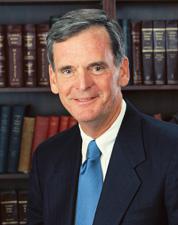
Mr. President, earlier today the Senate adopted the Murray amendment No. 3427, to facilitate the availability of childcare for the children of members of the Armed Forces on active duty in connection…
Mr. President, earlier today the Senate adopted the Murray amendment No. 3427, to facilitate the availability of childcare for the children of members of the Armed Forces on active duty in connection with Operation Iraqi Freedom or Operation Enduring Freedom.
I support that amendment but wanted to additionally acknowledge efforts that are already underway in the private sector to help support those who are risking their lives to keep us safe.
I would like to speak about the American spirit. We are a people who can do great things when united. We have witnessed this in recent months with dozens of home-front stories of the many great deeds of Americans in support of our troops and our Nation's efforts abroad in the war on terror.
There is Spirit of America, a private group which set out to raise $100,000 to build TV stations in Iraq. Americans responded with thousands of donations totaling $1.52 million. Federal Express donated the domestic shipping costs of the equipment for this gift to the country of Iraq. Those stations are being built now and will offer the Iraqi people a national and independent news source that is not Al- Jazeera. This is great.
This American spirit is also responsible for the gift of 10,000 school supply kits, 3 tons of medical supplies, and 2 tons of `friendship' Frisbees to the Iraqi people, all paid for and donated by Americans.
You hear about American students donating books to Iraqi schools and sending letters to Iraqi children.
And now, thousands of childcare providers have united across the country to donate childcare services to National Guard and Reserve members home on 2 week R&R leave from Iraq and Afghanistan to allow them to carry out personal business, take their spouses out on a date, or enjoy other recreational activities while they are home.
Operation Childcare is an effort of the Nation's network of childcare resource and referral, NACCRRA, their local agencies, and thousands of childcare providers across the country to give back to those men and women who are fighting to keep us safe. This program was designed for those members of the military who do not live near military bases and therefore do not have access to family support programs provided to Active-Duty personnel.
So far, over 4,700 centers and individual providers have signed on to Operation Childcare. In my home State of New Hampshire there are 35 providers who are donating childcare to our guardsmen and reservists. These numbers continue to grow, as more people hear about the program.
Childcare providers who volunteer their time for Operation Childcare will receive official recognition, but I suspect many would agree with one childcare provider in Tennessee who said:
You don't have to recognize me--I am just thrilled and
honored to be able to do something to help our troops.
NACCRRA should be applauded for their efforts in organizing this service for our service members.
This is but a snapshot of the home-front efforts being carried out by thousands of Americans across this country. The American people are truly united behind our men and women in uniform. This is the American spirit that continues to inspire.
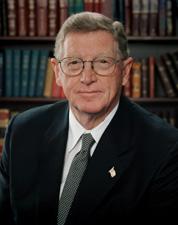
Mr. President, I send to the desk a second-degree amendment to the pending amendment. Mr. President, I ask unanimous consent that the reading of the amendment be dispensed with. This is a friendly…
Mr. President, I send to the desk a second-degree amendment to the pending amendment.
Mr. President, I ask unanimous consent that the reading of the amendment be dispensed with.
This is a friendly second-degree amendment. We have talked about and, of course, we know that the bill that has been voted out of the committee and is waiting for floor action moves this along.
We were all shocked and dismayed over the spectacle at the Super Bowl this year. Those responsible should be severely punished for such a vulgar display of tastelessness.
That being said, this high-profile, well-publicized incident could prompt
Congress to go too far. In some areas of this bill, we did go too far. This second-degree amendment fixes that.
While I fully support the underlying Brownback legislation, I am offering this second-degree amendment to protect the interests of small broadcasters that should not be punished for the events outside of their control.
I am sorry I did not see the halftime show during the Super Bowl. I saw who it was going to be. It was put on by MTV, which I never watch, for very good reason. It ought to be a pay channel. I moved over to the poker tournament on ESPN, so I missed the whole spectacle. But, nonetheless, lots of families did not.
In the case of the Super Bowl, for example, many affiliates were furious their viewership was exposed to such a spectacle. The amendment I offer simply calls on the FCC to consider the size and revenues of the stations in question, as well as whether they had anything to do with producing the offensive content in question. In other words, we have small market television stations that have no control on content but may find themselves in a lawsuit for indecent content that might be broadcast.
Finally, I believe, as we approach these issues, we must take a hard look at the declining standards across all media. I understand there have been industry efforts to develop indecency guidelines that will apply fairly and evenly across all media platforms that distribute content. I think this approach could prove enormously beneficial in setting unified standards so individual broadcasters understand what is expected of them. Additional clarity in terms of content standards would also eliminate excuses among those who choose to push the envelope, the limits of vulgarity for commercial gain.
Nothing in the broadcast industry has been talked about so much as the halftime at this year's Super Bowl. It has absolutely been on the minds of broadcasters across this country.
The American people clearly expect Congress to act on the indecency issue. So I call on my colleagues to adopt this second-degree amendment I have offered, which will help to produce real solutions without unduly penalizing small broadcasters.
Mr. President, I yield the floor and suggest the absence of a quorum.

Mr. President, it is my understanding that Senate amendment No. 3401 is acceptable to both the chair and ranking member. This amendment would reauthorize the Assistance to Firefighters Grant Program,…
Mr. President, it is my understanding that Senate amendment No. 3401 is acceptable to both the chair and ranking member. This amendment would reauthorize the Assistance to Firefighters Grant Program, or the FIRE Act, for the next 6 years.
It is based on bipartisan legislation introduced by Senator DeWine and myself on May 11, 2004. The bill, S. 2411, currently has 39 co- sponsors, including the distinguished Chairman and Ranking Member of the Senate Armed Services Committee.
As many of our colleagues know, the Senate approved by unanimous consent the original FIRE Act as part of the Defense Authorization bill 4 years ago. There is some precedent, then, for this amendment to the current Defense Authorization bill, despite the fact that the legislation falls under the jurisdiction of the Senate Commerce Committee.
Unless Congress quickly reauthorizes the FIRE Act grant program, it will expire at the end of the current fiscal year on September 30, 2004. If this legislation is not quickly enacted, fire departments throughout the Nation will not receive the assistance they need to fight fires, save lives, and protect their own.
I have consulted with the distinguished Chairman of the Senate Commerce Committee about the urgency of reauthorizing the FIRE Act before the fiscal year ends. He is fully aware of the fact that we have precious few legislative days left on the Senate Calendar. Accordingly, he has indicated to me his intention to hold a hearing on the reauthorization bill on July 8, with a markup to follow before the August recess.
Assuming that this schedule holds firm, my expectation is that legislation passed by the Commerce Committee would take the place of amendment No. 3401. In the event that work on the Defense Authorization Act is not completed this year, I am also prepared to move the FIRE Act reauthorization as a free-standing bill. Alternatively, should the Commerce Committee not act on this legislation, the Senate will have at least acted to reauthorize the FIRE Act adopting amendment No. 3401.
In closing, I thank Senator McCain for his leadership on this issue, and his unwavering commitment over the years to advancing the cause of firefighters. I also commend Chairman Warner and Senator Levin for their willingness to help the Nation's fire services on the Defense Authorization bill both today and 4 years ago. Finally, I would like to express my appreciation to Senator Hollings for his wise counsel and strong support for the FIRE Act initiative.
I yield to the distinguished Senator from Virginia.
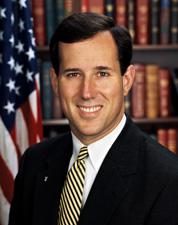
Mr. President, I rise today to engage the distinguished Senator from New Mexico, Senator Jeff Bingaman, concerning the Department of Defense Science and Technology--S&T--program. Senator Bingaman and…
Mr. President, I rise today to engage the distinguished Senator from New Mexico, Senator Jeff Bingaman, concerning the Department of Defense Science and Technology--S&T--program. Senator Bingaman and I are both former members of the Senate's Committee on Armed Services and have a deep appreciation for the importance of the Department of Defense's S&T program in meeting current and future defense needs.
The Senator from New Mexico is correct. He has been a strong advocate for our Department of Defense S&T program for many years. It is worth noting that together, we have succeeded in raising the profile of these budget accounts and helped to influence the levels requested for the S&T program in the annual budget request submitted by this and other administrations. I also want to thank Senator Bingaman for his support for my amendment--SA 182--to H. Con. Res. 83, the Senate's Budget Resolution for Fiscal Year 2002, which sought to increase funding devoted to the Department of Defense's Basic Research--6.1--account. It is by investing in these budget accounts that we will reap the technology benefits that will sustain our military edge over our adversaries.
Additionally, we are united in advocating continued support for these critical programs so we can meet our national security needs of tomorrow. The Department of Defense's S&T program provides a unique contribution to the job of equipping and protecting our men and women in uniform and defending America. S&T funding supports education and training for future scientists and engineers-- leading to technological advancements that shape defense technologies, including engineering, mathematics, and physical, computer and behavorial sciences. Throughout the decades of the 1950s, 1960s, 1970s and 1980s, the Department of Defense and other federal agencies sustained their commitments to these investments in American universities. This investment can be measured by the number of systems relied upon by America today to project power and maintain our interests around the globe.
Senator Bingaman is correct. For over 50 years, Department of Defense investment in university research has been a dominant element of the Nation's research and development infrastructure and an essential component of the United States capacity for technological innovation.
The Senator is correct in his statement and I too support the 3 percent S&T program funding goal.

We would have to lay this aside. We are waiting for the Chair to rule. We wanted to clear the amendment. Mr. President, I want to say at this time, we started today's very productive session of…
We would have to lay this aside. We are waiting for the Chair to rule.
We wanted to clear the amendment.
Mr. President, I want to say at this time, we started today's very productive session of amendments with Senator Bond, who has remained on the floor now I would say about 9 hours, to obtain what you have right now. Well done, sir.
If it is agreeable to my colleagues, I ask unanimous consent that amendment be laid aside.
I now send a package of amendments to the desk and ask they be considered en bloc.
Mr. President. I thank the Senator from Connecticut. I am prepared to accept this amendment based on the understanding he has reached with the distinguished Chairman of the Commerce Committee.
As Senator Dodd indicated, the Commerce Committee plans to hold a hearing on the FIRE Act on July 8, with a markup expected shortly thereafter. I look forward to working with Senators McCain, Dodd, and DeWine to ensure that this important legislation to help our Nation's fire departments is enacted into law this year.
I move to lay that motion on the table.
The motion to lay on the table was agreed to.
Before the Senator from New York speaks, I wonder if I might get the attention of the distinguished whip?
If we can have assurance, as the managers depart the floor, to do some other work, that this will be the final action on this bill tonight?
Mr. President, the distinguished Senator from Nevada went over that with me, and that strikes me as a very good day. If a Republican Senator desires an amendment, we will work him or her into the queue as the case may be.
Then we might mention also the schedule for Monday?
That is correct. These are the amendments that have been forthcoming on the other side of the aisle.
I am prepared to assist my colleagues on this side if they have matters, but we are really working toward what the majority leader, in consultation with
the distinguished Democratic leader, indicates. We are going to conclude this bill on Tuesday.
It is largely due to the tremendous cooperation on both sides. So we have the assurance that this will be the completion of the work tonight?
I thank the distinguished leader.
And the Senator from Missouri wishes to speak for how many minutes?
Five minutes to follow the Senator from New York.

The Senator from Pennsylvania is correct in noting our strong support for the Department's S&T programs. During the 106th Congress, I introduced an amendment--SA 199--cosponsored by Senators…
The Senator from Pennsylvania is correct in noting our strong support for the Department's S&T programs. During the 106th Congress, I introduced an amendment--SA 199--cosponsored by Senators Santorum, Kennedy, and Lieberman, to S. Con. Res. 20, the Senate's Budget Resolution for Fiscal Year 2002, that was designed to ensure the long-term national security of the United States through a robust Department of Defense S&T program. Additionally, during the 105th Congress, I introduced an amendment--SA 2999--cosponsored by Senators Santorum and Lieberman, to S. 2057, the Fiscal Year 1999 National Defense Authorization Act, articulating a sense of the Senate on the ideal level of funding for our Department of Defense's S&T program.
We also agree that by funding these vital programs at over 3 percent of the total Defense Department budget, we will be demonstrating a commitment and leadership in an area critical to U.S. national security. Past research carried out with S&T program funding has provided the foundation for protecting U.S. military personnel and ensuring U.S. technological superiority on the battlefield. Hand-held translators, unmanned systems, thermobaric bombs, and laser-guided and global positioning systems are just a few examples of the many technologies resulting from S&T investments that are used today to remove personnel from harm's way, enhance
battlespace awareness, and address new threats.
Furthermore, American universities offer the Department of Defense the laboratories and knowledge base necessary to successfully complete this transformation objective. The Department of Defense has historically played a major federal role in funding basic research and has been a significant sponsor of engineering research and technology development conducted in American universities.
I thank Senator Santorum for his observations on the importance of robust Department of Defense S&T program funding, and I urge that we continue to advocate funding the S&T program at a level of at least at 3 percent of the total Department of Defense appropriation.

I thank the distinguished Chairman of the Armed Services and my friend from Connecticut for the opportunity to work with them to reauthorize this important program. As Chairman of the committee of…
I thank the distinguished Chairman of the Armed Services and my friend from Connecticut for the opportunity to work with them to reauthorize this important program.
As Chairman of the committee of jurisdiction over the Assistance to Firefighters Grant Program, I am familiar with this program's success. This program provides grants to local fire departments using a competitive, merit-based review process. I agree with my colleagues that this program is an example of a well-run government program that should be reauthorized, and am proud to be a cosponsor of S. 2411.
I have consented to allow Senator Dodd's amendment be added to this important legislation as a placeholder. The Senate Commerce Committee intends to hold a hearing on S. 2411 on July 8, 2004, and then we expect to report the bill out of Committee by the August recess. It is my intention that this reported version of S. 2411 be used to replace the placeholder during the conference for S. 2400.
I thank Senators Dodd, Warner, and DeWine for their leadership on this issue, and look forward to working with them to pass this legislation this year.

I ask unanimous consent the Senator from New York, Mrs. Clinton, be recognized for 5 minutes to speak? It doesn't have to be laid aside. I will indicate, as both managers know, tomorrow Senator…
I ask unanimous consent the Senator from New York, Mrs. Clinton, be recognized for 5 minutes to speak?
It doesn't have to be laid aside.
I will indicate, as both managers know, tomorrow Senator Lautenberg is going to offer two amendments, Senator Durbin is going to offer two amendments, Senator Reed is going to offer his amendment, if he so chooses, on missile defense, and I am going to offer my amendment on current receipts.
Absolutely.
On Monday, we have Senator Levin, Senator Dayton, Senator Byrd, and Senator Bingaman, and there may be others as the day progresses.
We will do our very best--Tuesday night or Wednesday morning. But we are doing quite well.
There will be no more votes. The Chair already announced that. Can the Senator from New York be recognized for 5 minutes?
If the Senator will yield for a unanimous consent, I ask unanimous consent the Senator from North Dakota, Mr. Conrad, be added as a cosponsor to amendment No. 3432, which has already been agreed to.
Show 7 more

I promise I will speak very briefly. We discussed this amendment at great length today. This is an amendment designed to take care of and put in a special employee cohort, workers in some very dirty…
I promise I will speak very briefly. We discussed this amendment at great length today. This is an amendment designed to take care of and put in a special employee cohort, workers in some very dirty nuclear bomb plants in Iowa and Missouri, back in the 1940s and 1950s. At the request of the managers, we added a number of conditions to it. We worked through the authorizations, and the funding of it is by authorization. I believe we have worked that out.
I think the amendment will be set aside. If anybody is really interested in it we will be happy to refer them to the Congressional Record, and at the appropriate time we will come back and restate why this is so important. It is relatively inexpensive--$180 million over 10 years. I hope my colleagues will be willing to accept it.
With that, I thank the managers and my cosponsors and I yield the floor.
I thank my colleague.
Madam Speaker, I ask unanimous consent to take from the Speaker's table the Senate concurrent resolution (S. Con. Res. 20) permitting the Chairman of the Committee on Rules and Administration of the…
Madam Speaker, I ask unanimous consent to take from the Speaker's table the Senate concurrent resolution (S. Con. Res. 20) permitting the Chairman of the Committee on Rules and Administration of the Senate to designate another member of the Committee to serve on the Joint Committee of Printing in place of the Chairman, and ask for its immediate consideration in the House.
Madam Speaker, will the gentleman yield?
Madam Speaker, Senate Concurrent Resolution 20 permits the chairman of the Committee on Rules and Administration in the Senate to designate another member of the committee to serve on the Joint Committee on Printing to serve in place of the chairman.
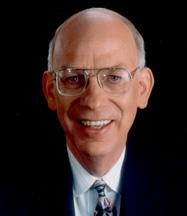
Mr. President, I ask unanimous consent that the Senate proceed to the immediate consideration of S. Con. Res. 20, which was submitted earlier today by Senators Lott and Dodd. Mr. President, I ask…
Mr. President, I ask unanimous consent that the Senate proceed to the immediate consideration of S. Con. Res. 20, which was submitted earlier today by Senators Lott and Dodd.
Mr. President, I ask unanimous consent that the concurrent resolution be agreed to, and the motion to reconsider be laid upon the table.
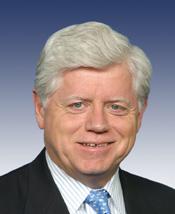
Madam Speaker, reserving the right to object, and I will not object, I yield to the gentleman from Ohio to explain the resolution. I yield to the gentleman from Ohio. Madam Speaker, I concur with the…
Madam Speaker, reserving the right to object, and I will not object, I yield to the gentleman from Ohio to explain the resolution.
I yield to the gentleman from Ohio.
Madam Speaker, I concur with the distinguished chairman, the gentleman from Ohio.
Madam Speaker, I withdraw my reservation of objection.
Madam Speaker, I ask unanimous consent that all Members may have 5 legislative days within which to revise and extend their remarks and include extraneous material on S. Con. Res. 20.
Madam Speaker, I ask unanimous consent that all Members may have 5 legislative days within which to revise and extend their remarks and include extraneous material on S. Con. Res. 20.

These amendments have been cleared, I believe, on both sides. Mr. President, I move to reconsider the vote.
These amendments have been cleared, I believe, on both sides.
Mr. President, I move to reconsider the vote.
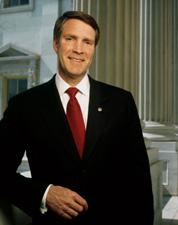
Mr. President, I ask unanimous consent that the order for the quorum call be rescinded.
Mr. President, I ask unanimous consent that the order for the quorum call be rescinded.
Bill Text
3 versions available
        [Congressional Bills 108th Congress]
[From the U.S. Government Publishing Office]
[S. Con. Res. 20 Enrolled Bill (ENR)]

S.Con.Res.20
Agreed to March 25, 2003

One Hundred Eighth Congress

of the

United States of America

AT THE FIRST SESSION

Begun and held at the City of Washington on Tuesday,
the seventh day of January, two thousand and three

Concurrent Resolution

Resolved by the Senate (the House of Representatives concurring),
That effective for the One Hundred Eighth Congress, the Chairman of the
Committee on Rules and Administration of the Senate may designate
another member of the Committee to serve on the Joint Committee on
Printing in place of the Chairman.
Attest:

Secretary of the Senate.

Attest:

Clerk of the House of Representatives.