A concurrent resolution expressing the sense of Congress regarding the protection of religious sites and the freedom of access and worship.
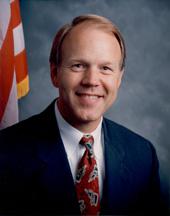
 Sen. Lindsey Graham (R-SC)
Legislative Activity
Stay on top of the latest movement without scrolling through every action
Referred to the Committee on Foreign Relations. (text of measure as introduced: CR S4715-4716)
April 2, 2003
View full timeline
Introduced in Senate
April 2, 2003
Referred to the Committee on Foreign Relations. (text of measure as introduced: CR S4715-4716)
April 2, 2003
Floor Debate
1 memberWhat members said about S.Con.Res. 32 on the floor
Floor Debate
1 memberWhat members said about S.Con.Res. 32 on the floor
Mr. President, I hereby submit to the Senate the budget scorekeeping report prepared by the Congressional Budget Office under Section 308(b) and in aid of Section 311 of the Congressional Budget Act…
Mr. President, I hereby submit to the Senate the budget scorekeeping report prepared by the Congressional Budget Office under Section 308(b) and in aid of Section 311 of the Congressional Budget Act…
Mr. President, I submit to the Senate the budget scorekeeping report prepared by the Congressional Budget Office under Section 308(b) and in aid of Section 311 of the Congressional Budget Act of…
Mr. President, I hereby submit to the Senate the budget scorekeeping report prepared by the Congressional Budget Office under Section 308(b) and in aid of Section 311 of the Congressional Budget Act…
Mr. President, I hereby submit to the Senate the budget scorekeeping report prepared by the Congressional Budget Office under Section 308(b) and in aid of Section 311 of the Congressional Budget Act…
Show 8 more
Mr. President, I hereby submit to the Senate the budget scorekeeping report prepared by the Congressional Budget Office under Section 308(b) and in aid of Section 311 of the Congressional Budget Act…
Mr. President, I hereby submit to the Senate the budget scorekeeping report prepared by the Congressional Budget Office under section 308(b) and in aid of section 311 of the Congressional Budget Act…
Mr. President, I hereby submit to the Senate the budget scorekeeping report prepared by the Congressional Budget Office under Section 308(b) and in aid of section 311 of the Congressional Budget Act…
Mr. President, I hereby submit to the Senate the budget scorekeeping report prepared by the Congressional Budget Office under Section 308(b) and in aid of Section 311 of the Congressional Budget Act…
Mr. President, I hereby submit to the Senate the budget scorekeeping report prepared by the Congressional Budget Office under Section 308(b) and in aid of Section 311 of the Congressional Budget Act…
Mr. President, I hereby submit to the Senate the budget scorekeeping report prepared by the Congressional Budget Office under Section 308(b) and in aid of Section 311 of the Congressional Budget Act…
Mr. President, I hereby submit to the Senate the budget scorekeeping report prepared by the Congressional Budget Office under Section 308(b) and in aid of Section 311 of the Congressional Budget Act…
Mr. President, I hereby submit to the Senate the budget scorekeeping report prepared by the Congressional Budget Office under Section 308(b) and in aid of Section 311 of the Congressional Budget Act…
Bill Text
Latest available legislative text
        [Congressional Bills 108th Congress]
[From the U.S. Government Publishing Office]
[S. Con. Res. 32 Introduced in Senate (IS)]

108th CONGRESS
1st Session
S. CON. RES. 32

Expressing the sense of Congress regarding the protection of religious
sites and the freedom of access and worship.

_______________________________________________________________________

IN THE SENATE OF THE UNITED STATES

April 2, 2003

Mr. Graham of South Carolina (for himself, Mr. Inhofe, Mr. Santorum,
Mr. Bunning, Mr. Nickles, Mr. Craig, and Mr. Crapo) submitted the
following concurrent resolution; which was referred to the Committee on
Foreign Relations

_______________________________________________________________________

CONCURRENT RESOLUTION

Expressing the sense of Congress regarding the protection of religious
sites and the freedom of access and worship.

Whereas throughout time various groups have felt special attachment to places
that they considered sacred and holy, and the sacred texts of the great
historical religions include accounts of specific places where
individuals or groups experienced significant encounters with God;
Whereas holy places create a memory of these encounters with the divine and are
a part of the character of every religious tradition;
Whereas holy places are as much a common feature of the religious traditions of
humanity as are sacred time, ceremonies, and prayer;
Whereas one of the results of the identification of locations as sacred is that
these places can become the focus for the tensions between the members
of different religious communities;
Whereas a place that is considered holy by one group can come to be claimed by
adherents of another tradition, and as a result holy places can become
the source of conflict as much as of spiritual expression;
Whereas when religious communities tragically fall into estrangement or
antagonism, the holy places of each community often become the target of
violence or vengeance instead of veneration and reverence, and people
act out their contempt and anger through occupation, desecration, and
destruction;
Whereas the location of many holy sites of the three main monotheistic religions
are located in the State of Israel and in the Palestinian territory;
Whereas this region is especially important to the followers of Judaism, Islam,
and Christianity, and many visitors from around the world travel to
these sites for personal and religious inspiration;
Whereas under British control the Palestine Mandate of 1922 contained a number
of provisions ensuring freedom of religion and conscience and protection
of holy places, as well as prohibiting discrimination on religious
grounds;
Whereas the Palestine Order in Council of that same year provided that ``all
persons . . . shall enjoy full liberty of conscience and free exercise
of their forms of worship, subject only to the maintenance of public
order and morals'' and ``no ordinance shall be promulgated which shall
restrict complete freedom of conscience and the free exercise of all
forms of worship.'';
Whereas these provisions of the Mandate and the Palestine Orders in Councils
have been recognized in the Israeli legal system and are instructive of
Israeli policy in safeguarding freedom of conscience and religion;
Whereas the Israeli Declaration of Independence of 1948 is another legal source
that guarantees freedom of religion and conscience, and equality of
social and political rights irrespective of religion;
Whereas this document states ``the State of Israel . . . will be based on
freedom, justice, and peace as envisaged by the Prophets of Israel; it
will ensure complete equality of social and political rights to all its
inhabitants irrespective of religion, race, or sex; it will guarantee
freedom of religion, conscience, language, education, and culture.'';
Whereas this document expresses Israel's vision and its credo, and adherence to
these principles is guaranteed by law;
Whereas each religious community within Israel is free to exercise its faith,
observe its own holy days and weekly day of rest, and administer its own
internal affairs;
Whereas the Israeli Protection of Holy Places Law of 1967 states that freedom of
access and worship is ensured at all places of worship and religious
significance;
Whereas this law states ``the Holy Places shall be protected from desecration
and any other violation and from anything likely to violate the freedom
of access of members of the various religions to the places sacred to
them, or their feelings with regard to those places.'';
Whereas Israel has worked to abolish discriminatory laws and adopt standards of
safeguarding access to holy sites;
Whereas in the past fifty-five years Israel has striven to assure the safety of
all religions;
Whereas the holy sites in Israel and Palestinian regions should be protected
from desecration and any other violation;
Whereas two years ago, in Nablus, the Tomb of Joseph was ransacked and set on
fire on live television, and in retaliation a group twice attempted to
burn a mosque in the center of Tiberias;
Whereas these actions were followed by attempts to destroy an ancient Jewish
synagogue in Jericho;
Whereas last spring, during the Easter season, heavy unrest in the West Bank
resulted in a stalemate between Israeli soldiers and over 100
Palestinian fighters in the Church of the Nativity in Bethlehem; and
Whereas this deadlock lasted over a month and prevented anyone from visiting
this church of great historical and religious importance: Now,
therefore, be it
Resolved by the Senate (the House of Representatives concurring),

SECTION 1. SENSE OF CONGRESS.

It is the sense of Congress that--
(1) holy sites around the world, particularly in the
Israeli and Palestinian region, should be protected from
desecration and any other violation;
(2) the freedom of access of members of the various
religions to the holy sites sacred to them should not be
hindered;
(3) to assure the safety of American citizens, the holy
sites currently under the sovereignty of the State of Israel
should remain under Israeli protection, and that all holy sites
in the region remain open to visitors of all faiths;
(4) the Department of State should continue to warn and
protect Americans overseas at holy sites and regions of
historical and religious significance; and
(5) we should condemn all violence directed against holy
sites.

SEC. 2. DEFINITION OF HOLY SITE.

As used in this resolution, ``holy site'' means a historic location
specifically set apart for religious purposes.
<all>