S.Con.Res. 52Senate108th Congress (2003-2005)In Committee
A concurrent resolution expressing the sense of Congress that the United States Government should support the human rights and dignity of all persons with disabilities by pledging support for the drafting and working toward the adoption of a thematic convention on the human rights and dignity of persons with disabilities by the United Nations General Assembly to augment the existing United Nations human rights system, and for other purposes.
Sponsored by 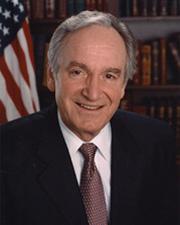 Sen. Tom Harkin (D-IA)
Introduced June 10, 2003
Legislative Activity
Stay on top of the latest movement without scrolling through every action
SenateIntro Referral
Latest Action
Referred to the Committee on Foreign Relations. (text of measure as introduced: CR S7643-7644)
June 10, 2003
View full timeline
SenateIntro Referral
Introduced in Senate
June 10, 2003
SenateIntro Referral
Sponsor introductory remarks on measure. (CR S7644)
June 10, 2003
SenateIntro Referral
Referred to the Committee on Foreign Relations. (text of measure as introduced: CR S7643-7644)
June 10, 2003
Floor Debate
1 memberWhat members said about S.Con.Res. 52 on the floor
Floor Debate
1 memberWhat members said about S.Con.Res. 52 on the floor
1 Democrat
Sen. Tom HarkinD-IA · Jun 10, 2003
Mr. President, I rise to submit a concurrent resolution on behalf of myself, Senator Chafee and Senator Kennedy. This resolution deals with an issue that I have been working on for many years in a…
Bill Text
Latest available legislative text
Introduced in SenateIssued June 10, 2003
        [Congressional Bills 108th Congress]
[From the U.S. Government Publishing Office]
[S. Con. Res. 52 Introduced in Senate (IS)]

108th CONGRESS
1st Session
S. CON. RES. 52

Expressing the sense of Congress that the United States Government
should support the human rights and dignity of all persons with
disabilities by pledging support for the drafting and working toward
the adoption of a thematic convention on the human rights and dignity
of persons with disabilities by the United Nations General Assembly to
augment the existing United Nations human rights system, and for other
purposes.

_______________________________________________________________________

IN THE SENATE OF THE UNITED STATES

June 10, 2003

Mr. Harkin (for himself, Mr. Chafee, and Mr. Kennedy) submitted the
following concurrent resolution; which was referred to the Committee on
Foreign Relations

_______________________________________________________________________

CONCURRENT RESOLUTION

Expressing the sense of Congress that the United States Government
should support the human rights and dignity of all persons with
disabilities by pledging support for the drafting and working toward
the adoption of a thematic convention on the human rights and dignity
of persons with disabilities by the United Nations General Assembly to
augment the existing United Nations human rights system, and for other
purposes.

Whereas all people are endowed with an inestimable dignity, which is based on
autonomy and self-determination, and which requires that every person be
placed at the center of all decisions affecting such person, and the
inherent equality of all people and the ethical requirement of every
society to honor and sustain the freedom of any individual with
appropriate communal support;
Whereas more than 600,000,000 people have a disability;
Whereas more than two-thirds of all persons with disabilities live in developing
countries, and only 2 percent of children with disabilities in the
developing world receive any education or rehabilitation;
Whereas during the last 2 decades, a substantial shift has occurred globally in
governmental and nongovernmental institutions from an approach of
charity toward persons with disabilities to the recognition of the
inherent universal human rights of persons with disabilities;
Whereas the United Nations has authoritatively endorsed and helped to advance
progress toward realizing the human rights of persons with disabilities,
as exemplified by the United Nations Standard Rules on the Equalization
of Opportunities for Persons with Disabilities (adopted by the United
Nations General Assembly in Resolution 48/96 of December 20, 1993),
which are monitored by a United Nations Special Rapporteur;
Whereas because of the slow and uneven progress of ensuring that persons with
disabilities enjoy their universal human rights in law and in practice,
every society and the international community remain challenged to
identify and implement the processes which best protect the dignity of
persons with disabilities and which fully implement their inherent human
rights;
Whereas greater and more rapid progress must be achieved toward overcoming the
relative invisibility of persons with disabilities in many societies,
national laws, and existing international human rights instruments; and
Whereas, accordingly, the United Nations General Assembly in November 2001,
adopted an historic resolution to establish an ad hoc committee open to
all United Nations member nations to consider proposals for a
comprehensive and integral treaty to protect and promote the rights and
dignity of persons with disabilities: Now, therefore, be it
Resolved by the Senate (the House of Representatives concurring),
That it is the sense of Congress that--
(1) the United States should play a leading role in the
drafting of a thematic United Nations convention that affirms
the human rights and dignity of persons with disabilities, and
that--
(A) is consistent with the spirit of the Americans
with Disabilities Act of 1990, the United States
Constitution, and other rights enjoyed by United States
citizens with disabilities;
(B) promotes inclusion, independence, political
enfranchisement, and economic self-sufficiency of
persons with disabilities as foundational requirements
for any free and just society; and
(C) provides protections that are at least as
strong as the rights that are now recognized under
international human rights law for other vulnerable
populations; and
(2) the President should instruct the Secretary of State to
send to the United Nations Ad Hoc Committee meetings a United
States delegation that includes individuals with disabilities
who are recognized leaders in the United States disability
rights movement.
<all>