A concurrent resolution honoring the life of Johnny Cash.
Legislative Activity
Stay on top of the latest movement without scrolling through every action
Referred to the House Committee on Education and the Workforce.
September 22, 2003
View full timeline
Introduced in Senate
September 15, 2003
Sponsor introductory remarks on measure. (CR S11483-11485)
September 15, 2003
Submitted in the Senate and ordered held at desk. (text of measure as introduced: CR S11483)
September 15, 2003
Resolution agreed to in Senate without amendment and with a preamble by Unanimous Consent. (consideration: CR S11711-11712; text as passed Senate: CR S11712)
September 18, 2003
Message on Senate action sent to the House.
September 22, 2003
Received in the House.
September 22, 2003 • 12:05 PM
Referred to the House Committee on Education and the Workforce.
September 22, 2003
Floor Debate
6 membersWhat members said about S.Con.Res. 68 on the floor
 JBLA
JBLA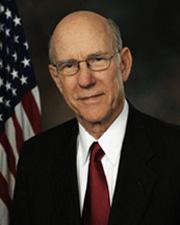 PR
PR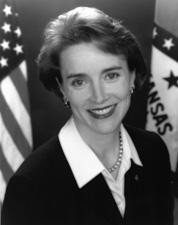 BLL
BLL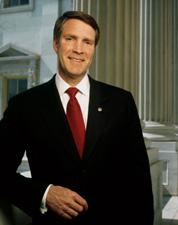 WHF+1
WHF+1
Floor Debate
6 membersWhat members said about S.Con.Res. 68 on the floor
Mr. President, I take a few minutes today to speak about recent events on The National Mall. The Mall, as Judge Buckley of the U.S. Court of Appeals for the District of Columbia, has written, ``is an…
Mr. President, I take a few minutes today to speak about recent events on The National Mall. The Mall, as Judge Buckley of the U.S. Court of Appeals for the District of Columbia, has written, ``is an area of particular significance in the life of the Capital and the Nation.'' It is a 2-mile green area that stretches from the Capitol in the east to the Lincoln Memorial in the west. It is, as another judge noted, ``the site of monuments marking great figures and events in our Nation's history.'' But it is more than home to these enduring symbols of our nationhood. This judge went on to say: ``Its grassy expanse provides areas for any number of recreational activities. . . .''
The National Mall has also been used, of course, for large-scale events.
It is used for the Fourth of July festivities each year and for the Cherry Blossom Festival. Every 4 years, it is used for our inaugural celebrations. It has been the site of national observances and protests--some of the most famous in our Nation's history. ``It is here,'' as Judge Buckley went on to say, ``that the constitutional right of speech and peaceful assembly find their fullest expression.''
Mr. President, Congress has entrusted the Department of the Interior, and particularly the National Park Service within the Department of the Interior, with preserving and regulating the use of this important part of our national heritage. It has, according to the statute, charged the National Park Service with regulating the use of The Mall so as to ``conform'' such use ``to the fundamental purpose'' of ``conserving the scenery and natural and historic objects . . . and providing for the enjoyment of the same in such manner . . . as will leave them unimpaired for their enjoyment by future generations.''
The Mall, as I have said, serves many purposes. None of those purposes that have been identified by the Congress or in regulation are commercial purposes. Accordingly, the National Park Service regulations provide that demonstrations and special events on The Mall may be held only pursuant to permit issued by the Park Service. The rules prohibit the commercial use of The Mall and specifically provide that ``no sales shall be made . . . and no article may be exposed for sale without a permit. . . .''
Despite the clear prohibitions in its own regulations, the Park Service has now sanctioned a new use for this area. That use, unfortunately, can only be called commercial exploitation.
Earlier this month, to promote the start of the new football season, the National Football League held what the Department of the Interior described as a music and football festival entitled the ``NFL Kickoff Live From The National Mall Presented by Pepsi Vanilla.'' That was the official title of the event. To allow for the setup and removal of infrastructure associated with this concert, the Park Service gave the NFL a permit to use The Mall for 17 days--the period between August 25 and September 10. The main event occurred on September 4. For many of those days, much of The Mall was fenced off and the public was prevented from using it, although it obviously is one of the most popular spaces in our Nation's Capital.
I have spent a great deal of time on The Mall, as I am sure my colleagues have, and I can tell you that currently, even without this kind of extravaganza, it is difficult to walk the length of The Mall from the Capitol to the Lincoln Memorial. Large areas are closed because of construction of the World War II Memorial and also construction of new security features at the Washington Monument. Portions of The Mall are also closed periodically following events, such as the Fourth of July activities or after large public gatherings, to allow for cleanup and restoration of the grassy areas.
In this case--the case of this NFL extravaganza--a large segment of The Mall was essentially closed to the public to allow for what, in my opinion, can only be characterized as commercial use and as advertising by private corporations.
Let me start with this photograph and show that corporate sponsors of the concert that occurred on September 4 were allowed to put up a large fence covered with advertising. This advertising talks about the kickoff of 2003 NFL, live from Washington, DC; AOL for broadband; Pepsi Vanilla; Coors Light, and Verizon. This is advertising, in my view. This is clearly commercial activity.
Apart from keeping the public off The Mall, the clear message to the public was that The Mall had been turned over to these companies for commercial purposes.
The National Park Service has published guidelines to help organizations that want to hold events on The Mall to know what is required. The guidelines state:
The theme of a special event must be consistent with the
mission of the park--
In this case, we are talking about The Mall. These guidelines apply to all of our national parks in the capital region.
They go on to say:
and appropriate to the park area in which it is to be held,
including consideration for possible damage and/or impairment
to park property, facilities, plantings and landscape
features . . . and park values.
Our Secretary of the Interior, Gale Norton, whose agency approved the permit for this event, maintains today that this was an appropriate use of The Mall because it was undertaken in partnership with the Department's ``Take Pride in America'' slogan promoting voluntarism on public lands and because it was an event honoring members of our Armed Forces.
Clearly, nobody objects to an event celebrating public volunteers or honoring military personnel.
However, Secretary Norton's stated rationale for approving the event is simply not consistent with what actually took place on The Mall. It is not consistent, when you look at the banner surrounding The Mall, to say this has anything to do with voluntarism or recognizing the military.
This is a photograph of the event. Let me show another photograph which I think makes the case rather convincingly. This is a photograph of the event which was published in the Washington Post. This, evidently, is Secretary Norton's vision of an appropriate use of The Mall.
It is impossible to miss the advertisements for Pepsi Vanilla or for Verizon, for Coors, and for its other sponsors, and you certainly cannot miss the huge football promoting the National Football League. It is almost impossible, I suggest, to the untrained eye to find references to the supposed reasons for the event. The ``Take Pride in America'' slogan does appear at the bottom of the advertising banners, and in the other photo it appears at the top of the fence, but I am certain that nobody from any distance--I can barely read it from here-- I am sure nobody can read it from any reasonable distance.
This photograph makes the point that the overwhelming image is turning over The Mall for commercial advertising. The event was used as the basis for a commercial television production. Commercials were broadcast to the crowd over large televisions that were located on The Mall itself.
The Secretary of the Interior may view this as business as usual, but, in my view, allowing this type of commercial activity with blatant product advertising is contrary to what the policy is for our national parks, including The Mall. It is also contrary to what responsible public policy should be in this area.
During her confirmation hearing, I expressed concern to Secretary Norton that as Secretary of the Interior she would hold one of the highest positions of public trust in our Nation's Government. The Secretary of the Interior is the principal guardian of our national parks and our most revered historic sites. Certainly, The National Mall is among the most important symbolic spaces in our country.
I was concerned that based on her previous public statements and writings, she had a long record of having championed the interests of corporations in opposition to the Federal Government. At her confirmation hearing, Secretary Norton assured me she would enforce the laws as written, and it is my understanding that in this case the laws and regulations of the Park Service made very clear The National Mall is not to be used as a venue for commercial purposes. It is not to be used as a venue for advertising. I do not see how anyone can look at these photos and believe the Secretary carried out her responsibilities in this instance.
Earlier this year, the Senate passed legislation to authorize construction of an education center near the Vietnam Veterans Memorial, very much along the lines of a similar bill we passed in the Senate during the last Congress. I was involved in negotiating the language for that bill and tried to ensure that the National Park Service retained its ability to approve the site and the design of the center, and at the request of the Park Service we included language stating the center should be built ``consistent with the special nature and sanctity of The Mall.''
If these photographs reflect Secretary Norton's definition of ``the special nature and sanctity of The Mall,'' I have great concern about what, in
fact, we are going to wind up protecting with regard to the Vietnam Veterans Memorial. What can we reasonably tell those who intend to operate the educational center for the Vietnam Veterans Memorial is not permitted if, in fact, all of this is permitted?
The National Park Service regulations generally prohibit commercial advertising on public lands. In addition, the specific permit that was issued related to this event stated no commercial activity was to be conducted. Nevertheless, the Department of the Interior decided the activity we see in this photograph was not commercial activity; that these banners were not advertisements. In the view of the Park Service, these were ``sponsor recognition.'' That is a distinction I was unaware of, between advertising and sponsor recognition. But clearly, the National Park Service believes that distinction needs to be maintained.
Even though the National Football League was the organization that sponsored the concert, it was permitted to solicit other companies to underwrite the event's expenses, and those other companies in turn were permitted to advertise on The Mall or, as the Interior Department put it, to obtain ``sponsor recognition.''
It is not clear where the authority comes from for this decision by the National Park Service to allow such ``sponsor recognition.'' The agency's regulations clearly prohibit the display of commercial notices or advertisements on National Park Service lands except where the park superintendent determines the notices relate to products at that park area and the superintendent determines the notices are ``desirable and necessary for the convenience and guidance of the public.'' I do not see how these banners, these fence advertisements fit in to that requirement.
It would have been one thing if this event had occurred and following it the Interior Department and the National Park Service had admitted a mistake had been made and they would take appropriate steps to prevent this from occurring in the future. But the leadership of the Interior Department and the Park Service, from Secretary Norton on down, makes no such admission. They continue to insist this was entirely appropriate.
Secretary Norton may not care whether this type of event takes place again on The Mall, but I do, and I think many of my colleagues will when they become better informed about this situation.
To better understand the Secretary's reasoning that this was not, in fact, commercial activity, that there was no commercial advertising taking place, I am sending a letter to the Secretary requesting copies of the correspondence and the e-mails and the planning memos and other documents the Secretary relied on in concluding this was not commercial activity.
The Secretary of the Interior and the National Park Service leadership maintain that commercial activity is not allowed on The Mall; what took place here was not commercial. Since there apparently is a disconnect between what they say and the reality of what, in fact, took place, I think the only solution is to change the law to make it clear, even to the Secretary, that this type of use is not appropriate on The Mall.
When the Interior appropriations bill comes to the floor, I intend to offer an amendment to make it clear that future permits to hold special events on The Mall may not include commercial advertising, whether they couch that as ``sponsor recognition'' or not. I want to emphasize The Mall clearly should continue to be available for large-scale events.
If the Secretary had approved a large concert to celebrate our troops or to promote her volunteer program, then there would not have been a public outcry such as we have seen as a result of this situation. It was her decision to allow the concert to be used for commercial purposes, to allow the commercial advertising that occurred here that, in my view, crossed the line.
If the Department of the Interior and National Park Service officials had made any effort to advocate the protection of the resource with which they are charged to manage, then this would not have been a problem. Since they have refused to do so, it seems to me we must change the statute.
Last week, Albert Eisele of the Hill newspaper wrote an excellent article entitled ``Desecration of The Mall.'' I ask unanimous consent that a copy of that article be printed in the Record following my remarks.
I ask unanimous consent that the Washington Post editorial entitled ``Marketing the Mall,'' and an article by Tom Shales in the Washington Post entitled ``America, Brought To You by . . . '' be printed in the Record following my remarks.
Mr. President, The National Mall is more than just an expanse of grass or an undeveloped field. It is a national treasure. By the National Park Service's own account, it is the single most significant public park and open space in our Nation's Capital. It is visited by millions of citizens and visitors from abroad each year.
It provides a formal work of landscape architecture of monumental proportions and provides the unifying element for the carefully placed, diverse architectural symbols, repositories and shrines of the heritage of our democracy on and along its length.
There has been broad public agreement both in Washington and around the country that allowing the type of activity that occurred at these commercial events is a new low point in the storied history of The Mall. Perhaps this will only be remembered as an unfortunate incident, but we need to make sure that this is not the model for future events on The Mall. We need to act to prohibit increased commercialization in our national parks, and a good place to start is acting to protect The Mall.
When we do get to the actual voting on the issue, I hope my colleagues will support the effort to protect The Mall from further commercial exploitation.
Exhibit 1
[From the Hill, September 10, 2003]
Desecration of the Mall
(By Albert Eisele)
An older colleague who wrote a daily column in the St. Paul
Pioneer Press when I worked there many years ago once told me
his best columns were those generated by a sense of outrage.
If so, this should be one of my best columns, as few things
have offended me more than the disgraceful display of
mindless patriotism, insatiable commercialism and sheer bad
taste perpetrated last week by the National Football League
with its $10 million rock concert extravaganza on the Mall.
I wasn't there and didn't watch it on ABC-TV--thank God--
but one photograph in Friday's Washington Post convinced me
that aside from the Sept. 11 attack on the Pentagon and
subsequent anthrax attacks, last fall's sniper shootings or
the 1981 assassination attempt on President Reagan, this was
the worst thing that's happened here during my nearly 40
years in the nation's capital.
The spectacle of pop singer Britney Spears being stripped
to her black bikini bottoms to just above pubic level by a
pair of male dancers wearing Washington Redskins jerseys,
with the Capitol shining in the background, was so jarring
that it made me want to cringe.
Spear's display of erotic gyrations and lip-synched lyrics
may have a place in our appalling, vulgarized popular culture
but definitely not in the middle of the nation's most
hallowed public space.
It was bad enough that this dreadful promotion designed to
kick off the 2003 pro football season--and sell Pepsi
Vanilla, AOL and Reeboks--took place just a week after the
40th anniversary of Martin Luther King's immortal ``I Have a
Dream'' speech on the steps of the Lincoln Memorial. Or that
it took place just before the second anniversary of the awful
day when Islamic terrorists crashed a jetliner into the
Pentagon and were barely prevented from flying over the Mall
to crash another into the White House or the Capitol.
But it was even worse that President Bush and Interior
Secretary Gale Norton were persuaded to serve as cheerleaders
for a so-called game that celebrates violence--as if we don't
have enough already--and that has owners who personify
rapacious greed. This was nothing more than the desecration
of a sacred space and an insult to the men and women of the
U.S. military whom the event's promoters professed to honor.
The president perhaps can be excused from accepting bad
advice but not those who persuaded him to lend the dignity of
his office to an event that left the rain-soaked Mall
trampled and garbage-strewn, both physically and
symbolically.
Somebody, ideally the congressman whose committees oversee
the Department of Interior and the National Park Service,
should
demand an explanation of who was responsible for allowing
this travesty to happen.
If they don't, what can we expect to see next? An ad for
Viagra on the Washington Monument? A pitch for McDonald's at
the Lincoln Memorial or Toyota at the Jefferson Memorial? Or
maybe even a banner on the Capitol Dome offering low-interest
loans from Citibank to ease the federal deficit?
I have nothing against pro football, and I'm glad the
Redskins won their opener, even as I despair of Major League
Baseball ever returning to Washington. Nor do I disagree that
many in the crowd that the NFL generously estimated at
125,000 thought it was wonderful that Britney and her fellow
entertainers were invited to do their thing on the Mall.
Nevertheless, I'm outraged and saddened. This was a low
point for a special space that stands for so much in America.
I yield the floor, and I suggest the absence of a quorum.
I am glad to withhold that request.
Mr. President, today I am introducing a concurrent resolution honoring Johnny Cash. Johnny Cash died on Friday in Nashville. The man whose singing voice sounded like a big freight train coming, is…
Mr. President, today I am introducing a concurrent resolution honoring Johnny Cash.
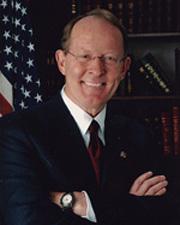
Johnny Cash died on Friday in Nashville. The man whose singing voice sounded like a big freight train coming, is gone. The concurrent resolution I introduce today is on behalf of my colleague, the majority leader, Senator Bill Frist of Tennessee, the Senators from Arkansas, Mrs. Lincoln and Mr. Pryor, and the distinguished Senator Roberts, who probably knows the words to ``I Walk the Line,'' as do most of us all over the world.
Johnny Cash lived a little bit outside of Nashville. I was in his home one time and I asked him: Johnny, how many nights do you perform on the road?
He looked at me with some surprise. He said: Oh, about 300 a year.
Why do you do that, I asked him in amazement?
He looked back at me equally amazed. He said: That is what I do.
All weekend the radio stations have been playing the songs of the man who performed 300 times a year for all of us, the ``man in black.'' Stores all over Nashville and all over the world were stocking up on Johnny Cash memorabilia this weekend.
So much has been said in newspapers and on TV that one wonders what else we Senators might say about Johnny Cash. I mean, what could I say better, for example, than what Steven Greenhouse wrote on Johnny on page 1 of the New York Times on Saturday:
Beginning in the mid-1950s, when he made his first record
for the Sun label, Mr. Cash forged a lean, hard-bitten
country-folk music that at its most powerful seemed to erase
the lines between singing, storytelling and grueling life
experience. Born in poverty in Arkansas at the height of the
Depression, he was country music's foremost poet of the
working poor. His stripped-down songs described the lives of
coal miners and sharecroppers, convicts and cowboys, railroad
workers and laborers.
``Foremost poet of the working poor.'' Mr. Greenhouse was not the only one who wrote beautifully about the foremost poet of the working poor. So did Louie Estrada and David Segal in the Washington Post. So did Craig Havighurst and several other writers in the Tennessean in Nashville, as well as John Sparks in the Memphis Commercial Appeal.
I have no doubt that in Wichita, Topeka, and important cities all over the country and world there were writers who were writing as best they could about the music and the sound of Johnny Cash.
Why do we wait until Johnny Cash dies to write of his poetry? John R. Cash is not the only such poet who ever lived in Nashville, TN. Bob Dylan, Johnny's friend, once said that Hank Williams was America's greatest poet. At last count, there are several thousand songwriters living in Nashville struggling to write poetry, some of which will be known and remembered everywhere in the world one day.
Alice Randall, a Nashville songwriter, a writer of songs and books, once observed that it is odd that there is so little serious literary criticism of the poetry of Johnny Cash, Hank Williams, and other country music songwriters. The outpouring of articles that accompanied Johnny's death this weekend suggest that most of the serious criticism of the poetry found in country music is done by pop music critics in our major newspapers.
But why is there not a department or a chair or at least a conference occasionally dedicated to criticism of the poetry or at least the literature of country music? Literary criticism is a fundamental part of the departments of English in universities all across America. Some of the most famous of these were among the ``Fugitives'' who met during the 1920s at Vanderbilt University. Cleanth Brooks, Robert Penn Warren, Allen Tate, Donald Davidson, and Andrew Lytle were some of those literary critics who began their careers then.
If Vanderbilt University, my alma mater, is such a center of literary criticism, then why has Vanderbilt University not done more about the literature that is country music? Or why does Belmont University in Nashville or the University of Tennessee or the University of Memphis not do it?
These Nashville and Memphis songwriters are certainly among the most famous poets in the world. But why do we wait for the New York Times and Bob Dylan to tell us that Johnny Cash and Hank Williams are also among the best poets when Vanderbilt University, among others, lives right there among them?
There are hundreds of good English professors in dozens of northeastern universities writing thousands of pages of criticism about average poets, while our Tennessee universities are doing almost nothing to write about poets who others say are among the best in the world. We have had a habit in Tennessee of not being willing to look right in front of our own noses to celebrate what is special about us. We sometimes worry about producing only average Chopin when right down the block lives the best harmonica player in the world.
I am all for Chopin, Beethoven, Mozart, and Bach. I have played their music on the piano with symphonies all across Tennessee, but I have also performed with those symphonies some of the most beautiful of the unique American music we call country music.
The death of our friend Johnny Cash, the poet of the working poor, is a good time for our Tennessee universities to consider whether they might want to celebrate our excellence by encouraging literary criticism of some of the best known poets in the world: Our songwriters. Our universities might discover what others have suggested, that some of our songwriters are also among the best in the world.
Mr. President, I ask unanimous consent that the order for the quorum call be rescinded. I ask to speak for 5 minutes under the morning business provision under which we are now operating. Mr.…
Mr. President, I ask unanimous consent that the order for the quorum call be rescinded.
I ask to speak for 5 minutes under the morning business provision under which we are now operating.
Mr. President, I thank the distinguished Senator from Tennessee for his very eloquent speech in regard to the life and contributions of Johnny Cash. I suppose some might wonder why people in the Senate would stand up and choose basically to praise an individual who some might think was a simple country western star. Simple is right. But, perhaps, they would ignore the fact that this was a unique star in the horizon of stars that means a lot to Americans.
The Senator from Tennessee called him ``the poet for the working poor.'' I might call him the minstrel for the working poor.
I came across Johnny Cash when I was in Phoenix, AR trying to be the William Allen White of Arizona with a career in journalism. Up to that point, I had not been a country-and-western aficionado, if you will, or even a fan. Then, in a place called South Phoenix, which is certainly history now, the performers would perform in California, stop in Phoenix and go on their way to Texas. I am trying to think of the various performers who came in there, along with Johnny Cash. He was part of that show. I think it was before Waylon Jennings and Willie Nelson. I really can't think of other performers. It doesn't make much difference. But people wanted to come and see Johnny Cash. Other performers finished--and the South Phoenix ballroom was not exactly the Metropolitan Opera in terms of demeanor and what went on there. People used to see the shows and then stay and watch the fights.
But anyway, the lights went off and then the spotlight went on. And here was this tall man in black, who said, ``Hello. I am Johnny Cash.'' And the place erupted. He went through the repertoire of his famous hits at that particular time. He was magnetic in his appeal. He had a special appeal for the people who could really identify with what he was singing in terms of their daily life, their pocketbooks, and the challenges they went through.
The second time I had an opportunity to hear him was when he came to Washington at the Merriweather Post Pavilion. The place was packed. At that time, he was married to June Carter. I think that was probably the top act in show business, at least on the western and country side.
The thing I wanted to mention is we had the Bicentennial ceremonies here on The Mall in 1976. The Senator from New Mexico indicated The Mall is sacred ground--until we had our Bicentennial ceremonies. We went through quite a bit of activity in getting the Capitol spruced up. A lot of artwork was redone at that particular time.
Guess who the master of ceremonies was on The Mall celebrating our Nation's 200th anniversary. Johnny Cash. Guess who performed at a Joint Session of Congress with his rendition of Our Flag. I think I have that right. I may have it wrong. But there is a beautiful rendition--a historic rendition--of the Flag. He sang, I believe, a medley of patriotic songs before the Senate and the House.
I thought to myself: Here is someone who came from the Depression, who had a rough time in show business, and then was a great entertainer. And who else would be more appropriate to head up the Bicentennial ceremonies than Johnny Cash?
The third time I had an opportunity to meet him was at the Kennedy Center Honors where he was being honored along with great performers of our day. His health was none too good. But I stood in line with everybody else shaking his hand. I said to him, ``I wanted to see the man in black. I saw you in Phoenix way back in 1962. I was very proud of you in 1976 when you headed up the Bicentennial, and it is a real pleasure and a privilege to make your acquaintance as of today.''
He was a very down-home man, very humble, and said it was a privilege. He asked my name. We had a very nice conversation. I can't think of any other entertainer who represents American talent better than Johnny Cash.
I have, by the way, I tell the Presiding Officer, about eight albums--not CDs, albums. If we could just find a turntable, we could go back to Johnny Cash and the Tennessee Trio, and later we could ``Walk The Line'' together.
I yield the floor. I suggest the absence of a quorum.
Madam President, I rise to join Senators Alexander, Frist, and Pryor to introduce a resolution in honor of a great American, and one of our greatest Arkansans--Johnny Cash, who passed away on Friday,…
Madam President, I rise to join Senators Alexander, Frist, and Pryor to introduce a resolution in honor of a great American, and one of our greatest Arkansans--Johnny Cash, who passed away on Friday, September 12, at the age of 71.
John R. Cash was born in Kingsland, AR on February 26, 1932. When he was just 3 years old, his father moved the family to Dyess Colony, a New Deal program that set up new farming communities on uncleared land near the Mississippi River. The family had 20 acres upon which they farmed cotton and other seasonal crops and from the beginning, John was taught to work for a living. It was this time spent farming and living in Northeast Arkansas, that inspired songs such as ``Look at Them Beans'' and ``Five Feet High and Rising.'' At the age of six, he was hauling water for a road crew. At twelve he was chopping cotton. When he reached high school he was singing on the radio in Blytheville. Still, John didn't pick up a guitar until he was stationed in West Germany as a soldier in the Army. The instrument was so cheap, he said, that ``it didn't even have a brand name.''
When he returned from Germany, John moved to Memphis, determined to make it in the music industry. He sold appliances door-to-door and went to broadcasting school on the GI bill, playing music whenever he could. Finally, he managed to get an audition before Sam Phillips, the owner of the legendary Sun Records studio. The first time Phillips heard Cash sing, he turned him down, saying that he sounded ``too country.'' John returned with a more rockabilly sound and Phillips began to send his group out with another artist on the Sun Records label, Elvis Presley. Phillips also began to refer to John as Johnny, a name Cash disliked because he thought it made him sound too young. Johnny would go on to record some of his most cherished songs for the label, including such classics as ``Cry, Cry, Cry'' and ``I Walk the Line''.
Over the next 5 decades, Johnny Cash recorded over 400 albums, with 48 hits on the Billboard Hot 100 and over 130 hits on the Billboard country music charts. In the process, the boy from Dyess Colony managed to sell over 50 million records. He is part of a distinguished group of musicians from Arkansas including: Conway Twitty, Sonny Boy Williamson, Glen Campbell, and Charlie Rich. Even though Johnny Cash and these other distinguished artists found fame outside of Arkansas, the experience of growing up in Arkansas gave them a unique perspective on the feelings of the common man and woman, working hard to just get by, a perspective which came through in their music.
The number of artists he has influenced is immeasurable. He has been inducted into the Country & Western Hall of Fame, the Nashville Songwriter's Hall of Fame, and the Rock & Roll Hall of Fame. He received 11 Grammy Awards including the Lifetime Achievement Award, and has been honored by both the Kennedy Center for his contribution to American Culture and the United Nations, receiving the Humanitarian Award. The last two awards illustrate how Johnny Cash became so much more than a musician.
His songs shined a light on aspects of American culture that are integral to our Nation's history but too often overlooked. He never forgot where he came from and the people he met along the way. He told stories about people who worked hard just to survive, people so poor they couldn't afford a car so they snuck out the parts to build one from the plant where they worked, ``One Piece At A Time''. And he told it all with a voice that once was described as ``the perfect voice for a man of his spirit. It's unmistakable. It doesn't sound like anybody else. And it sounds like the real thing, which is what he is.''
I ask that all my colleagues in the Senate join me in honoring a true
American original, a prodigiously talented musician, with a conscience that matched those gifts. Our deepest condolences go out to his family and friends.
Mr. President, I ask unanimous consent that the Senate proceed to the immediate consideration of S. Con. Res. 68. Mr. President, S. Con. Res. 68 reflects upon the recent loss of Johnny Cash.…
Mr. President, I ask unanimous consent that the Senate proceed to the immediate consideration of S. Con. Res. 68.
Mr. President, S. Con. Res. 68 reflects upon the recent loss of Johnny Cash. Tennessee and the world, indeed, lost one of its great heroes. His influence simply cannot be understated in any way. It is felt today, and it will be felt for many years to come.
A country music legend, and one of Rock 'n Roll's founding fathers, Cash's work transcended both generation and genre. But what so many will remember is that he was a man of the people across this great Nation--indeed, across the world, giving a voice to so many people who really did not have a voice before. He captured that not just over one generation but several generations. And that voice will carry on over many generations in the future.
I extend my condolences to the Cash family. I know I speak for many in saying that Johnny Cash is a legend, and his imprint on American music and culture is and will continue to be profound.
Mr. President, I ask unanimous consent that the concurrent resolution be agreed to, the preamble be agreed to, and the motion to reconsider be laid upon the table, with no intervening action or debate.
Show 2 more
Mr. President, are we in morning business? I ask unanimous consent that I be allowed to speak for up to 10 minutes. I thank the Chair. (The remarks of Mr. Alexander pertaining to the submission of S.…
Mr. President, are we in morning business?
I ask unanimous consent that I be allowed to speak for up to 10 minutes.
I thank the Chair.
(The remarks of Mr. Alexander pertaining to the submission of S. Con. Res. 68 are located in today's Record
under ``Submission of Concurrent and Senate Resolutions.'')
I suggest the absence of a quorum.
Mr. President, I ask unanimous consent that the order for the quorum call be rescinded.
Mr. President, I ask unanimous consent that the order for the quorum call be rescinded.
Bill Text
3 versions available
        [Congressional Bills 108th Congress]
[From the U.S. Government Publishing Office]
[S. Con. Res. 68 Referred in House (RFH)]

1st Session
S. CON. RES. 68

_______________________________________________________________________

IN THE HOUSE OF REPRESENTATIVES

September 22, 2003

Referred to the Committee on Education and the Workforce

_______________________________________________________________________

CONCURRENT RESOLUTION

Honoring the life of Johnny Cash.

Whereas Johnny Cash was one of the most influential and recognized voices of
American music throughout the world, whose influence spanned generations
and musical genres;
Whereas Johnny Cash was born on February 26, 1932, in Kingsland, Arkansas, and
moved with his family at the age of 3 to Dyess, Arkansas, where the
family farmed 20 acres of cotton and other seasonal crops;
Whereas those early years in the life of Johnny Cash inspired songs such as
``Look at Them Beans'' and ``Five Feet High and Rising'';
Whereas Johnny Cash eventually released more than 70 albums of original material
in his lifetime, beginning with his first recording in 1955 with the
Tennessee Two;
Whereas Johnny Cash was a devoted husband to June Carter Cash, a father of 5
children, and a grandfather;
Whereas Johnny Cash received extensive recognition for his contributions to the
musical heritage of the Nation, including membership in the Grand Old
Opry; induction into the Nashville Songwriters Hall of Fame, the Country
Music Hall of Fame, and the Rock and Roll Hall of Fame; and his receipt
of numerous awards, including Kennedy Center Honors, 11 Grammy awards,
and the 2001 National Medal of Arts;
Whereas Johnny Cash embodied the creativity, innovation, and social conscience
that define American music;
Whereas Johnny Cash was a vocal champion of the downtrodden, the working man,
and Native Americans; and
Whereas the Nation has lost one of its most prolific and influential musicians
with the death of Johnny Cash on September 12, 2003, in Nashville,
Tennessee: Now, therefore, be it
Resolved by the Senate (the House of Representatives concurring),
That Congress--
(1) honors the life and accomplishments of Johnny Cash;
(2) recognizes and honors Johnny Cash for his invaluable
contributions to the Nation, Tennessee, and our musical
heritage; and
(3) extends its condolences to the Cash family on the death
of a remarkable man.

Passed the Senate September 18, 2003.

Attest:

EMILY J. REYNOLDS,

Secretary.