A joint resolution proposing an amendment to the Constitution of the United States which requires (except during time of war and subject to suspension by the Congress) that the total amount of money expended by the United States during any fiscal year not exceed the amount of certain revenue received by the United States during such fiscal year and not exceed 20 per centum of the gross national product of the United States during the previous calendar year.
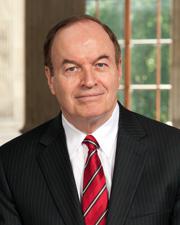 Sen. Richard C. Shelby (R-AL)
Legislative Activity
Stay on top of the latest movement without scrolling through every action
Referred to the Committee on the Judiciary. (text of measure as introduced: CR 3/12/2004 S2728)
March 11, 2004
View full timeline
Introduced in Senate
March 11, 2004
Sponsor introductory remarks on measure. (CR 3/12/2004 S2727-2728)
March 11, 2004
Referred to the Committee on the Judiciary. (text of measure as introduced: CR 3/12/2004 S2728)
March 11, 2004
Floor Debate
10 membersWhat members said about S.J.Res. 29 on the floor



 +5
+5
Floor Debate
10 membersWhat members said about S.J.Res. 29 on the floor
Mr. President, as we continue to debate the Federal Government's fiscal year 2005 budget, I can think of no better time to discuss the need for a balanced budget amendment to the Constitution. It is…
Mr. President, as we continue to debate the Federal Government's fiscal year 2005 budget, I can think of no better time to discuss the need for a balanced budget amendment to the Constitution. It is…
Mr. President, I rise today to introduce a bill that is very close to my heart--the Child Support Improvement Act of 2004. I want to express my appreciation for the leadership of the Senator from…
Mr. President, I rise today with Senator Feingold and Senator Lincoln to introduce the ``Bring Our Children Home Act,'' a bill to help the thousands of children who are abducted by family members and…
Mr. President, today, I am proud to introduce the Consolidated Student Loan Reduction Act of 2004. A college education is becoming more and more crucial as American workers seek to compete in the…
Show 6 more
Mr. President, today I introduce a bill to grant normal trade treatment to the products of Ukraine. My brother, Congressman Sander Levin, has introduced an identical bill in the House. We introduced…

Mr. President, as residents of sparsely populated State with great natural resources but severe poverty in many of its rural areas, Alaskans have engaged in a variety of social and economic exercises…

Mr. President, since the September 11th attacks against our Nation, each of us is more conscious of our individual safety and security. No example hit closer to home than when anthrax-infected…
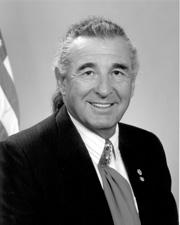
Mr. President, today I am pleased to be joined by my colleagues Senators Collins and Snowe to introduce legislation which will rectify a very serious problem affecting veterans in my State and around…

Mr. President, today I am introducing legislation to make India eligible for assistance under the Emergency Plan for AIDS Relief. India is facing a critical moment. An estimated 4.58 million people…
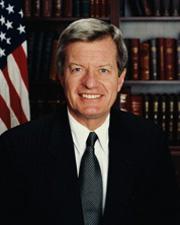
Mr. President, I ask unanimous consent that the text of the bill be printed in the Record.
Bill Text
Latest available legislative text
        [Congressional Bills 108th Congress]
[From the U.S. Government Publishing Office]
[S.J. Res. 29 Introduced in Senate (IS)]

<DOC>

108th CONGRESS
2d Session
S. J. RES. 29

Proposing an amendment to the Constitution of the United States which
requires (except during time of war and subject to suspension by the
Congress) that the total amount of money expended by the United States
during any fiscal year not exceed the amount of certain revenue
received by the United States during such fiscal year and not exceed 20
per centum of the gross national product of the United States during
the previous calendar year.

_______________________________________________________________________

IN THE SENATE OF THE UNITED STATES

March 11, 200447Mr. Shelby introduced the following joint resolution;
which was read twice and referred to the Committee on the Judiciary

_______________________________________________________________________

JOINT RESOLUTION

Proposing an amendment to the Constitution of the United States which
requires (except during time of war and subject to suspension by the
Congress) that the total amount of money expended by the United States
during any fiscal year not exceed the amount of certain revenue
received by the United States during such fiscal year and not exceed 20
per centum of the gross national product of the United States during
the previous calendar year.

Resolved by the Senate and House of Representatives of the United
States of America in Congress assembled (two-thirds of each House
concurring therein), That the following article is proposed as an
amendment to the Constitution of the United States, to be valid only if
ratified by the legislatures of three-fourths of the several States
within 7 years of the date of final passage of this joint resolution:

``Article --

``Section 1. The total amount of money expended by the United
States in any fiscal year shall not exceed the total amount of revenue
received by the United States during such fiscal year, except revenue
received from the issuance of bonds, notes, or other obligations of the
United States.
``Section 2. The total amount of money expended by the United
States in any fiscal year shall not exceed the amount equal to 20 per
centum of the gross national product of the United States during the
last calendar year ending before the beginning of such fiscal year.
``Section 3. Sections 1 and 2 of this Article shall not apply
during any fiscal year during any part of which the United States is at
war as declared by the Congress under section 8 of Article I of the
Constitution.
``Section 4. Sections 1 and 2 of this Article may be suspended by a
concurrent resolution approved by a three-fifths vote of the Members of
each House of the Congress. Any suspension of sections 1 and 2 of this
Article under this section shall be effective only during the fiscal
year during which such suspension is approved.
``Section 5. This Article shall take effect on the first day of the
first fiscal year beginning after the date of the adoption of this
Article.
``Section 6. The Congress shall have power to enforce this Article
by appropriate legislation.''.
<all>