A joint resolution to provide for Congressional disapproval of certain regulations issued by the Office of the Comptroller of the Currency, in accordance with section 802 of title 5, United States Code.
Legislative Activity
Stay on top of the latest movement without scrolling through every action
Read twice and referred to the Committee on Banking, Housing, and Urban Affairs. (text of measure as introduced: CR S3945)
April 7, 2004
View full timeline
Introduced in Senate
April 7, 2004
Sponsor introductory remarks on measure. (CR S3944-3945)
April 7, 2004
Read twice and referred to the Committee on Banking, Housing, and Urban Affairs. (text of measure as introduced: CR S3945)
April 7, 2004
Floor Debate
12 membersWhat members said about S.J.Res. 31 on the floor
 OGH
OGH GVV
GVV DKA
DKA JM
JM WHF+7
WHF+7
Floor Debate
12 membersWhat members said about S.J.Res. 31 on the floor
Mr. President, I am grateful for the distinguished majority leader's remarks and for the tremendous work he has done in helping to bring this bill to the floor at this time, without which I don't…
Mr. President, I am grateful for the distinguished majority leader's remarks and for the tremendous work he has done in helping to bring this bill to the floor at this time, without which I don't think we would be this far. I have to say this is one of the most important bills in our country at this time. I am very grateful to him, and grateful to all of those who worked on this bill.
I rise today, along with the distinguished majority leader, to introduce S. 2290, the Fairness in Asbestos Injury Resolution Act--the FAIR Act--of 2004. This is a substitute bill that Senators Frist, DeWine, Voinovich, Miller, Allen, Chambliss, Hagel, Domenici, and I have spent a great deal of time developing. I particularly want to commend Senator Specter and Judge Becker of the Third Circuit Court of Appeals for their efforts in bringing interested parties together to discuss the further development of this legislation. We are pleased to include many agreements from that mediation process in this bill.
Let me start by noting that the United States Supreme Court has sadly but appropriately characterized the asbestos litigation system in our country as ``an elephantine mass.'' The Wall Street Journal aptly called it ``a job-eating asbestos blob.''
Without question, we face a crisis of epidemic proportions.
First, our asbestos system is inequitable. In our lottery-like system, juries award enormous damages to a special few, many of whom are not impaired at all and have never suffered a day of sickness. In other words, our system makes millionaires out of people who are not sick and who may never become sick. Meanwhile, people who are truly sick from asbestos receive little or nothing.
Let me illustrate this point. In a recent Mississippi case, six plaintiffs who were not sick--not one day of sickness--were awarded a total of $150 million. The plaintiffs did not claim to have ever missed a day of work because of asbestos injury. They did not claim any medical expenses related to asbestos, and they did not have asbestos- related physical impairment. Meanwhile, truly sick asbestos victims under the Johns-Manville bankruptcy trust receive a mere 5 cents on the dollar. A jackpot justice system like the one we have is unfair, and it is unjust. That is happening all over because about 10 percent of the plaintiffs bar, the personal injury lawyers, I think to the irritation of the 90 percent, are forum shopping these bills in jurisdictions where they can get big verdicts for bad cases. Frankly, what is happening today on asbestos compensation should not take place in this great country of America.
In addition to the gross inequities with respect to who gets compensated, the system is so overwhelmed by claims that truly sick people can wait years and die before even getting their day in court.
The fact is, our courts are simply unable to handle the volume of asbestos litigation. Unless Congress acts to end the delays and the distortions caused by these voracious personal injury lawyers--as I say, only about 10 percent, maybe less than that, of the personal injury bar--our system will remain broken.
Another unacceptable feature of our current system is that most of the money that should be going to compensate the truly injured, guess where it goes? It goes into the pockets of the lawyers. One actuarial firm estimates personal injury lawyers bringing these cases will siphon more than $60 billion out of asbestos litigation before it is over, and that is a conservative estimate.
As unfair as the system is today, the future is even more grim. Excessive damage awards, along with the transaction costs associated with the lawsuits, deplete the financial resources of the defendant companies and send more and more of them into bankruptcy. Many of these businesses are union businesses. These union workers lose their jobs because we have not resolved this problem. As legal and financial resources are exhausted by those who are not sick, those who truly are afflicted with asbestos-caused diseases are less and less likely to be compensated.
According to the Rand Institute for Civil Justice, a very prestigious institute, ``about two thirds of the claims are now filed by the unimpaired, while in the past they were filed only by the manifestly ill.''
Our asbestos system does not only burden unfairness on the truly sick; it is also devastating to our economy. According to Rand, the number of claims continues to rise, with over 600,000 claims already filed. Typically, claimants filed against dozens of defendants; more than 8,500 companies have been named as defendants in asbestos litigation. With only a handful of the original asbestos manufacturing companies, the ones that are really liable, remaining today, new industries are being targeted for lawsuits.
For instance, it has been reported that the big three automakers ``are defending approximately 15,000 cases based on claims alleging injury due to exposure to asbestos in brakes and clutches.''
Even nonmanufacturers, businesses that just supply asbestos, are now facing claims. These include plumbing, heating, and automotive supply stores. As funds from asbestos companies continue to dry up, we can expect the enterprising personal injury bar to continue to target companies that have
tangential relations to the claims and little or no real culpability.
One company is one of the large insurance companies that has never insured for asbestos, never had anything to do with asbestos. Basically it has never had a claim for asbestos up until recently, but they have been dragged into 60,000 cases because they were one of the early medical teams that came to the conclusion that mesothelioma comes from asbestos exposure. They did medical evaluations that concluded and helped to make the cases for those who truly are suffering, people who now are getting five cents on a dollar. They have been dragged into 60,000 cases that they should not have been dragged into. They will win every one of those cases, no question about it. That last case they tried--and they did win it, by the way--cost $2 million just in defense fees alone. Times that by 60,000 and you get an idea of the nightmare that insurance company is going through all because of voracious--I think in some cases, dishonest, small percentage of the personal injury bar--personal injury lawyers who are bringing these cases.
Now, as funds from the asbestos companies continue to dry up, we can expect the enterprising personal injury bar to continue to target companies that have tangential relations to the claims but little or no real culpability or liability. Rest assured, without congressional action, the problem will not go away. Last year, a record 100,000 asbestos claims were filed. At least 70 companies have already gone into bankruptcy due to asbestos liability. By the way, many of those companies were union companies. Many union members lost their jobs.
Does anyone wonder why manufacturing may be going down in America? Blame those who are always on the side of the personal injury lawyers, just to mention one corruption of the law.
Of course, each bankruptcy does bring with it lost jobs, lost pensions, and weaker financial markets. The nonpartisan American Academy of Actuaries reports ``bankruptcies in corporate asbestos defendants have affected 47 states resulting in the loss of 52,000 to 60,000 jobs. With each displaced worker losing 25,000 to 50,000 in wage and 25 percent of their 401(k).'' In other words, their pensions.
Rand estimates this litigation will eventually result in a staggering 430,000 lost jobs. Where are our colleagues on the other side when it comes to jobs? Here is a way of saving 430,000 manufacturing jobs and most of them will vote against this bill. Why? I will get into that in a few minutes.
The Supreme Court repeatedly called upon Congress to take action, but years have slipped by and we have not resolved the problem. Unless we act now, three things are certain. One, there won't be enough money to compensate people who are truly sick from asbestos exposure; two, hundreds of thousands of working Americans are going to lose their jobs and their pensions as these businesses go bankrupt; and three, personal injury lawyers will continue to get richer and richer.
I am not against them getting rich when they bring honest cases. I am not against them doing well when they earn the money. But this is like rolling off the log the way the current tort system is so broken and out of whack.
We need a comprehensive solution that is fair and we need it now. That is why we are introducing the Fairness Asbestos Injury Resolution Act of 2004, called the FAIR Act, the Hatch-Frist-Miller Act. I am pleased we have been able to make changes in this bill from the bill we reported out of the Judiciary Committee. This bill will address the concerns that have been raised. This legislation offers a fair and efficient solution. The bill provides a clear net monetary gain for legitimate victims with faster and more certain compensation. In addition, the legislation is important to our economy by providing certainty to American businesses, retirement savings, and it will preserve jobs, as well.
The Americans injured by asbestos have waited long enough for a fair system of fair compensation. Many of them would not have to wait any longer once this bill passes.
Nor can American workers afford to wait around while they lose their jobs and their pensions and while they die from mesothelioma and other asbestos-related diseases. The only people who can afford to wait are those who profit from the sick and from the hard-working Americans.
S. 1125, the Fairness and Asbestos Injury Act, the FAIR Act, as reported out of the Senate Judiciary Committee, represented an unprecedented advance on a workable solution to the complex and difficult issues that have stalled previous attempts at similar legislation. Landmark agreements were reached on asbestos injury compensation cases such as medical criteria, and over 50 consensus- building changes were adopted overall. Nonetheless, a number of issues were left open for further discussion and additional concerns were raised that were not satisfactorily addressed by the committee. We did our best but we needed to make some of these changes, so we have.
Since the bill was recorded out of committee, various State courts and members of both parties have continued working.
The Hatch-Frist-Miller substitute bill being introduced reflects agreements on some of these difficult issues reached during these negotiations and attempts to address a number of concerns that have been raised but have not yet been subject to widespread agreement. In particular, the Hatch-Frist-Miller bill raises claims values. It streamlines the administrative system to be up and running quickly. It increases liquidity and upfront funding for faster compensation of claims, and if a fund runs out of money, that risk will be on the defendants and the insurers, not on the claimants.
These are some of the highlights of the numerous changes made to make a fairer system for claimants. I fully expect that passing this legislation is going to be an uphill battle due to the strong grip of the powerful personal injury bar. Personal injury lawyers, by the way, have already been well compensated with respect to asbestos litigation having already taken an estimated $20 billion for themselves so far in legal fees.
I have faith in the fairness and common sense of Americans. I believe they can see through the self-interest of personal injury lawyers who want to maintain a system that unduly benefits them. Americans will understand that without reform true victims of asbestos exposure, as well as businesses, employees and pensioners will pay the price.
I look forward to debating and further refining this important bill when we return from the April recess. This bill, as most bills, is not perfect. No piece of legislation is without some imperfection in the eyes of someone or some special interest. But if there is ever a case for not letting the perfect become the enemy of the good--and the very good, at that--it is this asbestos bill.
I am aware some will argue strongly this bill is too big, it is too costly. I am also aware some will argue this bill is too small and does not go far enough. But the truth is, if either of these perspectives fail, we will be left with the undesirable status quo. Unless we adopt something very close to what we are proposing, the victims of asbestos and those being asked to provide a fair level of compensation will continue to suffer--probably without anybody benefiting except the personal injury bar, and then a very small percentage of them.
When we take up this bill in the next few weeks, let us strive to achieve a proper balance between the interests of those afflicted and those individuals and firms who are called upon to provide the compensation for this important program.
Some say--I think somewhat cynically--many of our colleagues on the other side are not going to vote for this bill because no amount of money is going to make them satisfied because two of their major constituencies are against the bill, and have been, so far, against any bill. Some have said they are afraid the personal injury bar will not put up at least $50 million for John Kerry in this election if they vote for this bill. Others are saying without that money, they might not be able to elect John Kerry President. I think that is a pretty cynical approach, of course. But if it is true, or there is any truth to it, then it is pretty pathetic that they would let these hundreds of thousands of people go down the drain without just compensation, which we have in this bill, because of politics.
By the way, the other reason is because the AFL-CIO has not signed onto this bill. That is not quite true. There are a few unions that are for this bill. They know it is important. They know they are going to lose jobs, they are going to lose pensions, they are going to lose opportunities if these companies keep going bankrupt. About 70,000 jobs, it is estimated now, have been lost.
These are two very large constituencies of the Democratic Party. I cannot blame Democrats for at least considering that they are concerned about this bill. But I think the union leaders know this is an important bill, and they know it is a good bill. Frankly, they do not want to have to make that decision during an election year.
Well, I do not care whether it is an election year or nonelection year; we cannot wait any longer. If we do not pass this bill and do the best we can do for these workers and for these companies, and for all concerned, in the way we have, these companies are going to have to come up with this whopping amount of money in this bill. They are the ones who are going to have to do it.
I saw yesterday in the Wall Street Journal they thought the Government was going to have to come up with lots of money. Well, some actually make a pretty good argument the Government should. We have made it very clear the Government is not going to. This is not going to be part of our deficit burden we have in this country. Let some make their effective arguments the Government knew asbestos was harmful, yet imposed it by regulation in our ships and in so many other ways. Be that as it may, we are not imposing this on Government. These companies are going to have to come up with this money. It has been a monumental effort by those of us who have fought this through to bring together enough money to be able--according to those who analyze the economics of this, those who are honest and decent in analyzing it--to pay the claims we have under the medical criteria in this bill. And the medical criteria happen to be fair as well.
Let me close. First of all, I hope that is not the reason why our colleagues vote against this bill. Unfortunately, I believe that probably is the reason--those two reasons. There may be others as well, but they are not justified after all the hard work that has been done by both Democrats and Republicans in bringing the bill this far.
Let me close by thanking the majority leader, Senator Frist, for the work he has done, and especially thank Senator Specter for his Herculean efforts in bringing the bill to its present form, and Judge Becker, for whom I have the utmost of respect and affection. I urge my colleagues to support this fair solution to a broken system that has languished far too long.
Mr. President, I yield the floor.
Madam President, during the last several years, I have been deeply concerned with the rise of antisemitism in countries throughout the world, including countries that have traditionally been among…
Madam President, during the last several years, I have been deeply concerned with the rise of antisemitism in countries throughout the world, including countries that have traditionally been among the world's strongest democracies.
Today, as Jewish people across the world celebrate Passover, a festival of freedom and redemption, I rise to again call attention to growing antisemitism and to urge a renewed effort to combat this serious problem, both at home and abroad.
Although some of my colleagues might not be aware, I have had the opportunity to visit the State of Israel seven times, as mayor of Cleveland, Governor of Ohio, and as a Member of the Senate. I will always remember visiting Yad Vashem on my first visit in 1980, and again on several other visits, and the Diaspora Museum in Tel Aviv in 1982. That experience truly brought home to me the horrors of the Holocaust and the role antisemitism played in leading to the Holocaust.
I vowed I would do everything in my power to make sure it would not happen again. Frankly, I never thought during my lifetime I would have to try to keep that vow. Unfortunately, antisemitism's deadly, ugly head is rising again. Working with other groups, I am determined to do everything I can do to stop it. There must be zero tolerance of antisemitism.
In May of 2002, following a disturbing number of antisemitic incidents in Europe, I joined members of the Helsinki Commission in a hearing to examine the rise of antisemitic violence in Europe. I was shocked by the reports I heard. Now, nearly 2 years later, the news is not much better. The first 3 months of 2004 have seen numerous acts of antisemitism abroad.
For example, in Toulon, France, on March 23, 2004, a Jewish synagogue and community center were set on fire. In St. Petersburg, Russia, on February 15, 2004, vandals desecrated approximately 50 gravestones in a Jewish cemetery, painting them with swastikas and antisemitic graffiti.
Antisemitic incidents are not unique to Europe. In Australia, on January 5 of this year, antisemitic slogans and symbols were burned into the lawns of Tasmania's Parliament House.
In Toronto, Canada, over the weekend of March 19, 2004, vandals attacked a Jewish school, cemetery, and area synagogues, painting swastikas and antisemitic slogans on the walls of the synagogue and on residential property in a predominantly Jewish neighborhood nearby.
This alarming trend has not gone unnoticed. The high number of antisemitic incidents in Europe and other parts of the world has caused the United States, working with our allies and international organizations such as the Organization for Security and Cooperation in Europe, to take action.
Efforts to highlight growing antisemitism began in earnest following the Helsinki Commission hearing in May 2002, to which I have just referred. During that hearing, I called on the
OSCE to conduct a separate session on antisemitism during the annual meeting of the OSCE parliamentary assembly in Berlin in July 2002. I was pleased this did in fact take place. Delegates to this meeting also unanimously passed a resolution calling attention to the dangers of antisemitism, which I cosponsored. I was honored to be in Berlin for the meeting, joining Representative Chris Smith, who serves as chairman of the Helsinki Commission and continues to be a great leader on this issue. We are very fortunate to have Chris Smith heading the Helsinki Commission in the House of Representatives. He is doing a wonderful job. Work continued upon our return with letters to the President and Secretary of State, underscoring the importance of a strong U.S. commitment to the fight against global antisemitism.
Last June, former New York City Mayor Rudy Giuliani led the U.S. delegation to the first conference of the OSCE dedicated solely to the issue of antisemitism.
The conference took place in Vienna, bringing together parliamentarians, officials, and private citizens from all 55 OSCE participating states. This conference was the product of much hard work and would not have been a reality without the strong support of Secretary of State Colin Powell, Under Secretary of State for Political Affairs Mark Grossman, and our Ambassador to the OSCE, Stephan Minikes. Stephan Minikes, by the way, I think is the most outstanding ambassador the United States has sent to the OSCE in a very long time.
The Vienna conference was a step in the right direction. I believe Mayor Giuliani best captured the significance of the event when he remarked:
The conference represents a critical first step for
Europeans who have too frequently dismissed anti-Semitic
violence as routine assaults and vandalism. Antisemitism is
anything but routine. When people attack Jews, vandalize
their graves, characterize them in inhumane ways, and make
salacious statements in parliaments or to the press, they are
attacking the defining values of our societies and our
international institutions.
While the Vienna conference provided a solid foundation, followup to the meeting is absolutely essential. As such, the OSCE will convene a second conference on antisemitism in Berlin later this month. I believe this meeting is urgently needed, and I am pleased Secretary Powell has asked me to serve as a member of the U.S. delegation to this critical gathering.
Again, this meeting in Vienna would not have happened without the strong support of our Secretary of State and his team at the State Department.
In Berlin, our goal is to ensure we move beyond rhetoric and move forward to institutionalize the fight against antisemitism in the OSCE. We hope to put in place an action plan to formalize a process to identify, monitor, and measure efforts to combat antisemitism in each of the 55 OSCE participating states, including the United States.
Too often, as the Presiding Officer knows, there is a lot of talk at these meetings but no action. If we are to be successful in our effort, we must establish a commitment to action--action that can be monitored. This is the message I have continued to stress.
Last July, I wrote to those individuals who joined Mayor Giuliani as members of the U.S. delegation to the Vienna conference, including Abraham Foxman of the Anti-Defamation League, Mike Levin of the National Conference on Soviet Jewry, David Harris of the American Jewish Committee, and Dave Mariaschin of B'nai B'rith, asking them for recommendations for action, things that can be done to encourage tangible steps rather than just dialog. They came back to me with recommendations for the Berlin conference which I then sent to Secretary of State Colin Powell.
Madam President, I ask unanimous consent that my letter to Secretary Powell, including the proposed agenda for the Berlin conference, be printed in the Record.
Madam President, I am pleased the State Department has taken these suggestions into consideration in working to prepare the agenda for the Berlin conference. There has been a great deal of effort to ensure this conference meets my expectations and others', and it is my sincere hope this meeting will help move toward the goal of zero tolerance for antisemitism in the world today. While I believe we must do all we can to encourage our allies and partners abroad, as well as our international organizations, such as the OSCE, the United Nations, and the EU to combat antisemitism, it is important we redouble our efforts at home to call attention to this problem.
Tomorrow the Senate Foreign Relations Committee will conduct a hearing to examine antisemitism in Europe. This continues discussion on the issue following a hearing that took place last October. While this is significant, we can and we ought to do more.
Today I introduce legislation calling attention to the growing problem of antisemitism abroad. This bill, called the Global Antisemitism Review Act of 2004, urges the United States to continue to strongly support efforts to highlight antisemitism through bilateral relationships and interaction with international organizations, such as the Organization for Security and Cooperation in Europe.
Further, the legislation requires the Secretary of State to submit to Congress an annual report on acts of antisemitism worldwide. The report will include a description of the following for each foreign country; in other words, we are going to have a report on each one of the 55 members of the OSCE.
First, a description of physical violence against or harassment of Jewish people or community institutions, such as schools, synagogues, or cemeteries, that occurred in that country; second, the response of the government of that country to such attacks; third, actions by the government of that country to enact and enforce laws relating to the protection of the rights to religious freedom with respect to Jewish people; and finally, the efforts made by that government to promote antibias and tolerance education.
The last point I think is so important. If we are truly to be successful, it is imperative we work to promote tolerance and bring about a change in the hearts and minds of those people responsible for acts of antisemitism and other hate crimes. We can do something about their mouths, their hands, and their feet, but the real challenge for us is to change their minds and their hearts.
Last year, both the Senate and the House of Representatives passed resolutions calling on the State Department to thoroughly document acts of antisemitism worldwide. This bill would take it one step further. I believe it is essential, and I urge my colleagues to join me in supporting swift passage of this legislation which will underscore the high priority Congress and the U.S. Government have given to zero tolerance of global antisemitism.
Mr. President, I ask unanimous consent that the text of the bill be printed in the Record.
Mr. President, today I rise to join my good friend from Illinois, Senator Durbin, in reintroducing the Homeland Security Education Act. Our legislation would improve science, math, and foreign…
Mr. President, today I rise to join my good friend from Illinois, Senator Durbin, in reintroducing the Homeland Security Education Act. Our legislation would improve science, math, and foreign language education in the United States by offering incentives for students to study these subjects and provide much needed funding to elementary, secondary, and post secondary institutions to improve educational programs in these critical subject areas.
As my colleagues know, the demand for individuals with technical and language expertise is growing. In 2001 the United States Commission on National Security/21st Century, also known as the Hart-Rudman Commission, concluded that America's need for many skilled people in science, math, computer science, and engineering is not being met. If we do not address this problem, America's position as a global leader would be challenged. With the acceleration of the internationalization of science and technology activities, assets, and capabilities, U.S. advantages in many critical fields are shrinking and may be eclipsed in the years ahead.
While science, math, and engineering skills are especially critical for the defense and homeland security industries, expertise in these fields is also critical to the United States' success in the global economy. America's ability to lead depends particularly on the depth and breadth of its scientific and technical communities. Our education system must produce significantly more scientists and engineers to meet demand and maintain our global leadership in science and technology. We need to develop more qualified math and science teachers and provide educational incentives to encourage students to pursue careers in these fields. However, there will not be enough qualified workers to perform new technology jobs including those jobs critical to maintaining national security. It is more important than ever that we prepare the children of today with the skills necessary to succeed tomorrow.
Also critical for success in today's world is proficiency in foreign languages. The terrorist attacks of September 11, 2001, placed renewed emphasis on the need for individuals possessing critical language skills. Shortly after the terrorist attacks, FBI Director Robert Mueller made a public plea requesting speakers of Arabic and Farsi to translate intelligence documents, left untranslated due to the lack of foreign language speakers.
The investigations surrounding the attacks underscore how critical foreign language proficiency is to our national security. The joint Congressional Intelligence Committee inquiry into the terrorist attacks found that prior to September 11, the Intelligence Community was not prepared to handle the challenge of translating the volumes of foreign language counter-terrorism intelligence it had collected. Agencies within the Intelligence Community experienced backlogs in material awaiting translation, a shortage of language specialists and language- qualified field officers, and a readiness level of only 30 percent in the most critical languages used by terrorists. These backlogs still exist.
Our foreign language needs have grown significantly over the past decade with increasing globalization and a changing security environment. Foreign language skills are needed to support traditional diplomatic efforts and public diplomacy programs, military and peacekeeping missions, intelligence collection, counter-terrorism efforts, and international trade.
Unfortunately, the United States faces a critical shortage of language proficient professionals government-wide. According to the General Accounting Office, agencies have shortages in translators and interpreters and an overall shortfall in the language proficiency levels needed to carry out their missions. Our national security would be enhanced if our law enforcement officers, intelligence officers, scientists, military personnel, and other federal employees could decipher and interpret information from foreign sources, as well as interact with foreign nationals.
America needs people who are fluent in local languages and who understand foreign cultures. The stability and economic vitality of the United States and our national security depend on American citizens who are knowledgeable about the world. We need civil servants, area experts, diplomats, business people, educators, and other public servants with the ability to communicate at an advanced level in foreign languages and understand the cultures of the people with whom they interact.
The good news is that there has been a recent jump in enrollment in foreign language courses at the university level, according to the Modern Language Association. A total of 1.4 million students enrolled in foreign language classes in the Fall of 2003. This is a 17.9 percent jump since 1998 and represents the highest foreign language enrollment ever.
At the same time, many foreign language programs at the elementary school level have suffered deep cuts. Many school districts are responding to funding shortages by reducing or eliminating their foreign language programs. In some districts, French and German programs have been cut to save Spanish programs, while less commonly taught languages, such as Russian and Japanese, are being phased out altogether. Although my own state of Hawaii leads the nation in cutting edge foreign language immersion programs for elementary school students and is one of the top nine states in the nation in the percentage of public primary schools offering foreign language immersion programs, more must be done.
Experts tell us we should develop long-term relationships with people from every walk of life all across the world, whether or not the languages they speak are considered ``critical'' at the time. Experts also tell us that an ongoing commitment to maintaining these relationships and language expertise helps prevent crises from occurring and provides diplomatic and language resources when needed.
They are right. We cannot afford to seek out foreign language skills after a terrorist attack occurs. The failures of communication and understanding have already done their damage. We must provide an ongoing commitment to language education and encourage knowledge of foreign languages and cultures.
In 2001, my good friend and former colleague, the late Senator Paul Simon said, ``In every national crisis, our nation has lamented its foreign language shortfalls. But then the crisis goes
away, and we return to business as usual. One of the messages of September 11 is that business as usual is no longer an acceptable option.'' Senator Durbin and I are reintroducing this important legislation today in order to reaffirm our ongoing commitment to foreign language and science education.
In addition to the legislation we are introducing today, I have also introduced, with Senator Durbin and several of our colleagues, S. 589, the Homeland Security Federal Workforce Act, to address these skill shortfalls in the federal government. The Senate passed S. 589 in November, and the bill is pending before the House. However, we must now ensure that we not only provide incentives to recruit individuals with these skills, but also ensure that there is a talented applicant pool from which to recruit. This new bill, the Homeland Security Education Act, will do just that.
The Homeland Security Education Act would provide incentives for students to obtain degrees in science, math, and foreign languages by offering to repay the interest on their student loans. Our legislation would also strengthen science and math instruction in elementary and secondary schools and promote foreign language education at all levels of study by encouraging greater training of foreign language teachers and the development of more rigorous foreign language education. These measures could have a significant impact on strengthening our nation's expertise in areas critical to national security.
I urge my colleagues to support this important legislation and improve our science, math, and foreign language education programs.
Mr. President, I am pleased to be joined today by a number of my colleagues representing southern and northern border States, including Senators Kyl, Dorgan, Schumer, Clinton, and Boxer in…
Mr. President, I am pleased to be joined today by a number of my colleagues representing southern and northern border States, including Senators Kyl, Dorgan, Schumer, Clinton, and Boxer in introducing the Border Security and Technology Integration Act of 2004. This bill was developed together with my fellow Arizonan, Congressman Kolbe, who has introduced the House companion to this bill. It is designed to identify and address gaps in border infrastructure and enforcement and promote our Nation's security efforts.
As estimated one million people enter this country illegally every year. Last year, more than 300 people died illegally crossing the border separating the United States and Mexico--and over 200 of those deaths occurred in the Arizona desert. Although the vast majority of these individuals do not intend to harm our Nation, we must recognize our vulnerability to security threats and take action to address identified safety and security lapses. Improving enforcement along our porous borders, as proposed in this legislation, would be one very important step in our efforts to promote national security.
While I commend the Department of Homeland Security (DHS) for its many actions taken over the past year, much remains to be done to secure our Nation. We do not have sufficient control of our Nation's borders, and that fact represents a serious threat to our Nation's security. The solution is two part. We must couple comprehensive immigration reform with improvements in infrastructure and enforcement in the border region--one without the other will never solve this problem. Last summer I introduced comprehensive immigration reform legislation to address our broken immigration system. The Border Security and Technology Integration Act of 2004 would address the other half of the border security equation--improving technology, infrastructure, and coordination in the border region.
The Border Security and Technology Integration Act is intended to improve security along the vast expanses of land between ports of entry along our Nation's northern and southern borders. It would direct the Department of Homeland Security (DHS) to conduct comprehensive vulnerability and threat assessments throughout Bureau of Customs and Border Protection field offices to determine what technology and equipment are needed to improve security. The bill would establish two
new border technology pilot programs, one to address aerial surveillance and another to address ground surveillance, that together, will comprehensively evaluate technologies that can improve security along the borders.
With jurisdiction along the border divided among a number of Federal, State, local, and tribal government agencies, coordination and communication between entities too often falls short. To address this problem, this bill would direct DHS to develop plans to improve coordination, communications integration, and information sharing among the various governmental agencies.
The bill also would provide additional direction to the Science and Technology (S&T) Directorate within the DHS. The S&T Directorate is responsible for coordinating research, development, testing, and evaluation activities for all elements of DHS. It also has distinct program areas dedicated to addressing each major category of weapons of mass destruction, such as chemical, biological, radiological, nuclear, and high-explosives. In fiscal year 2004, DHS received $1.04 billion in research and development (R&D) funding, with $874 million appropriated to the S&T Directorate.
The Border Security and Technology Integration Act is intended to improve the coordination and integration of R&D needs and priorities managed by the S&T Directorate. Although most of Department's R&D activities are within the S&T Directorate, other directorates within DHS also include an R&D component. The lack of consolidatoin of R&D activities raises concern about the potential for duplication and misuse of R&D funds. The FY 2005 budget request recognizes the need to consolidate research funds, and to assist with this effort, this bill would direct DHS to identify all R&D activities outside of the S&T Directorate and consolidate these activities within the Directorate to minimize waste and duplication of efforts.
Technology transfer, which is defined as ``a process by which technology developed in one organization, in one area, or for one purpose is applied in another organization, in another area, or for another purpose'' is an essential component of the new S&T Directorate. This legislation will direct the Undersecretary of the S&T Directorate to establish a Technology Transfer and Licensing Office to facilitate the transfer of technologies into and out of the S&T Directorate and to handle licensing activities for the S&T Directorate. It also would direct DHS to conduct a study to determine the feasibility of establishing a nonprofit government-sponsored enterprise for investing in private sector enterprises that develop new technologies that show promise for homeland security applications.
Again, border security and immigration reform represent national security issues for all Americans and matters of life and death for many living along the border. Since January, over 2,000 suspected smugglers and well over 155,000 undocumented immigrants have been apprehended across Arizona.
The Federal Government's inability to adequately secure our borders perpetuates a state of lawlessness, shifting substantial financial and social burdens to residents of the border region. Violent crimes in Phoenix, alone, have risen 400 percent over the past year, largely due to human smugglers. Across the Nation, hospitals spend well over $200 million a year providing uncompensated care to undocumented immigrants, forcing many hospitals along the border to close their doors or dramatically reduce services. Cash-strapped local law enforcement officials spend millions of dollars covering the cost of incarcerating undocumented immigrants. Frustrated by this situation, some residents have taken the law into their own hands, forming vigilante groups to patrol the border.
While DHS has recently launched several initiatives, including Operation ICE Storm and the Arizona Border Control Initiative, which I hope will substantially improve security in the Arizona border region, we must do more. Manpower alone can never secure the border. We need a comprehensive border-wide security approach that involves people, infrastructure, and technology.
I urge may colleagues to support our efforts to address border security in a reasoned and responsible manner. I ask unanimous consent that the text of the bill be printed in the Record.
Mr. President, I rise today to introduce with my colleague, the chairman of the Judiciary Committee, Mr. Hatch, a bill relating to an issue I talked a lot on the floor about this morning and…
Mr. President, I rise today to introduce with my colleague, the chairman of the Judiciary Committee, Mr. Hatch, a bill relating to an issue I talked a lot on the floor about this morning and yesterday, and that is the issue of asbestos litigation reform.
This is an issue I have taken great pain to outline over the last several weeks because it is an issue that has been addressed in committee. It is an issue we looked at, debated, talked about, and discussed in a bipartisan way since that point in time. It is now time to take some action to continue the progress that has been made today.
It is on asbestos--an asbestos injury resolution act. Today, we introduce a substitute bill to S. 1125, which is the Fairness in Asbestos Injury Resolution Act, which was reported out of the Judiciary Committee.
I thank my colleague, Chairman Hatch, for getting S. 1125 through the Judiciary Committee last July where, among many other successes, he led a major bipartisan solution in committee on the linchpin criteria issue of the medical criteria. S. 1125, as reported out of committee, provided a solid, reasonable solution to the asbestos litigation crisis. It had numerous consensus-building changes all made at the request of people both on the committee, Democrats, and also representatives of organized labor.
Since that time, there have been continued negotiations, and there have been more agreements in improving the bill as reported.
Special thanks go to a whole number of people, including Senator Specter and Judge Edward Becker who have both greatly improved and addressed the many issues on the administrative side of this bill.
I thank many Members. I thank the ranking minority member, Senator Leahy, and the efforts of my Democratic colleagues and many stakeholders who have contributed greatly to the underlying bill with discussions and negotiations since that point in time. All have been very involved in improving the legislation.
I believe it is time--indeed, we are taking this action today--to further the effort of putting forward a constructive bill which addresses many of the concerns that people are talking about but now we will have it as a bill.
To postpone this any longer, even though people keep coming forward and saying, I have another idea, I don't think will bring this to conclusion, and thus we introduce the bill today.
To push toward a solution, we are providing a substitute bill even though we will not bring this bill to the floor until after the April recess.
We, of course, welcome further discussions--myself, the chairman, and others--with regard to how we might further improve the bill.
What has emerged from the collective efforts to date is a proposal that retains the key elements of the original S. 1125 and includes some of the crucial modifications that address concerns raised since its passage in committee by stakeholders.
The goal is a bipartisan agreement. With the goal of a bipartisan agreement in mind, a couple of the additional improvements I should mention--improvements of the bill that is being introduced versus the original S. 1125.
First, we provide more compensation to the victims.
Second, we revise the funding provisions to help protect the solvency of the fund while ensuring that any risk of shortfall rests on defendants and insurers and not the claimants.
Third, we incorporated a new administrative system agreed to by various stakeholders that is easier for claimants to use and can begin processing and paying claims more quickly.
I mention these three only to highlight a few of the significant changes that we believe improve S. 1125 as reported--changes that were made in good faith to address the concerns raised by Democrats and that are aimed at ensuring the program established under S. 1125 was the most fair to the victims, the intended beneficiaries.
S. 1125 represents an important piece of legislation. We must not forget the provisions of banning asbestos proposed by Senator Murray, revised and adopted by the Judiciary Committee.
The ban on asbestos is necessary to ensure that the dangers associated with asbestos exposure can be eliminated.
We also have a duty to our veterans, many of whom were exposed to substantial amounts of asbestos while serving our Nation during World War II and on ships, who have limited means of obtaining compensation for asbestos-related illnesses.
The revised S. 1125--which will now be S. 2290--represents an easier and a faster avenue for the men and women of the armed services to receive fair and just compensation while still keeping intact their veterans benefits.
Residents and workers of Libby, MT, also need this legislation to obtain full and adequate compensation. We must move forward on S. 2290.
There no doubt will be constructive proposals from Senators on both sides of the aisle to further refine and improve this bill. By introducing this bill today, we encourage that process. It is my hope the process will be useful and not result in any further delays or in postponing us addressing this true crisis today.
I believe a fair and a reasonable solution in a bill that can pass this body is possible. I believe this is another major step forward to accomplish that goal.
In closing, I thank the chairman of the Judiciary Committee who has been instrumental from day 1 on this bill and who has worked closely with both sides of the aisle in developing this product we introduce today.
Show 7 more
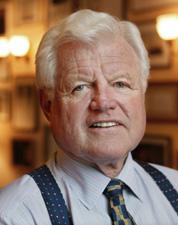
Mr. President, senior citizens expected the Congress and the President to work together to provide prescription drug benefits under Medicare. Instead, Republicans in Congress and President Bush…
Mr. President, senior citizens expected the Congress and the President to work together to provide prescription drug benefits under Medicare. Instead, Republicans in Congress and President Bush rammed through a radical right-wing proposal to privatize Medicare and force senior citizens into HMOs. Their program is a giveaway to special interests at the expense of senior citizens. It is a dress rehearsal for privatizing social security. And it is wrong.
Just a few weeks ago, the Medicare Trustee's report announced that Mecicare's financial position had deteriorated substantially, with the projected date of Hospital Insurance Trust Fund Insolvency slipping from 2026 to 2019. In part, the shakier status of the trust fund was due to the Bush administration's mismanagement of the economy, which has reduced payroll tax collections. But a major part of the weakened status of the Trust Fund is the excessive payments to HMOs, PPOs and other alternatives to conventional Medicare. These excess payments not only weaken Medicare, but they raise premiums for senior citizens and add to the deficit.
Today, we are introducing legislation--the Defense of Medicare Act-- to repeal the parts of the prescription drug bill that are designed to undermine Medicare. Senior citizens have earned their Medicare with a lifetime of hard work--and they deserve the program they have been promised.
President Bush's original strategy was to deny senior citizens any drug benefit unless they joined an HMO or other private insurance plan. That proposal was a non-starter, so the White House and Republicans in Congress developed a more devious way to achieve the same goal.
The Bush administration privatizes Medicare in three ways. First, it overpays private plans by $1,200 per beneficiary--and throws in a $12 billion dollar slush fund to boot. Let me repeat that. Every time a senior citizen joins an HMO it costs Medicare $1,200 more than it would cost to cover that same senior citizen under the regular Medicare program. The goal--to make Medicare unable to compete.
According to the Medicare actuary, the excess payments to private plans as the result of the new bill will cost the Medicare program $46 billion dollars--money that could be used to improve the inadequate drug benefit or to address the discrimination that will cause three million senior citizens to lose their good private retiree drug coverage or to reduce beneficiary premiums.
Those big new checks are already flowing to Medicare HMOs. Every senior citizen--and every American family--should understand what this means. The Bush administration is using senior citizens' own Medicare money to undermine the Medicare program they depend on. The Bush administration has put the interests of HMOs and the insurance industry first--and the interests of senior citizens last.
The second way the Republican Medicare bill forces senior citizens into HMOs is by specifying that if just one private stand-alone drug plan offers drug coverage, the only way a senior citizen can get a drug benefit is by joining an HMO or other private insurance plan. Think about that. If the insurance plan charges premiums that are too high or doesn't cover the drugs your doctor prescribes, your only choice if you want a drug benefit at all is to join an HMO. That's the Bush administration's original plan.
Finally, the bill forces up to seven million senior citizens into a so-called demonstration program that will punish senior citizens with higher premiums unless they join an HMO or other private insurance plan.
The Bush administration is spending twenty-three million dollars of Medicare money to convince senior citizens that the Republican bill means, in the words of one of their commercials, ``Same Medicare. More Benefits.'' This use of Medicare funds to advance the Bush re-election effort is probably illegal. It is certainly unethical. But most of all it is false. If this bill is allowed to stand, senior citizens won't have the same Medicare. Instead, they will have a debased, devalued program and financially less secure program that will require them to give up the doctors they trust to get the affordable medical care they have been promised.
Our legislation will repeal the provisions of the bill that squander Medicare money on fattening the profits of HMOs and the insurance industry. It will preserve Medicare for today's and tomorrow's senior citizens. It is a test of the conscience of the Senate, and we will insist on its consideration.
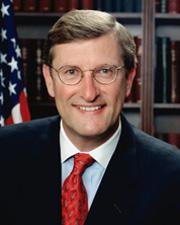
Mr. President, today I am joined by Senator Brownback in introducing important legislation aimed at ensuring that our medically underserved communities have access to the doctors they need. This bill…
Mr. President, today I am joined by Senator Brownback in introducing important legislation aimed at ensuring that our medically underserved communities have access to the doctors they need. This bill reauthorizes the popular Conrad State 30 program for 5 years, satisfies the initial intent of the program to let states decide for themselves about how best to fulfill their health care shortage needs, and clarifies existing law to ensure that Conrad State 30 waivers are exempt from the H-1B visa cap.
The Conrad State 30 J-1 visa waiver program has been a great asset over the last decade, bringing crucially-needed doctors to serve medically underserved areas throughout our country. Forty-nine states now participate in the program, accounting for 1027 doctors in 2003. Each of these doctors is serving patients that might otherwise not be served, providing valuable medical services to communities that otherwise might have to go without.
Unfortunately, today's reality is that many areas of the country, especially rural communities, have a very difficult time recruiting American doctors. These health facilities have had no other choice but to turn to foreign medical graduates. J-1 visa waivers allow foreign physicians to practice in medically-underserved communities after their J-1 status has expired without first returning to their home countries. These waivers allow foreign physicians to receive nonimmigrant, H-1B status for three years. In order to receive the waiver, the physician undergoes numerous background and security checks, and must agree to serve a medically-underserved community for three years. If he or she fails to fulfill that commitment, the physician is subject to immediate deportation.
Prior to the creation of the State 30 program, J-1 visa waivers exclusively involved finding an ``interested federal agency'' to coordinate the request. This was found to be a long, cumbersome, and bureaucratic process. By allowing states to directly participate in the process of obtaining waivers, the program relieves some of the burdens on participating Federal agencies and allows decisions regarding a state's health care needs to be made at the state level by the people who know best. Since 1994, the program has been reauthorized a number of times; the most recent reauthorization expires in June 2004.
The bill Senator Brownback and I introduce today contains 3 parts. First and foremost, it contains a 5-year reauthorization. Five years is a reasonable amount of time for Congress to be able to reassess the physician needs of the country and to take appropriate steps in the course of an additional reauthorization.
Second, consistent with the original intent of the Conrad State 30 program to provide states flexibility, the bill would allow states to decide for themselves where their health care shortages are and how best to use their 30 spots. Currently, states can only place these doctors in shortage areas as designated by the Federal government. States, however, can and should be able to make these decisions for themselves. Instead of Washington, DC, telling a state where there is a physician shortage, a state under this bill could do so for itself.
Third, the bill erases any ambiguity about whether Conrad State 30 doctors are exempt from the H-1B visa cap. Through legislation in the 106th Congress, Conrad State 30 waivers were specifically exempted from the H-1B visa cap. Unfortunately, there is now ambiguity about whether this provision still applies. Our current bill clarifies the original intent of this previous legislation, clearly making Conrad State 30 doctors exempt.
In concluding, I want to thank Senator Brownback for his help and support in developing this bill. Our bill is a modest one; it is limited and it is targeted. However, this does not diminish the importance of retaining and improving the Conrad State 30 program. The vitality of hundreds of communities and, most importantly, the health of thousands of patients across our country depend on it. I urge my colleagues to support this legislation.
Mr. President, I rise today to introduce two joint resolutions to fight predatory mortgage lending. The resolutions would strike down the Office of the Comptroller of the Currency's recent…
Mr. President, I rise today to introduce two joint resolutions to fight predatory mortgage lending. The resolutions would strike down the Office of the Comptroller of the Currency's recent regulations that put millions of families in the sights of predatory lenders.
The middle class--the foundation of our country--is sinking. In the last generation, families have gone from saving for the future to borrowing just to get by. Home foreclosure rates have tripled in the last 25 years. This year, more middle-class children will see their parents declare bankruptcy than will see their parents get divorced.
Working families are vulnerable. They cannot save because they must spend more for housing, health care, child care, and college tuition. These expenses are not luxuries. They are the necessities. Without savings, a bump in the road--a lost job or sudden illness--could become the end of the road.
There is a lot of work to be done to help families get ahead and build a secure future. The legislation I am introducing today deals with just one aspect of the problem, but it is an important one: the fight against predatory mortgage lenders.
There are mortgage companies that cheat people, plain and simple. Excessive fees leave families on a treadmill, forcing them to make large mortgage payments while draining the wealth they have saved in their home. Many families lose their home altogether. All told, predatory lending costs homeowners an estimated $9 billion a year.
I am proud that my State of North Carolina is a leader in fighting predatory lending. The strong law it passed in 1999 is saving consumers $100 million a year, while mortgage credit remains widely available.
Unfortunately, the Federal Government is not doing as well. In fact, we are losing ground. In January, the Office of the Comptroller of the Currency in the U.S. Department of the Treasury issued new regulations exempting national banks--which hold more than half of bank assets-- from State predatory lending laws.
Strong consumer protection laws have been States' responsibility for more than a century. The new rules ignore that tradition, which has served our country well, to create a safe haven for predatory lenders in national banking law. They also create an incentive for State- chartered banks to escape tough laws by converting to national banks.
The resolutions that I am introducing today would strike down the OCC rules that preempt State law. It would restore States' ability to enforce their predatory lending laws within their boundaries and protect their homeowners against abusive loans.
These protections are badly needed. About half of subprime borrowers are paying extra interest and fees, when they qualify for better rates. That's hundreds of thousands of Americans who are each paying thousands of dollars more than they should for their homes. Even worse, some families see their loans refinanced again and again, their equity diminished time and again, until one day they lose their home.
It is offensive, but predatory lenders target African-American and other minority communities. If you are an upper-income African-American family, you are twice as likely to get a subprime loan than a lower- income white family is. Think about that: even though you are doing better, you get a worse loan if you are African-American.
That is dead wrong. We need a strong national law to fight predatory lending. We don't need a prohibition of the strong State laws now on the books with weak national rules. I urge my colleagues to support these resolutions.
I ask unanimous consent that the text of the resolutions be printed in the Record.
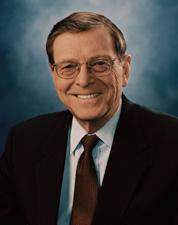
Mr. President, today I rise to introduce an uncontroversial piece of legislation that I hope will receive prompt committee action and will make its way quickly to the President's desk for his…
Mr. President, today I rise to introduce an uncontroversial piece of legislation that I hope will receive prompt committee action and will make its way quickly to the President's desk for his signature.
I would first like to familiarize the Senate with the important mission and related work of the Chihuahuan Desert Nature Park in Las Cruces, NM. The Chihuahuan Desert is the largest desert in North America and contains a great diversity of unique plant and animal species. The ecosystem makes up an indispensable part of southwest's treasured ecological diversity. As such, it is important that we teach our young ones an appreciation for New Mexico's biological diversity and impart upon them the value of this ecological treasure.
The Chihuahuan Desert Nature Park is a non-profit institution that has spent the past six years providing hands-on science education to K- 12th graders. To achieve this mission, the Nature Park provides classroom presentation, field trips, schoolyard ecology projects and teacher work shops. The Nature Park serves more than 11,000 students and 600 teachers annually. This instruction will enable our future leaders to make informed decisions about how best to manage these valuable resources. I commend those at the Nature Park for taking the initiative to create and administer a wonderfully successful program that has been so beneficial to the surrounding community.
The Chihuahuan Desert Nature Park was granted a 1,000 acre easement in 1998 at the southern boundary of USDA-Agriculture Research Service (USDA-ARS) property just north of Las Cruces, NM. This easement will expire soon. It is important that we provide them a permanent location so that they are able to continue their valuable mission.
The bill I introduce today would transfer an insignificant amount of land: 1,000 of 193,000 USDA acres to the Desert Nature Park so that they may continue their important work. The USDA-ARS has approved the land transfer, noting the critically important mission of the Desert Park. I have no doubt that senators on both sides of the aisle will recognize the importance of this land transfer.
I ask unanimous consent that the text of the bill be printed in the Record.
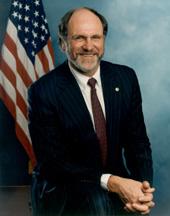
Mr. President, I am honored to introduce a bill on behalf of Senator Frank Lautenberg and myself to authorize the renaming of the main post office in Fair Lawn, NJ as the Mary Ann Collura Post…
Mr. President, I am honored to introduce a bill on behalf of Senator Frank Lautenberg and myself to authorize the renaming of the main post office in Fair Lawn, NJ as the Mary Ann Collura Post Office.
Mary Ann Collura was the first female police officer in Fair Lawn, where she served the people in her community as an outstanding officer and role model for eighteen years. On April 17, 2003, Officer Collura was fatally shot while attempting to arrest three men after a car chase. She was the first Fair Lawn police officer ever killed in the line of duty.
The idea for naming the Fair Lawn post office in honor of Officer Collura came from a Fair Lawn high school student, which is indicative of the admiration the people of Fair Lawn have for her. She was known for her courage, kindness, and genuine caring for others. Officer Collura was also a pioneer in Fair Lawn. She started a program to protect trick-or-treaters on Halloween by giving them glow sticks, which has expanded and is now a countywide program.
Senator Lautenberg and I are proud to be joining Representative Steven Rothman and the entire New Jersey congressional delegation in the effort to rename the Fair Lawn post office in honor of Mary Ann Collura. By naming the main post office in town after such a brave woman, we pay her the respect she earned, and memorialize her in a way befitting a person of her stature. She is a true hero and will be missed.
I ask by unanimous consent that the text of the bill be printed in the Record.

Mr. President, I rise to introduce a discussion draft bill that has been developed by Indian tribal governments to provide for the improvement of the management of Indian fish and wildlife resources…
Mr. President, I rise to introduce a discussion draft bill that has been developed by Indian tribal governments to provide for the improvement of the management of Indian fish and wildlife resources and to reaffirm that tribal governments are the principal managers of natural resources on tribal lands.
The introduction of this discussion draft bill is intended to advance the process of consultation with Indian tribal governments, as well as tribal and Alaska Native organizations.
I ask unanimous consent that the text of this measure be printed in the Record.
Mr. President, I ask unanimous consent that the text of the bill be printed in the Record.
Mr. President, I ask unanimous consent that the text of the bill be printed in the Record.
Bill Text
Latest available legislative text
        [Congressional Bills 108th Congress]
[From the U.S. Government Publishing Office]
[S.J. Res. 31 Introduced in Senate (IS)]

108th CONGRESS
2d Session
S. J. RES. 31

To provide for Congressional disapproval of certain regulations issued
by the Office of the Comptroller of the Currency, in accordance with
section 802 of title 5, United States Code.

_______________________________________________________________________

IN THE SENATE OF THE UNITED STATES

April 7, 2004

Mr. Edwards introduced the following joint resolution; which was read
twice and referred to the Committee on Banking, Housing, and Urban
Affairs

_______________________________________________________________________

JOINT RESOLUTION

To provide for Congressional disapproval of certain regulations issued
by the Office of the Comptroller of the Currency, in accordance with
section 802 of title 5, United States Code.

Resolved by the Senate and House of Representatives of the United
States of America in Congress assembled, That Congress disapproves the
rule submitted by the Office of the Comptroller of the Currency
relating to bank activities and regulations, published at 69 Fed. Reg.
1895 (2004), and such rule shall have no force or effect.
<all>