A joint resolution providing for the appointment of Eli Broad as a citizen regent of the Board of Regents of the Smithsonian Institution.

Legislative Activity
Stay on top of the latest movement without scrolling through every action
Became Public Law No: 108-284.
August 2, 2004
View full timeline
Introduced in Senate
June 3, 2004
Sponsor introductory remarks on measure. (CR S6457-6458)
June 3, 2004
Read twice and referred to the Committee on Rules and Administration. (text of measure as introduced: CR S6458)
June 3, 2004
Senate Committee on Rules and Administration discharged by Unanimous Consent.(consideration: CR S6680)
June 9, 2004
Senate Committee on Rules and Administration discharged by Unanimous Consent. (consideration: CR S6680)
June 9, 2004
Passed Senate without amendment by Unanimous Consent. (text: CR S6680)
June 9, 2004
Received in the House.
June 14, 2004 • 12:31 PM
Message on Senate action sent to the House.
June 14, 2004
Referred to the House Committee on House Administration.
June 14, 2004
Mr. Ney moved to suspend the rules and pass the resolution.
July 20, 2004 • 6:09 PM
Considered under suspension of the rules. (consideration: CR H6082-6083)
July 20, 2004 • 6:09 PM
DEBATE - The House proceeded with forty minutes of debate on S.J. Res. 38.
July 20, 2004 • 6:09 PM
Passed/agreed to in House: On motion to suspend the rules and pass the resolution Agreed to by voice vote.(text: CR H6082)
July 20, 2004 • 6:14 PM
On motion to suspend the rules and pass the resolution Agreed to by voice vote. (text: CR H6082)
July 20, 2004 • 6:14 PM
Motion to reconsider laid on the table Agreed to without objection.
July 20, 2004 • 6:15 PM
Presented to President.
July 23, 2004
Signed by President.
August 2, 2004
Became Public Law No: 108-284.
August 2, 2004
Floor Debate
8 membersWhat members said about S.J.Res. 38 on the floor
 JIL
JIL JK
JK JBL
JBL RGL
RGL RWN+3
RWN+3
Floor Debate
8 membersWhat members said about S.J.Res. 38 on the floor
Mr. President, today I am introducing legislation that would bring needed changes to our financial markets so that the interests of America's small individual investors are protected and defended.…
Mr. President, today I am introducing legislation that
would bring needed changes to our financial markets so that the interests of America's small individual investors are protected and defended.
The recent revelations about unethical and illegal practices in the mutual fund industry have been deeply disturbing--to me and to ordinary investors throughout the country. In November 2003, the Governmental Affairs Committee's Subcommittee on Financial Management, the Budget, and International Security heard testimony from the Director of the Securities and Exchange Commission's (SEC's) Enforcement Division about a survey of fund practices that the SEC had just completed. The survey found that half of the largest 88 mutual funds had permitted a practice called market-timing, which allows some investors to trade quickly in and out of the funds, even though many of those funds had explicit policies against such trading because of its detrimental impact on other investors in the fund. The survey also found that a full one- quarter of the brokerage firms it looked at indicated that they had allowed certain customers to engage in late-trading, an illegal practice that allows favored investors to execute trades based on that day's price after the market had closed, when new information had come to light. Perhaps most shocking, the survey found that, in some cases, fund company officials profited personally at the expense of their customers by market-timing their own funds. In a later hearing, we learned about the problem of excessive fees at some funds and the fact that such fees may not be prominently disclosed to investors or, as is the case with some types of fees, not disclosed at all.
These concerns are of particular importance because, in a very real sense, mutual fund investments are investments in the American dream. They hold the nest eggs, the retirement savings, and the college funds for millions of America's working families. But they also feed capital into today's economy, fueling the engine that creates and maintains American jobs. Mutual funds are where so many Americans put their money: 95 million people, at last count, own shares in these funds. Indeed, in the wake of the Enron scandal, when investigators uncovered widespread deceptions and conflicts of Wall Street stock analysts, conventional wisdom said average investors would find safe haven in mutual funds rather than in individual stocks. It is therefore particularly--and--ironically disheartening to see the scandals and breaches of trust that have now afflicted the mutual fund industry.
The recent revelations about mutual funds, however, provides us with the opportunity and the responsibility to accomplish real, structural reform in the fund industry. That is why I have joined with Senator Akaka and Senator Fitzgerald in introducing S. 1822, the Mutual Fund Transparency Act, and why I have also joined Senators Corzine and Dodd in introducing S. 1971, the Mutual Fund Investor Confidence Restoration Act. Both of these bills take on many of the significant mutual fund problems that have come to light in recent months. Together, they bar late trading and discourage market timing; reform mutual fund governance rules to require that the chairman and 75 percent of board members of mutual fund companies be independent and strengthen the definition of independent; require far more extensive disclosure of fund fees and expenses; and work to increase financial literacy.
But beyond these important, basic reforms, we need to craft new approaches that address the changing nature of this country's investor class. In the last two decades, a near-revolutionary expansion in the number of people participating in the financial markets has occurred. Since 1980, we've seen the share of U.S. households owning mutual funds soar from less than 6 percent to nearly 50 percent in 2002. The number of families owning stocks, directly or indirectly through funds, has increased 60 percent in the last fifteen years and, as of 2001, exceeded half of all families. Along with this phenomenon, and contributing to it, we've seen individuals increasingly taking responsibility for investing their own retirement money--a responsibility that was once entrusted to professionals . It used to be that employees were typically enrolled in so-called ``defined benefit'' pension plans that guaranteed them certain income and for which the employer took responsibility for investing the money properly. Now individuals are more frequently given responsibility for investing their retirement savings themselves through 401(k) plans. In fact, since 1983, the number of defined-benefit plans has declined over 70 percent, while participation in 401(k) plans has been increasing. Forty-eight million Americans now have 401(k) plans.
Neither changes in the law, nor changes by federal regulators, however, have kept pace with the increasing participation and the increasing responsibilities of small investors. When the Investment Company Act was enacted in 1940, it brought sweeping changes, and, for the first time, Federal regulation, to the fund industry, which had been fraught with fraud and abuse in the 1920's. The 1940 Act and the other securities laws passed in the wake of the 1929 stock market crash were instrumental in restoring investor confidence and in establishing the basic disclosure regime that continues to undergird securities regulation today. But the 1940 Act remains much as it was when it was enacted, and disclosure requirements that once appeared radical now often result in forms of technical compliance that little serve average investors who have neither the time nor guidance to find their way through the verbiage of fund disclosures. Nor has the SEC, created in the same era and charged with protecting investors, adequately kept up with the shifting makeup and needs of contemporary investors. To its credit, the SEC in recent months has made a number of changes and proposals specifically to address the problems uncovered in the mutual fund industry, and in the 1990's it undertook a serious effort to ensure that more securities documents were written in ``plain English.'' The Commission, however, has not accomplished the more fundamental reorientation that I believe is called for--and that indeed I did call for in the aftermath of the Enron scandal--to an agency that does not merely regulate and punish the securities industry but affirmatively and proactively seeks ways to assist and protect ordinary investors.
The Small Investor Protection Act that I am introducing today would bring about these needed changes by ensuring that the SEC is more routinely attuned to the needs of average investors. In doing so, this bill serves as an important complement to, though surely not a replacement for, the other mutual fund reform legislation I have cosponsored. And I am pleased that the bill has the support of the Consumer Federation of America, Fund Democracy, Inc., Public Citizen's Congress Watch, Consumer Action and Consumers Union.
To accomplish the goal of better protecting small investors, the bill would take the following four steps:
1. Create a Division of the Investor. Too often in recent years, the interests of ordinary investors have not seemed to be the driving force behind the Commission's regulatory actions. Wall Street's representatives regularly meet with Commission staff to comment on each new Commission proposal but the voice of the small investor has been harder to hear. To ensure that the voices of small investors are heard, my bill would create a separate division within the Commission--coequal with the other four major divisions at the SEC--to provide for a permanent and institutionalized advocate for the interests of ordinary investors. The Division of the Investor would be responsible for such things as providing the small investor's perspective on new rule and policy proposals, identifying new issues of particular concern to small investors, and serving as a conduit for the concerns of outside advocates for small investors.
2. Establish an Office of Risk Assessment. As part of the Governmental Affairs Committee's investigation into the Enron scandal, former Senator Thompson and I released a bipartisan staff report concluding, among other things, that the SEC needed to move away from simply reacting to cases of financial fraud to actively rooting out fraud. In other words, the SEC needed to ``reconceptualize its role as a more proactive force in protecting the marketplace against financial fraud.'' This conclusion has only been reinforced by
the fact that the recent and widespread problems in the mutual fund industry were apparently not identified by the Commission but were uncovered by others. I am therefore very encouraged that Chairman Donaldson has announced the creation of an Office of Risk Assessment to gather and analyze data on new trends and risks and identify new areas of concern for the Commission. This effort, in my view, is critical to protecting small investors because it will increase the likelihood that practices detrimental to small investors will be proactively identified and addressed before they reach scandalous proportions. To ensure the SEC continues to pursue this important function, my bill would provide formal legislative recognition to the Office of Risk Assessment and institutionalize its responsibilities.
3. Require Consumer Research to Gauge Whether Disclosures are Easily Understood by Consumers. The disclosure of information to investors is fundamental to securities regulation in the U.S. With respect to mutual funds, for instance, the SEC requires a wide array of disclosures to be made in prospectuses, annual reports to shareholders, advertising, and in other media. None of these disclosures, however, is likely to serve its intended purpose if ordinary investors can't understand them. There is little empirical evidence on whether investors do in fact understand the disclosures being made. Although the SEC has from time-to-time engaged in consumer research, such as surveys, focus groups, etc., it does not routinely or systematically test its proposed disclosures to determine if they are likely to be understood by ordinary investors. My bill would change that by requiring that the Commission consider empirical consumer research to determine whether a proposed disclosure--including its wording, format, and the context in which it appears--is likely to improve the understanding of ordinary investors.
4. Require Investment Companies to Provide Brief, Easy-to-Understand Disclosures of Mutual Fund Characteristics. All too often, the important details of a mutual fund purchase are lost among the pages and pages an investor receives from his or her investment company. That is why the Small Investor Protection Act would also require investment companies to provide purchasers with a brief summary that will clearly and succinctly outline the relevant characteristics of a mutual fund. Ideally, this summary would be on a single page, and it could not exceed four pages; it would include information such as expenses and risks associated with the fund, as well as the degree to which the fund is diversified. By providing this information in an easy-to-understand format, the Act would help investors make decisions about which funds are best suited to their particular needs and financial goals.
If enacted, these proposals, taken as a whole, would go a long way towards reorienting the regulation of our financial markets to better address the needs of the small investors who have become such an integral part of our economy and for whom investments in the market have become such a large part of their economic security. These proposals would ensure that the concerns of ordinary investors receive as much prominence in regulatory decisions as the concerns of Wall Street giants, that average investors receive relevant information in a form they can understand, and that they are better protected from existing conflicts of interest.
In short, this legislation would help level the playing field for small investors. That is something that we need to do to restore confidence to our financial markets, which have been damaged by more than two years of scandals, and that we must do because it is the right thing for the millions of Americans who are saving and investing to provide a better future for themselves and their children. They deserve nothing less.
I ask unanimous consent that a letter in support of this legislation from Consumer Federation of America, Fund Democracy, Inc., Public Citizen's Congress Watch, Consumer Action and Consumers Union be printed in the Record.
Mr. President, I join my colleagues in celebrating the first anniversary of the Jobs and Growth Tax Reconciliation Act of 2003, which was signed into law by President Bush on May 28, 2003. Also, I…
Mr. President, I join my colleagues in celebrating the first anniversary of the Jobs and Growth Tax Reconciliation Act of 2003, which was signed into law by President Bush on May 28, 2003. Also, I want to announce that today I am introducing legislation to make the dividends and long-term capital gains tax cuts permanent.
It has been one year since Congress and President Bush joined together to enact pro-growth, supply-side tax cuts. Now, since some in the Senate are proposing that we repeal the tax cuts--this would be one of the largest tax increases in history--let's review the impact these cuts have had on our economy.
The 2003 tax cuts have triggered the fastest growing economy in two decades. Real gross domestic product grew at an annual rate of 8.2 percent in the third quarter of 2003, 4.1 percent in the fourth quarter, and 4.4 percent in the first quarter of 2004. If we sustain this pace, our economy will double in 13 years. When the tax cuts were enacted last year, the national unemployment rate was 6.3 percent. Today, it has dropped nearly 11 percent to 5.6 percent, which is lower than the average unemployment rate of the 1970s, 1980s, and 1990s. A growing economy means good, high-paying jobs and a better quality of life for all Americans.
I want to draw my colleagues' attention to research published by the National Bureau of Economic Research (NBER)--the Nation's leading nonprofit economic research organization. This study demonstrates that the 2003 tax cuts corrected a terrible mistake we made in 2001 when we phased in the marginal rate cuts. The phase-in of the 2001 tax cuts prompted workers and firms to delay work until the tax cuts were fully implemented. Employment, output, and investment actually fell in response to the phased-in tax cuts.
The NBER study found that, ``Just as the phased-in nature of the 2001 tax law may have delayed production and employment, the immediate tax relief included in the 2003 law may have contributed towards the increased pace of economic activity in the second half of 2003.'' I am confident that, as more economic data comes in and as the 2003 tax cuts are studied further, we will find that the 2003 tax cuts are directly responsible for the economic growth we are seeing today.
The NBER study demonstrates that individuals really do delay economic activity in anticipation of lower future tax rates. It also corroborates the theory that high marginal tax rates cause individuals to restrict economic activity in order to minimize the tax burden imposed on their next dollar earned. Because the tax cuts were accelerated in 2003, individuals had an incentive to work harder and longer immediately because their next dollar of income would be taxed at a lower rate.
Among the taxpayers benefited by the reductions in the individual rate are America's small businesses. The top individual rate is often called the small business rate because most small businesses are organized as pass-through entities, which pay at individual rates. Owners of pass-through entities, including small business owners and entrepreneurs, comprise more than two-thirds, about 500,000, of the 750,000 tax returns that benefited from speeding up the reduction in the top tax bracket. These small business owners received 79 percent, about $10.4 billion, of the $13.3 billion in tax relief from accelerating the reduction in the top tax bracket to 35 percent.
The task for us now is to make the individual rate reductions permanent. If Congress fails to act, the tax cuts will expire at the end of 2010. The bottom rate would increase from 10 percent to 15 percent, an increase of 33 percent; the top rate would increase from 35 percent to 39.6 percent, an increase of 11 percent. The effect such tax increases would have on our economy would be devastating.
Not only did Congress and President Bush work together to bring down individual income tax rates, but we also reduced the tax on dividend distributions and long-term capital gains. Before the 2003 tax cuts, our tax code actually discouraged dividend payouts. The 2003 tax cut lowered the tax rate imposed on dividends from 38.6 percent to 15 percent through 2008. Before 2003, corporate earnings were taxed once at the corporate level, 35 percent, and again at the individual rate, as high as 38.6 percent, meaning they were double-taxed. It made no sense for investors to seek out dividend-paying stocks, from a tax perspective.
While dividends are still double-taxed, the tax penalty is greatly reduced. This has made dividend-paying stocks more attractive to investors, which has helped companies raise capital to expand and grow their businesses. Further, because dividends must be paid from cash, companies that pay dividends must have actual profits, thus making it more difficult for companies to hide financial mismanagement.
Some of my colleagues want to repeal the dividend tax cut. This is obviously misguided, since we have strong evidence that the dividend tax cut has worked. Since the 2003 tax cut was signed into law, 374 companies on the S&P 500 pay dividends--an increase of 22 companies. Companies have increased dividend payments to shareholders by 40 percent, reversing a two-decade decline. The Dow Jones Industrial index has risen more than 1,400 points since the 2003 tax cuts were signed into law.
Similarly the capital gains tax cut has also encouraged economic growth. It reduced the tax imposed on long-term capital gains from 20 percent to 15 percent. This has made it more attractive for individuals to risk their hard-earned money by investing it in businesses. The result is that it is easier for businesses to raise needed capital to expand and create new jobs. Stock market gains, the strong GDP we have experienced, and falling unemployment all indicate that the economy has recovered.
Now, to help our economy to continue to grow and create new jobs, the dividend and capital gains tax cuts must be made permanent. If we allow the dividend rate to return to the individual rate, we will increase taxes on dividends by 62 percent. Allowing the capital gains rate to return to 20 percent will be a 25 percent tax increase. We must make the 15 percent rate for each permanent, and then we must work to reduce both the dividends and the capital gains rates to zero, so that we eliminate the double-taxation of corporate earnings. The Senate bill actually would have brought the dividend tax rate to zero for three years, but the agreement that we worked out with the House was to tax dividends at 15 percent. The dividends and capital gains tax relief will expire in 2009.
The most important thing we can do next year is make the 2003 tax cuts permanent. Today I am introducing legislation that will make the dividends and capital gains tax relief permanent. I will work to make the individual income tax rate cuts permanent as well. To allow the tax cuts to expire--or worse, to seek to higher taxes at the very time our economy has pulled out of the recession and is growing strong--would be unthinkable.
Madam Speaker, I yield myself such time as I may consume. Madam Speaker, I wish to associate myself with the remarks of the gentleman from Ohio (Mr. Ney). As the chairman has pointed out, I am as…
Madam Speaker, I yield myself such time as I may consume.
Madam Speaker, I wish to associate myself with the remarks of the gentleman from Ohio (Mr. Ney). As the chairman has pointed out, I am as well pleased to support Senate Joint Resolution 38 which appoints Eli Broad to a 6-year term as citizen regent of the Board of Regents of the Smithsonian Institution to fill that vacancy.
Senate Joint Resolution 38 passed the Senate on June 9, 2004. An identical bill, House Joint Resolution 99, was introduced by the gentleman from California (Mr. Matsui), who continues to serve on the board of regents with distinction.
Mr. Broad has been recommended by the board of regents to replace our former colleague, Barber Conable, as the chairman pointed out. Mr. Conable retired from the House of Representatives in 1985 and passed away on November 20, 2003.
I especially, again, want to congratulate the gentleman from California (Mr. Matsui) for his leadership in bringing this nomination to the floor. He has been a regent of the Smithsonian Institution since 1999 and has been diligent in his duties to promote its effective operation, even in the face of his increasing leadership responsibilities here in the House.
Madam Speaker, the board of regents, as the chairman has noted, was created in 1846 as a governing body of the Smithsonian Institution and currently has 17 board members. Eli Broad, who has been recommended to become its newest citizen regent, is a distinguished business leader who built two Fortune 500 companies over a 5-decade career.
As founder of the Broad Foundation, he has focused on philanthropy, promoting art, education, scientific and biomedical research and civic development. Mr. Broad is well qualified for this post, and his wide array of experience will be an asset to the Smithsonian Institution in the years ahead. I urge approval of this joint resolution and its enactment so Mr. Broad may attend the next meeting of the board of regents currently scheduled for September.
Madam Speaker, I am pleased to support S.J. Res. 38, to appoint Eli Broad to a six-year term as a citizen regent of the Board of Regents of the Smithsonian Institution to fill a vacancy. S.J. Res. 38 passed the Senate on June 9, 2004. An identical bill, H.R. Res. 99, was introduced by Representative Matsui.
Mr. Broad has been recommended by the Board of Regents to replace our late former colleague, Barber Conable of New York, who retired from the House of Representatives in 1985 and passed away on November 20, 2003.
After his retirement, Rep. Conable was generous in his continuing contributions to the Congress, including his service on the advisory board created by the History of the House Awareness and Preservation Act, which was enacted in the 106th Congress and which I had sponsored.
The bill authorized the writing of a major new volume on the history of our institution by a major scholar in the field, and that work is currently being undertaken by Professor Robert Remini, professor emeritus of history at the University of Illinois--Chicago.
Representative Matsui, who introduced the House's companion legislation (H.J. Res. 99), has been a regent of the Smithsonian since 1999 and has been diligent in his duty to promote its effective operation, even in the face of his increasing leadership responsibilities here in the House. He has been an exemplar of broad public service to the American people in a variety of roles.
On a more personal note, Bob is closely associated with his work to help the Smithsonian shape the ``More Perfect Union'' exhibit in the National Museum of American History. That exhibit examines the experiences of the Nisei, Americans of Japanese descent, many of whom, like Bob Matsui and his family, were interned during World War II. It is a significant contribution to public awareness of that tragic era.
The Board of Regents was created in 1846 as the governing body of the Smithsonian, a unique trust equity created by Congress, and is currently composed of 17 Members, including six Members of Congress, three from each chamber. The positions of the nine citizen regents of the Smithsonian were created to bring a variety of expertise from business, politics, science, education and the arts to complement the other regents and provide additional perspective in the funding and management of the Smithsonian's infrastructure and worldwide network of initiatives.
Eli Broad, who has been recommended to become the newest citizen regent, is a distinguished business leader who built two Fortune 500 companies over a five-decade career. He is chairman of AIG Retirement Services Inc., formerly SunAmerica Inc., and founder-chairman of KB Home, formerly Kaufman and Broad Home Corporation.
As founder of the Broad Foundation, he is focused on philanthropy, promoting art, education, scientific and biomedical research and civic development. Since 1984, the Broad Art Foundation has loaned portions of its extensive collection to more than 400 museums and university galleries worldwide.
Mr. Broad was the founding chairman of the board of trustees of The Museum of Contemporary Art in Los Angeles, and is currently a trustee and member of the executive committee of the Los Angeles County Museum of Art.
Since 1999, The Broad Foundation has worked to improve urban public education through better governance, management and labor relations and has committed over $400 million to support innovation in the Nation's largest urban school systems. Mr. Broad has also been active in a variety of civic projects to promote and improve the city of Los Angeles.
In June 2003, in a partnership with the Massachusetts Institute of Technology, Harvard University and Whitehead Institute, the Broads announced the founding gift to create The Eli and Edythe Broad Institute for biomedical research. The Institute's aim is to revolutionize clinical medicine through genetic research and to make knowledge freely available to scientists around the world.
Mr. Broad is a member of the board of trustees of CalTech. He also served as chairman of the board of trustees of Pitzer College and vice chairman of the board of trustees of the California State University system.
Mr. Broad is well-qualified for this post and his wide array of experience will be an asset to the Smithsonian in the years ahead. I urge approval of the joint resolution and its enactment so that Mr. Broad may attend the next meeting of the Board of Regents currently scheduled for September.
Madam Speaker, I yield back the balance of my time.
Mr. President, I rise to introduce the Assistance for Orphans and Other Vulnerable Children in Developing Countries Act of 2004. The unprecedented AIDS orphan crisis in sub-Saharan Africa has…
Mr. President, I rise to introduce the Assistance for Orphans and Other Vulnerable Children in Developing Countries Act of 2004.
The unprecedented AIDS orphan crisis in sub-Saharan Africa has profound implications for political stability, development, and human welfare that extend far beyond the region. Sub-Saharan African nations stand to lose generations of educated and trained professionals who can contribute meaningfully to their countries' development. Orphaned children, many of whom are homeless, are more likely to resort to prostitution and other criminal behavior to survive. Most frighteningly, these uneducated, poorly socialized, and stigmatized young adults are extremely vulnerable to being recruited into criminal gangs, rebel groups, or extremist organizations that offer shelter and food and act as ``surrogate'' families. It is imperative that the international community respond to this crisis that threatens stability within individual countries, the region, and around the world.
An estimated 110 million orphans live in sub-Saharan Africa, Asia, Latin America, and the Caribbean. The HIV/AIDS pandemic is rapidly expanding the orphan population. Currently an estimated 14 million children have been orphaned by AIDS, most of whom live in sub-Saharan Africa. This number is projected to soar to more than 25 million by 2010. The pandemic is orphaning generations of African children and is compromising the overall development prospects of their countries.
Most orphans in the developing world live in extremely disadvantaged circumstances. Poor communities in the developing world struggle to meet the basic food, clothing, health care, and educational needs of orphans. Experts recommend supporting community-based organizations to assist these children. Such an approach enables the children to remain connected to their communities, traditions, rituals, and extended families.
My bill seeks to improve assistance to orphans and other vulnerable children in developing countries. It would require the United States Government to develop a comprehensive strategy for providing such assistance and would authorize the President to support community-based organizations that provide basic care for orphans and vulnerable children.
Orphans are less likely to be in school, and more likely to be working full time. Yet only education can help children acquire the knowledge and develop the skills they need to build a better future. Studies have shown that school food programs provide an incentive for children to stay in school. School meals provide basic nutrition to children who otherwise do not have access to reliable food.
For many children, the primary barrier to an education is the expense of school fees, uniforms, supplies, and other costs. My bill aims to improve enrollment and access to primary school education by supporting programs that reduce the negative impact of school fees and other expenses. It also would reaffirm our commitment to international school lunch programs.
Many children who lose one or both parents often face difficulty in asserting their inheritance rights. Even when the inheritance rights of women and children are spelled out in law, such rights are difficult to claim and are seldom enforced. In many countries it is difficult or impossible for a widow--even if she has small children--to claim property after the death of her husband. This often leaves the most vulnerable children impoverished and homeless. My bill seeks to support programs that protect the inheritance rights of orphans and widows with children.
The AIDS orphan crisis in sub-Saharan Africa has implications for political stability, development, and human welfare that extend far beyond the region, affecting governments and people worldwide. Every 14 seconds another child is orphaned by AIDS. Turning the tide on this crisis will require a coordinated, comprehensive, and swift response. I am hopeful that Senators will join me in backing this legislation.
I ask unanimous consent that the text of the bill be printed in the Record.
Madam Speaker, I move to suspend the rules and pass the Senate joint resolution (S.J. Res. 38) providing for the appointment of Eli Broad as a citizen regent of the Board of Regents of the…
Madam Speaker, I move to suspend the rules and pass the Senate joint resolution (S.J. Res. 38) providing for the appointment of Eli Broad as a citizen regent of the Board of Regents of the Smithsonian Institution.
Madam Speaker, I yield myself such time as I may consume.
Madam Speaker, I rise in support of Senate Joint Resolution 38, which provides for the appoint of Eli Broad as a citizen regent of the Board of Regents of the Smithsonian Institution.
The Smithsonian is governed by a board of regents which is comprised of 17 members. These 17 members include the Chief Justice of the Supreme Court and the Vice President of the United States, three Members each of the U.S. House and Senate, and nine citizens who are nominated by the board and approved jointly in a resolution of Congress. The nine citizen members serve for a term of 6 years each, and are eligible for reappointment for one additional term.
Eli Broad will fill a vacancy on the board of regents for Barber Conable, Jr., who, sadly, passed away last year. Eli Broad is an accomplished business leader who built two Fortune 500 companies from the ground up. He serves on several boards, most notably; he is chairman of AIG Retirement Services and KB Home, formerly Kaufman and Broad Home Corporation. He is also the founding chairman of the board of trustees for the Museum of Contemporary Art in Los Angeles and currently a trustee and member of the executive committee of the Los Angeles County Museum of Art.
Eli Broad and his wife, Edythe, are active philanthropists. Since 1984, the Broad Art Foundation has operated an active ``lending library'' of its extensive collection to more than 400 museums and university galleries worldwide.
One of Eli Broad's charitable contributions includes the Broad Foundation, whose mission is to improve urban public education. The foundation has committed over $400 million to support new ideas in the Nation's largest urban school systems. The Broad Foundation contributed toward the construction of the Broad Art Center at UCLA.
However, Mr. Broad's background does not end there, as he incorporates extensive involvement in the field of science as well. The Eli and Edythe Broad Institute for Biomedical Research is a partnership with the Massachusetts Institute of Technology, Harvard University, and Whitehead Institute. It was created in June 2003, and the institute's aim is to realize the promise of the human genome and to revolutionize clinical medicine.
Eli Broad's ongoing leadership roles in art, education, science, and civic development make him a strong candidate for service on the Smithsonian Institution's Board of Regents. I join with my colleague, the ranking member, the gentleman from Connecticut (Mr. Larson), in support of Senate Joint Resolution 38.
Madam Speaker, I reserve the balance of my time.
Madam Speaker, I yield back the balance of my time.
Show 5 more

Mr. President, today I am introducing the Simple Tax for Seniors Act. This bill would allow seniors age 65 and older with Social Security and pension income to file a short form similar to the 1040EZ…
Mr. President, today I am introducing the Simple Tax for Seniors Act. This bill would allow seniors age 65 and older with Social Security and pension income to file a short form similar to the 1040EZ Internal Revenue Service form.
Under current IRS rules, millions of Americans are prohibited from using the 1040EZ short form simply because they are age 65 or older. Many currently file using only the standard deduction.
The Simple Tax for Seniors Act would crate the new 1040S form, allowing seniors who receive pension income to avoid filing the burdensome and complicated itemized deduction forms. As many as 11 million seniors would be able to file in the first year, in less time, on a simplified, two-page form. Seniors no longer would be forced annually to disclose more information on their retirement savings and pension plan than necessary.
The Simple Tax for Seniors Act makes no change in the tax code itself, so taxpayers using the new form would pay the same amount as under Standard Form 1040.
This is common sense legislation. It is a win for seniors because it will make life easier and it is a win for taxpayers since it will cost less to process the new form. It is also non-controversial. On Tuesday, the House of Representatives passed similar legislation by a vote of 418-0.
I invite my colleagues to cosponsor this sensible legislation. I ask unanimous consent that the text of the bill appear with this statement in the Record.
Mr. President, today I am introducing a Senate Joint Resolution appointing a citizen regent to the Board of Regents of the Smithsonian Institution. I am pleased that my fellow Smithsonian Institution…
Mr. President, today I am introducing a Senate Joint Resolution appointing a citizen regent to the Board of Regents of the Smithsonian Institution. I am pleased that my fellow Smithsonian Institution Regents, Senators Frist and Leahy, are cosponsors.
The Smithsonian Institution Board of Regents recently recommended the following distinguished individual for appointment to a 6-year term on the on the Board: Eli Broad of California.
I ask unanimous consent that his biography and the text of the joint resolution be printed in the Record.
Mr. President, today I am introducing a Senate Joint Resolution appointing a citizen regent to the Board of Regents of the Smithsonian Institution. I am pleased that my fellow Smithsonian Institution…
Mr. President, today I am introducing a Senate Joint Resolution appointing a citizen regent to the Board of Regents of the Smithsonian Institution. I am pleased that my fellow Smithsonian Institution Regents, Senators Frist and Leahy, are cosponsors.
The Smithsonian Institution Board of Regents recently recommended the following distinguished individual for appointment to a 6-year term on the on the Board: Eli Broad of California.
I ask unanimous consent that his biography and the text of the joint resolution be printed in the Record.
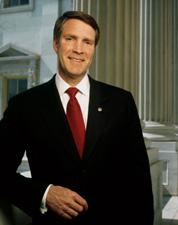
Mr. President, I ask unanimous consent that the Rules Committee be discharged from further consideration of S.J. Res. 38 and that the Senate proceed to its immediate consideration. Mr. President, I…
Mr. President, I ask unanimous consent that the Rules Committee be discharged from further consideration of S.J. Res. 38 and that the Senate proceed to its immediate consideration.
Mr. President, I ask unanimous consent that the joint resolution be read a third time and passed, the motion to reconsider be laid upon the table, and that any statements relating to the resolution be printed in the Record.
Madam Speaker, I ask unanimous consent that all Members have 5 legislative days in which to revise and extend their remarks and include extraneous material on the subject of S.J. Res. 38, the Senate…
Madam Speaker, I ask unanimous consent that all Members have 5 legislative days in which to revise and extend their remarks and include extraneous material on the subject of S.J. Res. 38, the Senate joint resolution just passed.
Bill Text
5 versions available
        [Congressional Bills 108th Congress]
[From the U.S. Government Publishing Office]
[S.J. Res. 38 Enrolled Bill (ENR)]

S.J.Res.38

One Hundred Eighth Congress

of the

United States of America

AT THE SECOND SESSION

Begun and held at the City of Washington on Tuesday,
the twentieth day of January, two thousand and four

Joint Resolution

Providing for the appointment of Eli Broad as a citizen regent of the
Board of Regents of the Smithsonian Institution.

Resolved by the Senate and House of Representatives of the United
States of America in Congress assembled, That in accordance with
section 5581 of the Revised Statutes (20 U.S.C. 43), the vacancy on the
Board of Regents of the Smithsonian Institution, in the class other
than Members of Congress, resulting from the death of Barber B.
Conable, Jr., is filled by the appointment of Eli Broad of California.
The appointment is for a term of 6 years, beginning upon the date of
enactment of this joint resolution.

Speaker of the House of Representatives.

Vice President of the United States and
President of the Senate.