Madam President, I enjoyed hearing my colleague from South Carolina tell his stories about Strom Thurmond. I rise to join the tribute to the memory of Strom Thurmond that is, very appropriately, the…
Madam President, I enjoyed hearing my colleague from South Carolina tell his stories about Strom Thurmond. I rise to join the tribute to the memory of Strom Thurmond that is, very appropriately, the day after his death.
Most of the time when someone dies, we gather in great sorrow and we mourn his passing and we think about what might have been. In Strom's case, there is no reason to think about what might have been. He did it all. There was nothing left undone. There was nothing left to accomplish.
This should not be a time of mourning or sorrow but a time of celebration. So I rise to celebrate the life of Strom Thurmond. The best way to do that, I think, is to tell Strom Thurmond stories. All of us are full of Strom Thurmond stories.
I remember D-Day, when the big celebration occurred on the anniversary of D-Day and Strom Thurmond was not there. Arlen Specter, who was there, greeted him in the Senate and said: Strom, it was a marvelous, marvelous celebration, and you should have been there. And his response was: I was there when it counted. It put us in our place.
My father had the experience of working with Strom Thurmond. My father was elected in 1950, and, as has been noted, Strom Thurmond was elected in 1954. They became instant friends, not just political friends. There were occasions when they disagreed politically, but they became personal friends.
When Strom married, my mother--old enough to be Strom's wife's mother--kind of took Nancy under her wing and they became friends. The Thurmonds and the Bennetts remained close for a long, long time, to the point when my children started getting married, my parents said: You have to send Strom Thurmond an announcement. And we did and thought we had taken care of our social obligation. Then we
get a phone call from Strom Thurmond's office: We got this announcement, and we don't mean to be prying, but who are you? Well, we are the children of Wallace Bennett. There was a pause. Then the person on the end of the line said: And who's Wallace Bennett?
But Strom knew who Wallace Bennett was, and when I came to the Senate, Strom greeted me very warmly and called me Wallace. It took a little while for him to figure out that I was not my father. And that was a compliment to me because I was very proud of my father and the service he performed in the Senate, and I took the opportunity to touch base with Strom.
From that, I thought: This man in his nineties is not all that sharp. He confuses me. He does not have all of this as straight as he might. Then I had a couple of experiences that set me straight. We had an issue with the State of Utah that was all wrapped up in the Armed Services Committee. It was quite a complicated issue. Someone said to me: Explain that to John Warner because John Warner is second ranking to Strom and is handling all of the detailed kind of things. You go talk to John Warner. He said: You will be talking to somebody who I know can handle the problem.
So I went to Senator Warner and I started outlining the details of this situation to him. He cut me off. He said: You are going to have to talk to the chairman.
I, having had this image of this old man, thought, I don't really want to have to talk to the chairman. And, as delicately as I could, I said to John: Can't we work this through and kind of handle it? He said no. He said: That is a serious enough issue, I don't dare handle that. You are going to have to talk to the chairman.
Just then, Senator Thurmond walked through the doors. So, gathering up my courage as a freshman Senator, I walked over to him and said: Senator Thurmond, I would like to visit with you about--and I no sooner got the title of the issue out of my mouth, than he said: It's all taken care of. And he kept walking. I followed him along, sure that he had not understood what I was talking about. This was a complicated kind of issue, and he had oversimplified it and assumed that it had been taken care of.
So I started to intrude again with some of the details. He was very respectful and wasn't patronizing. But he said: I know; I understand; all taken care of.
Well, thus dismissed, I went back to my staff and said: I think we have a problem here. Senator Warner won't handle it, and he insists that Senator Thurmond has to handle it, and Senator Thurmond just said it has all been taken care of.
We contacted the Armed Services Committee staff, and they said: Oh, yes, that has all been dealt with. Senator Thurmond stepped in, he understood the issue, he made his decisions, he took care of it, and it is all taken care of.
So I decided, well, I had better not underestimate this man, in spite of his age.
Then I had the experience while I was on the campaign plane with Senator Dole in the 1996 election when we were flying around the eastern States on the day of the South Carolina primaries. The word came in that Senator Dole was winning the South Carolina primary. We had some exit polls that looked pretty good. We decided to change our itinerary and fly to South Carolina so that Senator Dole could be there to receive the plaudits and applause and the excitement of winning the South Carolina primary. So we did. Of course, this had been a long day. We didn't leave South Carolina to come back to Washington on the campaign plane until after the returns were in and all of the celebrations had been held.
Senator Dole, very appropriately, went up into the front part of the plane to take a nap as we were flying back. Senator Thurmond had hitched a ride back to Washington on the campaign plane. That left Senator Thurmond and me and one or two others sitting around the table just behind the front part of the plane chatting.
It was now midnight, way past my bedtime, and here we were having political discussions on a campaign plane in the middle of the Presidential campaign--the kind of thing that political junkies like me love to do. It was a great discussion. But the interesting thing about it was that Strom Thurmond not only understood the discussion and participated in the discussion, but he led the discussion. He was instructing us about political lore. He was telling tales out of his past, which is what old people often do. But he was also analyzing things for the future and had a firm hand on everything. I thought I was talking to a man at least 20 and maybe 30 years younger than his chronological age. I understood: OK, this man still has all of his faculties, mental as well as physical.
We landed at Dulles Airport well after 1 o'clock in the morning. Everybody was dragging except Strom, who strode off to his car in fine style. I remember what he said on that occasion about how you live a long time. He said you eat right, you exercise regularly, and you keep a positive outlook. He did all of those things, although I am not quite sure about the eating right part because there were times when I caught Strom eating some things that I am not sure a dietician would recommend.
The time came for him to run for reelection. I couldn't believe at 94 he was going to run for reelection. Ninety-four is the time you retire. Being a skeptic, I had a hard time believing the people of South Carolina would vote for a 94-year-old man. So I sidled up to one of his top staffers as we were getting ready for that campaign. I said: Can Strom Thurmond really win one more time in South Carolina? Is this going to be close? He said: No, it is not going to be close at all. Strom is going to win going away.
By the way, I remembered when the Republicans had taken control of the Senate in 1994 and we were having our discussions about platforms. One of the issues that was raised by one of the freshman Senators newly elected was term limits and how we needed to be for term limits. We were debating back and forth. Strom was sitting there not talking. Suddenly, he spoke up, and he said: I am for term limits. We all kind of giggled a little. He said: But if they are not enacted, I am going to run again.
Here he was running again--94 years old. And I was being told by his staff that Strom would win overwhelmingly. I said: Look, we all love him. We all love the history. But 94 years old? He said: Let me tell you a story.
This is my favorite Strom Thurmond story.
He said: I was Strom's AA, and I got a phone call from a woman in South Carolina who said to me: I need the Senator's help. Here is the situation. My fiance and I got married just before he shipped out in the Navy for a 6-month cruise in the Mediterranean. We knew we would not like the separation, but we decided, for a variety of reasons, that we should get married now rather than wait until after he got back. He has just called me and said he has been given leave. He has 2 weeks of leave right now in the middle of this 6-month tour, except that he cannot leave the theater in case something should arise that would require him to be back on the ship within 24 hours. He has to stay in or around the Mediterranean area where his ship is. So he said catch an airplane, come over here, we can have a 2-week honeymoon in the Mediterranean and I can still be available for the military situation, if it should arise.
She said: I went down to get my passport and I was told it takes 2 weeks to get a passport. By the time I get a passport to fly over to be with my husband, his leave will be up and he will have to get back on the ship. Can the Senator help me get a passport any faster than 2 weeks?
Well, said the staffer, I will find out. He called the woman in South Carolina who was handling passports and introduced himself and said: I am calling on behalf of Senator Thurmond to see what we can do about getting this woman's passport a little faster. The passport lady said: It takes 2 weeks. Well, Senator Thurmond would really be grateful. She said: I don't care what Senator Thurmond wants. It takes 2 weeks. I don't care who you are, and I don't care who he is. Passports take 2 weeks.
Well, he said, I have to tell you that under these circumstances, I am now going to have to call Senator Thurmond. When there is a situation I can't
handle myself, I have to involve him. Those are my instructions. She said: Call him. Tell him anything you want. He can call me. I don't care. Passports take 2 weeks.
So he said: Well, I am not threatening you. I am just telling you. I have to call Senator Thurmond.
So he hung up talking to the passport lady, and he picked up the phone and called Senator Thurmond. Now, it seems Senator Thurmond was in Germany, and it was in the middle of the night in Germany, but his instructions were that he was to call Senator Thurmond in any such situation. So he woke Senator Thurmond up, in the middle of the night in Germany, and started to explain this situation.
He did not get half way through the explanation I have given here when Senator Thurmond said: What is her name?
He said: Well, her name is--and he started to describe the wife of the marine who was sent out with the Navy.
Senator Thurmond said: No, no, not her name, the passport lady's name.
So he gave Senator Thurmond the passport lady's name.
Senator Thurmond said: Thank you very much--and hung up.
Ten minutes later the staffer said: I got a phone call from the passport lady. She exploded over the phone and said: He called George Shultz. The Secretary of State now knows my name.
Senator Thurmond called George Shultz and he said: George, you've been a marine. This is their honeymoon. Can't you get this lady to give the woman a passport?
She got her passport. She got to the Mediterranean. She had her honeymoon.
The staffer said to me: Senator, South Carolina is full of stories like that. South Carolina is full of people like that. Strom Thurmond will win, big time. No matter how old he is, no matter what his situation, that is the kind of service Strom Thurmond has rendered as a Senator.
One of our colleagues was in the Senate doctor's office, as we go in there from time to time, and he noticed Strom coming out of the doctor's office with a very worried look on his face. We were all very concerned about Strom and his health in his later years. So the colleague said to the doctor: What's the matter with Strom?
The doctor said, appropriately: I cannot discuss the medical condition of one patient with another patient, so I can't say anything to you. He said: However, I don't think it would be violating medical ethics to tell you that Strom is a little worried about the fact that he can no longer do one-arm pushups.
This was a man of legend. Eat right, exercise, keep a positive attitude, always be available for your constituents, even when it is the middle of the night in Germany, and never worry about who you may call or upset as long as you are working on behalf of a constituent. This was Strom Thurmond.
We have all kinds of stories. These are my favorite ones. I offer them as part of the celebration of an extraordinary life, a life fully lived, of someone about whom we need not say: Well, we worry about what might have been. In his case, there was nothing left over that might have been because he did it all.
I yield the floor.
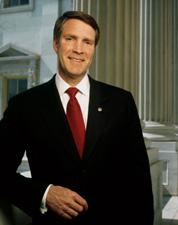 Sen. William H. Frist (R-TN)