A resolution expressing the sense of the Senate in honoring the service of the men and women who served in the Armed Forces of the United States during World War II.
Legislative Activity
Stay on top of the latest movement without scrolling through every action
Submitted in the Senate, considered, and agreed to without amendment and with a preamble by Unanimous Consent. (consideration: CR S6324-6336; text as passed Senate: CR S6324; text of measure as introduced: CR S6363)
June 2, 2004
View full timeline
Introduced in Senate
June 2, 2004
Submitted in the Senate, considered, and agreed to without amendment and with a preamble by Unanimous Consent. (consideration: CR S6324-6336; text as passed Senate: CR S6324; text of measure as introduced: CR S6363)
June 2, 2004
Floor Debate
21 membersWhat members said about S.Res. 369 on the floor
 MBE
MBE TS
TS EFH
EFH FRL
FRL CJD+16
Floor Debate
21 membersWhat members said about S.Res. 369 on the floor
Madam President, this past week has been a very memorable and inspirational and overdue time for all of us to come together as a nation and dedicate the World War II Memorial and recognize the…
Madam President, this past week has been a very memorable and inspirational and overdue time for all of us to come together as a nation and dedicate the World War II Memorial and recognize the efforts of our Nation's veterans in one of the fiercest wars in our Nation's history.
As we did, many of us took a moment to remember the events of those days and how they affected us and, more importantly, how they affected the people in our lives who played an important part in that war effort.
I had a special opportunity to remember my dad, Elmer Enzi, who served in the war, and my uncle Edward Curtis and my uncle Edmund Wally Enzi who played a part in that war.
For many of us, those days are forever etched in our minds because they had an impact on us and our families and friends that will never be erased or forgotten. But it is nothing like the memory of those who actually participated.
We have the opportunity to honor the Senators who are with us today in this great body who played a part in that war. We have mentioned them, their achievements.
I want to refer to a piece that was on Channel 1, which is an educational channel that goes to the schools every morning. They have seen these World War II events being dedicated and the people who came to those events. Each time there is one of those events, the people who come are a little bit older. They found out the kids of this country were getting kind of a false impression of who fought the war, so they put out a special piece that would be dedicated to these great men who serve in our Chamber. The title of it was: ``The Kids Who Saved the World.'' They showed the people coming to the reunions, but then they shifted back to the pictures of these people as they served. It made a much greater identification for the kids across this country that the patriots, the ones who put their lives on the line, were not much older than the kids in school watching this Channel 1.
I thank Senator Daniel Akaka, Senator Fritz Hollings, Senator Daniel Inouye, Senator Frank Lautenberg, Senator Ted Stevens, and Senator John Warner for being those ``kids who saved the world'' and allowing us to be here in this forum today.
For us, as Americans, our World War II story begins on December 7, 1941, a date President Franklin D. Roosevelt told us would live in infamy, as Japan suddenly and deliberately attacked the United States of America.
The next day, the President reassured a fearful nation that the attack on Pearl Harbor would not stand and that all our resources would be brought to bear on ridding the world of the terrible menace that was threatening the future peace and security of the United States and Europe.
In the years that followed, the United States put forth an effort to combat evil that had never been seen before. Sixteen million served in our Armed Forces and a united America gladly did everything that could possibly be done to support the war effort back home. The United States was fully committed to the cause at hand and no price was too great, no sacrifice too burdensome, and no hardship too severe, if it meant victory overseas.
The World War II Memorial on the Mall commemorates the sacrifices of those 16 million veterans who served with pride and patriotism during World War II. It also honors and recognizes the millions more who supported the war cause back home. For without the efforts of our troops on the front lines, and the support and encouragement of family and friends back home, we would have never been successful. Thanks to all of them, we succeeded beyond our greatest expectations. This was truly a time when we knew there was no option but complete and total victory and we refused to consider any other option--regardless of the cost.
When President Roosevelt made the call for recruits it was answered in unprecedented fashion. The 16 million Americans who reported for duty made it clear that they would pay any price to defend the freedoms and liberties of our own Nation. They also committed themselves to the liberation of Europe and the preservation of liberty there and in many other parts of the world.
They were just average Americans from small towns and large, from small States and large, who were caught up in a cause greater than themselves. They soon showed themselves to be the greatest weapon ever known in the history of warfare--the American Armed Forces. They were sent to far away places with strange sounding names, as the song goes, and they probably never imagined there was anything special about them. Heroes? They probably never thought of themselves that way, but for those who read about their exploits, and for those of us who now live with the freedom that their blood, sweat and tears provided, we cannot think of them any other way.
They were young men and women, called to attempt the impossible, knowing the odds were against them, and still they tried, because they believed in our country and the principles we hold dear as a nation.
We have several World War II veterans serving with us here in the Senate, with several more serving in the House. Their commitment to country and duty which began so many years ago continues today in the Congress.
Senator Daniel Akaka, Senator Fritz Hollings, Senator Daniel Inouye, Senator Frank Lautenberg, Senator Ted Stevens, and Senator John Warner represent in a special way all of those who served with distinction and honor during those days. They are our link with the past, a past that has made our present possible.
What they achieved, along with all those who served with them, is best seen in the words that have been posted on several Internet sites, attributed by some to Father Denis Edward O'Brien, USMC:
It is the soldier, not the reporter Who has given us freedom
of the press.
It is the soldier, not the poet, Who has given us freedom of
speech.
It is the soldier, not the campus organizer, Who has given us
freedom to demonstrate.
It is the soldier, not the lawyer, Who has given us freedom
of the right to a fair trial.
It is the soldier who salutes the flag, Who serves under the
flag and
Whose coffin is draped by the flag,
Who allows the protester to burn the flag.
This is the legacy our veterans have left us and it reflects the debt we owe them all. They are--and they always have been--the force that guarantees our Bill of Rights. They are--and have been--the force that stands guard around the world, vigilant and watchful, while we sleep. They are the ones for whom love of country are not just words, they are a way of life.
In the years to come, the Memorial on the Mall will serve as a constant reminder that freedom isn't free and that it comes at a great price. More than 400,000 American lives were lost in World War II and many more were wounded in battles all over the world. They will be remembered there. The memorial will also serve as a symbol of the heartfelt dedication and total commitment that was needed to put an end to the tyranny that threatened to ensnare the world around us. It was an effort that we pray will never have to be duplicated.
We take great pride in our Nation's veterans because they are our greatest American heroes. They were as one, willing to sacrifice all their tomorrows to ensure we would live in freedom today. Our way of life is their legacy, their gift to us all. God bless them all, our Nation's heroes, our Nation's veterans.
Madam President, I yield the floor.
Mr. President, I am humbled to be among the Members who have been mentioned by the leaders. I ask unanimous consent that following my remarks, items 1, 2, and 3 be printed in the Record. Item 1 is a…
Mr. President, I am humbled to be among the Members who have been mentioned by the leaders. I ask unanimous consent that following my remarks, items 1, 2, and 3 be printed in the Record. Item 1 is a list of Senators known to have served in World War II. The second item is a list of the eight Senators who have received the Congressional Medal of Honor. On that list is the name of Danny Inouye, who was awarded the Congressional Medal of Honor. I will read once again to the Senate the citations my friend received.
Citation from the President of the United States,
authorized by Act of Congress, March 3, 1863, has awarded in
the name of the Congress the Medal of Honor to: Second
Lieutenant Daniel K. Inouye, United States Army, for
conspicuous gallantry and intrepidity at the risk of his life
above and beyond the call of duty:
Second Lieutenant Daniel K. Inouye distinguished himself by
extraordinary heroism in action on 21 April 1945, in the
vicinity of San Terenzo, Italy. While attacking a defended
ridge guarding an important road junction, Second Lieutenant
Inouye skillfully directed his platoon through a hail of
automatic weapon and small arms fire, in a swift enveloping
movement that resulted in the capture of an artillery and
mortar post and brought his men to within 40 yards of the
hostile force. Emplaced in bunkers and rock formations, the
enemy halted the advance with crossfire from three machine
guns. With complete disregard for his personal safety, Second
Lieutenant Inouye crawled up the treacherous slope within
five yards of the nearest machine gun and hurled two
grenades, destroying the emplacement. Before the enemy could
retaliate, he stood up and neutralized a second machine gun
nest. Although wounded by a sniper's bullet, he continued to
engage other hostile positions at a close range until an
exploding grenade shattered his right arm. Despite intense
pain, he refused evacuation and continued to direct his
platoon until enemy resistance was broken and his men were
again deployed in defensive positions. In the attack, 25
enemy soldiers were killed and eight others captured. By his
gallant, aggressive tactics and by his indomitable
leadership, Second Lieutenant Inouye enabled his platoon to
advance through formidable resistance, and was instrumental
in the capture of the ridge. Second Lieutenant Inouye's
extraordinary heroism and devotion to duty are in keeping
with the highest traditions of the military service and
reflect great credit on him, his unit, and the United States
Army.
I ask unanimous consent that the third item being his citation of the Medal of Honor be printed in the Record after my remarks.
There are few among us who deserve the honor the Senate is according us, and Daniel K. Inouye is the first.
Exhibit 1
[From the Senate Historical Office, 2004]
United States Senators Known To Have Served in World War II
Abdnor, James (army); Akaka, Daniel (army); Allott, Gordon
(army air corps); Andrews, Mark (army); Bartlett, Dewey
(marines); Bass, Ross (air corps); Bentsen, Lloyd (army);
Boggs, James C. (army); Brewster, Ralph Owen (marines);
Brewster, Daniel (marines); Brooke, Edward (army); Brown,
Ernest S. (army); Bumpers, Dale (marines); Byrd, Harry F.,
Jr. (navy); Cain, Harry P. (army); Cannon, Howard (army);
Carroll, John A. (army); Chafee, John H. (marines); Church,
Frank F. (army); and Clark, Joseph S. (army air corps).
Cook, Marlow (navy); Cooper, John Sherman (army); Cranston,
Alan (army); Daniel, Marion Price (army); Dole, Robert
(army); Dominick, Peter H. (army air corps); Douglas, Paul H.
(marines); Edmondson, James (army); Evans, Daniel (navy);
Exon, James (army signal corps); Fong, Hiram (army air
corps); Ford, Wendell (army); Frear, J. Allen (army); Gibson,
Ernest (army); Glenn, John (marines); Goldwater, Barry (army
air
corps); Goodell, Charles E. (navy); Gore, Albert Sr. (army);
Gorton, Slade (army); Griffin, Robert P. (army); Gurney,
Edward J. (army); and Hart, Philip (army).
Hart, Thomas C. (navy); Hartke, Rupert Vance (navy/coast
guard); Hatfield, Mark (Navy); Heflin, Howell (marines);
Helms, Jesse (navy); Hendrickson, Robert C. (army); Hennings,
Thomas C. (navy); Hollings, Ernest (army); Huddleston, Walter
D. (army); Hughes, Harold (army); Humphrey, Hubert H. (army);
Humphreys, Robert (medical corps); Inouye, Daniel (army);
Jackson, Henry ``Scoop'' (army); Javits, Jacob (army);
Jenner, William E. (army air corps); Johnson, Lyndon B.
(navy); Keating, Kenneth (army); Kennedy, John F. (navy);
Knowland, William (army); and Kuchel, Thomas H. (navy).
Laird, William R. (navy); Lautenberg, Frank (army); Laxalt,
Paul (army); Lodge, Henry Cabot, Jr. (army); Long, Oren E.
(Hawaii defense volunteers); Long, Russell (navy); Magnuson,
Warren (navy); Martin, Edward; Mathias, Charles M. (navy);
Matsunaga, Spark (army); McCarthy, Joseph (marines); McClure,
James (navy); McGovern, George (army air corps); Melcher,
John (army); Metcalf, Lee (army); Miller, Jack (army air
corps); Morton, Thruston (navy); Moss, Frank (army);
Moynihan, Daniel P. (navy); and Muskie, Edmund (navy).
Nelson, Gaylord (army); Neuberger, Richard L. (army);
Nixon, Richard (navy); Payne, Frederick (army air corps);
Pearson, James (navy); Pell, Claiborne (coast guard); Percy,
Charles (navy); Potter, Charles E. (army); Proxmire, William
(military intelligence); Reynolds, Samuel (army); Roth,
William V. Jr. (army); Salinger, Pierre (navy); Saxbe,
William (national guard); Schweiker, Richard S. (navy);
Scott, Hugh D. Jr. (navy); Smathers, George A. (marines);
Smith, Benjamin A. (navy); Spencer, George L. (navy);
Stafford, Robert (navy); and Stevens, Ted (army air corps).
Taft, Kingley (army); Taft, Robert Jr. (navy); Tamadge,
Herman (navy); Thurmond, Strom (army); Tower, John (navy);
Tydings, Joseph D. (army); Warner, John (navy, marines);
Welker, Herman (air corps); Wyman, Louis C. (navy);
Yarborough, Ralph (army); and Young, Stephen (army).
Madam President, let me also acknowledge the fact that my mother, too, had three stars in the window. I had one brother in the Pacific, one in the Mideast, and myself in Africa and Europe. Senator…
Madam President, let me also acknowledge the fact that my mother, too, had three stars in the window. I had one brother in the Pacific, one in the Mideast, and myself in Africa and Europe.
Senator Stevens, Senator Warner, and a bunch of us went down to the World War II Memorial with our friend Senator Dole who chaired that particular memorial. It was a rather blowy day, and all that wind was blowing those fountains all over us. We veterans, in visiting with our good friend Bob Dole, renamed the memorial Viagra Falls after Bob Dole.
But the truth of the matter is, if you go down on the right-hand side, there is a saying by Roosevelt in 1942 dedicating a good part of that memorial and the thought of that memorial to Rosie the Riveter.
That brings to mind the fact that we all had an easy time. We are lucky to be here, as we know. We had an easy time when we came back. It makes me think of the distinguished Senator from Nebraska, Chuck Hagel. He fought in the war in Vietnam, where the soldiers came back facing hardships. And that is the big difference.
We really honor our friend Daniel Inouye, because he had to fight his country in order to fight his country's enemy. He struggled for a year and a half. He was in the military at the time of Pearl Harbor, but being a nisei of Japanese descent, it wasn't until we were very short of troops in Italy, that we first committed the full 442nd combat team into the lost battalion, into the Rhone Valley and then into Italy. And God bless him, he deserves a Medal of Honor, not only for the courage in battle but the determination against an ungrateful nation that would not even allow him to fight.
Now, what is the point? The point is that we know how to fight a war, but we don't know when to start one. That is why I particularly wanted to thank the majority and minority leaders, in addition to all the Senators, too, who have had these laudatory remarks. We are all very grateful. And we welcome, incidentally, our distinguished former colleague, the Senator from Maryland, Joseph D. Tydings. He is still ready to fight. This is the first time he has been on the floor of the Senate in 30 years. But I had the pleasure and distinction of serving with him as a junior Senator. And then, of course, our colleague from Arkansas, Dale Bumpers, went to fight that war.
We had, as Senator Tydings and I just remembered, that Gulf of Tonkin. I had to sit in the chair. I got two Golden Gavel Awards; 200 hours listening to Wayne Morse, whom I thought was a little looney at the time because I was from South Carolina. We were committed in Vietnam. I found out later that I was the one who was looney, and Wayne Morse was right. He was debating Bill Fulbright on the Gulf of Tonkin.
This is not political. We know now why we are not into Iraq. We know specifically that there wasn't any al-Qaida. The Department of State put out a listing of 45 countries that had al-Qaida ties on 9/11, and it did not have Iraq listed. We know it wasn't the
matter of Saddam being any threat. Retired General Zinni said the other day that his army was a decaying force. He used that word. If you read Dick Clarke's book ``Against All Enemies,'' you will find Paul Wolfowitz, and Clarke and none other than John McLaughlin, of the CIA are talking about going into Iraq. Wolfowitz, who is a friend of mine, says, what about Iraq? He says, there is no evidence, no intelligence whatever of any terrorism against the United States in the last 10 years. Isn't that right, John? And John confirms that.
Let me make a sort of harsh comment, but take it advisedly because we were just talking earlier today with respect to the McCarthy days. I want to talk about intelligence. I served in the McCarthy days 50 years ago. Doolittle had made a study that was a whitewash. So they came back and the Congress said: Let's give President Herbert Hoover, the commission on the reorganization of the executive branch. I was one of the six members on the Hoover commission task force investigating the intelligence activities. In the Senate, I served 8 years on the Senate Intelligence Committee. So I speak with some experience when I say right now our intelligence is one grand charade.
I say it with all due respect. You cannot find any finer people than those on the 911 Commission--Governor Kean, Lee Hamilton, John Lehman, who is a good friend. There is nobody I respect more. The individuals are doing the job. But the idea that we somehow lacked intelligence is out of the whole cloth. Why? Because our best friend in the Mideast, Israel, has the best of the best of intelligence. Their survival depends on their intelligence. Senator Inouye, Senator Akaka, Senator Stevens, Senator Warner, and Senator Lautenberg, in the 1980s, Israel had to go into Iraq to take out its nuclear facility. They could not have a U.N. meeting or whatever to discuss the situation. They had to destroy the plant for their own survival, and that is what they did.
This Senator thought at the time the United States went into Iraq it was because we faced clear evidence of peril. That is what the President told us. He said we cannot wait until the smoking gun is a mushroom cloud. So the lesson to learn is not just the heroism of the greatest generation but the mistakes.
We have to be awfully cautious. All six of us World War II vets say nobody wants to cut and run from Iraq. We hope yesterday's news was good, with this new council. It seems as if they have some support of the U.N. If President Bush can get that resolution out of the United Nations, we still have a chance to win in Iraq. That is still my hope.
I will conclude with the prayer to the fallen comrade:
Lord, lest I go my complacent way, Help me to remember that
a man died for me today. So long as there be war, I must ask
and answer, Am I worth dying for?
That is the test of this ``greatest generation'' still.
I yield the floor.
Madam President, if I may take just a few minutes to respond to the comments of our colleagues, to our majority leader, Senator Frist, and Tom Daschle, our Democratic leader, and other colleagues,…
Madam President, if I may take just a few minutes to respond to the comments of our colleagues, to our majority leader, Senator Frist, and Tom Daschle, our Democratic leader, and other colleagues, including Senator Reid, Senator Bond, and Senator Warner, who is kind of a member of this clan of ours--to be with colleagues like Senator Stevens, Senator Inouye, Senator Hollings, and Senator Akaka, all serving together at the same time, it is hard to believe it was as many years ago as it was.
Senator Hagel, I thank him for his comments, as well, and Senator Dodd.
But it was a long time ago, and those who now are approaching 50 years of age remember serving when we were just kids. I enlisted in 1942 when my father was on his death bed with cancer. He was 42 in the year 1942. It was a duty that I felt keenly and I enlisted, even as my father was on his death bed. My mother was 36 years old.
I cannot remember any of my contemporaries who did not serve or who were not going to serve. There were 16 million in uniform. It was quite an assembly of Americans of all cultures and religions. We had one mission and that was to protect this world of ours from becoming a product of fascism.
While it was so many years ago, it is wonderful to be able to recall we were there. When I look at the actions of Danny Inouye, who among us is at the top, given the Congressional Medal of Honor, that is a distinction that is given to so few people. As I recall my many discussions with Senator Inouye--I hope my memory is accurate--he had been hit by fire, even as he got up to lead his platoon further on. That is bravery as few have it. He knew his duties had to continue because he had the responsibility of others he was in charge of.
Danny Inouye, as we all know, is modest to the core. He never brags, would never talk about his performance. Danny will always stand for what is right, but he never is in a position where he brags about his incredible service.
Fritz Hollings, similarly, got his stars, his clusters for his duty in so many different combat areas.
Mine was different. I was not in a combat unit. I, like so many others, performed my duties in a different place. Most of what I saw of World War II was from the top of a telephone pole. I was a pole lineman. My mission was to make sure the connections between those who were serving at the front and those who were issuing the orders from way back at command headquarters were clearly transmitted. I took my responsibilities seriously. Even as we were being bombed by B-1's and B-2's--for those who are not old enough to remember, one was a jet bomb and another was a rocket bomb. That was like a time bomb because you never saw it coming. It went off and did whatever damage it did.
The first jet airplane I ever saw in the sky was German. They were outdistancing our fighter pilots in minutes. They would just pull away. They would drop bombs wherever they could. This was my service primarily in Belgium.
When I visited the World War II Memorial--and, unfortunately, I was not there at the ceremony; I could not be, as I had longstanding plans, and I had to maintain those appointments--I visited with Senator Dole and Senator Inouye, Senator Hollings and Senator Warner, and Senator Akaka was there,
as well. Not to be critical, but I did not see anything that indicated how many died in different places, what were the regiments that fought these battles, what were the divisions, what were those who served on the seas doing at the time when the bombs were falling or the torpedoes were being sent.
It took my unit 3 days to cross the channel from England to France because they could not get the convoy stabilized enough to carry on.
I hope they will make some adjustments at the memorial to reflect the sacrifices that were made, other than in artistic terms. There is a wall of gold stars, each representing 100 deaths. Using quick multiplication, you could figure out 400,000 people died in combat or combat-related activities. We see New Jersey, we see New York, we see Virginia, and the other States; columns of granite, but not one indication of how many people came from the then-48 States and 6 territories. Did 10,000 die from the State of New Jersey? It is just a guess.
It would be important if we knew what happened. The memorial has a certain beauty. It is a tranquil beauty, however, and it does not talk to the smashing victories we had on D-Day or in the Belgium Bulge.
I was in Belgium at the time. I was not at the front line. The weather was abominable. It was gray and snowy and our troops were getting licked badly and we were moving back.
I was taken down to the railroad station, given ammunition, and they said: OK, Lautenberg, you and your unit have to go up there. Fortunately, with prayers supporting it, the sun came out and the Air Force got up into the sky, and they smashed the German line and moved it all back. It was the turning point in that stage of the war, December 1944.
We are all grateful to have survived, to be here, to be able to serve, to continue our service in this great body. I say to my colleagues, I am grateful to each one of you--each one of you who served, each one of you who made a difference in how this world of ours turned out, and each one of you who continues to serve. Even though we might have different opinions about quite how we do it, the fact is, we are here because we want to continue to serve our country. We are lucky to be in America.
I thank all of you, my colleagues, for the work you do.
Madam President, I commend our two distinguished leaders-- majority leader Senator Frist and Democratic leader Senator Daschle-- for their very eloquent remarks which I think capture the spirit of…
Madam President, I commend our two distinguished leaders-- majority leader Senator Frist and Democratic leader Senator Daschle-- for their very eloquent remarks which I think capture the spirit of all of us as we gather today.
I want to take a few moments to recognize six of our colleagues for their wonderful contribution who were part of this remarkable generation which we have talked about so frequently over the last number of days, and to thank them immensely for their contribution not only during that great conflict but also for their continuing service to this country.
I think all of us witnessed one way or another this past weekend the remarkable gathering on the great Mall of our capital city for the inauguration and dedication of the national World War II Memorial.
We are recognizing six of our colleagues today, but having watched that event, two individuals I must say I couldn't take my eyes off. One was our former majority leader Bob Dole. Without his leadership, the new memorial would not have been constructed. He is not with us any longer as a part of this body but was for some years and played such an important role in seeing to it that this memorial would be built in a timely fashion.
I am stunned to know that about 1,000 of our 6 colleagues' fellow veterans who served in World War II are lost every single day. So this monument could not be built soon enough.
The other one I was watching was former President George Bush, a remarkable hero of that great conflict in his own right. He has a wonderful sense of humility, and rarely discusses his tremendous service as a combat pilot. In fact, I find one thing common about these 6 colleagues of ours, Democrats and Republicans alike. They have a wonderful sense of humility. Every time this subject matter comes up, all of them show a reluctance to talk about their own individual contributions. I admire them for that.
As for my other heroes, I don't want to make all of them feel very old. But my good friend from Hawaii, Dan Inouye, just said ``Happy birthday'' to me the other day. He asked, How old are you? I hesitate to tell you that I was 6 years old when D-Day occurred. I turned 60 the other day. That makes me feel old. But it must make those who were part of that great conflict a bit older as we gather here today.
But it is not an exaggeration to say we would not, in my view, be enjoying the freedoms which we do as Americans and as so many other people do--all over the world--today if it had not been for the remarkable contribution of those who gave so much, particularly the 400,000 who never came home. Of the 16 million who served, 400,000 gave their lives on the battlefields of Europe, Africa and the Pacific islands.
We can never find the adequate words to express our gratitude to them and to their families--the wonderful people who made a contribution obviously on the home front as well producing the materials necessary to successfully prosecute the war.
In recent times, we have had a number of debates over what constitutes a ``just war.'' There is no such debate about World War II. World War II was truly a defining moment--not only for our Nation, but for the entire world. It was not merely a clash of armies. It was one of values. It was a time when those nations of the world that stood for freedom, tolerance, equality and opportunity took on, and defeated, the forces of tyranny, oppression and genocide. World War II was literally a fight for the future of humanity. It is no exaggeration to say that had the outcome of World War II been different, the institution in which we serve might very well not be in existence today.
Each and every one of us today owes his or her freedom, in a very real way, to the men and women who gave of themselves during the war-- those who served overseas, as well as those who contributed on the homefront. I would like to especially recognize the tremendous contributions of those from my own State of Connecticut. About 210,000 men and women from Connecticut served in the Second World War. Connecticut's civilians also played an enormous part in the war effort by helping supply our troops with planes, firearms, and other weapons and technologies that were so vital to our victory.
I want to be an additional voice here today to say, Thank you. It is rather remarkable that in a body of 100 people we have 6 veterans of World War II among us. We are very grateful to all of you for your wonderful contribution and to have you as wonderful friends--Frank Lautenberg, Daniel Akaka, Daniel Inouye, two Senators from the same State, a rather remarkable distinction. I think it is special to have 2 Senators from the same State who are veterans. Fritz Hollings--I know I am in violation of Senate rules a bit. But I noticed someone in the gallery and wanted to pay tribute to Peatsy Hollings. I know there are a lot of spouses and others who went through a lot as well.
In addition to my great friend from South Carolina and his lovely wife, Ted Stevens, who I care so much about and admire immensely; John Warner, one of my dearest friends in the world. I thank all of you for your wonderful contributions.
I am very proud to serve with you, and I thank you.
Show 8 more

Mr. President, I ask unanimous consent that I be allowed to speak following the remarks of Senator McConnell, and following that, Senator Dodd be our next speaker in order. Mr. President, I was a…
Mr. President, I ask unanimous consent that I be allowed to speak following the remarks of Senator McConnell, and following that, Senator Dodd be our next speaker in order.
Mr. President, I was a little boy when the war ended, but where I am from, Searchlight, NV, we look at a person by the name of Bill Nellis as the person we recognize as the epitome of the greatest generation. Here is a man who was not eligible for the draft. He had a family, but he decided to join at age 26 or 27. He went into the Army Air Corps, completed 68 missions, was through with his assigned missions, and on his 69th mission agreed to volunteer for someone who was unable to fly that day, and it was his last mission. He was shot down over Belgium, where Bill Nellis still is buried. Of course, Nellis Air Force base is named after Bill Nellis of Searchlight, NV.
As has been said today, we have six patriots who serve in the Senate who are examples to each one of us. Senator Danny Akaka has the unique distinction of having been at Pearl Harbor and saw the smoke, fire, death, and destruction. He was there at the beginning of World War II, but he was also stationed on the Island of Tinian when the Enola Gay took off to end the war. Danny Akaka watched the Enola Gay take off from Tinian, where it really did end the war.
Senator Hollings is a person who was educated to be in the military. He graduated from military school, the Citadel, in his hometown of Charleston. In 1942, he immediately became an officer, spent many years in North Africa, the European campaigns. In fact, he was awarded seven campaign ribbons, meaning that he was involved in seven major battles in World War II.
He came back, of course, and has dedicated his adult life to public service, which all of us are very sorry to see is going to end at the end of this term. What a great Senator he has been and what a great soldier he has been, just like Senator Inouye, Senator Akaka, Senator Lautenberg, Senator Stevens, and Senator Warner.
Senator Inouye is my friend. He is a friend of everyone who serves in the Senate and thousands of others. His heroism, displayed in the Vosges mountains, in France, is something that is a story to behold. As has been related by Senator Stevens, he truly was an American hero and is an American hero.
But again for Senator Inouye, it is not only what he did in battle, courageously, it is what he has done his entire life, courageously, in the Halls of Congress. He is a role model for me as to how a Senator should legislate and act.
Senator Lautenberg, son of immigrants, represents so well what the American military should be. After he graduated from high school in New Jersey, he enlisted and served in the Army Signal Corps. He spent most of World War II in Europe. When he returned home he had the GI Bill of Rights--again, something that had never been around before. He took full advantage of that and, after graduating, became one of the finest businesspeople America has ever known. He gave up that business career to serve in the U.S. Senate, and he has done that so well.
I have had the good fortune to travel on a congressional delegation that was led by Senator Stevens and Senator Glenn. It was a wonderful experience for me as a young Senator, to travel to Europe with these two fine Senators. I learned in our meetings we held with different leaders of nations during that time of their military careers. There is no better example of that than when we were in Czechoslovakia and Senator Stevens and Senator Glenn saw someone wearing an old World War II flight jacket, the same type of flight jackets they wore in World War II. That evening we spent a lot of time listening to these two American heroes talk about their experiences in World War II. It is something I will never forget. It was a wonderful evening I spent with these two fine gentlemen.
Senator Stevens was a pilot, as we have learned, in World War II in the China-Burma-India theaters, supporting the Flying Tigers of the 14th Air Force. He received two Distinguished Flying Crosses, two Air Medals, and the Yuan Hai medal, awarded by the Republic of China.
Senator Warner is someone who has dedicated his life to public service. He started when he was 17 years old. As we have learned, he later got out of the Navy, went into the Marines, and became Secretary of the Navy. He is a person who fulfilled, as have the other five, a rendezvous with destiny. These men kept that rendezvous. When history called, all six answered. Every one of them who is now a United States Senator displayed courage in the war, and, as I have said, they have displayed the same courage in their political careers. Four of these Members are Democrats, members of the party I represent. Two are members of the Republican Party--on the other side of the aisle, as we say. But without any equivocation, each of these men share a deep love of our country, and they have put the good of our great Nation above partisan politics on so many occasions.
I am proud to be a U.S. Senator. One reason for being proud is I am able to serve with six American patriots.
Mr. President, I ask unanimous consent that the Senate proceed to the immediate consideration of S. Res. 369, which was submitted earlier today by myself and Senator Daschle. Mr. President, I ask…
Mr. President, I ask unanimous consent that the Senate proceed to the immediate consideration of S. Res. 369, which was submitted earlier today by myself and Senator Daschle.
Mr. President, I ask unanimous consent that the resolution be agreed to, the preamble be agreed to, the motion to reconsider be laid upon the table, and that any statements relating to the matter be printed in the Record.
Mr. President, I ask unanimous consent that following my remarks and Senator Daschle's remarks, Senator Stevens be recognized.
Mr. President, I rise to pay tribute to the ``greatest generation''--the veterans of World War II who fought so valiantly to save the world from tyranny. This weekend, thousands of veterans from World War II gathered on The Mall to witness the dedication of a memorial to their heroism and to their sacrifice. Many of us had also the opportunity to join them after the celebration, the recognition ceremonies, with our families on that Mall in tribute to them at this wonderful memorial.
As President Bush said in his remarks to this remarkable group, ``When it mattered most, an entire generation of Americans showed the finest qualities of our Nation and of our humanity.''
It is fitting that Saturday's event was the largest gathering of surviving veterans in 60 years, and perhaps more than coincidental that the spring weather cooperated so beautifully for this truly historic day.
Nearly 60 years have passed since the ``greatest generation'' won that terrible war. It seems inevitable now that America would defeat the forces of Naziism and fascism. Our enemies were wicked and freedom was right. But as President Reagan put it so eloquently in his address on the 40th anniversary of D-Day:
For four long years, much of Europe had been under a
terrible shadow. Free nations had fallen, Jews cried out in
the camps, millions cried out for liberation. Europe was
enslaved and the world prayed for its rescue. Here, in
Normandy, the rescue began. Here the Allies stood and fought
against tyranny in a giant undertaking unparalleled in human
history.
Those were the words of President Reagan. Sixteen million Americans served in the Armed Forces during that great battle. They hailed from every corner of the United States, from the countryside to city streets, from high school graduation classes to suburban family homes.
Mr. President, 671,000 Americans were wounded and over 105,000 Americans were held as prisoners of war. More than 400,000 gave their lives to defend America and to preserve our freedom.
The Senate is honored to have among us men who fought in that Great War:
Senator Daniel Akaka of Hawaii, who served in the U.S. Army Corps of Engineers, including service on Saipan and Tinian;
Senator Fritz Hollings of South Carolina, who served in the U.S. Army as an officer in the North African and European campaigns, receiving the Bronze Star and seven campaign ribbons;
Senator Daniel Inouye of Hawaii, whose battlefield heroism earned him the highest award for military valor, the Medal of Honor, along with a Bronze Star, Purple Heart with a cluster, and 12 other medals and citations;
Senator Frank Lautenberg of New Jersey, who enlisted in the Army Signal Corps and served in Europe;
Senator Ted Stevens of Alaska, who was a pilot in the China-Burma- India theater, for which he earned two Distinguished Flying Crosses, two Air Medals, and the Yuan Hai Medal awarded by the Republic of China;
Senator John Warner, who enlisted in the Navy in World War II and went on to fight in the Korean war in the Marine Corps. Senator Warner served as a Marine Corps reservist for 10 years and was promoted to the rank of captain.
As newsman and author Tom Brokaw wrote in his best selling book, ``The Greatest Generation,''
They answered the call to save the world from the two most
powerful and ruthless military machines ever assembled,
instruments of conquest in the hands of fascist maniacs. They
faced great odds and a late start, but they did not protest.
They succeeded on every front. They won the war; they saved
the world.
A veteran at Saturday's dedication on The Mall was asked by a reporter
how they did it. How did ordinary young men set aside their fear in the face of extraordinary odds against fierce and determined enemies? The veteran had been a machine gunner on a pair of bombers that successfully outmaneuvered 12 Japanese fighter planes. He replied simply:
There's nothing else you can do but do your best, and keep
firing until the ammunition runs out.
This afternoon, we salute these extraordinary Americans who did their best and kept firing to save America. If they are the ``greatest generation,'' we are the ``grateful generation.'' Their honor, courage, and valor will never be forgotten.
I yield the floor.
Mr. President, we have a number of Senators on both sides of the aisle who desire to speak. I make a recommendation that we rotate back and forth between sides. On this side I ask each Senator to try to speak for less than 5 minutes. I yield to each of them up to 5 minutes.
Madam President, last weekend thousands of Americans flocked to our National Mall to pay tribute to the ``greatest generation.'' It was the dedication, as we all know, of the World War II Memorial.…
Madam President, last weekend thousands of Americans flocked to our National Mall to pay tribute to the ``greatest generation.'' It was the dedication, as we all know, of the World War II Memorial.
It has now been 59 years since the end of the Second World War, and at long last our Nation has a place that honors the 16 million who served in our Armed Forces, the more than 400,000 who died, and the millions who supported the war effort here at home.
I was touched that those who served at home also were honored because that war brought our Nation together as we had never seen before, and perhaps since.
I can think of no more appropriate honor than to recognize their commitment, dedication, and sacrifice with a permanent memorial to the men and women who fought to secure our freedom and stamp out Nazi tyranny.
Today we are honoring those Members of this esteemed body who fought for our freedoms in World War II. Of the 114 Senators who have served in the war, I have been privileged to serve with 15 of them. Six are here with me today.
Danny Akaka served in World War II with the U.S. Army Corps of Engineers as a welder-mechanic.
Ernest Hollings graduated from The Citadel in 1942 and received a commission from the U.S. Army. He served as an officer in the North African and European campaigns in World War II, receiving the Bronze Star and seven campaign ribbons.
Frank Lautenberg enlisted in the Army straight out of high school and served in the Army Signal Corps in Europe during World War II.
Ted Stevens, during World War II, was a pilot in the China-Burma- India theater, supporting the Flying Tigers of the 14th Air Force. He received two Distinguished Flying Crosses, two Air Medals, and a medal awarded from the Republic of China. Today he is chairman of the Appropriations Committee and the Defense Appropriations Committee.
John Warner entered the Navy at age 17, and served on active duty in World War II. He went on to serve as a marine in the Korean War, and served in the Department of Defense for 5 years during the Vietnam war. Later, he served our country as Secretary of the Navy, and now serves as the distinguished chairman of the Armed Services Committee of the Senate.
Danny Inouye served in combat with the legendary ``Go for Broke'' unit in World War II, achieving the rank of captain and earning the Nation's very highest award for military service, the Congressional Medal of Honor. He also earned a Bronze Star and a Purple Heart with cluster. He is the ranking member on the Defense Appropriations Committee.
Two of Texas' recent Senators, Lloyd Bentsen and John Tower, were both proud Texans and veterans of World War II.
Three of our Nation's Commanders in Chief, who served in the Senate-- Presidents Kennedy, Johnson, and Nixon--also fought as part of the ``greatest generation.''
For anyone who has read Tom Brokaw's book ``The Greatest Generation,'' the stories of those who fought the bitter and brutal fight and then returned home to their families and went about their lives as if it were no big deal are today still sources of great inspiration to all of us because they had the commitment to do what was right, to answer the call to duty, to return without a complaint, with no second guessing, no protests. That was the mark of the ``greatest generation.''
Some of them went back to the factories and the fields, and back to their desks, and they did not even expect praise or admiration. Some went into public service. Those we have mentioned today did and are doing a wonderful job carrying the mantle of public service. They brought with them the scars of war, and they carry the mantle of freedom.
Bob Dole, with whom all of us served as well, what a great leader and what a great hero of World War II.
Strom Thurmond, once chairman of the Armed Services Committee, served, at the age of 40, in World War II and had to miss the 50th anniversary of D-day because his son was graduating from high school. What a legend.
I am honored to stand here and look around this fabulous room, these hallowed halls, and pay tribute to every one of you who gave me the right to stand here, and who will be forever in my heart because you are continuing to do so much for our country. I want you to know I believe without the great leadership you provided, neither my children nor I would know the freedom we know today. We do stand on the shoulders of giants, and we salute you.
Madam President, my distinguished colleague, the Senator who is the chairman of the Armed Services Committee, said I forgot President George Bush, who also was a hero in World War II. That is certainly a huge omission, and I apologize, and thank you, I say to the Senator, for letting me set the record straight.
Thank you, Madam President. I yield the floor.
Mr. President, this last weekend, in the shadow of the Lincoln Memorial, our Nation dedicated a new memorial to the generation of Americans who fought and won the Second World War. One cannot help…
Mr. President, this last weekend, in the shadow of the Lincoln Memorial, our Nation dedicated a new memorial to the generation of Americans who fought and won the Second World War. One cannot help but imagine the look of respect and approval coming over the face of the great emancipator, the man who ended slavery in our country, as he looks upon a memorial to those who ended enslavement of an entire continent and gave the world a new birth of freedom.
While this honor is long overdue, we must acknowledge that no memorial, no ceremony, no words could match the scope of this generation's achievement. The true monument to their efforts exists not on the National Mall but in the hearts of the hundreds of millions in America and billions more throughout the world who live in freedom thanks to their courage. We are the children of their sacrifice. We have flourished in the Nation they came home to build. The debt we owe them is without end.
The Senate family is blessed, as the majority leader noted, to serve alongside six men who fought for their Nation in World War II:
Senator John Warner enlisted in the Navy as a 17-year-old in 1945 and later reenlisted in the Marines in the Korean war; Senator Frank Lautenberg, who served so ably as an Army Signal Corps soldier in Europe; Senator Daniel Akaka, who served in the Army Corps of Engineers; Senator Fritz Hollings, who served as an Army officer in the North African and European campaigns, earning a Bronze Star; Senator Ted Stevens, who served in the Air Force, earned two Distinguished Flying Crosses and two Air Medals as a member of the Flying Tigers; Senator Daniel Inouye, who saw the smoke rising from Pearl Harbor as a 17-year-old growing up in Honolulu, and served in the Army's 442nd Regimental Combat Team, earning, among so many other high honors, the Congressional Medal of Honor, the highest award our Nation confers for valor in battle.
Whatever debt these men owe their country, their service in a time of war was paid in full. As so many of their generation, their service didn't end when they took off their uniforms. They saw this Nation and indeed humanity at its very best. They saw an effort in which every last person pitched in, every aircraft maker who made a fighter plane, every woman who worked in a factory, every farmer who grew food for our troops, every child who tended a victory garden. They saw with their own eyes the greatness that could be won when a nation of free men and free women worked together to fight for the cause of liberty.
They dedicated their lives to carrying forward that spirit and leading our Nation to still greater heights. That spirit runs throughout the careers of each of these six men, as it has for so many other World War II veterans who have served in this Chamber over the years. Each of us who have had the honor to serve with them can attest that they are distinguished not only by their service in war but by their tireless commitment to ensuring that each successive generation of Americans could enjoy the blessings our free Nation had to offer.
Thanks to their wisdom and leadership, generations of Americans have grown up in peace and prosperity and have learned that in return for their blessings, they too have a duty to give something back to their country. Nowhere is that more clear than in the service of young Americans fighting now in Iraq, whose courage echoes that of the men and women who wore the uniform of their country in generations past.
Ultimately, what we learn from their lifetime of service is the fight for freedom is never finished. If we are to repay their debt to us, we must receive the liberty they won not as a gift but as a challenge to take up their work as our own. We could do our country no greater service than to assume the spirit of unity and decency each has exemplified throughout their long careers. It is a great comfort and joy to know that should we falter or fall short, our friends are still beside us, living monuments to remind us of our duty. Their contributions to America continue undiminished, and they have the undying thanks of the Senate and the Nation it serves.
I yield the floor.
I suggest the absence of a quorum.
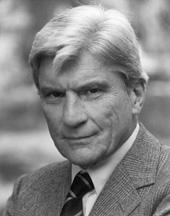
Madam President, I think it is appropriate that I am the last veteran of World War II in the Senate to rise because I am the youngest. I say that only because it reflects on my very modest career in…
Madam President, I think it is appropriate that I am the last veteran of World War II in the Senate to rise because I am the youngest. I say that only because it reflects on my very modest career in World War II. I was but 17 in January 1945. The Navy called me and I served in training commands. All of our generation went in. It is hard to remember back, but everybody wanted to go. The Battle of the Bulge had just occurred, where my distinguished colleague here served. All of our high school class suddenly recognized that from this great and powerful Nation, for those 3 weeks of the Battle of the Bulge, there was an element as to when we would eventually have the victory for which we all prayed. It was no big deal. It was exciting.
I have always looked back on my modest service of less than 2 years because the war ended rather unexpectedly. We were all trained to go into the Pacific as the war in Europe had stopped. We were prepared to go aboard our ships as replacements for those who endured months and, in most instances, years of service. We talk about the youngsters who went off for 6 months today, or even for a year. But in those days, it was not unusual to be gone for 3 years and never go back home. We were all prepared as youngsters to go and were quite willing, well-trained, beautifully educated in our respective responsibilities. I was a radio- radar technician.
That was the spirit of America, which was totally unified behind us. My colleague paid homage, most appropriately, to the home front. I think Senator Inouye said the Nation won the war, which is true. Behind all of the military people were hundreds of thousands at home.
What beautiful eloquence here today. It has been an enriching experience. Yes, I, too, think the medals should have gone to our parents, as Senator Inouye said. My mother and my father died. He served in World War I in the trenches as a doctor, wounded and decorated. I was brought up knowing he and my mother had been associated with the Red Cross and tended the wounded. They would have expected their son to go, as did all parents in those days.
I served later in the Marines--that time as a staff officer in combat zones, but always in support of those in combat arms and in the air. I never claimed the title of a combat soldier. I am proud to have served with the distinguished men who did. They have been my big brothers. There have been 114 who served this body from World War II. I expect that in my 26 years, I served with half of them. I had a younger brother but never a big brother. Now I have had all these wonderful veterans who trained me. I would not be in the Senate had it not been for the discipline, sense of mission, self-reliance, and the sense that you owe a debt to your buddies in the military and others who helped you in life.
Lastly, the GI bill was the greatest investment ever made by this Nation for a generation. How proud all of us in this Chamber are today that we have continued that educational program, such that the current men and women in the Armed Forces are able to get those benefits, as did we, and hopefully they can have the careers we have had.
This is such a magnificent nation in which we live and we are so grateful. I am deeply humbled to be the youngest, the most inconspicuous, and the most modest in terms of military service, of all to participate on this memorable day. I express our appreciation first and foremost to God Almighty who for one reason or another spared those who have come to this Chamber, having served in World War II, to our parents, and to our buddies, fellow sailors, airmen, and marines with whom we served. I am grateful to our leaders who had the concept to bring this
memorable hour for all of us to share in and express our deepest gratitude.
I yield the floor.
Madam President, I ask unanimous consent that the order for the quorum call be rescinded.

Mr. President, I rise today to pay tribute to the United States Senate's World War II veterans--soldiers then, statesmen now. They each have unique personal histories and paths from wearing the…
Mr. President, I rise today to pay tribute to the United States Senate's World War II veterans--soldiers then, statesmen now. They each have unique personal histories and paths from wearing the uniform to serving in this body, yet they share that common badge of honor. They took up arms in a war for the life of all free nations, and for the survival of deliberative democracy embodied by the Chamber in which they serve today.
The dedication of the World War II Memorial this past weekend freshly reminded all of us that individuals like Senators Warner, Stevens, Akaka, Hollings and Inouye devoted their youth to the greatest cause our Nation has ever undertaken. During that ceremony on Sunday, the sea of former soldiers, and sailors and airmen on the National Mall was a moving testament to the unique, lasting place all veterans have in their hearts for fallen comrades. Years have not diminished the meaning of sacrifice that they know best.
Where often our prayers and thoughts focus on the blessings of liberty, we were also recently reminded by Memorial Day of the costs of the liberty--the loss of those who in Lincoln's words gave the ``last, full measure of devotion.'' It is only fitting that, on the heels of Memorial Day and the dedication of the World War II Memorial, we take a moment to recognize our friends and colleagues who served in the Armed Forces during the Second World War.
In the Senate, we are all privileged to serve with five colleagues who wore the uniform during a time freedom and civilization itself depend upon young soldiers like them.
Senator John Warner, now at the helm of the Armed Services Committee, volunteered for the U.S. Navy at the young age of 17, and later would
enlist in the U.S. Marine Corps in Korea.
Senator Ted Stevens carved out a decorated war record as a pilot in the China-Burma-India theater, supporting the Flying Tigers of the 14th Air Force. His bravery earned him two Distinguished Flying Crosses, two Air Medals, and the Yuan Hai medal award by the Republic of China.
Senator Daniel Akaka, now a leader on the Armed Services Committee, was once a young Hawaii welder and mechanic serving with the Army Corps of Engineers in the Marianas, from 1945 to 1947.
Senator Fritz Hollings, schooled at the Citadel, began his service in 1942 as a commissioned officer in the North African and European fronts, where he would receive the Bronze Star and seven campaign ribbons.
Senator Daniel Inouye had known the horror of Pearl Harbor, where he volunteered as head of a first-aid team, and in 1943, he enlisted in the U.S. Army's 442nd Regimental combat Team. Senator Inouye has chronicled his World War II experiences in ``Go for Broke,'' the story of his famed group of Japanese-American soldiers.
Senator Frank Lautenberg joined the U.S. Army Signal Corps fresh from high school. He served until 1946 in Signal Corps Battalion 3185 and as a communications specialist attached to British 21st Army Group.
These five colleagues remind us of the high calling to which the Greatest Generation responded--prepared to give all, to protect all. They served beside 400,000 American comrades who would never leave the shores and soil of Europe, the islands of the Pacific and the desert of North Africa.
On the ``Freedom Wall'' of the new World War II Memorial shine 4,000 gold stars--with each star representing 100 lives lost. Just as that human toll approaches the unfathomable, so too do we struggle to truly comprehend the extent to which the heroes of World War II--all with their own unique lives and stories and dreams that would never be fulfilled--collectively turned the course of history away from darkness and toward liberty and light. As their loss to their family and country was permanent, let us also never forget that what they achieved for humankind will stand for all nations, for all time.
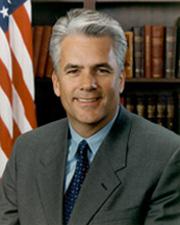
Mr. President, this past weekend President Bush dedicated the World War II Memorial before an audience of several hundred thousand attendees and a national television audience of millions. The…
Mr. President, this past weekend President Bush dedicated the World War II Memorial before an audience of several hundred thousand attendees and a national television audience of millions.
The memorial honors the 16 million who served in our Armed Forces during World War II, the more than 400,000 who died, and the millions who supported the war effort from home.
Symbolic of the defining event of the 20th Century, the memorial is a monument to the spirit, sacrifice, and commitment of the American people to the common defense of the Nation and to the broader causes of peace and freedom from tyranny throughout the world.
It is my belief that it will inspire future generations of Americans, deepening their appreciation of what the World War II generation accomplished in securing freedom and democracy.
Above all, the memorial stands as an important symbol of American national unity, a timeless reminder of the moral strength and awesome power that can flow when a free people are at once united and bonded together in a common and just cause.
The dedication of the World War II monument reminded me of a story that not many are familiar with. This story is about a young man whose experiences throughout the Pacific during World War II helped mold him into the compassionate, reasoned, and fiercely patriotic gentleman he is today.
In December of 1941, that young man was a high school student in Hawaii. And on the morning of December 7th, he and his schoolmates watched from the hillside in horror as the Japanese planes carried out their surprise attack on the Naval fleet in Pearl Harbor.
After finishing high school, this young patriot joined the United States Army and was assigned to the Corps of Engineers. He sailed throughout the Pacific, and participated in the invasions of the Japanese-held islands of Saipan and Tinian. In fact, when he
was on Tinian he watched the Enola Gay lift off on her historic mission to the Japanese mainland.
Young Daniel K. Akaka had witnessed the beginning of World War II, and was fortunate enough to witness its conclusion.
Many years have passed since then. Now, Senator Akaka can look back on a remarkable life. In addition to his Army exploits, he was a welder, a school teacher and principal, Congressman and is currently a U.S. Senator representing the good people of Hawaii.
It is in his current capacity that I know him best. As a member of the Senate Armed Services Committee and ranking member on the Readiness and Management Support Subcommittee, we have worked together overseeing military readiness issues including training and exercises, logistics, and industrial operations, depots and shipyards, military construction, environmental programs, as well as policies and procedures related to reform of management practices at the Department of Defense.
I have the utmost respect and admiration for my colleague. Today I want to say thank you to my friend, Daniel Akaka.
The United States of America is the leader of the free world and the greatest Nation in history because you and your comrades, the greatest generation, served and sacrificed.
We have not forgotten how you helped save the world from tyranny, nor do we take for granted the price you paid for the freedom we cherish today.
You served our country with honor and commitment during one of the darkest times in modern history.
This Nation is as grateful, if not more, for you today, than we were in the days following your liberation of the world.
History has taught us how heroic and courageous you truly were. So it is only fitting that on this day, at this time, on behalf of a grateful nation I say, thank you. God bless you, Daniel.

Madam President, I feel truly honored to be able to join with my colleagues in recognizing today six of our own who are part of the ``greatest generation'' and who made a tremendous contribution to…
Madam President, I feel truly honored to be able to join with my colleagues in recognizing today six of our own who are part of the ``greatest generation'' and who made a tremendous contribution to the freedom--
not just of our country but to the world.
A lot has been said about Senators Inouye, Akaka, Hollings, Lautenberg, Stevens, and Warner. I endorse almost everything said about all of them. I consider all of them good friends. I have stories on a few of them, but I will not tell the stories if they will not reciprocate and tell stories on me.
But these are, as has just been said, very humble men who did absolutely amazing things, who made tremendous contributions, and yet they walk among us today with one foot in front of the other. You don't know it when you deal with them.
I have had the privilege in recent times visiting some of the battlefields in Europe--the battlefield of Bastogne with Senator Hollings. My wife and I have been to Normandy beaches--Utah Beach, Omaha Beach, Sainte Mere Eglise--places where absolutely remarkable things were done.
These are tremendous monuments. Unfortunately, I am not going to be able to go to D-Day. But I urge my colleagues to visit these locations when you have an opportunity and see the living memorials which are set up there and the movies that were taken of the events. When you see the conflicts they faced and the bravery, you think: Why on Earth would somebody ever try to do that? There were literally hundreds--and probably thousands--of undertakings that were seemingly impossible which the brave soldiers of the U.S. forces undertook on D-Day.
I join with my colleague from Connecticut, who mentioned two other great heroes, the former leader of this body, Bob Dole, and former President George Bush, who made tremendous contributions. These people deserve our greatest admiration and our thanks, along with all of the other veterans, and the families of all of these men deserve special thanks.
I note that I think one Beth Stevens is watching close by, daughter of this good Senator from Alaska. I know how proud these young people are of their parents.
I do not know how many of you saw the movie, ``Ike: Countdown to D- Day.'' It was a fabulous movie, telling about all of the problems and the hassles that went into the planning of D-Day. Getting ready to lead an invasion of 130,000 troops, 5,000 ships, 11,000 aircraft, you see how many things could go wrong, not the least of which was when Eisenhower told his Chief of Staff, General Beetle Smith, We are surrounded by some of the biggest swelled heads in history, and my job is to keep them pulling together.
We had uncommon leadership from people who were ordinary human beings, but we had uncommon valor from so many of the 16 million people who served there. We say to all, Our sincerest thanks, our deepest respect. We congratulate and thank them. Having watched that D-Day movie, I can only say how lucky General Eisenhower was when there was not 24-hour television coverage. If you were watching every day the kinds of problems and the hassles that General Eisenhower had to endure, with the media we now have they would probably call for the firing of General Eisenhower and the impeachment of the President because lots of things went wrong. But these brave people, these brave men persevered, and we owe them our heartfelt thanks.
Show 8 more
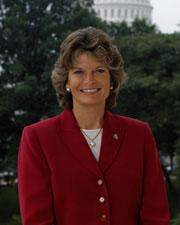
Mr. President, I, too, rise to pay tribute and honor to our World War II colleagues here in the Senate: Senator Inouye, Senator Akaka, Senator Warner, Senator Hollings, Senator Lautenberg, and, of…
Mr. President, I, too, rise to pay tribute and honor to our World War II colleagues here in the Senate: Senator Inouye, Senator Akaka, Senator Warner, Senator Hollings, Senator Lautenberg, and, of course, my friend, Senator Stevens. I
would like to take a few minutes this afternoon to speak my heartfelt appreciation to my friend, the senior Senator from the State of Alaska, Senator Stevens.
I know words alone can never accurately reflect the tenacious spirit of our friend and decorated World War II veteran. Like so many veterans of the war, Senator Stevens downplays his role. He will tell you quite simply he did what was expected. Yet it is something that must be told time and time again to realize how much this one humble servant has done and continues to do, both for the country and for the State of Alaska.
Prior to going into the war, Senator Stevens made a promise to his aunt with whom he was living at the time. He made a promise that he was not going to enlist until he could do so without her consent. So he stayed in college until he was 19, and then he immediately put the wheels in motion to enlist. But he didn't pass that first flight physical. His eyes apparently were not up to par. I think my colleagues in this Chamber who know Senator Stevens, especially those of them who might play tennis with him, know that this setback was not something that was going to keep Senator Stevens down. He was determined to fulfill his commitment. He went out and did eye exercises for a couple of months and passed that next flight physical.
During World War II, Senator Stevens flew C-46s and C-47s in the China-Burma-India theater, supporting the Flying Tigers of the 14th Air Force. He received two Distinguished Flying Crosses, two Air Medals, and the Yuan Hai medal, awarded by the Republic of China, a truly honorable and amazing tour of duty.
But this was not enough action for Senator Stevens. It was on his way home from China that he gained an interest, I guess, in politics. During the war, he had done his job. He flew every mission that was requested of him and volunteered for more. He volunteered to drive the Burma Road with a convoy of trucks because they needed officers.
But afterward, the keen interest in politics, in terms of why the United States was involved in the war, kicked in, and Alaska and the Nation have benefited ever since. He finished his undergraduate education at UCLA, earned his juris doctorate from Harvard, and served in a number of Government and elected positions before coming here to the U.S. Senate.
To Senator Stevens, Senators Inouye, Akaka, Warner, Hollings, and Lautenberg, I join with my colleagues in thanking you for your distinguished service to our country and to this legislative body, not only because you helped to protect and defend our freedoms but also because you continue to support those who now serve to protect and defend our beloved America. You are the living history of the greatest generation.
I yield the floor.
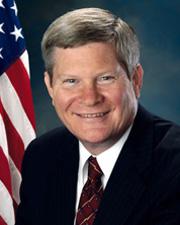
Mr. President, I rise today to honor America's veterans of World War II. I am pleased to have this opportunity to thank the millions of Americans who served our Nation during the Second World War.…
Mr. President, I rise today to honor America's veterans of World War II.
I am pleased to have this opportunity to thank the millions of Americans who served our Nation during the Second World War. World War II marks the greatest triumph of the United States in the 20th Century. The war has become a symbol of the power of a nation united and a turning point in the history of the world.
It is important to note that the service of men and women of the World War II generation went far beyond their sacrifices on the battlefields of Africa, Europe, and the Pacific. After winning the war, they returned home to create a strong, prosperous nation and helped shape America into the beacon of liberty that it is today.
I am honored to work along side six World War II veterans here in the Senate. Our colleagues Senators Inouye, Stevens, Warner, Hollings, Lautenberg, and Akaka each answered their Nation's call to duty. I thank them for their service in the military during World War II and for their continued service and leadership in the Senate.
I was extremely touched by this past weekend's emotional dedication ceremony of the National World War II Memorial and the opportunity it provided for our nation to honor our World War II veterans. While belated, this memorial provides all Americans with a place to express their appreciation for the men and women who fought in the war and to reflect on the sacrifices of those who died to defeat the evils of tyranny and oppression. Though it is the newest of our war memorials, I believe it has already become a national treasure.
I also want to take this opportunity to pay a special tribute to the veterans of D-Day. Next week marks the 60th anniversary of the allied landing at Normandy, France. On June 6, 1941, the largest fleet of ships in the history of the world left ports in Great Britain for the coast of France. Aboard these ships were thousands of young Americans who fought and died to gain a foothold on Europe and to help free those who had fallen under the dark shadow of Hitler's forces. These young men were the spearhead of one of the greatest military forces ever assembled and deserve special recognition for their sacrifices.
Like so many Americans, members of my own family proudly served in World War II. Both my father and father-in-law served in the military during World War II. I want to thank them and to join with my Senate colleagues in expressing my gratitude to all the veterans of World War II. We are proud and thankful for all that they have done and continue to do in service to the United States of America.
Mr. President, let me say to our colleagues from the greatest generation, it is very difficult to imagine how one could improve upon the observations already made by the majority leader, the…
Mr. President, let me say to our colleagues from the greatest generation, it is very difficult to imagine how one could improve upon the observations already made by the majority leader, the Democratic leader, and the President pro tempore. We all stand in admiration of their remarkable service.
America has sort of rediscovered World War II beginning in 1994 with Steven Ambrose's great book about D-day, followed up by his marvelous book ``Citizen Soldiers,'' which was about the replacements that came after D-day, one of whom was my dad.
I stand here today as a proud son of one of the greatest generation. I was unable to make the World War II Memorial opening the other day, but I did have an opportunity to watch it on television. At the same time, I was going through some old letters from my father to my mother from the theater, the most interesting of which was a letter dated at the top ``VE Day, May 8, 1945, Pizen, Czechoslovakia.'' As one of the foot soldiers in the Second Division, he had fought his way from March, April, and May across Germany and met the Russians in Pizen. Now free to kind of express himself without fear of the mail being censored, he alluded to a pretty tough couple of months of fighting in Germany without any specifics, obviously--the members of the greatest generation never wanted to talk about the specifics--and made, I thought, a rather prophetic observation.
This was a regular foot soldier in Europe on the day the Germans surrendered. He said: I hope we will not draw down the force too much, and I am really worried about the Russians.
He had had a chance to meet the Russians in Pizen when the two forces came together.
So in addition to celebrating the marvelous service of our six colleagues from the greatest generation, I thought I would take the opportunity to allude to my father who was also one of the 16 million Americans who served in uniform during World War II. This generation has made an enormous contribution to our country.
Tom Brokaw argued, and I think he was probably correct, this is certainly the greatest generation probably since the generation of the Founding Fathers. All six Senators have our admiration and respect. We thank them not only for their service overseas but their service in the Senate in the ensuing years. They are, indeed, great Americans.
I yield the floor.
Mr. President, I rise this week to commemorate the 60th anniversary of the World War II Allied invasion of Normandy and to honor the courageous members of our Armed Forces, especially those from New…
Mr. President, I rise this week to commemorate the 60th anniversary of the World War II Allied invasion of Normandy and to honor the courageous members of our Armed Forces, especially those from New Jersey, who participated in that decisive battle.
In the waning days of 1943, the Allied Command, led by General Dwight David Eisenhower, developed a plan to cross the English Channel and gain a foothold on France's Normandy coast. This bold strategy breached Hitler's western defenses and began the liberation of France and the rest of Nazi-occupied Europe.
The invasion known as Operation Overlord was to become the largest air, land and sea operation any military force had ever undertaken. After months of planning, training and preparation by the Allies, June 6, 1944 was selected as the invasion date, or D-Day.
Moving and fighting under stormy skies, the invasion force, led by the United States, Great Britain and Canada, and including Free French and Free Polish units, consisted of over 1 million service personnel. The American contingent included tens of thousands of ground combat troops who assaulted over Omaha and Utah beaches, airborne units which landed behind enemy lines, U.S. Navy sailors, Army logisticians and other specialists, and Army Air Corps aviators and ground crews who supported the landings.
The dangers were grave, and the stakes almost incalculable. Our troops' skill and determination won our Nation a world-changing success, a military victory which today remains a keystone of the liberties and security Americans and their partners still enjoy. The soldiers who fought their way ashore in Normandy and who there dropped into battle under heavy fire demonstrated unsurpassed tenacity and valor. Their superb performance and their sacrifices in the cause of freedom and democracy will always be remembered and appreciated by a grateful nation. May our D-Day veterans' memory and deeds be a constant reminder of Americans' courage, resolve and devotion to duty in World War II.
Madam President, I rise in the spirit of thanksgiving and pride as I stand in the Chamber with others who have served in World War II. I thank this body for the honor they have given all of us. But I…
Madam President, I rise in the spirit of thanksgiving and pride as I stand in the Chamber with others who have served in World War II. I thank this body for the honor they have given all of us. But I say thanksgiving because I thank God. I thank God for being here. I thank God for being a part of this body. I thank my ma and my pa for bringing me into this world. I thank my wife Millie and my family for the support they have given me. I thank my buddies who served with me and trained with me in World War II.
I thank God for setting a new course not only for me but for our country. Because of World War II, we saw our country changing itself from being very prejudicial to being forgiving, and setting a new course not only for our country but for the world.
When I think of what helped me after I left the Army, I used the GI Bill of Rights program. That was, for me, one of the greatest programs. I would say that each of us here have benefited by using that to go to college. As a result of that, we were able to set our professions and eventually be elected to the Senate. But things have changed not only in our lives but in our country and the world. When I think of our country and how it has benefited from World War II, other countries, such as Germany, have also benefited from World War II. Japan has benefited from World War II. It has really changed the world.
So I thank God, my family, my buddies, and my colleagues here especially for the kind words and sentiments that have been given tonight. I feel proud to be part of this esteemed body. I thank my colleagues again and our leadership for this recognition. I want them to know that I am proud to have served our country.
Madam President, I rise with deep humility and honor. The words of my colleagues and friends have touched me greatly. I am most grateful. But in listening to their words, I must suggest that wars are…
Madam President, I rise with deep humility and honor. The words of my colleagues and friends have touched me greatly. I am most grateful. But in listening to their words, I must suggest that wars are not won by soldiers alone. It takes a united nation to do that.
The war that we were privileged and honored to serve in was a war that a united America carried out. Husbands went to war, but their wives stayed home and worked in the factories. Some worked in the fields. There were mothers who were in anguish every day while their sons were away, but they gave us hope. They gave us courage. Little kids went around collecting pennies to buy bonds.
Yes, it took a nation to win this war. The memorial testifies to that. It does not just honor those who served in battle, but it honors those wives and sweethearts who worked in the factories, the little students who collected scrap metal and pennies.
Yes, we were young. But we knew what was going on. I have been asked many times: If given the chance, would I do it again? I think I speak for all of my colleagues: Certainly, because it was the right thing to do. It was the American thing to do. And what we did I am certain all other Americans would have done.
We all received medals. It is unfortunate that all Americans could not receive those medals. Well, I can tell you that my mother deserved a medal. She had to look at the little flag that flew over her window. There were three stars on it. My two brothers served in the Korean war. It must have been a difficult time for her. I am certain that all mothers have gone through this.
So I thank all of my colleagues.
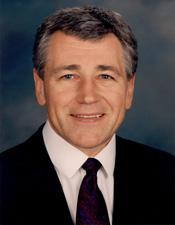
Madam President, I thank you. Akaka, Hollings, Inouye, Lautenberg--veterans of World War II. Stevens, U.S. Army Air Corps, a veteran of World War II; Warner, Navy veteran of World War II. All unique…
Madam President, I thank you.
Akaka, Hollings, Inouye, Lautenberg--veterans of World War II. Stevens, U.S. Army Air Corps, a veteran of World War II; Warner, Navy veteran of World War II. All unique men, men of decency, men of character, plainspoken, humble and generous in spirit, noble in purpose.
Their lives have been about hope. They transformed a world and framed the future. This institution and the world have been touched by each one. We in the Senate watch them. We key off of them. We have learned much from these six distinguished Americans.
These men are not angels. We are not here to canonize them, but we are here to recognize one of the most unique times in the history of man. That time was not squandered by unique individuals who understood the great purpose and challenge of their time.
I am connected to this generation, as millions of Americans, not just because I had the privilege of serving with them in the Senate, my father was a veteran of World War II with the Army Air Corps in the South Pacific, the 13th Army Air Corps. He was a radio operator tailgunner on a B-25. He spent almost 3 years overseas.
If he were alive today, I don't know if he would have found a prouder moment than what happened in Washington last weekend and what is happening in the Senate today as we honor these unique Americans.
They lifted us up. They continue to lift us up. Yet they never asked for anything in return for their service. I congratulate and thank our distinguished colleagues.
I yield the floor.
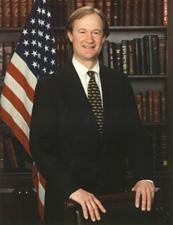
Mr. President, on May 29, 2004 the National World War II Memorial was formally dedicated on the National Mall. A number of Rhode Islanders of whom our State is particularly proud played important…
Mr. President, on May 29, 2004 the National World War II Memorial was formally dedicated on the National Mall.
A number of Rhode Islanders of whom our State is particularly proud played important roles in the design and construction of this strikingly beautiful monument.
Credit for the overall vision of the monument is owed to Providence's Friedrich St. Florian, whose architectural design was chosen from over 400 competing entries.
As to the great results of the construction, I am proud to mention North Kingstown's Anthony Ramos, the founder and president of New England Stone, whose company was responsible for quarrying and fabricating all granite use in the memorial. Nick and John Benson of the John Stephens Shop in Newport were the principal stone carvers of the project; through their work they turned hulks of granite into works of art. Finally, I am pleased to honor Lawrence Rebel and all members of the Gilbane Building Company of Providence for their contributions as construction managers, selected by the General Services Administration's public buildings division.
This memorial is a deserving tribute to the sacrifices made by the men and women of the United States during the Second World War, and I am proud of Rhode Island's contributions to the effort.
Bill Text
Latest available legislative text
        [Congressional Bills 108th Congress]
[From the U.S. Government Publishing Office]
[S. Res. 369 Agreed to Senate (ATS)]

108th CONGRESS
2d Session
S. RES. 369

Expressing the sense of the Senate in honoring the service of the men
and women who served in the Armed Forces of the United States during
World War II.

_______________________________________________________________________

IN THE SENATE OF THE UNITED STATES

June 2, 2004

Mr. Frist (for himself and Mr. Daschle) submitted the following
resolution; which was considered and agreed to

_______________________________________________________________________

RESOLUTION

Expressing the sense of the Senate in honoring the service of the men
and women who served in the Armed Forces of the United States during
World War II.

Whereas during the dark days of World War II, the United States, the world, and
the very future of freedom were threatened by nazism, fascism, and
tyranny;
Whereas a generation of Americans stepped forward to confront this scourge,
accepting the call to duty to fight the Axis Powers, to defend freedom,
and to put their lives on the line so that future generations could live
in peace and freedom;
Whereas during World War II, the brave men and women of the Armed Forces of the
United States fought alongside allies from more than 30 other nations to
vanquish the tyranny and oppression of the Axis Powers on the sea, on
the land, and in the air in distant lands in every part of the globe;
Whereas more than 16,000,000 Americans served in the Armed Forces of the United
States during World War II, hailing from every corner of the United
States and its territories;
Whereas more than 671,000 Americans were wounded and over 105,000 Americans were
held as prisoners of war in that terrible conflict;
Whereas more than 400,000 members of the Armed Forces of the United States made
the ultimate sacrifice, giving their lives to defeat the evils of
nazism, fascism, and tyranny, and to preserve the United States and the
ideals the people of the United States hold true;
Whereas by the end of World War II, the members of the Armed Forces of the
United States had become symbols of hope for the victors, the liberated
peoples of the world, and their former adversaries;
Whereas the victory of the Allied Powers in World War II paved the way for the
growth of democracy and freedom in the defeated nations of Germany and
Japan, and laid the foundation for the West to confront, and eventually
defeat, the threat of Communism;
Whereas the people of the United States can never fully express their gratitude
to all the members of the Armed Services, including the ``Greatest
Generation'' of World War II, who have dedicated themselves to
protecting the people of the United States and to defending the ideals
and principles of our great country;
Whereas 114 veterans of World War II have served in the Senate, including 6 who
are currently serving: Senator Akaka of Hawaii, Senator Hollings of
South Carolina, Senator Inouye of Hawaii, Senator Lautenberg of New
Jersey, Senator Stevens of Alaska, and Senator Warner of Virginia; and
Whereas the Senate, on the occasion of the dedication of the World War II
Memorial and the 60th Anniversary of the D-day landings in Normandy,
France, is proud to honor its Members, past and present, who served in
World War II: Now, therefore, be it
Resolved, That the Senate--
(1) expresses its eternal appreciation for the veterans of
the Armed Forces of the United States who fought and toiled to
protect the United States and preserve the freedom and way of
life of the United States during World War II;
(2) honors the brave men and women who made the ultimate
sacrifice and gave their lives in defense of liberty and the
United States during that global conflict; and
(3) proudly commends the 108 former Members and 6 current
Members of the Senate who are veterans of World War II,
including Senator Akaka, Senator Hollings, Senator Inouye,
Senator Lautenberg, Senator Stevens, and Senator Warner, for
their leadership and service to the United States both in war
and in peace.
<all>