A resolution designating the second week of December 2004 as "Conversations Before the Crisis Week".
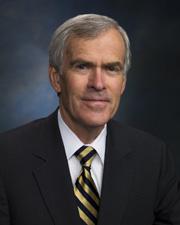
 Sen. Bill Nelson (D-FL)
Legislative Activity
Stay on top of the latest movement without scrolling through every action
Referred to the Committee on the Judiciary. (text of measure as introduced: CR 6/25/2004 S7483)
June 24, 2004
View full timeline
Introduced in Senate
June 24, 2004
Sponsor introductory remarks on measure. (CR 6/25/2004 S7483-7484)
June 24, 2004
Referred to the Committee on the Judiciary. (text of measure as introduced: CR 6/25/2004 S7483)
June 24, 2004
Floor Debate
2 membersWhat members said about S.Res. 391 on the floor
Floor Debate
2 membersWhat members said about S.Res. 391 on the floor
Mr. President, I rise today with my colleagues Senators Hutchison and Landrieu to submit a resolution to convey the deepest sympathy of the Senate to the families of the young women who have been…
Mr. President, last week my colleague Senator Jay Rockefeller and I had the privilege of introducing the Advanced Directives Improvement and Education Act of 2004, which would improve an individual's…
Bill Text
Latest available legislative text
        [Congressional Bills 108th Congress]
[From the U.S. Government Publishing Office]
[S. Res. 391 Introduced in Senate (IS)]

108th CONGRESS
2d Session
S. RES. 391

Designating the second week of December 2004 as ``Conversations Before
the Crisis Week''.

_______________________________________________________________________

IN THE SENATE OF THE UNITED STATES

June 24, 2004

Mr. Nelson of Florida submitted the following resolution; which was
referred to the Committee on the Judiciary

_______________________________________________________________________

RESOLUTION

Designating the second week of December 2004 as ``Conversations Before
the Crisis Week''.

Whereas 2,400,000 people in the United States die each year;
Whereas research shows that a majority of people in the United States would
prefer to die at home, surrounded by family and other loved ones, free
from pain, and with their wishes honored;
Whereas only 30 percent of people in the United States living with life-limiting
illness experience the interdisciplinary care that hospice provides to
patients and their caregivers;
Whereas studies have shown that too many people do not get the care they want,
with 70 percent dying in hospitals and nursing homes suffering
needlessly from high levels of pain due to poor pain and symptom
management;
Whereas individuals need to have more information and support in order to make
informed choices and share these end-of-life care wishes with their
families, doctors, lawyers, and clergy;
Whereas all people in the United States have the ability to make their end-of-
life care wishes clear through the execution of an advance directive,
which includes a living will describing the kind of care they would like
to receive and the appointment of a health care agent or proxy to speak
for them if they cannot speak for themselves;
Whereas only 15 to 20 percent of people in the United States currently have an
advance directive and most do not know that there are options for good
pain and symptom management and quality end-of-life care, and thus do
not ask for them;
Whereas honoring a dying person's preferences is a critical element of quality
end-of-life care and the right of all people in the United States;
Whereas advance directive documents are valid in all 50 states and are available
without charge on the Internet;
Whereas a ``Conversations Before the Crisis Week'', and activities planned to
support this week, would encourage family members to designate time
during the week to talk to their loved ones about their personal end-of-
life wishes and to document those wishes formally through the completion
of a living will and appointing a medical power of attorney; and
Whereas the Senate believes educating people in the United States about end-of-
life care choices and encouraging conversations about these issues
before there is a medical crisis is of the utmost importance: Now,
therefore, be it
Resolved, That the Senate--
(1) designates the second week of December 2004 as
`Conversations Before the Crisis Week'; and
(2) requests that the President issue a proclamation
calling on the people of the United States to observe the week
with appropriate ceremonies and activities.
<all>