Mr. President, I rise today to submit a resolution on the importance of maintaining the independence and integrity of the Financial Accounting Standards Board (FASB). I am pleased to be joined by my…
Mr. President, I rise today to submit a resolution on the importance of maintaining the independence and integrity of the Financial Accounting Standards Board (FASB). I am pleased to be joined by
my colleagues, Senator Levin, Senator McCain and Senator Durbin in this initiative.
For the past 30 years, the Financial Accounting Standards Board has been responsible for establishing and improving standards of financial accounting and reporting that are deemed ``generally accepted accounting principles.'' In order to ensure that these accounting principles are ``generally accepted,'' the FASB utilizes a deliberative process that is open to comment from the public, including the users of the financial statements and other third parties. The FASB has a diverse, seven-member board of accounting experts representing not only users of the financial statements but also preparers of financial statements. Because of its open deliberative process, the FASB has been able to maintain the integrity of its work through the independence it enjoys in setting accounting standards, away from special interests.
But it appears that special interests are pressuring the FASB and lobbying Congress to take a different route than the norm on the financial accounting treatment of employee stock options. Several bills have been introduced in Congress that would block the FASB's proposal to require the fair value of employee stock options to be expensed on grant date. Instead, those bills dictate the specific accounting treatment to be applied to employee stock options and when and under what circumstances the Securities and Exchange Commission should recognize accounting standards for employee stock options.
Political interference with the FASB's standards setting process would set a dangerous precedent. It is a bad idea for politicians in the House and the Senate to be substituting political decisions for the decisions by an expert private sector accounting standards board.
On July 6, 2004, The Washington Post published an editorial by Mr. Warren Buffett, Chief Executive Officer of Berkshire Hathaway, entitled ``Fuzzy Math And Stock Options.'' Mr. Buffett points out that the House of Representatives' ``anointment of itself as the ultimate scorekeeper for investors . . . comes from an institution that in its own affairs favors Enronesque accounting.'' Accordingly, he urges Congress not to interfere with the FASB's standard setting process and encourages chief executives who issue stock options ``to live with honest accounting.'' I ask unanimous consent that Mr. Buffet's op-ed be reprinted in the Record following my remarks.
We have been down this road before. A decade ago, the FASB proposed an accounting standard that would have required companies to record the value of employee stock options as a compensation expense on their income statements. At that time, the Senate overwhelmingly passed a resolution that condemned the FASB's new standard, and a separate bill was introduced that would have stripped the FASB of its rulemaking authority. Under this threat of evisceration, the FASB withdrew its recommendation. In my opinion, Congress' interference with that 1993 FASB proposal resulted in disastrous consequences with the accounting scandals at Enron, Global Crossing and WorldCom.
I believe congressional interference in this issue will ultimately undermine the FASB's credibility and make it more difficult in the future for the FASB to adopt standards when a powerful special interest stands in the way. If that occurs, the real losers will be the millions of investors who help drive our economy by investing in companies' debt and equity securities. Investors depend on financial statements to make critical judgments about where to direct their capital investments. It is no exaggeration that the integrity of these investment decisions and, indeed, of U.S. financial markets as a whole, depend upon the integrity of the accounting rules that ensure that each company's true financial condition is reflected in its financial statements.
I believe it is critical for the United States Senate to speak out at this pivotal time. Therefore, the resolution I introduce today would express the sense of the Senate that the Senate: (1) should continue to recognize and support the independence and integrity of the FASB's accounting standard setting process; (2) should not interfere with the FASB's independence; and (3) should not dictate accounting standards to the FASB for stockbased compensation or for any other financial accounting issue.
As members of Congress, we must allow the FASB to do its job, free from political interference. Therefore, I urge my colleagues to support expeditious adoption of this resolution.
[From the Washington Post, July 6, 2004]
Fuzzy Math and Stock Options
(By Warren Buffet)
Until now the record for mathematical lunacy by a
legislative body has been held by the Indiana House of
Representatives, which in 1897 decreed by a vote of 67 to 0
that pi--the ratio of the circumference of a circle to its
diameter--would no longer be 3.14159 but instead be 3.2.
Indiana schoolchildren momentarily rejoiced over this
simplification of their lives. But the Indiana Senate,
composed of cooler heads, referred the bill to the Committee
for Temperance, and it eventually died.
What brings this episode to mind is that the U.S. House of
Representatives is about to consider a bill that, if passed,
could cause the mathematical lunacy record to move east from
Indiana. First, the bill decrees that a coveted form of
corporate pay--stock options--be counted as an expense when
these go to the chief executive and the other four highest-
paid officers in a company, but be disregarded as an expense
when they are issued to other employees in the company.
Second, the bill says that when a company is calculating the
expense of the options issued to the mighty five, it shall
assume that stock prices never fluctuate.
Give the bill's proponents an A for imagination--and for
courting contributors--and a flatout F for logic.
All seven members of the Financial Accounting Standards
Board, all four of the big accounting firms and legions of
investment professionals say the two proposals are nonsense.
Nevertheless, many House members wish to ignore these
informed voices and make Congress the Supreme Accounting
Authority. Indeed, the House bill directs the Securities and
Exchange Commission to ``not recognize as ``generally
accepted'' any accounting principle established by a standard
setting body'' that disagrees with the House about the
treatment of options.
The House's anointment of itself as the ultimate
scorekeeper for investors, it should be noted, comes from an
institution that in its own affairs favors Enronesque
accounting. Witness the fanciful ``sunset'' provisions that
are used to meet legislative ``scoring'' requirements. Or
regard the unified budget protocol, which applies a portion
of annual Social Security receipts to reducing the stated
budget deficit while ignoring the concomitant annual costs
for benefit accruals.
I have no objection to the granting of options. Companies
should use whatever form of compensation best motivates
employees, whether this be cash bonuses, trips to Hawaii,
restricted stock grants or stock options. But aside from
options, every other item of value given to employees is
recorded as an expense. Can you imagine the derision that
would be directed at a bill mandating that only five bonuses
out of all those given to employees be expensed? Yet that is
a true analogy to what the option bill is proposing.
Equally nonsensical is a section in the bill requiring
companies to assume, when they are valuing the options
granted to the mighty five, that their stocks have zero
volatility. I've been investing for 62 years and have yet to
meet a stock that doesn't fluctuate. The only reason for
making such an Alice-in-Wonderland assumption is to
significantly understate the value of the few options that
the House wants counted. This undervaluation, in turn,
enables chief executives to lie about what they are truly
being paid and to overstate the earnings of the companies
they run.
Some people contend that options cannot be precisely
valued. So what? Estimates pervade accounting. Who knows with
precision what the useful life of software, a corporate jet
or a machine tool will be? Pension costs, moreover, are even
fuzzier, because they require estimates of future mortality
rates, pay increases and investment earnings. These guesses
are almost invariably wrong, often substantially so. But the
inherent uncertainties involved do not excuse companies from
making their best estimate of these, or any other, expenses.
Legislators should remember that it is better to be
approximately right than precisely wrong.
If the House should ignore this logic and legislate that
what is an expense for five is not an expense for thousands,
there is reason to believe that the Senate--like the Indiana
Senate 107 years ago--will prevent this folly from becoming
law. Sen. Richard Shelby (R-Ala.), chairman of the Senate
Banking Committee, has firmly declared that accounting rules
should be set by accountants, not by legislators.
Even so, House members who wish to escape the scorn of
historians should render the Senate's task moot by killing
the bill themselves. Or if they are absolutely determined to
meddle with reality, they could attack the obesity problem by
declaring that henceforth it will take 24 ounces to make a
pound. If even that friendly standard seems unbearable to
their constituents, they can exempt all but the fattest five
in each congressional district from any measurement of
weight.
In the late 1990s, too many managers found it easier to
increase ``profits'' by accounting
maneuvers than by operational excellence. But just as the
schoolchildren of Indiana learned to work with honest math,
so can option-issuing chief executives learn to live with
honest accounting. It's high time they step up to that job.
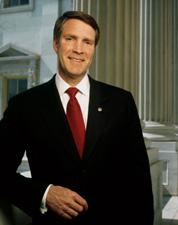 Sen. William H. Frist (R-TN)