A resolution expressing the sense of the Senate that the United States should prepare a comprehensive strategy for advancing and entering into international negotiations on a binding agreement that would swiftly reduce global mercury use and pollution to levels sufficient to protect public health and the environment.
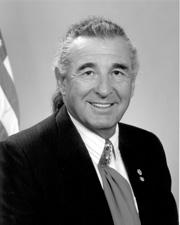
 Sen. James M. Jeffords (I-VT)
Legislative Activity
Stay on top of the latest movement without scrolling through every action
Referred to the Committee on Foreign Relations. (text of measure as introduced: CR S10748-10749)
October 7, 2004
View full timeline
Introduced in Senate
October 7, 2004
Referred to the Committee on Foreign Relations. (text of measure as introduced: CR S10748-10749)
October 7, 2004
Floor Debate
2 membersWhat members said about S.Res. 453 on the floor

Floor Debate
2 membersWhat members said about S.Res. 453 on the floor
Mr. President, I rise today to ask the Senate to honor an individual who stands in high esteem in America and throughout the world. I am pleased to submit a resolution calling on the Postal Service…
Mr. President, I am today submitting a resolution to designate December 13, 2004 as ``The National Day of the Horse.'' The image of the horse is a fixture of American society, an icon whose role has…
Bill Text
Latest available legislative text
        [Congressional Bills 108th Congress]
[From the U.S. Government Publishing Office]
[S. Res. 453 Introduced in Senate (IS)]

108th CONGRESS
2d Session
S. RES. 453

Expressing the sense of the Senate that the United States should
prepare a comprehensive strategy for advancing and entering into
international negotiations on a binding agreement that would swiftly
reduce global mercury use and pollution to levels sufficient to protect
public health and the environment.

_______________________________________________________________________

IN THE SENATE OF THE UNITED STATES

October 7, 2004

Mr. Jeffords (for himself, Mr. Chafee, Mr. Sarbanes, Ms. Snowe, Mr.
Lieberman, Mr. Leahy, Mr. Dayton, and Mr. Lautenberg) submitted the
following resolution; which was referred to the Committee on Foreign
Relations

_______________________________________________________________________

RESOLUTION

Expressing the sense of the Senate that the United States should
prepare a comprehensive strategy for advancing and entering into
international negotiations on a binding agreement that would swiftly
reduce global mercury use and pollution to levels sufficient to protect
public health and the environment.

Whereas mercury is a persistent, bioaccumulative, and toxic heavy metal;
Whereas mercury is found naturally in the environment but is also emitted into
the air, land, and water in various forms in the United States and
around the world during fossil fuel combustion, waste incineration,
chlor-alkali production, mining, and other industrial processes, as well
as during the production, use, and disposal of various products;
Whereas mercury air pollution has the ability to both deposit locally and travel
thousands of miles in a global atmospheric pool of emissions before
eventual deposition, crossing national boundaries and becoming a shared
global burden;
Whereas the United Nations Environment Programme reported that, on average,
anthropogenic emissions of mercury since pre-industrial times have
resulted in 50- to 300-percent increases in deposition rates around the
world;
Whereas the United Nations Environment Programme reported that global
consumption of mercury equaled 3,337 tons in 1996, and that all mercury
releases to the global environment total approximately 5,000 tons each
year;
Whereas mercury air pollution can deposit into lakes, streams, and the oceans
where it is transformed into toxic methylmercury and bioaccumulates in
fish and fish-eating wildlife;
Whereas the National Academy of Sciences confirmed that consumption of mercury-
contaminated fish and seafood by pregnant women can cause serious
neurodevelopmental harm in the fetus, including such detrimental effects
as intelligence quotient deficits, abnormal muscle tone, decreases in
motor function, attention, or visuospatial performance, mental
retardation, seizure disorders, cerebral palsy, blindness, and deafness;
Whereas the 1997 Mercury Study Report submitted by the Administrator of the
Environmental Protection Agency to Congress found that every region of
the United States is adversely affected by mercury deposition;
Whereas the Food and Drug Administration, the Environmental Protection Agency,
and 48 States currently have advisories warning the public to limit
consumption of certain fish that are high in mercury content;
Whereas, of the 4,000,000 children born every year in the United States,
scientists at the Environmental Protection Agency estimate that
approximately 630,000 are exposed to mercury levels in the womb above
the safe health threshold, caused primarily by maternal consumption of
mercury-tainted fish;
Whereas these health and environmental effects of mercury contamination can
impose significant social and economic costs in the form of increased
medical care, special educational and occupational needs, reduced
economic performance, and disruptions in recreational and commercial
fishing and hunting, and can create disproportionate health, social, and
economic impacts among subpopulations dependent on subsistence fishing;
Whereas the Environmental Protection Agency has estimated that the United States
is a net emitter of mercury in that the United States contributes 3
times as much mercury to the global atmospheric pool of air emissions as
it receives through deposition;
Whereas the United States Geological Survey has not reported mercury consumption
figures for key sectors in the United States economy since 1996, thereby
creating important information gaps relating to domestic mercury use and
trade;
Whereas the quantity of domestic fugitive chlor-alkali sector emissions has been
labeled an enigma by the Environmental Protection Agency;
Whereas, in accordance with Public Law 101-549 (commonly known as the ``Clean
Air Act Amendments of 1990'') (42 U.S.C. 7401 et seq.), the
Environmental Protection Agency determined in December 2000 that a
maximum achievable control technology standard for mercury and other air
toxic emissions for electric utility steam generating units in the
United States is appropriate and necessary, and listed coal- and oil-
fired electric utility steam generating units for regulation, thereby
triggering a statutory requirement that maximum achievable controls be
implemented at every existing coal- and oil-fired electric utility steam
generating unit by not later than December 2005;
Whereas other major stationary sources have already implemented maximum
achievable control technology standards for mercury and other air
toxics, as required by the Clean Air Act (42 U.S.C. 7401 et seq.);
Whereas effective mercury and other heavy metal removal techniques have been
demonstrated and are available on an industrial scale in the major
stationary source categories;
Whereas the lack of effective emission control standards in other countries can
give foreign industries a competitive advantage over United States
businesses;
Whereas alternatives and substitutes have been demonstrated and are available to
reduce or eliminate mercury use in most products and processes;
Whereas the European Commission reports that mercury mining, the closing of
mercury cell chlor-alkali facilities, and the phasing out of other
outmoded industrial processes in the United States and Europe are
contributing significantly to imports of mercury in the developing
world;
Whereas the Department of Defense announced in April 2004 that it will
consolidate and store its stockpile of approximately 5,000 tons of
mercury rather than allow the surplus to enter the global marketplace;
Whereas from 1996 through 2004, the Environmental Council of the States adopted
or renewed 9 resolutions highlighting the importance of substantially
reducing mercury use and releases in the United States and around the
world, and of managing excess supplies of mercury so that they do not
enter the global marketplace;
Whereas many States, including California, Connecticut, Illinois, Indiana, Iowa,
Maine, Maryland, Massachusetts, Michigan, Minnesota, New Hampshire, New
Jersey, New York, Ohio, Oregon, Pennsylvania, Rhode Island, Vermont,
Washington, and Wisconsin, are already implementing their own laws,
regulations, and other strategies for tracking or reducing various forms
of mercury use and pollution, and the Governors of States in New England
have set a goal of virtually eliminating mercury emissions in that
region;
Whereas the European Commission is developing a mercury strategy that is aimed
at comprehensively addressing all aspects of the mercury cycle,
including the use, trade, and release of mercury;
Whereas the United States is a party to the Protocol on Heavy Metals of the
Convention on Long-Range Transboundary Air Pollution, done at Aarhus,
Denmark on June 24, 1998, which entered into force in December 2003 and
commits the United States to a basic obligation to limit air emissions
of mercury and other heavy metals from new and existing sources, within
2 and 8 years respectively, using the best available techniques;
Whereas the current parties to the Convention and the Protocol represent only a
portion of anthropogenic emissions of heavy metals annually that are
subject to transboundary atmospheric transport and are likely to have
significant adverse effects on human health or the environment;
Whereas the 22nd session of the United Nations Environment Programme Governing
Council concluded that there is sufficient evidence in the Programme's
Global Mercury Assessment of significant global adverse impacts to
warrant international action to reduce the risks to human health and the
environment from releases of mercury;
Whereas the United Nations Environment Programme invited submission of
governmental views on medium- and long-term actions on mercury and other
heavy metals, which will be synthesized into a report for presentation
at the 23rd session of the Governing Council occurring February 21 to
25, 2005, with a view to developing a legally binding instrument, a non-
legally binding instrument, or other measures or actions; and
Whereas the United States has taken no position on any such instrument: Now,
therefore, be it
Resolved, That it is the Sense of the Senate that--
(1) the United States should engage constructively and
proactively in international dialogue regarding mercury
pollution, use, mining, and trade; and
(2) the President should prepare a comprehensive strategy--
(A) to advance and enter into international
negotiations on a binding agreement that would--
(i) reduce global use, trade, and releases
of mercury to levels sufficient to protect
public health and the environment, including
steps to--
(I) establish specific and
stringent targets and schedules for
reductions in mercury use in the United
States, and emissions below levels for
calendar year 2000, beyond current
domestic and global efforts;
(II) end primary mercury mining in
the near future and establish a system
to ensure excess mercury supplies do
not enter the global marketplace; and
(III) require countries to develop
regional and national action plans to
address mercury sources and uses;
(ii) include all countries that use, trade,
or release significant quantities of mercury
into the environment from anthropogenic
sources;
(iii) require the application of the best
available control technologies and strategies
to control releases from industrial sectors in
the very near future, including minimizing
releases from coal-fired power plants and
replacing obsolete mercury products and
processes, including the mercury cell chlor-
alkali process;
(iv) contain mechanisms for promoting and
funding the transfer and adoption of less
emitting technologies and mercury-free
processes, and for facilitating the safe
cleanup of mercury contamination;
(v) establish a standardized system to
document and track the use, production, and
trade of mercury and mercury-containing
products, including a licensing requirement for
mercury traders; and
(vi) incorporate explicit mechanisms for
adding toxic air pollutants with similar
characteristics in the future;
(B) to delineate the preferred structure, format,
participants, mechanisms, and resources necessary for
achieving and implementing the agreement described in
subparagraph (A);
(C) to enter into bilateral and multilateral
agreements to align global mercury production with
reduced global demand and minimize global mercury
releases, while negotiating the agreement described in
subparagraph (A);
(D) to initiate and support a parallel
international research effort that does not delay
current or planned mercury pollution or use reduction
efforts--
(i) to collect global data to support the
development of a comprehensive inventory of
mercury use, mining, trade, and releases; and
(ii) to develop less emitting technologies
and technologies to reduce the need for, and
use of, mercury in commerce;
(E) to review monitoring capabilities and data
collection efforts of the United States for domestic
mercury use, trade, and releases to ensure there is
sufficient information available for any implementing
legislation that may be necessary for compliance with
existing protocols and future global mercury
agreements;
(F) to work through existing international
organizations, such as the United Nations, the
International Standards Organization, and the World
Trade Organization, to encourage the development of
programs, standards, and trade agreements that will
result in reduced use and trade of mercury, the
elimination of primary mercury mining, and reductions
in releases of mercury and other long-range
transboundary air pollutants; and
(G) not later than February 11, 2005, to submit to
the Committee on Foreign Relations and the Committee on
Environment and Public Works of the Senate a report on
that strategy, including a description of the ways in
which the strategy will be used and communicated at the
23rd Session of the United Nations Environment
Programme Governing Council.
<all>