A resolution to condemn human rights abuses in Laos.
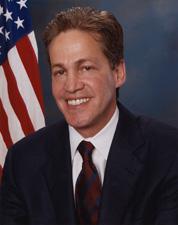 Sen. Norm Coleman (R-MN)
Legislative Activity
Stay on top of the latest movement without scrolling through every action
Submitted in the Senate, considered, and agreed to without amendment and with a preamble by Unanimous Consent. (consideration: CR S11554-11555; text as passed Senate: CR S11554-11555; text of measure as introduced: CR 11/20/2004 S11649)
November 19, 2004
View full timeline
Introduced in Senate
November 19, 2004
Submitted in the Senate, considered, and agreed to without amendment and with a preamble by Unanimous Consent. (consideration: CR S11554-11555; text as passed Senate: CR S11554-11555; text of measure as introduced: CR 11/20/2004 S11649)
November 19, 2004
Floor Debate
3 membersWhat members said about S.Res. 475 on the floor


Floor Debate
3 membersWhat members said about S.Res. 475 on the floor
Mr. President, I thank my colleagues Senator Feingold and Senator Coleman for permitting me to have this time and also to commend them for their outstanding leadership regarding the violation of…
Mr. President, this is an issue in which I, Senators Feingold, Coleman, and many others have taken a deep interest. I believe this resolution is an important statement. It makes very clear, when the…
Mr. President, I now ask unanimous consent that the Senate proceed to the resolution, which is at the desk. Mr. President, I ask unanimous consent that the resolution be agreed to, that the preamble…
Bill Text
Latest available legislative text
        [Congressional Bills 108th Congress]
[From the U.S. Government Publishing Office]
[S. Res. 475 Agreed to Senate (ATS)]

2d Session
S. RES. 475

To condemn human rights abuses in Laos.

_______________________________________________________________________

IN THE SENATE OF THE UNITED STATES

November 19, 2004

Mr. Coleman (for himself, Mr. Feingold, Mr. Kohl, and Mr. Dayton)
submitted the following resolution; which was considered and agreed to

_______________________________________________________________________

RESOLUTION

To condemn human rights abuses in Laos.

Whereas the Lao People's Democratic Republic is an authoritarian, Communist,
one-party state;
Whereas the Government of Laos has a poor human rights record, particularly with
regard to its treatment of minorities;
Whereas the United States Central Intelligence Agency trained and armed tens of
thousands of Hmong guerrillas to disrupt Viet Cong supply lines and
rescue downed pilots during the Vietnam war;
Whereas in 1975, the Kingdom of Laos was overthrown by the Communist Pathet Lao
regime, and tens of thousands of Laotians, including the Hmong, were
killed or died at the hands of Communist forces while attempting to flee
the Lao Communist regime, and many others perished in reeducation and
labor camps;
Whereas tens of thousands of Hmong became refugees, eventually resettling in the
United States, where they now reside as American citizens and lead
constructive lives as members of our communities;
Whereas remnants of former Hmong insurgent groups and their families who once
fought with the United States and the Royal Lao Government still remain
in remote areas of Laos, including Xaisomboun Special Zone and the Luang
Prabang Province;
Whereas in August 2003 the United Nations Committee to Eliminate Racial
Discrimination strongly criticized the Lao People's Democratic Republic
for failing to honor its obligations, expressed its grave concerns
regarding reports of human rights violations, including brutalities
inflicted on the Hmong, and deplored the measures taken by the Lao
authorities to prevent any reporting of the situation of the Hmong;
Whereas in October 2003, Amnesty International issued a statement detailing its
concern about the use of starvation by the Lao Government as a ``weapon
of war against civilians'' in Laos and the deteriorating situation
facing thousands of family members of ethnic minority groups;
Whereas the Department of State reported in its most recent Country Report on
Human Rights Practices for Laos that the ``Government's human rights
record remained poor,'' and highlighted press reports that one group of
Hmong in Xaisomboun Special Zone, mostly women and children, was being
systematically hunted down and attacked by government air and ground
forces and that it was at the point of starvation;
Whereas international organizations, the Department of State, and Members of
Congress have received reports of mistreatment over the past 6 months of
Hmong in Laos emerging from remote areas of Laos, including the
Xaisomboun Special Zone, the Luang Prabang-Xieng Khouang border area;
Whereas the Lao Government has not allowed independent organizations to monitor
the treatment of the Hmong emerging from remote areas of Laos;
Whereas in September 2004, Amnesty International issued a statement condemning
recent reports that Lao soldiers murdered 5 Hmong children, raping 4
girls, who were foraging for food close to their camp, and called it a
war crime; and
Whereas the Lao People's Democratic Republic has failed to substantially improve
the status of human rights for its citizens: Now, therefore, be it
Resolved, That the Senate--
(1) condemns the consistent pattern of serious human rights
abuses in the Lao People's Democratic Republic;
(2) urges the Government of Laos to increase international
access to vulnerable populations and to respect the basic human
rights of all Laotians, including ethnic and religious
minorities; and
(3) hopes that the Lao government intensifies its efforts
to make its economy and society more open and transparent in
light of the congressional grant of normal trade relations to
the Lao People's Democratic Republic.
<all>