Mourning the horrific loss of life caused by the floods and mudslides that occurred in October 2005 in Central America and Mexico and expressing the sense of Congress that the United States should do everything possible to assist the affected people and communities.
 Rep. Dan Burton (R-IN)
Legislative Activity
Stay on top of the latest movement without scrolling through every action
Received in the Senate and referred to the Committee on Foreign Relations.
December 12, 2005
View full timeline
Introduced in House
October 27, 2005
Referred to the House Committee on International Relations.
October 27, 2005
Referred to the Subcommittee on the Western Hemisphere.
November 1, 2005
Subcommittee Consideration and Mark-up Session Held.
November 2, 2005
Forwarded by Subcommittee to Full Committee by Unanimous Consent.
November 2, 2005
Committee Consideration and Mark-up Session Held.
November 16, 2005
Ordered to be Reported by Unanimous Consent.
November 16, 2005
Ms. Ros-Lehtinen moved to suspend the rules and agree to the resolution, as amended.
December 6, 2005 • 4:44 PM
Considered under suspension of the rules. (consideration: CR H11066-11068)
December 6, 2005 • 4:44 PM
DEBATE - The House proceeded with forty minutes of debate on H. Con. Res. 280.
December 6, 2005 • 4:44 PM
Passed/agreed to in House: On motion to suspend the rules and agree to the resolution, as amended Agreed to by voice vote.(text: CR H11066-11067)
December 6, 2005 • 4:52 PM
On motion to suspend the rules and agree to the resolution, as amended Agreed to by voice vote. (text: CR H11066-11067)
December 6, 2005 • 4:52 PM
Motion to reconsider laid on the table Agreed to without objection.
December 6, 2005 • 4:52 PM
Received in the Senate and referred to the Committee on Foreign Relations.
December 12, 2005
Floor Debate
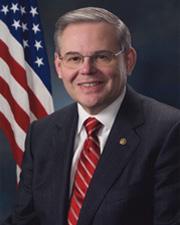
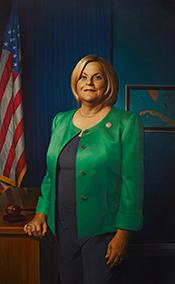
3 membersWhat members said about H.Con.Res. 280 on the floor

Floor Debate
3 membersWhat members said about H.Con.Res. 280 on the floor
Mr. Speaker, I would like to thank my colleague and Chairman of the Subcommittee on the Western Hemisphere, Congressman Burton, for sponsoring this important legislation mourning the loss of life…
Mr. Speaker, I yield myself such time as I may consume. Mr. Speaker, I rise in strong support of this important resolution. The human suffering and economic devastation caused by natural disasters in…
Mr. Speaker, I move to suspend the rules and agree to the concurrent resolution (H. Con. Res. 280) mourning the horrific loss of life caused by the floods and mudslides that occurred in October 2005…
Bill Text
3 versions available
        [Congressional Bills 109th Congress]
[From the U.S. Government Publishing Office]
[H. Con. Res. 280 Referred in Senate (RFS)]

109th CONGRESS
1st Session
H. CON. RES. 280

_______________________________________________________________________

IN THE SENATE OF THE UNITED STATES

December 12, 2005

Received and referred to the Committee on Foreign Relations

_______________________________________________________________________

CONCURRENT RESOLUTION

Mourning the horrific loss of life caused by the floods and mudslides
that occurred in October 2005 in Central America and Mexico and
expressing the sense of Congress that the United States should do
everything possible to assist the affected people and communities.

Whereas on October 4, 2005, Hurricane Stan made landfall on Mexico's Gulf coast,
bringing sustained winds of 80 miles per hour before weakening to a
tropical storm and generating separate storms across southern Mexico and
Central America;
Whereas Hurricane Wilma, a category four hurricane, made landfall in Cozumel,
Mexico on October 22, 2005, and

stalled over the Yucatan Peninsula bringing over 60 inches of rain to some
parts of the Peninsula and causing severe flooding, over 75,000
evacuations, damaging between 30-40 percent of the houses in Cancun, and
causing severe damage to the area's vital tourism industry;

Whereas Hurricane Beta made landfall on October 30, 2005, near Karabal and Sandy
Bay, Nicaragua, as a category two hurricane, displacing thousands of
people, damaging critical communications and transportation
infrastructure, and bringing destructive winds and rains to these and
approximately 50 other communities;
Whereas the heavy rainfall associated with these storms caused widespread and
severe flooding that has affected millions of people across Central
America, including the people of Costa Rica, El Salvador, and Guatemala,
and the people of Mexico;
Whereas, as of October 12, 2005, the flooding had killed an estimated 2,000
people across Central America and Mexico, according to government
estimates which are expected to be revised upwards;
Whereas rains have produced more than 900 landslides, burying entire villages
and causing numerous deaths in Guatemala, with official government
estimates confirming 654 deaths, 577 people missing, and more than
120,000 people affected across 621 communities in the provinces of
Escuintla, Guatemala, Quetzaltenango, Chiquimula, San Marcos,
Chimaltenango, El Quiche, and Baja Verapa;
Whereas many of the affected areas are especially vulnerable to natural
disasters and lack access to basic healthcare, sanitation, and medical
services;
Whereas the flooding and landslides have damaged housing and public
infrastructure in 251 of the 331 municipalities in Guatemala and
sustained rains across much of the country have hampered ongoing relief
efforts;
Whereas two simultaneous emergencies in El Salvador--the severe flooding caused
by Tropical Storm Stan and the eruption of the Santa Ana volcano on
October 1, 2005--have affected half of the country and forced the
evacuation of more than 69,000 people to local shelters;
Whereas Tropical Storm Stan caused massive flooding in the Mexican States of
Veracruz, Chiapas, Oaxaca, Tabasco, Puebla, Hidalgo, and Guerrero and
forced the evacuation of approximately 370,000 people from nearly 3,000
communities to local shelters, according to the Government of Mexico;
Whereas extensive rainfall in the Costa Rican provinces of Alajuela, Cartago,
Guanacaste, Heredia, Puntarenas, and San Jose in the Pacific and Central
Valley caused severe flooding and landslides, forcing more than 1,000
people in 459 communities to evacuate to local shelters, damaged 550
houses, 117 bridges, and 11 educational buildings, and more than 281
roads have been blocked or damaged by mudslides;
Whereas many families in these affected areas are homeless and in desperate need
of reconstruction help;
Whereas the United States Agency for International Development's Office of
Foreign Disaster Assistance (USAID/OFDA) initially provided $150,000 to
USAID/Guatemala for the local purchase and distribution of emergency
relief supplies, as well as for helicopter support, including fuel and
rental of local helicopters and an additional $1,200,000 to USAID/
Guatemala for emergency grants to nongovernmental organization partners
for emergency health, water and sanitation, and shelter activities;
Whereas USAID/OFDA committed $200,000 to support the Pan American Health
Organization's (PAHO) emergency health and water and sanitation
activities as part of the United Nations joint appeal;
Whereas USAID/OFDA is working closely with the Governments of Costa Rica, El
Salvador, Guatemala, and Mexico to coordinate transportation and
distribution of relief commodities to affected communities and for the
local purchase and distribution of emergency relief supplies, water, and
food;
Whereas on October 8, 2005, the United States Southern Command (USSOUTHCOM)
deployed a 58-person team to Guatemala City to assist with ongoing
disaster relief efforts in southwestern Guatemala and sent nine United
States Army helicopters to conduct search and rescue missions and
provide for the transportation of emergency relief supplies, including
food, medical supplies, and communications equipment, to affected areas,
as well as flying in host nation firefighters, emergency aid workers,
and doctors; and
Whereas the United States initially has provided $100,000 to the Mexican Red
Cross for the local purchase and distribution of emergency relief
supplies to aid victims of Hurricane Wilma, and a USAID/OFDA team is
working with USAID/Mexico, local disaster officials, and other
organizations to assess impacts, aid requirements, and deliver further
emergency assistance: Now, therefore, be it
Resolved by the House of Representatives (the Senate concurring),
That--
(1) Congress--
(A) mourns the horrific loss of life caused by the
floods and mudslides that occurred in October 2005 in
Central America and Mexico;
(B) expresses its deep condolences to the families
of the many victims;
(C) commits to provide the necessary resources and
to stand by the people of Costa Rica, El Salvador,
Guatemala, and Mexico in the relief, recovery, and
rebuilding efforts;
(D) applauds the prompt humanitarian response to
this natural disaster by the United States Agency for
International Development, the United States Armed
Forces, and other departments and agencies of the
United States Government, the United Nations and other
international organizations, and nongovernmental
organizations;
(E) recognizes the growing support by international
donors for relief efforts;
(F) affirms its commitment to additional United
States support for relief and long-term reconstruction
efforts in areas affected by the flooding;
(G) urges continued attention by donors and relief
agencies to the needs of vulnerable populations in the
stricken countries, particularly those left homeless by
this disaster and whose welfare and economic
livelihoods have been disrupted;
(H) urges assistance which targets immediate and
long-term infrastructure needs, with a special emphasis
on improvements that aim to increase emergency
preparedness and withstand future natural disaster
events; and
(I) encourages the Administration and other
international donors to provide immediate and long-term
assistance for the reconstruction of affected
infrastructure that is a requisite for the economic and
social development of the devastated communities; and
(2) it is the sense of Congress that it should be the
policy of the United States--
(A) to promote economic growth and improved living
standards, reduce poverty, and promote democracy and
the rule of law in the countries of Central America;
(B) in concert with multilateral humanitarian
organizations, the Organization of American States and
the Inter-American Development Bank, to actively
support the reconstruction of affected communities in
places to be determined by respective governments in
collaboration with representatives of such communities;
(C) to expedite humanitarian relief and
reconstruction efforts in order to mitigate the
immediate and long-term threats to public health,
economic development, and security in Central America;
(D) to provide technical assistance to Central
American governments in order to strengthen the
capacity of first responders and governmental
institutions at the national, provincial, and local
levels in the area of disaster management coordination
and preparedness, including information and
communications systems to help with the response to
natural disasters; and
(E) to encourage the governments of these countries
to improve disaster mitigation techniques and
compliance among all key sectors of their societies.

Passed the House of Representatives December 6, 2005.

Attest:

KAREN L. HAAS,

Clerk.