Establishing the congressional budget for the United States Government for fiscal year 2007 and setting forth appropriate budgetary levels for fiscal years 2008 through 2011.
 Rep. Jim Nussle (R-IA)
Legislative Activity
Stay on top of the latest movement without scrolling through every action
Motion to reconsider laid on the table Agreed to without objection.
May 18, 2006 • 1:02 AM
View full timeline
Introduced in House
March 31, 2006
The House Committee on The Budget reported an original measure, H. Rept. 109-402, by Mr. Nussle.
March 31, 2006
Placed on the Union Calendar, Calendar No. 220.
March 31, 2006
Rules Committee Resolution H. Res. 766 Reported to House. Rule provides for consideration of H. Con. Res. 376 with 4 hours of general debate.
April 5, 2006 • 7:36 PM
Rule H. Res. 766 passed House.
April 6, 2006 • 12:03 PM
Considered under the provisions of rule H. Res. 766. (consideration: CR H1578-1609)
April 6, 2006 • 12:04 PM
Rule provides for consideration of H. Con. Res. 376 with 4 hours of general debate.
April 6, 2006 • 12:04 PM
House resolved itself into the Committee of the Whole House on the state of the Union pursuant to H. Res. 766 and Rule XVIII.
April 6, 2006 • 12:05 PM
The Speaker designated the Honorable Lee Terry to act as Chairman of the Committee.
April 6, 2006 • 12:05 PM
GENERAL DEBATE - The Committee of the Whole proceeded with four hours of general debate on H. Con. Res. 376.
April 6, 2006 • 12:05 PM
Committee of the Whole House on the state of the Union rises leaving H. Con. Res. 376 as unfinished business.
April 6, 2006 • 4:35 PM
Rules Committee Resolution H. Res. 817 Reported to House. Rule provides for consideration of H. Con. Res. 376. Measure will be considered read. Specified amendments are in order. The amendments printed in part A of the report of the Committee on Rules accompanying this resolution shall be considered as adopted in the House as in the Committee of the Whole.
May 17, 2006 • 5:56 PM
Rule H. Res. 817 passed House.
May 17, 2006 • 8:37 PM
ORDER OF PROCEDURE--AMENDMENT MODIFICATION - Mr. Spratt asked unanimous consent that during consideration of H. Con. Res. 376, pursuant to H. Res. 817, the amendment he had placed at the desk may be in order in lieu of amendment number 3 printed in part B of House Report 109-468. Agreed to without objection.
May 17, 2006 • 8:41 PM
Considered as unfinished business. (consideration: CR 5/18/2006 H2709-2953)
May 17, 2006 • 8:42 PM
The House resolved into Committee of the Whole House on the state of the Union for further consideration.
May 17, 2006 • 8:42 PM
DEBATE - Pursuant to the provisions of H. Res. 817, the Committee of the Whole proceeded with 40 minutes of debate on the Watt amendment.
May 17, 2006 • 8:45 PM
DEBATE - Pursuant to the provisions of H. Res. 817, the Committee of the Whole proceeded with 40 minutes of debate on the Hensarling amendment.
May 17, 2006 • 10:03 PM
POSTPONED PROCEEDINGS - At the conclusion of debate on the Hensarling amendment, the Chair put the question on adoption of the amendment and by voice vote, announced that the noes had prevailed. Mr. Hensarling demanded a recorded vote and the Chair postponed further proceedings on the question of adoption of the amendment until later in the legislative day.
May 17, 2006 • 10:54 PM
DEBATE - Pursuant to the provisions of H. Res. 817, the Committee of the Whole proceeded with 40 minutes of debate on the Spratt amendment.
May 17, 2006 • 10:57 PM
POSTPONED PROCEEDINGS - At the conclusion of debate on the Spratt amendment, the Chair put the question on adoption of the amendment and by voice vote, announced that the noes had prevailed. Mr. Spratt demanded a recorded vote and the Chair postponed further proceedings on the question of adoption of the amendment until later in the legislative day.
May 17, 2006 • 11:48 PM
UNFINISHED BUSINESS - The Chair announced that the unfinished business was the question of adoption of amendments which had been debated earlier and on which further proceedings had been postponed.
May 17, 2006 • 11:49 PM
FURTHER DEBATE - Pursuant to the provisions of H. Res. 816, the Committee of the Whole proceeded with a further 20 minutes of debate on H. Con. Res. 376.
May 18, 2006 • 12:24 AM
The House rose from the Committee of the Whole House on the state of the Union to report H. Con. Res. 376.
May 18, 2006 • 12:42 AM
The previous question was ordered pursuant to the rule. (consideration: CR H2753)
May 18, 2006 • 12:43 AM
Passed/agreed to in House: On agreeing to the resolution Agreed to by the Yeas and Nays: 218 - 210 (Roll no. 158).
May 18, 2006 • 1:02 AM
On agreeing to the resolution Agreed to by the Yeas and Nays: 218 - 210 (Roll no. 158).
May 18, 2006 • 1:02 AM
Motion to reconsider laid on the table Agreed to without objection.
May 18, 2006 • 1:02 AM
Voting History
4 votes recorded • Roll call available
HOUSE
Roll Call AvailableMay 18, 2006 at 1:02 AM
On Agreeing to the Resolution
Majority required: 1/2 (50%)
218 - 210
HOUSE
Roll Call AvailableMay 18, 2006 at 12:24 AM
On Agreeing to the Amendment
Majority required: 1/2 (50%)
184 - 241
HOUSE
Roll Call AvailableMay 18, 2006 at 12:16 AM
On Agreeing to the Amendment
Majority required: 1/2 (50%)
94 - 331
Amendments
4 amendmentsOffered to this bill
Amendments
4 amendmentsOffered to this bill
No matches
An amendment in the nature of a substitute offered in lieu of amendment numbered 3 printed in part B of House Report 109-468 to establish a 10 year budget through fiscal year 2016; balance the budget by 2012; put forth smaller deficits than the House Republican budget for 2007 and over five years; accumulate less debt over five years than House Republican budget; reject cuts to important domestic priorities, such as education, health, veterans, and the environment; provide more funding than the Republican budget for homeland security functions, including port security; be devoid of reconciliation instructions; provide middle-class tax relief; and provide for budget enforcement rules to restore fiscal discipline. Pursuant to a previous unanimous consent request, the amendment also contains a modification in the level of emergency spending, from $4.348 billion to $6.45 billion.
On agreeing to the Spratt amendment (A004) Failed by recorded vote: 184 - 241 (Roll no. 157). · Sponsored by John M. Spratt, Jr.
An amendment in the nature of a substitute numbered 2 printed in part B of House Report 109-468 to balance the federal budget by FY 2011, without increasing taxes; extend the Presidents 2001 and 2003 tax cuts and provide AMT relief; eliminate roughly 150 federal programs; realize a $392 billion net deficit reduction over five years, while increasing defense and veterans spending and making no changes to Social Security; call for $358 billion in reconciliation savings over five years, achieved in part by block granting Medicaid, SCHIP, and most federal education and job training programs, and capping the growth of Medicare at 5.4% annually; significantly restructure the Departments of Commerce, Energy, and Education; reduce foreign aid by $31 billion over five years; allow drilling in ANWR; repeal Davis-Bacon, and eliminates highway (SAFTEA-LU) earmarks; repeal the Gephardt rule; include reforms to emergency spending; and create Budget Protection Accounts to divert spending to deficit reduction and further tax relief.
On agreeing to the Hensarling amendment (A003) Failed by recorded vote: 94 - 331, 1 Present (Roll no. 156). · Sponsored by Jeb Hensarling
Amendments printed in Part A of House Report 109-468 and considered as adopted pursuant to the provisions of H. Res. 817.
On agreeing to the Rules amendment (A001) Agreed to without objection.
An amendment numbered 1 printed in Part B of House Report 109-468 to balance the budget in FY 2011, and assume a savings of almost $25 billion on interest on the national debt; fund essential social services especially education, health care and reconstruction of the Gulf Coast and national security needs particularly providing support for the troops in Iraq, increasing the Armys active duty personnel, maintaining current National Guard Strength and funding Navy Shipbuilding, as well as funding port security and Veterans programs and benefits; and establish a Pay- As-You-Go point of order in the House against consideration of any direct spending or revenue legislation that would increase the on-budget deficit or cause an on-budget deficit for the budget year or the period of the budget year and the next four fiscal years.
On agreeing to the Watt amendment (A002) Failed by recorded vote: 131 - 294 (Roll no. 155). · Sponsored by Melvin L. Watt
Floor Debate
21 membersWhat members said about H.Con.Res. 376 on the floor



 +16
+16
Floor Debate
21 membersWhat members said about H.Con.Res. 376 on the floor
Mr. Speaker, I want to thank my good friend from Florida (Mr. Putnam) for yielding me the customary 30 minutes, and I yield myself such time as I may consume. (Mr. McGOVERN asked and was given…
Mr. Chairman, I yield myself such time as I may consume. Mr. Chairman, I am proud to be here as the chairman of the Budget Committee to propose and debate the budget resolution for this fiscal year…
Mr. Speaker, by direction of the Committee on Rules, I call up House Resolution 766 and ask for its immediate consideration. Mr. Speaker, for the purpose of debate only, I yield the customary 30…
Mr. Chairman, I yield myself such time as I may consume. As you just indicated, the first hour of this budget debate has been set aside pursuant to the Humphrey-Hawkins section of the Budget Act.…
Mr. Chairman, I yield myself such time as I may consume. I cannot find anything of what the gentleman from Texas just said in the budget. I am still looking. None of those policies exist. All of that…
Show 8 more
The gentleman has 2 minutes remaining on his original allocation of time? Mr. Chairman, I yield the gentleman from Texas back his 2 remaining minutes. Mr. Chairman, I yield myself 1 minute. I would…

Mr. Chairman, the last time the American people had chicken feathers it was President Hoover who promised a chicken in every pot, and his economic policies collapsed. Today I tell you that the…

Mr. Chairman, I yield myself such time as I may consume. (Mrs. MALONEY asked and was given permission to revise and extend her remarks.) Mr. Chairman, I am pleased to speak in the time reserved by…
Mr. Chairman, the administration has devoted a lot of energy to touting the successes of the economy, particularly with respect to the job statistics, as justification for the 2001 and 2003 tax cuts.…
Mr. Chairman, I thank very much my colleague from the State of New York, our ranking Democrat on the Joint Economic Committee, for her leadership here and for yielding me this time. This debate in…

Mr. Chairman, I thank the distinguished ranking member of the Budget Committee for yielding me time. Mr. Chairman, I do rise in strong opposition to this budget resolution for all the reasons that…

Mr. Chairman, I appreciate that, and I appreciate the leadership of the gentleman from New Jersey. Let me just say to the last speaker, nothing done for middle-income families? Consider that 5…
Mr. Chairman, today I rise in strong opposition to the fiscal year 2007 House budget resolution, a resolution that shortchanges our critical homeland security programs. The funding provided under…
Show 11 more

Mr. Chairman, first let me thank Mr. Nussle and Mr. Spratt, especially in the realm of transportation. Mr. Chairman, I want to take this opportunity to thank Budget Committee Chairman Nussle and…

Mr. Chairman, it is early in the debate but one thing is clear: our friends on the other side of the aisle seem to want to have their cake and eat it, too. They want to blame the majority for the…

Mr. Speaker, I thank the gentleman, my friend from Florida and the Rules Committee, Mr. Putnam, the chairman of our policy committee here in the House Republican Conference. Mr. Speaker, I rise today…
Mr. Chairman, I have had the privilege of representing over 40,000 Army soldiers who fought in Iraq. I have seen firsthand their sacrifices and the sacrifices their children and spouses have made on…

Mr. Chairman, let me first thank Mr. Nussle and the Republican leadership for bringing up an important bill and allowing us to discuss it during the daytime hours. It is so unusual that I just wonder…
Mr. Chairman, I come from a Midwest State, from Michigan, home of the auto industry. And while my district is relatively doing well, according to the unemployment figures that have been released, I…

Mr. Speaker, I thank the gentleman from Florida, the elder statesman, Mr. Putnam, and I as a Member of the House can say that to my good friend, Mr. Putnam. Today I want to quote from the ranking…
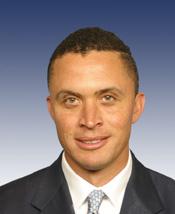
Thank you, Mr. Chairman, for your admonishment there. I thank my friend in leading our delegation, Jim Cooper here in the Congress, and thank him for one skill that he seems to have above many of us…
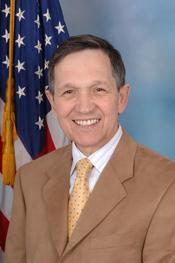
Mr. Speaker, later today the Committee on Rules will decide what modifications to the budget bill Congress may consider. In the spirit of the remarks of the gentleman from Florida (Mr. Putnam) with…
Mr. Chairman, I thank the chairman. I want to commend the Budget Committee Chairman, Jim Nussle, on his hard work in crafting a strong document that puts our priorities in line and in order for the…

Mr. Chairman, let me start out by thanking the chairman for the leadership he has exhibited for so long on this budget, and certainly wish you well in your future endeavors. I would like to return…
Bill Text
2 versions available
        [Congressional Bills 109th Congress]
[From the U.S. Government Publishing Office]
[H. Con. Res. 376 Engrossed in House (EH)]

109th CONGRESS
2d Session
H. CON. RES. 376

_______________________________________________________________________

CONCURRENT RESOLUTION

Resolved by the House of Representatives (the Senate concurring),

SECTION 1. CONCURRENT RESOLUTION ON THE BUDGET FOR FISCAL YEAR 2007.

(a) Declaration.--The Congress declares that this is the concurrent
resolution on the budget for fiscal year 2007, including appropriate
budgetary levels for fiscal years 2008 through 2011.
(b) Table of Contents.--

Sec. 1. Concurrent resolution on the budget for fiscal year 2007.
TITLE I--RECOMMENDED LEVELS AND AMOUNTS

Sec. 101. Recommended levels and amounts.
Sec. 102. Major functional categories.
TITLE II--RECONCILIATION

Sec. 201. Reconciliation in the House of Representatives.
TITLE III--RESERVE FUNDS

Sec. 301. Reserve fund for the disposal of underutilized Federal real
property.
Sec. 302. Reserve fund for Secure Rural Schools and Community Self-
Determination Act Reauthorization.
Sec. 303. Reserve fund for calendar year 2007 alternative minimum tax
relief.
Sec. 304. Reserve fund for the National Flood Insurance Program to meet
outstanding claims for flood damage in the
Gulf.
Sec. 305. Reserve fund for the reform of the regulation of government-
sponsored enterprises.
Sec. 306. Reserve fund to accommodate fully offset appropriations for
Labor/HHS, Education, and other domestic
priorities.
TITLE IV--BUDGET ENFORCEMENT

Sec. 401. Restrictions on advance appropriations.
Sec. 402. Contingency operations related to the global war on terrorism
and for unanticipated defense needs.
Sec. 404. Application and effect of changes in allocations and
aggregates.
Sec. 405. Adjustments to reflect changes in concepts and definitions.
Sec. 406. Compliance with section 13301 of the Budget Enforcement Act
of 1990.
Sec. 407. Exercise of rulemaking powers.
Sec. 408. Treatment of allocations in the House.
Sec. 409. Budgetary treatment of the National Flood Insurance Program.
Sec. 410. Adjustments for tax legislation.
TITLE V--EMERGENCY RESERVE FUND

Sec. 501. Nondefense reserve fund for emergencies.
Sec. 502. Emergency criteria.
Sec. 503. Development of guidelines for application of emergency
definition.
Sec. 504. Committee notification of emergency legislation.
Sec. 505. Up-to-date tabulations.
TITLE VI--SENSE OF CONGRESS

Sec. 601. Sense of Congress on long-term budgeting.
Sec. 602. Sense of Congress on closing the tax gap to reduce the
deficit.
Sec. 603. Importance of funding FY2007 Departments of Labor, Health and
Human Services, Education, and Related
Agencies Appropriation bill.
Sec. 604. Unobligated funding offset.

TITLE I--RECOMMENDED LEVELS AND AMOUNTS

SEC. 101. RECOMMENDED LEVELS AND AMOUNTS.

The following budgetary levels are appropriate for each of fiscal
years 2007 through 2011:
(1) Federal revenues.--For purposes of the enforcement of
this resolution:
(A) The recommended levels of Federal revenues are
as follows:
Fiscal year 2007: $1,780,666,000,000.
Fiscal year 2008: $1,913,598,000,000.
Fiscal year 2009: $2,011,187,000,000.
Fiscal year 2010: $2,122,195,000,000.
Fiscal year 2011: $2,212,263,000,000.
(B) The amounts by which the aggregate levels of
Federal revenues should be reduced are as follows:
Fiscal year 2007: $38,933,000,000.
Fiscal year 2008: $8,178,000,000.
Fiscal year 2009: $20,384,000,000.
Fiscal year 2010: $13,782,000,000.
Fiscal year 2011: $144,808,000,000.
(2) New budget authority.--For purposes of the enforcement
of this resolution, the appropriate levels of total new budget
authority are as follows:
Fiscal year 2007: $2,283,029,000,000.
Fiscal year 2008: $2,332,599,000,000.
Fiscal year 2009: $2,426,014,000,000.
Fiscal year 2010: $2,526,861,000,000.
Fiscal year 2011: $2,649,474,000,000.
(3) Budget outlays.--For purposes of the enforcement of
this resolution, the appropriate levels of total budget outlays
are as follows:
Fiscal year 2007: $2,325,998,000,000.
Fiscal year 2008: $2,364,794,000,000.
Fiscal year 2009: $2,434,610,000,000.
Fiscal year 2010: $2,524,168,000,000.
Fiscal year 2011: $2,640,119,000,000.
(4) Deficits (on-budget).--For purposes of the enforcement
of this resolution, the amounts of the deficits (on-budget) are
as follows:
Fiscal year 2007: $545,332,000,000.
Fiscal year 2008: $451,196,000,000.
Fiscal year 2009: $423,423,000,000.
Fiscal year 2010: $401,973,000,000.
Fiscal year 2011: $427,856,000,000.
(5) Debt subject to limit.--Pursuant to section 301(a)(5)
of the Congressional Budget Act of 1974, the appropriate levels
of the public debt are as follows:
Fiscal year 2007: $9,182,000,000,000.
Fiscal year 2008: $9,744,000,000,000.
Fiscal year 2009: $10,275,000,000,000.
Fiscal year 2010: $10,781,000,000,000.
Fiscal year 2011: $11,307,000,000,000.
(6) Debt held by the public.--The appropriate levels of
debt held by the public are as follows:
Fiscal year 2007: $5,328,000,000,000.
Fiscal year 2008: $5,577,000,000,000.
Fiscal year 2009: $5,781,000,000,000.
Fiscal year 2010: $5,946,000,000,000.
Fiscal year 2011: $6,120,000,000,000.

SEC. 102. MAJOR FUNCTIONAL CATEGORIES.

The Congress determines and declares that the appropriate levels of
new budget authority and outlays for fiscal years 2007 through 2011 for
each major functional category are:
(1) National Defense (050):
Fiscal year 2007:
(A) New budget authority, $512,901,000,000.
(B) Outlays, $534,858,000,000.
Fiscal year 2008:
(A) New budget authority, $484,661,000,000.
(B) Outlays, $505,516,000,000.
Fiscal year 2009:
(A) New budget authority, $504,753,000,000.
(B) Outlays, $505,874,000,000.
Fiscal year 2010:
(A) New budget authority, $514,858,000,000.
(B) Outlays, $512,573,000,000.
Fiscal year 2011:
(A) New budget authority, $525,781,000,000.
(B) Outlays, $524,894,000,000.
(2) International Affairs (150):
Fiscal year 2007:
(A) New budget authority, $31,216,000,000.
(B) Outlays, $34,270,000,000.
Fiscal year 2008:
(A) New budget authority, $34,206,000,000.
(B) Outlays, $33,410,000,000.
Fiscal year 2009:
(A) New budget authority, $34,178,000,000.
(B) Outlays, $33,275,000,000.
Fiscal year 2010:
(A) New budget authority, $33,869,000,000.
(B) Outlays, $33,093,000,000.
Fiscal year 2011:
(A) New budget authority, $34,293,000,000.
(B) Outlays, $32,717,000,000.
(3) General Science, Space, and Technology (250):
Fiscal year 2007:
(A) New budget authority, $25,938,000,000.
(B) Outlays, $25,108,000,000.
Fiscal year 2008:
(A) New budget authority, $27,146,000,000.
(B) Outlays, $26,083,000,000.
Fiscal year 2009:
(A) New budget authority, $28,193,000,000.
(B) Outlays, $27,135,000,000.
Fiscal year 2010:
(A) New budget authority, $29,410,000,000.
(B) Outlays, $28,263,000,000.
Fiscal year 2011:
(A) New budget authority, $30,689,000,000.
(B) Outlays, $29,483,000,000.
(4) Energy (270):
Fiscal year 2007:
(A) New budget authority, $2,262,000,000.
(B) Outlays, $915,000,000.
Fiscal year 2008:
(A) New budget authority, $2,688,000,000.
(B) Outlays, $703,000,000.
Fiscal year 2009:
(A) New budget authority, $2,317,000,000.
(B) Outlays, $913,000,000.
Fiscal year 2010:
(A) New budget authority, $2,190,000,000.
(B) Outlays, $867,000,000.
Fiscal year 2011:
(A) New budget authority, $2,094,000,000.
(B) Outlays, $711,000,000.
(5) Natural Resources and Environment (300):
Fiscal year 2007:
(A) New budget authority, $29,650,000,000.
(B) Outlays, $33,038,000,000.
Fiscal year 2008:
(A) New budget authority, $28,833,000,000.
(B) Outlays, $30,756,000,000.
Fiscal year 2009:
(A) New budget authority, $29,238,000,000.
(B) Outlays, $30,285,000,000.
Fiscal year 2010:
(A) New budget authority, $28,687,000,000.
(B) Outlays, $29,724,000,000.
Fiscal year 2011:
(A) New budget authority, $28,595,000,000.
(B) Outlays, $29,313,000,000.
(6) Agriculture (350):
Fiscal year 2007:
(A) New budget authority, $27,356,000,000.
(B) Outlays, $26,782,000,000.
Fiscal year 2008:
(A) New budget authority, $25,205,000,000.
(B) Outlays, $24,564,000,000.
Fiscal year 2009:
(A) New budget authority, $24,512,000,000.
(B) Outlays, $23,829,000,000.
Fiscal year 2010:
(A) New budget authority, $23,370,000,000.
(B) Outlays, $22,560,000,000.
Fiscal year 2011:
(A) New budget authority, $23,011,000,000.
(B) Outlays, $22,281,000,000.
(7) Commerce and Housing Credit (370):
Fiscal year 2007:
(A) New budget authority, $16,518,000,000.
(B) Outlays, $8,049,000,000.
Fiscal year 2008:
(A) New budget authority, $13,178,000,000.
(B) Outlays, $7,997,000,000.
Fiscal year 2009:
(A) New budget authority, $13,278,000,000.
(B) Outlays, $7,987,000,000.
Fiscal year 2010:
(A) New budget authority, $17,062,000,000.
(B) Outlays, $8,857,000,000.
Fiscal year 2011:
(A) New budget authority, $11,866,000,000
(B) Outlays, $5,390,000,000.
(8) Transportation (400):
Fiscal year 2007:
(A) New budget authority, $78,258,000,000.
(B) Outlays, $75,774,000,000.
Fiscal year 2008:
(A) New budget authority, $81,283,000,000.
(B) Outlays, $78,557,000,000.
Fiscal year 2009:
(A) New budget authority, $72,878,000,000.
(B) Outlays, $78,329,000,000.
Fiscal year 2010:
(A) New budget authority, $72,926,000,000.
(B) Outlays, $77,828,000,000.
Fiscal year 2011:
(A) New budget authority, $73,477,000,000.
(B) Outlays, $77,833,000,000.
(9) Community and Regional Development (450):
Fiscal year 2007:
(A) New budget authority, $15,942,000,000.
(B) Outlays, $31,345,000,000.
Fiscal year 2008:
(A) New budget authority, $12,917,000,000.
(B) Outlays, $25,443,000,000.
Fiscal year 2009:
(A) New budget authority, $12,981,000,000.
(B) Outlays, $21,661,000,000.
Fiscal year 2010:
(A) New budget authority, $12,988,000,000.
(B) Outlays, $17,777,000,000.
Fiscal year 2011:
(A) New budget authority, $13,218,000,000.
(B) Outlays, $13,680,000,000.
(10) Education, Training, Employment, and Social Services
(500):
Fiscal year 2007:
(A) New budget authority, $84,849,000,000.
(B) Outlays, $87,530,000,000.
Fiscal year 2008:
(A) New budget authority, $84,140,000,000.
(B) Outlays, $85,316,000,000.
Fiscal year 2009:
(A) New budget authority, $83,989,000,000.
(B) Outlays, $83,273,000,000.
Fiscal year 2010:
(A) New budget authority, $83,393,000,000.
(B) Outlays, $82,575,000,000.
Fiscal year 2011:
(A) New budget authority, $83,343,000,000.
(B) Outlays, $82,597,000,000.
(11) Health (550):
Fiscal year 2007:
(A) New budget authority, $273,450,000,000.
(B) Outlays, $274,616,000,000.
Fiscal year 2008:
(A) New budget authority, $289,867,000,000.
(B) Outlays, $291,070,000,000.
Fiscal year 2009:
(A) New budget authority, $310,193,000,000.
(B) Outlays, $308,529,000,000.
Fiscal year 2010:
(A) New budget authority, $326,949,000,000.
(B) Outlays, $326,511,000,000.
Fiscal year 2011:
(A) New budget authority, $348,509,000,000.
(B) Outlays, $346,802,000,000.
(12) Medicare (570):
Fiscal year 2007:
(A) New budget authority, $382,803,000,000.
(B) Outlays, $388,276,000,000.
Fiscal year 2008:
(A) New budget authority, $413,350,000,000.
(B) Outlays, $413,417,000,000.
Fiscal year 2009:
(A) New budget authority, $443,331,000,000.
(B) Outlays, $443,022,000,000.
Fiscal year 2010:
(A) New budget authority, $472,962,000,000.
(B) Outlays, $473,238,000,000.
Fiscal year 2011:
(A) New budget authority, $523,267,000,000.
(B) Outlays, $523,305,000,000.
(13) Income Security (600):
Fiscal year 2007:
(A) New budget authority, $356,761,000,000.
(B) Outlays, $362,086,000,000.
Fiscal year 2008:
(A) New budget authority, $371,174,000,000.
(B) Outlays, $374,267,000,000.
Fiscal year 2009:
(A) New budget authority, $381,732,000,000.
(B) Outlays, $384,278,000,000.
Fiscal year 2010:
(A) New budget authority, $391,682,000,000.
(B) Outlays, $393,209,000,000.
Fiscal year 2011:
(A) New budget authority, $406,687,000,000.
(B) Outlays, $406,960,000,000.
(14) Social Security (650):
Fiscal year 2007:
(A) New budget authority, $16,922,000,000.
(B) Outlays, $16,922,000,000.
Fiscal year 2008:
(A) New budget authority, $18,814,000,000.
(B) Outlays, $18,814,000,000.
Fiscal year 2009:
(A) New budget authority, $20,694,000,000.
(B) Outlays, $20,694,000,000.
Fiscal year 2010:
(A) New budget authority, $22,866,000,000.
(B) Outlays, $22,866,000,000.
Fiscal year 2011:
(A) New budget authority, $26,480,000,000.
(B) Outlays, $26,480,000,000.
(15) Veterans Benefits and Services (700):
Fiscal year 2007:
(A) New budget authority, $74,627,000,000.
(B) Outlays, $73,944,000,000.
Fiscal year 2008:
(A) New budget authority, $76,925,000,000.
(B) Outlays, $77,200,000,000.
Fiscal year 2009:
(A) New budget authority, $77,814,000,000.
(B) Outlays, $77,982,000,000.
Fiscal year 2010:
(A) New budget authority, $78,232,000,000.
(B) Outlays, $78,264,000,000.
Fiscal year 2011:
(A) New budget authority, $82,398,000,000.
(B) Outlays, $82,249,000,000.
(16) Administration of Justice (750):
Fiscal year 2007:
(A) New budget authority, $42,795,000,000.
(B) Outlays, $43,621,000,000.
Fiscal year 2008:
(A) New budget authority, $42,908,000,000.
(B) Outlays, $43,578,000,000.
Fiscal year 2009:
(A) New budget authority, $43,454,000,000.
(B) Outlays, $43,716,000,000.
Fiscal year 2010:
(A) New budget authority, $43,816,000,000.
(B) Outlays, $43,903,000,000.
Fiscal year 2011:
(A) New budget authority, $44,862,000,000.
(B) Outlays, $44,492,000,000.
(17) General Government (800):
Fiscal year 2007:
(A) New budget authority, $18,981,000,000.
(B) Outlays, $18,873,000,000.
Fiscal year 2008:
(A) New budget authority, $18,332,000,000.
(B) Outlays, $18,318,000,000.
Fiscal year 2009:
(A) New budget authority, $18,365,000,000.
(B) Outlays, $18,099,000,000.
Fiscal year 2010:
(A) New budget authority, $18,250,000,000.
(B) Outlays, $18,020,000,000.
Fiscal year 2011:
(A) New budget authority, $18,479,000,000.
(B) Outlays, $18,213,000,000.
(18) Net Interest (900):
Fiscal year 2007:
(A) New budget authority, $354,138,000,000.
(B) Outlays, $354,138,000,000.
Fiscal year 2008:
(A) New budget authority, $383,621,000,000.
(B) Outlays, $383,621,000,000.
Fiscal year 2009:
(A) New budget authority, $405,846,000,000.
(B) Outlays, $405,846,000,000.
Fiscal year 2010:
(A) New budget authority, $427,510,000,000.
(B) Outlays, $427,510,000,000.
Fiscal year 2011:
(A) New budget authority, $449,248,000,000.
(B) Outlays, $449,248,000,000.
(19) Allowances (920):
Fiscal year 2007:
(A) New budget authority, $6,247,000,000.
(B) Outlays, $5,280,000,000.
Fiscal year 2008:
(A) New budget authority, -$7,922,000,000.
(B) Outlays, -$5,437,000,000.
Fiscal year 2009:
(A) New budget authority, -$7,252,000,000.
(B) Outlays, -$5,918,000,000.
Fiscal year 2010:
(A) New budget authority, -$7,384,000,000.
(B) Outlays, -$6,882,000,000.
Fiscal year 2011:
(A) New budget authority, -$7,539,000,000.
(B) Outlays, -$7,282,000,000.
(20) Undistributed Offsetting Receipts (950):
Fiscal year 2007:
(A) New budget authority, -$68,585,000,000.
(B) Outlays, -$69,427,000,000.
Fiscal year 2008:
(A) New budget authority, -$68,727,000,000.
(B) Outlays, -$68,399,000,000.
Fiscal year 2009:
(A) New budget authority, -$74,480,000,000.
(B) Outlays, -$74,199,000,000.
Fiscal year 2010:
(A) New budget authority, -$66,775,000,000.
(B) Outlays, -$66,588,000,000.
Fiscal year 2011:
(A) New budget authority, -$69,284,000,000.
(B) Outlays, -$69,247,000,000.

TITLE II--RECONCILIATION

SEC. 201. RECONCILIATION IN THE HOUSE OF REPRESENTATIVES.

(a) Submissions to Provide for the Continued Reform of Mandatory
Spending.--(1) Not later than June 9, 2006, the House committees named
in paragraph (2) shall submit their recommendations to the House
Committee on the Budget. After receiving those recommendations, the
House Committee on the Budget shall report to the House a
reconciliation bill carrying out all such recommendations without any
substantive revision.
(2) Instructions.--
(A) Committee on agriculture.--The House Committee on
Agriculture shall report changes in laws within its
jurisdiction sufficient to reduce the deficit by $55,000,000
for the period of fiscal years 2007 through 2011.
(B) Committee on armed services.--The House Committee on
Armed Services shall report changes in laws within its
jurisdiction sufficient to reduce the deficit by $175,000,000
for the period of fiscal years 2007 through 2011.
(C) Committee on education and the workforce.--The House
Committee on Education and the Workforce shall report changes
in laws within its jurisdiction sufficient to reduce the
deficit by $1,323,000,000 for the period of fiscal years 2007
through 2011.
(D) Committee on financial services instruction to trigger
release of flood insurance reserve fund to cover additional
claims in the gulf region.--The House Committee on Financial
Services shall report changes in laws within its jurisdiction
sufficient to reduce the deficit by $400,000,000 for the period
of fiscal years 2007 through 2011.
(E) Committee on international relations.--The House
Committee on International Relations shall report changes in
laws within its jurisdiction sufficient to reduce the deficit
by $250,000,000 for the period of fiscal years 2007 through
2011.
(F) Committee on the judiciary.--The House Committee on the
Judiciary shall report changes in laws within its jurisdiction
sufficient to reduce the deficit by $500,000,000 for the period
of fiscal years 2007 through 2011.
(G) Committee on transportation and infrastructure.--The
House Committee on Transportation and Infrastructure shall
report changes in laws within its jurisdiction sufficient to
reduce the deficit by $50,000,000 for the period of fiscal
years 2007 through 2011.
(H) Committee on ways and means.--The House Committee on
Ways and Means shall report changes in laws within its
jurisdiction sufficient to reduce the deficit by $4,000,000,000
for the period of fiscal years 2007 through 2011.
(b) Submission of Revised Allocations.--(1) Upon the submission to
the Committee on the Budget of the House of a recommendation that has
complied with its reconciliation instructions solely by virtue of
section 310(c) of the Congressional Budget Act of 1974, the chairman of
that committee may file with the House appropriately revised
allocations under section 302(a) of such Act and revised functional
levels and aggregates.
(2) Upon the submission to the House of a conference report
recommending a reconciliation bill or resolution in which a committee
has complied with its reconciliation instructions solely by virtue of
this section, the chairman of the Committee on the Budget of the House
may file with the House appropriately revised allocations under section
302(a) of such Act and revised functional levels and aggregates.
(3) Allocations and aggregates revised pursuant to this subsection
shall be considered to be allocations and aggregates established by the
concurrent resolution on the budget pursuant to section 301 of such
Act.

TITLE III--RESERVE FUNDS

SEC. 301. RESERVE FUND FOR THE DISPOSAL OF UNDERUTILIZED FEDERAL REAL
PROPERTY.

If the Committee on Government Reform of the House reports a bill
or joint resolution, or an amendment is offered thereto or a conference
report is submitted thereon, that enhances the Government's real
property disposal authority and generates discretionary savings, the
chairman of the Committee on the Budget may make the appropriate
adjustments in allocations and aggregates by the amount provided by
that measure for that purpose, but not to exceed $25,000,000 in new
budget authority and outlays flowing therefrom for fiscal year 2007,
and $25,000,000 in new budget authority and outlays flowing therefrom
for the period of fiscal years 2007 through 2011.

SEC. 302. RESERVE FUND FOR SECURE RURAL SCHOOLS AND COMMUNITY SELF-
DETERMINATION ACT REAUTHORIZATION.

In the House, after the filing of a rule that provides for the
consideration of any bill or joint resolution or whenever any bill or
joint resolution is placed on any calendar, or if an amendment is
offered to or conference report is submitted on any bill or joint
resolution that provides for the reauthorization of the Secure Rural
Schools and Community Self-Determination Act (Public Law 106-393), then
the chairman of the Committee on the Budget may make the appropriate
adjustments in allocations and aggregates to the extent that such
legislation would not increase the deficit for the period of fiscal
years 2007 through 2011.

SEC. 303. RESERVE FUND FOR CALENDAR YEAR 2007 ALTERNATIVE MINIMUM TAX
RELIEF.

If the Committee on Ways and Means reports a bill, or an amendment
is offered thereto or a conference report is submitted thereon, that
would increase the exemption amounts specified in section 55(d)(1) of
the Internal Revenue Code of 1986 with respect to taxable years
beginning in calendar year 2007, the chairman of the Committee on the
Budget may make the appropriate adjustments in allocations and
aggregates for fiscal year 2007 to the extent that such legislation
would not reduce revenues below the aggregate level of revenues
provided in section 101(1)(A) for the period of fiscal years 2007
through 2011.

SEC. 304. RESERVE FUND FOR THE NATIONAL FLOOD INSURANCE PROGRAM TO MEET
OUTSTANDING CLAIMS FOR FLOOD DAMAGE IN THE GULF.

If the Committee on Financial Services of the House reports a bill
or joint resolution, or an amendment is offered thereto or a conference
report is submitted thereon, that--
(1) establishes more actuarially sound rates on policies
issued by the National Flood Insurance Program; and
(2) phases out flood insurance subsidies on pre-FIRM
structures not used as primary residences;
the chairman of the Committee on the Budget may make the appropriate
adjustments in allocations and aggregates by the amount provided by
that measure for the purpose of liquidating the National Flood
Insurance Fund's remaining contractual obligations resulting from
claims made as a result of floods that occurred in 2005, but not to
exceed $3,325,000,000 in new budget authority for fiscal year 2007 for
that purpose. Such adjustments may also be made if the reforms set
forth in paragraphs (1) and (2) have been enacted prior to the
consideration of the measure referred to in this section.

SEC. 305. RESERVE FUND FOR THE REFORM OF THE REGULATION OF GOVERNMENT-
SPONSORED ENTERPRISES.

In the House, if--
(1) the Committee on Financial Services of the House
reports a bill or joint resolution, or if an amendment is
offered thereto or a conference report is submitted thereon,
that reforms the regulation of certain housing-related
Government-sponsored enterprises; and
(2) that committee is within its allocation as provided
under section 302(a) of the Congressional Budget Act of 1974;
the chairman of the Committee on the Budget may make the appropriate
adjustments in allocations and aggregates to the extent that such
legislation would not increase the deficit for fiscal year 2007 and the
period of fiscal years 2007 through 2011.

SEC. 306. RESERVE FUND TO ACCOMMODATE FULLY OFFSET APPROPRIATIONS FOR
LABOR/HHS, EDUCATION, AND OTHER DOMESTIC PRIORITIES.

In the House, if any measure is enacted that reduces direct
spending for fiscal year 2007 and for the period of fiscal years 2007
through 2011, and so designates some or all of such savings provisions
pursuant to this section, then the chairman of the Committee on Budget
shall increase the allocation of new budget authority (and outlays
flowing therefrom) to the Committee on Appropriations for fiscal year
2007 by an amount not to exceed the reduction in budget authority for
that fiscal year achieved by such designated provisions. Adjustments
made pursuant to this section may not be--
(1) greater than the savings achieved by the measure in
which such designated provisions are included; or
(2) in excess of $3,100,000,000 for fiscal year 2007.
Such chairman may make any other appropriate adjustments to applicable
aggregates and allocations under this section.

TITLE IV--BUDGET ENFORCEMENT

SEC. 401. RESTRICTIONS ON ADVANCE APPROPRIATIONS.

(a) In General.--(1) In the House, except as provided in subsection
(b), an advance appropriation may not be reported in a bill or joint
resolution making a general appropriation or continuing appropriation,
and may not be in order as an amendment thereto.
(2) Managers on the part of the House may not agree to a Senate
amendment that would violate paragraph (1) unless specific authority to
agree to the amendment first is given by the House by a separate vote
with respect thereto.
(b) Advance Appropriation.--In the House, an advance appropriation
may be provided for the fiscal years 2008 and 2009 for programs,
projects, activities, or accounts identified in the joint explanatory
statement of managers accompanying this resolution under the heading
``Accounts Identified for Advance Appropriations'' in an aggregate
amount not to exceed $23,565,000,000 in new budget authority in each
year.
(c) Definition.--In this section, the term ``advance
appropriation'' means any new budget authority provided in a bill or
joint resolution making general appropriations or any new budget
authority provided in a bill or joint resolution making continuing
appropriations for fiscal year 2007 that first becomes available for
any fiscal year after 2007.

SEC. 402. CONTINGENCY OPERATIONS RELATED TO THE GLOBAL WAR ON TERRORISM
AND FOR UNANTICIPATED DEFENSE NEEDS.

(a) Exemption of Contingency Operations Related to the Global War
on Terrorism and for Unanticipated Defense Needs.--In the House, if any
bill or joint resolution is reported, or an amendment is offered
thereto or a conference report is filed thereon, that makes
appropriations for fiscal year 2007 for contingency operations directly
related to the global war on terrorism, and other unanticipated
defense-related operations, then the new budget authority, new
entitlement authority, outlays, or receipts resulting therefrom shall
not count for purposes of titles III or IV of the Congressional Budget
Act of 1974.
(b) Current Level.--Amounts included in this resolution for the
purpose set forth in this section shall be considered to be current law
for purposes of the preparation of the current level of budget
authority and outlays and the appropriate levels shall be adjusted upon
the enactment of such bill.

SEC. 404. APPLICATION AND EFFECT OF CHANGES IN ALLOCATIONS AND
AGGREGATES.

(a) Application.--Any adjustments of allocations and aggregates
made pursuant to this resolution shall--
(1) apply while that measure is under consideration;
(2) take effect upon the enactment of that measure; and
(3) be published in the Congressional Record as soon as
practicable.
(b) Effect of Changed Allocations and Aggregates.--Revised
allocations and aggregates resulting from these adjustments shall be
considered for the purposes of the Congressional Budget Act of 1974 as
allocations and aggregates contained in this resolution.
(c) Budget Committee Determinations.--For purposes of this
resolution--
(1) the levels of new budget authority, outlays, direct
spending, new entitlement authority, revenues, deficits, and
surpluses for a fiscal year or period of fiscal years shall be
determined on the basis of estimates made by the appropriate
Committee on the Budget; and
(2) such chairman may make any other necessary adjustments
to such levels, including adjustments necessary, and in the
House separate allocations, to reflect the timing of responses
to reconciliation directives pursuant to section 201 of this
resolution.

SEC. 405. ADJUSTMENTS TO REFLECT CHANGES IN CONCEPTS AND DEFINITIONS.

Upon the enactment of a bill or joint resolution providing for a
change in concepts or definitions, the appropriate chairman of the
Committee on the Budget shall make adjustments to the levels and
allocations in this resolution in accordance with section 251(b) of the
Balanced Budget and Emergency Deficit Control Act of 1985 (as in effect
prior to September 30, 2002).

SEC. 406. COMPLIANCE WITH SECTION 13301 OF THE BUDGET ENFORCEMENT ACT
OF 1990.

(a) In General.--In the House and the Senate, notwithstanding
section 302(a)(1) of the Congressional Budget Act of 1974 and section
13301 of the Budget Enforcement Act of 1990, the joint explanatory
statement accompanying the conference report on any concurrent
resolution on the budget shall include in its allocation under section
302(a) of the Congressional Budget Act of 1974 to the Committee on
Appropriations amounts for the discretionary administrative expenses of
the Social Security Administration.
(b) Special Rule.--In the House, for purposes of applying section
302(f) of the Congressional Budget Act of 1974, estimates of the level
of total new budget authority and total outlays provided by a measure
shall include any discretionary amounts provided for the Social
Security Administration.

SEC. 407. EXERCISE OF RULEMAKING POWERS.

Congress adopts the provisions of this title--
(1) as an exercise of the rulemaking power of the Senate
and the House, respectively, and as such they shall be
considered as part of the rules of each House, or of that House
to which they specifically apply, and such rules shall
supersede other rules only to the extent that they are
inconsistent therewith; and
(2) with full recognition of the constitutional right of
either House to change those rules (so far as they relate to
that house) at any time, in the same manner, and to the same
extent as in the case of any other rule of that House.

SEC. 408. TREATMENT OF ALLOCATIONS IN THE HOUSE.

(a) In General.--In the House, the Committee on Appropriations may
make a separate suballocation for appropriations for the legislative
branch for the first fiscal year of this resolution. Such suballocation
shall be deemed to be made under section 302(b) of the Congressional
Budget Act of 1974 and shall be treated as such a suballocation for all
purposes under section 302 of such Act.
(b) Display of Committee Allocations.--An allocation to a committee
under section 302(a) of the Congressional Budget Act of 1974 may
display an amount to reflect a committee's instruction under the
reconciliation process, but it shall not constitute an allocation
within the meaning of section 302 of such Act. Any deficit reduction
achieved in a reconciliation bill submitted pursuant to title II of
this resolution shall not be included in current levels of new budget
authority and outlays for purposes of enforcing an allocation under
302(a) of such Act.

SEC. 409. BUDGETARY TREATMENT OF THE NATIONAL FLOOD INSURANCE PROGRAM.

(a) Treatment.--For purposes of the allocations and aggregates in
this resolution, the reconciliation directives established by this
resolution, and for any other purpose under titles III and IV of the
Congressional Budget Act of 1974, the budgetary effects of any bill or
joint resolution, amendment thereto, or conference report thereon, or
any recommendations submitted pursuant to section 201 that includes the
reforms set forth in subsection (b) shall be scored without regard to
the obligations resulting from the enactment of Public Law 109-208.
Such estimate shall assume the liquidating of the National Flood
Insurance Fund's remaining contractual obligations resulting from
claims made as a result of floods that occurred in 2005.
(b) Legislation.--The legislation referred to in subsection (a)
shall--
(1) establish more actuarially sound rates on policies
issued by the National Flood Insurance Program; and
(2) end flood insurance subsidies on pre-FIRM structures
not used as primary residences.

SEC. 410. ADJUSTMENTS FOR TAX LEGISLATION.

In the House, if the Committee on Ways and Means reports a bill or
joint resolution, or an amendment is offered thereto or a conference
report is submitted thereon, that amends the Internal Revenue Code of
1986 by extending the expiration dates for Federal tax policies that
expired during fiscal year 2006 or that expire during the period of
fiscal years 2007 through 2011, then the chairman of the Committee on
the Budget may make appropriate adjustments in the allocations and
aggregates of budget authority, outlays, and revenue set forth in this
resolution to reflect the budgetary effects of such legislation, but
only to the extent the adjustments would not cause the level of revenue
to be less than the level of revenue provided for in this resolution
for the period of fiscal years 2007 through 2011 and would not cause
the deficit to exceed the appropriate level of deficits provided for in
this resolution for the period of fiscal years 2007 through 2011.

TITLE V--EMERGENCY RESERVE FUND

SEC. 501. NONDEFENSE RESERVE FUND FOR EMERGENCIES.

(a) Nondefense Reserve Funds.--
(1) Discretionary reserve fund.--In the House and except as
provided by subsection (b), if a bill or joint resolution is
reported, or an amendment is offered thereto (or considered as
adopted) or a conference report is filed thereon, that provides
new discretionary budget authority (and outlays flowing
therefrom), and such provision is designated as an emergency
pursuant to this section, the chairman of the Committee on the
Budget shall make adjustments to the allocations and aggregates
set forth in this resolution up to the amount of such
provisions if the requirements set forth in section 504 are
met, but the sum of all adjustments made under this paragraph
shall not exceed $6,450,000,000 for fiscal year 2007.
(2) Other adjustments.--In the House, if a bill or joint
resolution is reported or a conference report is filed thereon,
and a direct spending or receipt provision included therein is
designated as an emergency pursuant to this paragraph, the
chairman of the Committee on the Budget may make adjustments to
the allocations and aggregates set forth in this resolution.
(b) Additional Adjustment Procedures.--In the House, before any
adjustment is made pursuant to this section for any bill, joint
resolution, or conference report that designates a provision an
emergency, the enactment of which would cause the total amount of the
reserve fund set forth in subsection (a)(1) for fiscal year 2007 to be
exceeded:
(1) The chairman of the Committee on the Budget shall
convene a meeting of that committee, where it shall be in
order, subject to the terms set forth in this section, for one
motion described in paragraph (2) to be made to authorize the
chairman to make adjustments above the maximum amount of
adjustments set forth in subsection (a).
(2) The motion referred to in paragraph (1) shall be in the
following form: `I move that the chairman of the Committee on
the Budget be authorized to adjust the allocations and
aggregates set forth in the concurrent resolution on the budget
for fiscal year 2007 by the following amount: $___ for fiscal
year 2007.', with the blank being filled in with amount
determined by the chairman of the Committee on the Budget. For
any measure referred to in subsection (a)(1), such amount shall
not exceed the total amount for fiscal year 2007 designated as
an emergency in excess of the applicable amount remaining in
the reserve fund.
(3) The motion set forth in paragraph (2) shall be open for
debate and amendment, but any amendment offered thereto is only
in order if limited to changing an amount in the motion.
(4) Except as provided by paragraph (5), the chairman of
the Committee on the Budget may not make any adjustments under
subsection (a) or subsection (b) unless or until the committee
filing a report or joint statement of managers on a conference
report on a measure including an emergency designation fulfills
the terms set forth in section 504.
(5) The chairman of the Committee on the Budget shall make
any adjustments he deems necessary under this section if he
determines the enactment of the provision or provisions
designated as an emergency is essential to respond to an urgent
and imminent need, the chairman determines the exceptional
circumstances referred to in rule 3 of the rules of the
committee are met and the committee cannot convene to consider
the motion referred to in this section in a timely fashion.
(c) Application of Adjustments.--The adjustments made pursuant to
subsection (a) or (b) shall--
(1) apply while that bill, joint resolution, conference
report or amendment is under consideration;
(2) take effect upon the enactment of that legislation; and
(3) be published in the Congressional Record as soon as
practicable.

SEC. 502. EMERGENCY CRITERIA.

As used in this title:
(1) The term ``emergency'' means a situation that--
(A) requires new budget authority and outlays (or
new budget authority and the outlays flowing therefrom)
for the prevention or mitigation of, or response to,
loss of life or property, or a threat to national
security; and
(B) is unanticipated.
(2) The term ``unanticipated'' means that the underlying
situation is--
(A) Sudden, which means quickly coming into being
or not building up over time;
(B) Urgent, which means a pressing and compelling
need requiring immediate action;
(C) Unforeseen, which means not predicted or
anticipated as an emerging need; and
(D) Temporary, which means not of a permanent
duration.

SEC. 503. DEVELOPMENT OF GUIDELINES FOR APPLICATION OF EMERGENCY
DEFINITION.

In the House, as soon as practicable after the adoption of this
resolution, the chairman of the Committee on the Budget shall, after
consultation with the chairmen of the applicable committees, and the
Director of the Congressional Budget Office, prepare guidelines for
application of the definition of an emergency and publish such
guidelines in the Congressional Record, and may issue any committee
print from the Committee on the Budget for this or other purposes.

SEC. 504. COMMITTEE NOTIFICATION OF EMERGENCY LEGISLATION.

(a) Committee Notification.--Whenever a committee of the House
(including a committee of conference) reports any bill or joint
resolution that includes a provision designated as an emergency
pursuant to this title, the report accompanying that bill or joint
resolution (or the joint explanatory statement of managers in the case
of a conference report on any such bill or joint resolution) shall
identify all provisions that provide amounts designated as an emergency
and shall provide an explanation of the manner in which the provision
meets the criteria set forth in section 502.
(b) Congressional Record.--If such a measure is to be considered by
the House without being reported by the committee of jurisdiction, then
the committee shall cause the explanation to be published in the
Congressional Record as soon as practicable.

SEC. 505. UP-TO-DATE TABULATIONS.

The Committee on the Budget of the House shall publish in the
Congressional Record up-to-date tabulations of amounts remaining in the
reserve fund set forth in section 501, or authorized in excess thereof,
as soon as practicable after the enactment of such amounts designated
as emergencies.

TITLE VI--SENSE OF CONGRESS

SEC. 601. SENSE OF CONGRESS ON LONG-TERM BUDGETING.

It is the sense of Congress that the determination of the
congressional budget for the United States Government and the
President's budget request should include consideration of the
Financial Report of the United States Government, especially its
information regarding the Government's net operating cost, financial
position, and long-term liabilities.

SEC. 602. SENSE OF CONGRESS ON CLOSING THE TAX GAP TO REDUCE THE
DEFICIT.

It is the sense of Congress that any revenues increases achieved
through recovery of taxes legally owed to the U.S. Treasury but not
actually paid, the so-called ``tax gap'', shall be dedicated entirely
to reducing the deficit and the accumulated debt, and not to financing
additional spending.

SEC. 603. IMPORTANCE OF FUNDING FY2007 DEPARTMENTS OF LABOR, HEALTH AND
HUMAN SERVICES, EDUCATION, AND RELATED AGENCIES
APPROPRIATION BILL.

(a) Findings.--The House of Representatives finds that--
(1) the budget resolution sets total discretionary spending
at $872,778,000,000; and
(2) additional funding can be provided for discretionary
programs under the budget resolution provided that it is offset
with mandatory or discretionary savings in negotiations with
the Senate.
(b) Recognition.--The House of Representatives recognizes the need
to increase the President's fiscal year 2007 request for the
Departments of Labor, Health and Human Services, Education, and Related
Agencies Appropriation bill by not less than $7,158,000,000.

SEC. 604. UNOBLIGATED FUNDING OFFSET.

There should be included in any offsets enacted to provide for the
increases relative to the President's request for the Labor, Health and
Human Services, Education, and Related Agencies Appropriations bill a
rescission of at least $1,000,000,000 from available, unobligated funds
previously appropriated for reconstruction activities in Iraq.

Passed the House of Representatives May 18 (legislative
day, May 17), 2006.

Attest:

Clerk.
109th CONGRESS

2d Session

H. CON. RES. 376

_______________________________________________________________________

CONCURRENT RESOLUTION

Establishing the congressional budget for the United States Government
for fiscal year 2007 and setting forth appropriate budgetary levels for
fiscal years 2008 through 2011.